
Mauna Kea Golf Course

Robert Trent Jones was “the man” among golf course architects in the 1960’s when he was asked by his wealthy friend Laurance Rockelfeller to design a course to compliment a $15 million dollar remote destination resort being contemplated for the arid west coast of the Big Island. Trent was confronted with a challenging piece of hilly, lava entombed real estate next to a large piece of paradise. It took all his creative skills and engineering prowess but he did a marvelous job orchestrating the ground into a stage for an unforgettable golf experience.

Much like his creations from this same period at Spyglass Hill or The Golden Horseshoe, he found a way to use the tumultuous terrain to his advantage to provide startling vistas and tactical golf challenges. Robert Trent Sr. was one of the patriarchs of the heroic school of design so this one is not for the feint of heart. It was updated by his son Rees in 2008, who is another one who does not cut any slack for the meek, so if anything the resulting course became harder.

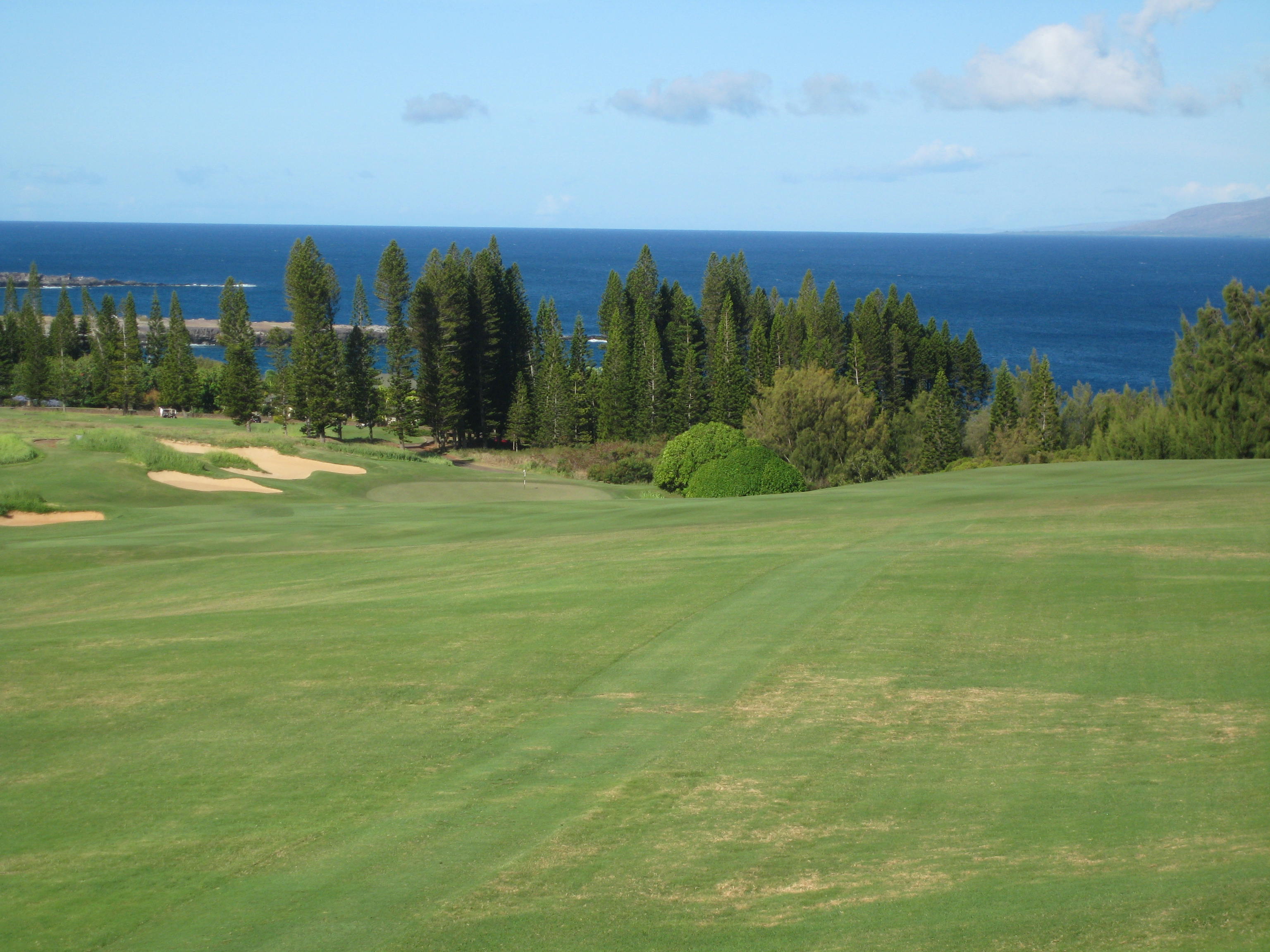
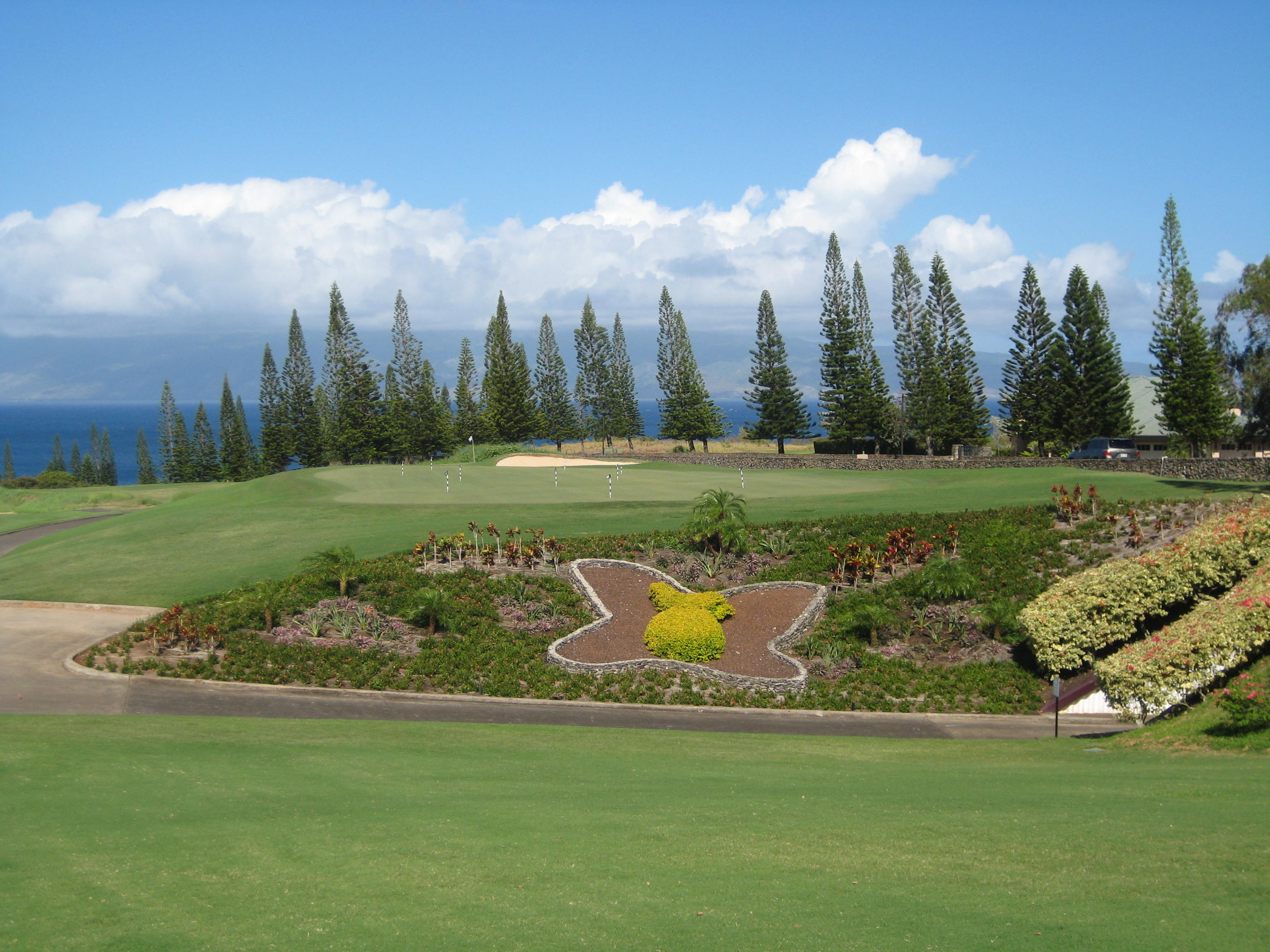
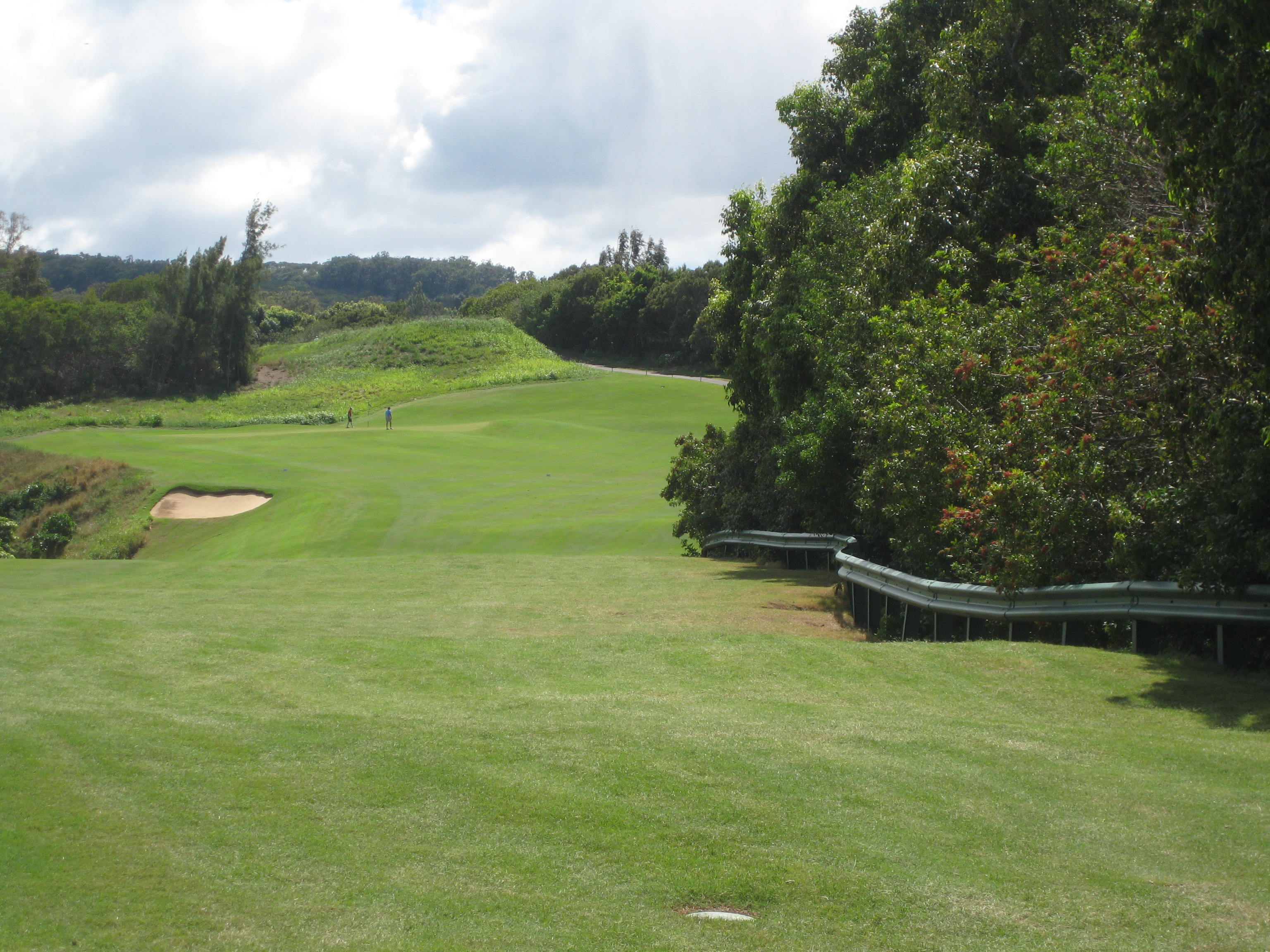
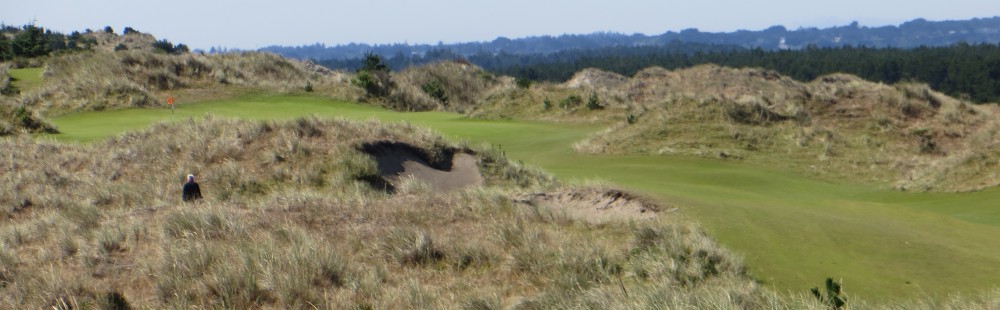
The Short Par Four Sixth-Stylish Bunkering

(Click on any photos for an expanded view)

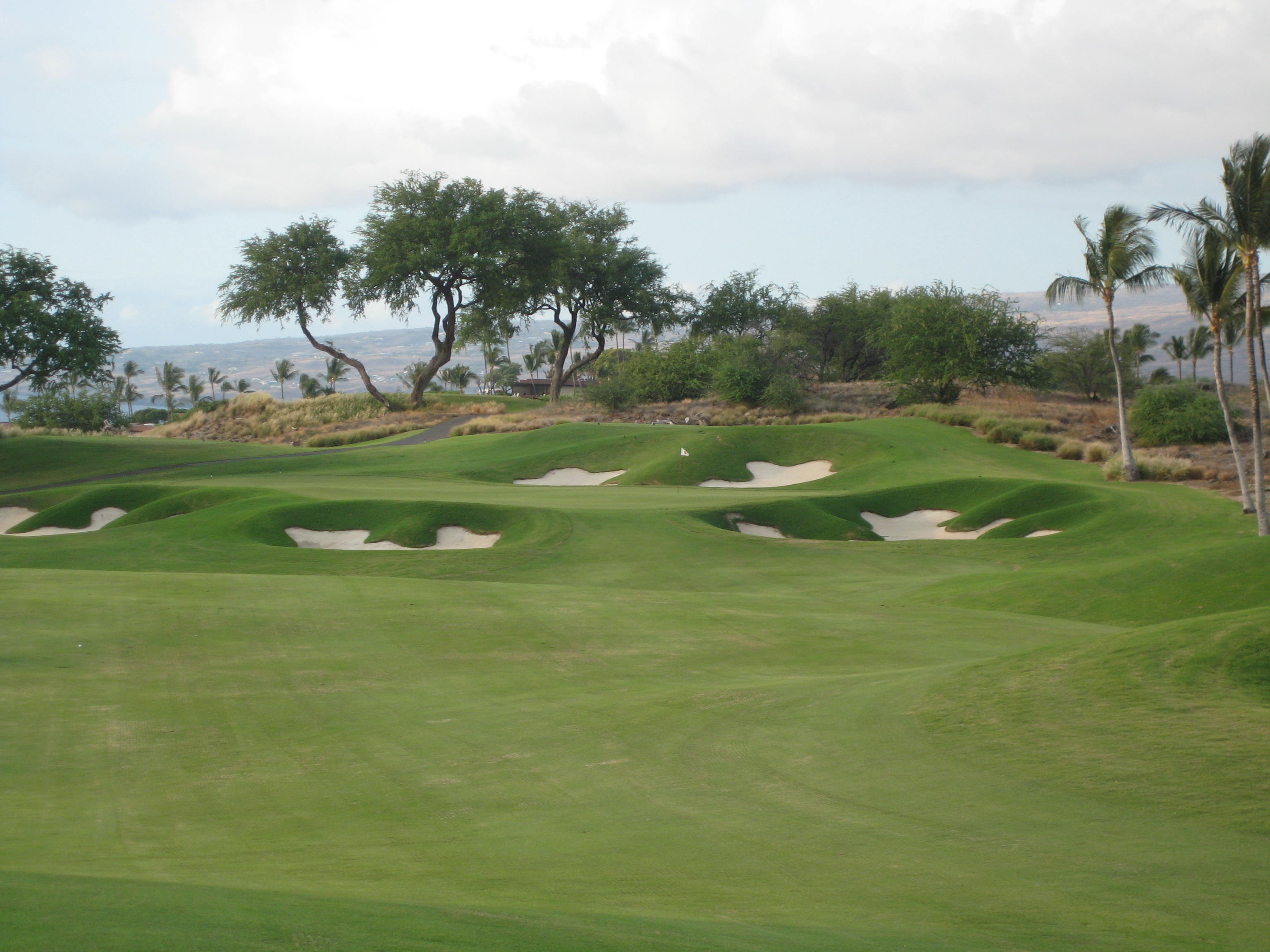
His son’s renovation work looks to have touched every corner of the property.  The main improvement was the move to the latest version of Tiff Bermuda grass throughout which makes it more durable and environmentally friendly to maintain. They say the irrigation systems and the drainage were improved to solve long standing issues.  What you see are typical Trent Jones greens-sprawling and segmented to make them tactically relevant-that roll a top speeds because of the new grass.  The bunkering has Rees’s fingerprints all over it-plentiful, artistic, always front of mind.  His presentation of these green complexes will take your breath away and often leave you scratching your head walking to the next tee.  The bermuda grass presents a particular challenge when pitching and chipping around these greens.  Steep swings get caught in this sticky grass which takes the high lob shot out of your repertoire for the day.

What you see is a place with a real 60’s retro feel about it-the architecture of the buildings and the residences throughout the property are that low square “I Spy” California look. They have recently redone the golf shop and Number 3 restaurant to bring them up to the quality of the rest of the facility.  The only disappointment is the practice area which remains in dire need of upgrade, expansion, and softer golf balls.  They could also do a much better job in relating to you the green topography and pin positions of the day, especially since both should figure into your playing strategy on every hole.

Robert Trent’s challenge at Mauna Kea was two-fold, he had to make arid land seeming inhospitable to grass growth suitable for golf and reign in the rugged topography to route holes that were challenging, playable, and would showcase the dramatic vistas of the Hawaii’s Kohala Coast.

Lava fields dominate the coastal areas on this side of the Big Island creating a rocky wasteland over the 230 acres intended for the site of the golf course. This side of the island gets very little rainfall so finding the water to support any vegetation would be a challenge as well. Trent realized that there were two kinds of lava present-brown lava that can be crushed to a powder mass and blue rock lava that is virtually impossible to break up. Managing a metamorphosis of this ground to make it suitable for golf seemed like an insurmountable challenge.

Never one to back down from a challenge Trent and his experienced engineering crew developed their own engineering techniques and processes that enabled the use of the crushed lava as a soil base on which he added a mix of lime and crushed coral dredged from the nearby bay to grow a hybrid brand of Bermuda grass with great success. The water he needed was provided by drilling a couple of wells almost 400-feet deep coupled with the first fully automatic underground golf course irrigation system of their own creation. The result was astonishing, green grass flourished in what had appeared to be an arid desert. The blue lava was either blasted, buried, or left alone as an accent to the developing holes. The cost of all this was over $2 million dollars, equivalent of close to $15 million in today’s currency, an unheard of expenditure for building a golf course in those days. But Rockefeller had the deep pockets and the desire to have a special centerpiece to his high end resort.

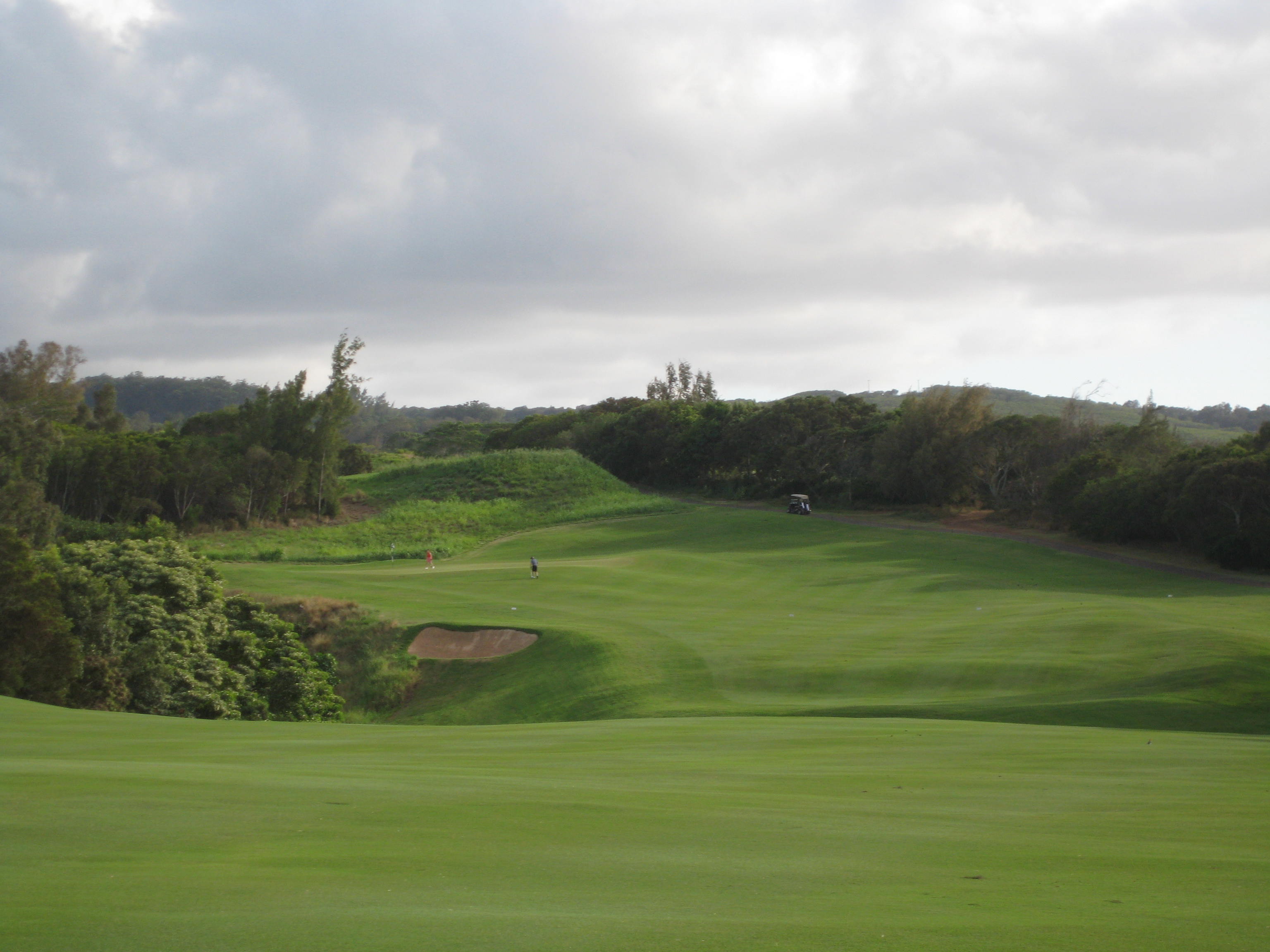
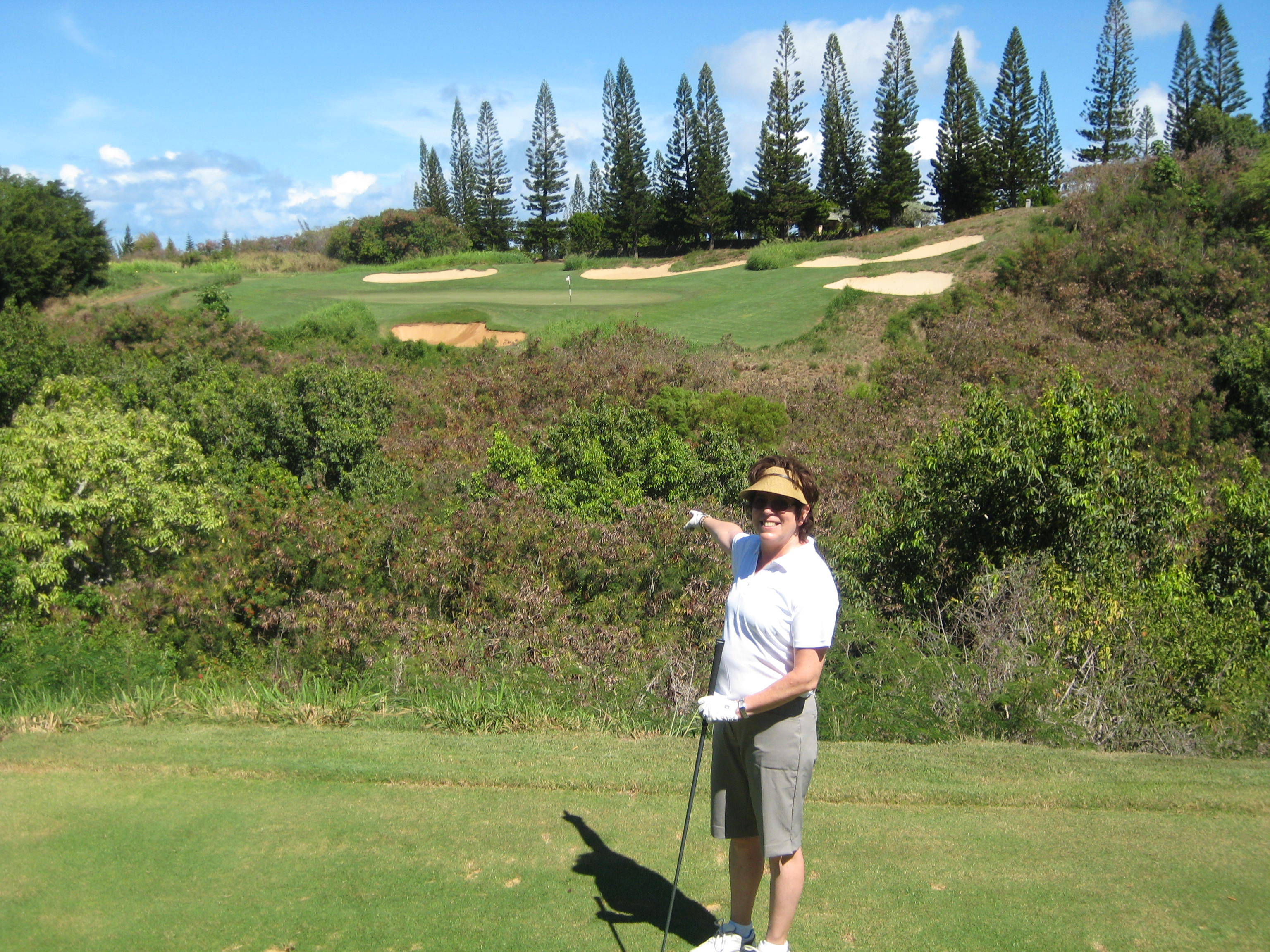
Robert Trent’s challenge was to reign in the rugged topography and route holes that were challenging, playable, and would showcase the dramatic vistas of the Hawaii’s Kohala Coast.  Routing the holes straight up and down the slopes he gives you some very severe elevation changes that will increment club selection but very few holes with side ways roll offs.  This makes picking and maintaining shot lines much more manageable.  As is often the case with this type of terrain, there is rarely a long run for a straight fairway so most of the holes bend dramatically or are folded to fit the available shape of the land.  The result is that there are many short par fours that play from a high tee to a landing area below and then turn dramatically to a four-story green complex on top of the next hill.  This template will wear on you, especially if hitting high elevation, full carry approach shots is not in your wheelhouse.

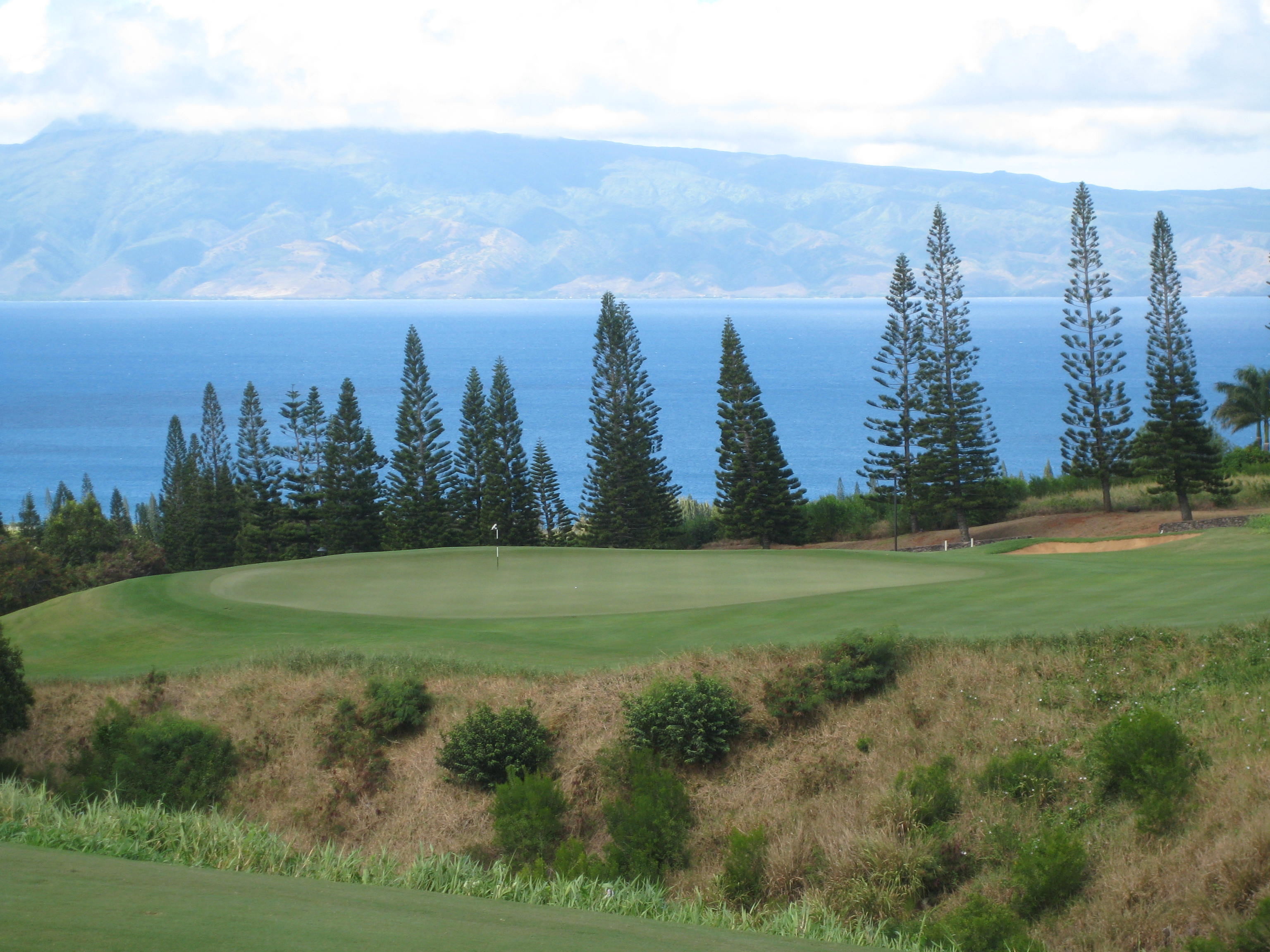
Trent’s Signature Photo Opp-Number Three

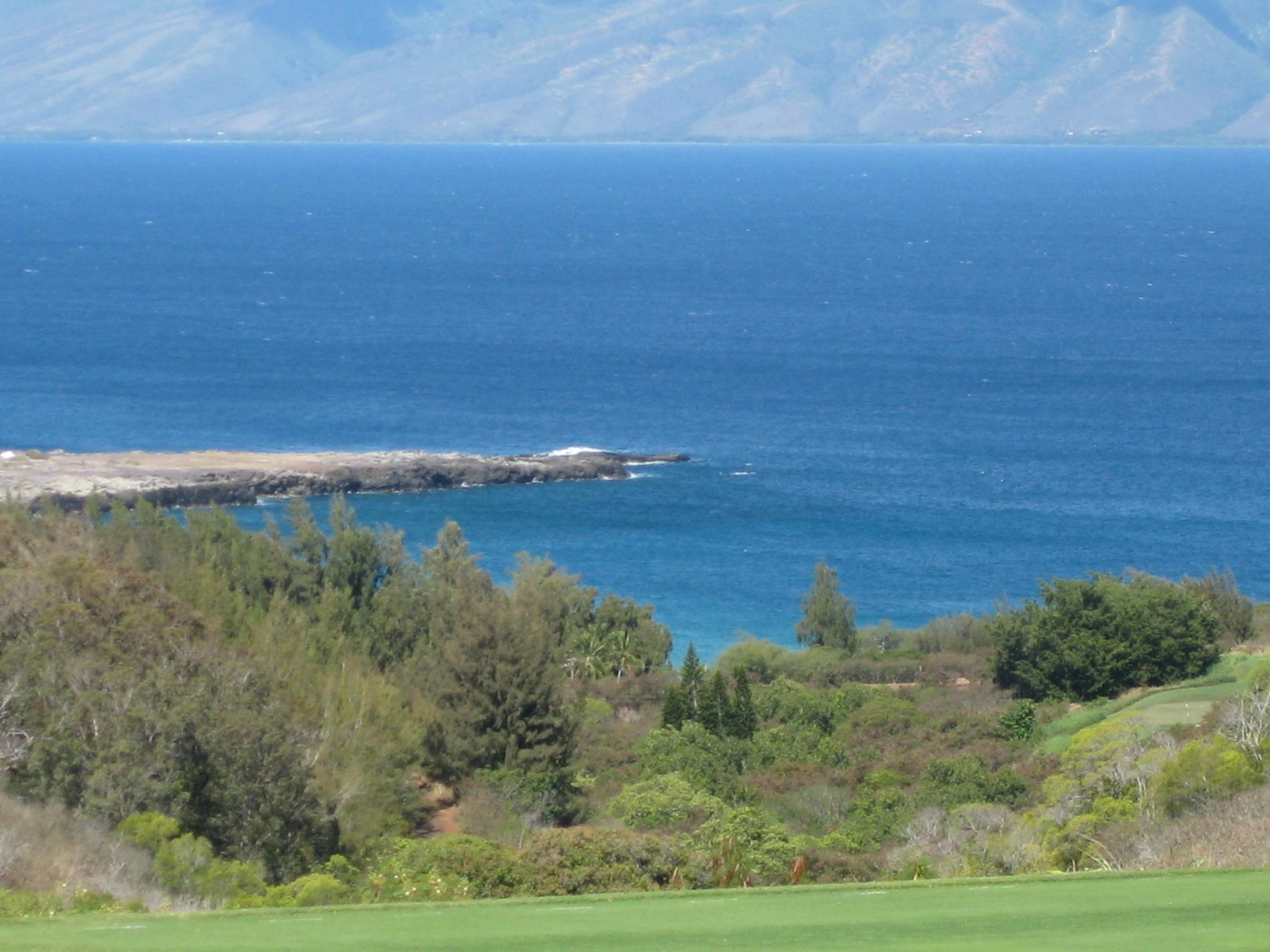
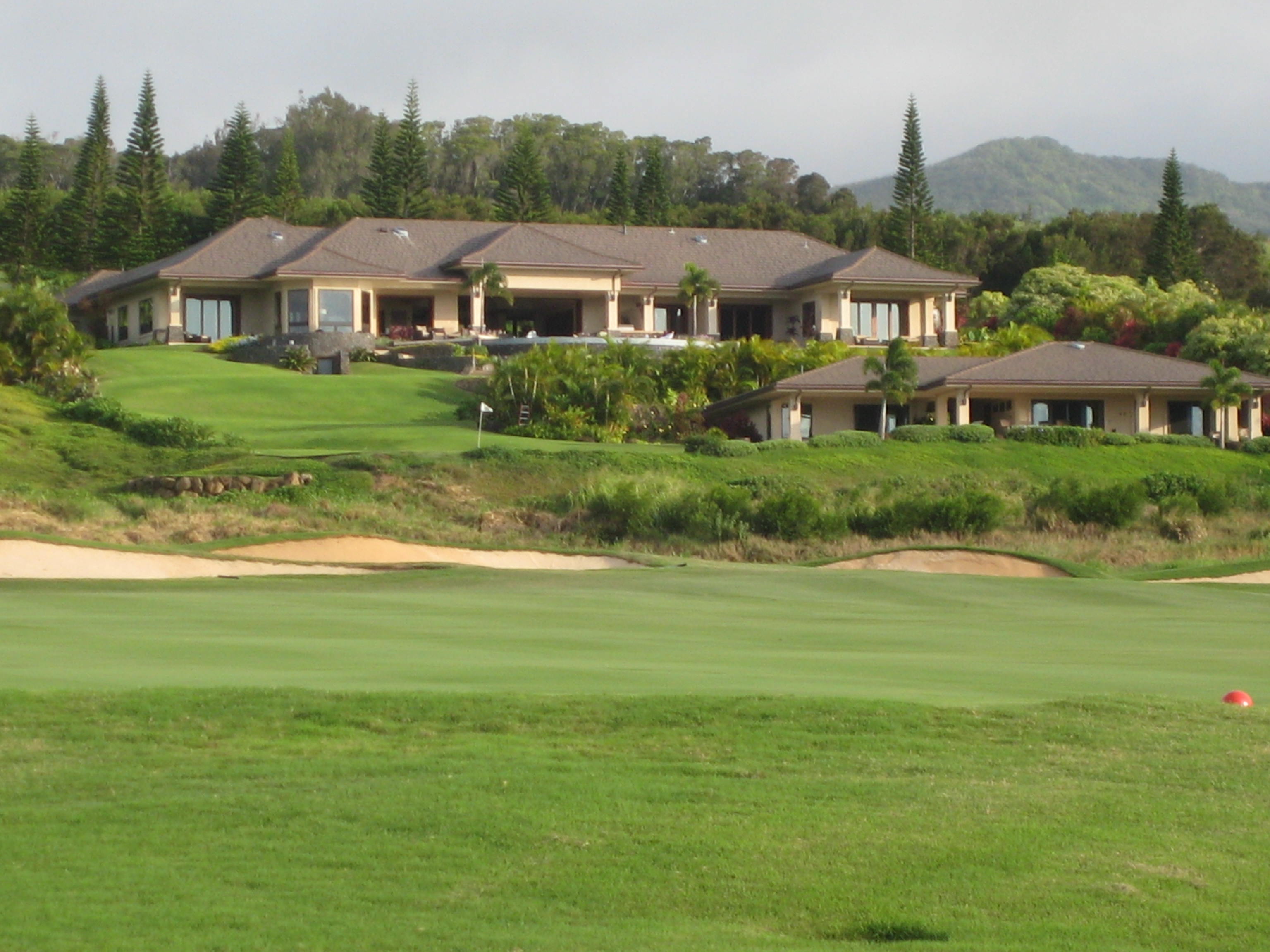
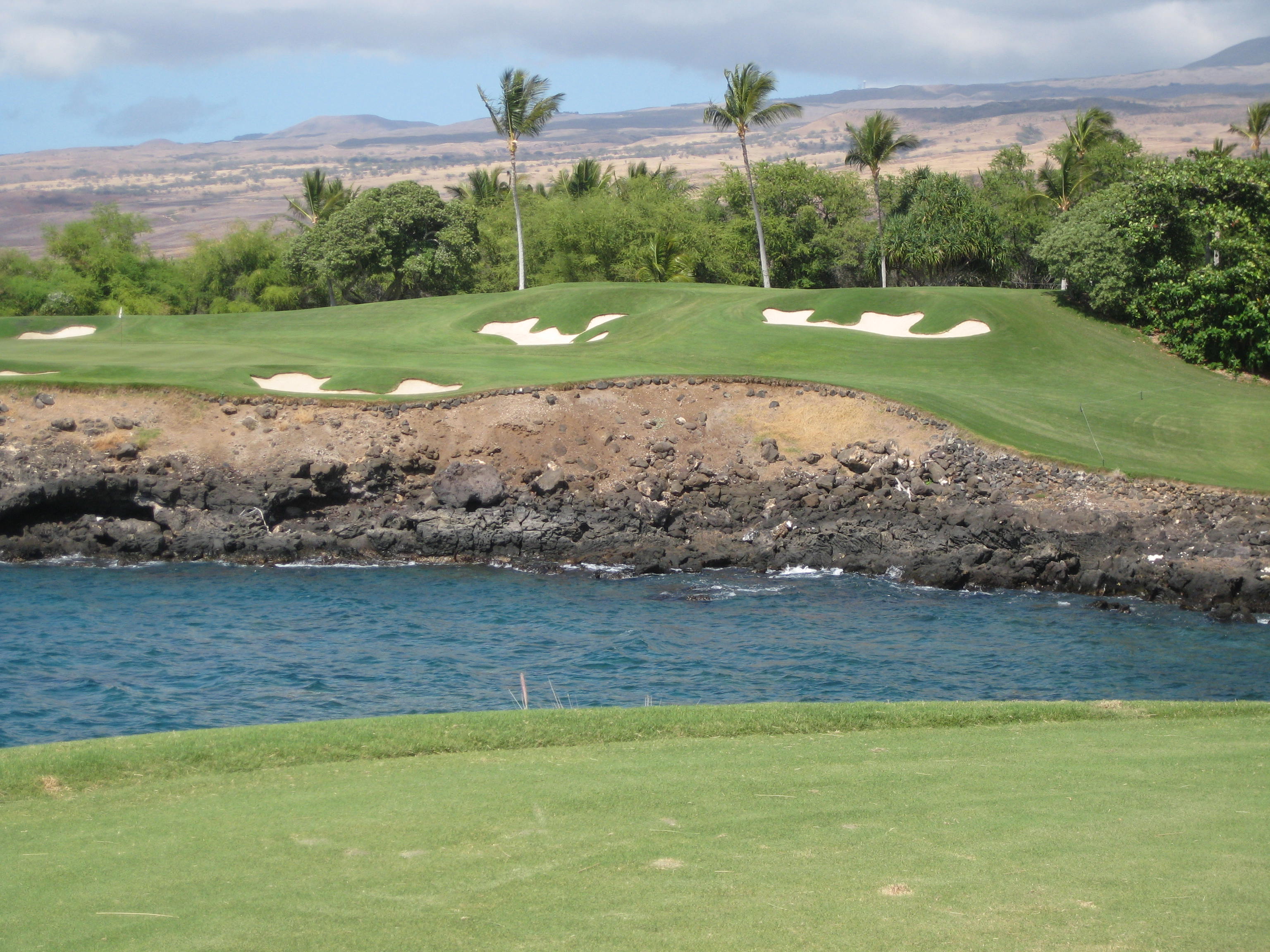
For me the par threes are the centerpiece of this course.  Number 3 is the signature hole with the Cypress Point look and not as much ocean to carry.  This is a photo opp for sure so you can expect a backup due to clicking digital cameras.  Number 11 is another absolute beauty-a medium length par three.  It is a downhill look at an evasive green nestled against the ocean-it brings to mind the 7th at Pebble with a much longer club in your hand.

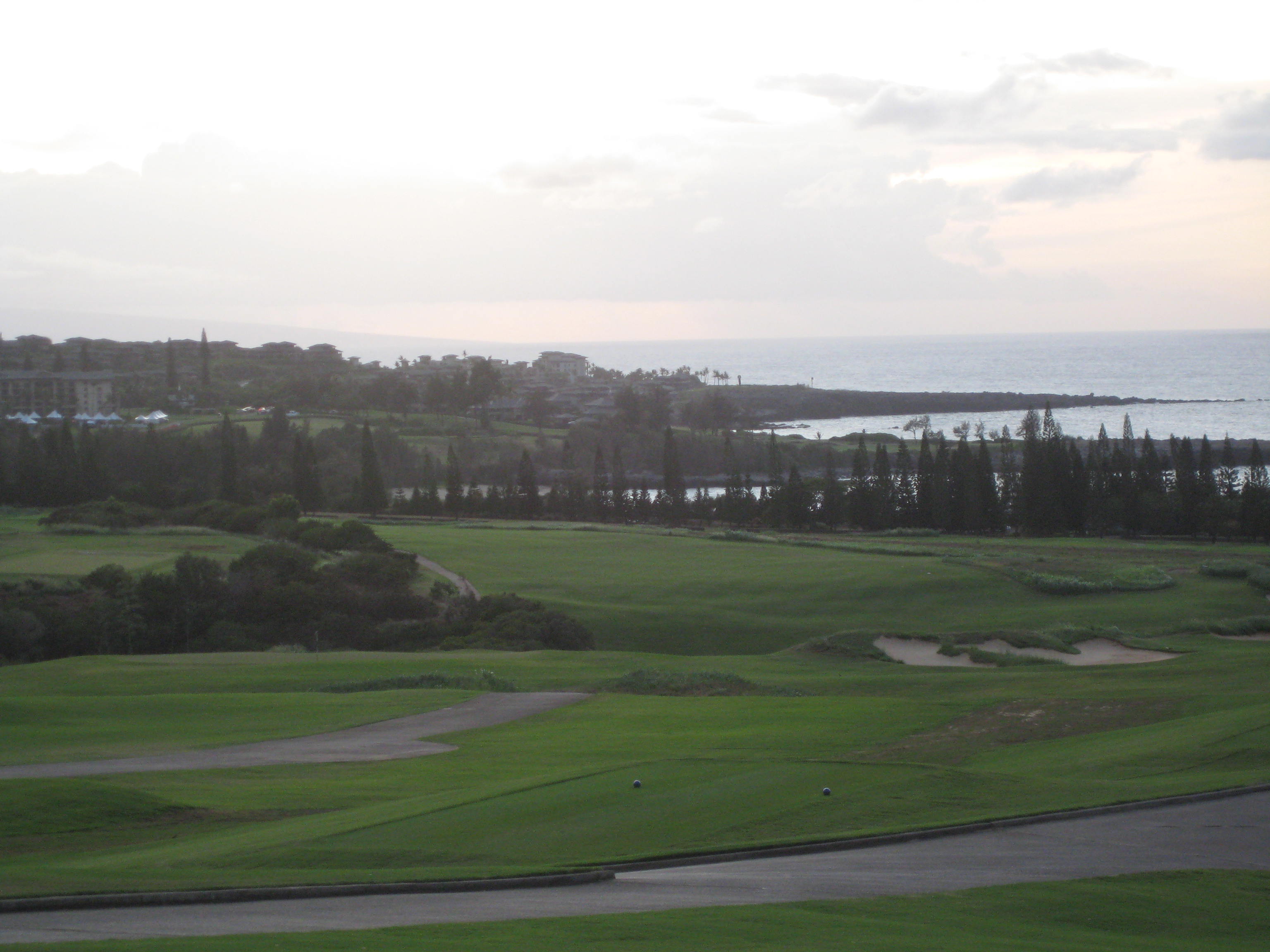
A Bit Of Pebble Beach-Par 3 Number Eleven

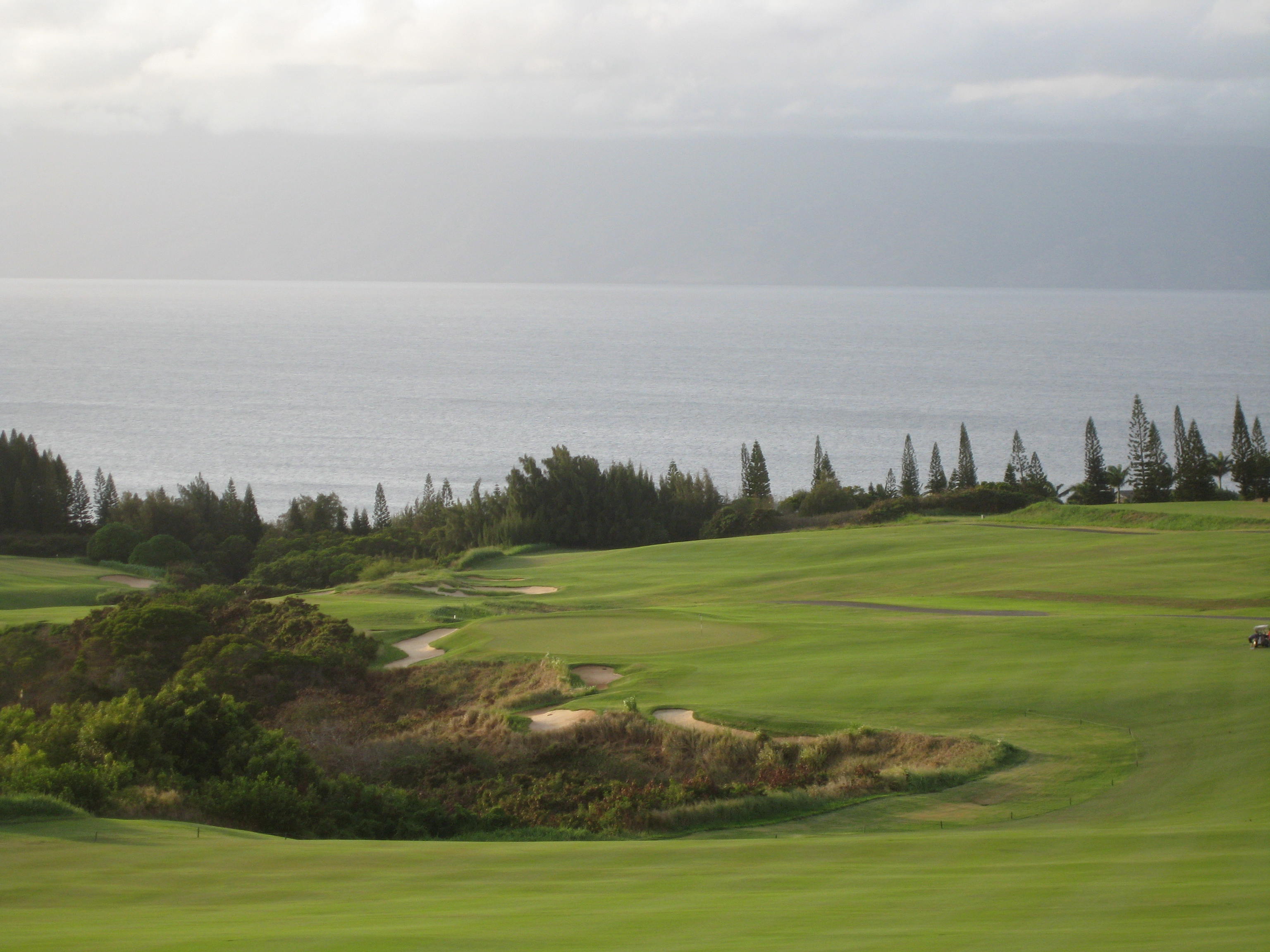
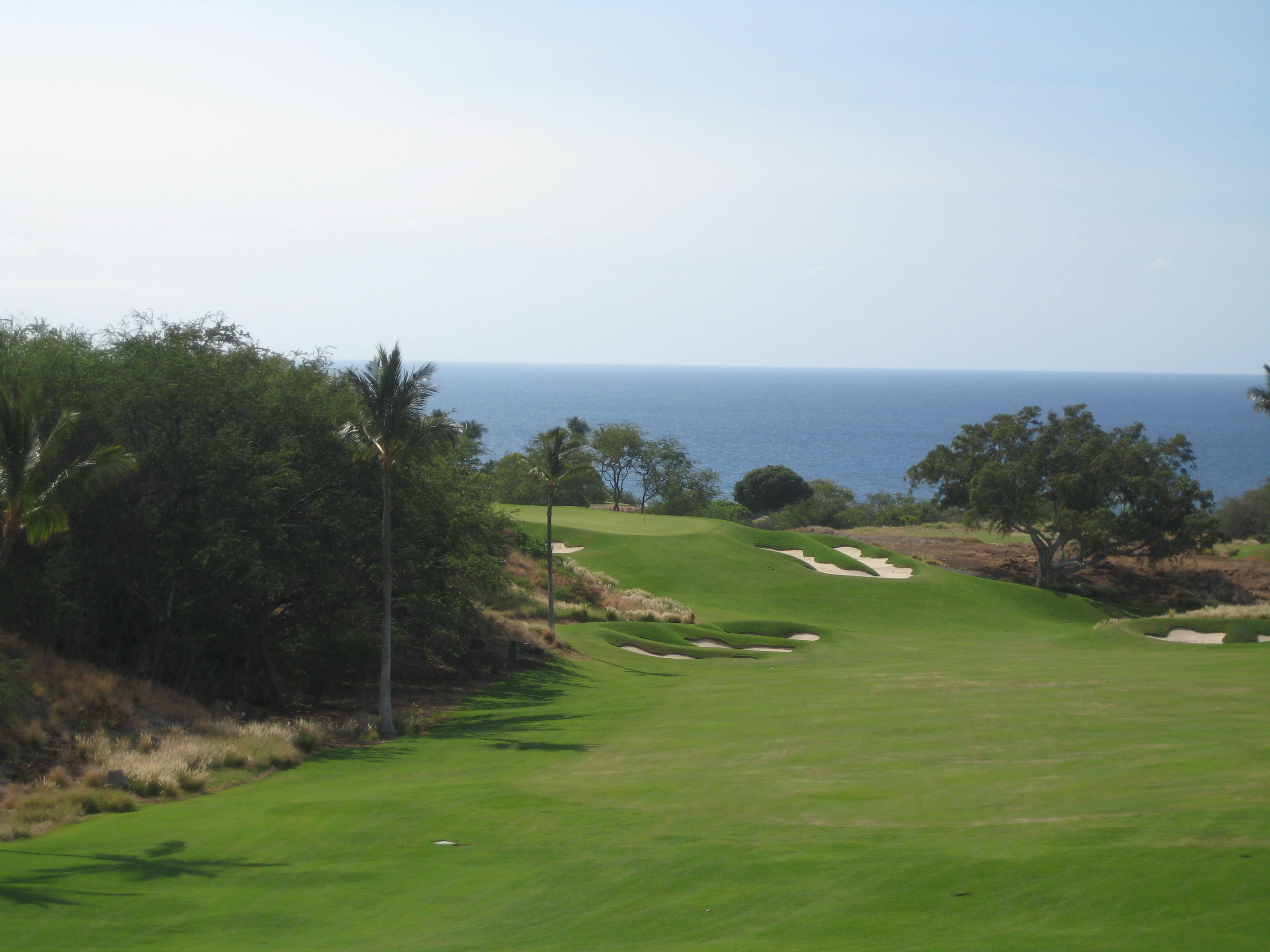
The par fives are some of the most imaginative you will play anywhere.  Here Trent uses the incline, some carefully placed fairway bunkers, and dramatic green arrangements to give you chances for success or disaster on every one of them.  Eight and seventeen are tumbling dice affairs where you cannot believe how far your ball has traveled and are tempted to do things you probably should not consider.  Of the par fours I like nine and eighteen in particular because both give you the distracting dramatic look of the coast line below but demand you control the line and carry of your shots to have a scoring chance at the end of each side.

Stunning Green Complex Par 5 Number Seventeen

Sequencing of the holes is what creates a tactical momentum for any course.  He did a marvelous job in this regard starting you out with relatively easy holes each nine and then quickly picking up the challenge in the next few holes.  Once you reach that level the challenges come in a variety of forms in rapid succession, you barely get over the rush from the last whole when the wow factor of the next tee hits you.  This is a course where you will have a bad hole but there are plenty of chances to redeem yourself with smart decision making and timely shot execution.

The Dramatic Final Act-Par 4 Number Eighteen

As I said earlier, this is not a course for those who are not up for a stiff challenge.  If you cannot hit the high carry shot or big bad bunkering intimidates the hell out of you then take the day off and go to the beach instead.  But if you are up for it this is Robert Trent Jones at his macho best.  Play well here and you will have some serious big fish stories to lay on your friends.

Big Island, Hawaii

Designer: Robert Trent Jones Sr (1966)/Rees Jones (2008)

Tees                Par      Yardage    Rating     Slope

Blue                 72         6806        74.7         134
Orange            72         6358        72.2         130

If you would like a printable PDF of this posting including yardage book quality hole-by-hole descriptions of how to play the course click the moegolf logo below.

 

Hualalai Golf Club

The Four Seasons needed to create a name brand golf course as the centerpiece for their residential resort community on the big island in Hawaii. Jack Nicklaus was retained and did a first class job delivering them a visual and memorable resort course for their guests and home owners to enjoy.  This is a user friendly track with wide driving areas, accessible greens, and not a whole lot of deception.  They host the opening event on the Apostle Tour each year, so you are likely to remember seeing old guys in January begging against the wind on the last two holes.

The signature feature of this course is that it was built on the black lava fields of the eastern Kohala Coast and Jack’s goal was to meld the holes into the up and down flow of the lava fields.  The lava creates a harsher version of the gorse or the heather on the Scottish courses setting a stark visual outline on every hole for the lush green of the Tiff Bermuda fairways and greens.  If you look up the eastern horizon to the mountains from which this came, you do get a real sense of the topographical flow of the element and how it defines the character of this course.

Click on any photo for an enhanced view of the image

Number 5  Par 3  Precision Required

For the most part, the lava is set off the immediate playing areas and there are only a select number of times where it becomes an integral part of the golfing challenge.  The more significant tactical challenge is Jack’s generous use of fields of fairway bunkering.  From the first hole to the last you will see repeated occasions where an entire side of the hole is bunkered, creating a dogleg effect on it’s own.  Missing into the sand on that side of a hole can be a scoring disaster.

The course begins with a typical low impact Florida style par 4-wide fairway-open access to a big green-no lava.  But you cross the road and enter a lava quarry which prepares you for the full lava look. Number two is a visual bait and switch landing area and then a large lava dune on the right obscures access to a very tight green.  The rest of the way is pure lava eye candy.  The short par four sixth is a great example of lava outline  that can appear intimidating with a green complex set in a lava canyon but there is a collar bunker off the back of the green that keeps balls from getting lava burn.  Seven is a unique par five where after you drive to a wide open landing area and play your second down a lava hallway that chokes the fairway framing the required lay up shot.

Number 7 Hallway of Lava

There is an over-hyped cookie jar with some oatmeal raisin and chocolate chips at the turn but the fresh fruit in the cooler is a refreshing touch before you begin the inward half.  The five pars on the back are the most interesting holes of the day.  Ten is a serpentine par five that requires full focus on your lay up shot to have a look at a green hidden behind an acre of sand, trees, and lava.  From twelve to fourteen you are as close to the ocean as you are going to get so the wind becomes a major factor in all club selection.  Fourteen is another very imaginative par five with a hide and seek green complex that is difficult to negotiate with a wedge in your hand.

Number 17 Green, Lava, and Sea

The finish is all finesse as you head back toward the clubhouse.  A couple of technical par fours before you reach the signature seventeenth, the only hole that is truly exposed to the Pacific.  Here you have to parasail one through the sea breeze onto a well protected green-anything left hits lava and heads toward Japan.  The finish is a beautiful short par four over ancient Hawaiian fish ponds and a Nicklausian sea of sand into a demanding tight green set.

Number 18 Sand Sea Of Madness

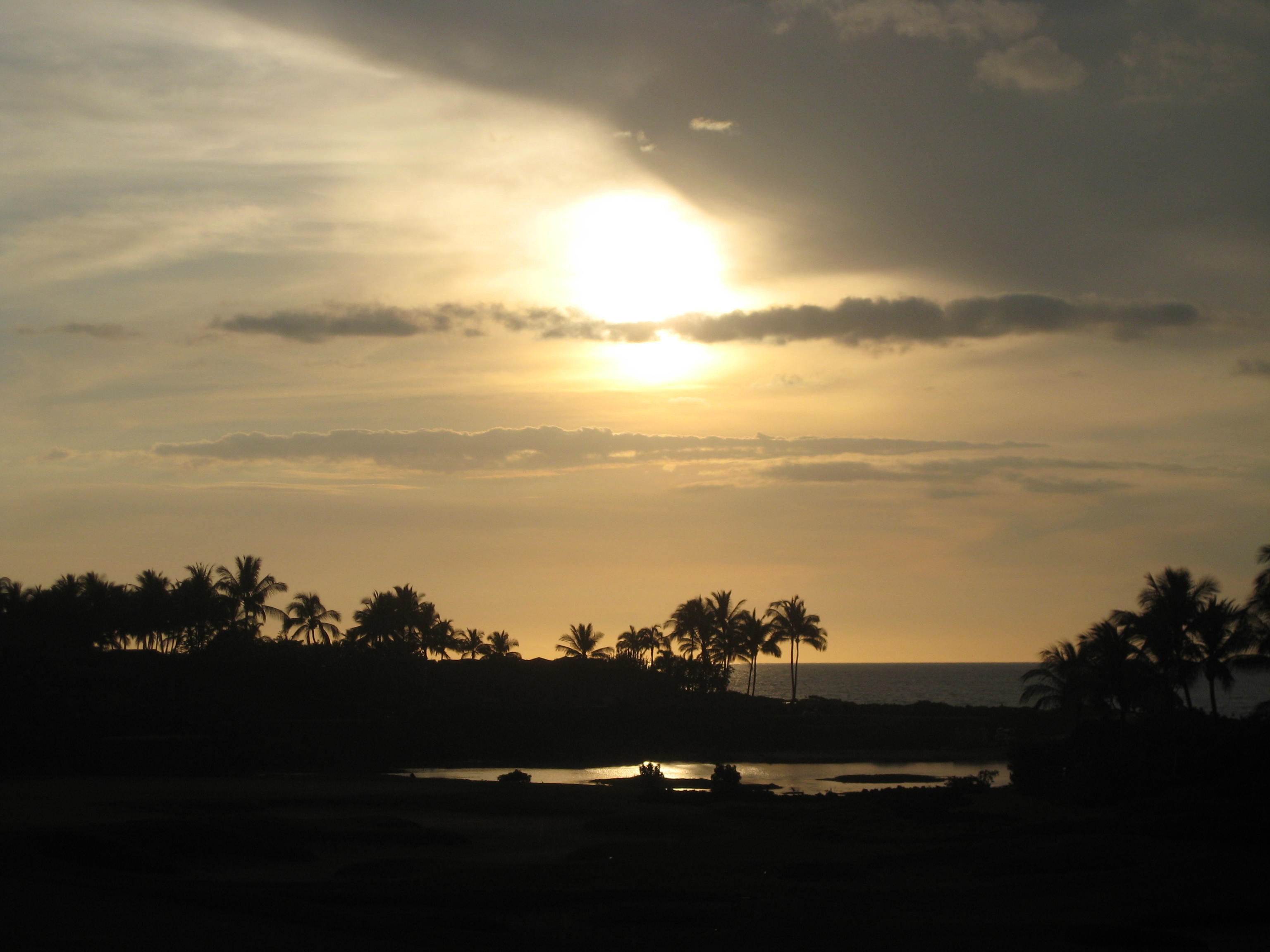
This is a Four Seasons so all the amenities are first class.  A sprawling practice facility is at your disposal with a couple of acres of grass teeing area, pitching green, and a large ambling putting green.  Perfect recluse for a five o’clock practice session to sort out the demons you encountered today.  There is nothing like the tranquility of downhill ten footers dropping into the cup as the sun dips back into the Pacific Ocean.

Curtain Call

Big Island, Hawaii

Designer: Jack Nicklaus ( 1995 )

Tees                    Par     Yardage    Rating       Slope

Championship    72         6632         71.5         134
Regular               72         6032         68.8         129

If you would like a printable PDF of this posting including yardage book quality hole-by-hole descriptions of how to play the course click the moegolf logo below.


Ballybunion-The Magnificent Irish Links

“Golf has attracted many fine writers, but none extols the game with more authority and affection than Herb Wind, or more successfully conveys its gracious, fickle, generous spirit to the printed page.”  These are John Updike’s words from the cover of the expanded edition of “Following Through- Herbert Warren Wind on Golf”.

To many, Herbert Warren Wind, who wrote eloquently about golf for over 50 years, was the greatest American golf writer of his era.  He coined the phrase “Amen Corner” to describe 11, 12, and 13 at Augusta, those pivotal three holes on the back nine that so often decide the fate of the leader in the Masters on Sunday.  He assisted Ben Hogan in writing on of the most influential golf instructional books of all time, “Five Lessons-The Modern Fundamentals of Golf”.  Wind built a resume of exceptional golf writings through his articles in The New Yorker and Sports Illustrated from 1941 until 1990.  His writings chronicled major tournaments, seminal matches,  revered golf courses, and the lives of the game’s greatest heroes.

Ben Crenshaw said, “Herbert Warren Wind has always been our foremost American Golf Writer.  For those continuing their search in their study of golf, “Following Through” is a must, as it contains some of his finest essays”.  One of those essays was his review of Ballybunion, one of Ireland’s most storied links courses.  In it he describes in wondrous detail the special character of this jewel on the west coast of Ireland and the unique charm of links golf to those who love golf.

(Click here to read Herbert Warren Wind’s “Ballybunion”)

Herbert Warren Wind

The New Yorker 1971


The Humor Of It

In an article “The Humor of It” written in 1934, Bernard Darwin discusses the positive roll humor can play in the psychological side of golf.  His point is that we are generally way to harsh on ourselves when things don’t go well on the golf course and we can be prone to behavior that is downright comical if we reflect on it objectively well after the fact.

If only we could just see the humor while in the midst of it, we would probably save ourselves much of the ensuing calamity that is likely to result.  He quotes the great female English champion Joyce Wethered who was speaking of “her recipe for developing a measure of philosophy against all the horrid things that are about to happen”.  She said, “I have been able to laugh at myself for the absurdity of such intense feelings and the perversity of one’s thoughts”.

There is wisdom in this advice.  What golfer, in reflecting on how their temper ruined a round after an unforced error on the course, would not have benefited from seeing the humor of it, thereby limiting the damage and maybe salvaging the round.

(Click here to read Bernard Darwin’s Essay “The Humor of It”)

The Humor of It

Playing The Like 1934

Bernard Darwin On Golf

(Compiled by Jeff Silverman)

Tempered Response

Tom Boswell, the extraordinary sports columnist for the Washington Post, has written entertaining and thought provoking pieces on golf over the years through his newspaper column and magazine articles.  In 1987 he published a compilation of writings in a book he titled “Strokes of Genius” and that aptly describes his writing aptitude as well as the subject matter in his book.

The final piece is his personal confessional of a typical golfer’s wrestling match with his temper on the golf course.  Boswell says, “Golf is a humbling game, but often it takes years to learn the right sort of humility.  People have been trying to sort out their frayed feelings about golf for a century.”

Reading this piece is a journey of introspection for all of us.  Whether we have the temperament of Tommy Bolt or Mother Teresa, we have all had those moments of volcanic response to what we consider the unfair indignities the game can met out.  This piece is a chuckle and a zen moment all in one.

(Click here to read Tom Boswell’s “Temper Fugit”)

Thomas Boswell

Temper Fugit

Strokes of Genius (1987)

Sun Mountain Club Glider Travel Bag

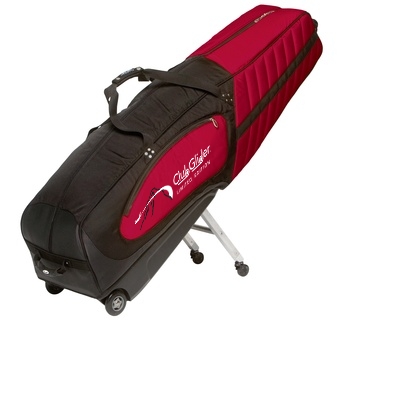
A number of years ago The Golf Channel ran a reality show featuring innovations in golf related products. Most of what was featured was frivolous or impractical. But one of the products, the Club Glider, was truly innovative and offered an alternative to the wrestling match people experience in airports with their golf club travel bag . The Club Glider became a bona fide product as a result and is now marketed through Sun Mountain.

What distinguishes this travel bag from all others is that it has a spring loaded, cantilever leg system with caster wheels that support your clubs and make maneuvering around the airport an effortless experience. The retractable legs are stowed away while your clubs are in transit and can be deployed with one hand as you pull your bag off the baggage carousel.

How many times have you trudged a sagging travel bag through the airport like Sisyphus only to have it flip over like an uncooperative bag of mulch when you make the slightest change in direction? How aggravating is it to get on or off the escalator because your travel bag has no spine and seems to collapse in a lump at an inopportune moment?

The Club Glider removes the need to support your bag at any time and allows you to guide your clubs with one hand as you make your way up the line at the check in or car rental counter. The support angle created by the legs means no need to bend over and lift your bag every time you want to move a few feet. The caster wheels let you effortlessly maneuver with one hand through tight spaces without changing speeds.

The bag comes in three models and is priced at around $230 to $300. At prices like these they made sure this thing has reinforced construction and is fully padded to protect your stuff with plenty of extra storage for shoes, balls, and even your returning laundry. They say you can even put up to a 50 inch belly putter safely in the bag.

The Club Glider may sound pricey but I must say it is worth every cent of it. The first time you see the rest of the guys at the baggage carousel doing the alligator mambo with their canvas travel bag you will realize this was money well spent.

(Click here to see it at the Sun Mountain Club Glider website)

October, 2011

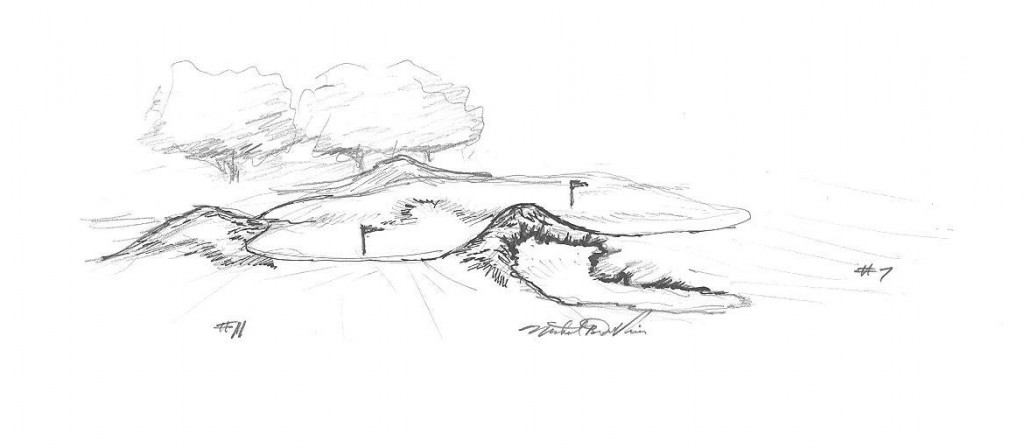
The “Lost MacKenzie” of El Boqueron

Alistar MacKenzie, one of history’s most respected course architects, has  produced many of the great masterpieces of golf course architecture-Cypress Point, Augusta National, Crystal Downs, Lahinch, Pasatiempo, and Royal Melbourne.  As with so many artists there is the story of a lost treasure from their collection.  In that spirit it turns out that the most creative design he ever came up with may be one that was never built, as related in this article by Thomas Dunne in 2007 of the lost MacKenzie design of El Boqueron in Argentina.

It turns out that in 1930, while in his creative prime, the stock market crash and the beginning of The Great Depression sent MacKenzie global in search of new work.  In spite of economic travails in Argentina the very wealthy elite asked him to design two courses at The Jockey Club in Buenos Aires.  While he was there he met a wealthy land baron, Enrique Anchorena,  who was in the process of putting together the grandest private park in all of South America on his private estate.  He hired the most distinguished architects to do the landscaping and building construction.  So it just made sense to commission MacKenzie, who just happened to be in the neighborhood, to design his private course for this estate.

This was going to be a  a course that was played by Enrique’s family and friends, so it gave MacKenzie a unique opportunity to try things he would never do on a more intensely played course.  What resulted was a mind boggling design on a rolling piece of rural ground which included nine double greens with dramatic contouring, his signature jagged edged intimidating bunkers, plenty of subtle tactical deception, and a good deal of nasty in patches of curros (gorse) adjacent to the playing areas to punish wayward shots.

The effects of the depression prevailed and the course was never built but the plans survived and ended up framed on the wall above the fireplace in the clubhouse that one of Anchorena’s heirs took for his permanent home.  Fast forward about 60 years when  David Edel, a struggling PGA pro, was visiting Argentina one winter and happened to hear about the surviving plans for the MacKenzie course from a golfing friend.  Edel, who grew up playing MacKenzie courses in California, became obsessed with the notion of purchasing the plans from the family and bringing this “Lost MacKenzie” to life in America.

It took another ten years but in 2006 Edel spent a considerable portion of his family savings to procure these plans and start a process of finding an appropriate place to build his dream course in the states.  He found an appropriate piece of ground of similar topography to the original at El Boqueron just outside Austin, Texas-the place seemed perfect, even the prevailing wind was in the same direction.  He then searched for the appropriate architect to do this design and settled on Mike DeVries who was an acknowledged expert in MacKenzie designs.  For DeVries this was a once in a lifetime opportunity to pay homage to the man he most respected in the world of golf course design.

Unfortunately our current economic malaise has delayed the construction of this private golf club in Austin for now, but Edel has taken up residence on the property and fervently believes that someday this dream will be realized to bring the Lost MacKenzie to life in the hills outside Austin.

(Click here to see green complex drawings of “The Lost MacKenzie”)

Greens #11 and #7 By Mike DeVries

Thomas Dunne added another piece to this story in 2009 when he interviewed Mike DeVries the designated architect for the El Boqueron course to be built in Austin.  In this interview he went over DeVries amazing drawings of the double green settings planned for this project.  The detail in DeVries descriptions of the planned complexes reveals the bold creativity that MacKenzie brought to his designs.  This is a rare look into the thought processes of a legendary designer and a well studied disciple of the great artist.

Thomas Dunne

http://www.out-and-back.net

What’s Wrong With Tiger’s Swing?

Good question-one that you and I cannot answer and apparently neither can most of the TV pundits who get paid by the word for stuff like this.  It behooves us to ask someone who does swing diagnosis every day-someone who has seen it all and then some.

Wayne Defrancesco is “in the business” as one of the most prominent swing instructors in the Mid-Atlantic region.  His website is chock full of erudite analysis videos of the best players in the game.  So when I saw the attached video comparing Tiger’s current swing to the swing he had in 2000 when he was on top of the golfing world I thought this is a good place to begin.

Wayne is like a Talmudic scholar when it comes to this stuff-he goes to original documentation and then the commentaries.  In this case, he begins by refuting the misguided opinions of two of the talking heads from Golf Channel, Brandel Chamblee and Frank Nobilo.  He then does what Wayne does best, pulls out side-by-side video from his personal trove to show you how it used to be and how it is now and explains the changes in clear and understandable language.  His insights are very empirical and the way he associates this to the results in Tiger’s game is very intelligible.

In his quest to be the Uber Golfer, Tiger has embraced the advice of a long line of swing gurus, developing and reinforcing some bad swing technique along the way. His shot performance is suffering-especially when it matters the most.  Sound familiar?  And you’re no Uber Golfer.

So whatever else is affecting Tiger’s game-lack of confidence, bad karma, bad putting, or lack of domestic tranquility-according to Wayne D the real problem starts with bad swing mechanics and goes south from there.

(Click here to view Wayne’s video comparison of Tiger 2000 to Tiger Today)

October, 2011

Pine Valley-The Crump Cup

There is a veil of mystery that pervades Pine Valley, consistently on the top of everyone’s list of the most difficult courses in America.  This course was the creation of George Crump, a Philadelphia Hotel man who set out to create a track that would punish every mistake a player makes on the golf course with a bad result.  From everything I have heard about Pine Valley he succeeded masterfully in that effort.

Since Pine Valley is such a private place and they have rarely had national events there, it remains a mystery to most of the interested golf world.  There is one black and white Shell’s Wonderful World of Golf episode you can find on the internet from back in the 1960’s between a young Gene Littler and Byron Nelson.  There have been a couple of Walker Cups played there as well that had some TV time.  But that is about it.  Here are some photos from my day at the ranch.

The chance most people would have to get onto the property of this course in Camden, New Jersey, is during the prestigious four-day amateur invitational event they hold every year called The Crump Cup.  This has been going on since 1922 and has had as it’s winner some of the history’s most distinguished amateurs including Francis Ouimet, Chick Evans, Billy Joe Patton, and Jay Sigel.

The event is two rounds of medal qualifying to establish flights followed by four rounds of match play to determine the champions.  The last round is held on Sunday, this year on October 2nd, and it is discreetly open to the public to enjoy.  You park in the Amusement Park pictured above and get shuttled down a gravel road to a back entrance to the property.   Once inside the fence you are free to roam unfettered about the grounds of one of the most storied courses in America.

They hold this event without much fanfare every fall-usually in September or October.  Not much advertising but I imagine with a little due diligence in August you can get the particulars on how and when to attend.  If you are in the Philadelphia/South Jersey area I am sure attending The Crump Cup would be an experience to remember.


October, 2010

Make Room For Butch Harmon

Jim (Bones) Mackay wrote this piece for Golf World expressing his view that they need to induct Butch Harmon into the Hall of Fame. After all, he has been the mentor and teacher of so many Hall of Famers, he should get in by association alone.  Norman, Ballesteros, Couples, Woods, Cink, and Clarke just to name a few.

Butch is his own man, he has a distinctive, no nonsense way of talking to people and it is clearly very effective with his students and pretty entertaining for the rest of us.  Given that there are famous coaches in the Hall of Fame of other sports and for golfers their teachers are their coaches, I like Bone’s logic in this submission.  Butch has always been a guy who breaks the mold we should honor that independence and competence in his craft and give him his due in the Golf Hall of Fame.

(Click here to read Jim Mackay’s article on Butch and The Hall of Fame)

Jim Mackay

October, 2011