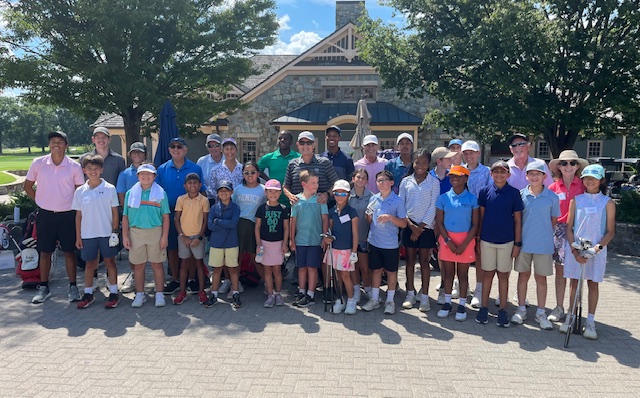
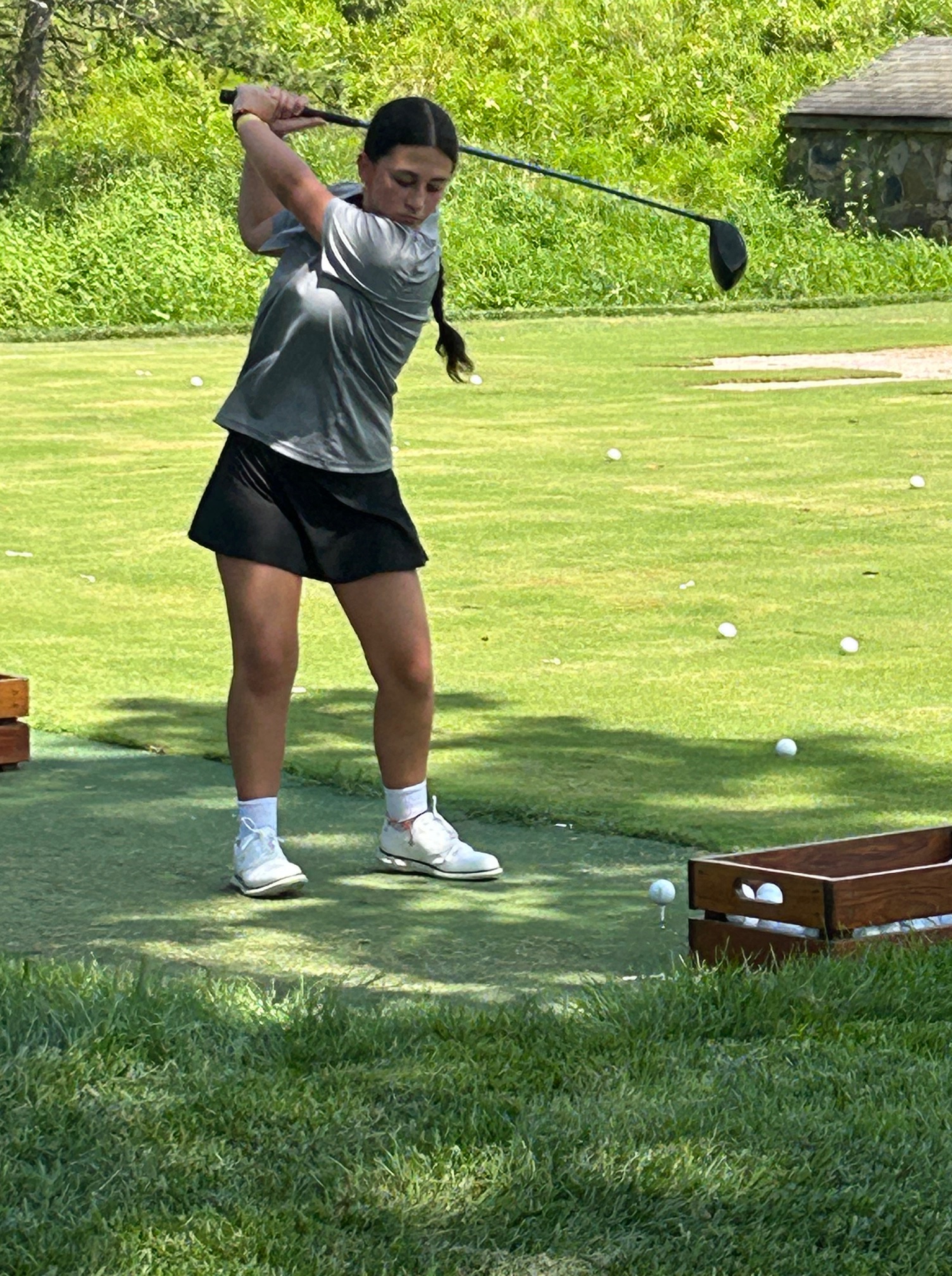
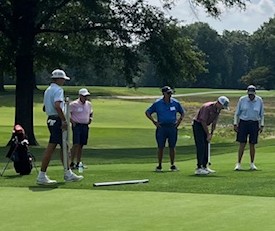
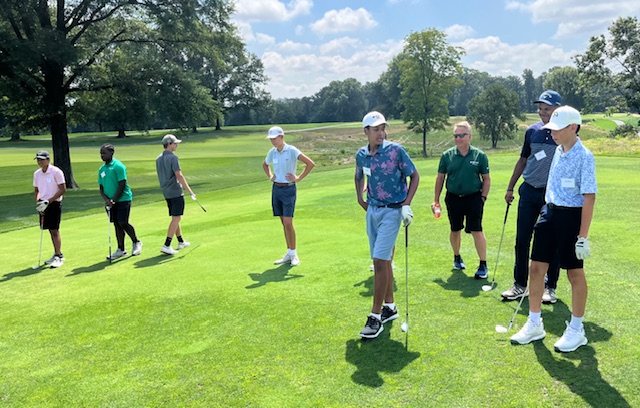
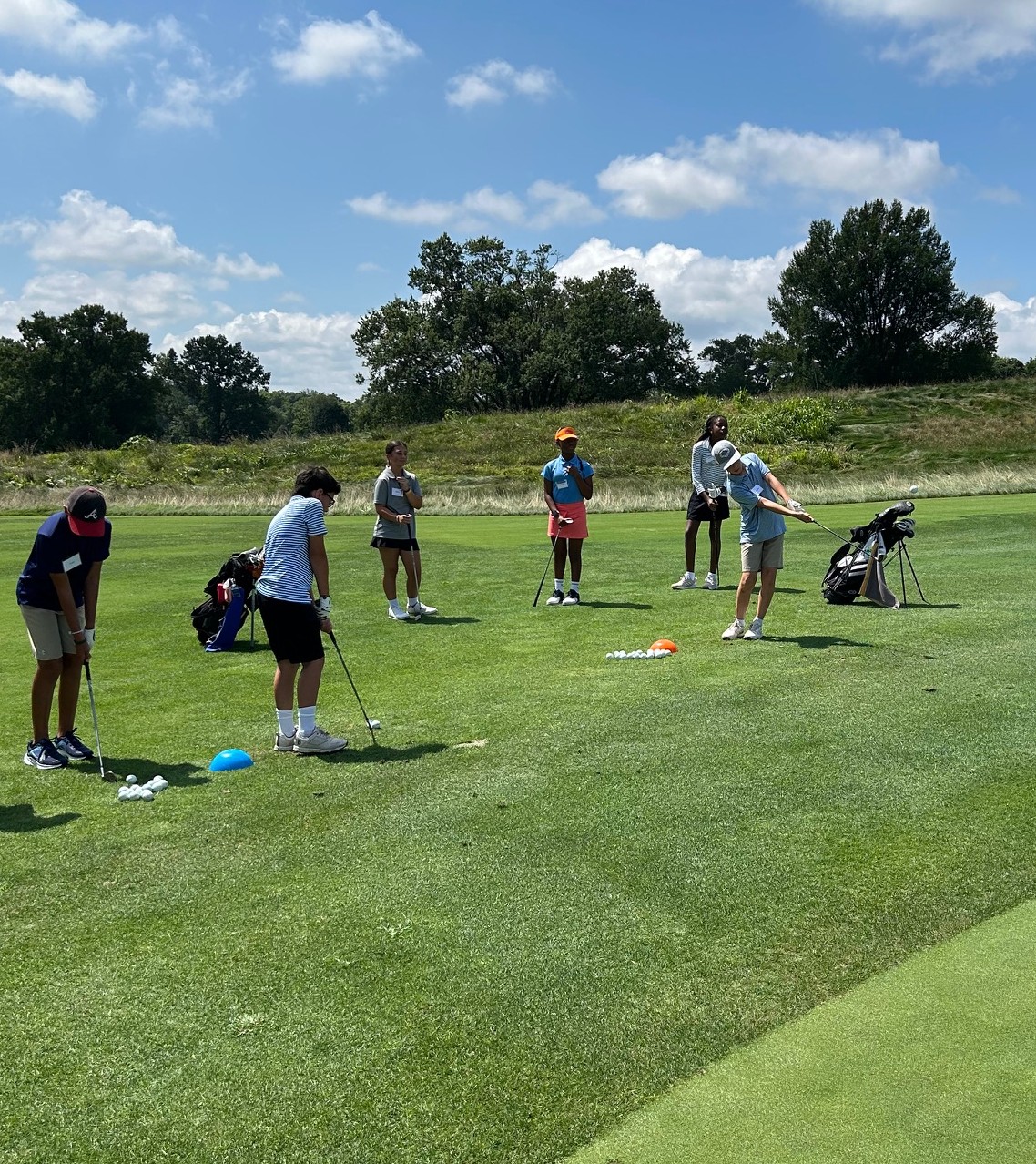
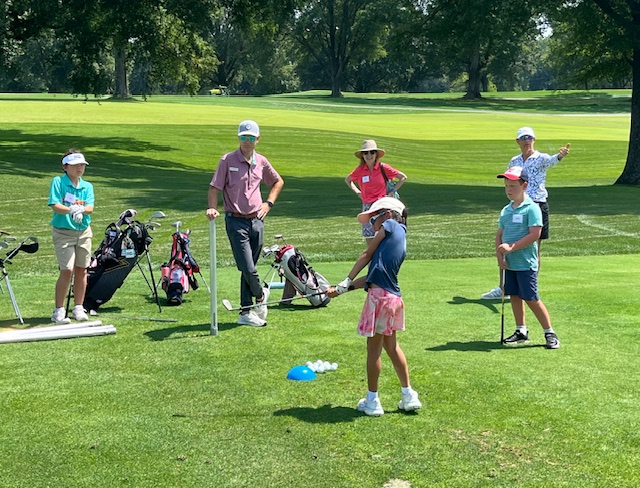
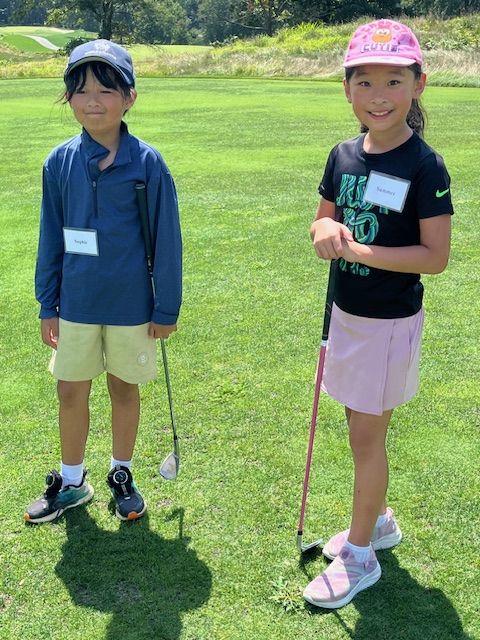
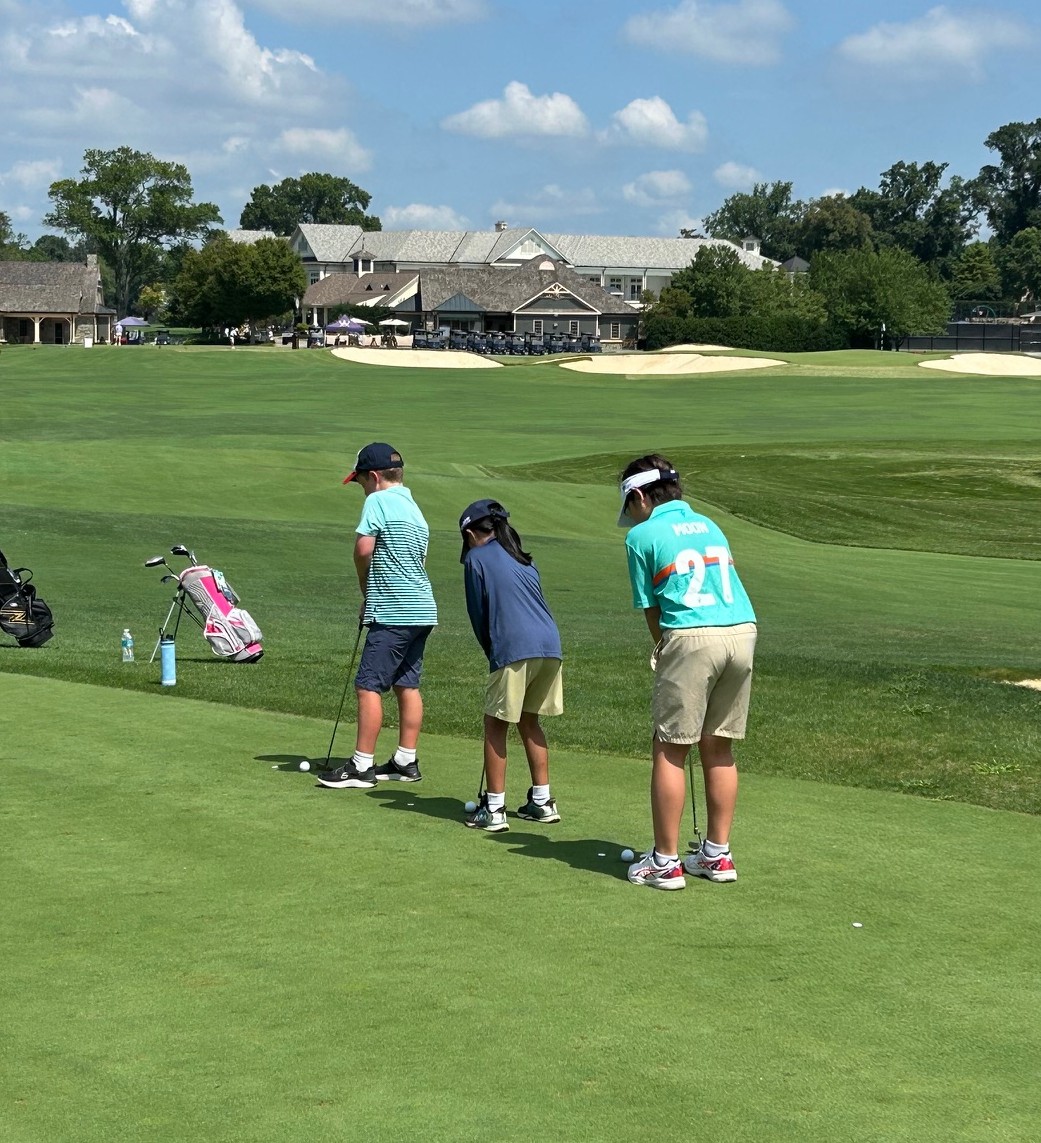
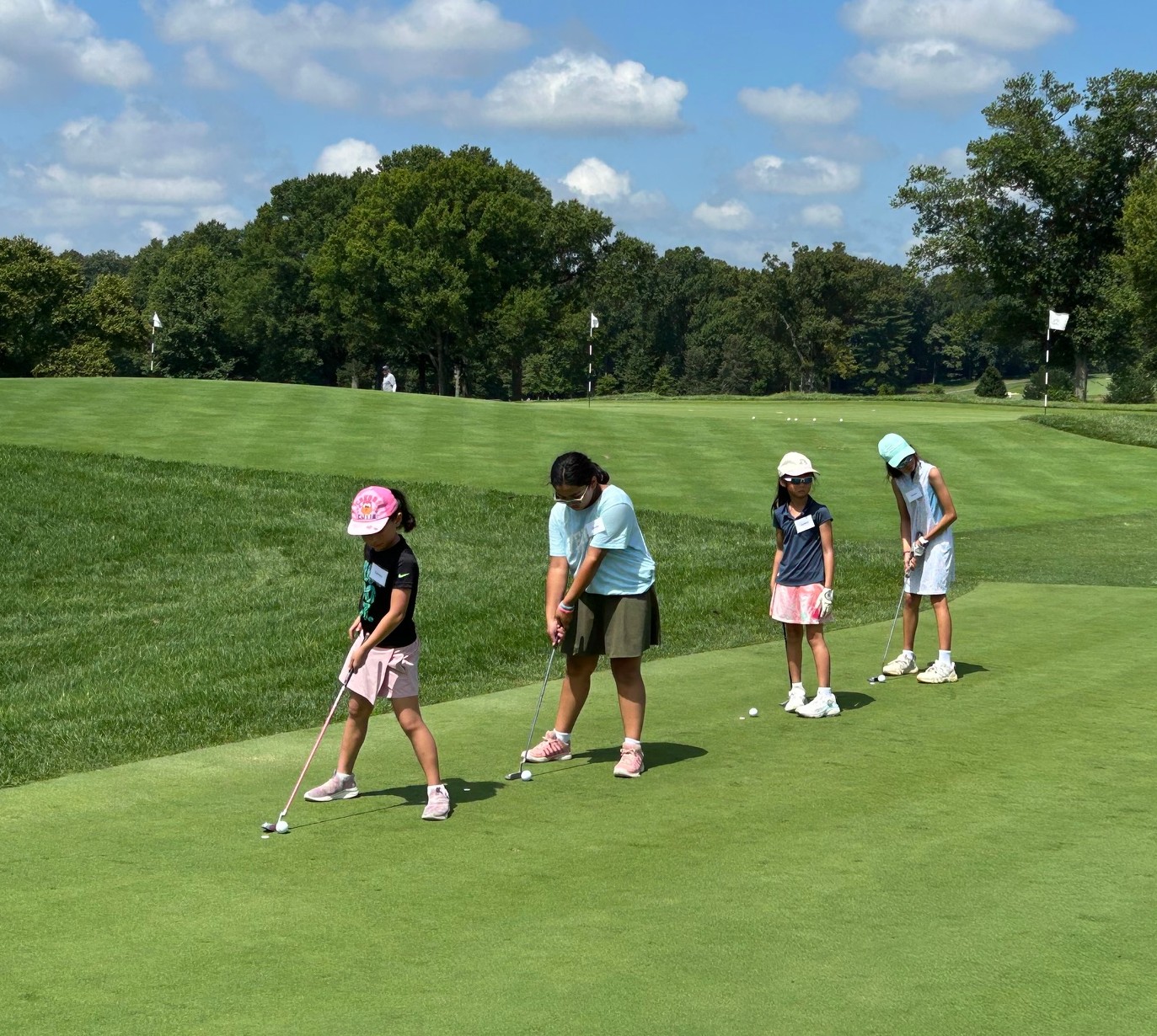
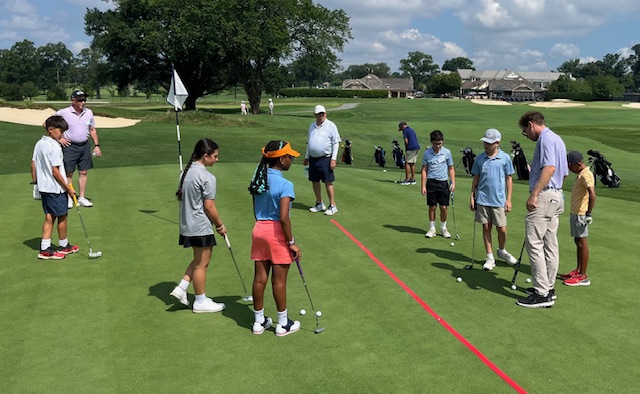
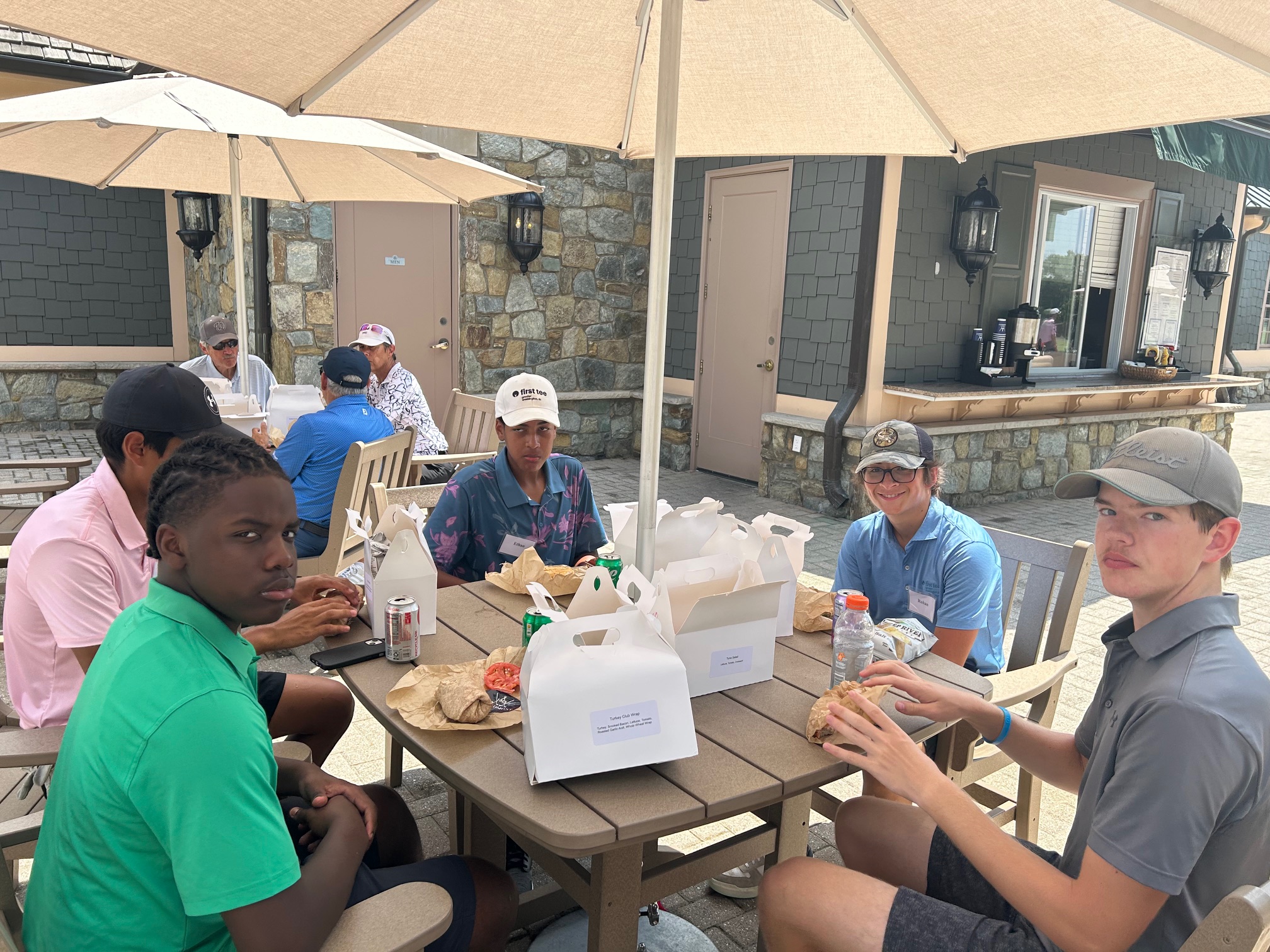
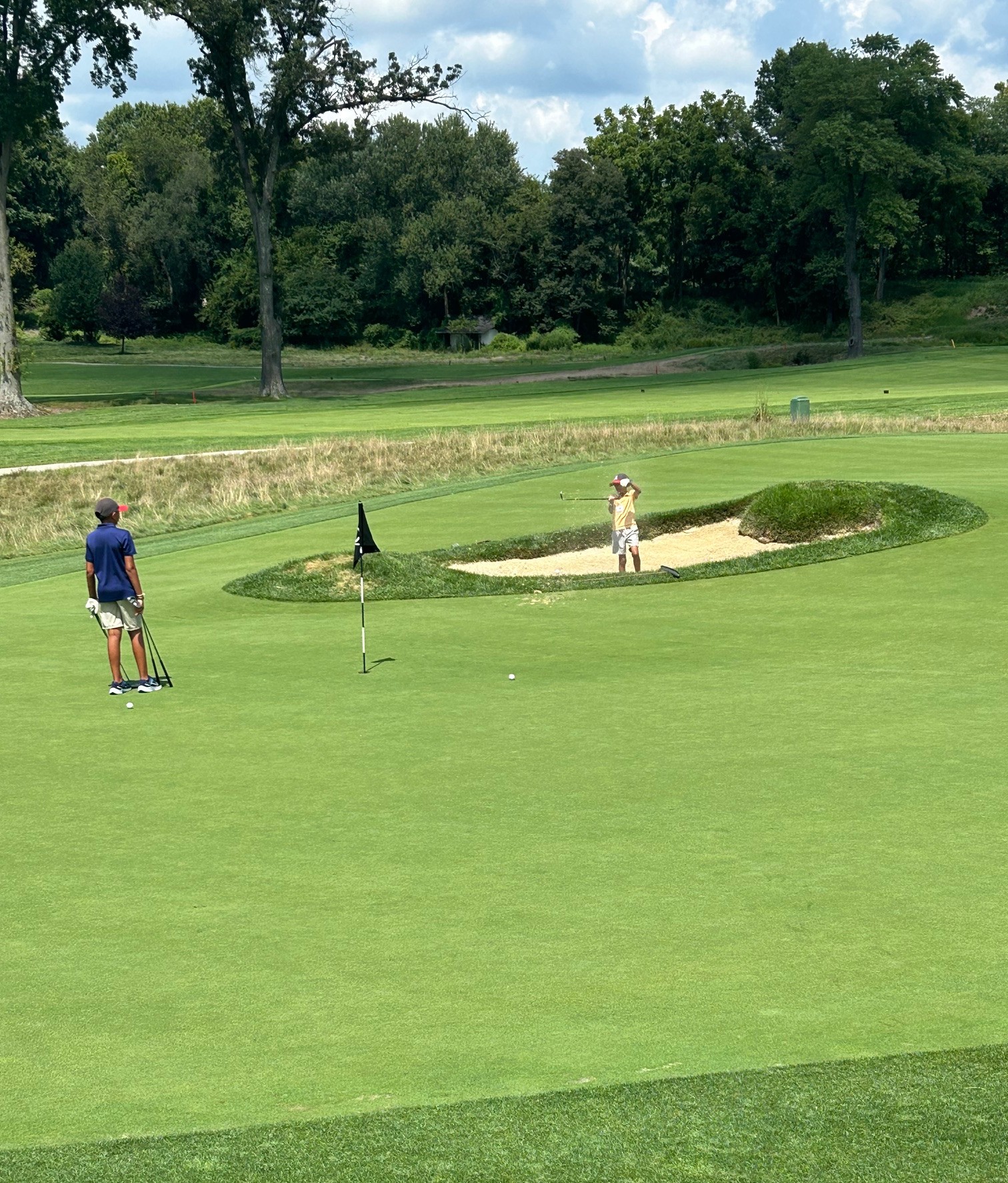
The Annual First Tee Mentor Outing Celebration was held at Woodmont Country Club today with 20 wonderful kids from the Metropolitan Washington First Tee Program out for a full day of clinics, lunching, and on course time with their peers.
We had a dozen volunteers from our club along with capable professional golf staff helping to facilitate the day’s activities.
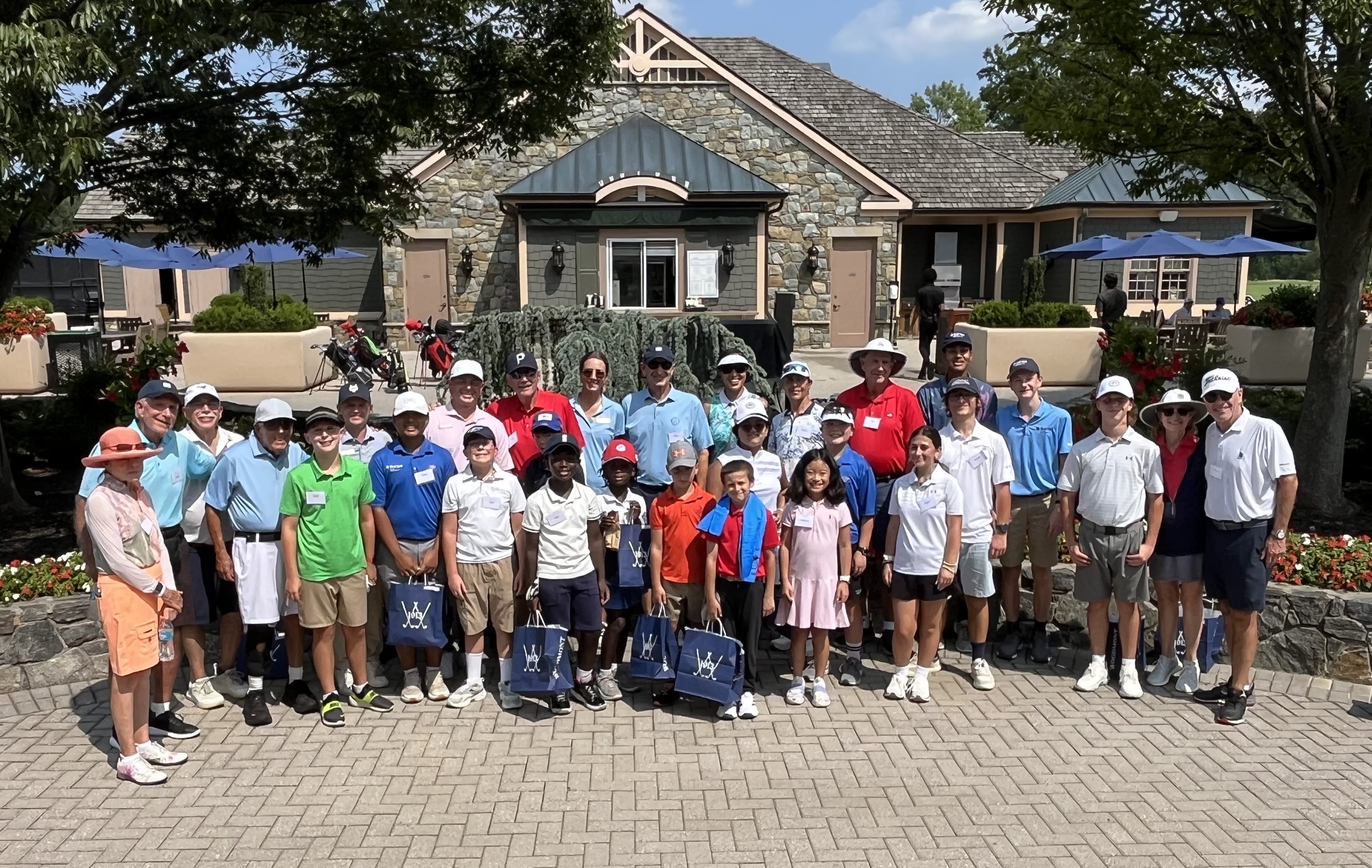
The kids, the volunteers, and the staff who made this day special
The First Tee program has introduced these kids to the principles of golf and building relationships. It is teaching them the etiquette, course awareness, and basic skills of the game. What you see as a result is self-confidence, poise, and grace in their ability to interact with each other and adults they have to deal with along the way.
Our volunteers and staff provide support, encouragement, and a few hugs that help them feel good about what they can accomplish through this game.
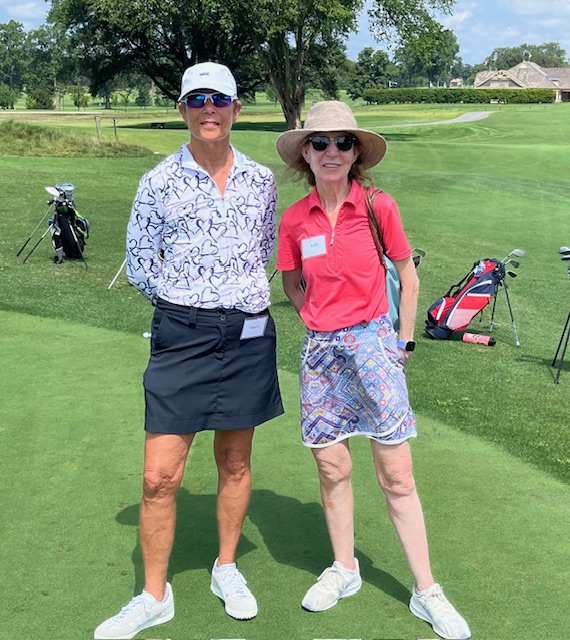
Sherry, JacieKate, Cody, Ryan, and Moe
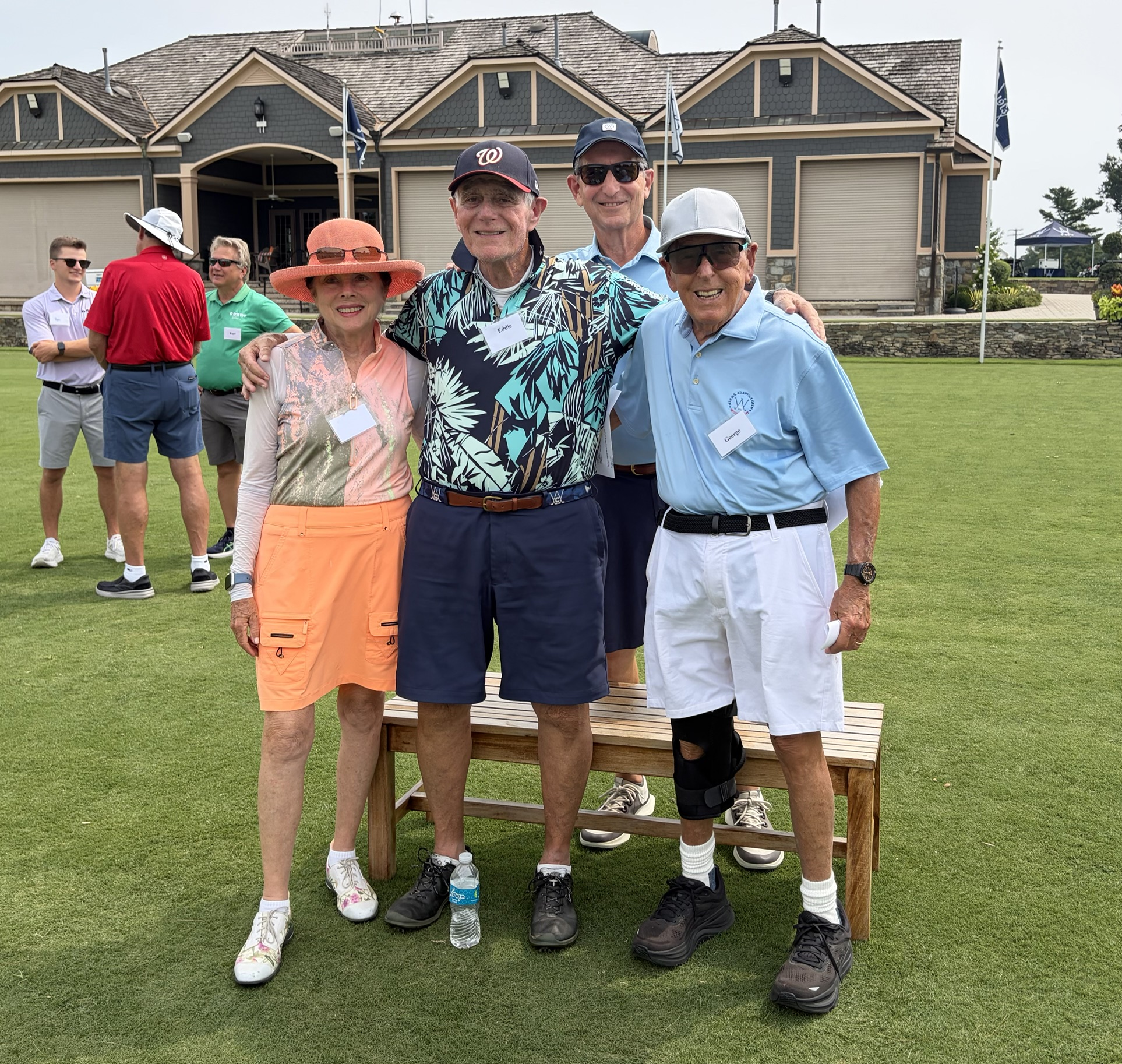
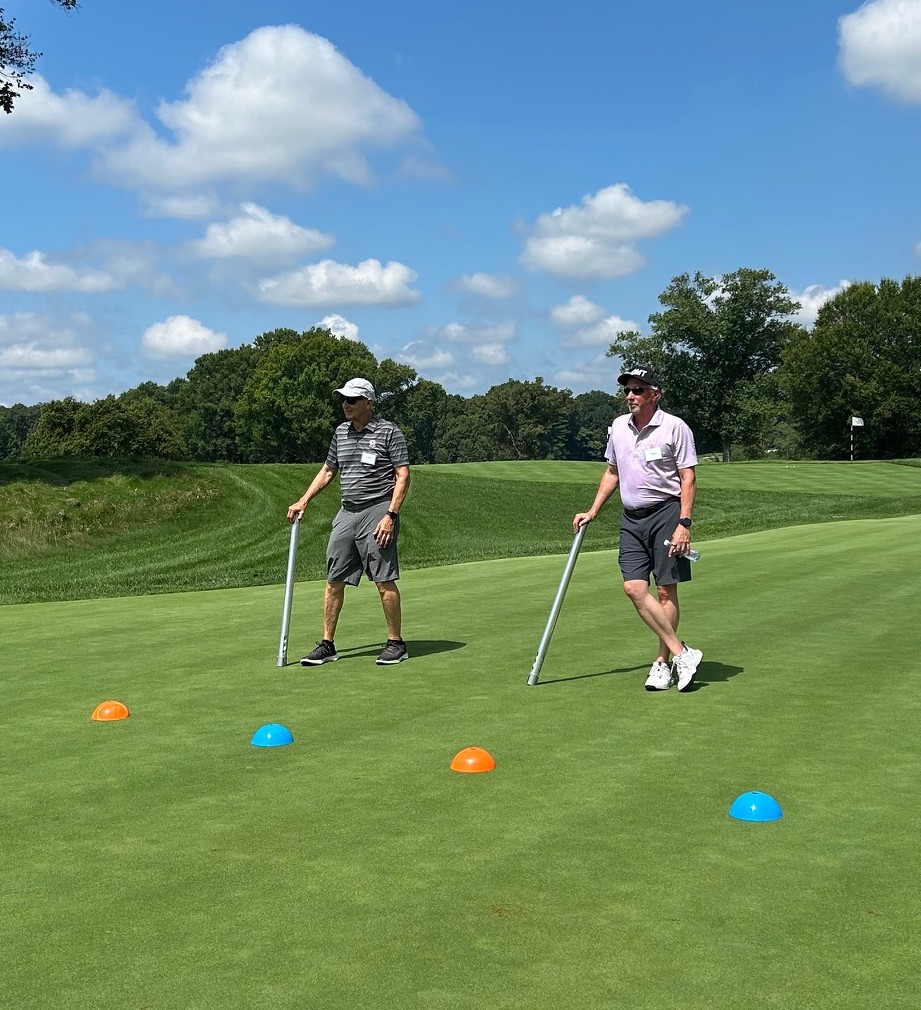
Jackie, Eddie, Steve, and George
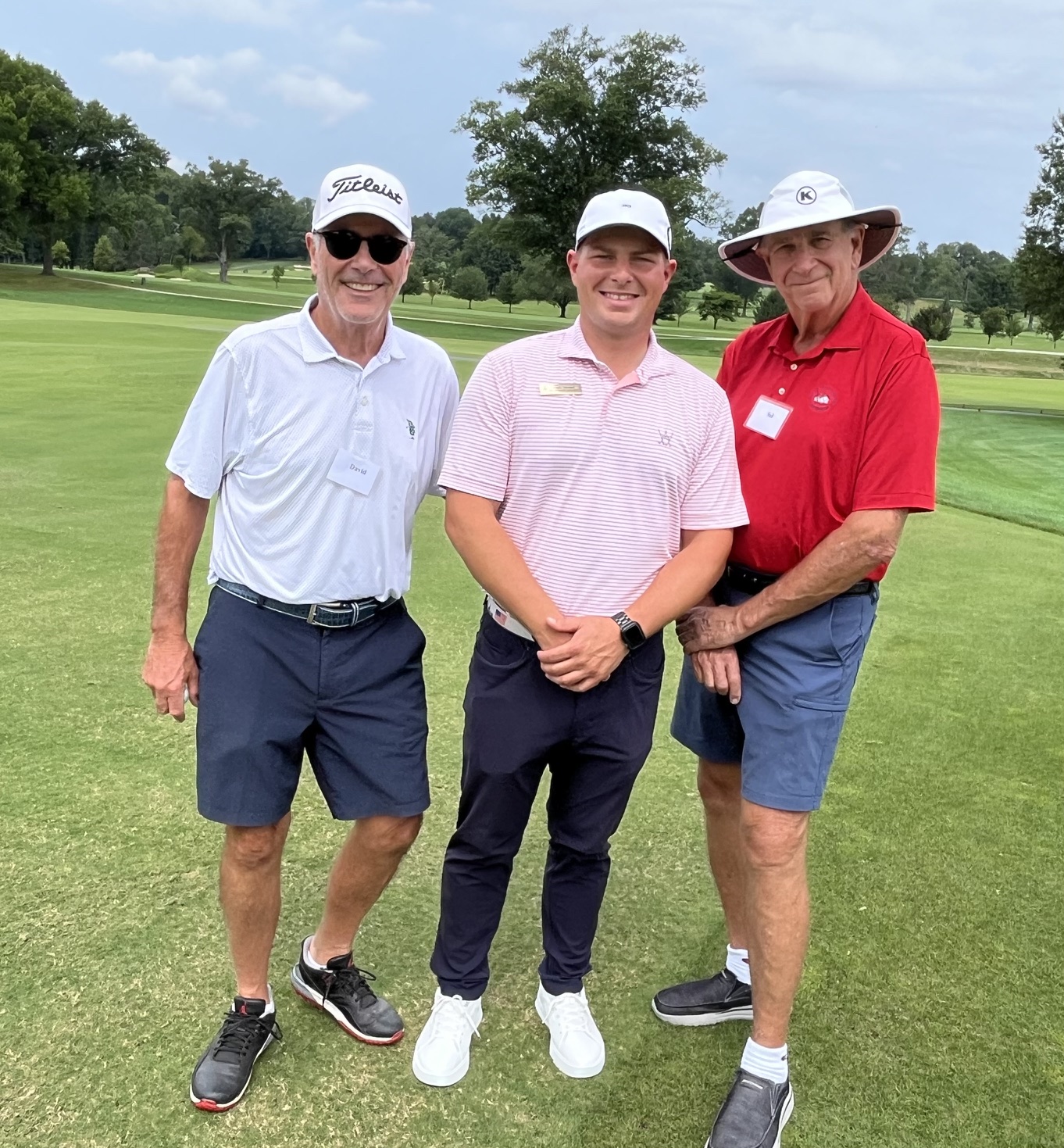
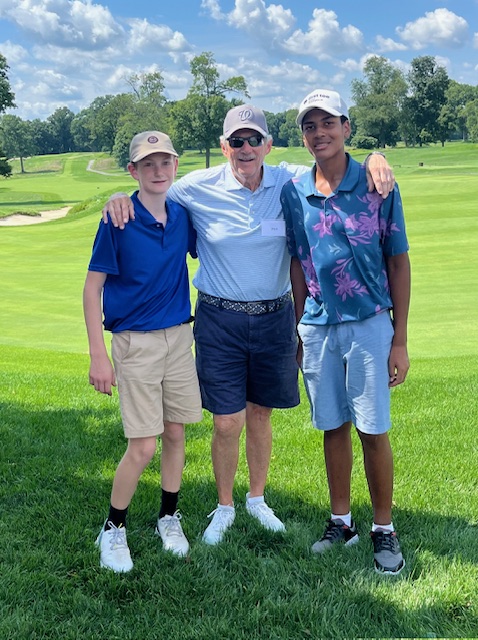
David, Cody, and Sol looking self-assured
Phil and George reliving Driving Miss Daisy
Sometimes it just takes puting a confident hand on the back or a reassuring arm around a shoulder to make a connection with these kids that means as much us as it does to them.
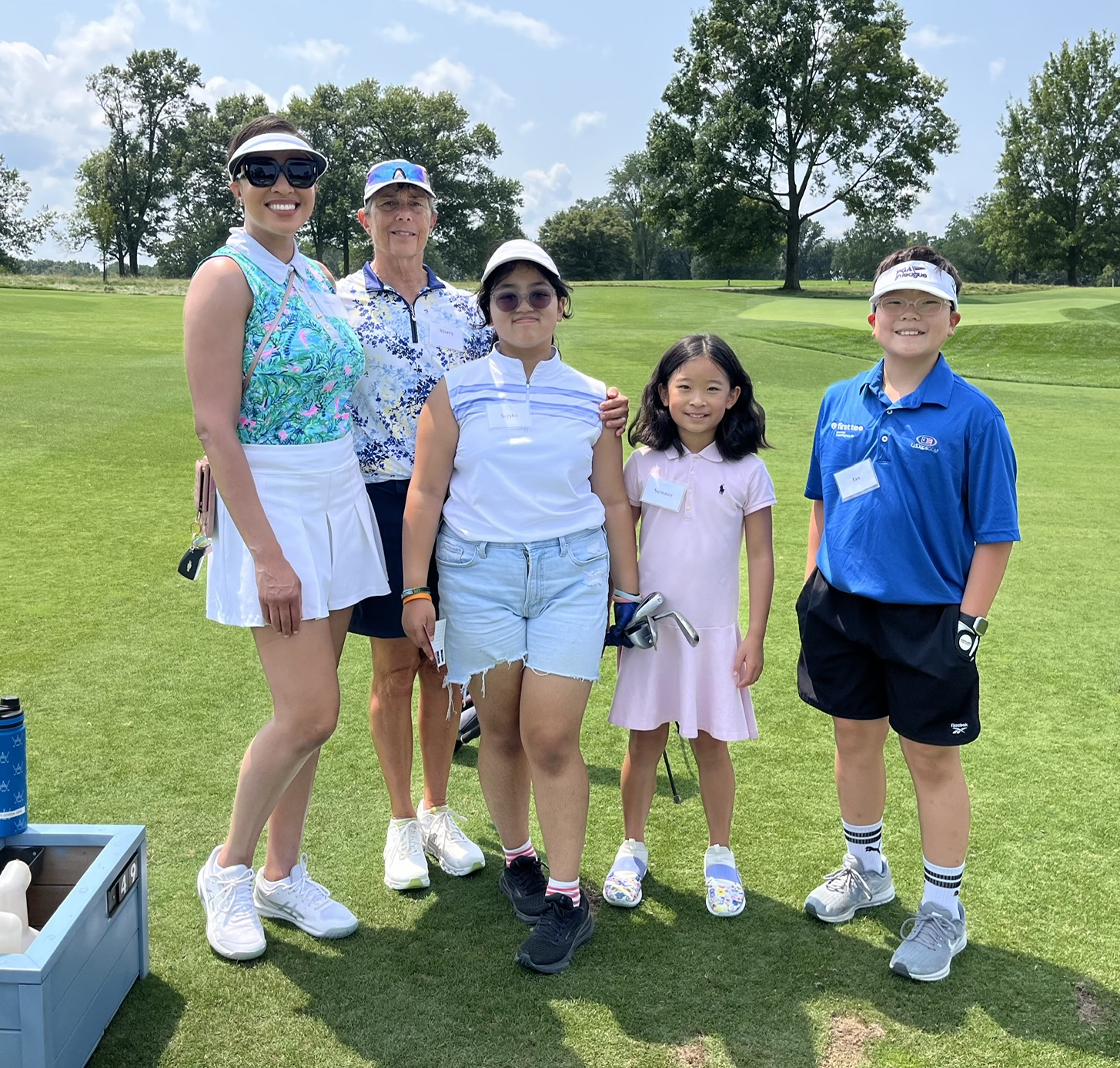
Alesha, Sherry, Sersha, Summer, and Ian
Andy with Wesley and Mason
Kelly, Eliel, and Elinel are all smiles
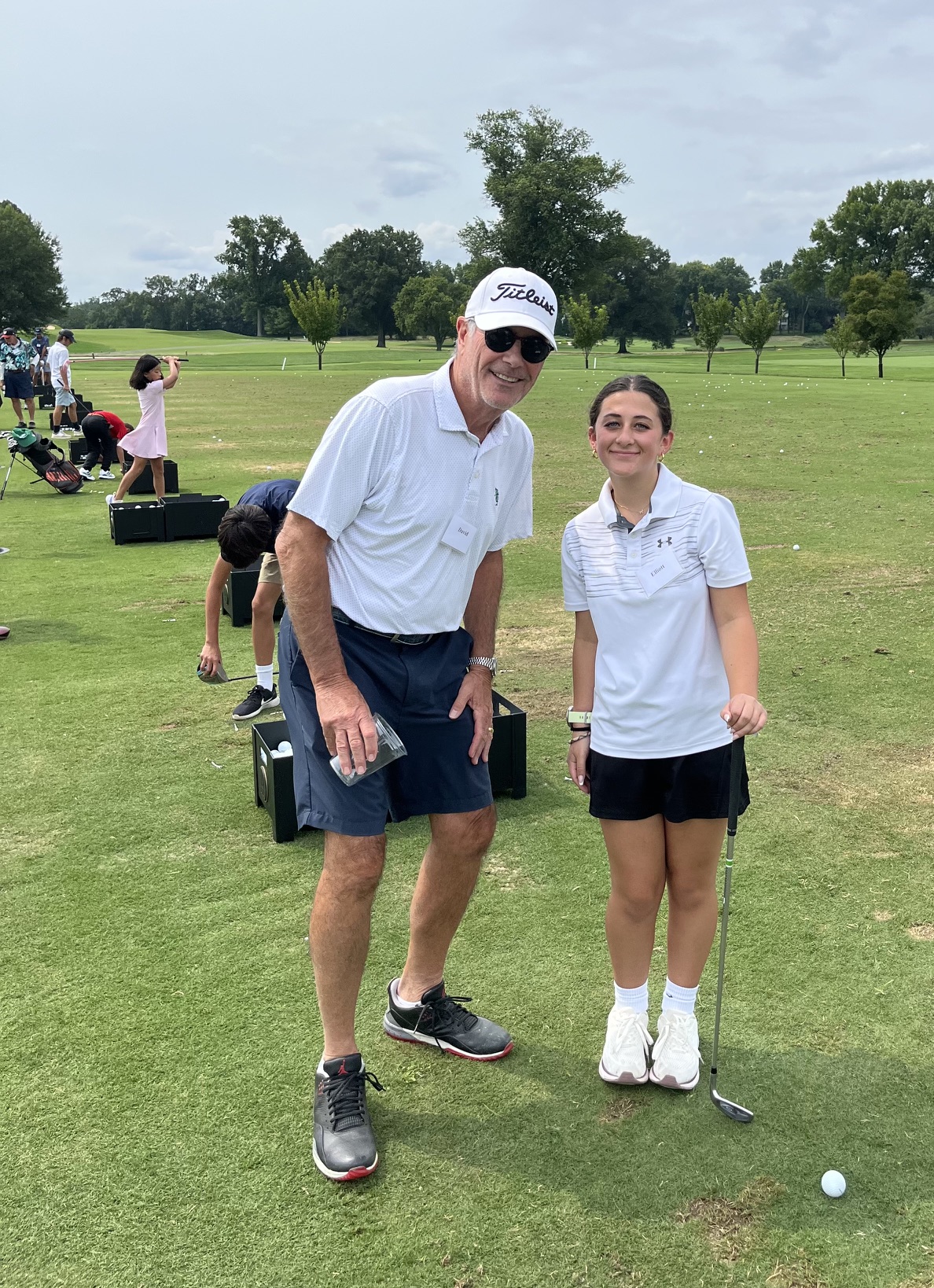
David and Elliott posing at the range
Keller mugging with Namo
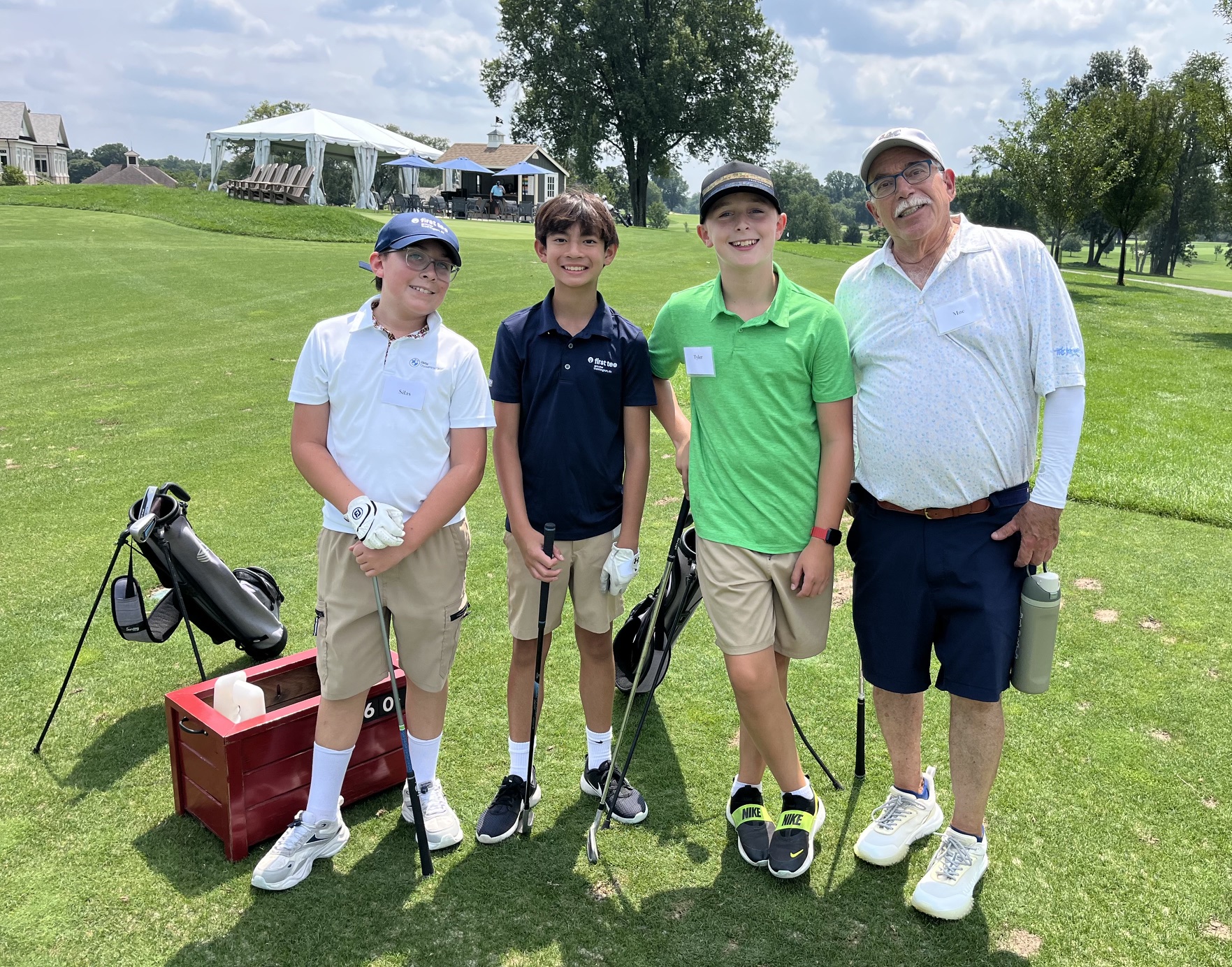
Silas, Parrington, Tyler, and Moe at The Loop
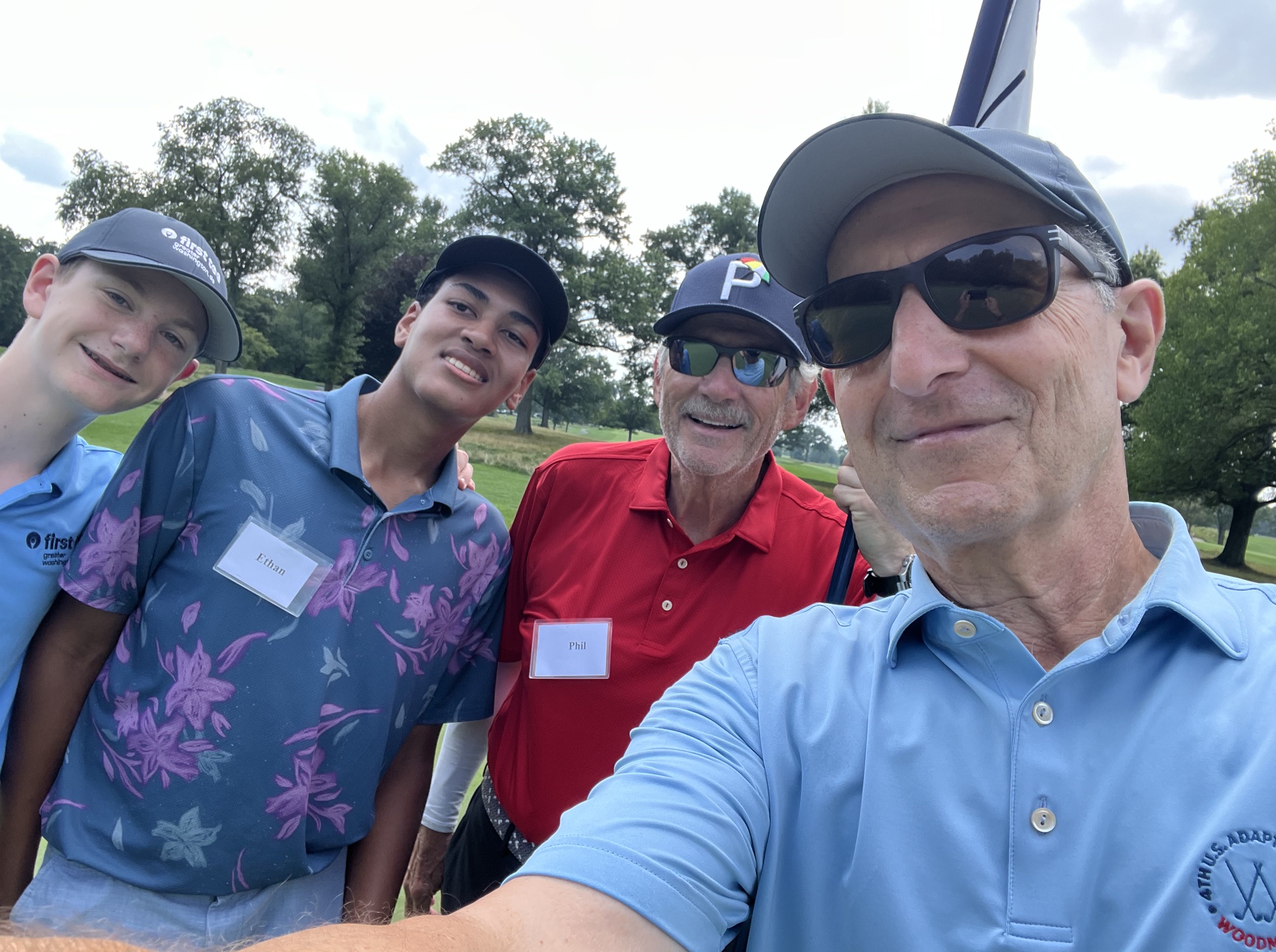
Luke, Ethan, Phil, and Steve being guys
It takes the help of the staff of the First Tee of Greater Washington and supportive parents who encourage their kids participate in this wonderful program to help us pull this off year after year.
Ben and Roger from the First Tee with Sol
As tradition would have it, the cost of today’s picnic lunch was covered by the sponsorship of The Keepers, who started this annual event a long long time ago. We are also pleased to report that the generous Woodmont members contributed to our effort in raising well over $5,000 to support the programs of the First Tee of Greater Washington.
To download any photos to your PC just right click on the image and pick “Save Image As” to save it to your computer.
The kids were split into three groups based on their golf experience and rotated through instruction clinics for full swing, short game, and putting-led by our professional staff.
As always we had lots of kids coming back for the second or third time for this event. What we witnessed is kids with more mature skills than a year ago displaying good fundamentals and the determination to get better.
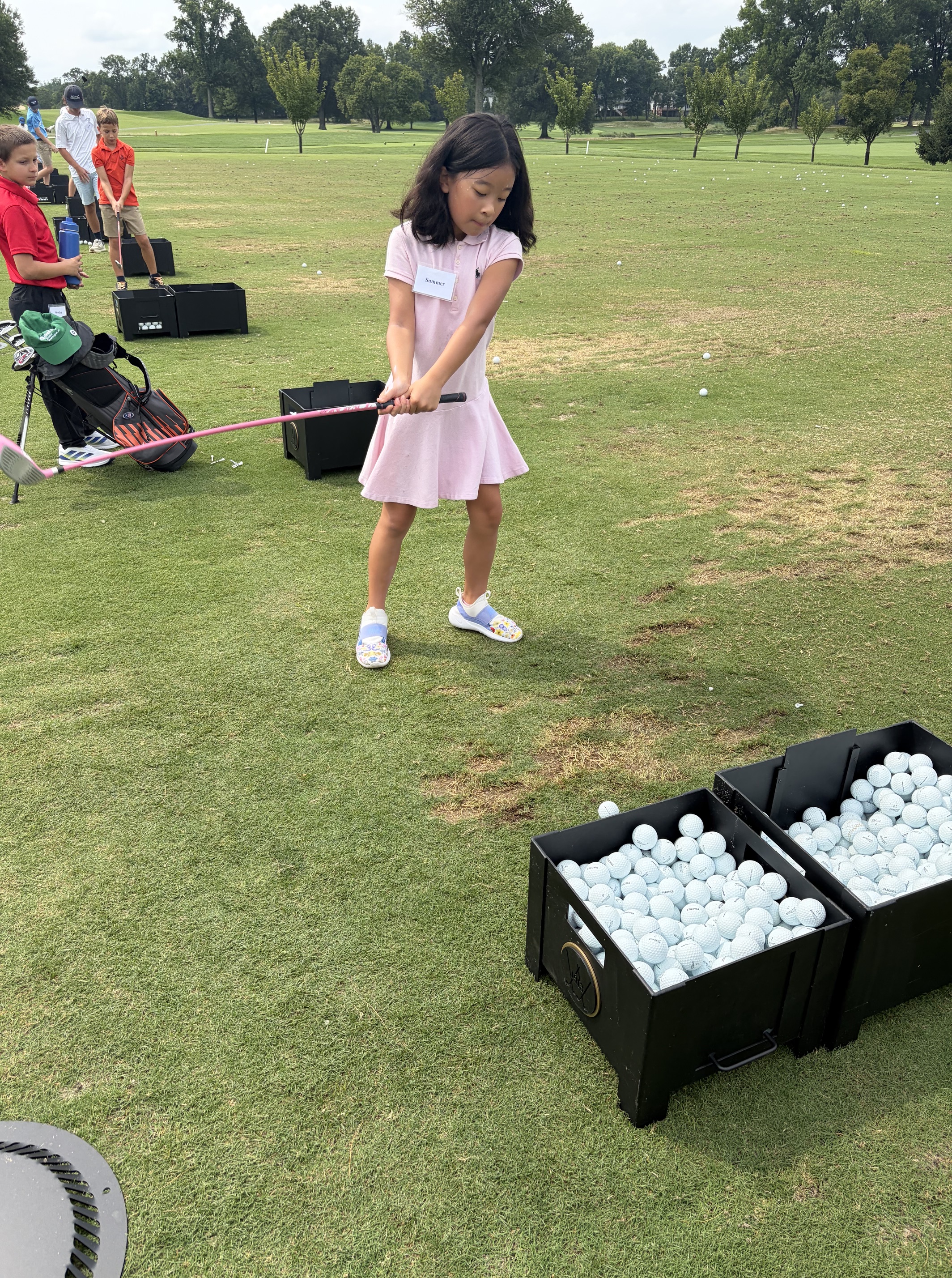
Summer swinging her hot pink driver
Elinel reaching back for a little extra
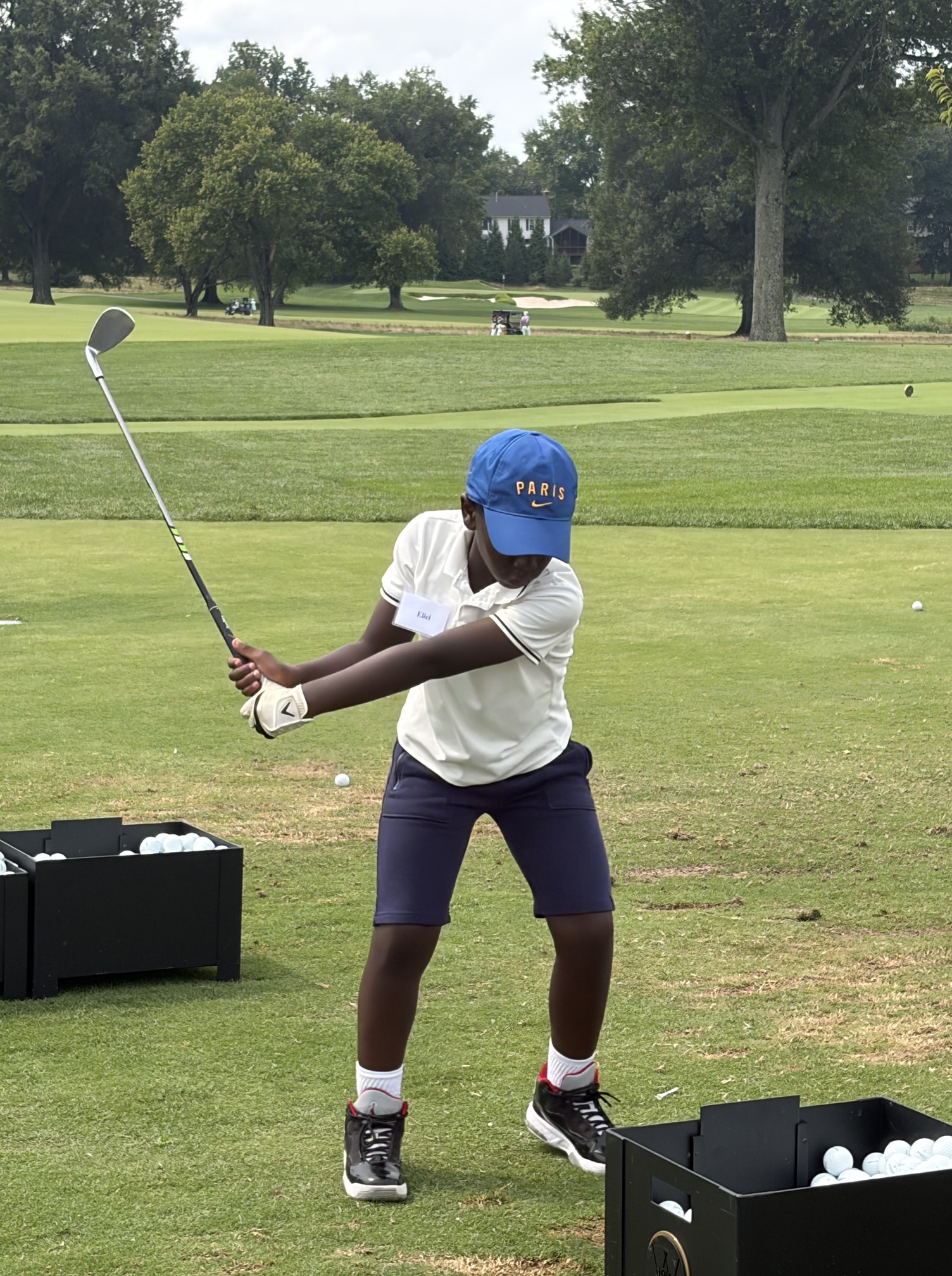
Elliel going after it on the downswing
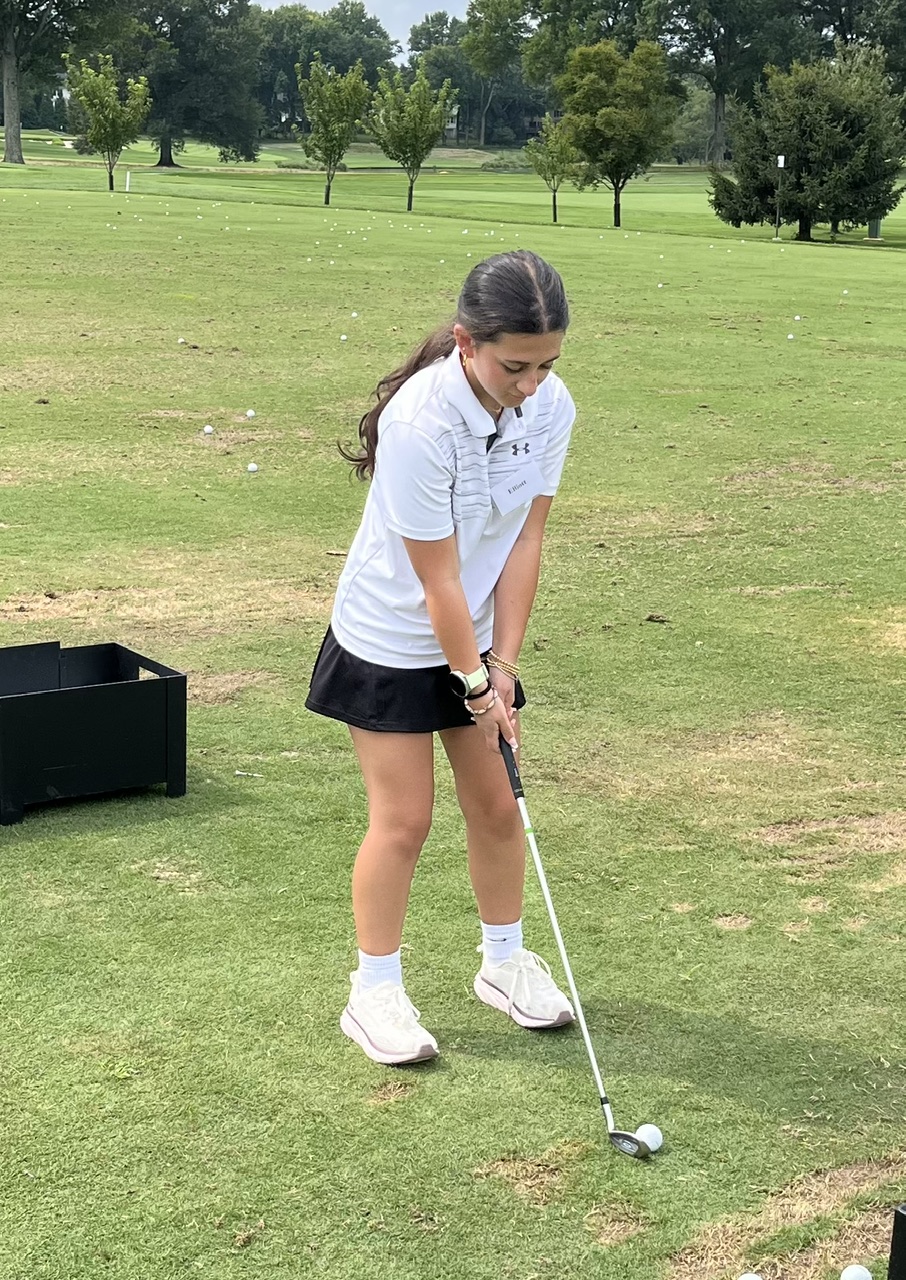
Elliott has a picture perfect set up
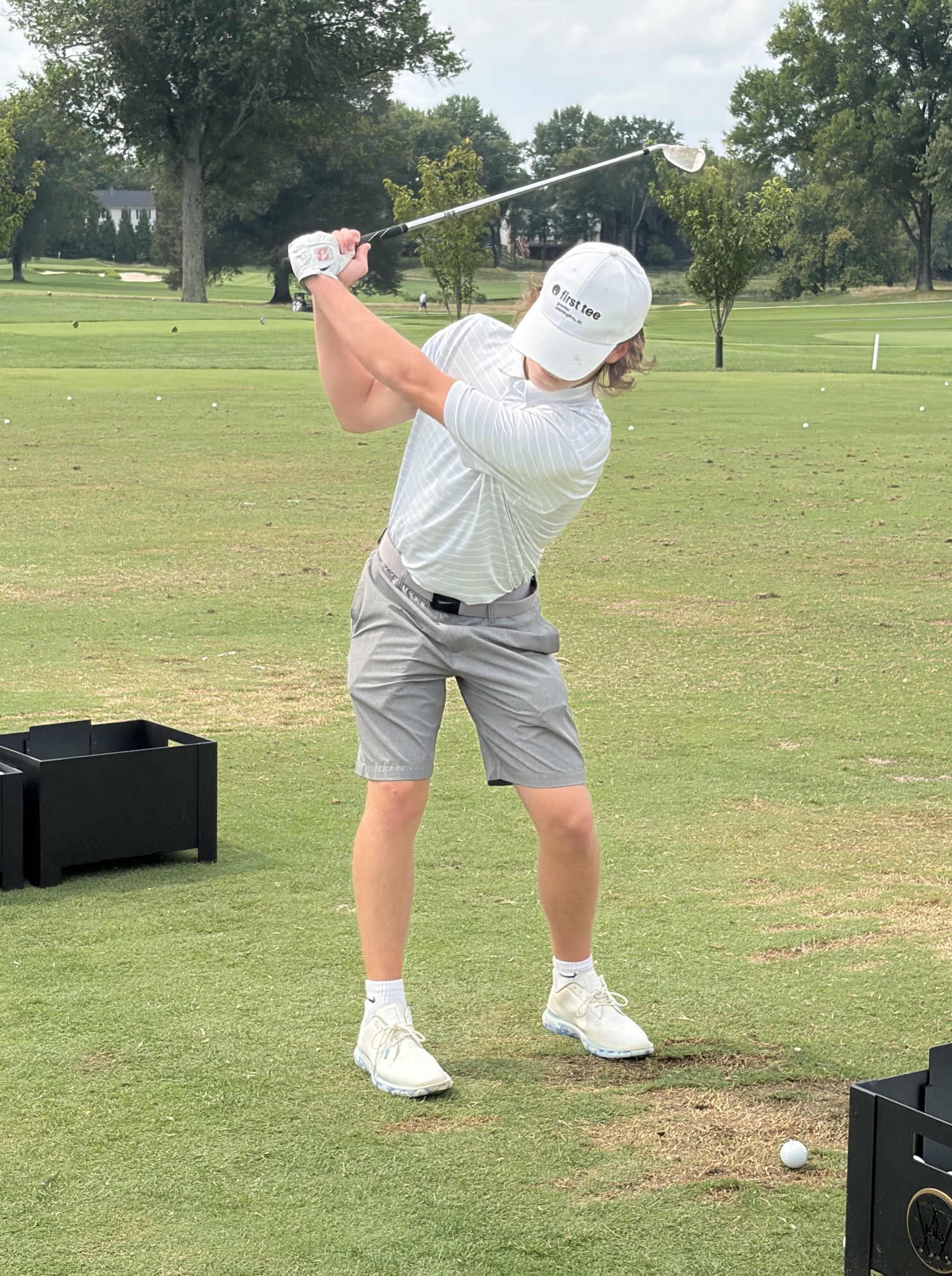
How about this turn to the top…think Caleb’s this wedge will be launched?
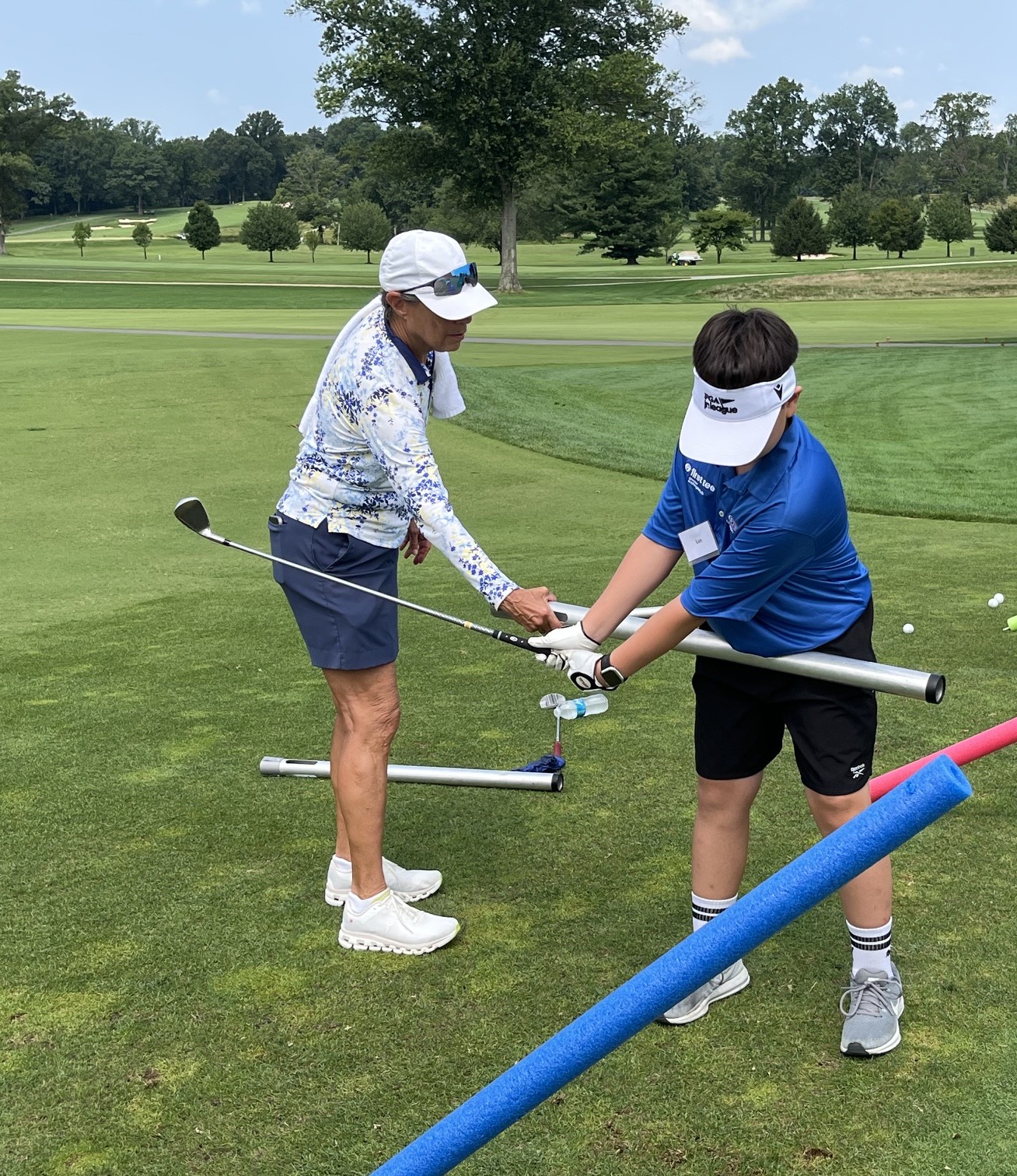
Sherry is sharing some positional wisdom with Ian at the SID
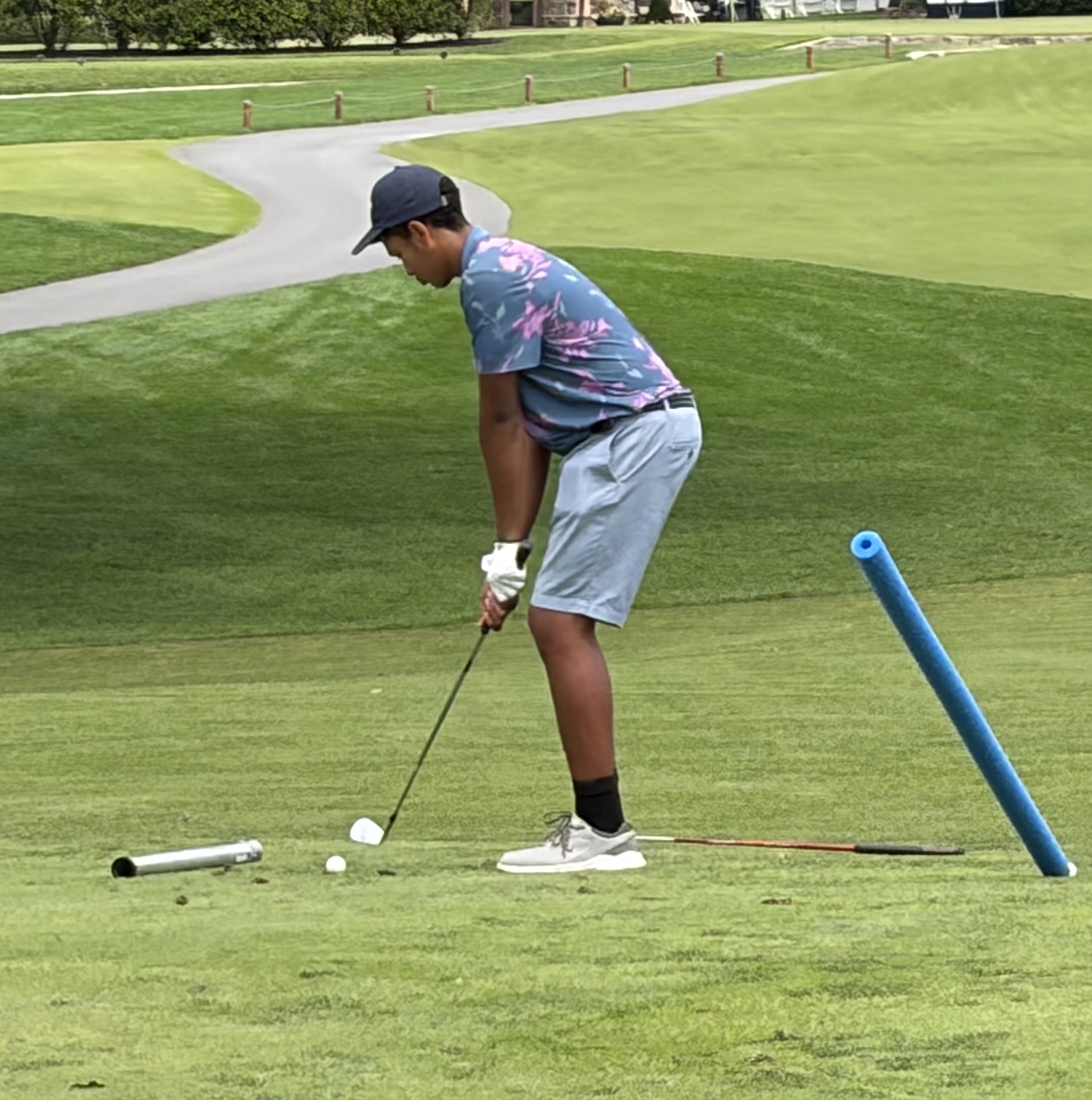
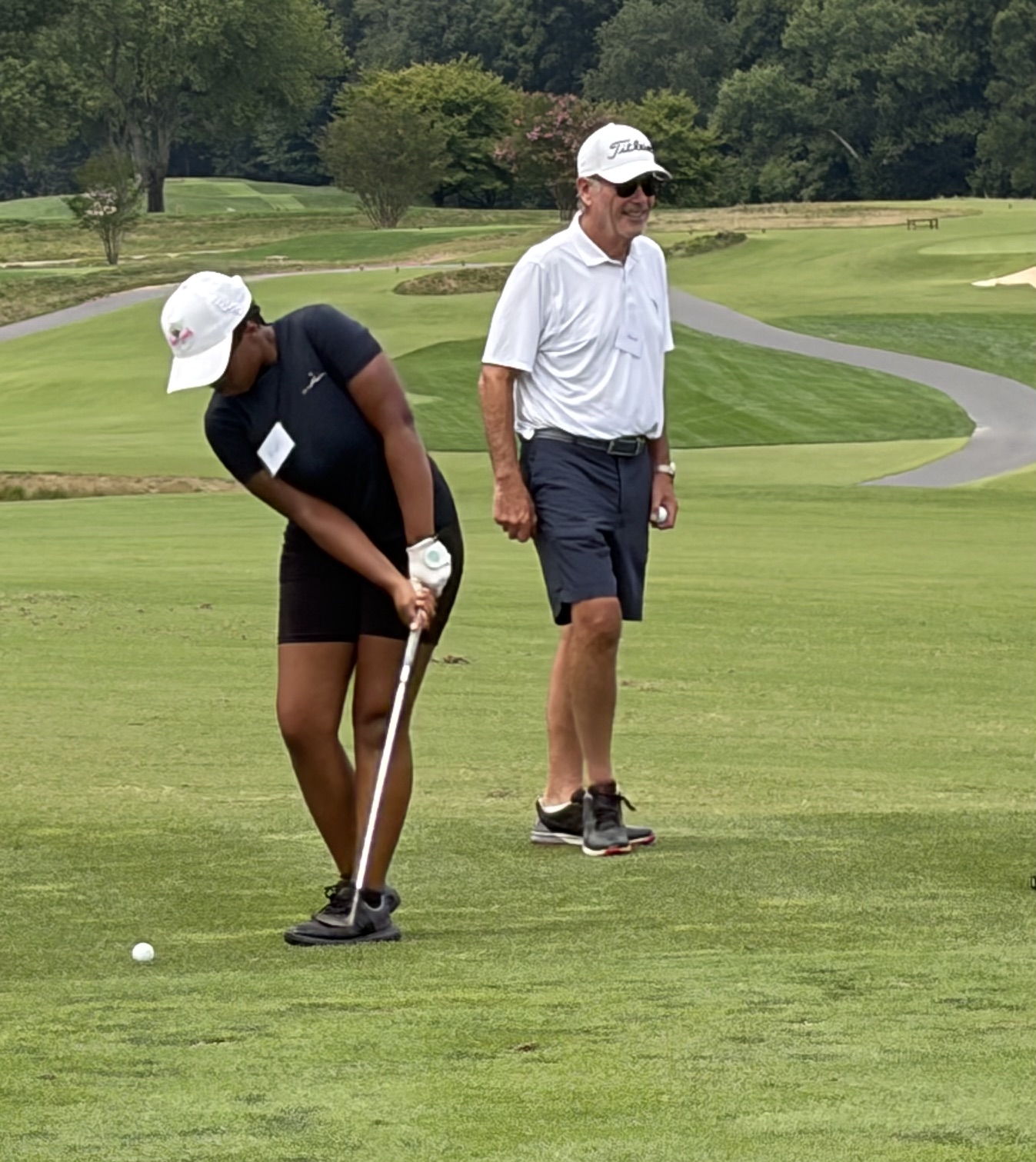
Ethan refining his pitching motion
David watches Kori pitch one stone dead
The clinics always work up a hunger so a picnic lunch is provided to recharge the batteries for the afternoon on course play.
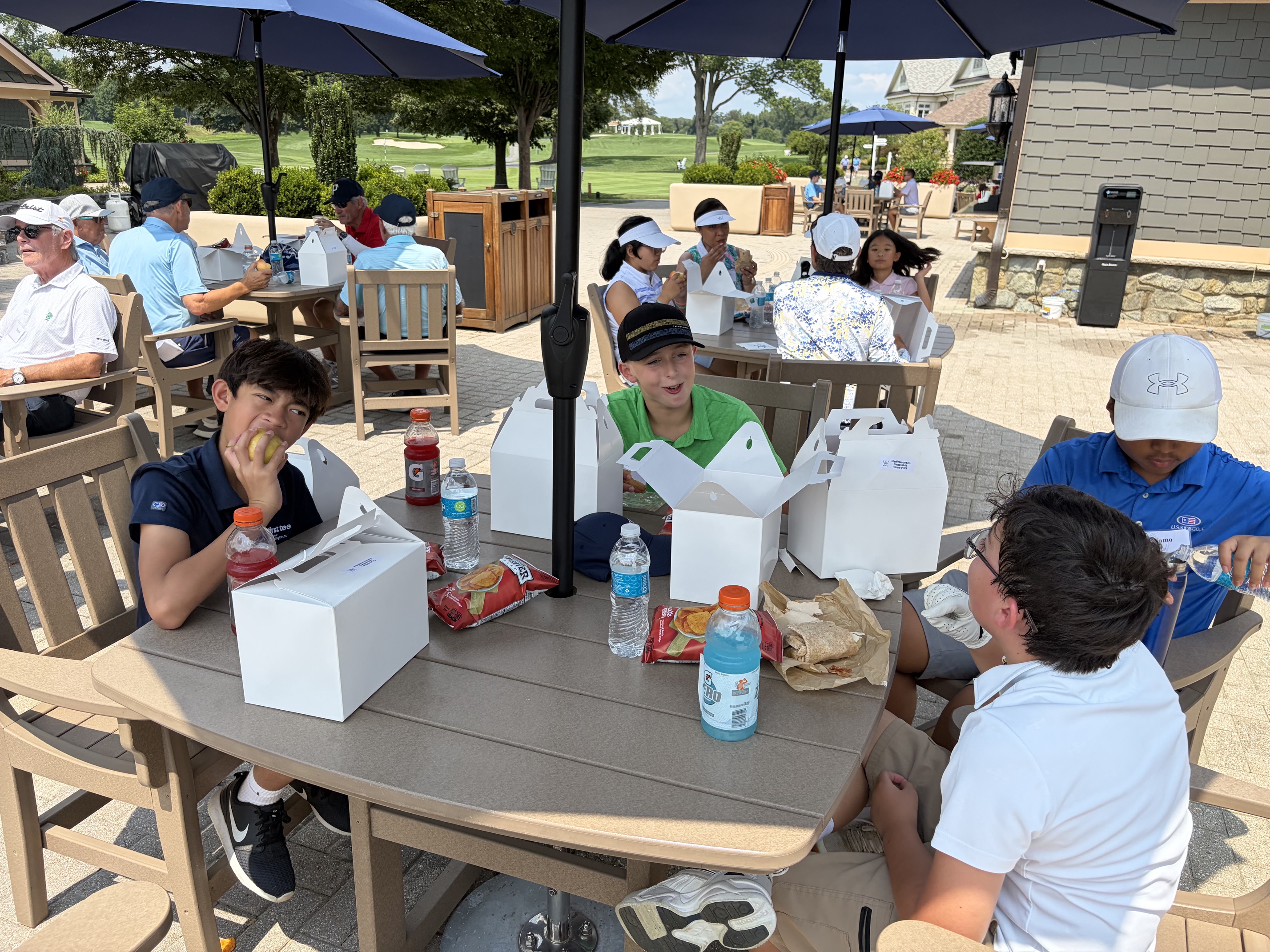
Guys doing damage to wraps and chips
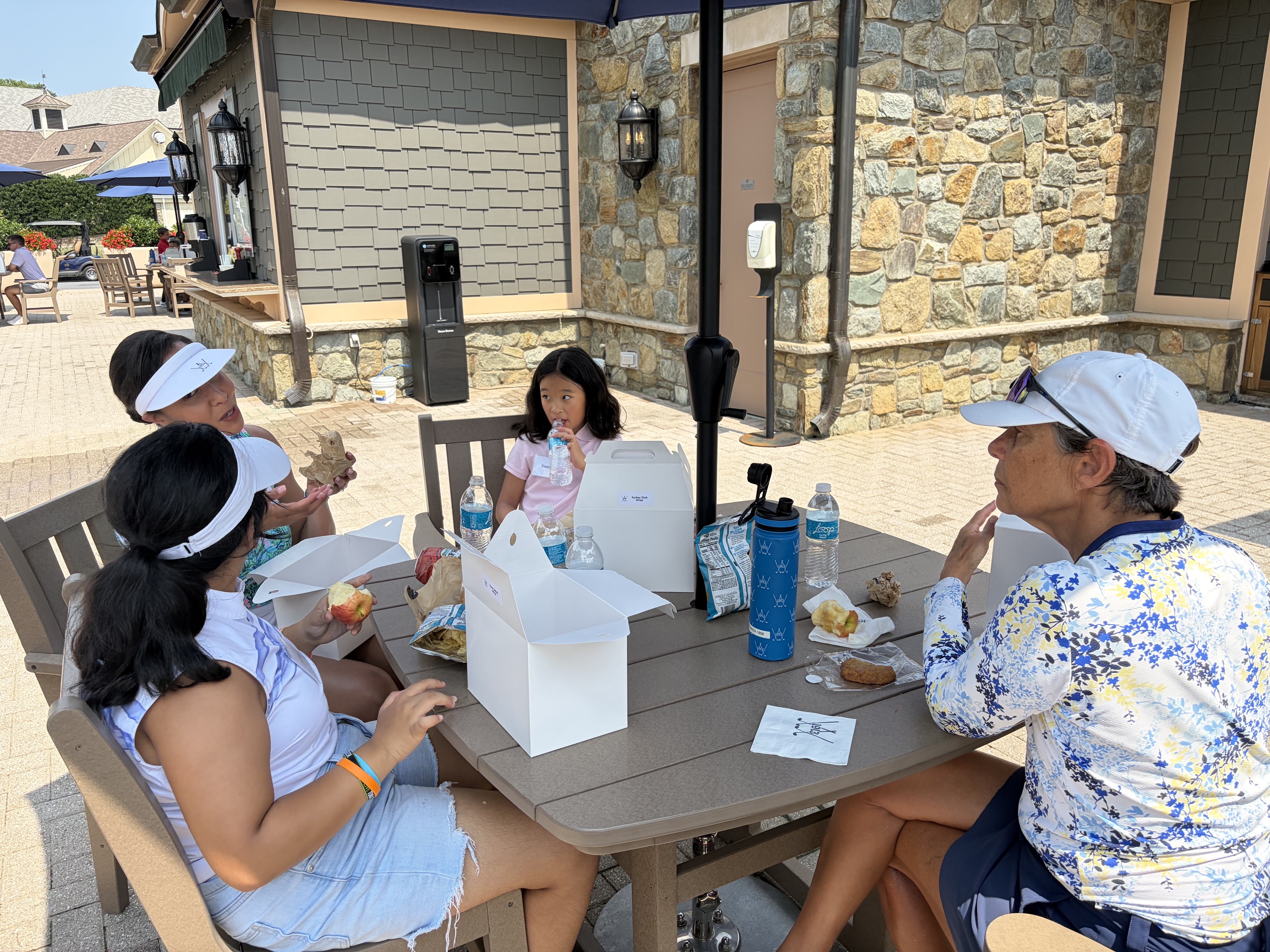
Ladies enjoying the lunchtime banter
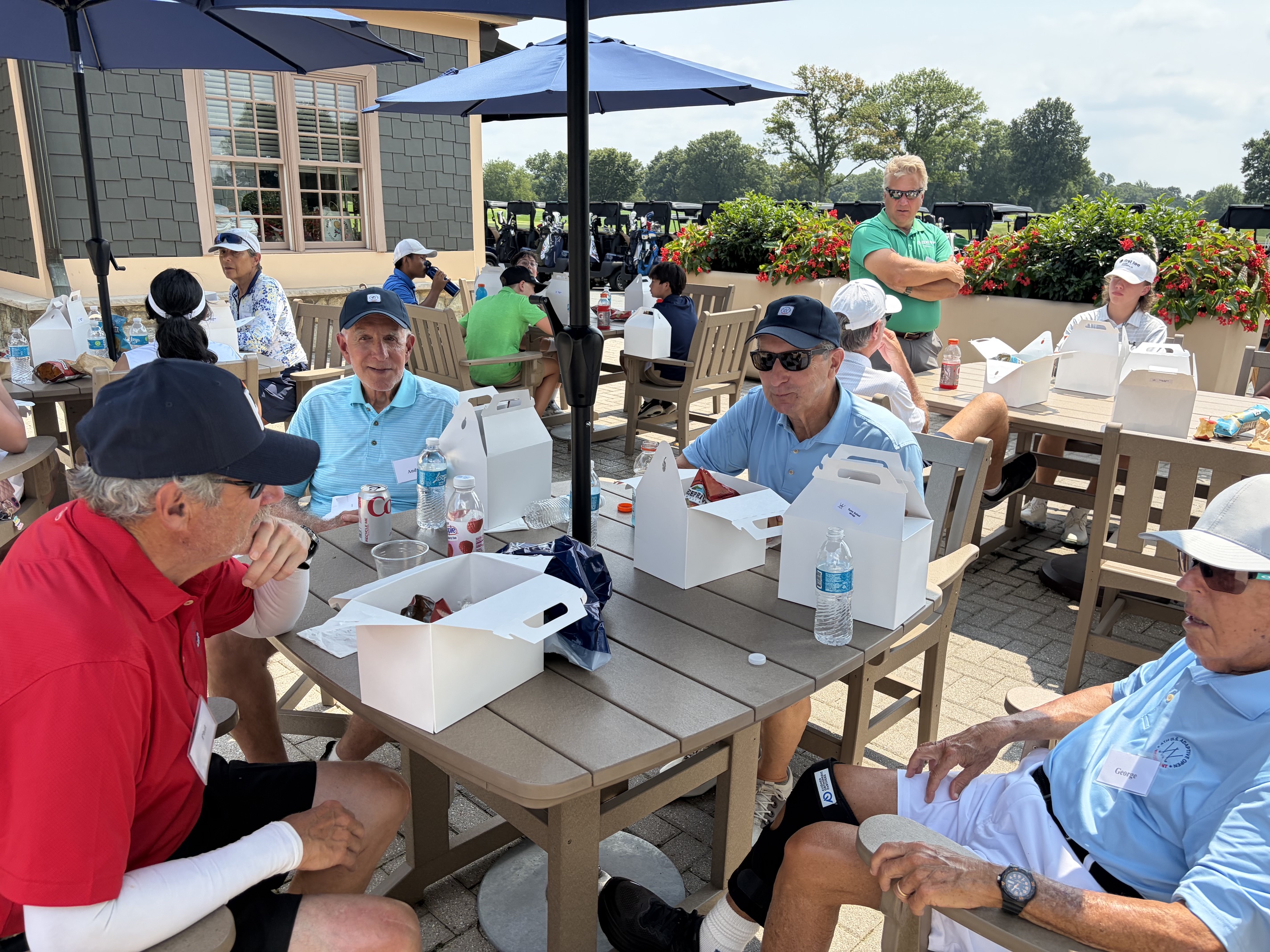
Phil, Andy, Steve, and George talking turkey
After lunch we spent an hour and a half on the North Course and The Loop with the kids. We witnessed wonderful course demeanor and some excellent shot making.
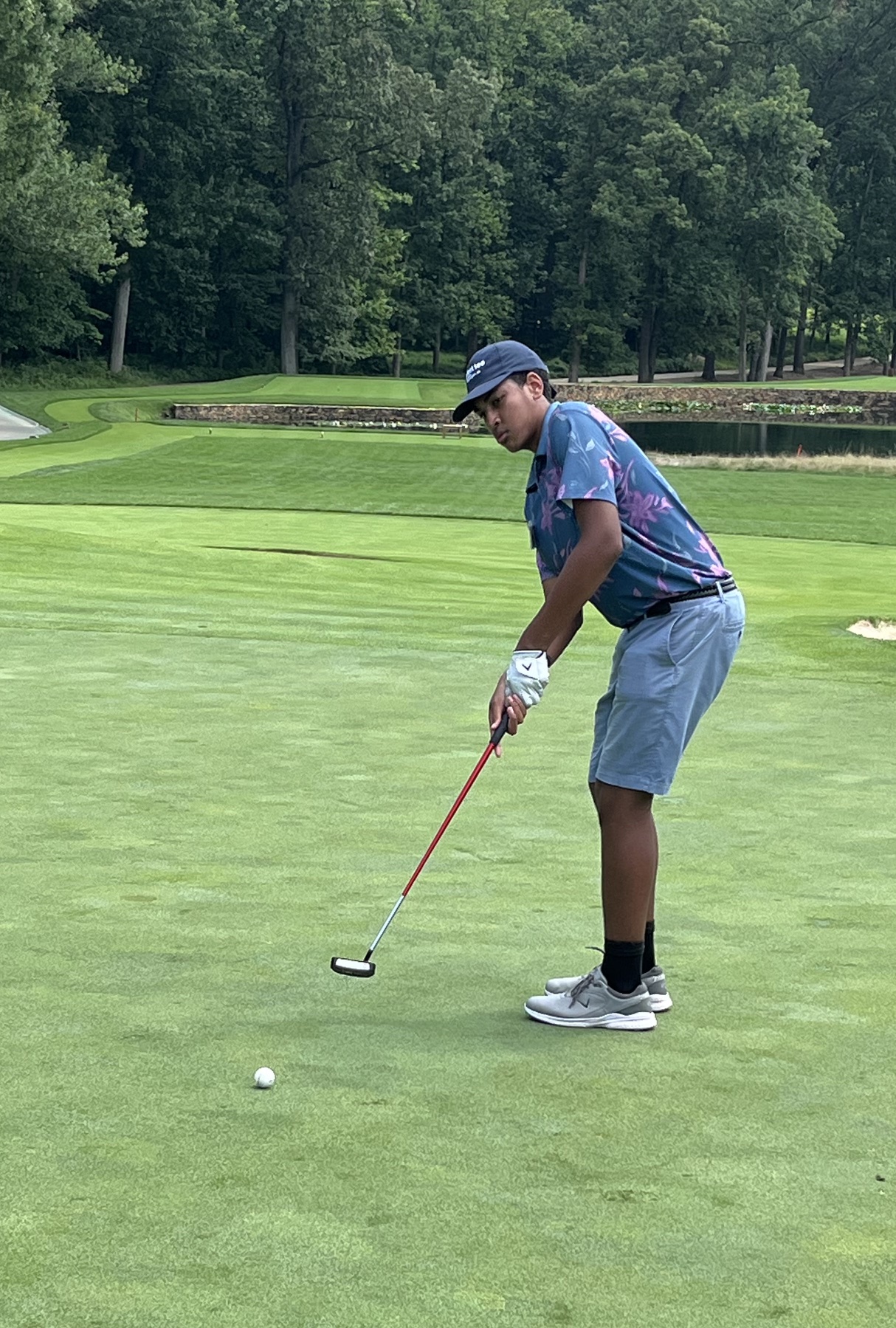
Ethan has an uphill putting opportunity on #13 North
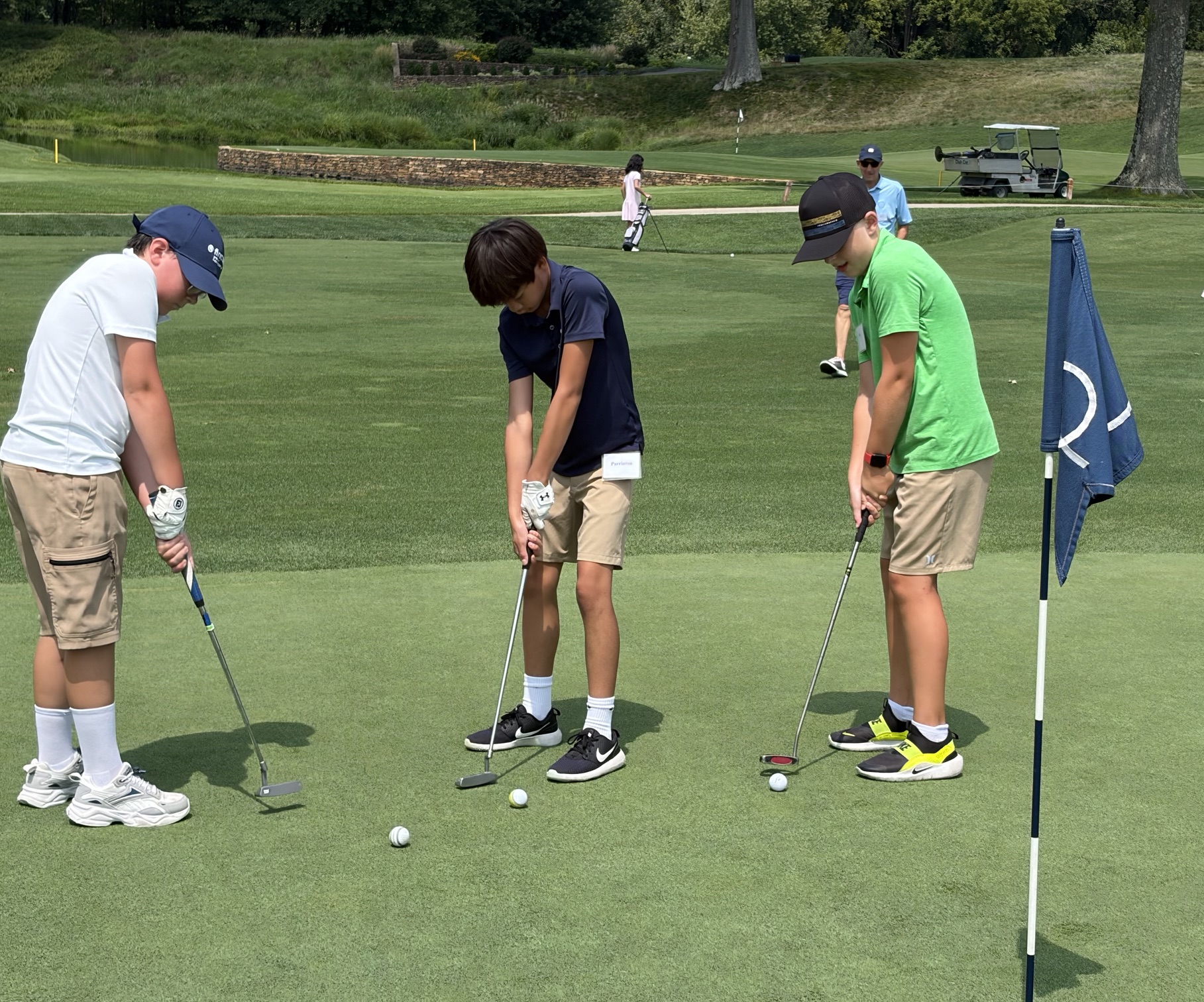
Tyler, Parrinton, and Silas doing a synchronized putting thing on the 8th hole of The Loop
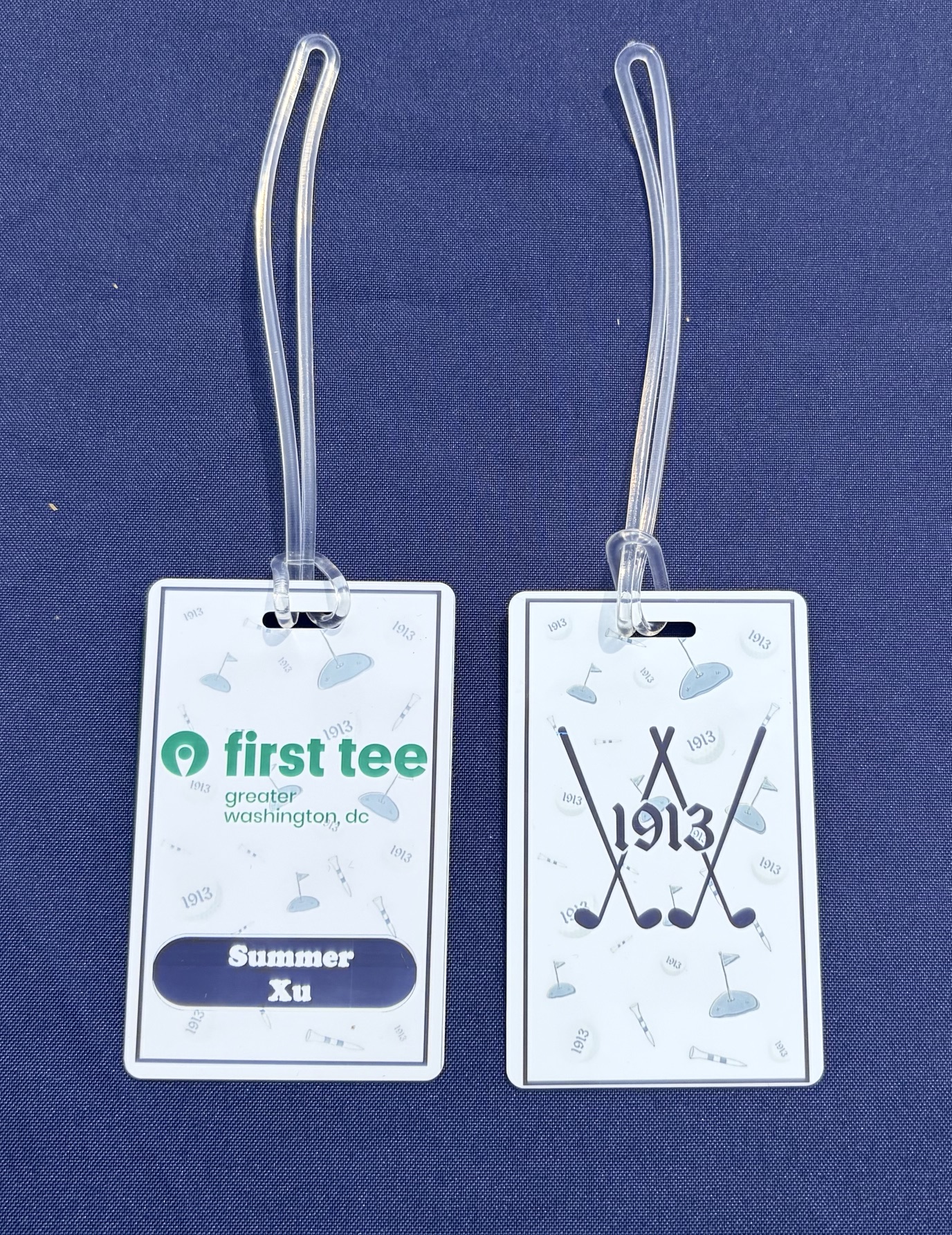
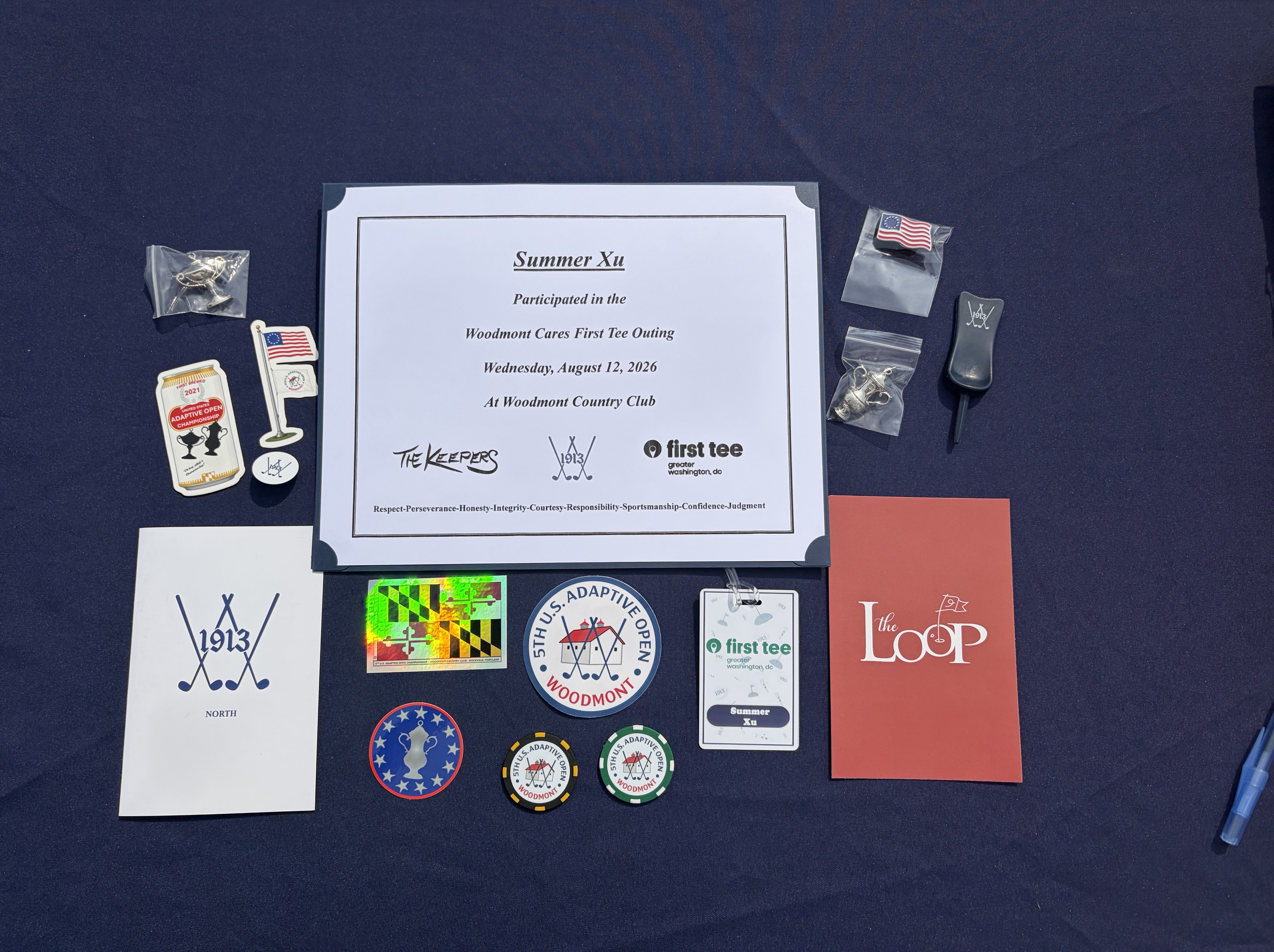
We make sure the kids take home a load of booty including the official participation certificate, commemorative bag tag, hats and lots and lots of U.S. Adaptive Open paraphernalia.
It is amazing how the First Tee prepares these kids to handle themselves both on the course and around the facility. They look you in the eye when they talk to you and understand the on course protocol of replacing divots, raking bunkers, an marking their balls on the green.
Special thanks to Event Chairs Craig, Steve, and Moe, Golf Staff Cody, Ryan, JacieKate, Baily, Cathy, and Maggie, and Roger and Ben from the First for all the hard work assembling and running this event.
Thanks to Woodmont Country Club for graciously hosting this picnic and the First Tee of Greater Washington for making it happen. And most important, thanks to these amazing kids who make this event such a special experience for all of us.
“The friendship and the banter were actually more important than the golf I think, for you can play golf on your own and yes, that can be a mentally relaxing experience in the right environment: but the subtle one-liners, the humour, the incessant rivalry over 18 holes when you are giving away an unfathomable number of shots for often no more than a £1 either way… it’s just fun.
Think about it… the 18 holes in a game of golf takes about four and a half hours to play, depending on the usual factors. Yet in the time it takes for Taylor Swift to sing her latest genre-hopping chart hit you’ll expend all your concentration on hitting the ball.
The rest of your participation in a typical game with your friends usually consists of hours of non-stop social interaction, the exploration of every nuance of the game played by the professionals, your fellow players’ shots, the world of sports, the politics of the day, the state of the course and possibly what soup they might have on the menu today in the Clubhouse. Often the latter can enter the conversation as early as the fifth hole, depending on how your game is going.
Although golf is admittedly an individual game in those moments where you and your inner demons are standing over the ball, it is unique when it comes to time spent amongst fellow players between activity. You walk from the green to the tee together. You walk down the fairway (mostly) together. You spend around three minutes together looking for a fellow player’s lost ball, sharing that sense of excitement (or despair) when found. You share in the success of a great shot without the need to collectively roll around on the green kissing each other… a pat on the back or a highfive will suffice.
The experiences between the shots are, for me, what makes golf golf – whether it’s the chat, the interaction between you and the course or just the views.”
My latest obsession is a publication that originates in Scotland called The Links Diary. It’s call line is “Crafted In Scotland-Storytelling that celebrates the soul of the game”. Having poured through countless articles in their digital library already I can honestly say this call line undersells what they are offering.
The Links Diary seems like a first cousin to The Golfer’s Journal which has become the regular quarterly read of most narcotic golfers I know. Both of these journals offer a limited publication of three and four issues a year respectively chock full of long form features you will never find in Golf Digest or any other golf magazine.
These journals present quality pieces of writing and imaging from independent golf writers and photographers that will captivate your golfing imagination. There is very little advertising therein, no golf tips or instructional pieces, no equipment or gadget reviews, and no paid golf destination pitches that crowd the pages of regular golf magazines and on-line publications. Just a refreshing collection in each issue of original golf content that will prompt you to look at your obsession with the game from an entirely different point of view.
It may see pricey at about $100 a year to subscribe to the printed editions but you get full access included to their digital library of all past publications which is a treasure trove beyond measure. Unlike other golf publications, the printing and photographic quality of these journals make them bookshelf worthy.
You can find more about the The Links Diary and The Golfers Journal publications and their other features and membership benefits at their respective websites by clicking on their highlighted names.
Ten years after my first visit to the Home of Golf my son and I spent ten days on a bucket list trip playing some of the finest courses in St. Andrews and North Berwick. As always there were other somewhat golf and non-golf things to take in while we were there.
We were lucky enough to get a tour of the members clubhouse of the Royal and Ancient Golf Club just behind the first tee of the Old Course. This by itself is a sacred experience. You have to dress properly to enter and best manners are observed at all times.
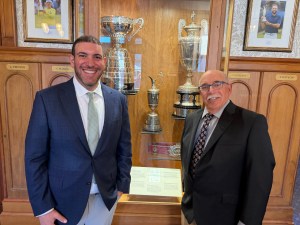
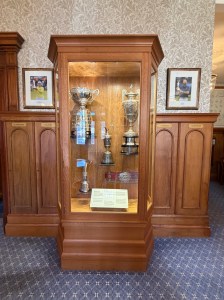
The trophy case you see when you first walk in has in it the Open Championship’s Claret Jug, Women’s British Open Championship trophy, the Men’s and Women’s British Amateur trophies, and the Red Leather Belt that was the Open Championship’s original prize. When Young Tom Morris won it three times in a row back in the mid-1800’s they gave the belt to him to keep and the Claret Jug was introduced as the official prize from that point forward. Note the size of the amateur trophies in the top of the photo reflect the relative importance of amateur golf to the R & A from the beginning.
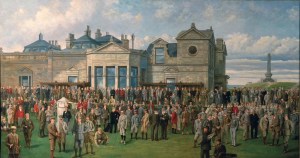
The R & A building displays a trove of artifacts, trophies, paintings, and other memorabilia that cover the history of golf over 150 years since it was built. This original painting is of the burgeoning crowd attending the 1896 Championship.
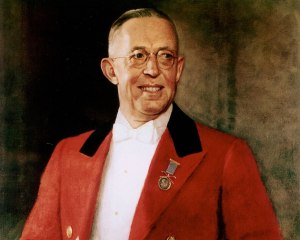
One of my favorite pieces that connects the R & A to it’s American counterpart the USGA is this portrait of Frances Ouimet, winner of the U.S. Open at Brookline in 1913 and one of the greatest American amateurs of our time. In 1951 Frances was the first non-Brit to be elected Captain of the Royal and Ancient Golf Club. More significantly this portrait of Ouimet in his official R & A Red Jacket was painted by U.S. President Dwight Eisenhower in 1953 and donated to Augusta National where Eisenhower was a member at the time and subsequently donated by Bobby Jones to the R & A.
We made a must visit to the St. Andrews Womens Putting Club that is adjacent to the second hole of the Old Course. It has been a long tradition that the women of St. Andrews administer this recreational putting facility affectionately referred to as The Himalayas. The women still hold fiercely competitive putting events here on a regular basis .
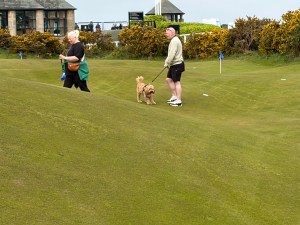
This is a family recreational facility that attracts hordes of people of all ages as well as their canine companions. In this case Harry the CavaPooh was helping this couple gauge the speed and breaks of the green.
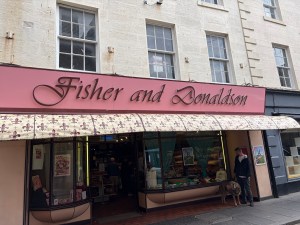
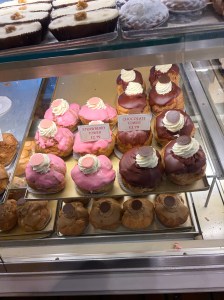
If you are looking for something sweet to start your day find your way to Fisher and Donaldson for their delectable baked goodies they have been making for over 100 years.
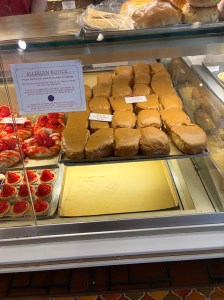
The fudge donuts, actually more like boston creams from the states, are beyond decadent. Get there early because once they are gone they are gone for the day.
There are plenty of other freshly baked delicacies to choose from and you can get a nice barista made coffee to go with it.
They live up to their motto….you will not be disappointed.
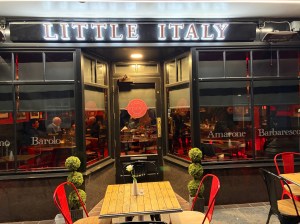
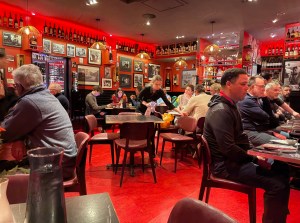
If you are looking for a folkloric Italian dinner check out Little Italy just off the beaten path but right in the middle of town.
This is a festive atmosphere with a robust menu full of all of your Italian favorites prepared with family attention to detail. You won’t go away hungry.
For a unique Scottish Bar/Pub dining experience loiter over to the Criterion on South Street. They don’t take reservations but it is worth the wait.
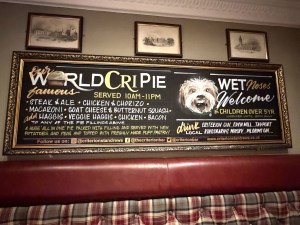
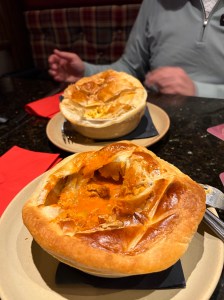
An authentic Scottish Pub open 10 a.m.to midnight every day they have all the libations you can want with a robust bar menu of amazing comfort food. But after 6 p.m. they retire the full bar menu and they only serve their World Famous Cri Pies. These are delectable crusted pot pies that come in varieties that include, Steak & Ale, Chicken Chorizo, Mac n Cheese, and Haggis for the adventuresome. Mac n Cheese and the Chicken Chorizo pictured below.
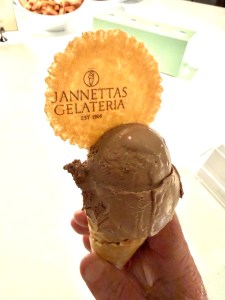
For a perfect nightcap wander just down the street to Jannetta’s Gelateria where their selection of freshly made gelato flavors seems endless. This is a favorite hangout of the St. Andrews University crowd and tourists alike.
As you can see there is more to St. Andrews then just the golf. Get out an explore some of the other treasures of this historic city while you are in town.
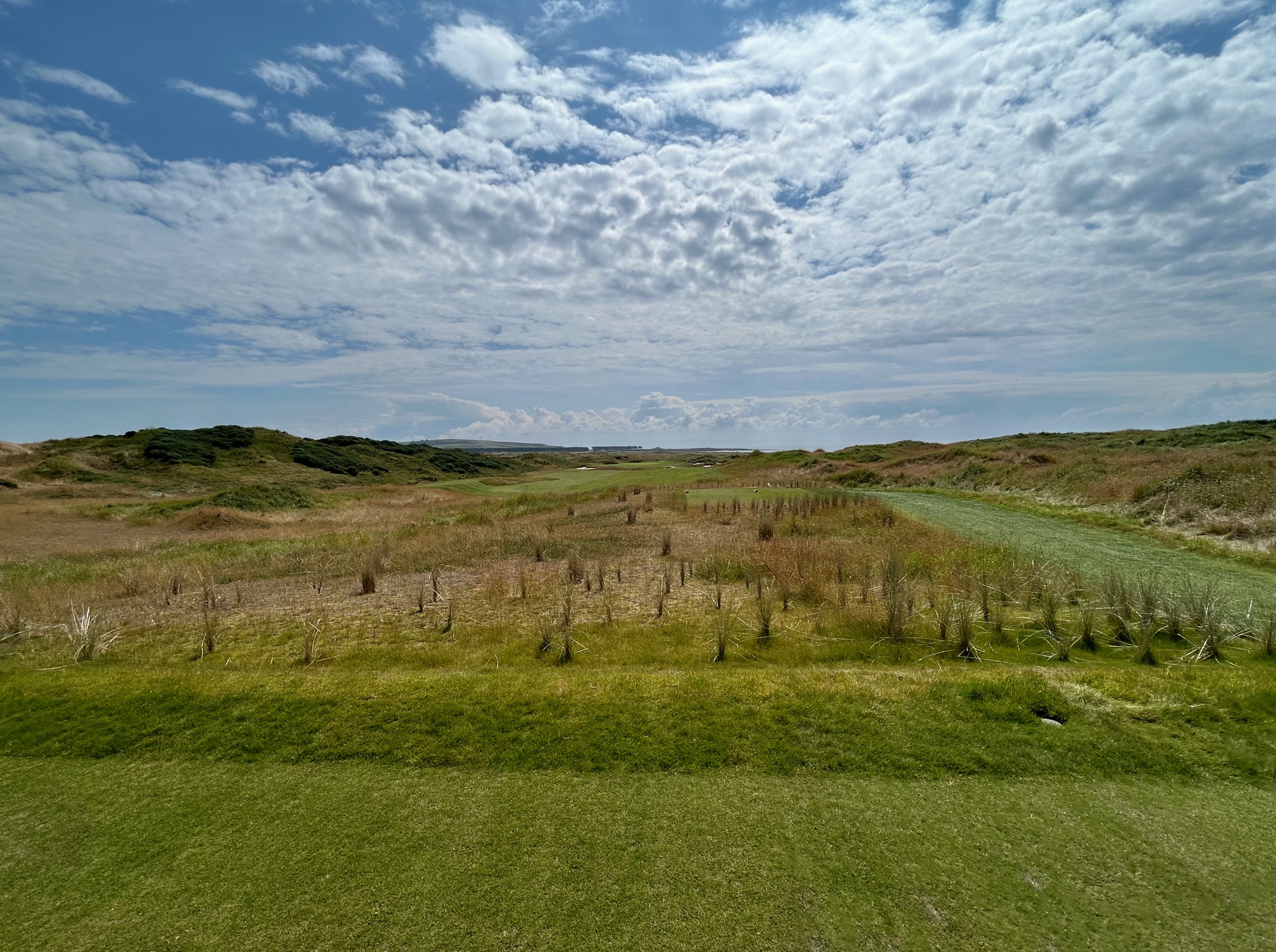
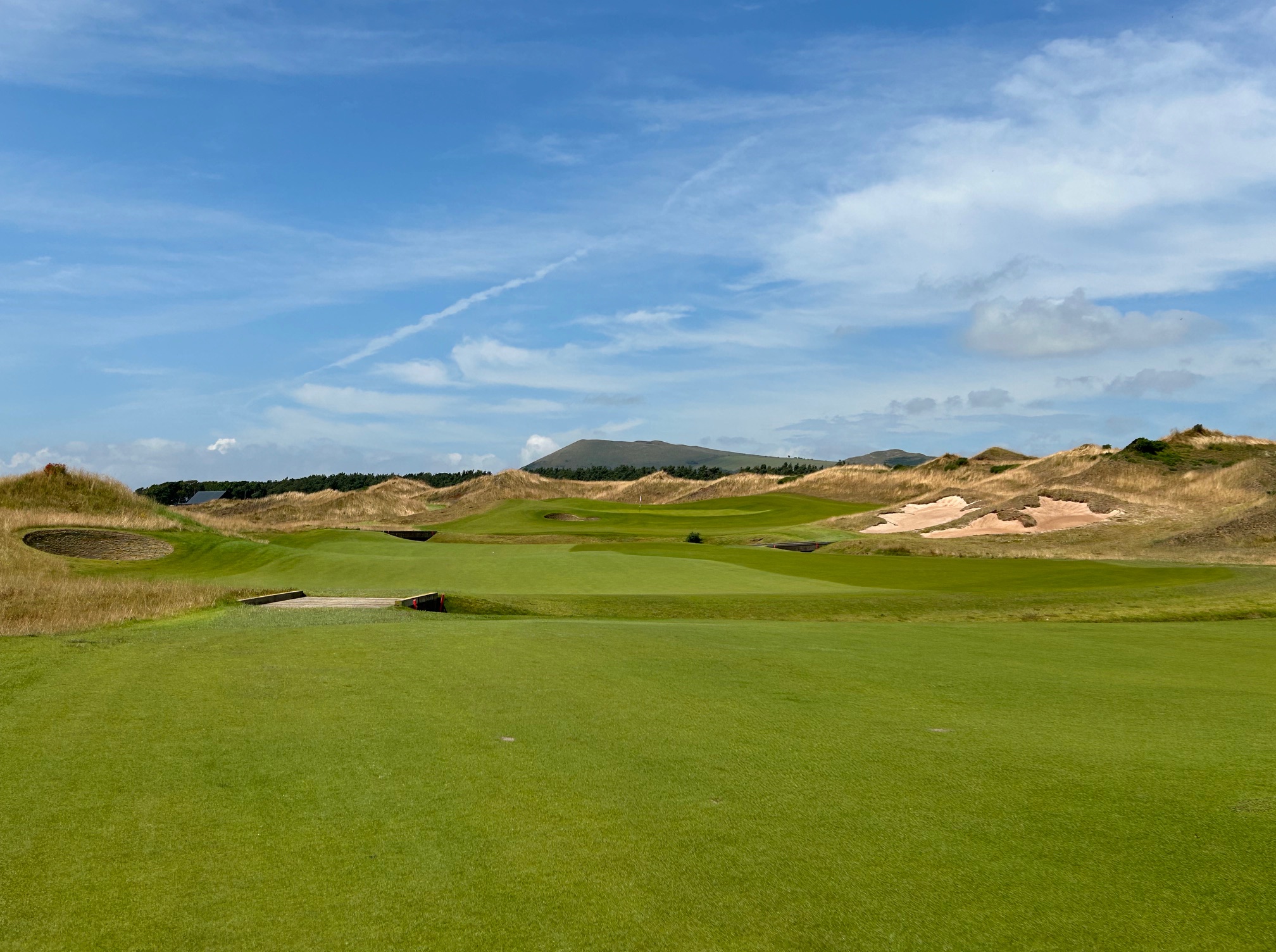
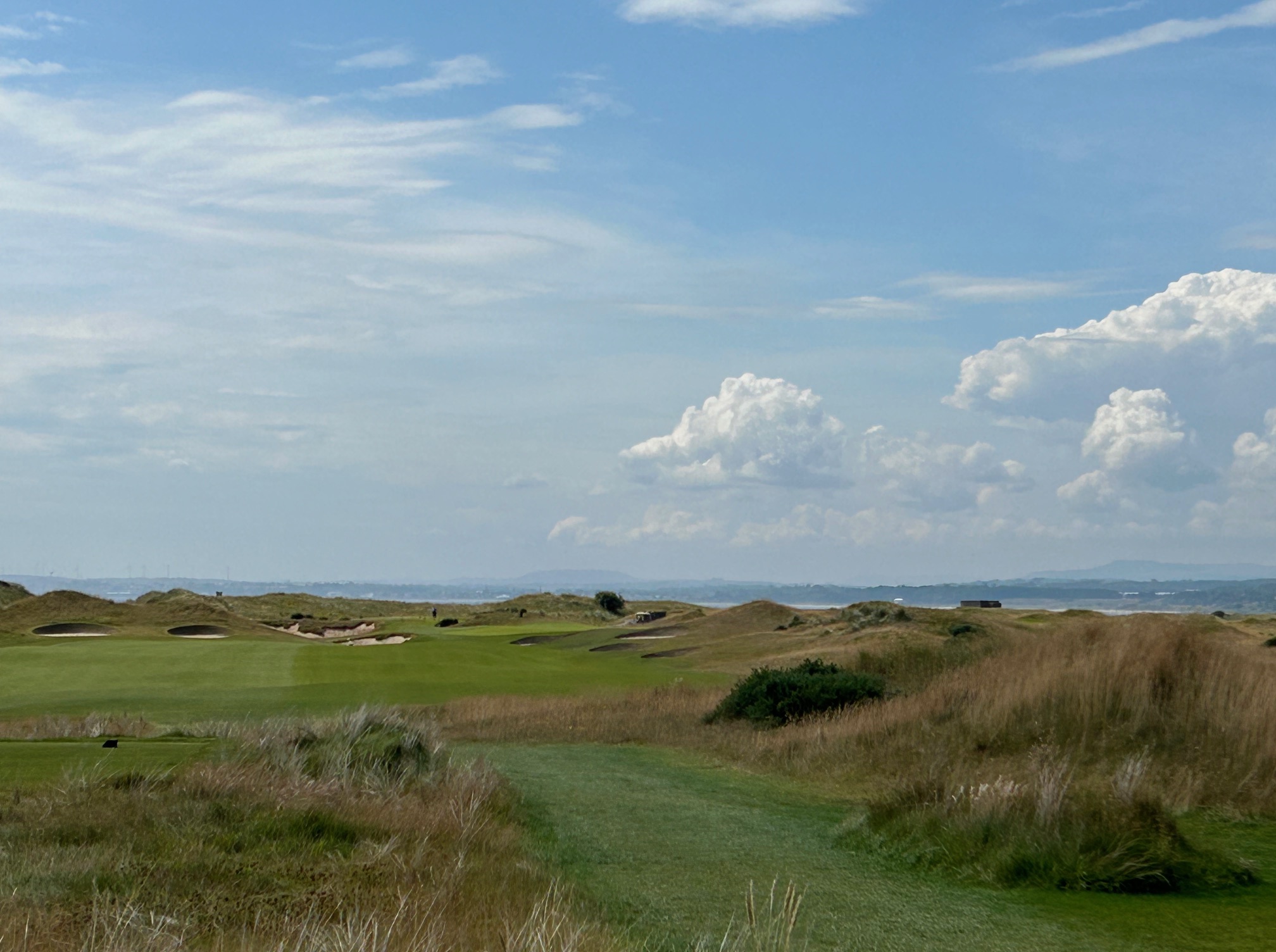
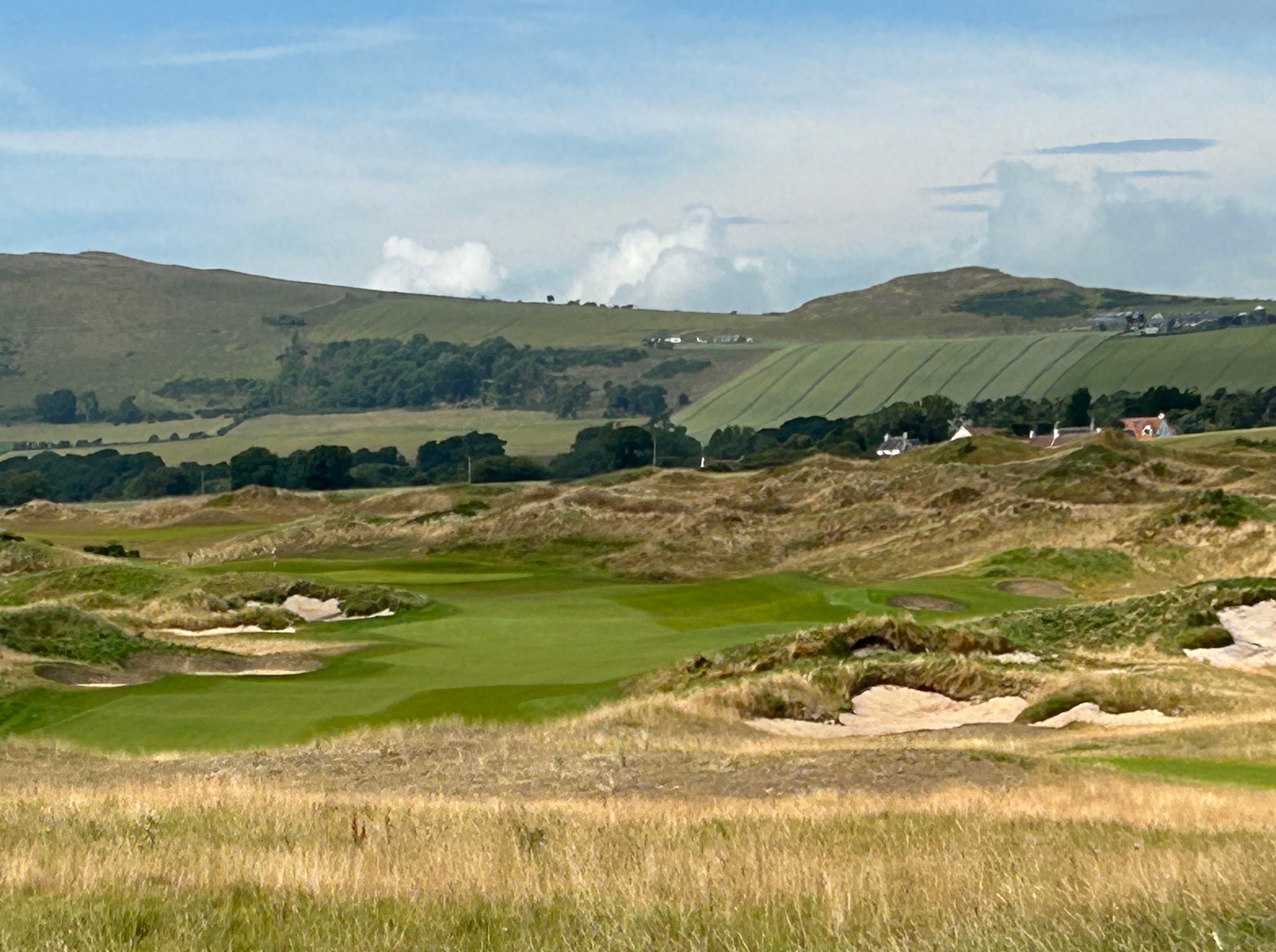
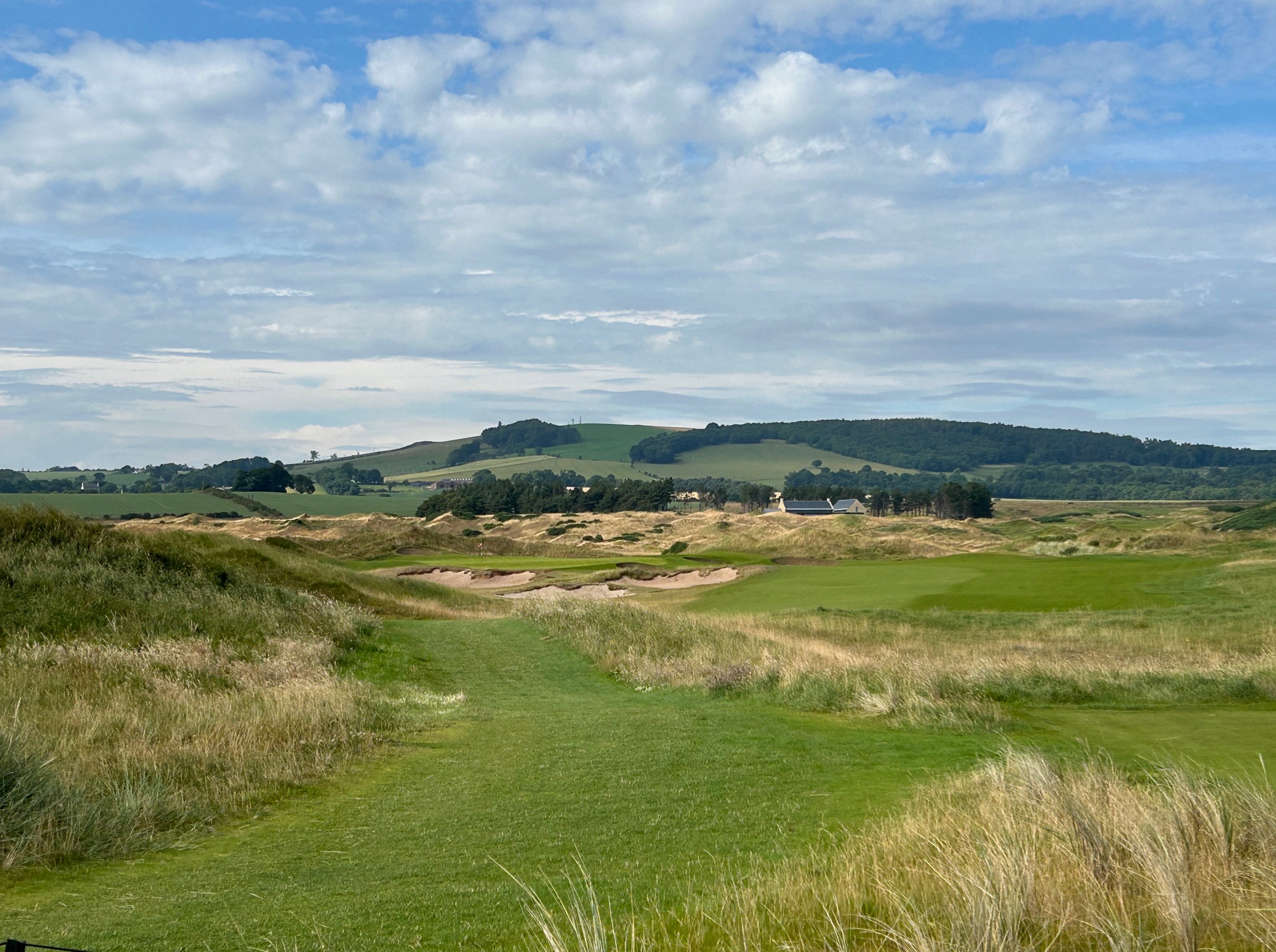
On a trip to the St. Andrews you want to extend your links golf pleasure by getting out of town to play places in close proximity like Carnoustie, Crail, and Lundin Links. Well make sure to add Dumbarnie Links to that list because only a drive and a mashie south of the old town Clive Clark has summoned from a piece of seaside rolling farmland all the features and feel of Scottish links golf at its finest.
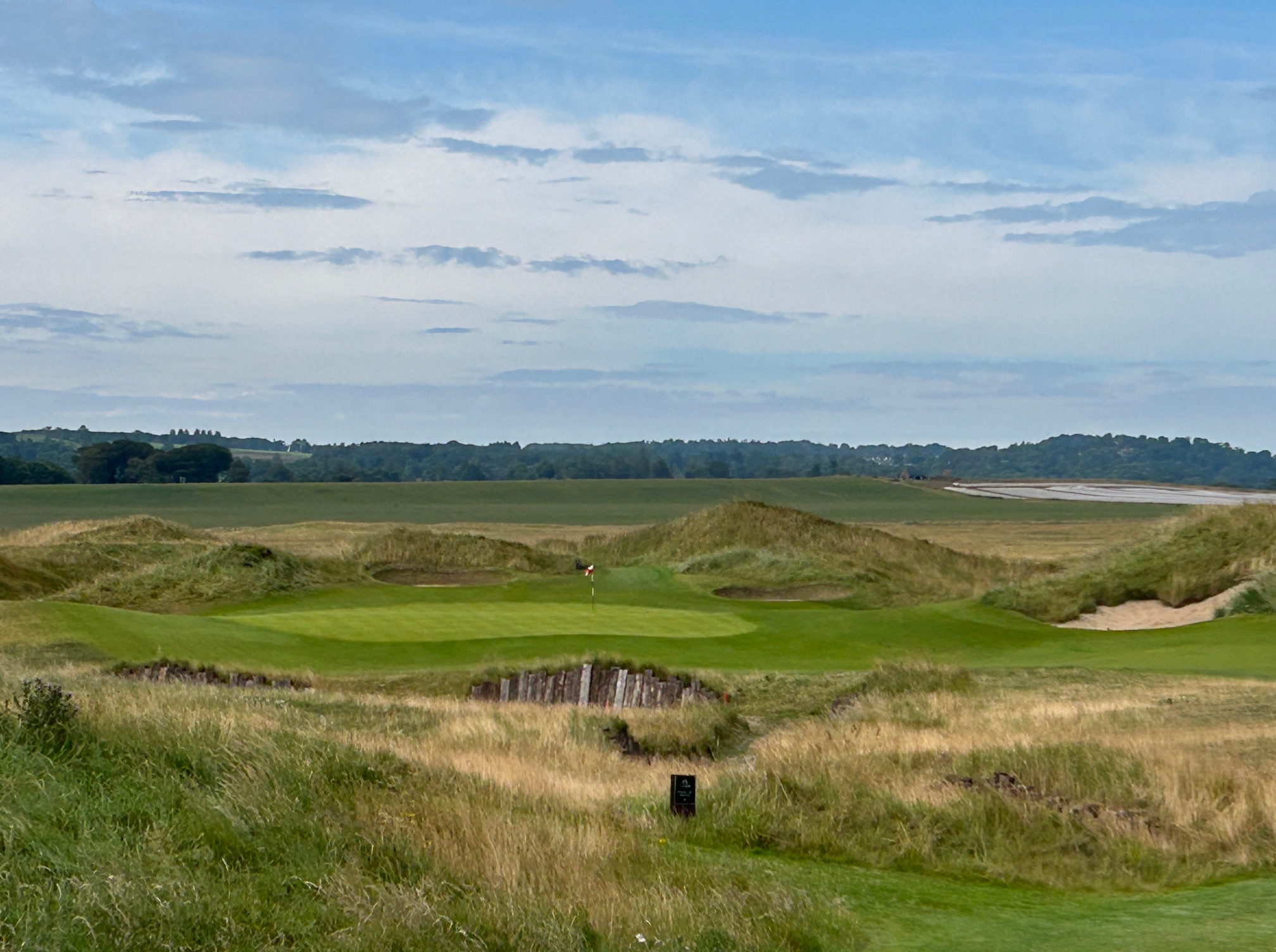
The place has the manufactured feel of other new offerings like Kingsbarns and Castle Stuart but Clark, an accomplished architect of over 30 courses in the UK and around the world, made sure to give you the arbitrariness of blind shots, alternative fairway paths, encroaching burns, punishing revetted face bunkers, and wildly undulating green complexes that makes links golf feel old and distinctive.
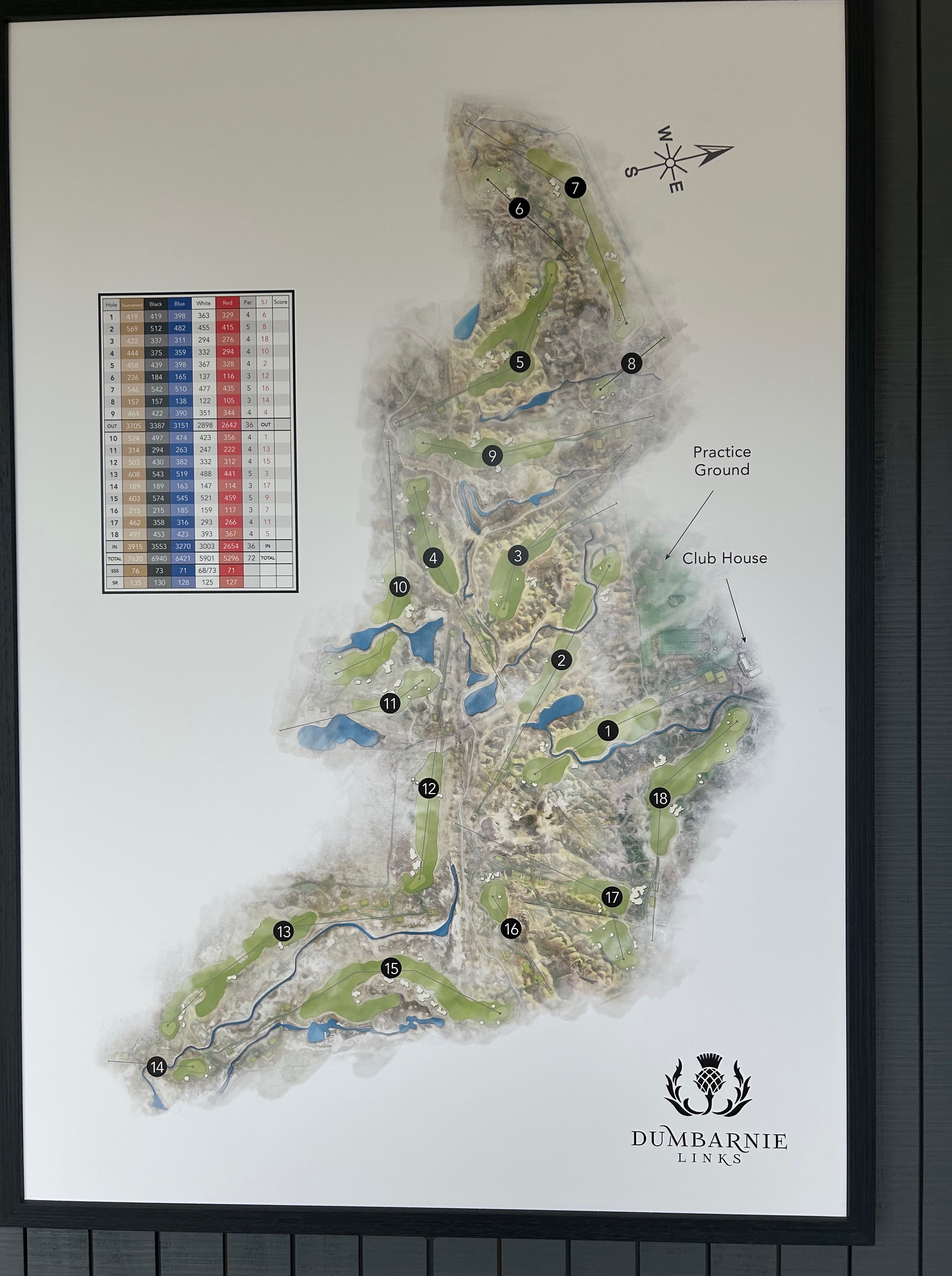
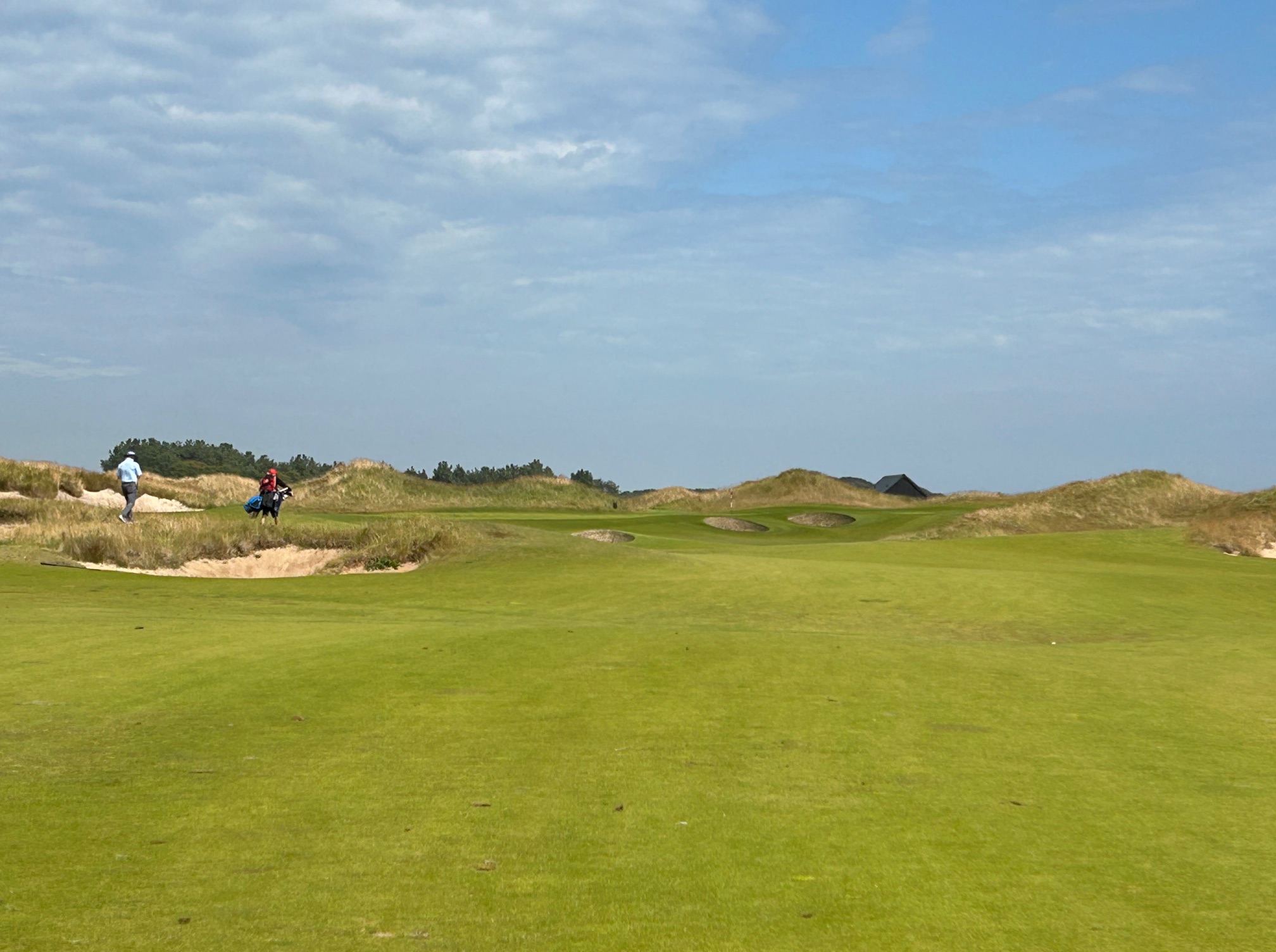
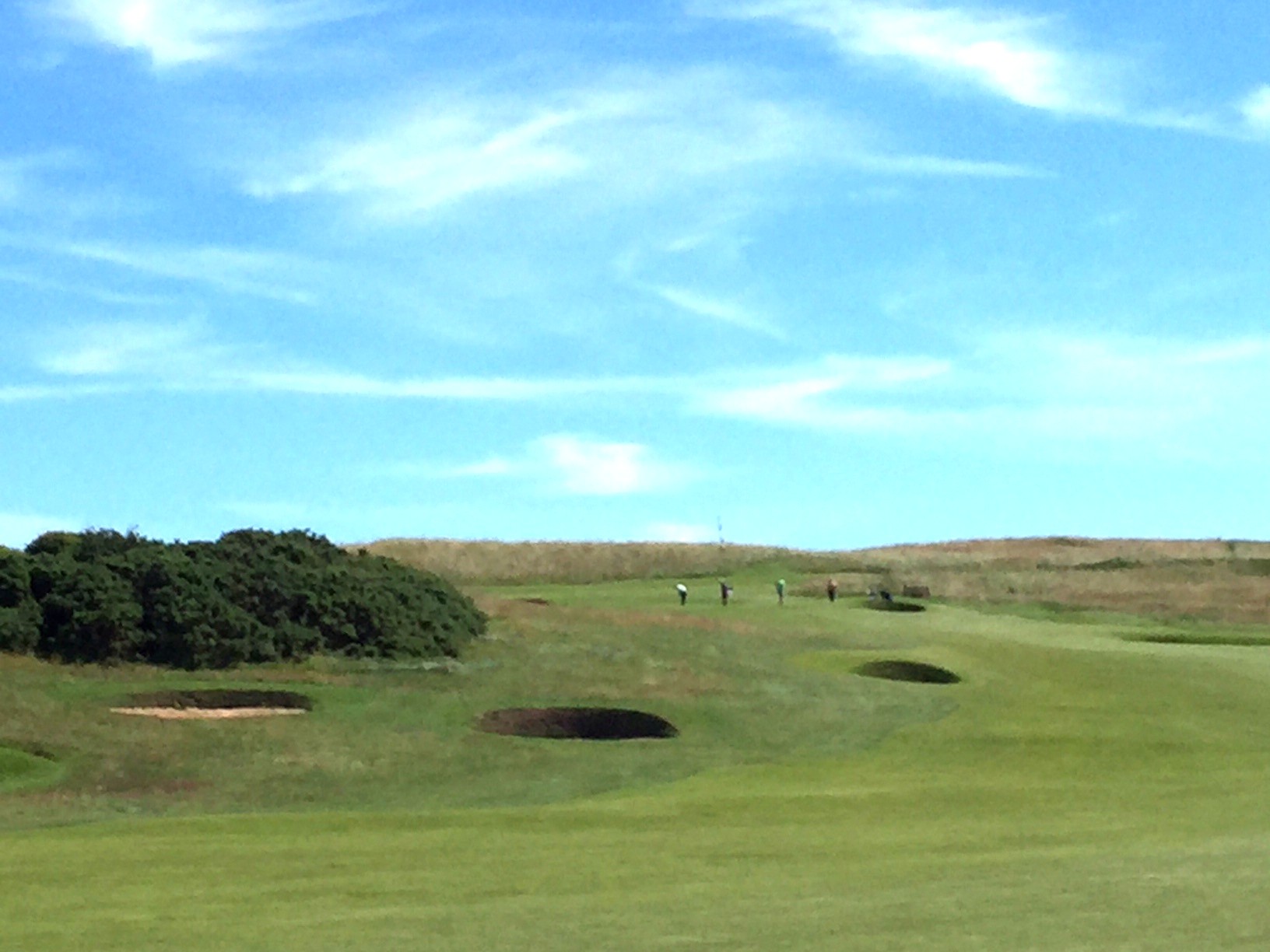
Check out the counterclockwise loop routing of the front and back nines
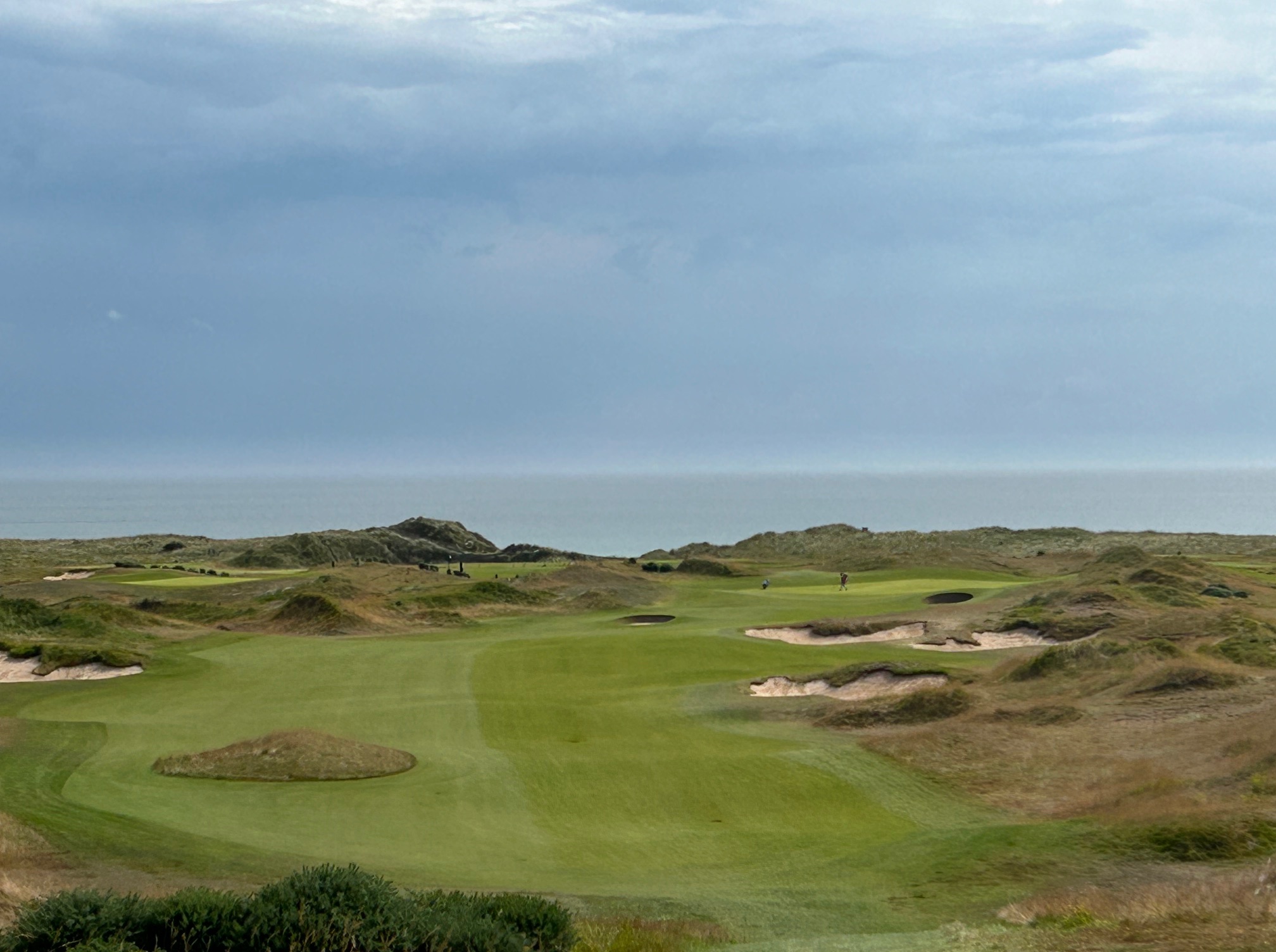
From the clubhouse’s promontory position the course unfurls beneath your feet as it makes its way to the Firth of Forth following two counterclockwise loops-to the west for the outward nine and back to the east for the inward half. This creates added intrigue as the wind direction will vary significantly from hole to hole making club selection an enigma as you pirouette around the circular trail of the holes on each side.
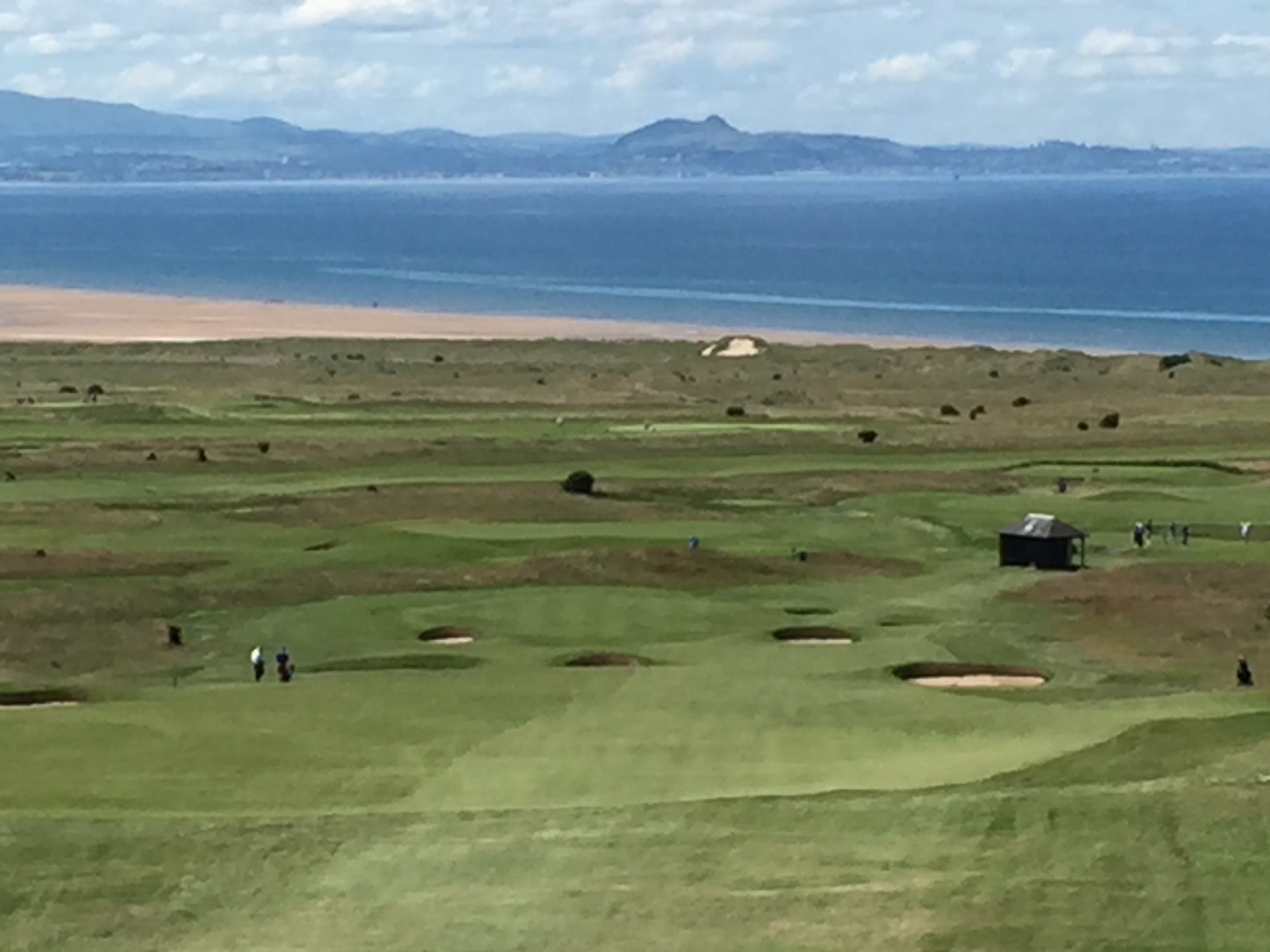
Majestic view off the tee of #1 below the foot of the clubhouse
The course opens up with a pair of seemingly tame downhill holes but don’t be fooled because both feature fairways truncated by an encroaching burn running up the left side off the tee and then crossing the fairway in the approach area. These winding brooks can capture a shot without adequate intent.
Much like the first #2 has some trickery created by the adjacent burn that then crosses the fairway
As the printable hole-by-hole strategic description embedded in the link at the end of this posting indicates, you have to pay attention to the topographical detail of these greens which often have bunkering on one side but equally punishing shoulders and roll offs on the other.
The third hole is the first of a number of seemingly driveable four pars you see during the round. The elevated tee gives you a good look at the risk/reward you are presented with if you decide to play the heroic line. More often than not discretion is the better part of valor so play for proper attack position on the approach shot.
#4 plays into the prevailing breeze and the three tier green creates approach challenge
On the Par 4 fifth you get Clark’s other favorite strategic element, a split fairway on a longish par four which forces you to make a decision off the tee. The line results in a shorter shot to the hole is the far more harrowing carry where as the safer side will play two clubs longer on the approach shot to follow. I like the fact that the further back the tee a guy plays from it is incrementally more difficult finding the fatter portion of the driving area due it being 60 yards longer and a tougher driving angle relative to the landing zone.
#5 has the split fairway that makes for decision time off the tee
There is one strategic oddity on this layout in that the one-shot holes are bunched in two 3-hole increments on the front and back and the first one is not until the sixth hole on this side.
Long Par 5 7th sits between the two three pars on the front side
The two three-pars on the outward half are diametrically opposed in both length and topography. The sixth is a medium length uphill right-to-left bias over a wasteland of scrub and sand into a green that is protected by deep revetted face bunkers. The eighth, which tumbles down toward the sea, is just a wee pitch on the shortest hole on the course, but the 40-yard long diagonally set green has three distinct tiers which makes it an absolute lawn dart challenge into the day’s pin to avoid a dreaded three-putt opportunity.
Tranquil view of the 9th takes you back to the firth
This nine ends with another panoramic view of the Firth on the #4 handicap hole on the card, so it is no pushover. After fitting the tee ball into a driving area narrowed by a pair of deep fairway bunkers on the right you are faced with an uphill approach into a green naked of any bunkers with a deep heel print in the back section.
From the frying pan into the fire, the second half begins with the #1 handicap hole, a stunning looking truncated dogear right par four with more risk then you can imagine on both shots. If you succeed in finding the fat part of the driving area off the tee you have to negotiate the burn that bifurcates the approach line to cape-like setting of this sprawling putting surface.
One of the delightful short Par 4’s the 11th tempts you to consider aiming at the green
Once again Clive tempts you with a drivable dogear left over a wasteland of hollows and brush on the 11th. The alternative drive is a 160 yard shot to the right edge of the fairway leaving a short pitch into another wildly contoured green.
After a fairly straight forward Par 4 the 13th is another partitioned three-shotter which makes you ponder alternative routes based on lay up positions in alternative fairways on your second.
14 a strong medium length Par 3 likely into the prevailing wind. Vertical sleepers define required carry
Once again it has taken five holes to reach a Par 3 on this side. With the prevailing wind from the left, he complicates the task by carrying the burn up the left side of the green so you are encouraged to take an extra club to make sure you carry the penalty area.
The last Par 5 of the day 15 gives you the split fairway option once again off the tee
The second Par 5 in the last three holes this one presents the split fairway off the tee instead of on the approach. The truly bold player can hit it up the right fairway to shorten the angle and the length for a second shot at the green. Most will play it as three shots up the left but be aware of the extreme false front of this 45-yard deep green which will reject any approach without sufficient energy.
Playing back toward the sea the last short hole plays downhill into the wind and requires a left-to-right line to play up the diagonal green setting. This is not a hole to go flag hunting because of the revetted bunker protecting the right side of the green.
Giving you one more chance for a heroic downwind tee ball the penultimate hole is potentially drivable but this time there is a 300 year-old stone wall playing into the decision. The lay up on this dogear right before the wall is a shot of about 180 yards leaving a 100 yard pitch into a mushroom shaped green pinched by pot bunkers. The more ambitious tee shot needs 200 yards of air to reach the other side and leaves a very short punch and run into this green complex.
The finish is a beautiful downhill approach into a green set into the low hillside
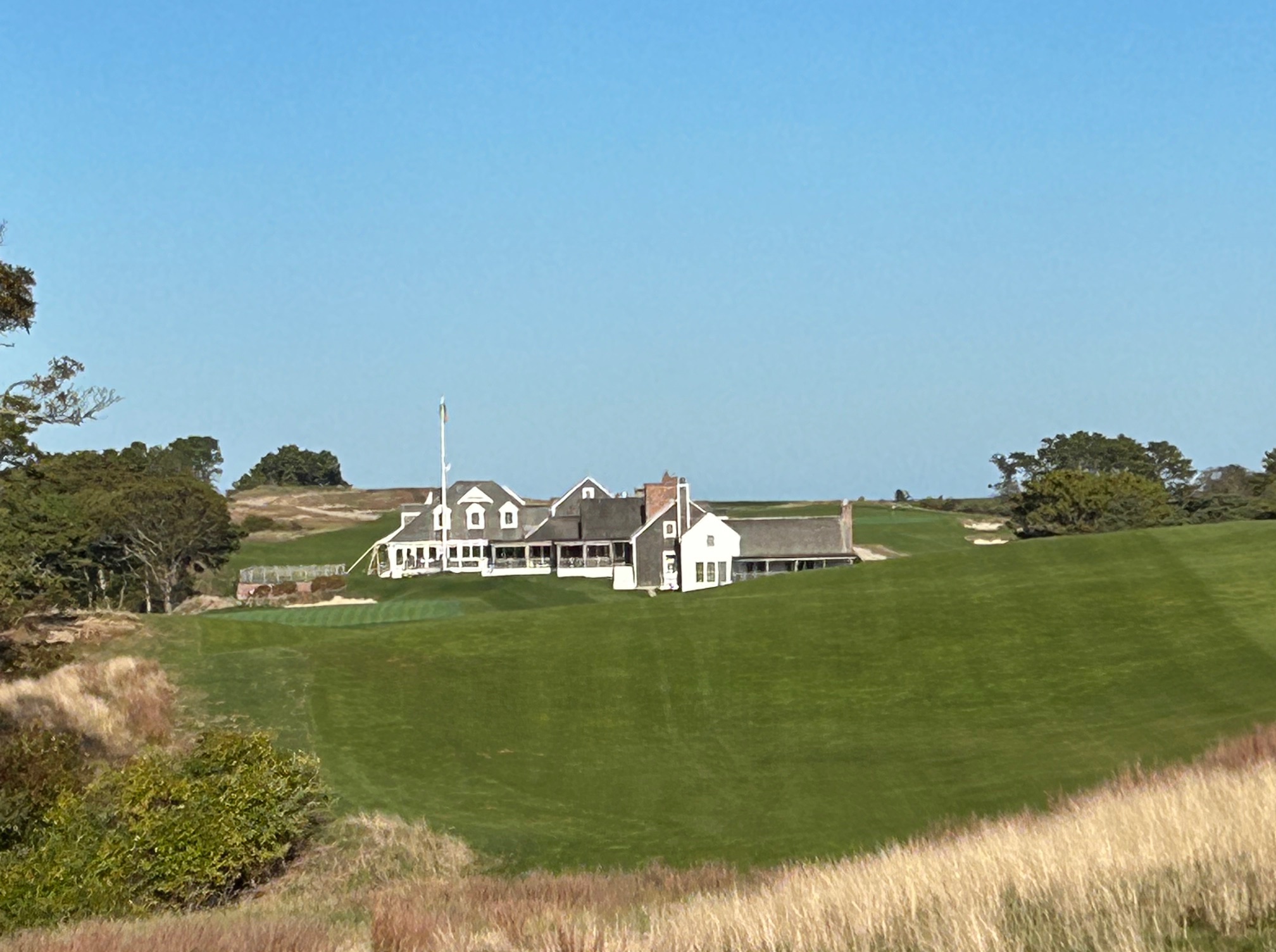
The finish is a long and challenging dogleg right Par 4 which presents a semi-blind tee shot over a crested hill with flanking deep fairway bunkers on the corner. From the safe driving area adjacent to the bunkers the approach is a downhill look at a long green nestled in the hill below the clubhouse. What a satisfying finishing look to this splendific layout.
Once you are done take the time to sit behind a tall adult beverage in the clubhouse bar with a breathtaking view of the majesty of this course. Plenty of time to seed some big fish stories about all the amazing Dumbarnie Links challenges you took on today.
Upper Largo, Fife, Scotland
Architect: Clive Clark (2020)
. Par Rating Slope Yardage
Black 72 73.2 130 6940
Blue 72 71.0 128 6421
White 72 68.4 125 5901
Red 72 70.6 127 5296
If you would like a printable PDF of this posting including yardage book quality hole-by-hole descriptions of how to play the course click the moegolf logo below.
We know that playing golf in East Lothian dates back more then 200 years and Gullane was one of the first organized attempts at creating a golf links in this region. There is no architect of record for this place, it kind of evolved over the years as the number of interested players grew. Archie Baird, the unofficial historian of this region, says in his book Golf on Gullane Hill, “It was more nature than nurture as golf on Gullane Hill was a lucky combination of wind, sand, rock, rabbits, wool, feathers and gum”.
What has survived is a wonderful piece of golf architecture land management on one of the most challenging topographical canvasses in this region. Kind of reminds one of the back nine at Tralee without the trolls. In spite of the massive elevation changes they routed the holes straight up and down the inclines in such a way that there are almost no side hill lies to be considered all day. These same elevation changes provide startlingly beautiful vistas from the high points on the property where you take in views of the vast farmlands below and the long shoreline of the Firth of Fourth on its way up to Elie and Crail.
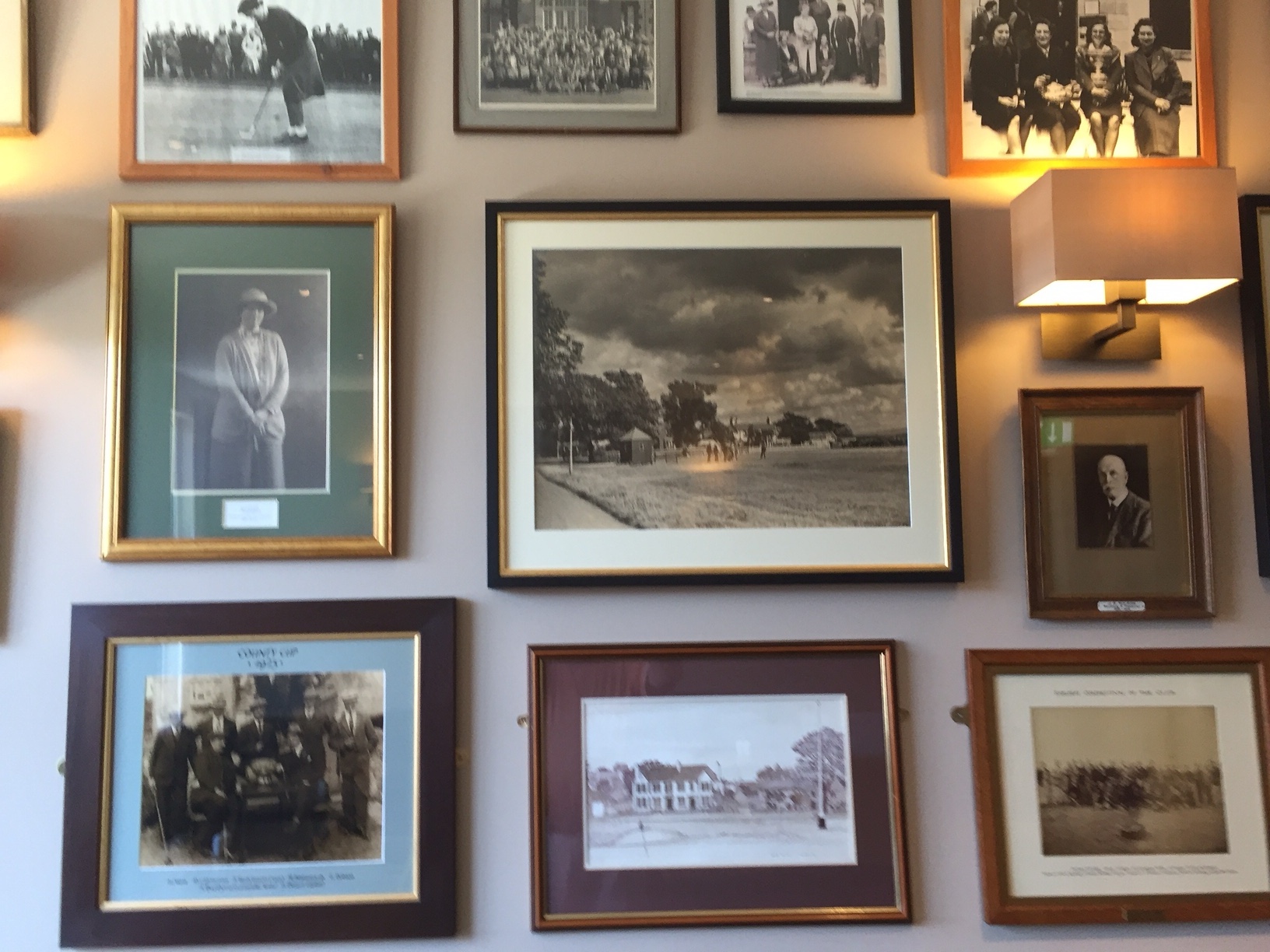
Artifacts from the Members Club House that celebrate the history of this place
The history of this place is evident through the town where the club resides, the artifacts in the historic Members Club House next to the first tee, and on these sprawling hills themselves. These distinguished links have played host to the most prestigious golf championships over the years, including the Scottish Men’s and Women’s Open and Open Championship final qualifying. With the wind as its accomplice you will see why this place is a firm true links test to players of all caliber.
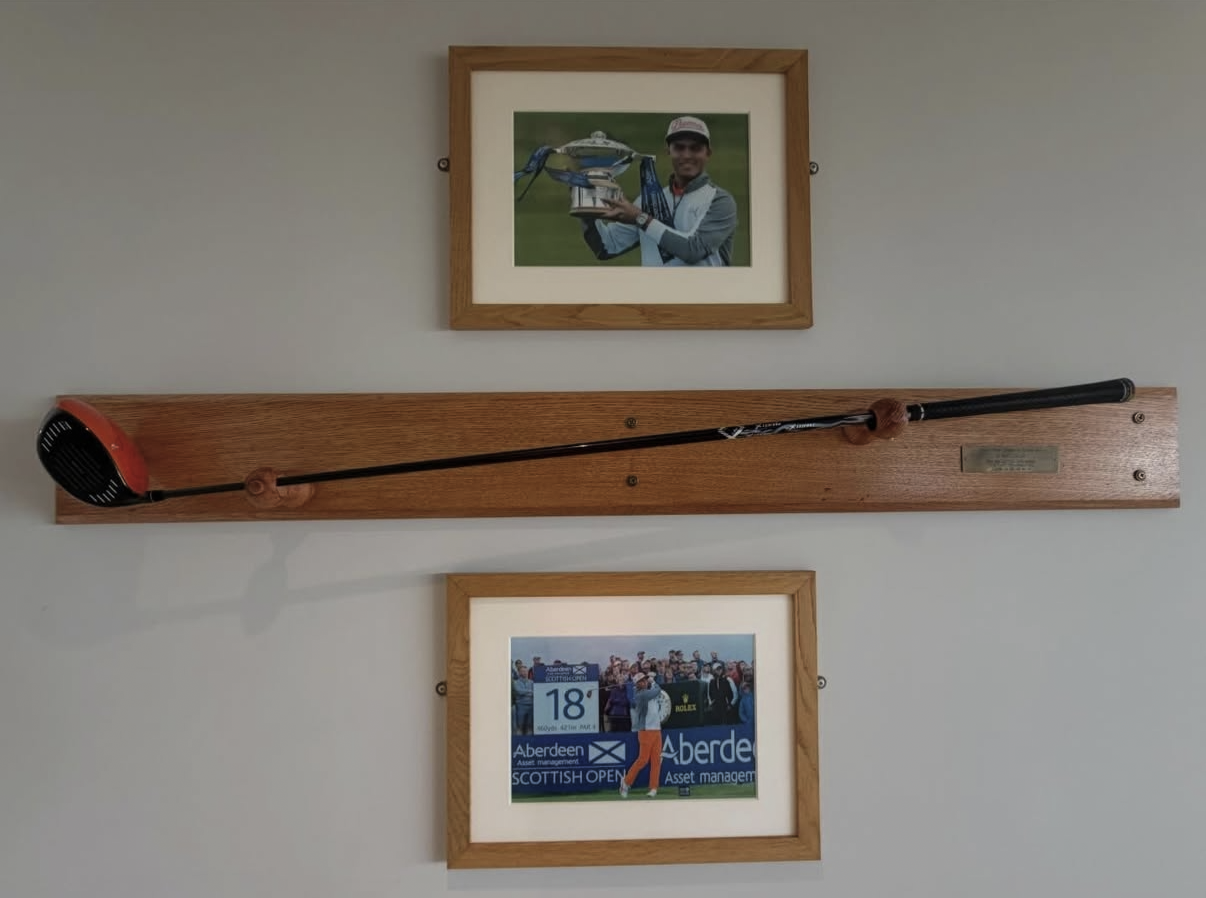
Evidence of Rickie Fowler winning the Scottish Open here in 2015
In general the course is wide open to the eye but don’t be fooled by that, there are specific strategic lines you have to adhere to throughout the course. Make sure to get the cool yardage book in the golf shop that gives you precise detail of the architectural features of the course. It also shows a photo of the driving area on each hole and a separate green map with dimensions and contours. This photo includes the driving area parameters from each tee and aiming lines for your tee ball. It is an essential guide to playing the course effectively. You will find a link to a printable PDF of our hole-by-hole description and strategy for play at the bottom of this posting.
One further note is that unlike most courses we play where the handicap holes are disbursed evenly by even handicap designations on one nine and odd on the other, this convention is not adhered to at Gullane. As a result your handicap shots might be stacked a bit more on the incoming nine holes.
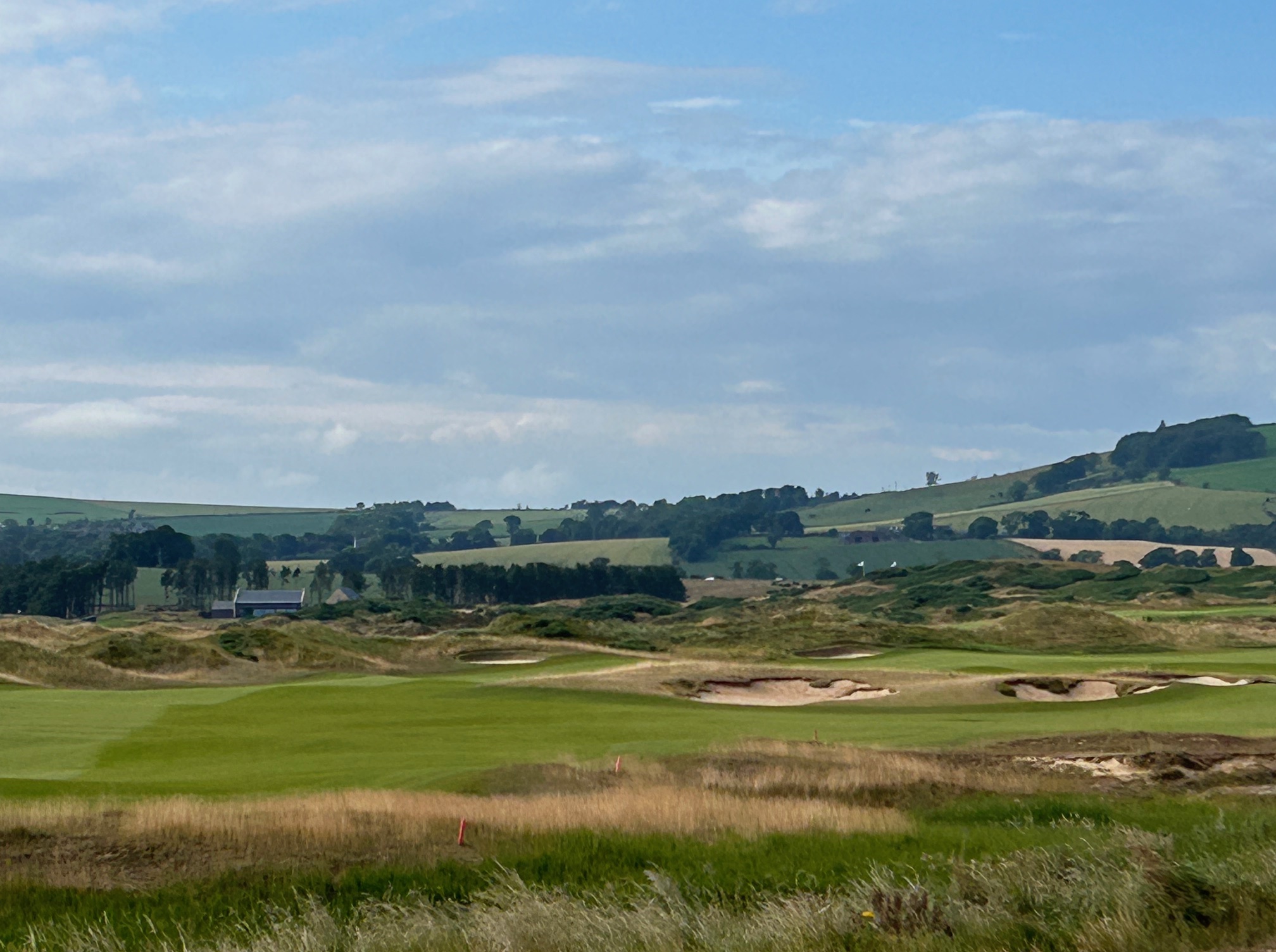
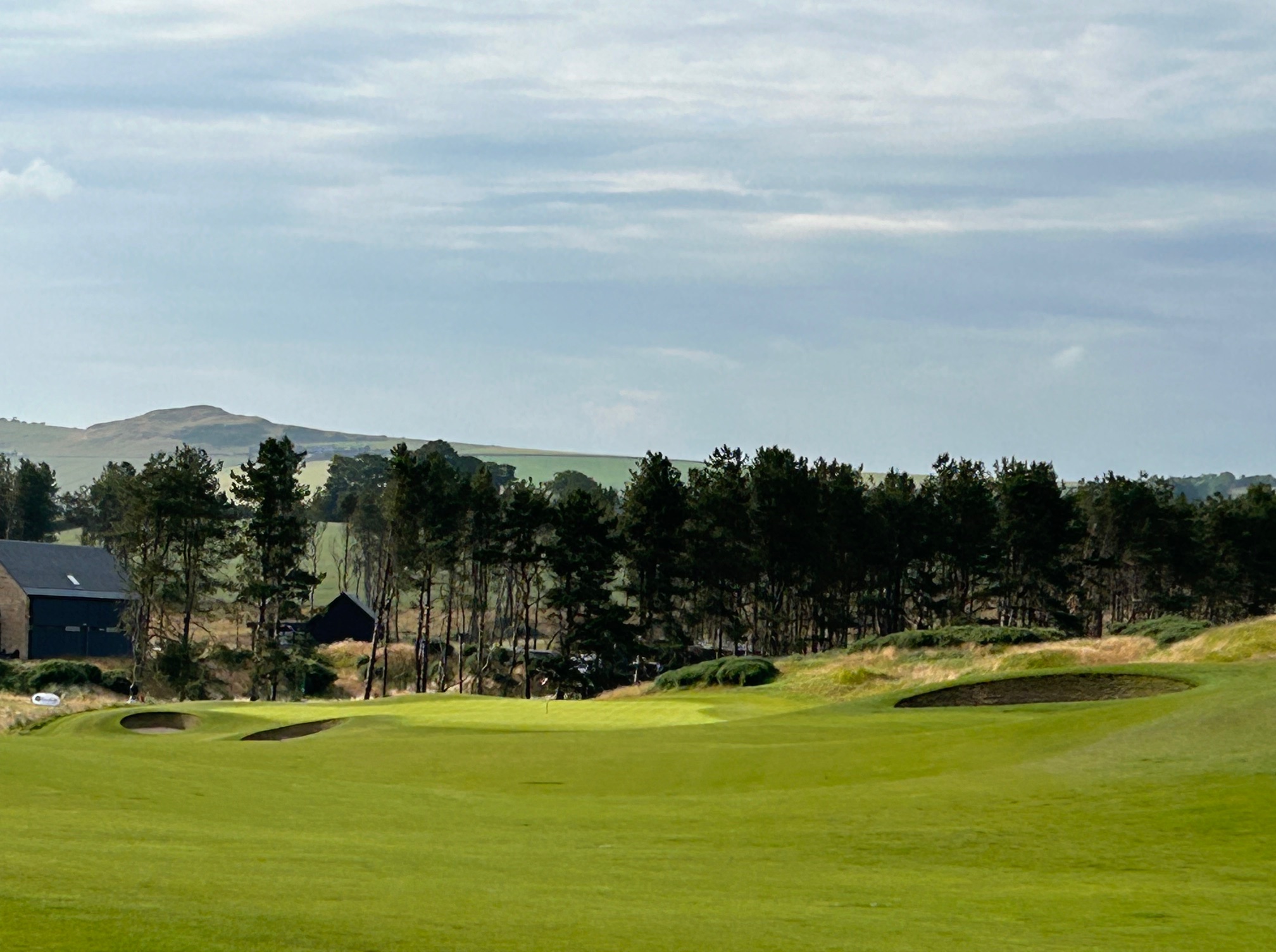
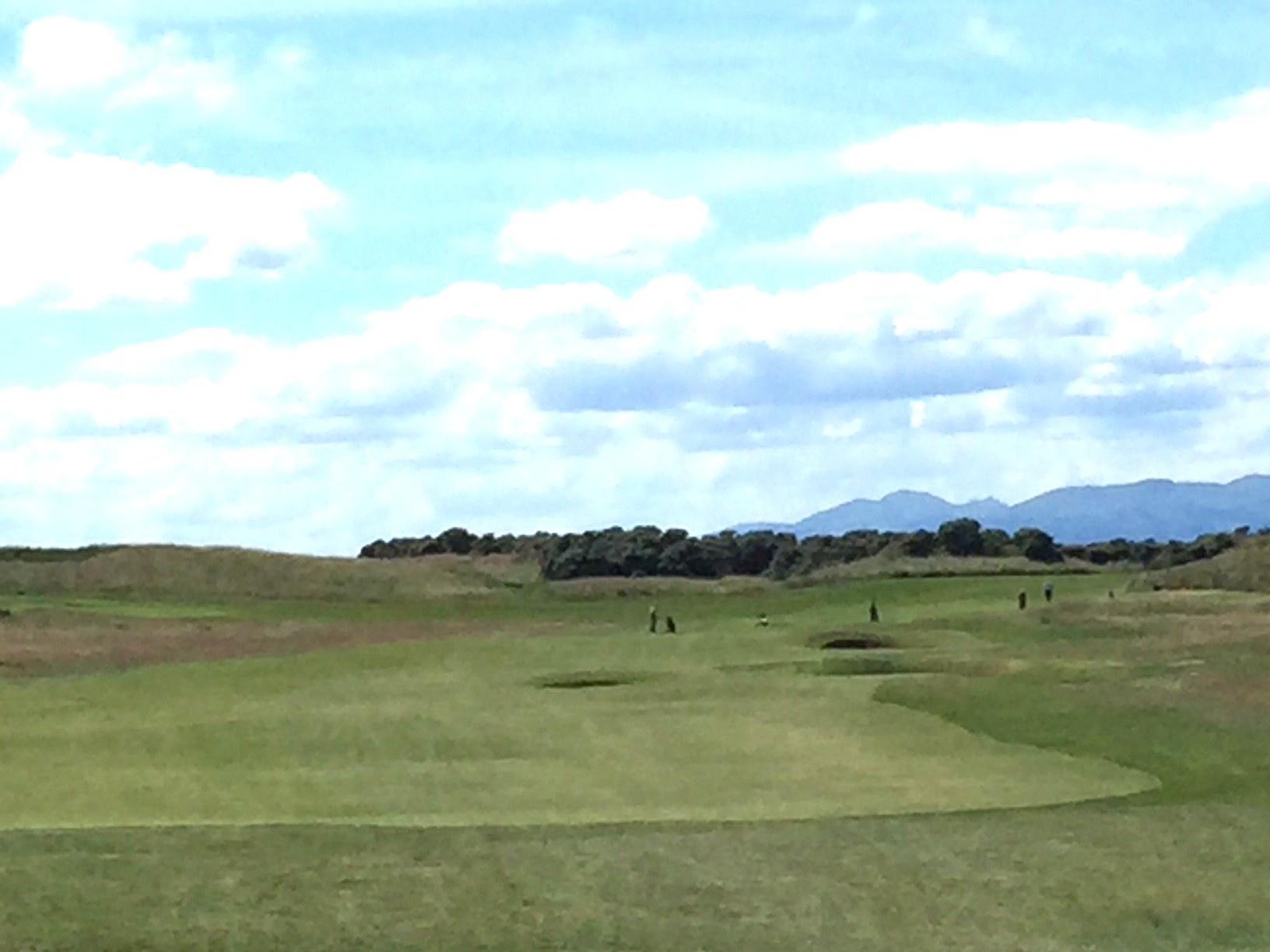
Look across from the 1st tee-in the background is the first march up Gullane Hill on the 2nd hole
The first and the finishing holes are the only two on-level holes you will see all day. It is a comforting handshake to start and finish what will be an exhilarating rollercoaster trek up and down the steep contours of Gullane Hill.
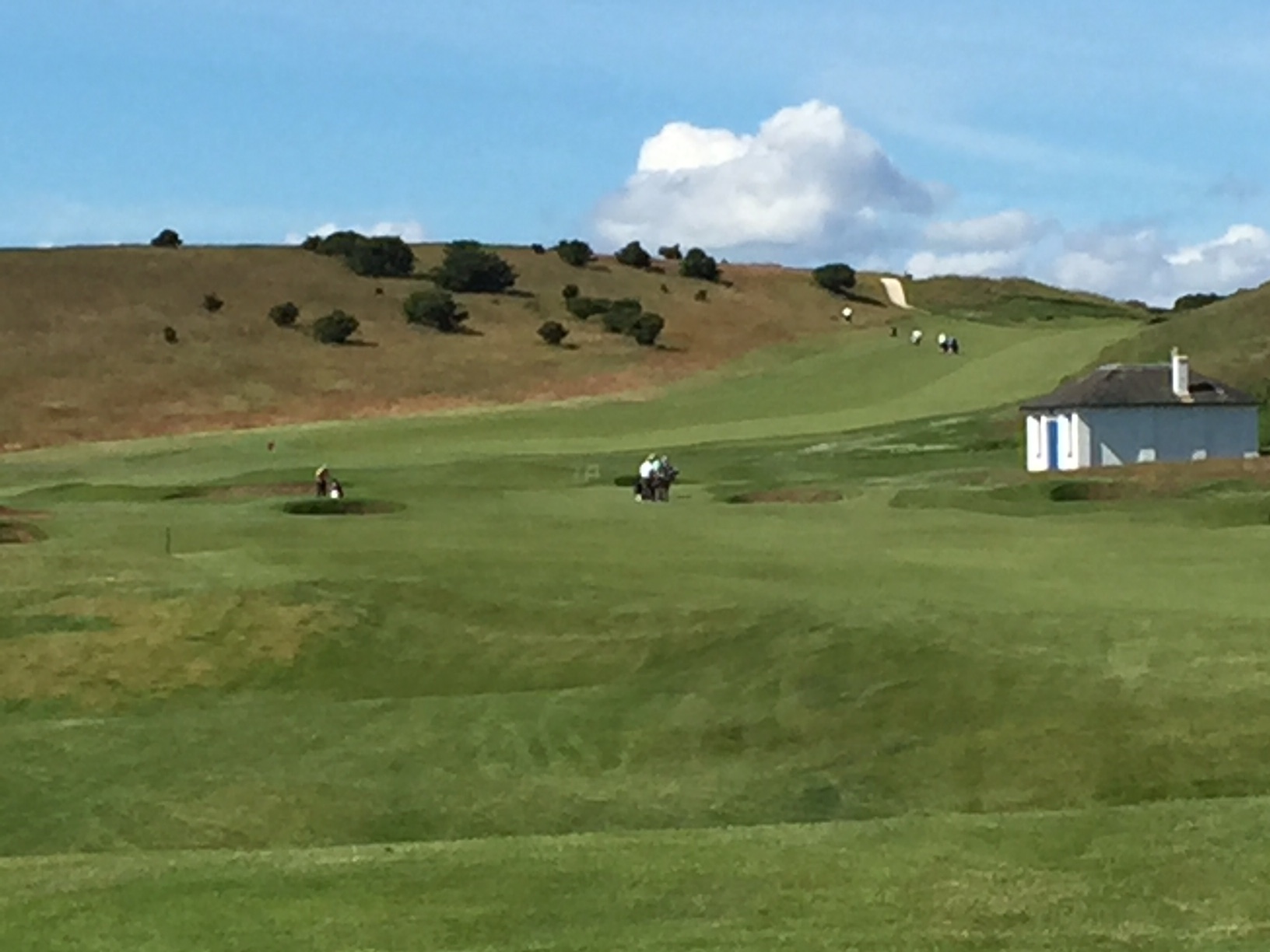
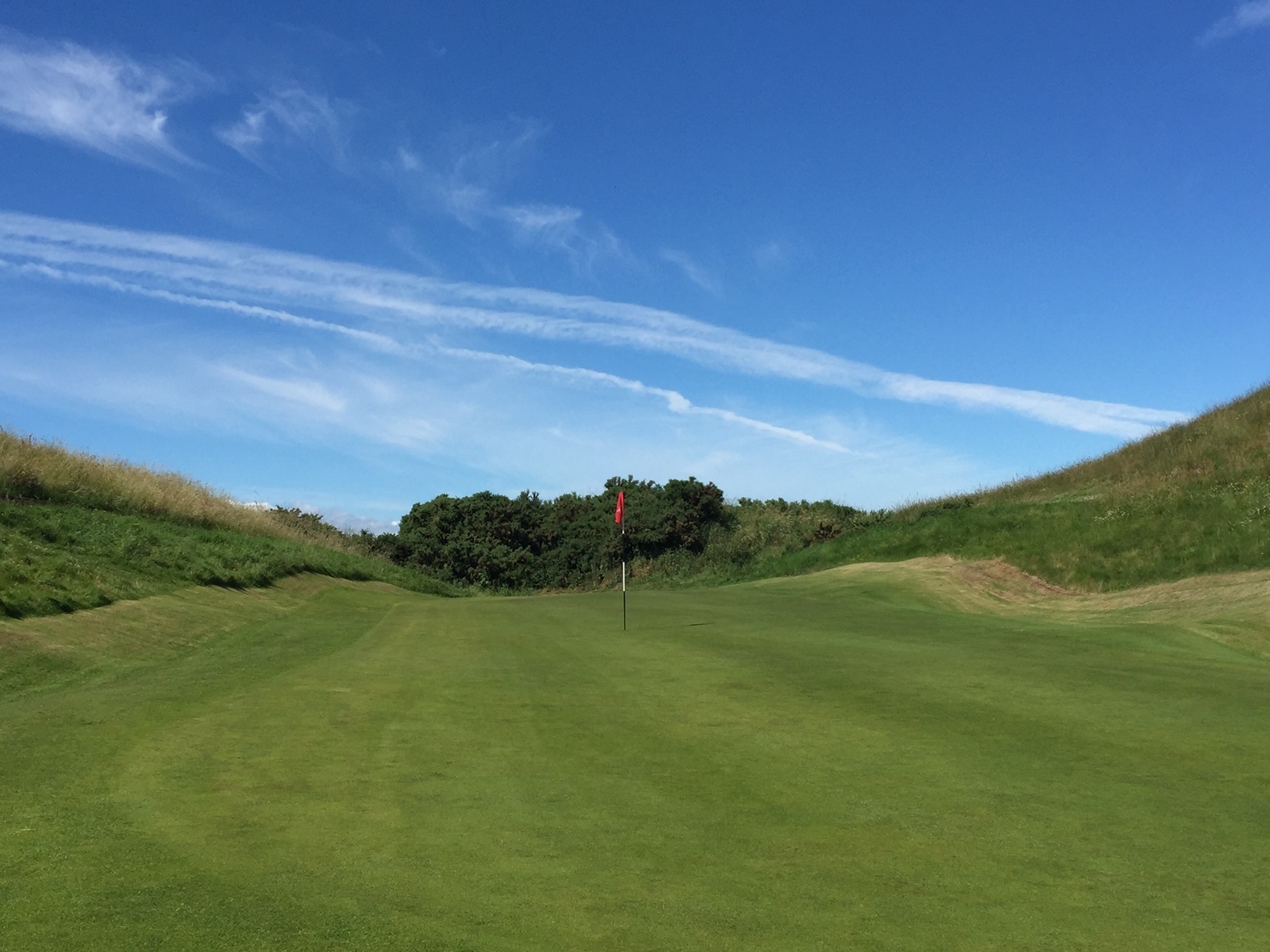
Small target on approach to #2..bowling lane green with no gutters
The march straight up the hill on the second is a wake up call to what’s ahead. After driving into a gentle slope the approach is a two-club extra shot into a narrow bowling alley of a green complex. If you make a par here you are one up on the field.
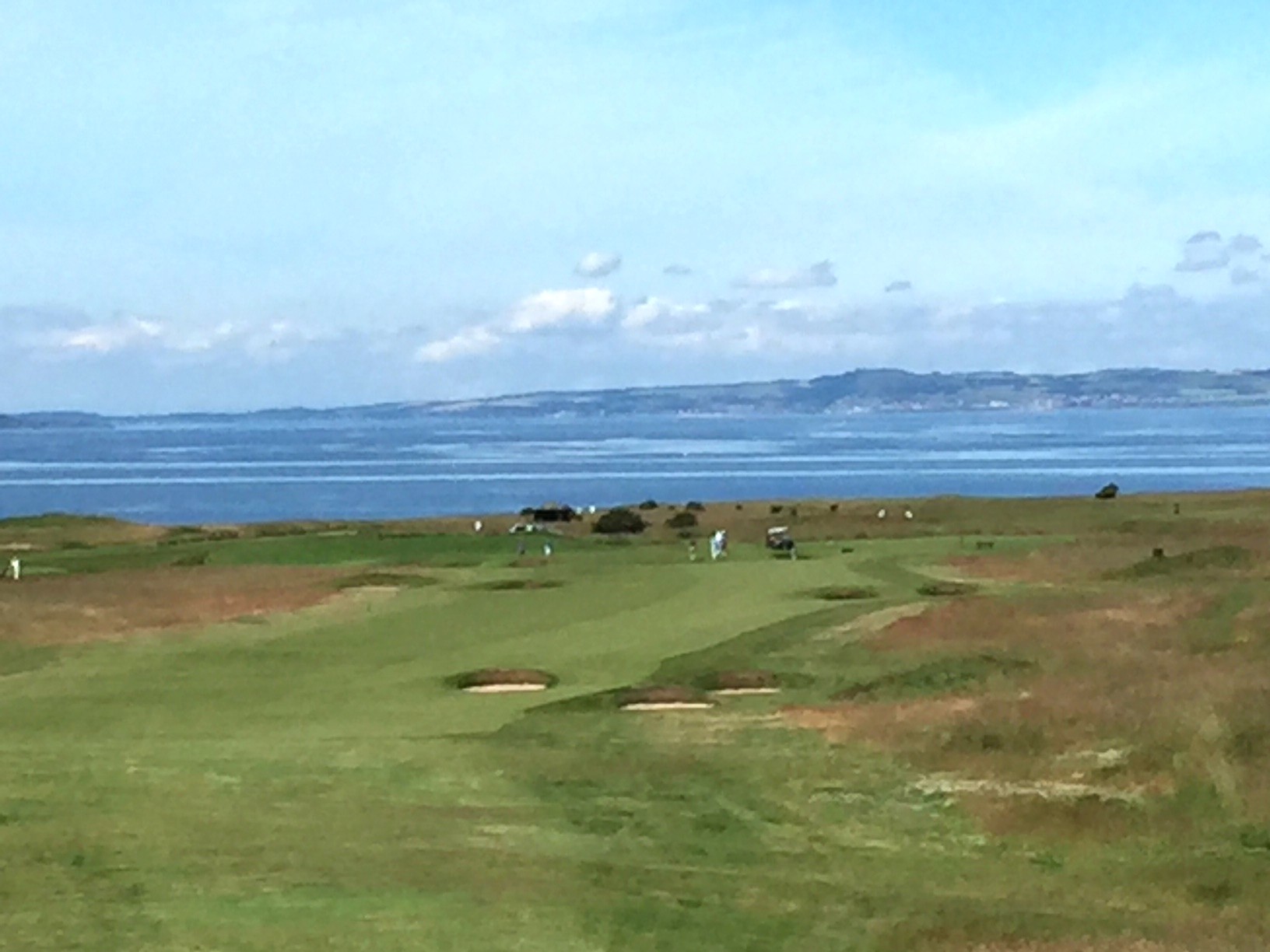
First look from the 3rd Tee at the expanse of East Lothian to the Firth of Forth
Stepping onto the third tee of a relatively benign five par you get your first look of the expanse of country side that East Lothian encompasses. Pause a moment to take it in because it is something to behold. The hole gets it’s name Racecourse from a time in the mid-1800’s when training race horses on these hills was a very effective use of the land.
Teeing Off down the hill in Par 5 third
The first of the four great short holes at Gullane 1 is coming up. Only a short to mid-iron into is required into a raised coffee table of a green complex segmented front-to-back. If the wind is at your back controlling the roll out once on the green is a real chore.
Many of the longest four pars have this uphill approach of #5
There is no rest for the weary as a long Par 4’s are the real guts of this course. The fifth is the #1 handicap hole and you will experience the elevation change within hole that adds a three-quarter stroke increment to whatever the card says.
In some ways the next two holes define the unique character of this old course. The first is a technical uphill short par four which tempts you to be too bold for your britches. It is a scoring opportunity as long as you don’t play into temptation.
Sitting in the Queens lap looking down at her kingdom below her feet on #7
This is followed by Queen’s Head where you get your second breathtaking view of the outward nine staring down what looks like the Olympic downhill at Kitzbuhel to a green complex at the bottom of the world below. The challenge here is to control the run out of your ball on both shots which take full advantage of what gravity and tightly mown bent grass fairways provide.
Across the high stuff it takes focus to hit your target lines
Continuing the royal theme King’s Chair is a wonderful sprawling four par that straddles a blind hill and leads to a long approach to a tightly set green complex. It is looking for a draw approach to work into a narrow green that flows away from you.
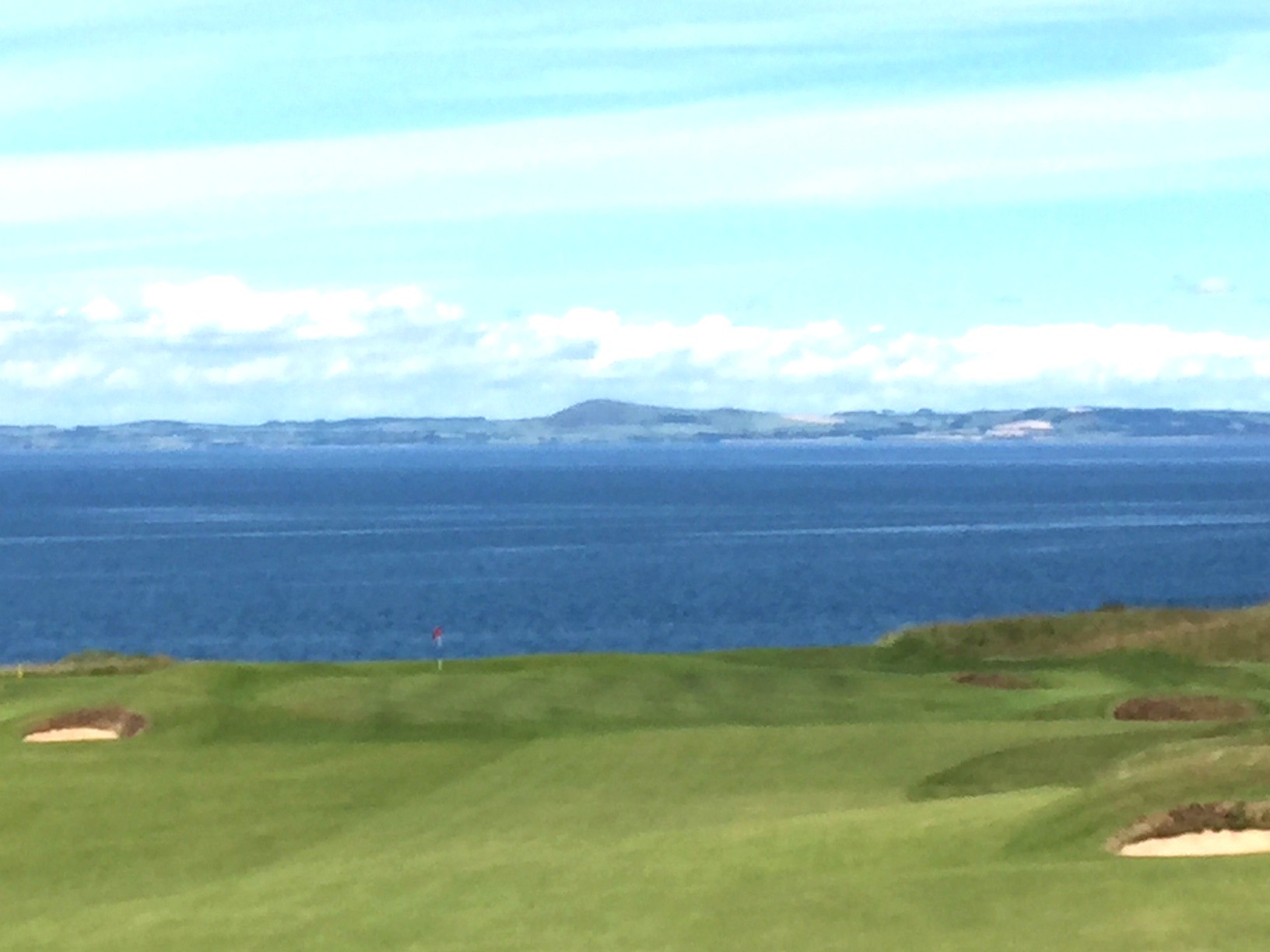
This stunning view of the shoreline of the Firth of Fourth looks like a landscape painting
The outward half finishes with a slippery downhill three par that requires a flighted short iron feeding onto a green falling precipitously away from you. The green is tightly ringed by eight bunkers, so errant playing lines are punished severely. This has been an exhilarating experience so far but the ride is only half over.
Another look down 11 at the coastline of the Firth…you can see half way to St. Andrews
The inward nine begins with two long and challenging Par 4s. The tenth plays to its #2 handicap designation and the drive must carry the ridge in the middle of the playing area leaving you a long club across a cross bunker feeding downhill to a green complex with an accessible opening. This is followed by a sweeping downhill hole that is likely playing into a headwind from the sea below which will make it a three-shot hole. From a drive position right center of the pot bunkers you see from the tee you are likely looking at a lay up down the right to give you an open look up the green angled to the left.
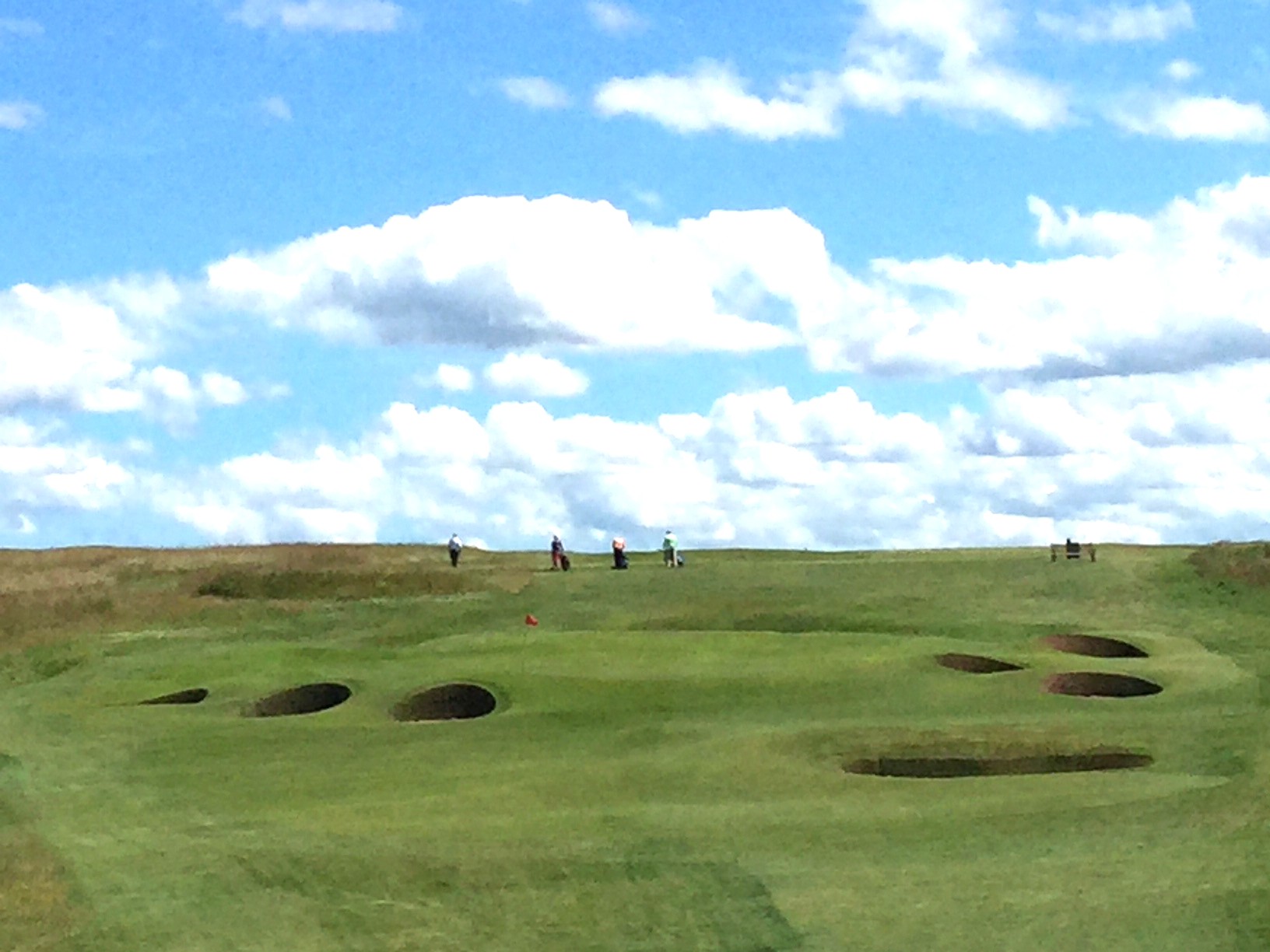
The tee shot on the Par 5 12th requires a dexterous play left of the array of pot bunkers on the right
Some relief in store as the next Par 5 probably plays shorter than the two holes you just played. The narrow green approach here is tricky with one nasty pot bunker pinching from the right.
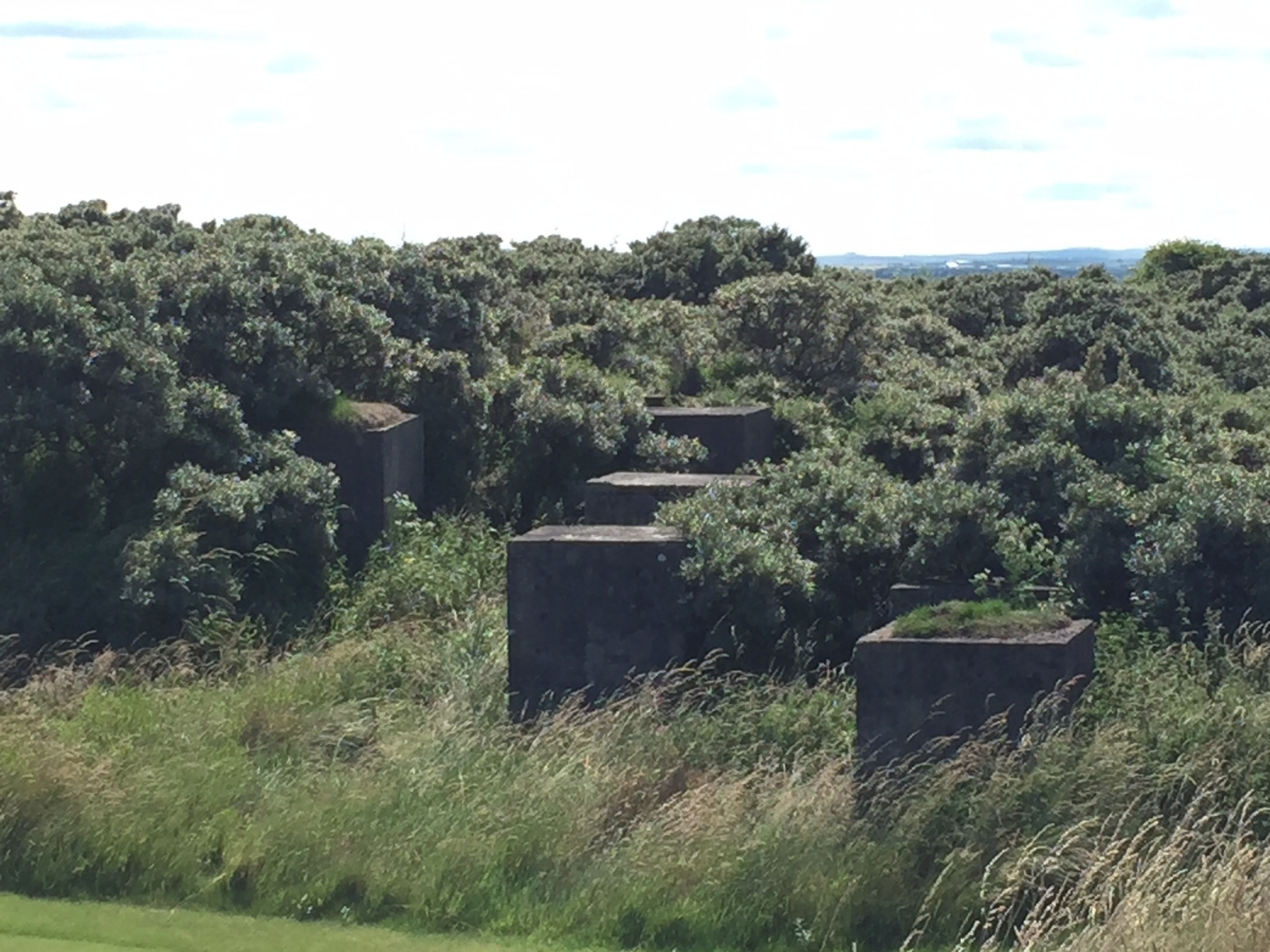
Stark reminder of the harrowing shadow of the Third Reich just across the sea
This corner of the property still bears evidence among the seaside foliage of massive concrete barriers the English put in place to deter a potential tank invasion the Germans might have had in mind during WWII.
Another tricky one shotter 13 is protected by sod wall bunkers that are unforgiving
The course turns back toward the clubhouse with a tidy uphill Par 3 fronted by fierce sod wall bunkers on both sides and a moated collar above the green to capture overzealous tee shots. The green has a bowled contour that feeds the ball to the center so just make sure to pick enough club to clear the front edge.
Number 3 handicap hole is next with a very long slightly uphill Par 4 which is only reachable in two with wind help at your back. As you plan your fairway wood on your second be aware of the two pot bunkers respectively 70 and 30 yards from the green which can gather a tepid approach and bring a double into play.
Pumphouse is a Par 5 that once again ramps its way up Gullane Hill
Continuing the climb back up Gullane Hill this uphill three-shot Par 5 unfolds in front of you. From the center of the driving area your lay up approach is just past the pumphouse on the right leaving you a one club more pitch up to the green tucked into the hillside above.
Click on the image below to see a video of this breathtaking view
When you cross the ridge behind the 16th green and step onto the tee of the penultimate hole you are graced with another breathtaking view of the expansive farmland that surround the town of Gullane.
Looking down the steep hill on 17 the fairway ends where the cross bunkers begin
Now you are playing straight down the steep incline you traversed on the adjacent 2nd hole at the beginning of the day. Your tee ball will enjoy a huge roll out as a result and it is 320 yards to the end of the fairway short of the diagonal shishlink cross bunker arrangement 60 yards from the green. The approach shot requires a deft pitch where the incline in front of the green is your friend in trying to tumble one down close to the day’s pin.
The rather tame 18th plays back to the club house and golf shop
As I said in the beginning this exhilarating ride ends with an on-level Par 4 where control of your tee shot across a rumpled fairway should leave a simple short iron approach into a bunkerless green next to the first tee and the golf shop.
Members Club House has a hospitalble bar that overlooks the first tee
When you are done make sure to check out the Members Club House and bar across the street for a cold one and a chance to recall what a joy it was to traverse these hills of Gullane.
Archie Baird, may he rest in peace, gave us the tour of his Heritage of Golf Exhibition back in 2016
Footnote to consider: There is a quaint museum adjacent to the golf shop which houses the amazing personal collection of golf artifacts of Gullane historian Archie Baird. This collection of old clubs, balls, and Scottish golf memorabilia is well worth a half hour of your time but it requires calling ahead of time for an appointment through the Gullane Golf Pro Shop. Click on this link for our review of the Archie Baird’s Heritage of Golf Exhibition.
East Lothian, Scotland
Architect: Unknown (1882)
. Par Rating Slope Yardage
Blue 71 73.9 127 6873
White 71 72.6 126 6583
Yellow 71 70.4 122 6162
Red 71 75.0 131 5903
If you would like a printable PDF of this posting including yardage book quality hole-by-hole descriptions of how to play the course click the moegolf logo below.
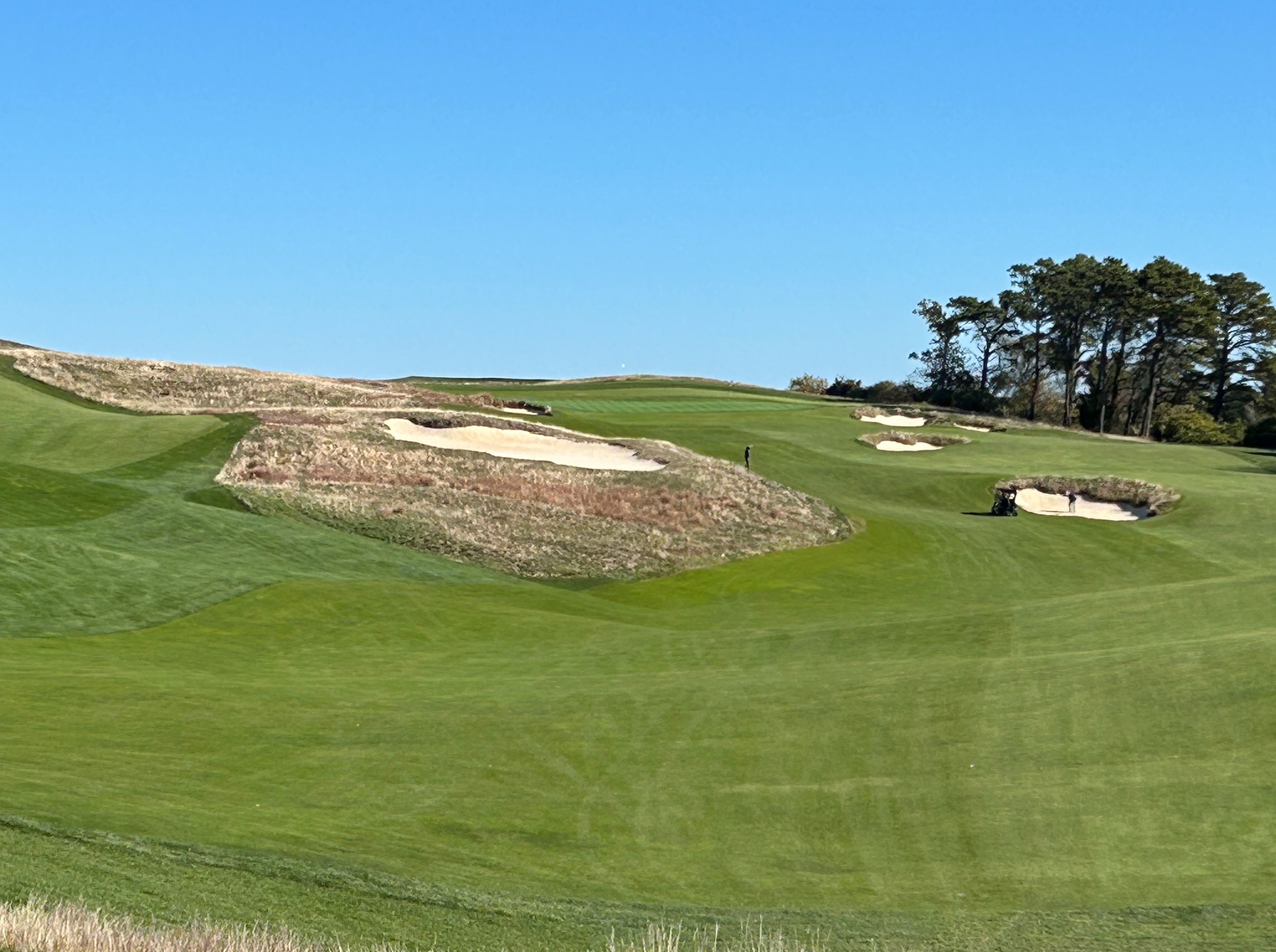
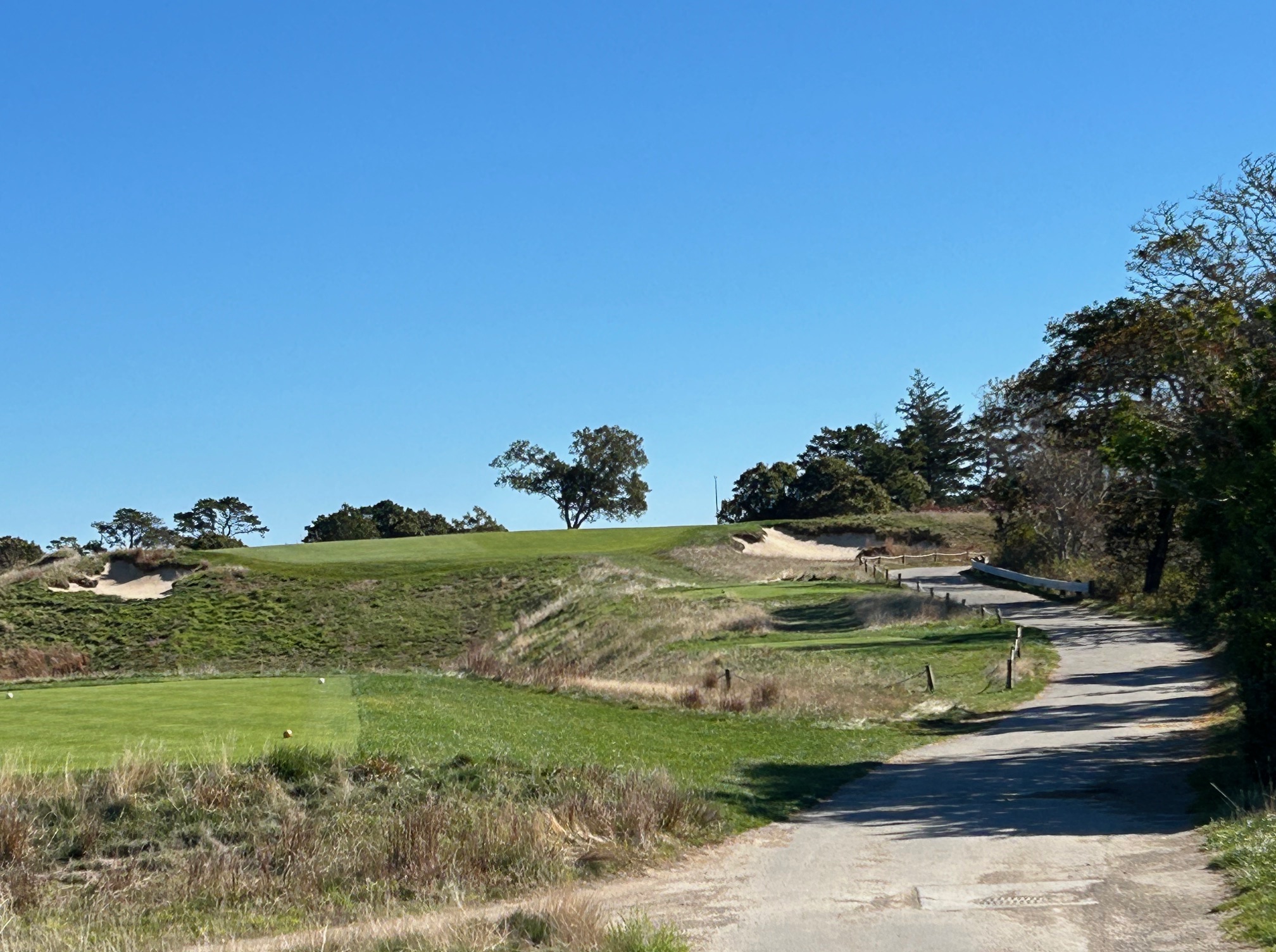
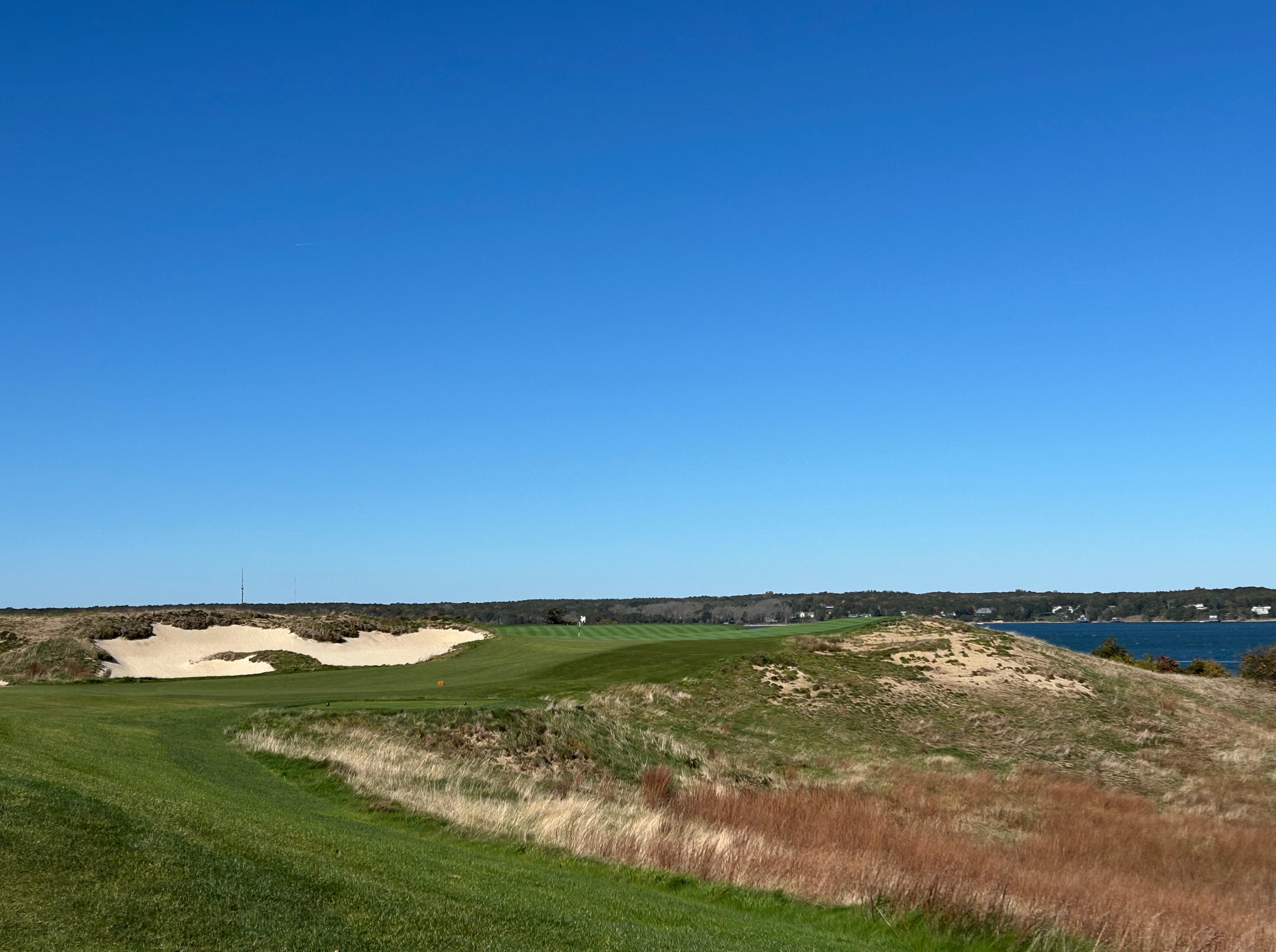
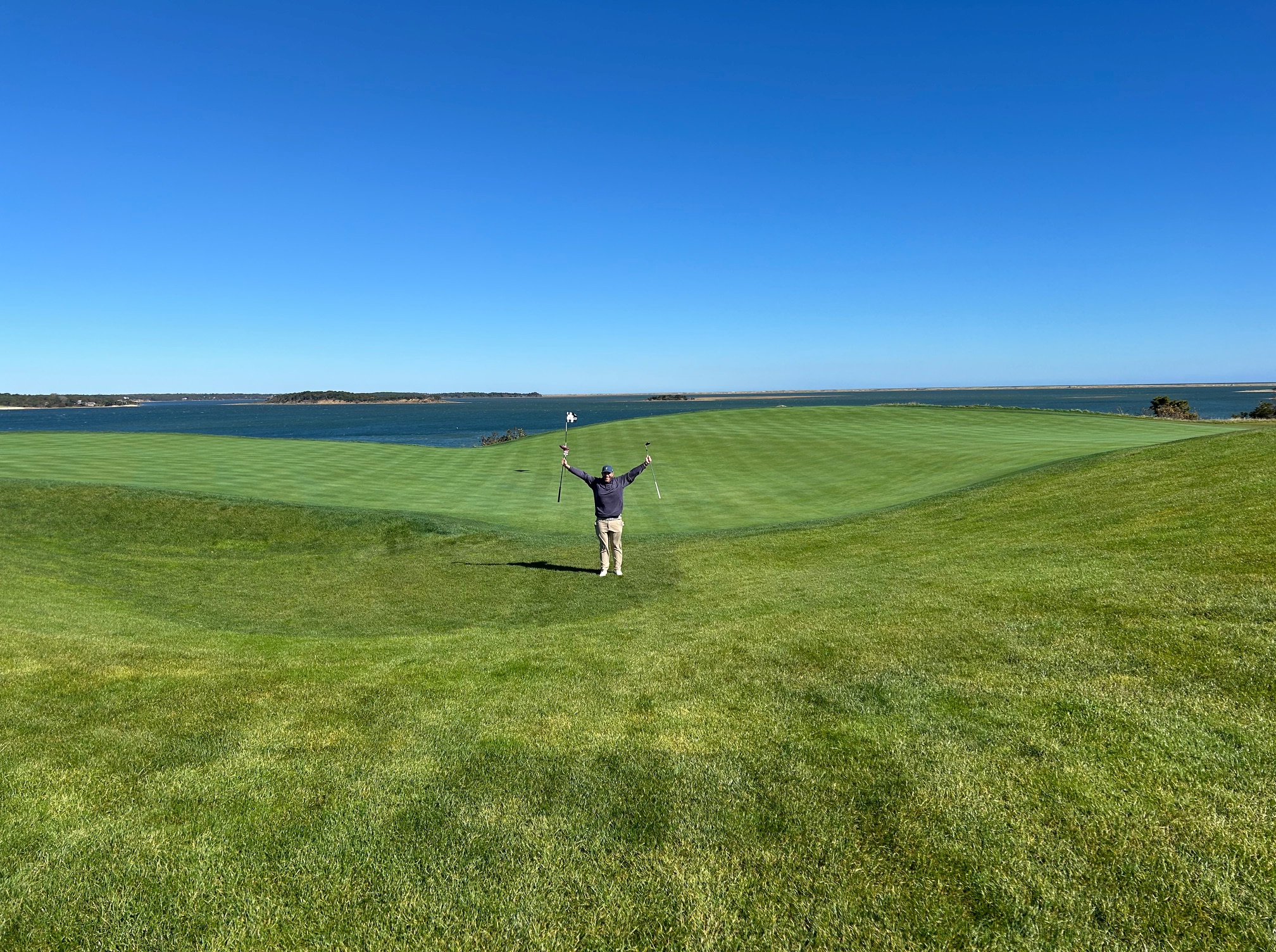
The fabled rumor that to become a member here you have to show evidence from ancestory.com that your kin were passengers on the Mayflower has not been proven, but I will say that you must bring some old school experience of seaside golf to play this marvelous course effectively. The links are configured in the shape of an hourglass and the clubhouse sits on the highest ground in the narrow waist of this layout. Nine holes go eastward toward the Atlantic which is visible throughout the outward half. The second nine meanders to the west and it is closely tied into Pleasant Bay.
The recent restoration of this course by Keith Foster brought back the openness of the playing areas and the amazing vistas of the Atlantic Ocean and Pleasant Bay. This seaside proximity conspires with the wind and the extreme topography of the site to make the day a defensive struggle against par. Whatever you know about club selection adjustment for uneven stances, elevation change, and wind effect will come into play as you must carefully choose on every shot to play safe or safer to protect your scorecard.
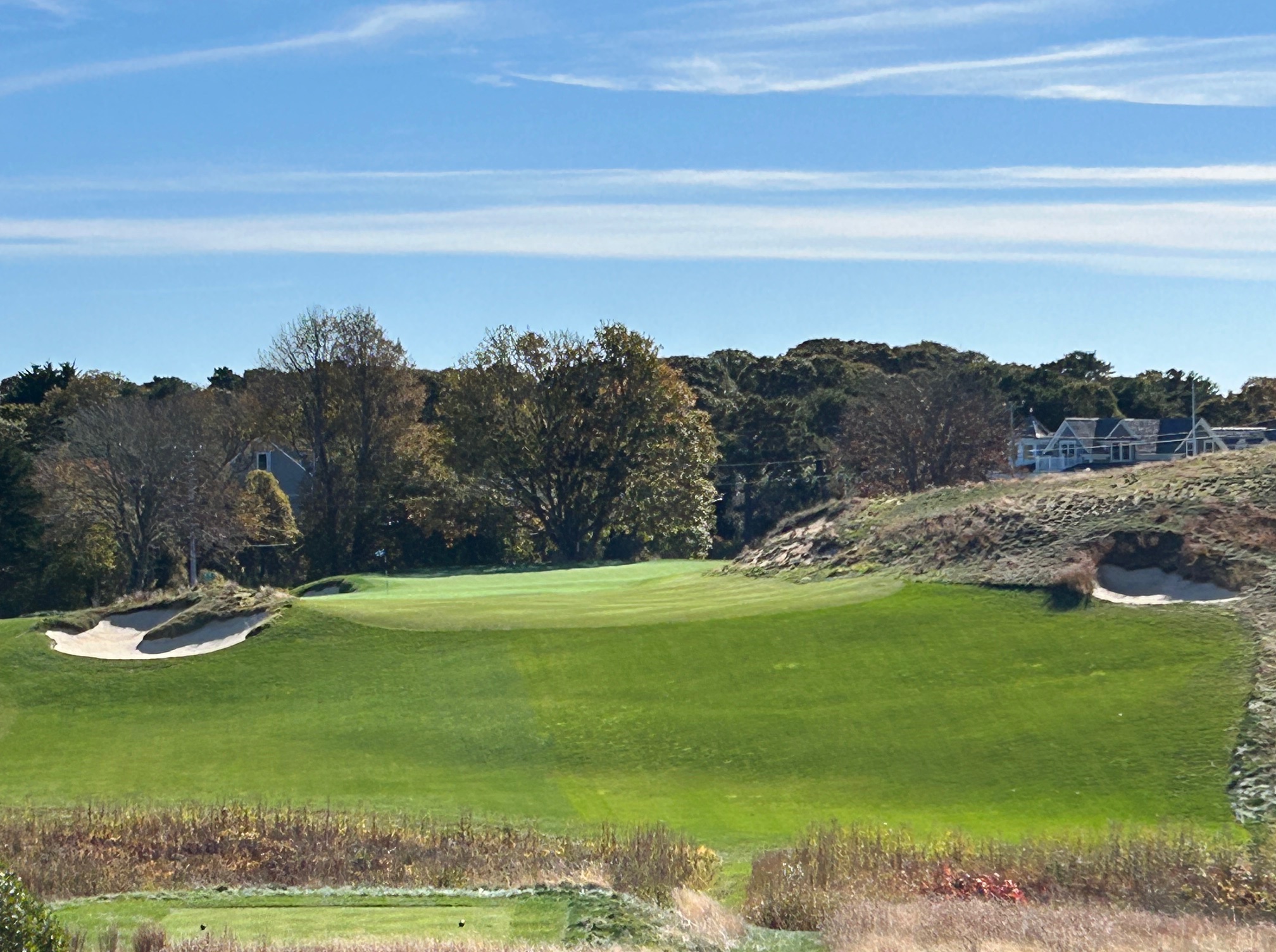
The opening Par 4 hole has topographical features you will see all day
The challenge of the day is apparent standing on the first tee staring out at a prominent centerline bunker that is your target and certainly in play. If you are on short grass for your approach you get the combination you will see all day of a severely elevated approach to a perched green complex with a dramatic false front. Regardless of the day’s pin location you have to elevate approaches on this course a third of the way into the green to get them to stay on the putting surface.
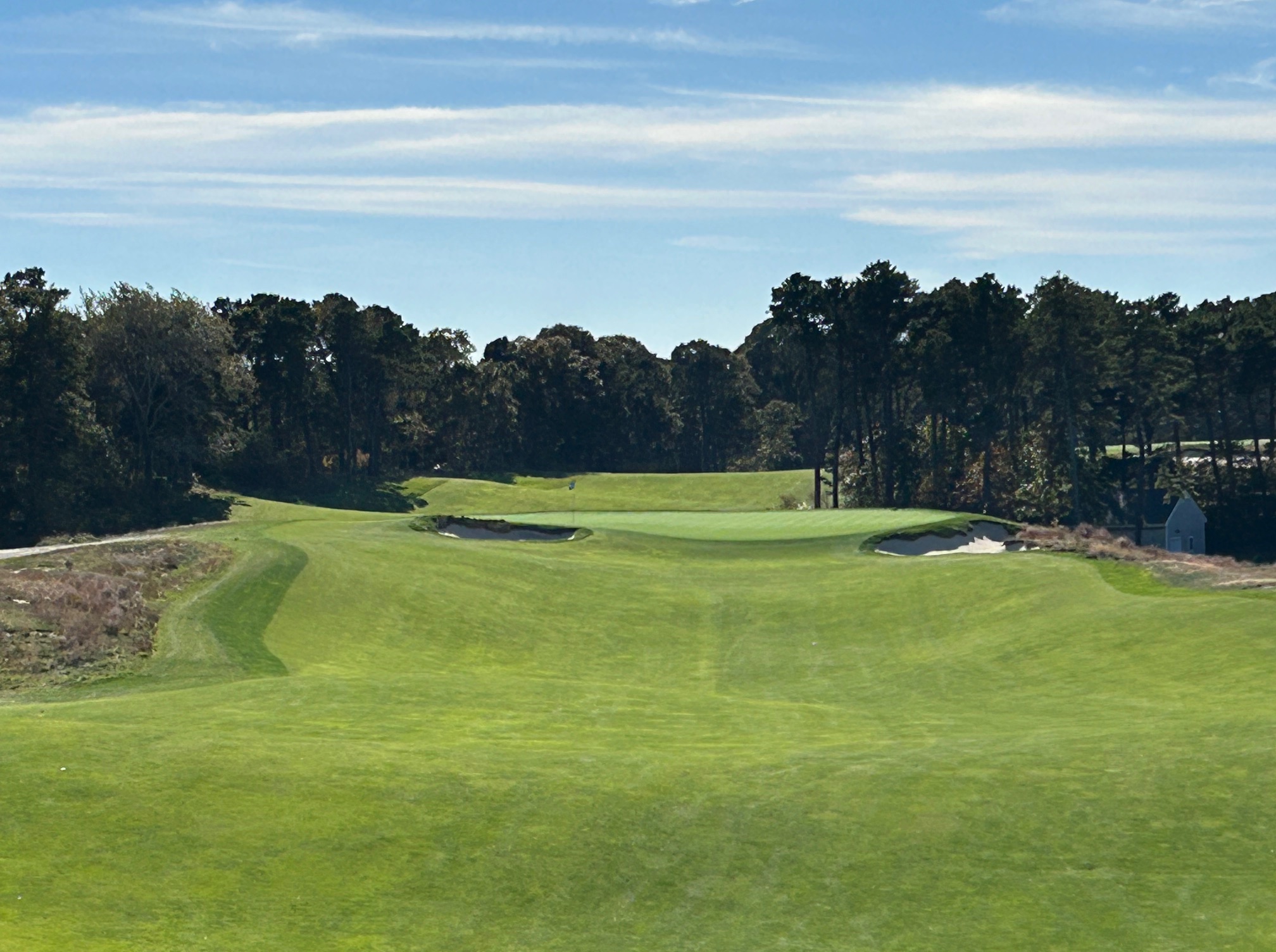
#3 hides the landing area from the tee so visualization is the key to success here
The next two four pars have wide open driving areas but the segmentation of the landing areas and the sharp turn of the holes at the point of inflection require a very precise line of intent to give you a good look at the green complexes set above you. As you can read in the linked hole-by-hole descriptive detail at the end of this posting, the second green has an inverted contour that favors a ground approach coming from the right. The third green is a long narrow affair tucked hard up against scrub and O.B. on the right. If you reach the fourth tee within one of par you are probably one up on the front nine bet.
The infinity look from the tee on the Par 3 4th is disorienting
For me the par threes are the most memorable holes of this course because the elevation changes combined with the seaside back drops make it extremely hard to focus on the shot precision required on each. Though not very long the fourth is the wildest ride of the lot. Only a short to medium iron, this long and narrow multi-tiered green is incredibly evasive to what should be a stock knock down shot into the prevailing breeze. A 60-yard long affair this is really two greens bisected by a deep Biarritz type gully across the center.
From the side the 4th green has a Rollie Massamino/Jay Wright Villanova feel.
As you walk to the green from the cart path the green contour looks like the Villanova logo so putting from one sector to through the valley is a three-putt you are trying to avoid. Take a moment to appreciate the stunning vista looking off the back of the green of an endless bay with pleasure boats bobbing in the distance.
The biggest challenge in the design of this course was the severity of the topography that needed to be negotiated. William Fowler did a brilliant job in this regard and it is very evident in his routing from 5 through 9. The holes go up and down severely hilly terrain but the placement of tees, landing areas, and green complexes make it very playable in spite of that challenge. Given that the course was designed during an era where hickory clubs dictated play closer to the ground this makes playability he presented all the more of an accomplishment.
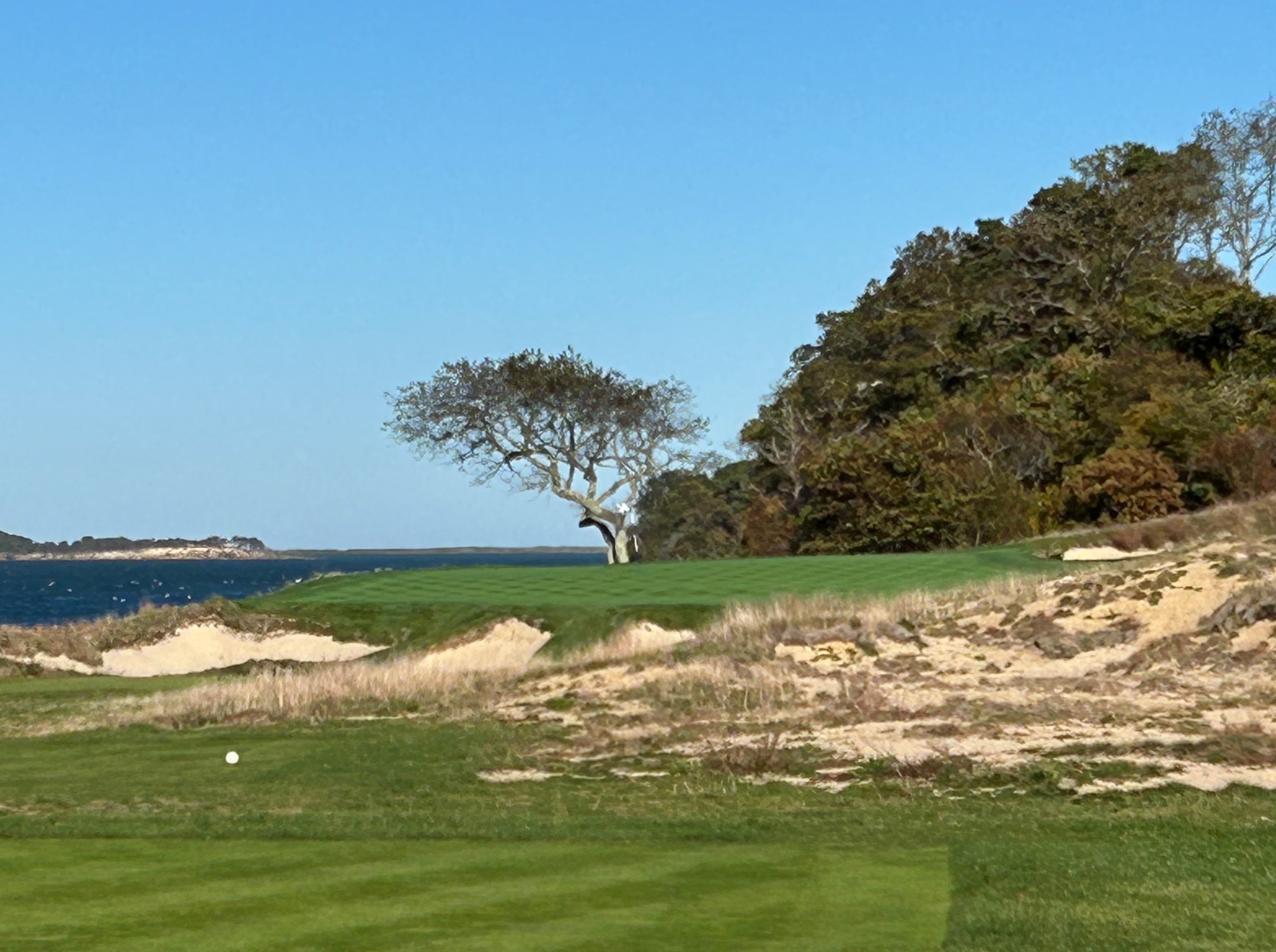
Look from the high teeing ground to the green in the distance on the postcard 6th hole
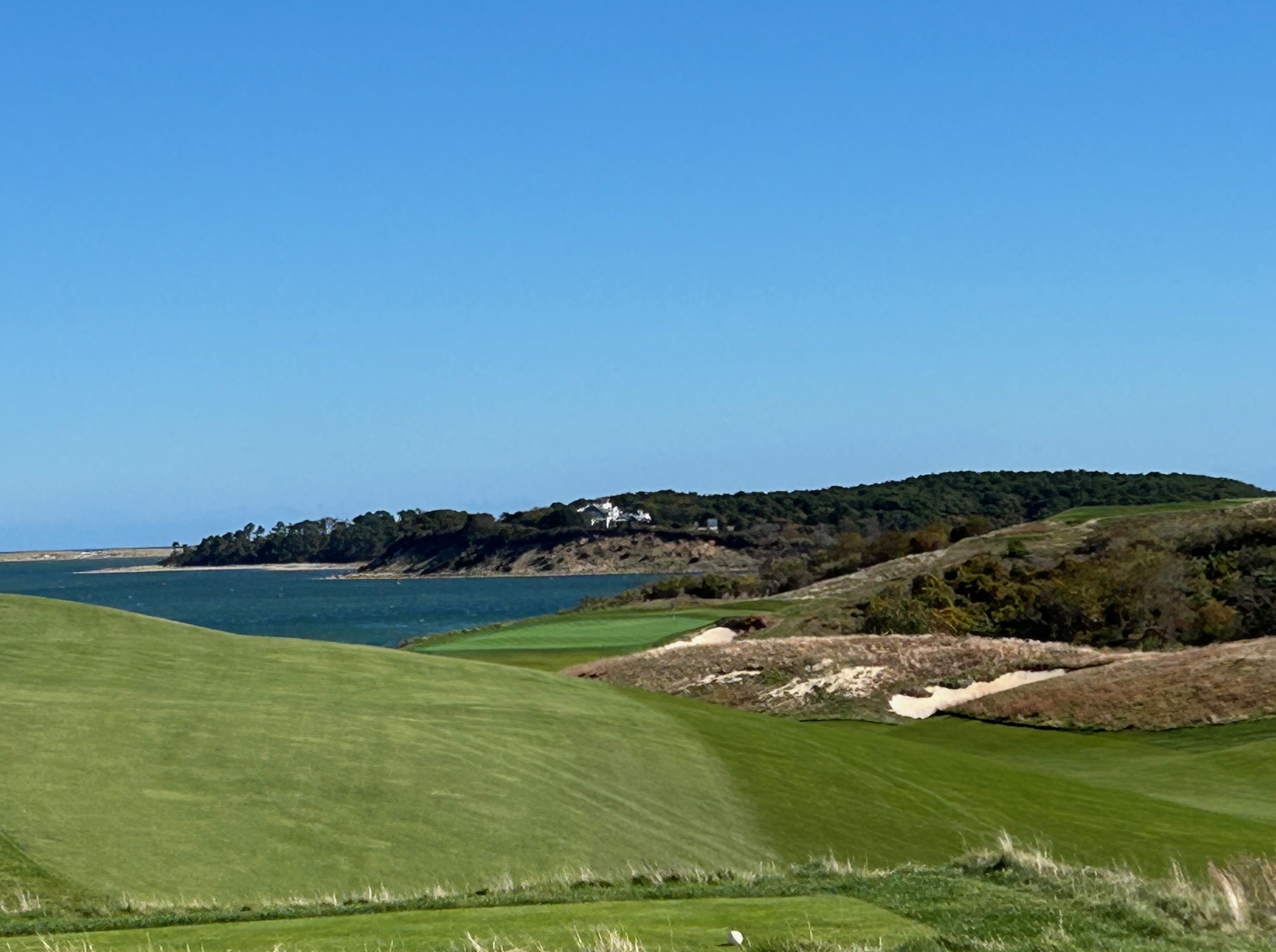
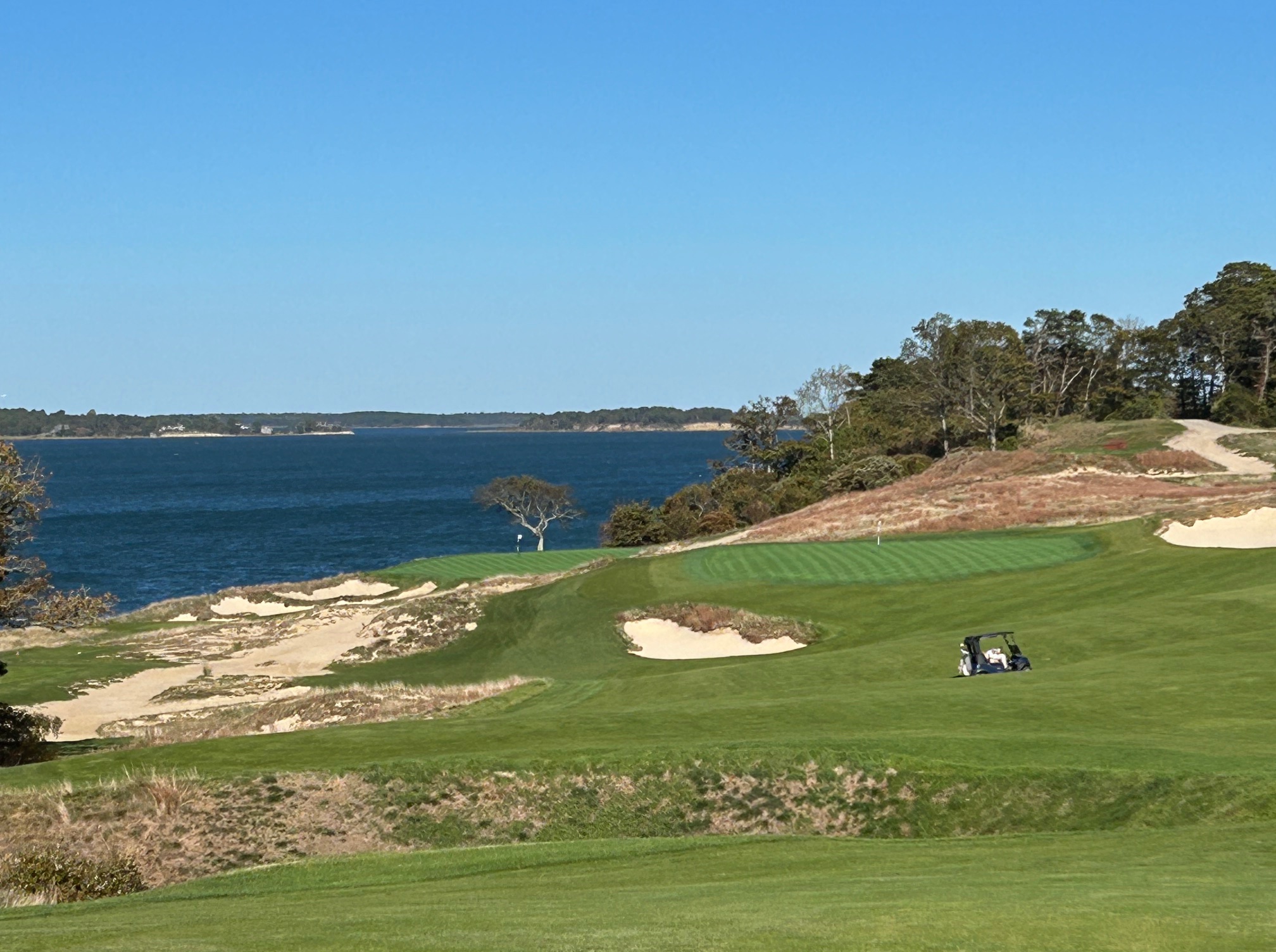
After a fairly rudimentary scoring opportunity on the Par 5 fifth, the sixth is the number one handicap hole and may provide the most stirring shot making of the day. From a splendid vista on high teeing ground this signature hole sweeps hard to the left between a couple tall hillsides, and a well struck tee shot aimed at the island in the distance tumbles down the hill toward the low point on the hole.
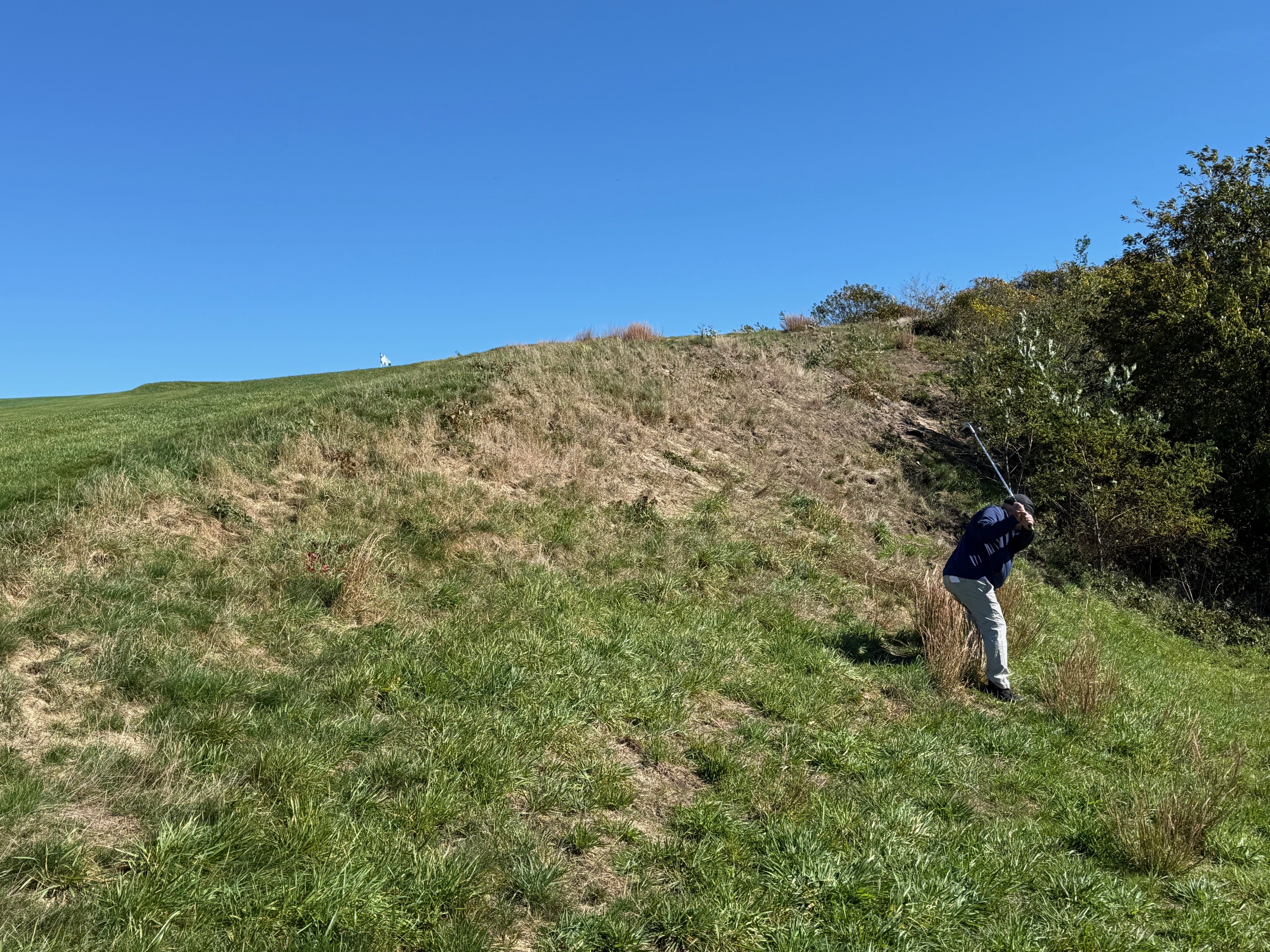
Missing your target on the 6th leaves a serious recovery challenge
The approach requires a towering middle iron to a small green complex perched up to the right with one nasty bunker flanking the right. The surf is lapping 50 feet below the green on the left so there is really nowhere safe to hit it but on the green. As scenic as this hole plays on the way from tee to green it is worth one more look back from the green to admire the view from where you came.
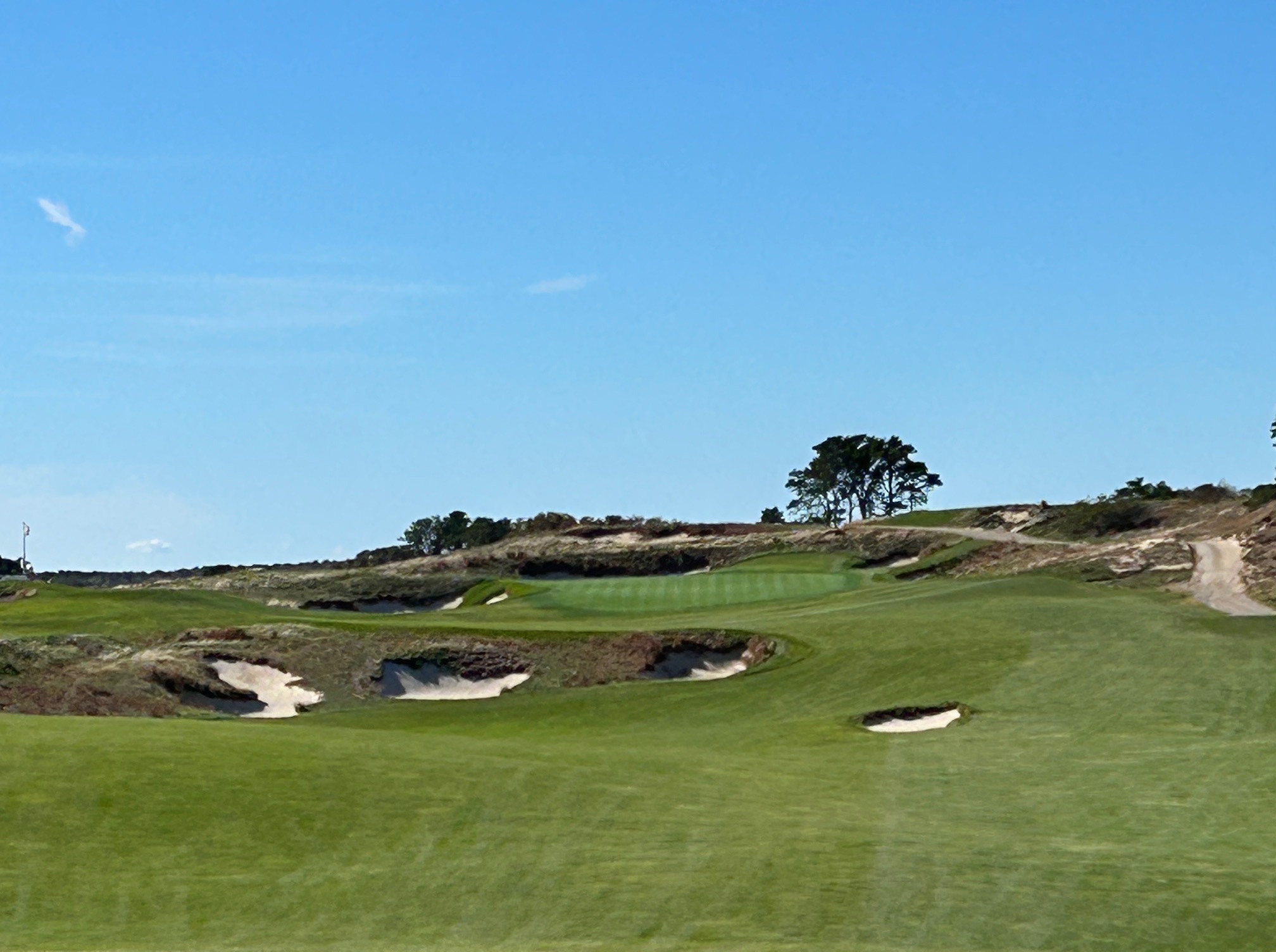
Another uphill climb on the approach into the Par 4 8th plateau green
The eighth, which mirrors the first, gives you a wide landing area with a centerline bunker to aim at off the tee and a similar elevation to scale with a semi-blind short iron into the green.
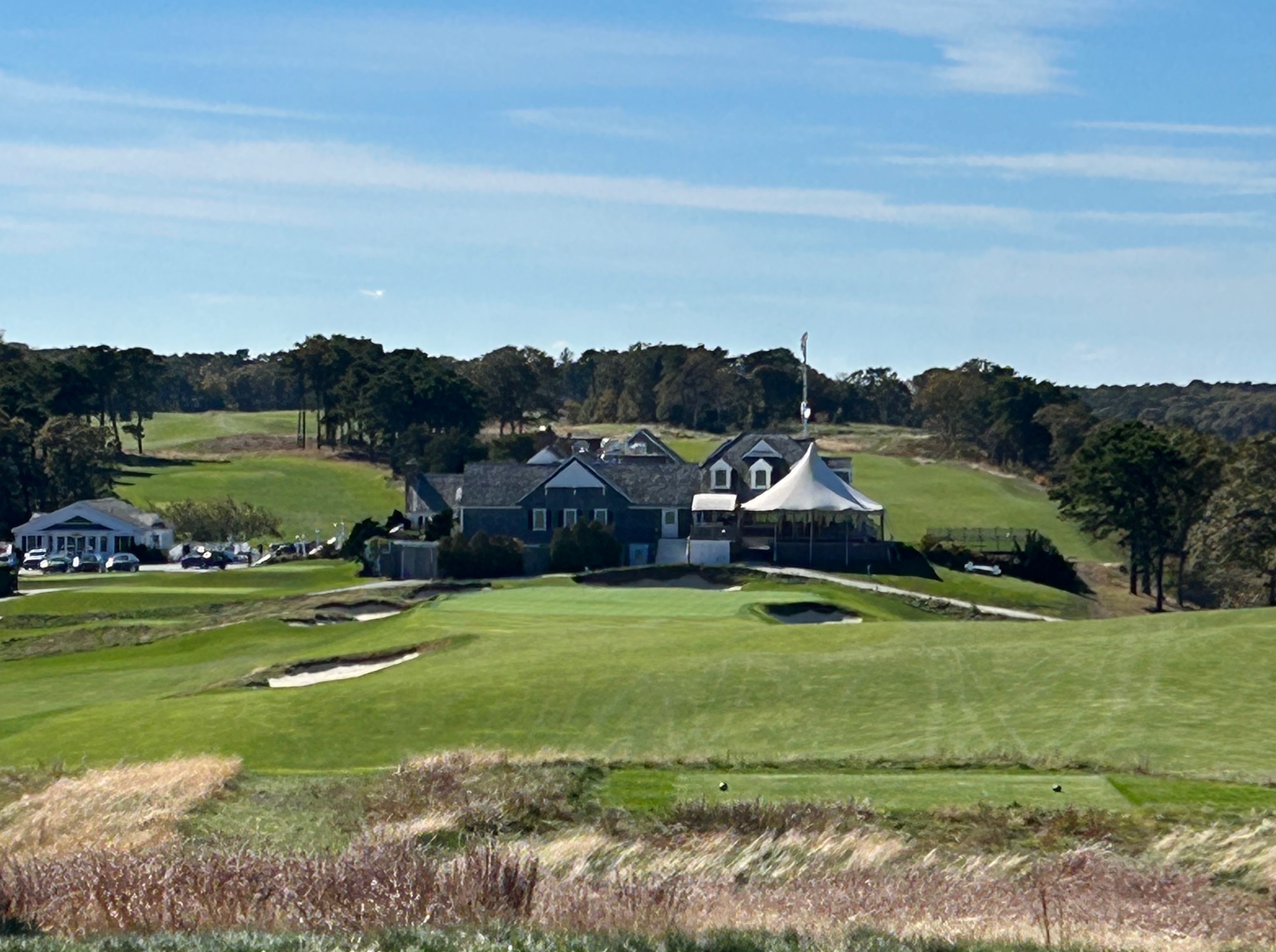
The clubhouse frames the final tee shot on the outward nine
The finishing hole on the outward half is pure eye candy as it sneaks up on the clubhouse set on the hill. From the proper drive position right center of the fairway you are likely standing on a plateau on level to a narrow green sandwiched by bunkers. The green complex sits across a dip in the fairway, so you must elevate a longer club all the way to the green’s edge.
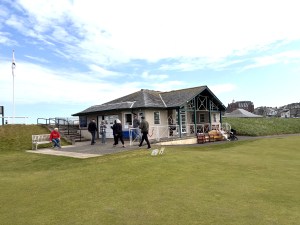
Grab a snack from the little room tucked in the side of the clubhouse next to the driving range because the inward nine will be just as demanding as what you just experienced. You will need full sustenance and hydration to handle what lies ahead.
This Par 3 presents a narrow target that looks like a hanging side hill lie to start the back nine
When you step on the tee box at the tenth it looks like an on level 175 yard shot but the devil is in the detail of the green complex. It is an inverted hour glass set on a 7 to 1 angle that does not present you very much width to work with. The front of the green is open but there is a decided pitch right-to-left once the ball is on the surface. As with so many of these Fowler approaches you must enlist the ground to be your friend to control line and distance on the roll out of these shots.
A short club in your hand into the Par 5 11th but this green requires a lawn dart to hold it
What follows is a shortish, funky five par with a bit of deception on each shot. Driving area is slightly above the tee and it looks very generous, but the proper line is up the left to avoid the ball drifting right into a low area. The second is a blind shot over a hill to a lay up zone about 75 yards from the table top green complex. As detailed in the hole-by-hole link below, this is a very shallow green so some grip on the approach is needed to give you a scoring opportunity.
The short par four that is next is a fooler because it appears unduly wide from the tee to the green but you need to mind a line up the left to reach a flat area for the short iron approach to the green set to the right. This green is an inverted bowl that will deflect balls in all directions. Even greenside recovery pitches are very hard to keep on this putting surface.
Amazing look on 14 but avoiding the concealed elephant cavern on the left is your challenge
From the 14th tee to the house is a run of the most quixotic holes you play all day. The blind “Elephant Hole”, a massive grass two-story crater down the left of the driving area, is a sure path to double or worse. If you drive safely past this chasm the green sits below you with a resplendent backdrop of the bay in the distance. This green has another false front that requires your approach to land in the first third of the green to stay aboard.
There is a reason the 15th is the most photographed Par 3 on the course
The next one is the most photographed of the three pars on this course but I actually think that if you look through the eye candy it is the easiest of the lot. The three tiered green sits on a bit of a concealed diagonal so shaping it into the wind to reach the proper tier is the task at hand.
You are basically playing the steep contour of the adjacent 14th hole in reverse on the 16th so you can add a solid 20% for the hill and the prevailing wind to an already sizeable challenge. The width of the hole on the left is helpful but like the approach into the 12th you are probably facing a blind shot into this green.
Turning back to the club house for the last two the wind should be at your back. It is important to play up the left side of the penultimate hole to avoid the grab of Cahoon’s Hollow on the right and give yourself a manageable lay up past the fierce Fowler Bunker which shadows the layup area just inside of 150 yards from the green. This approach into a tight green setting is one of the coolest shots you will hit all day.
Sneaking up on the opposite side of clubhouse coming up the finishing hole
With a helping wind the home hole provides you a chance to let the big dog eat and carry the ridge across the fairway that can throw your drive well down the hill another 50 yards. As you have experienced all day the final approach is straight up the hill to a false fronted green complex at the foot of the clubhouse. Even with wind aid it is a club and a half extra to reach and stay on the putting surface.
A couple of happy campers posing at the end with Pleasant Bay as the backdrop
From the green take a moment to look to your left for one last jaw dropping shoreline view across the bay at the 5-Star Wequassett Resort in the distance.
Chatham, Massachusetts
Architect: William Herbert Fowler (1922) Keith Foster (2004)
. Par Rating Slope Yardage
Black 71 72.8 142 6524
Blue 71 70.8 137 6159
Gold 71 69.4 133 5802
White 71 66.9 117 5323
Green 71 66.2 116 4710
If you would like a printable PDF of this posting including yardage book quality hole-by-hole descriptions of how to play the course click the moegolf logo below.
Recently reading a great book by Charles Price called “A Golf Story” which is a wonderful tale about the triumvirate connection of Bobby Jones, Augusta National, and the Masters.
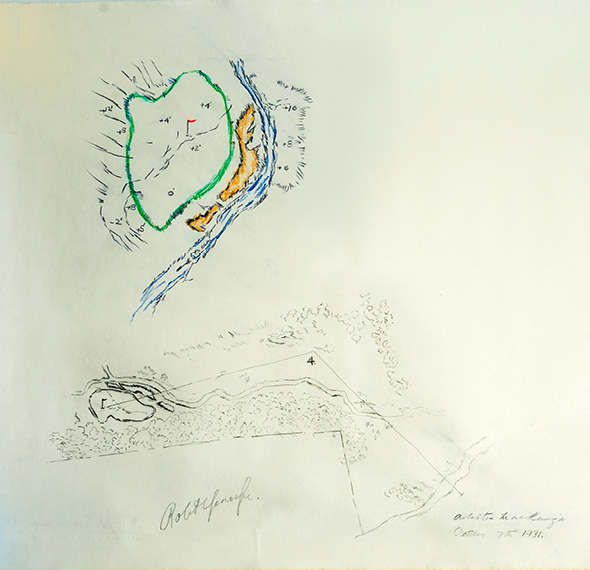
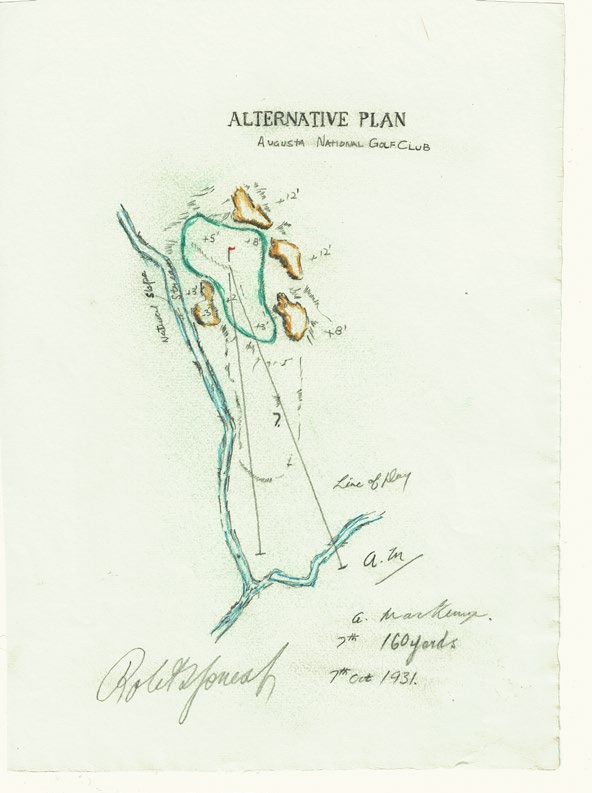
For some reason it led me to I find this linked article from an old Links magazine that discusses the discovery of two original Alister MacKenzie sketches of the 13th and 16th hole at Augusta. At the time of Augusta National’s opening in 1932 the current back nine was the front nine so these holes are noted as 4 and 7 respectively. These drawings were lost to the public view for 80+ years.
MacKenzie’s sriginal intended Par 4 4th hole (today’s Par 5 13th)
What is fascinating about this is that 13 was originally to be a par 4, admittedly MacKenzie’s favorite of the original design. There were to be bunkers in front of the green between the front edge and Rae’s Creek and a fairway bunker on the right side of the driving area. These bunker features never made it to the final design.
The alternative Par 3 7th, now the 16th, that was built 20 years later
The 16th in this drawing was an “alternative hole” not the original mundane 150 yard par 3 hole featured when Augusta opened. It was only changed in the late 1940’s when Robert Trent Jones came up with the new “original” design for 16 at Bobby Jones’s request.
As it turns out Trent Jones got the notion from Bobby Jones for this configuration without Jones telling him that it was MacKenzie’s original “alternative hole” he was describing. Only real difference was in the final design the adjacent creek to the left of the green became the pond we know today.
The opening hole at Royal Portrush is a classic links hole. Modern architects who worry about such things as packed tee sheets and pace of play gridlock in the first three holes would not have the nerve to place a vending machine bunker in the face of the hill below the first green.
What is weird to me is that standing on the tee the bunker gets into your head even though you cannot reach it. It is like the architect is whispering in your ear, don’t hit this drive out of the fairway because your second shot will be incrementally more difficult if you do.
With a wee Irish breeze in your face you are tasked with trying to calibrate an additional club and a half up that hill on your approach. Not hitting from the short grass, it just takes the slightest timidity for a shot that clears the bunker to get sucked back off the false front into this sandy abyss. If you overswing and yank it the sand cavern 12 feet below green on the left is likely to see some action.
I remember walking off this green the first time I played it, after making a double, thinking this is going to be a difficult day.
The Annual First Tee Mentor Outing returned to Woodmont Country Club after a bit of an hiatus but we were sure glad to share once again in celebrating the work of the First Tee of Greater Washington.
The First Tee of Greater Washington brought 23 amazing kids from ages 8 to 17 to participate in another afternoon of fun in the sun. We had 10 volunteers from our club along with capable professional golf staff as our guides for our array of golf clinics, a picnic lunch, and a couple of hours of course time with these young men and women.
The whole gang…..participants and volunteers….together made this a great day for all
The First Tee program has introduced these kids to the principles of golf and building relationships. It is teaching them the etiquette, course awareness, and basic skills of the game. What you see as a result is self-confidence, poise, and grace in their ability to interact with each other and adults they have to deal with along the way.
Sherry Green and Kelly Levy lending a hand
Our volunteers provide the high fives, cheers, and a few hugs as well helping these kids understand how much they already have accomplished with this game.
Steve Keller and Mark Director being gophers for the chipping clinicDavid Ruben had Roy, Rohan, and Jeremiah in his group on the coursePhil Schulman hanging with his boys Luke and EthanMoe Dweck watches Spencer’s putting techniqueSteve Keller showing Vincent and Summer a little love
It takes the help of the staff of the First Tee of Greater Washington and supportive parents who encourage their kids participate in this wonderful program to help us pull this off year after year.
Steve with Roger and Ben from the First Tee
As tradition would have it, the cost of today’s picnic lunch was covered by the sponsorship of The Keepers, who started this annual event a long long time ago. We are also pleased to report that over 60 generous Woodmont members contributed to our effort in raising $4,500 to support the programs of the First Tee of Greater Washington.
To download any photos to your PC just right click on the image and pick “Save Image As” to save it to your computer.
The kids were split into three groups based on their golf experience and rotated through instruction clinics for full swing, short game, and putting-led by our professional staff.
Nick saw swings on the range that came in all shapes and sizes….the common denominator was good fundamentals and sheer determination.
Legion of teens on the range under Nick’s watchful eyePascale has textbook full rotation hitting her fairway metalElliot is holding nothing back going after it with her driver
Eric and David worked the kids at the Sidney Harman Short Game area, fine tuning their pitching, chipping, and putting.
Volunteers Miles, David, Craig, and Phil heed Eric’s chipping instructionOlder guys critical interest in the chipping competitionSilas and Andrew head-to-head in the team chipping competitionNow how is this for youthful technique?Sophie and Summer hanging outLine Putting-Vincent, Sophie, and IanFrom the other side Audrey, Eleanor, Sersha, and SummerSilas working on his stroke David officiates the Line Putting CompetitionOne of the older guys walks one in
The clinics always work up an appetite and there were plenty of healthy wraps, real chips, fresh fruit, and some chocolate chip cookies for the lunchtime chat around.
Young guys chowing downElliot, Arianna, and Pascale enjoying the break with friendsCool older guys take this part more seriously
Then it was out to the South Course and The Loop, our new short course, to put what they learned to the test. Here is where the mentor bonds are freshly made or simply renewed.
Yash bump and runs it to a pin around the bunker on #1 at the loopVeer and Yash trying to sort out play from the Riviera Bunker on #5 on The Loop
It is amazing how the First Tee prepares these kids to handle themselves on the course. All divots are repaired, bunkers are raked, balls are marked properly and they respectfully understand who’s turn is next.
Special thanks to Event Chairs Craig Goodman, Steve Keller, and Moe Dweck, Golf Staff Nick Owens, Eric Schwarz, and David Quattrochhi, and Roger Brown from the First for all the hard work in assembling this event. Thanks to Woodmont Country Club for graciously hosting this picnic and the First Tee of Greater Washington for making it happen. And most important, thanks to these amazing kids who make this event such a special experience for all of us.