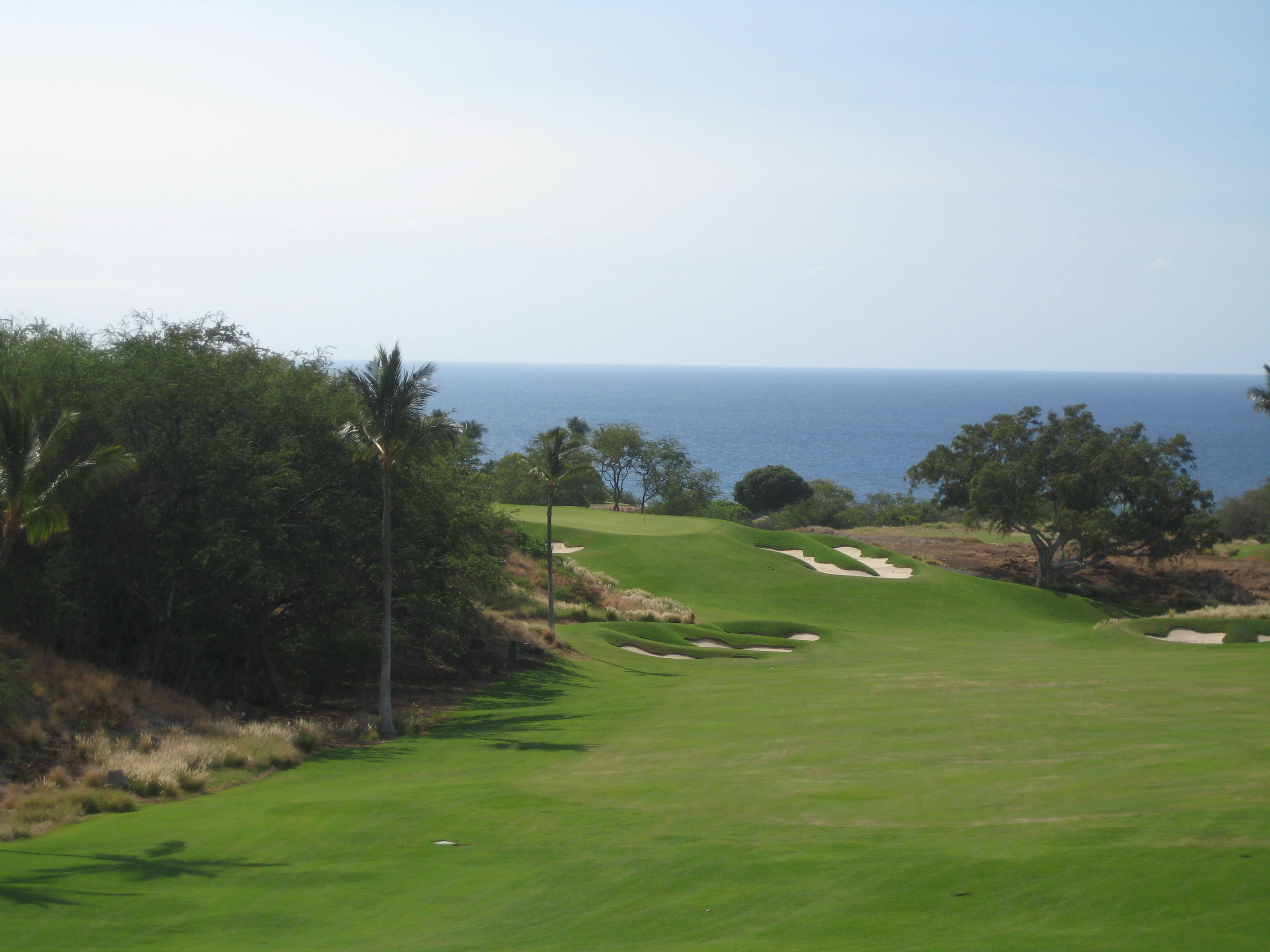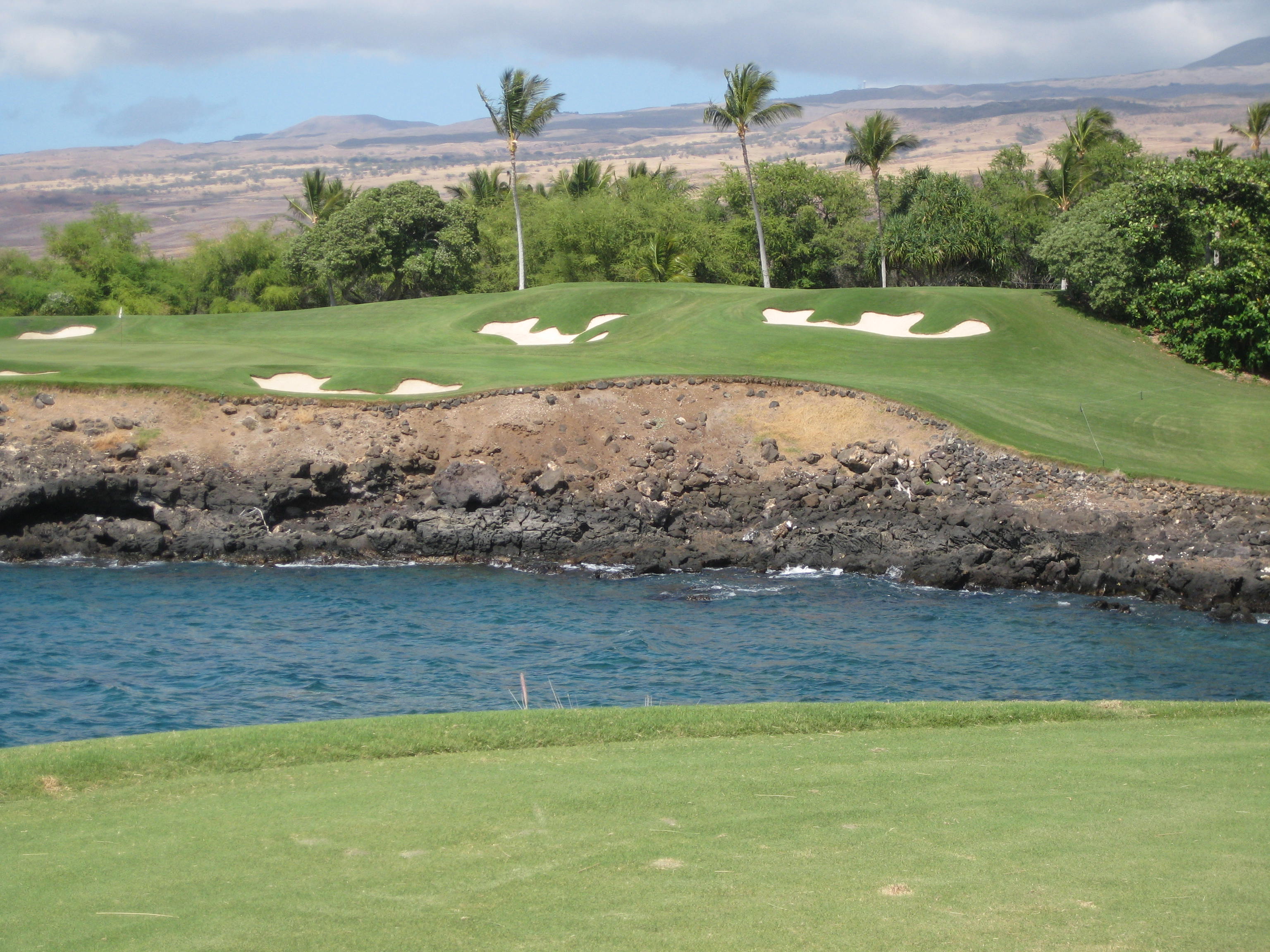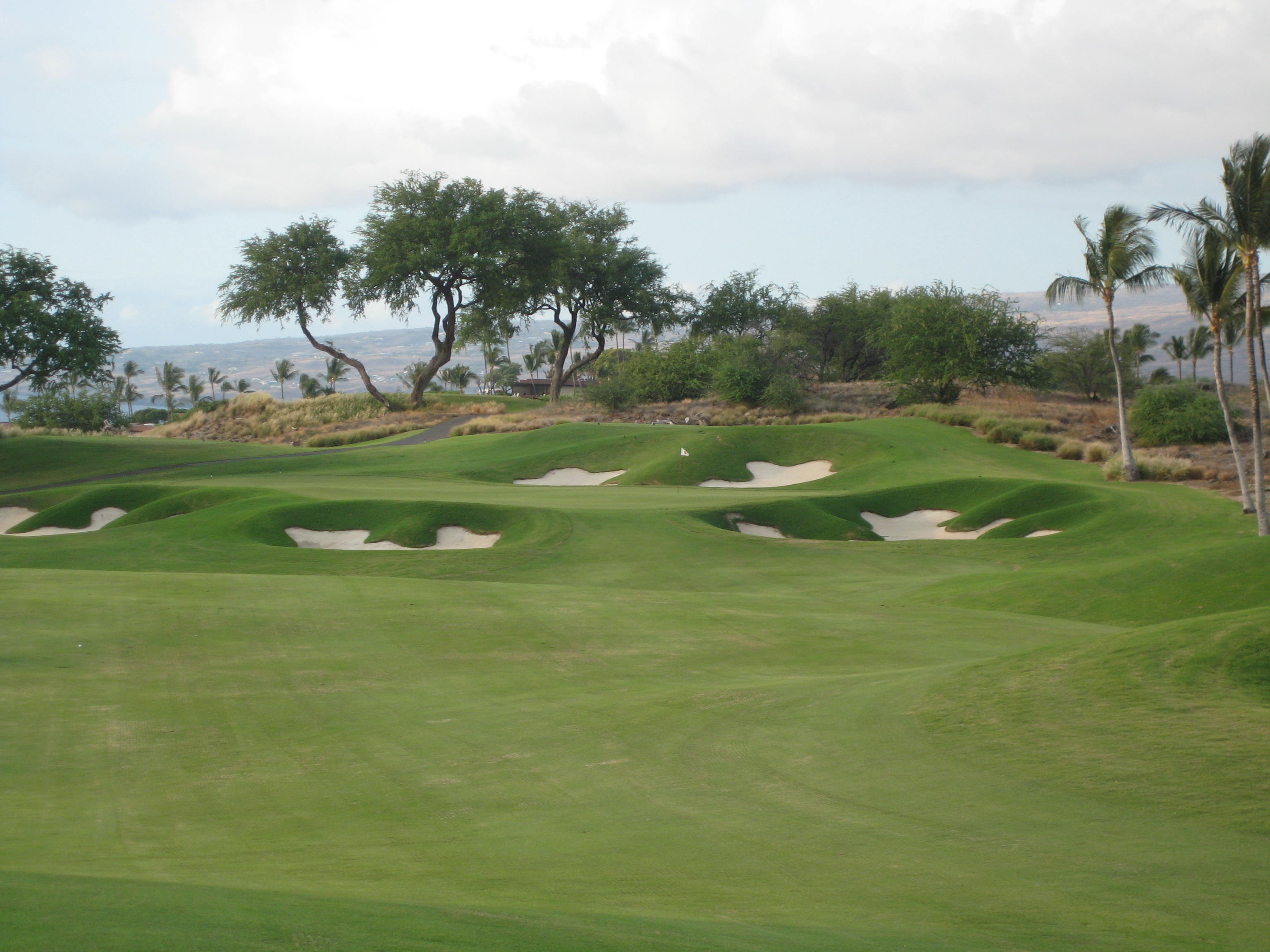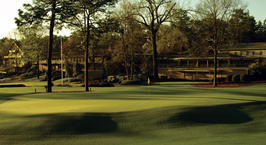
Royal County Down Golf Club

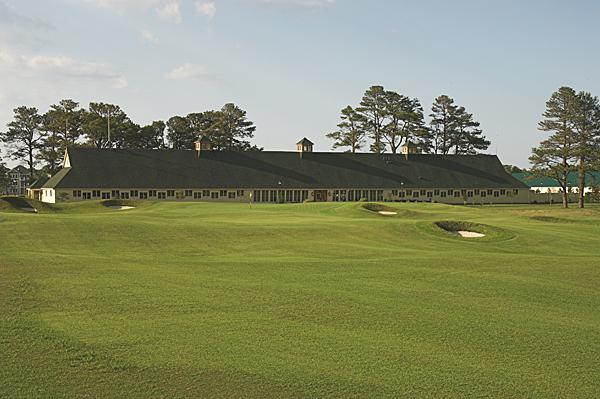
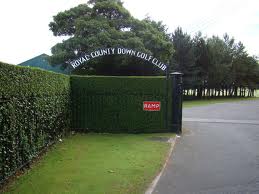
The Demure Front Entrance (golfpicoftheweek.com)

Ireland is a country that boasts over 45 links golf courses and Royal County Down is undoubtedly the crown jewel of them all in the mind of those who have had the privilege to play it.  The course camps on dramatic sand dunes above the town of Newcastle.  The high vistas of the course provide some of the most majestic views in Ireland of this small rural town set at the foot of the Mountains of Mourne along the shores of Dundrum Bay and the Irish Sea. To borrow from the English golf writer Peter Dobereiner’s descriptive in the course yardage book,  “The links of Newcastle are exhilarating even without a club in your hand…….As a backdrop, the Mountains of Mourne loom heavily against the sky, subtly changing color under the play of sunshine and shade just as the Irish sea switches its mood.  Spice the picture with a hint of peat smoke in the wind and you have a setting which all the billions of property developers could never reproduce.  The strip of dune land was 90% along the road to being a golf course before the game was ever invented.  All it ever needed from the hand of man was a minimum of adjustment……  And all it needs now is restraint from the hand of man.”
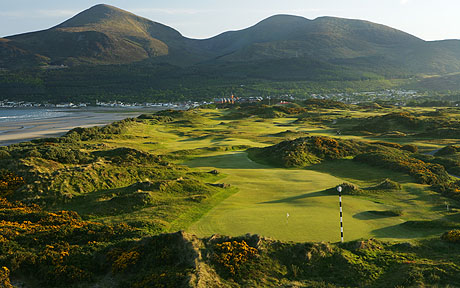
Stout Number 3 477 yd Par 4    (blondietravelblog.com)

The original routing of Royal County Down was done in 1889 by Old Tom Morris, who erroneously gets credit for the current course design, since most of his routing was abandoned about a decade later.  The course we see today was the result of the diligent work of a club member, George Combe, in the early 1900’s.  Much like Oakmont or Merion built around the same time, this incredible course was not the work of a famous course architect but rather an obsessive work in progress of a talented golfer and member of the club who understood the unique topography and wind conditions of this area and produced a series of holes that would take full advantage of both to create a unique tactical challenge.  Subsequent modifications were done to the course by the renowned architect Harry Colt in the 1920’s when he modified some green settings and created the famous 4th and 9th holes which are two of the most celebrated on the course today.  In 2005 further renovations were done by English architect Donald Steel and the 16th hole got a major makeover strengthening the finish of this magnificent layout.  But it is really the work of Combe that is most responsible for these championship links that have so admirably stood the test of time. The impression most people have of this course after their first walk is that it is unfair and somewhat capricious.  At 6600 yards in a howling Irish breeze with only 3 par fours under 400 yards I can understand how they would say that.  The totally blind tee shots required on 2, 5, 6, 9, and 11 would never be presented by an architect building the course today.  There are also a plethora of blind or semi-blind shots into the green complexes depending on the angle from which you are approaching the green.  But as a wise old Scotsman once said, they are only blind the first time you play them and they do give the course a somewhat arbitrary characteristic that you can enjoy if you embrace it.

Gorse, Heather, Bunkers, And Wind Are It’s Best Defense (yourgolftravel.com)

The fairways are narrow ribbons strung among some of the most impressive sand dunes in all of Ireland.  The sides of these dunes are covered with purple heather and that nasty golden gorse that you so often see in Scotland but rarely experience on the Emerald Isle.  Shots hit or blown off line can suffer what seems like an arbitrary punitive fate as a result but it is just the sticky rub of the green.  The landing areas off the tee and into the greens have very distinct slopes and collection areas so picking the right club and the right line to end up in a position of tactical advantage is at a premium.  Hiring an experienced caddy to be on your shoulder with local knowledge is a really wise investment.

Rarely Have You Played Bunkers This Punitive (golfclubatlas.com)

The bunkers at Royal County Down are probably it’s most famous calling card.  They are deep, cavernous sharply angled pits with native sea grasses growing over the top edges like intimidating Groucho eye brows. In many ways the generous bunkering is what makes this course a tactical gem.  As with most links course that experience strong winds of varying directions, the positioning of a particular bunker can go from a benign visual hurdle one day to a heart stopping forced carry the next.  Tactical positioning of the tee ball and the approach shots makes the game a bit of a chess match with the course and the daily elements. The greens are the least discussed feature of the course but in some ways the most important to consider.  Similar to the Pinehurst 2, many of these greens are domed with fall off shoulders that feed a shot without sufficient conviction off into grassy hollows or sand pits from which it will be a serious challenge to get up and down.  The low running recovery pitch will get major use, often times beginning away from the pin letting the slope and breeze bring the ball back to your target.  There is plenty of slope in these greens-some obvious and some subtle-that make reading the greens for pace and break a huge challenge.  Again, an experienced caddy can be invaluable in this regard.
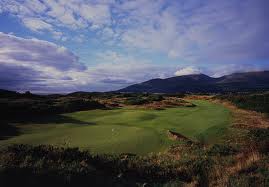
Startling Visuals Can Be Distracting (golfdigest.com)

For all the visual shock and awe you find on this course, it remains eminently playable and a place where you can shoot a good score if you keep your wits about you.  It will ruthlessly punish impatient course management especially from players trying to do play shots that are clearly out of their skill set.  But it provides wonderful opportunities to recover with clever tactical options for a player with a creative imagination and sound judgment.  As with all links courses the ground is your friend, especially when the wind is up, so hitting bump and run approaches on the proper line can give you scoring opportunities you would not expect.  When this day is over your mind will be as exhausted as your arms and shoulders, but if you have played well and won your Nassau bet there is a very gratifying Guinness with a large head awaiting you in the bar. Royal County Down has never hosted an Open Championship, mostly because of  the obscure location and logistical challenge it would present to getting 20,000 people a day to the course.  But it has had it’s share of prestigious and memorable championships over the years.  The Senior Open Championship was hosted here from 2000 through 2002 and it attracted the likes of Nicklaus, Palmer, Player and Watson.  After playing here, Watson put the first 15 holes at Royal County Down at the tops of his favorites list.  The 2007 Walker Cup was a nail biter affair between some of the strongest amateurs in the world.  The U.S. team that prevailed 12.5 to 11.5 included Rickie Fowler, Dustin Johnson, and Webb Simpson all of whom are destined to become household names on the PGA Tour.
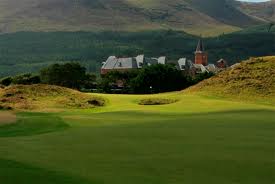
The Golf Course and Town Are Inseparable  (yourgolftravels.com)

Royal County Down has the golf pedigree to provide what the famous golf writer Herbert Warren Wind once said was “the sternest examination of golf I have ever taken”.    Bernard Darwin golf writer and a top line amateur in his own right wrote that the golf here is “the kind of golf that people play in their most ecstatic dreams.”  If you approach playing here with an open mind and a spirited resolve, you too will come away with a scrapbook of special golf memories from playing one of the finest links courses in the world.

Newcastle, County Down Northern Ireland

Architect:  George Combe (1900-1910)

Tees                Par    Yardage   Rating   Slope

Medal              71      6878         74         131

Stableford       71      6675         73         126

If you would like a printable PDF of this posting including yardage book quality hole-by-hole descriptions of how to play the course click the moegolf logo below.

 

Torrey Pines South Course

There is something extra special about a public golf facility that has held a major championship. It is the almost counter intuitive combination of a quality golf facility and the lack of the pomp and circumstance of an exclusive private country club.  Seeing a driving range full of regular Joes and pull carts being tugged around the fairways remind you that golf is a game of all the people not just the privileged ones.  At a place like this you see that money invested wisely can pull off first rate venue that can be enjoyed by anyone who is up for the challenge without asking them to sacrifice the monthly mortgage payment.

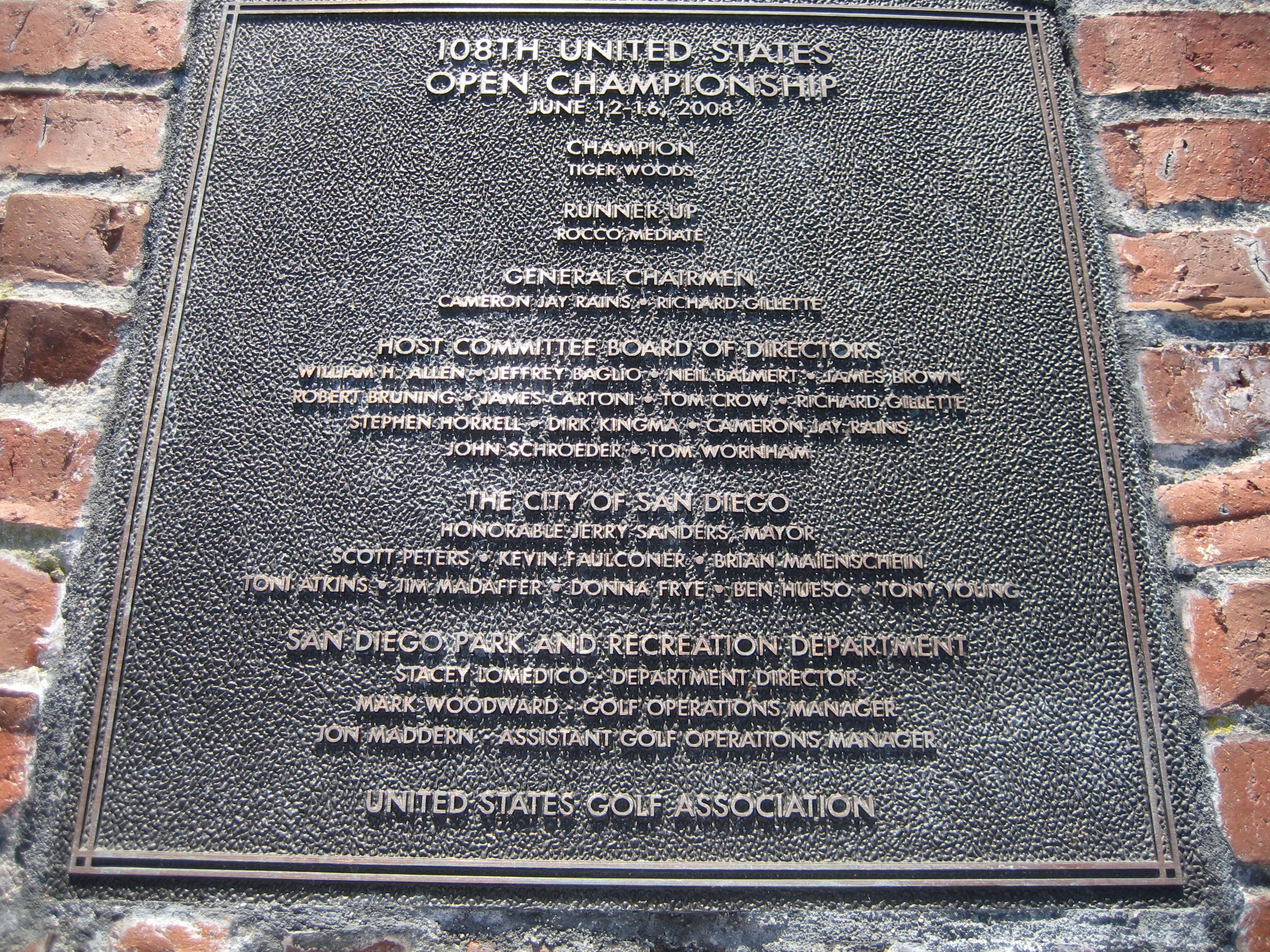
Torrey Pines has 36 wonderful holes originally designed by William Bell but it is the South Course 18 that was renovated by Rees Jones in 2001 that brought this up to a standard to allow it to play host to the memorable 2008 U.S. Open duel between Tiger and Rocco.

Click on any photo for an enhanced view of the image

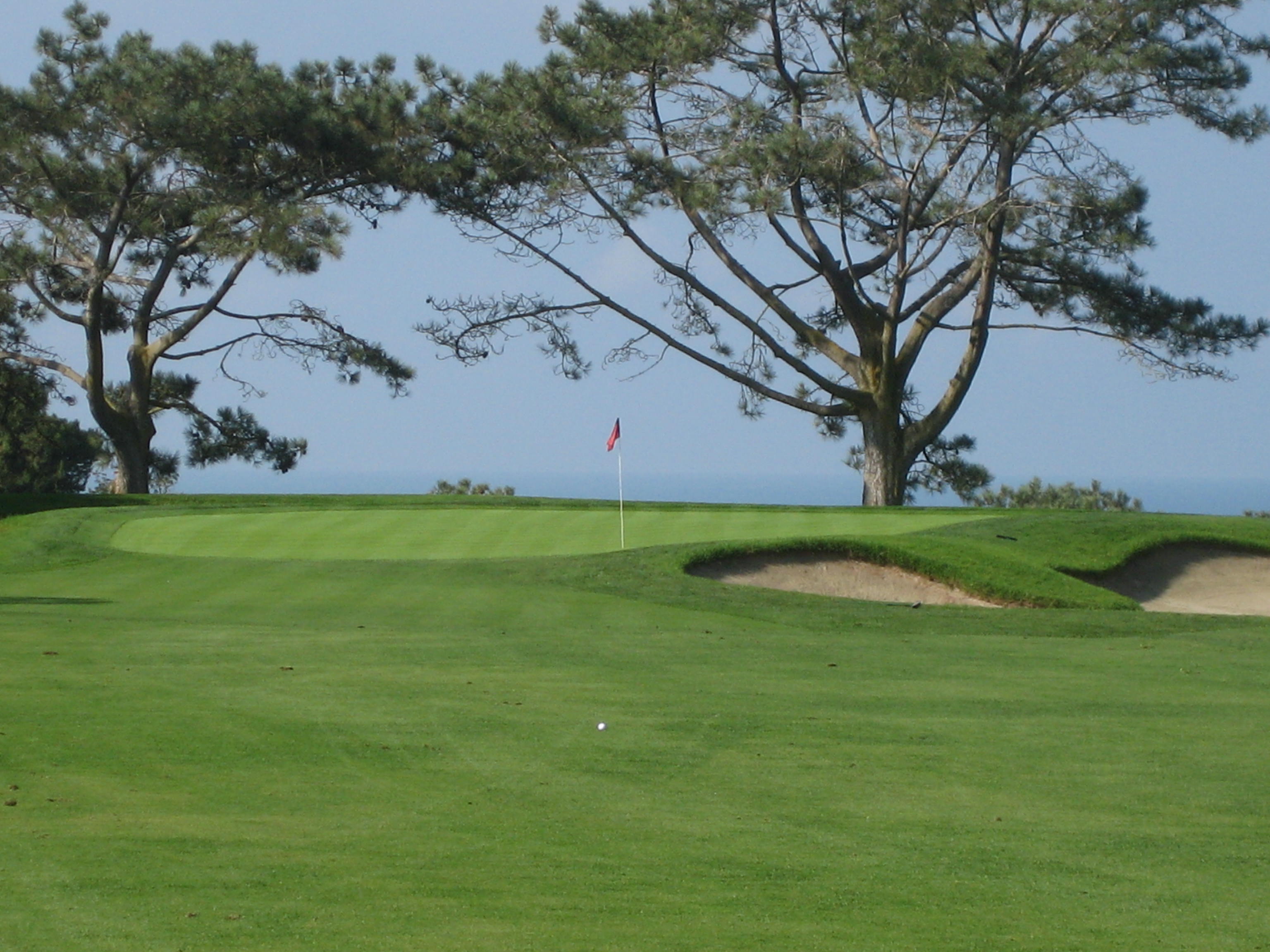
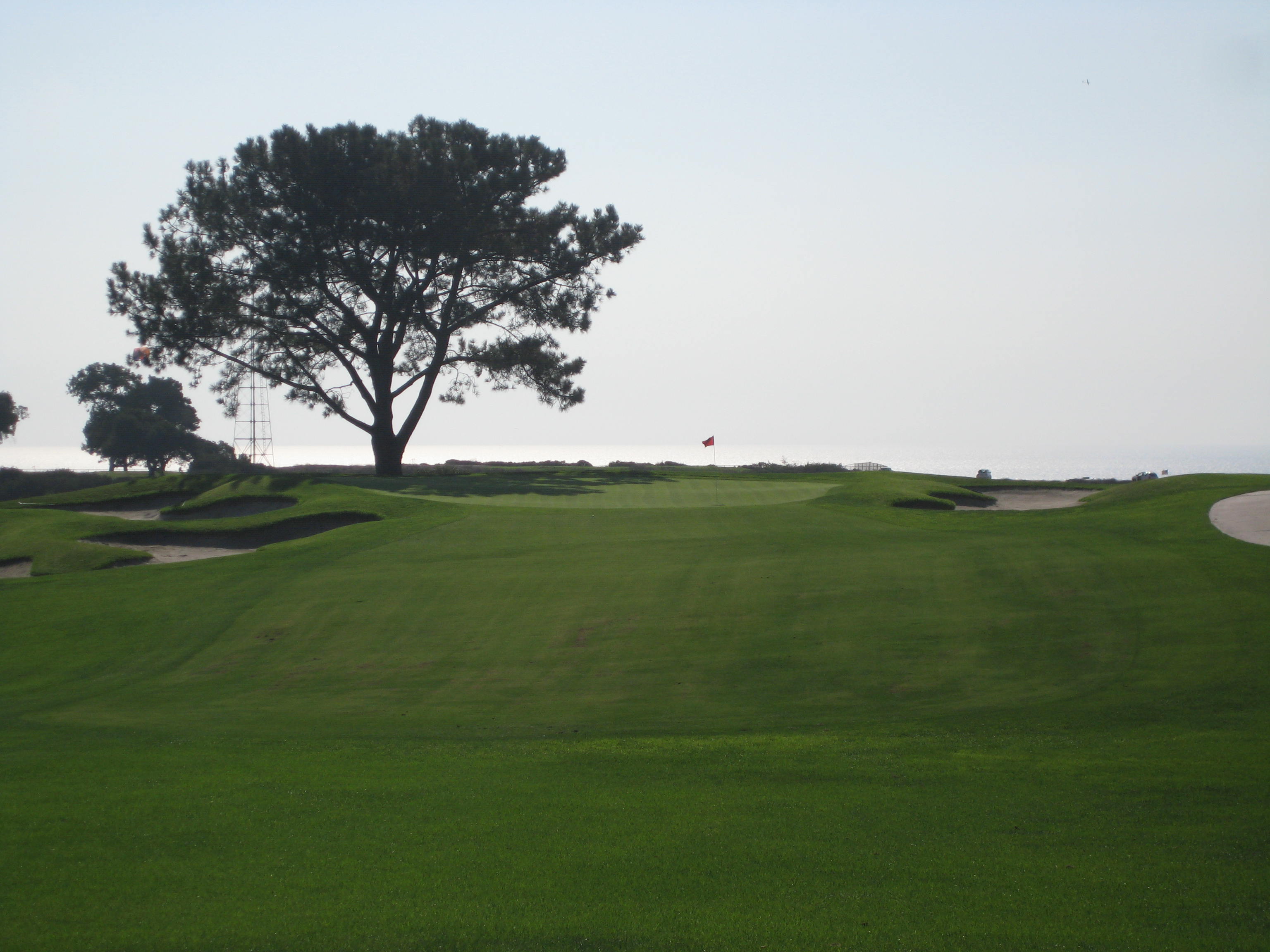
The changes Jones made to the course are mostly in the fairway and greenside bunkering and the refinement of the green complexes.  This is not a course with signature holes you cannot forget.  But because we see it on TV as the host to what is now the Farmers Insurance Open, there are images seared in our mind of stunning  seaside vistas and colorful hang gliding parachutes over the rocky cliffs of La Jolla.

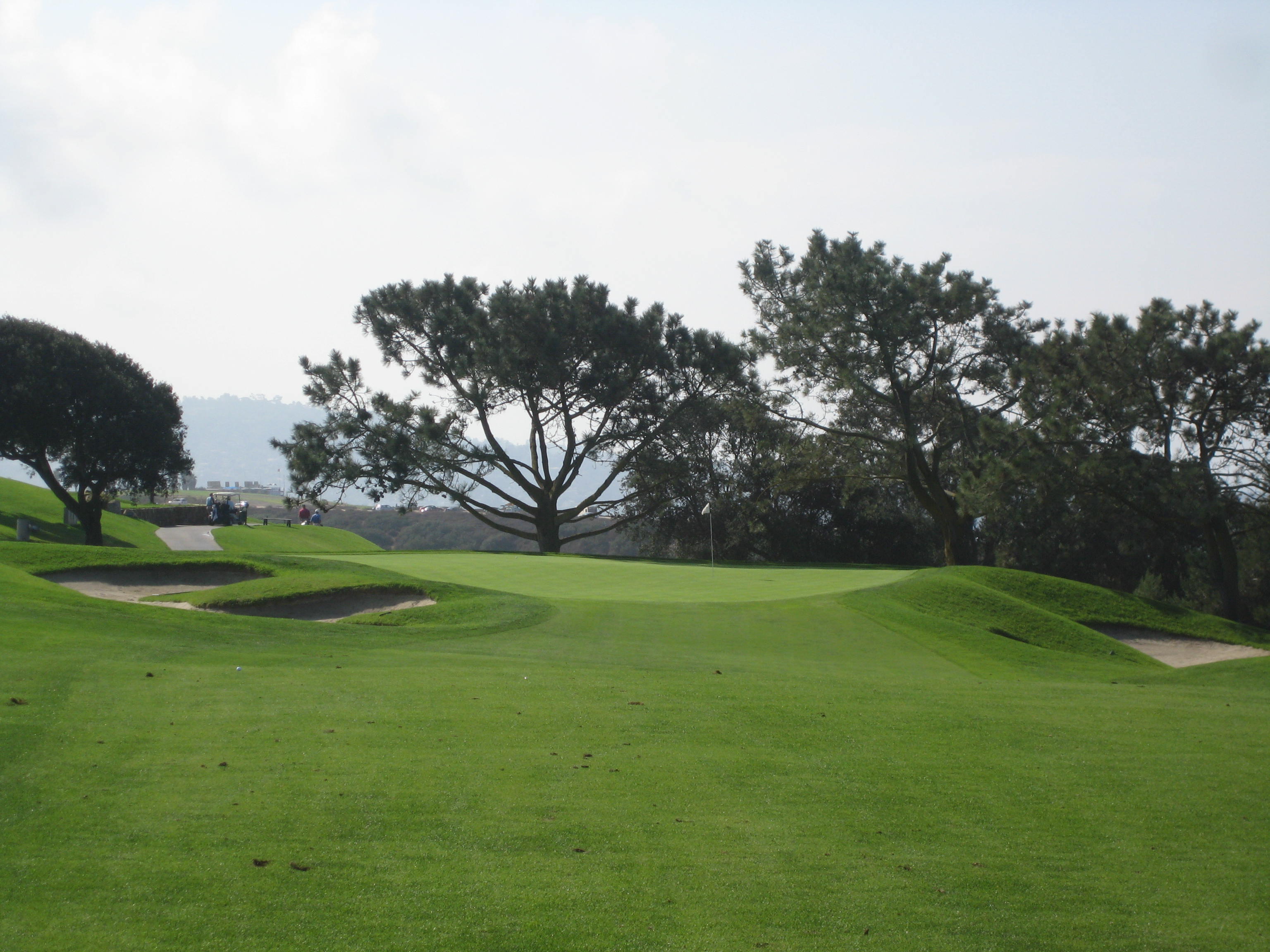
Number One the backdrop is superb

The course meanders back and forth atop those rocky cliffs on the coast of Southern California and is dominated by a large rock and scrub canyon in the middle of the property.  The canyon is not in play that often but it’s presence, much like the every present seaside breeze, influences your judgment every time you see it.  The course is lush so there is not much roll out and the prevailing wind makes any hole with the ocean on your left play considerably longer than the number on the scorecard.

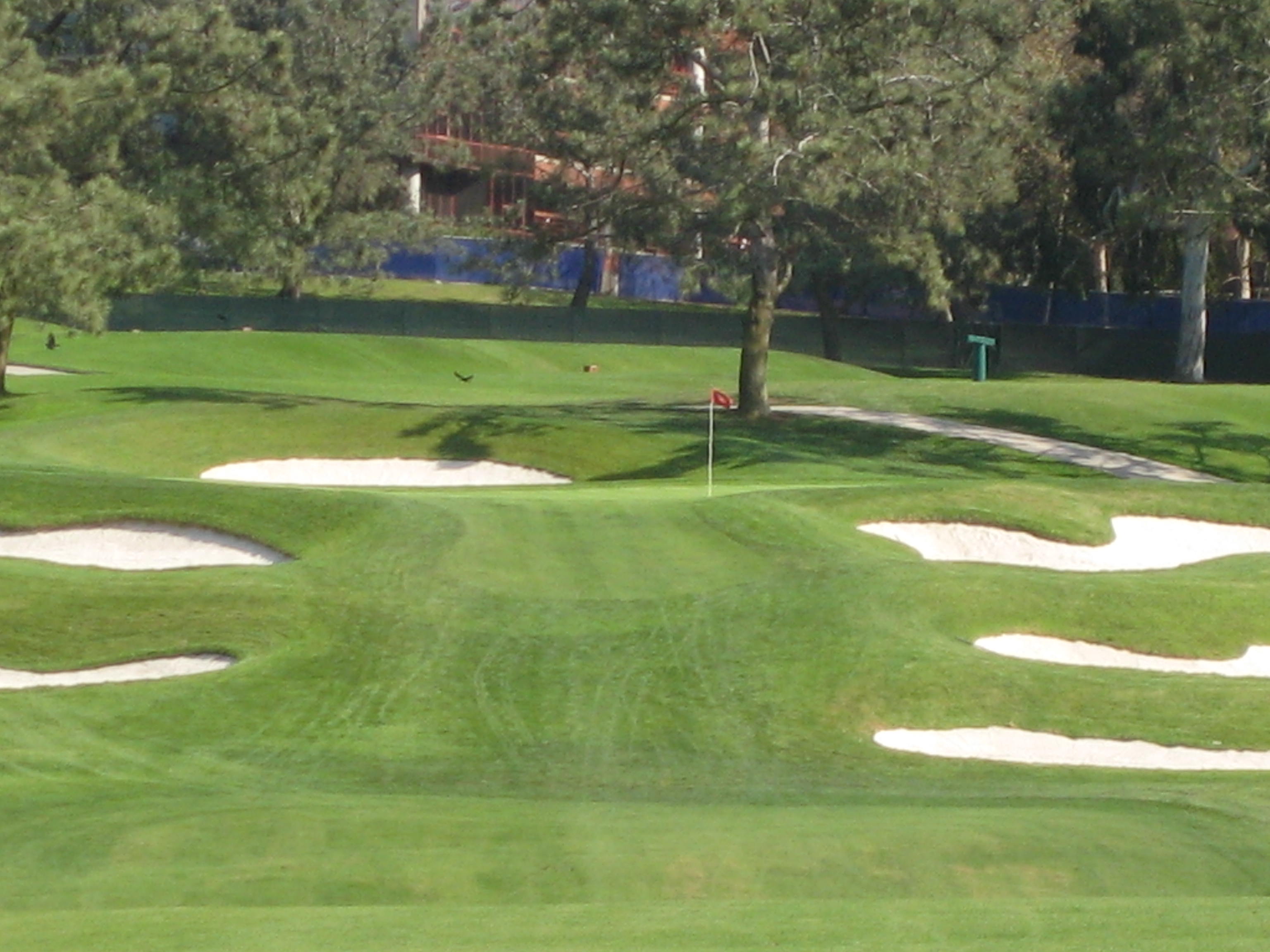
Number Two-Green complexes dictate the strategy at Torrey Pines

Most of the holes run quasi-parallel to the cliffs so the directional influence of the wind on most holes is clearly discernible.  It is the intensity of the wind on any given shot that is the enigma.  There will be many times where the final resting place of your approach a club long or a club short will have you scratching your head in bewilderment.

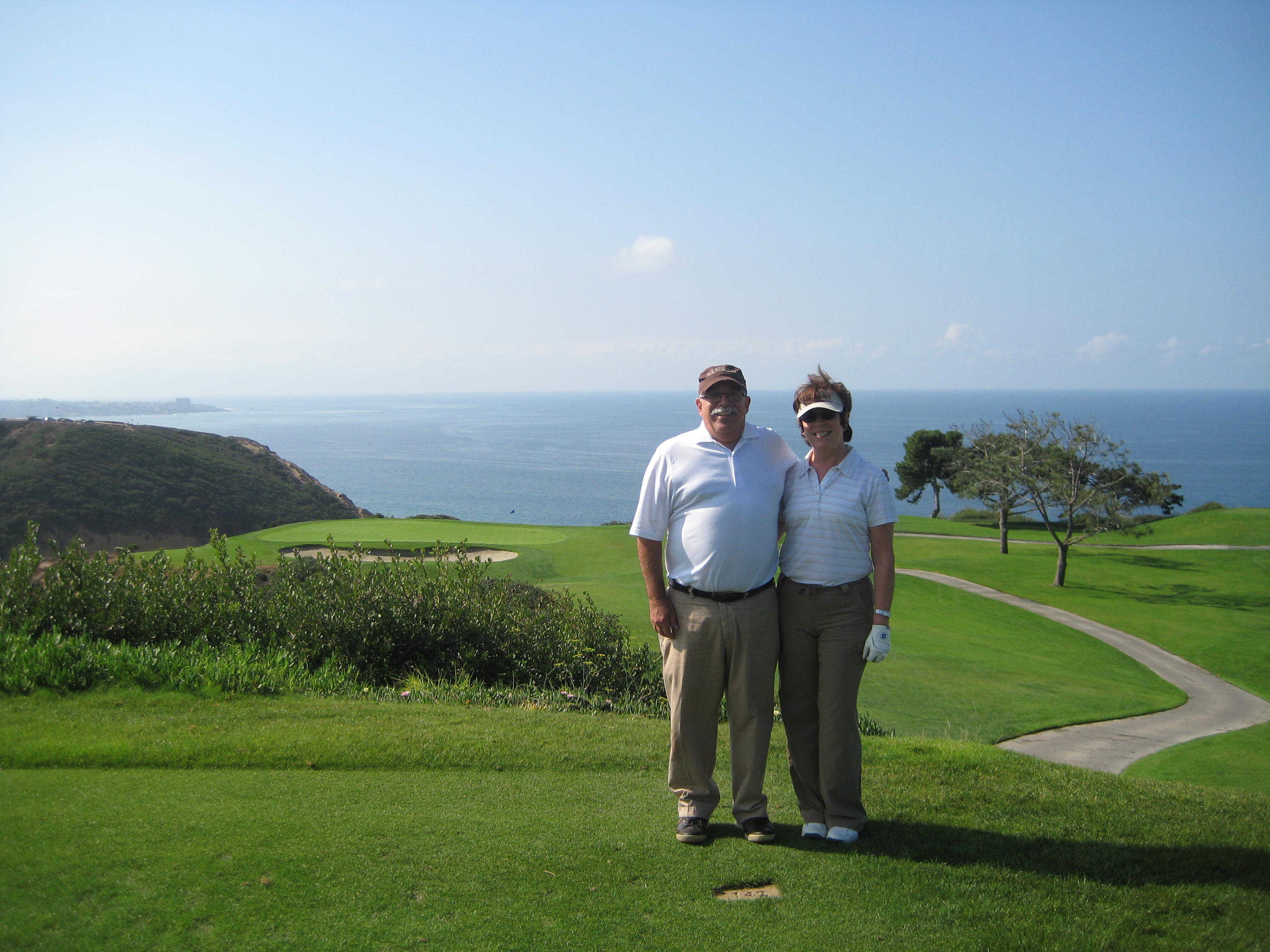
Postcard photo opportunity on signature Number Three

Jones flanked most of the driving areas with bunkers on both sides which suggest a preferred shape to your tee ball to get to the most advantageous position for your attack at the greens.  The new green complexes give this course it’s strategic character.  Most have  flanking bunkers to negotiate, but there is generally an opening in front with the green raised slightly from the fairway, so bouncing it in is rarely an option.

Harry Potter Fortress Green Setting On Number Thirteen

For me this is a walkers course, if you don’t want to lug your carry bag then take them up on the pull cart option.  There are a few cardiac walks from green to the next tee but for the most part the holes have fairly gentle ramping and the scenic views are much better appreciated during a walk in the center of the fairway then from a hurtling cart cascading up the path.

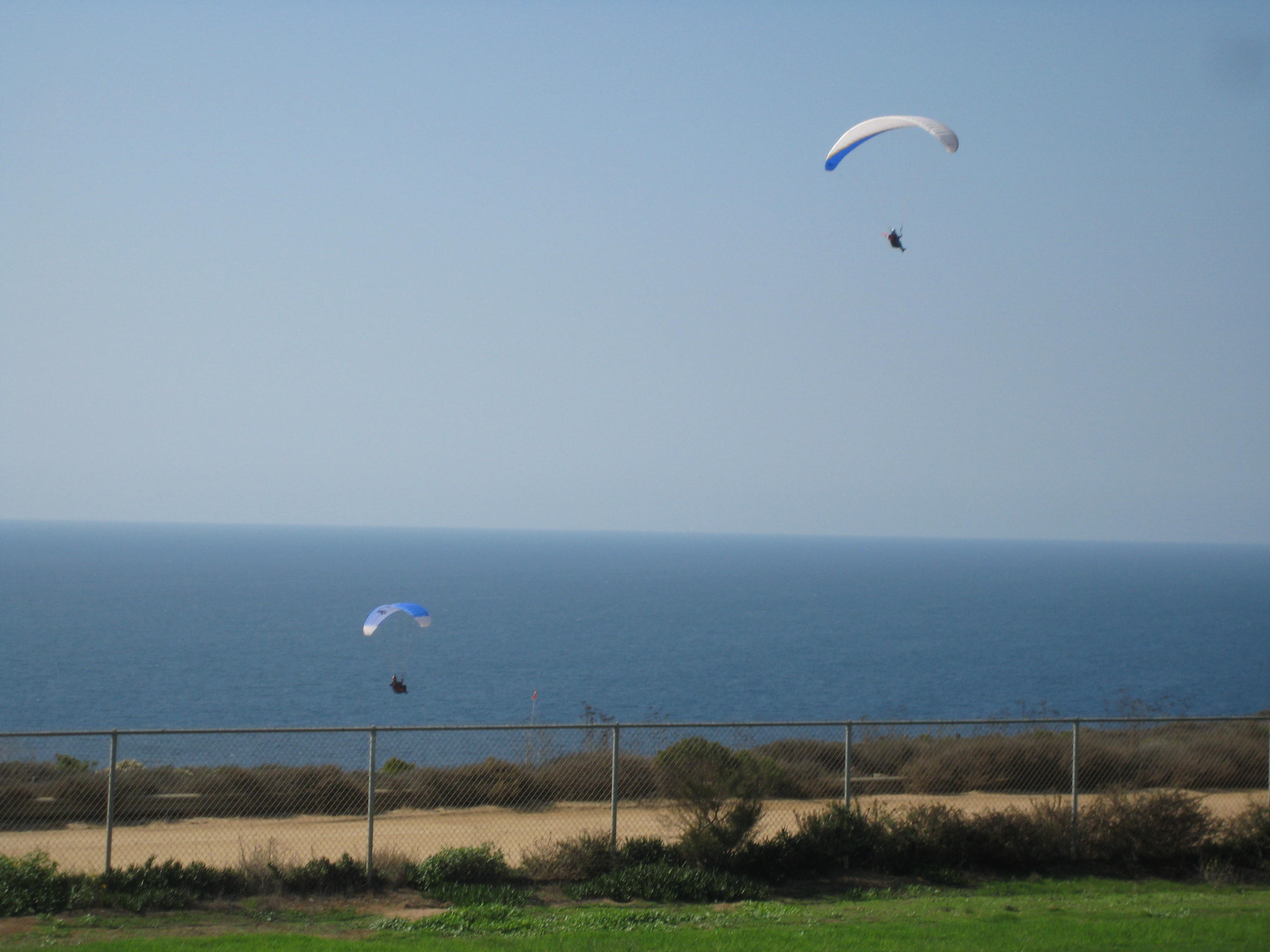
Hang Gliders buzz the shoreline along Number Twelve

I would be remiss if I did not emphasize how unique and cool the hang gliding is to this golf course.  When you get to the seaside holes you may be standing over an approach shot and on your second and final look up at the target your are startled by the sudden appearance of two rugby stripe parachutes jettisoned from nowhere into your visual screen from behind the green.  The coolest part, when you get closer to the cliffs, is to realize that these folks are like the dogs running on the beach, they are having the time of their lives just hovering like marionettes over the beach tugging their lines to find the next wind gust to take them up another ten floors. The hooting and hollering is infectious.

Serene Sixteenth sports the namesake Torrey Pine

The fee for playing is almost reasonable.  As an out of state resident you can actually reserve a tee time over a month in advance.  They only take Visa and Mastercard for the green fees so don’t try and ply your Platinum Amex or you will be reaching back in your pocket for cash before you get on the course.

The golf shop at Torrey Pines is one to die for.  Just endless selections of everything you could want in clothing and accessories with their cool logo.  Best part is that the prices are unbelievably reasonable for everything.  This is the biggest golf store in La Jolla and they have it priced like a warehouse outlet to attract the minions.  There is also a nice food service option across the lawn at the back of the lodge-wood framed patio that overlooks the 18th green and the visual scenery beyond.  Great place for an after round snack.

The finishing hole has the only water and the largest green on the course

From the standpoint of design, this is not the most memorable golf course you will ever play, but it is a wonderful day of scenic views, perfect weather, and a fine golf challenge that you need to experience.  America needs more of these top line public golf venues that can brag that a major was played there and so did you.

La Jolla, California

Designers: William F. Bell (1957) and Rees Jones (2001)

Tees                     Par            Yardage          Rating        Slope

Blue                      72               7051               75.3           137

White                    72               6628               73.1           133

Gold                      72               6153               70.7           129

If you would like a printable PDF of this posting including yardage book quality hole-by-hole descriptions of how to play the course click the moegolf logo below.
 

Kapalua Plantation Course

It was very early in their partnership that Bill Coore and Ben Crenshaw took on the task of designing a golf course on the rugged hillside terrain overlooking Kapalua Bay.  I am convinced they needed a sherpa guide and a couple of llamas to stake out the tees and greens for their creation. What resulted was something unique, a golf course that yo-yos you up and down some of the steepest terrain you have ever negotiated without carabiners and a climber’s harness.

It is a exhilarating anti-gravitational golf experience that calls for creativity and a lot of letting go to be successful. The routing is very creative with holes working straight down and straight up the fall line of the property.  The predominant wind direction was taken into account as well and together this makes the printed yardage on each hole almost inconsequential to the length the holes actually play.  You can count on a 20 + breeze almost all the time which means links rules prevail, you have to control your trajectory throughout the round and taking the wind into account on your putting is essential.

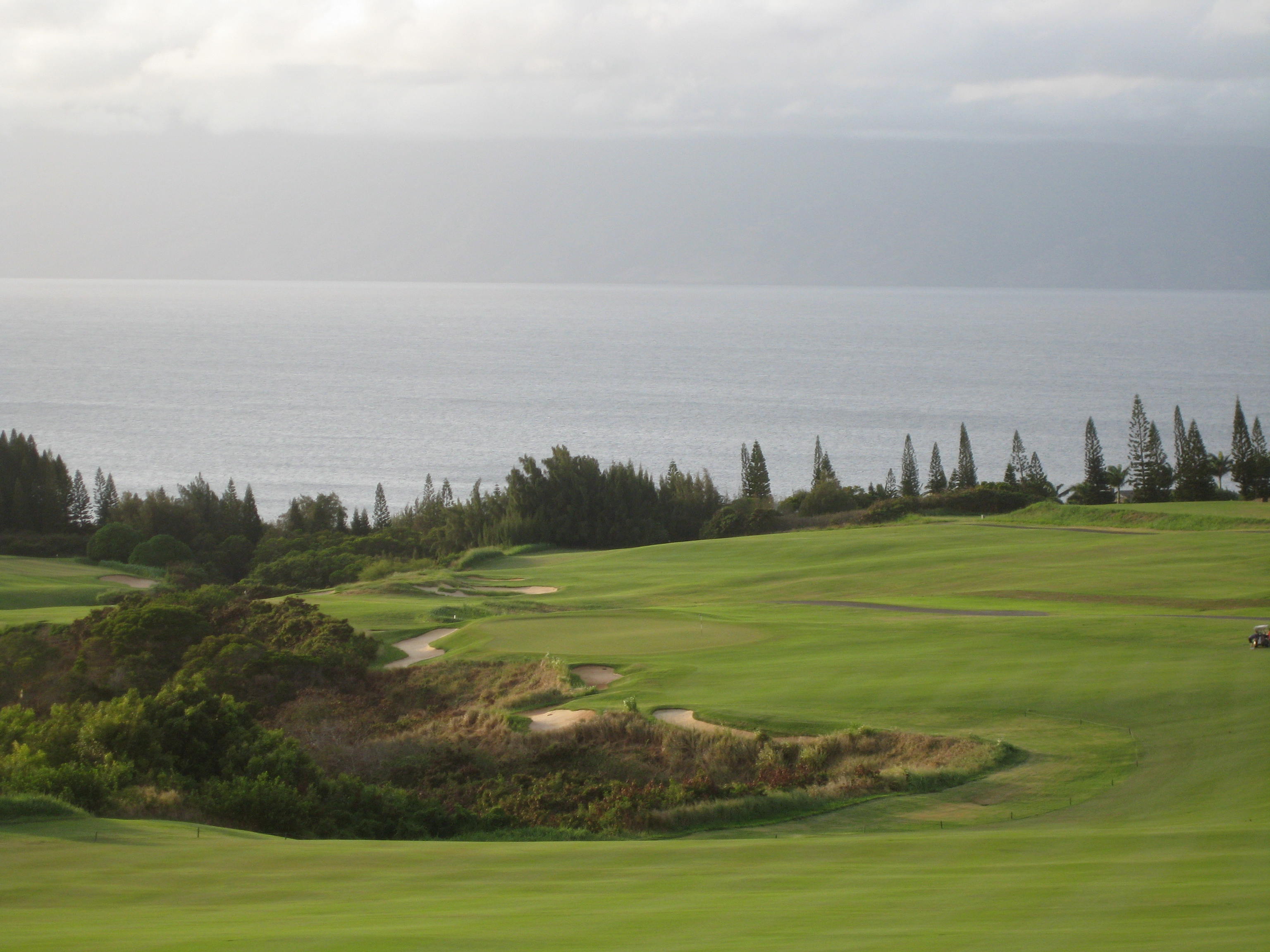
The wild card factor is something I call “ground sheer”, it is the seemingly arbitrary amount of side roll out you get that will take balls to places you could never have anticipated.  With this excessive side slip and a cross wind in the same direction and you need to aim into the next time zone just to get the ball into the part of the hole you can play from.

The one good thing is they made most of the fairway landing areas like Augusta, there is ample room to maneuver your tee ball to maximize your distance and still stay on the short grass.  The bunkering throughout the course is very visually creative and all of them have a tactical purpose.  In some cases they are baiting you to try to reach too far but more often it is just a way of forcing you to pick a good line and execute a shot to get there.

The greens are very large and often very long, which, with links rules in place, is a positive factor for managing the ball to the flag position on the downwind holes.  The other architectural factor you have to heed is the segmentation and the prevailing slope of each green.  You cannot simply pick a club based on a calculated approach yardage, you have to think of the shape of the shot and how it will respond on the green once it lands.  Getting close to the flag is often a diversionary play, hitting it off a side bank to have it end up in the right section of the green.

The visuals on this course are in the category of Pebble Beach.  Many times it is downright distracting standing on the tee looking at the back drop and then trying to focus on the target at hand.  An unbelievable job was done presenting holes that boldly brandish the beauty of this unique piece of property.  The versatility of this layout is that some of the most interesting views are back up the hole you just played.  Bring a camera, there is a scrapbook of memories to take home with you.

Dropping Of The Table-Number 1

Click on any photo to see an enhanced view of the image

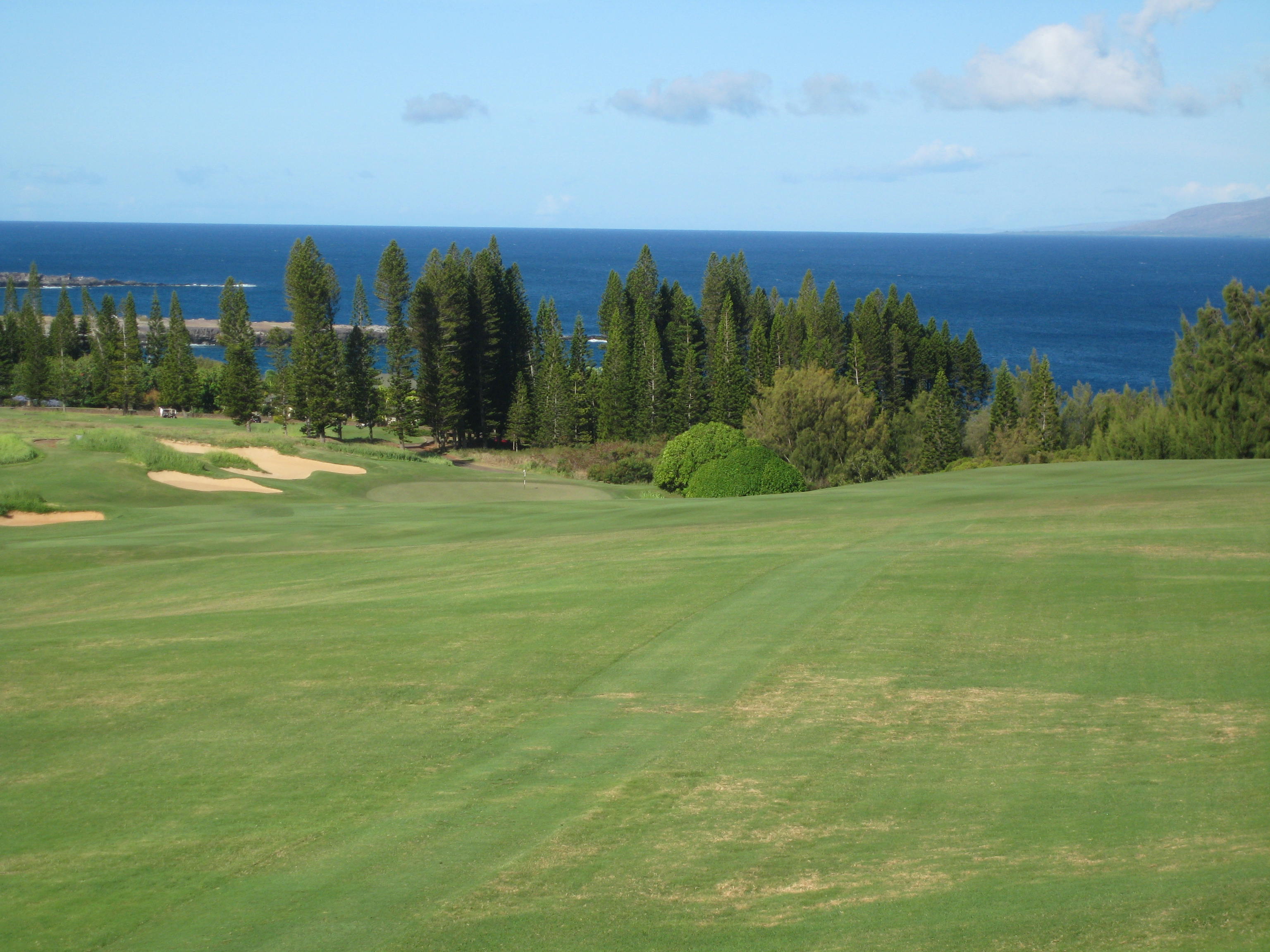
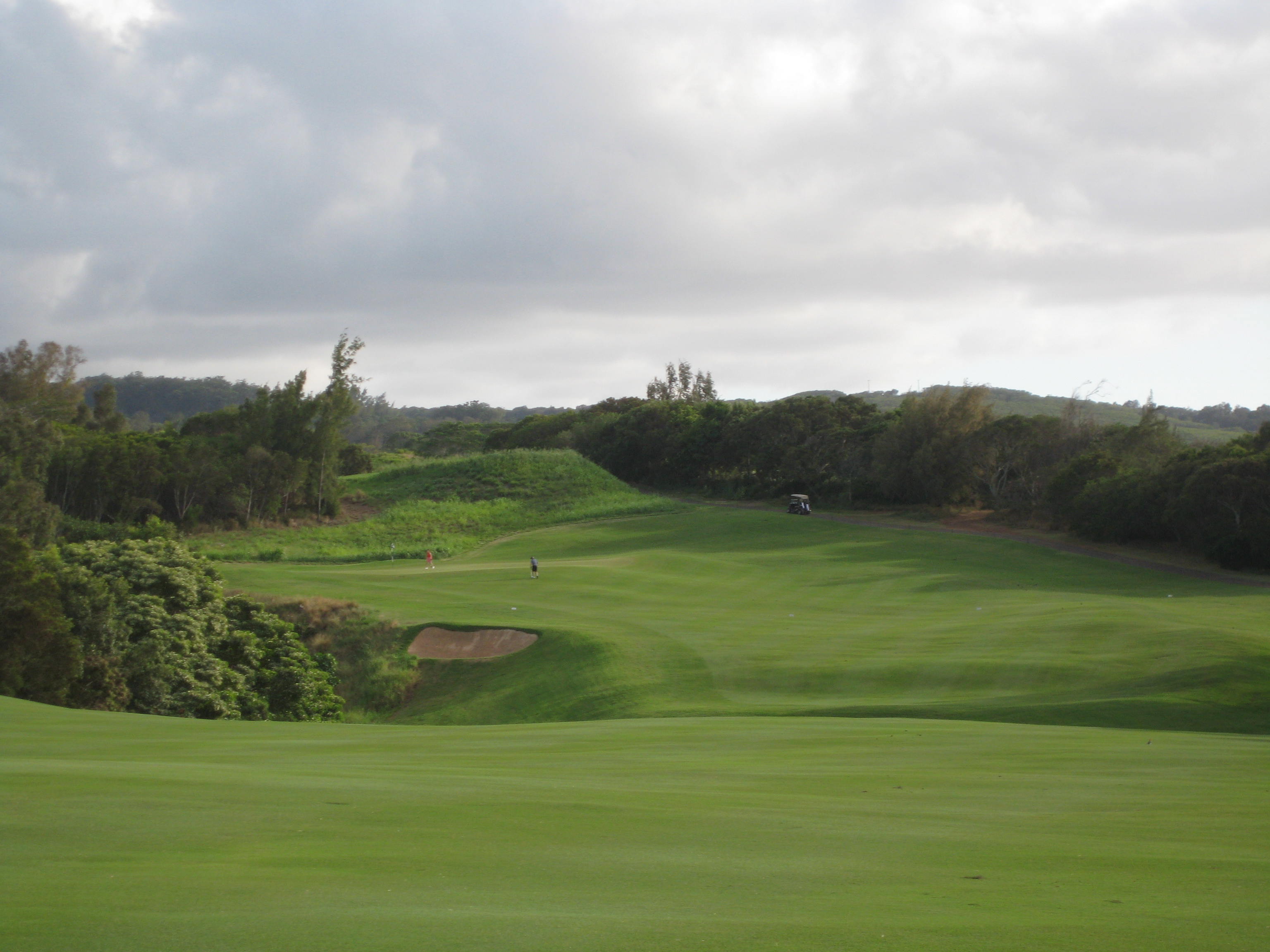
The round opens up with a hole that sets the tone for the day, a stunning downhill 440 yard par four. You drive to right center and then the ball just disappears over the hill where you can have as little as 120 into the green. The next three holes work there way back up the hill, yardage is not a factor on any of them, but positioned play is absolutely vital to getting your scorecard off to a good start.  Five is a par five that has all the visual flavor you could ask for in a full round of golf.  This is typical of a hole where the look baits you to try things you should not consider, showing restraint is rewarded. When you look at the sixth hole across the environmental divide as you are playing number five you may scratch your head trying to figure out what the hell these guys had going on in their head when they designed the next hole.  Standing on the sixth tee of this 380 yard par four the enigma only grows.  There is a huge mound containing a huge bunker sitting in the middle of the driving area.  As you can see in the picture the back side of this looks like the replica of an Inca holy temple.  What you cannot see is that a bold driving line between the bunker and the right abyss will feed the ball into the power slot and take the ball to foot of grandmother’s house.  When you end up pulling your tee ball left of the bunker because of your subconscious defensive nature you will have to use two clubs less and the ground sheer of the back side of Machu Picchu to feed down to the green.  This is where creativity and trust will serve you well.

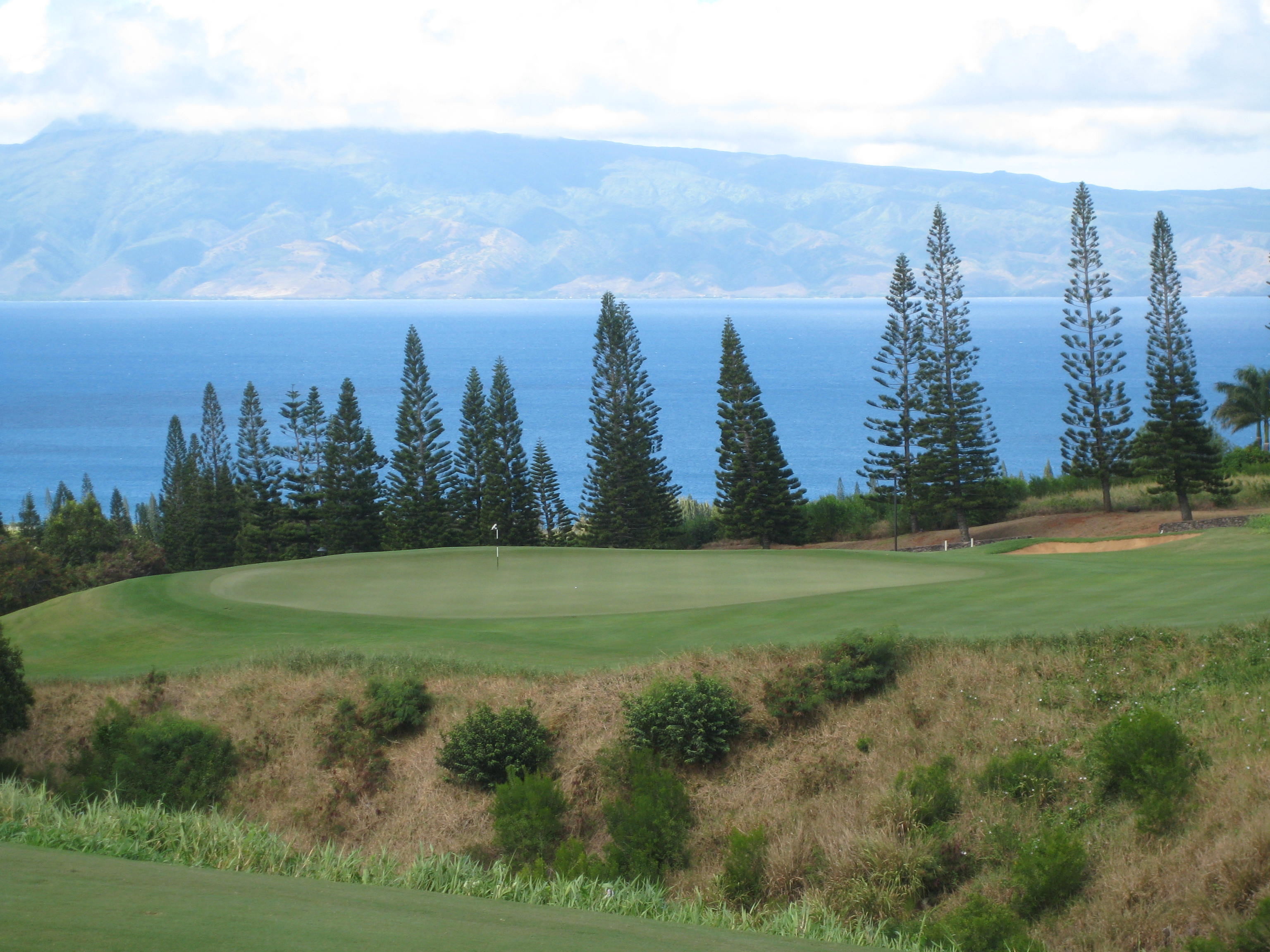
Across The Abyss Number 8 Par Three

Your scorecard on the front will be saved or doomed by how you negotiate the next three holes.  Seven is a 465 yard par four playing straight down the fall line.  Picking a good line on both shots and letting gravity do it’s thing will be rewarded.  Eight is a no nonsense dartboard par three across the vegetation wilderness.  The exposure of the ball flight to the wind makes finding this green a real chore.  Nine is almost unplayable by mere mortals, you have to hit three high quality shots into a strong headwind to an uphill target.  The green complex is so difficult that even good shots can be repelled so be prepared to turn the other cheek and accept your fate on this hole.

Downwind/Downhill Par 3 Number 11

The weakest aspect to the course is the first five holes on the back side.  All five are short and extremely technical holes with maximum ground sheer and probably the most exposed wind conditions of the day.  The big hitters will be very uncomfortable in this section of the course muttering under their breath phrases like “unfair” and “are you kidding me”.  I share their concern because the concentration of holes like this in a run seems to derail the “cut it loose” feeling from the opening nine.

Artistic Green Complex Number 15

The finish is outstanding, a series of fun holes the thoughts of which you will carry with you well past the end of the day.  You cannot help but notice the guard rails that occupy the right side of the driving area on fifteen-this is a strong statement to the ground sheer right on this hole.  The visual of the green complex while as stand over your second shot is very disarming.  Playing the next two very demanding shots and giving yourself a birdie chance is quite gratifying.  Sixteen is just another one unlike anything you have played already today.  You have a decision to make as to which side of the split fairway you want to play from-that decision will change the approach shot considerably. If you have watched the annual PGA Tournament of Champions played here each January you are familiar with these two finishing holes as the most severe downhill holes they play all year.  The first of the two falls below your feet like bungee cord jump waiting to happen.  Elevating the ball down the center the ball will disappear from sight and just keep rolling until it reaches the bottom of the hill about 300 yards away.  The second is a real beauty across the trouble to a green clinging precariously to the hill above you.  Managing the roll out of this shot is trick-the contour of this green will be kind to the right shape and trajectory of approach.

Hanging Chad-Number 17 Green

This final hole so often determines the winner of the PGA event each year-the pros can make anything from 3 to 7 and you will be amazed you have the same proposition facing you.  You aim your drive at the clubhouse right of the fairway and, to your amazement, when the free fall of your ball and the ensuing roll out is done you are pinned to the left edge of the fairway almost at the bottom of the hill.  The downhill second shot is within reach of the putting surface but you must aim well right of the green and let gravity do it’s thing again.

Final Approach to #18 from around 235

If you are not on, the ensuing pitch is like trying to stop your ball on the hood of a Mini Cooper, it will take full creativity and use of the ground to pull this off.  The coolest part is that if you play this hole well you did it in front of everyone lunching in the clubhouse grill overlooking the entire hole.  You can just feel the appreciative applause.  These last two holes are an adrenaline rush like you have never experienced before on a golf course.

Maui, Hawaii

Designers: Bill Coore and Ben Crenshaw (1991)

Tees                    Par    Yardage           Rating      Slope

Championship    73      7263                74.9         138

Regular                73      6547                71.7         130

If you would like a printable PDF of this posting including yardage book quality hole-by-hole descriptions of how to play the course click the moegolf logo below.
(Click here to see even more photos from my Postcard From Kapalua)

Mauna Kea Golf Course

Robert Trent Jones was “the man” among golf course architects in the 1960’s when he was asked by his wealthy friend Laurance Rockelfeller to design a course to compliment a $15 million dollar remote destination resort being contemplated for the arid west coast of the Big Island. Trent was confronted with a challenging piece of hilly, lava entombed real estate next to a large piece of paradise. It took all his creative skills and engineering prowess but he did a marvelous job orchestrating the ground into a stage for an unforgettable golf experience.

Much like his creations from this same period at Spyglass Hill or The Golden Horseshoe, he found a way to use the tumultuous terrain to his advantage to provide startling vistas and tactical golf challenges. Robert Trent Sr. was one of the patriarchs of the heroic school of design so this one is not for the feint of heart. It was updated by his son Rees in 2008, who is another one who does not cut any slack for the meek, so if anything the resulting course became harder.

The Short Par Four Sixth-Stylish Bunkering

(Click on any photos for an expanded view)

His son’s renovation work looks to have touched every corner of the property.  The main improvement was the move to the latest version of Tiff Bermuda grass throughout which makes it more durable and environmentally friendly to maintain. They say the irrigation systems and the drainage were improved to solve long standing issues.  What you see are typical Trent Jones greens-sprawling and segmented to make them tactically relevant-that roll a top speeds because of the new grass.  The bunkering has Rees’s fingerprints all over it-plentiful, artistic, always front of mind.  His presentation of these green complexes will take your breath away and often leave you scratching your head walking to the next tee.  The bermuda grass presents a particular challenge when pitching and chipping around these greens.  Steep swings get caught in this sticky grass which takes the high lob shot out of your repertoire for the day.

What you see is a place with a real 60’s retro feel about it-the architecture of the buildings and the residences throughout the property are that low square “I Spy” California look. They have recently redone the golf shop and Number 3 restaurant to bring them up to the quality of the rest of the facility.  The only disappointment is the practice area which remains in dire need of upgrade, expansion, and softer golf balls.  They could also do a much better job in relating to you the green topography and pin positions of the day, especially since both should figure into your playing strategy on every hole.

Robert Trent’s challenge at Mauna Kea was two-fold, he had to make arid land seeming inhospitable to grass growth suitable for golf and reign in the rugged topography to route holes that were challenging, playable, and would showcase the dramatic vistas of the Hawaii’s Kohala Coast.

Lava fields dominate the coastal areas on this side of the Big Island creating a rocky wasteland over the 230 acres intended for the site of the golf course. This side of the island gets very little rainfall so finding the water to support any vegetation would be a challenge as well. Trent realized that there were two kinds of lava present-brown lava that can be crushed to a powder mass and blue rock lava that is virtually impossible to break up. Managing a metamorphosis of this ground to make it suitable for golf seemed like an insurmountable challenge.

Never one to back down from a challenge Trent and his experienced engineering crew developed their own engineering techniques and processes that enabled the use of the crushed lava as a soil base on which he added a mix of lime and crushed coral dredged from the nearby bay to grow a hybrid brand of Bermuda grass with great success. The water he needed was provided by drilling a couple of wells almost 400-feet deep coupled with the first fully automatic underground golf course irrigation system of their own creation. The result was astonishing, green grass flourished in what had appeared to be an arid desert. The blue lava was either blasted, buried, or left alone as an accent to the developing holes. The cost of all this was over $2 million dollars, equivalent of close to $15 million in today’s currency, an unheard of expenditure for building a golf course in those days. But Rockefeller had the deep pockets and the desire to have a special centerpiece to his high end resort.

Robert Trent’s challenge was to reign in the rugged topography and route holes that were challenging, playable, and would showcase the dramatic vistas of the Hawaii’s Kohala Coast.  Routing the holes straight up and down the slopes he gives you some very severe elevation changes that will increment club selection but very few holes with side ways roll offs.  This makes picking and maintaining shot lines much more manageable.  As is often the case with this type of terrain, there is rarely a long run for a straight fairway so most of the holes bend dramatically or are folded to fit the available shape of the land.  The result is that there are many short par fours that play from a high tee to a landing area below and then turn dramatically to a four-story green complex on top of the next hill.  This template will wear on you, especially if hitting high elevation, full carry approach shots is not in your wheelhouse.

Trent’s Signature Photo Opp-Number Three

For me the par threes are the centerpiece of this course.  Number 3 is the signature hole with the Cypress Point look and not as much ocean to carry.  This is a photo opp for sure so you can expect a backup due to clicking digital cameras.  Number 11 is another absolute beauty-a medium length par three.  It is a downhill look at an evasive green nestled against the ocean-it brings to mind the 7th at Pebble with a much longer club in your hand.

A Bit Of Pebble Beach-Par 3 Number Eleven

The par fives are some of the most imaginative you will play anywhere.  Here Trent uses the incline, some carefully placed fairway bunkers, and dramatic green arrangements to give you chances for success or disaster on every one of them.  Eight and seventeen are tumbling dice affairs where you cannot believe how far your ball has traveled and are tempted to do things you probably should not consider.  Of the par fours I like nine and eighteen in particular because both give you the distracting dramatic look of the coast line below but demand you control the line and carry of your shots to have a scoring chance at the end of each side.

Stunning Green Complex Par 5 Number Seventeen

Sequencing of the holes is what creates a tactical momentum for any course.  He did a marvelous job in this regard starting you out with relatively easy holes each nine and then quickly picking up the challenge in the next few holes.  Once you reach that level the challenges come in a variety of forms in rapid succession, you barely get over the rush from the last whole when the wow factor of the next tee hits you.  This is a course where you will have a bad hole but there are plenty of chances to redeem yourself with smart decision making and timely shot execution.

The Dramatic Final Act-Par 4 Number Eighteen

As I said earlier, this is not a course for those who are not up for a stiff challenge.  If you cannot hit the high carry shot or big bad bunkering intimidates the hell out of you then take the day off and go to the beach instead.  But if you are up for it this is Robert Trent Jones at his macho best.  Play well here and you will have some serious big fish stories to lay on your friends.

Big Island, Hawaii

Designer: Robert Trent Jones Sr (1966)/Rees Jones (2008)

Tees                Par      Yardage    Rating     Slope

Blue                 72         6806        74.7         134
Orange            72         6358        72.2         130

If you would like a printable PDF of this posting including yardage book quality hole-by-hole descriptions of how to play the course click the moegolf logo below.
 

Hualalai Golf Club

The Four Seasons needed to create a name brand golf course as the centerpiece for their residential resort community on the big island in Hawaii. Jack Nicklaus was retained and did a first class job delivering them a visual and memorable resort course for their guests and home owners to enjoy.  This is a user friendly track with wide driving areas, accessible greens, and not a whole lot of deception.  They host the opening event on the Apostle Tour each year, so you are likely to remember seeing old guys in January begging against the wind on the last two holes.

The signature feature of this course is that it was built on the black lava fields of the eastern Kohala Coast and Jack’s goal was to meld the holes into the up and down flow of the lava fields.  The lava creates a harsher version of the gorse or the heather on the Scottish courses setting a stark visual outline on every hole for the lush green of the Tiff Bermuda fairways and greens.  If you look up the eastern horizon to the mountains from which this came, you do get a real sense of the topographical flow of the element and how it defines the character of this course.

Click on any photo for an enhanced view of the image

Number 5  Par 3  Precision Required

For the most part, the lava is set off the immediate playing areas and there are only a select number of times where it becomes an integral part of the golfing challenge.  The more significant tactical challenge is Jack’s generous use of fields of fairway bunkering.  From the first hole to the last you will see repeated occasions where an entire side of the hole is bunkered, creating a dogleg effect on it’s own.  Missing into the sand on that side of a hole can be a scoring disaster.

The course begins with a typical low impact Florida style par 4-wide fairway-open access to a big green-no lava.  But you cross the road and enter a lava quarry which prepares you for the full lava look. Number two is a visual bait and switch landing area and then a large lava dune on the right obscures access to a very tight green.  The rest of the way is pure lava eye candy.  The short par four sixth is a great example of lava outline  that can appear intimidating with a green complex set in a lava canyon but there is a collar bunker off the back of the green that keeps balls from getting lava burn.  Seven is a unique par five where after you drive to a wide open landing area and play your second down a lava hallway that chokes the fairway framing the required lay up shot.

Number 7 Hallway of Lava

There is an over-hyped cookie jar with some oatmeal raisin and chocolate chips at the turn but the fresh fruit in the cooler is a refreshing touch before you begin the inward half.  The five pars on the back are the most interesting holes of the day.  Ten is a serpentine par five that requires full focus on your lay up shot to have a look at a green hidden behind an acre of sand, trees, and lava.  From twelve to fourteen you are as close to the ocean as you are going to get so the wind becomes a major factor in all club selection.  Fourteen is another very imaginative par five with a hide and seek green complex that is difficult to negotiate with a wedge in your hand.

Number 17 Green, Lava, and Sea

The finish is all finesse as you head back toward the clubhouse.  A couple of technical par fours before you reach the signature seventeenth, the only hole that is truly exposed to the Pacific.  Here you have to parasail one through the sea breeze onto a well protected green-anything left hits lava and heads toward Japan.  The finish is a beautiful short par four over ancient Hawaiian fish ponds and a Nicklausian sea of sand into a demanding tight green set.

Number 18 Sand Sea Of Madness

This is a Four Seasons so all the amenities are first class.  A sprawling practice facility is at your disposal with a couple of acres of grass teeing area, pitching green, and a large ambling putting green.  Perfect recluse for a five o’clock practice session to sort out the demons you encountered today.  There is nothing like the tranquility of downhill ten footers dropping into the cup as the sun dips back into the Pacific Ocean.

Curtain Call

Big Island, Hawaii

Designer: Jack Nicklaus ( 1995 )

Tees                    Par     Yardage    Rating       Slope

Championship    72         6632         71.5         134
Regular               72         6032         68.8         129

If you would like a printable PDF of this posting including yardage book quality hole-by-hole descriptions of how to play the course click the moegolf logo below.
 

Man O’ War Golf Course

Man O’ War is one of two courses Joel Weiman built for the Glen Riddle Golf Club outside of Ocean City, Maryland.  Weiman designed the Uplands Golf Club (of blessed memory) in Denton, Maryland off Route 404 on the way to the Maryland/Delaware Beaches.  Similar to that effort,  here he took a flat piece of farmland and turned it into a very interesting golf course that pulls links style features into play and makes for a wonderful afternoon of golf challenges that we are not used to seeing in this part of the world.  Add the wind factor, since this is just off the Bay side of the Ocean City area, and you do have a course that will give you a new riddle to solve every time you play.

                           Early Wake Up Call on Par 3 Second Hole

Click on any picture to get an enhanced view of the image

Be clear, that in spite of all the marketing hype, this is not a links course.  It lacks many of the inherent environmental necessities of a links course-sandy turf, proximity to a major ocean or sea, tall sand dunes, treeless surroundings.  But, to his credit, Weiman found a way to embed many of the links style challenges in this course-blind shots, random bounces,  awesome topographical intrusions, scantly bunkered green constellations, slick and windswept putting surfaces.  You will have a few of those head scratching “is this too arbitrary” or “is this unfair” kind of thoughts when you think back over your day of golf.  But truth is what you should come away with is a satisfying sense of mental exhaustion from having been challenged throughout the day.

Intimidating Beauty Par 4 #11

What you do get are well manicured Bermuda grass fairways that wend their way through an interesting array of swales and hollows, startling bunker clusters, and imaginative green constellations.  Weiman introduces the links arbitrary bounce feature through the creation throughout the course of what we have coined “Worm Berms”.  When you look at the holes on the GPS imaging in the cart there are manufactured ridges in many fairways that look like worms-these will repel a ball without the proper level of intention to places that seem arbitrary and punitive.  But for anyone who has played across the pond you know that the rub of the fairway is an elemental part of the links golf experience.  The bent greens are severely sloped and segmented with tiers and fall offs that make it essential to plan your approach angles to leave your ball where you can putt aggressively. Being on the wrong side of the hole all day will leave you a bushel full of three putts.  Creative pitching and chipping will go a long way to keeping you on your game-the unusual green constellations will afford you plenty of opportunity to ply that craft.

Like most good courses driving the ball on the right line is essential to success.  Weiman used creative bulldozing to inject some very obtrusive obstacles in your path.  Picking the right club off the tee and the best angle from which to play your next shot will help you negotiate these challenges with much less pain.  The blind shots and other visual misdirection techniques in the architecture will cast further doubt in your mind, but you have to trust your instincts and have conviction of intent on every shot.

Home Hole Par 4 #18

This is a wonderful afternoon of golf with a distinct links flavor to it.  Enjoy the arbitrariness of the experience and go with the flow-you will have some sweet recollections of the day’s challenges if you don’t let it wear you out.

(Photos from gwowi.com)

Berlin, Maryland

Architect: Joel Weiman (McDonald Design Group) 2006

Tees          Par    Rating    Slope    Yardage
Blue          72      71.6       133        6556
Silver        72      69.1       128        6086

If you would like a printable PDF of this posting including yardage book quality hole-by-hole descriptions of how to play the course click the moegolf logo below.
 

Laurel Hill Golf Club

In the early 00’s the DC Department of Corrections closed their Lorton detention facility in Northern Virginia and returned the  property, which included 4000 acres of hilly dairy farm land, to Fairfax County to redeploy for public use.  The county wisely decided to take full advantage of this opportunity to build a high school, an equestrian park, a museum, an athletic complex, an arts center, and a high-end municipal golf course.   With close to 300 acres at his disposal Bill Love, an accomplished designer with an environmentally sensitive approach to course design, was asked to oversee the project and he put together what has turned out to be one of the real gems in the Washington Metro area.

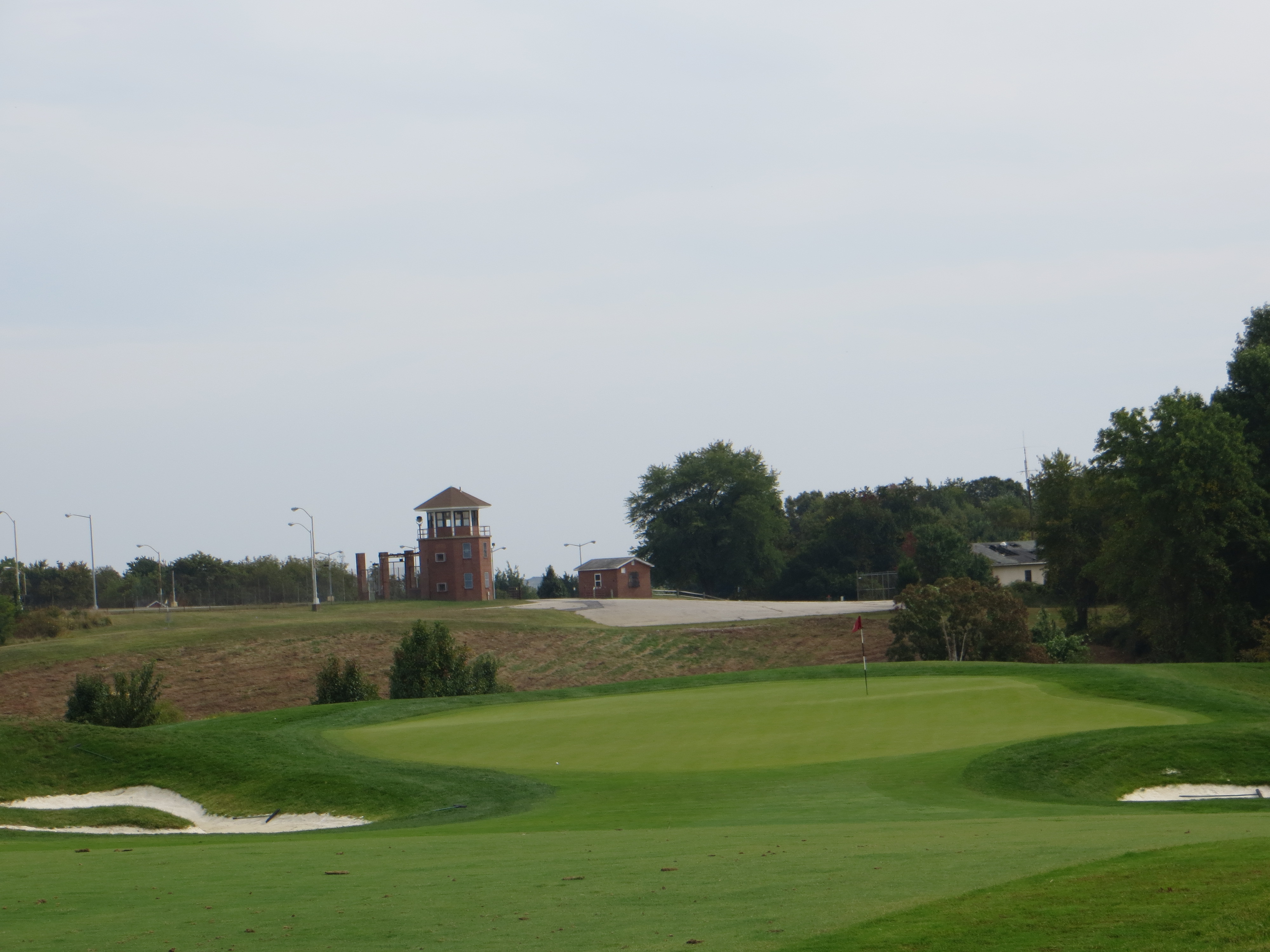
The juxtaposition of the property's former use to it's current use is intriguing.

The juxtaposition of the property’s former use to it’s current use is intriguing.

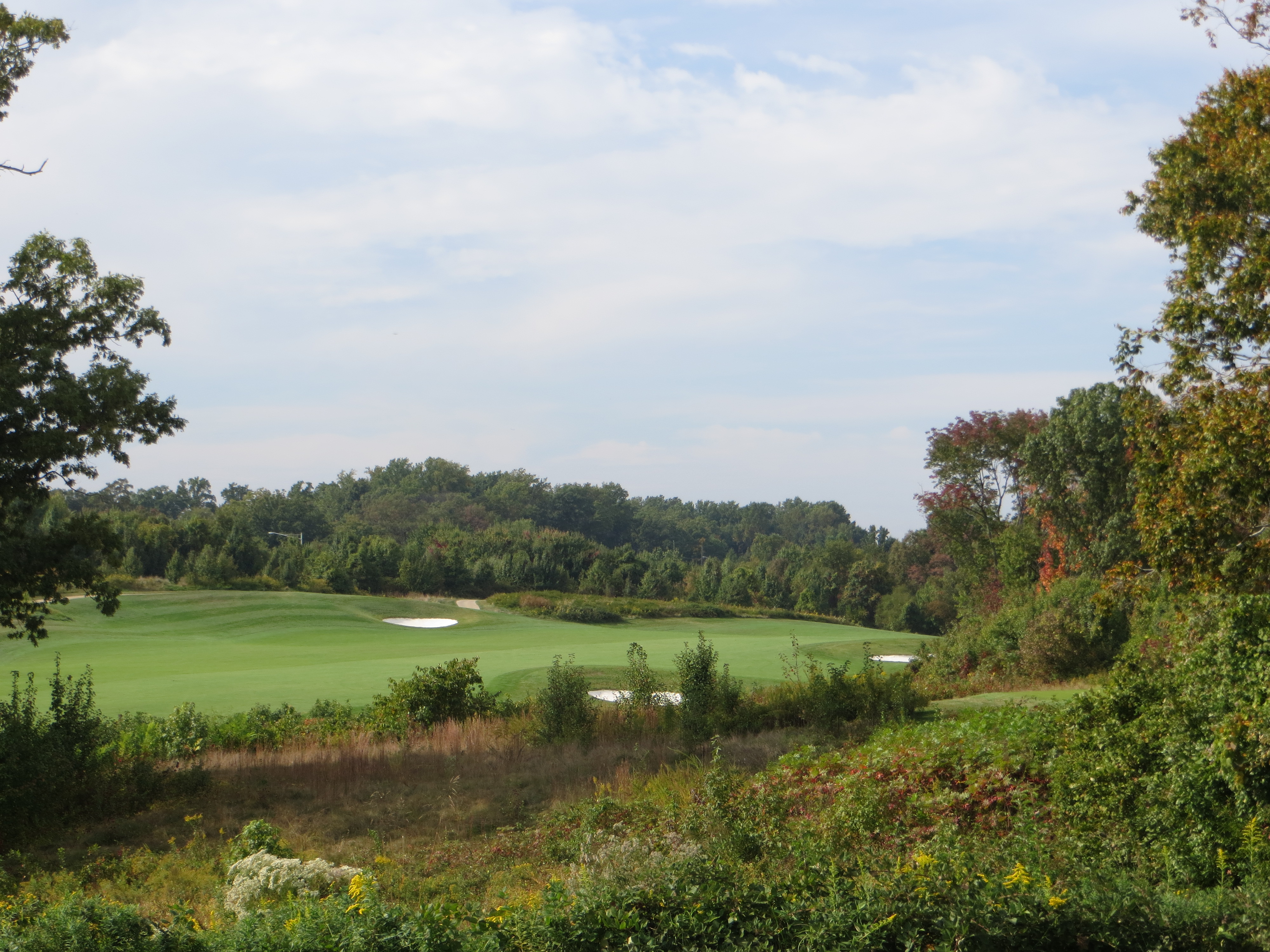
The golf course he created has stunning aesthetic beauty combined with challenging strategic design and will provide you with an afternoon of sheer golf delight.  Standing on many of the tees you cannot help but stop to appreciate how the holes gently follow the natural flow of the land bringing your attention the sheer beauty of nature’s features therein.  This would be a particularly inspiring experience in October with a little leaf color and a slight chill in the air.

October fall colors are already adding flavor to the driving area on #9.

October fall colors are already adding flavor to the driving area on #9.

The course is built to the top specifications featuring generous bent grass rolling fairways in impeccable condition, over 100 bunkers in places that make you think and think again, rough that will take control out of your hand on recoveries, and firm and fast greens with plenty of interesting contours to consider.

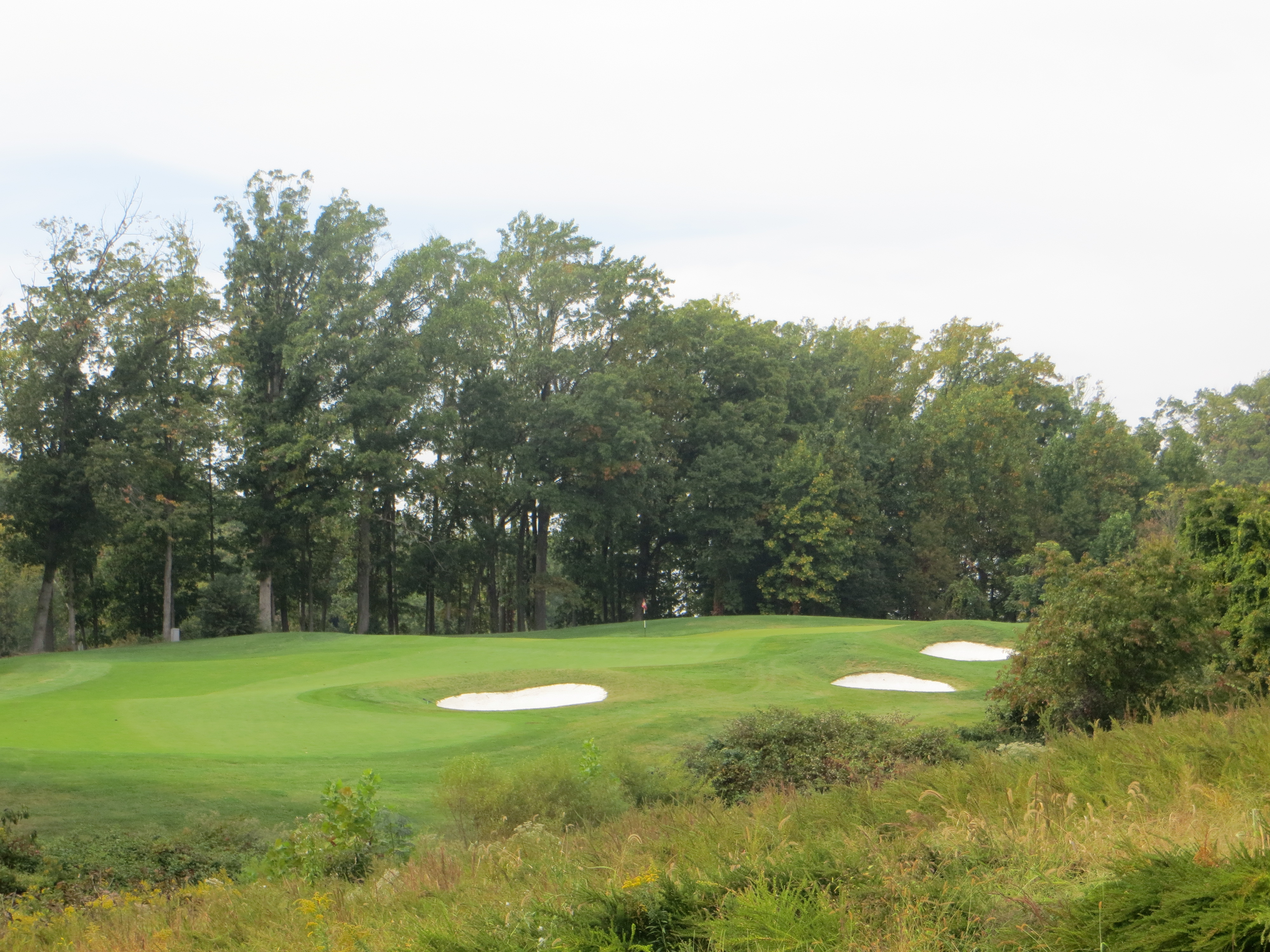
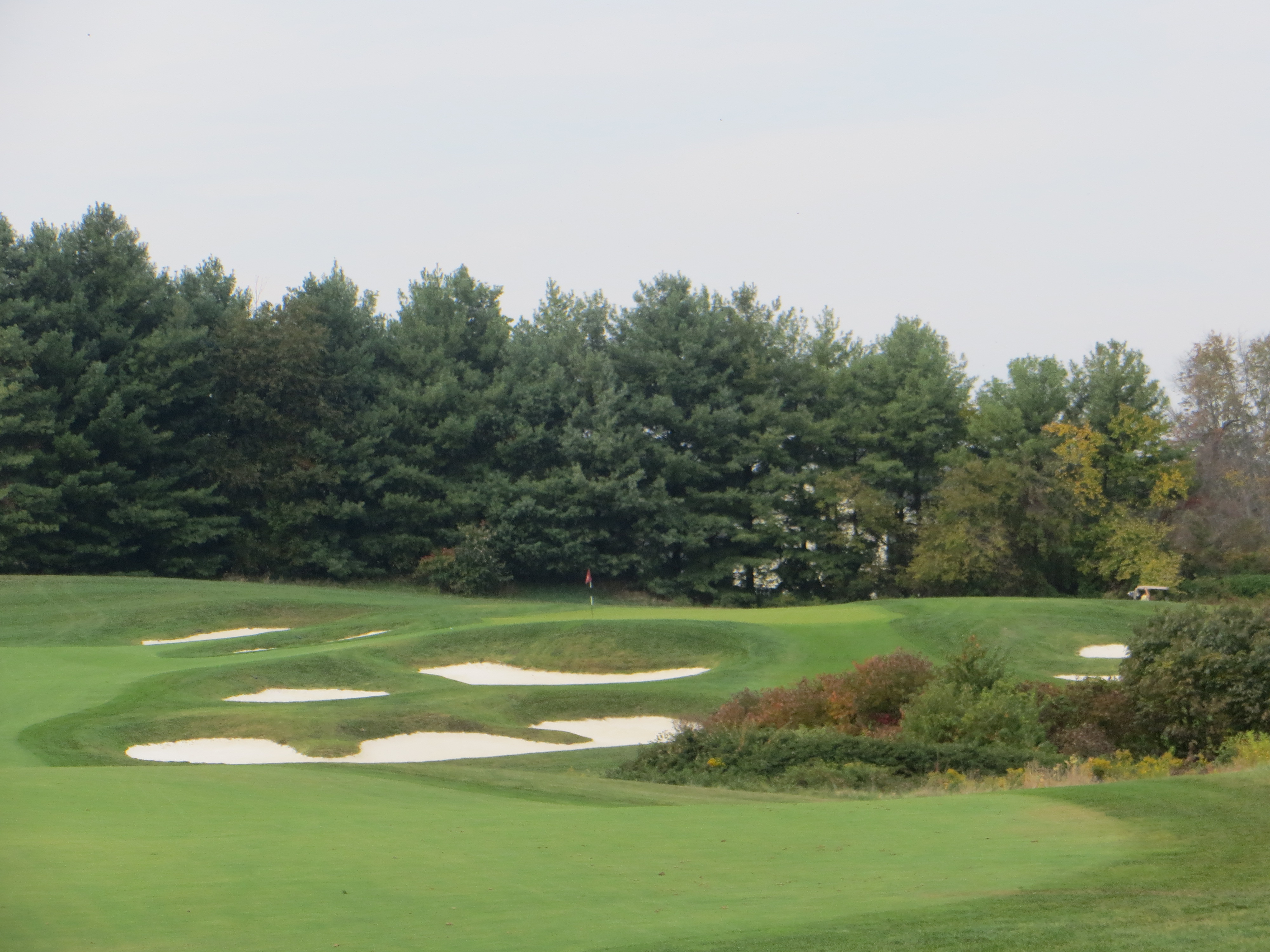
Just one nest of sand madness you must avoid in front of #5 green.

Just one nest of sand madness you must avoid in your path to the #5 green.

On many holes you just have to scratch your chin and ponder the possibilities before you decide how you are going to play effectively.  The county has committed serious budget money to keep this in top flight condition so the consistency of this experience is gratifying. Golfweek Magazine recently put this course as #13 in their list of top municipal courses in the country.  The top 15 on that list include Bethpage Black, Chambers Bay, Torrey Pines, TPC Scottsdale, and Harding Park.  Pretty heady company for our local muni, huh?  Based on this pedigree the USGA held their 2013 Public Links Championships at Laurel Hill.

The uphill climb on the long 439 yard 3rd has plenty of obstacles to

The uphill climb on the long 439 yard 3rd has plenty of other obstacles to consider.

What I like the most about what Love has done is the variety in the types of holes he presents.  The par 71 is not because of only 3 par fives-it is because of 5 par threes and these are some of the most interesting visuals of the day.  You have monster par 4s that are 425 to 450 yards and uphill to boot.  You have reachable Par 5s under 500 yards with major decision making parameters.  Two par threes under 150 and three par threes between 180 and 210.

#14 is 212 yards and a club and half uphill with a three tier green to boot.

#14 is 212 yards and a club and half uphill with a three tier green to boot.

There are steep uphill approaches, dramatic two-club less downhill shots, forced carries over environmental areas, and just some of those approaches where you have to slip it between the this bad thing and that.   Every club in your bag will be dirty when you are done-the variety of shots you are going to be asked to hit will run the full gamut.

There is a natural flow to the design as you see off the tee box on the long par 4 17th.

There is a natural flow to the design as you see off the tee box on the long par 4 17th.

In general the driving areas are wide, but the preferred areas are always cordoned by bunkers or bordering angular topographies.  On a number of the doglegs it is nests of bunkers that are your no-no not trees but trees do frame many of the landing areas and generally define the line of the holes.

The short par 4 7th tempts the bomber but the Jack-O-Lantern bunkering will spook them.

The short par 4 7th tempts the bomber but the Jack-O-Lantern bunkering will spook them.

The greenside bunkering is very imaginative-often nested to one side to force you to work the ball into a green set on the diagonal line of the green.  The greens themselves have lots of segmentation and tiering so you have to be careful to recognize where the pin is located and where the prevailing slope goes to keep your ball under the hole.  There is not much overt water in play but there are some moist ditches and adjacent environmental areas that can lead to double bogies.  Both nines end with a short par five that has real visual and strategic interest.  This gives you a chance for redemption or damnation at the end of each side.

The postcard 16th has alternate tees to change the challenge but not the pleasure of the view.

The postcard 16th has alternate tees to change the challenge but not the pleasure of the view.

The entire facility is done to high standard.  The clubhouse is small but well appointed and functional.  The grass driving range is very roomy and has the same bent grass the course.  The pitching and putting areas have much of the course feature so you can practice the things you will be called on to play during your round. For a municipal fee course price you are really getting a high-end golf product.  This is a must play and needs to be on your short list.

Lorton, Virginia

Architects: Bill Love (2005)

Tee          Par    Rating    Slope    Yardage
Blue         71      73.3       142        6730
White       71      71.7       139        6386

If you would like a printable PDF of this posting including yardage book quality hole-by-hole descriptions of how to play the course click the moegolf logo below.
Tobacco Road

Mike Strantz was one of the real artistic young architects out there.  His tutelage under Tom Fazio gave him a real penchant for dramatic design.  He built courses with enormous visual appeal and drama with so many memorable holes that the term “Signature Hole” seems to be frivolous when looking at one of his designs.  His approach to designing golf courses was to walk the ground with his pastels and his sketch pad and draw the holes as he envisioned them.  In spite of the nouveau look of his courses, he had a very old school philosophy about shot values and strategic design.

(Click here to read a wonderful interview with the designer Mike Strantz)

This course is like Royal New Kent on steroids-the challenges are daunting-often layered on top of each other for extra effect-very much in the Irish tradition of a good mix of strategic and quirky holes.  You will not walk off this course with anything less than awe for the vision and effort it took to create it.  If you keep your wits about you it becomes apparent that every hole has a safe way to play and scoring well here is a matter of carefully choosing which challenges to take on and which to ignore.

Opening Hole Par 5     (KyleHarris.com)

The par five first hole is a perfect example of this-he presents you with a series of pumped up challenges you just need to ignore.  There is a conservative three shot sequence that needs to be heeded or else you can start off your day with a very bad number.  All the par 5’s are three shot holes to all except the testosterone junkies.  The vast waste areas on these holes bait you to go for what appears reachable in two.

Stunning #7 Par 4

The overall yardage is not overwelming but the 71 par makes that a bit of an understatement.  The par 3’s are all very short so there is extra yardage available to the four pars and he uses it.  Landing and layup areas throughout the course are much more generous than they appear to the eye-he has used the waste areas and adjacent mounding to mask the true depth of these areas.  You will continually be saying to yourself after your reach your ball- “wow, there is much more to shoot at than it looked from back there”.  Good design.

Intimidating Par 5 #13

There are quirky holes out here-especially the three pars.  Many will call these holes tricked up or unfair but neither of those terms has a place in the Irish golf realm from whence they come.  You simply have to pick a target on the short holes and don’t let the extraneous visual elements get into your head. These are really the holes to stack your card with pars so be disciplined and play for the fat of the these greens.

What a finish #18 Par 4

As with most courses across the pond, this is a course you have to play without scoring expectation.  Play a match with your friends and forget the medal score.  You can win some money and maybe, just maybe, still be pleasantly surprised when you tally your score at the end how well you fared.

.
Sanford, North Carolina

Architect: Mike Strantz (1998)

Tees    Yardage  Par    Rating    Slope
Disc      6304       71      70.8      142
Plow      5886      71       68.6      132

If you would like a printable PDF of this posting including yardage book quality hole-by-hole descriptions of how to play the course click the moegolf logo below.


Pine Needles

This is a real Donald Ross gem built in 1926 as the sister to Mid-Pines that opened about 5 years earlier.  This part of the resort has a casual feel, 74 rooms in chalet style lodges.  The course was renovated in 2004 in preparation for the third U.S. Women’s Open in 2007.  The work was done by a Ross aficionado John Fought and he restored it back to the specifications of the original Ross design.  So you are playing a true Donald Ross experience here.

Tranquil Signature Hole Par 3 #3

Play from the Ross tees, this is where the women played their championship, it is very playable but challenging as well.  The course is routed through the pine trees that clearly define every hole and play into the strategy of positioning of your tee balls.   The course has a good deal of up and down so you will be recalibrating irons all day.  All the driving areas are generous so the big dog should eat until he is plump.  It’s only shortcoming is that it’s par fives lack length, but the finesse aspect of the par fours and threes make up for this.  The par fours in the middle of each nine will get your attention.

Challenging Par 3 5th Hole

Green complexes are very Ross-esque-they require sound forethought before hitting your approaches and pitches.  The major design feature is that all greens are exceedingly accessible.  The course is not over bunkered at all.  Typical hole has two maybe three greenside bunkers but all have some direct access along the front.  The greens have some of the crowning you see on #2, many pitching areas and swales off the sides and back, and a unique design feature I call “saucering”.  Most of the greens have a six foot collar that surrounds the green and actually feeds balls back onto the putting surface rather than throwing them off.  This is neat and presents some interesting pitching options around the greens.

Quite a finish Par 4 18 Hole

Women’s Open was here in 1996, 2001, and 2007-the quality of the winners lets you know how good of a track this is.  Annika Sorenstam, Karrie Webb, and Cristie Kerr won here respectively.  For Kerr it was probably here breakout moment as a professional-her career jumped to another level after that win.  This is a top flight venue that is worth the price of admission and more.

(All photos from http://www.pineneedles-midpines.com)

PInehurst, North Carolina

Architect: Donald Ross (1928)

Tees         Par    Yards     Rating    Slope
Ross         71     6436      70.6        126
Regular    71     6985      68.5        120

If you would like a printable PDF of this posting including yardage book quality hole-by-hole descriptions of how to play the course click the moegolf logo below.

 

Lake Presidential Golf Club

This is a new upscale residential development golf course by the Landmark Land Design company that has done places like Kiawah Island, Oak Tree,  PGA West, and Doonbeg. True to their formula they have made sure this is a real upscale development with full feature through out-they have skimped on nothing that I can see.  Just stand in the pro shop and look out the back window at the pure splendor of the vista presented-this is just a brilliant marketing feature-you just can’t wait to see what the rest of the course looks like.

The architect of the course were in-house guys from Landmark,  but they are obviously people of talent because this is one rugged piece of wooded property that they succeeded in presenting as a very scenic and playable golf experience. It has much of the up and down feel of Avenel but with a less punitive edge.  Routing of the holes are similar, two loops that create interior space that are natural with umpteen housing opportunities around outside ring. When all the houses are done I think it will have the unwanted feel of an urban golf setting.  But for now it is quite a nice experience.

Visual Par 5 8th (Steve Uzzell/panoramio.com))

The course has a nice flow to it-both sides have their difficult stretches in the middle but let up considerably on the last two holes to give you a shot of confidence and possible redemption for your scorecard.  Some of the fairway bunkering is a bit overdone for my taste-long adjacent bunkers that are very visually intimidating without adding much real strategic value.  The greens have lots of slope and segmentation, so when they get to the point where they can speed them up the putting will be a major challenge.  The high trees and the low alcove areas will create places where growing and maintaining the grasses may be a major maintenance headache.  There is a section of the back nine which is confined and low to the water table-much like the stretch from 10 to 12 at Avenel-this is where the built up heat and humidity-along with little sunlight will present a problem.

Pure Finesse Par 3 12th (Steve Uzzell)

That said the back nine is as fine a set of holes as you will see in our area, you will have to play with imagination and skill to score well back there.  What I like the most about this place is that there are a number of very interesting holes with novel architectural features.  The visual wow factor hits high on the meter a bunch of times during your round.  This is a place where you have to focus and maintain your concentration to decide what challenges to take on and what to play away from.  The potential for high scores lurks on many, many holes-so you have to be smart to maintain a chance at a good score.

Upper Marlboro, Maryland

Architects: Chris Cole and Jeff Potts    (2008)

Tee           Par       Rating       Slope      Yardage
Black        72         72.1          137          6725
Blue          72         70.2          129          6315
White        72         67.3          122          5660

If you would like a printable PDF of this posting including yardage book quality hole-by-hole descriptions of how to play the course click the moegolf logo below.