Musket Ridge Golf Club

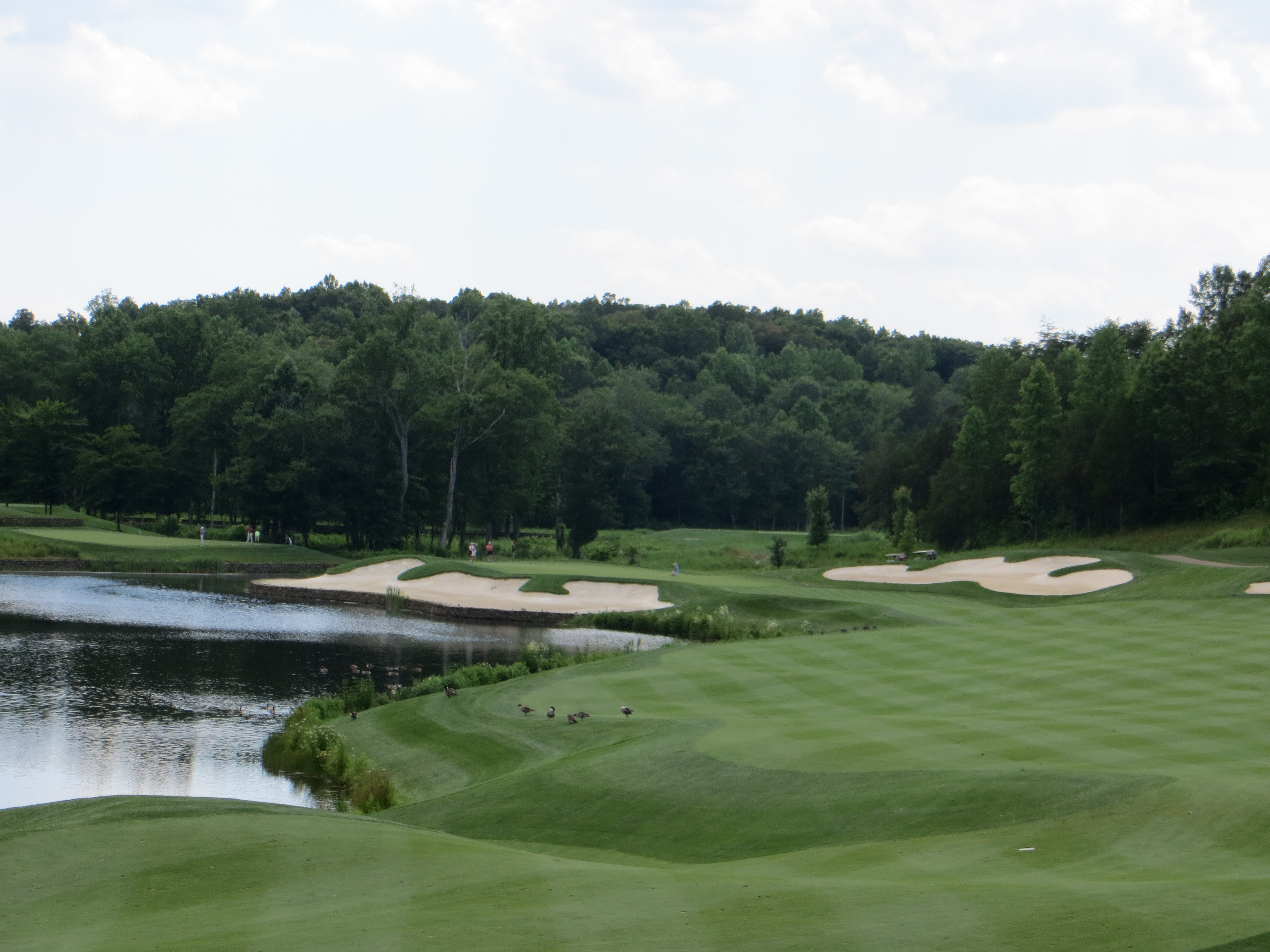
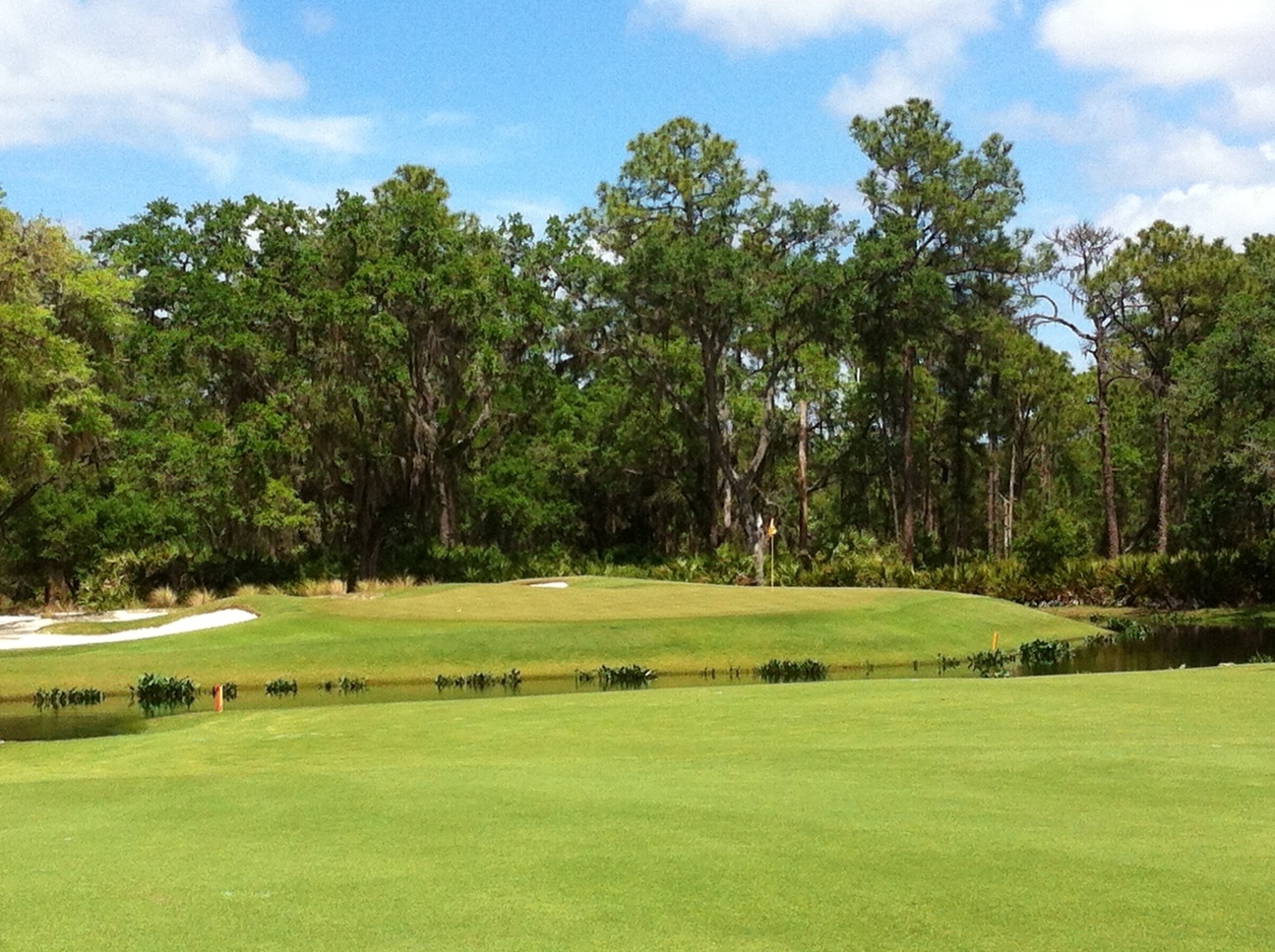
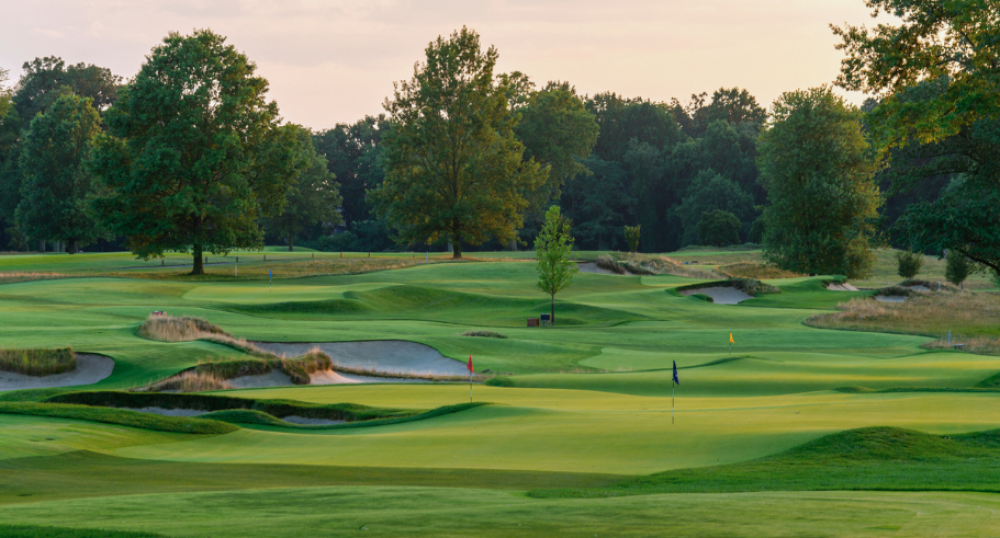
Set in the terrain of the foothills of the Shenandoah Mountains this is a hilly course with dramatic up and down holes and stunning vistas all around. The golf course is in the same neighborhood as Arthur Hill’s Maryland National to which it tends to regularly be compared.  In my estimation Musket Ridge is hands down more fun and interesting.   What differentiates it from Maryland National is that it is a consistent strong design without any trickery.  Balance of long and short holes is right, par threes have good variety, and the teeth of the course are the in finish on both sides.

Playing Musket Ridge, the first thing one comes away with is the beauty of the settings that surround the course.  There are so many holes where you stand on the tee looking at the hole ahead and your eye just gets drawn to something five miles in the distance.  At times it can be distracting because the mind starts wandering and the scale of the task at hand gets dwarfed by the panoramic view that is consuming your attention.
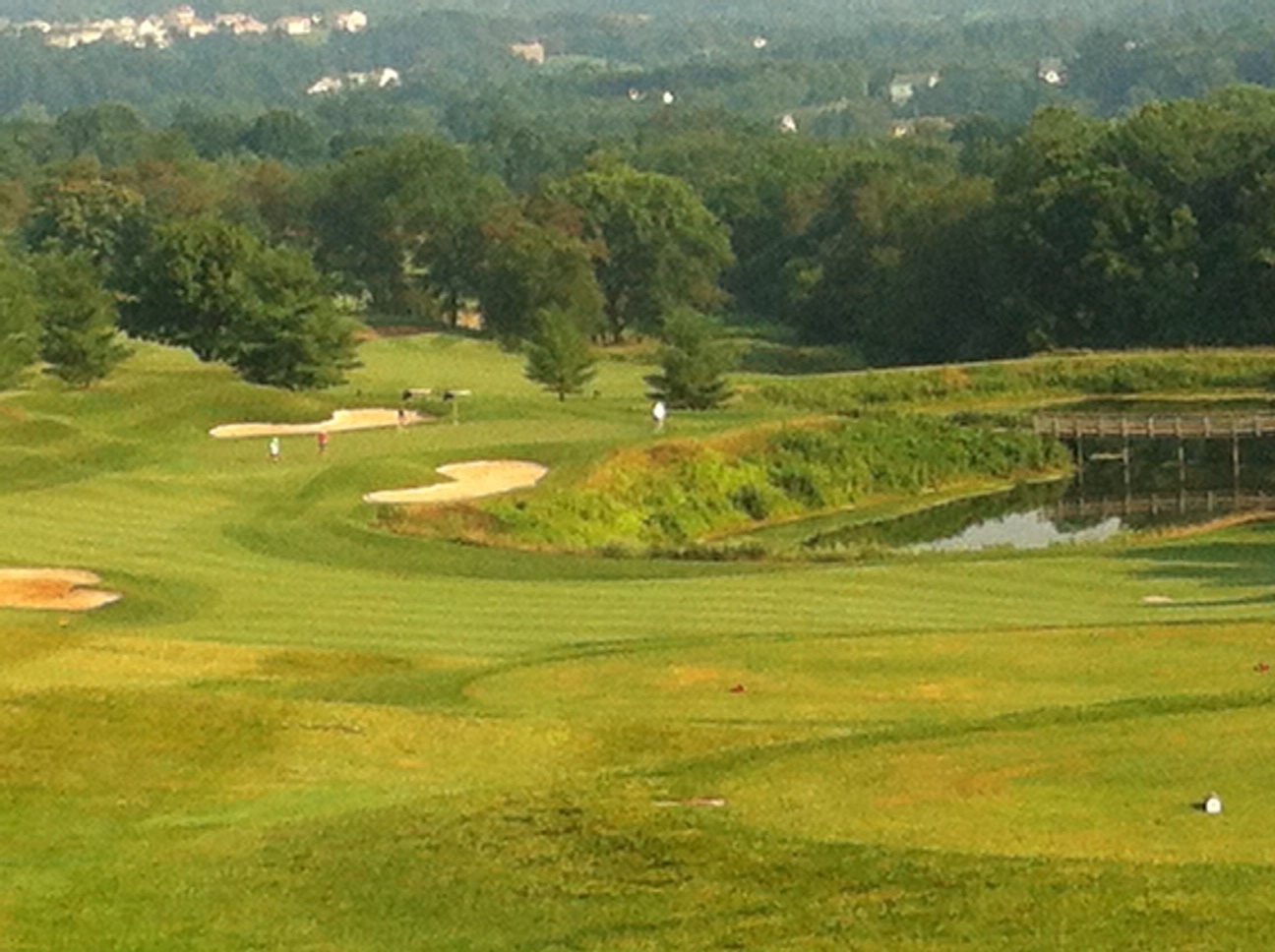
From the first tee the scenic beauty of this region is revealed

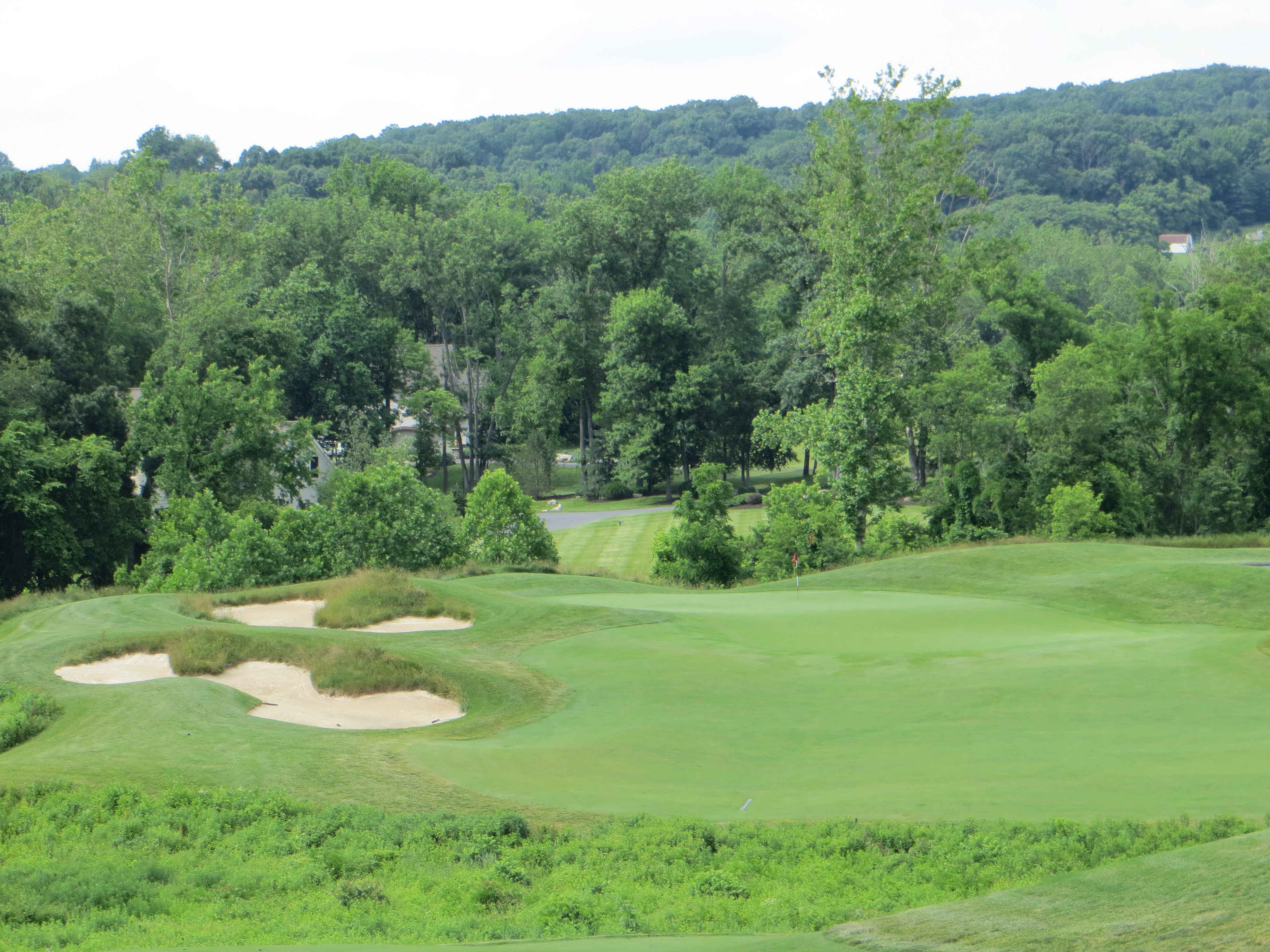
The second characteristic worth noting is the quality of the greens.  Pretty generous in size the greens are big without being sprawling.  Unlike so many new courses these days these are not tricked up with buried pachyderms or absurd segmentation.  Occasionally multiple tiers appear but it is selective and makes sense when it is used.  The bunkering around the greens is strategically positioned and can be punitive so you must respect their proximity when picking your approach lines.  To my experience, the quality and maintenance of the putting surfaces has been top notch.  They can be speedy when cut low but most of the time they run at a comfortable speed for recreational play.

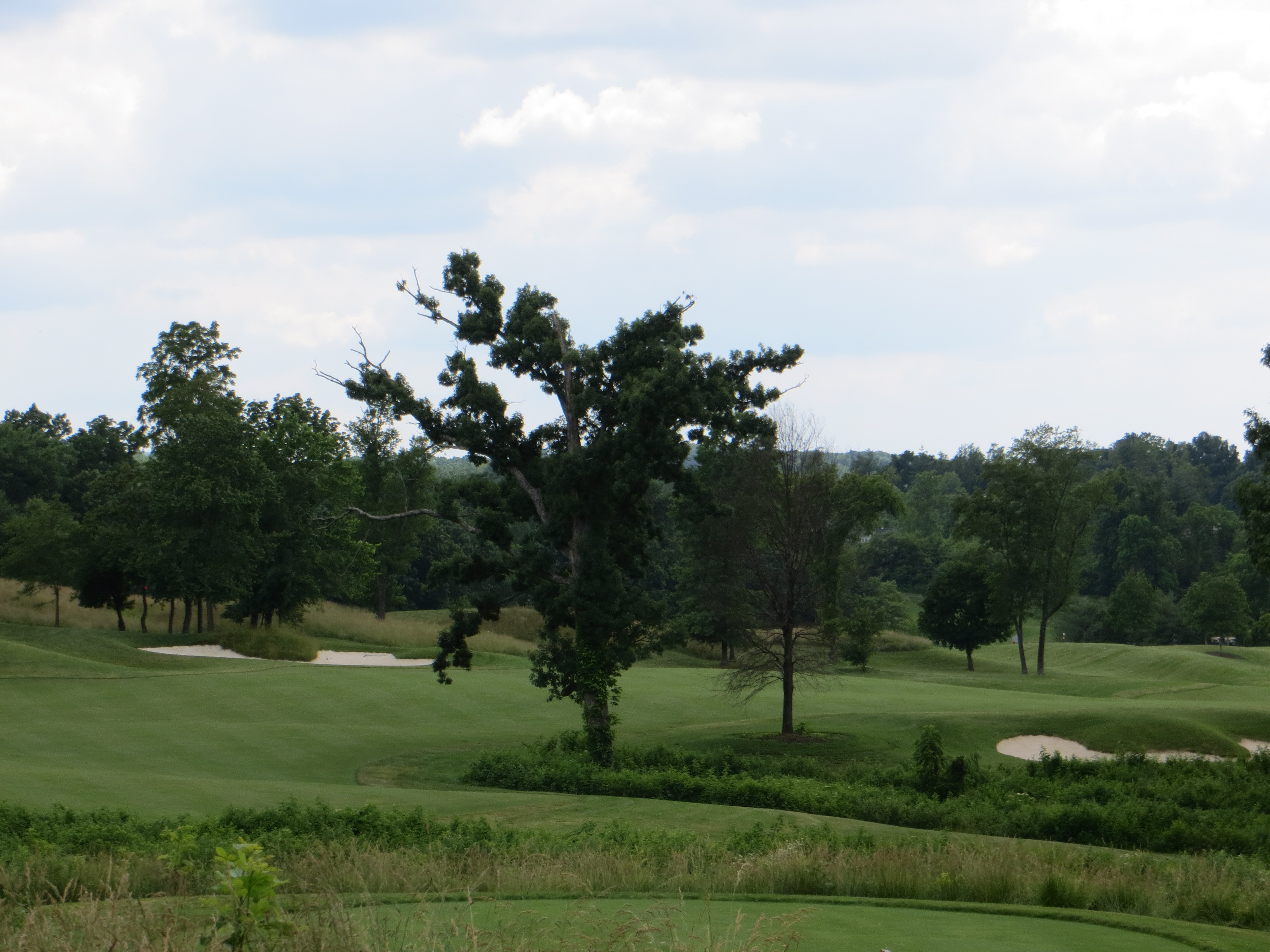
Lastly it is noticeable the way the holes are routed across the hills.  Most holes traverse the fall line of the hills so there is a stacked effect to the arrangement of the holes.  The designer uses ridges along the side to define and contain each hole and give you relatively level ground to play from.  But the influence of the prevailing slope of the property will influence the movement of your ball on the ground.  Wandering  beyond those ridges puts your ball in the jeopardy.  To accentuate the look they have let the grass on these side hills grow to three feet plus so you have to keep your ball within the parameters of the playing area or you will pay a price.
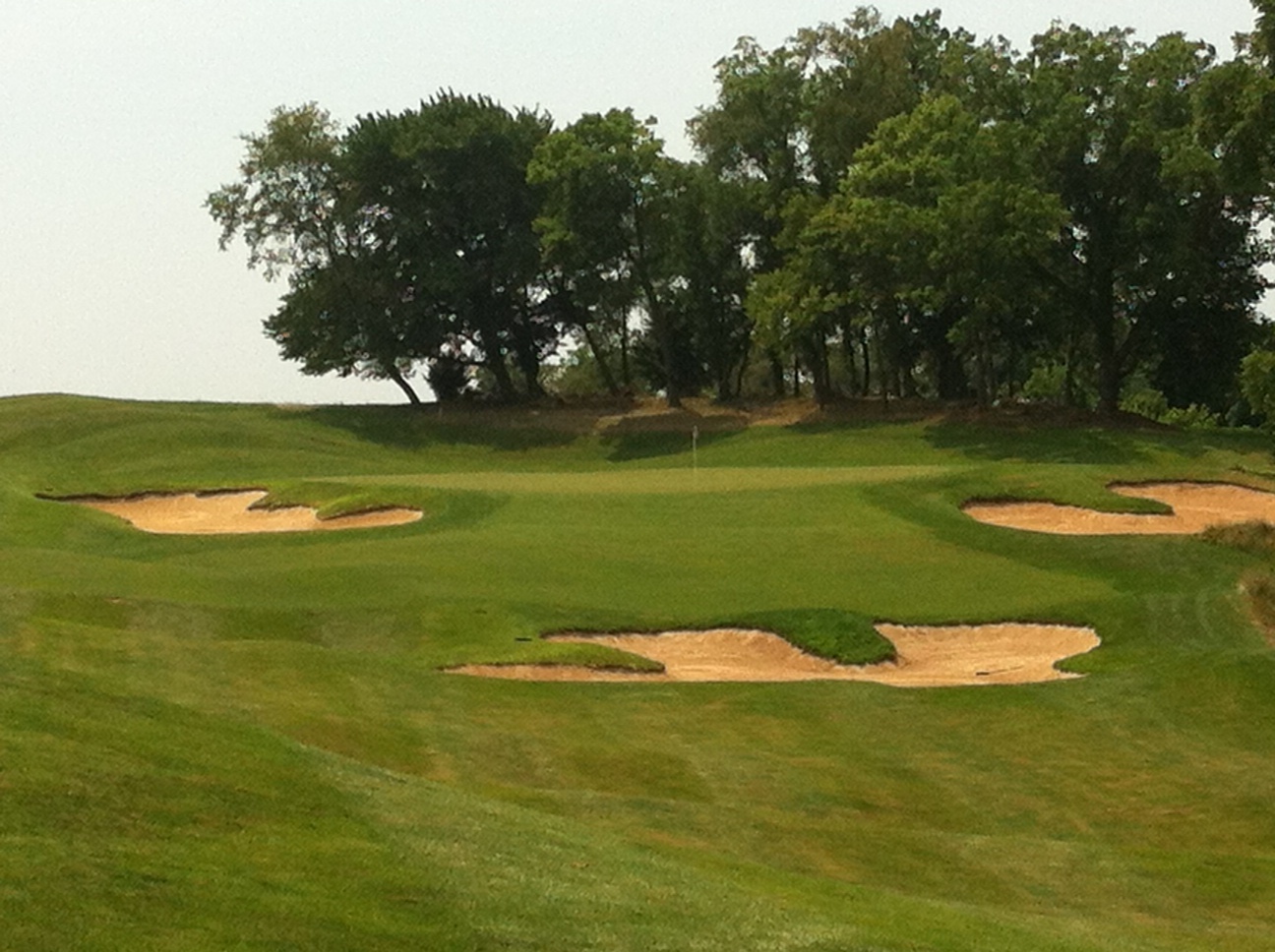
A little floral embellishment on #17 and this could be a postcard

The variety of the holes is astounding.  No two holes look remotely alike.  There is a great mix of long and short four pars-ones you think you can drive the green and a number where a solid drive still leaves you the full measure of a fairway metal to reach the green.   The front and back both start with scenic holes that tumble below your feet and set a tone for the drama of the day.  Strength of both sides is in the last four holes where if you lose your focus you will lose control of your scorecard.  The challenge from the Blue Tees is more than enough for the mere mortal-play at this distance and you will get your money’s worth.

Even though you rarely hear Joe Lee’s name mentioned among top designers, he has been around a long time and done wonderful work.  He spent most of his career being the junior co-designer with Dick Wilson building courses like Cog Hill #4, Laurel Valley, La Costa, and the Blue Monster at Doral.  But in the last 20 years until his passing in 2003, he has done lots of work on his own that stands to its own distinction.

A book was written by Ron Whitten on Joe Lee’s work in which Lee is quoted as saying of his design philosophy,   “I start with the premise that golf should be enjoyable, not a chore. Golfers want a challenge, but they want a fair one. An architect cannot put a foot on the golfer’s neck and keep it there all day.”   His philosophy of design is evident in this layout-it is a challenge, but an enjoyable challenge.  One cannot help but walk away shaking their head about what could have been, soon to be followed by the nagging sirens calling them back for another go at it.
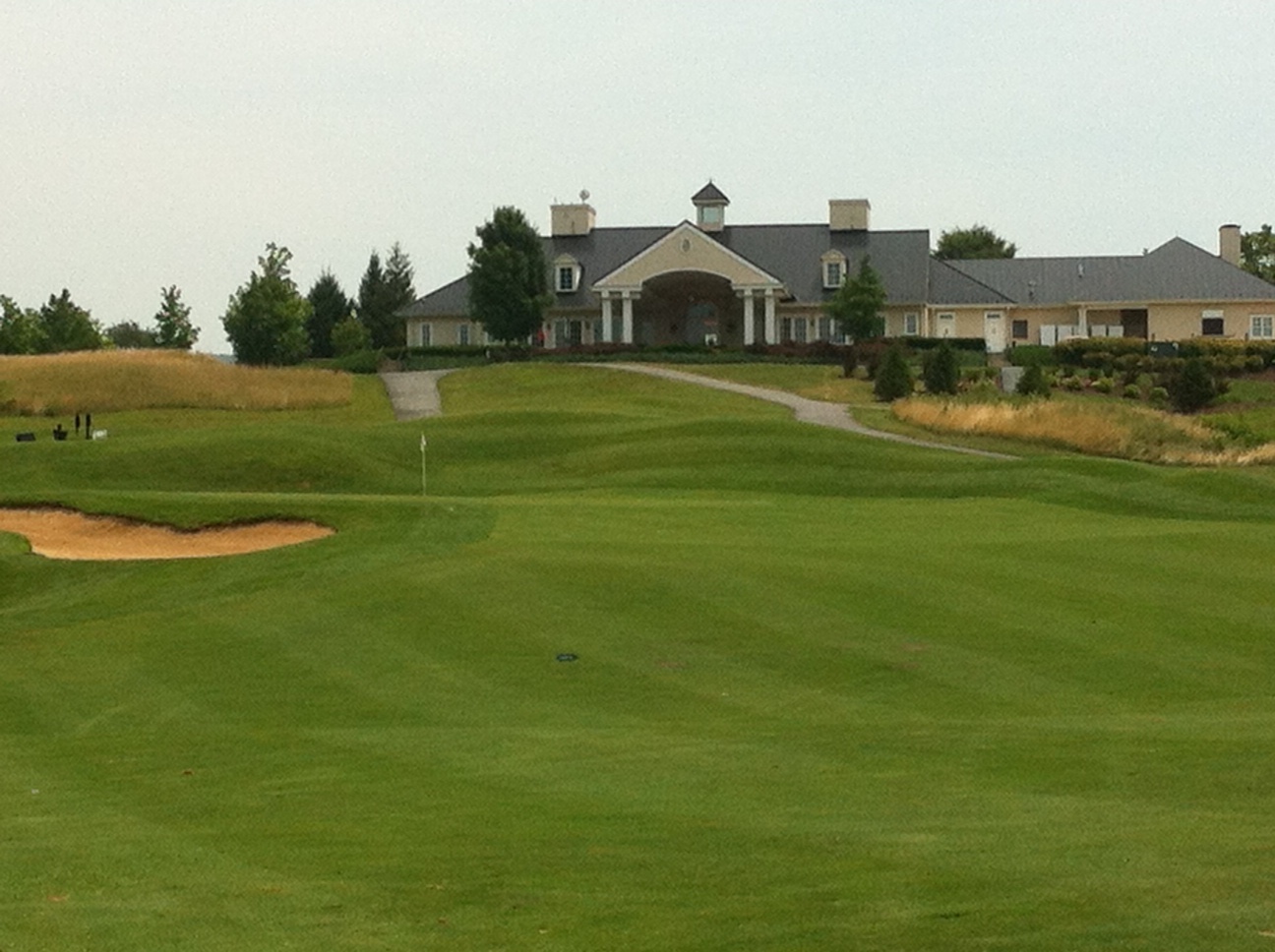
The look up 18 captures the balanced majesty of this place

Take the time when you are done to enjoy the food service in the grill room.  It is an intimate room with a great view of the finishing holes on both sides.  Food is quite good and makes for a nice accent to a wonderful golfing day.

Myersville, Maryland

Architect: Joe Lee (2002)

Tees                 Par        Rating               Slope       Yardage

Gray                 72            73                    140            6902

Blue                 72            71.1                 130            6416

White               72            68.9                 123            5884

If you would like a printable PDF of this posting including yardage book quality hole-by-hole descriptions of how to play the course click the moegolf logo below.

 

Hidden Creek Golf Club

Bill Coore was asked by a wealthy New Jersey real estate developer, Roger Hansen, to create distinctive golf course on 750 acres of sandy rolling pine barren woodlands he acquired outside of Atlantic City.  He had in mind a golf club in the Pine Valley tradition-a private haven where wealthy people with presence in this area could entertain their friends and colleagues with the highest standard of golf, food, and accommodations in a casual environment without pretense.

The understated look of the back of the clubhouse coming down #9

Click on any photo for an enhanced view of the image

Coore spent a considerable amount of time walking the ground before a contract was prepared and determined it offered an opportunity to create rustic walking course with a character unique to this region.  There was enough elevation change in the property to make holes with distinct topological interest and plenty of natural vegetation to provide the look and feel of an old English heathland course.

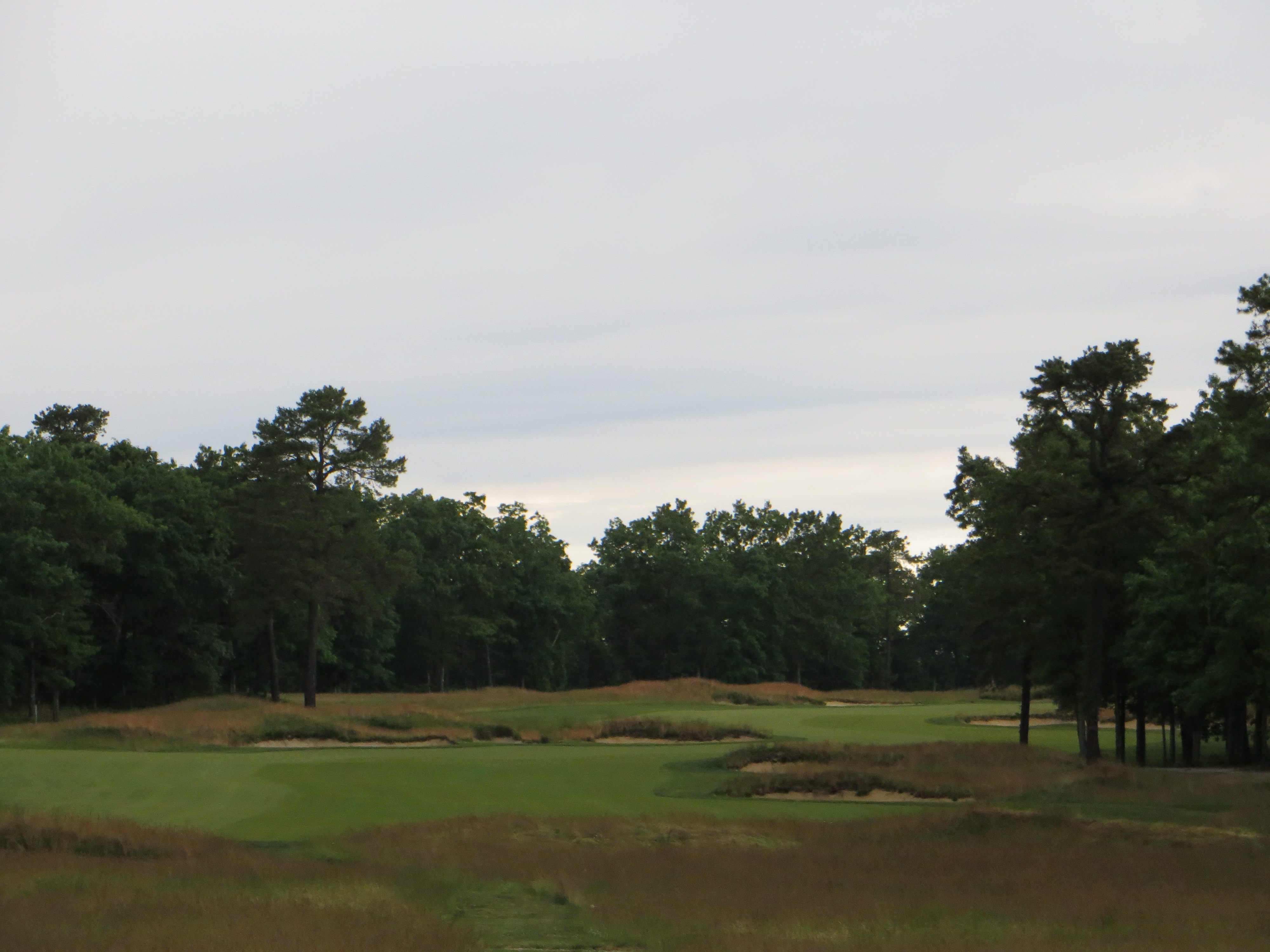
The natural look brings to mind the heathland courses outside of London

What he came up with was an old style walking course, short walks from greens to tees, that clings to the upland part of the property.  With a minimal amount of dirt being moved, it would have the raw and natural looking hazards of mounding, deep bunkers, and long fescue grasses you might see at a course like Sunningdale outside of London.  There would be no paved cart paths, no houses interrupting the landscape, just natural delight as far as the eye can see.  Coore said of the project,  “The Hidden Creek site required very little alteration to the landscape.  The holes lay on the ground pretty much the way we found it.”

Coore and Crenshaw embrace the old style principles of great designers of the golden age providing plenty of  room to play the course and generous access to the greens.  There may be ferocious bunkering on one side of a fairway or green but you will rarely see both sides cordoned by trouble.  This makes the play much more enjoyable for the recreational player who does not want to take on the macho challenge.  Like many of the great courses of that period, playing this course well is about thoughtful tactical intention with adept execution of the shots required.

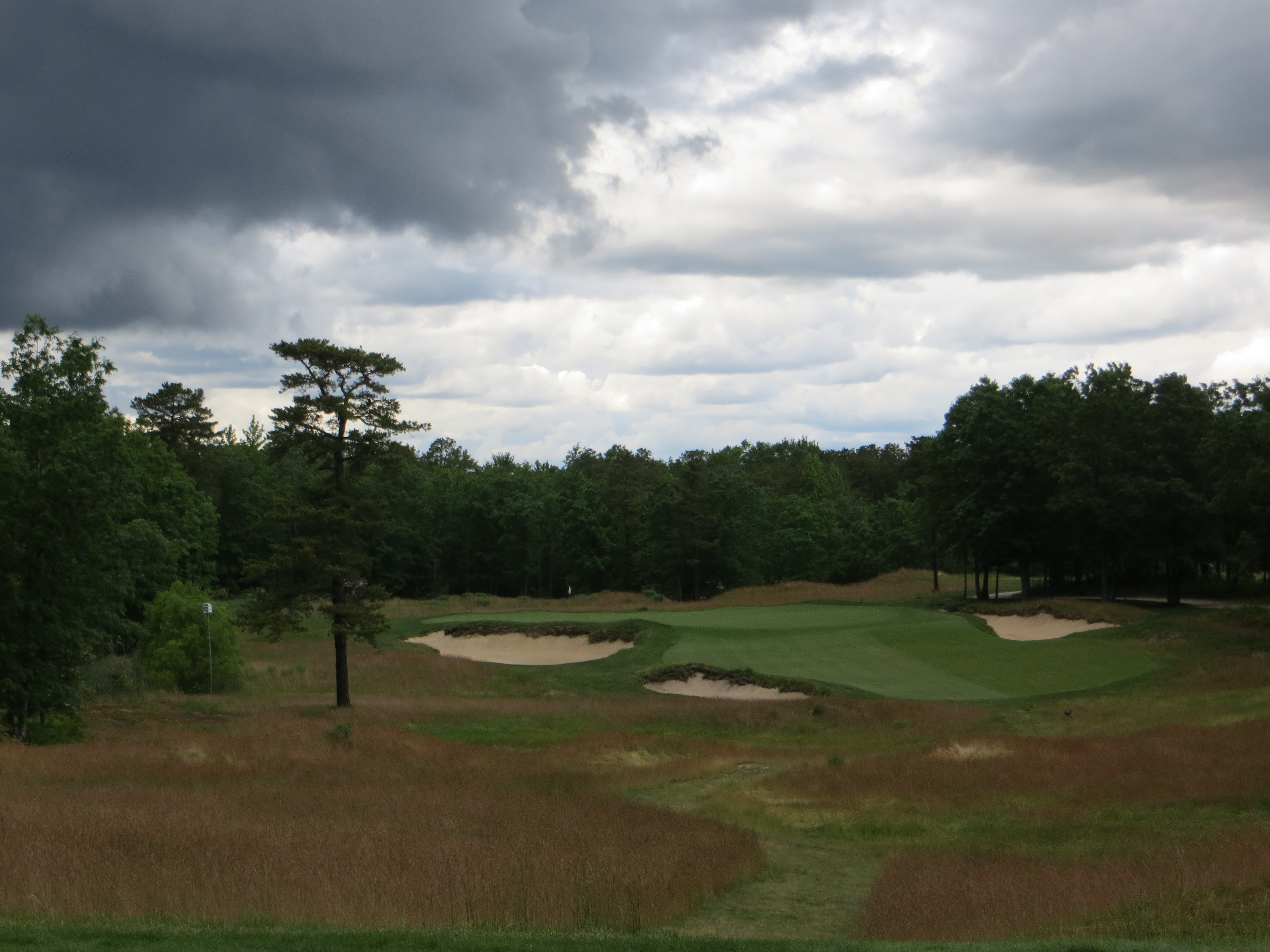
Large setbacks provide a beautiful backdrop for a stunning view like the Par 3 #4

They created big set backs for the holes from the existing trees-this makes for an enhanced canvas on which to present the holes.  Lush bent fairways throughout set against gold fescue grasses make for a beautiful presentation.  The most distinctive characteristic is the seemingly random mounding and bunkering that provide most of the hazards.  There is no water in play on the course-they did not route any of the holes through the wetlands that take up almost half of the property.  The randomness of the placement of the hazards defies the symmetrical look of so many modern designers and it makes the playing lines infinitely more interesting to discern as you plan your shots.

There are over 100 bunkers on the course and they often have eyebrows of natural long fescue reminiscent of Royal County Down-this makes them very intimidating looking from afar as well as difficult from which to extricate yourself if you are too close to the front of the bunkers.  Pay particular attention to the relative position of the hazards to the landing areas and greens.  With some optical trickery they can seem more imposing than they really are-there is often more wiggle room in the formula than meets the eye.

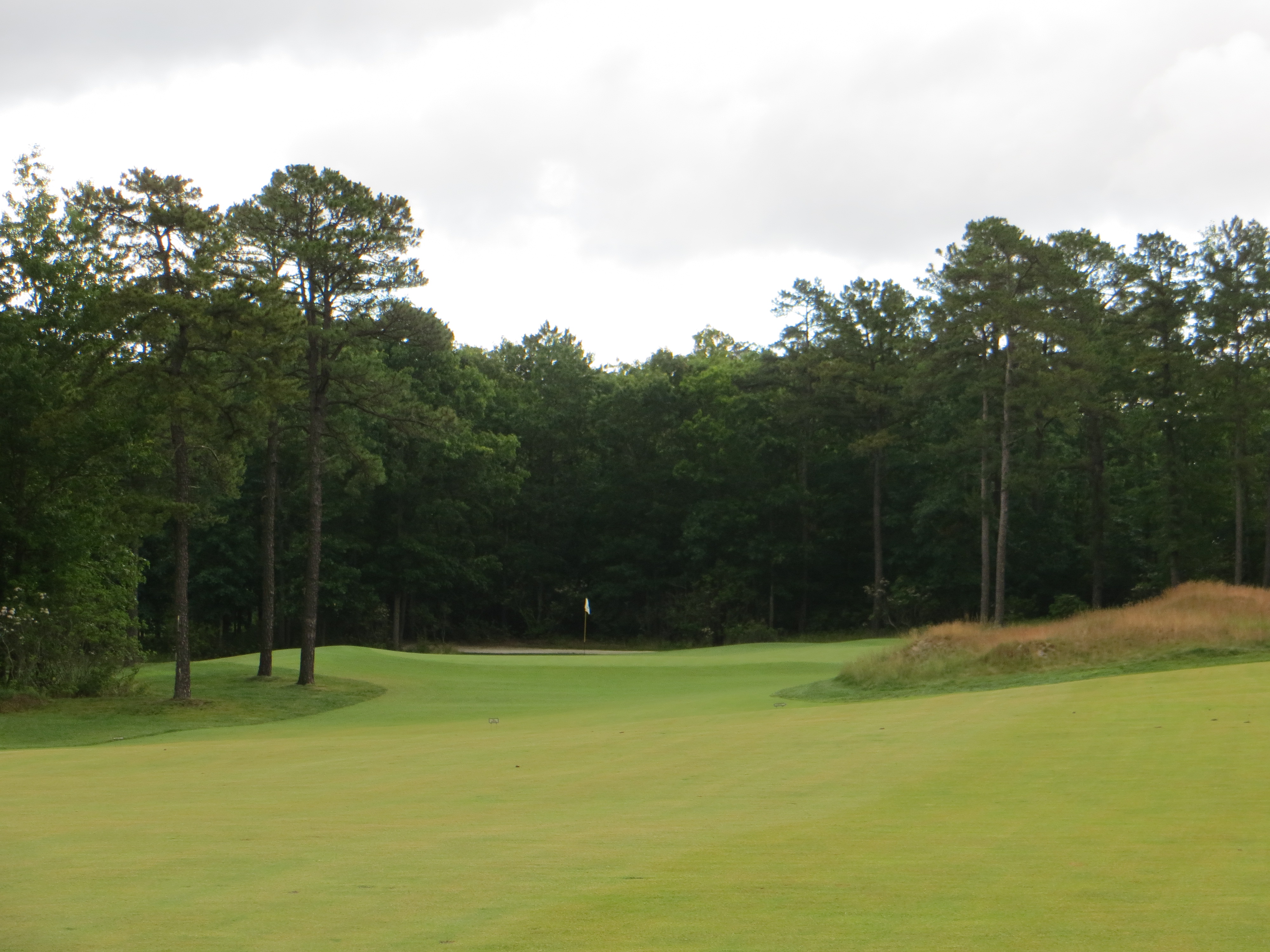
You can see on #5 the minimalist presentation with a tactical emphasis

I found the mystery of the greens particularly intriguing.  These are big, sprawling oceans of green with pitch and undulations that will confound you both on your approach shots and your putting.  Local advice is essential until your personal knowledge of the greens is up to speed. These guys have real genius giving you plenty of room to approach but giving you little room to approach successfully.  You can hit what seems like a wonderful shot that seems to randomly separate from the hole against all your intentions.  The greens roll very nicely and have lots of speed, especially down hill.  This is not really a set of greens that call for a nickel defense but you have to be careful when the speed conditions of a particular putt are at the optimum.

This 110 yard short pitch and putt on #11 is anything but a push over

What is an architectural accomplishment of no small order, given that the property itself does not have inherent dramatic topography, is no two holes on the course look remotely similar.  You cannot anticipate what is coming next because there is no pattern to the sequence or the hole designs.  The sequencing of the holes is brilliant, you might have a monstrously long par four followed by a short pitch par three or a reachable par five.  This keeps the player off balance because the challenges vary dramatically from hole to hole.

The entire facility is top notch.  The locker room, eating facility, and practice facilities are as good as any high end club you will visit.  Like you would see at Pine Valley or Caves Valley they built very nice lodge to accommodate out of town guests in for a multi-day visit to the club.  You are going to need an invite to get here but if you can find one you will not be disappointed in what they have created.

Egg Harbour Township, NJ

Architects:  Bill Coore/Ben Crenshaw (2002)

Tee                         Par    Yardage    Rating      Slope
Championship        71      7023         73.5         136
Member                 71      6562         71.6         131
Forward                 72      5486         72.3         127

If you would like a printable PDF of this posting including yardage book quality hole-by-hole descriptions of how to play the course click the moegolf logo below.
 

Spring Creek Golf Course

Spring Creek Golf Course was created to support a high end housing community about seventeen miles east of Charlottesville.  When it came on line the economic infarction of the time seems to have upset real estate sales, yet this course has design quality and integrity that should make it a success as a fee course until that trend turns around.  Ed Carton has considerable deputy experience with Tom Fazio and it shows in the presentation of this course.  Like his mentor this course is visually pleasing and seems to fit into the regional topography very comfortably.    The course has won some instant national recognition by the national golf magazines and has been favorably compared in reviews to the other jewel of Virginia, Lester George’s  very private Kinloch Golf Club outside of Richmond.  The difference is this place is totally accessible to the fee paying public.

For a residential community course this has a modern design characteristic rarely seen in these type of developments-generous hole setbacks from the residential lots.  The owner, Charles Kincannon, showed great discipline in allowing the design team to employ such setbacks which make the holes seem very comfortable in their surroundings without visual encroachment.  Given the dramatic topography on which this course is built that has resulted in holes of stunning visual stature as well as tactical uniqueness.

Creative use of the topography create visuals like the par 4 #14

The most obvious characteristic is the generous use of sand throughout the course.  This is an expensive design decision but, as you see on Fazio style courses, free form expansive bunkering is a visual accent that can be psychologically intimidating and provide tactical parameters that challenge the golfers as well.  My wife said on about the eighth hole, there must have been no sand left in Virginia Beach once this course opened for play.  Most interesting is that she played the entire 18 holes and was not in a single bunker-now that is good design.

The Alien Gingerbread Man bunker hunkers over # 3 green

Another unique characteristic for this region is the choice of bent grass for the fairways and tees.  Zoysia and Bermuda grasses are usually the choice when you get this far South but the bent works well and it displays beautifully when it is well maintained and manicured as it is out here.  There is also the clever use of indigenous rock accenting some of the low creeks, crossing bridges, and the high areas behind some greens.  Given the severity of the topography this stone softens many of  the visual transitions that were required.

Sprawling greens with undulations and fall offs that will challenge

The greens themselves may be the most unique part of this design.  They are vast, sprawling green surfaces with lots of facet and undulations.  The speed on these greens, especially down the slopes, can be disarming.  You need to play this course a number of times to understand the tactical requirement of your approach positions into these greens.  On many holes the greens have fall offs in more than one direction or insidious little donut depressions that feed to side pitching areas.  Knowing how to negotiate these and leave yourself an uphill putt you can play aggressively is the secret to scoring well.  The pro told me before I played  that the yardage on the card belies the difficulty that the rating and slope indicates.  The need to be able to approach these greens with a club you can control is critical so pick your tee length conservatively if you want to enjoy your day.

The front side starts with a wonderful challenging par four that will set the tone that ball control and accuracy are at a premium.  The next two holes, a very technical par five and a seemingly innocuous par four that is in fact the first handicap hole will serve to reiterate that notion.  From four to nine, with the exception of a bear of a challenge on six, the yardage will not overwhelm you but don’t be lulled into a sense of security, good planning and articulate shot execution will be rewarded.

Some pixie dust might help resolve the mysteries of #16

Once you turn to the inward nine the adrenaline rush will begin on the tenth tee.  This is an old classic style 90 degree dogleg right which means it is all about position off the tee followed by an aggressive uphill carry shot into a well guarded green.  The next three holes are very interesting technical holes that present your best scoring opportunity run of the day.  On the fourteenth tee you will witness the anti-gravitational moment  of being atop of the highest point of your favorite thrill ride.  Other than a reprieve on the short par three seventeenth from this point it is just one G-force experience after another that will exhaust your strength and test your resolve all the way to the house.  The eighteenth hole, a wild and wooly par five that is a hooker’s nightmare, is one of the most difficult holes you can face if you need a par to close out a match.  Just a terrific exclamation point for a course that has no shortage of thrills and spills.

The wharf green setting on #18 is a formidable challenge

If I have any criticism it is the array of par threes.  All four of them play within one club of each other so the yardage demand on the short holes does not vary much at all.  The four par threes are of distinct characters but they are probably the least interesting offerings of the day for me.

What sets this course apart for me is that, for an architect without a vast resume of his own courses to fall back on, Barton has succeeded in putting together 18 wonderful holes that work well together.  You would think in such an early effort there would be at least two or three holes that either did not fit in or just did not work.  Cannot say that about this place, every hole seems to fit the motif and there is not a single hole out there that will fail to stimulate your aesthetic and athletic sensibilities.  This place may seem out of the way but it is well worth the effort to seek it out and play it more than once.

Gordonsville, Virginia

Architect: Ed Carton (2006)

Tees                 Par            Yardage      Rating     Slope

Marble              72               6673           73.2        145

Onyx                72               6197           70.9        138

If you would like a printable PDF of this posting including yardage book quality hole-by-hole descriptions of how to play the course click the moegolf logo below.
 

Whiskey Creek Golf Club

At the height of the golf course construction boom in the late 90’s there were high end daily fee courses being built all around the Washington, D.C. area.  Of all those introduced Whiskey Creek, a collaborative design of J. Michael Poellot and Ernie Els, was probably at the top of that heap.  Considerable intellectual and financial capital went into the design and construction of this course on a beautiful piece of  rolling farmland in rural Maryland.  My bet is that the two of them were awe struck by the natural vistas they found on their first visit to the property.  Just looking up at the farm houses on the hills it very obvious how natural and stunning their green constellations could look if they routed this thoughtfully.

Skeleton of a 19th Century stone house is your aiming device on 18

The result speaks for itself, an artistically designed course with a wide array of holes sporting traditional tactical design features.  No trumped up hazards or artificial challenges-unless you consider a 19th century stone farmhouse in the middle of the 18th fairway artificial.  I consider it artistic license and it actually makes the hole tactically interesting.  There is generous use of stone and boulders throughout the course to accent the natural presentation of the holes.  A sensible use of the natural flow of the topography was employed integrating environmental hazards and water-enough to be challenging without being excessive or punitive.

The greens are large flowing surfaces with lots of facet-you really have to focus on the way the green sits to the fairway approach area to figure how to get it in the right portion of the green.  In some ways the green sets have a bit of that Irish/Scottish feel to them-big undulating oceans of green that wave mysteriously among the hills.   Most of the greens are approachable without carrying the bunkers and many are actually inviting to bump and run-especially when the pins are in the front.  The fairway and  greenside are similar to the greens-large deep rambling pits stuck into the hillsides and below the putting surfaces.

Visual green settings like this at #18 require tactics and precision

Being successful here is about taking the time on each tee to plot a reasonable series of shots based on the wind and pin positions of the day.  Sticking to that plan and not trying to overwhelm the challenges with brute strength will reward your scorecard accordingly. Most of the holes you can get a good look at what is in front of you, but many of the putting surfaces are masked from the approach area.  As Ernie says in the yardage book, big wide driving areas were provided on most holes but position is still important to get the best angle of approach to the greens.  In planning your approach consider everything-the entry openings to the green, the diagonal the green sits to the approach line, the prevailing banking of the green, and the relative punitive payment for missing on the short side of the flag position.  Sometimes a uphill pitch and a putt are a better formula to making par than hitting the green in regulation above the flag and having an unmanageable putt down the slope.

The yardage of the course is deceiving-it may be the shortest 6500 yards you will ever see.  Most of the long par 4’s and the par fives are downhill so they play considerably shorter than the yardage.  Many of the shots look much longer than they really are-you have to trust the available yardages and pick the right club accordingly.

Framed driving area on the tempting downhill Par 5 9th.

The front nine is an interesting ride-plenty of challenge but not overwhelming.  The fourth hole is a wonderful uphill par five that scales the terrain to an alcove green set among natural boulder outcroppings.  The next hole is a vertigo par four that tumbles down the hill like the final plunge on the log flume ride at Hershey Park.  The last two holes on the outward nine are terrific-a swerving par four working down the hill adjacent to number four followed by a tantalizing downhill par five that will tempt you to reach for something extra to end the side with a birdie.

Carry across the abyss on the Par 4 12th is a harrowing challenge

Once you have the dog at the turn the challenge ratchets up.  This side begins with a  technical hole that will give you heartburn if you are not careful.   Eleven is the postcard signature for Whiskey Creek just a thing of beauty that will make your heart race.  Starting at the twelfth the challenge heightens considerably with three visually intimidating par fours.  These next three are mostly about position off the tee and then resolve on the second into very tight green arrangements.  Sixteen through eighteen provide three distinctly different challenges in one of the most unusual finishes you will play in this area.  You could just as easily play these three holes two under or six over-it is about managing risk through intelligent decision making.

The fortress green setting at the Par 5 16th

The clubhouse is a simple wood frame construct that fits into the country theme of the property.  A high beamed ceiling and great visibility of nine and eighteen in the grill/lounge area makes for a comfortable atmosphere for watching  the action on the course or on Golf Channel with a hearty sandwich and an adult beverage in hand.  Food is strong bar food-tasty and satisfying.

What I like most about Whiskey Creek is that for a daily fee course they have figured out a way to meet the maintenance budget with appropriate funds to keep the place in top condition.  The fairways are always lush and the greens smooth with pace-more like a country club than a fee course.  Kudos to Kemper Sports who operate and manage this fine facility.

Ijamsville, Maryland

Architect: J. Michael Poellot, Ernie Els (2000)

Tee                  Yardage          Par     Rating     Slope

Blue                 6525               72        72.1        136

White              5979                72        69.3        129

If you would like a printable PDF of this posting including yardage book quality hole-by-hole descriptions of how to play the course click the moegolf logo below.


TPC Sawgrass

As the first iteration of Dean Beman’s stadium course concept and the permanent home of The Players Championship, Pete Dye put together a course that would challenge the best players in the world and create iconic images in the minds of golf fans.  The original design was impossibly difficult and somewhat controversial, but a bottomless well of tour money has allowed them to continuously tinker and improve the layout and get much more unanimous professional approval as a result.  The reconstruction of the fairways and greens in the last decade plus the introduction of Sub-Air technology under the putting surfaces allow the tour to prepare this course as hard and fast as they desire.

Dye’s hazards do not discriminate on whom they inflicted scoring damage

Embed from Getty Images

Make no mistake about it, there is nothing timid about this course.  Pete has a garage full of intimidation factors in his design repetoire and he dipped into that reserve generously in putting this together.  Massive waste bunkers, huge mounding to mask landing areas, plumes of sage grass, and water galore amassed together make for a house of horrors to the average player.  Truth is the intimidation is more psychological than real so the trick is to look beyond the surface veneer and focus on a playable line to each hole which he graciously provides. The combination of intelligent decision making and unwavering focus on a playable line can make for  an enjoyable day.

Looking at the winners of The Players over 30 years you will see the unexpected names like Calvin Peete, Mark McCumber, Tom Kite,  Lee Janzen, Justin Leonard, Fred Funk, and K. J. Choi.  Look at runners up and you have Larry Mize, Mike Reid, Jeff Sluman, Glen Day, Jay Haas, and Scott Verplank.  Occasionally a name guy like Eldrick Woods or Philip Alfred Mickelson has seen success here.The common denominator is accurate driving and competent putting on fast greens.

Tiger has a few of these in his trophy room

Embed from Getty Images

Anything out of the fairway off the tee increases the challenge of hitting greens by a factor of 1.5 and the score goes up accordingly.   This is target golf with serious penalty for missing your intended shot lines.  The fast greens are very segmented and steeply sloped so regularly putting from outside the section that has the flag will have similar deleterious impact on your scoring.

As is recommended by the yardage book, pick a tee marker that is appropriate for you skill level.  If your average drive is 235 or less play white, 235 to 250 play blended blue/white, over 250 play blue.  Don’t consider the back tee unless you have your name embroidered on your golf bag.  The key is to have the driving areas reasonably within your range so you can actually enjoy the challenging approaches into the greens.

At 220 yards plus the Par Three 8th has bedeviled it’s share of scorecards

Embed from Getty Images

The sequence of the golf challenge is carefully architected.  Both sides start a bit easier with scoring opportunities early, but ratchet up considerably around the fourth hole.  The last three holes on both the front and the back make keeping a score in tact a whole lot of work.  The eighth hole is a brutal par 3 7/8ths and the ninth can eat your lunch six ways to Sunday.  Better than the finish at any of regular tour stops, sixteen, seventeen, and eighteen collectively present opportunity for glory or disaster  in equal measure.  This is target golf at it’s most extreme.

Personally I think the par 5 sixteenth is one of the coolest holes out there.  For the long hitting pros going for the green in two is a must but there is a huge penalty for bailing out left to avoid the harrowing water that encroaches on the right.  Any wind at all makes this huge green very elusive.

Sergio has experienced the thrill of victory and the agony of defeat at the 17th

Embed from Getty Images

Nothing more need be said about the iconic island green at 17, you have witnessed a boatload of heartache and misery in HD watching the broadcasts over the years.  The eighteenth is as hard a par to make as you could ever imagine.  Missing your approach into the grassy moguls right of the green can lead to a downright embarrassing sequence of recovery attempts.

In the last renovation they built a clubhouse that is worthy of being the home of the PGA Tour.  You will find an endless offering of tour memorabilia to add to your study.  The locker rooms, eating facilities, and practice areas are something to experience as well.

Playing the course that so adequately bevils the top 50 in the world each year is definitely a thrill.  Just play it at a reasonable yardage and don’t beat yourself up if Pete and Alice have their way with your scorecard.

Ponte Verde, Florida

Architect: Pete Dye (1980)

Tees                 Par            Yardage      Rating     Slope

Blue                 72                6661           73.9        146

White               72               6103            70.9        137

If you would like a printable PDF of this posting including yardage book quality hole-by-hole descriptions of how to play the course click the moegolf logo below.

 

The Concession Golf Club

The Concession, a collaborative design between Jack Nicklaus and Tony Jacklin, was first opened in 2006 in the Sarasota area to be the centerpiece of  a high end exclusive residential golf development.  It gets it’s name from the fact that these two were the protagonists in a famous concession of a two-foot putt at the final match of 1969 Ryder Cup that resulted in the first tie in the match’s history.  In the annals of golf this goes down as one of the most gracious gestures of sportsmanship we have seen in our sport.  The golf course was designed with match play in mind in hope that some day a Ryder Cup will be contested there.

With the downturn in the economy right after the course opened the residential sales floundered and they only reached about half of the 200 members they had planned on.  Under this economic distress foreclosure loomed for the club and the surrounding residential real estate.  In 2009 Bruce Cassidy, the wealthy owner of a mining construction company, rode in on a white horse and put together an investment group to purchase the golf course and the 520 pristine acres of land it sits on.

He subsequently finished the construction of a planned $15 million dollar clubhouse and brought Nicklaus back in to make some course modifications to soften and make it a bit more playable for it’s members.  The only rooflines you will see are the clubhouse,  Mr. Cassidy’s home, and a couple of palatial guest houses for visiting dignitaries.  The result is an underutilized luxurious golf only facility with about 125 well heeled local, national, and international members.

Everything about the place is top shelf.  The clubhouse is appointed throughout with historical memorabilia to make you stop and stare.  Pro shop, locker room, bar, and dining facility are lavishly appointed and serviced with a casual air you would expect.  From the moment you hand your clubs to the young men at the bag drop to the time you pull away at the end of the day, they provide you with everything you want for a great day of golfing with friends.

The 23 acre practice facility alone is to die for.  Dual ended driving range sporting 10 target greens with full bunkering and Titlest Pro-V1s at every station.  A state of the art short game area where you can practice up to 80 yard shots and a 14,000 sq. ft. pitching green with bunkers and pitching areas that replicate what you will see on the course.  The practice putting green is 10,000 sq. ft. and has the same grasses, speed, and undulations as the course greens.  You could spend a whole day tooling around this practice area working on your game.

With so much ground to work with Jack and Tony designed a course that has unique character for this part of Florida.  The holes are framed with pines and oaks as well as low palmettos and pine straw.  Water comes into play on 15 holes and the bunkering throughout is generous.  Controlling your direction is key to avoiding the high numbers on your scorecard.  Fairways are Tiff Bermuda which can be maintained with minimal watering to keep them firm and fast.  The greens are also Bermuda and have the fancy sub-air system embedded in their understructure to manage ground moisture and temperature to optimize the grass condition and support lightening speeds.  Segmentation and tiering of these green complexes coupled with stimp readings of 12+ put this course in the championship caliber.

There are five sets of tees so it is incumbent upon you to listen carefully to the advice of your caddie and consider the day’s wind condition to pick a set that will allow you to be competitive and enjoy your afternoon.  They made the course eminently playable if you play with proper forethought.  Most holes have distinct challenges presented but, with careful planning,  there are alternative safer routes to play to avoid the dreaded stuff.  Take a page out of the Scottish/Irish playbook-play a match with your golf mates and make the medal score secondary to maximize your enjoyment.

The fairway bunker constellations are enormous and set opposed to most of the water hazards.  Generally the best line of play is close to those constellations but ending up in them can be as penal as the fish habitats.  Take a good look at the yardage book depiction on each tee and plod a route of play that makes the most sense. What is cool about the bunkers is that the sand is imported “Jack” sand which means it is firm, avoiding plug lies, and very playable from the fairway or greenside bunkers as well.  Most of the fairway bunkers have a foxhole character with a raised back edge so you can distinguish them clearly from the direction you are playing.  Once you walk past them they seem to disappear into the greenscape which gives for clean and majestic appearance when you look back down the fairway.

Short Par 4 8th has trouble lurking in the lagoon

 (Click on any picture to get an enhanced view of the image)

There is an equal balance right and left challenges, which for Jack is unusual, so you are required to pick a line of approach and try to shape your shot accordingly.  Fortunately they were generous in the design and provide bail out areas if the shot required is not comfortable and even some collaring bunkers and grassy areas to take some of the harshness off the forced carries required.  Short and long hitters will both find what they like through the day-some of the most challenging holes are the ones where distance is of no advantage and articulate shot execution returns a premium.

Green setting at Par 5 15th requires pure precision

As a collection of holes, the five pars are the coolest holes you play all day.  Every one is a visual delight with protracted segmentation to give you many tactical approaches to playing them.   In most cases your second shot choices  are determined by your first shot result and often the best choice is not the obvious one.  This is not a simple I can go for it in two or I better lay up.  There are good lay ups and better lay ups and you may be abandoning your standard lay up distances depending on circumstance.

The par threes are the least memorable holes but in no way are they without interest.  Fact is the tactical approach to every one of them will change dramatically based on the daily pin position and the prevailing wind.  This is where you have to be careful of how much risk you take because missing on the wrong side will leave you very difficult recovery shots and an opportunity to waste valuable strokes.

Green at the 5th hangs precariously over the water

Many of the par fours are double breakers for me-holes that change direction twice-once on the tee shot and in opposition on the approach to the green.  Proper positioning off the tee makes the second shot considerably more manageable but getting to those spots can entail greater risk.  In match play this really puts pressure on you to play smart based on what your opponent has done.

Great look from the tee on the finishing Par 4 18th

Since you are unlikely to see more than a handful of groups out there taking the time to appreciate the scenery and the wildlife therein makes sense.  Beautiful birds can be seen throughout that compliment the flora and natural vegetation but there are alligators in the water hazards so don’t go mindlessly plodding about if you hit a wayward wet one.

To play here you will have to make an arrangement through your pro or know a member who can host you appearance.  This place is expensive so the beauty comes at a price.  But the value is in the full experience-atmosphere, scenery, and an afternoon of memorable golf.

Lakewood Ranch, Florida

Architect:  Jack Nicklaus & Tony Jacklin (2005)

Tee             Par    Yardage    Rating     Slope
Blue            72      6440        72.7        146
White          72      5909        69.6        137

If you would like a printable PDF of this posting including yardage book quality hole-by-hole descriptions of how to play the course click the moegolf logo below.

Oakmarsh Golf Course

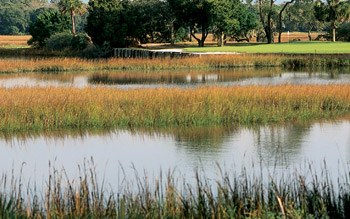
Oakmarsh was created at Amelia Island by Pete Dye in 1972, around the same time his more famous Harbour Town Golf Links in Hilton Head came on line.  This wonderful layout weaves it’s way through winding salt marshes and old oak trees draped with hanging moss has many of the design features as it’s more famous cousin so be prepared for a day of the full Dye challenge.  Built in the beginning of his “railroad tie period” many of the water hazards you experience on 14 of the 18 holes are framed with this accent.  The native flora and the marsh grasses around the preserved natural wildlife habitats just make this a spectacular visual as well as golfing experience.

Looking for gondoliers on 6 thru 8 (Tom Spousta/Worldgolf.com)

The outward nine is set among the heritage oak trees that frame almost every shot you play.  Anything off line seems to get swatted by their limbs so you have to play position golf off the tee to have any chance to score well.  It begins easily enough with a few routine challenges but when you get to the short par four third you will feel your heartbeat start to pick up rapidly.   It is something out of Merion demanding focused execution on both a position tee ball and the approach into a undulating tight green complex.  Starting at the sixth you enter the Venician part of the course-holes tightly framed by a series of canals that define the playing lines.  Beware on this side that if the wind is blowing the trees may mask it’s effect-so you need to concentrate on your club selection to avoid disappointments.

The inward half is an entirely different tale-the oaks back off but you get the full force of marsh golf and all of it’s exigencies.  Ten is a short hole that will have you shaking your head walking off the green if you do not play carefully.  When you step on the 12th tee and feel the wind off the marsh on your left you will understand what the rest of the day is all about-trajectory control and proper club selection. It is really from fifteen to the end that will define your day because here you can play well or simply toss the scorecard into the rubbish bin if you are careless.

Drive under the canopy on 15th (Tom Spousta/Worldgolf.com)

Standing on back tee on the par three 16th is worth the entire green’s fee.  You will swear there are Sirens calling your name across the marsh.  The last two holes put a premium on sense over bravery but I must admit the approach shots present a risk reward challenge that may be hard to resist.

Listening for voices on the 16th tee (aipfl.com)

These nines are extremely tight-demanding accuracy from the tees and to the greens, but are extremely fair in what he demands of you to score well. You will find each of distinctly different in flavor and trappings.    As is the case with most Dye creations there are real obstacles to deal with and a whole lot of deceptions woven in between.  He is a master of either suckering you into a gamble that is much more stacked against you than it appears or a bit of bravado that is really more intimidation than real threat.  You have to look at each hole carefully for the best line to take for the achievable result-you score will depend on your ability to sort out the strategic choices and consistently make the right one.

On most days play from the Gold tees-the course need that for it’s teeth.  If the wind is howling then pocket your manhood and a step up to the blue tees so you will have a chance to enjoy your day.  If you are a fan of Pete Dye then this is a course you must add to your scrapbook.

Amelia Island Plantation, Florida

Architect: Pete Dye (1972)

Tees     Par      Yardage    Rating    Slope

Gold     72          6580        72.2       136

Blue     72          6019         69.6      122

If you would like a printable PDF of this posting including yardage book quality hole-by-hole descriptions of how to play the course click the moegolf logo below.
 

Emerald Dunes

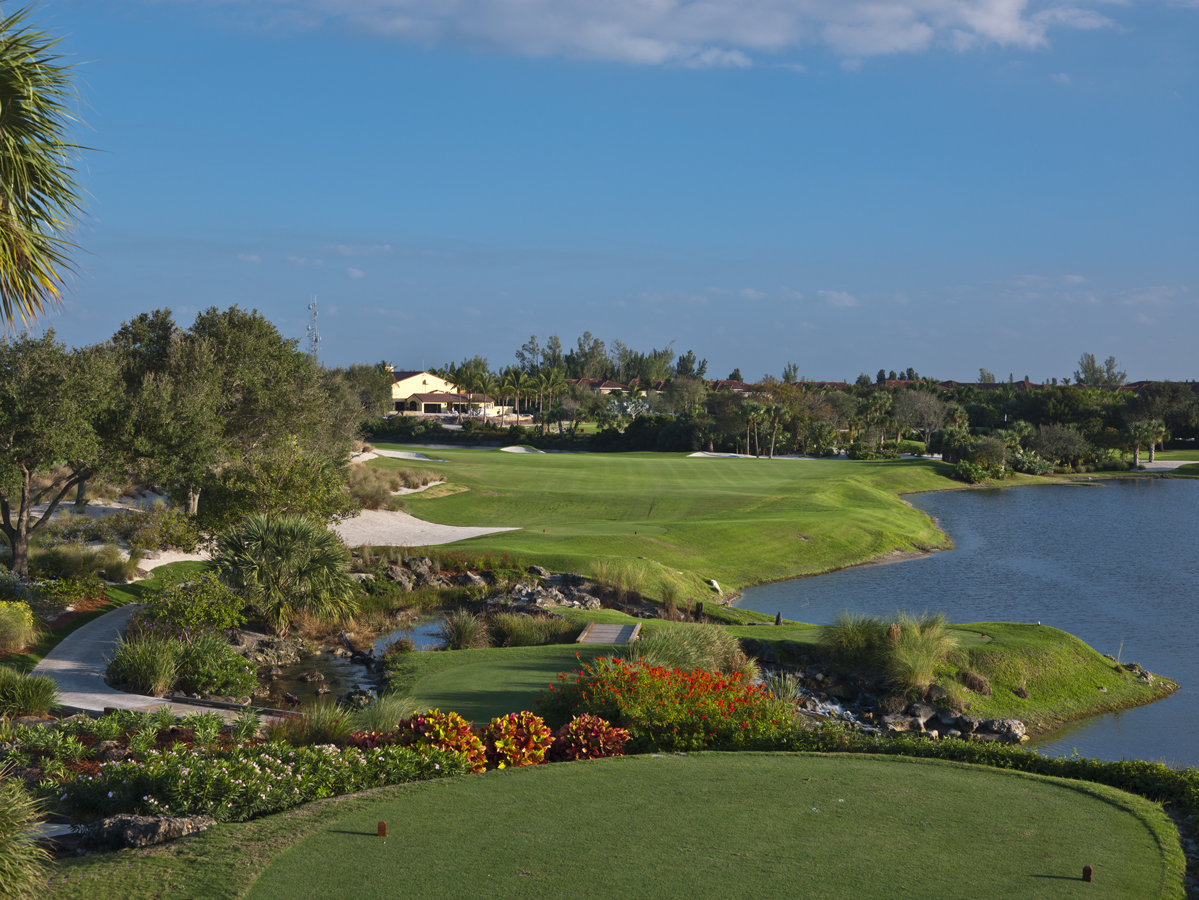
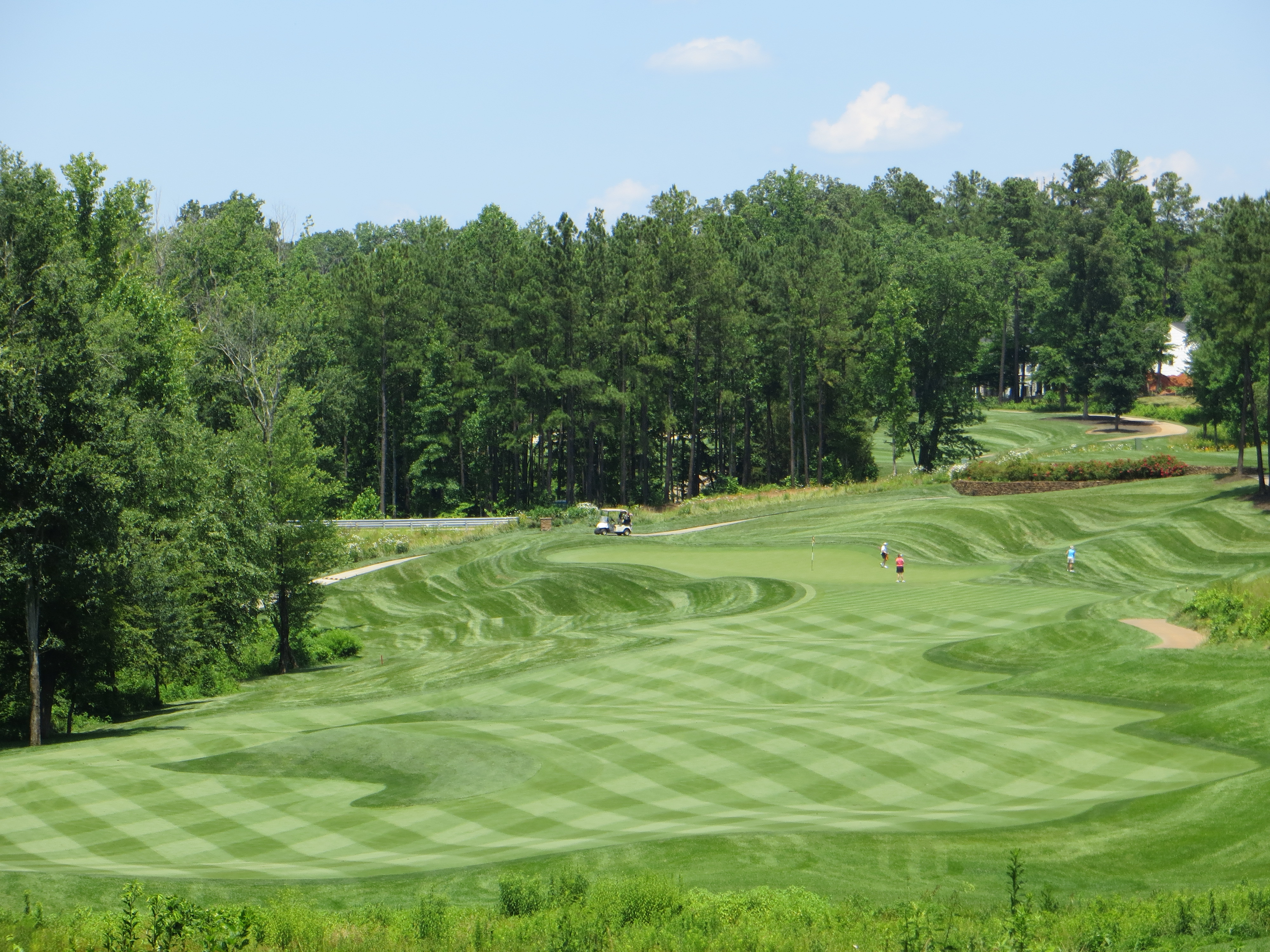
This golf course is a quiet jewel in the middle of the east coast “strip” of Florida it stands out as one of the best tracks I have played in this region.   They spared no expense in presenting first class practice facilities, superb design esthetics, wonderful conditioning, and great support features.  It took guts and vision to put this much into a public course and my hat is off to the developer.

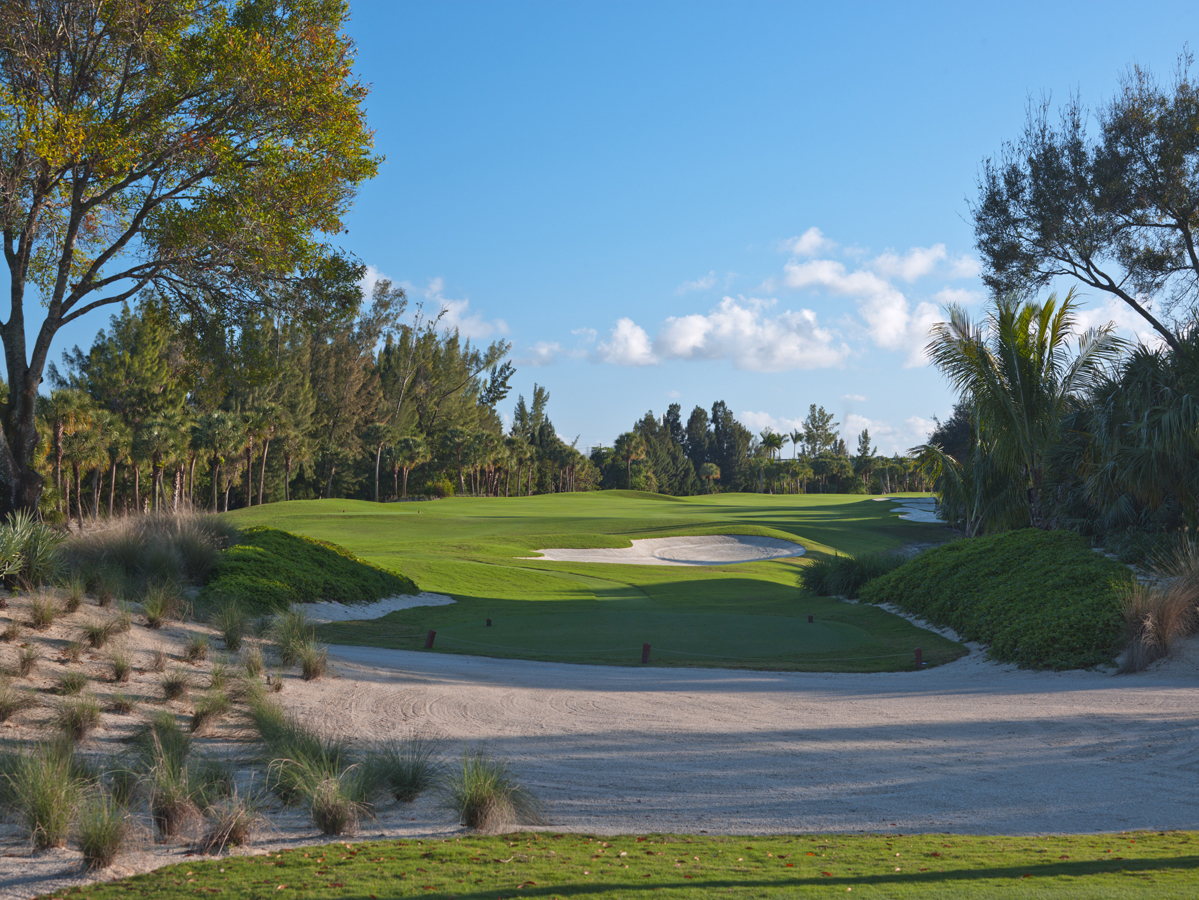
Stunning views begin on the first tee

The practice facilities are top shelf-as good as you will find anywhere.  The double sided driving range has over 8 acres of grass hitting surface in the same 419 Bermuda Grass found on the course.  There are five target greens flanked with bunkers as well as a practice fairway bunker adjacent to the main teeing ground. Fazio developed a separate short game area adjacent to the clubhouse.  It has a 9500 practice putting green as well as bunkered practice pitching greens with Ultradwarf Bermuda built to full USGA spec just like the course.  There is even a 19th hole par three that can be played from 85 to 135 yards.  This area alone is worth the price of admission.

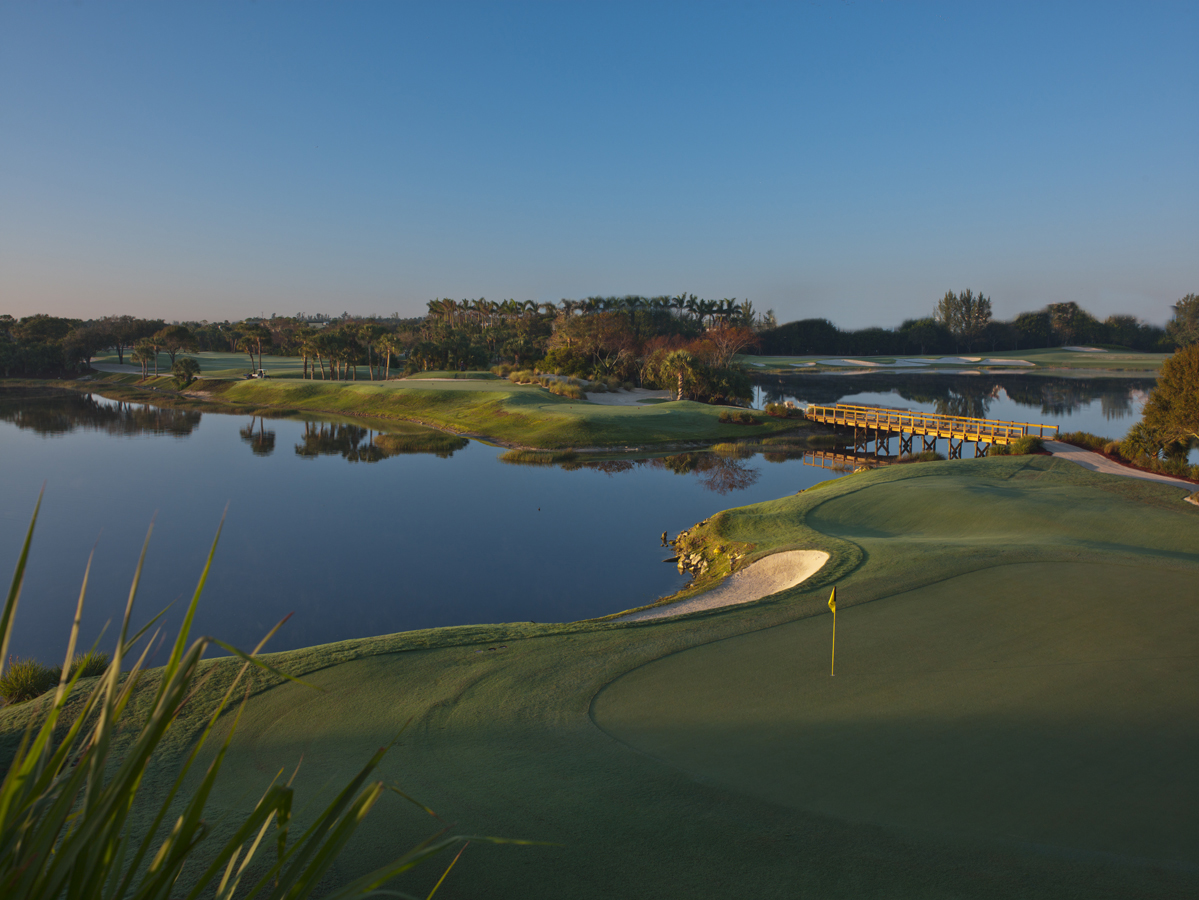
Par 3 4th is a bouquet of visual elements

As with most Florida courses Tom Fazio has generously appointed this one with water-it is in play on 15 out of 18 holes- and sand-there are over 100 bunkers- but it is not so punitive as to be unplayable.  As Tom is apt to do he often buffers the water with long sand hazards to keep you in play-though not out of trouble-and keep up the pace of play.  The strategy required on every hole is not evident at first blush.  There is plenty of visual misdirection going on so you need to take in the information in the yardage book or the deluxe on board computer and think your way around this course.

Short Par 5 11th requires serious tactical consideration

An enormous amount of attention, and money, was spent on the presentation of the holes.  Earth was moved to create visual and tactical interest and the plumes of sage grass, floral plantings, and stonework throughout enhance the beauty of the holes creating holes that will grab your attention.  This is not your typical Florida experience it has a very natural dunes style felling about it.

Approach shot to 17 green can be precarious

The conditioning of the course is superb-lush fairways and some of the best rolling firm greens I have played in Florida.  They even paint the top inside edge of the hole cut to match the cup itself-very professional.  You will have to really pay attention to speed on these greens or you will end up with lots of eight and ten footers coming back.

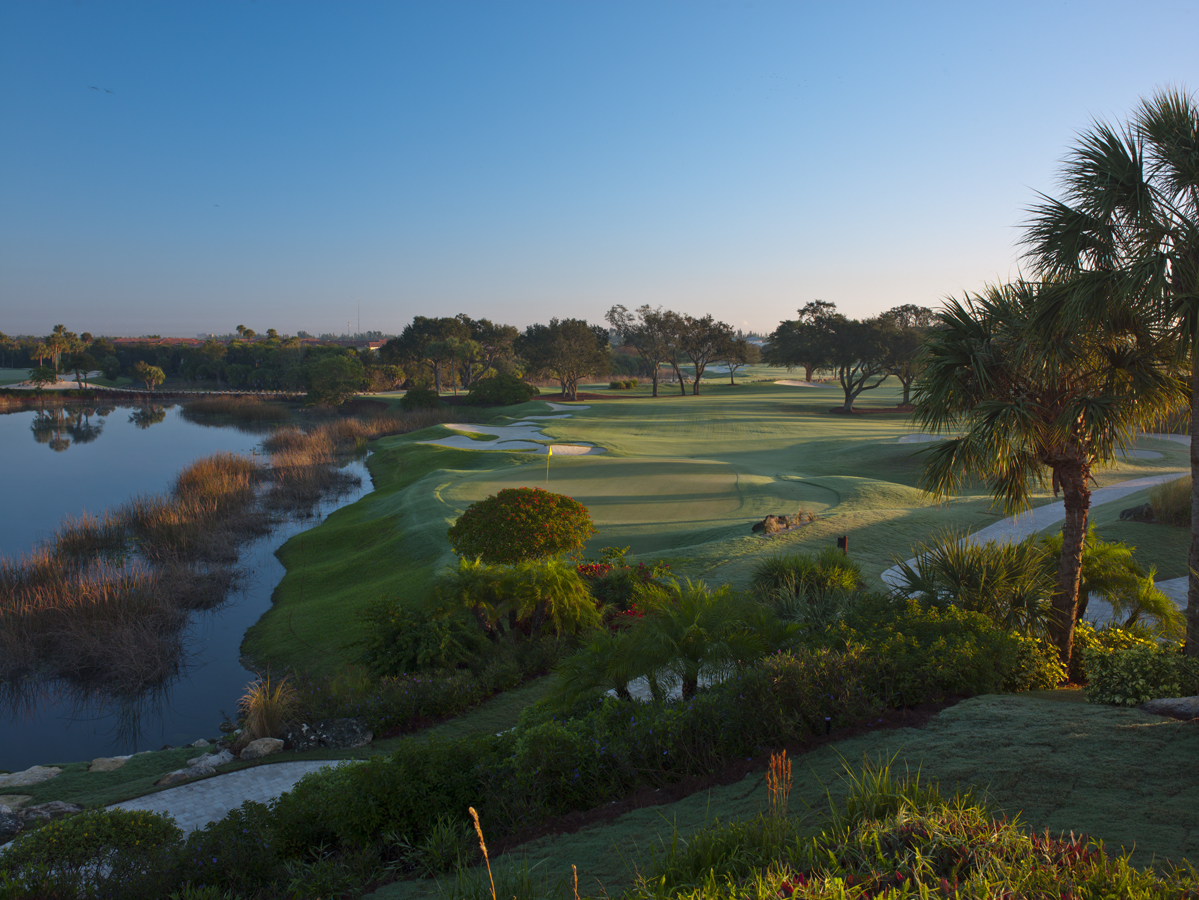
View from atop the 18th tee is as mesmerizing as the first

This course is worth going out of your way to play if you can arrange it.  A great test of golf and a wonderful visual experience as well.  Fazio was at his best when he did the design work here.

(All photos from Emerald Dunes website http://www.edgclub.com)

West Palm Beach, Florida

Architect: Tom Fazio, 1989

Tees       Par   Rating    Slope    Yardage
Green     72     72          132         6507
White      72     70.1       125         6062

If you would like a printable PDF of this posting including yardage book quality hole-by-hole descriptions of how to play the course click the moegolf logo below.


Sara Bay Country Club

Donald Ross only built two golf courses in this region of Florida and this one is a real gem worth seeking out.  Donald Ross once said, “A course that continually offers problems – one with fight in it, if you please – is the one that keeps players keen for the game.” Like a tough little terrier Sara Bay has some fight in her.  The original course was restored and updated over the last two decades by Brian Silva an expert on Ross designs who gave it a lovely new polish with full respect for the original design.

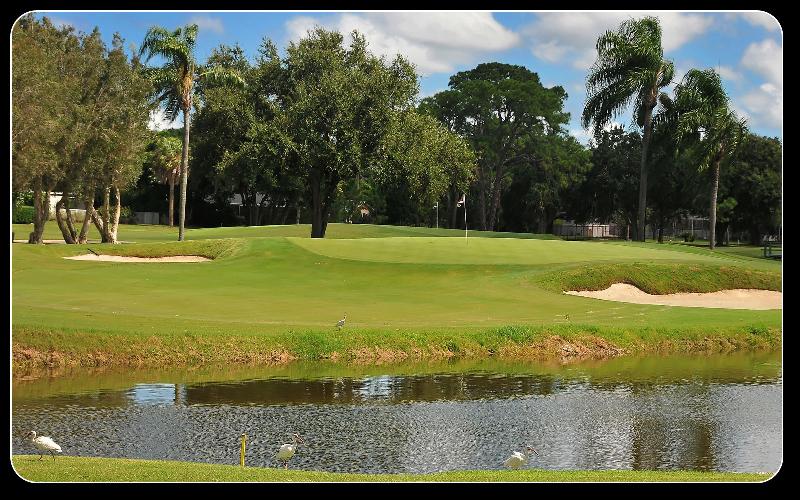
Created in 1926 as the centerpiece of  the Whitfield Estates one of Florida’s first golf course communities, Ross gave it all the design features that Ross courses are known for.  The greens throughout have the full measure of the distinctive precipice design that we know from Pinehurst #2.  The fall offs on most greens are on at least three sides which puts an enormous premium on a player’s decisive intent when pitching and chipping.

Signature Crowned Greens Ross Is Known For

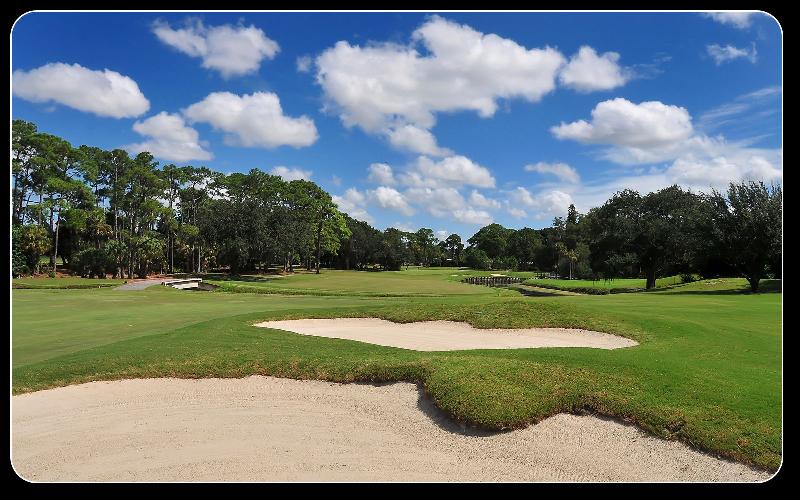
Mature growth trees give the holes tactical framing throughout.  Fairway bunkers are done in constellations-but always on one side of the fairway-generally the premium drive location is just off the bunkers.  Greenside bunkering is very selective but severe-the long holes have free access in front-the shorter ones have hurdles, but in all cases there is a tactical way to play around them if you choose.  The greens are very difficult by virtue of the crowning, but what makes it even more challenging is that the surfaces are awesome pure-probably 11 on the stimpmeter on a daily basis.  Grain direction on every green is crucial because it will determine the relative speed and direction of every putt.  One thing to note is that the two par fives on both sides are in the last three holes so your best scoring opportunities are late in each side.

Driving Areas Well Defined By Creative Bunkering

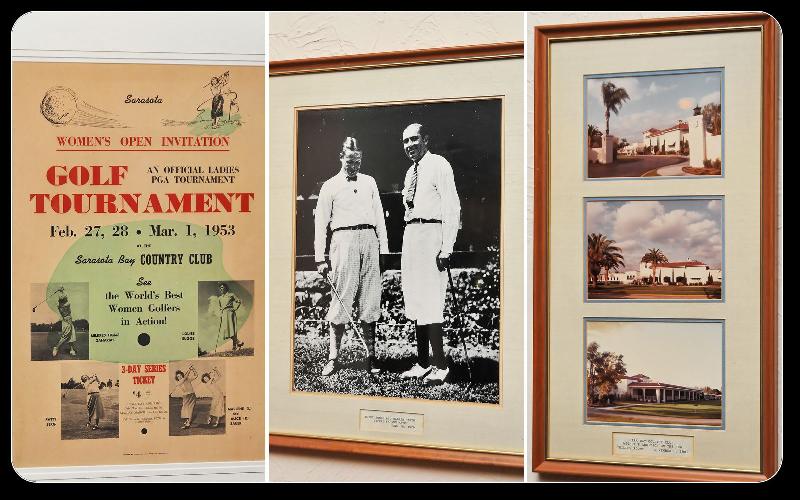
The club itself has a quiet humility about it.  There is no glitz here at all.  The clubhouse is understated except for the extraordinary vintage pictures in the lobby of Jones, Hagan, Zaharias, Tommy Armour, and others.  The course itself is very simple in it’s presentation.  Short yardage driving range-nothing more than a 160 club-makes for lots of finesse practice time.  Pitching area is a cart ride away off the first hole.  No hole identification markers other than the yardage plate on each tee-so you have to pay attention to the course map to know where you are going.  Everyone from the pro to the starter is a low key understated type who just has a confidence in the quality of this place and why people ought to play it.

Rich History Of The Club On Display In The Clubhouse

This is a private club so you will need to arrange to play it through your club professional.  If you are in the Sarasota areas it is well worth the effort to seek this out-it is a great walk and a distinctive Ross experience.  Playing these greens will be an afternoon to remember all to itself.

(All images from http://www.sarabaycc.org)

Sarasota, Florida

Architect:  Donald Ross (1926)
Brian Silva (restored 1991/2006)

Tees          Par    Yardage    Rating    Slope
Blue          72       7021        73.8        136
White        72       6414        71.0        125

If you would like a printable PDF of this posting including yardage book quality hole-by-hole descriptions of how to play the course click the moegolf logo below.
 

Isleworth Golf and Country Club

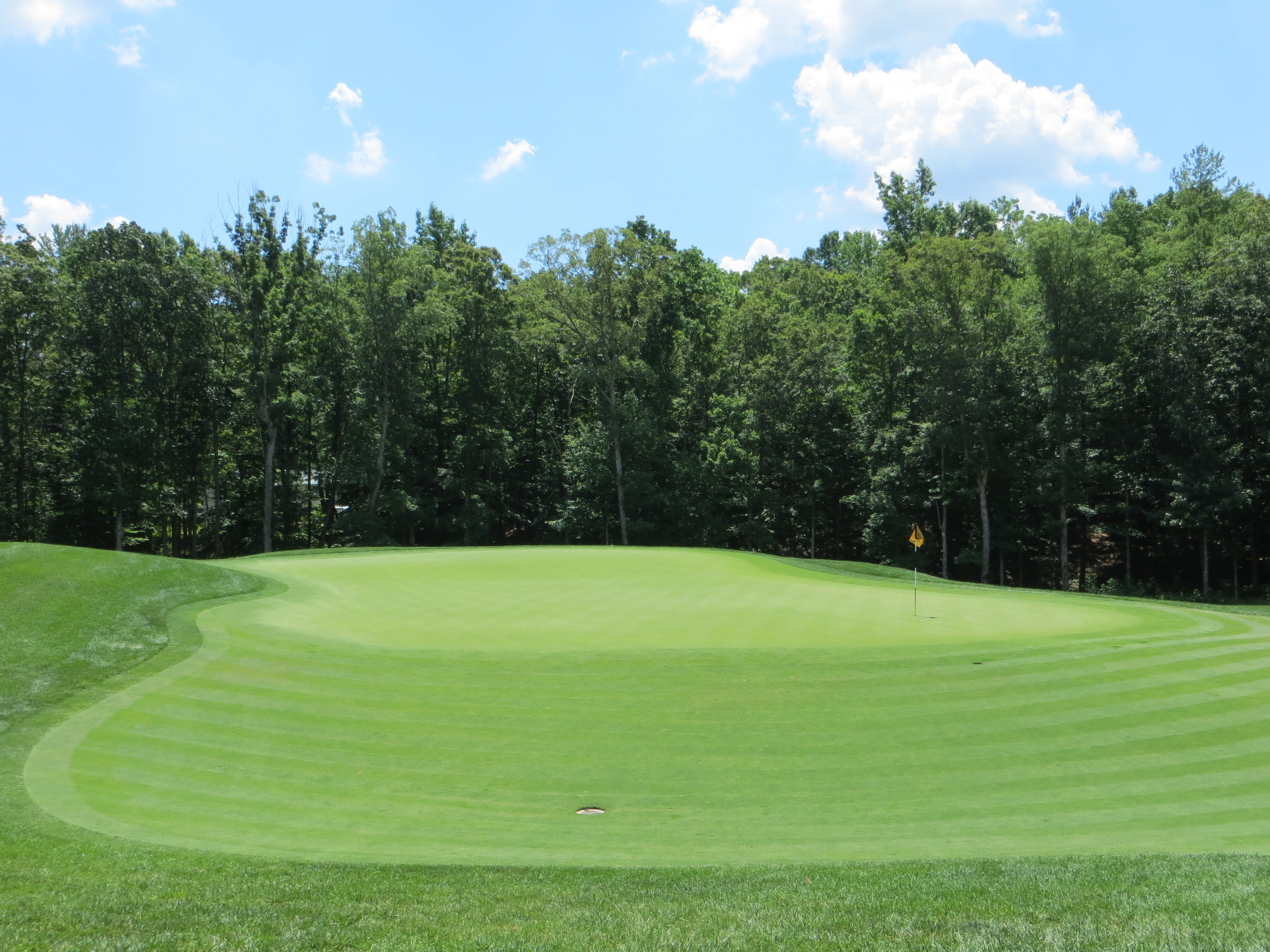
Isleworth is a 600-acre private gated community surrounded by picturesque lakes and about 10 miles of private waterways.  It is ten minutes from the center of booming Orlando and provides these pros everything they are looking for in a residence community.  Except for one infamous middle-of-the-night fire hydrant incident back in November of 2009, there is rarely anything that disrupts the solitude of this place.

The schools are good, income taxes non-existent, major airport a drive and a five iron away,  tolerable weather ten months of the year, and a golf facility fine tuned to their every want and desire.  As a result, it is the home of a plethora of PGA and LPGA pros including John Cook, Stewart Appleby, Darren Clarke, J. B. Holmes, Paula Creamer, Annika Sorenstam, and Yani Tseng.  Other sports and entertainment stars and high worth individuals have purchased homes here as well so there is a real who’s who atmosphere on the property every day.

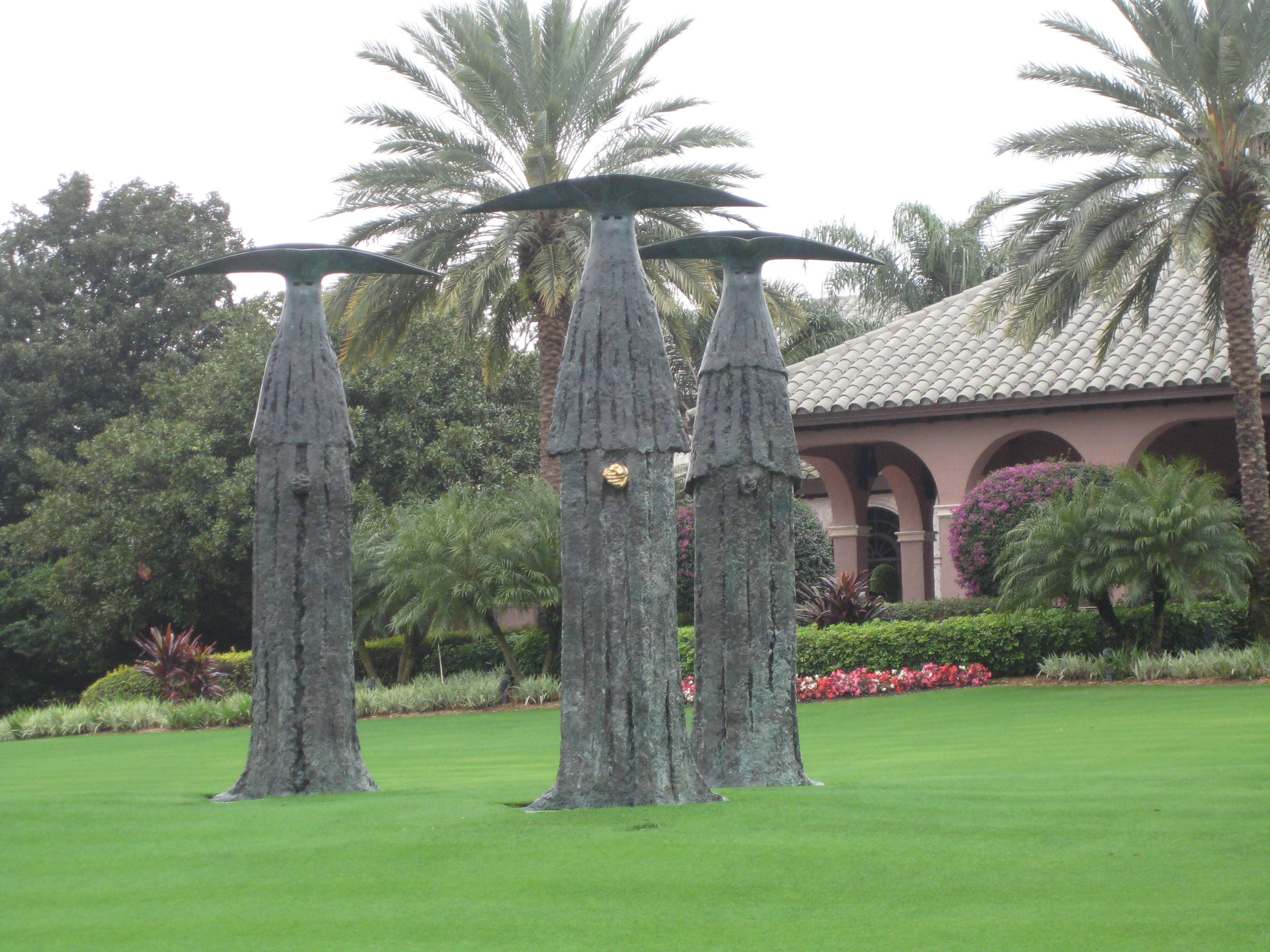
The Isleworth Golf and Country Club is the centerpiece of the community that was started by a group of investors in the mid 1980s.  The Tavistock Group subsequently took over the development in 1993 and worked to bring it up to a standard that would attract the golf professionals and high worth individuals for their permanent residences.  They built an exquisitely appointed 82,000 square foot club house that blends classic design with casual elegance.   From the locker room to the wellness center everything about this place speaks to daily needs of their members in an informal atmosphere of comfort.  Tavistock even appointed the property with distinguished pieces of lawn sculpture from artists like Henry Moore, Phillip Jackson, Eric Goulder, and Arturo Dimodica.

Charging Bull Greets You At The First Tee

To most guys the Champions Grill is the centerpiece of the Isleworth experience.  This grillroom is something to behold.  You walk down a spiral staircase from men’s locker room surrounded by the golf bags bearing names of the pros who are members at the club.  This leads you to an area with a manly wood appointed  bar and restaurant outfitted with comfortable seating and a flat screen TV everywhere you look.  The walls are covered with captivating memorabilia including plaques for each Major Championship with winners listed who are Isleworth members. Adjacent is a large recreation room with a putting green and a half court basketball court as it’s centerpiece.  Additionally you will see every boy toy ever invented including a pool table, ping pong table, video games, table top shuffleboard, dart boards, air hockey, and a golf swing simulator.  There are cushy spectator chairs horseshoeing each of those so there are lots of ways to settle a push bet on the back nine with your buddies.

The golf facility leaves no pebble unturned.  It includes a massive practice facility with reclusive areas where the pros can practice without disruption.  Tiger Woods got his own secluded pad on the driving range with an extra 50 yards of carry room so he doesn’t bomb any of the other patrons while practicing his stinger.  They have a two-acre short game area with replica bunkering from Augusta National and TPC Sawgrass and an 11,000 square foot putting green.  Plenty of room for the pro, the caddy, and a couple of hundred of their brand of shag balls for the daily practice grind.

The golf course was originally designed by Arnold Palmer and Ed Seay and was subsequently modified extensively under the direction of the very capable architect Steve Smyers.    The course has a distinct Florida target-golf character to it-this was probably intentional to give the professionals a way to simulate the challenges they see during their regular work day.  It is a testing golf course with six sets of tees that can be stretched to as much as 7500 yards for those with masochistic proclivity.  At 6400 yards it is all most amateurs can handle so pick your teeing ground with proper forethought.

The most distinctive characteristic of this course is the very demanding driving areas.  Throughout you see harrowing bunkers hugging the corner of the doglegs adjacent to which is the most advantageous approach angle to the green.  But unlike other courses, the other side of the fairway provides little respite-there is no safe way to play off the tee on most of the holes.  You have to take on the challenge through the day if you want any chance of hitting these greens in regulation.

The course does not have very many stunning holes you will not forget but there are quite a number that will get your competitive attention.  Once you get over the greeting of the Charging Bull on the first tee you have a relatively routine opening hole.  But your heart beat will be prompted by the harrowing challenge of the “Cypress Chute” you have to negotiate on the par 3 second.  Two through four are the three lowest handicap holes on the front so reaching the fifth tee with a scorecard still in tact is your biggest challenge. A little bit of a breather over the next few holes brings you to Champions Point and a view of some really nice boat slips with their matching bungalows.   “Best of Bessie” is a very challenging par four at the eight and you close the opening nine plotting your way “Around the Lake” with another technical par four.

Three Monks Overlook The Front Drive

A bit of a ethereal moment as you leave the cart park next to nine and drive by the Three Monks on the front lawn of the clubhouse driveway.   Seems appropriate to mutter a little deferential prayer on your own behalf before heading to the back nine.

The back nine starts routinely enough but, like the front, you get a sizeable challenge on the next two holes.  The 11th  with its beautiful flower beds behind the green is the Kodak moment of the day.  But this is a full metal challenge with a 150 yard club-especially if the wind is influencing.  The 12th provides another daunting approach with the green wedged between a pond and a side hills on the right.  The par five 13th is a bit of a breather-more lakeside residential eye candy…..these people must have large families or extensive wait staffs.

From here to the end the holes a not bulky in length but they will challenge you constantly to execute well planned shots.  After an interesting short hole on sixteen, the last two are the hardest handicap holes on this side and they well deserve that distinction.  Both green settings are diabolical so the real challenge on each of them is at the end.  The final hole is a bear-this is two booming shots or a deft up and down if you need a par to wrestle away the back nine Nassau.

Challenging Green Arrangement At Par 5 17th

Isleworth, when taken in total,  is quite the golf experience.  If it presents itself as an opportunity just throw caution to the wind,  pay the ticket, and indulge yourself for the day in the life of the rich and famous.

Windermere, Florida

Architect: Arnold Palmer/Ed Seay (1986)
Steve Smyers (renovation)

Tees            Par    Yardage      Rating     Slope
Lewis          72       6765           72.9        139
Chase         72       6409          70.8         134

If you would like a printable PDF of this posting including yardage book quality hole-by-hole descriptions of how to play the course click the moegolf logo below.