Sean Foley-Coachin’ Em Up

In this interview with Charlie Rose Sean Foley talks about his philosophy and the practical reality of coaching the best players in the world.  His classroom attendees include Tiger, Lee Westwood, Justin Rose, and Hunter Mahan among others.

As he says in the conversation he teaches young kids how to play the game…..he coaches the best players in the world.  At this point in their athletic careers there is little new to teach them.  But like the great coaches in any sport observing their tendencies and relating to them the flaws these tendencies perpetuate he can help them get to a place of self-recognition where they can manage their flaws and produce better results.

In watching this 35-minute conversation you have to let go of the notion that somehow it is a referendum on his tutelage of Tiger and appreciate the accumulated genius of a guy who has studied the teachings of greatest instructors going back 100 years.

You won’t find any technical prescription for success in golf for his top ranked players or yourself for that matter.  But you will get an understanding of why these guys gravitate to this man and his ability to diagnose the problems that beset them at the current stage in their personal golf cycle and advise them on what to focus to maximize their competitive results.

This is a thoughtful guy who does not come across with the bravado of a Butch Harmon.  But it is evident to me that it is his intellect and his bedside manner, as he refers to it, that allow great athletes to trust him to guide them to a path of higher performance in their games.

Turn off the cell phone and shut the door to the study….this is a fascinating conversation best appreciated without interruption.

(Click here to view the Sean Foley Interview with Charlie Rose)

Charlie Rose

Bloomberg.com

October, 2013

Empowered Golf

It is always interesting to see an accomplished individual who you admire talk about life in the context of golf.  We understand that golf has a way of wrapping it’s arms around you like no other sport. It really does not give a hoot about your background, ethnicity, or social status before inviting you into it’s clutches.

In this Charlie Rose interview Condeleezza Rice, an accomplished educator, political advisor, and international diplomat, leaves no doubt hat she has been totally bitten by the golf bug and is thoroughly enjoying it.

Her recent obsession with the game is an obvious joy to her and a source of both physical exercise and mental release as it is for all of us.  Further she sees her association with it as an example of how golf can be a vehicle for young women to network with colleagues and promote advancement in their chosen fields of interest.

Take six minutes and enjoy a collegial golf rap with Condi……she has been a ground breaking force all her life and it does not look like she will abandon that role any time soon.

Click to view the Condi Interview With Charlie Rose

CBS This Morning

October, 2013

Escape To Kinloch

On an Indian summer day we played hookey from work to travel a couple of hours south and enjoy the stunning visuals and superb amenities of the Kinloch Golf Club just outside of Richmond.  This is the full metal private club experience with all the bells and whistles.

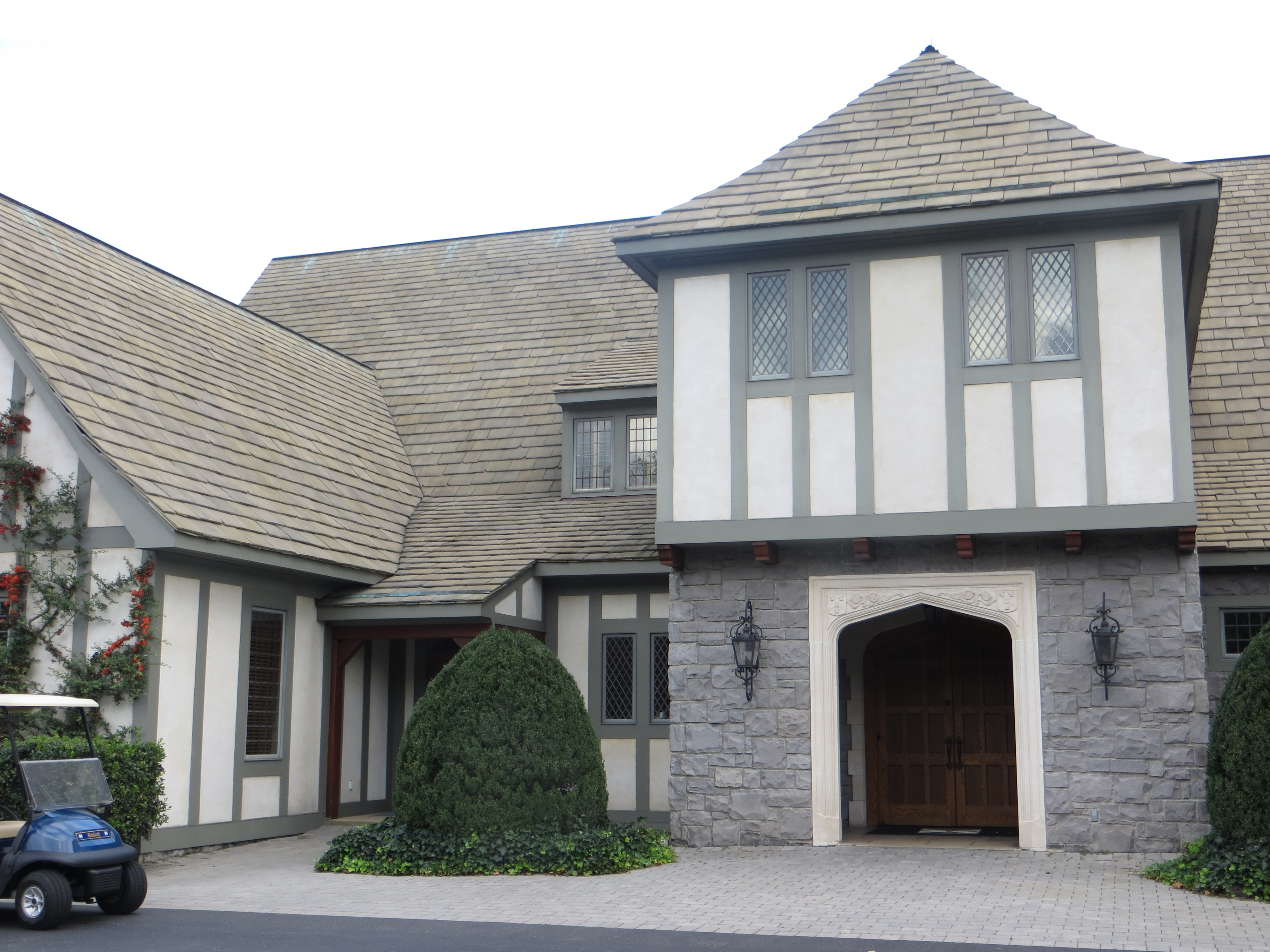
Clubhouse EntranceAt the front car park we were greeted by the staff with gracious attention we would experience all day.

Golf ShopWalking through the doors of the clubhouse you are struck by a comfortable informal atmosphere.  Wood paneled hallways are graced with golf memorabilia and evidence of member participation in the tournament plaques.  An attended locker room serves your every need and the attached bar/lounge has a wide selection of adult goodies for the festive apres round.  The golf shop touts the Kinloch logo without being overbearing.

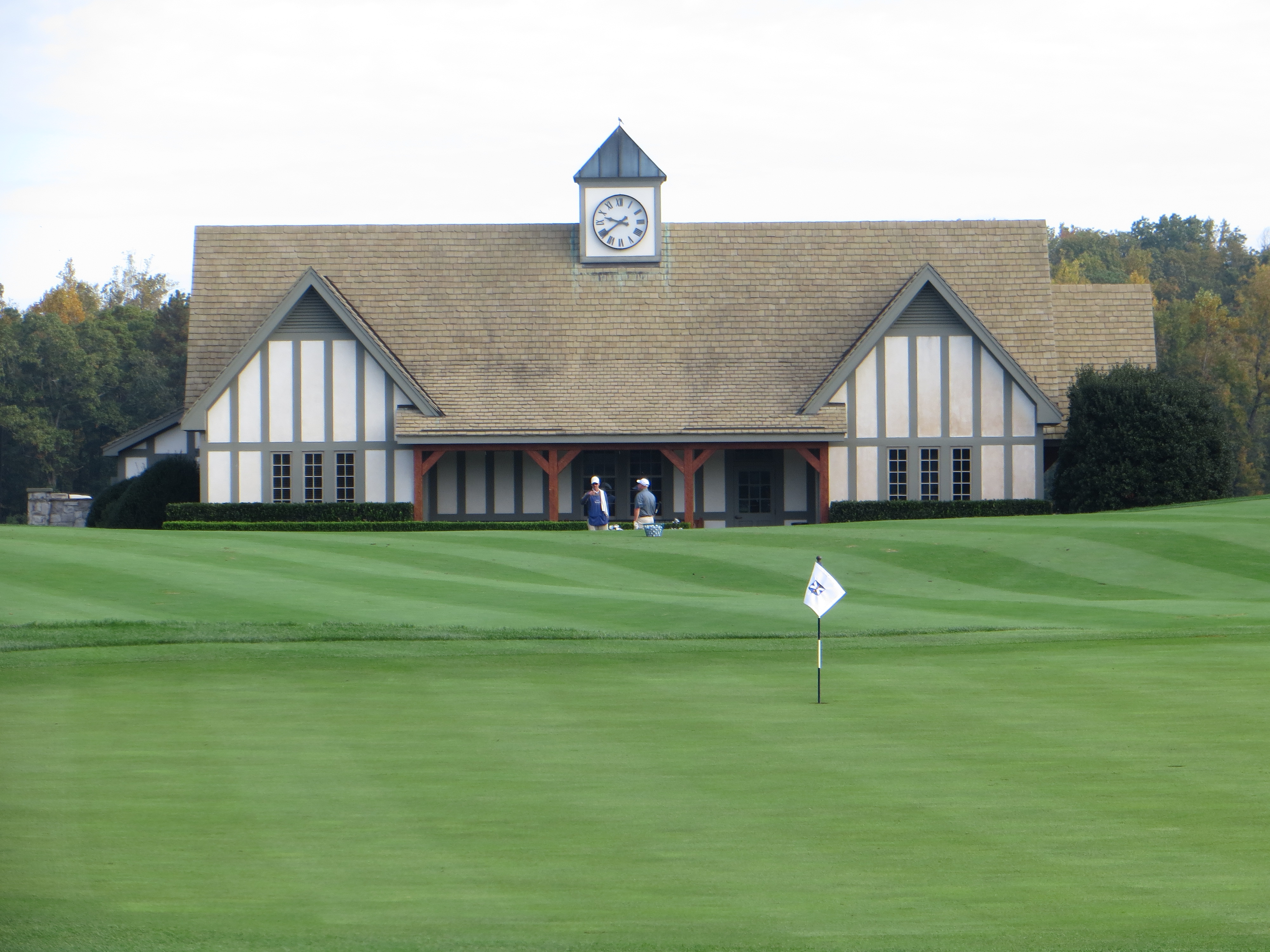
Out The Golf Shop DoorStepping out of the golf shop you realize you are not in Kansas anymore.  Rolling out below your feet is the ginormous short game area leading to the driving range and first tee on either side of the grand golf preparation building across the grassy knoll.

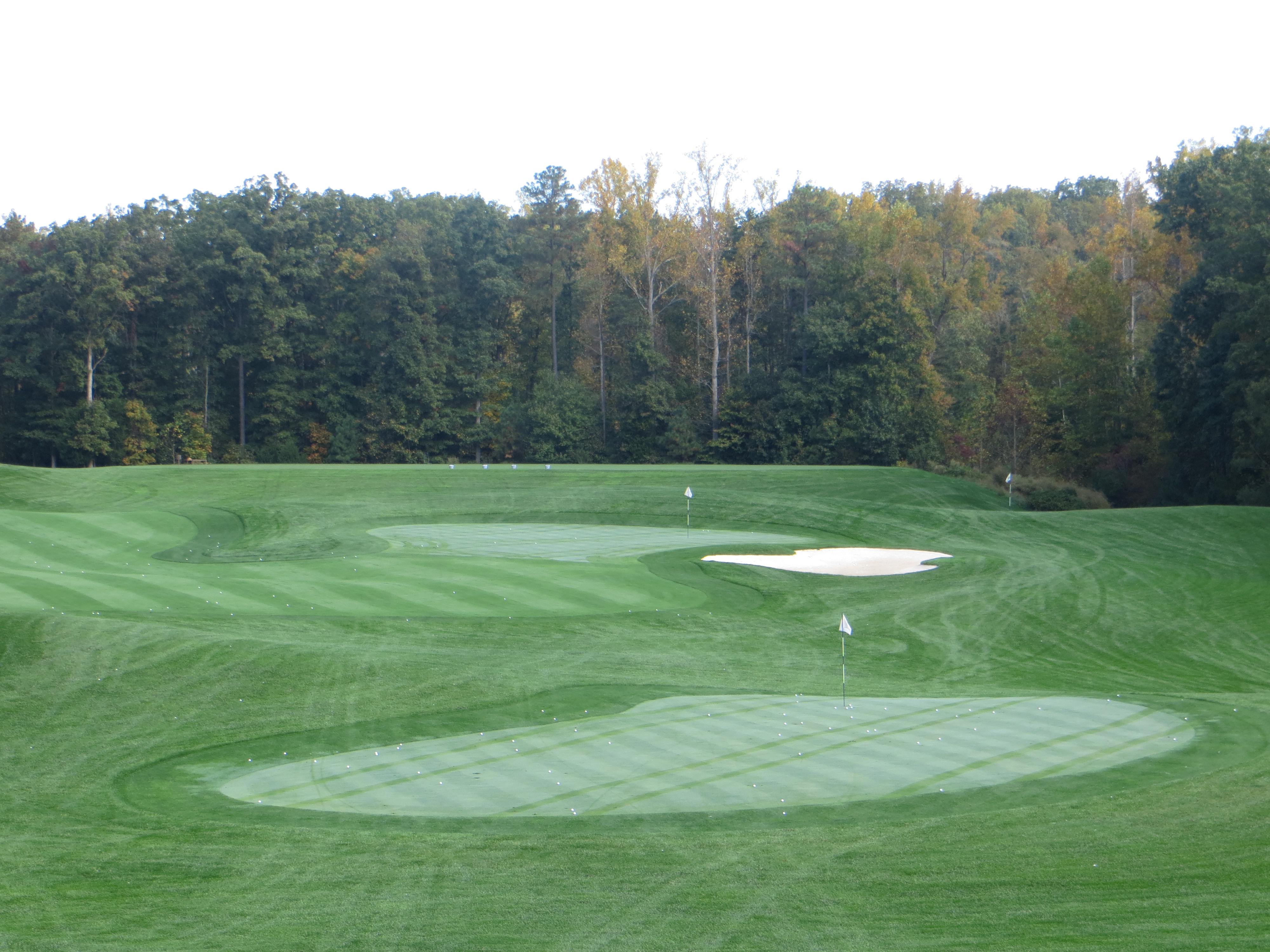
RangeThese are not just target greens on the range, they are maintained to actual green specifications so they hold your shots.  The wide array promotes simulation of the type of shots you will hit through the day.

Practice Pitching AreaAcres of short game practice ground where you can immerse yourself in a full Dave Pelz stupor.  These members must have really adept short game skills.

Kinloch RunwayPrepare for take off……………….

#1 Par 4 Driving AreaThe view from the first runway….just over that rise a wild and pleasurable four hour flight is about to commence.

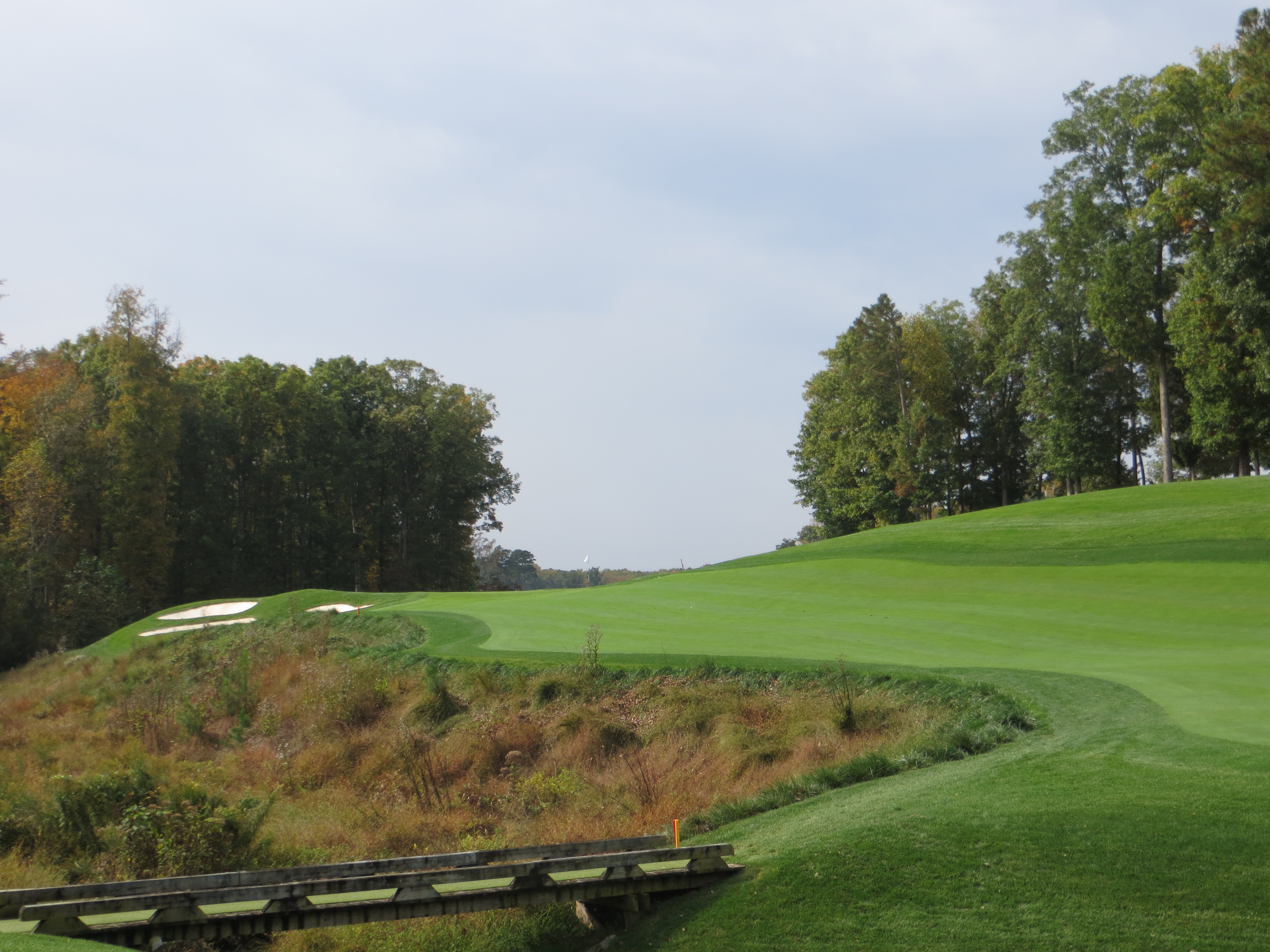
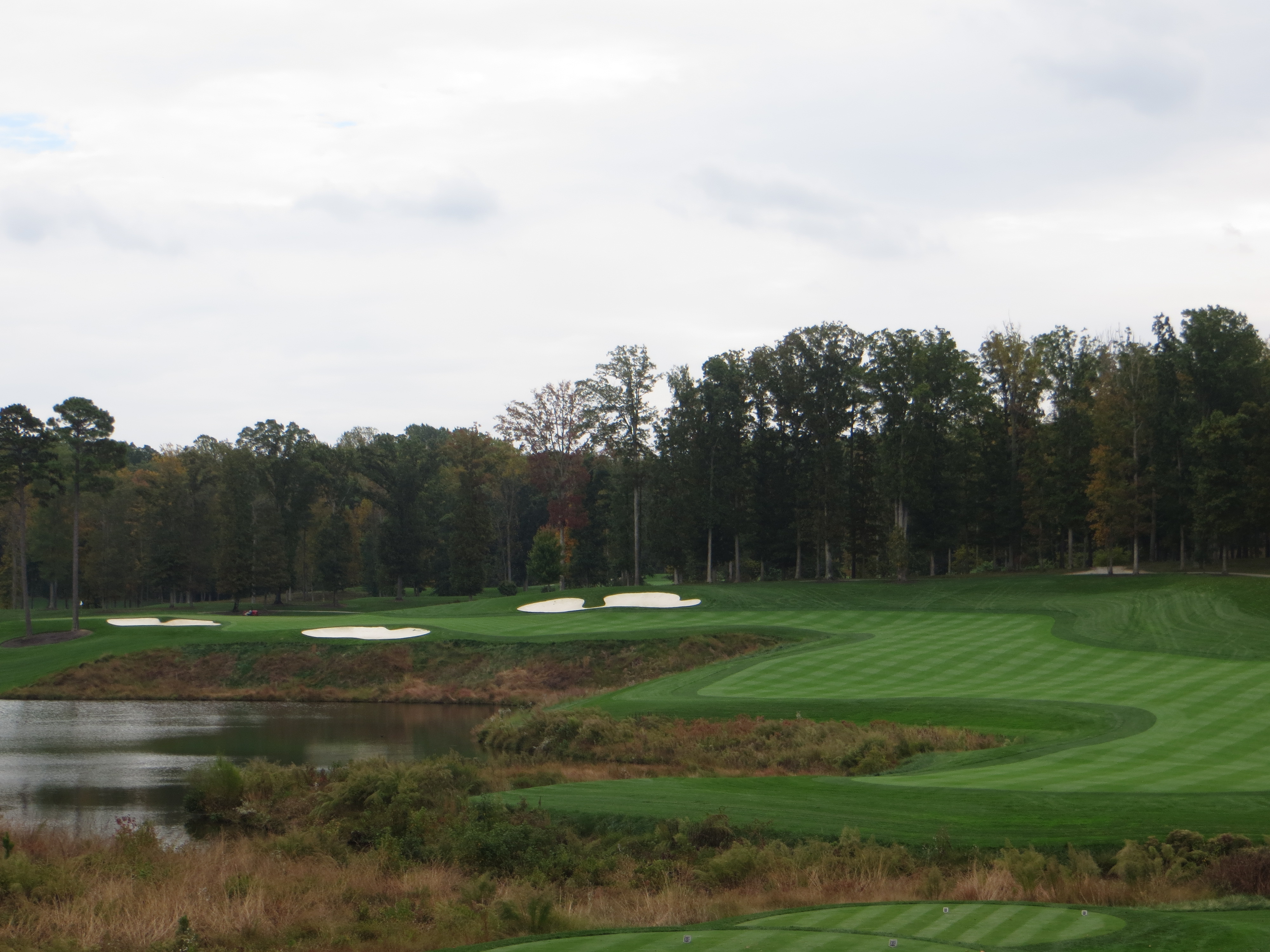
#6 Par 4 Landing AreaLooking down from the perched tee on #6 to the landing area before the environmental consideration.  You can appreciate the attention to detail that Lester George and Vinnie Giles put into this design.  Beyond the green is the loch that dominates the center of the property but really does not come into play until the last few holes.
#6 Approach

The 175 yard look up the hill from the landing area on #6 is far more abrupt than it appears from the tee.

#9 Par 5How about the composition of this image of the approach to the 9th green….this is one for your office wall.  (Click on the image to take in it’s full detail)

#9 Burial MoundNot sure what is under this little piece of Machu Picchu that sits adjacent to the landing area before the 9th green but it might be appropriate to say a few incantations on the way by.

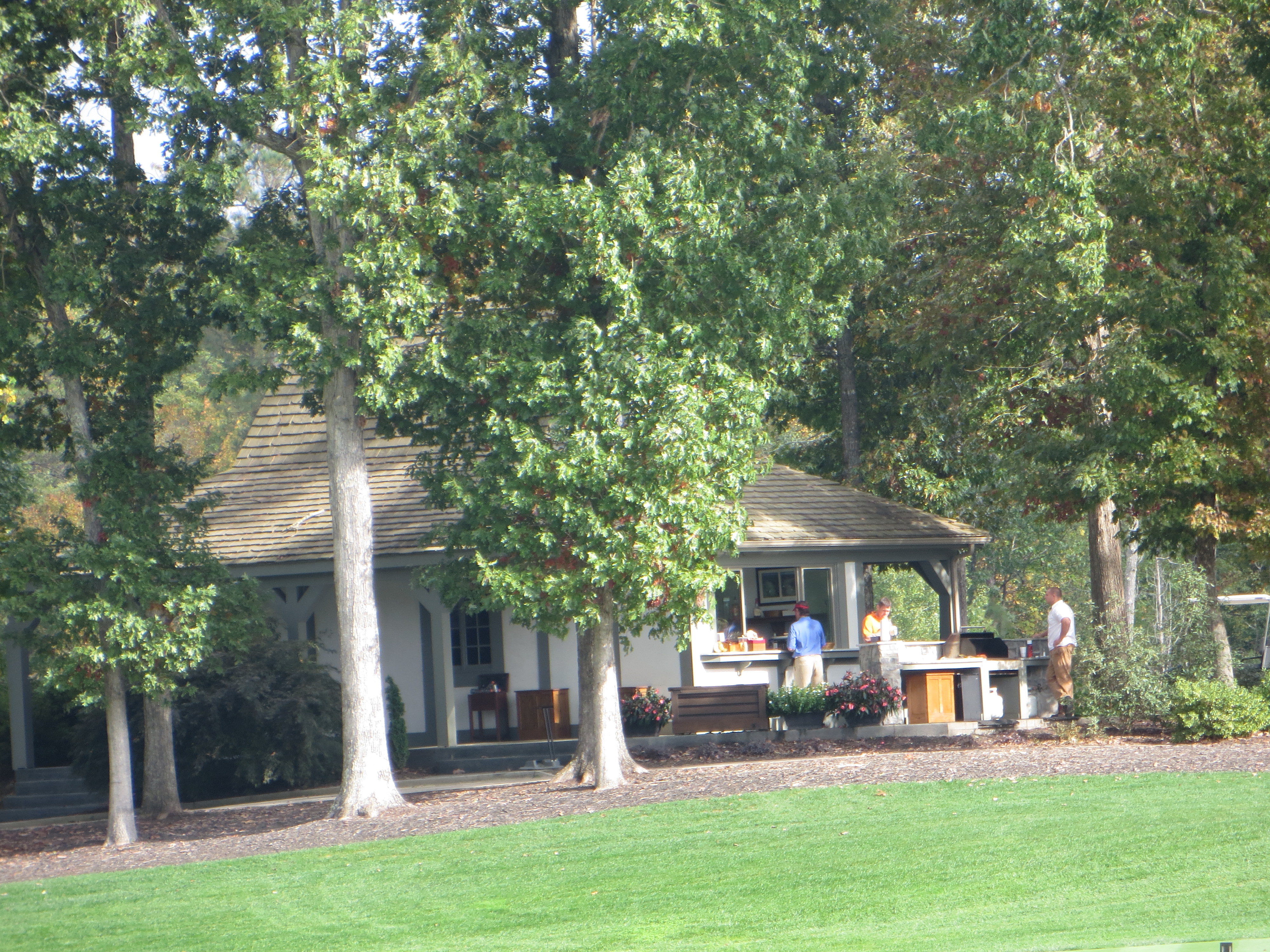
Halfway HouseNext stop is the charming halfway house on the way to number 10.  Includes an outdoor grill full of your at the turn charcoal favorites.

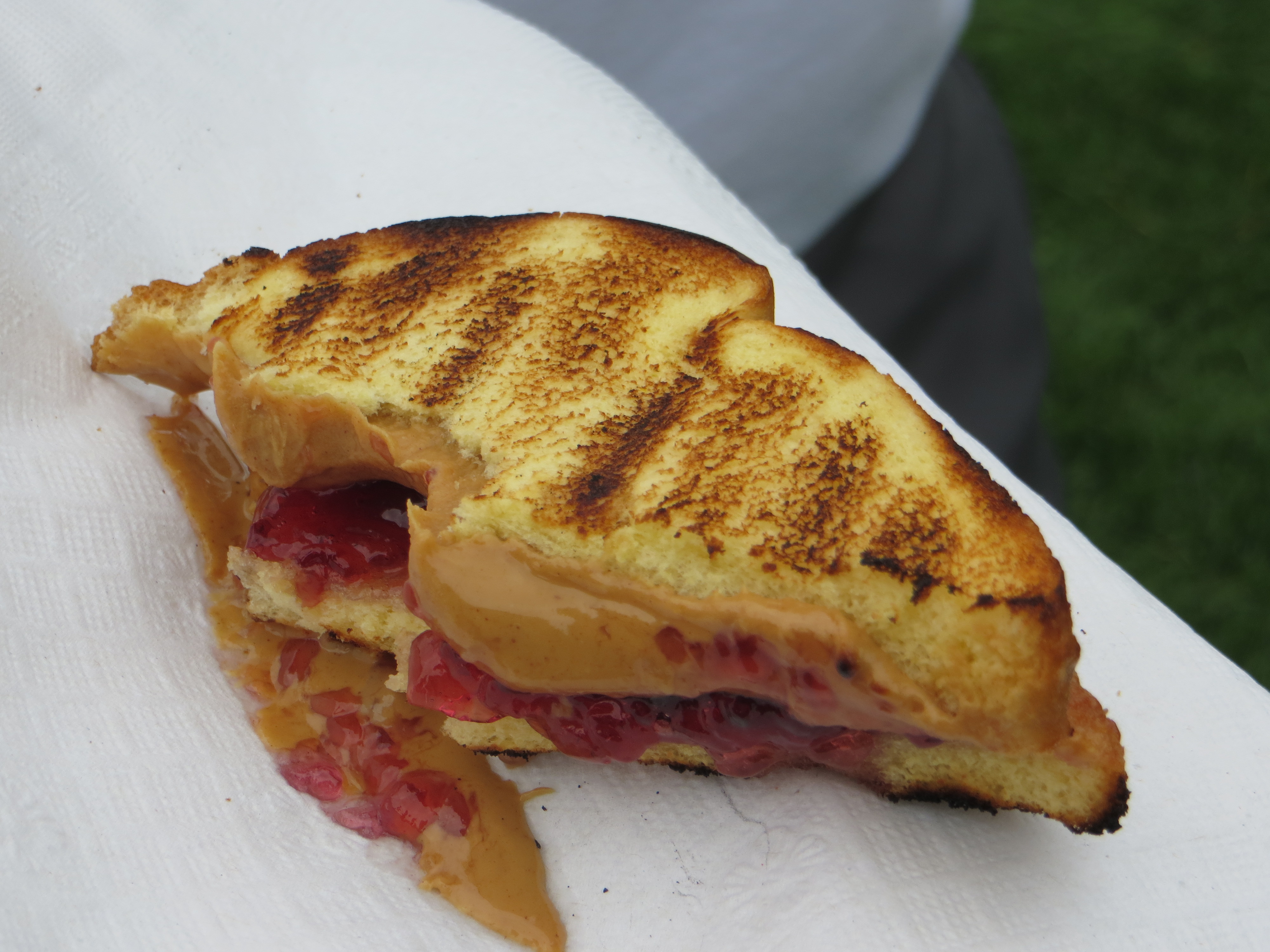
Grilled P,P, & JLeave it to the creativity of their culinary experts to come up with a must try southern delight.  Yes this is a charcoal grilled peanut butter and jelly sandwich.  Melts in your mouth…and on your shirt if you are not careful.

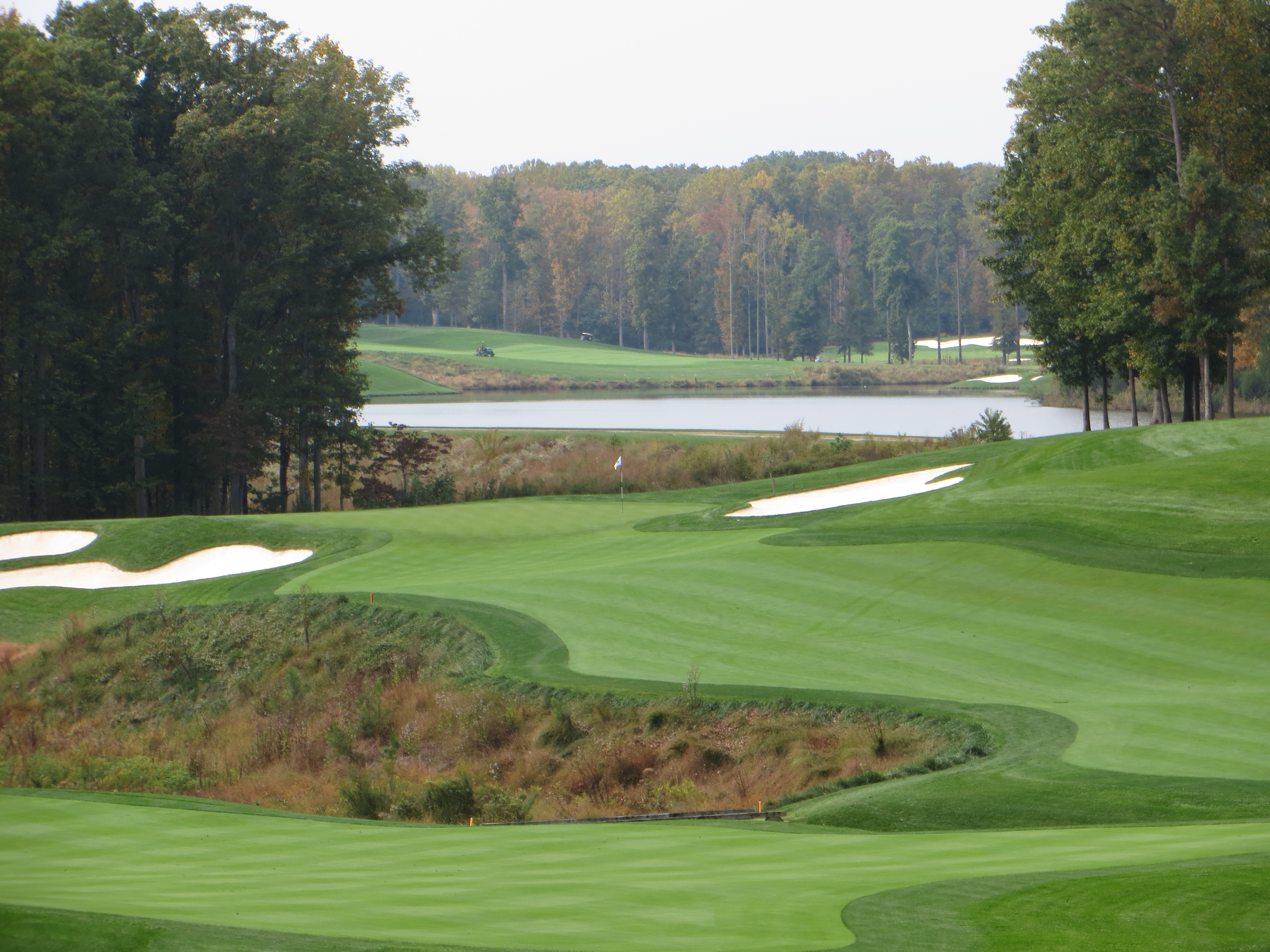
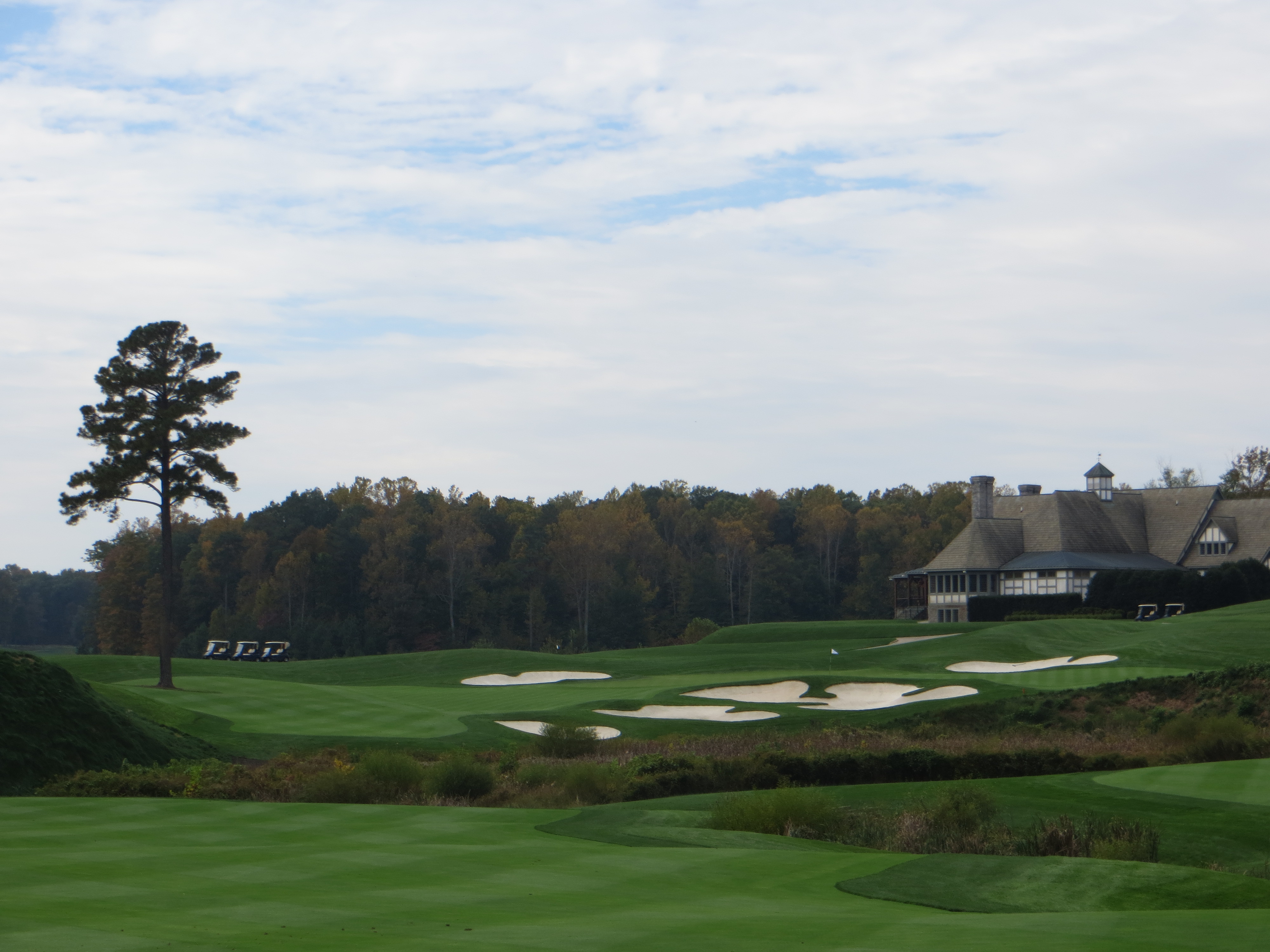
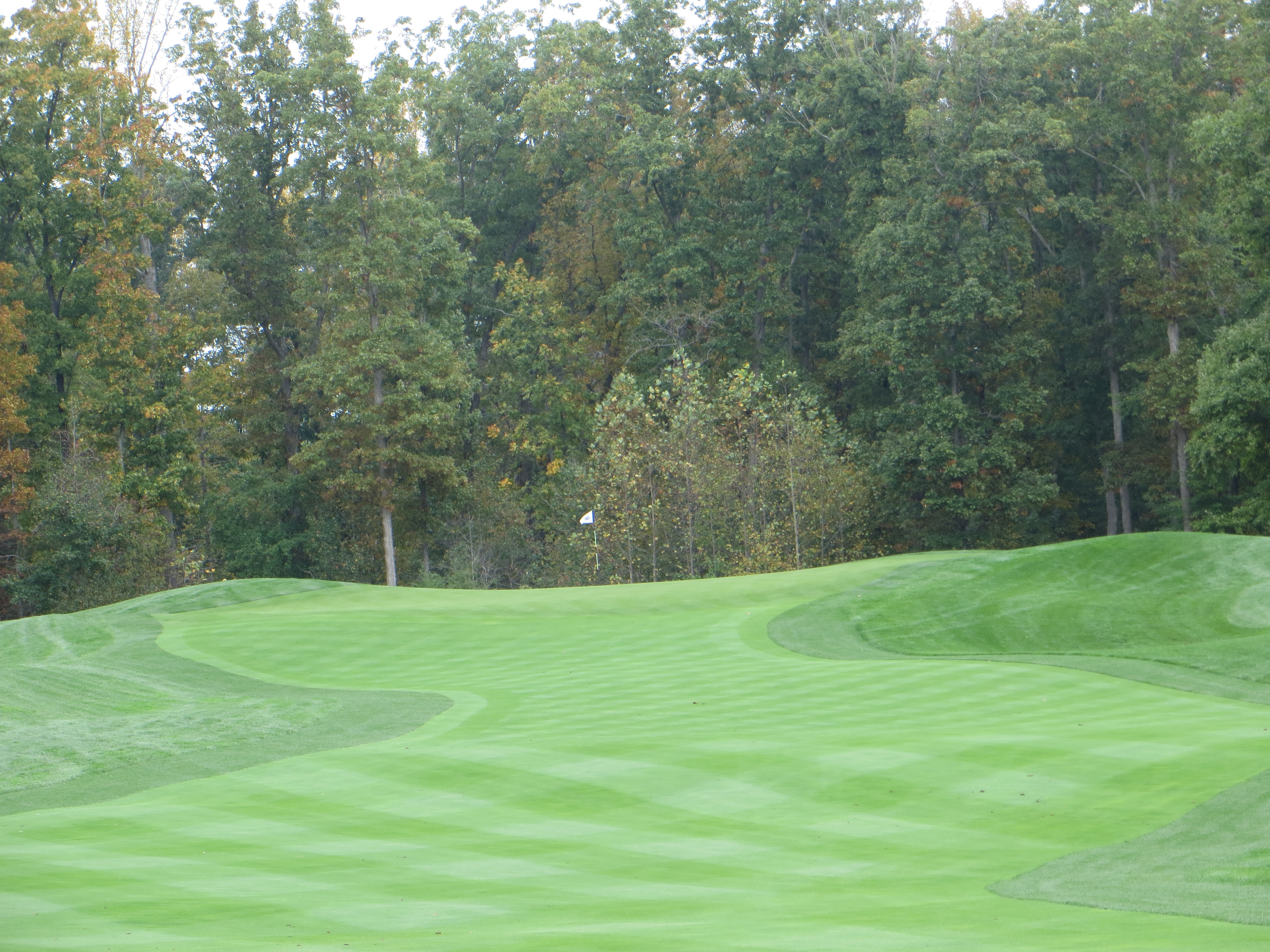
#12 Par 4 ApproachThe variety of golf challenges is depicted in this uphill approach to the naked perched green on the par 4 12th.  This is ranked the second hardest hole on the inward side and this green complex is a good part of the reason.

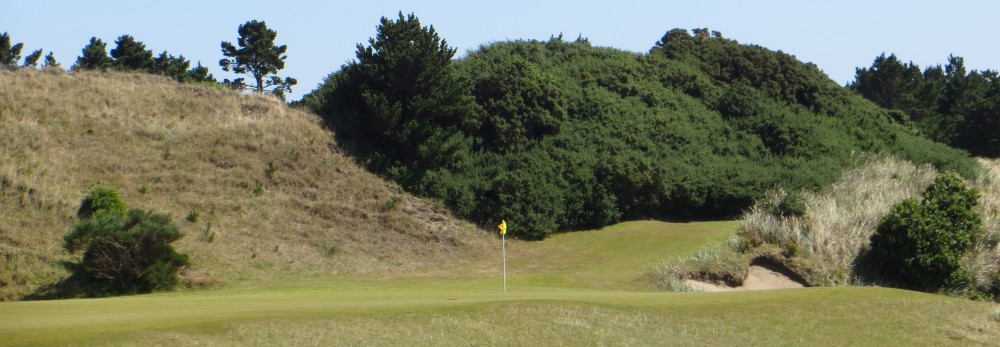
#14 Par 3At 130 yards the 14th would appear a bit innocuous but it is a wolf in sheep’s clothing as the target is really small, influenced by the winds off the loch, and those bunkers the left are Titleist magnets.

#16 Par 4Standing on the tee at the 16th will make your knees tremble…you have to pick a landing area and commit to it fully.  (Click on the image to incur full trembling effect)

#16 GreenIf you are lucky they did not choose to hide the flag on 16 in the warden’s office …..there are no reprieves for an offline approach to this back left pin position.

#19 Par 3They even provide a Clint Eastwood “settle the score” 160 yard par 3 19th hole so there will be no kissing your sister at Kinloch.

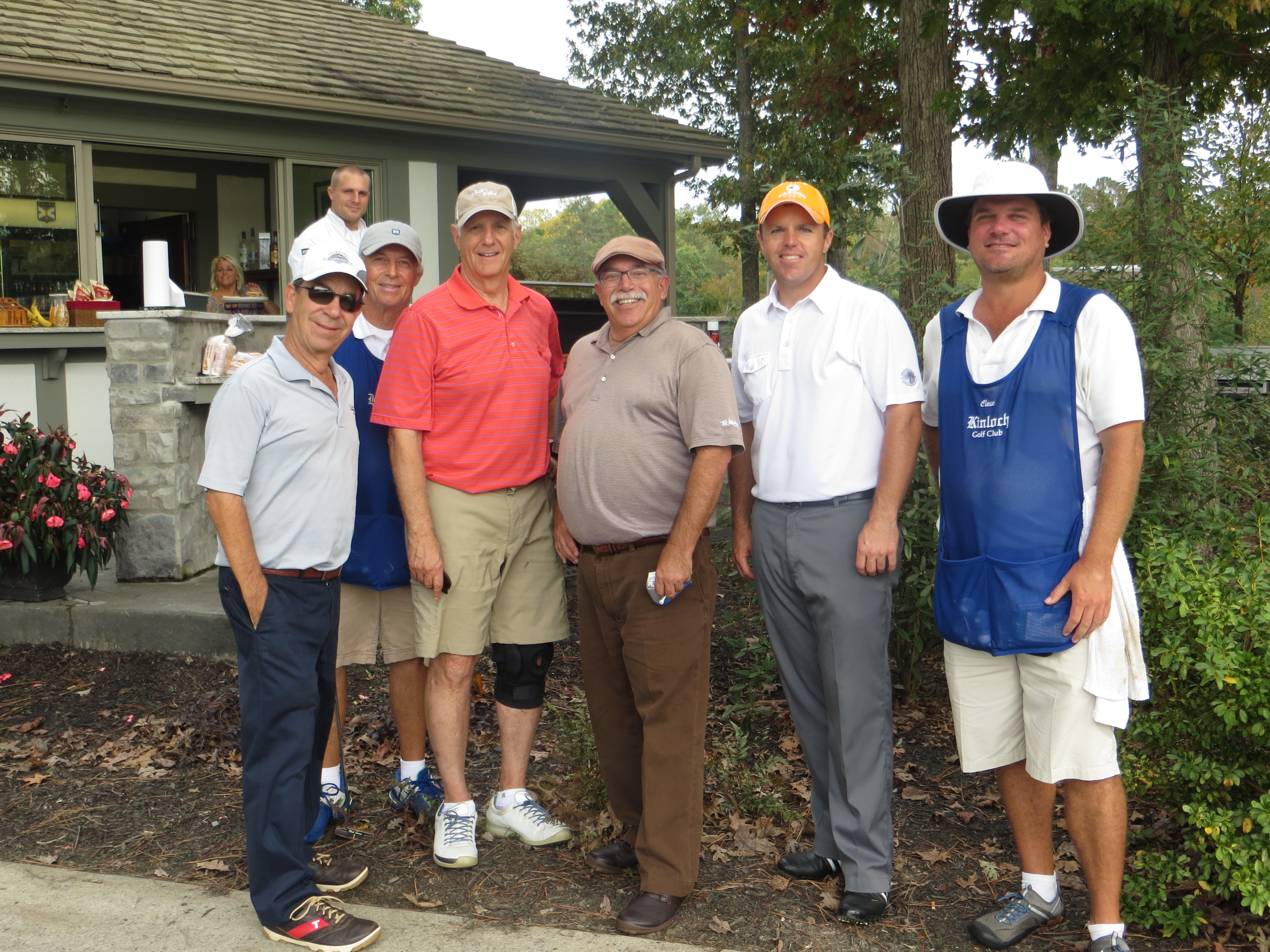
The CrewThe truants are pictured under the watchful eye of the grill master…..Cuzin Jack, Leon, Zowl, Mish Moe, Pro Josh, and Cleveland….expressions reveal guilty as charged!!!

AllmansWhat off campus excursion would be complete without a proper banquet….Allman’s Pit Bar-B-Q in Fredericksburg did the trick.

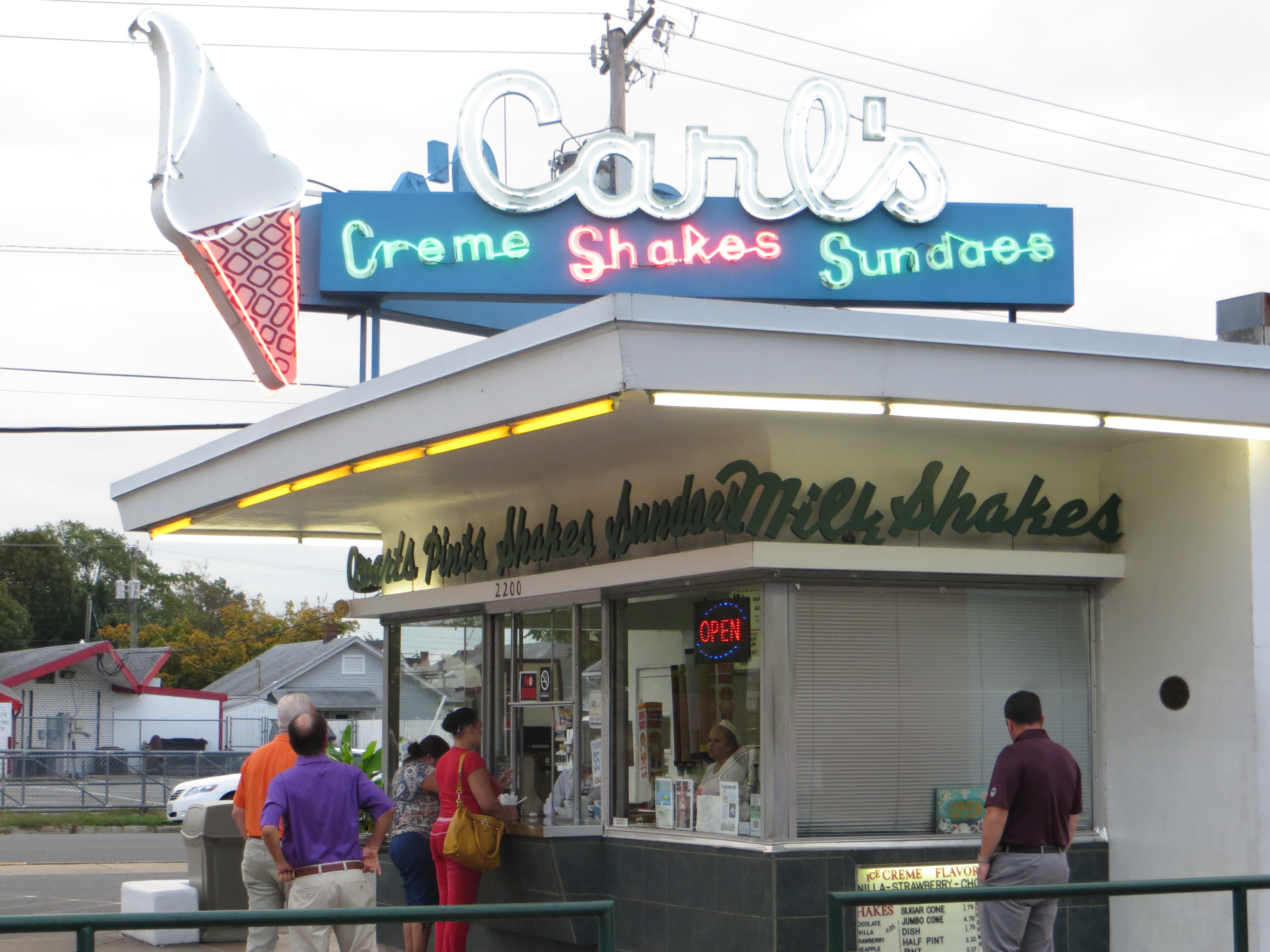
CarlsThe whipped cream was provided by the original Carl’s just down the street.

(Click here for more photos and the full Kinloch Golf Club course review)

October, 2013

Save The Terp

Terp LogoIt has been reported in a recent Washington Post article that the powers that be at the University of Maryland are considering a really bad idea of plowing under the university’s golf course as part of a $100 million mixed used redevelopment project.

The University of Maryland Golf Course sits on 150 heavily wooded acres adjacent to the campus and is a popular destination for students and Maryland residents.  Testimony to this is the fact that the course hosts over 35,000 golf rounds a year.  It also provides full practice and teaching facilities for the community.  Recent renovation of the course has improved it’s standard considerably and it has hosted Web.com professional golf events as a result.

The redevelopment plans would include a direct off ramp from the Capital Beltway to the College Park Campus, a slew of new box retail stores, some faculty housing, and a new, more appetizing entrance to the campus.  That is what we need in College Park more box retailers and housing tracts.

Serious opposition to this misguided idea is being spearheaded by local state senators and residents of P.G. County who understand the value of this asset to the students and local residents.

A website has been established as a clearing house for information on plan at

http://saveumdgolfcourse.com/

If you share in the misgivings about this plan please write an e-mail to university president Dr. Wallace Loh to express your opposition.

Dr. Wallace Loh    wdloh@umd.edu

If we don’t want this Terrapin to become extinct we have to speak up now before the developers have their way.

October, 2013


UPDATE: 

Rational minds have prevailed and the developer has abandoned plans for the redevelopment of the ground the University of Maryland Golf Course sits on.  Guess the grass roots movement was loud enough….

(Click to read the follow up article on this redevelopment plan)


True Linkswear Chukka

A pair of fall/winter golf shoes is probably not on the top of your wish list but if you play when the leaves hit the ground and there are frost delays through which to sip coffee and make small talk then these True Linkswear Chukka shoes deserve a look.

 Chukka

Made in the image of the top-of-their-line Stealth model the Chukka has a raised height in the heel well to provide a little extra protection from leaping dew drops.  It has the full features of the Stealth with a 2-year Waterproof leather upper, mid-foot stability cuff, leather liner and insole, memory foam heel, the low platform, and TRUE ninja rubber outsole.  Available in two fashion colors, dark brown and black, they showed the same close to the ground comfort and performance as the Stealths in my test walk-a-round

Being a TRUE believer for quite a while, the Chukka’s are the fifth pair in my locker joining a couple of Stealths, a Tour, and a Proto from the same blood line.  They look like a slightly shorter leather version of those nostalgic desert boots we used to sport in the early seventies.  Go nicely with the kaiki pants and the logo shirt from Scotland….but I think a bit geeky with shorts unless you have the Nordic hiking socks and some suspenders.

David Owen, who writes for Golf Digest, said recently in his golf blog My Usual Game that the only shoes he took on a non-golf trip to Europe this fall were True Linkswears and the Chukkas were his shoe of choice for the entire trip.

The Chukkas list for $210 but they are currently on sale at the True Linkswear website for $159.99 with free shipping.  If you are a function over form kind of guy these might be the winter golf shoes you did not know you were looking for.

October, 2013

moerate5

Logo Golf Chips: Poker Chip Ball Markers

You are standing on the 18th green with a six footer for birdie to close out the back nine bet and win the eighteen as well.  One of your opponents, a card carrying member of the Ultra Light generation, hits his green side recovery pitch to three feet directly in your line.

He casually walks over and drops a poker chip that reads “TPC Sawgrass” in your line effectively laying you a Stymie.  He then looks up sheepishly and says “Do you need me to move this?”.  To which you respond with your most disgruntled glare, “Yeah and while your at it change it to something smaller than a coaster”.

Poker Chip Ball Markers have a full bouquet of uses.

Poker Chip Ball Markers have a full bouquet of personal and business purposes.

Poker Chip Ball Markers are sweeping across the golfing landscape like a wild fire in a Santa Ana wind.  You see them in vase next to the register in every destination golf shop you walk into.  Corporate guys are handing them out to their clients instead of business cards.  People are using them as giveaways at life cycle events of addicted golfers.   They are fast replacing logo golf balls and divot repair tools as the go to golf collectable to display in the man cave or on the office credenza.

Mike Blake of Logo Golf Chips invented them in 2006 and he now sells them to golf shops all over the world.  They are authentic to the casino chips, 11.5 grams, 1 9/16 inches in diameter, custom printed on both sides.  They come in a full array of festive color combinations to compliment any marketing intention.  When you buy them in bulk the price is an increment of logo golf balls.  Given to a client they are much more likely to remain in their possession for a long time rather than end up in a watery grave on the next par three.

In the genre of golf collectables these things are quite cool.  For guys with failing eyesight they are much easier to relocate on the green than a dime after you wipe the schmootz off your Bridgestone.  A collection of them around your office can lead to some travel bragging with the coworkers or simply opportunities for personal athletic reminiscence.

Just show a little discretion when you throw one down on the green so as not to create a fraternal incident.

October, 2013

(if you decide to go and make a purchase from Logo Golf Chips use the Code Name “MoeGolf” and get 25 bonus chips for free as a moegolf.net reader)

moerate4

True Links

True LInksTwo former editors of golf magazines of substance have put together ‘True Links’ an illustrated guide to the 246 Links golf courses in the world.  Much in the vein of Larry Lambrecht’s ‘Emerald Gems’ and James Finegan’s ‘Scotland-Where Golf Is Great’ this is a thoughtful presentation of photos and supporting research on the links courses that define the game of golf.

George Peper, a former editor of Golf Magazine, and Malcolm Campbell, a former editor of Golf Monthly, bring their expertise to the task of defining and documenting the active links courses around the world.  Augmented by the vivid photography of Iain Lowe and other supporting photographers this book brings to life the grandeur of links courses from the British Isles and around the world and puts their individual stories in the context of the evolution of golf over the centuries.

Their premise is that links courses remain the soul of a game that has spawned over 30,000 golf playing grounds around the world.  In the prologue they say, “Links golf is the game distilled to its core virtues.  To walk beside the sea with a brisk breeze on your cheek and firm,sandy turf beneath your feet is to experience golf not only as it was hundreds of years ago but arguably as it should be today-a simple, beguiling game in need of no embellishment.”

If you asked the greatest players who ever played the game where they would prefer to play every day links courses like The Old Course at St. Andrews, Royal Country Down, Muirfield, and Ballybunion would come to their lips.  The style of golf these courses demand bring out the deep seated talents of all players so the satisfaction of playing them well is very special.

Tom Watson, arguably one of the most successful players in Open Championships contested on links courses, slowly came to accept and embrace the demands of links golf.  He describes what he discovered, “Don’t fight it…enjoy it.  Solve the puzzle……Calculating the wind, allowing for the firm terrain, trusting your judgment and feel…that is the joy of playing a links.  You need almost a sixth sense, an ability to adjust to all the conditions and somehow get your ball to travel the proper distance-whether through the air or along the ground.  That is the essence of links golf.  But the links giveth and the links taketh away.  It can be cruel and beautiful in the same round, occasionally on the same hole, and once in a while on the same shot.  When you figure out all the equations properly and the shot comes off as intended, nothing is more satisfying.”  I have a feeling Phil has come to share this sentiment recently.

True Links begins by defining what distinguishes under 250 of the courses in the world as Links courses.  The British Golf Museum in St. Andrews defines linksland as “a stretch of land near the coast…characterized by undulating terrain, often associated with dunes, infertile sandy soil, and indigeneous grasses as marram, sea lyme, and the fescues and bents which, when properly managed, produce the fine textured tight turf for which links are famed.”  Add to this the quirky and sudden changes of wind and rain that seaside venues present and you have a chess game on grass against the elements and the higher order who choreographs them.

The result of this requirement of turf, terrain, and weather is that many of the most familiar and storied seaside courses are left off of the list of Links courses.  Pebble Beach, Cypress Point, Royal Melbourne, Whistling Straits, Shinnecock Hills, and The Ocean Course at Kiawah are spectacular and challenging venues we equate with links golf but they lack either the firm sandy turf, the associated dunes, or the close proximity to the sea that strictly defines a links course and the brand of low to the ground golf associated with them.

The authors pay homage to the great architects that drew links courses out of the unique terrain nature presented in the British Isles.  From Old Tom Morris to Harry Colt, James Braid, C.B. MacDonald, Alistar MacKenzie, Donald Ross, and A.W. Tillinghast they show the linkage of thought and design the great architects made studying the challenges of links courses and how they incorporated them into what would become the classic courses of the Golden Age of Course Architecture.   This respect for links design feature continues to be seen in the contemporary work of Pete Dye, Tom Doak, Ben Crenshaw, Bill Coore and others in places like Whistling Straits, Bandon Dunes, Sand Hills, and Cabot Links.

The Crucible is a chapter dedicated to the grand daddy of them all, The Old Course at St. Andrews.  Tracing it back to days of shepherds hitting rocks with their herding staffs, through Royal edicts against playing, to Rabbit Wars for the land’s usage, we get a sense of how the game evolved.  Rules, equipment, course construction and maintenance were forged over centuries throughout Scotland.  The standard of the number of holes, the routing, the cup, the ball, and all the rest came from trial and error and the guiding will of a series of individuals who sought to regiment and standardize the game they were playing.

What follows is a chapter called The Icons which gives vibrant imagery and context to the 25 links courses that have defined the game.  Quirky courses-Lahinch and Ballybunion, original classics-Prestwick, North Berwick, and Rye, the full array of Royals-Aberdeen, Birkdale, St. Georges and Portrush , and the mysticals- Royal Dornoch and Royal County Down come to life as the authors explain the developmental history and unique characters of these pioneering links.

The Classics are the next level spawned by the Icons-they are the broader inventory we have come to know as links courses.  Many are familiar, Machrihanish, Lundin Links, Waterville, Country Sligo, and St. Andrews Jubilee.  Others less so The Island, Enniscronne, Gullane, Aberdovey, and Ballyliffen.   From there they go to The Exotics covering the links courses outside the British Isles in The Neatherlands, Germany, New Zealand, Australia, and South Africa.

The journey ends with The Moderns, links courses that have come on line in the last forty years and reinvigorated the interest of golfers in the true tradition of the game.  New entries in Ireland-Tralee, Doonbeg, and The European Club, Scotland-Kingsbarns, Castle Stuart, and Trump International, and North America-Bandon Dunes, Pacific Dunes, Old MacDonald, and Cabot Links are testimony that the influence of links golf design on the pleasure and enjoyment of golf continues.

Peper and Campbell argue that the future of golf remains in the hands of this movement.  The demands of environmental responsibility and financial viability in developing new courses once again directs the architect’s attention to the minimalist approach to designing and maintaining a links course.  Jim Arthur, an agronomist and promoter of natural links in Scotland put this way.  “Lack of money has always been a great limiting influence on the making of mistakes.  The poorest clubs have the best courses…in greenskeeping one should ask a farmer what to do and then go and do exactly the opposite.”   The coast of Oregon and Nova Scotia, the sand hills of Nebraska, and down under in Tasmania Australia credence has been paid to this notion with fine result.

For an understanding of the place of links courses in the historical time line of golf, simple reminiscence of the places one has played, or in developing a bucket list of what is yet to come, True Links is a book that should have a place on your library shelf.  This is a book you will reach for on a regular basis.

True Links

George Peper and Malcolm Campbell (2010)

October, 2013

moerate5

Lure of the Links

The links giveth and the links taketh away.

It can be cruel and beautiful in the same round, occasionally on the same hole, and once in a while on the same shot.  When you figure out all the equations properly and the shot comes off as intended, nothing is more satisfying.

Tom Watson

Forward in True Links (2010)

George Pepper and Malcom Campbell

Sight Of Hand

It’s the silly season so here is a gripping question to ponder.

When we watch the golf broadcast and Terry Gannon tells you that Spieth is hitting 7-iron from 180 it is because their on-the-ground announcer got a hand signal from the caddy of the player providing the cue. Feherty explained these signals in one of his shows.

So the question is are the other caddies in the group stealing the signs? If your playing partner is 20 yards across the fairway and your caddy can tell you what he is hitting there is real value in that.

So what about the ethics of this borderline practice?

I know you are going to say the caddy can always look in the other guy’s bag on the tee
of the par three and see what is missing. But this is like having Clark Kent on the bag. I believe it is against the rules to seek the advice of a competitor or his caddie as to what club he is hitting.

What guys will do to exact an advantage. Is there a golf equivalent to the brush back retaliation pitch?

September, 2013