An Irishman’s Perspective

Ivan Morris is a dedicated golf nut….he has the award to prove it.  But more than anything he is a thoughtful and insightful student of the game.  This interview with Golf Club Atlas reveals his thinking on a range of subjects including health benefits of golf, preference for match play, the contributions of Eddie Hackett to Irish golf, nuances of links course design, and so much more.

Ivan Morris’s wise old swing with modern equipment (golfclubatlas.com)

In many ways he has a unique Irish view of the development of the game but at the same time it is applicable to all of us.  As the co-author of Larry Lambrecht’s wonderful photographic collection “Emerald Gems-The Links Of Ireland” and a couple of books of his own,  Morris has an articulate and engaging way of expressing his opinion.  I am sure you will find some wise parables that apply to your golf experience in his answers.

On self flagellation: “If only I realized sooner that golf is a privilege….not a crusade or an obligation.  My life would have been more serene if I had realized that.”

On benefits of playing with hickory shafts:  “One is forced to ‘listen’ to the golf club and develop a more harmonious relationship with it.  One has to feel as if the club head passes your hands in the hitting area, a completely different sensation than the ‘late hit’ employed in modern golf.”

On the chances of hosting an Open Championship in Ireland:  “I would suggest that if golfing challenge alone was the criterion, The Open could just as easily be played at The European Club, Portmarnock, Waterville (in Ireland), Kennemar in Holland, Royal Zoute in Belgium, Falsterbo in Sweden, or Barnbougle Dunes in Tasmania.  For heaven sakes, isn’t it supposed to be THE Open?”
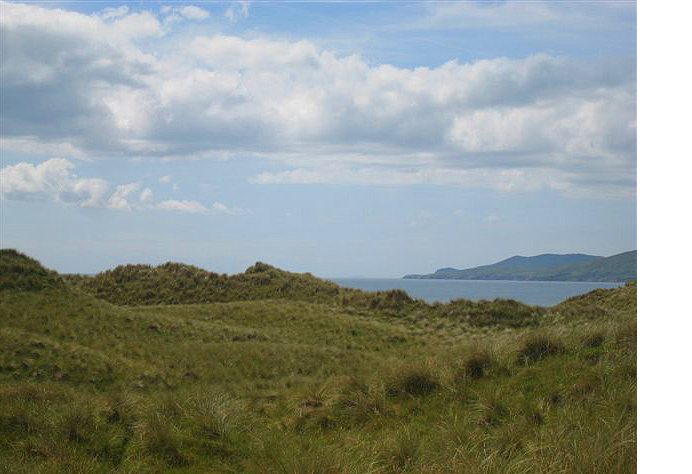
The would be site of #2 an Inch Island Links (golfclubatlas.com)

He even takes the time to talk about potentially the best links course in Ireland, Inch Island on the Ring of Kerry, that may never see the light of day because of the myopic views of the Irish Planning Authority.

Take ten minutes and read this interview.  You will come away a bit golf smarter as a result.

(Click to read the Ivan Morris feature interview from Golf Club Atlas)

Ivan Morris Interview
Golf Club Atlas.com
August, 2012

First Tee Glee

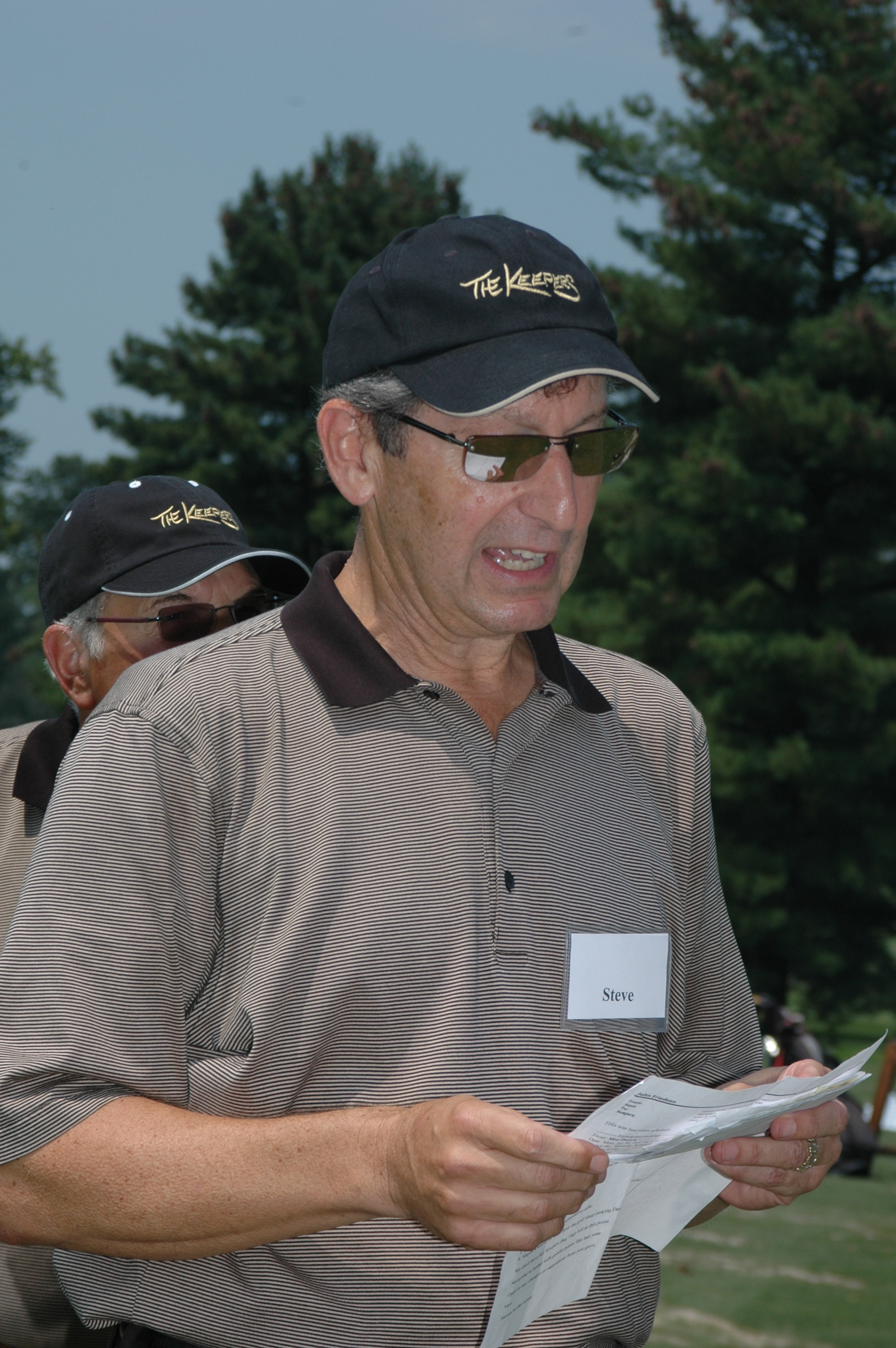
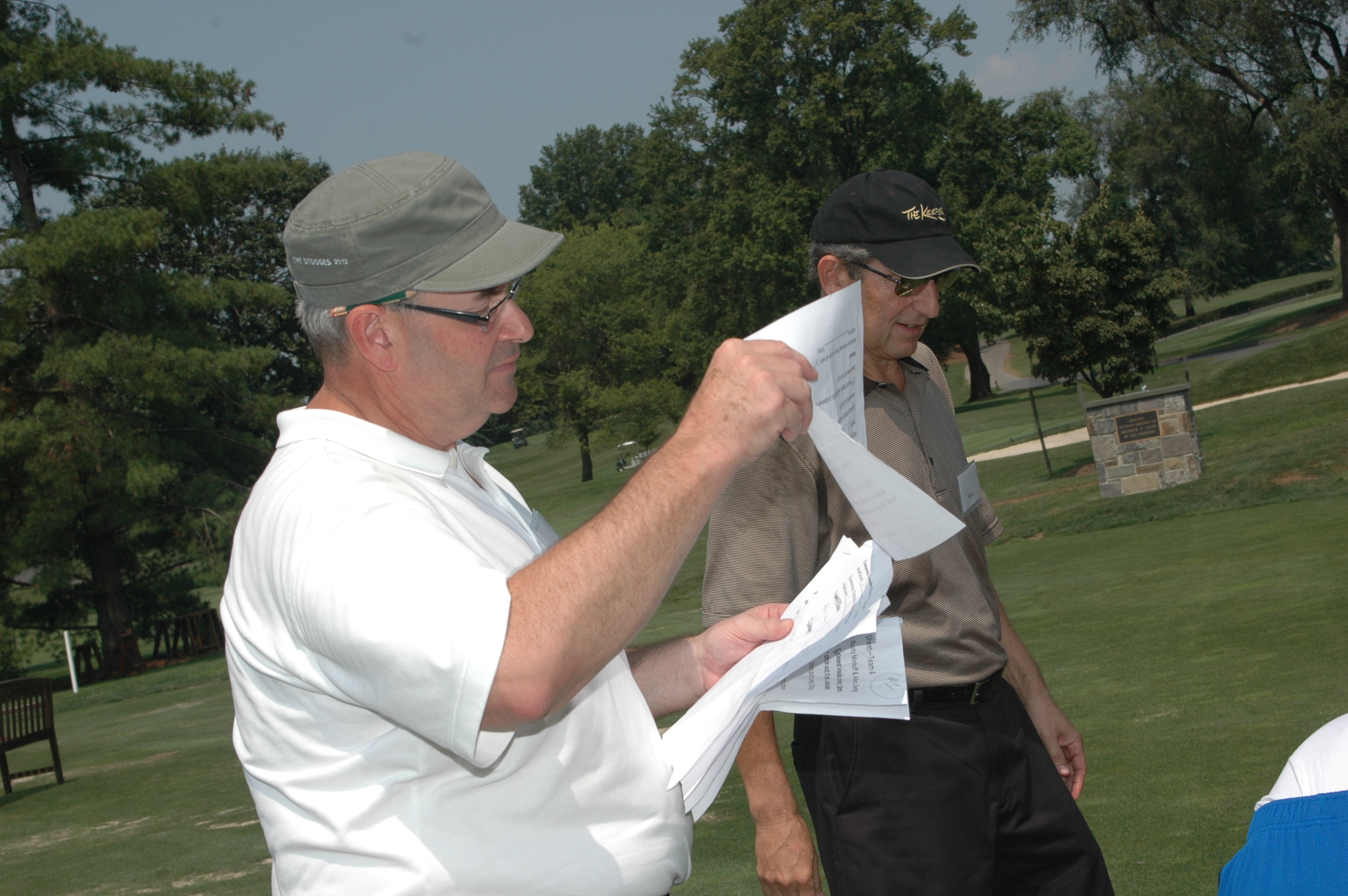
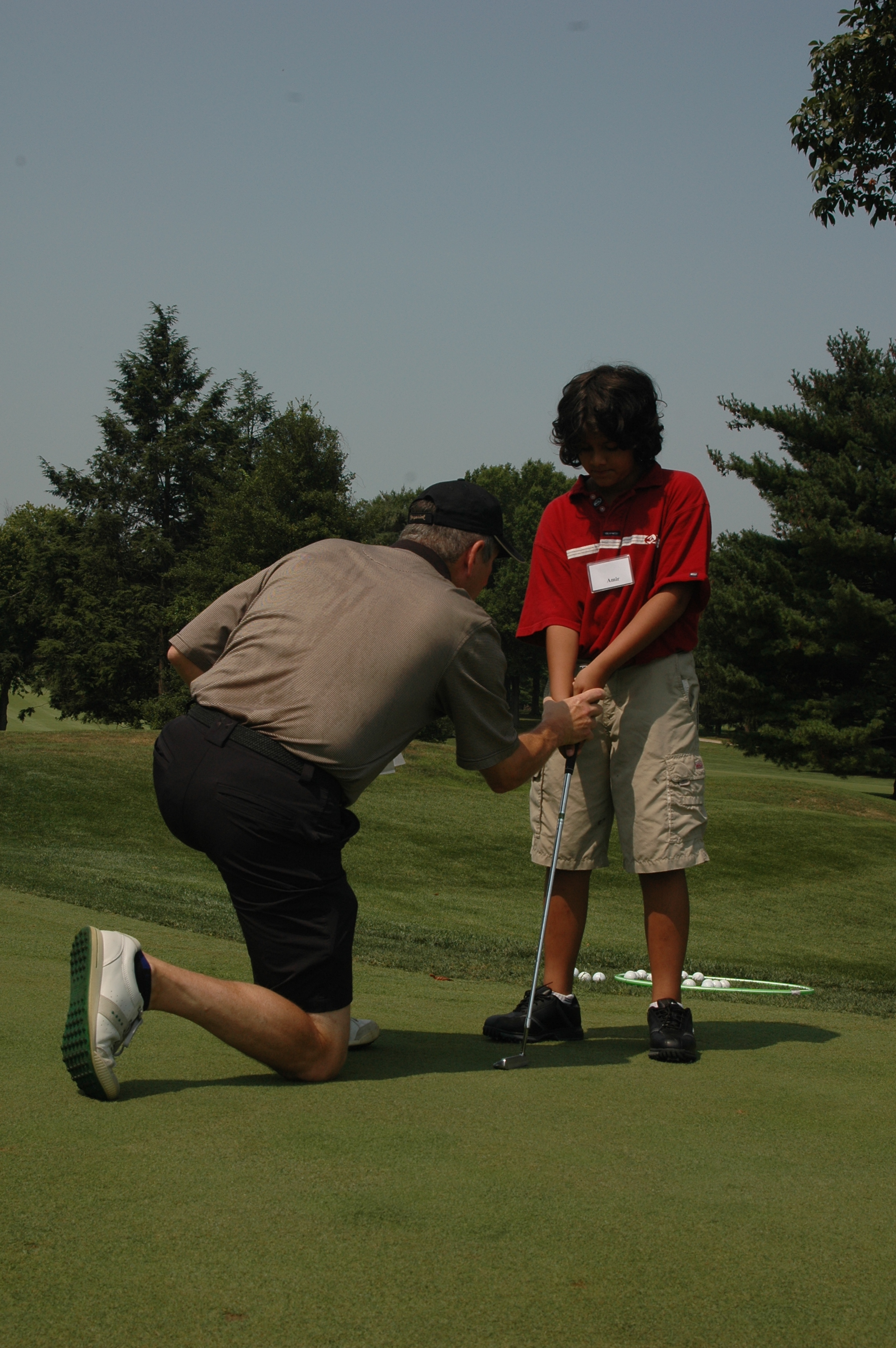
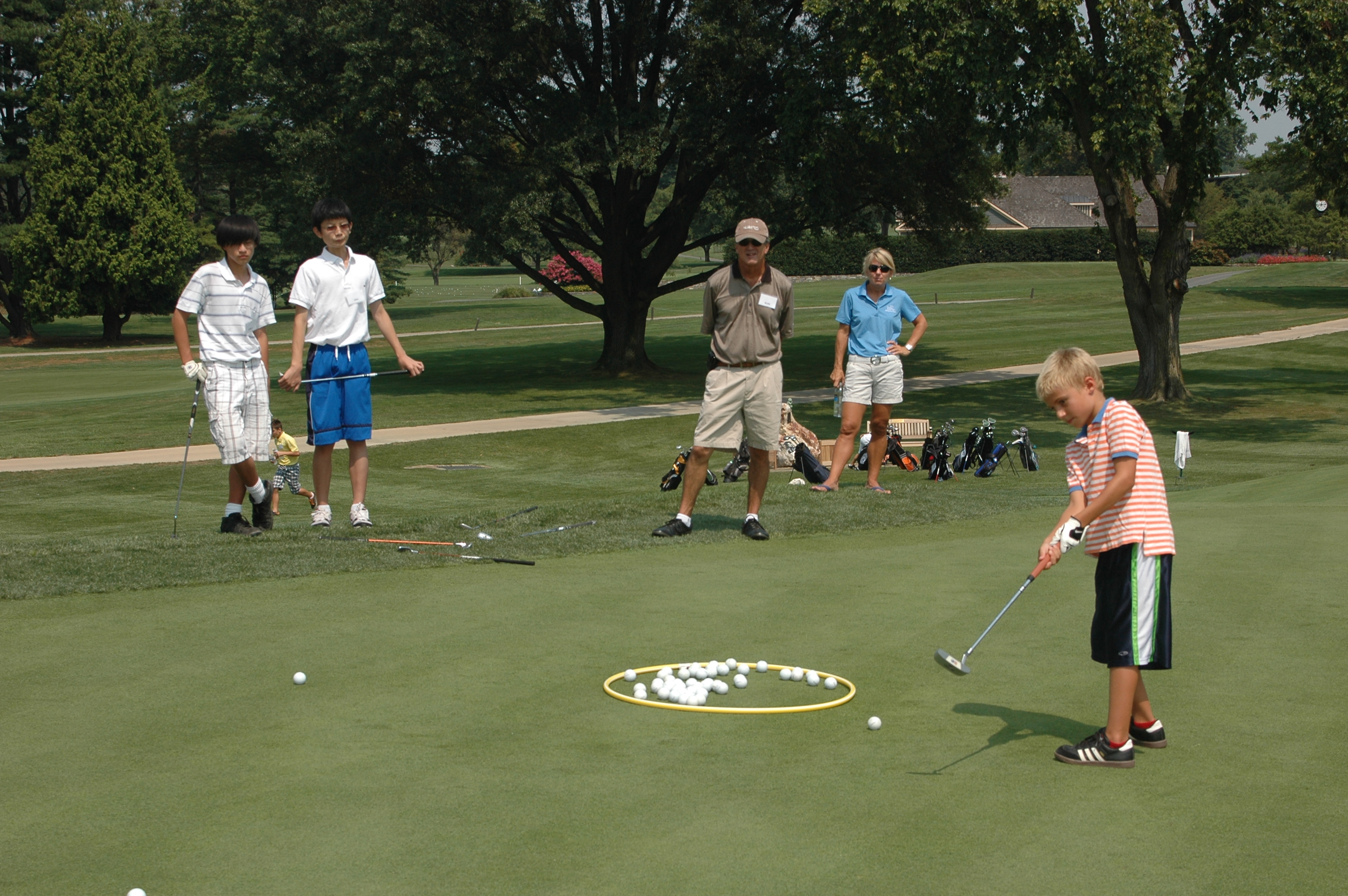
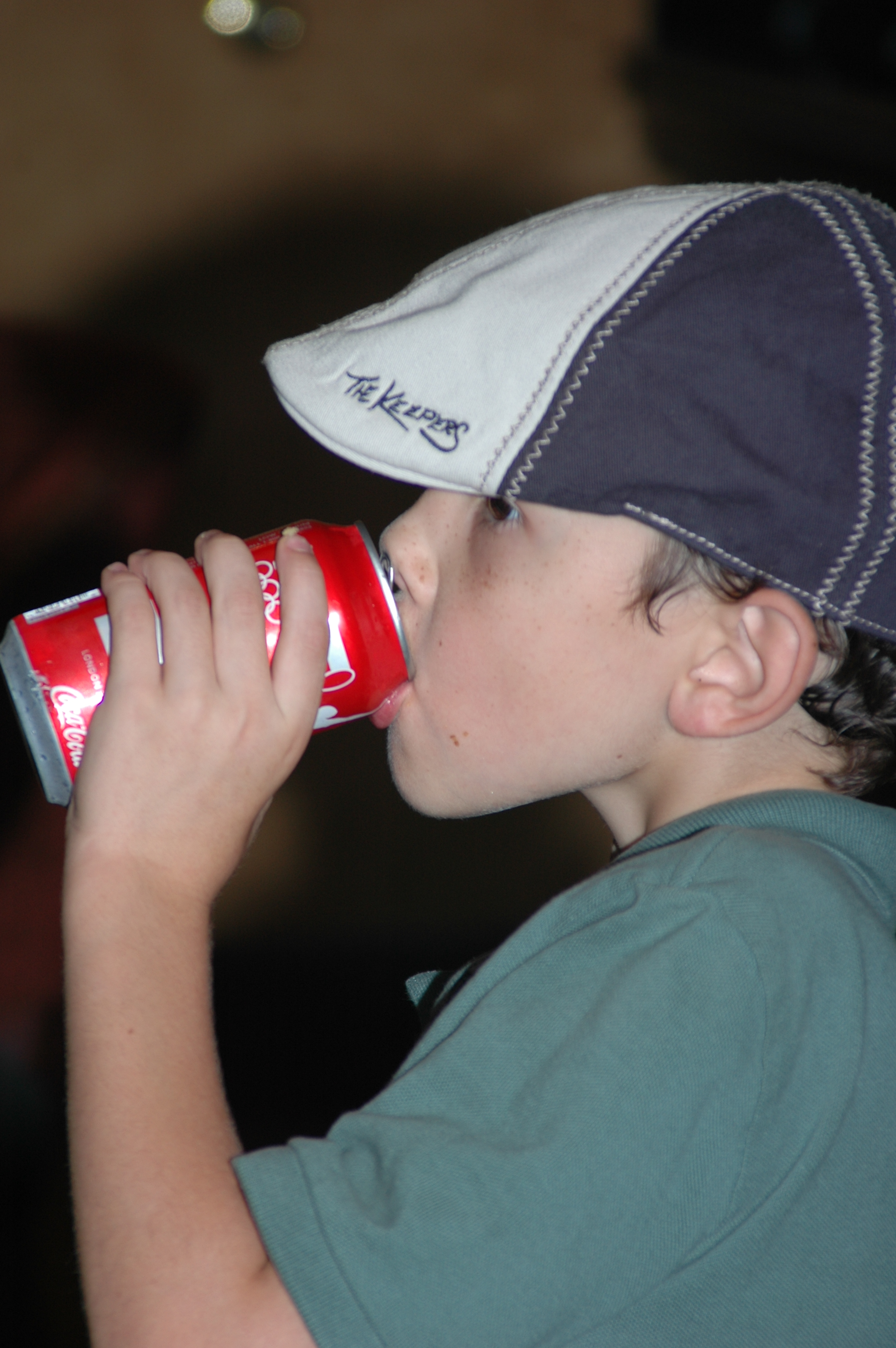
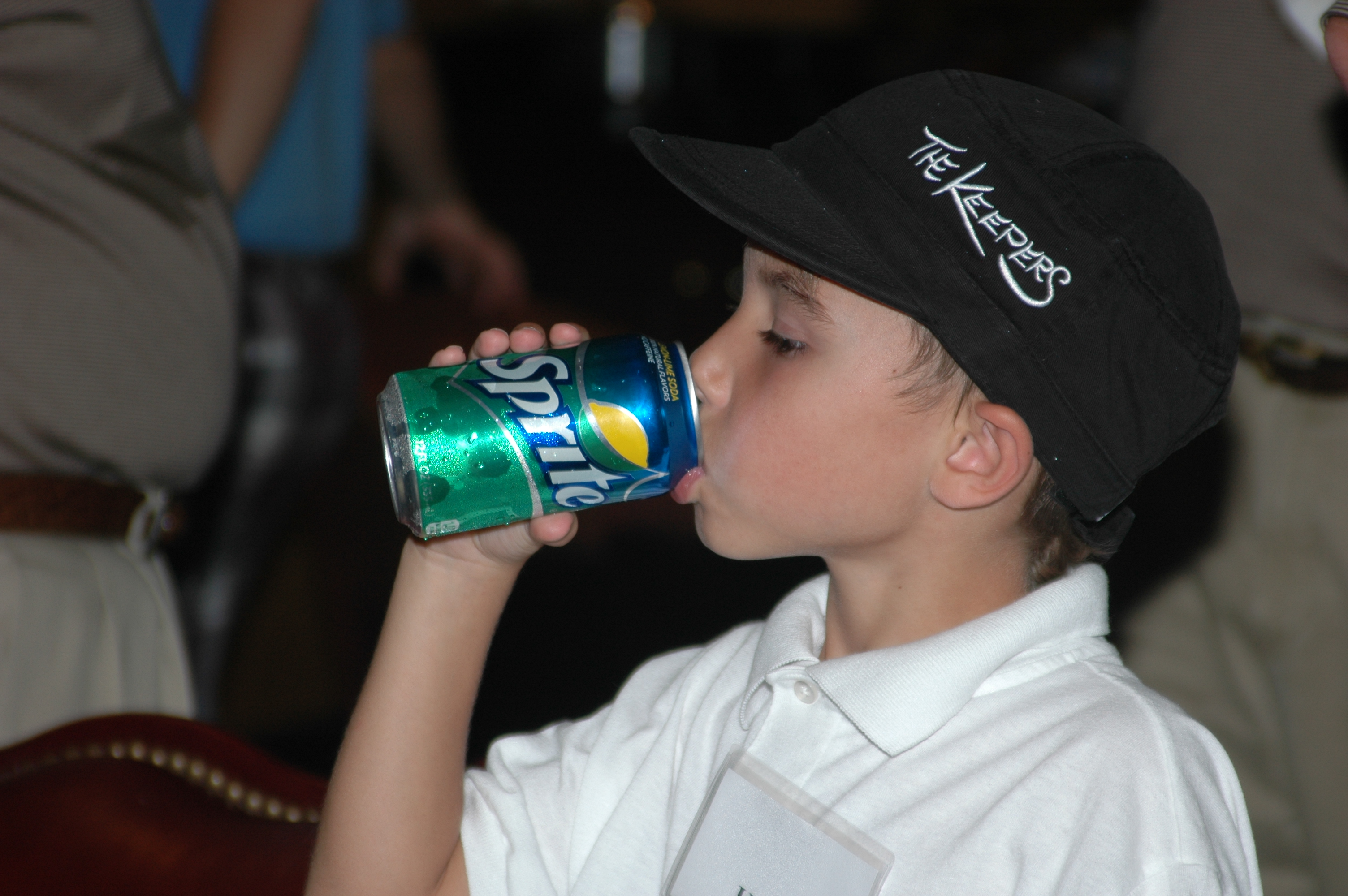
Every summer The Keepers, our men’s group from Woodmont Country Club in Rockville, Maryland, runs a mentoring outing at our place with the kids from the First Tee Program of Montgomery County.  The adults are flabbergasted every year by the golf maturity and enthusiasm of the kids, ages 8 to 15 years old, a testimony to the principles they learn through the First Tee Program.

The day entails some professional attention on the range, a short game competition, food, and seven holes of golf on our South Course.  At the end of the day The Keepers get as much out of this event as the kids-it is smiles and memories all around.

(photos courtesy of Rita Mhley)


It starts with organization.

And direction.

Some professional attention.


Mentor oversight.

Houston we have lift-off.

Maybe a bit of Marius Filmalter putting instruction.

Enthusiasm and support.

It is about the line.

And the stroke.

Kid’s got style.

Rapt attention.

Now that is a throwback look.

Some lemon refreshment.

Heading for home.

Lest we forget they are kids!

August, 2012
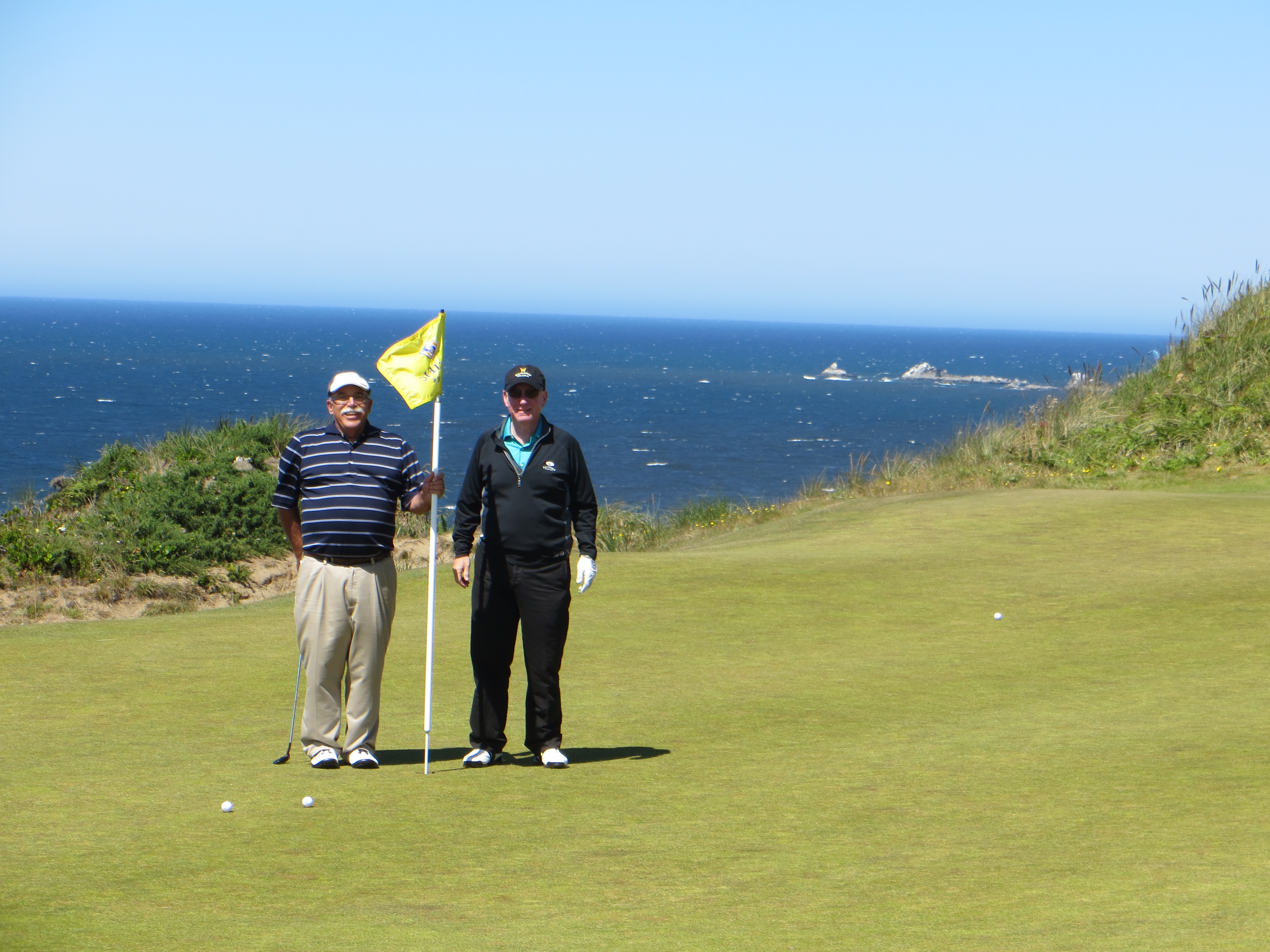
Ko Canada!

In what probably is the most amazing accomplishment in professional golf this year 15-year old amateur Lydia Ko bested a strong field of LPGA professionals winning the Canadian Open to become the youngest winner in history of an LPGA event. A year ago Lexi Thompson amazed us all winning the Navistar Classic at age 16-Ko beat that by a year and three months. This is the first time in 43 years that an amateur has won an LPGA event. The last person to do that was JoAnne Carner in 1969 and we all know what a storied professional career that lead to.

Lydia’s golf has been nothing short of spectacular the last two years. She has been the leading amateur in the world over that span of time. She won the Australian Amateur in January, 2012. A week later she won the New South Wales Open at age 14 to become the youngest ever to win a professional women’s event. She followed that in July finishing as low amateur in the U.S. Women’s Open at Blackwolf Run. Two weeks ago she won the biggest amateur prize of all, the U.S. Amateur at The Country Club in Cleveland, Ohio.

With a $2,000,000 purse this is one of the richest events on the LPGA Tour and it attracted all the top names including World #1 Yani Tseng, U.S. Open Champ Na Yeon Choi, Evian Masters winner Inbee Park, and #2 on the Money List Stacy Lewis.

Lydia played flawlessly all week shooting 68-68-72 to earn a one shot lead going into the final round. Everyone figured she would buckle under the pressure. But, against all odds, she waxed the field on Sunday, running off four straight birdies to start the inward nine on her way to 67 and a 3-shot margin of victory.

Ko played like a steely veteran not a giddy teenager which was not lost on the professionals whose lunch she ate. As is the custom on the LPGA Tour with a first time winner the other players doused Lydia after she made the winning putt on the 18th green. Albeit with water and not champagne. I guess they were respectful of her being underaged.

Since she is an amateur Ko got bupkis of the $300,000 first place money, the beneficiary of that was Inbee Park who finished top professional at 10 under par. But for her win Lydia Ko got a shiny silver trophy and an invite to the prestigious year-ending CME Group Titleholders invitational in November in Naples, Florida. Word is she is going to play in the Ricoh Women’s British Open next month. She may need to get a hall pass from her high school principal to play but, after what we have seen so far this summer, I would not bet against her winning her first major before she is 16.

August, 2012

Postscript From Bandon Dunes

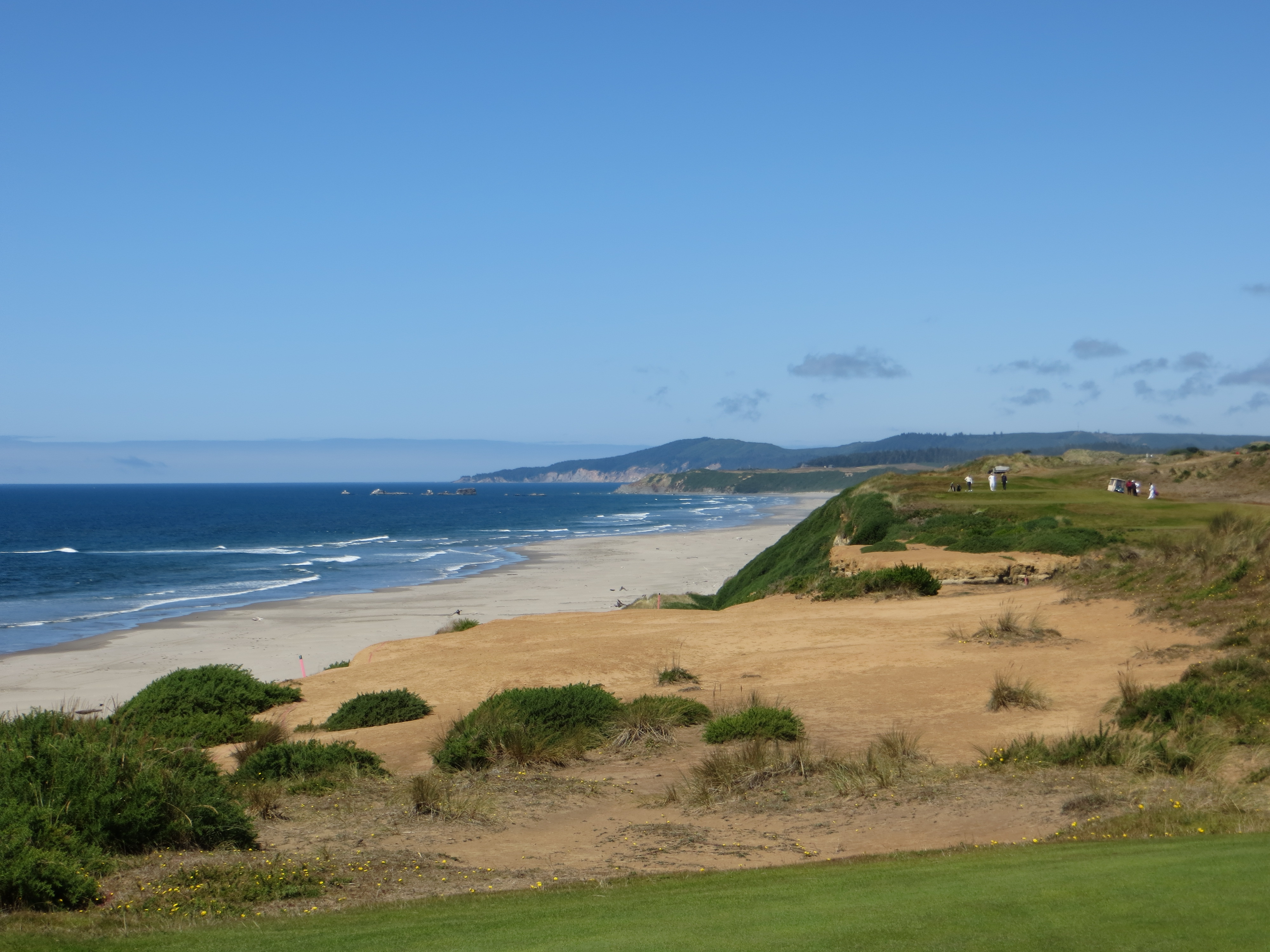
It has been and will be called everything, but Bandon Dunes is simply a perfect golfing atmosphere.  It is all golf, walking, and memories waiting to happen set on some of the most tranquil dunes you will find anywhere in the world.  If you just came, sat in the Lodge dining room, and stared at the seaside landscape of #10 in front of you it would be all the tonic you need to settle your urban soul.  Hats off to Mike Keiser for dreaming the dream and making it a reality for all of us to enjoy.

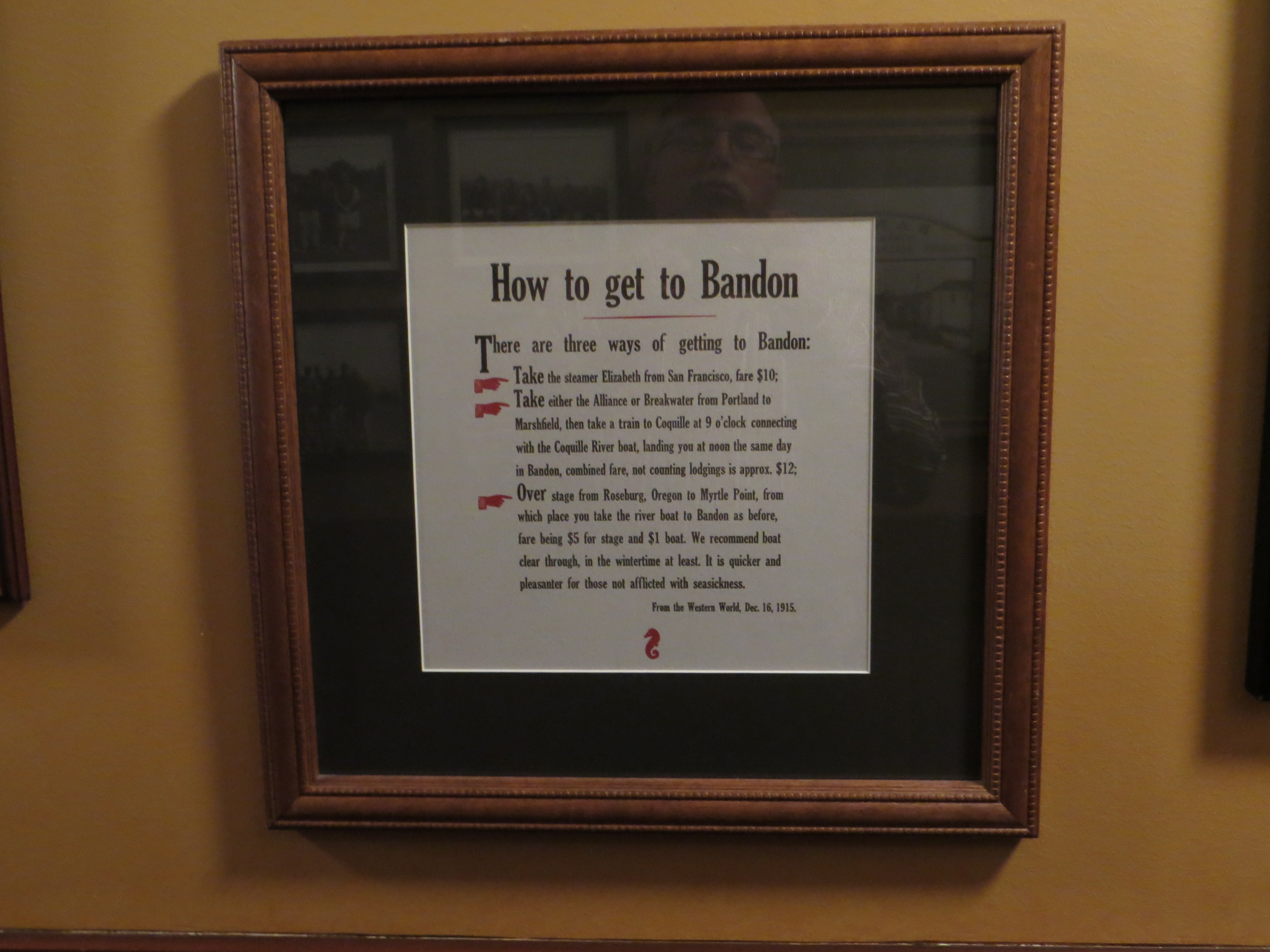
How to get to Bandon….circa 1915.

We came by rental car.

First check each day.

What to avoid.

Nothing is still out there.

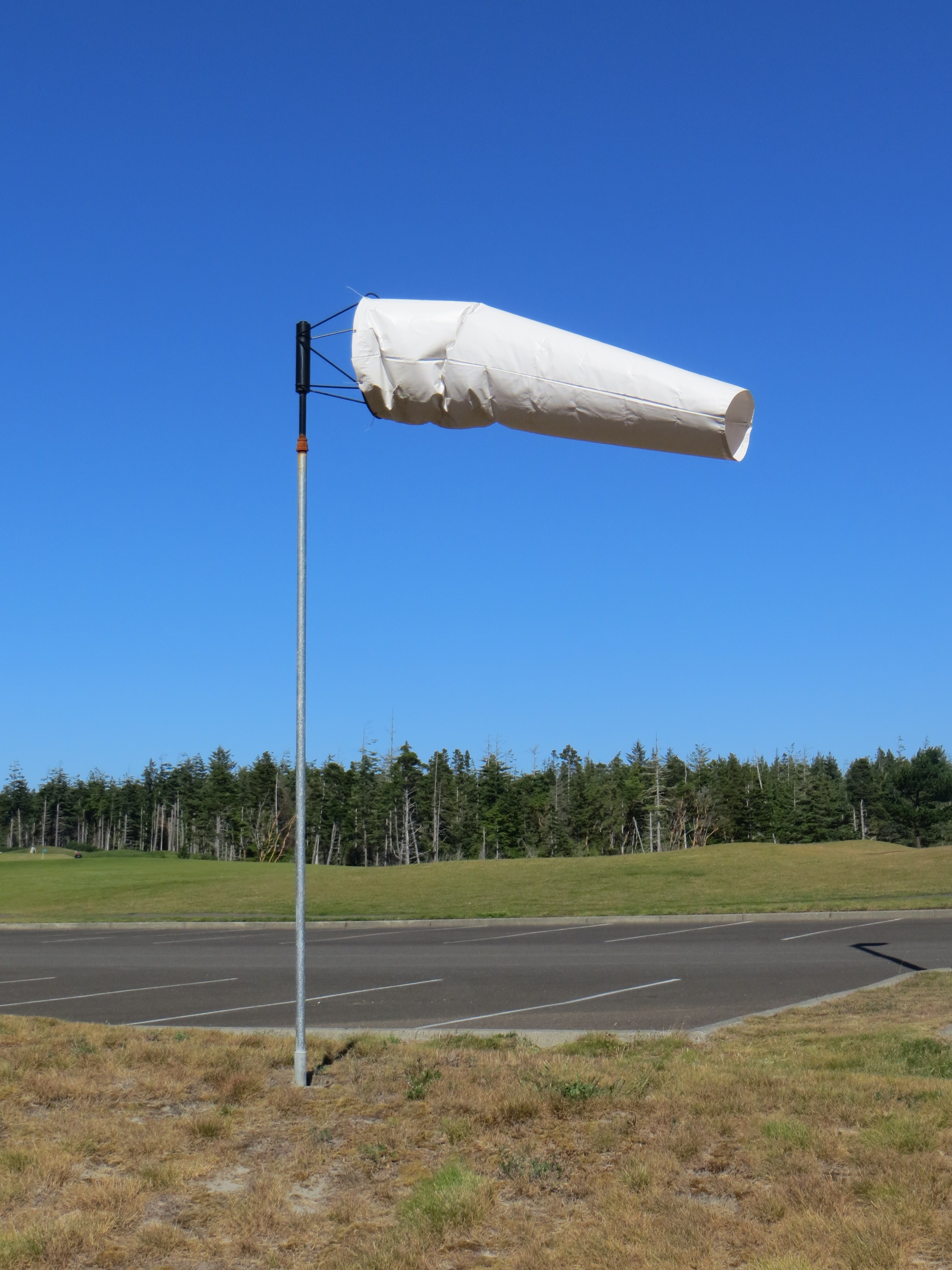
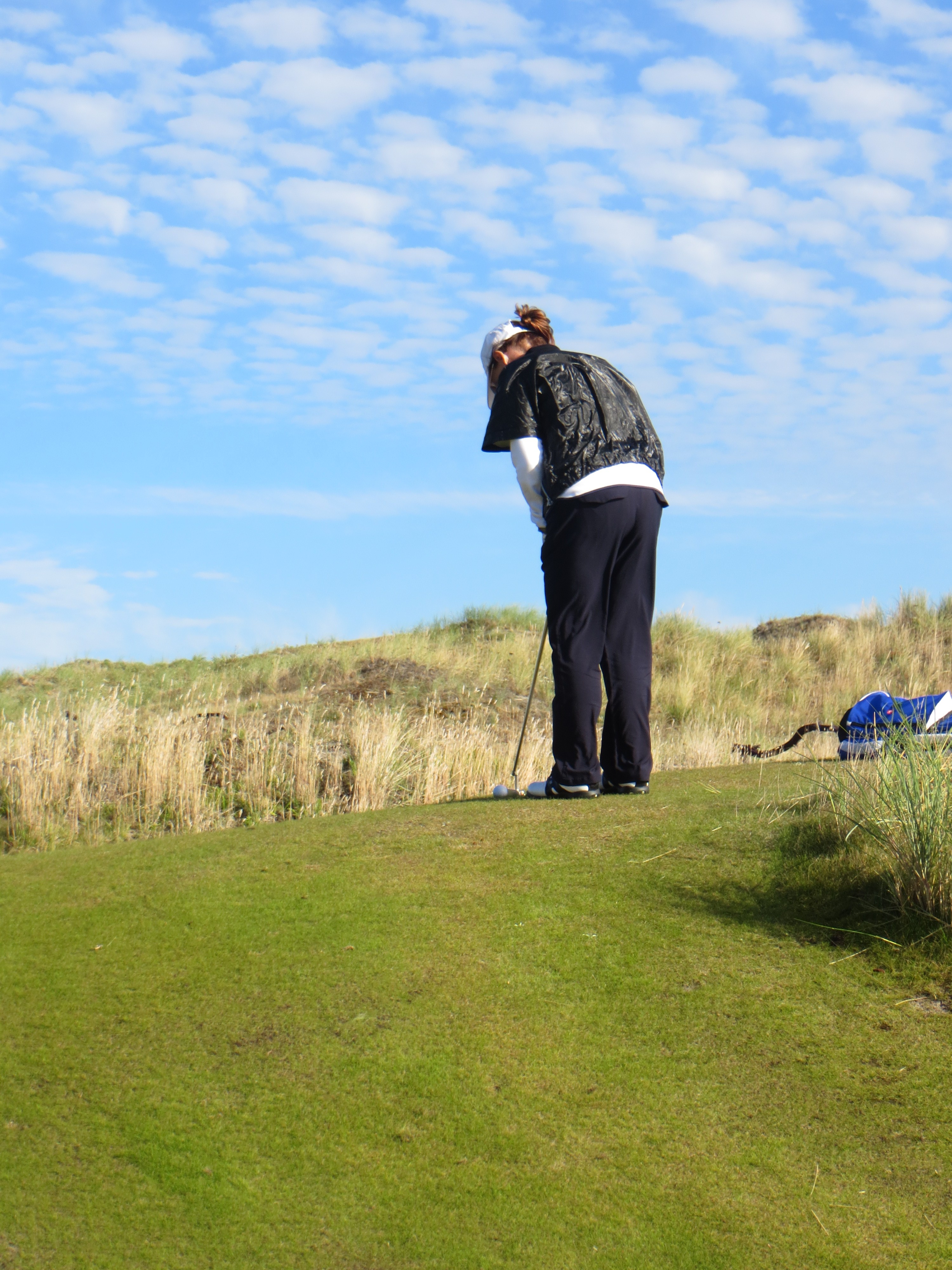
In this wind you putt from everywhere.

Keen interest.

Enough happiness to go around.

Distraction.

Replenishing.

First at Bandon Trails has the look of Enniscrone in Ireland.

Intimidation…….on the Par 3 course at Bandon Preserve.

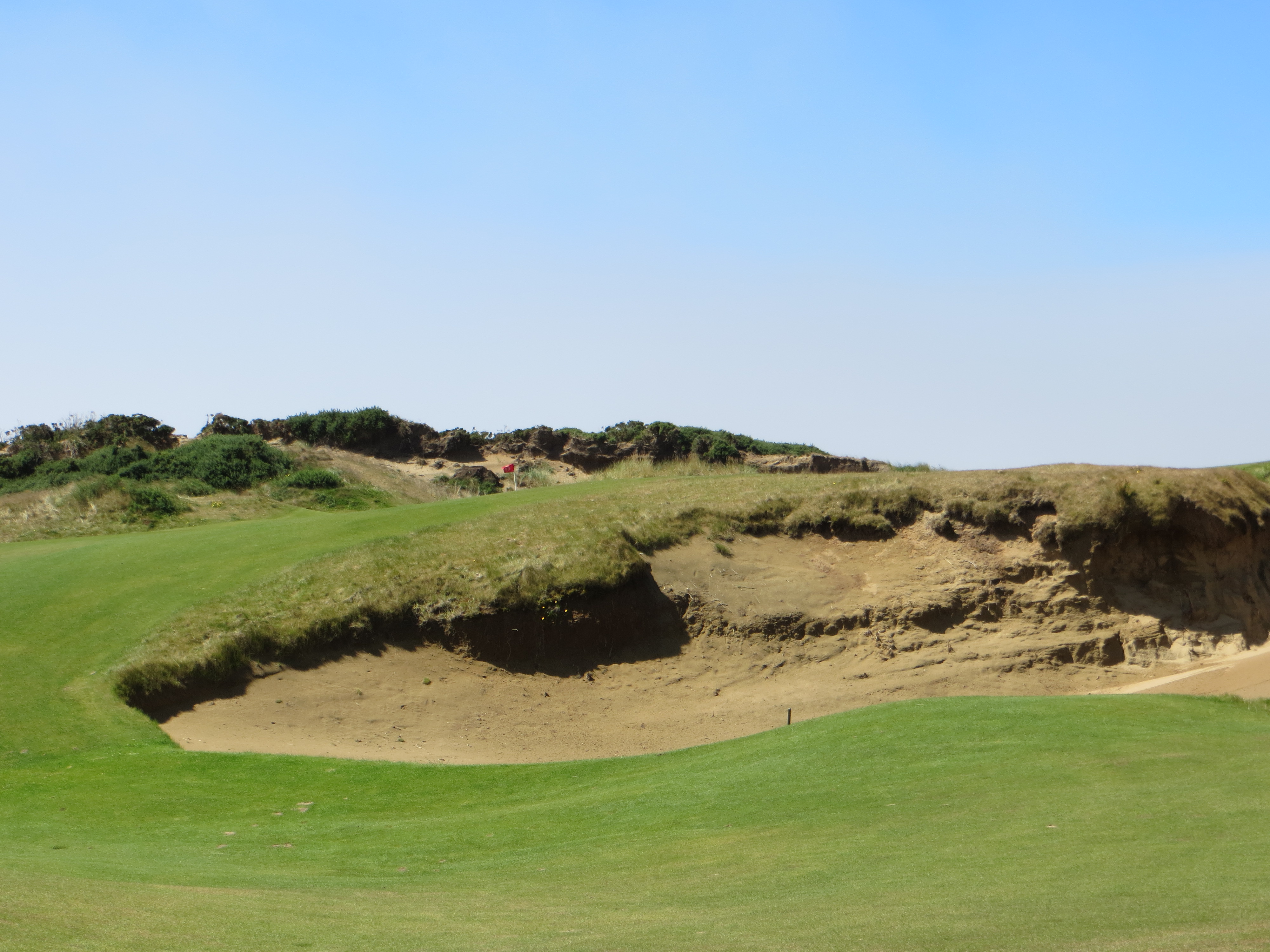
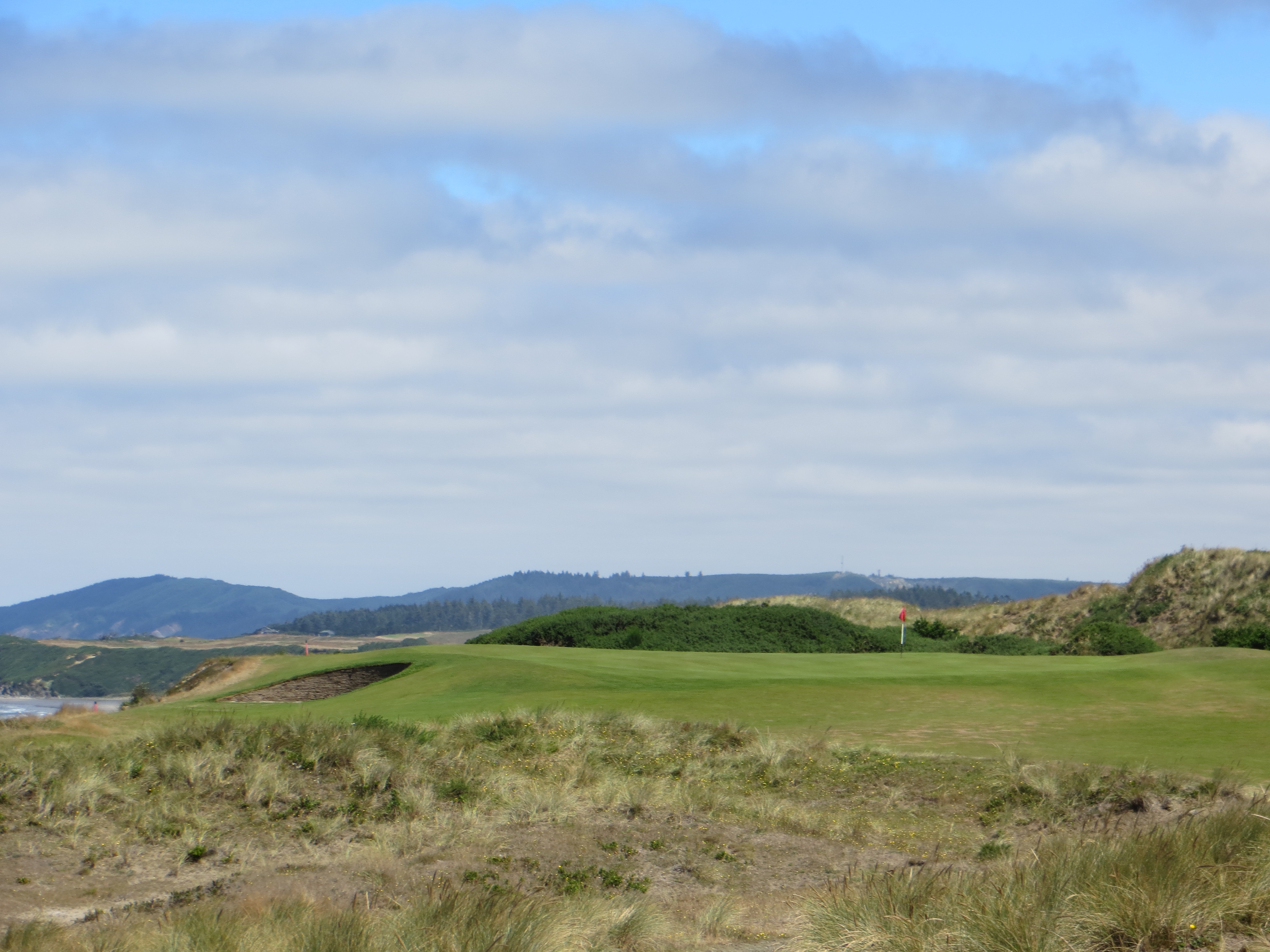
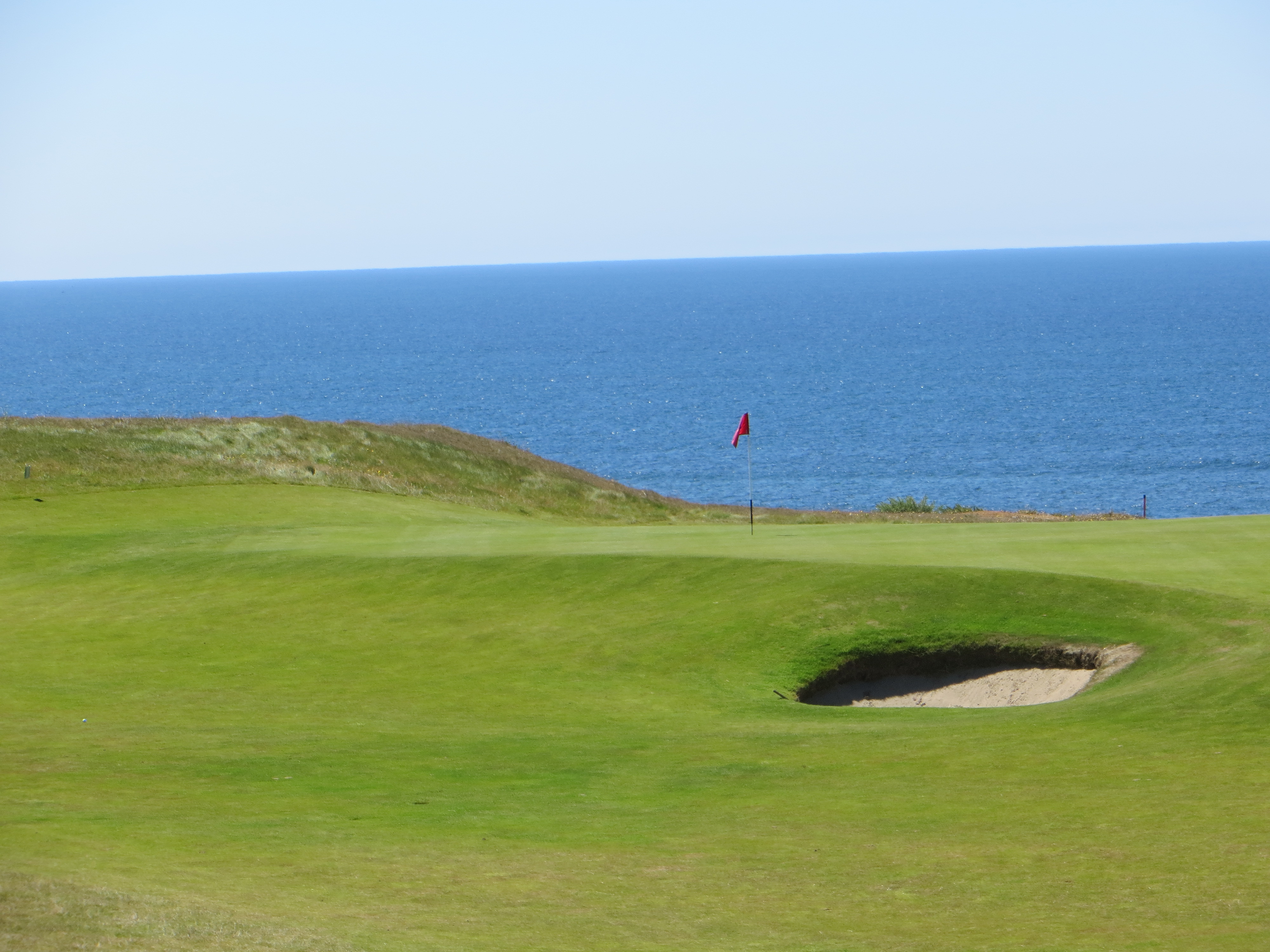
Pacific Dunes #2…Doak says it has all the links elements in one serving.

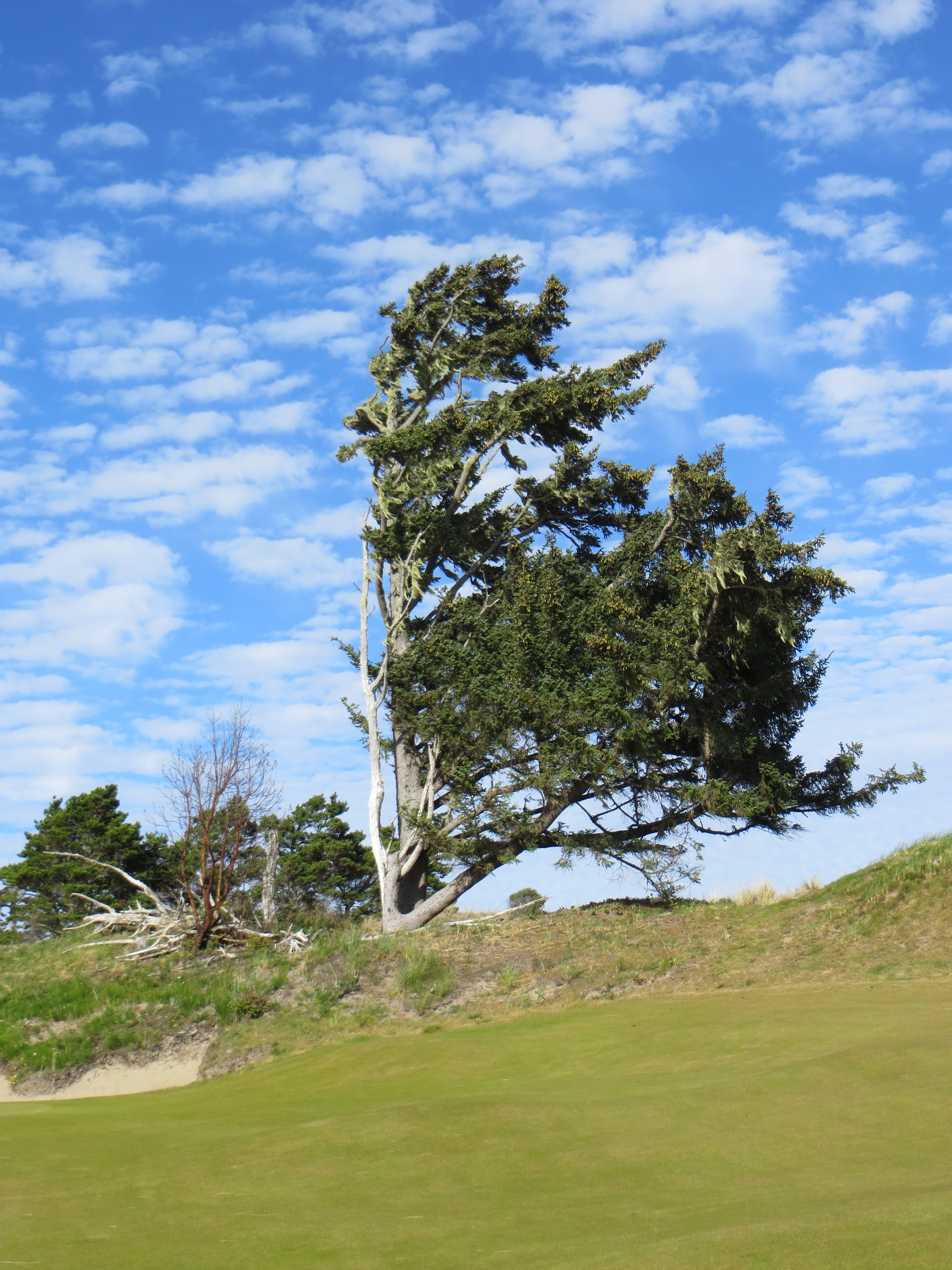
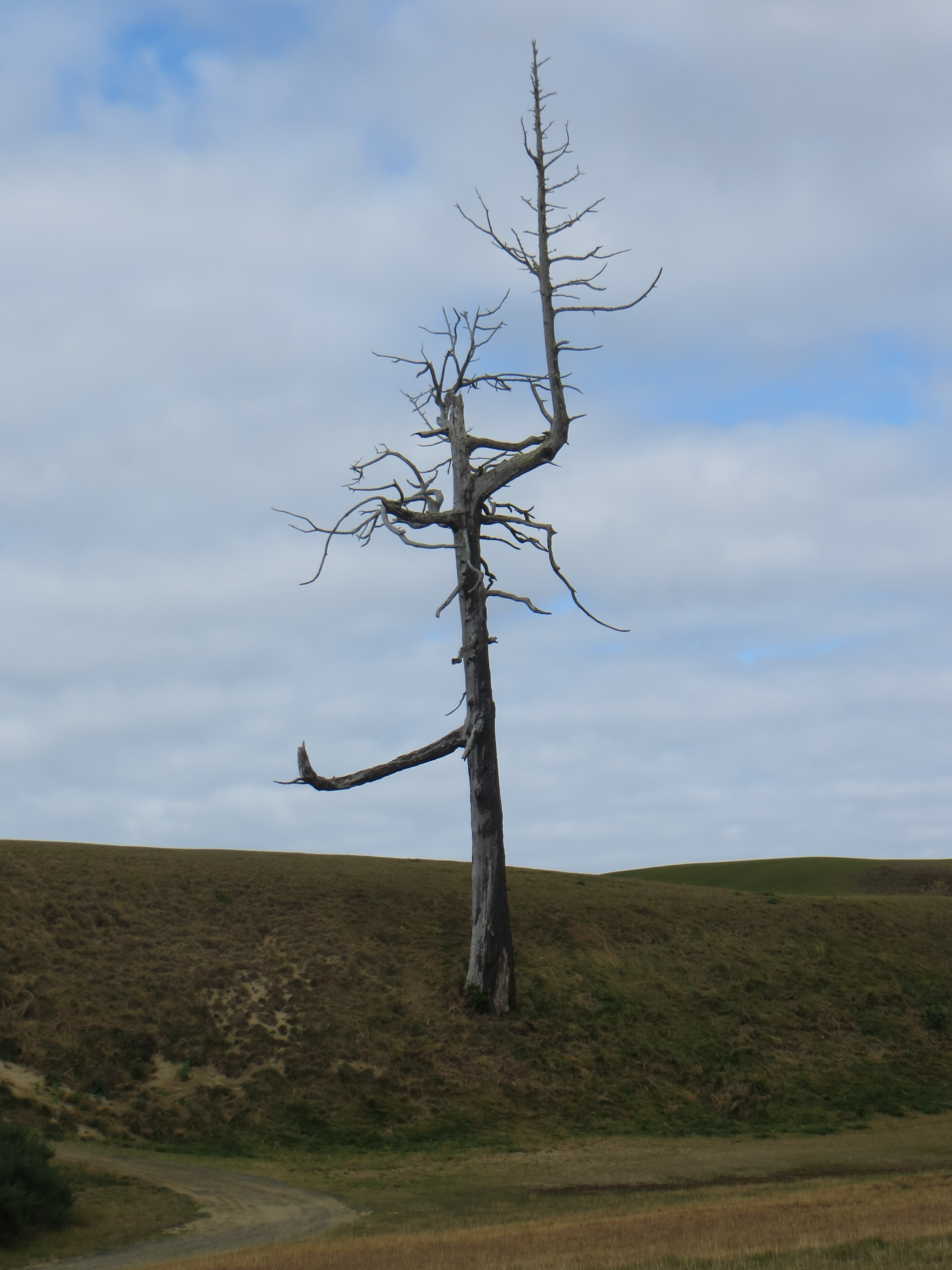
This Ghost Cedar haunts the early holes at Old Macdonald.

This green complex needs an escalator.

There are no exits forward.

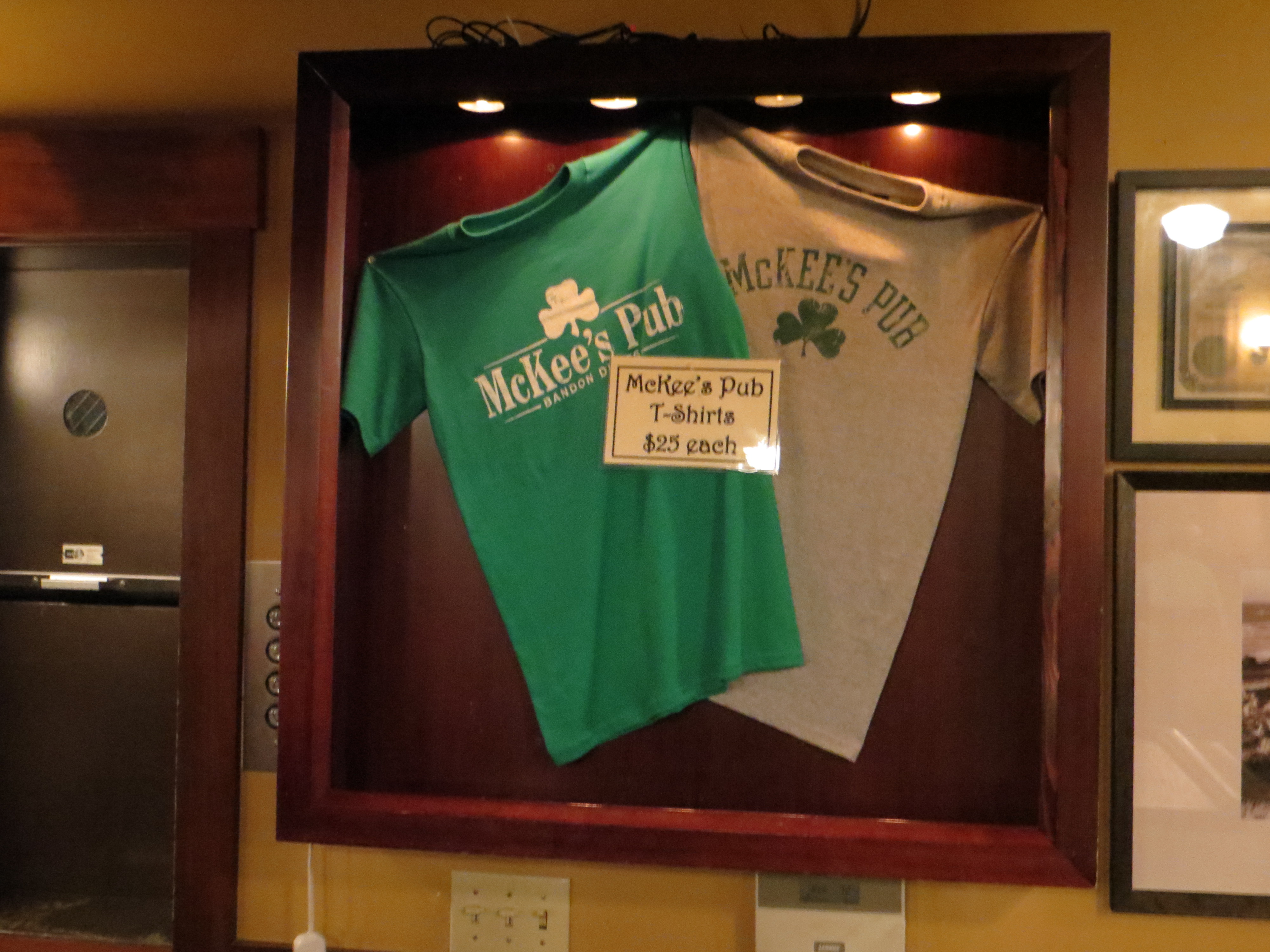
McKees Pub….adult refreshment and more.

More……

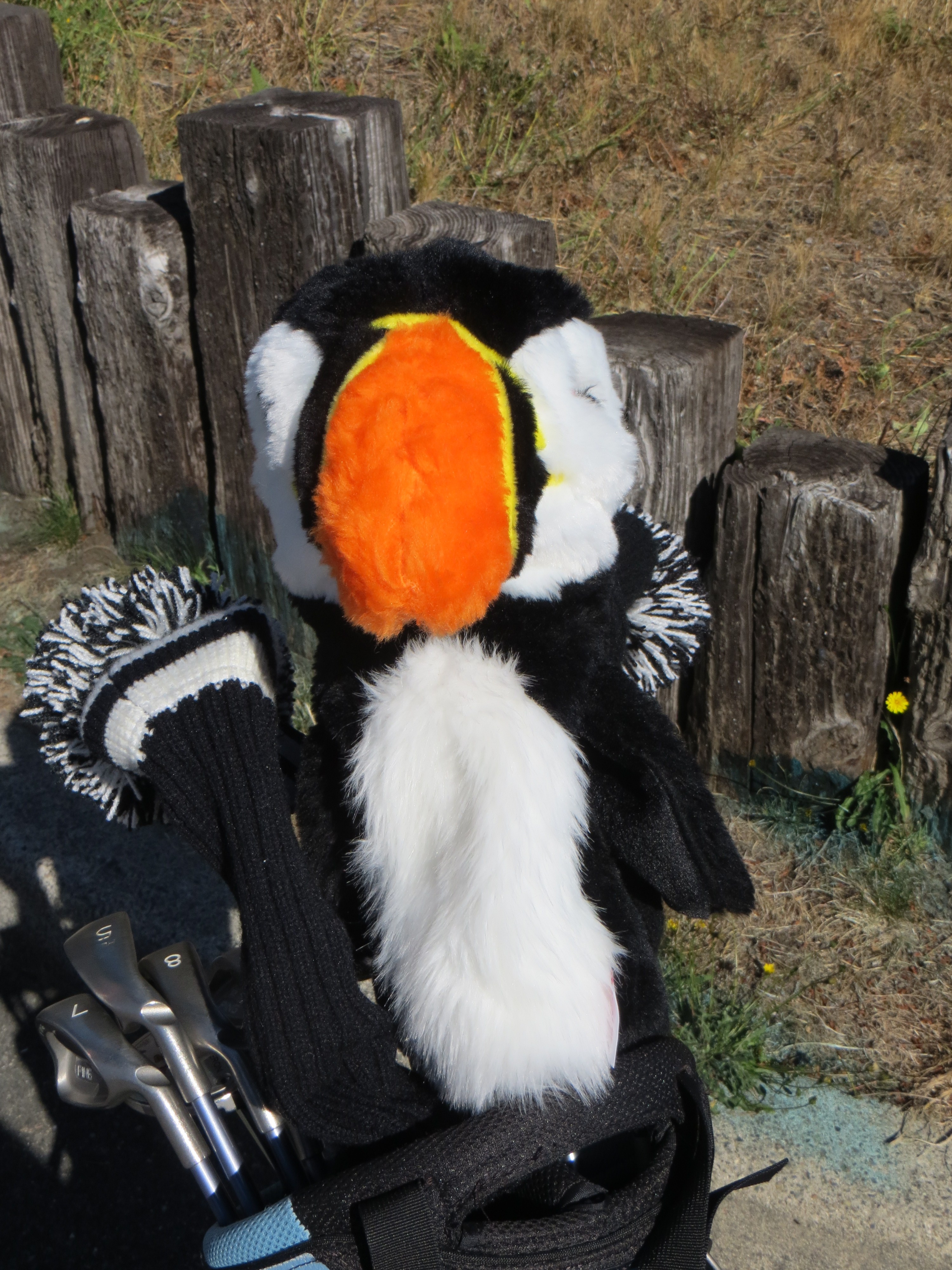
Plenty to buy….including the Puffin.

Sheep says Good-Baaaaa to departing visitors outside Eugene Airport

Last look….into the setting sun at Bandon Dunes.

August, 2012
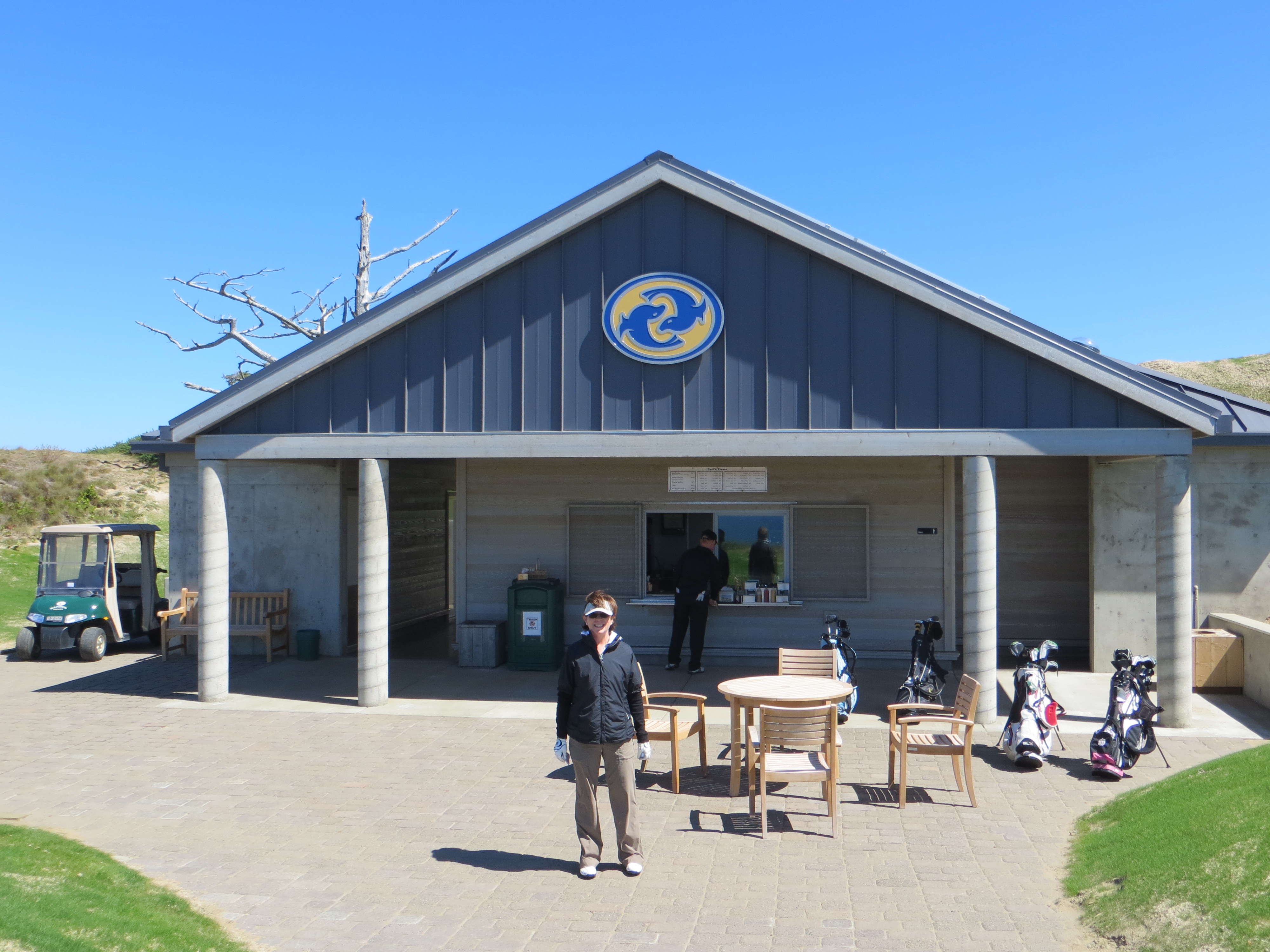
Postcard From Pacific Dunes-Day 4

These days Pacific Dunes is the most talked about course in Bandon.  It packs the most dramatic dunes on the property many of which are smothered with gorse creating
hallway walls that ensconce the fairways defining the holes.  From the minimalist school of golf architecture, Tom Doak coaxed natural bunkers, used existing mounds and swales for contours, and accented it all with the sea grass and foliage that is native to the Oregon coast.  The ocean front vistas create memorable seaside holes which will take your breath away.

The course presents an amazing variety of holes in an intriguing sequence.  The back nine par 35 has only 2 par fours, 4 par threes, and 3 par fives.  If the wind is down the short holes give real scoring opportunities…if it is up, as it usually is, the shot factors required on the short holes increase geometrically…as can your score.

Pacific Dunes is a seaside links experience in the tradition of the Irish classics like Ballybunion, Waterville, and Royal County Down.  So pour yourself a Guinness when you are done.

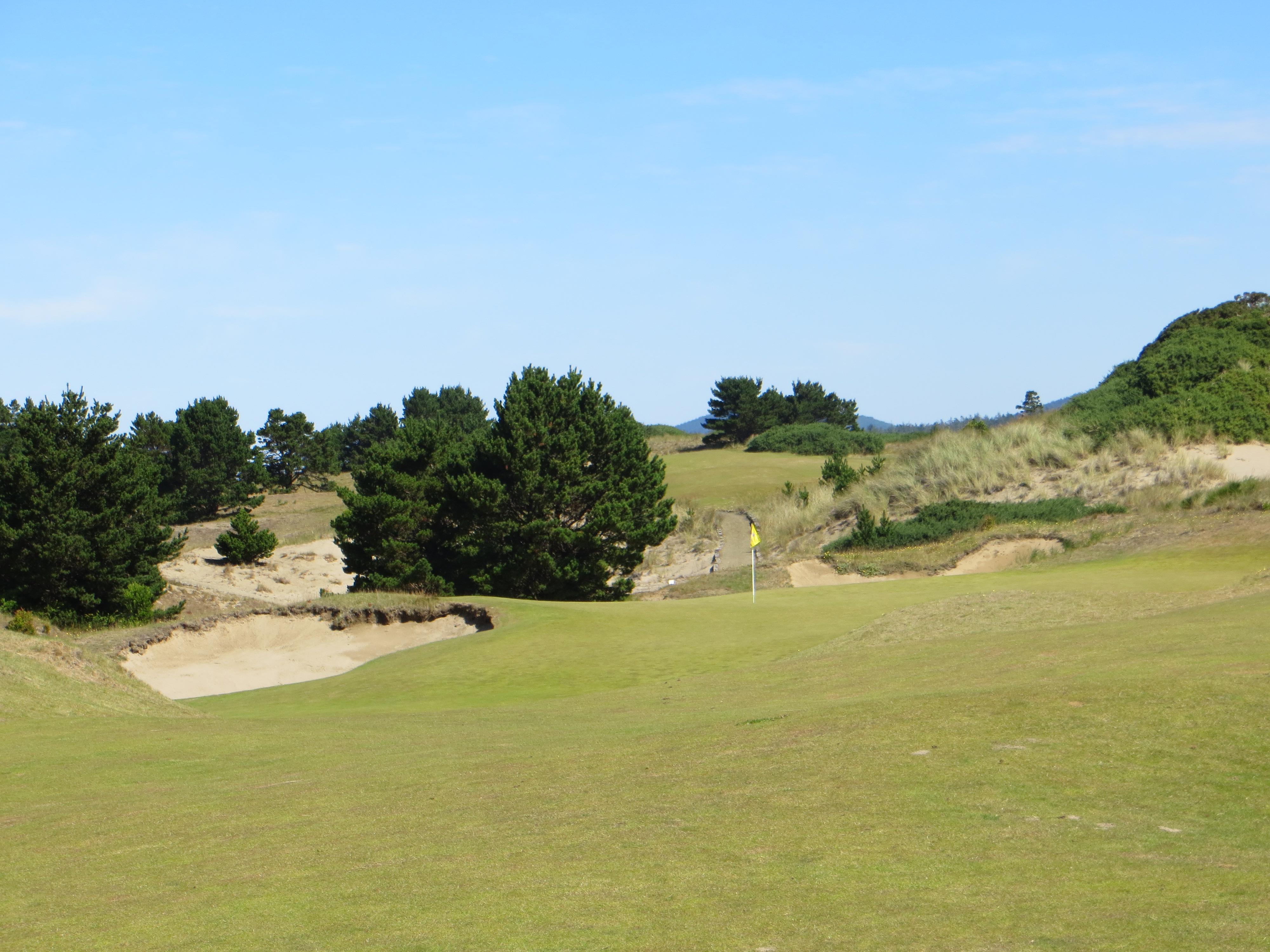
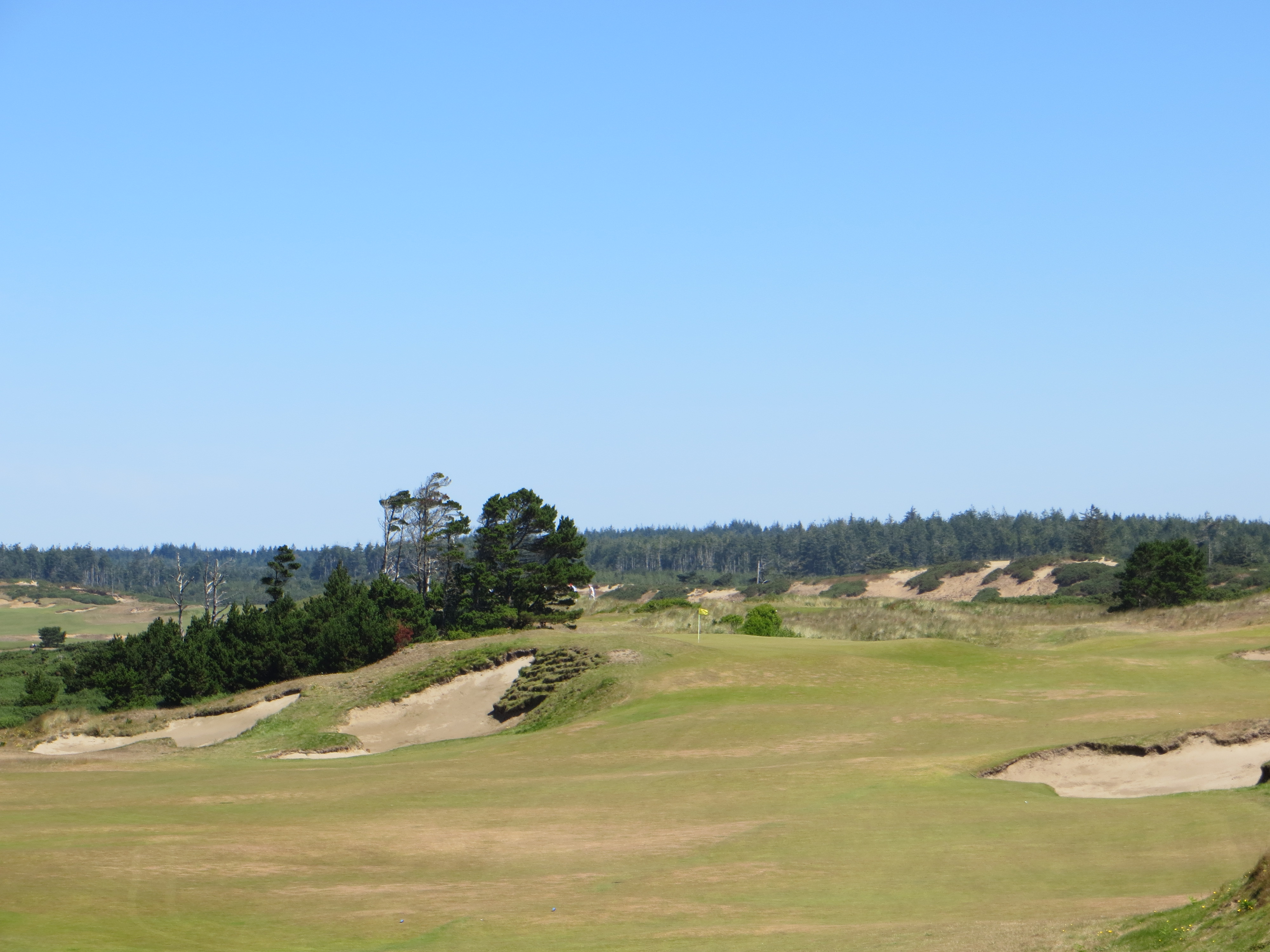
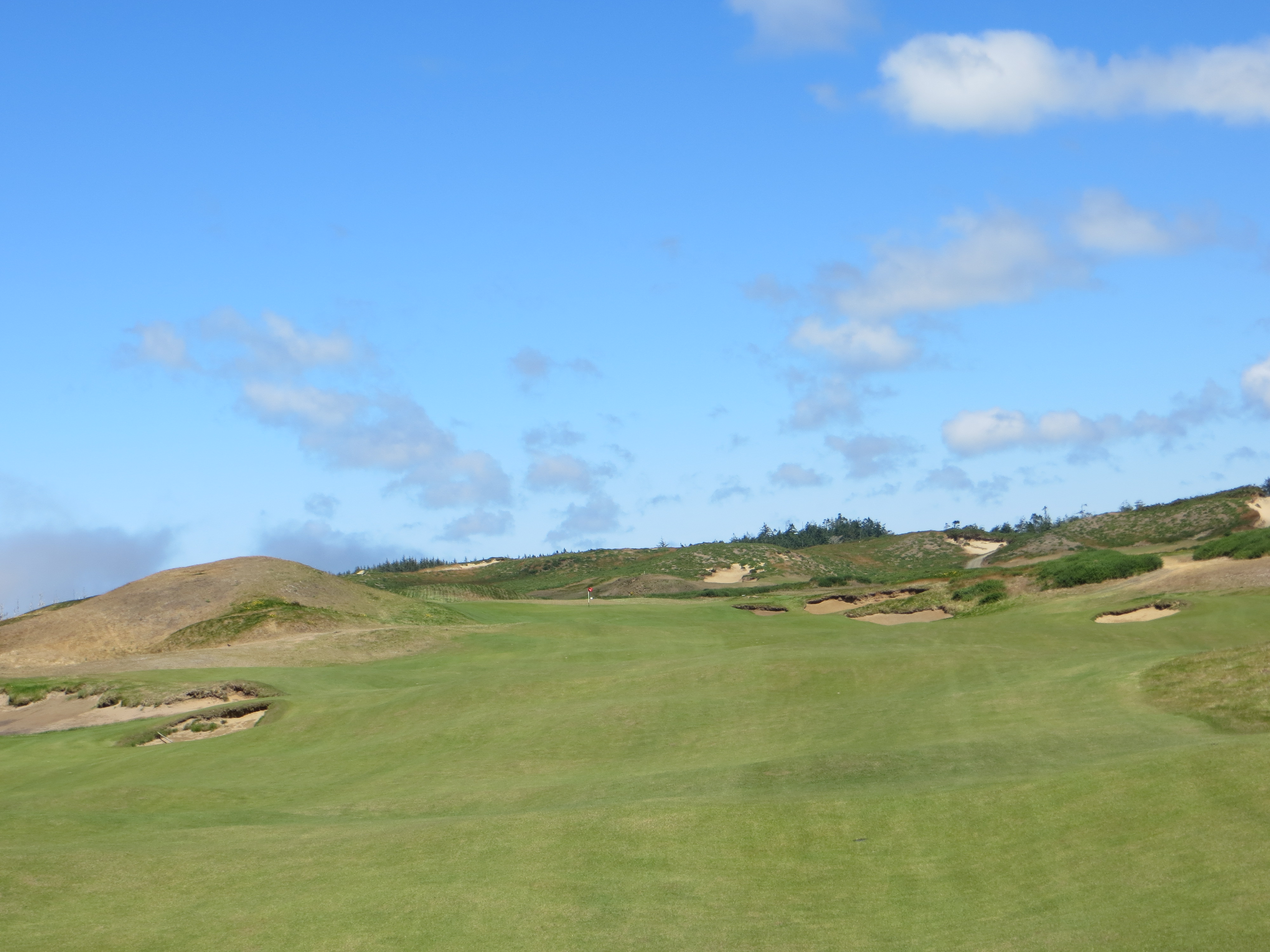
All the links elements are evident on the opening hole.

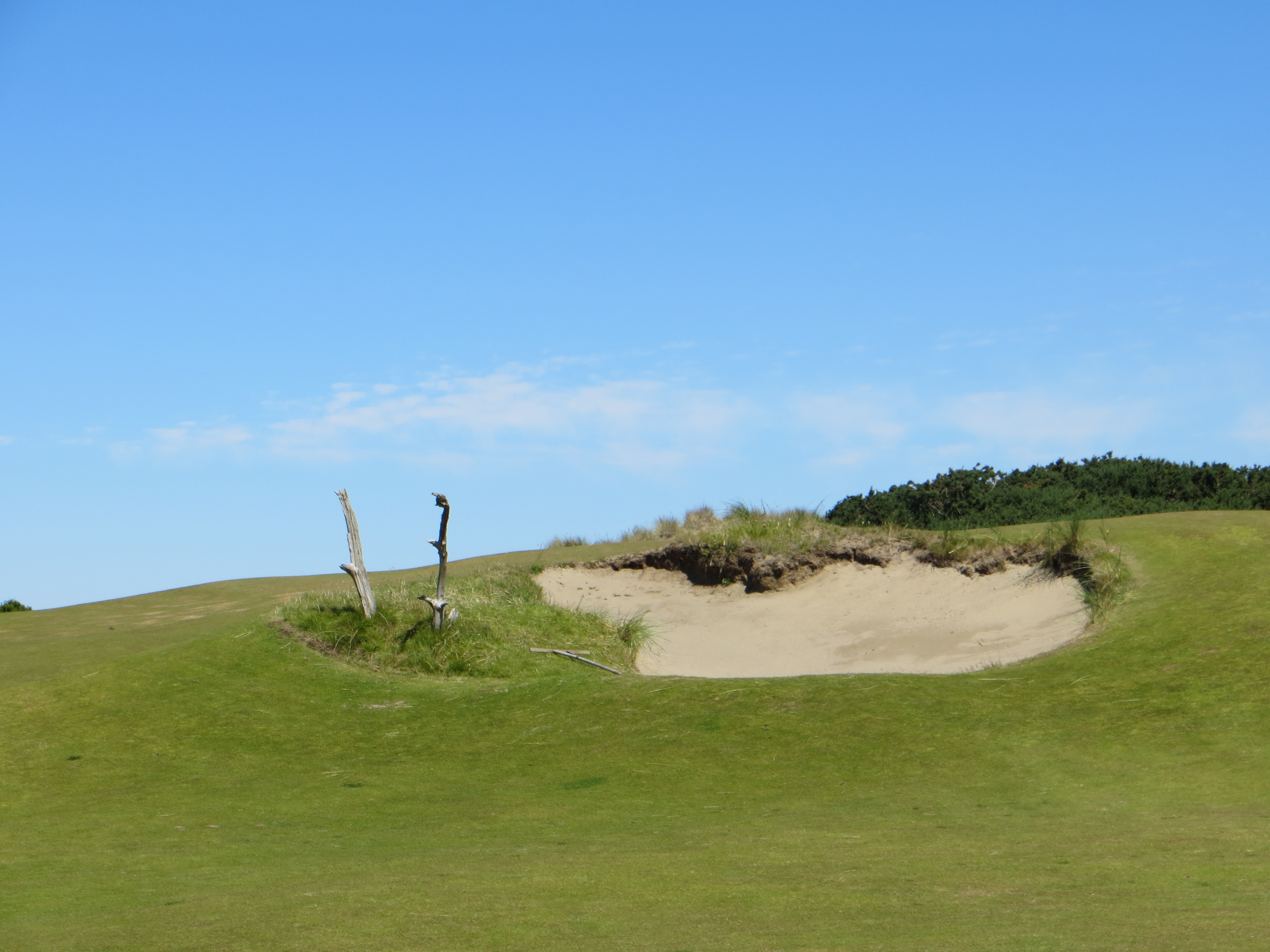
Shoe Bunker was hand sculpted by Bob Gaspar one of Doak’s long time operatives.

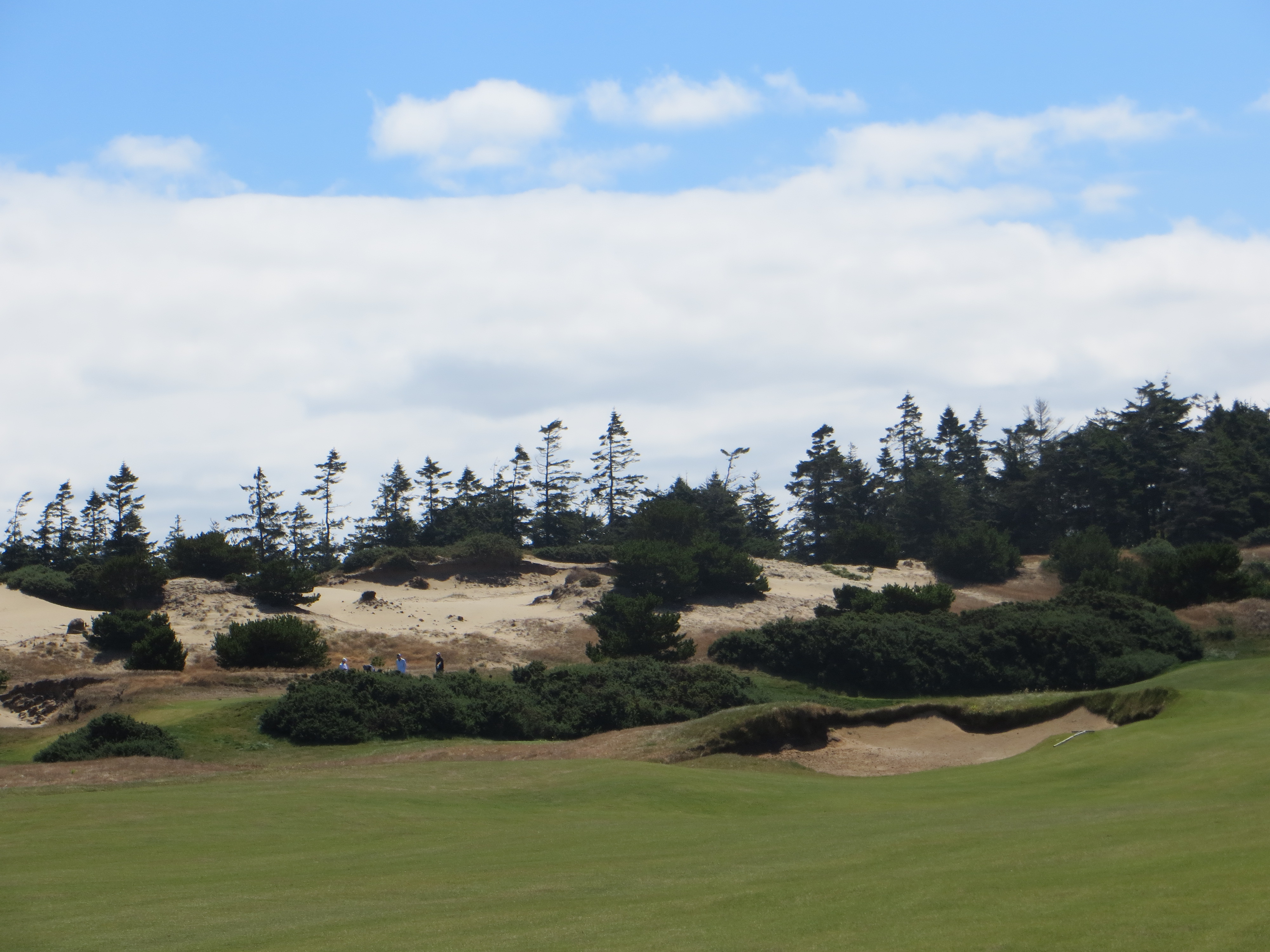
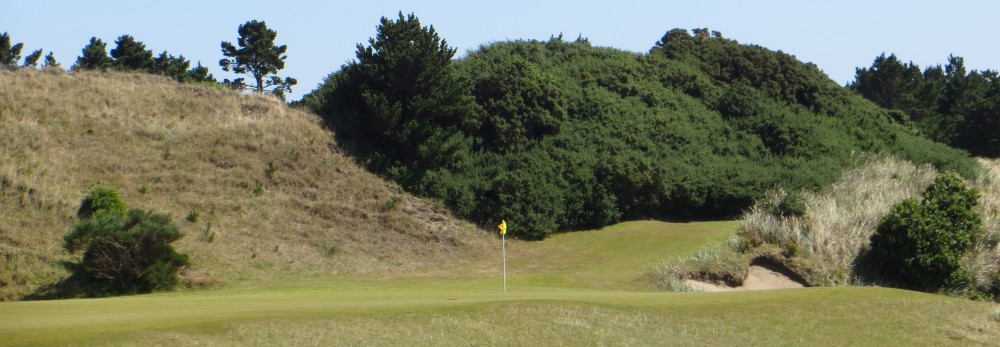
Gorse covered dunes delineate many of the holes.

A “Hanging Chad”…..where is one more breath of wind when  you need it?

Sea grass accents the par 3 fifth hole.

Short par four sixth has a cavernous bunker protecting a three story green.

Everything but trolls and burning oil protecting this green setting.

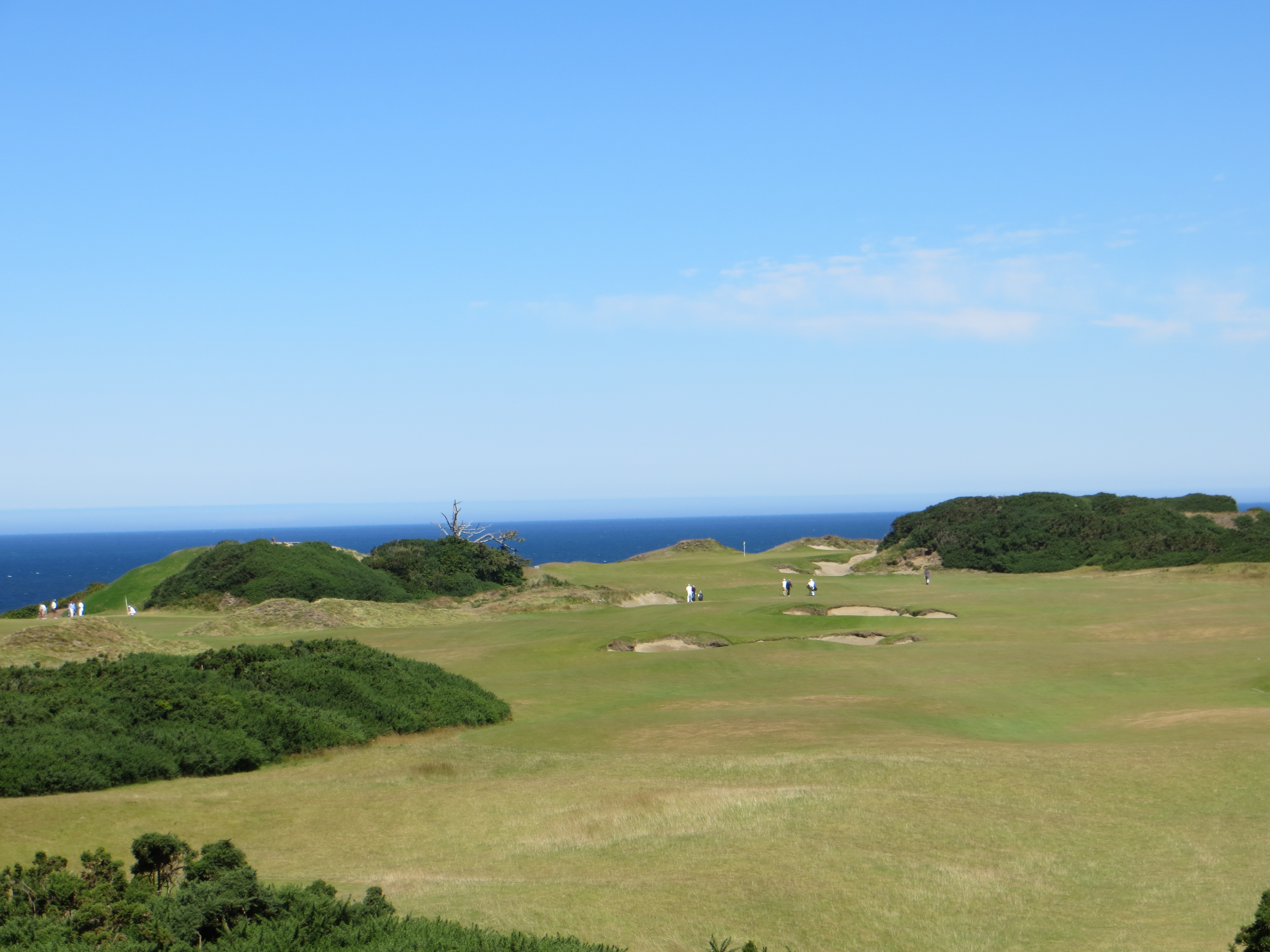
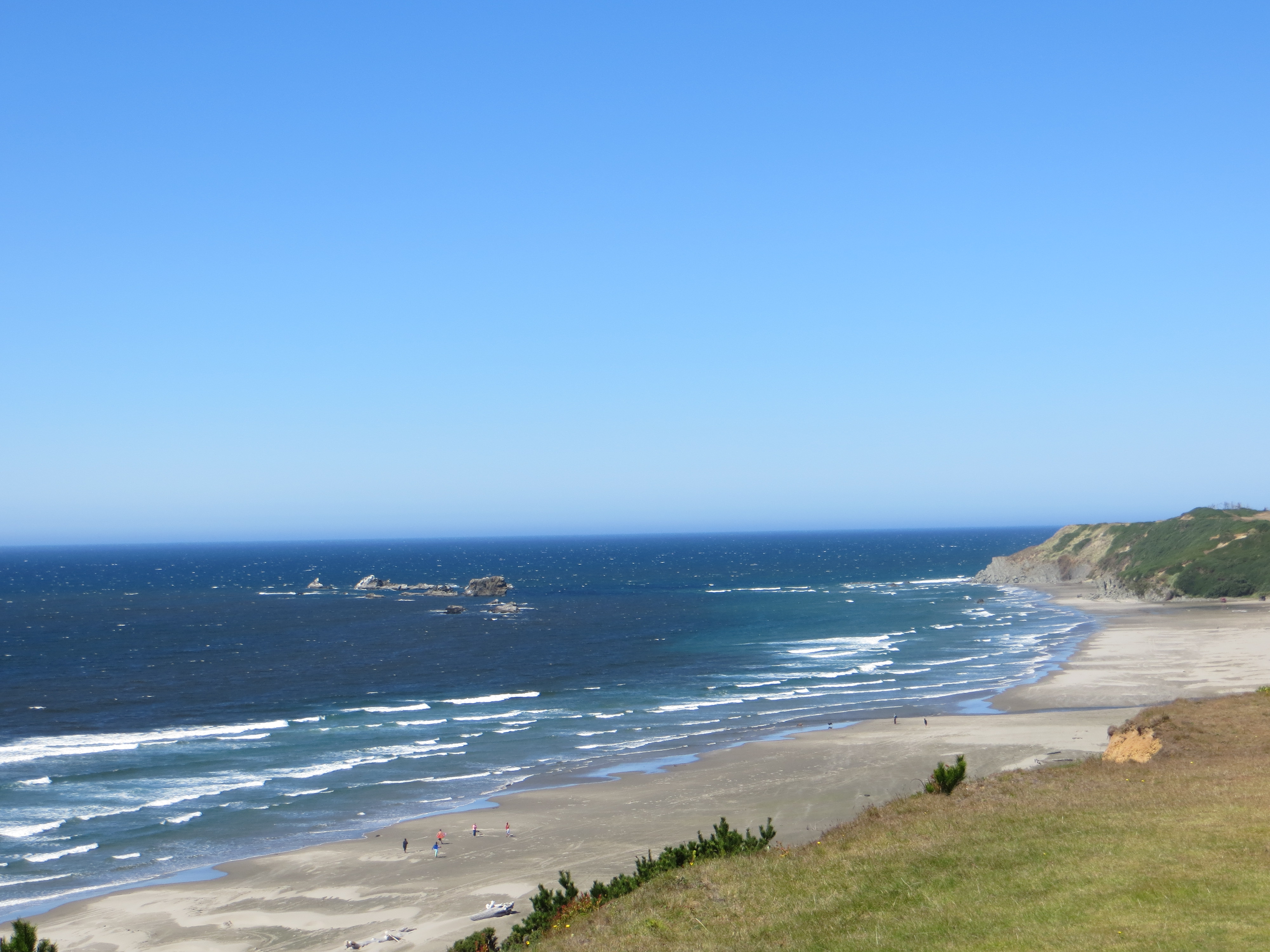
Shore line views are downright distracting.

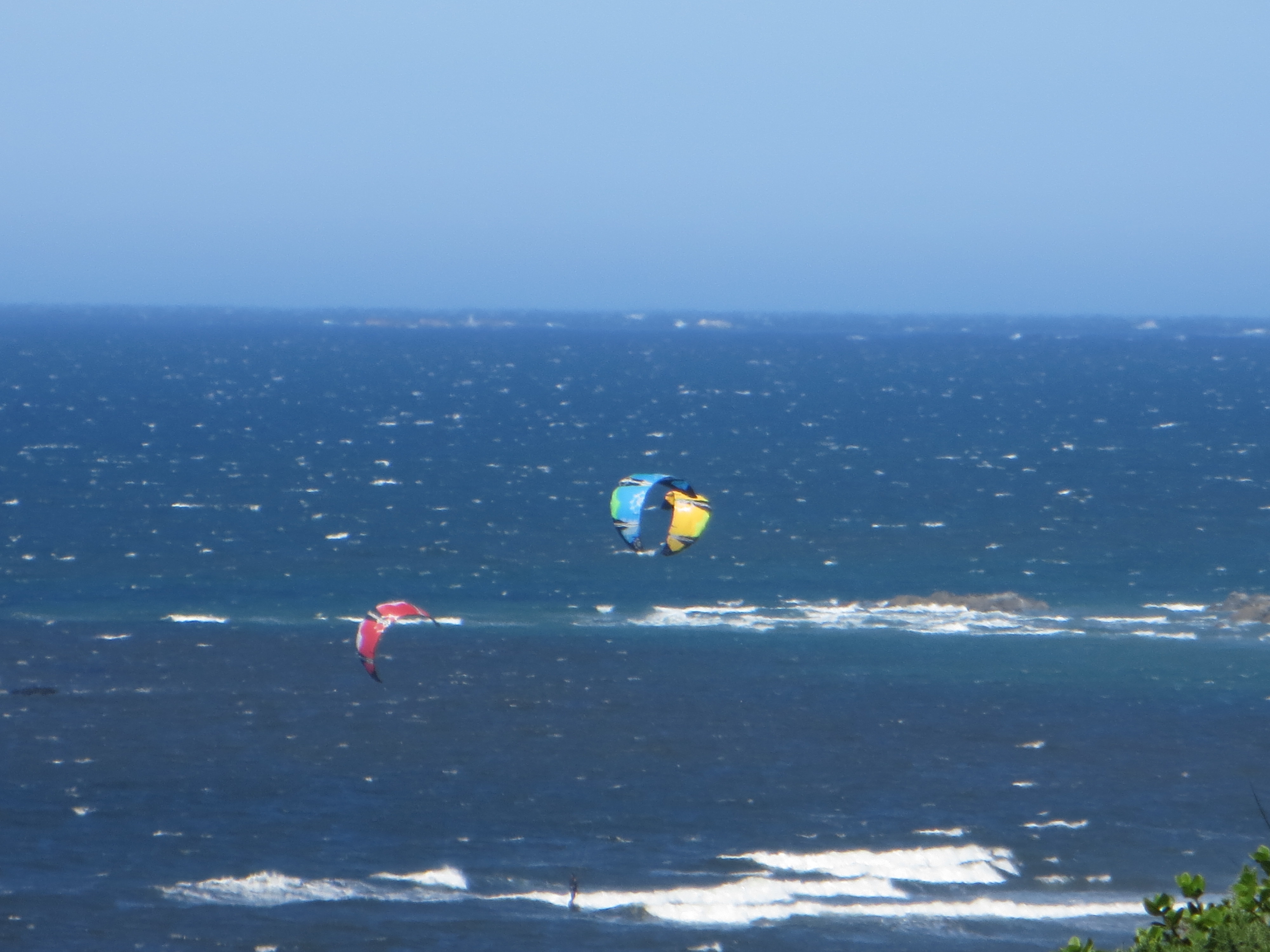
As were the colorful kite surfers.

One of four challenging three pars on the inward nine.

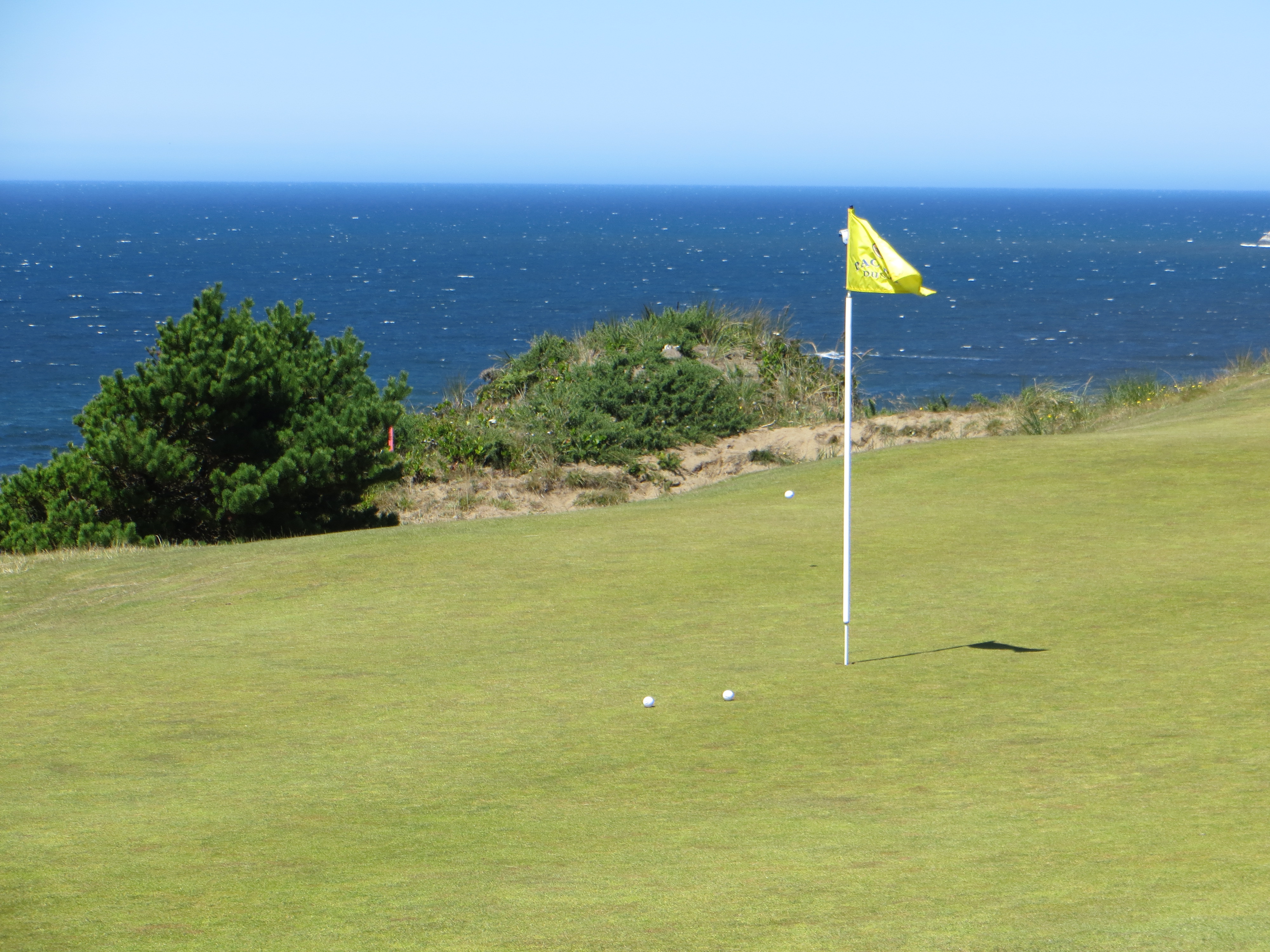
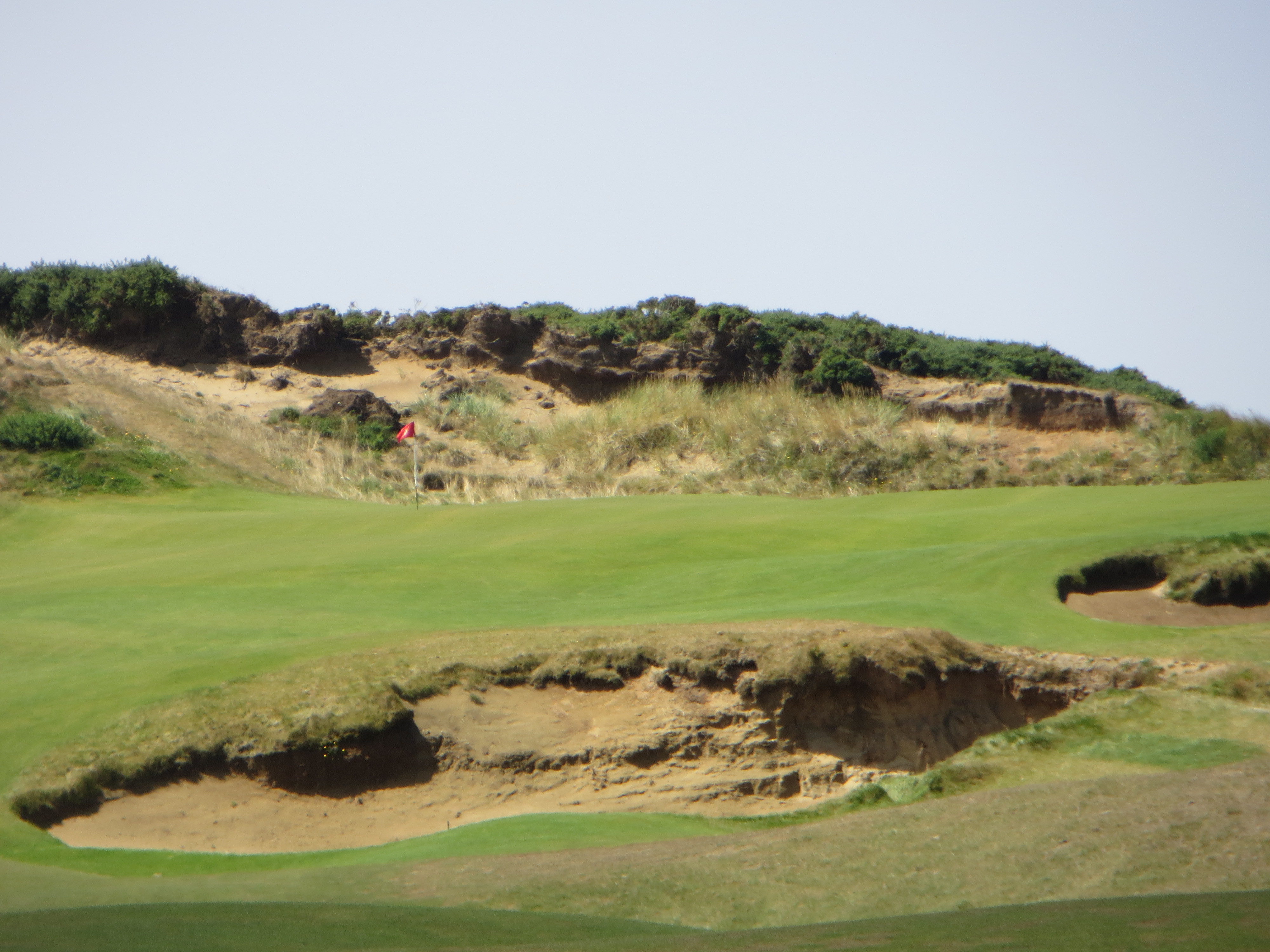
Two surprising close to that tight pin over the gnarly bunker.

The gorse covered dune towers over this shallow par four green.

The view of this finishing hole will cling to you long after you are done.

August, 2012
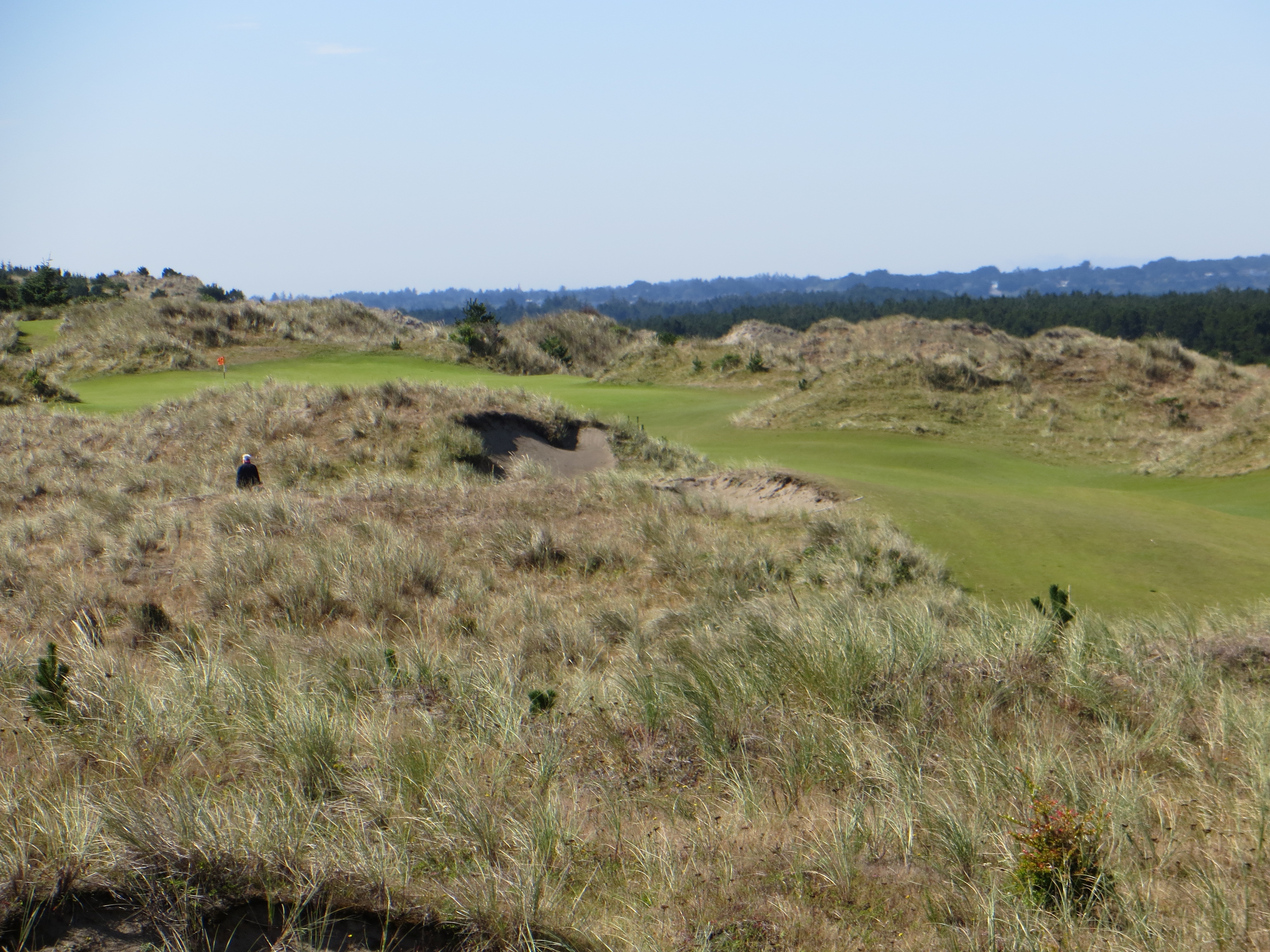
(Click to read Postscript From Bandon Dunes)

For more course detail click to see Pacific Dunes Course Review

Postcard From Old Macdonald-Day 3

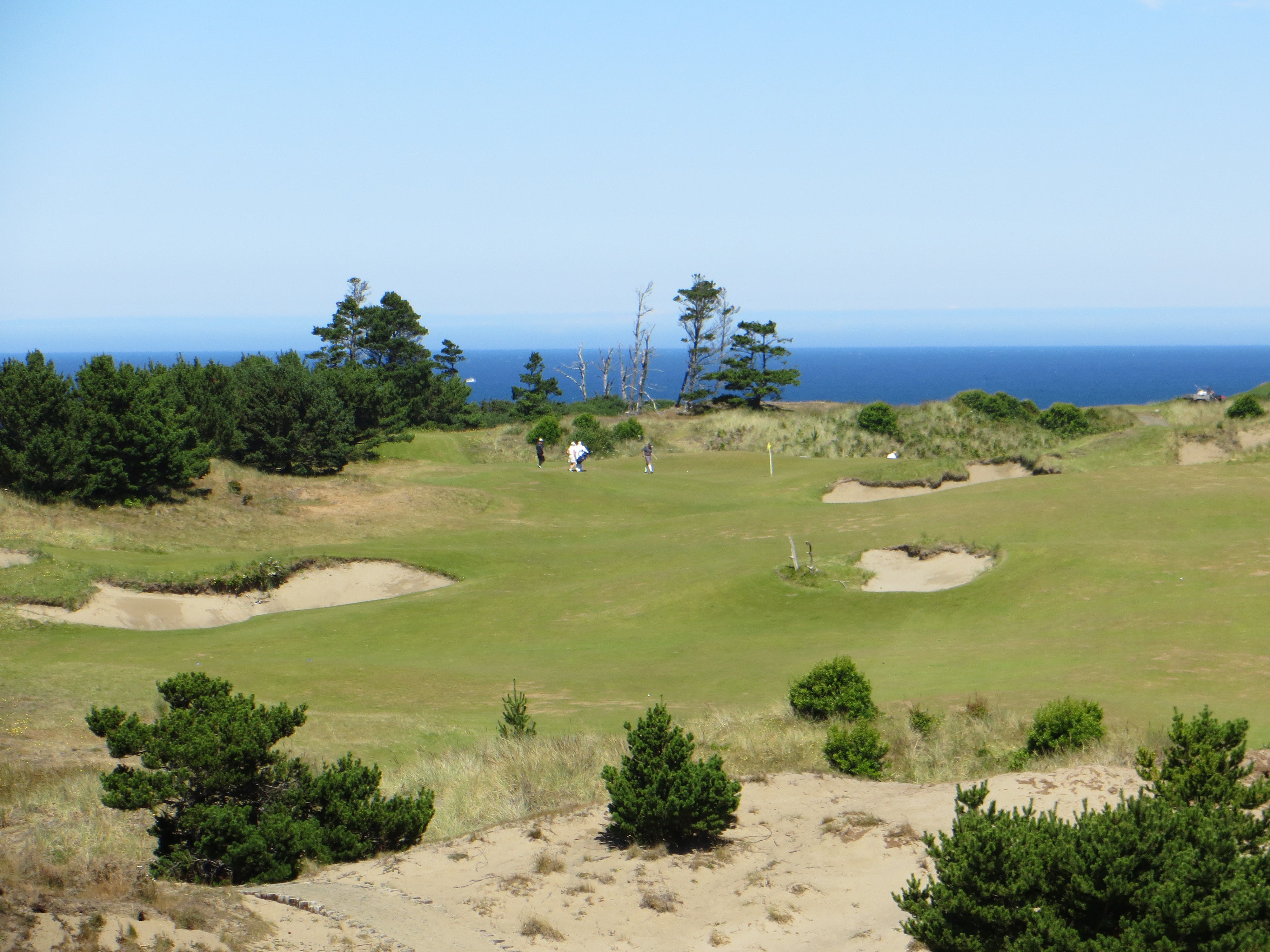
Old Macdonald is “an homage to the vision and spirit of C.B. Macdonald” the grandfather of American golf architects.  Tom Doak provides us with a laboratory experience of the concepts and features of links golf on a sprawling piece of glorious links land.  It lacks the overwelming character of Bandon Dunes or Pacific Dunes but for those who pay attention it contains all the mysterious subtle quirks that make links golf so intriguing.

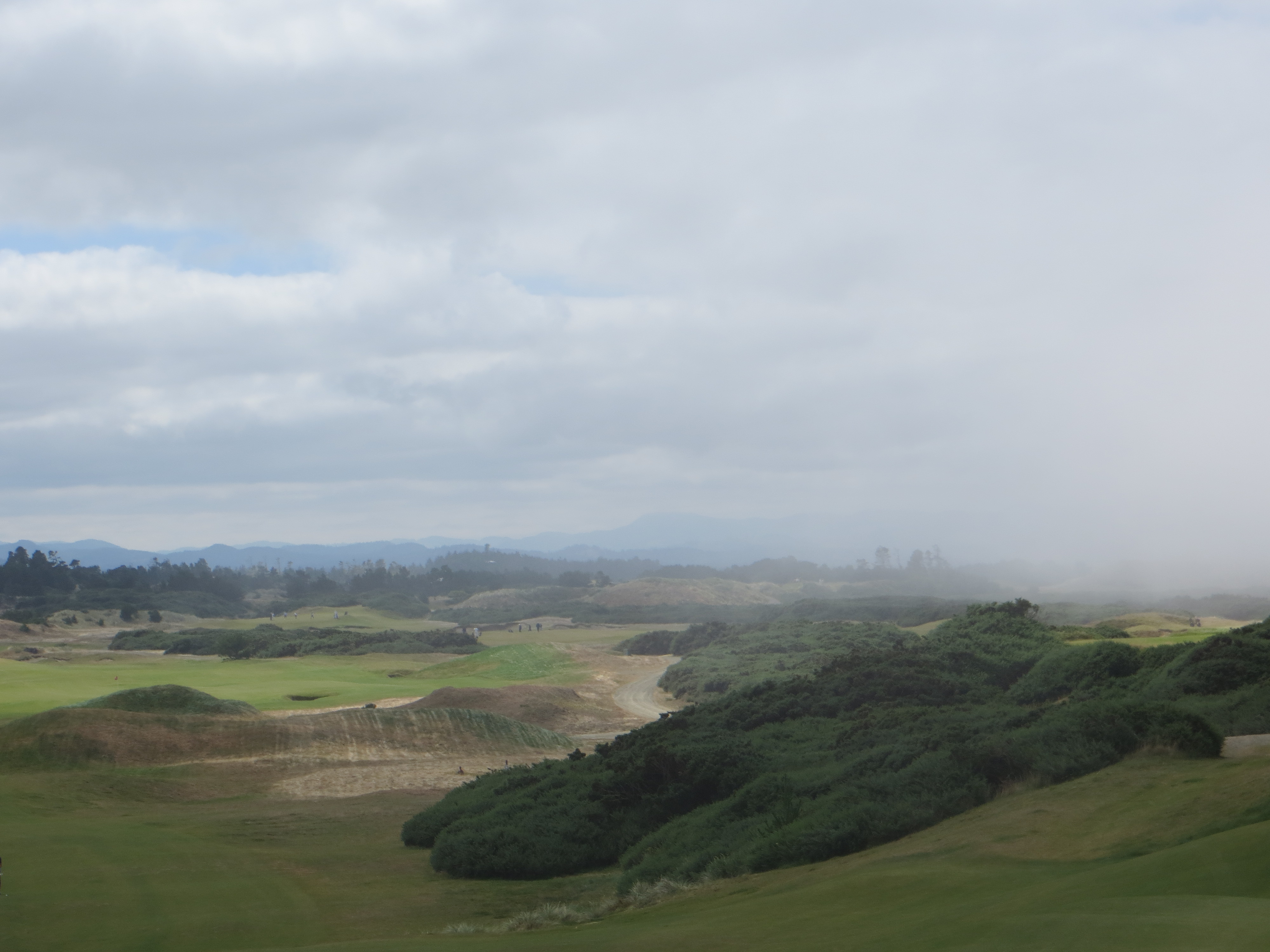
Get a sense of the ethereal expanse on which Old Mac sits.

Sprawling holes set against dramatic walls of gorse.

Holes wend through sand, scrub, and gorse.

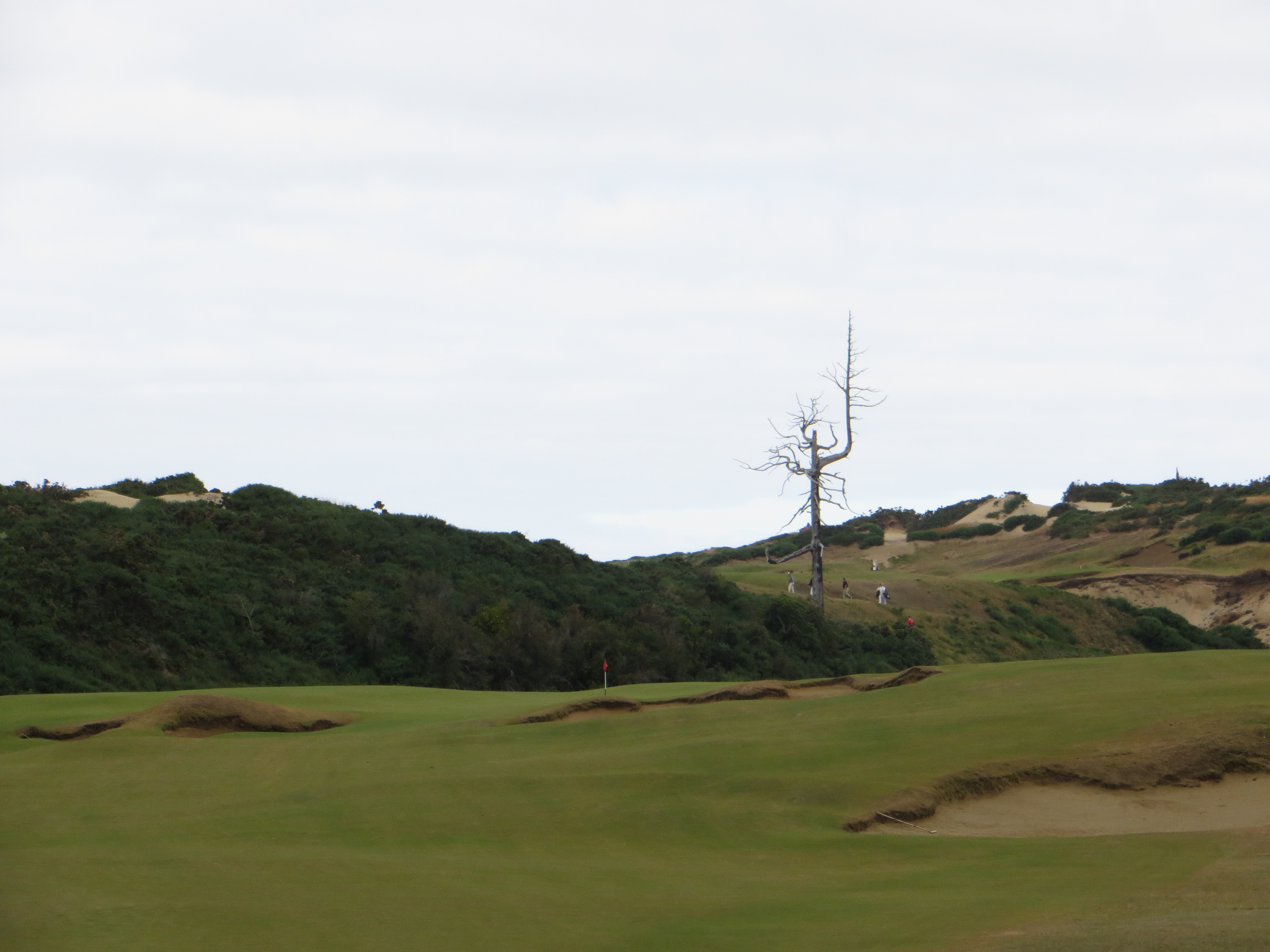
The ghost Port Orford Cedar haunts a blind drive over the dune.

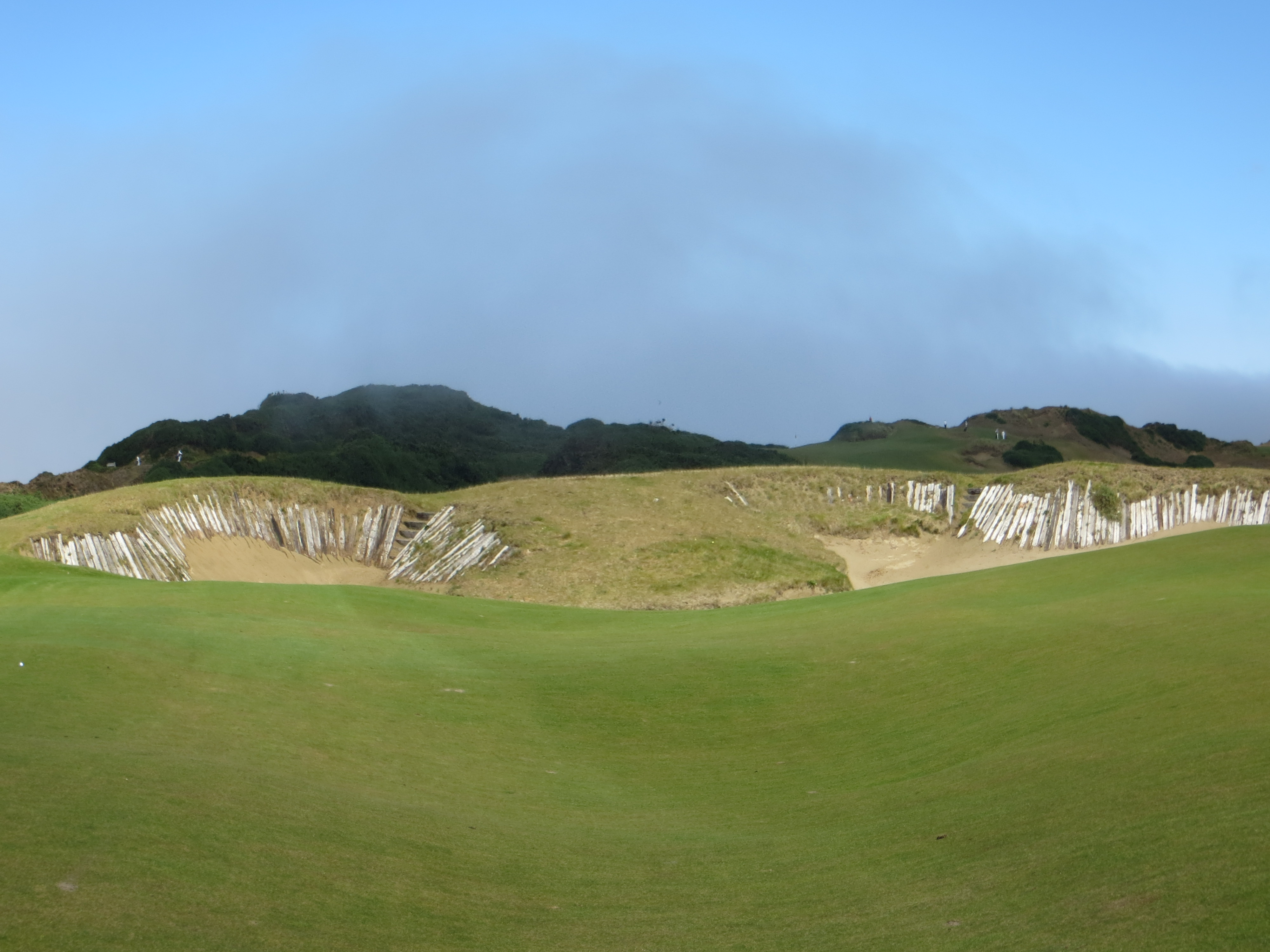
Hell Bunker….no Purgatory from there.

Nor much from the Road Hole bunker.

He sat, he refreshed, he plodded on.

Biarritz Par Three-that channel in the green is 3 feet deep.

Peek-a-boo approach.

Design features are oversized….even the sky.

Often difficult to discern where the fairway ends and green begins.

Commander Owl still trying to figure it out.

Now that is a bunker….a WW I bunker without the troops.

Doak Sand Game Improvement Center between holes.

August, 2012

(Click to read Postcard From Pacific Dunes-Day 4)

For more course detail click to see Old Macdonald Course Review

Postcard From Bandon Preserve-Day 2

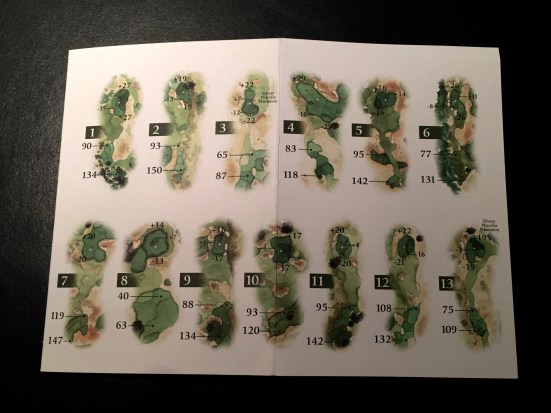
Part II of Coore-Crenshaw Day was a lovely stroll of the 13-hole, yes 13 holes, Bandon Preserve Par 3 Links Course.  All the links elements-dunes, fierce bunkers, wild greens, and, of course, the wind.  No designated tees but plenty of options on each hole to pick from.

The holes…pick the tee of your liking…lots of variety in each hole

It is a perfect place to let your hair down, unwind, and settle a few bets.  Bandon Preserve is a real diamond in the rough.  With short tracks like these in every town in America golf would be enjoyed by many, many more folks.

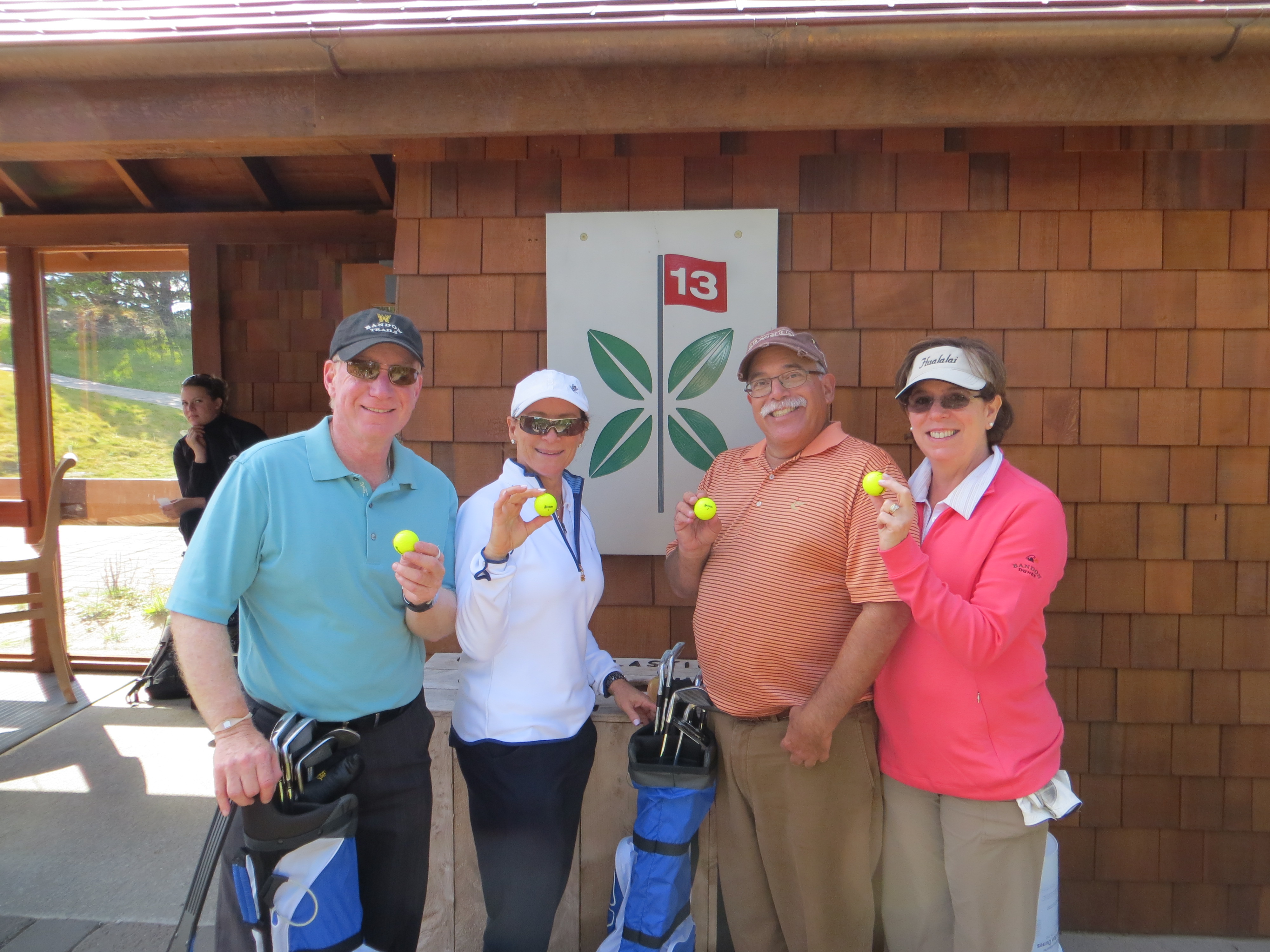
The Motley Crew up for the Srixon Neon Challenge


(Click on any picture to get an enhanced view of the image)

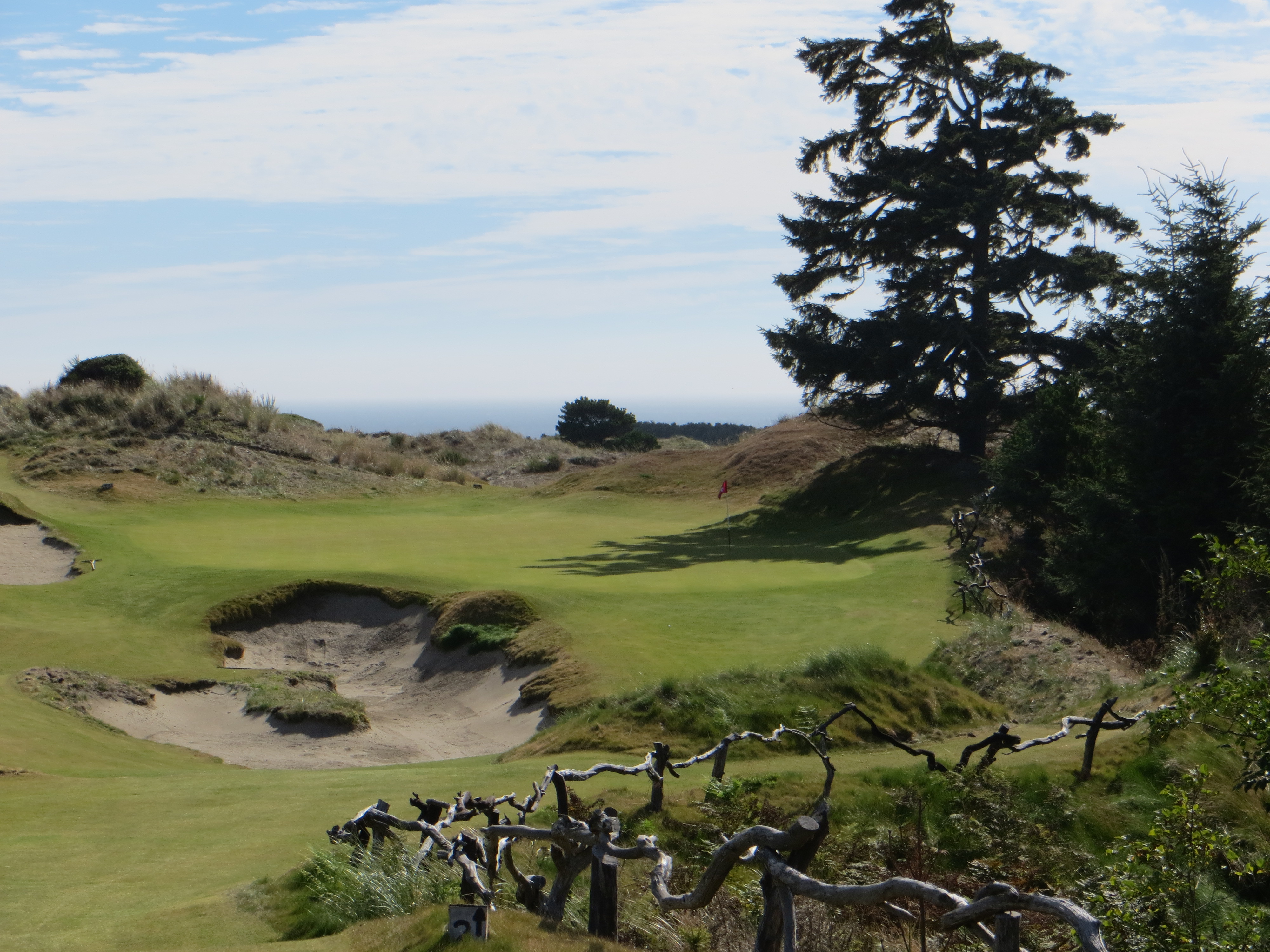
All the elements of a links hole…just shorter.

Sherpa guides point the way.

Assessing the scene of the crime.

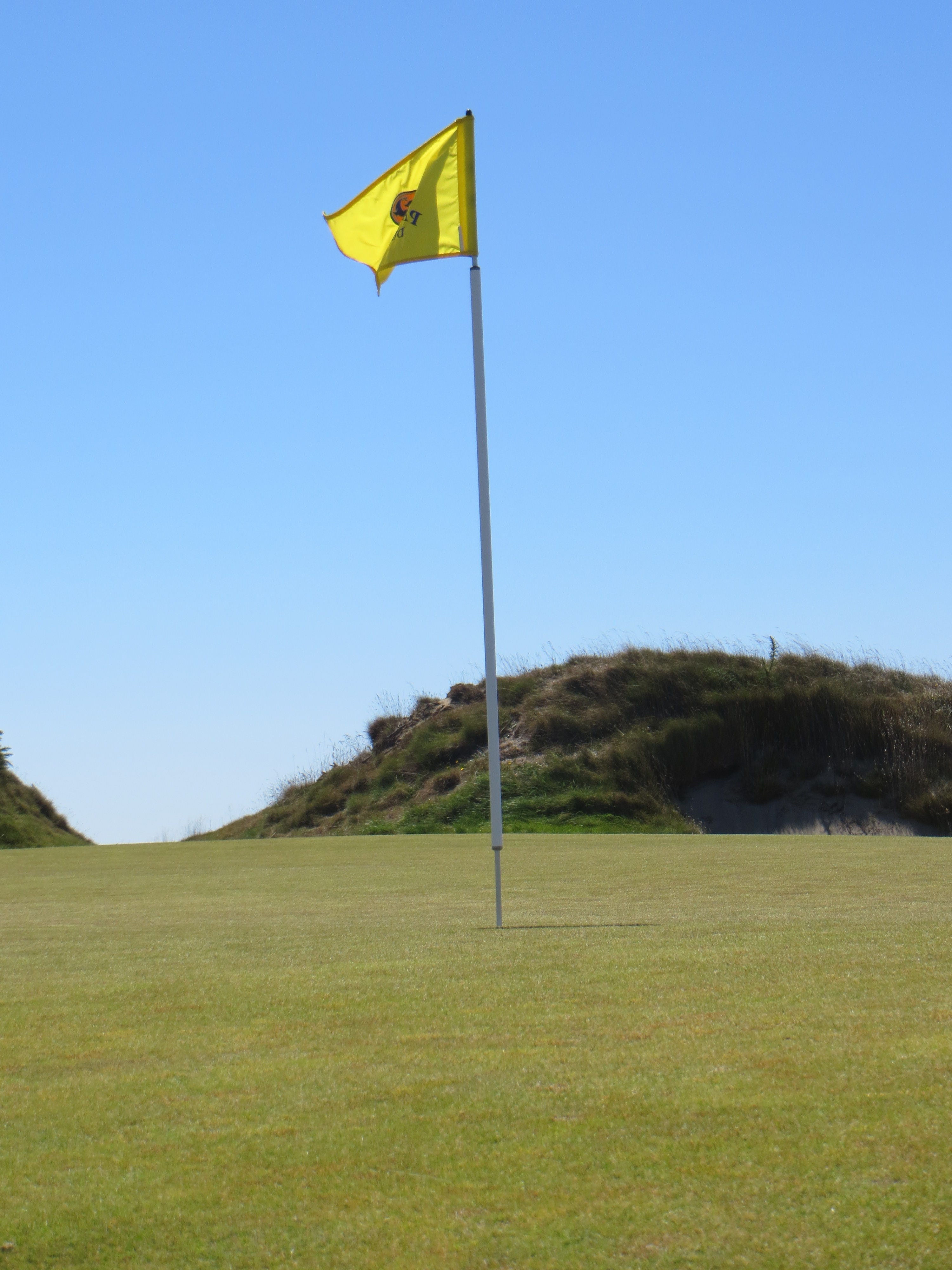
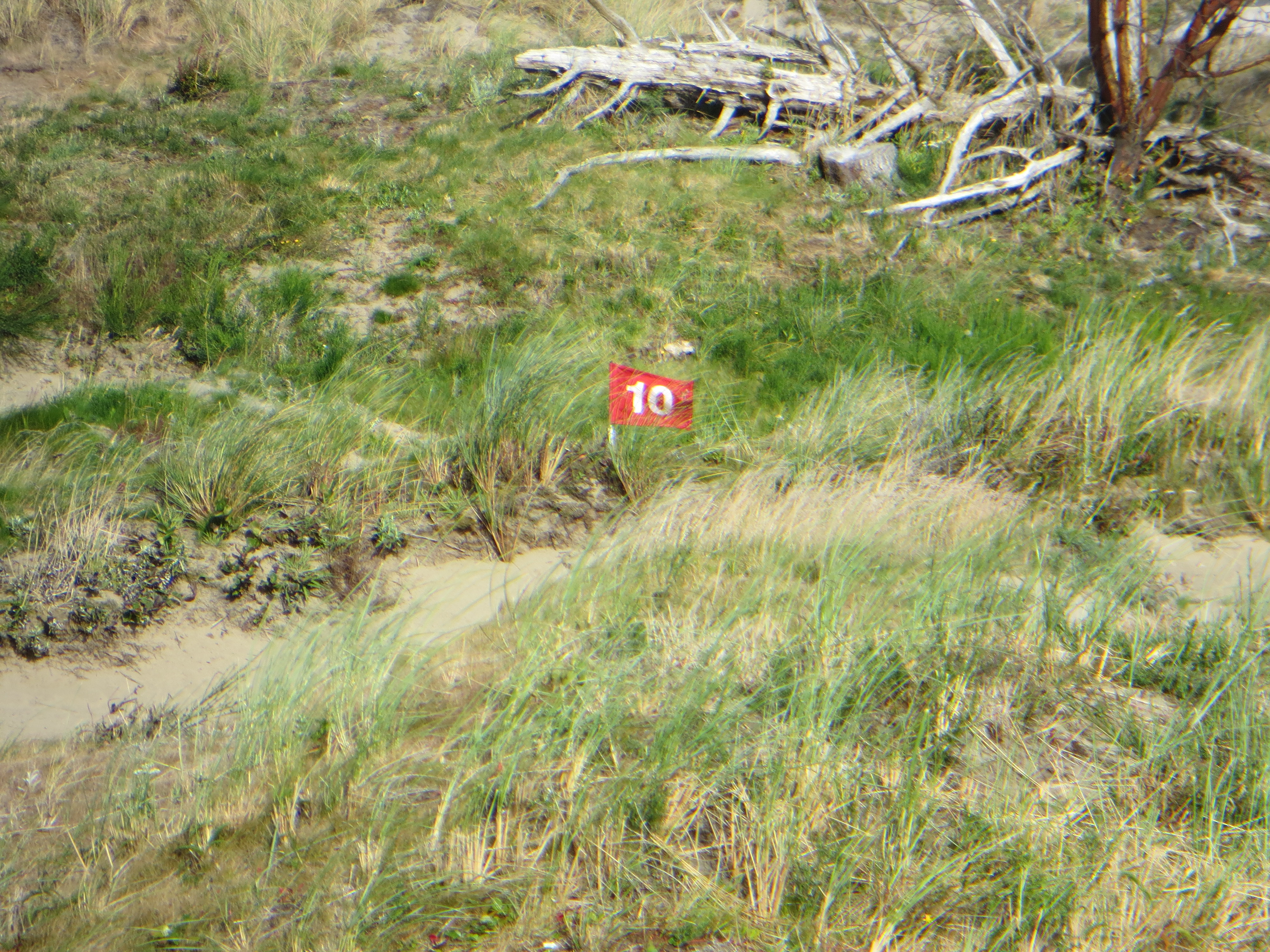
Hide and seek on the flag.

Wind swept?

Big friendly groupings, a few bets, and some adult beverages.

A little Jack happiness.

And there is the ocean.

#13 the final stop.

August, 2012
(Click to read Postcard From Old Macdonald-Day 3)

Postcard From Bandon Trails-Day 2

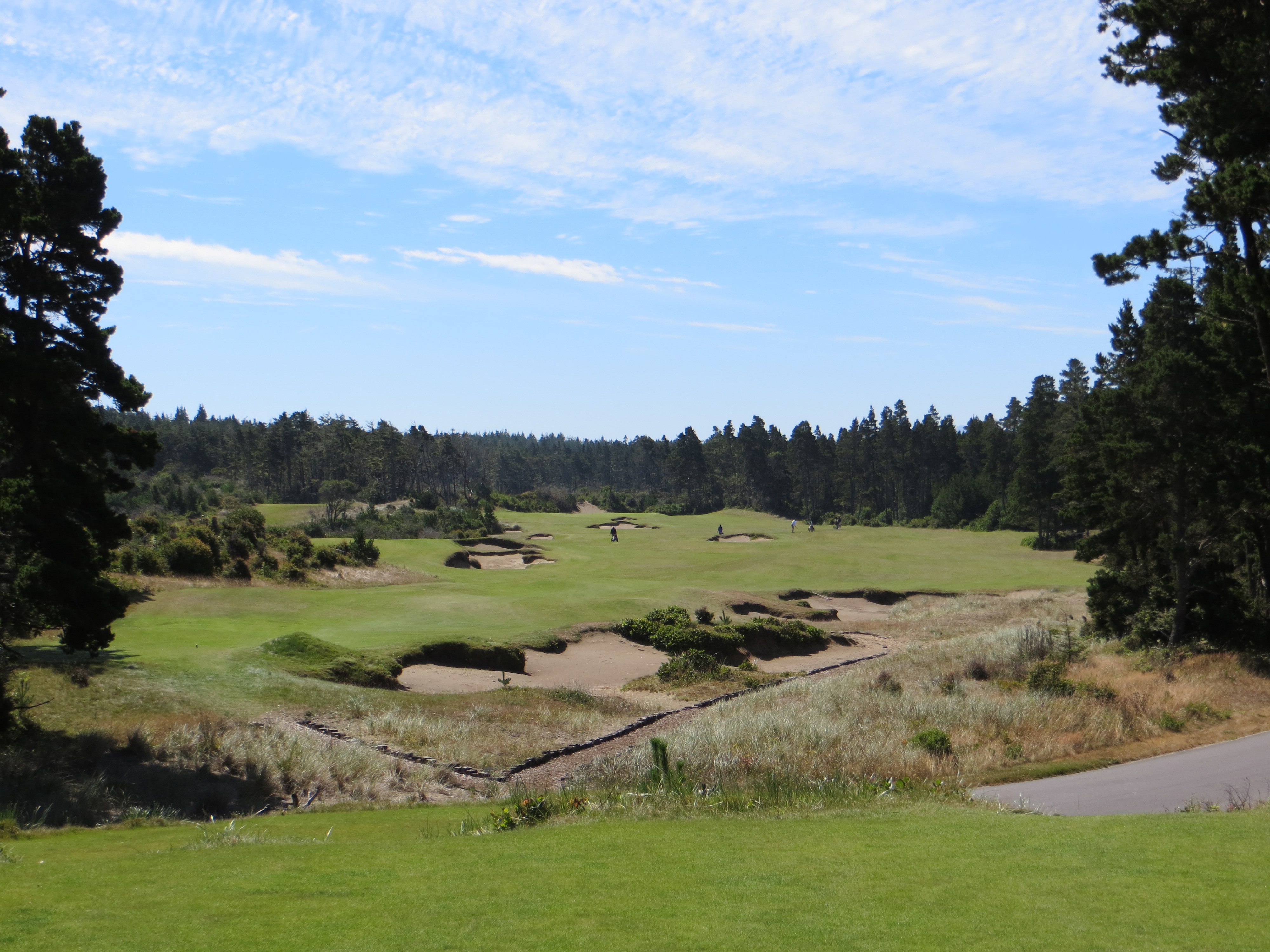
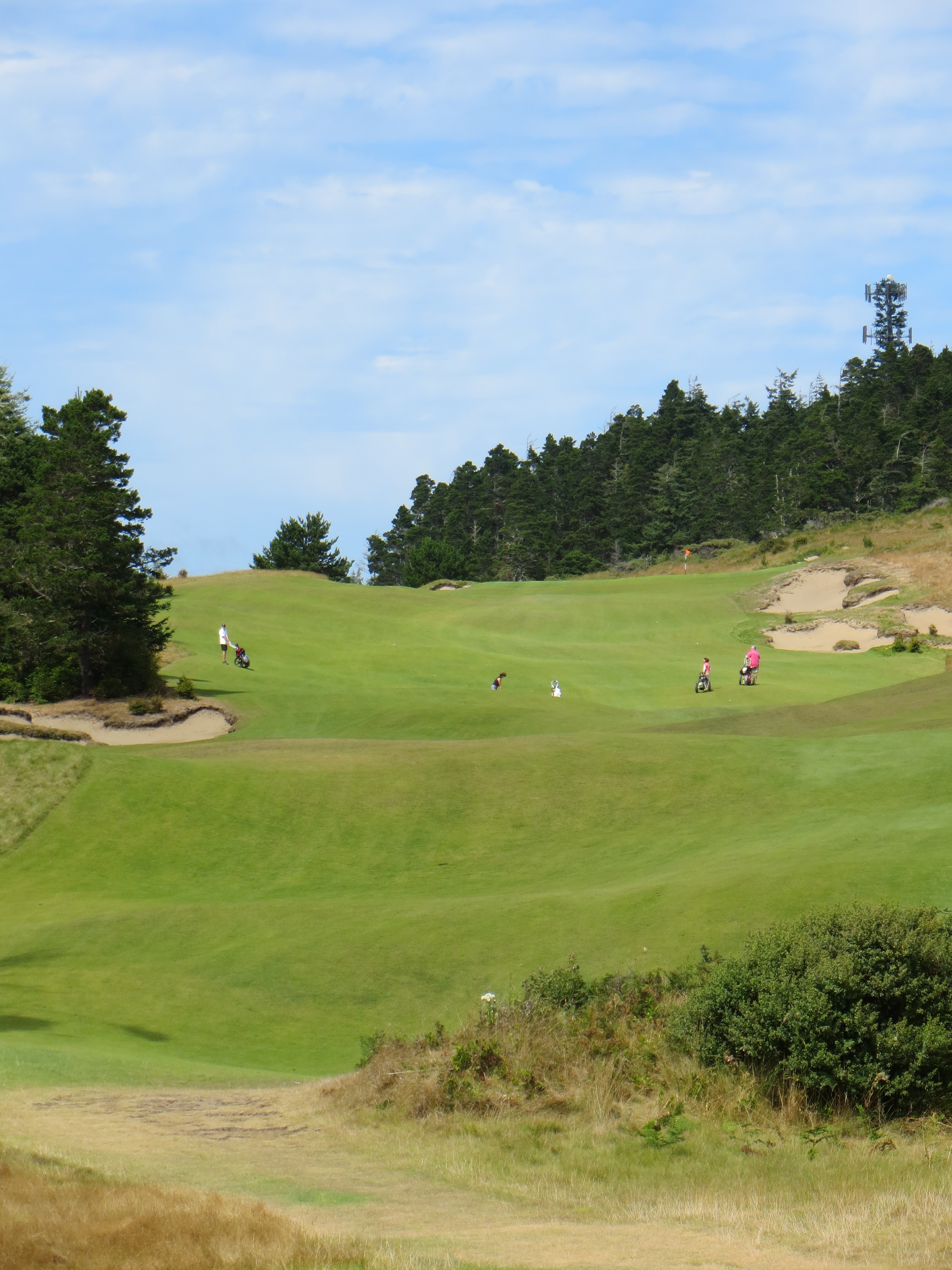
Today was Coore-Crenshaw Day for the Motley’s as we ventured to this stunning Pine Barrens accented creation on the rugged hills and sand dunes of Bandon.  The course meanders through sandy dunes, green meadows, and pine forests getting it’s unique character from the blend of these environments.  Coore-Crenshaw integrated links elements like blowout bunkers, nasty gorse, and natural green settings with the challenge of dramatically mounded fairways and mind boggling elevation changes to create a golf challenge with a racing pulse.

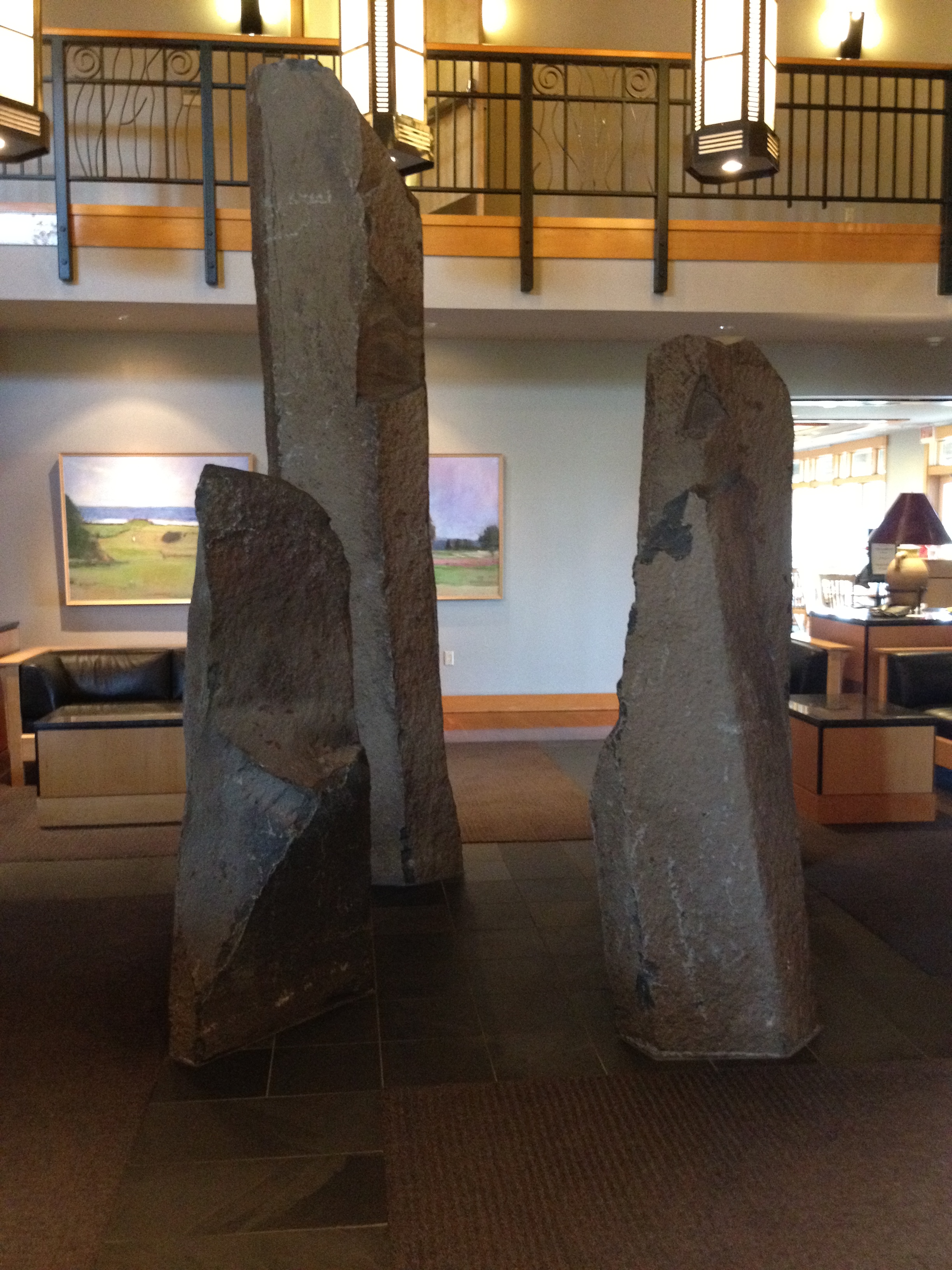
Stone Monuments In Bandon Lodge       (photo courtesy of M. Levine)
Our days begin with a ritual incantation touching the stones and praying for pars and birdies.

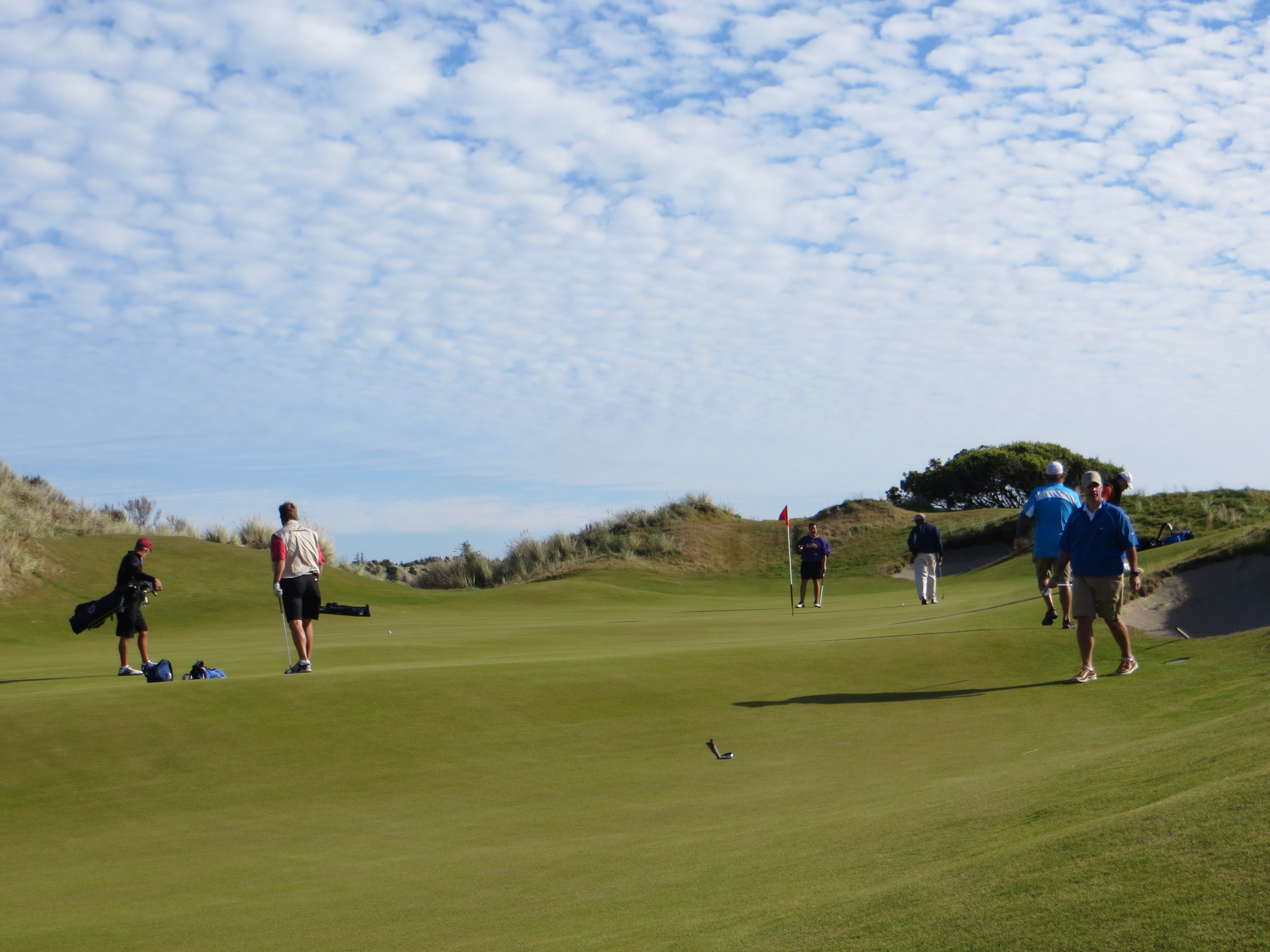
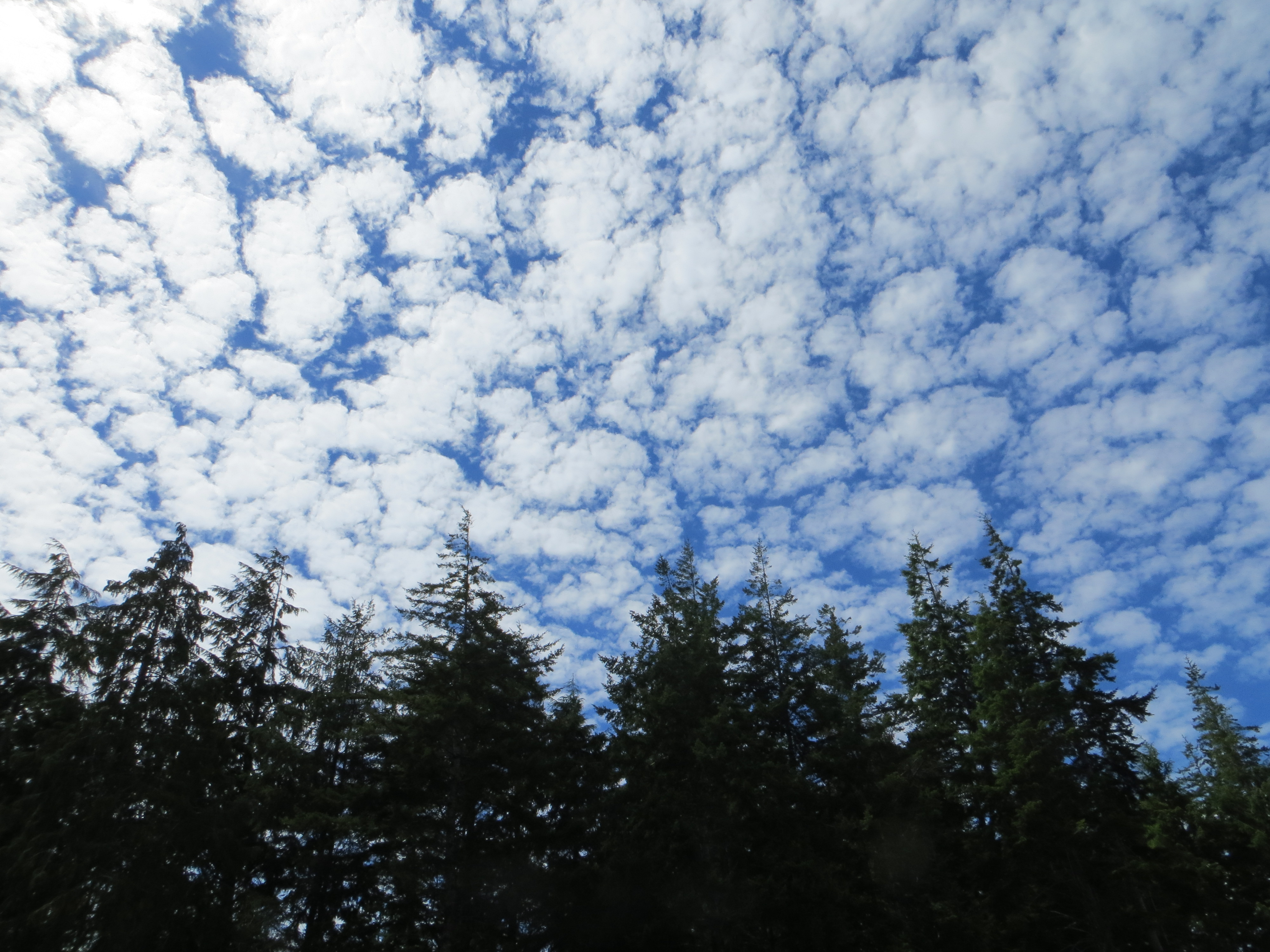
On this glorious day the popcorn sky over the tree tops that frame every hole.

Pine Barren look mixed with links random bunkering demands clear decision making.

Dramatic elevation change, fierce bunkering, and a three story green challenge.

Matriculation Benches-chance to catch a breath and ponder your fate.

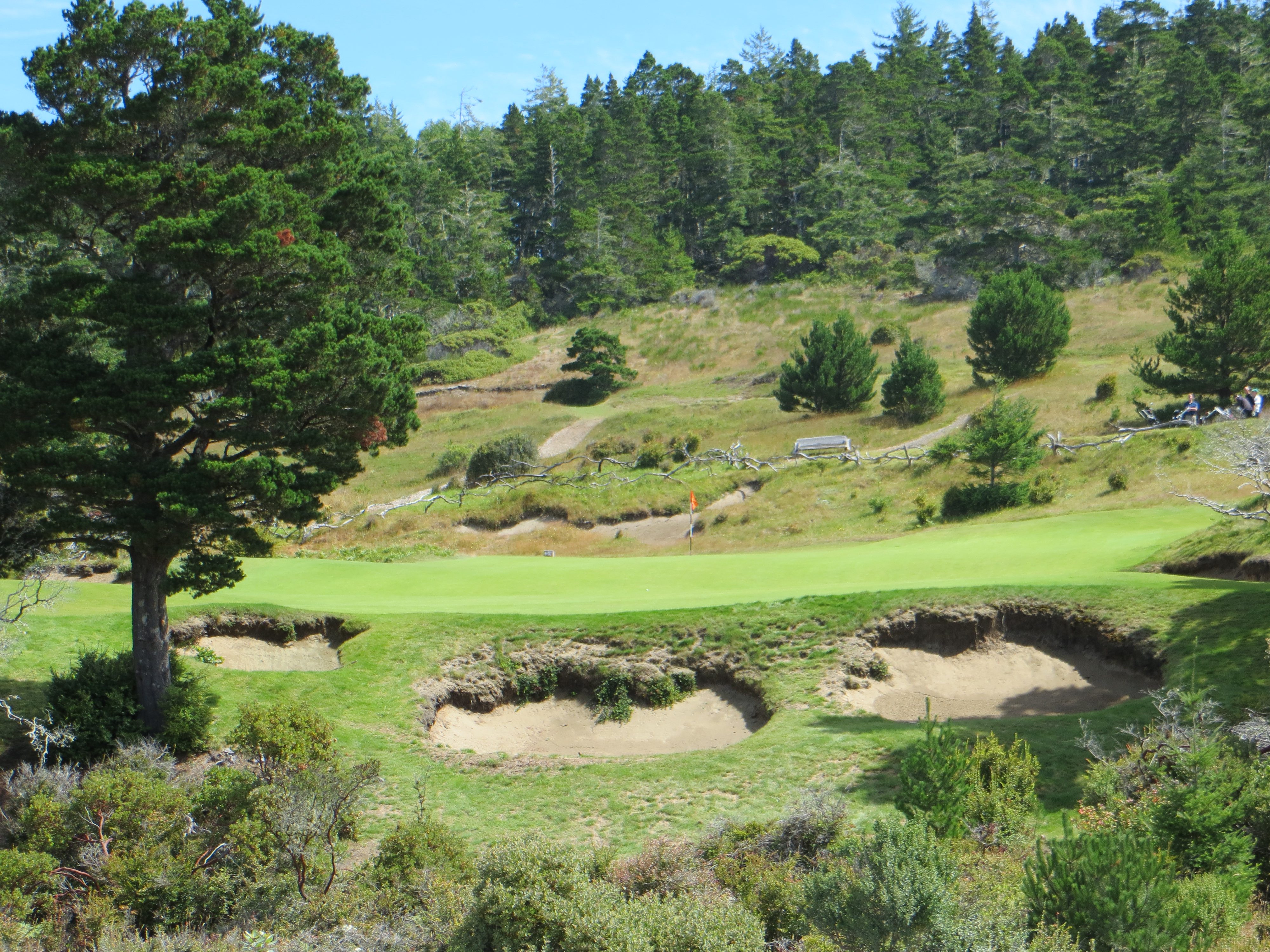
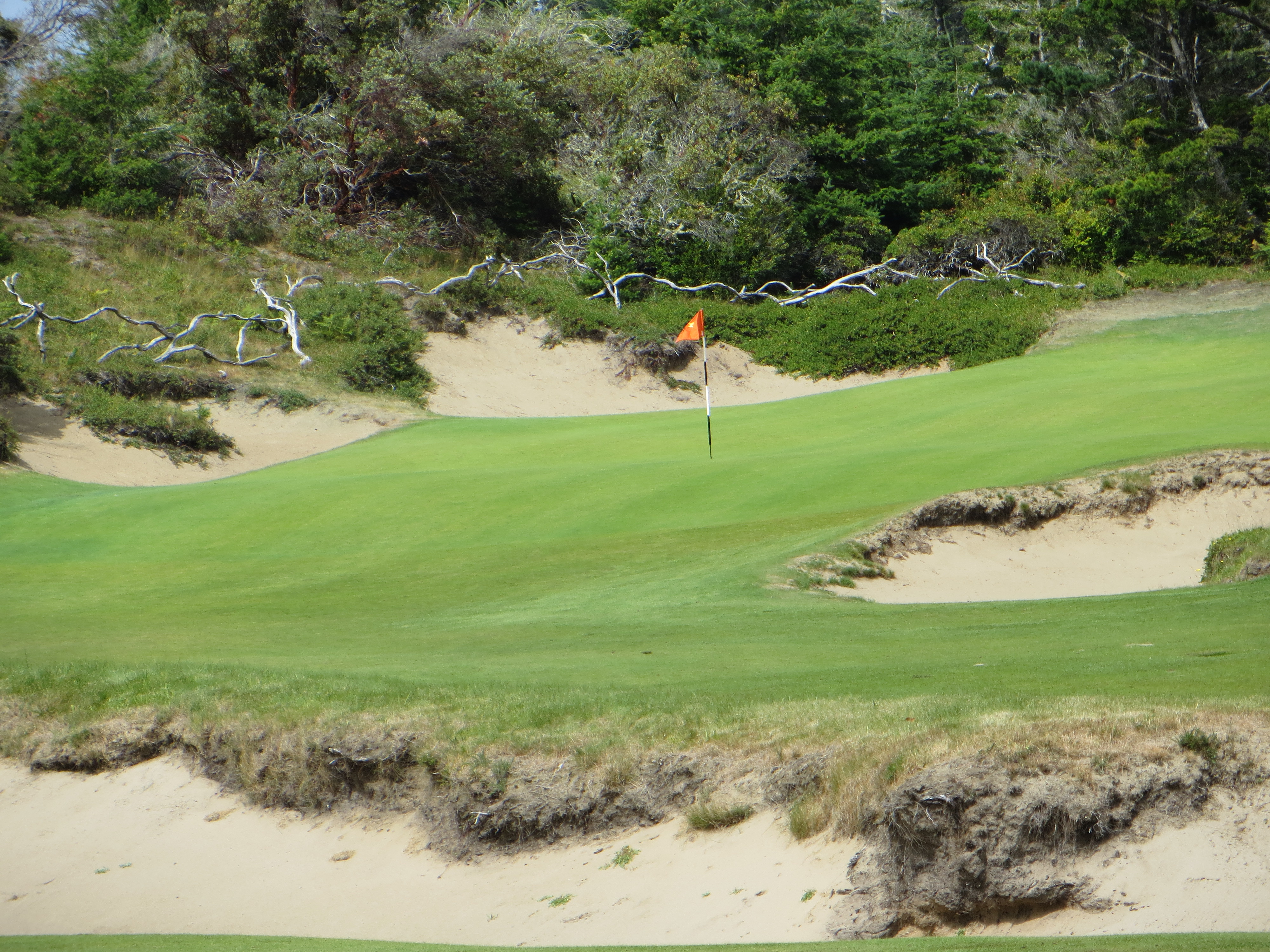
Natural Green Settings-they just extracted the terrarium features to surround them with bother.

Huge Elevation Changes-make club and shot selection a real challenge.

Plodding down the trail down to the landing area with the drift wood fencing marking
the way.

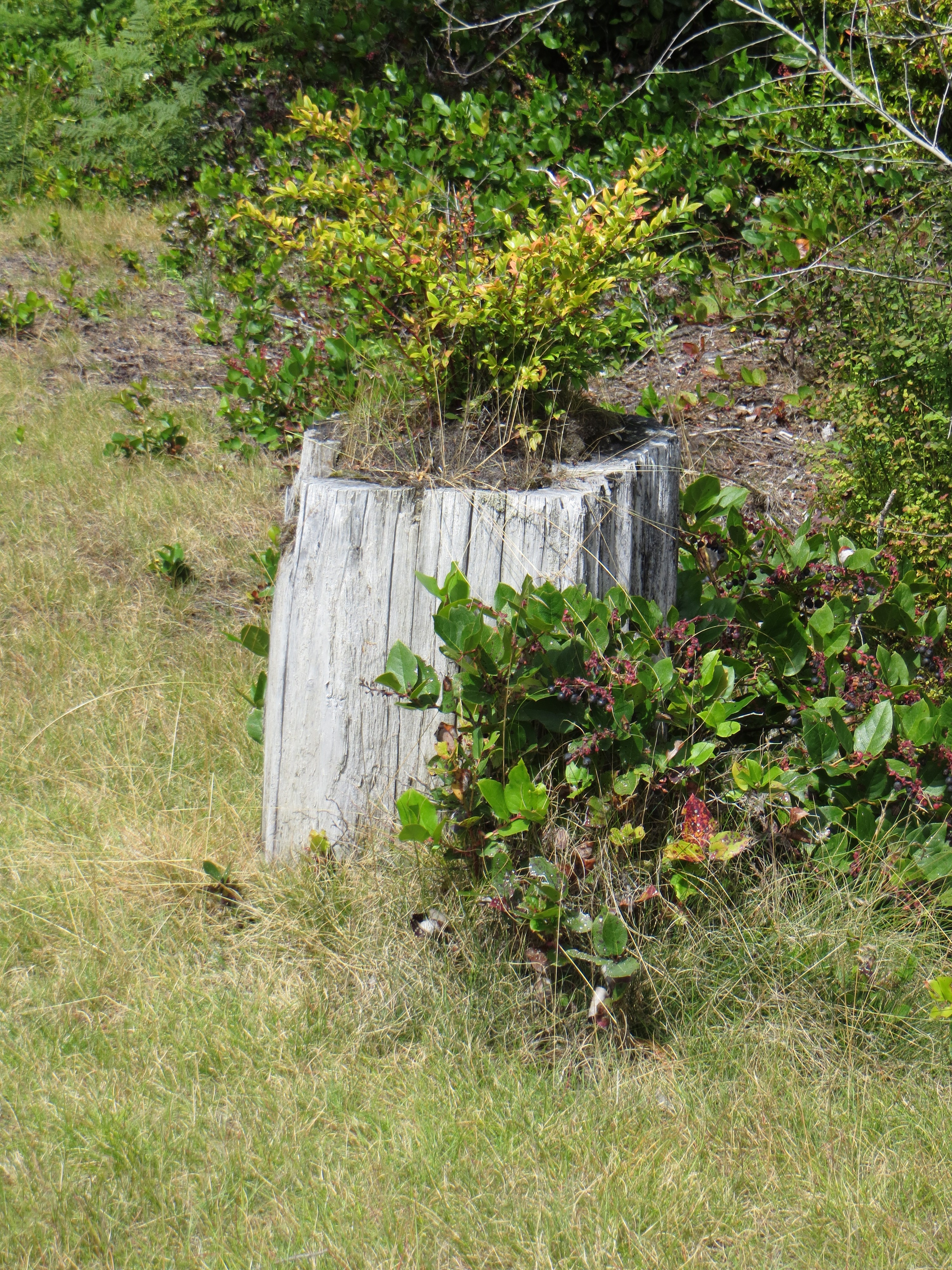
Stump Flower Pot-exhibits indigenous vegetation that defines the environment of this course.

Arduous march toward home up a six story par five.


The Full Monty-one last par three with everything but the kitchen sink.

August, 2012
(Click to read Postcard From Bandon Preserve-Day 2)

For more course detail click to see Bandon Trails Course Review

Postcard From Bandon Dunes-Day 1

First impressions of Bandon Dunes on a sunny and windy day on the Oregon coast.  An authentic walking links without pretension.  Bandon encompasses the complete natural look and feel of the coastal elements with a touch of wind to add some uncertainty.  Plenty of unexpected bounces to accept and unrelenting hazards to avoid.  Links golf is about acceptance, patience, and perseverance.  For a links afficianados, Bandon Dunes is the real deal.


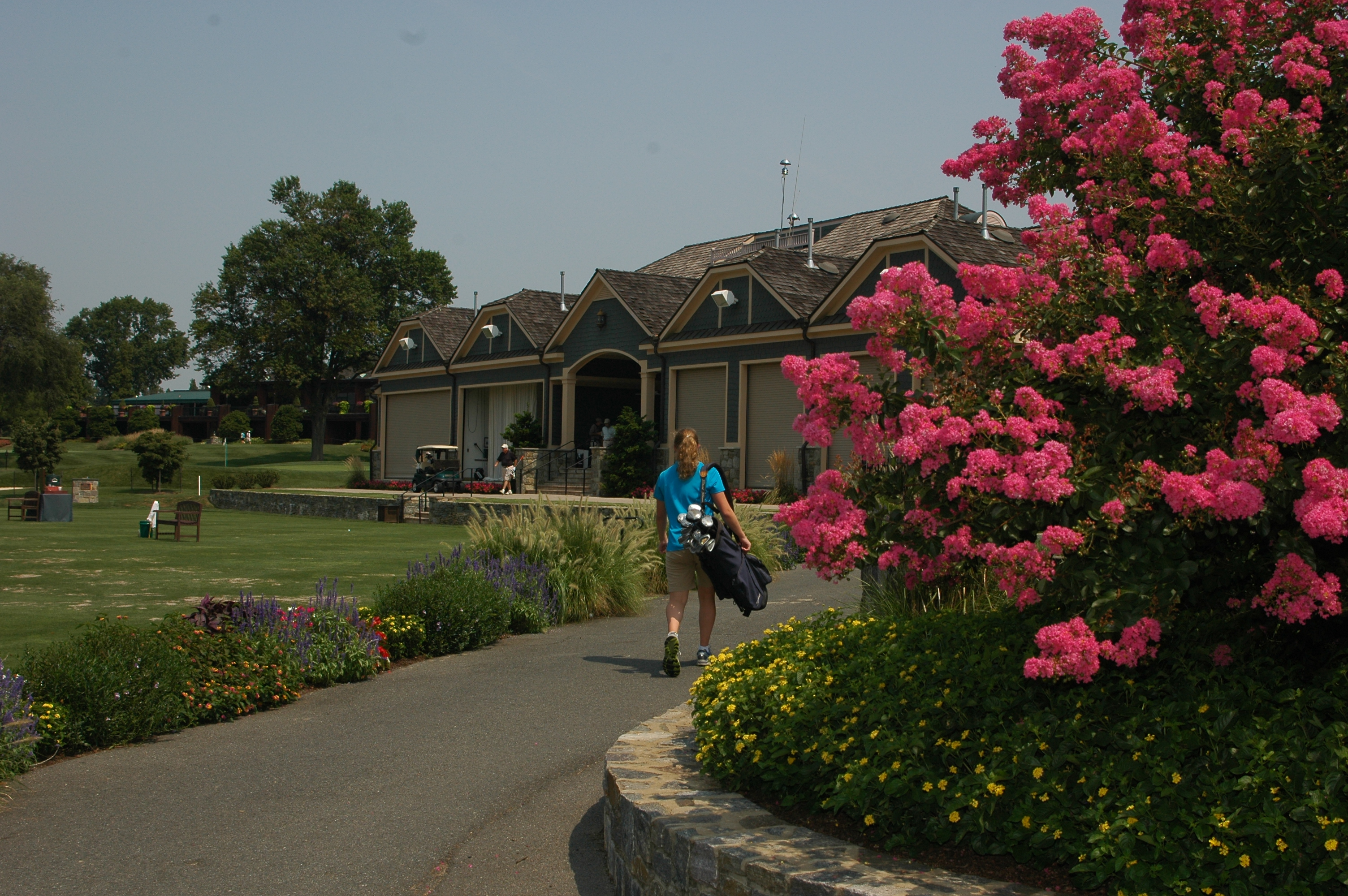
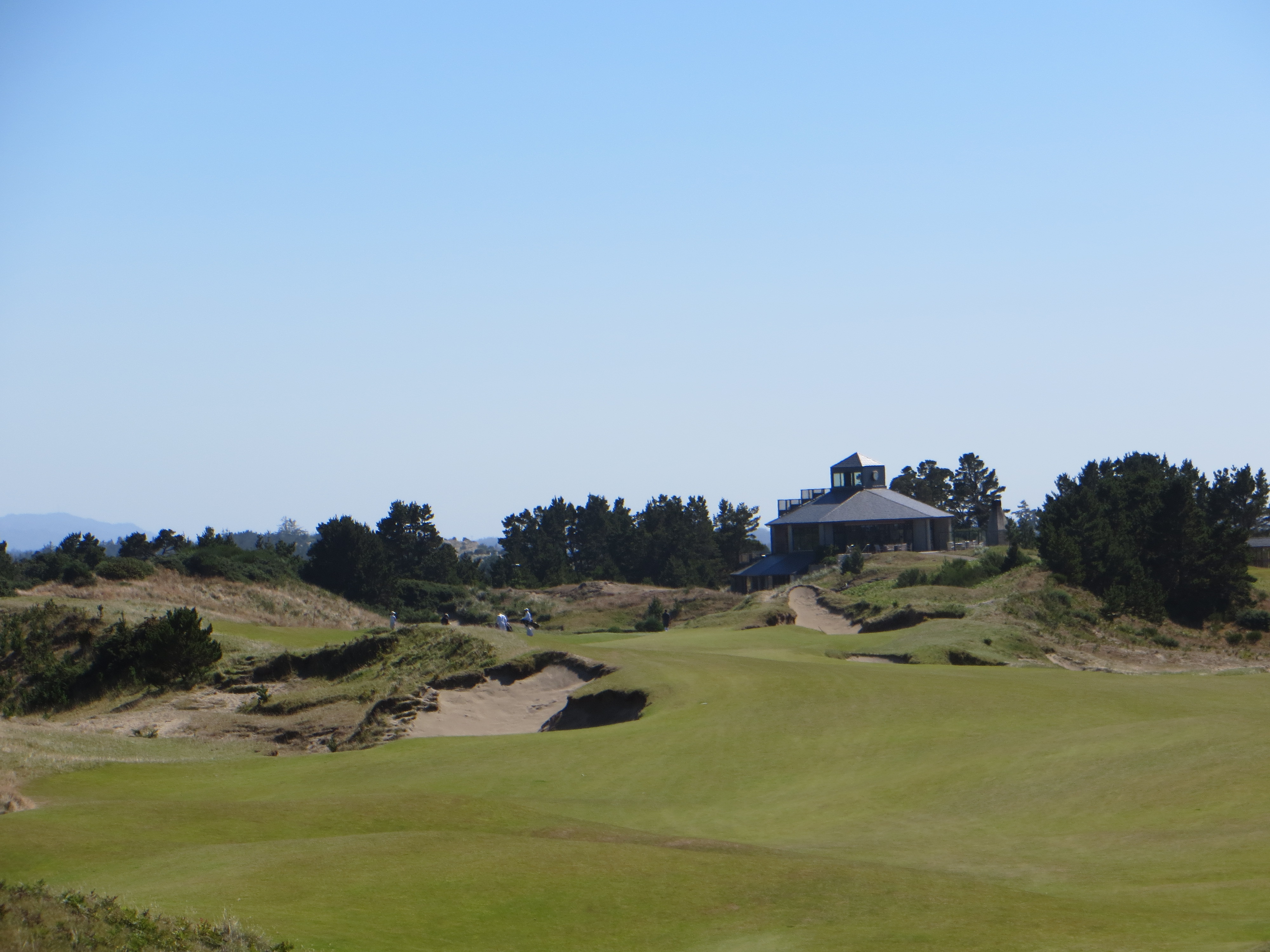
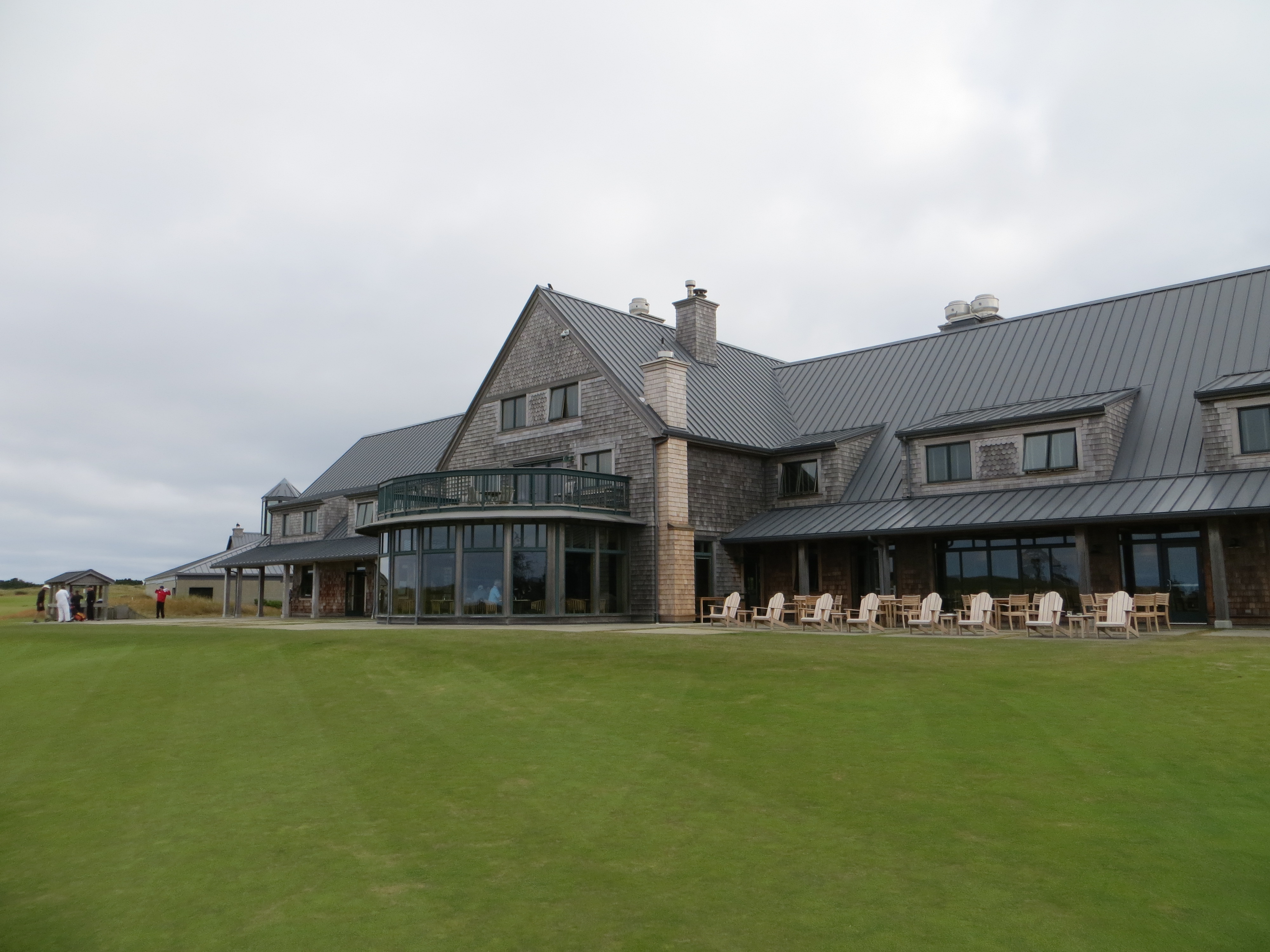
The Clubhouse-staging and viewing area

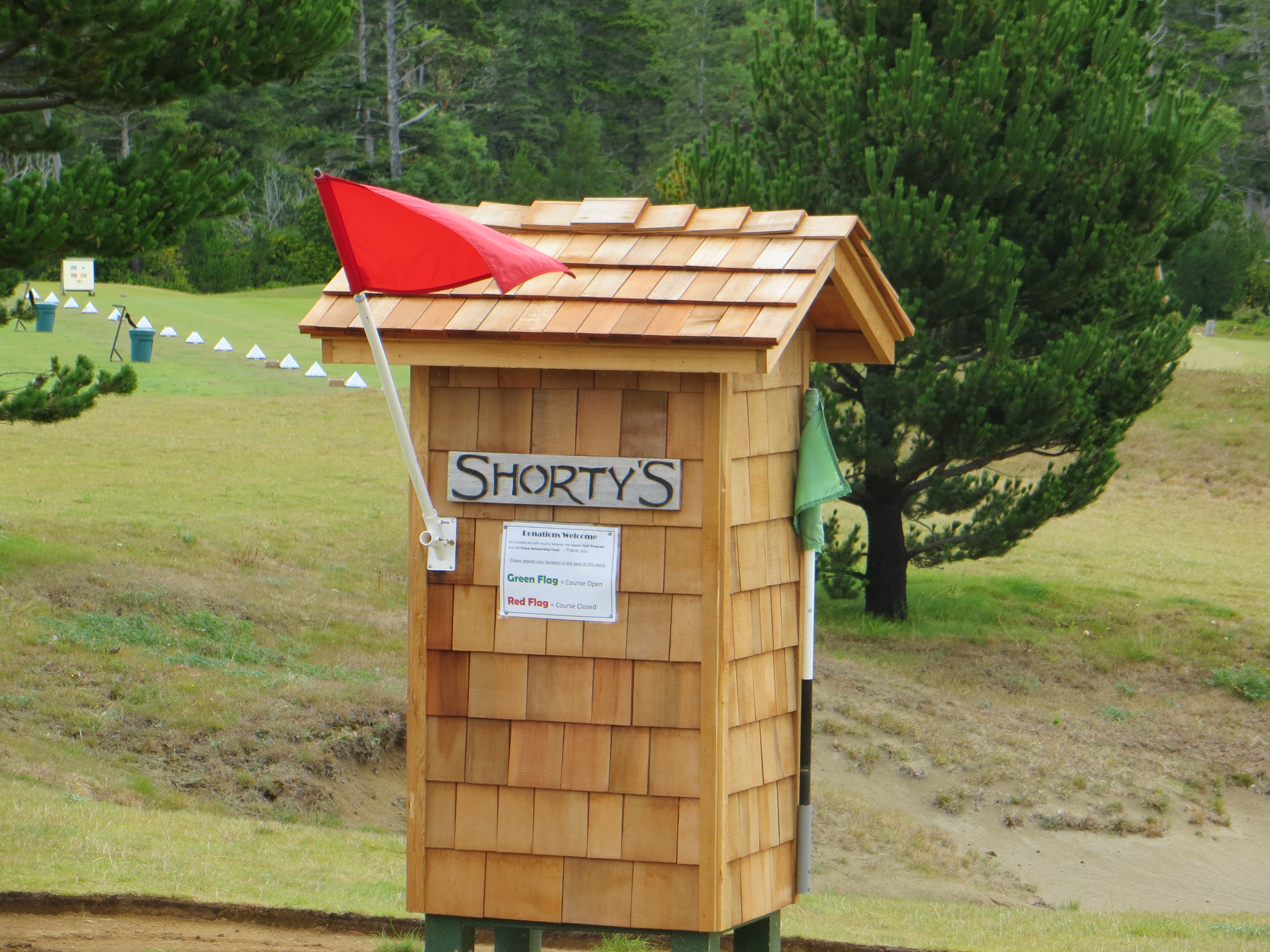
Practice Center-Shorty’s Signal-this side of the range is closed today.

The Jaw Dropping Vistas

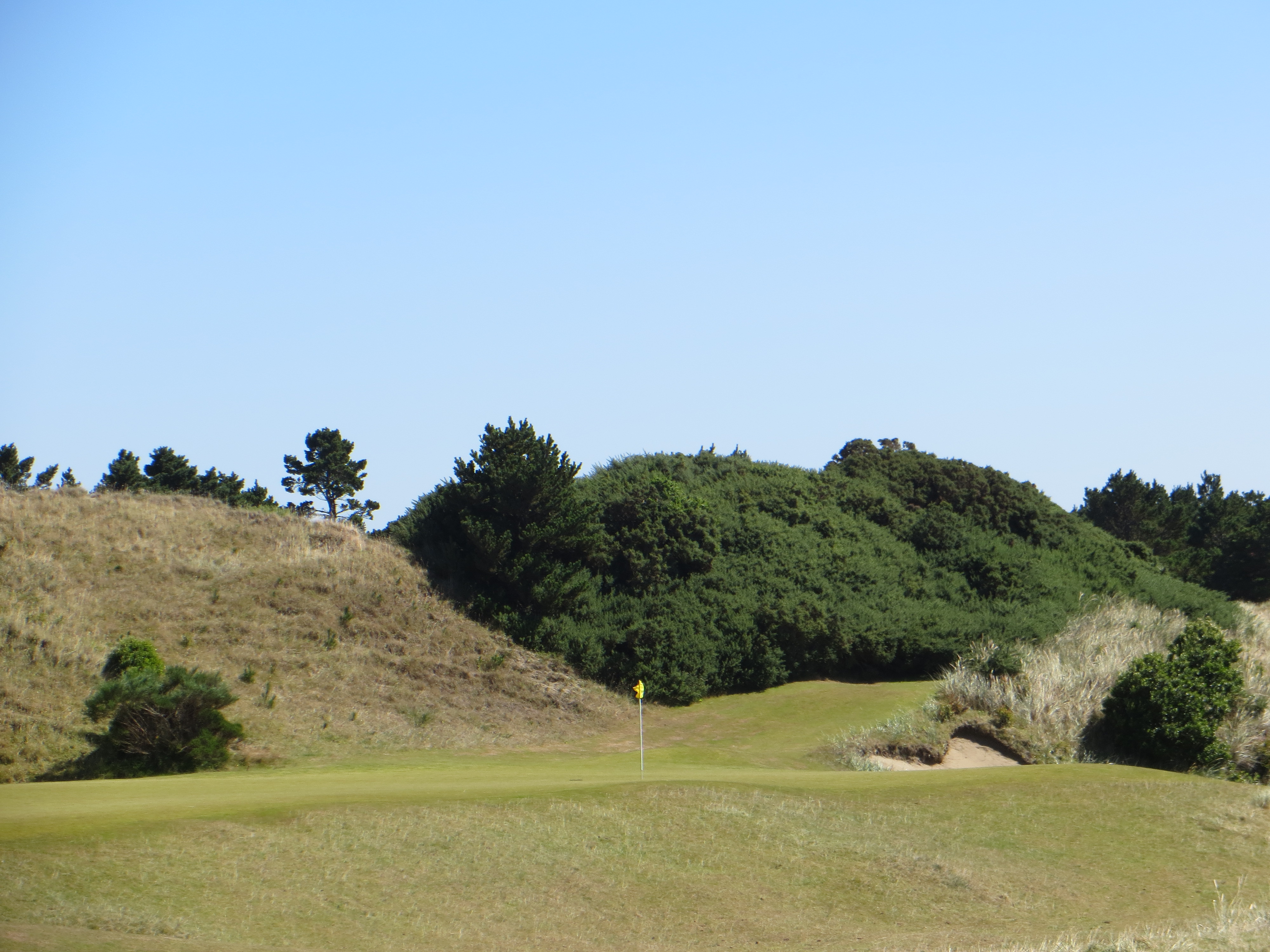
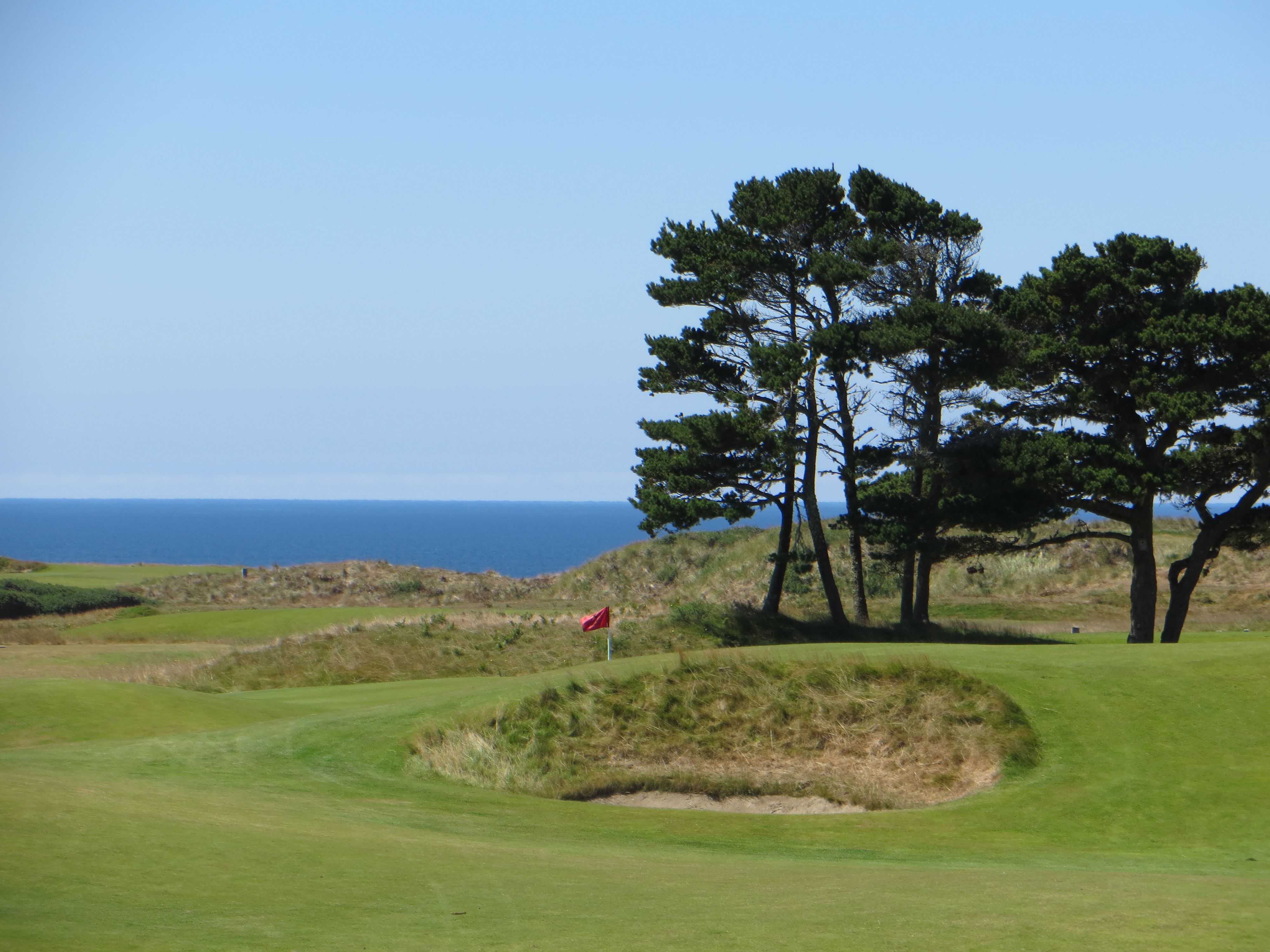
Pretty As A Painting-with all the seaside elements-furry mounds, sod-wall bunker, sea grass, and wind exposure.

Still Life With Rake

Drift Wood-from Hawaii?

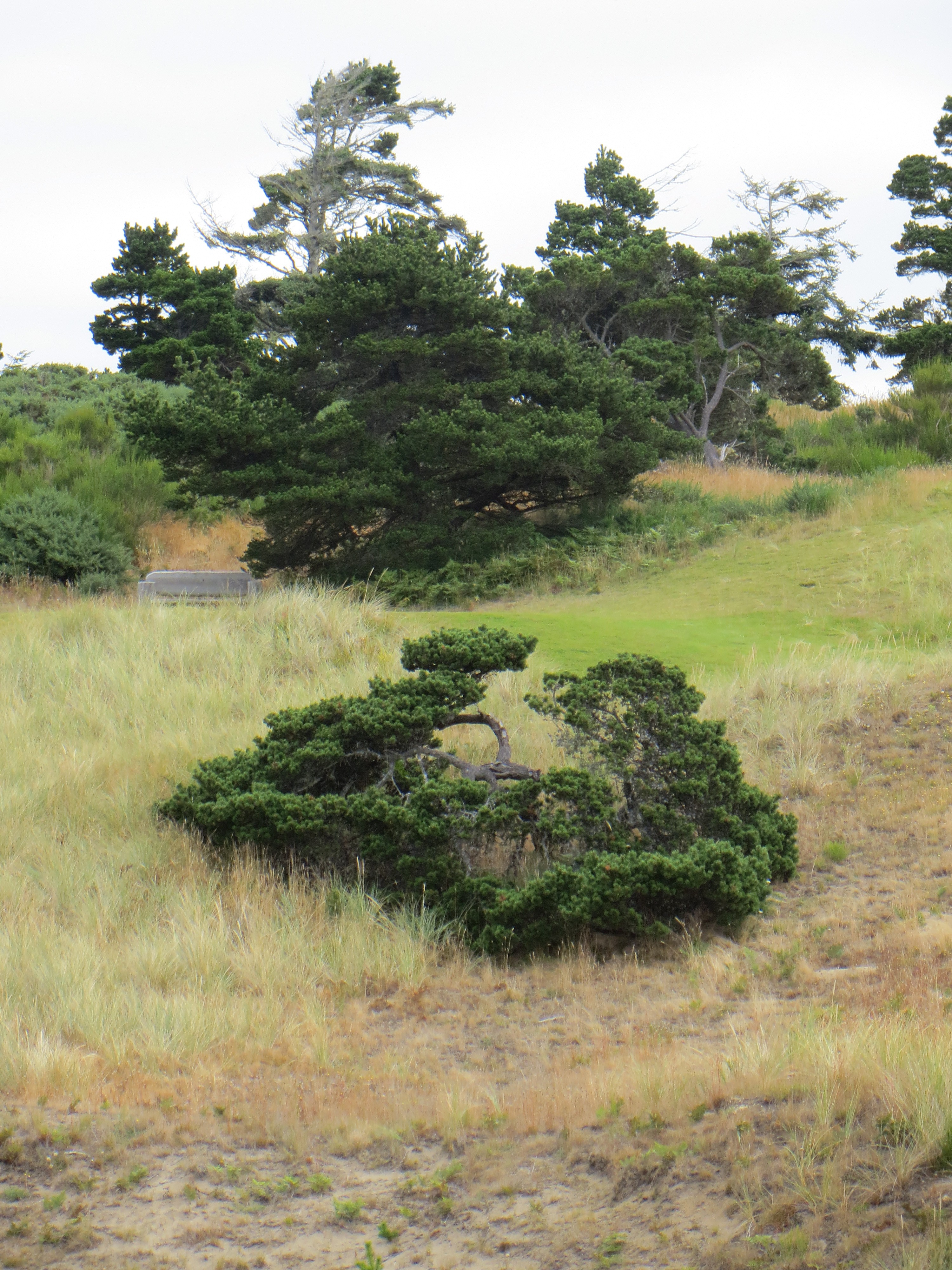
Dwarf pines and gorse accent the links.

Misdirection-How do you get to this flag on ten?

Simple Challenge-avoid the pot and hold it on the table top….and account for the wind influence.

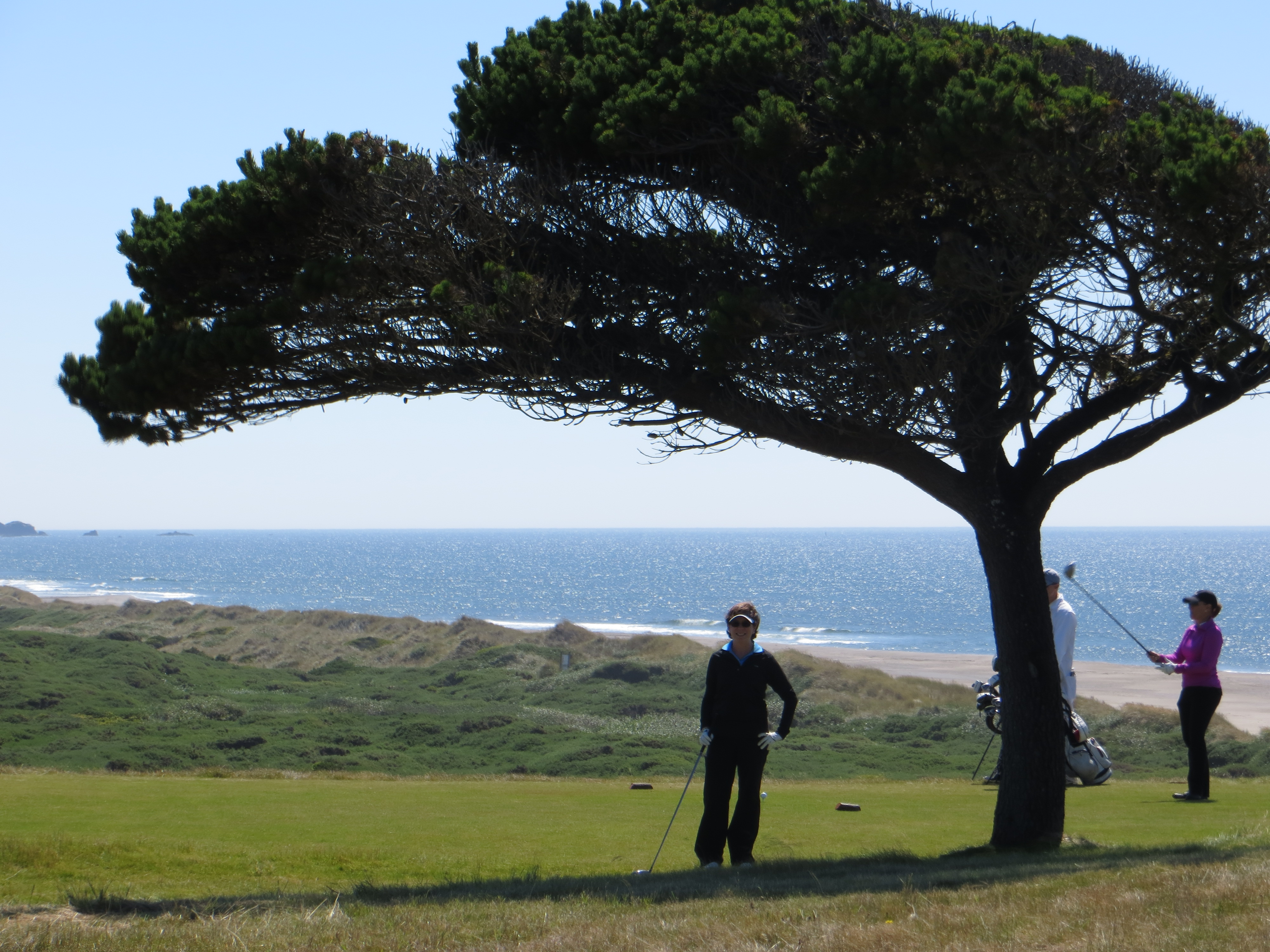
A Reflective Shade Tree Moment

An Environmental Forced Carry-then negotiate the roller coaster green.

The Finish

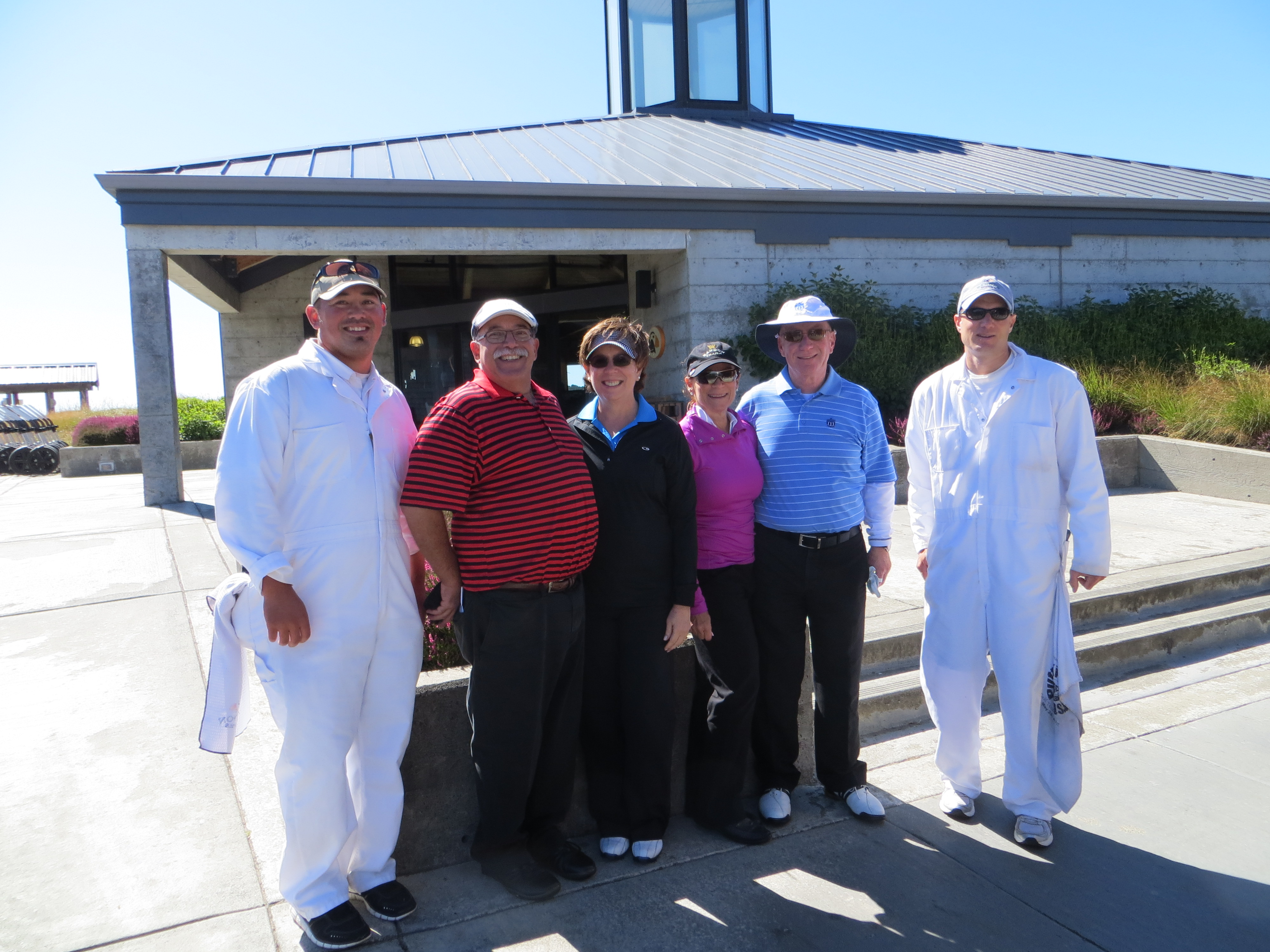
The Motley Crew
Justin, Moe, Kathy, Marla, Alan, and Dave

August, 2012

(Click to read Postcard From Bandon Trails-Day 2)

For more course detail click to see Bandon Dunes Course Review

Grounds For Golf

This book is subtitled “The History and Fundamentals of Golf Course Design” and that is an accurate description of what it is about.  Fundamentals, not the wonky details, of course design is what Shackelford successfully relates to the arm chair course architects out there.

You know who you are.  Guys who regularly are moving bunkers or rerouting the front and back nine on their home courses over clam chowder after an above handicap performance and a loss of two out of three on the morning Nassaus.  Or guys who come back from that man trip with a litany of “suggestions” on how those name brand architects could have made the courses just a tinch more playable.

This is an informative and very readable primer on golf course design and the history that has brought us to where we are today.  Shackelford is a bright guy with an easy going writing style who is well briefed in the subject and opinionated enough to make it thought provoking.  He is a guy who has played all the holes he discusses and has done the necessary background research as well.  The book is full of thoughtful quotes from C.B. Macdonald, Alister MacKenzie, Ben Crenshaw, Tom Doak, Pete and Alice Dye, among other design authorities that lend credibility to his opinions on the history of the development of course design.

For example:

“We want our golf courses to make us think.  However much we may enjoy whaling the life out of the little white ball, we soon grow tired of play a golf course that does not give us problems in strategy as well as skill.”
Bobby Jones

Add to this the etchings of Gil Hanse, a fine course designer in his own right, and it is a well presented and balanced presentation on a subject that too often is discussed vociferously without adequate background knowledge.

The book is compartmentalized by subject to cover what is architecture, schools of design, evolution of the craft, principles of design, great holes and classic designs, and even the nomenclature of the industry.  His two chapters on Comic Relief in quality design and the role of Temptation as a key element in challenging players to make quality decisions that will affect their scorecards are particularly interesting.

Shackelford has the distinction of having dabbled in design as a consultant on a track not far from Los Angeles called Rustic Canyon that he did under the tutelage of Gil Hanse and Jim Wagner.  This is a natural looking daily fee course they created in the rugged foothills of Southern California and it avails him the opportunity to explain many of his theories of design as expressed through their own experience in creating this course.

The print version is accessible for a steep price in the used market but you can get the Nook electronic version for about $7.99 through the internet.

This book is not for everyone, you need a bias of interest in the topic to wade through the detail he presents.  If you are an armchair architecture wonk like me this is something you need to have read if for no other reason than to have some basis for your personal authority when criticizing the Pete Dye design that just ate your lunch.

Grounds For Golf

Geoff Shackelford (2003)