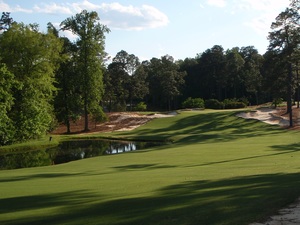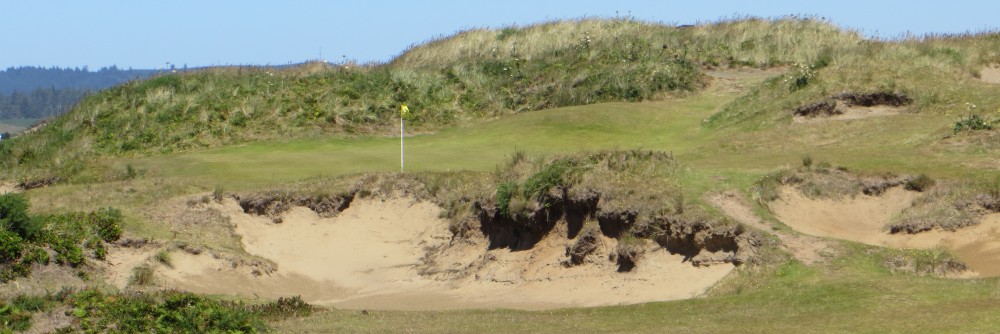

Erin Hills Designed For The Wind

When Dr. Michael Hurzdan, Dana Fry, Mike Hurzdan, and Ron Whitten developed this course with the blessing of Mike Davis and the USGA for a U.S. Open Championship, they presumed the wind would be the wild card in making it a championship test.

For three days there was no wind to speak of and with rain softened greens the players had their way with this layout mocking par along the way.   But winds of 20+ mph greeted them for the Sunday round of this Major Championship and the design features of this layout will have their say in the outcome of this U.S. Open.

USGA got its wish….blue skies and winds up for the final round

Embed from Getty Images

.

Unlike any U.S. Open venue in recent memory, Erin Hills is not about narrowed playing parameters with a long grass punishing any miss on drive or approach no matter how slight.   Historically it is Hack-A-Mole pitching from 6 inch green side bluegrass where it is more luck than talent in saving a par.

Instead Erin Hills is a roomy minimalist design that traverses rolling and swerving topography with innovative green complexes that put a premium on using the ground as your friend to get at cloistered pin positions.  There is tight short grass around these green complexes which have severe fall offs and punishing bunkers awaiting shots without sufficient intent.  A creative and innovative recovery short game, much like what you see on display at many on the European Tour events, will pay great dividends for the first time in memory in a U.S. Open.

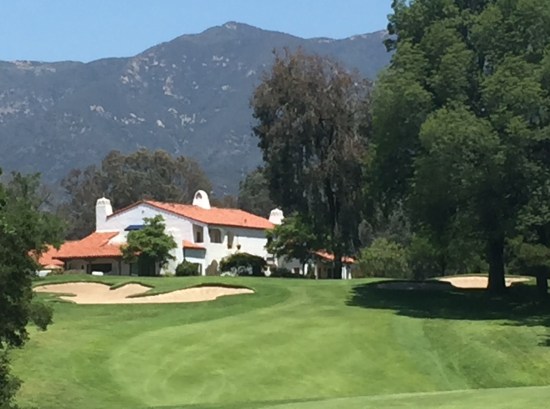
Brian Harman’s dexterous approach into the Par 4 Third Hole

Embed from Getty Images
.

In watching this week the look and feel of Erin Hills reminds me of some of the links jewels I have played on the Emerald Isle of Ireland.  The unrelenting design challenge of Pat Ruddy’s European Club and Eddie Hackett’s Enniscrone come to mind.  Both have swerving undulating topography, tall fescue to greet wayward shots, and raised, tilted, and undulating green complexes where angle of attack can make a big difference in getting an approach close.

Rickie Fowler misses his line off the tee and pays the steep price

Embed from Getty Images

.

In a similar way Erin Hills has contoured driving areas that favor a particular shot shape to find the advantageous approach position or stay out of the tall fescue.  Into the greens there are plenty of forced carries required, not many places where the player can bounce it short and feed it on.  When the wind gets up it becomes more of an issue of strategic use of the interior green contour to slow and feed the approach to the pin of the day.

The early broadcast featured the voice of Gil Hanse, one of the premier designers of this generation, and he contributed valued insight into how the design will play into the strategic approach required to control shot outcome for those in the thick of this championship run.

The heightened wind makes negotiating the sharp edges of the green complexes and avoiding the evil decree of the near misses all the more difficult.  Short side recoveries in the cross winds become much harder to convert into par saves. The slightest misjudgement of pace on a downwind pitch can result in an unexpected roll out off the putting surface leaving an equally problematic four-story pitch back up the slope.

With the precipice greens totally exposed to the wind’s effect reading the greens can be like reading a Ouija Board.  Figuring control of the line and roll out to avoid knee knocker six-foot comeback putts is a must to avoid a scorecard hemorrhage.

Jordan negotiating his approach putt on the windswept 9th green

Embed from Getty Images

.

Lengthening of the downwind short par three ninth from 130 to 170 may actually help the guys since it is easier to flight down an eight iron than a wedge or sand wedge.  The problem remains the Roberto Clemente Memorial pin position in a tight Bermuda Triangle in the back of the green.  Missing the flag by five paces in any direction may mean calling in the Coast Guard for search and recovery.

He pointed out that the short par fours and the two five pars on the back nine may be the hardest to reconcile.  Making a decision to take on one of these “driveable” four pars is enticing but the degree of difficulty of recovery if you miss these blinded targets makes that decision somewhat specious.  Same goes for hoisting a long and high approach at flags on the two potentially reachable par fives. With the thought of a game changing eagle in mind the margin of error from hero to goat could be four steps in one direction or the other.

No question the unique design of Erin Hills coupled with the stiff winds that took four days to appear will make this Sunday round look more like an Open Championship finish at Muirfield than a typical U.S. Open finale.

Rewarding Good Shots

There are two ways of widening the gap between a good tee shot and a bad one.  One is to inflict a severe and immediate punishment on a bad shot, to place its perpetrator in a bunker or in some other trouble which will demand the sacrifice of a stroke in recovering.

The other is to reward the good shot by making the second shot simpler in proportion to the excellence of the first.  The reward may be of any nature but it is more commonly one of four-a better view of the green, an easier angle from which to attack a slope, an open approach past guarding hazards, or even a better run to the tee shot itself.

Bobby Jones

As quoted by Tom Doak in Tom Doak’s Little Red Book of Golf Course Architecture

SKLZ Foam Practice Balls

With the arrival of a new grandson my mind starting thinking way ahead to low impact training sessions in the back yard.  In searching about I discovered this product that turns out to be perfect for the task and way more.

These foam practice balls are “full featured” with:

  • Alignment stripes for consistent setup and alignment
  • Standard golf ball size
  • Soft foam is safe for use indoors or outdoors
  • Comes as a 12-pack

Besides all that, you can take a full wail at these suckers and they only go about 30 yard max.  Even though you are hitting a foam ball the ball flight is, unlike those airy wiffle balls you played with as a kid, surprisingly familiar as they replicate the spinning parabolic flight of a sand or pitching wedge to a T.  The stripes help with setup and alignment and make the spin imparted very evident for good feedack.  They even have a convenient cool mesh bag for storage, transport, and containment during your practice regimen.

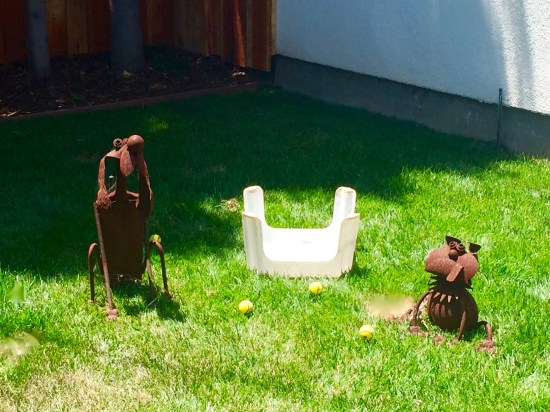
Back to the original goal of creating a backyard Approach Practice Course (APC), it opens up great creative possibilities for the budding course architect or simply the entertaining Grandpa.  Seemingly extraneous lawn art or an inverted plastic step stool can be used to create the perfect green complex with all the tactical bells and whistles.

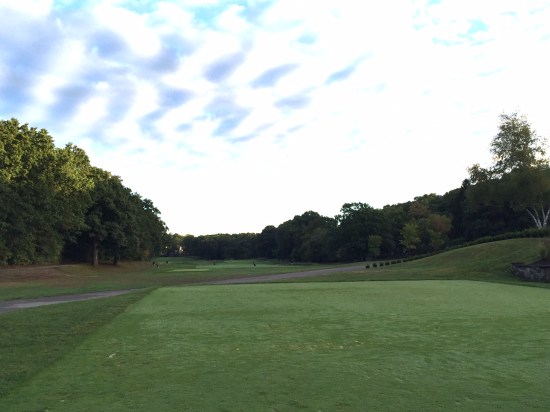
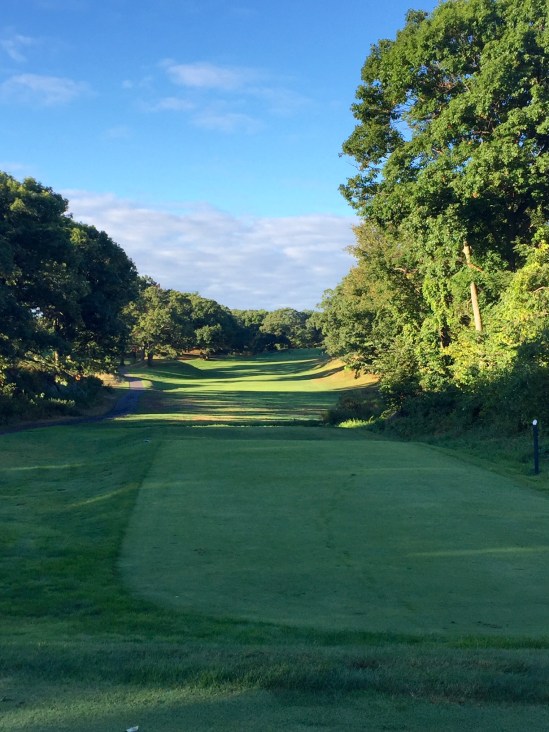
Double dogleg meanders between the weathered hazards…..a very Golden Age look on the opening hole


In this live loop you can see the realistic ball flight off the 3/4 swing of a 53 degree Ping SW with the drop and stop spin leaving me a little recovery from just behind Scooby Doo left.  Not being an official USGA event, the square grooves have been “grandfathered in” and are perfectly legal.

Safe for indoor and outdoor use, I imagine a plush rug and a pool table in the basement rec room would make for a nice alternative winter golf destination.

This is not a serious investment at $11.99 from a number of sources on the World Wide Web and, with Amazon Prime delivery, you could be setting up your own short game extravaganza in just a few days.  I highly recommend the investment for improving your short pitching game and nurturing the golf skills of your kids and grandkids.


George Wright Golf Course

A strong handful of renowned public golf courses exist in the United States that represent the most virtuous commitment of their municipalities to providing access to high quality design to everyone.  The George Wright Golf Course in Boston, an original Donald Ross design through and through, is one of these.

French Chateau Clubhouse stands sentinel on the hill as you walk up from the car park

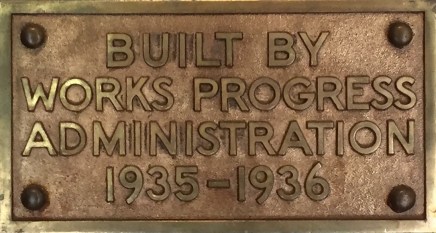
The Wright was built in the Depression period of the 1930’s on the old Grew Estate that had been conveyed to the Department of Conservation of Massachusetts through the efforts of George Wright founder of the Wright and Ditson Sporting Goods stores in Boston.  This major project of close to $1 million was financed through the Roosevelt Administration’s Works Project Administration.

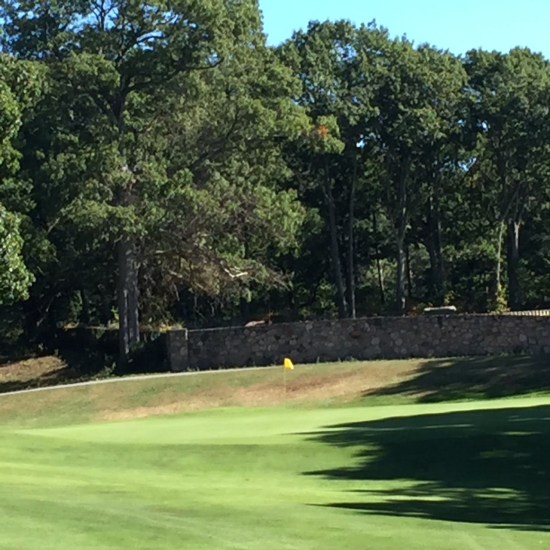
In what proved to be an enormous undertaking because of the rugged topography, the construction employed almost 1,000 people as it was completed over a three-year period opening for play in 1936.  There is a unique local flavor to the artistry of this facility in that it included a three-mile long perimeter flagstone wall built by the Italian and Irish masons of Boston and a stunning French Chateau style clubhouse that belies a typical municipal golf course setting.

Note the stone manson’s wall behind the green…3 miles long it encircles most of the property

From the time it opened this course was well reputed and hosted many big local and regional tournaments.  Among the best players it was considered an equal to the posh private venues of Boston.  But time took it’s toll and after the war and a series of financial problems that ensued, it fell into disrepair and by the mid-1980’s faced imminent closure.  Against all odds, an assiduous lobbying effort by the Massachusetts Golf Association kept it in operation for the next 20 years.  Finally in the early 2000’s the powers that be in the city of Boston made the bold commitment to restore George Wright to the original quality and design.

The key to this effort was the arrival of head pro Scott Allen in 2001, who spearheaded the restoration effort, and the hiring in 2004 of Len Curtain, a greens superintendent with a special affection for the place,  who grew playing the Wright.  With the consultation of a Massachusetts course designer Mark Mungeum, together this group embarked on the long term project to peel back decades of neglect and bring this wonderful venue back to original glory.

Lots of trees were removed and the green complexes were restored to their original Ross shapes and surrounds.  Fairway bunkers were relocated along with a few new additions to help the course meet the challenge of the contemporary equipment.  Together they brought back the Wright to a course worthy of being designated as the site of the 2018 State Amateur-the first time in the tournament’s history it will be played on a municipal golf course.

The wide open driving area on the first is a teaser…this is a precise driving course

The first, ninth, and eighteenth holes are on the flattest portion of the property just below the clubhouse veranda so the course begins and ends on a fairly tame note.  On the second tee, in spite of the abundant width of the driving area, you get the sense this is a tee ball position course as the green in the distance is suspended on an alcove shelf tucked in the corner of the property.  From three thru fifteen the course is enveloped in a solitary cocoon and you won’t see any man-made structures besides the clubhouse and the maintenance facility. It makes you wonder how it could be just four miles from the center of a major American metropolis.

The Par 5 3rd gives no room for wandering

Standing on the third tee the challenge is at hand as you are staring up the narrow hallway that defines this uphill and stringent five par.  Keeping the ball between the hash marks off the tee, controlling the roll out, and finding the proper angle of approach for the day’s pins into these Ross green complexes will determine how your scorecard will fare today.  It goes without saying that it will be peppered with some high numbers but you have to accept them and remain aggressive to balance the outcome.

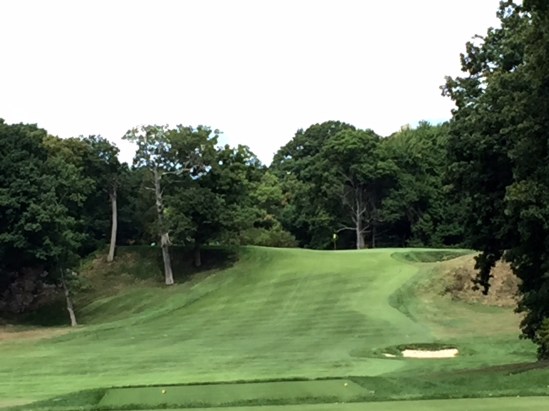
The landing area on the Par 4 4th is saddles the high ground

One thing you cannot fail to notice is that the holes are often lined with rock outcroppings or tall mounds.  These mounds were created by covering the piles of rocks rendered from the fairway demolition and you can begin to appreciate how much went into discovering playable fairways on this severe and rugged terrain.

Looking up the 6th you see how much was excavated to find this fairway

The devil is in the detail as you can see in the Hole-By-Hole Analysis below, the contours of five through twelve in particular will challenge your tactical instinct trying to find the line of charm.

Peaceful tranquility of the green complex on the 9th hole just below the clubhouse

Note: If there is someone manning the dog-at-the-turn cart between the 10th and 12th tees I recommend well done with relish and mustard.  The homemade cookies are not a bad chaser either.

The 8th one of the four intimidating three pars-very demanding little room for error.

As an aside, the par threes may be the most interesting holes on the course.  Every one of the four stands apart in visual distinction and precise shot making is demanded.  Not one of them is over 190 yards yet playing the four of them anywhere near par is a major accomplishment.  The Ross bunkering and segmenting of these four green complexes will sustain vivid images in your mind when you rehash the day’s journey later staring at your dark bedroom ceiling.

Bungee drop approach to the 12th from the top of the ridge

The inward nine takes up right where the last one ended with roller coaster elevation changes on the first three holes.  Be cognizant on all three of these not to drive the tee ball too far and overreach the best landing spot for the approach.  As you can read in the detail the blinded approach shot into the tenth green takes serious visualization.  The approach into the eleventh will take a different kind of creativity as it will take all your ground skills to give yourself a good scoring opportunity there.

Drop dead green setting on the Par 5 15th…just don’t hit the green wall netting behind

If you reach the thirteenth tee with minimum scorecard damage there is great opportunity to make up ground on the way to the house.  This hole is one of the most visually pleasing all day but you have to hit two very articulate shots to avoid the hazards that haunt the hole from tee to green.  What follows is a challenging uphill par three followed by a stunning three-shot par five that should give you a good chance to apply some salve to the scorecard.

Talking a 2+ club elevation change into the mountainous 16th green

I would be remiss if I did not give a shout out to the Mt. Rushmore green complex of the sixteenth hole.  No course architect would even consider building a hole like this today, but it is just flat out fun.  From the base of the hill where your drive will end up it looks like you need to hit one over George Washington’s left eye and land it on the crown of Thomas Jefferson’s head.  That is kind of what you have to do…long or Roosevelt right is no good at all.

The 18th appears sedate but there is trouble lurking if you get out of position

The two holes that bring you back to the house are very interesting.  The short par three seventeenth is one of the truly quaint looks of the day.  Encircled by sand it takes a lawn dart to give yourself a good birdie chance.  The home hole is a level walk on ground similar to the first, but the green is very deep with severe contour so you must focus to get your approach all the way to the day’s pin.

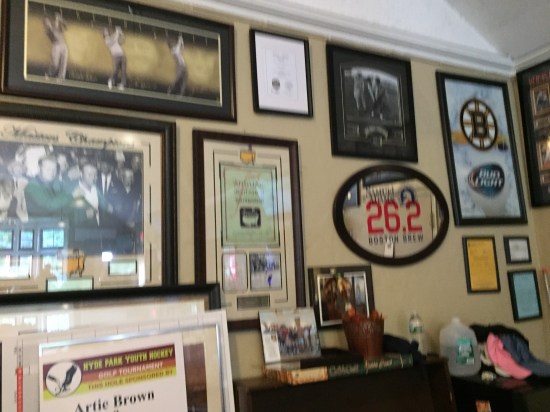
The apres golf Sports Bar and Grill is a memorabilia must stop

When it was said and done, I found the George Wright an amazing municipal golf experience, right down to the clubhouse building and the players Bar and Grill.  Linger for a cold Samuel Adams and some nachos, check out all the Boston sports memorabilia on the wall, and savor what has been a wonderful day of old style golf at a very accommodating price.

Boston, Massachusetts

Architect:  Donald Ross (1936)

.                       Par    Rating  Slope   Yardage

Blue                 70        69.5     126      6440

White              70        68.6     122      6096

Red                 70        70.3     115      5131

If you would like a printable PDF of this posting including yardage book quality hole-by-hole descriptions of how to play the course click the moegolf logo below.


Penmar Municipal Revisited

On a recent trip to L.A. to visit our kids and newly arrived grandson, I had a spur of the moment impulse to pay a return visit to the Penmar Municipal in Venice, CA.  For the non-resident price of $16, I had a pleasant 9-hole walk with a couple of locals-Big Al and Gary.  The course was lush and the weather conditions were idyllic, though the caterpillar pace of play the first six holes was a bit unsettling.  Gave us plenty of time to get acquainted.

No clubs on hand, I had to resort to this $5 unmatched rental set

The collection represented the full breadth of club vintages, equipment brands, and engineering breakthroughs from over the last 50 years.

Included therein:

-Callway 10.5 degree 450 CC Driver-unknown shaft and a Jumbo (Sammy Sosa variety)

-Titleist 15 degree 3 Wood-Aldia Voodoo Firm graphite shaft

-Callaway V 19 degree 5 Wood-senior graphite shaft

-Ping Eye 3 4 Iron-standard Ping steel shaft

-Lynx Paralex Cavity Backed 6 Iron-steel men’s regular shaft

-Clone 7,8,9, and PW-Ladies graphite shafts

-Cleveland forged 56 degree sand iron with a super large bounce

-Acushnet Bullseye Bronze Putter circa 1966 (I owned this in my teenage years)

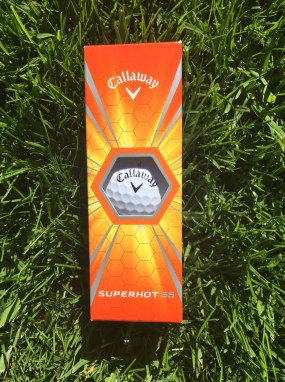
I also invested in hand cart rental for $2 and the finest sleeve of performance balls available in the Snack Bar/Pro Shop.  These are state of the art low compression Callaway Superhot 55’s.

They proved to be a perfect match for the variable requirements of the inventory of clubs I had to work with.


.

The driver was out of play because I was uncomfortable with a full baseball grip and pine tar that would have been required to handle it.  So I worked the Voodoo Magic of the Titleist 3-metal about 210 off the tee on the driving holes to great satisfaction.

The trick was figuring out how to match swing speed with the wide variety of approach clubs that were available.  This is how I imagine it must have been to play proficiently with a set of Hickory Shafts back in the day.

Overall the middle of the set performed admirably in that I registered three pars across the nine.  One with a flush Lady’s shafted 7 Iron from 125 yards in a cross wind to 18 feet on the Par 3 third. The second was with a slinging draw 5 Metal around and over the trees onto the back fringe, after I bounced the Voodoo 3 Wood off the chain link fence on the seventh hole tee shot.  Finally an awesome up-and-in on the tricky 360 yard final hole with the 56 degree Cleveland SW and a channeled 14 year old’s putting stroke from my past with the vintage Bullseye.

What a rush!

All in all it was a nostalgic walk with a couple of new friends on a delightful municipal track in sunny California.

March, 2017

(Click to see more on Penmar in our Postcard From Penmar Municipal)

Lost Balls

lost-ballsThis is familiar psychological territory for golfers of all abilities, coping with the potential harrowing effect to their scorecard if the next swing goes wayward and the result is an unrequited search resulting in a lost ball.  As John Updike says in the foreword of this clever book, “this lost ball represents two strokes, and two extra strokes could mean the hole and even, if could be, the match, the entire outing, the day itself.”

In a very creative photographic collection Charles Lindsay has brought life to this unique aspect of our game in a book called “Lost Balls-Great Holes, Tough Shots, and Bad Lies”.

It is worth it for the Updike forward alone where he eloquently frames the issues that lost balls play in our game and why it strikes such a familiar chord for us.  “The whereabouts of the ball are in a sense the key to every ball game, but the whereabouts are most picturesque in golf.  Tangles of raspberry….sandy beds of shallow little watercress-choked creeks….snake infested moonscapes of pre-Cambrian basalt…all these nasty patches of environment can play host to a misplayed golf ball.  We have all been there.”

Through his camera lens Charles Lindsay captures the wild, the innocent, and the five-minute shuffle that accompanies all of these often futile searches.  He includes images of domestic animals, wild animals, and a few upright animals against dramatic topography from Ireland to Idaho and everywhere in between.

As a bonus, Lindsay peppers it with some wonderful quotes you can repeat in your Saturday group.

Mark Twain’s politically correct:  “It’s good sportsmanship not to pick up lost golf balls while they are still rolling.”

Ullyses S. Grant: “It does look like a very good exercise.  But what is the little white ball for?”

Alan Shepard from the moon surface: “Got more dirt than ball.  Here we go again…..”

This is the ultimate coffee table book for your home or office.  Every golfing friend who picks this up will give you that twisted, knowing smile as they leaf through an assembly of engaging photos that depict disturbingly familiar circumstances from notable golf venues around the world.

Lost Balls: Great Holes, Tough Shots, and Bad Lies

Charles Lindsay (2005)

moerate4


Oasis at Rancho Park

When people talk about playing golf in L.A. it is always the posh private places like Riviera and L.A. Country Club that get mentioned.  But right in the center of town, just off West Pico Blvd above Santa Monica is one gem of a municipal course called Rancho Park.

The fountains are period pieces…reminder of a less posh time in L.A.

Rancho Park FountainThe current course at Rancho Park was designed by William “Billy” Bell in 1949 on the site of an old Herbert Fowler design that preceded it.  The course was the home of the L.A. Open back in the 1960’s and has the distinction of being the first place Jack Nicklaus won a check as a professional….around $33 and change.

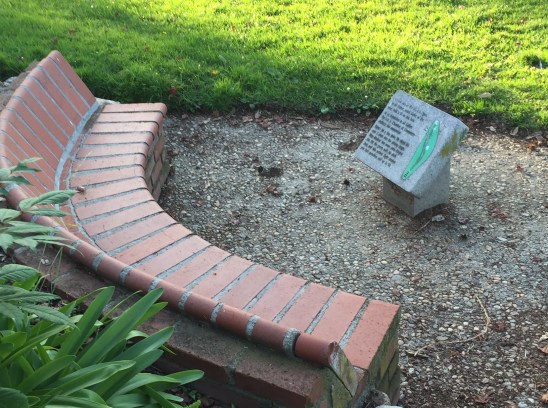
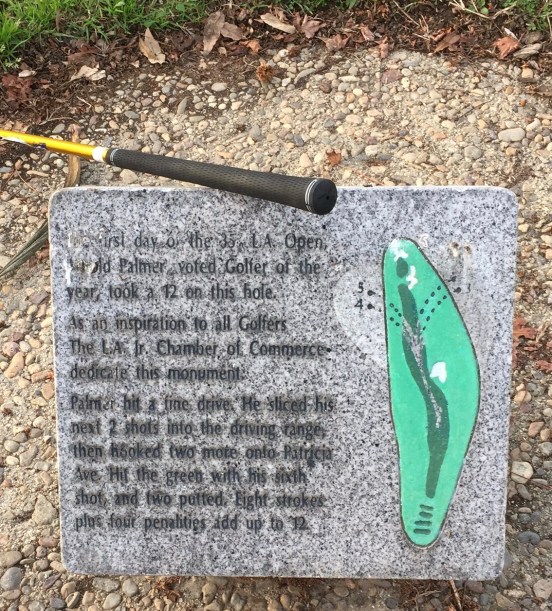
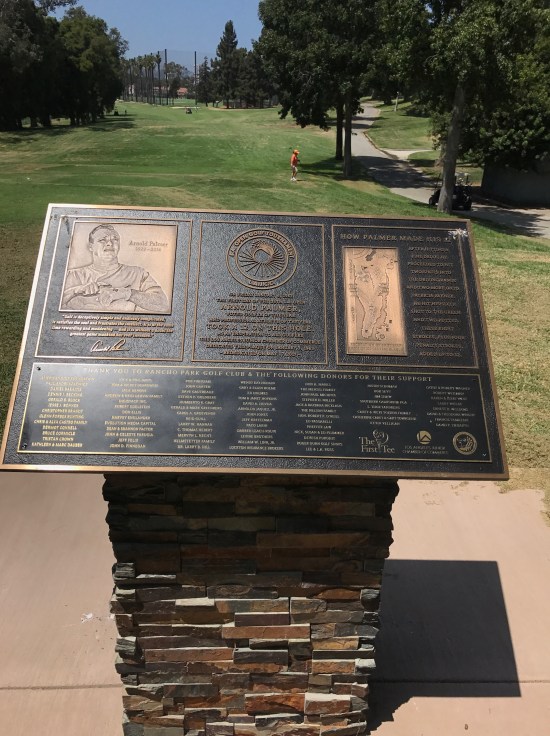
It also has the infamous distinction-memorialized by a meditation bench and a plaque behind the 18th tee-where Arnold Palmer made 12 of the finishing Par 5 in the L.A. Open after splitting the fairway with his tee ball and then hitting four balls O.B.

The meditation bench behind 18..chill while waiting for the driving area to clear

The meditation bench..chill while waiting for the fairway to clear on 18.

Original plaque details Arnie’s 12 in the final round of the 1963 Los Angeles Open-two into the range and two on to Patricia Ave.

arnie-plaque

The updated bronze memorial put up in 2017 after Arnie’s passing

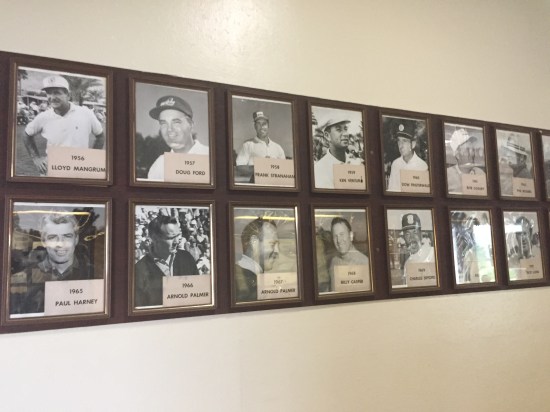
PGA Tour, LPGA Tour, and Senior Tour events have all been held on this track.  The list of winners in the L.A. Open  at Rancho Park during the period from 1956 to 1972 is a who’s who of great players from the era.  They include Lloyd Mangrum, Doug Ford,  Frank Stranahan (amateur), Ken Venturi, Arnold Palmer (3 times), Bob Goalby, Dow Finsterwald, Charlie Sifford, and Billy Casper.

Wall of Winners in the hallway to the Rancho Park Restaurant

In spite of it’s municipal conditioning-it’s location means it gets over 100,000 rounds a year-this course has the bones of a championship layout.  The back nine in particular has some incredibly cool holes that will challenge you skill set.

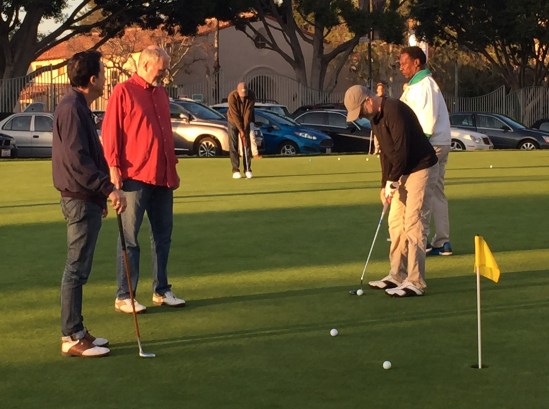
Three putting greens out front…you can lose serious change to a hustling local

putting-greenThis was recommended to me by a number of guys who have played the best L.A. has to offer as a place well worth spending an afternoon of adventurous golf.  They were not wrong….it is worth letting your hair down, renting a hand cart, and walking this most enjoyable track in the middle of Los Angeles.

September, 2016

moerate4

Kyle Franz-A New Name To Remember

Making a name for yourself in the Course Architecture is often about spending extensive apprentice time with crack designers who have made names for themselves before you. Kyle Franz has taken this route and is well on his way to the top of the “next best” category of designers under 40.

Franz found his first job with Tom Doak when he begged him for a position at age 19 on the team doing Pacific Dunes at Bandon Dunes. He went on to work with Doak at Barnbougle Dunes in Tasmania, Coore and Crenshaw in their restoration of Pinehurst #2, Kyle Phillips at the Cal Club, and, most recently, with Gil Hanse and Jim Wagner on the Olympic Course in Rio.

As you can read in this fascinating interview with GolfClubAtlas, Franz brought to these experiences an exuberance of youth, an adhesive mind, and a creative imagination. Being around these designers he soaked in their appreciation of the work of admired designers from the Golden Age of Design like Ross, Raynor, MacDonald, Tillinghast, Mackenzie, and others. He also made sure to do the extra curricular study time of these great designers and their work that related to the projects he was working on.

Greenside bunkering on the majestic #5 at Mid Pines is devilish

OLYMPUS DIGITAL CAMERAHis big break came while working on the Pinehurst #2 restoration when he had a chance meeting at a cocktail party with Kelly Miller the president of the Pine Needles and Mid Pines Resort in Pinehurst. The owners of this storied old place were contemplating a restoration of their vintage Donald Ross course and what they saw the Coore and Crenshaw team do at #2 was in the front of their mind.

Franz had done extensive research of Ross’s work at Mid Pines at the Tufts Archives while working on the Pinehurst #2 project so he brought an impressive understanding of the original Ross design and had a plan in his head on how to restore it to the original Ross ideals.

Taking a flyer on a young mind with big dreams they hired Franz to do the restoration of Mid Pines and what resulted was a win-win situation for both of them. Franz delivered a fabulous return of Mid Pines to it’s full glory.

His work at Mid Pines is a pure Donald Ross Pinehurst restoration

OLYMPUS DIGITAL CAMERA(Click to read the GolfClubAtlas review of Kyle Franz’s restoration of Mid-Pines)

As you can read in the interview his thought processes during this renovation were ambitious and creative. His use of materials and resources already on the grounds allowed him to complete all the work for under $1 million dollars to the owner’s delight.

The most interesting part of the conversation are his revelations of the work he did with Gil Hanse and Jim Wagner in creating the course in Rio for the 2016 Olympics. Still fresh in our minds from the Olympic competitions this summer, Franz gives real insight into what they had in mind and what they accomplished with this new offering.  His references to holes at North Berwick,  The Old Course, and Royal Melbourne  indicate the source of many design concepts were from the classic links and sand belt courses of the British Isles and Australia.

Franz has since brought his talents to bear on a number of other prestigious re-do’s of classic courses that have come his way. Working on restorations of places like Pine Needles for Miller, Seth Raynor’s Country Club of Charleston, and, maybe the most intriguing of them all, a restoration of the old Wood’s Hole Golf Course in Cape Code, he has fast established himself for the right opportunity to build his first Franz creation from scratch.

After reading this interview I think you will come to the same conclusion.

(Click to read the Kyle Franz GolfClubAtlas Interview)

.

GolfClubAtlas.com
August, 2016


Olympic Heroes

golf in the OlympicsAs a skeptic of the importance of golf’s presence in the Olympic Games, I now stand convinced that the play of those who who competed in this weekend’s men’s competition and the quality of the venue created to contest it on does indeed matter both to the game today and where it is headed in the future.

The first two days it looked like your weekly European Tour event with quality players of little international recognition leading the way.  Marcus Fraser’s opening round 63 was astounding but few people knew who he was.  The TV Cume reading for the broadcast was barely noticeable at this point.

But that all changed when the heroic play of Justin Rose, Henrik Stenson, and Matt Kucher, three of the top players and finest gentlemen in the men’s game, on Saturday and Sunday provided riveting drama and expressed the added intrigue that playing for one’s country and a medal in an Olympic Games can only provide.

Proudly displaying the winner’s hardware on the podium

Embed from Getty Images
.

Hats off to all three of these gentlemen for their attitude toward playing in these games and their consistent expression of purpose throughout the week on what it would mean to be standing on the winner’s podium at the end of the day.

An equal measure of respect has to be given to the design heroics of Gil Hanse and Amy Alcott for their creation of this gem of a golf course on which these Olympic Competitions is being played. Hanse should get the credit he rightfully deserves as one of the preeminent course designers of his generation, an equal to Tom Doak, Bill Coore-Ben Crenshaw, and Pete Dye who seem to get most of the mention these days.

Gil Hanse-the author was on hand for the big reveal

Embed from Getty Images
.

Those who have played Hanse creations like Rustic Canyon in California or Castle Stuart in Scotland recognize the unique wide and open style of this design and complementary creative short grass green complexes . Together this provides a strategic element to play that can change daily with the prevailing winds and firmness of the ground conditions. The clever sequencing of the first three and last three holes rewarded aggressive play with scoring opportunities and the rapidly shifting leader board on Saturday and Sunday reflected the genius of that design element.

This only portends for more of the same as the best female golfers in the world take on this Olympic challenge in the coming week.

One last up and down led to this triumphant gesture

Embed from Getty Images
.

In the end it was superlative play-Kucher’s 63 on Sunday, Stenson’s 68-68 on the weekend, and Rose’s clutch birdies on 15 and 18 that punctuated a glorious introduction of golf into the Olympics.

I, for one, am now a believer!

.
August, 2016


First Tee Celebration 2016

Welcome SignOur annual celebration with the First Tee Programs of Montgomery County and the Greater Washington D.C. was a day of high energy and fun for over 30 kids and the 20 volunteers who were part of this. The emphasis was volunteers and professional staff supporting the nine principles that are the bedrock of the First Tee Program.

Respect-Perserverance-Honesty-Integrity-Courtesy-Responsibility-Sportsmanship-Confidence-Judgement

These kids come from diverse backgrounds and make it evident by their poise, grace, and self confidence that golf can teach valuable life skills and they “get it”.

Group Shot With Everyone

Smaller Group ShotOur volunteers ages 14 to 85 provided exactly what these kids needed-smiles, reassurance, and support of the development of their understanding of what the game has to offer.
Adult VolunteersFrom our youngest to our seniors our volunteers were charming and gracious.

Our Youngest Volunteers

Our Senior Leslie and GeneThere were those mugging for the camera…..

Volunteers HammingThumbs Up….but all had rapt attention to the proceedings.

This Big

Putting Oversight

Volunteer and Chipping Result

Girl TalkThe day’s activities began with some proper stretching and warm-up drills.  Stretch the hammies and work the hip flexors.

Warm Up 2Warm UpHammy StretchHip FlexationAll the kids went through the rotation of three clinics with our professional staff.  At the driving range with Geoff they covered the basics of grip, stance, takeaway, and follow through.  Some needed firm direction while others needed us to stand back appreciate youthful talent.

Geoff At RangeGeoff ClinicGetting A GripAlexFelix Follow ThruThe second rotation was a clinic on green side skills with Trillium like pitching and chipping. It was about working on technique, visualizing the shot, and listening to the brush of the grass that indicated the proper result.  She even gave them some drills they could take with them to work on their own.

Chipping ClinicTrill ExplainingChipping DrillTrill DrillChristina ChippingThe last stop was a clinic on the Zen of putting with Connor.  This included stroke fundamentals, speed control, and reading direction.  Some cool competitions were included as well as proper celebration techniques.

Putting ClinicPuttingPutting2Thanking the fansA break for a picnic lunch where we got to just sit and chat…..healthy sandwiches, fresh fruit, and some chocolate chip cookies for the big kids.  We were all very good at eating.

Chowing DownThen it was out to the big course to put what they learned to work.  It is amazing how these kids handle themselves on the course.  Fixing ball marks, raking bunkers, marking their ball properly, and respecting the efforts of their playing partners.

Felix On CourseSabrina On CourseMaking A PuttCheck out this awesome video of one of the kids making a clutch putt.  The group celebration speaks volumes about how much these kids understand about playing golf with your friends.

One last bit of business to thank the volunteers, the staff, and the organizers for putting this together.  And most important, thanking the kids for being part of this beautiful day, sending them away with a few goodies to commemorate the event.

Presentation SpeechThanks for ComingParticpation CertificatesSpecial thanks to Connor Farrell, Steve Keller, Moe Dweck, and Alexandra Uduk for all the hard work in assembling this event.  Thanks to Woodmont Country Club and their professional staff for hosting us and the First Tee Chapters of Montgomery County and Greater Washington D.C. for hooking us up with these great kids.

First Tee Greater Wash LogoFirst Tee Montgomery County

August, 2016

(Photos provided by Steve Keller, Moe Dweck, Michael Pius, Binsar Siahaan, Alexandra Uduk)