Mauna Kea Golf Course

Robert Trent Jones was “the man” among golf course architects in the 1960’s when he was asked by his wealthy friend Laurance Rockelfeller to design a course to compliment a $15 million dollar remote destination resort being contemplated for the arid west coast of the Big Island. Trent was confronted with a challenging piece of hilly, lava entombed real estate next to a large piece of paradise. It took all his creative skills and engineering prowess but he did a marvelous job orchestrating the ground into a stage for an unforgettable golf experience.

Much like his creations from this same period at Spyglass Hill or The Golden Horseshoe, he found a way to use the tumultuous terrain to his advantage to provide startling vistas and tactical golf challenges. Robert Trent Sr. was one of the patriarchs of the heroic school of design so this one is not for the feint of heart. It was updated by his son Rees in 2008, who is another one who does not cut any slack for the meek, so if anything the resulting course became harder.

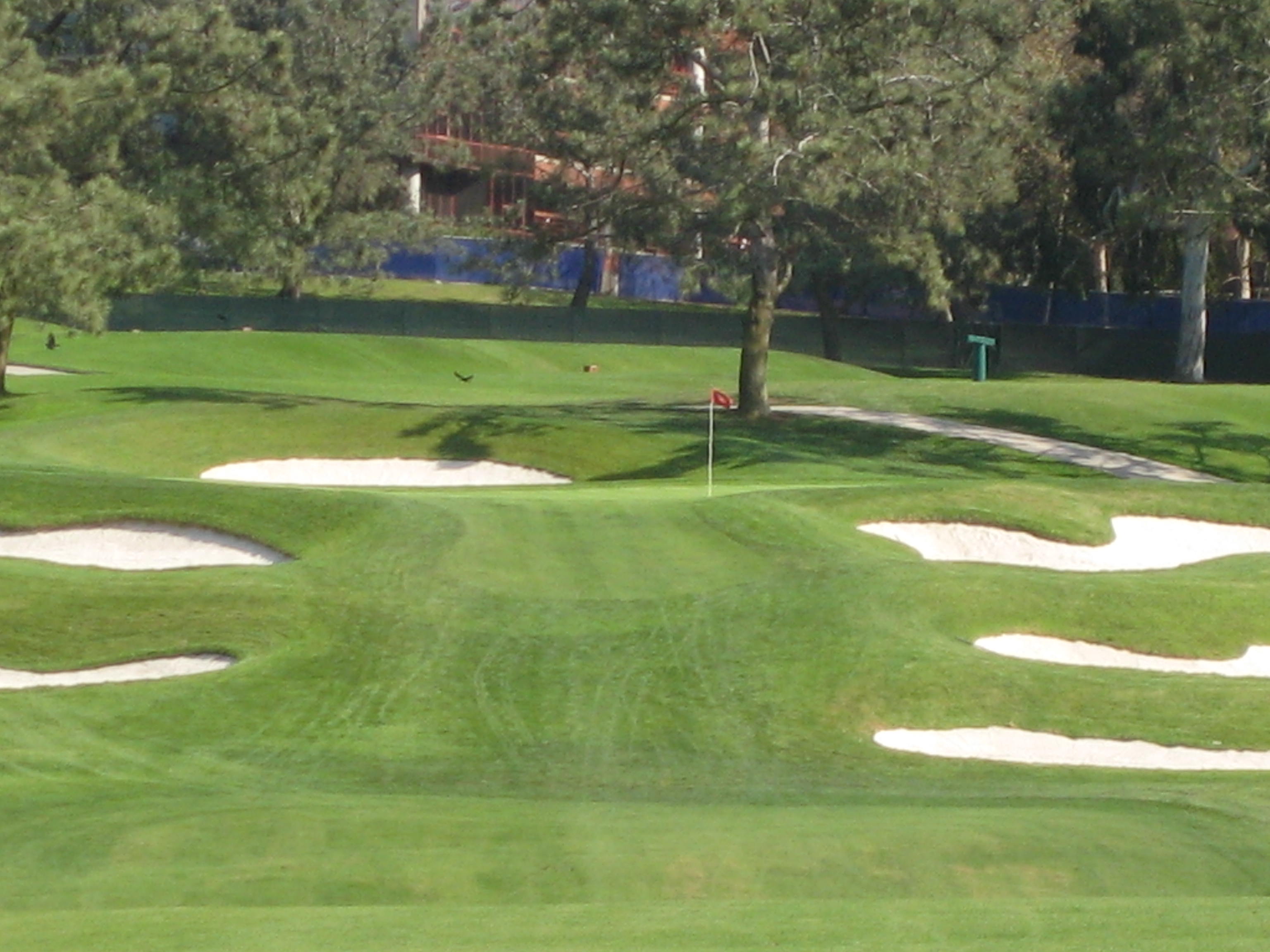
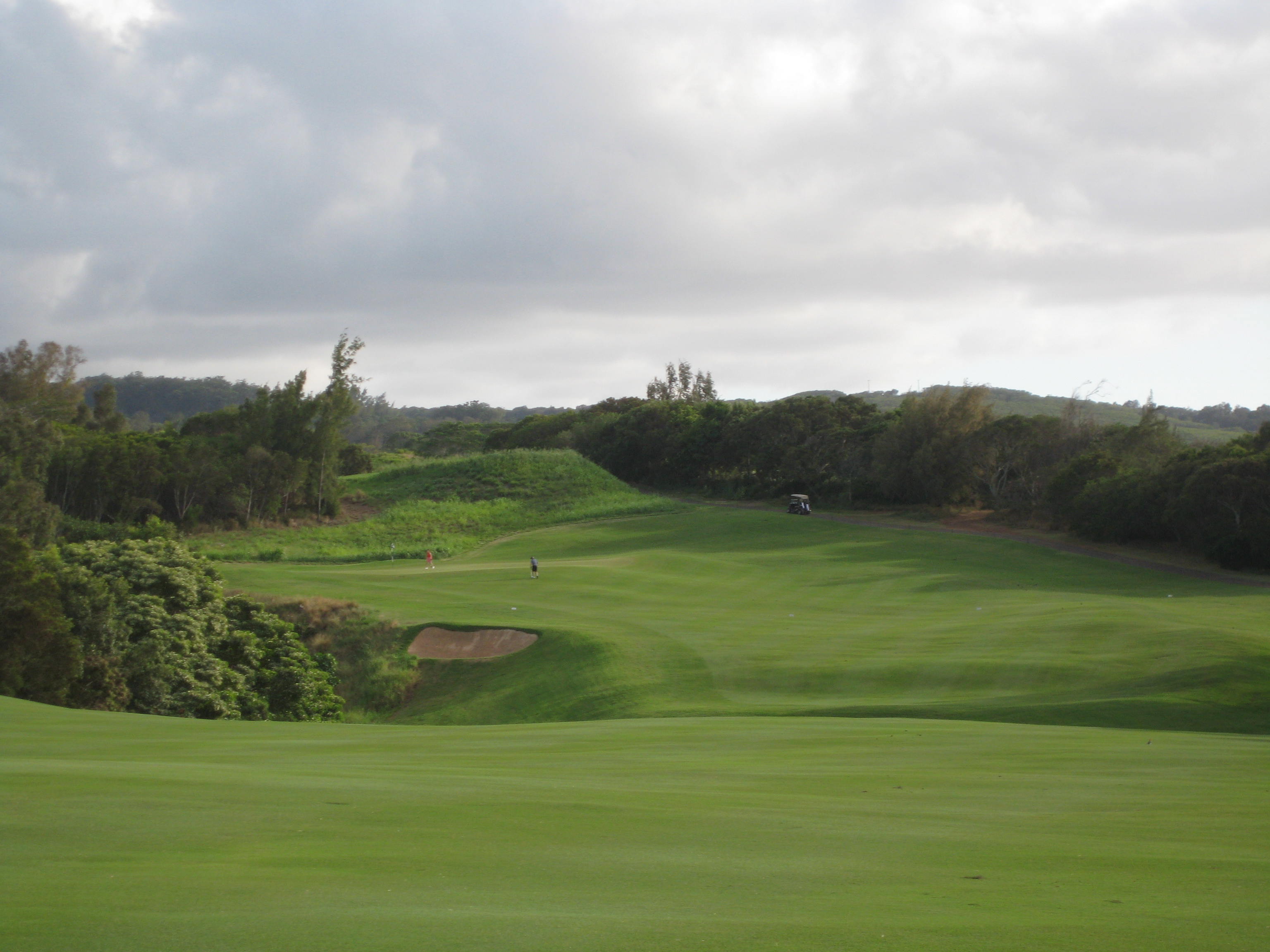
The Short Par Four Sixth-Stylish Bunkering

(Click on any photos for an expanded view)

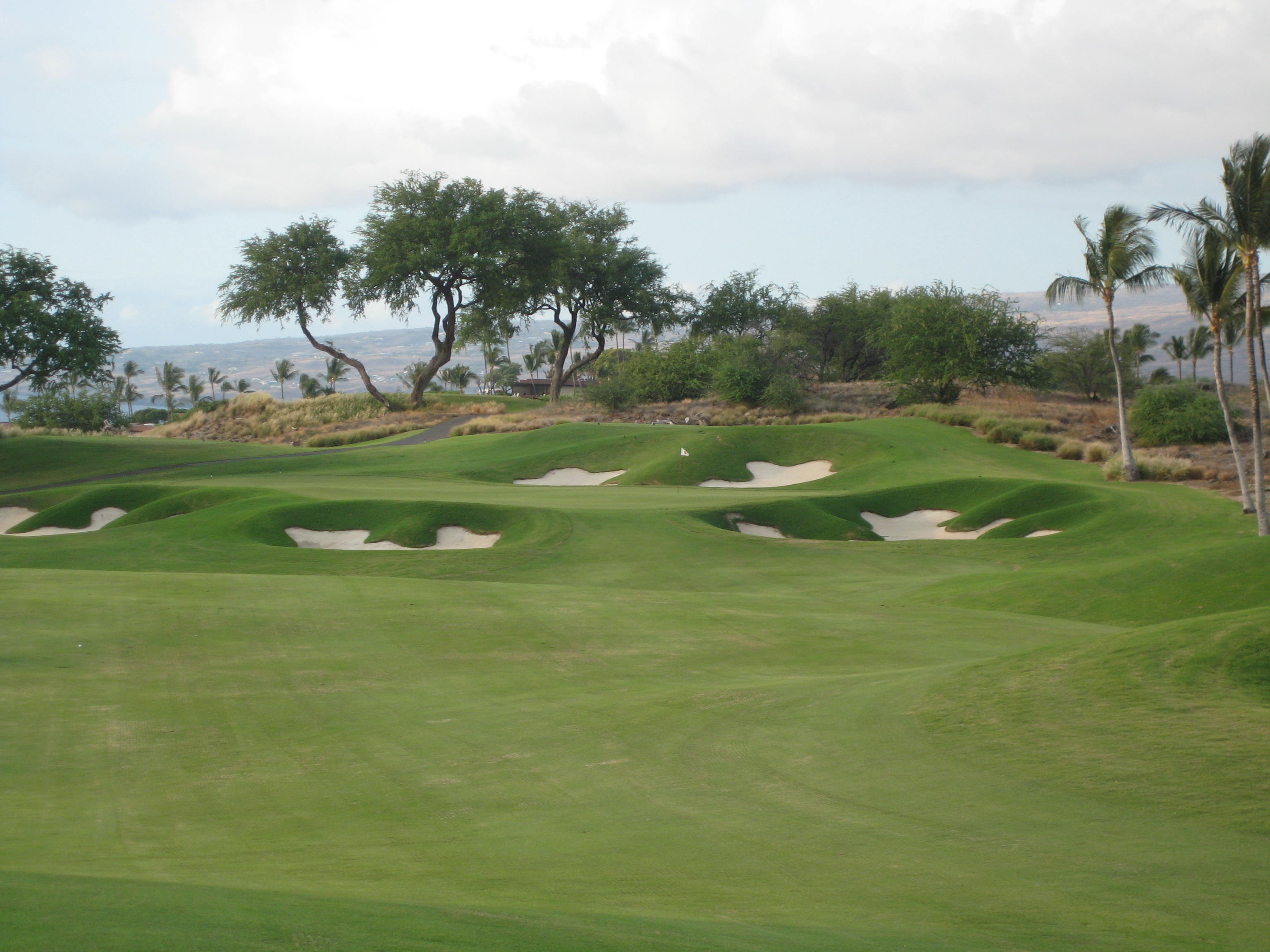
His son’s renovation work looks to have touched every corner of the property.  The main improvement was the move to the latest version of Tiff Bermuda grass throughout which makes it more durable and environmentally friendly to maintain. They say the irrigation systems and the drainage were improved to solve long standing issues.  What you see are typical Trent Jones greens-sprawling and segmented to make them tactically relevant-that roll a top speeds because of the new grass.  The bunkering has Rees’s fingerprints all over it-plentiful, artistic, always front of mind.  His presentation of these green complexes will take your breath away and often leave you scratching your head walking to the next tee.  The bermuda grass presents a particular challenge when pitching and chipping around these greens.  Steep swings get caught in this sticky grass which takes the high lob shot out of your repertoire for the day.

What you see is a place with a real 60’s retro feel about it-the architecture of the buildings and the residences throughout the property are that low square “I Spy” California look. They have recently redone the golf shop and Number 3 restaurant to bring them up to the quality of the rest of the facility.  The only disappointment is the practice area which remains in dire need of upgrade, expansion, and softer golf balls.  They could also do a much better job in relating to you the green topography and pin positions of the day, especially since both should figure into your playing strategy on every hole.

Robert Trent’s challenge at Mauna Kea was two-fold, he had to make arid land seeming inhospitable to grass growth suitable for golf and reign in the rugged topography to route holes that were challenging, playable, and would showcase the dramatic vistas of the Hawaii’s Kohala Coast.

Lava fields dominate the coastal areas on this side of the Big Island creating a rocky wasteland over the 230 acres intended for the site of the golf course. This side of the island gets very little rainfall so finding the water to support any vegetation would be a challenge as well. Trent realized that there were two kinds of lava present-brown lava that can be crushed to a powder mass and blue rock lava that is virtually impossible to break up. Managing a metamorphosis of this ground to make it suitable for golf seemed like an insurmountable challenge.

Never one to back down from a challenge Trent and his experienced engineering crew developed their own engineering techniques and processes that enabled the use of the crushed lava as a soil base on which he added a mix of lime and crushed coral dredged from the nearby bay to grow a hybrid brand of Bermuda grass with great success. The water he needed was provided by drilling a couple of wells almost 400-feet deep coupled with the first fully automatic underground golf course irrigation system of their own creation. The result was astonishing, green grass flourished in what had appeared to be an arid desert. The blue lava was either blasted, buried, or left alone as an accent to the developing holes. The cost of all this was over $2 million dollars, equivalent of close to $15 million in today’s currency, an unheard of expenditure for building a golf course in those days. But Rockefeller had the deep pockets and the desire to have a special centerpiece to his high end resort.

Robert Trent’s challenge was to reign in the rugged topography and route holes that were challenging, playable, and would showcase the dramatic vistas of the Hawaii’s Kohala Coast.  Routing the holes straight up and down the slopes he gives you some very severe elevation changes that will increment club selection but very few holes with side ways roll offs.  This makes picking and maintaining shot lines much more manageable.  As is often the case with this type of terrain, there is rarely a long run for a straight fairway so most of the holes bend dramatically or are folded to fit the available shape of the land.  The result is that there are many short par fours that play from a high tee to a landing area below and then turn dramatically to a four-story green complex on top of the next hill.  This template will wear on you, especially if hitting high elevation, full carry approach shots is not in your wheelhouse.

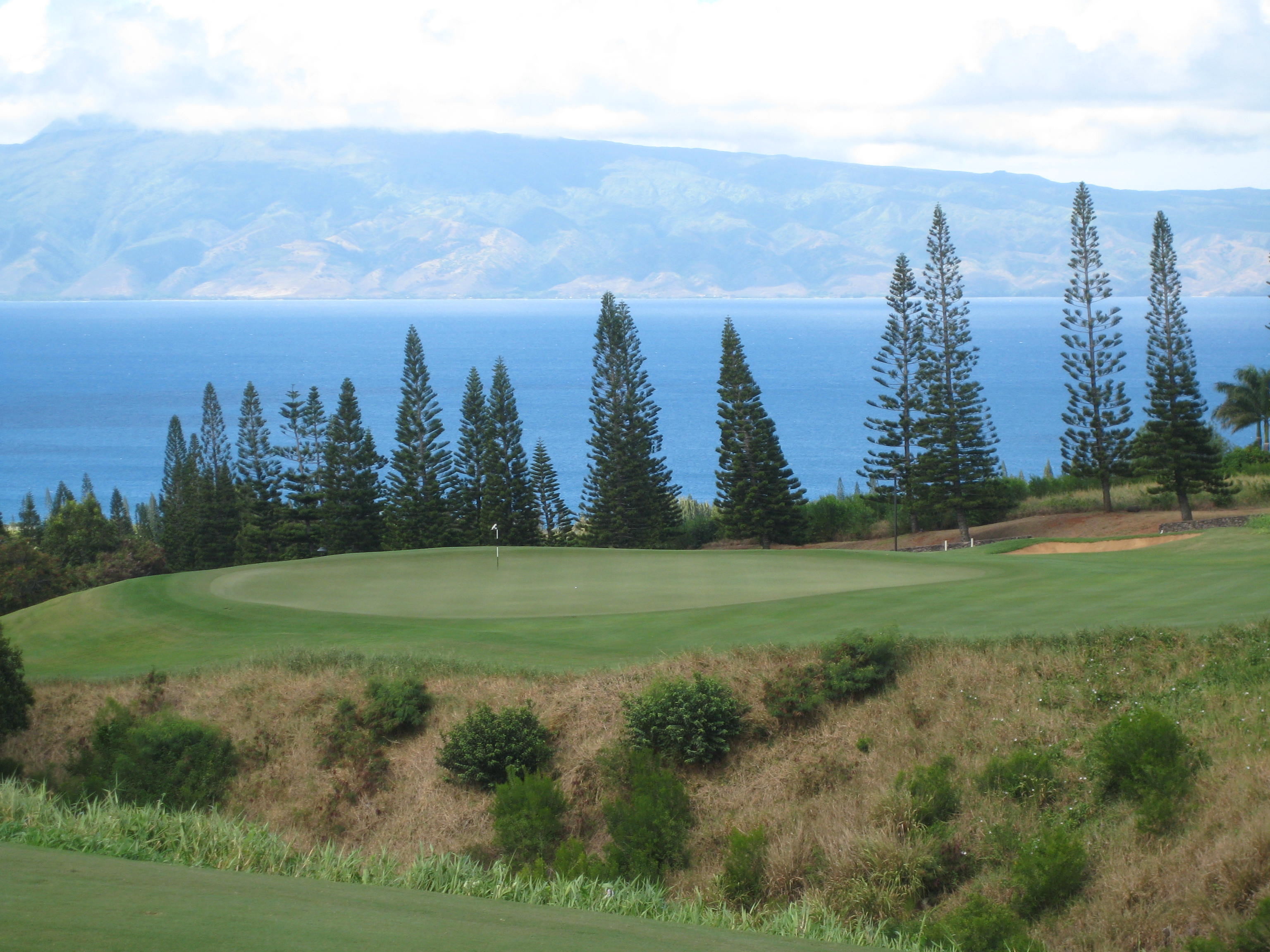
Trent’s Signature Photo Opp-Number Three

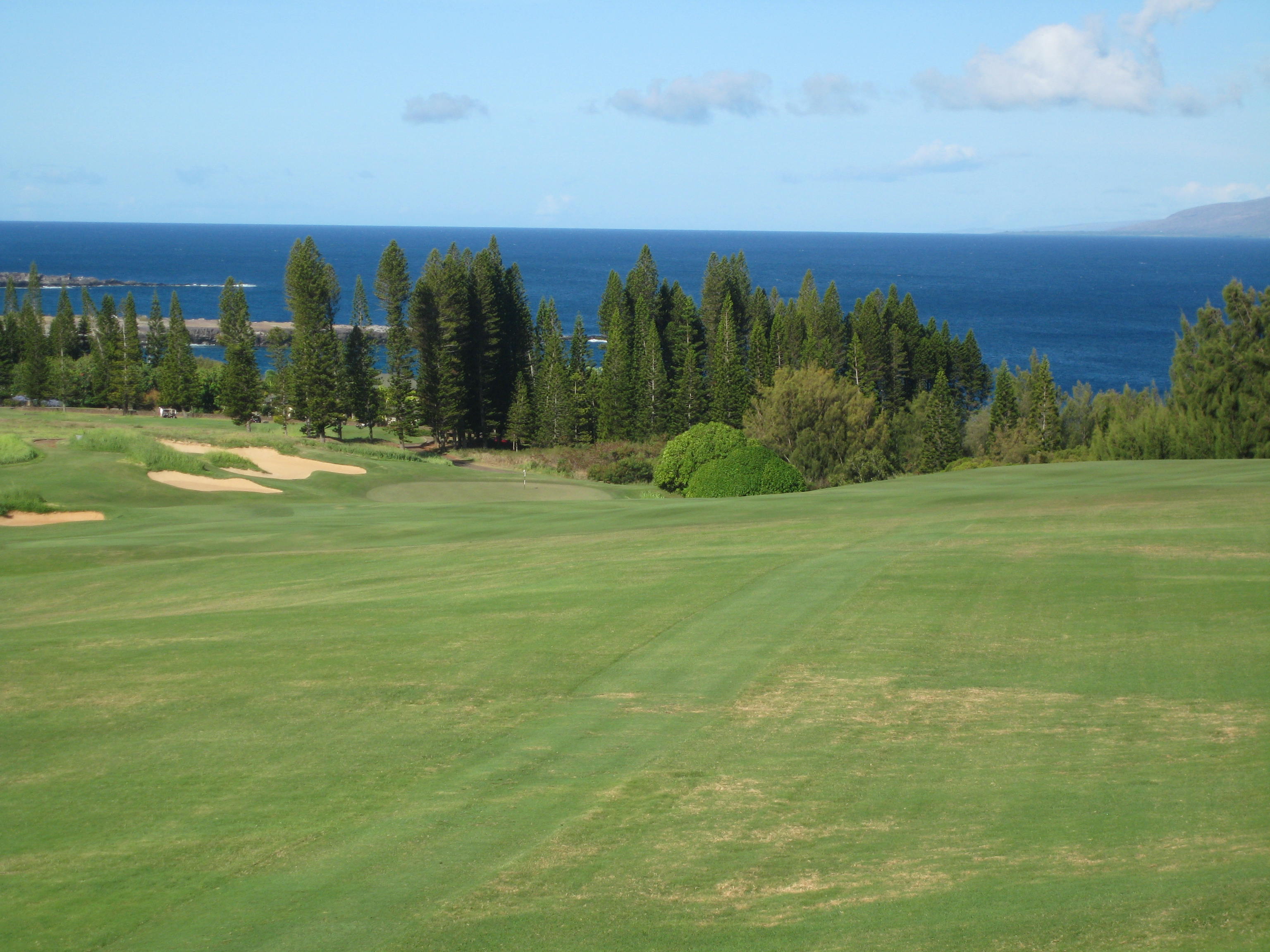
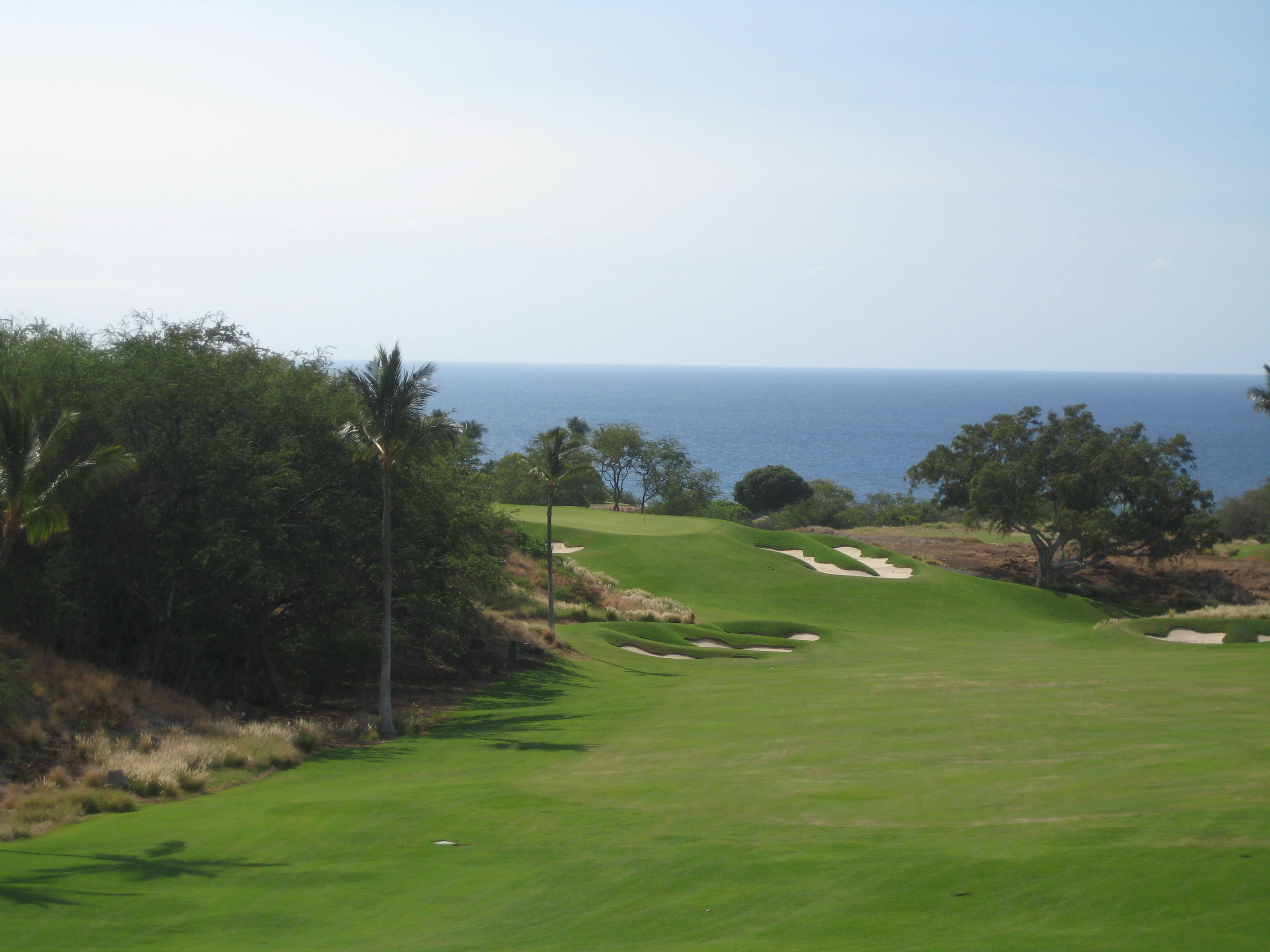
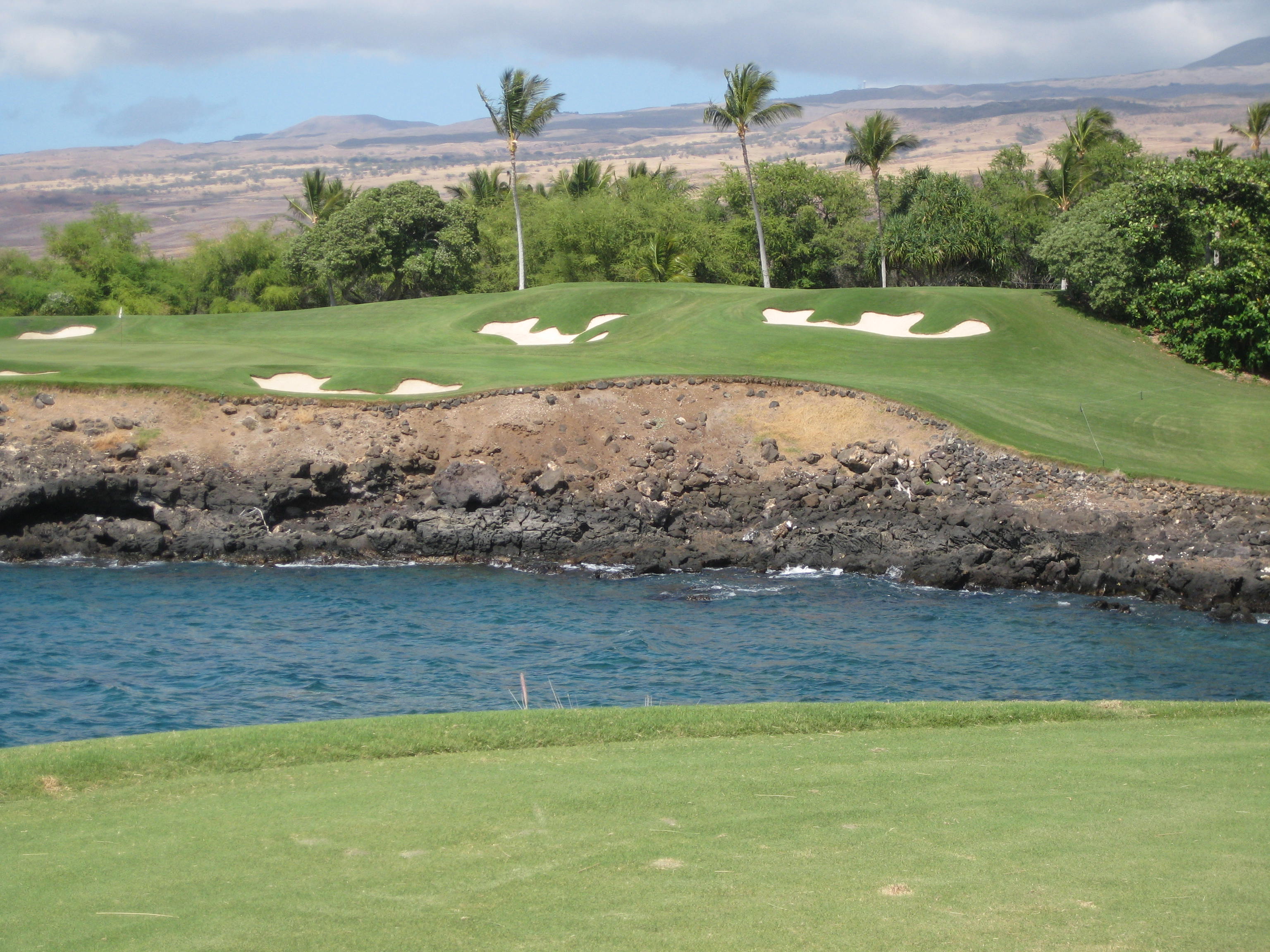
For me the par threes are the centerpiece of this course.  Number 3 is the signature hole with the Cypress Point look and not as much ocean to carry.  This is a photo opp for sure so you can expect a backup due to clicking digital cameras.  Number 11 is another absolute beauty-a medium length par three.  It is a downhill look at an evasive green nestled against the ocean-it brings to mind the 7th at Pebble with a much longer club in your hand.

A Bit Of Pebble Beach-Par 3 Number Eleven

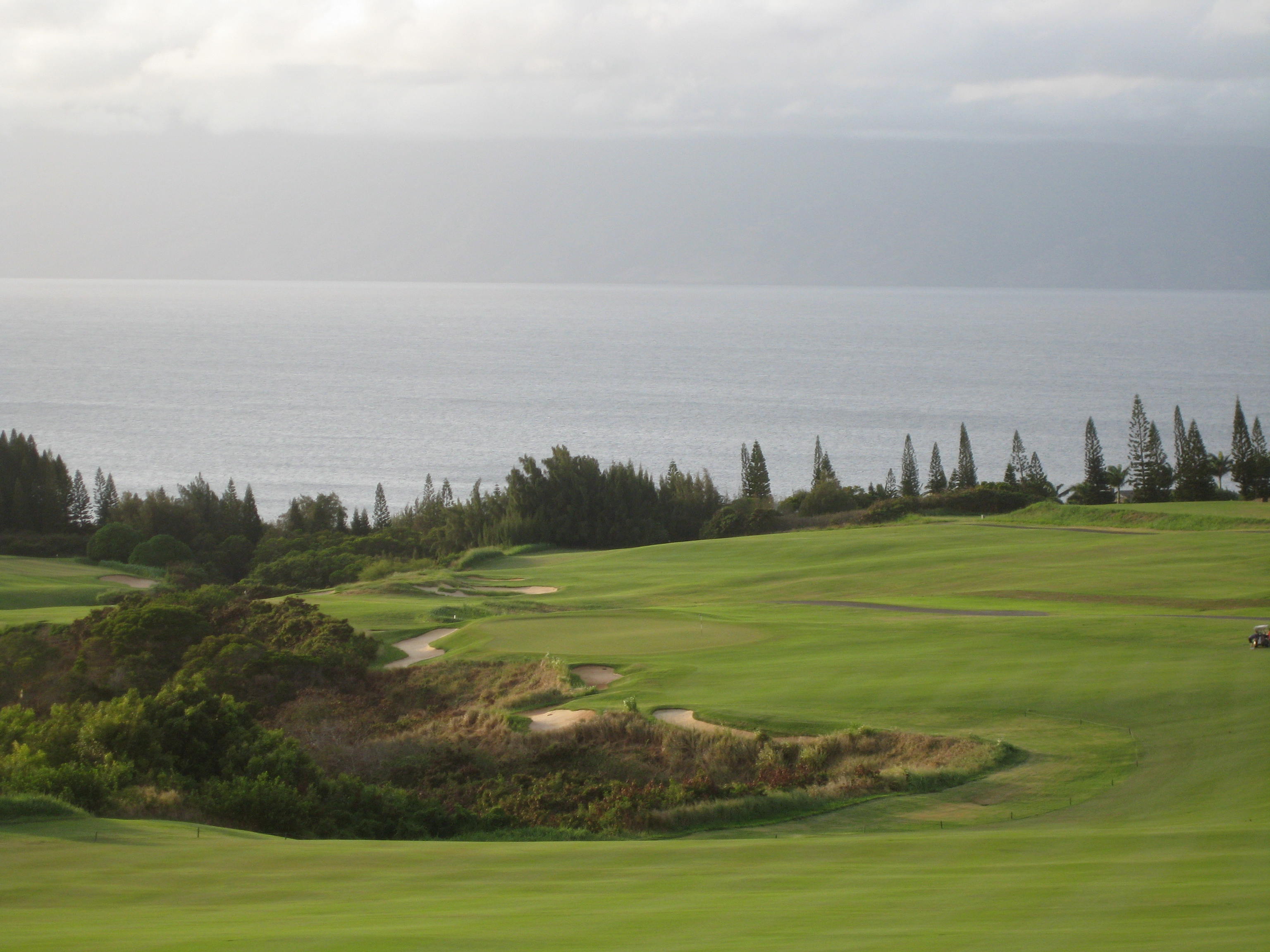
The par fives are some of the most imaginative you will play anywhere.  Here Trent uses the incline, some carefully placed fairway bunkers, and dramatic green arrangements to give you chances for success or disaster on every one of them.  Eight and seventeen are tumbling dice affairs where you cannot believe how far your ball has traveled and are tempted to do things you probably should not consider.  Of the par fours I like nine and eighteen in particular because both give you the distracting dramatic look of the coast line below but demand you control the line and carry of your shots to have a scoring chance at the end of each side.

Stunning Green Complex Par 5 Number Seventeen

Sequencing of the holes is what creates a tactical momentum for any course.  He did a marvelous job in this regard starting you out with relatively easy holes each nine and then quickly picking up the challenge in the next few holes.  Once you reach that level the challenges come in a variety of forms in rapid succession, you barely get over the rush from the last whole when the wow factor of the next tee hits you.  This is a course where you will have a bad hole but there are plenty of chances to redeem yourself with smart decision making and timely shot execution.

The Dramatic Final Act-Par 4 Number Eighteen

As I said earlier, this is not a course for those who are not up for a stiff challenge.  If you cannot hit the high carry shot or big bad bunkering intimidates the hell out of you then take the day off and go to the beach instead.  But if you are up for it this is Robert Trent Jones at his macho best.  Play well here and you will have some serious big fish stories to lay on your friends.

Big Island, Hawaii

Designer: Robert Trent Jones Sr (1966)/Rees Jones (2008)

Tees                Par      Yardage    Rating     Slope

Blue                 72         6806        74.7         134
Orange            72         6358        72.2         130

(Click to see complete Mauna Kea hole-by-hole descriptions)

Hualalai Golf Club

The Four Seasons needed to create a name brand golf course as the centerpiece for their residential resort community on the big island in Hawaii. Jack Nicklaus was retained and did a first class job delivering them a visual and memorable resort course for their guests and home owners to enjoy.  This is a user friendly track with wide driving areas, accessible greens, and not a whole lot of deception.  They host the opening event on the Apostle Tour each year, so you are likely to remember seeing old guys in January begging against the wind on the last two holes.

The signature feature of this course is that it was built on the black lava fields of the eastern Kohala Coast and Jack’s goal was to meld the holes into the up and down flow of the lava fields.  The lava creates a harsher version of the gorse or the heather on the Scottish courses setting a stark visual outline on every hole for the lush green of the Tiff Bermuda fairways and greens.  If you look up the eastern horizon to the mountains from which this came, you do get a real sense of the topographical flow of the element and how it defines the character of this course.

Click on any photo for an enhanced view of the image

Number 5  Par 3  Precision Required

For the most part, the lava is set off the immediate playing areas and there are only a select number of times where it becomes an integral part of the golfing challenge.  The more significant tactical challenge is Jack’s generous use of fields of fairway bunkering.  From the first hole to the last you will see repeated occasions where an entire side of the hole is bunkered, creating a dogleg effect on it’s own.  Missing into the sand on that side of a hole can be a scoring disaster.

The course begins with a typical low impact Florida style par 4-wide fairway-open access to a big green-no lava.  But you cross the road and enter a lava quarry which prepares you for the full lava look. Number two is a visual bait and switch landing area and then a large lava dune on the right obscures access to a very tight green.  The rest of the way is pure lava eye candy.  The short par four sixth is a great example of lava outline  that can appear intimidating with a green complex set in a lava canyon but there is a collar bunker off the back of the green that keeps balls from getting lava burn.  Seven is a unique par five where after you drive to a wide open landing area and play your second down a lava hallway that chokes the fairway framing the required lay up shot.

Number 7 Hallway of Lava

There is an over-hyped cookie jar with some oatmeal raisin and chocolate chips at the turn but the fresh fruit in the cooler is a refreshing touch before you begin the inward half.  The five pars on the back are the most interesting holes of the day.  Ten is a serpentine par five that requires full focus on your lay up shot to have a look at a green hidden behind an acre of sand, trees, and lava.  From twelve to fourteen you are as close to the ocean as you are going to get so the wind becomes a major factor in all club selection.  Fourteen is another very imaginative par five with a hide and seek green complex that is difficult to negotiate with a wedge in your hand.

Number 17 Green, Lava, and Sea

The finish is all finesse as you head back toward the clubhouse.  A couple of technical par fours before you reach the signature seventeenth, the only hole that is truly exposed to the Pacific.  Here you have to parasail one through the sea breeze onto a well protected green-anything left hits lava and heads toward Japan.  The finish is a beautiful short par four over ancient Hawaiian fish ponds and a Nicklausian sea of sand into a demanding tight green set.

Number 18 Sand Sea Of Madness

This is a Four Seasons so all the amenities are first class.  A sprawling practice facility is at your disposal with a couple of acres of grass teeing area, pitching green, and a large ambling putting green.  Perfect recluse for a five o’clock practice session to sort out the demons you encountered today.  There is nothing like the tranquility of downhill ten footers dropping into the cup as the sun dips back into the Pacific Ocean.

Curtain Call

Big Island, Hawaii

Designer: Jack Nicklaus ( 1995 )

Tees                    Par     Yardage    Rating       Slope

Championship    72         6632         71.5         134
Regular               72         6032         68.8         129

(Click to see complete Hualalai hole-by-hole descriptions)

Man O’ War Golf Course

Man O’ War is one of two courses Joel Weiman built for the Glen Riddle Golf Club outside of Ocean City, Maryland.  Weiman designed the Uplands Golf Club (of blessed memory) in Denton, Maryland off Route 404 on the way to the Maryland/Delaware Beaches.  Similar to that effort,  here he took a flat piece of farmland and turned it into a very interesting golf course that pulls links style features into play and makes for a wonderful afternoon of golf challenges that we are not used to seeing in this part of the world.  Add the wind factor, since this is just off the Bay side of the Ocean City area, and you do have a course that will give you a new riddle to solve every time you play.

                           Early Wake Up Call on Par 3 Second Hole

Click on any picture to get an enhanced view of the image

Be clear, that in spite of all the marketing hype, this is not a links course.  It lacks many of the inherent environmental necessities of a links course-sandy turf, proximity to a major ocean or sea, tall sand dunes, treeless surroundings.  But, to his credit, Weiman found a way to embed many of the links style challenges in this course-blind shots, random bounces,  awesome topographical intrusions, scantly bunkered green constellations, slick and windswept putting surfaces.  You will have a few of those head scratching “is this too arbitrary” or “is this unfair” kind of thoughts when you think back over your day of golf.  But truth is what you should come away with is a satisfying sense of mental exhaustion from having been challenged throughout the day.

Intimidating Beauty Par 4 #11

What you do get are well manicured Bermuda grass fairways that wend their way through an interesting array of swales and hollows, startling bunker clusters, and imaginative green constellations.  Weiman introduces the links arbitrary bounce feature through the creation throughout the course of what we have coined “Worm Berms”.  When you look at the holes on the GPS imaging in the cart there are manufactured ridges in many fairways that look like worms-these will repel a ball without the proper level of intention to places that seem arbitrary and punitive.  But for anyone who has played across the pond you know that the rub of the fairway is an elemental part of the links golf experience.  The bent greens are severely sloped and segmented with tiers and fall offs that make it essential to plan your approach angles to leave your ball where you can putt aggressively. Being on the wrong side of the hole all day will leave you a bushel full of three putts.  Creative pitching and chipping will go a long way to keeping you on your game-the unusual green constellations will afford you plenty of opportunity to ply that craft.

Like most good courses driving the ball on the right line is essential to success.  Weiman used creative bulldozing to inject some very obtrusive obstacles in your path.  Picking the right club off the tee and the best angle from which to play your next shot will help you negotiate these challenges with much less pain.  The blind shots and other visual misdirection techniques in the architecture will cast further doubt in your mind, but you have to trust your instincts and have conviction of intent on every shot.

Home Hole Par 4 #18

This is a wonderful afternoon of golf with a distinct links flavor to it.  Enjoy the arbitrariness of the experience and go with the flow-you will have some sweet recollections of the day’s challenges if you don’t let it wear you out.

(Photos from gwowi.com)

Berlin, Maryland

Architect: Joel Weiman (McDonald Design Group) 2006

Tees          Par    Rating    Slope    Yardage
Blue          72      71.6       133        6556
Silver        72      69.1       128        6086

(Click to see complete Man O’ War hole-by-hole descriptions)

Laurel Hill Golf Club

In the early 00’s the DC Department of Corrections closed their Lorton detention facility in Northern Virginia and returned the  property, which included 4000 acres of hilly dairy farm land, to Fairfax County to redeploy for public use.  The county wisely decided to take full advantage of this opportunity to build a high school, an equestrian park, a museum, an athletic complex, an arts center, and a high-end municipal golf course.   With close to 300 acres at his disposal Bill Love, an accomplished designer with an environmentally sensitive approach to course design, was asked to oversee the project and he put together what has turned out to be one of the real gems in the Washington Metro area.

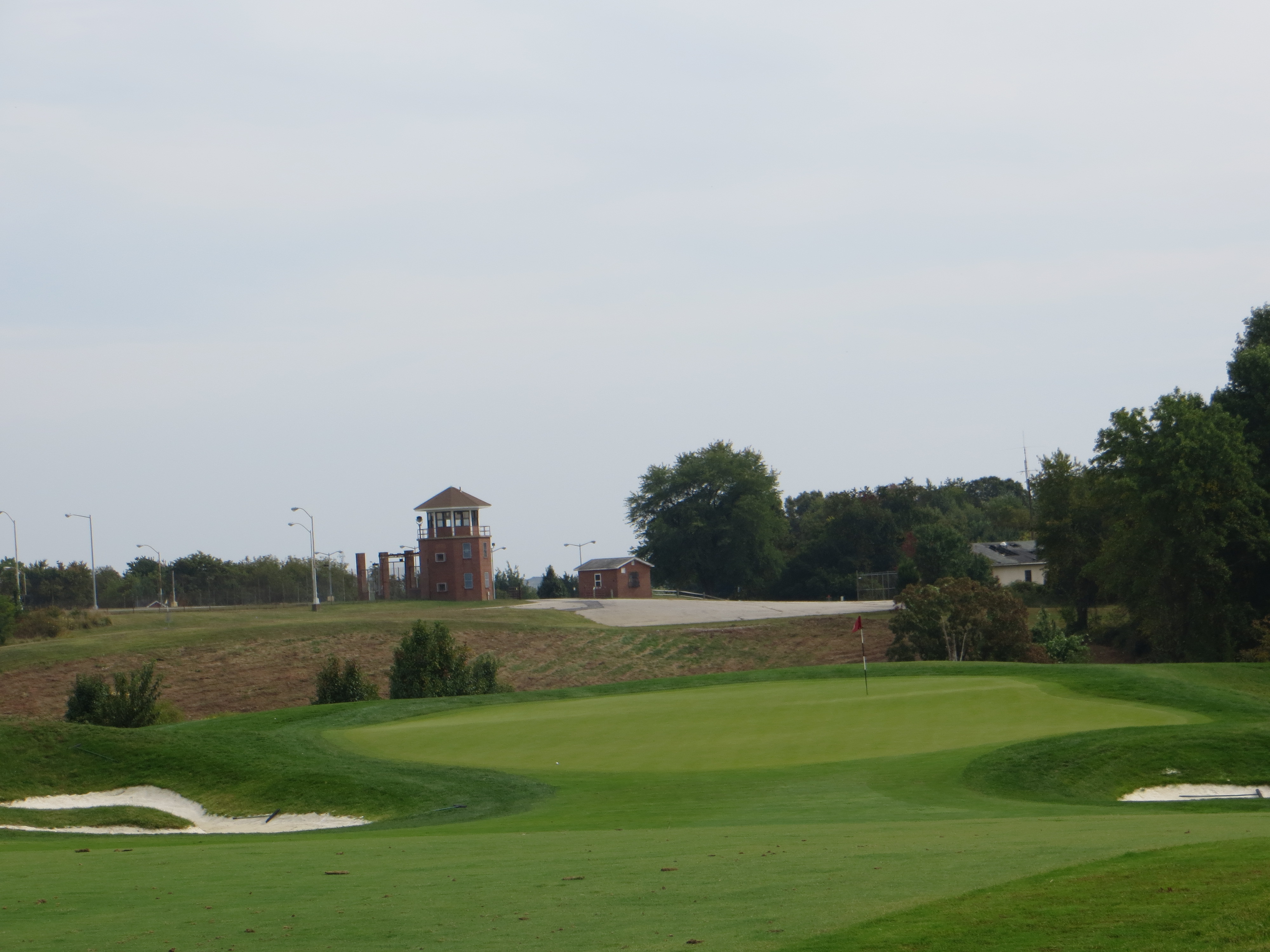
The juxtaposition of the property's former use to it's current use is intriguing.

The juxtaposition of the property’s former use to it’s current use is intriguing.

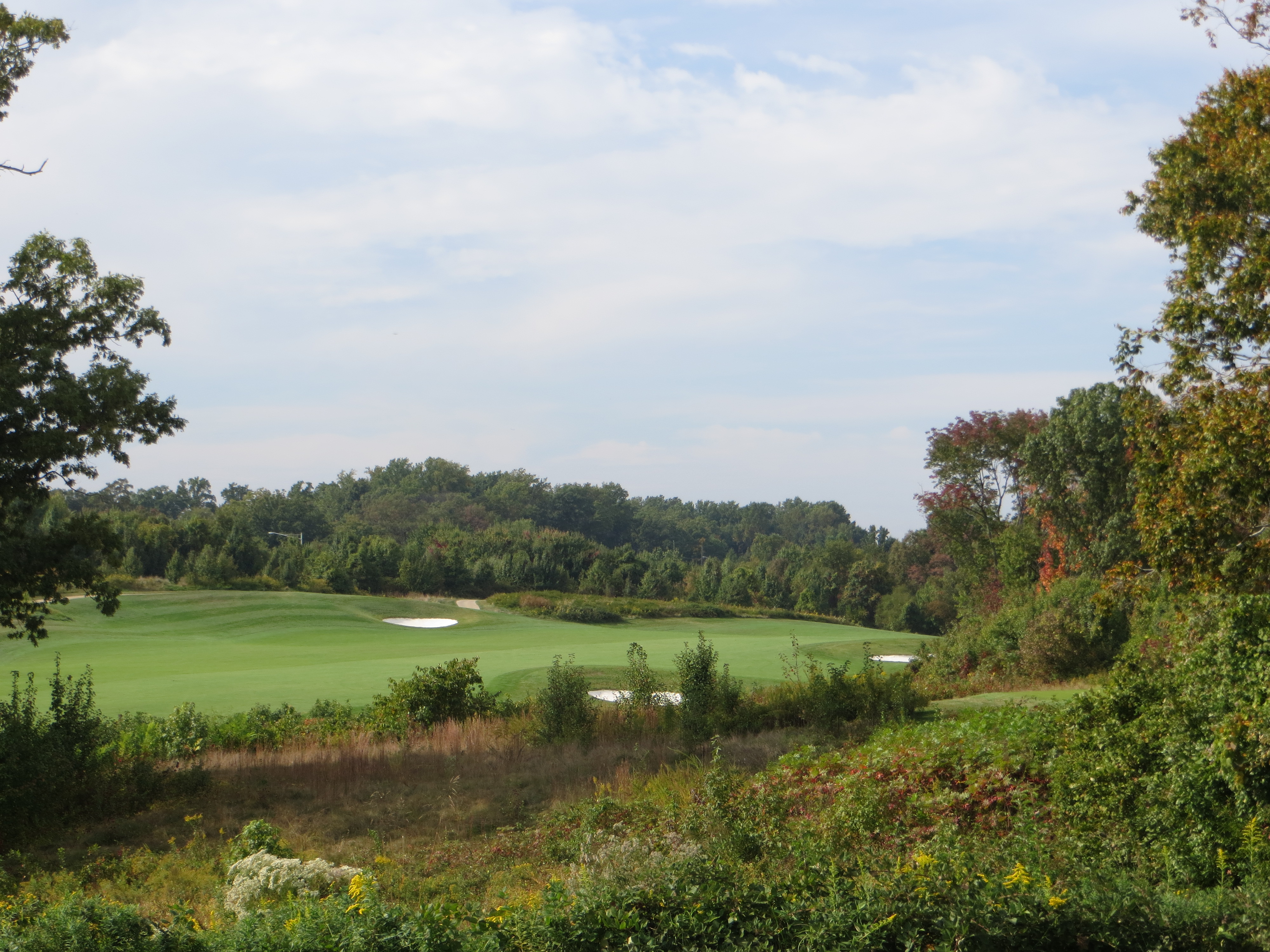
The golf course he created has stunning aesthetic beauty combined with challenging strategic design and will provide you with an afternoon of sheer golf delight.  Standing on many of the tees you cannot help but stop to appreciate how the holes gently follow the natural flow of the land bringing your attention the sheer beauty of nature’s features therein.  This would be a particularly inspiring experience in October with a little leaf color and a slight chill in the air.

October fall colors are already adding flavor to the driving area on #9.

October fall colors are already adding flavor to the driving area on #9.

The course is built to the top specifications featuring generous bent grass rolling fairways in impeccable condition, over 100 bunkers in places that make you think and think again, rough that will take control out of your hand on recoveries, and firm and fast greens with plenty of interesting contours to consider.

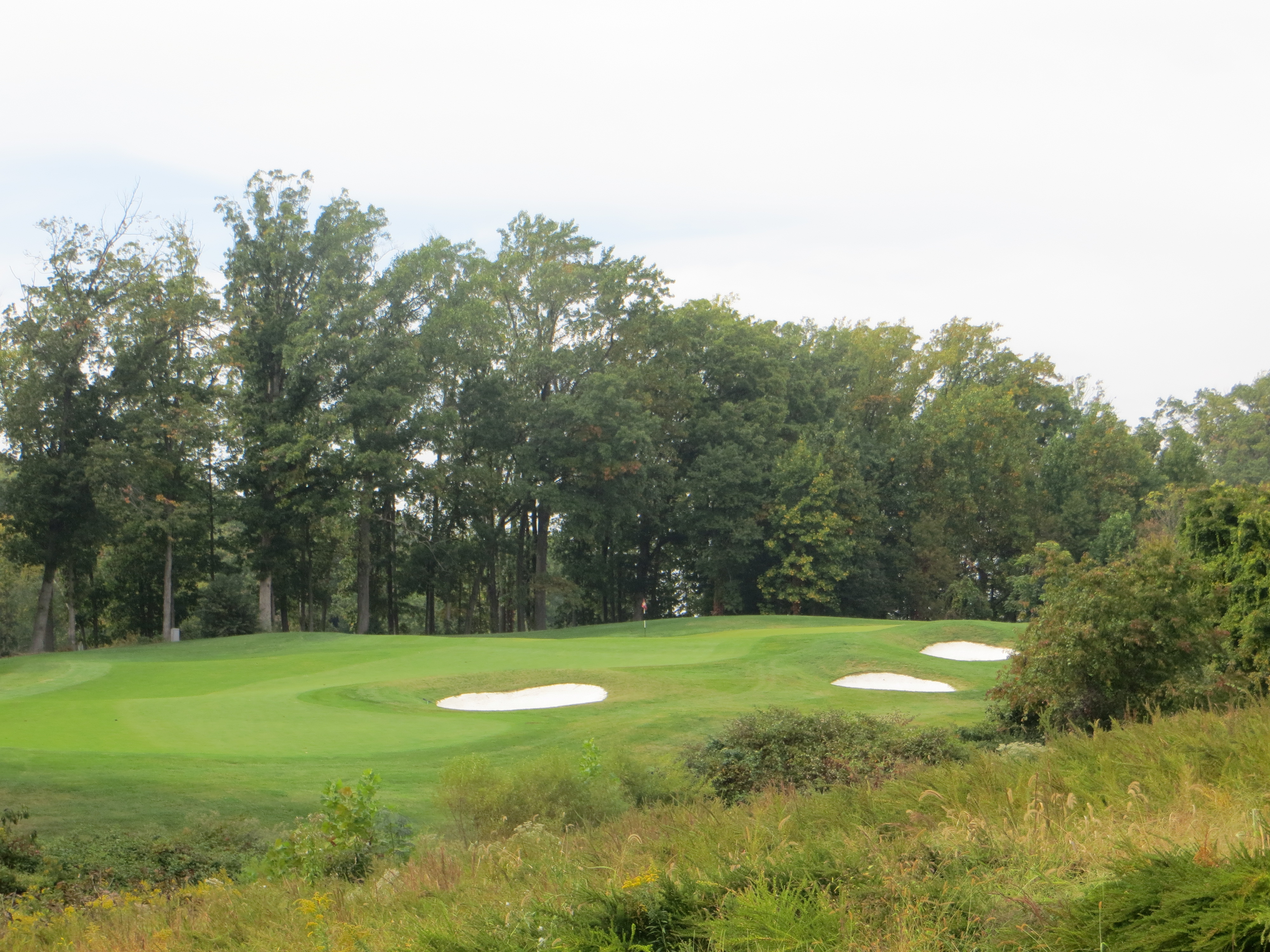
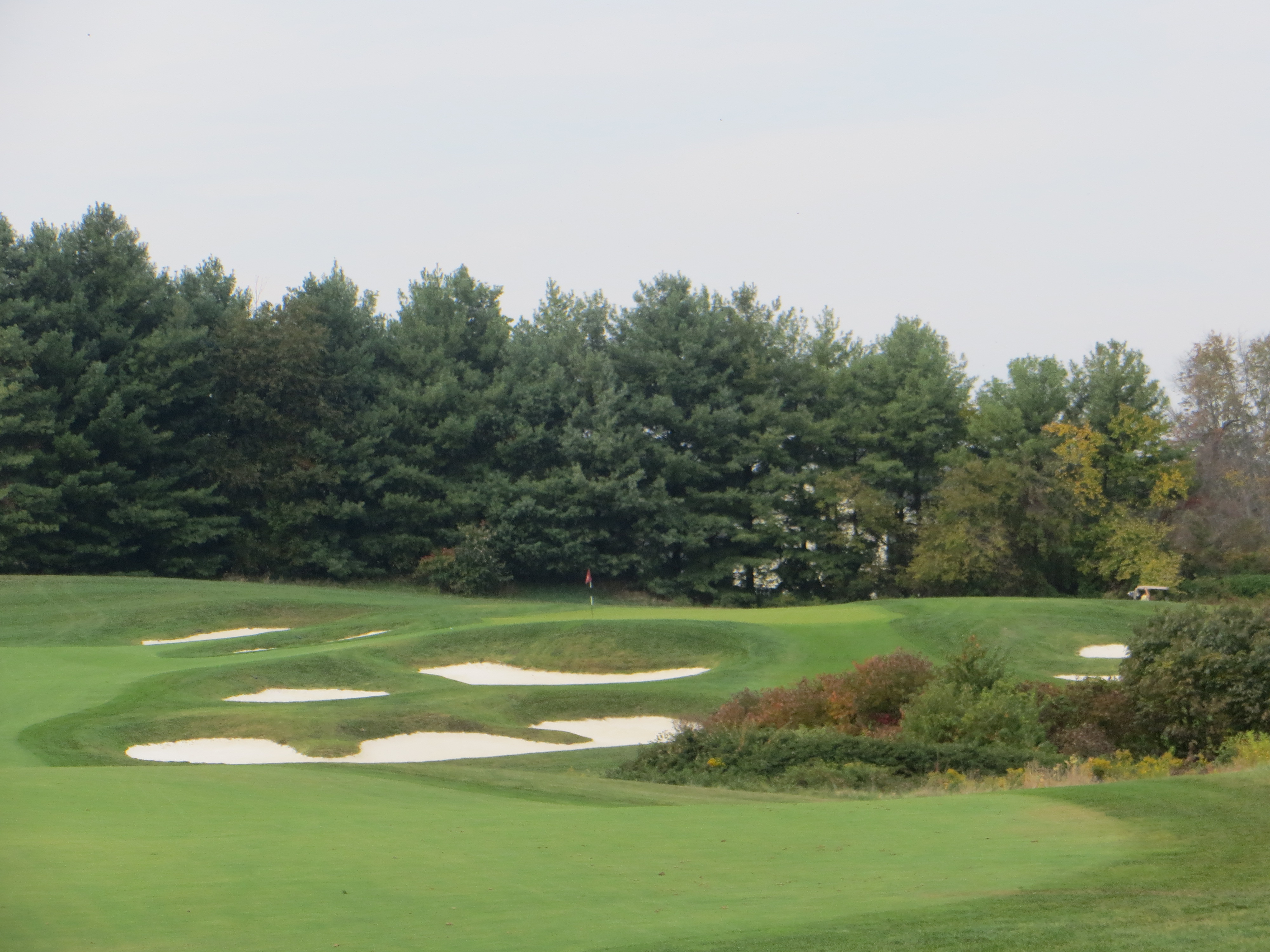
Just one nest of sand madness you must avoid in front of #5 green.

Just one nest of sand madness you must avoid in your path to the #5 green.

On many holes you just have to scratch your chin and ponder the possibilities before you decide how you are going to play effectively.  The county has committed serious budget money to keep this in top flight condition so the consistency of this experience is gratifying. Golfweek Magazine recently put this course as #13 in their list of top municipal courses in the country.  The top 15 on that list include Bethpage Black, Chambers Bay, Torrey Pines, TPC Scottsdale, and Harding Park.  Pretty heady company for our local muni, huh?  Based on this pedigree the USGA held their 2013 Public Links Championships at Laurel Hill.

The uphill climb on the long 439 yard 3rd has plenty of obstacles to

The uphill climb on the long 439 yard 3rd has plenty of other obstacles to consider.

What I like the most about what Love has done is the variety in the types of holes he presents.  The par 71 is not because of only 3 par fives-it is because of 5 par threes and these are some of the most interesting visuals of the day.  You have monster par 4s that are 425 to 450 yards and uphill to boot.  You have reachable Par 5s under 500 yards with major decision making parameters.  Two par threes under 150 and three par threes between 180 and 210.

#14 is 212 yards and a club and half uphill with a three tier green to boot.

#14 is 212 yards and a club and half uphill with a three tier green to boot.

There are steep uphill approaches, dramatic two-club less downhill shots, forced carries over environmental areas, and just some of those approaches where you have to slip it between the this bad thing and that.   Every club in your bag will be dirty when you are done-the variety of shots you are going to be asked to hit will run the full gamut.

There is a natural flow to the design as you see off the tee box on the long par 4 17th.

There is a natural flow to the design as you see off the tee box on the long par 4 17th.

In general the driving areas are wide, but the preferred areas are always cordoned by bunkers or bordering angular topographies.  On a number of the doglegs it is nests of bunkers that are your no-no not trees but trees do frame many of the landing areas and generally define the line of the holes.

The short par 4 7th tempts the bomber but the Jack-O-Lantern bunkering will spook them.

The short par 4 7th tempts the bomber but the Jack-O-Lantern bunkering will spook them.

The greenside bunkering is very imaginative-often nested to one side to force you to work the ball into a green set on the diagonal line of the green.  The greens themselves have lots of segmentation and tiering so you have to be careful to recognize where the pin is located and where the prevailing slope goes to keep your ball under the hole.  There is not much overt water in play but there are some moist ditches and adjacent environmental areas that can lead to double bogies.  Both nines end with a short par five that has real visual and strategic interest.  This gives you a chance for redemption or damnation at the end of each side.

The postcard 16th has alternate tees to change the challenge but not the pleasure of the view.

The postcard 16th has alternate tees to change the challenge but not the pleasure of the view.

The entire facility is done to high standard.  The clubhouse is small but well appointed and functional.  The grass driving range is very roomy and has the same bent grass the course.  The pitching and putting areas have much of the course feature so you can practice the things you will be called on to play during your round. For a municipal fee course price you are really getting a high-end golf product.  This is a must play and needs to be on your short list.

Lorton, Virginia

Architects: Bill Love (2005)

Tee          Par    Rating    Slope    Yardage
Blue         71      73.3       142        6730
White       71      71.7       139        6386

(Click to see complete Laurel Hill hole-by-hole descriptions)

Tobacco Road

Mike Strantz was one of the real artistic young architects out there.  His tutelage under Tom Fazio gave him a real penchant for dramatic design.  He built courses with enormous visual appeal and drama with so many memorable holes that the term “Signature Hole” seems to be frivolous when looking at one of his designs.  His approach to designing golf courses was to walk the ground with his pastels and his sketch pad and draw the holes as he envisioned them.  In spite of the nouveau look of his courses, he had a very old school philosophy about shot values and strategic design.

(Click here to read a wonderful interview with the designer Mike Strantz)

This course is like Royal New Kent on steroids-the challenges are daunting-often layered on top of each other for extra effect-very much in the Irish tradition of a good mix of strategic and quirky holes.  You will not walk off this course with anything less than awe for the vision and effort it took to create it.  If you keep your wits about you it becomes apparent that every hole has a safe way to play and scoring well here is a matter of carefully choosing which challenges to take on and which to ignore.

Opening Hole Par 5     (KyleHarris.com)

The par five first hole is a perfect example of this-he presents you with a series of pumped up challenges you just need to ignore.  There is a conservative three shot sequence that needs to be heeded or else you can start off your day with a very bad number.  All the par 5’s are three shot holes to all except the testosterone junkies.  The vast waste areas on these holes bait you to go for what appears reachable in two.

Stunning #7 Par 4

The overall yardage is not overwelming but the 71 par makes that a bit of an understatement.  The par 3’s are all very short so there is extra yardage available to the four pars and he uses it.  Landing and layup areas throughout the course are much more generous than they appear to the eye-he has used the waste areas and adjacent mounding to mask the true depth of these areas.  You will continually be saying to yourself after your reach your ball- “wow, there is much more to shoot at than it looked from back there”.  Good design.

Intimidating Par 5 #13

There are quirky holes out here-especially the three pars.  Many will call these holes tricked up or unfair but neither of those terms has a place in the Irish golf realm from whence they come.  You simply have to pick a target on the short holes and don’t let the extraneous visual elements get into your head. These are really the holes to stack your card with pars so be disciplined and play for the fat of the these greens.

What a finish #18 Par 4

As with most courses across the pond, this is a course you have to play without scoring expectation.  Play a match with your friends and forget the medal score.  You can win some money and maybe, just maybe, still be pleasantly surprised when you tally your score at the end how well you fared.

.
Sanford, North Carolina

Architect: Mike Strantz (1998)

Tees    Yardage  Par    Rating    Slope
Disc      6304       71      70.8      142
Plow      5886      71       68.6      132

(Click to see complete Tobacco Road hole-by-hole descriptions)

Pine Needles

This is a real Donald Ross gem built in 1926 as the sister to Mid-Pines that opened about 5 years earlier.  This part of the resort has a casual feel, 74 rooms in chalet style lodges.  The course was renovated in 2004 in preparation for the third U.S. Women’s Open in 2007.  The work was done by a Ross aficionado John Fought and he restored it back to the specifications of the original Ross design.  So you are playing a true Donald Ross experience here.

Tranquil Signature Hole Par 3 #3

Play from the Ross tees, this is where the women played their championship, it is very playable but challenging as well.  The course is routed through the pine trees that clearly define every hole and play into the strategy of positioning of your tee balls.   The course has a good deal of up and down so you will be recalibrating irons all day.  All the driving areas are generous so the big dog should eat until he is plump.  It’s only shortcoming is that it’s par fives lack length, but the finesse aspect of the par fours and threes make up for this.  The par fours in the middle of each nine will get your attention.

Challenging Par 3 5th Hole

Green complexes are very Ross-esque-they require sound forethought before hitting your approaches and pitches.  The major design feature is that all greens are exceedingly accessible.  The course is not over bunkered at all.  Typical hole has two maybe three greenside bunkers but all have some direct access along the front.  The greens have some of the crowning you see on #2, many pitching areas and swales off the sides and back, and a unique design feature I call “saucering”.  Most of the greens have a six foot collar that surrounds the green and actually feeds balls back onto the putting surface rather than throwing them off.  This is neat and presents some interesting pitching options around the greens.

Quite a finish Par 4 18 Hole

Women’s Open was here in 1996, 2001, and 2007-the quality of the winners lets you know how good of a track this is.  Annika Sorenstam, Karrie Webb, and Cristie Kerr won here respectively.  For Kerr it was probably here breakout moment as a professional-her career jumped to another level after that win.  This is a top flight venue that is worth the price of admission and more.

(All photos from http://www.pineneedles-midpines.com)

PInehurst, North Carolina

Architect: Donald Ross (1928)

Tees         Par    Yards     Rating    Slope
Ross         71     6436      70.6        126
Regular    71     6985      68.5        120

(Click to see complete Pine Needles hole-by-hole descriptions)
Lake Presidential Golf Club

This is a new upscale residential development golf course by the Landmark Land Design company that has done places like Kiawah Island, Oak Tree,  PGA West, and Doonbeg. True to their formula they have made sure this is a real upscale development with full feature through out-they have skimped on nothing that I can see.  Just stand in the pro shop and look out the back window at the pure splendor of the vista presented-this is just a brilliant marketing feature-you just can’t wait to see what the rest of the course looks like.

The architect of the course were in-house guys from Landmark,  but they are obviously people of talent because this is one rugged piece of wooded property that they succeeded in presenting as a very scenic and playable golf experience. It has much of the up and down feel of Avenel but with a less punitive edge.  Routing of the holes are similar, two loops that create interior space that are natural with umpteen housing opportunities around outside ring. When all the houses are done I think it will have the unwanted feel of an urban golf setting.  But for now it is quite a nice experience.

Visual Par 5 8th (Steve Uzzell/panoramio.com))

The course has a nice flow to it-both sides have their difficult stretches in the middle but let up considerably on the last two holes to give you a shot of confidence and possible redemption for your scorecard.  Some of the fairway bunkering is a bit overdone for my taste-long adjacent bunkers that are very visually intimidating without adding much real strategic value.  The greens have lots of slope and segmentation, so when they get to the point where they can speed them up the putting will be a major challenge.  The high trees and the low alcove areas will create places where growing and maintaining the grasses may be a major maintenance headache.  There is a section of the back nine which is confined and low to the water table-much like the stretch from 10 to 12 at Avenel-this is where the built up heat and humidity-along with little sunlight will present a problem.

Pure Finesse Par 3 12th (Steve Uzzell)

That said the back nine is as fine a set of holes as you will see in our area, you will have to play with imagination and skill to score well back there.  What I like the most about this place is that there are a number of very interesting holes with novel architectural features.  The visual wow factor hits high on the meter a bunch of times during your round.  This is a place where you have to focus and maintain your concentration to decide what challenges to take on and what to play away from.  The potential for high scores lurks on many, many holes-so you have to be smart to maintain a chance at a good score.

Upper Marlboro, Maryland

Architects: Chris Cole and Jeff Potts    (2008)

Tee           Par       Rating       Slope      Yardage
Black        72         72.1          137          6725
Blue          72         70.2          129          6315
White        72         67.3          122          5660

(Click to see complete Lake Presidential hole-by-hole descriptions)
Laurel Valley Golf Club

A golf course with a long and rich tradition that belies it’s mere 50 years of existence.  Most of us remember this as the place Dave Marr won the PGA and associate it with Arnold Palmer as his adopted summer home course when back in Pennsylvania.  The members will tell you that it is Palmer’s aura that is most responsible for the reputation of this place-after it was built in 1959 under the watchful eye of Dick Wilson it was Arnold who went to the PGA and told them this would be an appropriate place to host their championship.  It has built on that reputation hosting the National Four Ball championship in the 1970, the National Team Championship in 1971 and 1972, the Ryder Cup in 1975,  significant events from the Pennsylvania-Ohio-West Virginia region, the U.S. Senior Open in 1989, and the Senior PGA in 2005.

When you walk the hallways of this demure clubhouse, the pictures and memorabilia make you fully aware how seriously the members take the rich history and tradition of this place.  There are paintings and photos everywhere full of bouquets of pink sport jackets-an unusual touch for a macho corporate hangout.  Don’t miss the photo library on the walls around the informal bar-there is a classic shot of an intense Arnie and Jack as playing partners in the National Four Ball back around 1970. The locker room is very classy-old wood lockers bearing name plates of PGA and Champion’s Tour players.  This place just has a very traditional good old boy feel to it.

(Click here to see a few of the gems from the Laurel Valley photo gallery).

View across the first tee (pga.com)

The club was originally built as a business man’s club for corporate parties and events during a face-lifting renaissance in Pittsburgh in the late 1950’s.  The club is only open from May through October-it completely shuts the doors for the late fall and winter-a business model that seems hard to sustain without considerable annual member backing.  It is a golf facility only-food service to support the golf and events and some cottages to house out of town guests.  The lay of the buildings to the rest of the property was very well thought out-there are sitting areas providing views of the property and surroundings that are truly spectacular.

The course is built on a 260 acre tract of land in the foothills of the Laurel Ridge and Chestnut Ridge mountains. It does not have much topographical feature in it’s tactical play, though the visual back drops can be dramatic.  The design has a Florida feel to it with abundant sand and water, Dick Wilson wended the course through the low grounds deploying massive fairway bunkering and adjacent water hazards to keep the player’s attention.  Fifty years of tree growth have cloistered the holes considerably, but recent renovation has brought back the more open playability as it was originally intended.

Tough tee shot on #10 (golfcoursegurus.com)

One thing that can certainly be said about this is that the course can play very long from the two back tee markers.  At the 6600 yardage of the white tees it is an ample test for most mortals-the additional yardage can make for some excruciatingly long par fours.  Like most courses of this style driving accuracy is key to decent scoring opportunities.  Playing from the fairway bunkers or tough angles in the rough is a sure prescription for bogies and worse.  For the most part the water is manageable but there will be times during the day when your judgment for carry will be called into play and more often than not bravery is not the sensible route.

Full majesty coming down #18 (pga.com)

There are many interesting individual holes on the course-the par threes in particular have lots of nuance and subtlety to them.  Not too many “wow” holes but some of the scenic backdrops will catch your attention.  What really elevates this to championship caliber are the greens-they are very swift with ample undulation that seems to shrink the accessible opening on most of the cups.  Very few putts go directly up the walkway and into the front door-you will be using diversionary tactics all day to find the bottom of these cups.  The caddies are excellent here and you need one if only to tell you where you can leave the approaches into these greens.  The pitching and chipping are particularly difficult because some of the swiftest approaches are not obvious to an inexperienced eye.

Ligonier, Pennsylvania

Architect: Dick Wilson (1959)

Tees             Par       Rating    Slope    Yardage
Blue             72          75.7       148        7327
Black           72          74.1       138        6982
White           72          72.8       135        6606
Green          72          70.1       130        5899
Red             72          73.5       127        5548

(Click to see complete Laurel Valley hole-by-hole descriptions)

Saucon Valley-Old Course

Saucon Valley was created as a playground for the wealthy steel guys in the Lehigh Valley section of northeast Pennsylvania.  The Old Course is an elegant simple layout designed by British Architect Herbert Strong known for designing courses with little disruption to the land.   As a result the course meanders across rolling hills framed by vintage old trees and it looks like it just belongs in the natural surroundings.  This course has held six USGA national championships  a U.S. Amateur, Senior Amateur, two Senior Opens, and two Women’s Opens as well as innumerable regional and local events of importance.

Sahara #6 Par Five

This facility has 54 holes of championship golf, as well as short course for developing players and seniors.  A primo golf facility with a long and storied tradition you cannot help but be overwhelmed by the golf pedigree of this place.  Walking the locker room or the halls of the clubhouse there are lists and lists of the rosters of championships contested here and plenty of other memorabilia that makes this feel like an ad hoc golf museum.  They even have a luxurious 13 room guest house which accommodates guests at the club in a comfortable informal way.

This course is not a beast but it is a stiff challenge that will test all of your skills. To me the bunkering is the most obvious distinguishing characteristic.  It is free form-no real patterns to the bunker placements but they are placed in places in the driving areas and the green constellations that make successful play a matter of good strategy and precise execution.  The bunkers are very deep-even in the fairways-so there are times you must relent and play a shot that will not get you to the green or at the flagstick.

Turtle #11 Par 3

The greens are very unusual-wide variety of shapes and sizes with plenty of segmentation and slope to keep you honest in your approach shots and approach putts.  If they speed them up to 12 on the stimp you are in for a handful.

I just loved the flow of the course.  Both nines start out with expansive visual holes that are extremely inviting and are then followed by short technical holes that will demand focus and execution.  The stretch from nine to fourteen looks very forgiving on the card but you will be challenged big time through this stretch not to make any unforced errors.  Fifteen through seventeen are all long and strong  so there is no relief to the end.  The finishing hole will grow on you-especially if you make a par-it is short but very demanding-any wayward play on this hole will do damage to your scorecard.

(All photos from sauconvalleycc.org website)

Bethlehem, Pennsylvania

Architect: Herbert Strong (1922)

Tees               Par          Rating         Slope        Yardage

Blue                 71            73.1            138            6800

White               71            70.7            135            6337

(Click to see complete Saucon Valley Old Course hole-by-hole descriptions)

Saucon Valley-Grace Course

Zig-Zag Opening Hole Par 5

This was the second course built at Saucon, just after World War II, when it was decided that eighteen holes were not enough for the growing membership.  William Gordon worked for a number of eminent architects and had a hand in Seminole, Maidstone, and Garden City Golf Club.  This was a family affair, he did the course with his son David. The course is named for Eugene Gifford Grace who found the club and was a very strong influence in the development of Saucon Valley for over four decades.

Number 10 Par 5

The course was laid out around the perimeter of the Old Course but it does not share much of the same topographical character.   To me, it is a bit of Florida layout with trees.  The basic topography is flat as a pancake but the Gordons did some real creative work with the green areas and it is anything but boring-a very nice walk indeed.  Overall conditioning of the course is excellent, bent fairways and who knows what greens.  As of 2010, the greens are worn out and in need of redoing, but a full renovation of this 18 is due when they finish the work on the Weyhill Course in the spring of 2011.

Challenging finishing Par 4

The course is plenty of challenge from the White tees at 6302 but it is probably playable from the Blues as well.  The general nature of the course is that it is expansive to the eye but the real playing areas are much more confined.  You have to be careful off the tee or you will end up with lots of fairways missed two steps off the cut with some difficult shots from there.  Honestly this course is a pleasure, you get challenged without getting run over and good play is rewarded.  Enjoy the walk.

(All photos from sauconvalleycc.org website)

Bethlehem, Pennsylvania

Architect: William and David Gordon (1958)

Tee                  Par          Rating        Slope        Yardage

Blue                 72            72.4            136            6684

White               72            70.8            133            6302

(Click to see complete Saucon Valley Grace Course hole-by-hole descriptions)