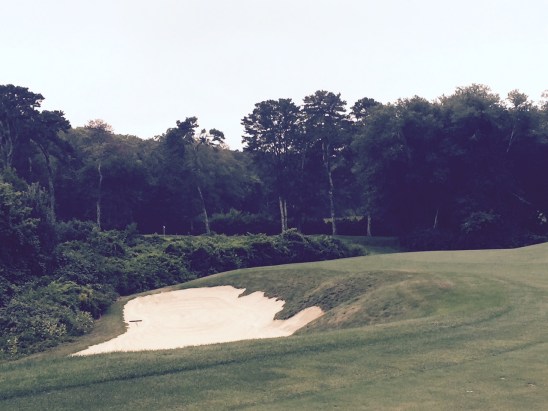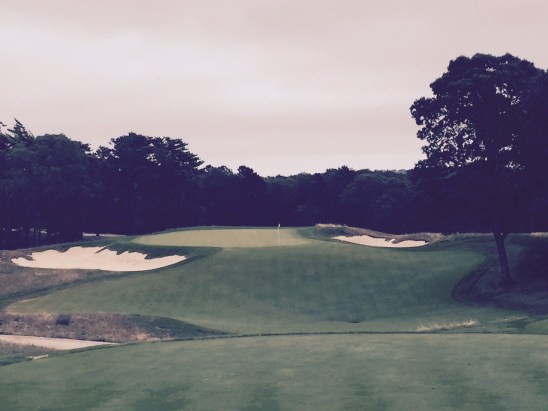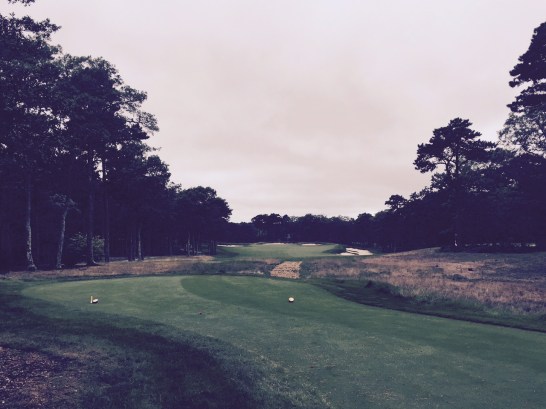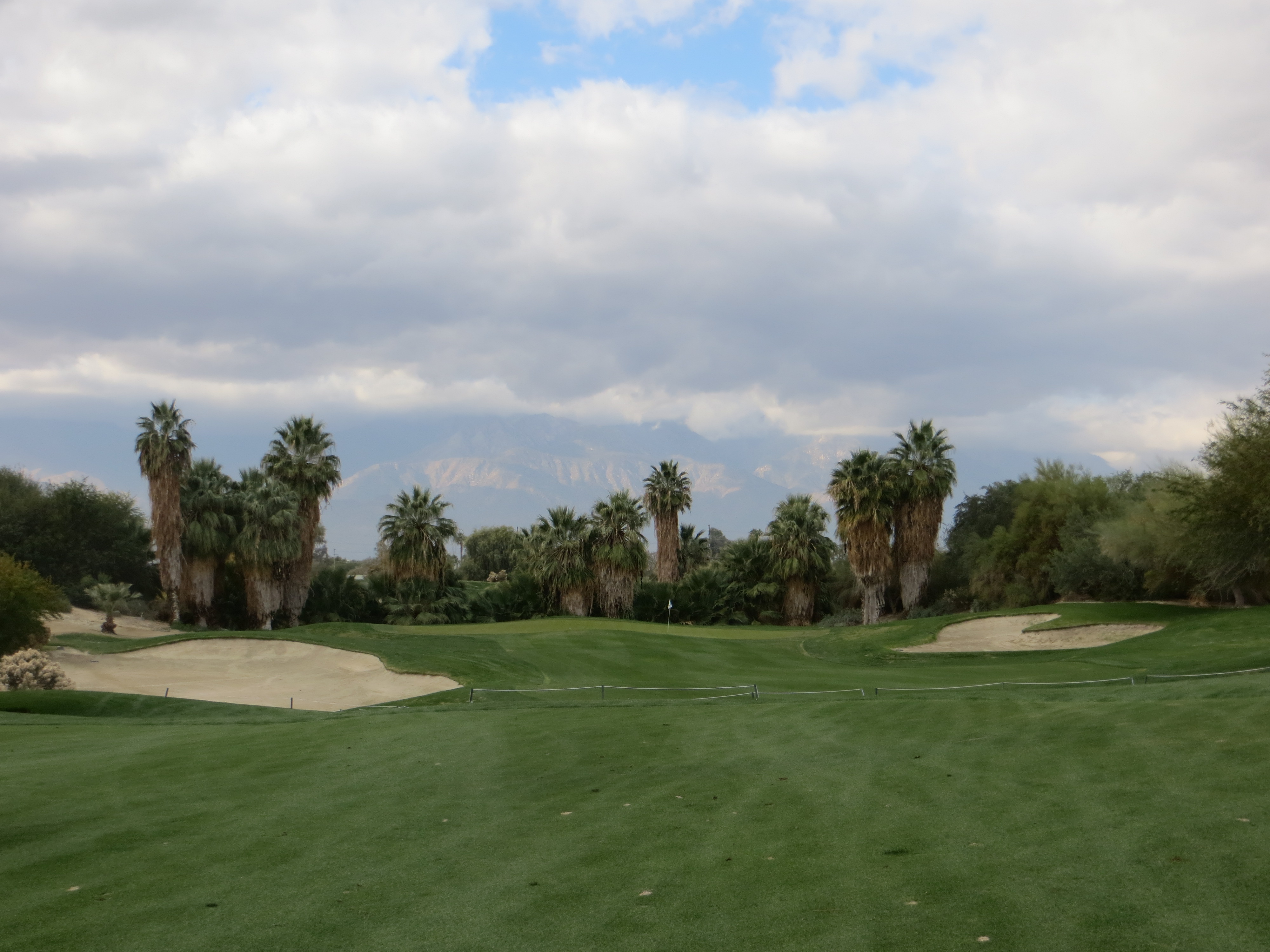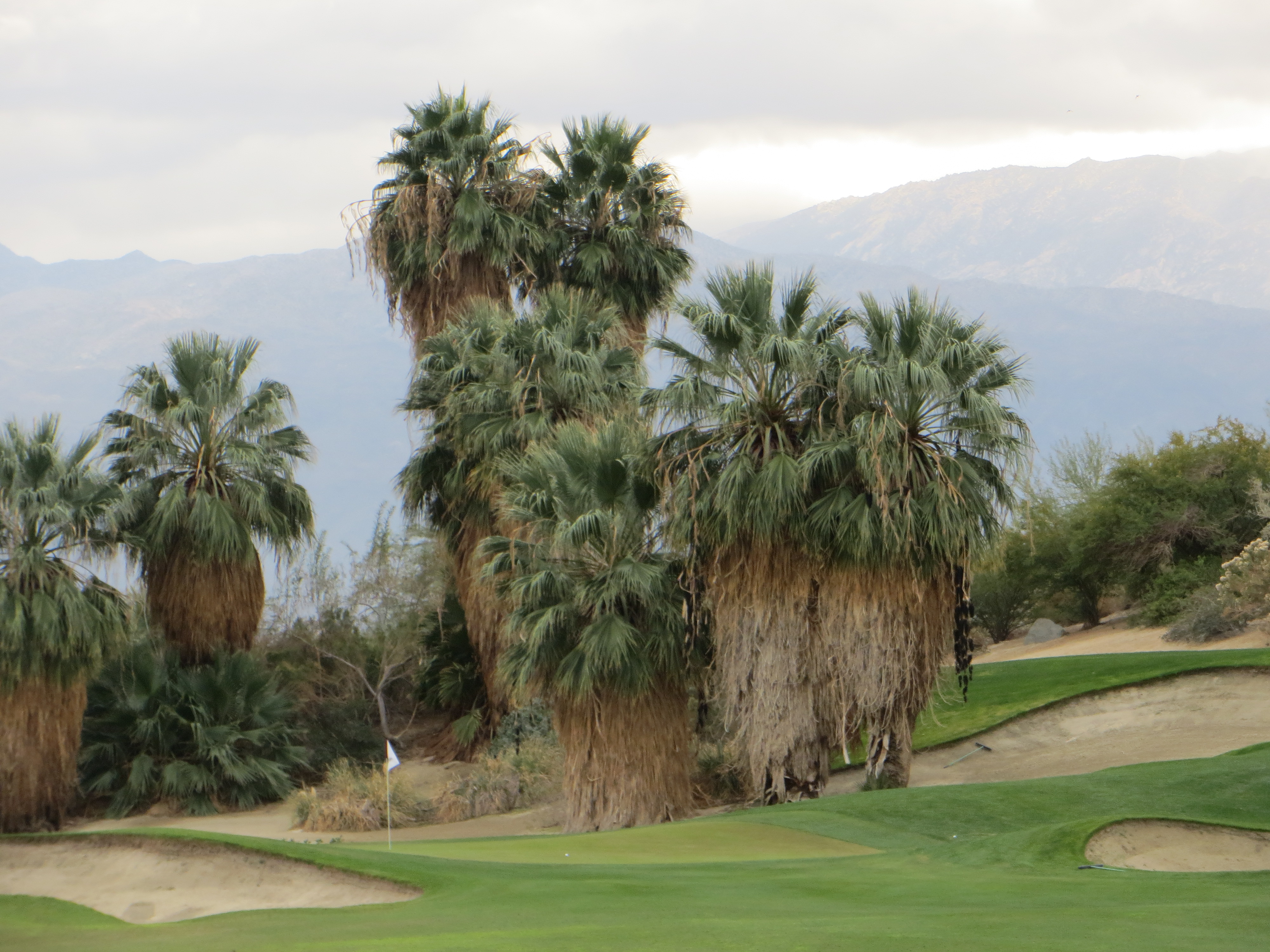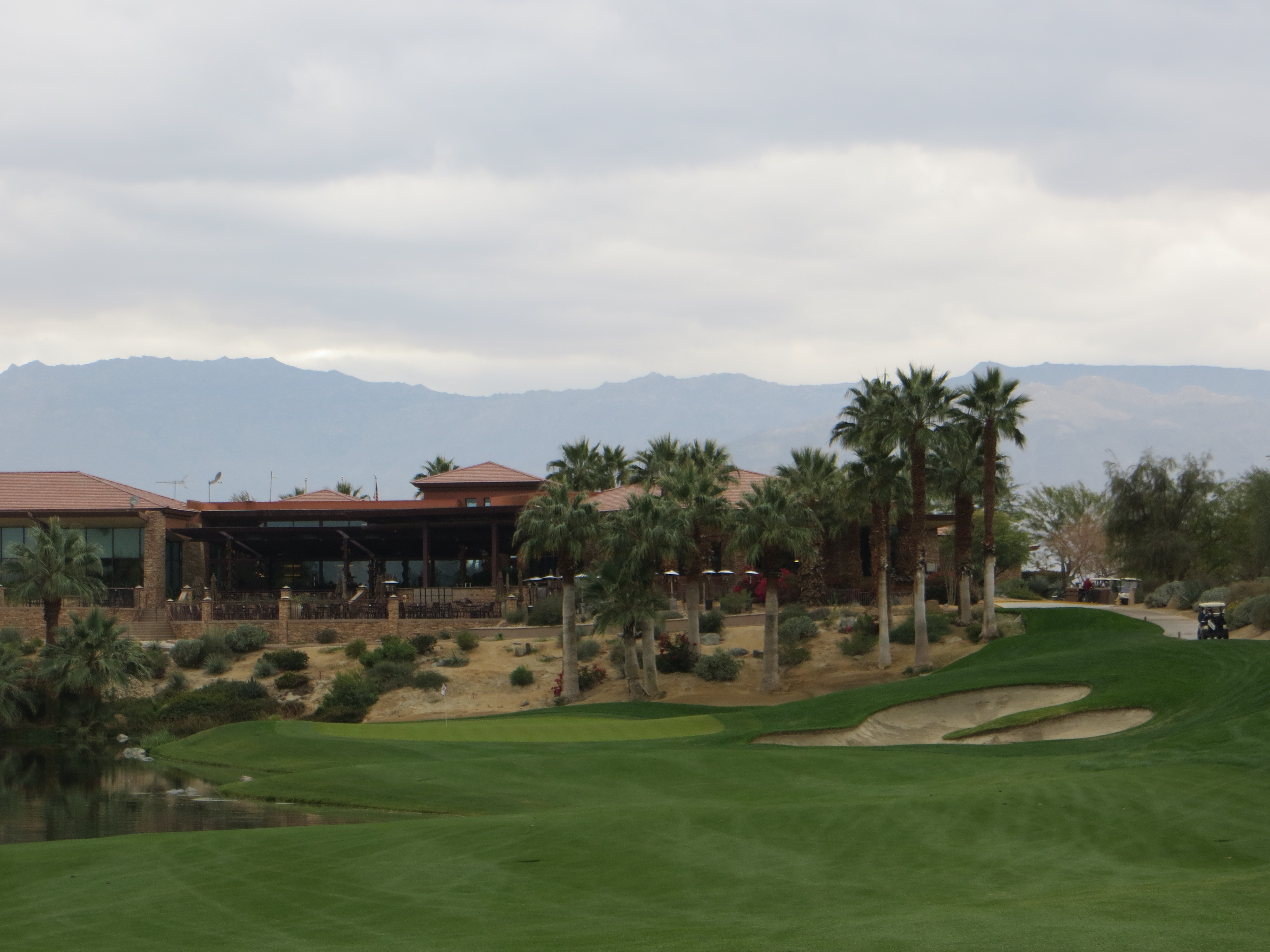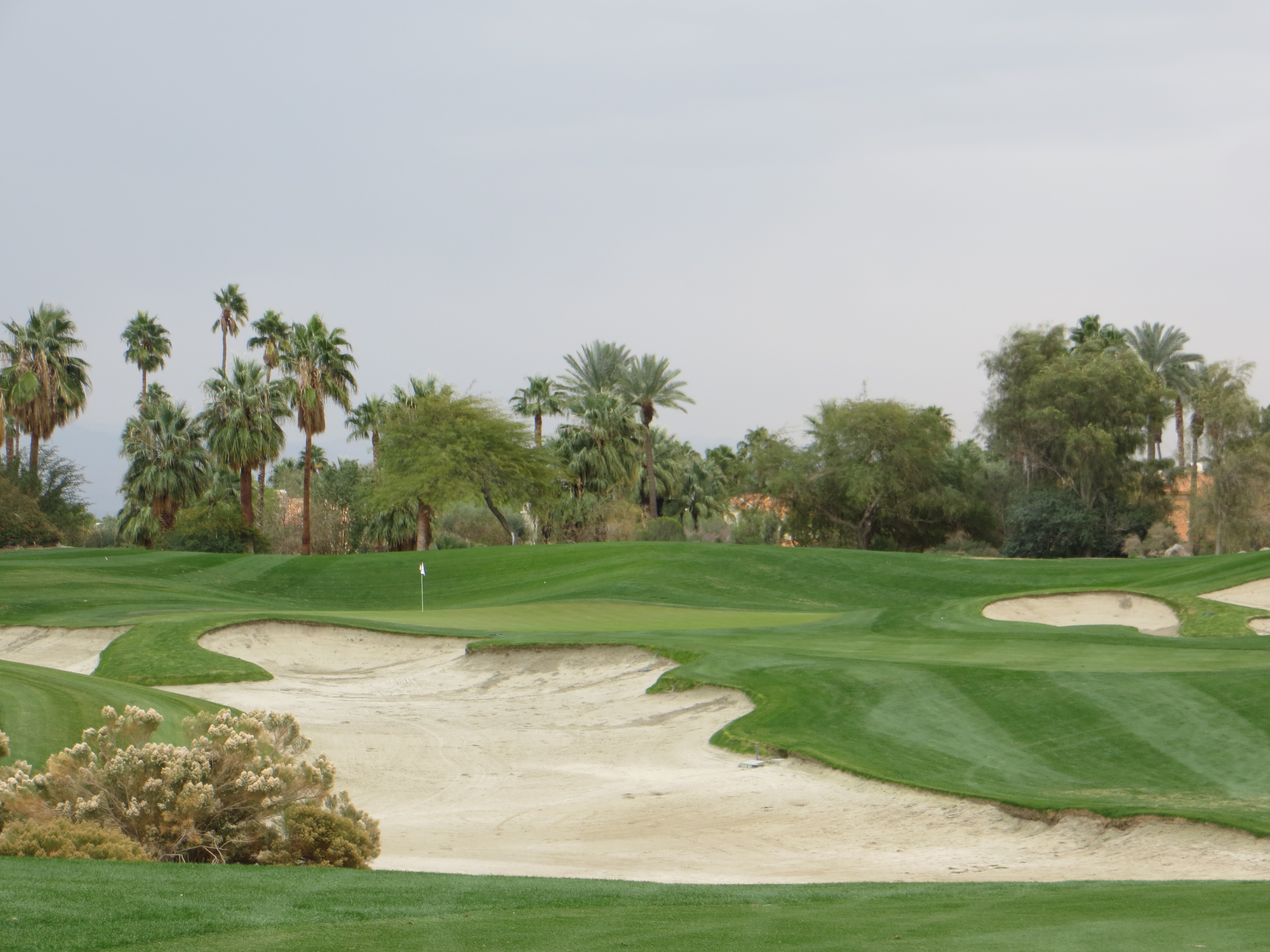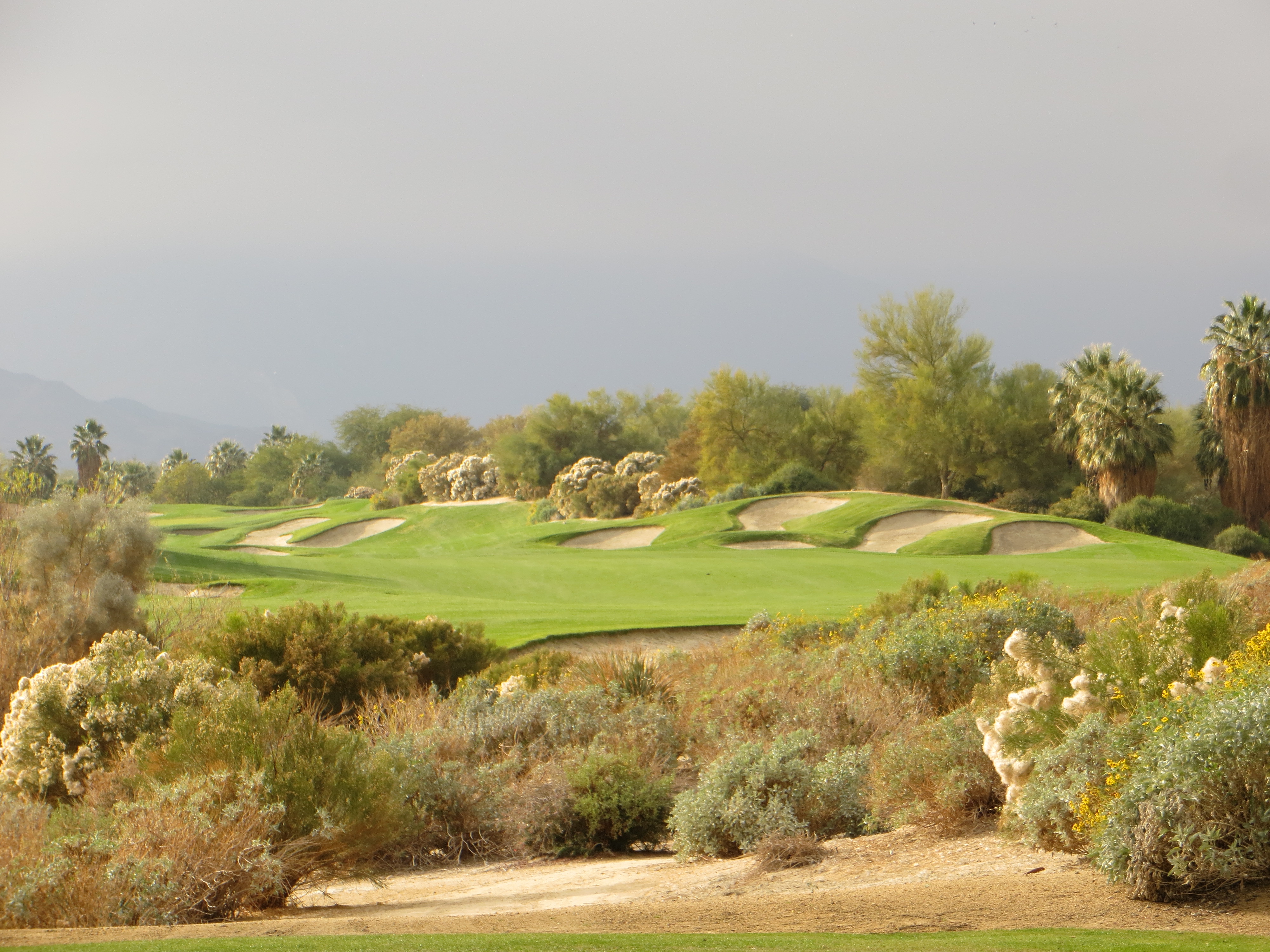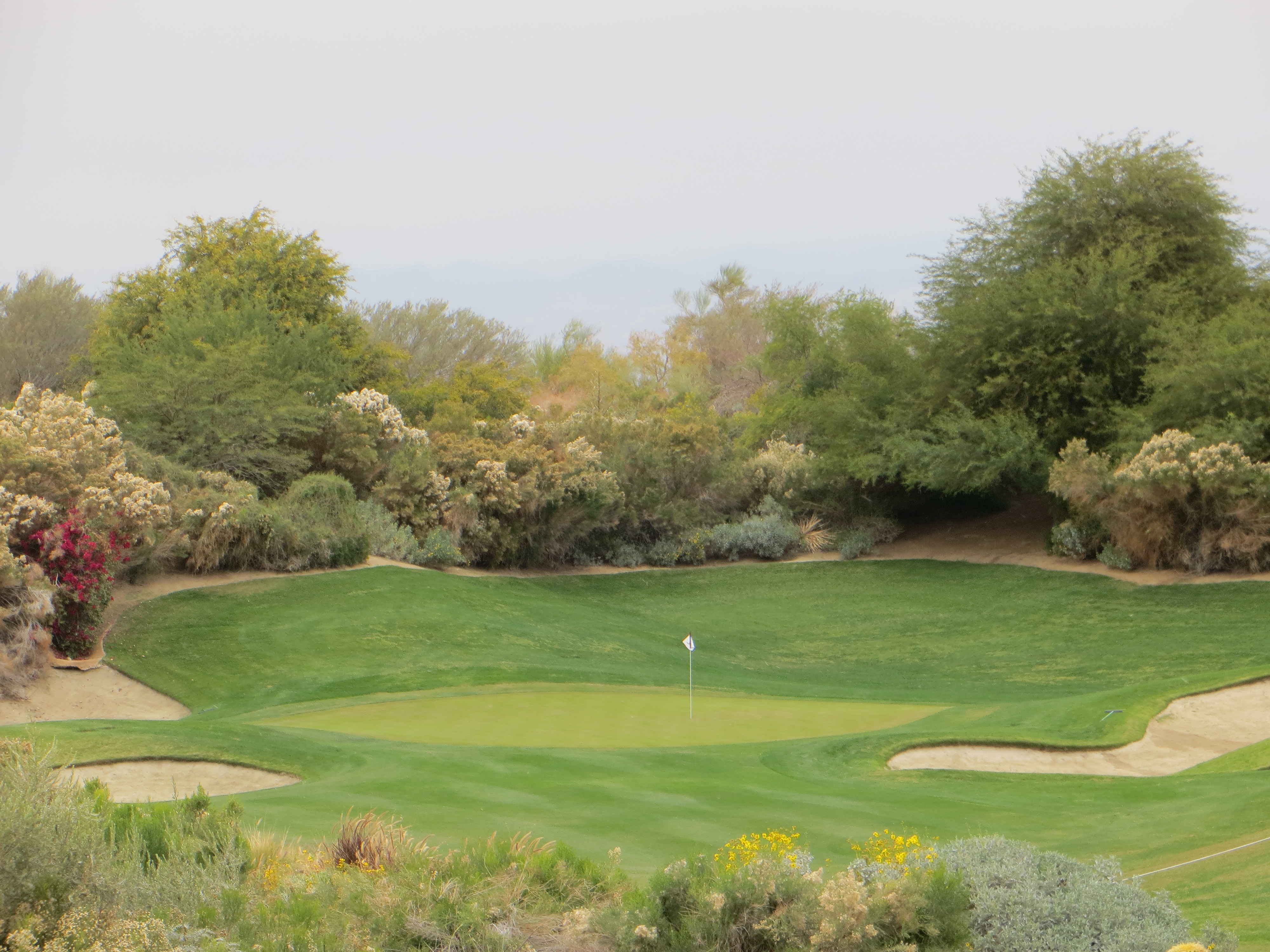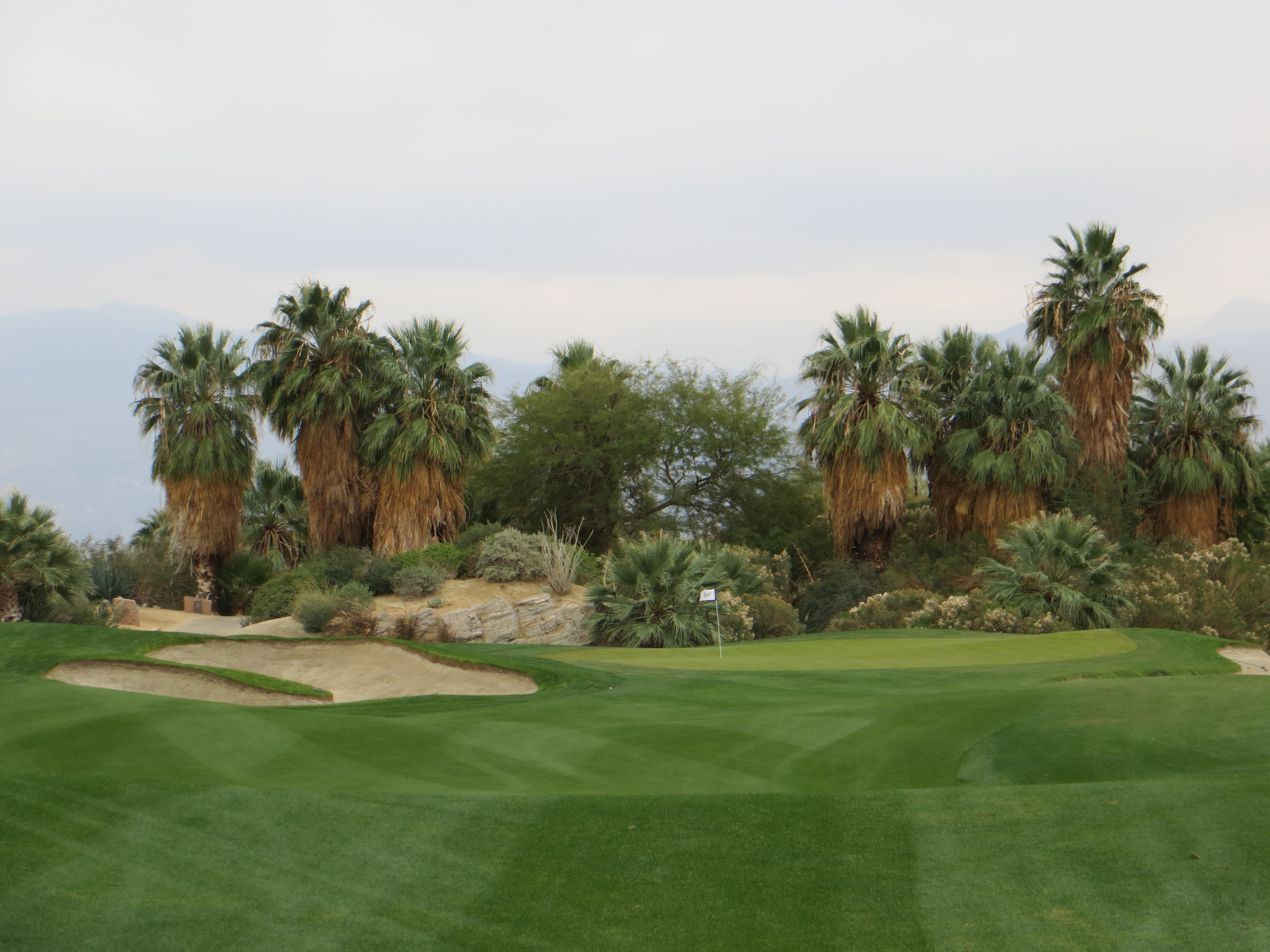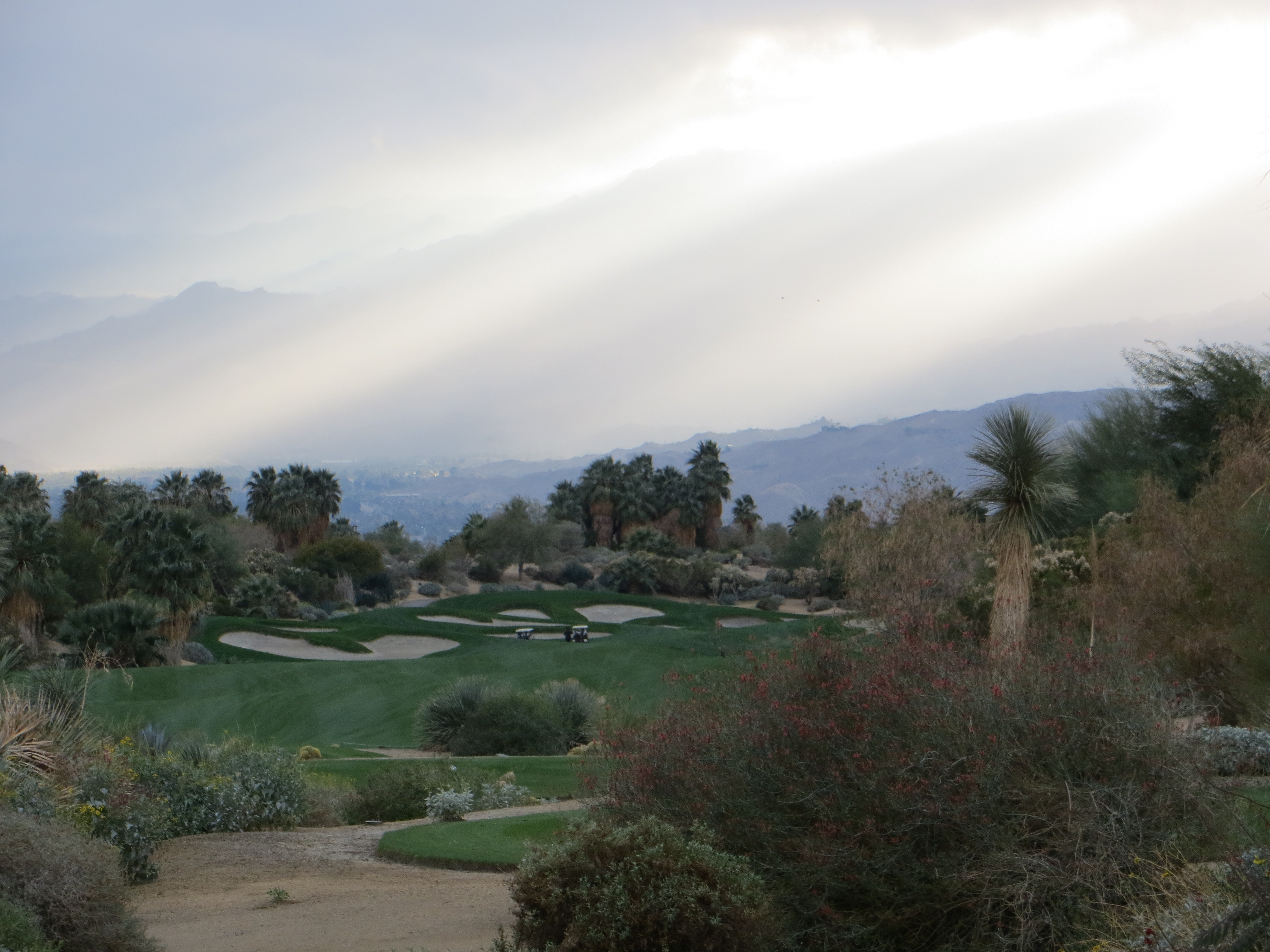
Los Angeles Country Club-North Course

LACC LogoGeorge Thomas, an east coast native who cut his design teeth with others from the Philadelphia School of Design back in the teens, moved to the west coast in 1919 to establish a beachhead of quality designs in California in the full Golden Age tradition. With Bel-Air and Riviera already under his belt he took on the job of redesigning the two courses at Los Angeles Country Club at the request of their members. What he and his sidekick William Bell created with the North Course at LACC turned out to be the centerpiece of the George Thomas design portfolio in California.

Over the next 80 plus years a combination of meddlesome board decisions and some nature-based changes mollified the character of the course to the point where it had lost it’s soul. In the early 00’s an initiative by some younger members sought out Hanse Design to propose a plan to restore the North Course to the original design. Gil Hanse, with the capable help of his longtime associate Jim Wagner and some historical perspective from Geoff Shackelford, put together an ambitious restoration plan to bring the course back to it’s original character and full grandeur. The board had the good sense to fully embrace the restoration plan and in 2009 a staged restoration began to take place.

Gil Hanse’s Master Plan for the LACC North Course restoration

LACC Course MapThe work included rediscovering and restoring the original Billy Bell bunkering, returning to their rightful homes greens that had been senselessly relocated, thinning out the 80 years of overgrowth of trees and related ground vegetation that had compromised the views on the course, and establishing throughout the course the influence of the dry wash that had given this course it’s distinct character.

There is so much talk these days about recapturing the look and playability of courses of the Golden Age of Golf Course Design and that is precisely what Hanse and Associaties have done at LACC. The fact that the USGA and R & A are bringing a Walker Cup to LACC in 2017 and the U.S. Open in 2023 would tell you that the restoration was a roaring success.

Built on hundreds of rolling acres of some of the most valuable urban real estate in America LACC sits in the middle of Beverly Hills in the shadow of apartment buildings, palatial homes, and commercial development. They have maintained a reasonable buffer for the most part-while on the property you feel relatively secluded from all that with a few notable exceptions. The ground itself is a wonderful hilly piece of property that presented interesting possibilities for Thomas and Bell for the routing of holes and placement of tees, hazards, and greens. The genius of the design is that they used the flow of the land, the dry wash, and nature’s assets to create holes that do not intrude on the environment, they look like they were always there.

You contend with the dry wash everywhere-here as a forced carry off the 3rd tee
LA #3 Par 4 TeeStepping onto the first tee you take in the flavor of the course immediately. The grass platform for the teeing grounds are not distinct from the fairway in front of you. The vast continuum of short grass just melds into the course that is unfolding below your feet. The placement of the fairway and green side bunkers is very creative. They give clear direction to your strategic options off the tees and on approach. Many times you will realize that the movement of the pin 30 feet on the green can change both the preferred distance and angle of the approach you are trying to set up. This is why an investment in a good caddie is a must when you play LACC.

As you get out through the second and third holes the presence of the dry wash makes itself very apparent. Fortunately there is no water running through it and the fact that they do not seem to let it get overgrown means you can technically play from it without grounding your club. Having said that it is incumbent upon you to give the presence of the wash full consideration when weighing options of approach lines and club selection. Both of these holes will taunt you in terms of carry to reach the putting surface, especially if you are not in the fairway. First lesson to be learned at LACC is a bogie is an acceptable result when double or worse is possible taking on a shot that is just beyond your skill set.

First postcard view of the day…from the tee on the Par 3 4th
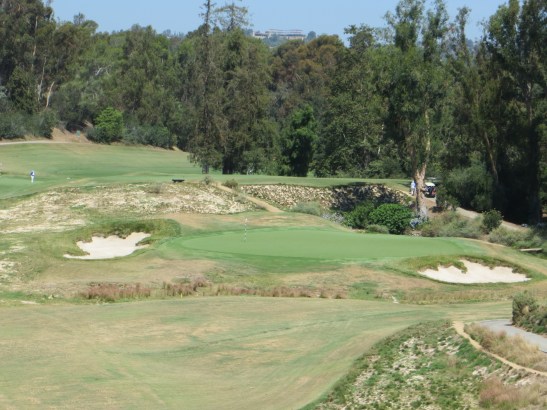
LA #4 Par 3 2The par three fourth is one of the signature holes on the course-from it’s teeing ground the full splendor of LACC is apparent. Elevation change, wash, sand, even some exposed sand hills thrown in for good measure makes for a true Kodak moment. Once again Thomas gave you options that allow you to mitigate risk and protect your scorecard. Getting it close is a real risk/reward deal but hitting it to the fat part of the green should mean making par is very doable. If you forget what neighborhood you are in take a gander back up the hill from this green-that is Lionel Richie’s little bungalow looking down at you.

The neighbors are quiet, reserved guys like Lionel Richie and Hugh Hefner

Lionel Richie's HouseIn 1927 Thomas wrote a book called “Golf Architecture In America’ at about the same time he was doing this course where he talks about the notion of designing a course within a course. The idea was that holes could play to different strategy, even different par depending on how they set the tees and pins on a given day. As you will read in the link to the Hole-By-Hole Analysis below five through nine are all half par holes that speak to this notion-depending on set up and your degree of chutzpah they can be very different day-to-day.

.
Course within a course…219 to 242 yards across the abyss…7th hole is a Par 3/4
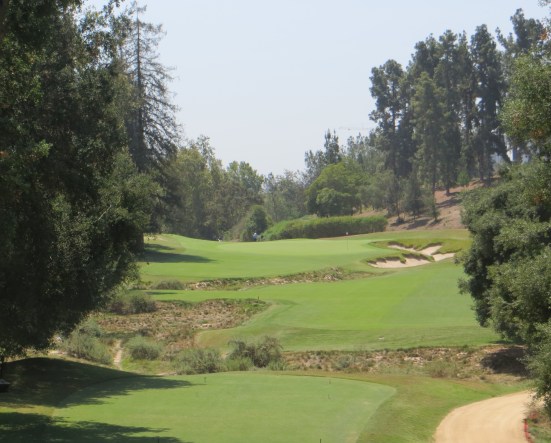
LA #7 Par 3Six is a “drivable” par four where you have to be certifiable to try to go for the green. Seven is a par three where laying up may be the best option depending on the wind influence. Eight is a truncated, switch back, shish-link of a five par that throws all strategic convention out the window and dares you to play with a sense of abandon. If you survive the tee shot on tourniquet approach to the par three ninth a double has turned into a three with one swing of the club. The only thing I will guarantee is that once you have played through this fungible part of the course you will have goose bumps or the sweats depending on how you fared.

Gynormous driving areas like the 10th still require precision decision making

LA #10 TeeThe inward nine is even more dramatic and just as thrilling. The tenth shares fairway with the sixteenth, a characteristic you see repeated a number of times through the round. This gives the course the appearance of great width and allows you to see through to others holes as you play. It reinforces the seamless character mentioned with continuous tee boxes to the fairways and reinforced often by continuous short grass between greens and the next teeing round. Thomas is playing with your mind because in spite of the width presented there is always a favored area, usually 20 to 25 yards wide that you want to place your tee ball in to have a sporting chance of taking on the challenge of the hole.

Reverse Redan….an uncomfortable approach down to the 11th green
LA #11 Par 3The other postcard par three is the downhill eleventh. Here they reversed the classic Redan with an abruptly downhill tee shot that must be played off a side hill short left of the green to feed the ball onto a green that runs away to the right. Like most Redan holes, trying to take on the pin directly will likely put you in the nasty short side bunker or over the green with a thankless recovery shot at hand.

Green side bunkers are deep and nasty
LA #12 Par 4 GreenYou cannot talk about LACC without paying homage to the Billy Bell Bunkers. They are deep, intimidating, thoughtfully placed, yet totally playable. The toothy edges and gnarly brow grass is what people notice but the steep faces tend to avoid plug lies and the playing condition of where you end up-both sand and slope-lends itself to a typical bunker shot swing as long as you are wisely willing to accept 25 feet for the first putt.

On many of the par fours Bell embedded a bunker in the center front of the approach creating a notched arrangement in the front of the green. This provides a pinable section on either side of the bunker but often one of those sides hangs perilously above nastiness you do not want to engage. More decisions….this course is all about making clear headed decisions. Jim Wagner, with the help of Geoff Shackelford, labored tirelessly to restore the sod walls on the bunkers to support the signature jagged look that Bell had originally built into these hazards.

The Billy Bell Bunkers will make you take pause on planning your approach line
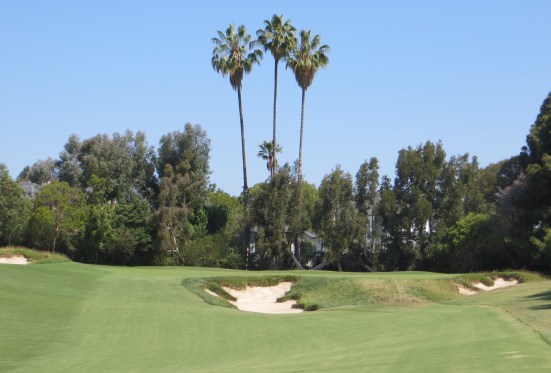
LA #3 Par 4 GreenThe three par fives are all holes you can try to reach in two if you are very long and very disciplined. The fourteenth is one of my favorites because even as a three-shot hole the lay-up and approach are fraught with difficulty if you bite off more than you can chew. It looks so simple yet the slightest deviation in execution can mean severe consequences to your scorecard.

I have read elsewhere that the genius of George Thomas was his ability to create something special on a short hole with little topographical feature. He did this repeatedly at Riviera and the short approach and putt fifteenth is another gem. The slender, crescent shaped green orients to tightly fitting bunkers with just enough elevation to mask what should be a simple, short iron approach. The hole can be as short at 75 and as long as 135 but I guarantee you more people are shaking their heads side-to-side rather than up-and-down when they are walking to the sixteenth tee.

Every great entertainment experience has a memorable finish and on that score LACC will not disappoint. With the Nassau bet in the balance the last three holes will determine the winner based on judgment, execution, and a little bit of existential fate. The walk to the house encompasses three par fours where success comes from thoughtful drive position followed by flawless execution on approach leaving an uphill putt where you can threaten the hole.

Wow quotient is high from the elevated tee looking down the 17th fairway
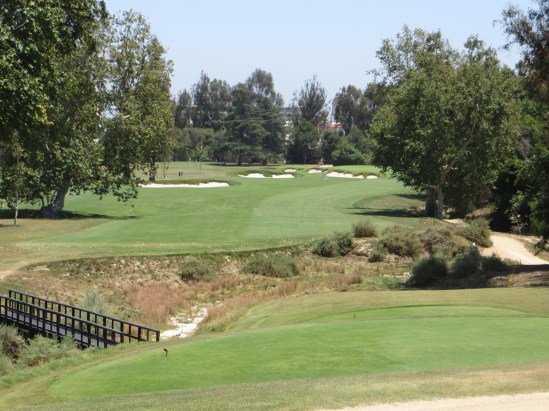
LA #17 TeeIf you find the fairway off the tee on the sixteenth the approach is a repeat of the tee shot into the reverse Redan arrangement you saw on the eleventh just off your left shoulder. From the tee on the seventeenth the full monte of LACC sits below your feet-the wash, layered bunkering, and a wide driving area with a very focal sweet spot. The second is one of the most articulate approach shots you will hit all day as the green is set on a diagonal to your aiming line behind a nasty bunker front left and no bail out salvation anywhere. The finish is a walk back up the subtle ramp you played down on the first with a driving area that makes the 18th at the Old Course look narrow. Once again the position of your tee ball is critical to getting an accessible angle at a green tightly ensconced by furry sand.

Driftwood trimmings work well with the rah-rah logo

Tee Stantion #7The ambiance of this place is traditional with a kitchy twist. The unusual pennant style of the LACC logo is everywhere on the course- on hole stanchions, tee markers, pins, practice green flags, scorecards, hats, and the shirt you will want to take home with you. This theme lends a youthful collegial feel to the facility that just seems to fit.

Bonus Coverage: #17 Alt the extra hole rediscovered in the restoration

LA #17 Alt holeMost important George Thomas created a course that is a graceful combination of raw nature and good, balanced design, a golf experience that will cling to your memory long after the walk is over.

Los Angeles, California

.
Designer: George Thomas (1927)

Tees      Par     Yardage     Rating     Slope

Black     70        7010          74.6        139
White    70        6466          72.4         135
Red       70        6089          70.2         131
Green    70        5610          67.7         122

(Click to read the Hole-By-Hole Analysis of Los Angeles Country Club-North Course)

PGA West-Arnold Palmer Private Course

PGA West LogoBuilt in the mid 1980’s as part of the PGA West lavish vacation home development, the Arnold Palmer Private course nestles at the foot of the scenic Santa Rosa Mountains. This is an array of wonderful visual holes that weave among manmade water hazards and manufactured rolling desert topography to present a onerous challenge emulating the TPC design tradition propagated by PGA Commissioner Dean Beman at that time.

The course has been a regular feature of the tour’s Bob Hope Desert Classic (and it’s later commercial iterations). You may remember it as the place where you saw David Duval shoot his remarkable 59 in the final round to win the 1999 event.

An oasis sculpted out of the desert for your recreation and enjoyment

APP #3 Par 3

Arnold was obviously keeping up with the Dye’s who created the neighboring the PGA West Stadium Course at the same time in following the TPC formula of cookie cutter driving areas, flanked by ominous water and deep bunkers, and tight green complexes with large undulating surfaces. It is not a track for the meek of heart or those who lack trajectory and spin in their game. For the pros the slope is an impossible 143 and mere mortals face a stiff 133 from the 6500 tees.

The approach on the drive and pitch 8th is anything but easy to negotiate

APP #8 Par 4

This course was designed to be taken on full bore. The only way to play it is Arnold’s way, roll up your shirtsleeves and be aggressive. The biggest challenge is in the four pars and not necessarily the longest ones. The par fives are relatively mundane and similar in design except the finishing hole which has some chutzpah (Duval hit driver, 5-iron to 8 feet and drained it for eagle to cap off his 59). The par threes have lots of visual interest but not that much bite. The front nine works clockwise away from the clubhouse to the north and back. The back nine mimics the pattern in a counterclockwise direction which means that given the day’s desert wind direction you should have the same difficulty factor on half the holes on each side.

One of Arnie’s many cape holes-water all the way up and a forced carry to boot

APP #9 Par 4 3The real treachery is in the multitude of forced carry cape par fours strewn throughout the layout. Holes like 4, 7, 9, 10, 13, and 16 all use the same combination of harrowing water adjacent the full length of the hole with a tight green complex cordoned by water as well. When you get deep into the back nine you reach the Venetian section of the course from the 14th on where the canals haunt every shot and the only thing missing are the voices of gondoliers humming a sad tune if your shots get wayward right.

Part of the Venetian Stretch approach to the 16th must contend with the canal

APP #16 Par 4 Green

These final holes are spectacular to look at, set up against the foot of the mountains with towering sheer rock faces looking over your right shoulder on every swing. At least the short holes are short and it ends with a Par 5 so maybe you can find some redemption for your scorecard at the end.

Duval hit 5-iron to 8 feet and made eagle-the cherry on top of his 59 Sundae

APP #18 Par 5 2This is a high end facility so the conditioning of the course-fairways and greens-is impeccable. They keep them on the pacey end of the Stimpmeter so you will have to mind your approach position to try to leave yourself uphill putts you can handle. Cavernous bunkers throughout are real hazards as are some of the grass mogul fields that abut many of the green complexes. As I have seen on other TPC style courses most of your recovery game is with a sand iron or a loft club.

This image of the Par 3 15th will cling to your memory long after the round is done

APP #15 Par 3The rest of the facility is first class as well. They have a wonderful informal dining area that overlooks the staging area and sprawling natural grass practice grounds which you should take advantage of for a post game lunch and lick your wounds session.

Palm Desert, California

Designer: Arnold Palmer (1986)

Tees     Par    Yardage     Rating     Slope

Black    72        6950           74          143
Blue      72        6492          71.4        133
Bl/Wh   72        6217          70.3        129
White   72        5995           69.3        126
Red      72        5226           71.2        133

(Click to see the full hole-by-hole review of the Arnold Palmer Private Course)

To see more photos: Click to check out our Postcard From PGA West

Desert Willow-Mountain View Course

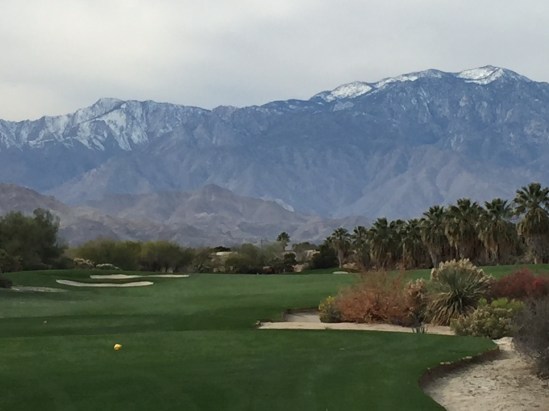
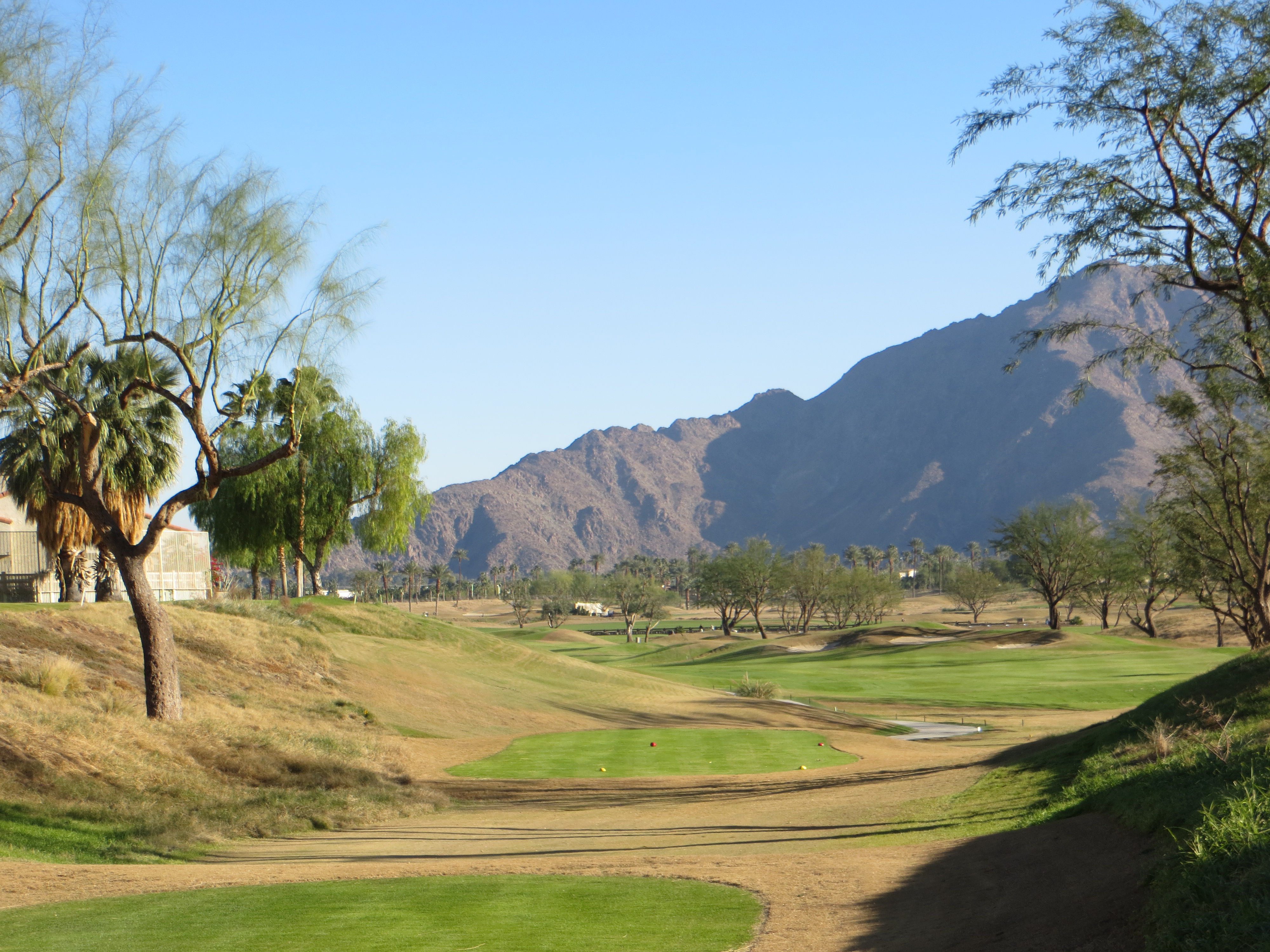
Desert Willow LogoMountain View is the demure younger sister of the feature Firecliff Course at Desert Willow. Designed by the same crew of Michael Hurdzan and Dana Fry with Tour Pro John Cook commiserating, it shares the look and feel of Firecliff with a more user friendly interface. It shares the stunning backdrop of the San Jacinto Mountains throughout the course and plenty of money was spent moving dirt to create interesting topography with desert flora plantings as accent.

No shortage of Kodak moments here

Par 3 8

Mountain View was built to be the member’s everyday course, a kinder, gentler experience with less obvious danger and reverberations to the scorecard. The metric difference of 5 less in the slope from the 6500 yard Blue Tees speaks to this. There is simply more unfettered access to the preferred driving areas and the green complexes on approach and the severity of penalty for missing either is less significant. The small greens have somewhat milder undulations and are kept at a pace much less disarming than her more athletic sister.

Stone walls, palm trees, and desert flora accent throughout

Par 5 6Having said that this is not a course where you can play on auto pilot, it takes your full concentration to plot your way around. If I have any criticism at all it is that most of the holes are relatively straight, very few holes that turn dramatically to focus your attention to the A drive position off the tee. But even without elbows on the corners the green complexes still dictate a preferred drive position in the generous driving areas.

Generous driving areas but position matters into confined green complexes

Par 4 10th TeeThe small size of the greens and the fact that many are raised from the fairway is the scorecard’s best defense. The front pins are particularly difficult because there is no advantage way to be short of these pins and have an uphill birdie opportunity. Your pitching recovery game will get a workout because you will miss greens so an adept short game is a must to scoring well. Much like Firecliff reading these greens is difficult with all the static of the mountain backdrop and the manufactured topography. If you have your Everything-Breaks-To-Indio compass on hand it can prove relevant on many of the reads.

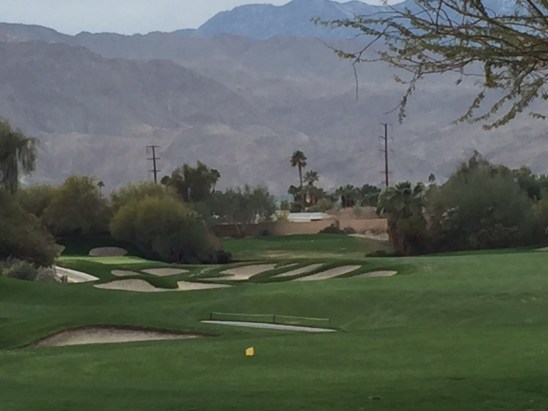
The 16th you have to work your drive around this bunker constellation

DWMV 16

This is a fun afternoon of golf, an opportunity working taking if you are in Palm Desert for long enough to play both courses at Desert Willow. I actually like it as a warm up round the day before taking on the full Firecliff challenge.

Palm Desert, California

.
Designer: Michael Hurdzan (1998)

Tees     Par   Yardage    Rating   Slope

Black    72     6913         73.4     130
Blue      72     6507         71.5     128
White    72     6128         69.8     126
Red      72     5040         69.6     126

(Click here to review the Desert Willow-Mountain View Course hole-by-hole descriptions)

(Click to read the review of the sister Desert Willow-Firecliff Course)

Sea Island-Seaside Course

Sea Island LogoGolf development at Sea Island has a long history, it began in 1926 when Howard Coffin bought Sea Island and the Kings Retreat Plantation with the thought of creating a vacation retreat for the wealthy. The sight of one of the regular tour stops in the wraparound season, pros with strong resumes like Zach Johnson, DL III, and Kooch have taken up residence at Sea Island because of the idyllic setting and the family friendly atmosphere.

The original Seaside Course was the combined work of the front nine by Walter Travis, a reputed champion of the day, and back nine by Harry Colt and Charles Alison one of the most accomplished designing duos of the Golden Age. Colt and Alison collaborative work included contributions at Pine Valley, Sunningdale, Muirfield, and Royal Portrush among others. The back nine they created still stands as the centerpiece of the Sea Island Golf Club. In 1999 Tom Fazio was brought in to update the course and he combined the Colt/Alison nine with holes from the Marshside course created by Joe Lee in 1973 to assemble the Seaside Course we play today.

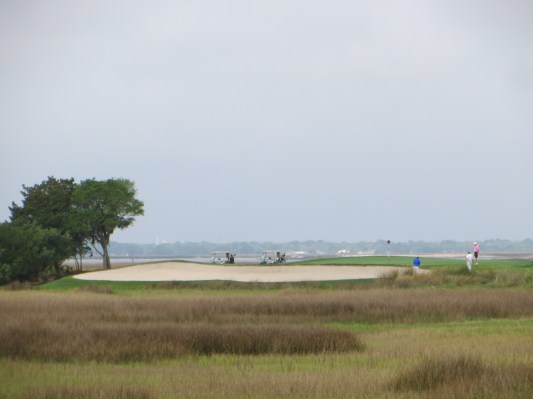
The marsh, sand, endless horizon on the scenic 4th

The marsh, sand, endless horizon on the scenic 4th

Click on any photo to view an enhanced version of the image

Despite it’s name the sea does not really come into play but the course does present a unique test of trajectory control and shot shape. Though not playing through tree lined corridors the challenge is similar to what you get at the Harbour Town Links in Hilton Head, influenced by the marshy surrounds and the ever present wind. The outward nine stretches out in a counterclockwise direction around the marsh and the inward nine takes the opposite path around marsh and sandy scrub. The holes cover all four directions on the compass so you are going to negotiate the wind in every conceivable direction through the day. The low hilly terrain combined with sweeping bunkers and sprawling tightly mowed green surrounds gives you a sense that successful play is often negotiated close to the ground.

The front nine starts simply enough with plenty of elbow room but step on to the tee at the second and the scale of the day’s challenge becomes readily apparent. Marsh grass left and water up the right all the way make drive position tactical to try to challenge a tricky cape style green complex set the water to the right. What follows is the first of the four stunning three pars you will encounter through the day. Pay close attention to the pin of the day relative to the lone bunker in front-it is important to be below the hole on your second shot on all the par threes.

All the one shot holes are scenic and challenging

All the one shot holes are scenic and challenging

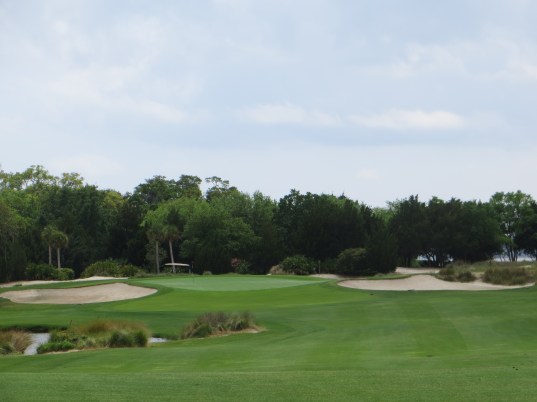
The dogleg left par four fourth is a look you will see repeated all day-tight fairway and approach areas flanked by the marsh and sand with an endless horizon beyond the green-it can be very intimidating to your scorecard if you do not stay focused on the preferred lines of play. With the reverse setup on the equally technical fifth it is apparent that moving the ball both ways is a requirement if you are to position yourself favorably off the tees and into these challenging green complexes. Maybe the best scoring opportunity of the round is from five through nine but that does not mean these holes are easy-danger lurks wherever you see marsh grass or the glint of water.
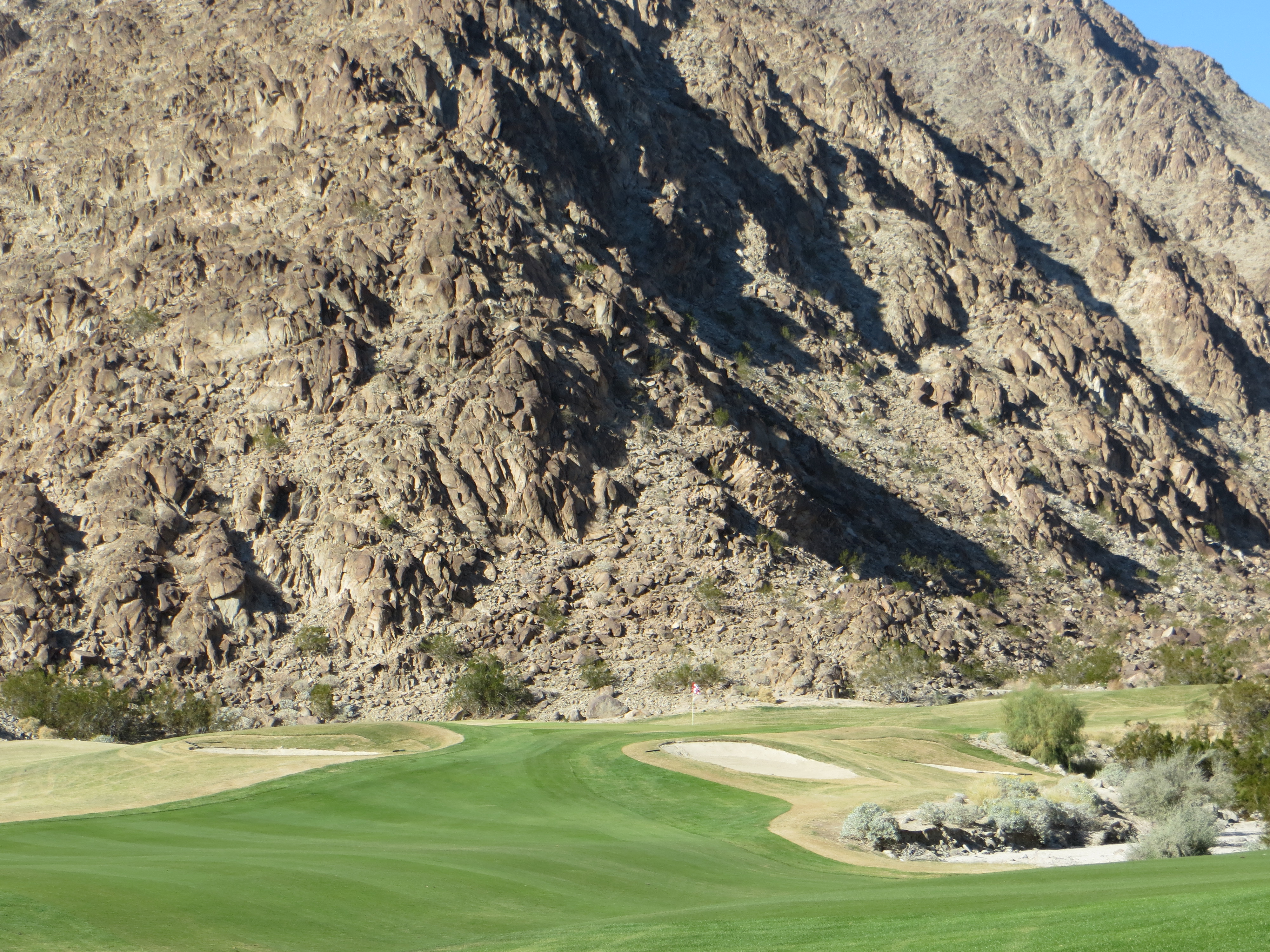
After a banana and a power drink at the halfway house the true challenge begins on the inward half. The tenth appears simple enough to the eye but there is no room for wayward dispersion in either direction off the tee. The green is stepped and possibly obscured from your approach line so make sure you have enough club in hand to get to the correct tier. After a difficult par four in the same direction a long par three turns back 180 degrees playing into a undulating putting surface with little frame of reference. Beware of the false front left and it’s proximity to the marsh-a timid approach with too much draw can get sucked back into the hazard.

Focus your attention off the tee at 13 there is danger all around

Focus your attention off the tee at 13 there is danger all around

From here to the house the course presents one unique challenge after the other. The thirteenth is the #2 handicap hole with marsh left, sand right and another endless look to a green set against the horizon. My favorite hole of the day is next as you stand on the tee trying to discern a fairway landing area hovering against the horizon. You have to hang something no longer than 250 yards between the aiming post and the right corner of the fairway and trust it will feed forward to the left end of the fairway inside of 150 yards. The shot into the green sitting perched up on the hill surrounded by marsh left and behind and terrarium on the right is the Harbour Town challenge without the tall trees.

The shortish 14th is a technical challenge on the tee and the approach

The shortish 14th is a technical challenge on the tee and the approach

Two good scoring opportunities on the hopscotch technical holes at fifteen and sixteen where you either stay within the chalked boxes or you get to start over with two shots rung on the register. This brings you to a very underrated and difficult finish. The par three seventeenth can be as short as 150 yards but the diagonal set of this very long and shallow green behind two gaping bunkers makes it likely that you will be pitching back toward the hole trying to save your par.

Even the trees behind 17 suggest the pitch of this green you must negotiate

Even the trees behind 17 suggest the pitch of this green you must negotiate

The finishing hole is an intimidating sight requiring a long and straight tee shot into a narrowing landing area between bunkers to set up a long approach into a very tight green complex. If you are out of position off this tee a lay up to 85 yards right of the hazard is the intelligent option. Even with a short club in your hand from there getting it below the hole on the steeply ramped pinched putting surface is a major challenge. A couple of dropped shots on these last two is more the norm than the exception.

The finishing hole will capture your full attention from tee to the bottom of the tin

The finishing hole will capture your full attention from tee to the bottom of the tin

There is something classic about the way you have to work yourself around this course as well as the entire presentation of the facility. From the eclectic décor of the Lodge Hotel that houses the golf shop and the fine eating facilities right down to the signature wicker basket flag sticks that just seem right bobbing in the sea breezes, take the time to soak in the full golf experience when you are here. Sea Island is a first class golf resort with a first class track in the Seaside Course.

St. Simons Island, Georgia

Designer: Harry Colt/Charles Alison (1928), Joe Lee (1973), Tom Fazio (1999)

Tees        Par      Yardage      Rating      Slope

Blue         70          6657          72.6         139
Green      70          6323          71.1         135
White      70          5980           69.4        132
Gold        70          4978           69.1        123

(Click to see the complete hole-by-hole review of the Seaside Course)

(Click to see more information about the Sea Island Resort)


La Quinta Resort Mountain Course

La Quinta Resort LogoThe Mountain Course at La Quinta is a challenging and visual creation from Pete Dye’s TPC Sawgrass period. It bears similarities to the stadium course in Ponte Vedra in that there is plenty of visual intimidation, especially in the green complexes, yet Pete gives you a fair line of play on every hole as long as you have the discipline to follow it. This is a positional driving course, you must plan carefully from each tee to pick specific lines that will give you advantage angles into the green arrangements and the pin of the day.

Approach to 14 is set against the mountain backdrop

Approach to 14, you expect incoming choppers with wounded to appear over the horizon

Click on any photo to get an enhanced version of the image

The course is carved into the base of the Santa Rosa Mountains in Palm Desert and looks like the Hollywood set for MASH. You fully expect to see Hawkeye and Trapper John standing next to you on the practice ground. There are many Kodak moments of the holes set against the breathtaking mountains so you have to make sure you don’t let your mind wander to often from the task at hand.

The first hole puts all of Pete's design elements in front of you

The first hole puts all of Pete’s design elements in front of you

As you see at Sawgrass the bunkers are ever present, over 100 bunkers and waste areas, with a large splash of water as well, confine the driving areas throughout that make finding your proper drive position a challenge. The truth is the sand is very playable and it is more about intimidating the player while they are choosing their flight lines than punishing them terribly for missing them. The water is the punitive element to mind and is actually in play every time it presents itself.

Like most Pete Dye courses, the green complexes are what separates this course from the ordinary. Every green seems to pop up from the fairway with carve outs of grassy hollows and bunkers that make elevated approaches with spin the shot of the day. When you miss a green it takes real pitching imagination and agility to deal with the abrupt elevation change to the surface as well as the swoops and swerves you ball engages once it gets on the green.

At 6300 yards from the White Tees there is plenty of challenge for the average bear. Only two par fours are over 400 yards from these tees, but the elevation changes into the greens make many shots a club or so more on the approach. Even with a mid-iron or hybrid in hand the tight green targets give you plenty of opportunity to show off your recovery game.

Do you have the nerve to take on a left flag on the Par 3 2nd?

Pete wants to know if  you have the nerve to take on a left flag on the Par 3 2nd?

The front side has a very cool sequence. It begins with a neat finesse hole that sets the tone for day-controlled driver and precise approach play into s kitchy green complex. Your heart rate quickens on the second hole, a testing par 3 with a harrowing water feature that can wreck your scorecard early in the round. Plenty of scoring opportunity from 4 through 7 with a couple of imaginative par fives in this stretch. The finishing holes on the outward nine are very gamey, especially the 9th which wears the #1 Handicap Hole moniker with great pride.

Big sand and water elements make the Par 5 7th a tactical chore

Big sand and water elements make the Par 5 7th a tactical chore

The inward nine starts with a series of holes right out of TPC Sawgrass-three turning Par 4s with waste area containment on one side and some nastiness on the other. These are the only holes that make you feel like this course is in a gated community…..a very high end gated community at that. There are some jaw dropping second homes that look more like villas than vacation condos. After an innocuous three par 13th you turn the corner to the 14th tee and voila you are in Tolkein Hobbit Land for the next four holes.

The middle of the final stretch the green on 15 nestled in the rocks

The middle of the final stretch the green on 15 nestled in the rocks

This is by far and away the coolest part of the course with the imaginative holes routing in a tranquil valley between the majestic mountains. You just expect a large booming Yul Brynner voice to emanate from between the peaks warning you that you are entering a region of peril. These four Dye holes bear out such a warning but they are eminently playable if you keep your wits about you and do not try anything outside of your skill set.

The postcard moment of the day the high tee view on 16

The postcard moment of the day the majestic view from up high on 16 tee

It is worth taking a moment when you get to the Par 3 sixteenth and hike up to the perch which holds the back tee. You could swear you can see all the way to the Joshua Tree Forest from there, it is a grand view of the vast expanse of the desert and the Santa Rosa Mountain Range beyond. A more detailed account of this creation is provided in the Hole-By-Hole description below.

Last look from the 18th tee is soothing...three shots to the clubhouse

Last look from the 18th tee is soothing..avoid condos left…three shots to the clubhouse

When you are done tallying the score take time to schmooze around the clubhouse on the hill. The interior architecture is on a grand scale with high exposed wooden rafters giving it a homey feeling of a lodge- it makes you want to set a spell. While enjoying some good food and libation in the grill room the tall glass windows afford you a stunning view of the practice area and the course.

This place is a must stop on any visit to Palm Desert. Pete did a marvelous job putting together a tactical course that will tease and please you every time you play it.

La Quinta, California

Designer: Pete Dye (1985)

Tees      Par    Yardage     Rating     Slope

Black     72       6732        72.9        135
White     72       6300        70.9        129
Gold      72       5330        71.4        126

(Click for the complete course description of the La Quinta Resort Mountain Course)

For more photos click to review Postcard from La Quinta Resort Mountain Course

Elkridge Club

Elkridge Club LogoThe original Elkridge Club was established in the late 1800’s as a golf and hunting club in what was probably the wealthy developing side of Baltimore. It’s membership grew to 400 and in 1925 they acquired more land to meet their growing need and sought the guidance of Seth Raynor to build the course you see today.

As recently as 2003 the club hired Brian Silva an architect who has a reputation for doing work on Seth Raynor courses to do a total renovation of the course and bring it back to Seth Raynor’s original design. To those who have played them, The Washington Golf Club in Arlington and Bedford Springs Golf Resort in Pennsylvania this will have a familiar look and feel.

The classic club house is a period statement of it's own

The classic look of the club house is a period statement of it’s own

To say this is an old style course is a major understatement-it is a period piece. Suffice it to say that there are design features in this course that you would never see created today. Rectangular shaped putting surfaces, super dramatic uphill driving carries, greens with almost arbitrary undulations, three steps between green and the next tee, fairway bunkering that seems random, and hole sequencing that has all to do with the god delivered shape of the property.

Seth Raynor used the land at hand to route a delightful old style golf course

Seth Raynor used the land at hand to route a delightful old style golf course

With modern green construction this becomes a throw back golf experience with today’s gratifications. The words “fair” and “unfair” have no place in this design-it is just “wow” or “you must be kidding”. Leave your modern ego at home and just put on a pair of plus fours and bring out the hickory shaft mentality-this is quite an experience to the sophisticated golf historian.

The length of the course-especially the differential between Blue and Black Tees-is almost deluding. The course is so tightly ensconced by the trees that “towardness” is the only thing that matters here. You have to hit it Freddie Funk straight and have Justin Leonard restraint for over-reaching on any particular challenge.  One bounce on the wrong side of a ridge will change your fate on an individual hole dramatically.

The Biarritz green on #13 is something Raynor used on many of his courses

The unusual Biarritz green is something Raynor employed on many of his courses

For the most part the holes do not have severe turns in them-they all look right in front of you off the teeing ground. But the overhanging old hardwoods and the steep drop-offs mean you have to be very directive in your line of play.

Greens are terrific. Very smooth-reasonably fast-especially downhill and down grain. But if you can play your approaches and pitches beneath the hole you can be pretty aggressive into the hole.

The Elkridge Club experience is something out of a different time and it reminds us that golf courses were not always designed for those who think hitting it long is what it is all about. The shots you hit in a round at Elkridge will remind you how important creativity and finesse can be in an enjoyable round of golf.

Baltimore, Maryland

Architect: Seth Raynor (1927)

.
Tee        Par          Rating        Slope       Yardage
Black     71             70.9            124          6465
Blue       71             69.7            122          6194

(Click to see the complete hole-by-hole description of The Elkridge Club)

Ritz-Carlton Grande Lakes Golf Club

Ritz Grand Lakes LogoIf you are on a golf trip to Orlando and playing the usual suspects, Bay Hill, Orange Country National, Grand Cypress to name a few, consider taking an afternoon and adding the Grande Lakes Course at the Ritz-Carlton to your vacation rota. Built on a typical piece of Florida marshland Greg Norman figured out a way to raise from the flood plain a very interesting set of holes that in many ways defies the typical central Florida formula of flat holes hemmed in by acres of sand and water.

The front nine wends through the oaks and cypress trees with some accent from the wetlands. The back nine serious soil was moved to raise topography from the flood plain and create compelling holes among the wetlands. This side is more exposed to the elements and any hint of wind brings the greater presence of the wetlands to front of mind.

The driving areas are generous throughout but having said that there are specific angles of approach to the greens that are advantageous. A yardage book is a great asset to understanding the proper lines of play. There is plenty of sand-some crushed sea shell waste areas as well-but the course is not overbunkered. Bunkers have clean edges which makes for a very tailored presentation.

The most thought was put into the green complexes which have very dramatic topographical interest. Many of the greens are more than 40 yards long and have serious contour so just being on a green is no guarantee of a two-putt. The green conditions were about as perfect as I have seen in Florida and the putting speed they can maintain as a result can be disarming.

The hole sequence on the front is user friendly with two par fives within three holes to allow build up of some par acorns. As you get into the last three on this side the water is closer at hand and the wind influence picks up increasing the challenge accordingly. Making a decent score on the outward nine is a matter of patience and line control.

The distinctive Par 4 11th is the gateway to a fantastic finish

The distinctive Par 4 11th is the gateway to a frenetic finish

Starting at the 11th the character of the course changes dramatically and your focus must heighten as well. Check the hole-by-hole attachment below for the details. The Par 4 11th is one of the most unique holes you play all day with a tree and sand feature in the center of the driving area that forces you to pick a favored line of play right off the tee box. To the chagrin of the Michelob Ultra crowd, a short Par 3 and a short Par 4 follow that favor brains over brawn and will punish overly aggressive play as the course works toward a strong finish down the last five.

The five finishing holes are a wild collection of very unusual holes that demand calculated patience to get to the house with your scorecard in tact. The common theme is adjacent disaster to the charmed line of play on each hole which makes the risk reward calculation on almost every shot of paramount concern. The green complexes down the stretch are some of the most imaginative you see all day so articulate approach shots are required or you can get into some very dicey up-and-down situations.

The finishing hole brings your home with a flourish

The finishing hole brings your home with a flourish

The finishing hole provides a grand view of the Marriott and Ritz-Carlton hotel and play facilities. It seems like an appropriate back drop to what has undoubtedly been a stout and invigorating golf challenge.

Orlando, Florida

Designer: Greg Norman (2003)

Tees      Par    Yardage      Rating        Slope

Gold      72        6708           72.2           135
Blue      72        6324           70.3           127
White    72        5835           68              121
Green   72        5223           69.8           115

(Click to see complete hole-by-hole descriptions of the Ritz-Carlton Grande Lakes Club)

Desert Willow-Firecliff Course

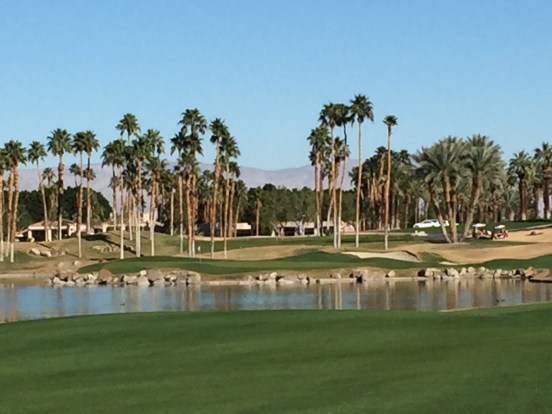
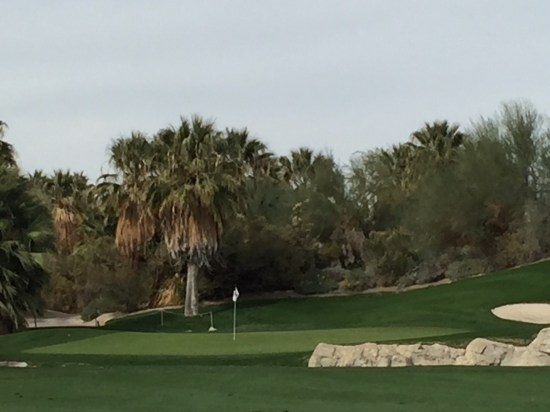
Desert Willow LogoThe Firecliff Course at Desert Willow is a desert layout as pleasing as any you will ever lay your eyes on. Hurdzan did a marvelous job creating holes with a desert flavor that is not Arizona target golf. Palm Desert may be an arid flat pancake but you would not know it after the four hours you spend playing this course.The bulldozers had their way raising topography from the desert that is lyric and pleasing to the eye.

The designers pulled from all sides of the flora palette to create incredible sideshows.

The designers pulled from all sides of the flora palette to create supporting sideshows.

.
The landscape artist must have been paid a bundle because there are astonishing compositions of desert flora that surrounds every tee, fairway, and green. Bring your digital camera and a large storage card because you are coming home with a load of photographic memories for the family scrapbook.

Lush fairways, framing palms, and mountain back drops-what a formula.

Lush fairways, framing palms, and ominous mountain back drops-what a formula.

These holes have topographical character of a foothills mountain course even though the mountains are miles away. Well positioned every tee box gives a full view of the challenge ahead. There is an insane amount of bunkers and waste areas full of desert nasties but if you control your shot lines it is a negotiable challenge.

A master of obfuscation Hurdzan did a great job in masking the severity of challenge throughout the holes. The short holes are deceitfully difficult and the long holes have plenty of give to them. This is a course where you must plot your path on each hole carefully to mitigate the risk of pummeling your scorecard but there are times when a bold shot can give you a chance for a pleasing result to brag about over dinner.

Click on any photo for an enhanced view of the image

The first view of the day excites with the full flavor of Firecliff

The first view of the day excites with the full flavor of Firecliff

The slope of 133 from the Blue markers is real but the 6700 yards itself is not overwhelming. I noticed that often the upslope in the landing areas off the tees can steal some roll out especially on the back side where there is a more rolling topography. The green complexes are ingenious, many perched on hills or ledged over waste areas or bunkers so getting a proper angle of approach is very important. On average the greens are small with sweeping shoulder slopes not tiers so you will spend a good part of the day scratching your head wondering why approach shots continue to separate from the flag.
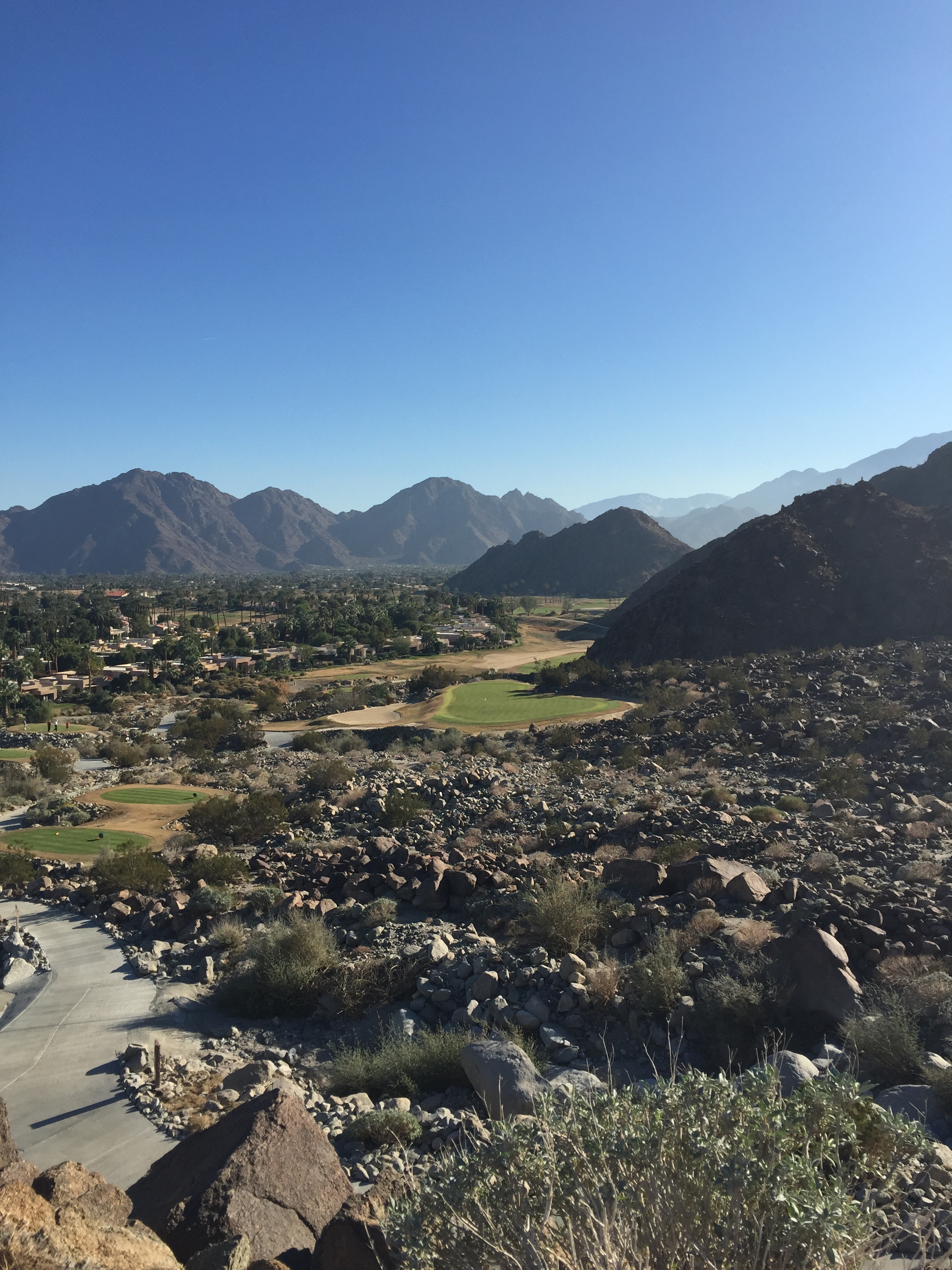
The sand and the scrub add beauty and challenge at the Par 3 3rd.

The sand and the scrub add beauty and challenge at the Par 3 3rd.

The lush surrounds of the first tee box sets the stage for the day. A beautiful sweeping par five stretches out in front of you ambling up to a green set in a hollow beautifully appointed by desert vegetation. Another stunning view off the tee box on the second is framed by the towering mountains that surround the Sonoran Desert. The terrarium adjacent to this green and the carry wilderness on the Par 3 third are a signature look for the Firecliff Course.

The approach to the short 6th should come with a warning label.

The approach to the short 6th should come with a warning label.

The pace of the challenge ramps up quickly with back-to-back strong four pars on the fourth and fifth. These are holes with lots of trouble encroaching on the sides but controlled lines make them eminently playable. The short Par 4 sixth is where the large number lurks. After a position fairway metal off the tee the peninsula green setting and sharply slopped putting surface is an ice bucket challenge if you get too ambitious on your approach. Next is a roller coaster Par 5 that should not present any real threat to the scorecard but what follows to the turn will test your patience.

Another distracting visual frames the 8th green.

Another distracting visual frames the 8th green and the adjacent lagoon.

The Par 3 penultimate holes on each side share the astonishing surrounds of what looks like Gilligan’s lagoon. The 8th is a mere short iron across the hazard to a green set in front of majestic palms and beautifully landscaped sand and flora. This visual is more than distracting so try to keep your focus.

Playing into the 9th and 18th the stature of the clubhouse is revealed.

Playing into the 9th and 18th the stature of the clubhouse is revealed.

The view going down the 9th and 18th is equally engaging with the clubhouse high above the green complexes reminiscent of the finish at Grayhawk in Scottsdale. Water of the left impinges the long approach shot to a narrow green opening so prudent course management may call for a lay up for a pitch and a putt to keep the momentum going.

The inward nine begins with the same look....just more hills.

The inward nine begins with the same look….just more rolling terrain to deal with.

Grab a wrap and a protein bar from the snack area in the clubhouse because an awesome stretch of holes are awaiting. The view off the 10th tee is another jaw dropper as a difficult long Par 4 climbs a ramped hill to a table top green complex. With a long club in hand the abrupt slope to the green will reject timid approach shots so do not hold back. The 11th is another long Par 4 with a blinded carry tee shot over the desert wilderness. This leaves a long approach to a green complex parsed from the side hills by deep grassy depressions on each side. A bogey-bogey start on this side is not something to be worried about.

Full carry required across the long waste area to 12 green.

Full carry required across the long waste area to 12 green.

After a drive into the upslope of the fairway on #12 you are left with an intimidating carry across a massive sea of sand and waste to the green perched on a hill. This is another Kodak moment-you could swear you are in Hawaii and the blue Pacific is just beyond the green.

The Par 5 13th would feel right at home at Pine Valley.

The Par 5 13th would feel right at home at Pine Valley.

Two of the more visual holes of the day follow in a Par 5 and Par 3 respectively. The look up the long 13th is inspiring and intimidating. This is a hole where you have to pick a line and trust it because it is much more user friendly than it appears to the eye. The subtle 14th is a soothing alcove green setting with a large desert accent up the left. You may just want to get into the lotus position on this tee box and chant your mantra for about 20 minutes to settle the mind for the challenging stretch to the house.

How disarming is the tranquility in this presentation at 14.

How disarming is the tranquility in this presentation into the 14th.

At first glance the short Par 4 on #15 appears innocuous but negotiating the approach or up and down save into a precipice green with a small pachyderm buried in the back left corner is fraught with difficulty. A piece of Pine Valley follows on the sand scary 16th which has serpentine sand pit covering the last 50 yards left and shrouding the green.

This would be very soothing if the carry wasn't over water, sand, and scrub into a very narrow green.

Soothing if the carry wasn’t over water right and sand left into a very tight green.

Returning for a second taste of Gilligan’s lagoon on 17 the longer length of the club in your hand makes it incrementally more difficult. Once again don’t get lost in admiring the surrounds because this is a very hard long iron or hybrid to hold on line to the diagonal setting of the green.

There is an eerie feeling looking off the last tee.

There is a sureal feeling looking across the mishugas down the 18th fairway.

The play down the last is a perfect conclusion to a thrilling round of golf. A truncated Par 5 that threatens both your second and third shot can be a real thriller if the back nine Nassau depends on you making par or better. Try to ignore all those people on the clubhouse patio with sentiments against your success, they have witnessed legions before you try to get to the house unscathed.

Once you finish putting out and drive up the hill to the doorstep of the clubhouse take a second to stop and look back up the finishing holes. There is one last Kodak moment from a memorable golf course experience that will prod you to return for more.

Palm Desert, California

Designer: Michael Hurdzan (1997)

Tees      Par      Yardage     Rating     Slope

Black     72         7056          73.6        138
Blue      72          6676         71.7        133
White    72          6173         69.3        124

(Click here to review the Desert Willow-Firecliff Course hole-by-hole descriptions)

For more pictures click to review Postcard From Desert Willow-Firecliff

(Clidk to read a review of the sister course-Desert Willow-Mountain View)

Oak Creek Golf Club

ocgc-logoVisiting the Newport Beach/Orange County area and looking for another course to add to your dance card? This Tom Fazio design at Oak Creek Golf Club in Irvine is a place to seek out. Without the ocean views and the rugged coastal terrain to work with Fazio did a brilliant job orchestrating a golf course through subtle rolling terrain, framing trees groves and flora, and an array of creeks and lakes to create a course that will challenge both your mind golfing skills.

#7 Hourglass captures the rapture of Oak Creek

#7 Hourglass captures the full rapture of Oak Creek

Click on any picture to get an enhanced look of the image

Tactically this is a positional golf course with clever offsetting angles of approaches to greens. Plotting your strategy from the green backward gives yourself the best chance of success into difficult green constellations. Buy the yardage books so you have some idea of the layout of the holes and hazards-better yet hook up with a seeing-eye-member who can be your Sherpa guide for the day. The bulldozers had their way here so as was the case with so many courses created in the 90’s the fairways are sculpted giving a lyric flow to the ground that affords very few level lies.

Bull nosed bunkering...what an apt descriptive

Bull nosed bunkering…what an apt descriptive

The green side bunkering is described as bull-nosed on the web site and you can take this literally because playing a recovery out of the nostril of a massive male cow is no picnic. Having said that, these green complexes are not overdone. There is, as the great golf architect Max Behr would say, a line of charm into each one of them if you thoughtfully position yourself for the approach.

Brady's pond frames the difficult task at hand on #3

Brady’s Pond frames the difficult task at hand on #3

The front side begins modestly enough with a couple of manageable par fours but climbing to the tee overlooking the Par 3 third your heart will get to racing taking in the view of the green jutting out precariously into Brady’s Pond. Think Alcatraz with grass. This begins a sequence of holes which make it evident that positional golf is the order of the day.

What a jaw dropping look at the surrounds of Orange Country in the distance

What a jaw dropping look at the surrounds of Orange Country in the distance

From the tee of Par 4 fourth, called The Grove, you see a driving area framed by a pair of towering goal post trees that have little tolerance for wayward tee shots. The trees behind the green is where the hole get’s it’s name but the low mountains in the distance give it some southern California romance and remind you that the ocean not so far away.

There is no missing right on #6 where Lowell's Creek awaits

There is no missing right on #6 where Lowell’s Creek awaits on all three shots

A quick switchback and the challenge ramps steadily up from here to the turn with a stout par four that which calls for length off the tee and careful precision into the green nestled on the other side of Brady’s Pond. Lowell’s Creek is the prominent feature on the long par 5 sixth as it wends it’s way up the right side from the beginning of the fairway all the way to the green surface. Even with a short club in your hand this is a dicey approach as green leans right feeding balls to the edge overlooking.

There club house frames the approach into #9

The club house proudly frames the approach into the 9th hole

The front side ends with a monster of a par four calling for a long drive to reach the top of the hill revealing a compelling look at a green nestled just below the tile roofed Adobe clubhouse .

.

The back nine will capture your focus early and not let it go until the last drop falls on the finishing hole. The Par 5 Breakout is a mind bending three shot hole for most of us. The key here is staying out of the sand on all three shots. A strong drive on the left sets up a lay up well to the right for a short downhill pitch into one of the tightest green settings you see all day.

The Great Depression #11 requires calculation of elevation change and shot shaping

The Great Depression #11 requires calculation of elevation change and shot shaping

The eleventh is a subtle and picturesque par 3 where the green sits below the tee carved out of the foot of the hill behind. The shot shape is left to right and you must use the green contour to get it close.

Chicanery...lurking everywhere...on #14...

Chicanery…mischief lurking everywhere…on #14…

Two long par fours with plenty of issues bring you to Chicanery a short par four that will drive the big hitters bonkers. The tee shot is into a narrow neck of the fairway just below a hidden fairway bunker on the right. From there Fazio stuck the green into a narrow closet below the fairway that will require a lawn dart approach to get close. The canopy of eucalyptus trees create a feeling that you are hitting into the Hollywood Bowl during sound check. Just a fabulous golf hole.

A stunning wrap-around route on the Crescent Moon Par 4 16th

A stunning wrap-around route on the Crescent Moon Par 4 16th

It only gets harder from here with a long par four called Outback, the number 1 handicap hole. This is a full par 4.75 and a bogey will feel like a par. The middle sized par four that follows is like a cape hole without the water. Named Crescent Moon it adequately describes the profile of the hole and the two slinging right-to-left shots it will take to get on to the green.

Arnie would love the fortitude required to play the finishing hole

Arnie would love the fortitude required to play the finishing hole

One more long and strong Par 3 sets up the dramatic finish into Fortitude a dicey short Par 5 that will remind you of the finish at Bay Hill. The drive is a power slinger from the right to try to catch the power slot and chase one down within reachable distance of another peninsula green. More likely you are laying up in the neck of fairway cordoned off by the water that defines the right side of the hole the last 175 yards in. If you land the approach on this green in regulation and you can finally exhale.

Oak Creek does not have much national notoriety but Fazio did an excellent job composing a visual golf experience that will be an enjoyable afternoon for players of all skill levels.

(Click to review the complete hole-by-hole descriptive of Oak Creek Golf Club)

Irvine, California Architect: Tom Fazio (1996)

Tees      Par     Yardage     Rating     Slope

Black     71         6850         72.7        132

Gold      71         6543         71.3         129

White    71         6187         69.4         125

Silver    71         4989          69.0         120

Pelican Hill-Ocean North

Pelican Hill LogoThere is nothing at Pelican Hill that is understated and the Ocean North Course is no exception. It was originally done by Tom Fazio in 1993 without much fanfare but when it got renovated in 2005 it took on an awesome character all it’s own. Not as visually scenic at the Ocean South because it lacks the close-to-the-Pacific drop dead looks, but to the discriminating eye the rocky gorges the course traverses give it a Plantation Course at Kapalua feel that is undeniable. As with the Ocean South the hardest thing is blocking out the visual drama so you can focus on the shot at hand.

The dramatic elevation changes and the definition to the holes created by the adjacent gorges on both of these courses reiterates the strategic element and makes angle of approach and shot shape germane to efficient play. One of the greatest shot shapers in the game today, Bubba Watson, recently played one of the courses at Pelican Hill from the tips with just a 20-degree hybrid and shot 81. You ever try putting with a 20-degree hybrid? I am sure Bubba had a barrel of laughs doing this especially on a course where shaping a shot can make a huge difference to getting it close.

Fazio designs are a master of strategic play for me. His greens are generally accessible, from a specific angle, which means there has to be forethought standing on the tees or hitting the lay ups on the five pars. The green complexes are angled to the approach positions often with bunkers only on one side. But many of the greens have rounded shoulders that influence the finishing path of balls away from their intended target. To complicate matters further the Poa Annua greens are like a house of mirrors to read and will leave you scratching your head when obvious breaks go the other way.

The Par 3 2nd can lead to a Pepto Bismal moment early in your day

The Par 3 2nd can lead to a Pepto Bismol moment early in your day

 (Click on any picture to get an enhanced view of the image)

An early piece of the shock and awe comes on Number 2, the first par 3. This is a knee knocker standing of the tee peering over the gorge at the green slightly below on the other side. Doubt creeps into mind as you decide if the elevation change or the wind direction is more significant in your club selection. For sure it favors a right to left curve to work up the angle and pitch of this 40-yard long putting surface.

The Par 4 fourth is typical of the Fazio design swagger. The hole doglegs left of the tee favoring a draw but the green below the approach area is set back right which means a soft high fade works the best into a green with a high bank on the right. You need the full bag of tricks here, sometimes on the same hole.

Small bungelow overlooks the downhill shot into #4

Small bungalow overlooks the delicate downhill shot into #4

Unique architectural composition makes the Par 4 seventh the number one handicap hole of the day. Standing on the tee you see a fairway split by a 40-yard long bunker goading you to pick your poison. The left fairway is the shortest and most accessible route home but this puts the full threat of the bunker in play off the tee. From the safer right fairway you have to manipulate a high fade into the front left corner of the putting complex and let it feed onto a very small green. Corporate CEO money is well represented in the McMansions set in the hills all around this green-Pelican Hills is the high rent district.

A steep uphill approach with a long club on #9 brings Pine Valley to mind

A steep uphill approach with a long club on #9 brings Pine Valley to mind

As the course turns south with the Pacific just over your shoulder on the right my favorite hole is the rough and tumbling Par 4 ninth. This is full Pine Valley look with a drive off a high perched tee down a log flume which, if you can hold the center line of the fairway, will allow your Titleist to roll forever. The second will be a club and a half more played off a down slope into a shelved green set half way up a monster hill laden with trees, folds, and an occasional mean bunker. There is absolutely no margin for error in your distance control or towardness on this approach-anything less than 95% of intention is looking at trouble.

The back nine plays about 250 yards shorter than the front mostly because of a couple of quality short par fours and only one five par. The first of the short fours is the eleventh, a swooping dogleg right thrill ride heading to the ocean. The very shallow green here is set on a shoulder above a deep bunker on the right so a well position tee ball on the left will set up nicely for a left-to-right approach into the center of the green. The slopes off of this green into surrounding hollows create bedeviling recovery pitches if your approach shot lacks articulation.

The view on the short Par 4 13th is very tantlizing

The view on the short Par 4 13th from the tee is very tantalizing

Two holes later is the second portion of the short par four feast. This time the dell green complex is wrapped around a deep bunker front left with a stepped surface working from front right to back left. The opposite shape coming in will work it’s way up to this pin.

Turning back to the ocean the 14th hole would feel at home on any Irish links course. The hole is delineated by trees set high on the hill tops but there is a vastness to the playing area all the way to the green. The approach is played up to a shallow false front green draped on the crest of the hill above a hideous bunker. Fazio provides a closely mown chipping area long and right where many smart approach shots will end up. While standing on the green take a peek over your shoulder, the view of the Pacific is breathtaking.

The green set against the horizon at #17 is especially pretty at dusk

The green set against the horizon at #17 is especially pretty at dusk

After meandering inland for a couple of holes, the postcard hole of the day is the only par five on the inward half at seventeen. A pond in the elbow of the dogleg right wards you left off the tee and the hole then ambles uphill to a green perched on a ledge above the ocean. Positioning the second to the left gives the best angle for a short iron into a very narrow green with nastiness all around. There is a single spread tree standing high above the green which gives this hole a very coastal California flavor.

Precision required on the approach down the hill to #18

Precision required on the approach down the hill to #18

Your day ends with a kitchy, truncated par four that will stick in your memory all the way through dinner. After a bold drive up the left to the high ground you are left with a three story down approach iron to a green that looks like the under belly of a large Labrador sleeping on it’s back. Hitting the pink part is just plain hard.

The Ocean North is of a decidedly different character to the South, less obvious drama but all the tactical punch. On a daily basis this is probably the course of choice to good players because wise tactics are rewarded and good scores should follow.

Newport Beach, California

Architect: Tom Fazio (1993-renovated 2005)

Tees      Par      Yardage      Rating      Slope
Black      71         6945            73           135
Blue        71         6563            71.3        130
White      71         6270            69.9        127
Yellow     71         4951            69.4        124

(Click to see the complete hole-by-hole review of the Pelican Hill-Ocean North Course)

(Click to see more photos from Postcard From Pelican Hill-Ocean North)