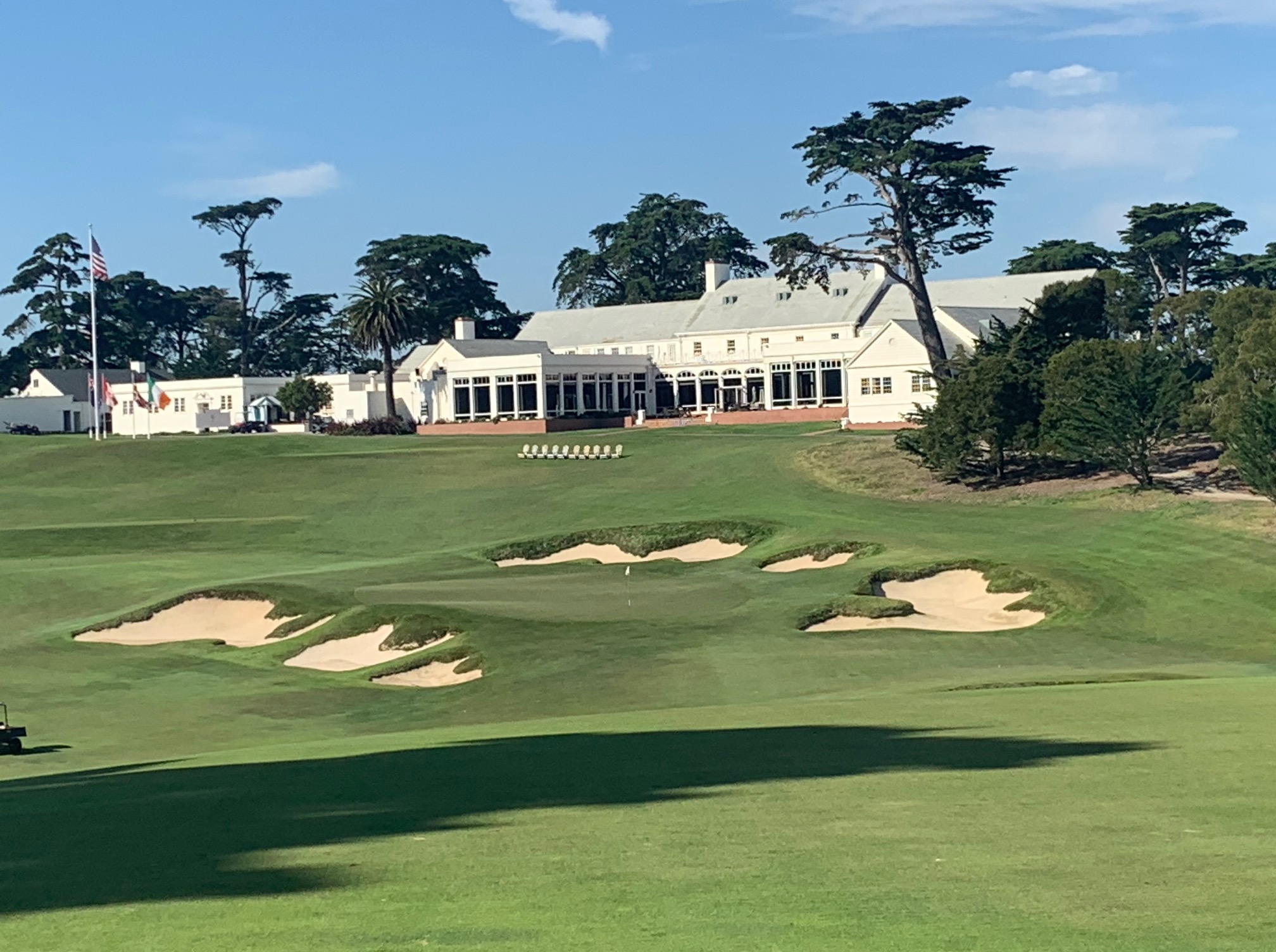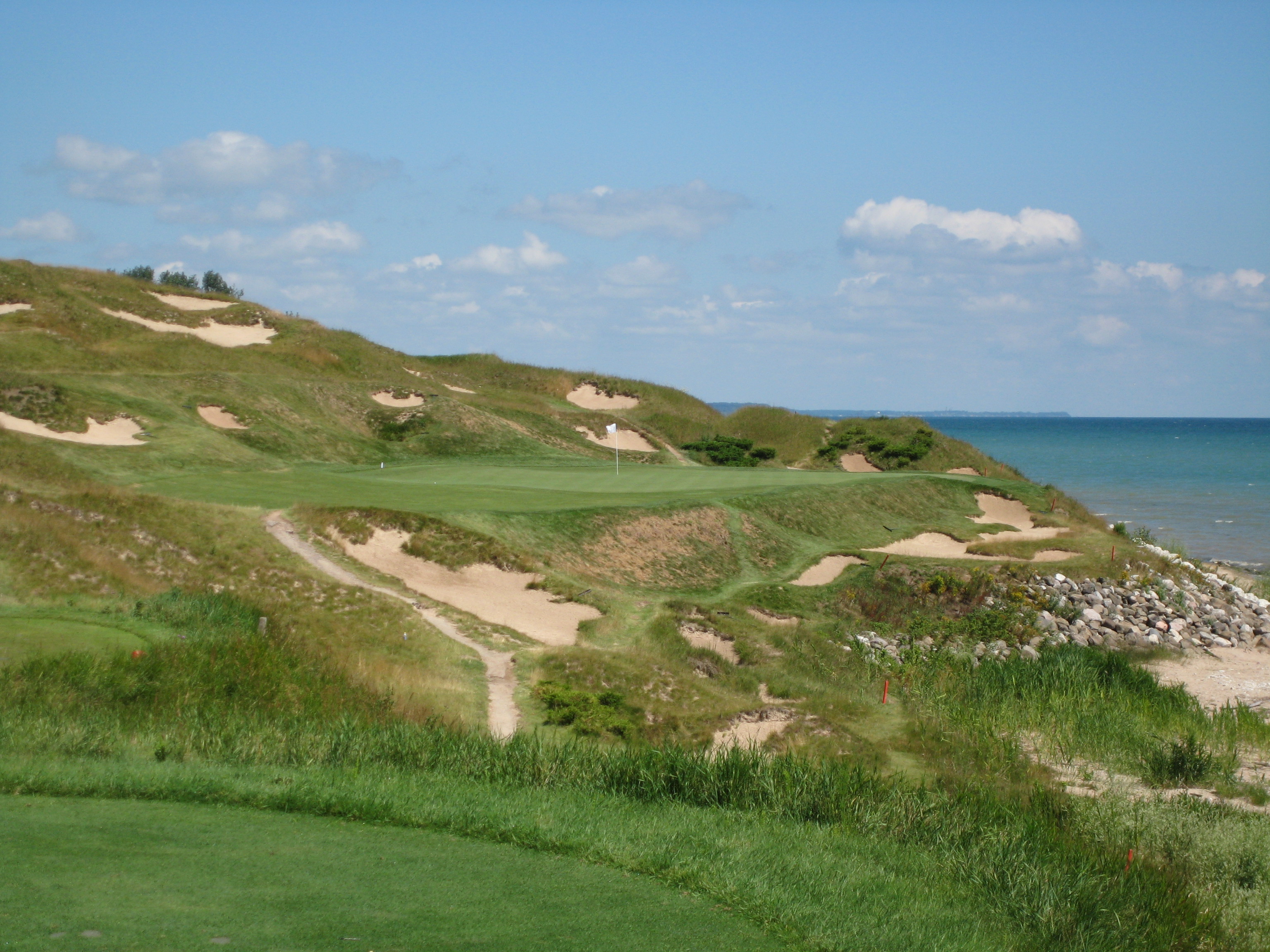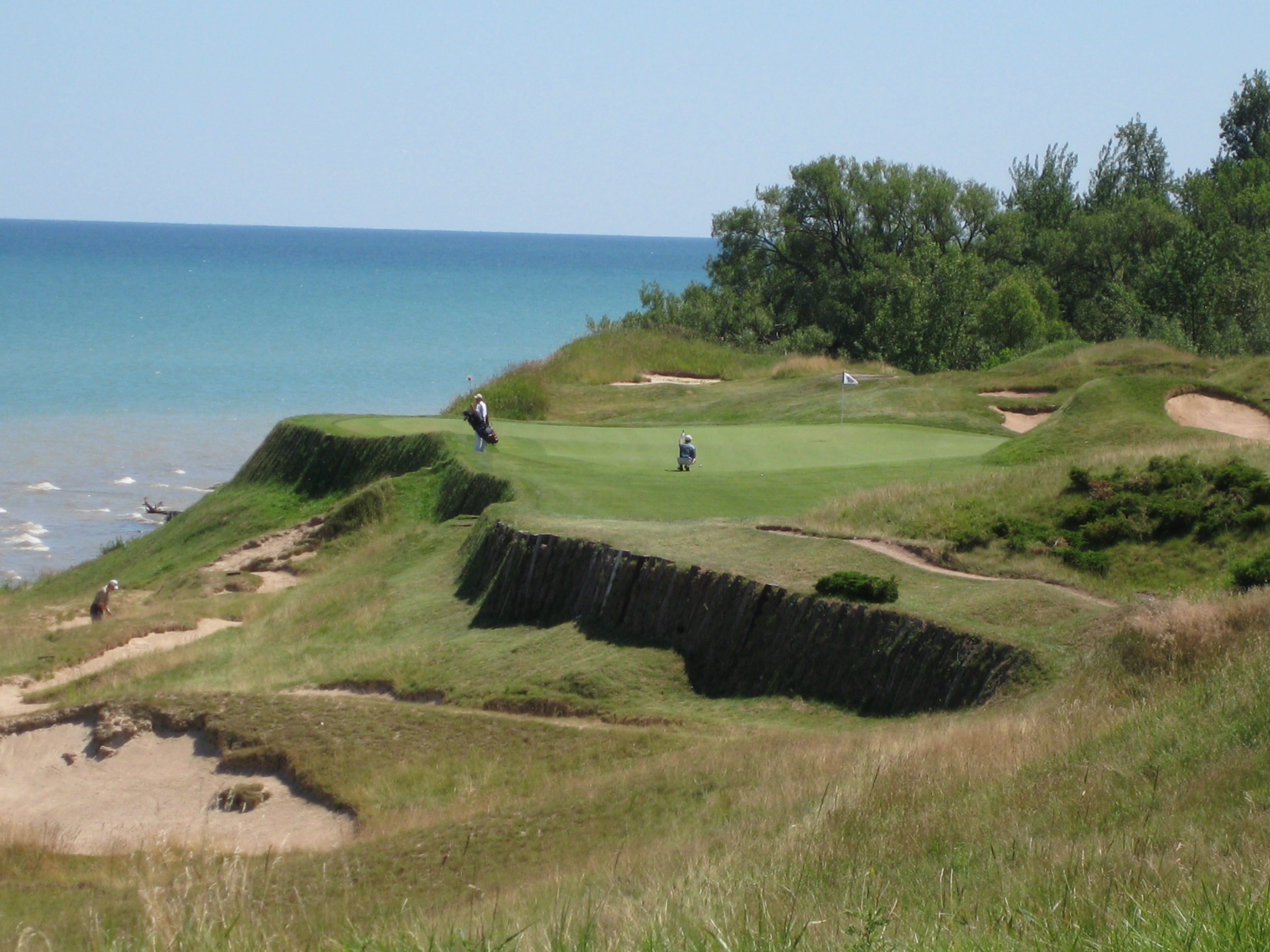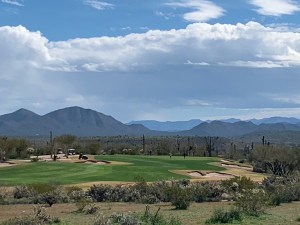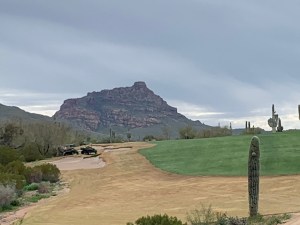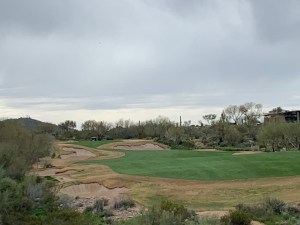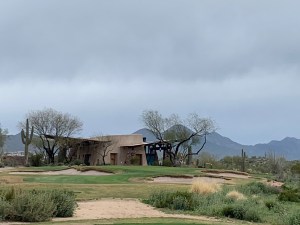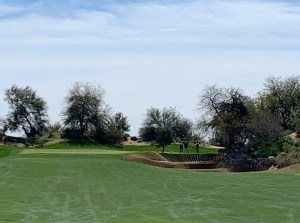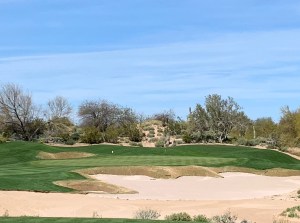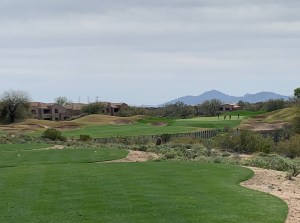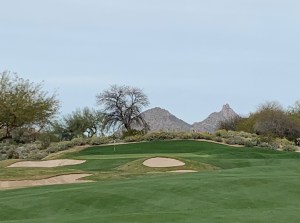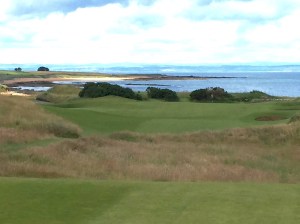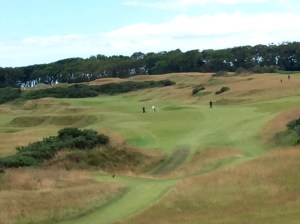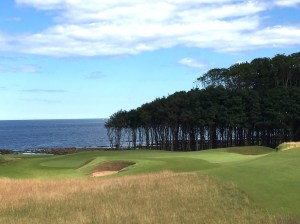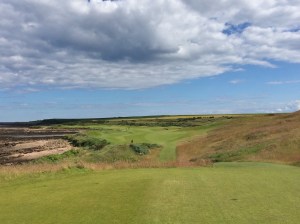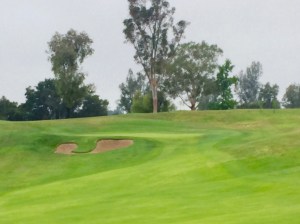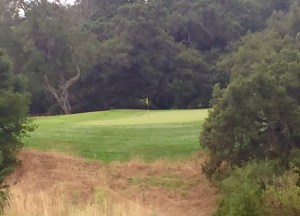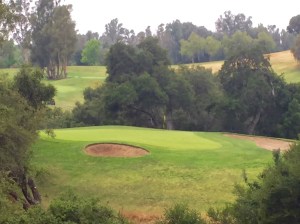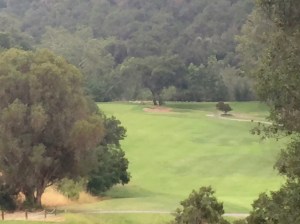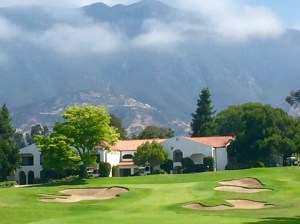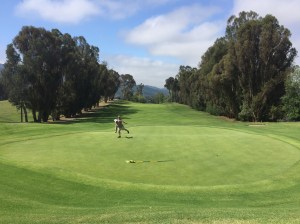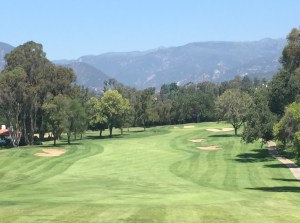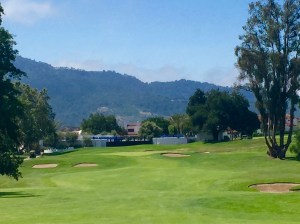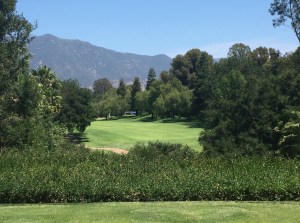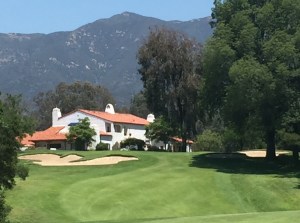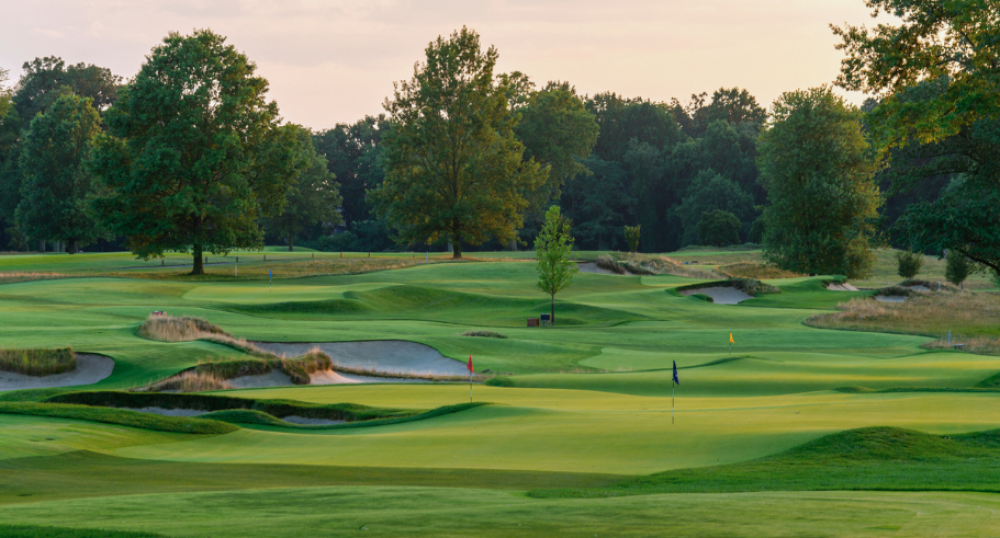

Pasatiempo Golf Club

Pasa Logo Top

It is impossible to separate the character of this course from the reputations of entrepreneur Marion Hollins and renowned architect Alister MacKenzie, two seminal characters in the introduction and development of west coast Golden Age golf courses of the 1920’s.  The two joined hands at Cypress Point setting a standard for what this area of the country could produce and their relationship was solidified with the development of what would become MacKenzie’s home course-Pasatiempo.

Pasi Restrooms
Dedicating the loos is an odd way of honoring the memory of these two larger then life characters who made this place possible

Marion was also responsible for introducing him to Bobby Jones, who would eventually tap Mackenzie to build his most famous creation of all in Augusta, Georgia.  But seeing that MacKenzie lived here and tweaked the course right up until his passing one has to look at Pasatiempo as his swan song to the use of perception and deception in making so many great courses over his career.
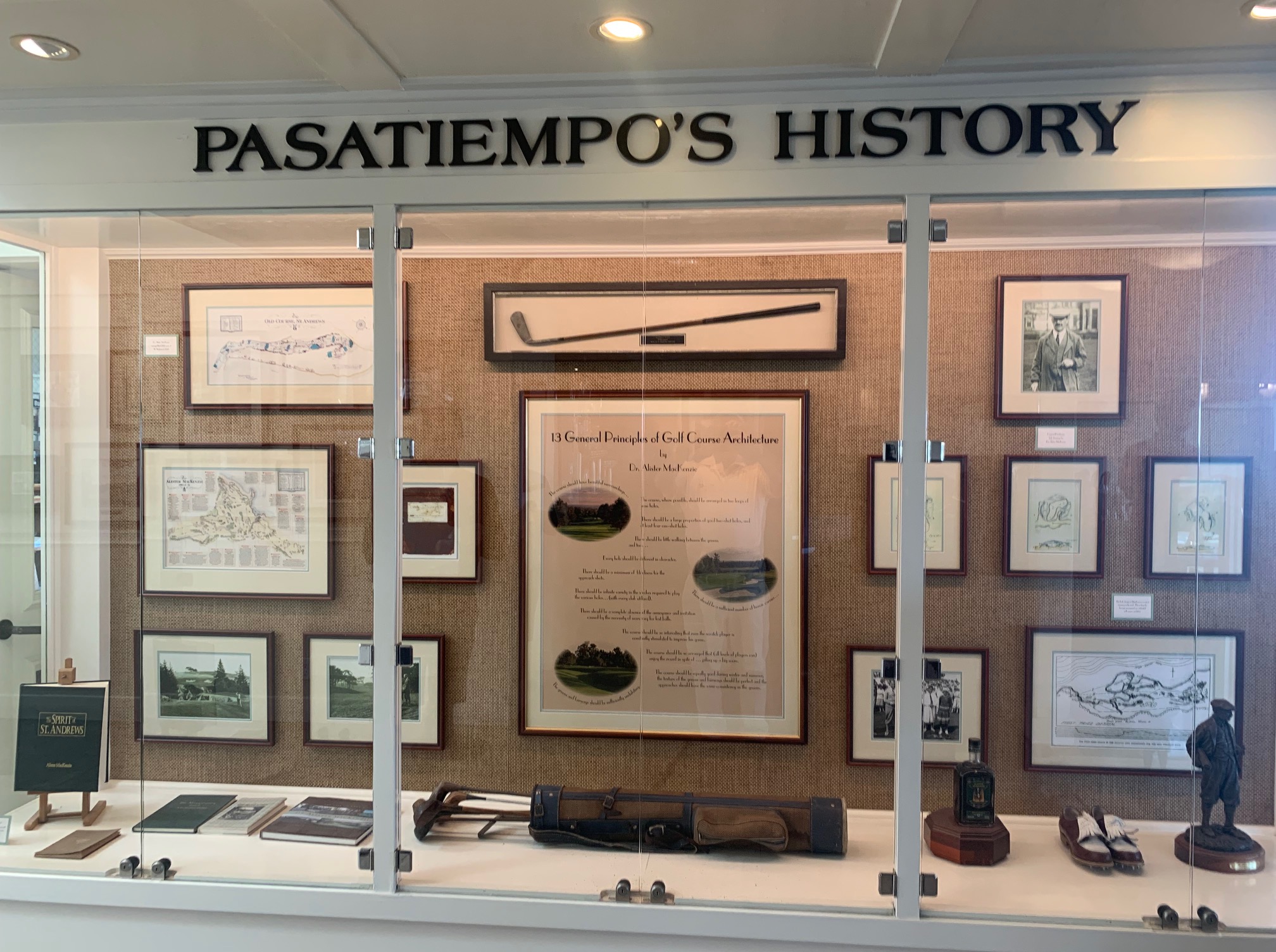
Pasi History
Plenty of history grace the walls and showcases through the clubhouse

Many of the great California courses like Riviera, Bel Aire, LACC, Pebble Beach, Cypress Point, and the Cal Club used the unique rolling terrain, prevalent arid conditions, and sandy soil to present a strategic version of golf where the movement of the ball initiated by the ground would determine success or failure in their play.  We rarely hear the use of the term barranca in relation to golf architecture outside of this region, but in many ways these deep recessions created by nature of scrub, rock, and sand-often just dry bed streams, are the unique challenge that make California golf what it is.

Western Intercollegiate Past Champions
For over 75 years they have held the Western Intercollegiate and you can see individual champions include Ken Venturi, Johnny Miller, Mark O’Meara, and Scotty Scheffler among others.

MacKenzie combined the use of barrancas with bold fairway undulations, slopy segmentation on the putting surfaces, and wildly diverse flash bunkering to make Pasatiempo the ultimate strategic test of golf.  Power and length alone are no match for careful strategic planning and shot articulation when going around this place.  Set against the stunning backdrops of the California coastal topography, the back nine presents the most varied array of holes that wed these parameters to challenge players of all caliber to be on their best game.
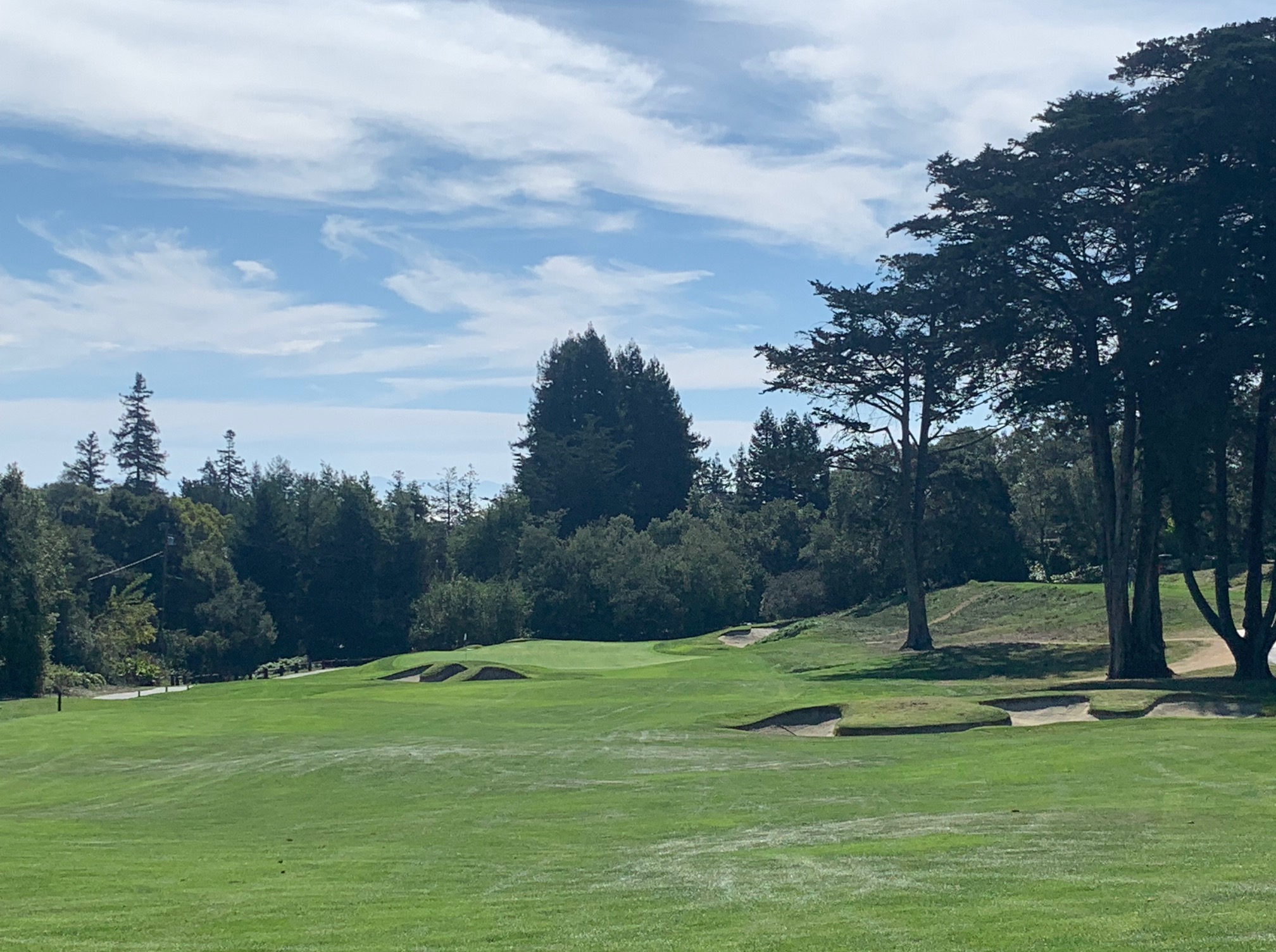
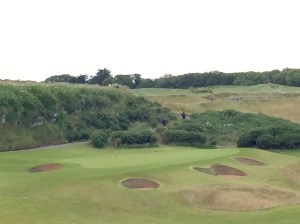
Pasa 2 Approach
You can see the segmentation in this 2nd green makes you work the approach on the ground to get into the right section for the day’s pin position

Looking down the first two holes you get the sense that position off the tee relative to the segmentation of the green propagating varied pin positions is going to matter all day.  When you see how MacKenzie works the slopes within the segmentation of the putting surface it becomes clear that it is not only approach angle that matters but use of the putting surface itself to move the ball into the most advantageous place to putt from.  Three putts are in your day, delimiting them is important to keeping the bogie monster at bay.
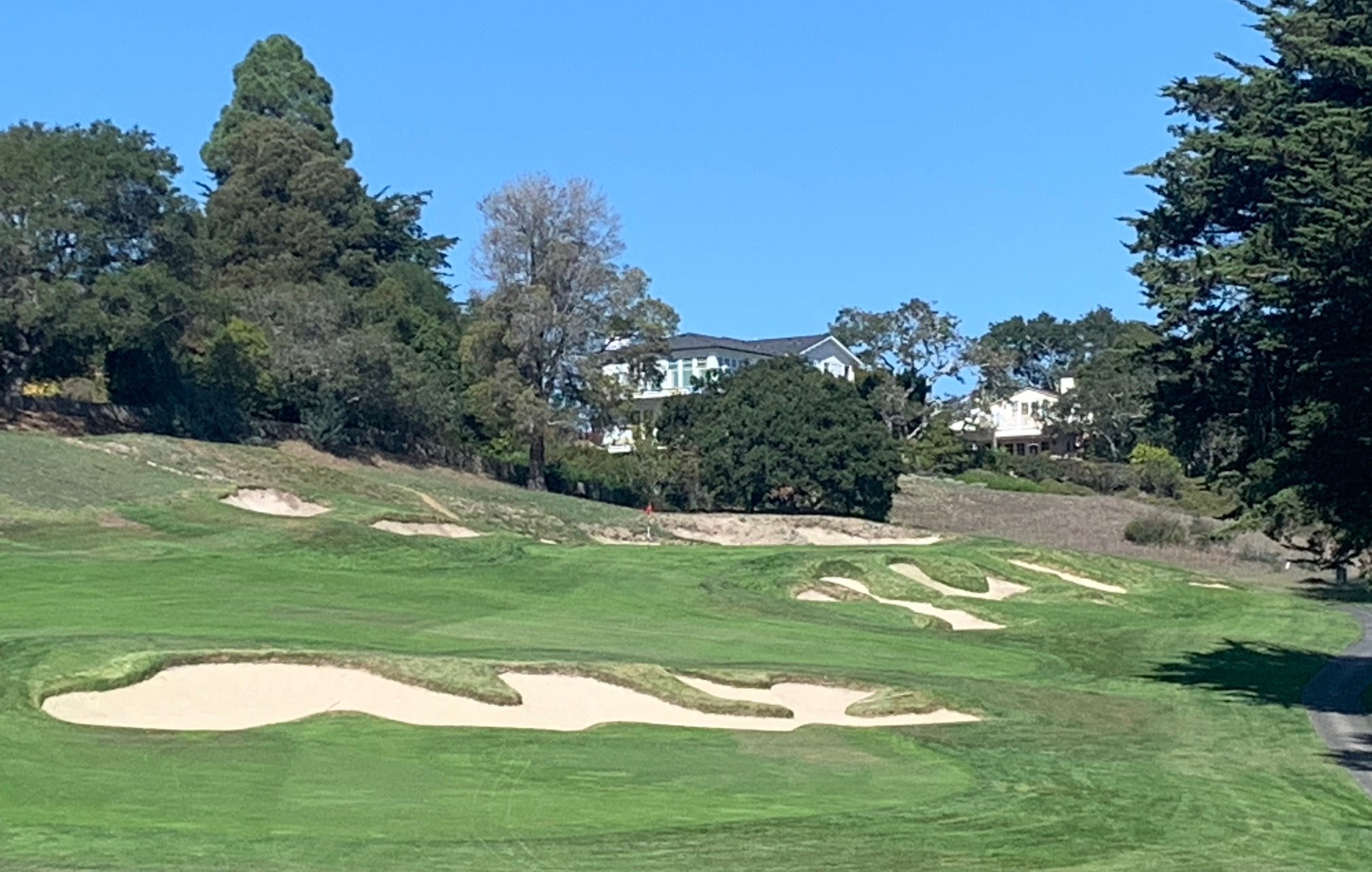
Pasa 3 Par 3
#3 is a Par 3 where your hybrid or long iron must carry the narrow entrance and a false front into a sloped green benched into the side hill

Two par threes in the next three holes that are the 2nd and 6th handicap holes tells you something about how challenging this day is going to be.  The 3rd is a long uphill shot into a precipice green complex saddled by deep bunkers on both sides.  Standing on the tee there is a enigmatic cross bunker that is 75 yards short of the green that will have you scratching your head as to why it is there.  One needs to remember this hole was created in 1929 when hickory clubs were still around and elevating a Cleek on a long par three was not given.

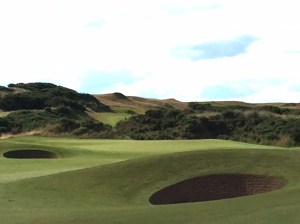
Pasa 4 Par 4
The array of bunkers off the tee and surrounding the green on #4 are emblematic of the MacKenzie style

The 5th is an even longer one-shotter then the 3rd and once again the uphill shot to the green will demand a solid club and a half more to cover the false front and bypass the massive bunker that dominates the left side approach to the green.  The green is a four leaf clover so there are many corners when they can hide the pin.
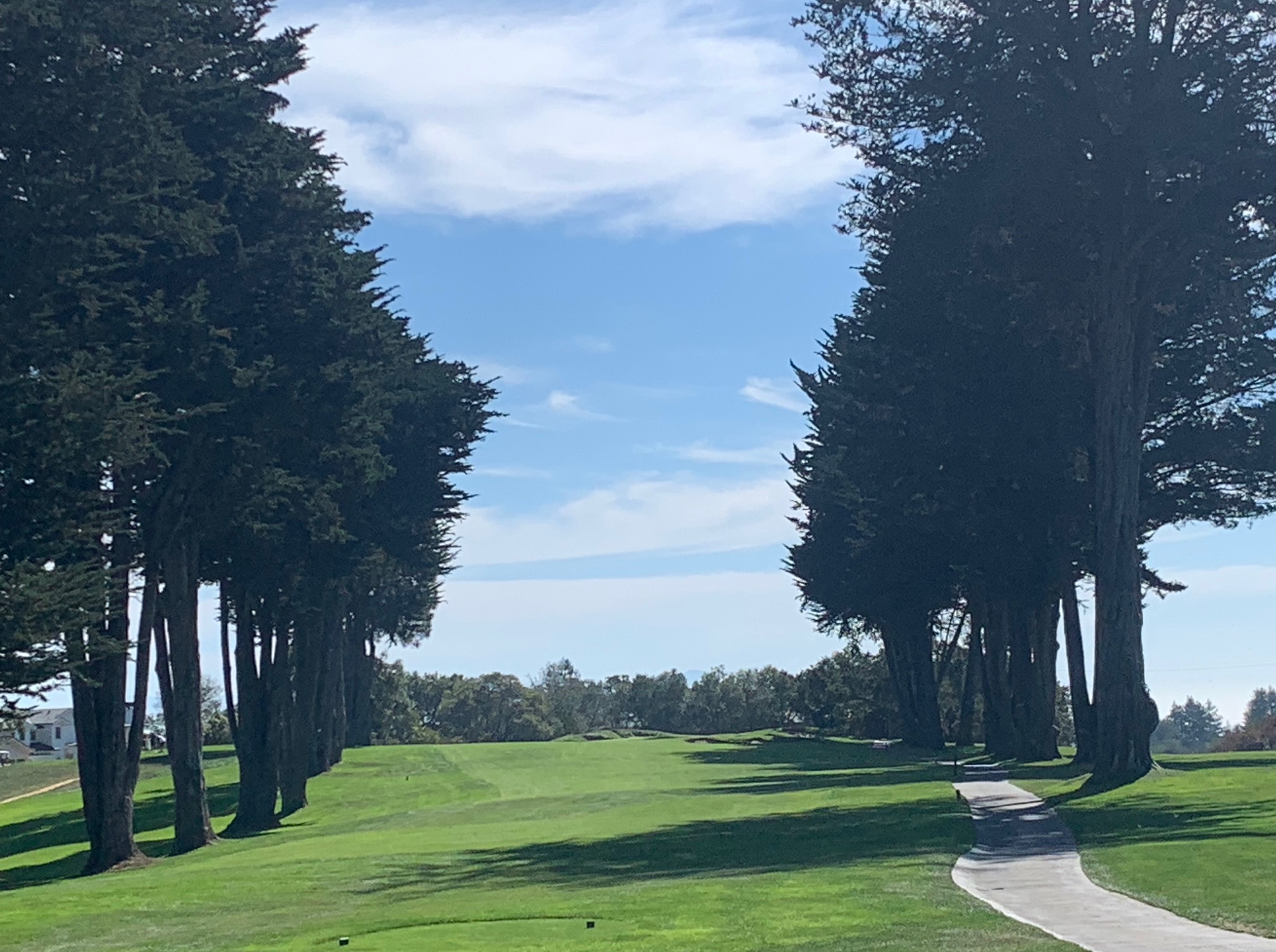
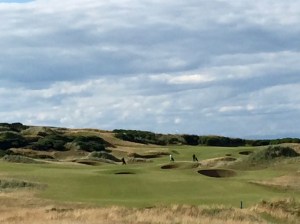
Pasa 7 Tee
Drive off the 7th has to split the uprights to negotiate this narrow landing corridor.

The 7th and 8th are two really old school holes you just would not see built today which makes them a treat.  The 7th is an appetizing uphill corridor short four which calls for a well positioned tee shot on the left side of the fairway to have a look up a narrow putting surface set on a 7 to 1 angle to the approach area.  The green is segmented with countering slopes so it takes a really articulate short club to leave a birdie putt.

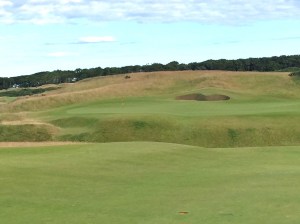
Pasa 8 Par 3
What a look down the hill at the 8th green wedged between steep slide slopes and bunkers to boot. The Par 5 9th is climbing the hill in the distance to the back of the clubhouse deck

As you step on the tee of the Par 3 8th your jaw will drop as you try to take in the parameters of the 45-yard long wildly contoured putting surface that sits at the bottom of the hill in front of you.  If the wind is blowing all bets are off picking the right wrench.  There is a line drawing of this green above the urinal in the MacKenzie men’s room in the clubhouse that depicts all the slopes and counter slopes he designed into this one.  You might wish they handed them out on the tee for reference.  Once your shot alights on the green it will work up the slope and feed toward the back left.  This makes any front pin or back right pin extremely difficult to negotiate.

As you approach the ninth tee make sure to order a sandwich from the call box for the back nine……the barrancas are coming and you will need the protein shot in short order to cope.

Undoubtedly you have played courses where the front nine and the back nine look like brothers from a different mother, like Tralee where you go from banal flat seaside links to the vertical turbulent land of trolls once you step on the 11th tee.  The stark transition here is similar but the distinguishing characteristic is not the topography itself but instead the use of nature’s singular feature,  the barrancas which were intended to capture and move surface water during heavy rains but in their dryer form provide inherent surface movement and magnetic attraction to a ball struck with insufficient intent. What makes MacKenzie’s work so unique is that he fashioned countless iterations of this design element to influence your perception of strategic choices in subtle and not so subtle ways.

Pasa 10 Par 5 Tee
Looking at the required carry off the 10th tee you realize this barranca thing is about to become real and it is going to be unrelenting

Stepping on to the 10th tee the gaping rocky gorge at your feet is actually the simplest of the three interactions you will have with the barrancas on this hole alone.  Once you drive it to the top the hill you feel the pull of the barranca well off the fairway to the left but then MacKenzie ingeniously integrates it into a cleaved array of bunkers and grass you must deal with the last sixty yards to the green.

Pasa 10 Approach
The back end of the 10th the barranca takes on a tamer appearance but the magnetic attraction to roll out is undeniable

The most in your face barranca experience of the day is on the bifurcated fairway arrangement on the shortish par 4 11th.  The rocky gorge haunts the left of the driving area forcing you to lay up at the end of the driving area just off the entrance to the steel bridge that traverses the chasm.  The hole is now truncated to the left leaving the barranca on the right as you try to carry your approach up a significant incline to a green complex set into the back part of the abyss.  Another narrow, stepped green awaits a long iron or hybrid approach earning this the 3rd handicap designation of the day.

Pasa 11 Approach
This is the harrowing look of the second shot approach to #11 that has to traverse the gaping gorge and find a safe landing spot of a steeply banked green precariously perched above the abyss

The switchback downhill par 4 that follows has the wooded barranca haunting a bad hook off the tee. From the center of the fairway the approach is into a triangular green wedged between bunkers and a fronting dry grassed shallow version of the barranca that will gather a ball with insufficient carry.  You have already experienced six different iterations of the barranca effect in just three holes.
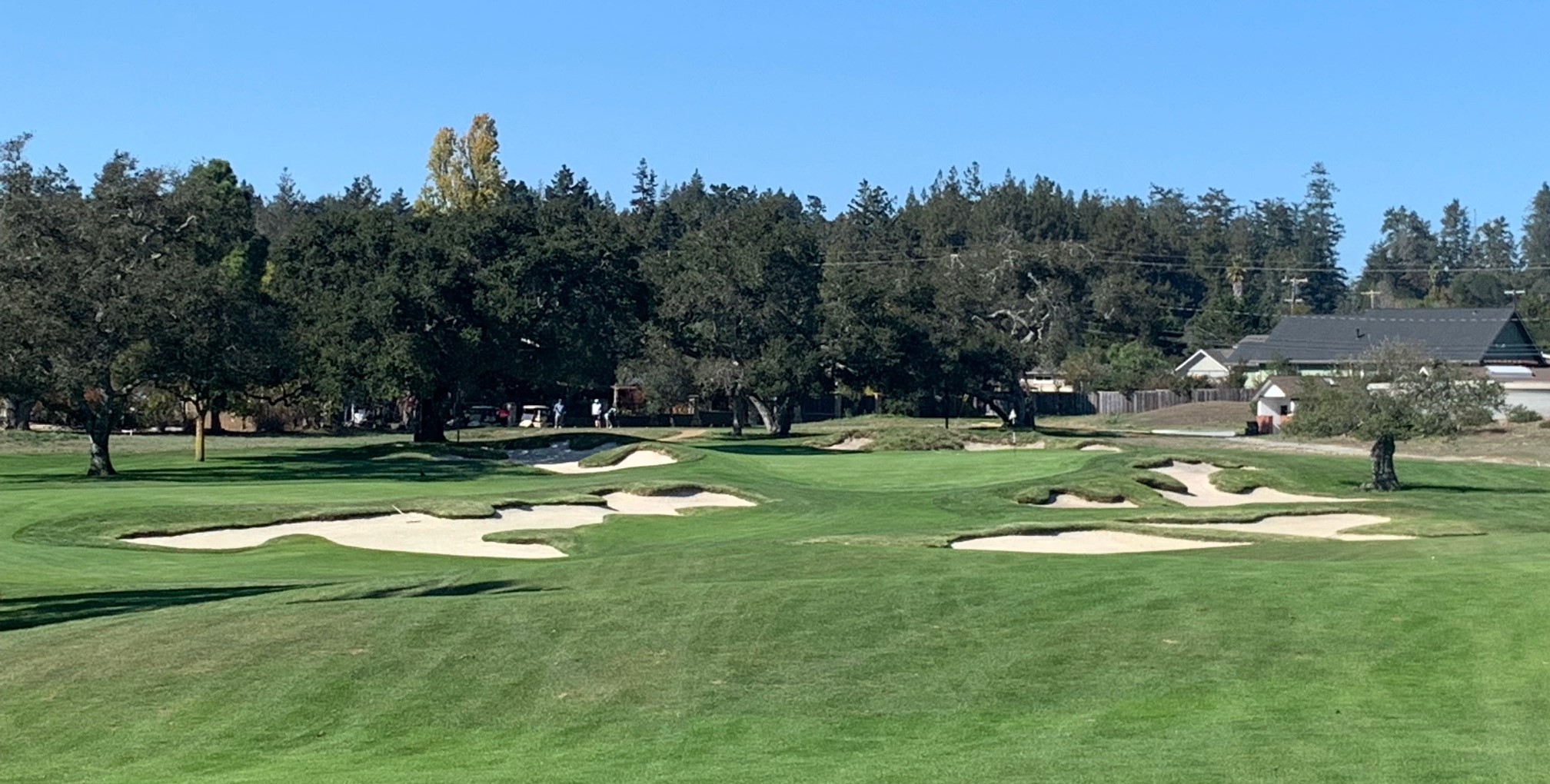
Pasa 13 Approach
The Par 5 13th is probably the tamest hole on the inward half but once again MacKenzie emphasizes the contour of the barranca by lining it with sand as the pathway to a counter sloping green surface

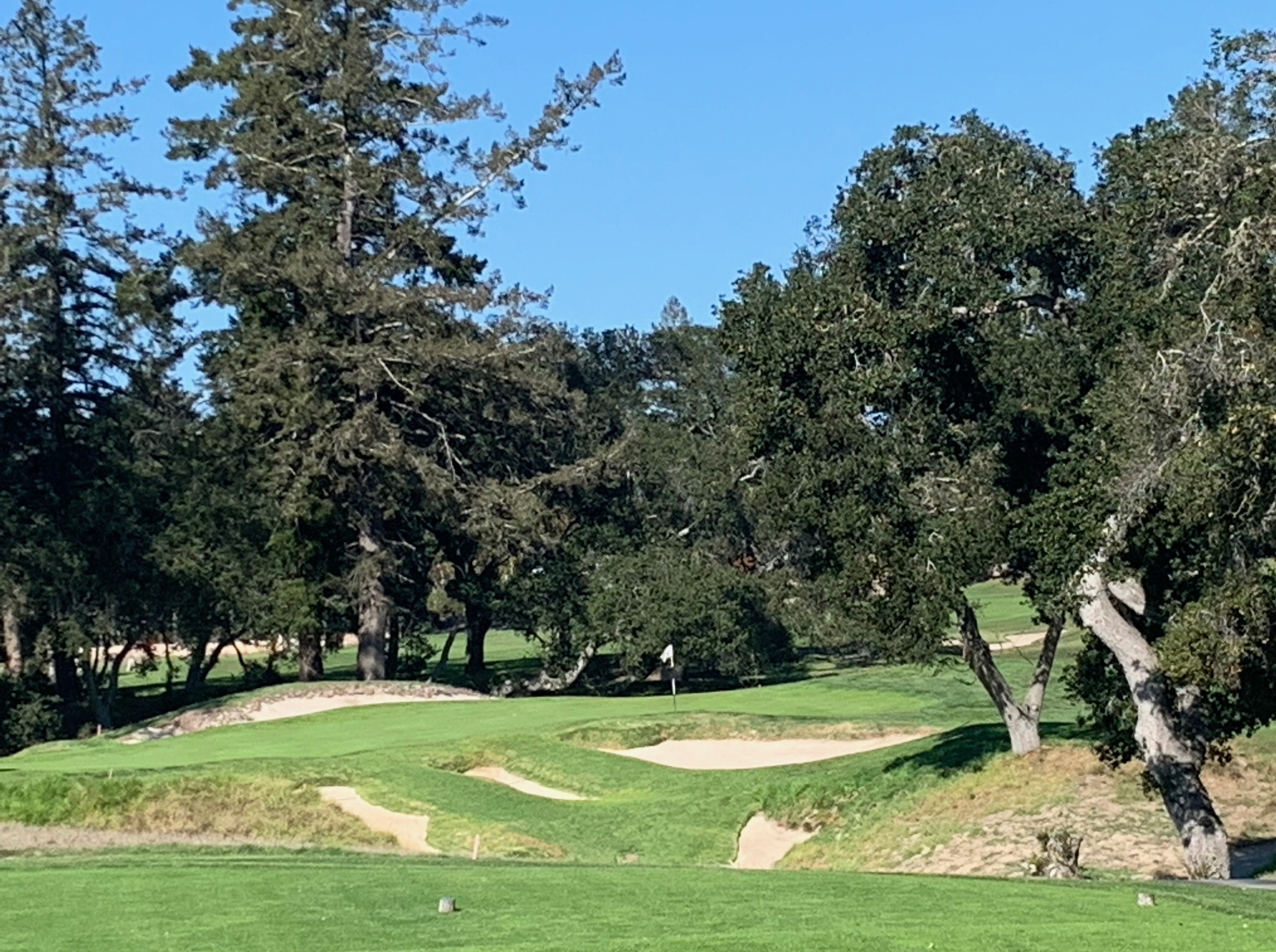
White knuckle time over the next three holes begins on the par 4 14th as MacKenzie ups the barranca effect another notch by presenting it as fairway the left half of driving area.  It is playable from down there but there is a good chance the depression is so deep you will not be able to see the flagstick from your approach position.  A drive in the right half of the fairway at about 140 yards out puts you on a flat stance but the diagonal setting of this long and narrow green means you have to carry the fronting bunkers to get to the flag.
Pasa 15 Par 3
A close look at the Par 3 15th shows a footprint very similar to the 12th at Augusta…just a barranca to traverse rather then a piece of Ray’s Creek

The short pitch 15th is a dry bed version of the 12th at Augusta.  The shallow green sits on the diagonal requiring a delicate forced carry with a series of deep bunkers and grass emanating out of the barranca.  The entire back side of the green is cordoned by a bunker that will contain a long shot but the recovery shot from there is tricky as the green slopes away.  Three here gains a shot on the field.
Pasa 16 Approach
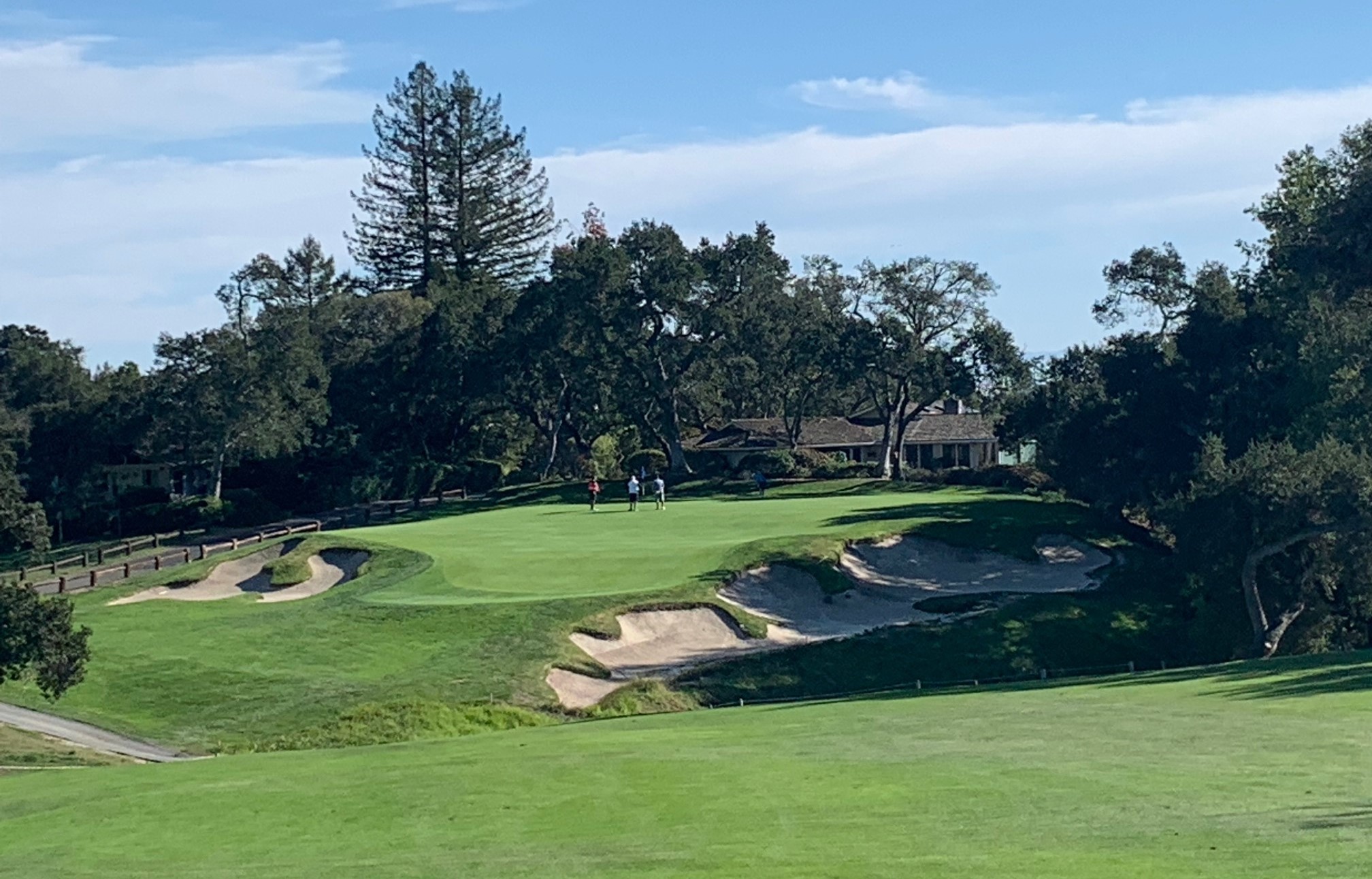
From over 150 yards out this approach into 16 is the most harrowing task of the day. Three steep tiers in this anvil shaped green with bunkers you will need a tow line to get in and out of

MacKenzie was particularly pleased with the challenge he presents on the #1 handicap hole in the next one.  You drive from a low tee up a steep hill with a large mound dominating the right side of the landing area.  The barranca flanks the driving area on the left so anything with too much draw can end up in the hazard.  The conundrum is that the best drive is at the left edge of the large mound which feeds the ball left to a flat area with a good look up the green.  This is the craziest green out of a collection of truly crazy greens in that it is a full 50 yards long with three distinct tiers, the first of which is impossible to keep your ball on.  A humongous bunker will that covers the entire right side of the green will collect any approach with a hint of wandering fade and an up and down from there is highly unlikely.  Good news is the green fans out in the second and third tier which gives a bit of wiggle room for an approach on the long side.
Pasa 18 In Reverse
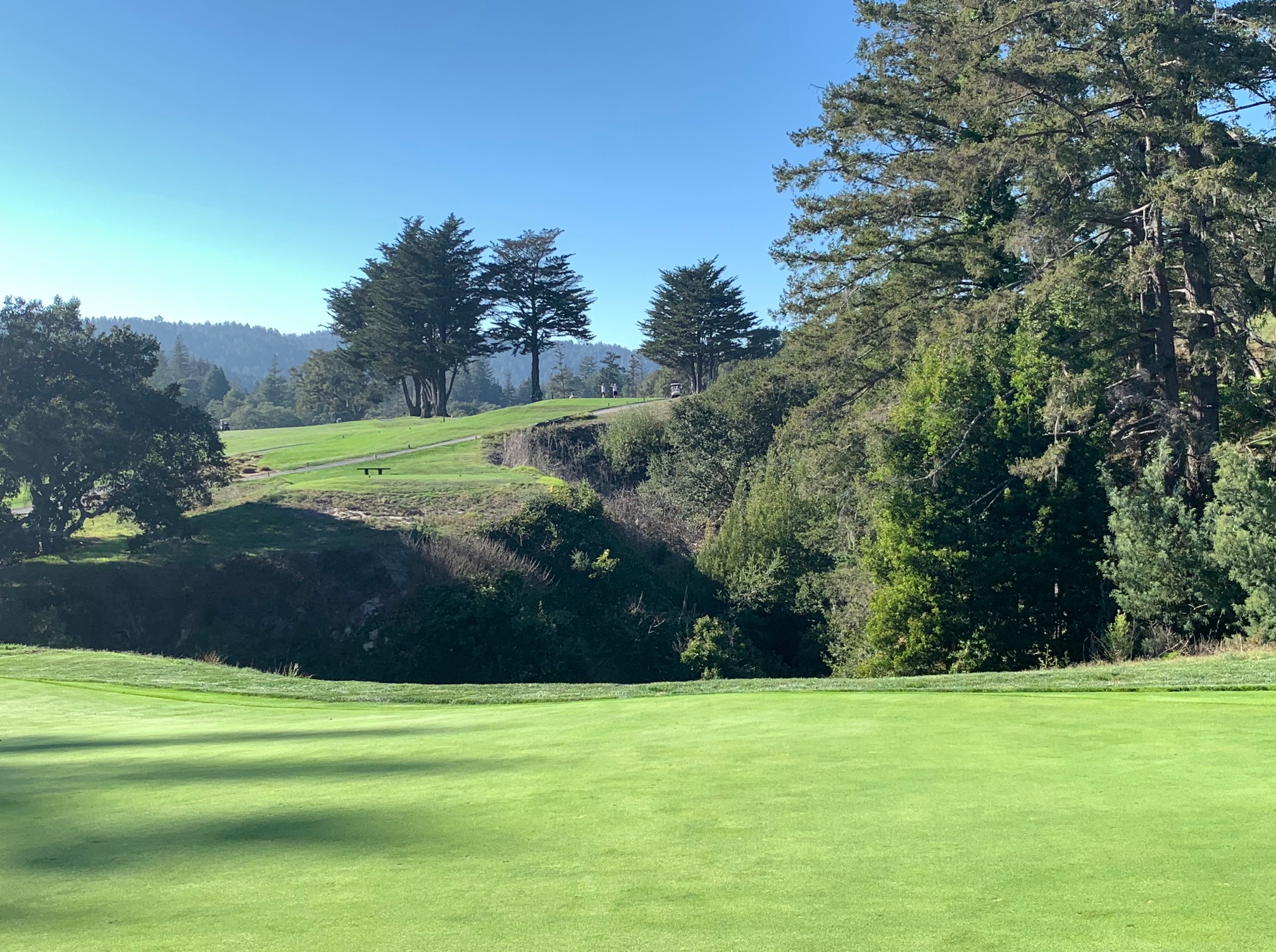
A look back up from the green on the final hole emphasizes the extreme elevation drop your ball will have to negotiate

One of the most memorable things about Pasatiempo is that it ends on a par 3 that is fully engaged with the deep gorge you had to traverse off the tee on #10.  It is no more than a short to middle iron across but the green is a three clove shape that straddles the abyss and each section has drastic ground movement that makes keeping the ball in the desired section a task.  Getting it on the green is half the battle…putting out in 3 putts or less is equally challenging.

Pasa 18 Par 3
The segmentation of the green itself makes it like three greens. There is so much back-to-front lean to the front barranca that matching speed and break is a three-putt possibility waiting to happen

A bit of an author’s disclaimer, this course is every bit as wonderful as I have described but it is in dire need of a total facelift.  Tom Doak and Jim Urbina did a restoration of the course in 2007 and brought back a number of the MacKenzie parameters that had been dulled over the years.  Urbina will be back starting in the Spring of 2023 to redo all the greens, bunkers, and fairways in an effort to bring this course’s condition and related golf amenities in line with it’s historical expectation.

Pasatiempo Logo

One last thought is that the Pasatiempo logo may be the coolest golf  logo ever…..it looks fabulous on everything.  Make sure to give the golf shop a visit and find something cool to take home to savor your Pasa memories.

Santa Cruz, California

Architect:  Alister MacKenzie (1929) and Tom Doak/Jim Urbina (2007/2023)

Par     Rating     Slope   Yardage

Gold                 70        72.5        141       6495

White               70        70.8        134       6093

White/Green    72        69.5        133       5780

Green               72        68.5        132       5595

Hollins              72        67.0        118       4438

If you would like a printable PDF of this posting including yardage book quality hole-by-hole descriptions of how to play the course click the moegolf logo below.


California Golf Club

Cal Club Logo

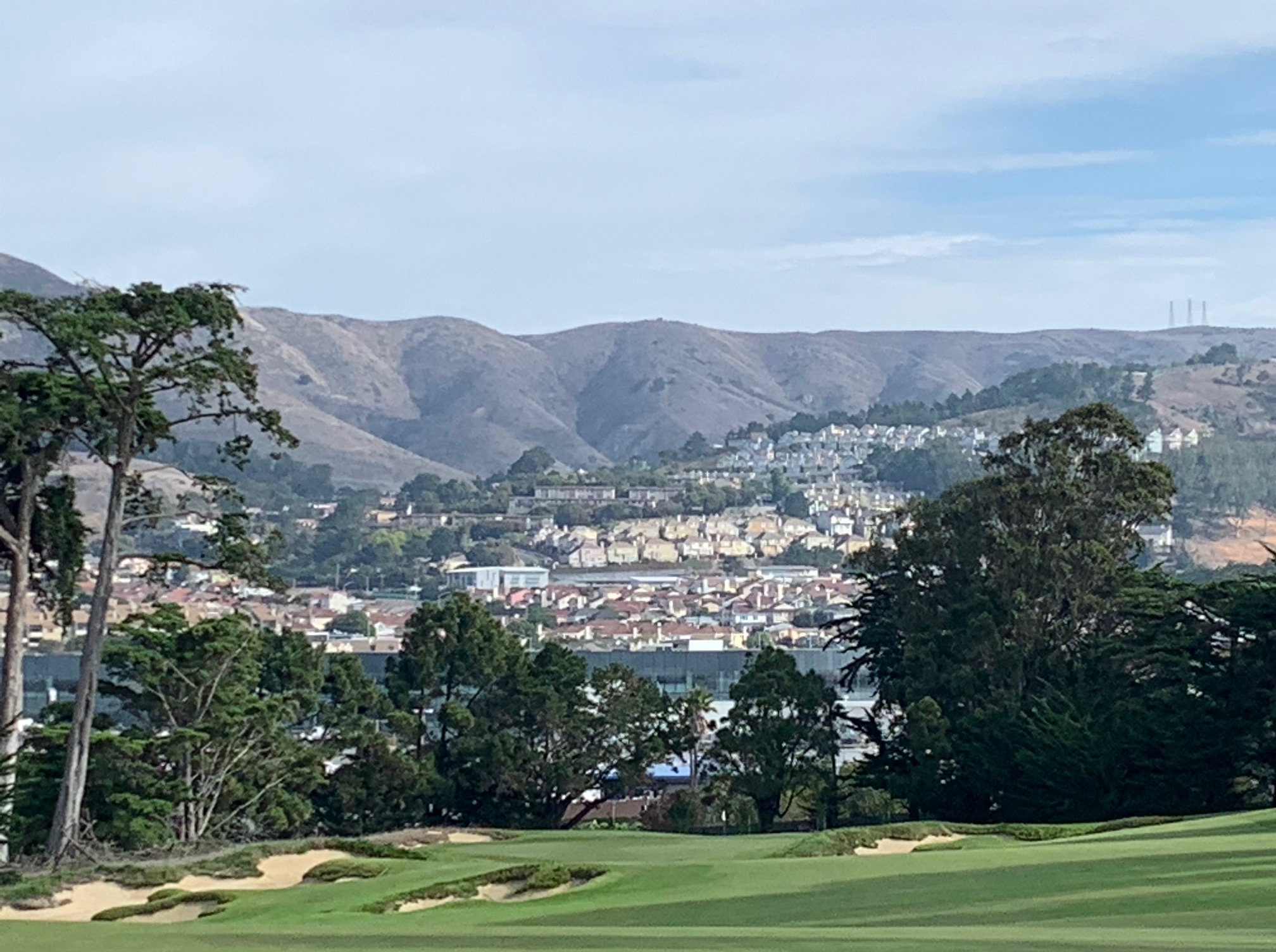
The Golden Age of Golf Architecture left it’s imprint in San Francisco in the 1920’s and one of it’s finest contributions was the California Golf Club.  The Cal Club is located at the southern end of the city in the hilly topography at the foot of San Bruno Mountain State Park.  From the many high vistas throughout the property you can see the splendor of the city set against the mountain backdrop.

CC 1 Green
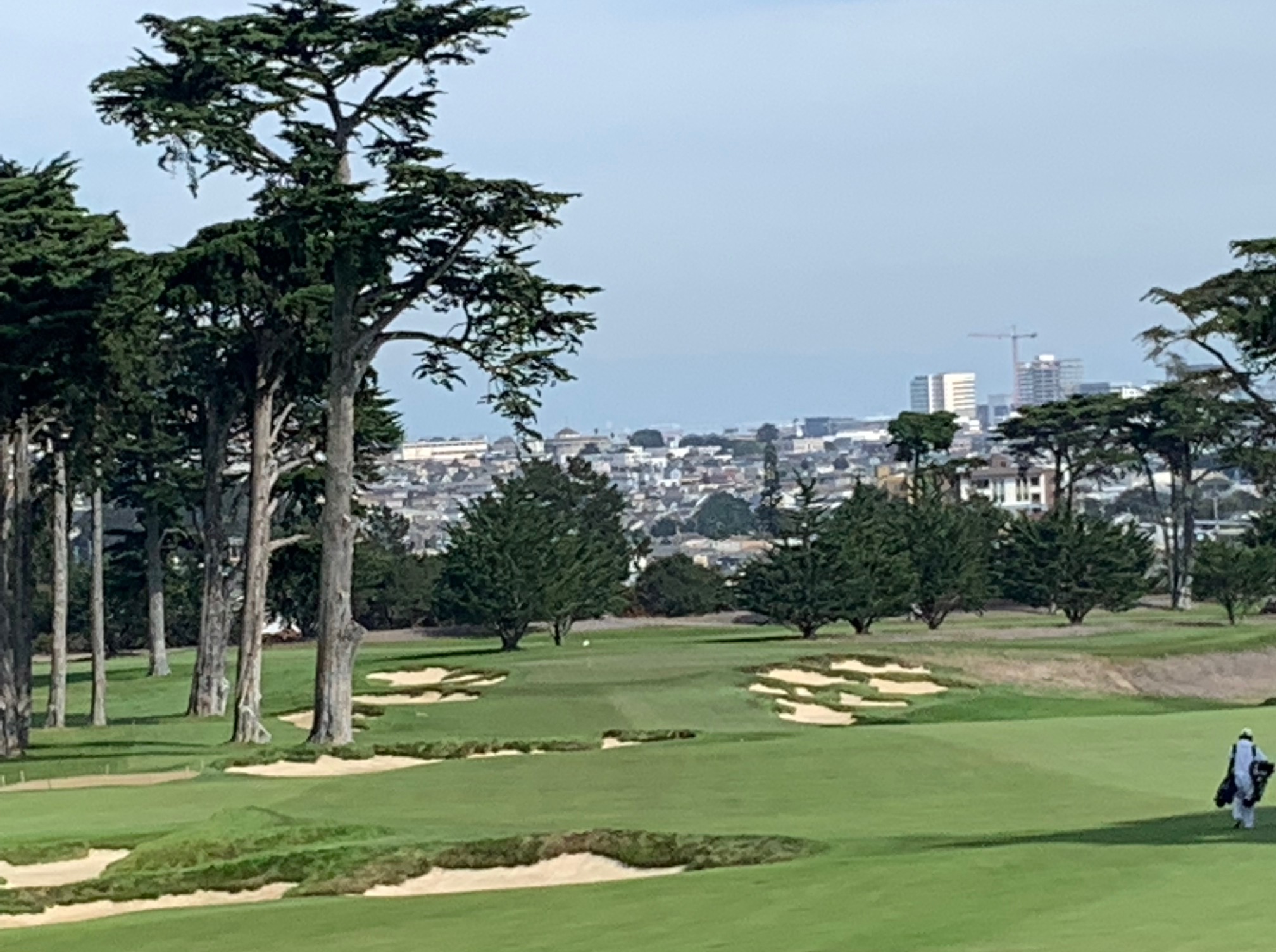
The approach view of the first green juxtaposes the green complex to the near in city and the mountain backdrop behind

As we see on many of these layouts in California the early architects used the movement of the ground coupled with clever routing and imaginative green complexes to present challenging and entertaining golf with virtually no water hazards or forced carries.

CC 14 Par 4
Locke routed the wide open Par 4 14th to follow the flow of the land…Macon created the landing areas and the green complex….MacKenzie added elaborate bunkering throughout to define the strategic alternative off the tee and into the green.

The original design was actually the compilation of the work of three distinct architects over a three-year period.  Scot Willie Locke, who later designed Lake Merced, was the first to the plate in 1924 and is responsible for the design of the overall routing.  Before the construction began they replaced him with an Irishman, A. Vernon Macon, who built the tees, green complexes, and original bunkering.

CC 6 Par 3
The 6th is an example of a bold Macon’s green complex design.. With fall offs front, left, and back it is hard to keep a mid-iron approach on the putting surface. Deep face bunkering can punish a timid approach shot.

Macon designed the green complexes with bold contours that caught the attention of the golfing community when it opened in 1926.  The fairway bunkering was left for later on purpose, so the architect could analyze from actual play the best positioning based on the divot patterns left by players.

In 1927 the task for creating the fairway bunkering was given out to a third architect, a young Alister MacKenzie, who had recently finished the 9 hole track at the Meadow Club north of San Francisco.  MacKenzie redid the 10th and 18th green, all the greenside bunkers, as well as adding the fairway bunkers.  His flair for the dramatic took this track to a whole new level in the minds of the golfing public.

CC 5 Par 4
This 5th hole would feel right at home at Pine Valley. At 300ish yards a big bopper is tempted to go for the green but the green side bunkers are punishing and can turn a birdie opportunity into a bogie in a heartbeat.

By 1960 the course was in dire need of a attention due to the state’s rerouting of a road adjacent to the property.   The club hired the biggest gun of the times, Robert Trent Jones Sr. to do the update.  As was his habit when approaching renovation of U.S. Open Course of the era, Jones could not resist putting his entire footprint on the course.  He re-routed holes, changed things dramatically and pretty much redefined the character of the Cal Club.

In 2005 the course was suffering from major maintenance issues due to turf disease and inappropriate grasses so they solicited proposals for a complete shutdown and renovation of the course.  Kyle Phillips submitted a bold proposal to undo the previous rerouting by relocating the practice area and creating new holes on the front nine and was chosen to do the job. The results supported that choice.

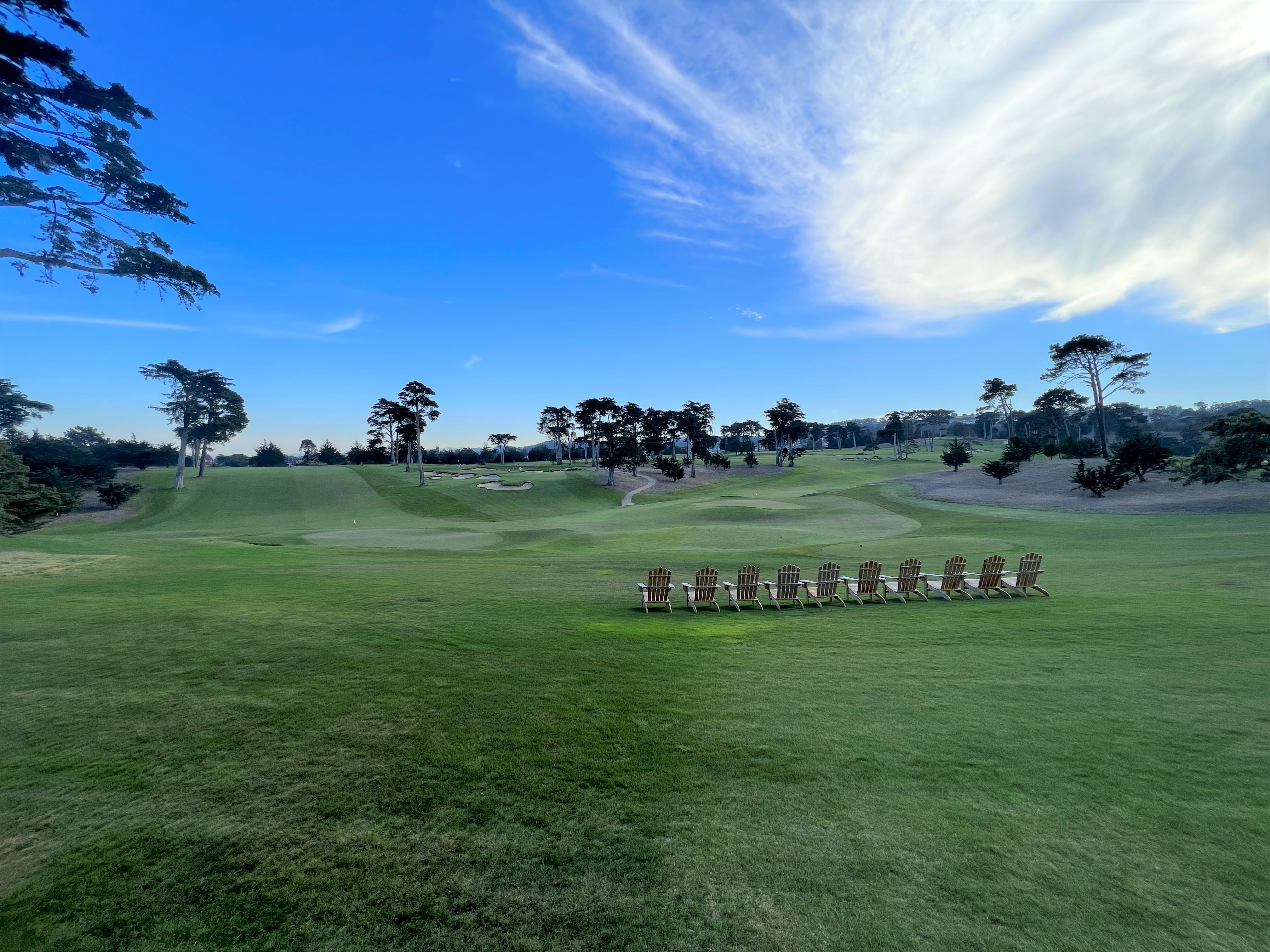
Cal Club Long View

One of the base principles of Phillip’s renovation was to add about 6 inches of sand across the entire layout-this improved the drainage and facilitated the introduction of fescue to replace the rye and poa anna in the fairways and eradicate the poa from the greens.  Kyle undid the mess Trent Jones had done to the front nine by introducing three new holes and, at the same time, went back to aerial images of the course to reclaim many of the parameters and features MacKenzie had put in the original work.

CC 3 Par 4
This downhill dogleg 3rd was one of Kyle Phillip’s old style new holes that seamlessly fits into the character of this age old design. This original bunkering mimics the detail of MacKenzie’s work.

He made sure that width was king, the rough was not significant reducing the search for balls, and let the strategic MacKenzie bunker positioning steal the show. What emerged was turf that would support hard and fast playing conditions to force the players to respect the topography as a strategic element of play.  The presentation of fairway width, no rough to speak of, complimented by generous bunkering in the green complexes puts the premium of positioning on every hole.

CC 8 Par 3
On the downhill Par 3 8th begs for a bit of a soft draw…they added a barely visible kicker mound front right that will propel an approach onto the center of the green following the right-to-left movement of the ground

In reading the Hole-By-Hole Analysis below you will see that Phillips gave them a seamless combination of the outward and inward nines that once again emphasized the design thinking of the Golden Age.

CC 18 Par 4 2
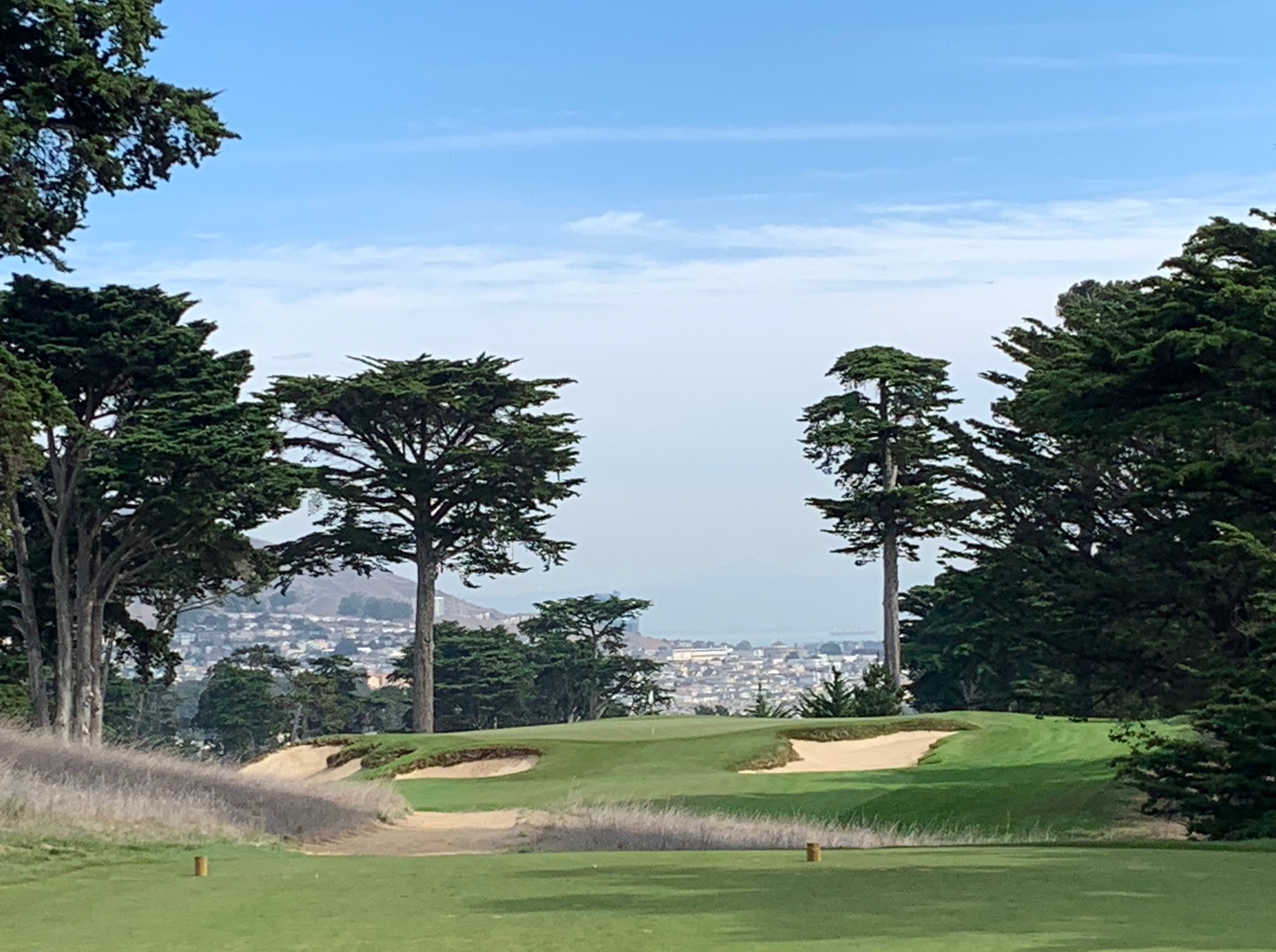
Looking down from the top of the hill at MacKenzie’s 18th green surrounded by sprawling bunkers wedged into the hill under the clubhouse is testimony to their choice of Kyle Phillips to bring this amazing track back to full grandeur.

San Francisco, California

Architect: Willie Lock, A. Vernon Macon, Alister MacKenzie (1927)

Kyle Phillips Restoration (2007)

Par       Rating    Slope   Yardage

Venturi             72        74.6        139       7215

Back                72        72.7        135       6794

Middle             72        70.5        130       6293

Forward           72        66.5        122       5401

If you would like a printable PDF of this posting including yardage book quality hole-by-hole descriptions of how to play the course click the moegolf logo below.
Whistling Straits Course-Flyover

Whistling Straits LogoWith Whistling Straits playing host to the Ryder Cup this week, Andy Johnson of The Fried Egg has dispatched his drone to put together a timely video exposition of the course and paired it with his thoughtful and knowledgeable analysis of how the Pete and Alice Dye’s architecture will provide strategic challenges in this match play competition.

There are two things that are startling about The Straits. First it is essentially a links style course in the middle of America and second, everything you see that makes this a links style course, except for the ocean sized Lake Michigan over your shoulder, was manufactured by man (and woman).

Besides the engineering feat of importing and placing a bazillion truckloads of dirt from Indiana to sculpt the land, they had to conceive of a routing to expose as many of the holes as possible to the lake winds to create the real look and feel of links golf in Wisconsin.

As Andy points out, it is a figure eight routing with the front nine going south along the lake shore and then looping back upon itself to catch more shoreline on the way back in. The back side does the same thing going north along the shoreline and looping back for more shore on the way back to the clubhouse. This puts 8 of the 18 holes with direct interface to the lake and another six within eye view. The influence of the wind off the lake can be profound and since the holes go in both directions on both sides you rarely get but a couple of holes in a row with the same wind effect.

Seventh Hole Par 3 green presents pure intimidation-especially the right pin

The par threes on this course are all stunners-forced carries over huge waste areas to precipice greens with the backdrop of the lake behind. This lack of topological backdrop can make frame of reference of the shots hard to discern. The wind influence on the three pars is at it’s max because they are the most exposed holes on the course.

The harsh reality of Number 17 will challenge the world’s best players

Andy goes through the full Dye collection and from his analysis you will have a much better appreciation of how these pros will negotiate their way around this unique layout under the intense competitive heat that only a Ryder Cup can provide.

Set aside ten minutes to watch this on a PC screen so you can truly appreciate the artistry of this video and it’s subject as well.

The Fried Egg Podcasts (2021)

(Click to see Andy Johnson’s video analysis of Whistling Straits)

We-Ko-Pa Golf Club-Saguaro Course

In my experience when you venture out to play a Coore-Crenshaw course you are not likely to be bowled over by the dramatics of the design, rather you are going to be nudged and tugged by the subtlety of the presentation. Guys like this from what is now coined the “Minimalist School” impress you with their eyes not their shovels. It is the composition of the holes, what they saw in the ground and chose to draw out and emphasize, not manufactured features to stun your senses and distract your attention from the real task at hand.

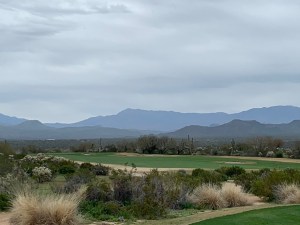
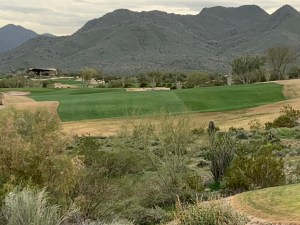
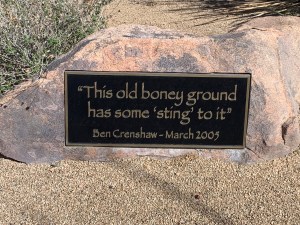
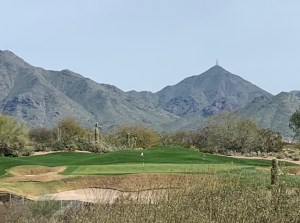
The Saguaro Course at We-Ko-Pa is about flow and feel and how it engages your golf decision making while allowing you to appreciate the marvelous setting within which it lies. Driving up to this location from the flats of Scottsdale you realize that you are engaging the mountains not just seeing them as a backdrop canvas. Taking in the surroundings as you pull up to the clubhouse you sense that the topography will have influence on how the ball responds once on the ground, the minimalists will make sure of that, and so your strategic choices will require proper weight to consequence of one position or one route over another in playing each hole. As Ben said, “This old boney ground has some ‘sting’ to it” and they found it without having to produce a swarm to prove it.

The approach to the first melds a dry bed creek into the challenge

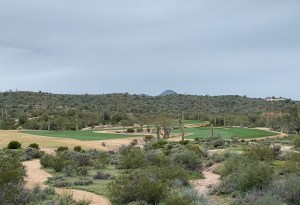
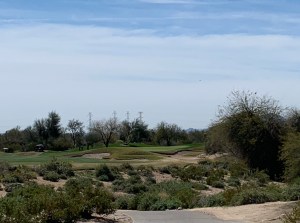
The width of the long Par 4 opening hole sets a tone for the day-you think you can hit it just about anywhere and have a look at the green. Yet as you can read in the hole-by-hole detail in the link below the shape of your tee ball can determine how to get up the fairway and give yourself the best approach line to a perched green complex still a ways away. Oh, did I mention they drew in a dry creek bed traversing the fairway which may put some doubt in your mind whether you can reach at all if you don’t hit the drive with enough intent.

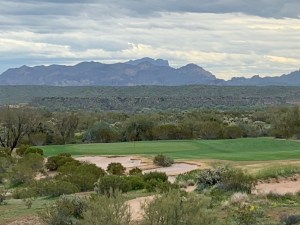
The full flavor of Saguaro is revealed on the second tee-you figure out where to hit it!

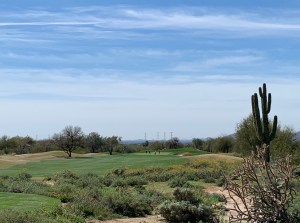
Step on the tee of the quasi-drivable second and it is full desert static with scrub to carry off the tee and sand and more wilderness encroaching your playing path. Throw in a dramatic backdrop of an entire mountain range in the near distance and it becomes pretty hard just to sort out your choices for proper play. The course they present defies playing script or sequential rhythm. Each hole presents choices and requires your reaction. How you choose to react on one challenge drastically changes the next one.

A bit of superstition imposed upon the view of the Par 4 6th.

As you get into the middle of the outward half the topography gets more severe and the ground influence on your shot making grows accordingly. Now you feel the mountains start to hover above the course rather than just frame the target. The sixth is a good example of this, you drive from teeing pods set in the hill over a high ridge in the fairway that completely masks the landing area. Standing next to your tee ball in the fairway the influence of the promontory peak of Superstition Mountain just beyond the green complex is firmly in your mind before hitting the approach or making your first putt. The coolest part about this minimalist thing is that everything matters. If it comes into your minds eye then it is worth considering.

The roller coast ride on the Par 5 8th ends in this station
A fine sandwich with kettle chips awaits behind the 9th green.

Coming off the long and serpentine Par 5 eighth, the front side finishes with a short uphill pitch into a green with the playing width of a two-lane country road. The contrast in shots required in a two-hole stretch is not lost on those with proper awareness. Don’t miss the tuna or turkey sandwich with the home made kettle chips at the turn. It will refill the tank and make the challenges that come next all the more manageable.

The Par 3 15th, at well over 200 yards, adds to the challenge of the next stretch.

With only one five par on the inward half, three Par 4’s over 400 yards, and a one-shotter well over 200 yards the scoring opportunities will be few and far between. The stretch of big holes from twelve to fifteen give this side it’s distinct character.

The drive area on the 13th looks confined but it is really quite generous but precision is required to set up an aggressive approach to a minimalist green complex.

The back-to-back long Par 4’s at twelve and thirteen give you wide scale driving areas with greens with minimal bunker coverage. Yet both require precise driving to get the best angle to manage the long approach beyond the single greenside bunker. Good news is they provided wide expanses of short grass around these greens so recovery with a crafty short game can still keep par in play.

For architecture aficionados their tribute to the Lido Hole will feel quite familiar.

The closest thing to design shock is the view off the tee on Bill and Ben’s risk-and-reward testimony to the Lido Hole on the long Par 5 fourteenth. You are offered two different fairways to which to impart your drive-the narrow one on the right shortens the hole considerably so for the long baller this will be tempting. The more sensible play is a wide berth on the left fairway which will still leave you with two kitchy plays as the hole doglegs sharply to the right. Even a well place lay-up into the narrowing area at about 100 yards out leaves a very challenging pitch into a long and narrow putting surface perched in a corner to the right. Your plays on this hole will revisit you in bed at night between sheep counts.

The view down the 17th has a calming effect that you can certainly use at this point in the round.

As you wend your way back to the house the short sixteenth will tempt your boldness off the tee but the best scores here are likely with a wedge and a putt. Seventeen is a serene tumbling affair, very soothing to the eye after all the mishugas of the last five holes. The home hole is a monstrously long Par 4 with a full desert buffet yet kindly it somehow plays much shorter and less harrowing than it appears from the tee.

My guess is you will agree agree with Ben’s sentiment when you are done.

As you settle in for an Arnold Palmer in the clubhouse bar after play you are going to be struck by how fatigued you are from the day’s golf decisions. There were no single challenges that seemed overwhelming but the relentless requirement to think two shots ahead has a way of wearing on you. Coore and Crenshaw’s design approach got this one right-they made a bold statement without raising their voices.

Fountain Hills, Arizona

Architects: Bill Coore-Ben Crenshaw ( 2006)

Par   Rating   Slope   Yardage

Saguaro     71       72       137       6966

Purple        71      70.2     132       6603

White         71      68.8     125       6252

Comp. (L)  71      72.0     128       5786

If you would like a printable PDF of this posting including yardage book quality hole-by-hole descriptions of how to play the course click the moegolf logo below.
Grayhawk Golf Club-Talon Course

Grayhawk Golf Club has been the home many prestigious events including the PGA’s Waste Management Open and the Anderson Consulting Match Play and will be the site of the Men’s and Women’s NCAA Championships from 2020 through 2022.  The Raptor and the Talon Courses, laid out in the flat terrain of the Sonoran Desert with the stunning backdrop of the McDowell Mountains in the distance, are the epitome of desert golf in the American Southwest.

The McDowell Mountains stand in stark contrast to the flat contour of the Sonoran Desert but it is breathtaking to behold.

The Talon Course, a Gary Panks/David Graham creation from the 1990’s, gives you are particular narrow driving theater on almost every hole.  Many drives are over sand and scrub which mask the landing area of your tee balls and the adjacent desert in it’s natural state obviates the need for rough at all.  Get yourself a yardage book in the golf shop, you are going to need some corroborating visuals to find you way around here.  (You can get a printable PDF of the hole-by-hole descriptions through the link at the end of this posting).

The first hole, named in memory of LPGA Pro Heather Farr, shows the demanding driving required right out of the gate.
“Bogle”, the short Par 4 2nd hole, gives you the full array of desert scrub, sand, and trees.

To me this makes for corridor golf so you must control your driving and approach lines to stay out of the snake and scorpion retreats.  The tightness of the track and the unrelenting penalty of the desert’s encroachment make a good medal score hard to come by. Make sure you set up a match with your buds if you want to enjoy this golf experience.

The “Three Sisters” bunkers that give the Par 5 3rd hole it’s name a feature you don’t want to contend with.
“Sentinel”, the first of the three pars, uses an ocean of desert sand to create a forced carry.

The back nine in particular wends around and through a series of canyons making for unexpected elevation changes and severe drop-offs into sand wilderness for wayward shots.  The sprawling fairway and greenside bunkering works well with the desert scrub helping to define the strategic lines of the holes.  These bunkers present some intimidating challenges but with careful planning it is possible to negotiate your way about relatively unfettered.  The bunkers are deep with ash tray sand but very playable to a normal escape if you avoid the bad thoughts.

The short 13th is called “Heaven or Hell”….you get to choose which after you see the result of the dicey tee shot you chose to play.

Green complexes throughout the course are very varied and make for some significant tactical choices on approach lines.  Many of them are large, multi-tiered surfaces set in a dell depression for effect.   There are considerable short grass scapes adjacent to these putting surfaces so your pitch and run save game will get a good workout today.  The scale of the green complexes puts an onus on making approaches into the flag section of the day or you will be constantly battling to avoid the three putts.

The “Deception” on the Par 4 16th is enhanced by the ethereal backdrop of the mountains.

Talon’s most memorable feature is the combination of the natural desert floral set against the backdrop of the towering grey mountains in the distance.  Often times through the round you will find it hard to concentrate on a target dwarfed by the scale of the back drop.  Bring your camera for the Kodak moments-some of your most lasting memories of the day will be in those landscapes.

Not all the flora is happy about the presence of golfers…this seems like it is giving them the bird.

Scottsdale, Arizona

Architects:  Gary Panks/David Graham   ( 1994)

Par     Rating  Slope  Yardage

Talon               72        73.3     146      6973

Palo Verde      72        70.8     134      6430

Terra Cotta      72        68.3     122      5867

Heather           72        69.3     118      5143

If you would like a printable PDF of this posting including yardage book quality hole-by-hole descriptions of how to play the course click the moegolf logo below.
Click if you want to read more about Phil’s Grill at the Grayhawk Golf Club Resort

North Berwick Golf Club

When knowledgeable people discuss the true gems of links golf in the British Isles North Berwick always gets hearty mention.  Much like Cruden Bay or Prestwick it is the hamish atmosphere at Berwick as much as the course itself that shape people’s opinion of the place.  This one has real history,  A.J. Balfour, a prominent member of parliament, was one of the original patrons in the late 1800s.  The place was frequented by prime ministers, members of parliament, church elders, military brass, and eminent educators from surrounding universities.

Ben Sayers was the pro at that time and represented the club in the Open Championship for thirty years starting in 1884-he was runner up in the 1888 championship.  Sayers was well known as a club maker and teacher and his students included members of the Royal Family. In many ways he was responsible for the growth of the fame of North Berwick in the day.

From the 18th tee you can see the quaint club house and the town nestled behind it

As with so many links in Scotland North Berwick is an endemic piece of the small town from which it gets it’s name.  The distinguished old club house sits wedged between the edge of town and the first tee box.  Make sure to take the time to poke around the building, it is full of amazing memorabilia and a real sense of history.

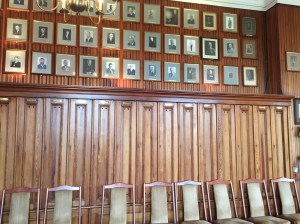
The folkloric wood paneled board room doubles as the members locker room.

The paneled board room in particular is a real period piece-walls enamored with photos and lists of club captains, men’s and ladies past champions, and wood members lockers with really famous names adorning them blend into the décor.  You can just smell the history of this place in the room.

Click on the video below that captures the visual flavor of this links gem.

The course has no designated architect, but much of what we see today was the result of the efforts of David Strath, the greens keeper in 1876 who took the original 9 and stretched it to a full length 18-hole links layout.

The influence of the Firth of Forth becomes quite evident as early as the 2nd tee box.  The criss-cross in and out routing brings the sea winds into play on both sides

The course sits close to sea level of the Firth of Forth and offers an unpredictable routing plan with some very unusual design features that include the full links repertoire of blind shots, long grass, burns, sod wall bunkers, and even some stone walls.  An out-and-back arrangement includes hole sequences that criss-cross in each nine, so it presents seaside holes on both sides and full wind influence throughout.  Needless to say trajectory control and using the ground as your friend is necessary if you are going to win your match around these dodgy old links holes.

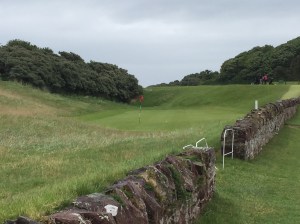
The look off the tee on “Pit” the short Par 4 13th. You can just make out the putting surface tucked beyond the traps on the left and the stone knee wall that crosses the fairway.
This is the ultimate target on #13 wedged between the wall and the dune on the left.  It takes the utmost dexterity to play this approach successfully and set up a par opportuntiy.

As you can read in the link below to the Hole-By-Hole Analysis there are a number of unique holes on this links.  The famous Redan Par 3 is #15 and it is probably the most copied architectural design for a short hole in history.  There are holes where stone walls that separate farm plots in Scotland are an intrinsic part of the design making for an equestrian challenge on some lay-up and approach shots.  The most memorable of these is the short, quasi-drivable Par 4 13th where a three-foot knee wall cordons off the green complex a mere pace from the putting surface.  Needless to say there are no pitch and run approaches into this one.

Blind shots are not uncommon on links courses. Here is the view from the driving area on “Perfection” the Par 4 14th hole. The green complex sits over the hill beyond the two bunkers.
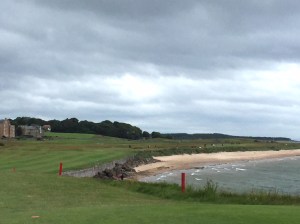
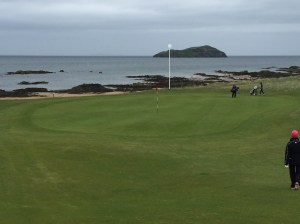
The 14th green that you could not see feeds off the bottom of the hill and sits between low mounds on the right and the beach on the left.  That is Fidra Rock just beyond the aiming pole.

When you ask people who have played the famous courses like Royal Dornoch, The Old Course, or Carnoustie what there favorite track was in Scotland it is surprising how often North Berwick is at the top of that list.  The holes are quirky, the challenges are often existential, and the elements are definitely a major factor in the outcome of your golfing day.

The Biarattz green complex on the Par 4 1th is truly severe. This pin is on the back lobe. There is another you can make out just across the deep gully that bisects the putting surface.

But there is something truly magical about this collection of holes-the experience never fails to challenge the player but very often finds a way to please at the same time.  This place is a must stop for any Scottish golf itinerary for golfers of all abilities and it will leave a lasting impression guaranteed.

East Lothian, Scotland

Architect: Unspecified  (1832)

Tees               Par     Yardage

White              71        6506

Blue                71        6140

Red                 74       5737

If you would like a printable PDF of this posting including yardage book quality hole-by-hole descriptions of how to play the course click the moegolf logo below.

For more pictures click to review Postcard From North Berwick

Casa de Campo-Teeth of the Dog

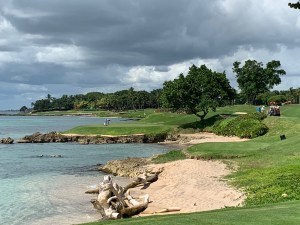
Early in his career Pete Dye established a beachhead in the Dominican Republic with the creation of this course at Casa de Campo.  He was so enamored with the place he bought a residence next to the 7th green and spent his lifetime tinkering with this beautiful seaside course.   What resulted is a distinctive seaside layout that has been chosen as the site of the prestigious Latin American Amateur Championship twice in the last five years.   Because of the success of his first design Pete’s fingerprints can be found on a plethora of resort and private courses on the island and as a result the Dominican presents a full treatise of the Dye design expertise.

The picket trim accent on the dry hazard along the 2nd is pure Pete Dye

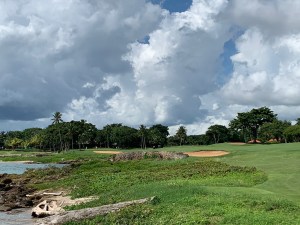
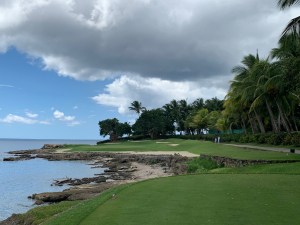
Looking at an aerial view of the jagged coastline Pete must have noticed that it resembled the snarl of a German Shepard guard dog from a WWII prisoner of war camp.  This is where the course gets it’s moniker and Pete staked his reputation on the difficulty that represented.  If the wind is up at 20 mph plus the reputation is well earned and all bets are off on the medal score.  As I suggest to people when they play wind swept capricious links lay outs, make sure you have a match going, it is a hedge against a medal score train wreck and will insure that you have a good time no matter what transpires.

It is worth noting that with so many greens set against the seaside backdrop it gives you little depth perception which makes calculating approach carry distance a major challenge.  An experienced caddie with an accurate range finder can instill some needed confidence in solving the riddle of picking approach clubs.

Having said that, in spite of the reputation as Pete’s most punitive design, I think the course has a bark that is far worse then it’s bite.  This is very much a positional driving course where success on the approach depends on the angle of attack you are left with off the tee. If the wind is not debilitating, a player who thoughtfully positions their tee ball can, for the most part, control their own destiny.

The call of the rocks and the surf is the obvious psychological battle you must negotiate. But, as you see with Pete’s most challenging tracks like TPC Sawgrass and the Ocean Course at Kiawah, it is the innovative green complexes that present the stiffest challenges and make the value of position off the tee so pivotal to scoring well.  This is a relatively flat seaside piece of ground so Pete created topographical interest by raising many table top greens to create shoulders that will spill a shot without the requisite intention into low hollows or fierce collection bunkers from which full Phil antics are required for recovery.  The green surfaces are often narrow irregular shapes which accentuate the difficulty in keeping an approach on the dance floor-the proper attack angle makes that much more plausible.

The greens and surrounds have Paspalum grass which is a hearty plant that survives well in hot, seaside conditions.  The stuff is very grainy and affects putting pace and, equally problematic, chipping off the sticky surface of greenside surrounds.  Both of these factor into your play so, in anticipation of the Paspalum effect, you should probably prepare by hitting a dozen pitches and chips in the designated short game practice area next to the driving range.

Once on the greens take notice of the angle of the shadows which will reveal the direction of the setting sun and help you anticipate the effect of the grain on all putts. This is a place where you should read the pace of the putt first and then consider the line to match up. There is sufficient swerve in the surfaces themselves that makes picking the accurate line difficult enough, but controlling the speed of your putts will have more to do with avoiding a knee-knocker above the hole or a six-footers coming back.

The bottom line is that you better carefully consider your preferred drive position on every tee and expect that a short game with a wide variety of creative recovery shots will be required if you are to shoot something within your handicap range.

As is detailed in the Hole-By-Hole descriptive below, both sides have a similar rhythm-they start with mellow inland holes before tossing your fate to the call of the Sirens on the rocky coast line.   Standing on the first tee a wide fairway fans out in all directions but it is a solitary palm through the left rough that is your shot line.  With a short club in your hand, a coffee table green complex that repels shots in three directions awaits your approach so it is evident early on that dexterity will matter.

The Par 3 5th looks so manageable but the wind and that one tree will wreak havoc on your ball

The next three holes slowly ramp up the challenge before you reach the first toothy stretch of The Dog.  From the fifth to the eighth it features a pair of rocky par threes and a couple of tough par fours mixed in for good measure.  At only 125 yards an on-level pitch into a tiny green of the fifth seems very doable, but wind, fear, and one tree with long reach off the front right make this anything but a pushover.

#6-Surf, rocks, and the great beyond lurk ominously on the left

This is followed by the #1 handicap hole on the course, a mid-range four par where the prevailing wind pushes your Titleist toward the rocks that snuggle the coastline.  The further right you play off the tee to play safe from the sea the harder the angle into the green tucked back to the left.

The 7th-Pete’s backyard bar-b-que and you are the main course

Next is a signature par three that sits adjacent to the backyard of Pete’s Dominican residence.  This green is a much more generous target then the fifth but the sweeping contour of the putting surface can lead to serious head scratching as your ball separates from the hole and you think you can make out an audible chortle from just over the fence to your right.

Much like the sixth, the eighth profiles right-to-left around the coastline but it actually plays a half a stroke harder to me because the green complex has much more immediate peril associated with it.  This puts a premium on the distance control and accuracy of the second shot.

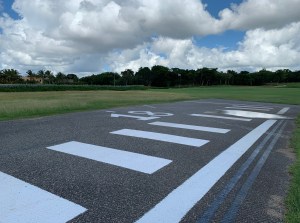
Here is a unique Pete Dye accent….he just had to get the old international airport to comply

The outward half ends with a three-shot par 5 where you drive it over remnant of the runway of the old Casa airport.   In the old days you had to sequence your drive with arrival and departure of jets servicing the resort.  Once in the fairway show sine restraint on the layup to get into position for a short pitch to get one more birdie chance on this side.

The inland start of the 10th is tame to the eye but it has it’s challenges

Relatively tame inland holes start out the second nine but the wake up calls begins at a very kitchy Par 3 at the 13th hole.  The descriptive below tells the story, this is a tough par if you miss the elusive putting surface.  The sobering Par 5 that follows brings you back to the sea and it is definitely a hole where you must keep your wits about you.  Pete sets you up for a sucker punch baiting you to go for the green in two but you have to resist that temptation because the green is set on a tight angle to the hazard and it is very shallow to your approach.  There are bad results lurking on missing in any direction.

A fang in the mouth of this dog-the Par 4 15th green sticks out into the sea

From 15 through 17 you are back in the jowls of the dog and it takes sound strategy and great shot making to get through this sequence without serious scorecard carnage.  Both par fours have green complexes hanging over the Atlantic so the wind influence is at it’s maximum.  The par three in between is probably the hardest hole you will play all day. Pay close attention to the pin position which will dictate the proper intended flight line for your approach.

Biggest of the three par challenges of the day-the 16th will treat all indecision with disdain

Turning back inland the day ends with a solid four par which once again calls for articulate shot placement off the tee and conservative line on the approach since a watery grave is hovering below the left front of the green.  There is plenty of room right of the green complex and, with the right shot shape, the contours in that landing area can feed your ball onto the putting surface.

When you are done make sure to enjoy a post game buffet lunch in the Lago Restaurant that overlooks the finishing hole of the Dog and a long view of the shoreline.  The food is excellent and the atmosphere is perfect for decompression after the round.

Casa de Campo, Dominican Republic

Architect: Pete Dye (1971)

Par     Rating  Slope  Yardage

Black               72        76        135      7263

Gold                72        74.4     134      6969

Blue                 72        71.2     132      6429

White              72        68.8     126      5954

Red                 72        68.0     118      4827

If you would like a printable PDF of this posting including yardage book quality hole-by-hole descriptions of how to play the course click the moegolf logo below.
For more on the Casa de Campo resort click to see Postcard From Casa de Campo

Streamsong Blue

At the lowest point of the economic downturn in 2007, with virtually no new golf course development going on, the management of Mosaic Company called the two design firms of Tom Doak and Bill Coore/Ben Crenshaw to come out and look at a reclamation project of vast acreage in central Florida from which they had been mining phosphate for a half a century.

Mosaic had made a deal with the state that, rather then expend the money to bring the ground back to it’s original condition, they would be permitted to build a golf resort on the property. Mosaic had in mind kind of Bandon Dunes East, multiple, free-flowing sand based golf courses in the middle of central Florida to attract the high end retail golf community. They could not have picked two better modern, old-school architects to help put this resort on the map in a very challenging economic environment.Doak’s reaction, when he stepped off the helicopter that brought his team for the first site visit, was a “Dorothy you are not in Kansas anymore” moment. There is just no way they would have expected to see such a turbulent piece of sandy topography in the state of Florida.

Given four parcels to consider, the two groups set about a collaborative process of identifying the best ground and prospective routings for the first two courses. The central part of the property had the tallest piles of sand and the deepest crevices from the mining days, so this was what they identified as the most opportune place to create 36 holes of walking golf with plenty of width and plenty of drama.

Tom Doak will tell you that his team got the more cohesive and dramatic part of this parcel which meant he could route greens and tees in close proximity to make the walking efficient. Better still, the width and elevation changes already existed to support his preferred design style, open and accessible green complexes with lots of adjacent short grass contour which would require careful thought by the players off the tee to get to the optimal approach line for the day’s flag positions.

With very little perimeter boundary in this part of the property and few absolute forced carries, he could provides players of all caliber a way to get around without the anxiety of penalty shots and searching for Titleists and Srixons. Nice feature in a resort golf experience.

The walk up to the 1st Tee is your first workout of the dayThe hike up to the first tee box may leave you winded but the view unfurling beneath your feet will set a tone for this Blue Course experience. The hole is only 330 yards and there is plenty of open ground on which to land this drive, but the steep slope up to the green complex and the angle to the day’s flag that avoids the offset greenside bunkering puts a premium on picking the advantage approach line. As Jack Nicklaus used to say, you have to play the holes backwards in your mind if you are going to be successful on a course with so many strategic options in play.

All the options on the 1st Hole as seen from the top of the world A couple of sprawling holes in the next two bring you to the middle of the outward half, which is one of the most unique sequences on the course. It speaks to Doak’s ability to draw from the existing terrain natural looking holes with strategic challenge for the strong players while giving the lower trajectory players plenty of options for success.

4th Hole has a rustic flair of a links gem

Embed from Getty Images

.

The fourth hole could have come straight out of the Coore-Crenshaw Bandon Trails Course at in Oregon. After hitting the drive into a generous upramp framed by bunkers on the left, the player who wants to challenge the flag has a super steep elevation approach to a blind green complex perched on a corner plateau above a constellation of nasty sand bunkers. For those with less adventure in mind there is a diversionary option to play at the huge bail out area right and long from which making a bogey should be a cinch.

Just 120 yard pitch, the green on the Par 3 5th is very elusive even with no wind

Embed from Getty Images

.

What follows is a short pitch 120 yard Par 3 that most architects would not have the temerity to present today. The narrow serpentine green is 74 yard long stretching along a spine on the hill below that falls sharply away from the line of flight of your tee shot. If the wind is blowing at all the exposure of the green will make getting a ball to find and stay within a particular section of this green an act of pure golfing wizardry. Many a big hitter will be walking off this green writing down an above par score, scratching their head wondering what went wrong.

The next short, quasi-driveable Par 4 is where Tom alighted from his helicopter on his first site visit. From the tee you are looking up and across the brow of the hill to a wide landing area that feeds down to the foot of one of the most prominent dunes on the property. Given the juxtaposition of the slope of the green to your approach angle this could be one of the most difficult 75-yard pitch shots you will have to hit all day.

Pure eye candy off the tee box on the Par 3 7th HoleA short walking path brings you around the dune to the most awesome Kodak Moment of the day. From the precipice tee on #7 you get to watch the majestic flight of this 175-yard shot plummeting into the pocket of a catcher’s mitt green nestled into the base of the nasty dune complex on the other side of this mine-made lagoon. If you end up on playable turf it will be a big fish story to share at dinner tonight.

As you finish the opening nine, make sure to saunter over to their halfway hut that features an interesting array of southwestern fare. These tasty and homemade these tacos are not your typical dog at the turn.

When you look at the work of Tom Doak and his associates the real architectural genius is often displayed on holes where they did not manipulate the ground very much at all. Such was the case on the 11th, the number 1 handicap hole on the course where they draped a rumpled fairway over and across a low hill leaving just enough landing area blindness to put doubt in your mind of the best line to play. What follows is a long downhill approach to a bunkerless green that drops away with the natural flow of the land. Picking the right landing area short of the green with just the right release to let your approach leak onto the putting surface requires great judgment and skill. The brilliance in this hole was letting the ground speak for itself and not adding any unnecessary static to what nature presented.

The 12th is the first of two very technical holes….hazards leave no room for errorAs you approach the middle of the back nine the two courses coalesce as the Blue Course is working just inside the perimeter of the property and the Red Course is circling back along the property line toward the clubhouse. The short Par 4 13th is probably one of those holes that could have fallen into either man’s route plan and I expect there might have been pretty fiesty conversations on just how to handle it.

Doak is tempting you to reach for the Big Dog on the ‘driveable ’13thStanding on this tee the expansive driving area goads you into reaching for the big stick and maybe have a go at the green. Adhering to the adage “restraint is the better part of valor” is the way to go since even an 80-yard pitch into a slender, long green suspended above a seriously nasty waste bunker and the lagoon is all you can handle. The bail area to the right may comfort you but a recovery pitch from there brings the bunker across the narrow green back into your mind. This is a cleverly designed short hole which demands two controlled and accurate plays to get on without any serious scorecard damage.

The finish is very strong-three of the four hardest handicap holes on this side are in front of you. The sequence begins with a very natural looking minimalist presentation of a Par 4 that plays similar to the 6th with about 50 additional yards on the approach. No bunkers to avoid in the green complex but the short grass surround contours and the pitch of the green surface make using the ground to control where your approach will come to rest of crucial importance.

The longest Par 3 of the day-plays effectively over 225 yards with the uphill green setting-is followed by a very kitchy truncated 575 yard Par 5 that requires three strong and accurate blows for a par opportunity.

Courses that finish with a grand look of the clubhouse are rare, but Doak was blessed with a perfect piece of sloping ground to create a memorable and difficult finishing hole to do just that. Standing on the tee it just looks like an horizon of fairway in front of you, there is no hint of what is to come if you can land your ball at the top edge of the hill that looks down at clubhouse green setting below.

The look down to the final green is surreal against the dunesThe long approach shot must carry a distracting bevy of bunkers almost 100 yards from the green complex and one solitary pot directly on line to the center of the green about 40 yards short. Doak provided plenty of bail room to the left but that is the devil’s bargain since even a short pitch from there is straight down the fall line and it will be difficult to keep a recovery pitch anywhere close to the flag. No, this approach shot is a hitch up your pants moment where a draw working around the pot bunker straight at the flag is the only sensible shot to play.

Taking the short walk off this green to the clubhouse staging area barely gives you enough time to exhale and appreciate how vigorous a golf experience Doak orchestrated in the Blue Course at Streamsong.

Streamsong, Florida

Architect: Tom Doak ( 2012)

Tee         Par      Rating       Slope       Yardage
Green     72         74.1         131           7176
Black      72         72            127           6698
Silver      72         69.7         123           6285
Gold       72         71.6         122           5531

If you would like a printable PDF of this posting including yardage book quality hole-by-hole descriptions of how to play the course click the moegolf logo below.

For more Streamsong images click to see Postcard From Streamsong.

Kingsbarns Golf Links

The heritage of the Kingsbarns Golfing Society dates back to 1793 but the availability of golf under their name was interrupted twice over the centuries. Most recently during World War II when ground was taken by the military for defensive war purposes.

In 2000 Kingsbarns was revived under the watchful eye of a couple of Americans, Mark Parsinen and Art Dunkley, who hired Kyle Phillips to manufacture this stunning links course on 190 acres of farmland in the current location.  Kyle gave it the full high-end treatment complete with grand scale dunes, crumpled fairways, bumps and hollows galore, revetted bunkers, and sprawling green complexes with character.

They spared no expense in creating this place, tapping into the knowledge of Robert Price the author of Scotland’s Golf Courses for advice on design features and Walter Wood the retired greens superintendent at St. Andrews for guidance on local turf issues.  They created a bit of Whistling Straits in St. Andrews……to even the experienced eye it looks like it is nature’s work.  This stiff links experience is not for the faint of heart, it was built for hosting professional championships like the annual Dunhill Links and Ricoh Women’s British Open.

Click to see the panoramic shoreline view of the finishing holes

.

The course plays hard and fast with generous run ups from as far out as 100 yards to accommodate play along the ground.   By no means is this a target golf course, it will punch and counter punch you during the round so you have to be ready to respond.  Plenty of swerve in the fairways so don’t be surprised if your ball is not as obedient to your commands as you expect.  Bunkering is not overdone but it can be severe around the greens where the revetted faces are quite steep.  Further sculpted ground contours can gather balls without sufficient intent into the bother.  The greens have robust engineered undulations so a sharp short game and focused putting are very important to success out here.

Appreciate the severity of the greenside bunkering and green surface undulation

The day begins temperately enough off the side of the clubhouse to a high fairway overlooking the sea.  The approach into a green complex with deep face bunkers and the steeply undulating green set the tone for the day.  The story continues to unfold as you look down the short downhill Par 3 2nd where the North Sea crashing into the shore behind is a breathtaking sight to behold.  A little out with a long par 5 at sea level followed by a pair of difficult par 4s turning back just above will get your game to full throttle.

The backdrop of the North Sea seems to be everywhere

Stepping on the high tee on the wondrous short Par 4 6th you get a stunning panoramic view of all the holes along the sea.  This is a little downhill 300 yard shot that tempts your mischievous side but it will take a perfect strike with the right curve to get the reward they are dangling in front of you.  From the teeing round, if your eyes are 20 x 15, you can just make out the clubhouse at the Crail links down the coast.

#1 handicap 7th presents a stiff challenge, especially if the breeze is in your face

What follows is the challenge of the #1 Handicap hole on the course which, to add insult to injury, often plays into the wind. You get a bit of a breather on the 8th with a very technical short pitch Par 3 that looks like it tumbles right into the surf.

Another stunning Par 3 against the sea at the 8th

It is a long trek back up the 9th to the clubhouse and a chance to catch some replenishment at the Halfway Hut before taking on the very difficult inward half.

The second nine begins with a pair of tumbling par 4s that bring you back down to the sea next to the 8th green.  Both of these holes have severe downward elevation change and lots of side contours as well.  A couple of pars would be good for the scorecard storehouse before getting to the technical part of the course ahead.

The sequence of the 12th through the 15th will leave you breathless

Now you venture around the corner to a spur of land that holds four breathtaking holes that will challenge your full skill set.  As Malcolm Campbell says in his descriptive of the course, “It is a gentle walk to the 12th through a woodland…..where the ocean is stolen from our gaze.  When it is given back at the top of the incline at the tee, the assault on the senses is often difficult to believe.  The spectacular view ….is the one instantly recalled by many long after they leave Kingsbarns.  Here we find not only one of the most memorable …three-shot holes but one that cunningly conceals iron within the velvet glove”.    Hitch up you pants, aim at focused targets, and play away with abandon.

The 13th proves that three-par challenges your skill set in a different way

The Par 3 13th is a lovely short pitch down to a well guarded green complex wedged into a hill with a harsh stone wall covered with foliage.  Sorting out the wind effect and the elevation change makes this an elusive target.

After a scoring opportunity on the 14th, you meet face another windblown postcard Par 3 that completes this section of the course.  This requires a difficult uphill shot into a precipice green sitting on a jetty overlooking the raging sea.  Aim at the pot bunker nestled in the left third of this green in that the forced carry over the rocks gets much longer as the breeze blows the ball out to sea.

Managing the approach to the Par 5 16th is about lay-up positioning

If you got through this section with minimal scorecard damage what comes next are three strong finishing holes where, with strong execution, good scores are there to be had.  The first of which is the 16th, an ambling five par along the shore.  Long hitters can try to cut the corner but if the wind direction is off the left you are bringing a high score into play with anything wayward right.  Aiming at the corner of the clubhouse will leave you with a layup from the left center of the fairway to a safe space between the bunkers about 75 yards from the green. Worth noting on your approach, there is a pesky burn that runs right and behind the green.

Wending one’s way on the last march up to the high ground to the 17th green

One last one along the coastline, the penultimate hole is a punishing dogleg right par four if you do not hold you intended shot lines.  The drive is into the dogleg elbow well left and what remains is a daunting uphill approach into a perched green with three tiers.  Make sure you embrace the extra club required to get up into the middle of the putting surface.

The approach shot into the 18th green is a doozy…..or could make you woozy

The day finishes with an inland par four that plays across a high ridge adjacent to the first fairway.  With a strong drive you are left with a approach carry to a very difficult green shelved into a hill below the clubhouse.  The green complex really affords no safe lay up area so if you choose not to go for it over the burn you are probably laying up outside of 125 yards to an area on level to the green.  Try to ignore all the noses pressed up against the windows of the clubhouse grill room who are soaking their bruised egos having already failed to negotiate what you are currently trying to pull off.

Once the last putts fall, I do recommend you visit the members grill for some adult refreshment.  It is a beautiful vantage point from which to appreciate the vast beauty of what they created at Kingsbarns Golf Links.

St. Andrews, Scotland


Architect:  Kyle Phillips and Mark Parsinen   ( 2000)

Tee                 Par       Rating   Slope   Yardage

Medal              72         73.2       136       6807

Regular           72         70.7       132       6351

Ladies             72         70.7       126       5238

If you would like a printable PDF of this posting including yardage book quality hole-by-hole descriptions of how to play the course click the moegolf logo below.


Ojai Valley Inn Golf Course

George Thomas and Bobby Bell, a pair of graduates of the Philadelphia School of Golf Architects, migrated their professional shingle to the West Coast around 1920. They quickly established themselves as a go to pair for pulling quality golf courses out of the challenging terrain of this part of the country. Along with Alister MacKenzie they went on to produce some of the finest golf courses in this region.

Ojai Valley Inn was created around the same time of it’s more storied sister Thomas-Bell designs like Bel-Air, Riviera, and Los Angeles Country Club. Set against the dramatic mountain ridges that surround the Ojai Valley, you will see genius of these two men in their ability to refine the effect of the rugged topography with innovative routing and implementation of the strategic design concepts that make their courses a joy to play.

Small but accessible greens with deep bunkers and fall offs call for articulate approach shots

The tight configuration of the available land for golf led them to an unusual course routing that includes three Par 5’s and five Par 3’s in a Par 70 layout that now measures just under 6300 yards from the back tees. But when you consider about 350 yards in exchange of a long hole for an extra short hole and the effect the hills and the wind have on lengthening many approach shots, there is nothing meek about the golf challenge Ojai Valley presents.

The elevations changes throughout make club selection a chore…especially when the wind is up

This set of green surfaces are as consistently small as any I have seen on a championship course, so finding the target requires great precision. They have segmentation and slope which means approach line and trajectory really matter if you are going to avoid putting humiliation on the greens. The signature high edge, flash faced bunkers that Bell brought to all of their creations coupled with the drastic fall offs adds intimidation to the mix. To have success out here it takes a tactical approach to driving to find proper approach positions based on the day’s pin.

High edges and flash faces of the Billy Bell bunkers mask your landing areas from view

There is a convenient grass turf driving range and short game prep area just below the golf shop, make use of it to get your swing tuned in before you embark to the first tee as the front nine opens with five holes that will get your immediate attention. They play across some of the hilliest terrain on the property and demand disciplined shot making right out of the gate to avoid inflicting serious scorecard damage early in the round.

Green on #1 is typical-shelved into the hill above-open on one side forced carry on the other

The first two holes you have to put your tee shots in a relatively small landing area (see the Hole-By-Hole Analysis below) to have a credible approach to two very angular green complexes.

Tight window leaves a dexterous short approach across the barranca to an angular 2nd green

On the second if you succeed in finding the center of the fairway, you have a short club in hand but are staring through a large picture window at a steeply pitched green that hovers above a harrowing barranca from which there is no recovery.

#3 seems innocuous enough…short pitch to a sloped green with trouble all around

Two short Par 3 holes on the front, the first of which you reach at the third, require delicate short shots into tiny greens with no bail outs. The 100-yard pitch on the third seems innocuous to the eye, but picking the right club given the elevation change and any wind can make this very small target particularly elusive.

After another bracketed carry across the “Deer Canyon” on the short Par 4 fourth, you face a classic George Thomas uphill approach over a browed Billy Bell flash faced bunker that guards the left front of the green. The pitch up the hill better have serious friction because the green is barely the size of your thumb nail.

From high atop “Condor’s Nest” on the fifth…it is quite a view of the landing area below

Take a pause on the precipice tee of the hole they call “Condor’s Nest” to appreciate the glorious backdrop the surrounding mountains present as you look down at this long Par 4 unfurling below your feet. This represents a swift change in gear as four of the next five holes will give you plenty of room to unleash your swing and channel your inner Dustin Johnson.

The seventh hole, “Crosby’s Creek named in deference to the Hollywood star who played here often throughout his career, is the #1 Handicap hole on the card and it demands two well executed blows to have any chance to make a par. The key is to protect from the train wreck number if you are out of position off this tee, as a stream runs diagonally through the second half of the hole and will give you serious pause in your club selection to reach a very tight plateau green complex framed by trees and deep Billy Bell bunkers.

Bunkering on the Par 5 9th is pure artistry and genius…the putting surface isn’t bad either

After the second of the short pitch Par 3’s you have a very handsome march up “Eucalyptus Alley” on the long awaited first Par 5 of the day. The green complex set into a hill just below the hotel is framed by stacked flash faced bunkers and makes for one of the many Kodak moments of your day.

Negotiating with a birdie putt on the top shelf of the 9th Green….so so so close!

Make sure to get a little snack and some cold refreshment from Libby’s Market as you make your way up the hill on the other side of the hotel to the tenth tee. This next series of holes have delectable visuals as they play on the high side of the property to start the inward half.

Sweeping panoramic looks are like fraternal twins off the high tee boxes of #10 and #13

The look off this tenth tee is majestic as a sweeping long Par 4 falls below your feet and then works back uphill to the tight green complex. The mountain backdrop is the stage for the Pink Sunsets this place is known for.

“Pink Sunsets” appear most evenings over the mountains on the reachable Par 5 12th hole

Two scoring opportunities presents themselves on the long Par 3 and short Par 5 that follow as you work your way back to the thirteenth tee to play a mirror image Par 4 adjacent to the tenth.

The approach look down to the Par 5’s green complex on “The Landing” #15

Preparing for the final run you start wrapping back around the lower end of the property you experienced on the opening nine where elbow room is going to disappear and precise shot making will prevail. You need to take advantage of the getable Par 3 and Par 5 at fourteen and fifteen because the mysterious “Lost Holes of Ojai” are just ahead.

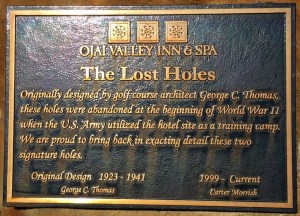
The “Lost Holes” plaque at the 16th tee tells the story or repatriation of these holes

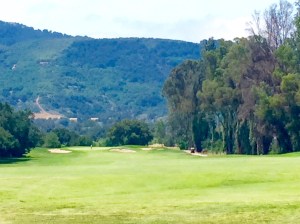
In the years of the Second World War the military had abducted the land under a few holes in a remote corner of the property which made them disappear. But in a restoration in the late 1990’s these two “Lost Holes” were rediscovered and, along with the stiff finishing hole, set up a dramatic final exam to your golfing day.

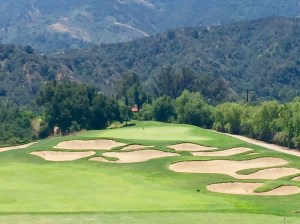
“Captains Pride” the signature Par 3 16th plays over a flotilla of sand bunkers

Part I is “Captains Pride” a unique survival par three that you may think does not fit the flavor of the course. But the spectacular view you take in from the precipice tee makes it the signature hole in all their publications. The parameters of this hole are as tight as any you have seen all day so a very conservative approach is requisite in avoiding a bad number at this point of round.

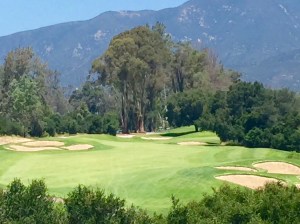
View of the driving area and surrounds from the tee on #17 is truly an “Inspiration”

Part II is the multiple choice section of the test called “Inspiration”. The tee box on seventeen is perched by itself, cocooned by high mountain topography, which creates a tranquil respite that many have used for memorable wedding ceremonies. Nupitals aside it takes two dexterous decisions and well executed strokes to make a much needed par on the second of the reincarnated holes.

Confined look off the back tee of the 18th..fortunately your tee is up another 50 yards

The essay section is the eighteenth, a steep march back up to the clubhouse which will put extra pressure on trying to win the back nine Nassau. The amount of defensiveness required in the final approach is totally dependent on your tee ball position. There are pars to be made with a dexterous pitch and putt from short right if the carry over the yawning Billy Bunker that fronts the left side of this precipice green complex seems too much to swallow.
The imposing look up to the cloistered green complex on the finish hole

If you picked the right tee length there is a good chance the tally ends up in the satisfactory range, but I assure you that on reflection you are going to feel you left a few out there. A return visit to get another shot at this intriguingThomas/Bell creation is something I look forward to as well.
Ojai Valley, California

Architects:  George Thomas and Bobby Bell (1923)

Tee      Par     Rating     Slope      Yardage
Blue     70        71          131         6292
White   70       69.3        126         5908
Red      71       71.3        131         5211

If you would like a printable PDF of this posting including yardage book quality hole-by-hole descriptions of how to play the course click the moegolf logo below.