Black Diamond Ranch-Quarry Course

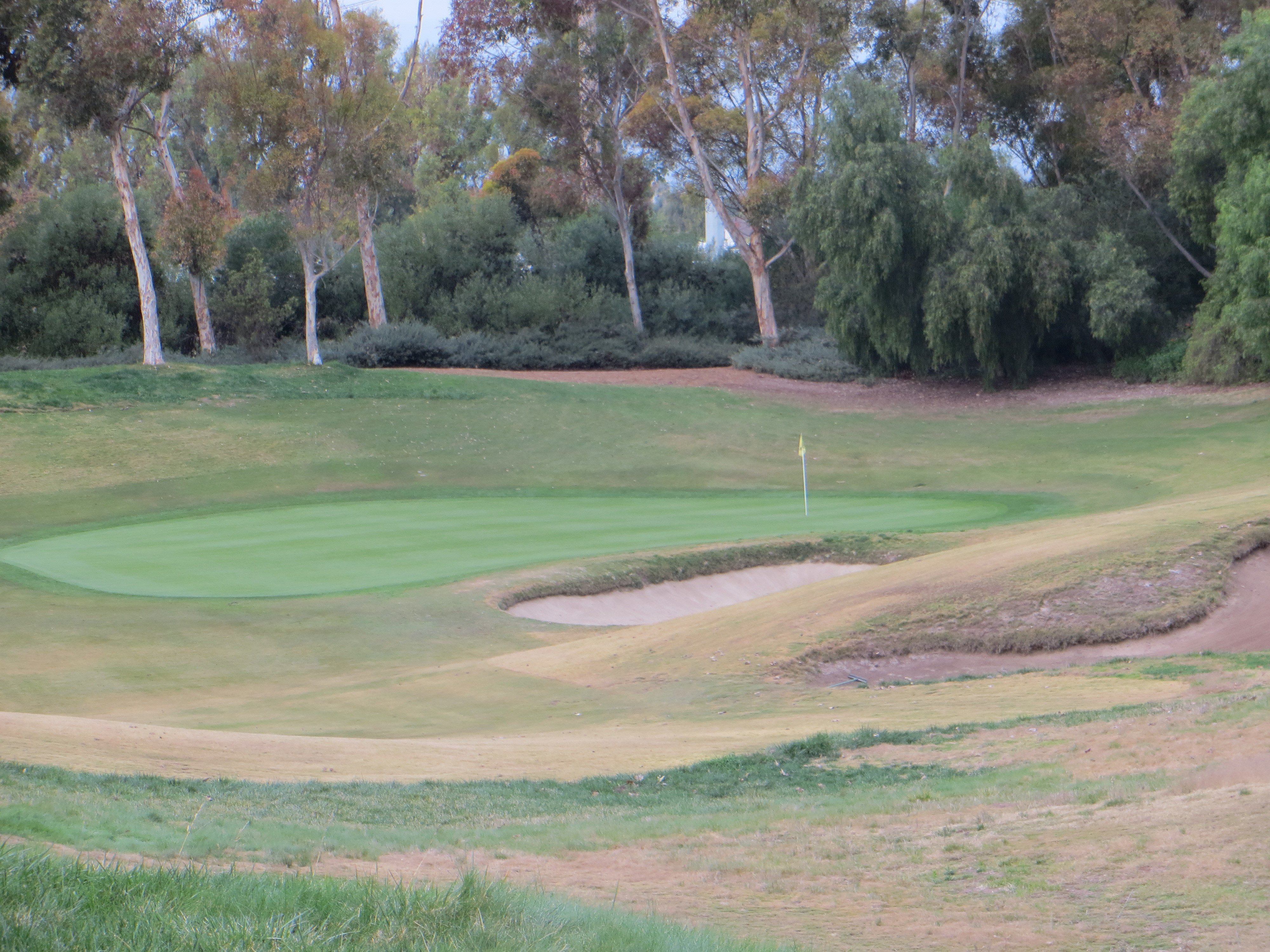
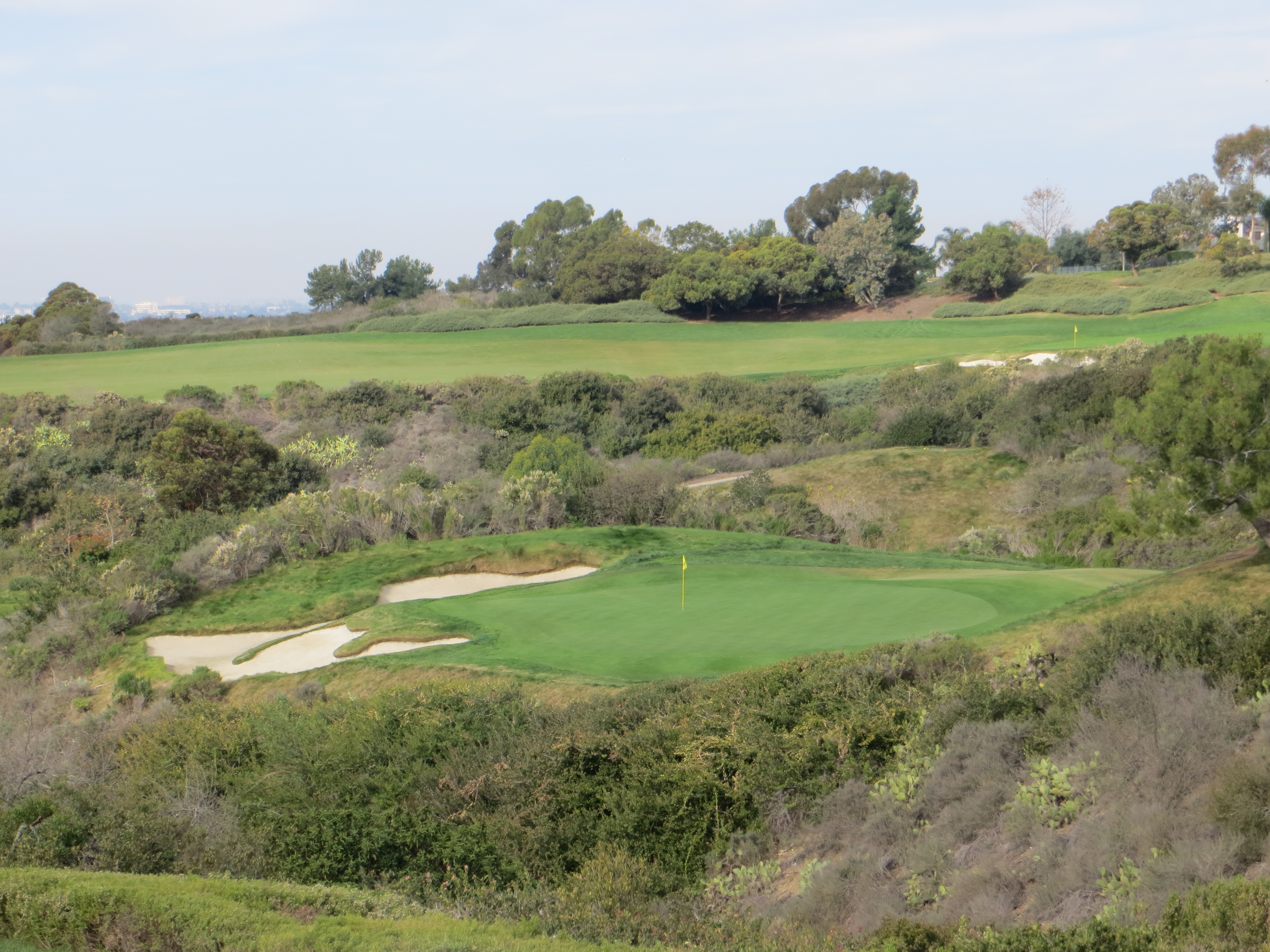
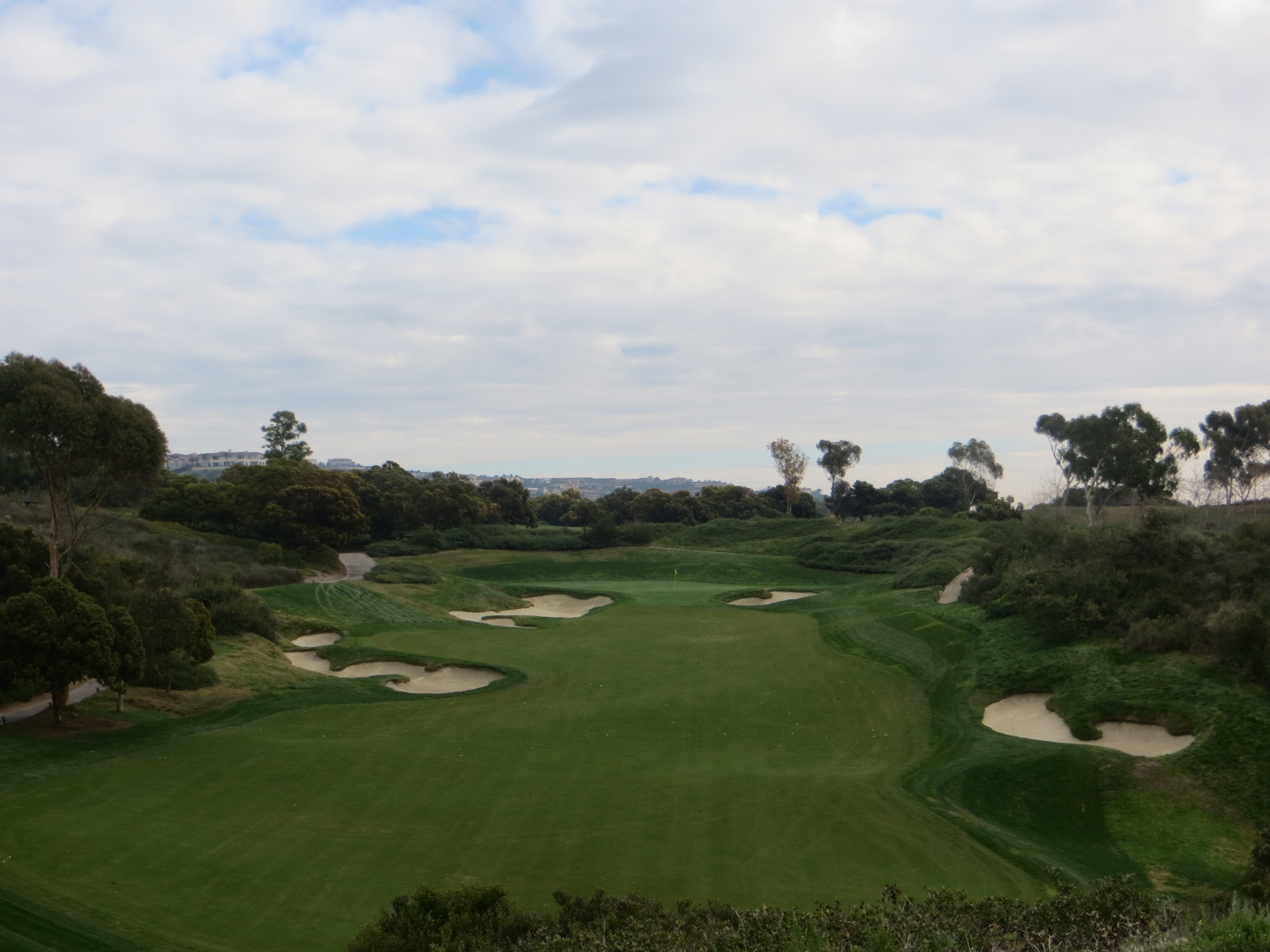
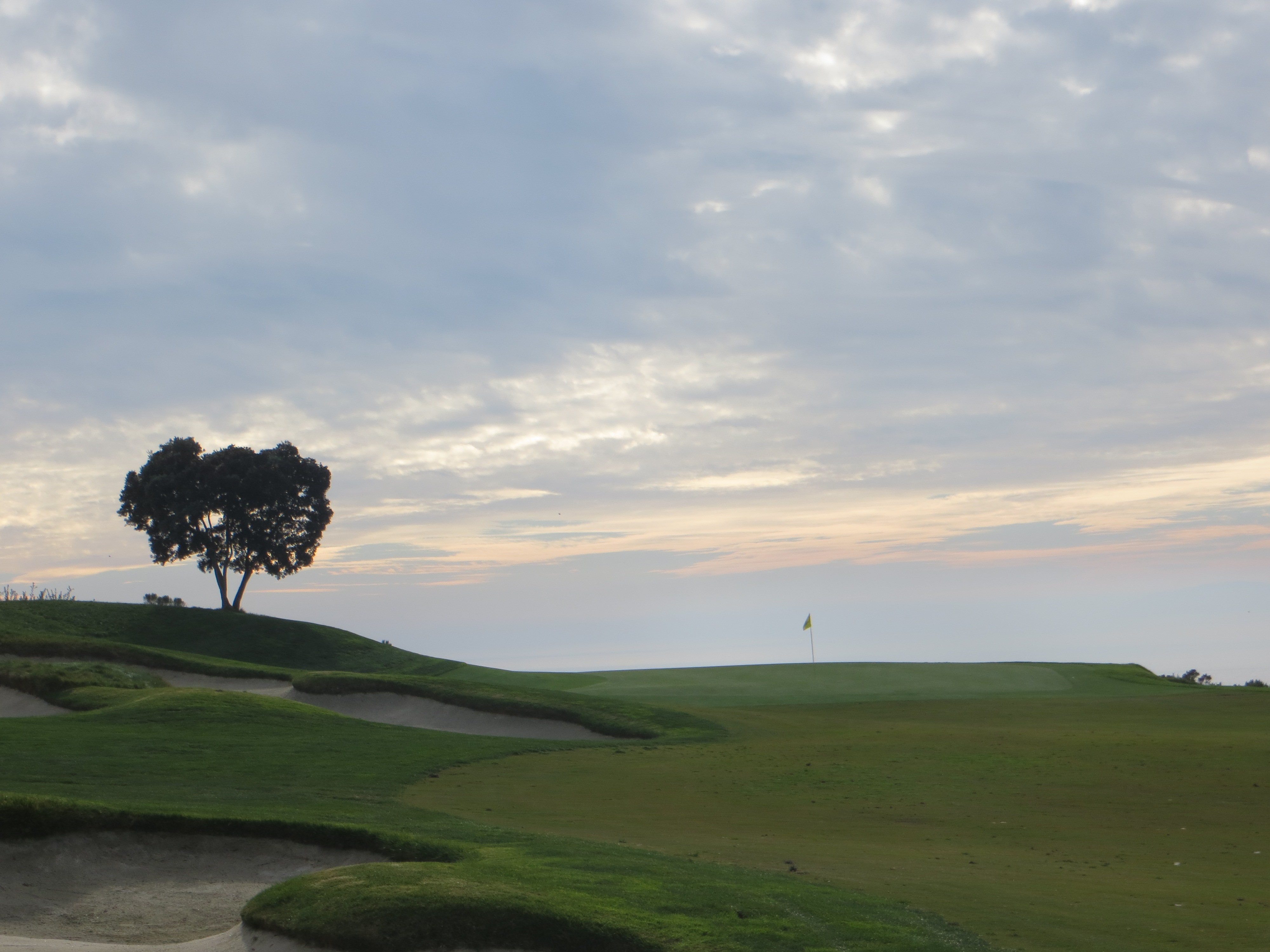
Black Diamond Ranch LogoIt would take celestial intervention to create a golf course with serious topography in Florida and that seems to be what occurred when the golf gods sent a meteor crashing into Florida’s Nature Coast a few eons ago to create the limestone quarry that would eventually dominate the back nine of this very atypical Florida course. Then there was the chutzpah of owner Stan Olsen looking Tom Fazio in the eye and saying can you make playable holes out of this troll sanctuary without us having to add a theme park along side to attract interest. Fazio was up to the task and what he created was probably the most memorable course in the state, something very special that will be retained as an indelible impression in your golf psyche long after you are done.

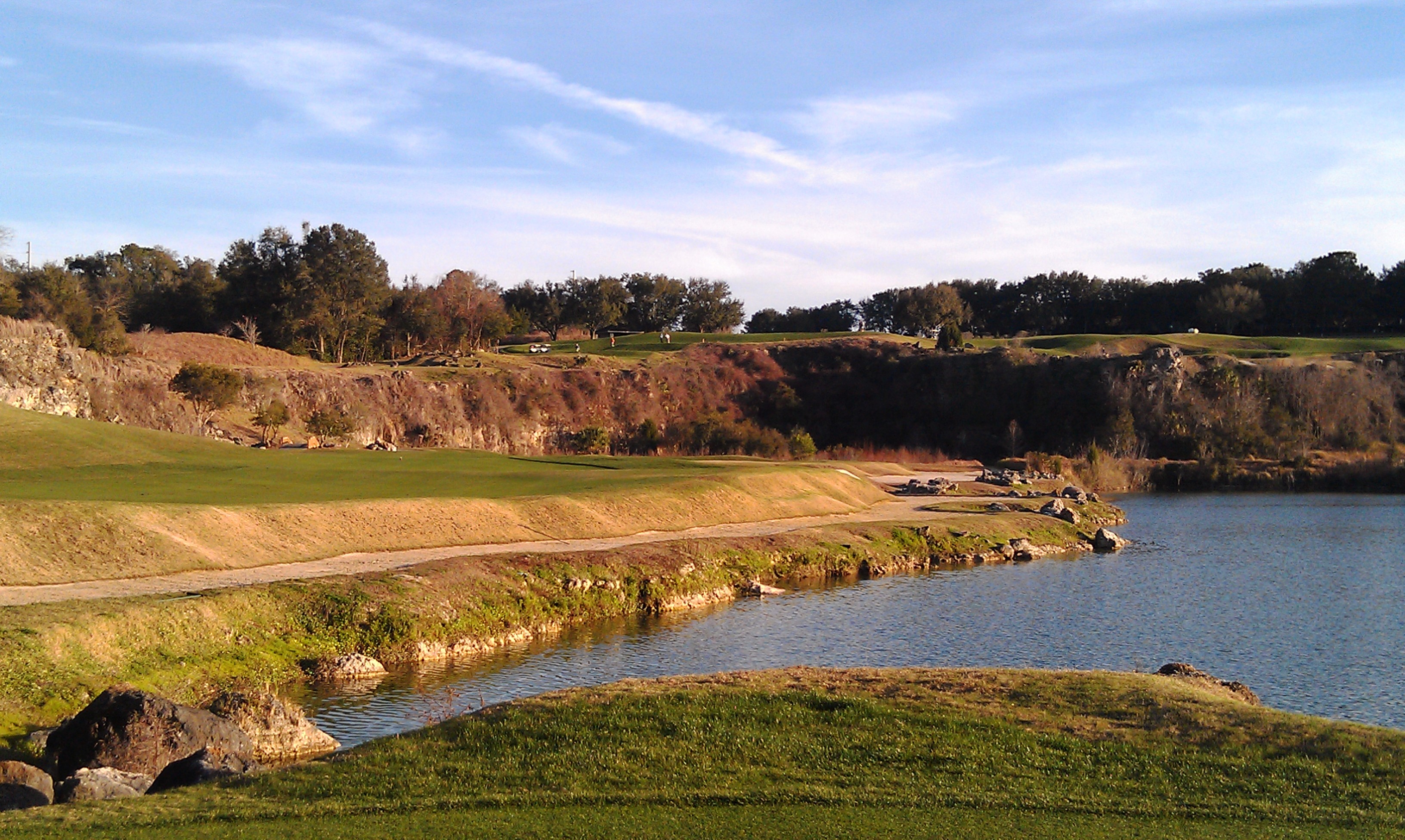
Looking back from the 15th green you can appreciate the depth of this depression

Looking back from the 15th green you can appreciate the depth of this topographical incursion

(Click on any picture to get an enhanced view of the image)

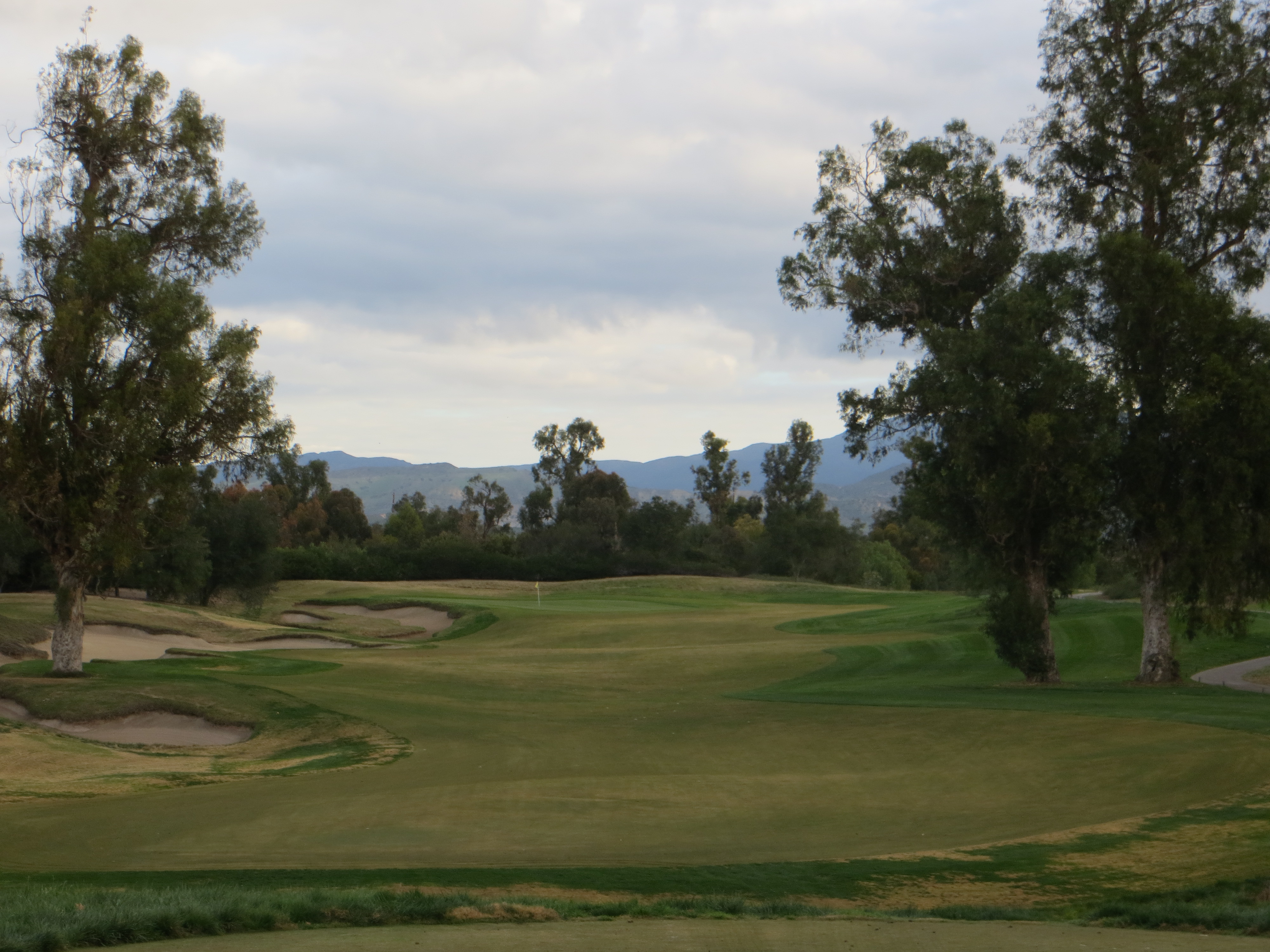
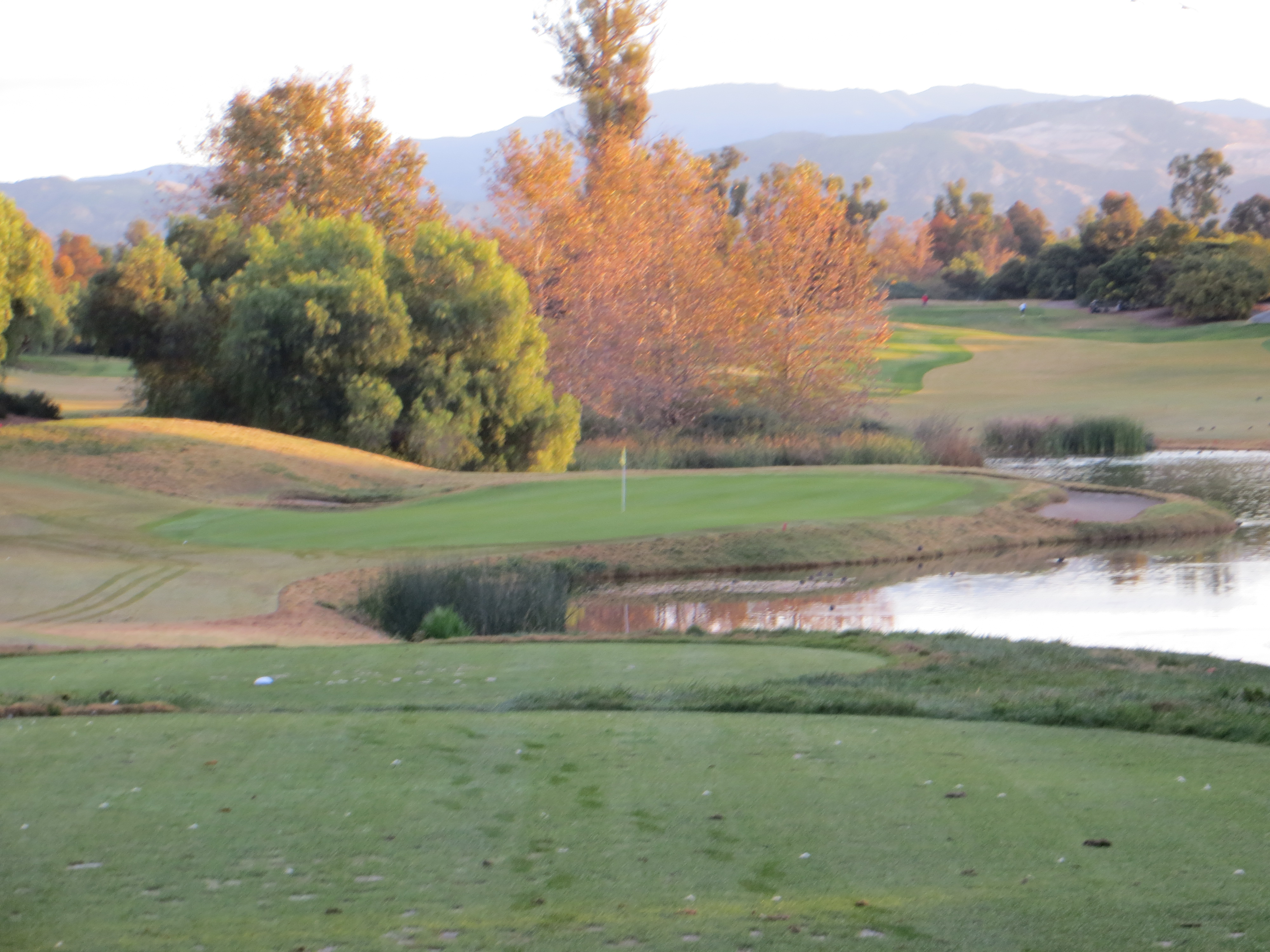
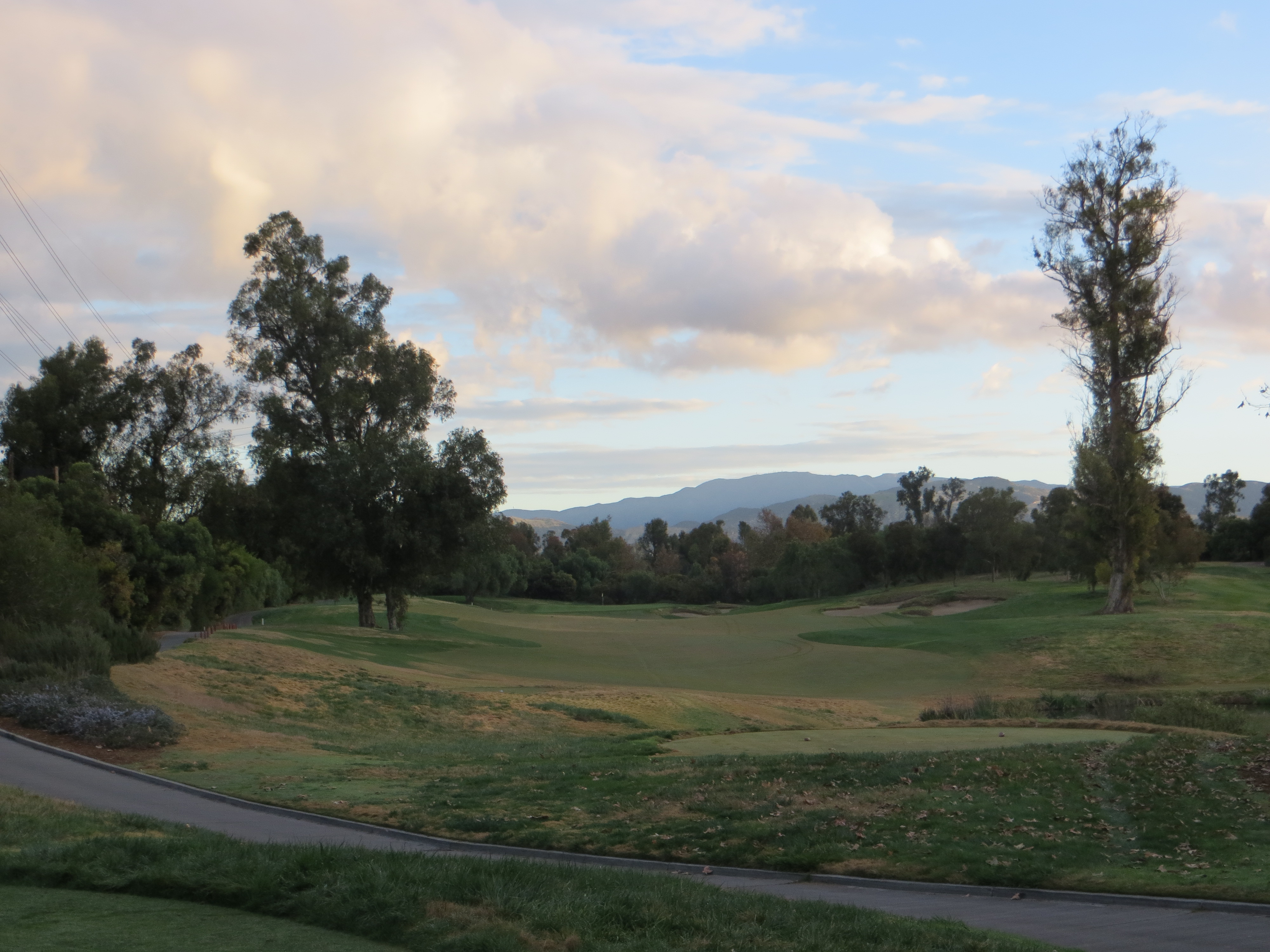
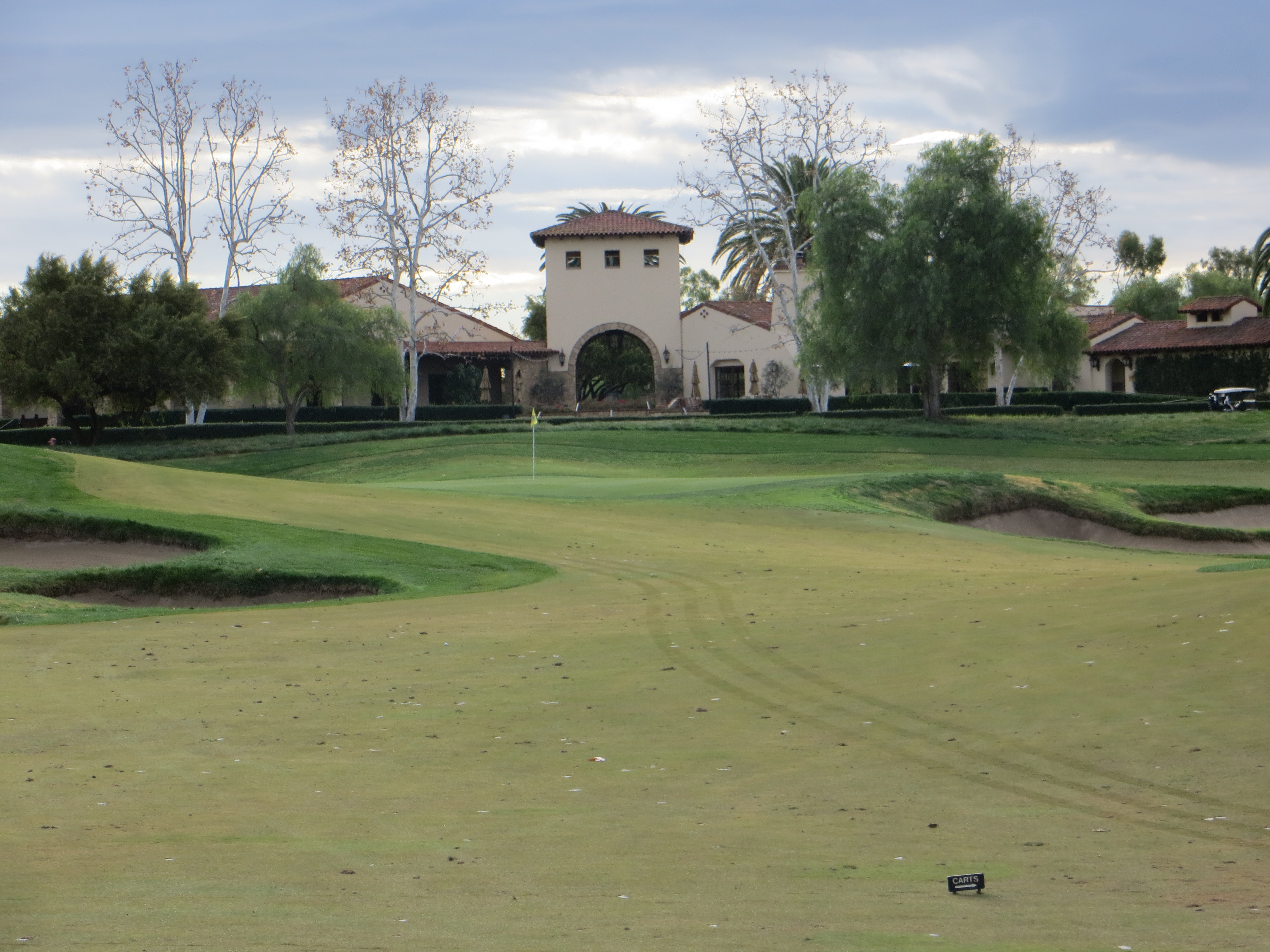
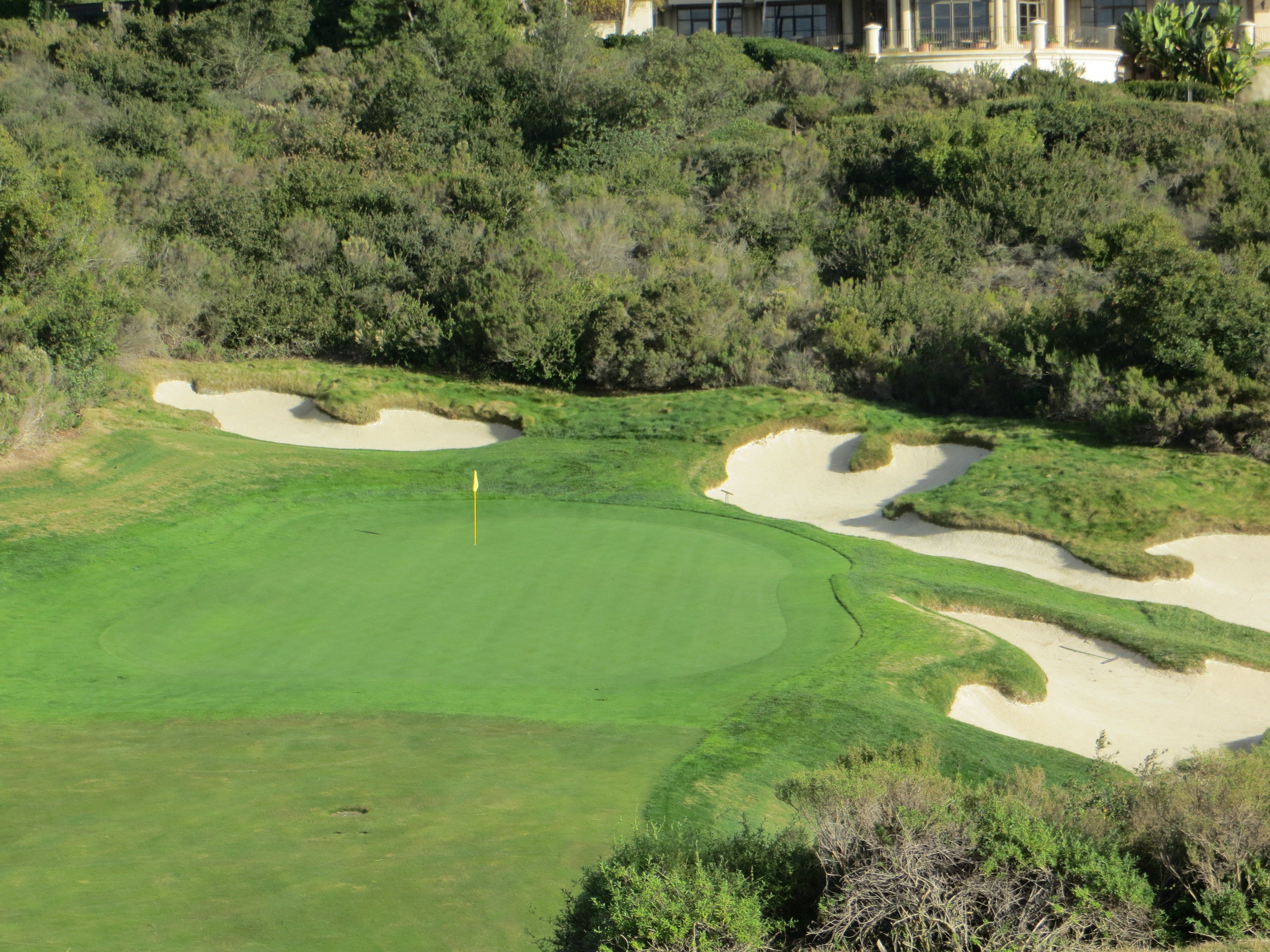
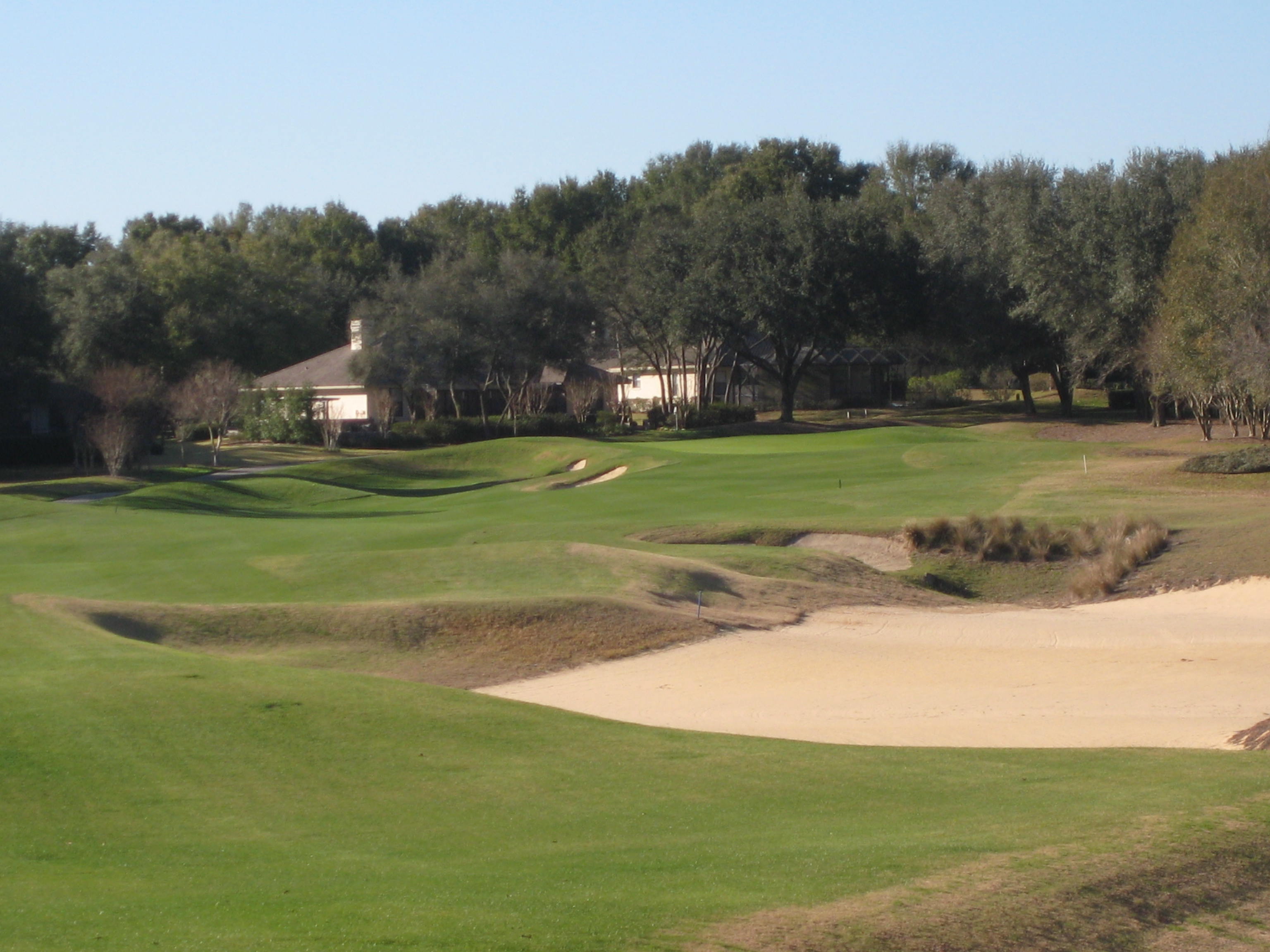
The wow factor on this course is off the charts. It is almost hard to put the camera down long enough to hit the shots required to play the first 12 holes Fazio has orchestrated before you reach his final crescendo in the quarry. From the opening tee shot until you turn the corner to the 13th tee, entering the gateway to troll heaven, the holes meander down and up the gentle tree lined foothills providing stunning views of naturally appointed landing areas and green complexes, slowly building a sense of excitement of what is to come. It begins on the first tee box staring down a majestic par four unfolding beneath your feet. Throughout the day drive position is critical to getting the proper angle into the crafty green complexes. The first Kodak moment of the day is on the second tee as you look down a pitched fairway split by a deep bunker in the center and a massive sand waste area defining the left. You can just make out the tiny green perched on the hill protected by a lone pot bunker. It won’t occur to you yet but the bunkering throughout this course around the green complexes is very selective. In contrast there are a number of the oversized Fazio waste areas cordoning the holes but the greenside bunkering is very tactical and can be avoided by carefully planning the line of approach.

The Redan-esque 8th hole gives you a feel of the tactical detail on the front nine

The Redan style Par 3 8th sets up for the right-to-left ball flight and roll out

After the stern start, the course takes a decided change in character with a devilishly clever short approach and putt par three at the fourth. From the elevated tee a berm masks the front of the green and makes this a bait and switch pitch since you cannot see the landing surface. Camera time again for the spectacular view off the tee on this next par five. All the three-shot holes at Black Diamond are about shot positioning as the serpentine fairways and the adjacent bunkering and hollows give you plenty of options negotiating a path to the green. What follows is a couple of Irish hide-and-seek par fours where the creative use of the topography will leave you uncomfortable blind tee shots and approaches that require confident visualization. One of my favorites of the day is the Redan par three 8th which characteristically calls for right-to-left ground control of your hybrid or long iron after landing on the front of the green to feed to the day’s pin. This side closes with a dogleg right par five, similar to the fifth, but the addition of water menacing the tee ball landing area makes the penalty for wayward right flight much more definitive. This is one of only two incidents of water in play all day, a rarity at Florida courses that often feel like Venice.

The use of large sand waste area on the 11th obviates the need for a water hazard

The large waste area on the 11th adds intoxicating visual and tactical interest

The inward half starts much like the opening nine with a sweeping downhill tee shot to a generous landing area. The green complex on this par four is very tricky in that it is a wavy low shelf that angles back to the left against your approach line. If you have a soft draw and the confidence to land it short and feed it on this may be the only way to get a ball to stay on this green. The eleventh is one of the coolest holes of the day. A massive ocean of waste sand in the nook of the dogleg suggests you play your tee shot into the wide berth of the left side of the landing area. In reality it is better to hug your tee shot as close to the waste area as you can since there is no angle at the narrow table top green from the left side of the fairway and a deep hollow with two embedded bunkers protects this approach line. One more gentle dogleg right remains. Standing on the 12th green Fazio has lulled you into a sense of nervous security anticipating what is just over the next hill.

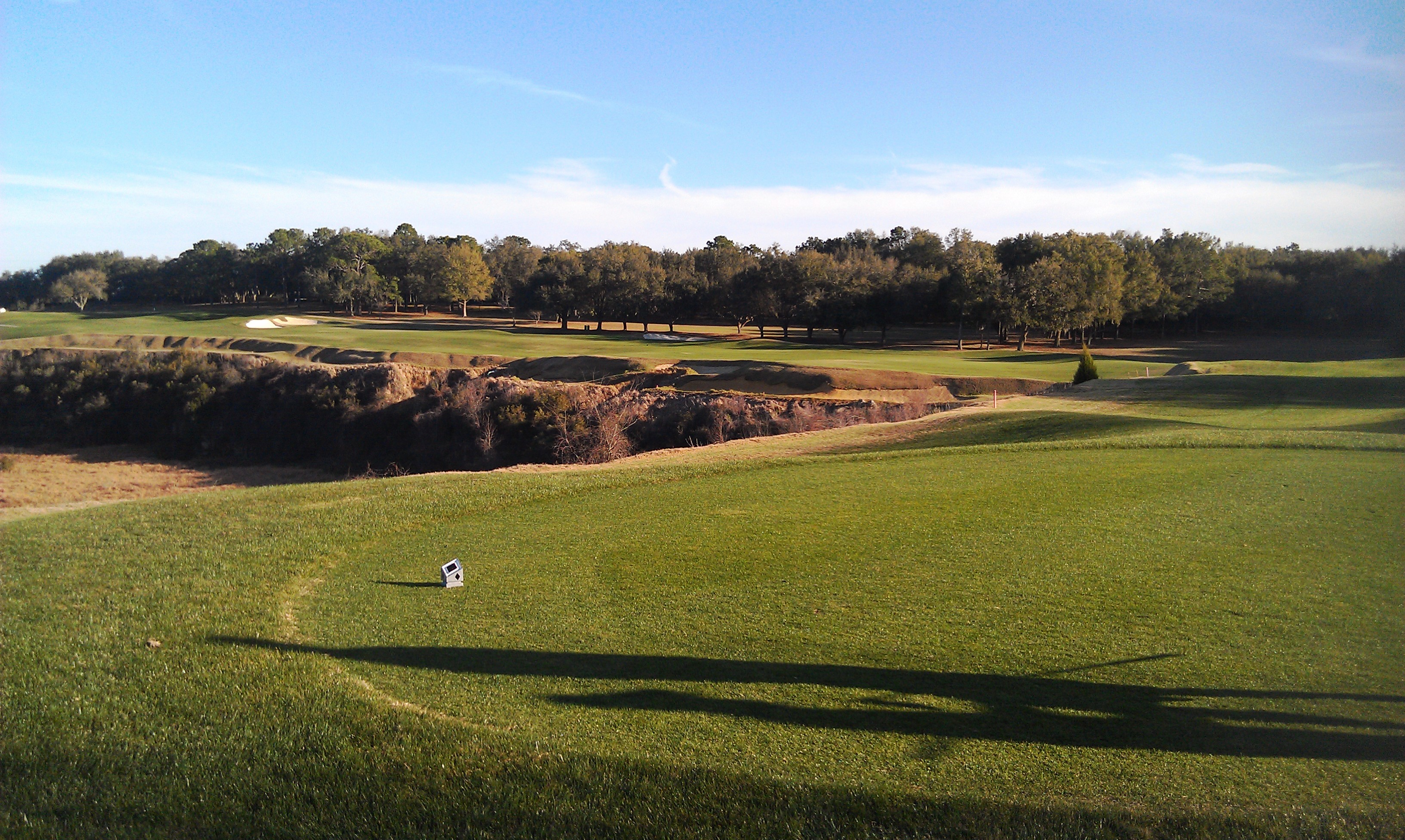
The first view across the quarry from the 13th tee box

The first view across the quarry from the 13th tee box is very intimidating

As you climb up the stairs from the cart park and step onto the 13th tee an exhilarating rush followed by a sense of vertigo overwhelms you. Standing on the edge of the canyon peering across an 80-foot chasm the sirens are beckoning you to play across to a safe green haven sprawled on the other side. It becomes very clear that the next five holes will be as much a test of emotional control as golf aptitude. There is no choice but to strap on the seat belt, take the loose change out of your pockets, sing the calming lyrics of the Joni Mitchell song, and focus on the grassy patches called landing areas as the next five holes traverse the deep crevices of the limestone quarry.

The top of the cork screw from the teeing ground on the par 5 14th

The tee shot must skirt the canyon rim on the par 5 14th as the hole corkscrews to the left

Since the rotation around, into, and out of the quarry is counter clockwise it would seem to favor right-to-left ball flight. You can then aim over land and turn the ball back into the approach areas, but overcooking any shot means more fodder for the trolls below so give yourself a wee bit more on the right as you plot your shot lines.

The approach on the 14th requires nerve and control to avoid the evil decree

The approach on the 14th requires nerve and control to avoid the evil decree

The tee shot on the 13th is probably the easiest play you will have to make over these next five holes. The carry should not be more than 150 yards and if you can find the center spine of the hour glass shaped green there is 54 yards of depth to work with. The par five that follows begins a corkscrew path across the top rim of the quarry and drops considerably on the approach shot to a green complex hanging on the edge. Long or left is no good.
Heading down canyon off the 15th tee toward Black Diamond Lake

A confident swing required heading down canyon off the 15th tee-there is little room for error

From the 15th tee you get the full drama of this celestial depression peering down a tapered fairway wending it’s way to the canyon floor where the green seems to shimmer next to crystal blue Black Diamond Lake. There is no room for error on either side of his hole from tee to green. It may occur to you after putting out that the last two holes simulate the reverse flush vortex of toilets from Down Under.

Talk about intimidating, how about this tee shot back up to the 16th fairway

Talk about intimidating, how about this tee shot back up to the 16th fairway

That was the easy part because the last two of the quarry holes are really difficult. Hauled back up to a tee box about two stories below the canyon rim and your task is to bite off as much as you can chew with a drive that must carry across the emptiness and clear the edge of the quarry wall on the other side. From there it is a long tightrope walk approach to a 53-yard sliver of a green dangling over the abyss.

Across a tight rope to the 16th green dangling on the edge

The approach shot on 16 must negotiate a tight rope to a long and narrow target

The last par three is excruciatingly difficult as you carry a fairway metal from a perch tee box across the troll terrarium to an anvil shaped green wedged into a squash court with stone walls about 50 feet below. Any tee shot off line faces an ignominious fate and your scorecard will suffer accordingly. Once you emerge from the canyon to the 18th tee you feel like you exited the decompression chamber. The final challenge of the day is a wrap around par five that requires your full attention. Once your drive is in play carefully consider where the second shot has to land among an array of grass moguls and sandy depressions. Be aggressive, you want a short club in hand for the approach into a tiny green with serious undulations. Putting out for a par will render a deep sigh of relief considering the exhilarating joy ride you have been through the last hour or so. The Quarry Course is not an easy one to get on since it is part of a private 45-hole golf facility, the centerpiece of an expensive housing development. If it takes some arm twisting to get access to the place it is well worth it to get a chance to play one of Tom Fazio’s most original creations described in detail in the hole-by-hole descriptive below. Special thanks to Marcie Winston for her stunning photographic contributions to this posting. Lecanto, Florida Architect: Tom Fazio (1988) Tees            Par    Yardage    Rating    Slope Black           72       7159       75.0       137 Dark Gray    72       6496       72.1       131 Green          72       6050       69.7       125 (Click to see complete Black Diamond Ranch-Quarry Course hole-by-hole descriptions)

Rustic Canyon Golf Course

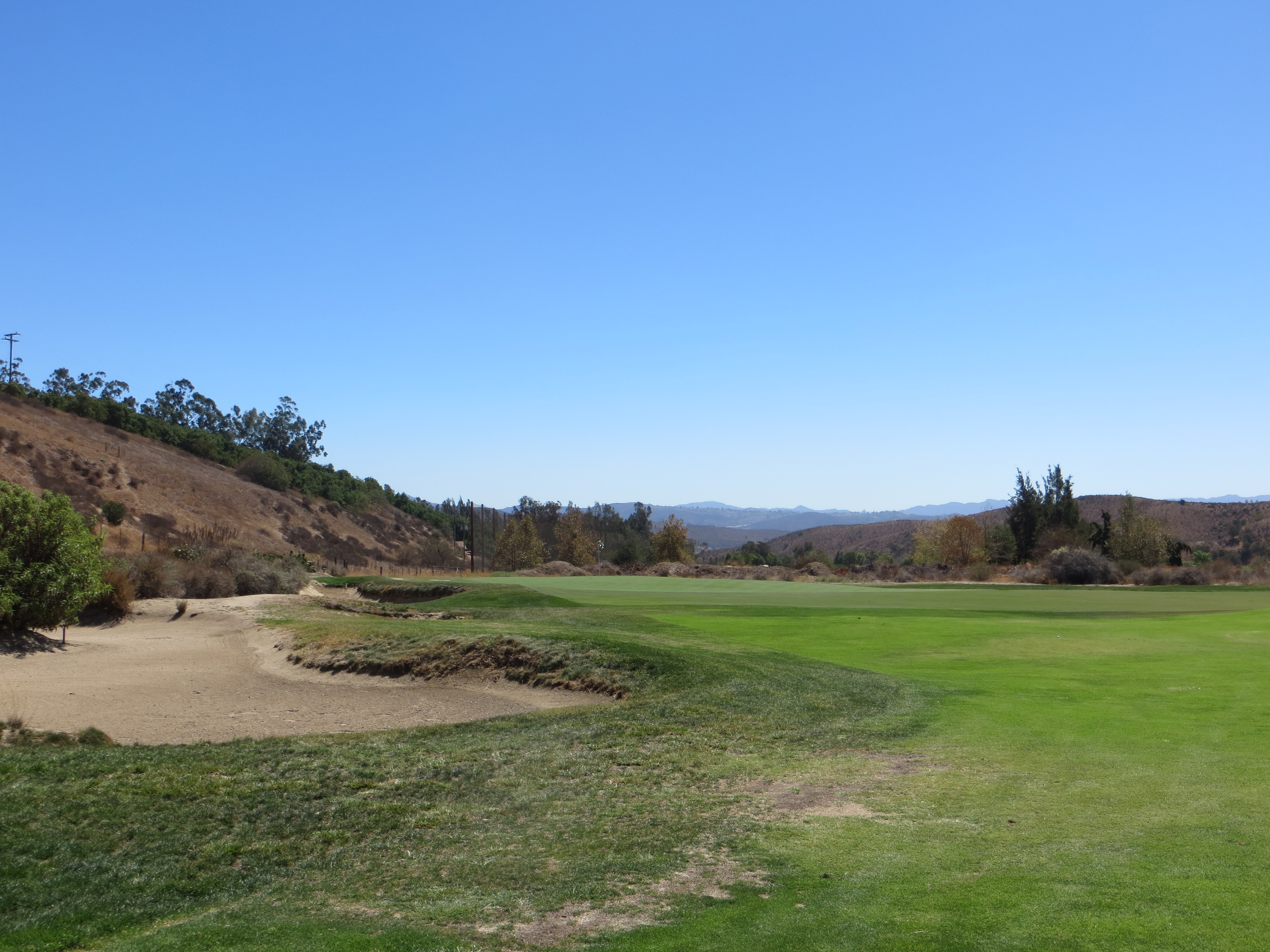
imagesEvery once in a while you trip over a unique golf course, one that does not fit into any of the neat categories of course design. Rustic Canyon is one of those, a blend of links design with an arid desert course feel. Created by Gil Hanse with the help of long time associate Jim Wagner and golf writer Geoff Shackelford the course was built on flat firm, sandy turf in a two-mile long arroyo between dusty foothills about 40 miles north of the Los Angeles sprawl.

At first glance the land must have seemed ill suited for golf, but credit the imagination of these three guys to come up with a rough-edged “rustic design” to delight and challenge golfers of all abilities. A dry wash full of distinctive desert vegetation and scrub dominates the center of the property and provides most of the hazards the golfers will encounter. With wide open fairways, an absence of trees, no rough to speak of, natural desert hazards complimented with a limited number of Wagnerian thick-lipped jagged edged bunkers, and no man-made water in play, they used a minimalist approach to integrate natural beauty and topographical nuance into an almost intoxicating golf experience.

(Double-click on any photos for an enhanced look)

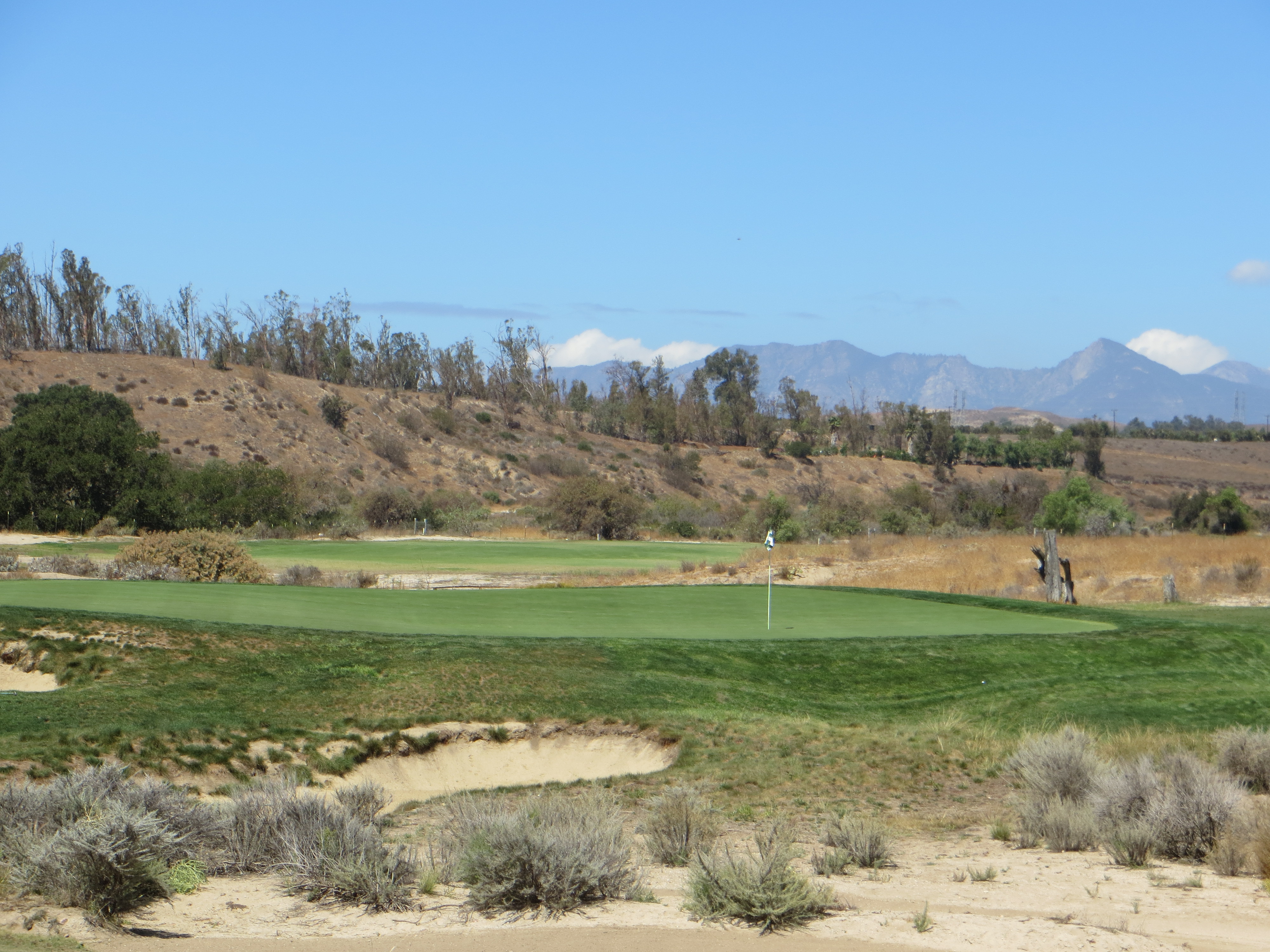
On #11 you see all the elements in play

On #11 you see all the rustic elements composed into one hole

Taking a page from the links formula of course design they created holes using broad fairways and angled proximity to the natural hazards coupled with wide, flowing, and uncluttered green complexes. There is a vague similarity to what Hanse did seven years later at Castle Stuart Golf Links where he built a user-friendly links course with wide driving areas and strategic approach lines on stretches of rolling terraced land overlooking the Moray Firth in Inverness, Scotland.

Slope, contour, and seamless integration of the greens into the fairways

Slope, contour, and seamless integration of the greens into the fairways

As you often see in the British Isles these green complexes, many of which the surrounds blend seamlessly into the green surfaces, encourage ground approaches. Depending on wind direction and pin positions each day this makes for an inherent variety of strategic approaches. Managing one’s way successfully around this place takes a links mentality where every shot requires proper consideration of how it affects the next shot. This means at times one must temper aggressive instincts and allow the flow of the course to dictate the proper and efficient way to play.

The first order of business was that Rustic Canyon be assembled as a municipal facility to serve golfers of every ilk in Ventura County and the greens fee had to be quite reasonable. The driving range, short game area, and practice putting green are modest but adequate to provide players a proper stage prepare for the day. Golf carts are outfitted with a rudimentary GPS system that can be very helpful considering that the lack of trees makes depth perception an enigma and visual distancing a challenge. The course is walker friendly with hand carts available and there is a pricey hand drawn minimalist yardage book that can be helpful as well. The yardage book is done in the style of the touring professional so it has all the real detail a thinking player needs without the glossy window dressing. But honestly you have to be of a particular mindset to find this yardage book user friendly.

The wrap-a-round of the Par 4 12th is one of distinctive features of the three short par fours

The wrap-a-round of the Par 4 12th is one of distinctive features of the three short par fours

With four sets of tees on the scorecard there is a distance to present the appropriate challenge for every handicap. You will note that there is a peculiar fifth choice, the Hanse tees, that is actually a Pu Pu Platter of holes from the Black, Blue, and White Tees. It makes for a wonderful 6400 yard challenge if one thinks the Blue Tees at 6634 is more than they can chew. Playing the Hanse tee you have to pay attention to the Hanse scorecard yardage for each hole to see which color tee to play on that hole. The shorter holes are often played from the Black Tees which satisfies the perverse macho element in most of us-that in itself makes for an interesting twist.

The view from the 1st tee seems confined but there is plenty of wiggle room beyond

The fairway from the 1st tee seems confined but there is plenty of wiggle room beyond

The opening hole is a perfect example of the design characteristics you will see all day. Standing on the tee of this five par the harrowing bunker on the right makes the driving area appear seriously constrained whereas it actually widens past the bunker to almost 70 yards of width and a warm welcome for almost any drive. In spite of this wide driving berth, position is very important depending on how you will negotiate the dry bed fissure on your second shot that bisects the last 140 yards of the fairway into the green. For a bump and run approach shot into the green, the second shot needs to be played from the left side of the driving area deftly into the narrow channel of mown fairway grass left of the fissure. Up the right off the tee allows for a longer second shot lay up to a more open area closer to the green but what is left will be a lawn dart pitching club across the hazard to a green steeply pitched toward you. If the pin is on the front right this can be a difficult approach and putt to negotiate. Throughout the day these types of decisions have to be anticipated so it is a matter of knowing where the pin is located and plotting an approach path that is appropriate.

Hide and Seek on the Par 3 third keeps the player guessing on the best line of approach

Hide and Seek on the Par 3 3rd hole keeps you guessing on the best line of approach

Further study of the scorecard reveal quirky hole yardages and hole sequencing that is equally intriguing. The front nine has three par 3s and three par 5s with all the par threes coming in a five hole sequence. In the links tradition the three pars have great variety from longer semi-blind approaches to large sprawling greens to short pitches to small greens surrounded by deep sand pots or nasty grass hollows. Throw in a two very imaginative short par fours on the outward nine and you are playing an a collection of finesse holes where length is of little advantage.

The 8th is a classic Irish Par 3-the challenge seems simple but add a wee bit of wind and.......

The 8th is a classic Irish Par 3-the challenge seems simple but add a wee bit of wind and…….

As you make the turn sequential technical par 5s on nine and ten followed by another on thirteen provide good scoring chances in the second leg of your Nassau bet. The heart and soul of the back side are three long and challenging par 4s which set an entirely different cadence for the way in. To further complicate matters the routing keeps you off balance as the hole directions switchback five times on the back nine. With any prevailing North/South wind down the valley this will wreak havoc on your swing rhythm and force you to play differing trajectory controlled shots on every hole.

From the start gate on the Par 4 16th tee this is a full Six Flags thrill ride if I have seen one

From the start gate on the Par 4 16th tee this is a full Six Flags thrill ride if I have seen one

It is hard to imagine as you walk the course that there is actually a 240 foot drop in the property as it works from the top of the valley to the bottom. The last change in direction on the sixteenth tee will release you on a downhill ramp that stretches the rest of the way to the clubhouse. This makes for three of the most majestic holes you play all day but the increment of club selection adjustment can be astounding, especially if the wind is at your back. Ground control to major Tom…..it is the only way to control the approaches into the last three greens.

One last set of steeplechase hurdles coming down the finishing hole

One last set of steeplechase hurdles coming down the finishing hole

The Hanse crew was determined to create a rustic golf experience with the natural design feel of the architects of the Golden Age of Design who could not move large quantities of dirt to make a superb golf holes. Honoring that tradition, Rustic Canyon requires thoughtful play with strategic agility. The satisfying feeling of mental exhaustion one gest from negotiating the vagaries of a classic design is something to reflect on long after the Rustic Canyon experience is done.

Moorpark, California

Architect: Gil Hanse (2002)

Tees      Par      Yardage      Rating      Slope

Blue      72         6634          71.6         128
Hanse   72         6390          70.4         126
White    72         6049          69            122
Red       72         5275         65.3          112

(Click here to review Rustic Canyon Golf Course hole-by-hole descriptions)

For more pictures click to review Postcard From Rustic Canyon

Ridgewood Country Club

Ridgewood Country Club LogoTillinghast gave Ridgewood three outstanding nine-hole courses in 1929, compilations of which have combined for tournament play over the last century. Although the greens are not exceptionally large, averaging 5,000 to 6,000 square feet, many bear the original Tillinghast touch – severely sloping, typically from back to front, and protected by deep bunkers at the front corners. These features are overshadowed by the century-old trees that line the fairways and frame many of the greens, making position off the tee such a key ingredient for scoring well, often forcing the better players to club down for accuracy. The trees also serve to isolate each hole from those nearby, creating a scene of splendid tranquility. The challenges are one after another-there are really no let up holes-good scoring demands consistent and creative execution.

The clubhouse sets the classic tone for this place

Embed from Getty Images

.

The old brick and stone European country style club house is a signature of the time this club was built . The club house interiors, locker room, and grill room are classic period designs without a hint of pretentiousness-they speak a quiet confidence of the history of this place. Plaques on the staging patio remind you that the course has been the site of major national golf events from 1935 to today-they include The Ryder Cup (1935), U.S. Senior Amateur (1957), U.S. Amateur (1974), U.S. Senior Open (1990), Senior PGA (2001), and The Barclays Championship (2008-10-14)-winners include well know players like Kathy Whitworth, Jerry Pate, Lee Trevino, Tom Watson, and Matt Kuchar.

Trees frame the shots required throughout the three nines

Embed from Getty Images

.

The club had been the home of one of the most famous club pros of his era, George Jacobus and he mentored Byron Nelson as his summer assistant back in the 1930’s. Byron credits the development time spent at Ridgewood under the eye of George Jacobus as the most important in his career. There remains a plaque on the end of a patio commemorating a shot Byron hit as part of a bet with some caddies-they threw down three balls and bet him he could not hit the flagpole about 150 yards away. With a three iron in hand Byron plunked the flagpole on his second try to collect the winnings.

View of Byron’s patio to flagpole challenge

Embed from Getty Images

.

The first thing you notice is the segmentation of the holes created by the towering trees. The spacing of the trees is generous so wayward shots still allow a path to recovery-but the thickness of the rough makes you pay the price for being off line with your tee ball. The center nine is built on the highest part of the property so the holes there have the greatest bit of topographical influence-the east and west nines fall to the sides of this high ground and provide lots elevation change and side slope stances and rolls. The combination of the trees dictating shot line and positioning along with the tactical fairway and greenside bunkering make you engage the trouble for the most aggressive shot lines.

Typical Tillinghast’s green complex…a small hole with a big challenge

Embed from Getty Images

.

The creative nature of the green complexes means you will miss greens and have many pitch and chip opportunities to save pars-it will take good short game skills to be successful around here. One nuance is that, in spite of the fact that most greens have open front access, most have a gentle lip on the front of the green which makes pitching and chipping to front and middle pin placements very challenging. We are not talking false fronts but just enough lip to the green to make the player very indecisive as to whether to keep the shot on low to the ground or force it over the front edge of the green in the air. Fast greens just complicate this decision.

Challenges throughout can shock the system like a cold ice bath

Embed from Getty Images

.

One of the most dominant features to negotiate is the grain on these greens-it generally runs across the property toward the highway-everything breaks toward the traffic noise-now that is different. With the slope in these greens and the dominant grain fast green speeds can make this a real test of patience and discretion.

For all of the difficulty articulated the course is very playable for the average player-the challenges are obvious and doable for someone with discretion. Score can be protected when the challenge is too steep and there are scoring opportunities to be seized at the appropriate time. Tillinghast knows how to challenge a player without overwhelming them-it is always a pleasure to play his courses because they have the visuals to wow you but plenty of opportunities to succeed if you play with good judgment.

Paramus, New Jersey

Architect: A.W. Tillinghast (1929)
Rees Jones (restoration 1986)

.

East-Center:

Tees      Par      Rating       Slope       Yardage

Blue       71        71.6          136            6453

White     71        69.4          126            6023

Center-West:

Tees      Par      Rating       Slope       Yardage

Blue       72        71.8          136            6563

White     72        69.3          126            6016

West-East:

Tees      Par      Rating       Slope       Yardage

Blue       71        72             137            6578

White     71        69.1          127            6013

(Click here to review Ridgewood Country Club hole-by-hole descriptions)

Crail Balcomie Links

Balcomie Links SignThe thing I love about Scotland is that there are links courses with little reputation that are must plays for the true golf addicts. The Balcomie Links at Crail sit about a half hour south of famed town of St. Andrews and does not carry any of the reputation of the courses in that immediate area. But in some ways Crail, perched high on the rocks above the North Sea, with a unique combination of three par fives, six par threes, and nine par fours measuring a mere 5900 yards is one of the most fun filled afternoons of links golf you can play. The vistas this course presents all through the round will have you repeatedly grabbing for your camera to capture another digital moment.

The Crail Golfing Society was instituted in 1786 and is the seventh oldest golf club in the world. Old Tom Morris laid out the holes of the Crail Balcomie Links in 1895 exposed across rugged and hilly terrain where the wind will batter your ball without compassion requiring you to play an unusual diversity of approach shots where the ground is your friend. Tidbit, I have read that this first known course on record to use iron cases as hole liners.

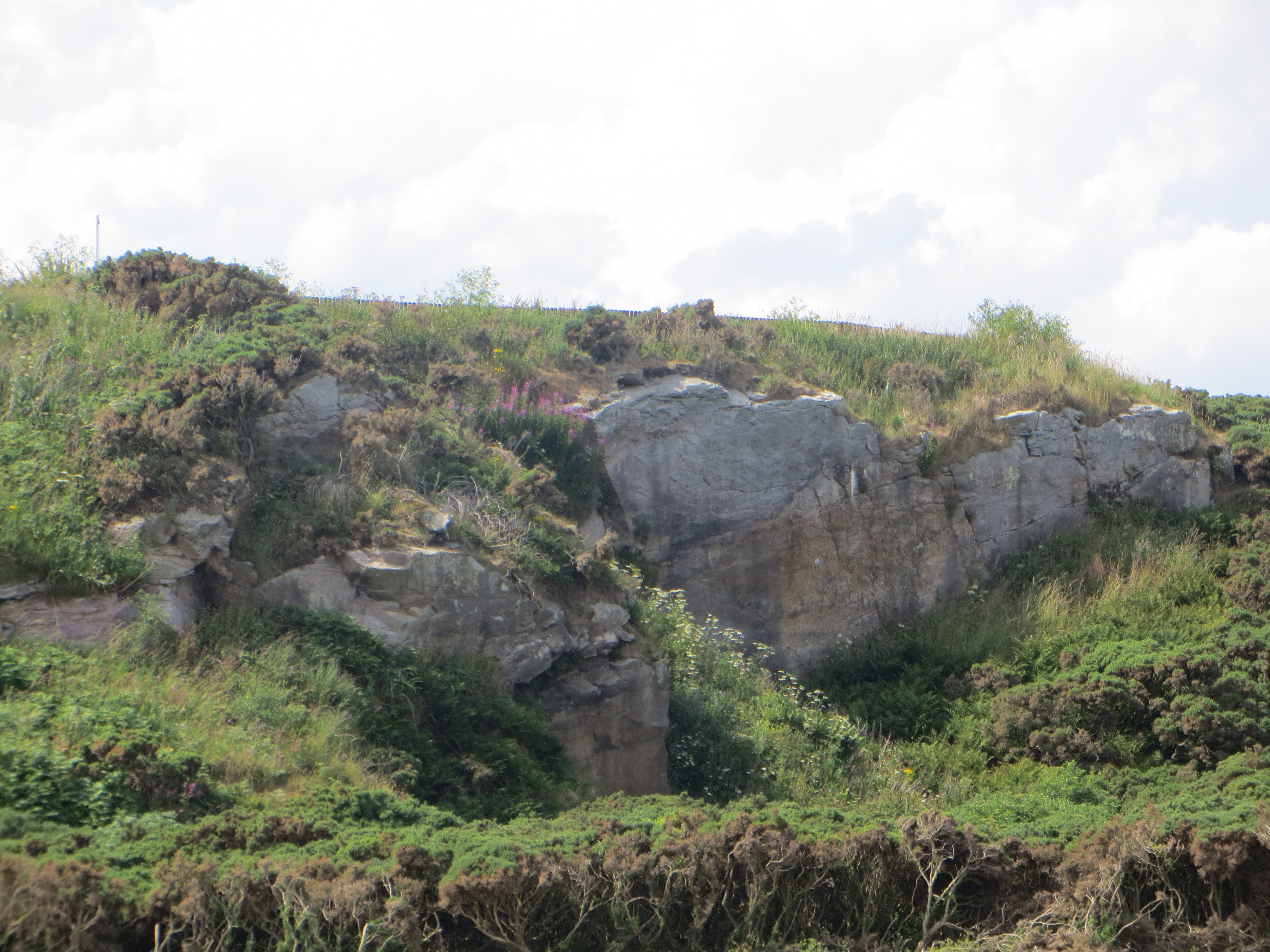
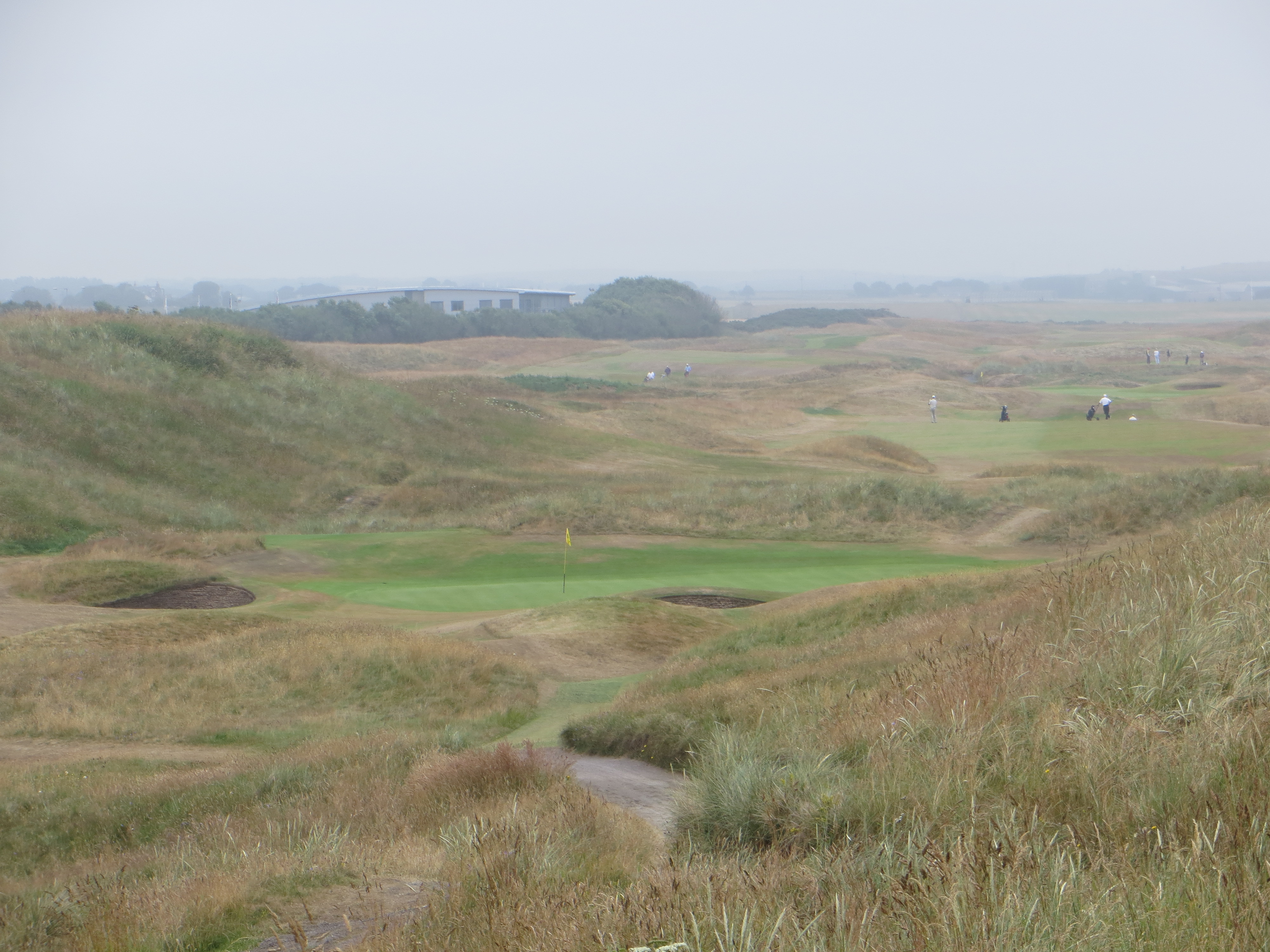
The ominous quarry wall makes it's presence known throughout your walk today

The ominous quarry wall makes it’s presence known throughout your walk today

 (Click on any picture to get an enhanced view of the image)

The golf shop is a small, quaint affair perched high atop the Craighead ridge overlooking the course below. The separate clubhouse replete with all sorts of memorabilia has an equally stunning view of the North Sea and the last four holes. No practice facility I could find so it will be a couple of putts and then unleash it off the flight deck of the first tee.

What really makes the Balcomie Links unusual is the sequencing of holes which was clearly determined by the ground that nature presented to Old Tom. It begins with a relatively easy downhill par four followed by a routine par 5 that climbs back up to a ledge overlooking the North Sea.   The golf challenge picks up quickly as the next three holes are played on the most exposed land on the links. This is no time for heroics take the prudent land line on all shots.

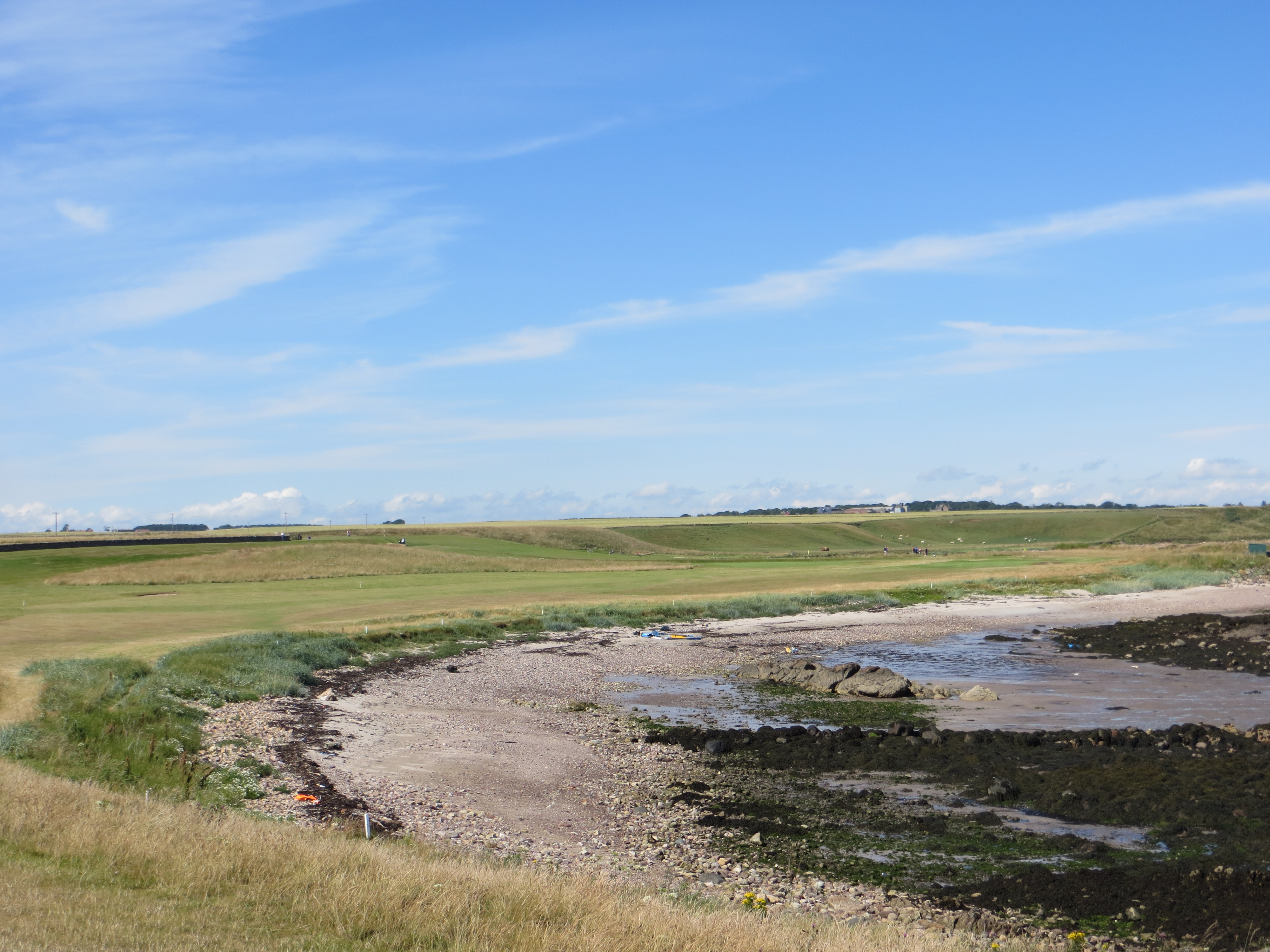
There are no shortcutsyou want to take on the seaside holes

There are no shortcuts you want to take on these seaside holes

From six on you are working back in the direction from whence you came. The eighth, one of the longest par fours of the day, wanders back up the steep hill into the prevailing wind to a double green it shares with the eleventh. From this green you can probably make out the Netherlands.

From the double green of 8 and 11 you can just make out The Hague

From the double green of 8 and 11 you can just make out The Hague on the horizon

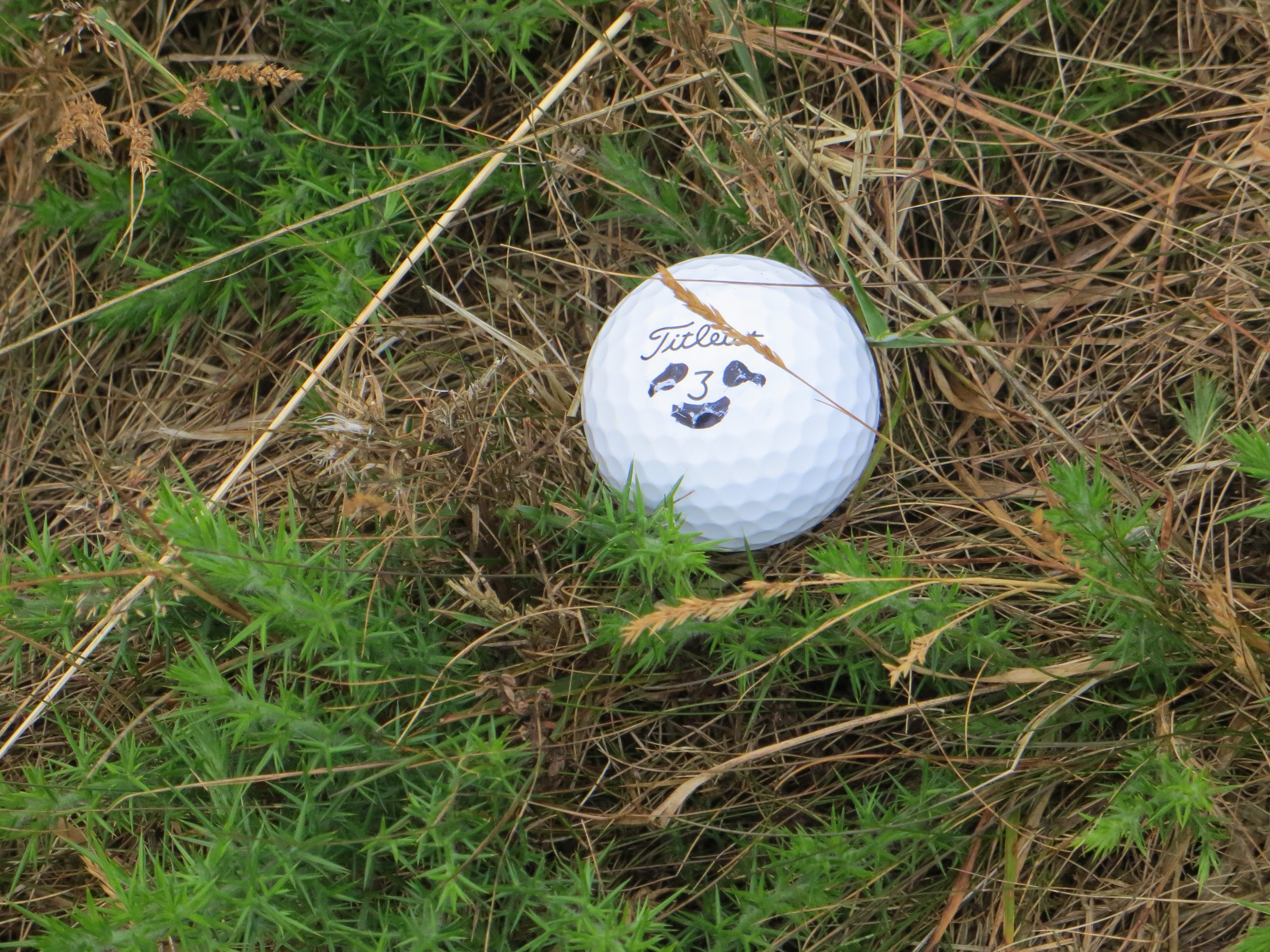
Three billy goat down, up, and down holes follow setting you up for a most interesting finish. This part of the course the holes are so tightly configured that you will swear there are groups of eightsomes in front of you but it is likely just a second group playing up the adjacent hole. Better check your Titleist carefully on every shot or you might find it has changed unexpectedly to a Srixon.

Now it gets really funky as you will play four par threes in the last six holes. It seems Old Tom struggled to fit in the full 18, but do not be fooled by that because this is one of the hardest scoring stretches of the day.

The view off the flight deck on the 14th tee is spectacular

The view off the flight deck on the 14th tee is spectacular

Mystical interlude: Michael Murphy found enough intrigue in this place that he chose it as Burningbush, the fictional playground of Shivas Irons, in his famous book “Golf in the Kingdom”. He used the Craighead hole (#13) and the quarry and caves beside it for the memorable scenes where Shivas Irons introduces the young traveler to the mystic truths of True Gravity and the perfect golf swing. You too can pay homage with a visit to the caves as you make your way around the quarry path between the 14th green and the 15th tee.   If you listen closely you may just make out the shuffling steps of Seamus MacDuff in the crevices behind you.

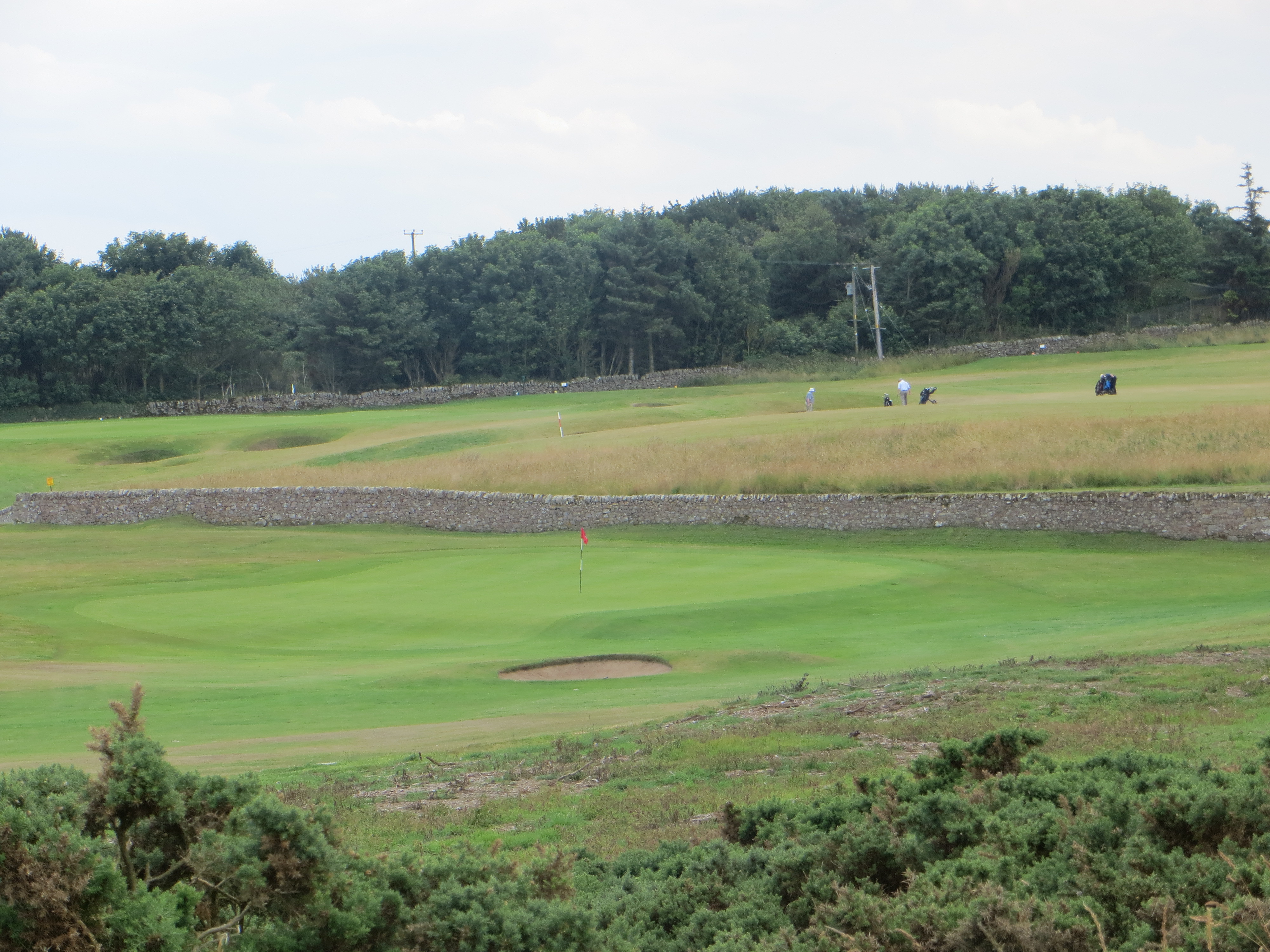
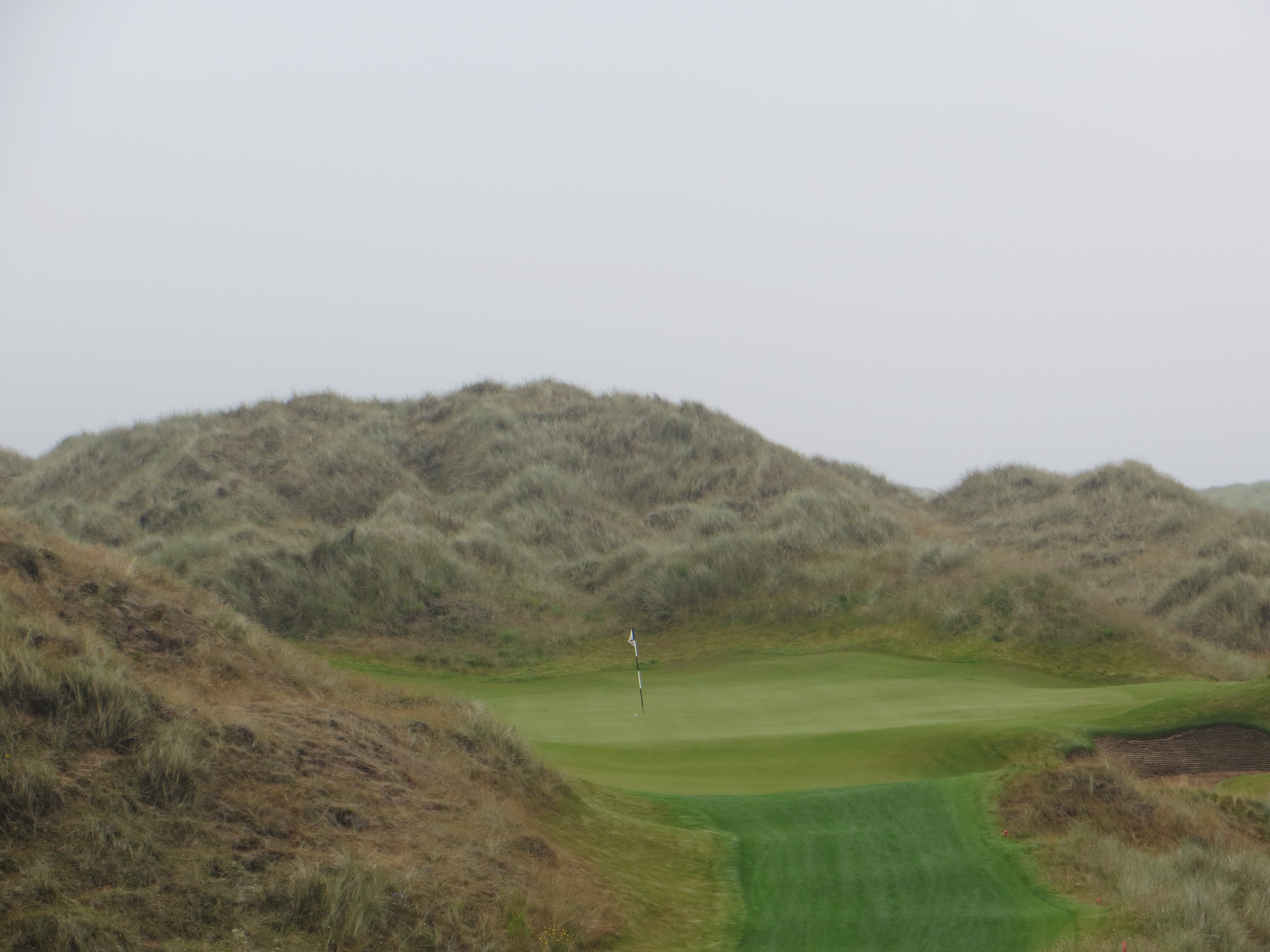
The shot up the gorse face on the 1th will test your nerve and patience

The shot up the gorse face on the 1th will test your nerve and patience

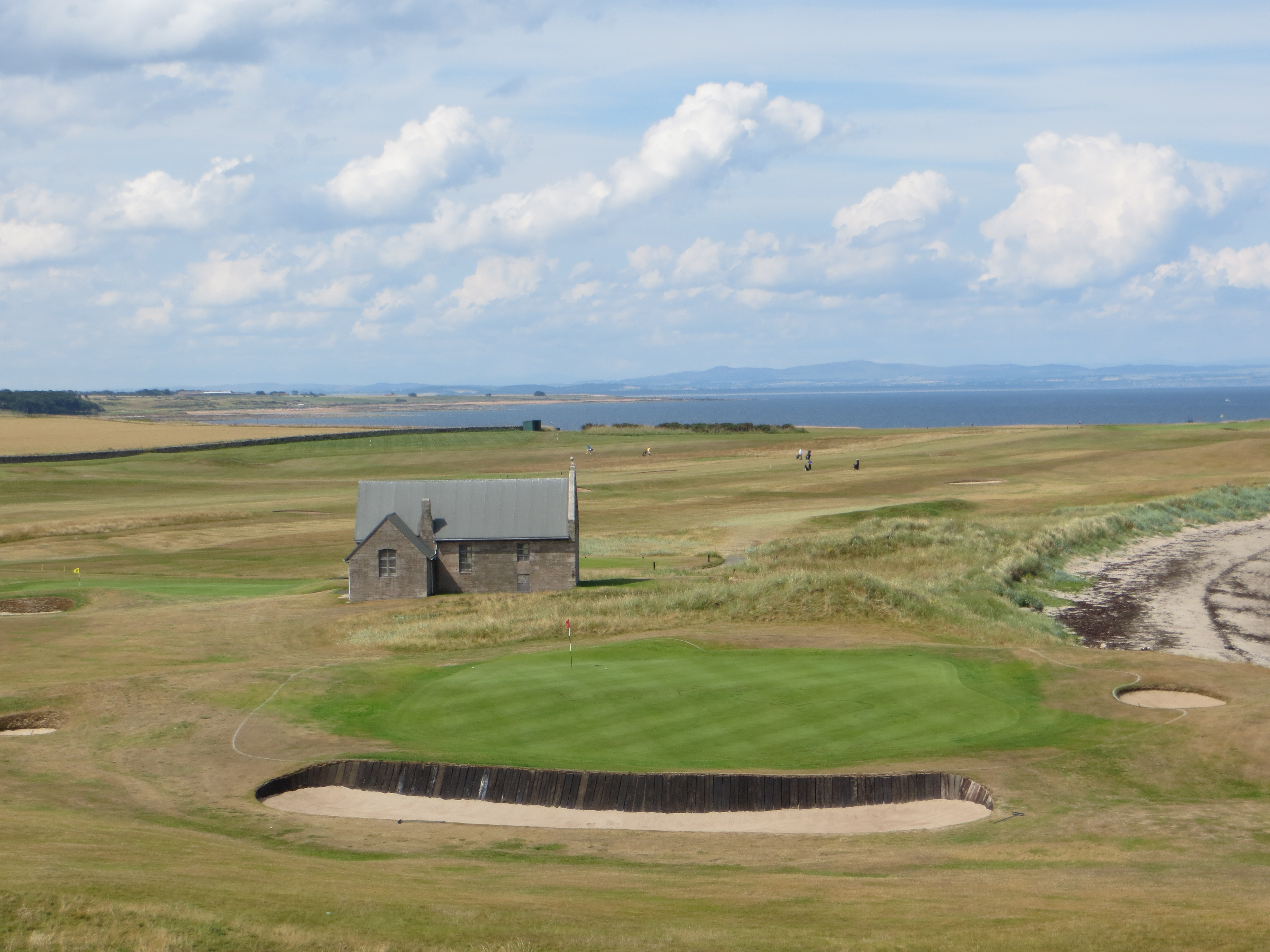
The final four holes are an eclectic finish to this unconventional track as they wind up and down the hills on a sliver of beachfront below the massive quarry wall facing the North Sea. Once again the exposure to the wind makes the distance of the holes irrelevant to determining the difficulty of getting to the bar with a scorecard in tact. It is a real thrill ride right to the end.

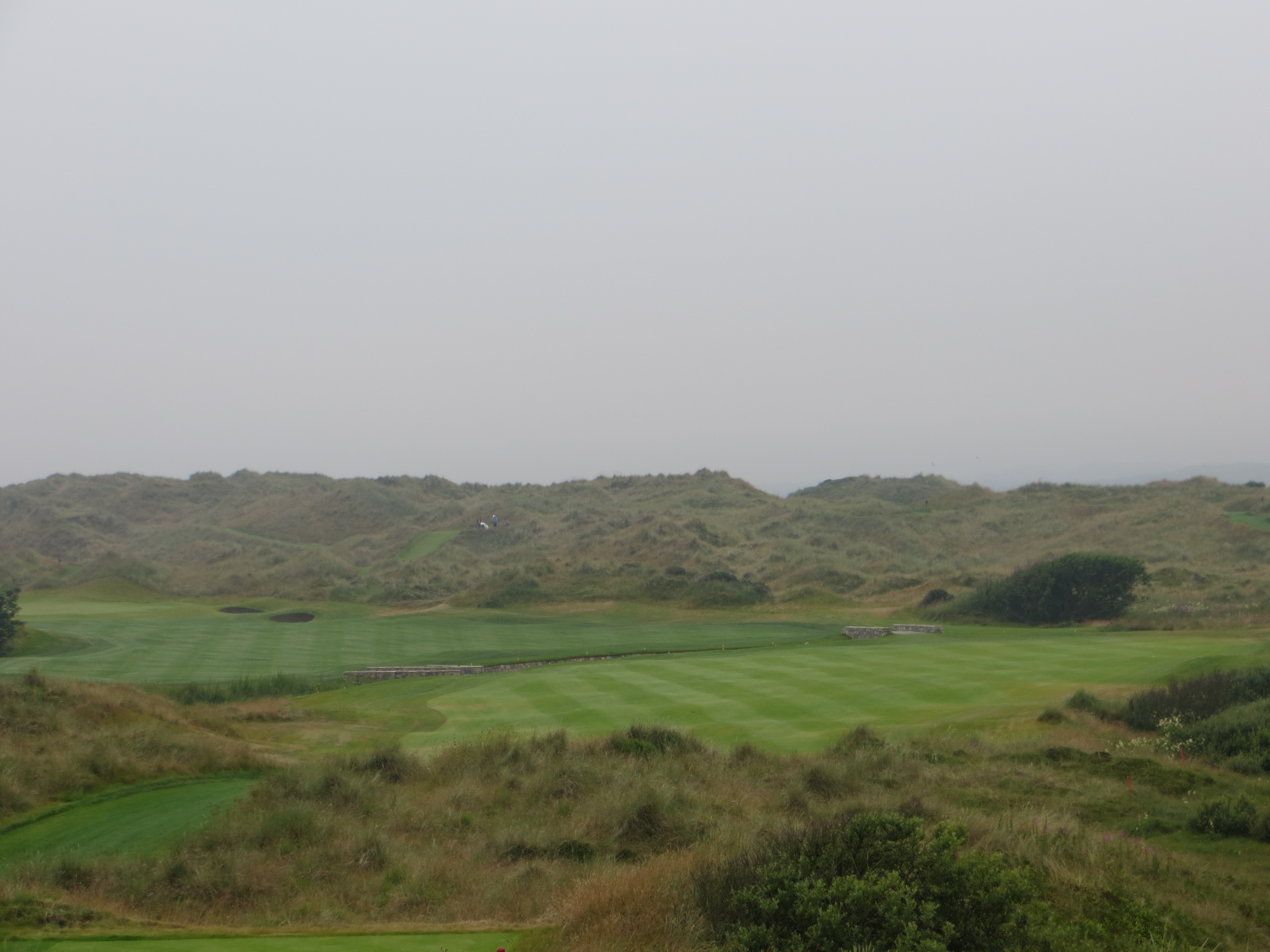
The finishing hole

The finishing hole from the high tee, across the gorse, to the enigmatic green below

Once you have had a chance to reflect on it, the Balcomie Links will remind you of the favorite rumpled sweatshirt you love to throw on for the yard work on Sunday mornings. It is without pretense, comfortable, and has witnessed many of your most unheralded accomplishments without feeling a need to pass judgment. Balcomie Linkes presents an opportunity you don’t want to miss, a memorable windy walk along the coast of Scotland with a baffin’ spoon in your hand.

Crail, Scotland

Architect: Old Tom Morris (1895)

Tees                 Par    Yardage      Rating         Slope

White               69        5861          69.7             122

(Click here to review the complete Crail Balcomie Links hole-by-hole descriptions)

For more pictures click to review Northern Scotland-Day 8:  Crail Balcomie Links

Royal Aberdeen Golf Club

Royal Aberdeen LogoDating back to the formation of the Society of Golfers at Aberdeen in 1780 Royal Aberdeen is the sixth oldest golf club in the world. A sense of golf legacy is felt everywhere you go on the property. For the first hundred years golf was just played on ground within the town but in 1887 the land just north of the estuary of River Don at Balgownie was leased and the Simpson Brothers helped bring this historic links to life. Willie Park Sr. and Tom Simpson later took their part at shaping these links.

The simple but stately clubhouse is full of evidence of tradition

The simple but stately clubhouse is full of evidence of Scottish golf tradition

The first nine holes are considered by some among the very best in Scotland as they wind through the full rapture of links features-towering dunes, rolling fairways, gorse, heather, and tightly textured seaside turf. You cannot help but be caught up in the course’s beguiling solitude and seclusion. As you often see from courses of this era Royal Aberdeen is the classic out and back links arrangement.

The Par 3 third is typical of the enveloped look of the front side holes

The Par 3 third is typical of the enveloped look of the front side holes

The second nine is shorter and runs along the high plateau overlooking the front nine. You are likely to see an opposite direction in the wind influence over the inward nine. Some say this side lacks many of the features that make the front so memorable but there is an array of blind tee shots, hidden troughs, and very difficult putting surfaces to keep the challenge fresh.

Sea is over the dune behind the Par 3 8th-just a postcard moment

Sea is over the dune behind the Par 3 8th-just a postcard moment

What I enjoy about this place is that the links design gives the greens keeper the latitude to make the course playable each day as the wind changes. The greens are sufficiently long to allow for back pins down wind and front pins when the gale is in your face. Plenty of options to use the ground as your friend on approach shots. Take careful note that often the fronting green side bunkers are not at the green but well short of the putting surface to accommodate this option to feed approach shots onto the green.

A typical approach #15..bunkers need to be avoided

A typical green complex approach #15..bunkers set off the right-passing access from the left

Covering the Wailing Wall from the green side bunker on #15 is intimidating

Covering the Wailing Wall from the middle green side bunker on #15 is intimidating

The greens have lots of undulations which again provide the creative player with ways to carefully maneuver pitch shots to snuggle up to the hole. The game inside of fifty yards at Royal Aberdeen may provide some of the most lasting memories of the day.

The back nine climbs to the plateau and gives wind a maximum chance to affect your game

The back nine climbs to the plateau and gives wind a maximum chance to affect your game

As mentioned tradition is on display in troves throughout the clubhouse. You will see documents that show the first interclub tournaments held in the late 1800’s with guys from St. Andrews, Dornoch, Prestwick, and others. Those away games must have been a hoot. In 1783 the folks at Royal Aberdeen were responsible for establishing a five minute time limit on search for a lost ball. The Royal and Ancient adopted this practice shortly thereafter.  Other concepts Royal Aberdeen introduced include that the winner of a hole is entitled to the “honor” of playing first on the next hole and that the ball furthest from the hole is played first.

Here is one we found in the gorse within the allotted five minutes

Here is one we found in the gorse within the allotted five minutes

There are elaborate uniforms of the membership, endless pieces of competitive memorabilia, and wonderful pictures of the recognizable champions who have played and won in competitions contested on these links. Make sure to lunch in the grill room that overlooks the first tee it provides one of the great panoramic views of links golf in Scotland.

Last look up the 18th you see the clubhouse in the misty distance

Last look up the 18th you see the clubhouse peering at the green through the mist

The golf shop is a kitchy little building just below the first tee. Nooks and crannies full of stuff you will be temped to buy. As is often the case in Scotland, no practice area is evident. Hit some putts on the practice green and just soak in the gestalt of this place to prepare to play. If you are a discerning player this is a links experience you will never forget. Don’t say you were not warned……..the devil is in the details so make sure to read the hole-by-hole descriptives below.

Aberdeen, Scotland

Architect: Robert and Archie Simpson (1890)

Tees      Par     Yardage     Rating     Slope

Blue       71         6861         74.3        145
White     71        6497          72.7        142
Yellow    71        6214          71.3        140

(Click here to review the complete Royal Aberdeen hole-by-hole descriptions)

For more pictures click to review Northern Scotland-Day 6b:  Royal Aberdeen Golf Club

Trump International Golf Links

Trump International LogoIntroducing a new championship links course in Scotland is a rarity these days and for someone like Donald Trump to adopt this as a project made it’s realization even more unlikely.  As with all things Trump the creation of the Trump International Golf Links in Aberdeen, Scotland bruised a few egos, ruffled a bunch of feathers, and alienated a lot of locals.  But in the end a first class links course got built on a marvelous a piece of links real estate.  The quality of the result is attributable to the creative genius of Martin Hawtree who drew from this narrow strip of coastal dunes a memorable collection of 18 holes for the ages.

The Aberdeen region of Scotland has a rich history of great links golf with iconic courses like Royal Aberdeen and Cruden Bay as well as lesser known gems like Murcar and Fraserburg among others.  The addition of Trump International simply ups the credential a notch and probably increases the likelihood of this neighborhood becoming a regular stop for prestigious events like The Scottish Open or other European Tour championships.

It is all about the dunes at the Par 3 6th.

It is all about the dunes at the Par 3 6th..Pat Ruddy would nod his approval.

Hawtree was blessed with a stunning piece of land abutting the North Sea with sea grass covered sand dunes the size of office buildings.  Places like Enniscrone, Ballyliffen Glashedy, and the European Club in Ireland come to mind as you stare out at the expansive range of these imposing dune fields.  If must have been a challenge for Hawtree to simply decide where to begin.

Defying the traditional out and back approach to links design he placed the clubhouse in the center of the property and tracked four holes south with the sea on the left and five holes back on the inland side.  The back nine does the opposite with four holes working up the inland side to the north before the last five meander up and down among the coastal sand dunes coming back.  Though you rarely see the sea it’s proximity provides a steady wind influence lurking over top of the high dunes.

Trump wanted a stout championship course so he could woo a major championship but something playable enough for the retail golfers who would foot the bill for it’s existence every day.   To this goal there are six sets of tees and 112 tee boxes which might seem like a bit of  design overkill.  In reality this volume of teeing grounds allows the greens keeper to set up each hole to play to the same level of challenge for every caliber of player.  It also affords a flexibility in daily course set up to match the prevailing wind direction and intensity and make the severity of the challenge consistent in all conditions.   You just may need a GPS device to assist in the location of your tee box.

Full challenge at the 2nd-forced carry, burn, and a tuck-away green complex.

Full challenge at the 2nd-forced carry, burn, and a tuck-away green complex.

From the tips the measure is close to 7500 yards but if you pick the appropriate tee you should find a manageable golf challenge.  First glance at the blue tee scorecard reveals three of the four par fives are 500 yards or less and only five of the par fours are 400 yards or more.  But the devil is in the details (see link at the bottom for hole-by-hole detail) because the routing vis-à-vis the prevailing wind can make the effective playing length much longer.   Hope is that once the course sets in a few years they let the fairways firm up and this lengthening will get mitigated as it does on all links courses.

The first impression you have after you get over the scale of the dunes is how green this place is for a links course.  The quality of the grass in the walking areas between greens and tees would be the envy of the highest end country club in the states.  The emerald color actually takes away from the links character and Americanizes the course but again I am sure this is what the boss wanted.

Bunkering is the next thing that will capture your attention.  Cluster bunkering in some fairways and green approaches makes a number of those holes appear like an arcade game.  But in fact there are a greater number of holes with very sparse bunkering, often a single bunker at the green’s edge, so the use of sand is by no means overdone.  Having said that, the bunkers out there are fierce.  Many are funnel deep, revetted bunkers that can exact a full stroke toll where a sideways escape is the only way out.

The green at the Par 3 12th is protected by it's own contour...the nasty bunkers are an extra.

Greens protected by their own contours…tightly mowed surrounds make bunkers into ball magnets.

As with many links courses the greens are massive to provide the opportunity to make approach shots more manageable based on the day’s wind direction.  Hawtree segmented these greens in a way that there are often three greens within the green so the proper angle of approach requires forethought based on the day’s pin location.  Raised surfaces with fall offs, collection hollows, and a few nasty bunkers demand approaches with conviction or else you can spend the day inventing recovery shots you never imagined.

The Hawtree genius on full display in the look off the plateau tee on #5.

The Hawtree genius is on full display in the look off the plateau tee on #5.

The good news is that everything you encounter, driving areas and green complexes is right in front of you.  No blind shots, very few severe uphill shots, and plenty of bail out room where you need it.  But as discernable as your targets are many are fraught with existential topography and hazards that can have their way with your best intent.   You will encounter the full array of mounds and hollows, severe bunkers, furry sand dunes, and even marshy wetlands.  The wetlands seem a bit onerous and out of character on a links course and may be where he stepped across the line.

The course opens with a relatively straight forward five par that puts almost all of the above into play out of the gate.  The pressure ratchets up quickly with a burn bisecting the second followed by the postcard par three third-the only place you witness the sea first hand all day.    When you get to the perched tee at the par four 5th you are sure you have stepped into a J.R.R. Tolkien novel….there have to be trolls and hobbits lurking in these surrounds.  The 6th makes you feel like you have been transported across the Irish Sea to European Club south of Dublin-this hide-n-seek par 3 is pure Pat Ruddy.  From 7 to 9 you get the full challenge-a short technical par four and two brutishly heroic par fours before you get a chance to catch your breath and an Irn-Bru at the turn.

Nestled in the dunes the 14th is pure eye candy.

Nestled in the dunes the 14th is pure eye candy.

The inward nine follows a similar pattern with a straight forward five par followed by a couple of manageable par fours and a very linksy par three.  The wow meter jumps to double digits when you step on to the tee box at 14.  What rolls out beneath your feet simply will take your breath away.  A beautiful midrange par four brings to mind Royal Country Down, fairway swaddled between dune ranges with the North Sea peering over the top.
Another tantalizing short par four before you turn back south for the final run.  There is no let up from here to the house you have to play your best golf of the day because you are likely playing into the wind.   The par three 16th will test your trajectory and distance control with a well protected green that is 45 yards long.  In spite of it’s handicap designation, the 17th into a two club wind may be the hardest hole to par since the Road Hole at The Old Course.  There is one last Kodak moment is ahead, walk to the top of the back tee on 18 where the hole measures 651 yards and a sea of 18 bunkers, count em, stands between you and the final green.  Maybe there is a bit of Trump showmanship in this one but it is a very interesting finishing hole.

The last 9 of the 18 bunkers on the approach to the finishing hole must be avoided.

The last 9 of the 18 bunkers on the approach to the finishing hole must be avoided.

Trump did not cut any corners in the creation of his golf nirvana and the fare you pay will indicate that. Unlike most venues in Scotland there is an elaborate practice ground with a full driving range, wonderful short game preparation area, and expansive practice putting greens at your disposal.  The Trump Links clock overlooking the range, the black and bronze signage throughout the course, the classic stone bridges that cross the burns, and even the cherry wood trash cans with the Trump International Crest remind you that this is a Trump creation.  The Donald would have it no other way.

Aberdeen, Scotland

Architect:  Martin Hawtree (2012)

Tees       Par      Yardage     Rating      Slope
Blue       72        6602         73.8         140
White     72        6329         72.3         133

(Click here to review the complete Trump International hole-by-hole descriptions)

For more pictures click to review Northern Scotland-Day 5: Trump International Links

Highland Links Golf Course

Highland Links LogoFounded in 1892 and heralded as Cape Cod’s oldest golf course, the Highland Links in North Truro is one of America’s nostalgic golf treasures, perched high along windswept bluffs overlooking the Atlantic next to the vintage Highland Lighthouse on Cape Cod.  This is not going to appear on anyone’s top ten courses in Massachusetts much less the northeast, yet if you are truly a student of the game this is a must play if you are on the Cape.

The original Highland House Golf Links was an adjunct to an ocean hotel and cottage resort operated for years by Isaac Small of Truro and his family.   After years of growing wear and tear the links were refurbished in 1955 by owner Hal Conklin.  In the 1960’s, when Congress approved President Kennedy’s Cape Cod National Seashore Act, Highland Links became Federal property leased to the Town of Truro.  This is now an inexpensive public golf course available for the pleasure of anyone visiting the northern end of Cape Cod.

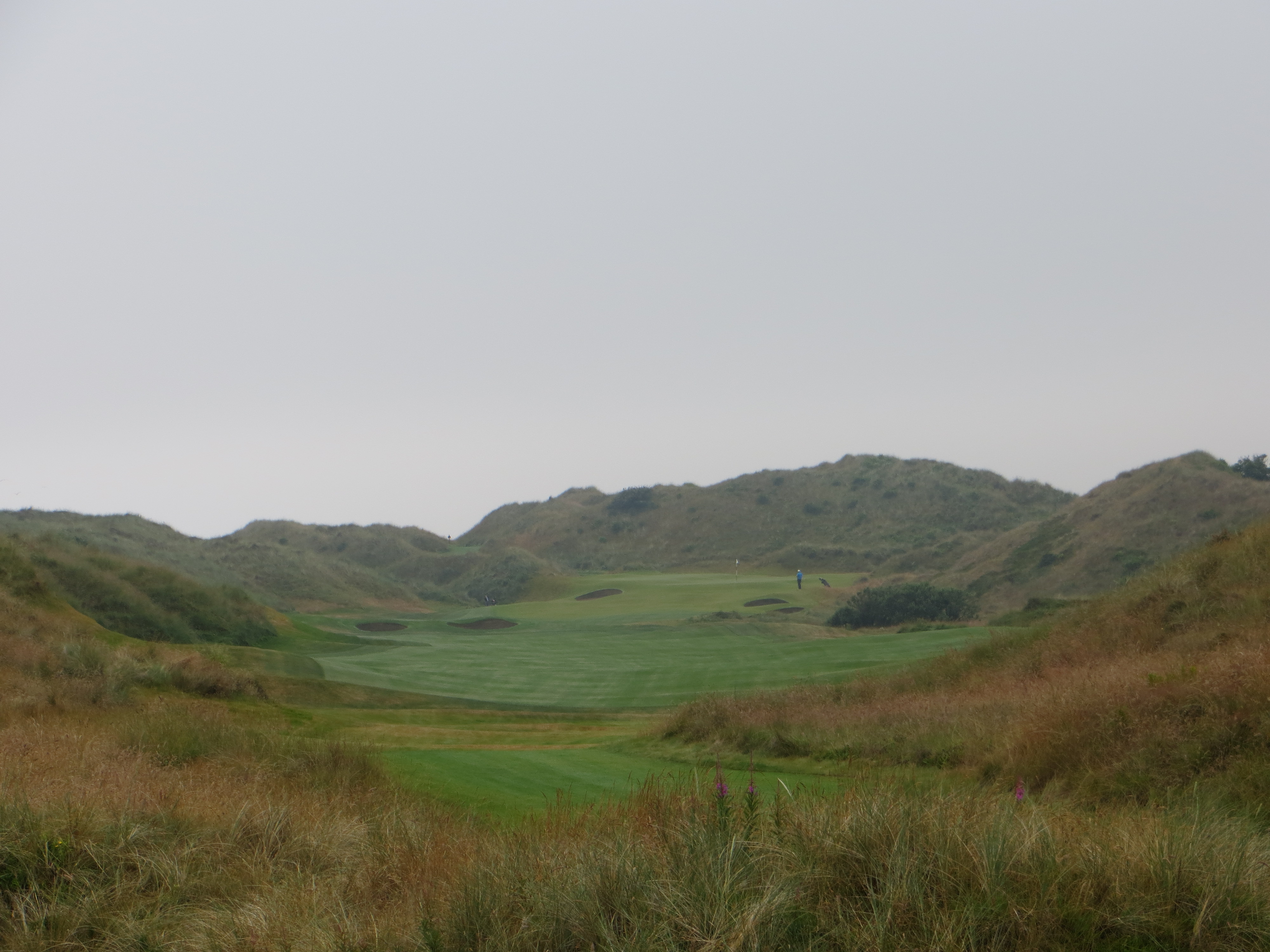
The second would feel at home anywhere in Scotland or Ireland.

The second hole would feel at home anywhere in Scotland or Ireland.

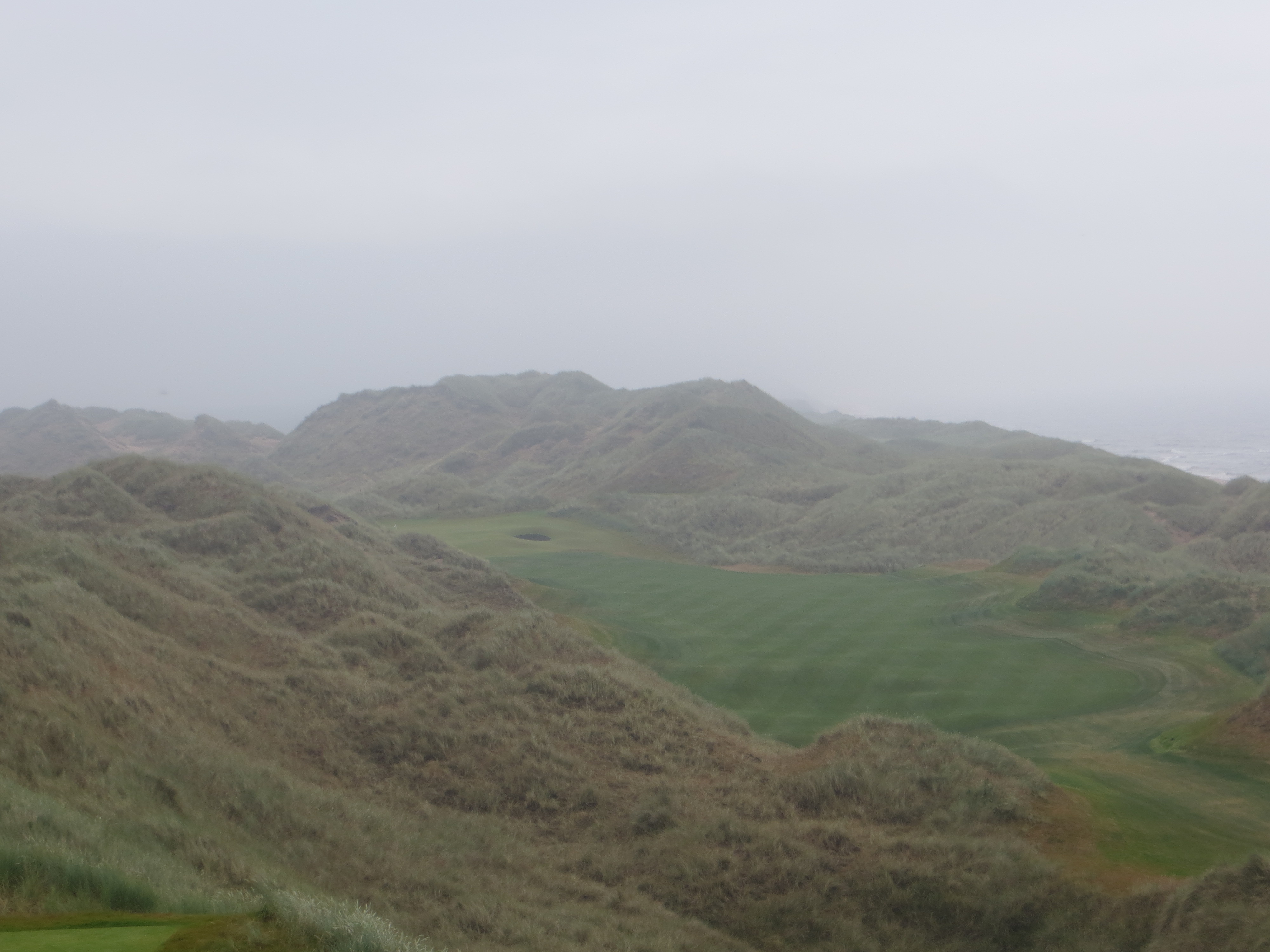
Deep natural rough, Scottish broom, thick gorse and low bushes, hilly terrain with non-irrigated open fairways, and spectacular ocean views make this course a genuine links in the Scottish tradition.   Wind, weather, rock hard fairways, and high rough are always a factor at Highland Links. Add to this the up and down elevations and gently rolling fairways you will have a links golf experience that you will not soon forget.

Each hole requires a second time around.

Each hole requires a second time around.

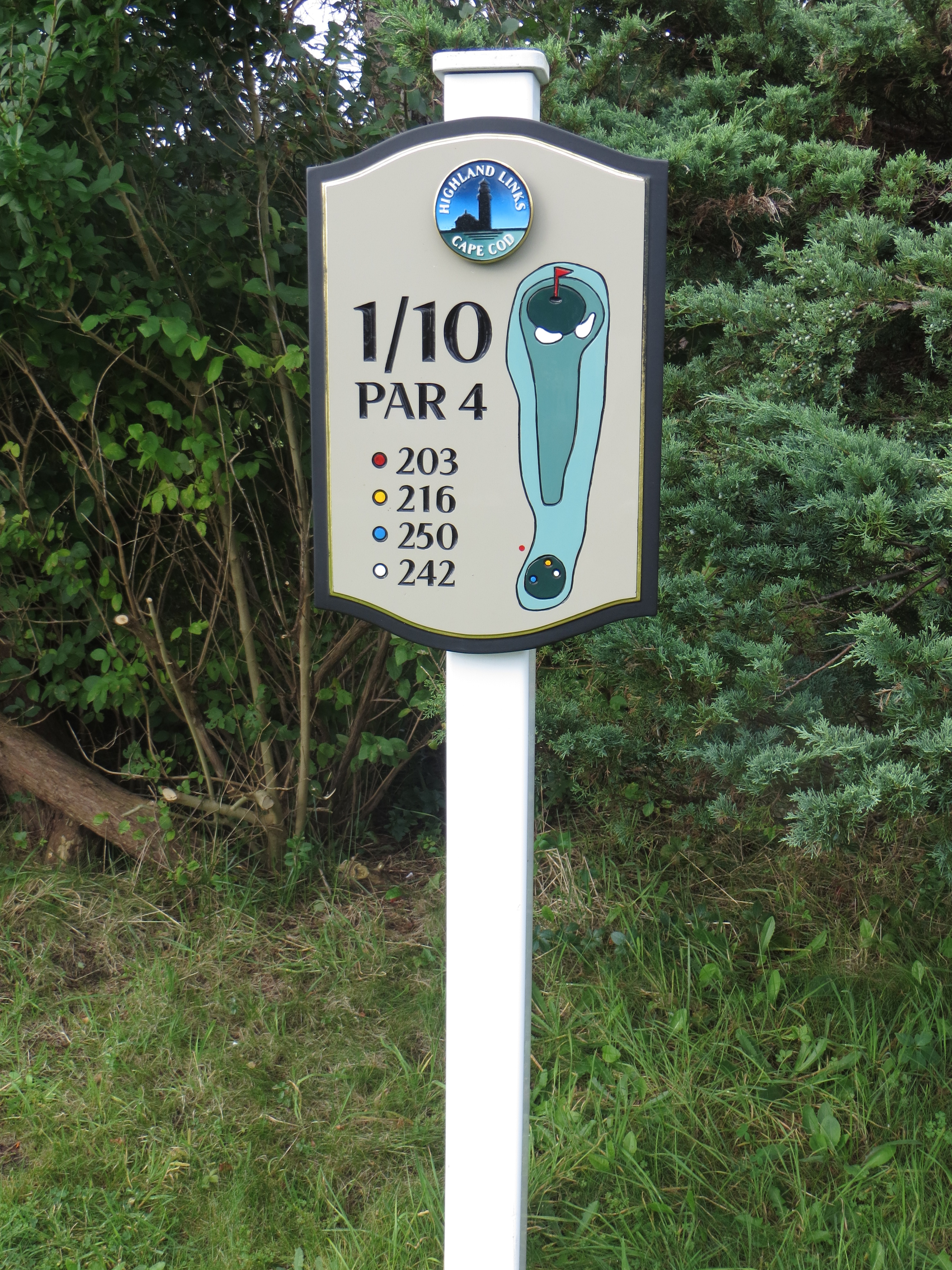
This is only a nine hole course but they have two sets of tees so you can make a second loop to get in the full eighteen.  I highly recommend you do that because the first time through there is a steep learning curve on how to play these holes successfully.   As you play the nine again from slightly different tees it is interesting that the men’s inward nine is 200 yards shorter while the women’s inward nine is 30 yards longer.  The second hole is a par 5 on the front and a much shorter par 4 on the back.  The fourth goes from a par 4 to a par 5 as the thirteenth.   With different teeing lines, the shorter distance on the second nine seems a harder round to the measure of par.

Elevation change and wind have to be constantly condsidered.

Elevation change and wind are constantly considered through your day.

If you are used to lush fairways and fair bounces you need to check your ego at the door of the golf shop.  This is golf the old way, rock hard fairways with existential bounces, small putting surfaces with angular fall offs, and serious slopes to navigate on the greens.  The wind will be a major influence so trajectory control and creative attack lines are called for.  If you have a quiver of links shots bring them with you because the ground is your friend and you will have to make some strong up and downs to play well here.

Full links drama on the drive on the Par 5 sixth.

Full links drama unfolds before you on the drive at the Par 5 sixth.

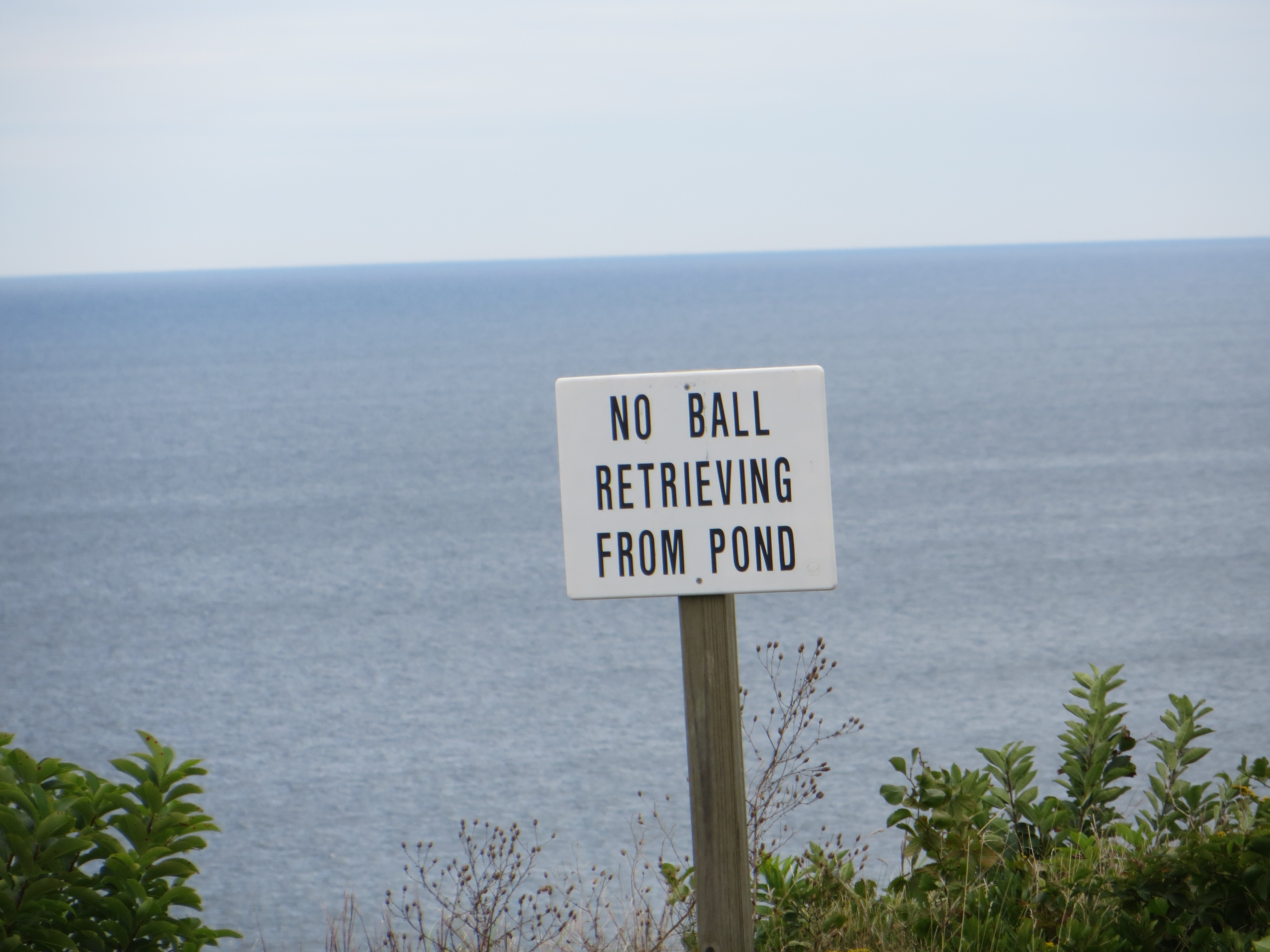
The views on the high holes are just spectacular.  When you get to the tee box on six you are perched on a cliff about 400 yards above the ocean with a drop dead panoramic view worth a digital moment.  This place is not without a sense of humor.  There is a sign adjacent to this tee box on the walking path to the cliff that says, “No Ball Retrieving From Pond”.   You would need a grappling hook, lots of rope, and a lobster basket.

The PondThe Highland Lighthouse is prominent on the horizon through the round but never more spectacular then when it is the backdrop to the finishing par three on each nine.  In fact on the Truro Links website under “Directions”  they have:

Scotland:

Sail Southwest until you reach the 42nd parallel. Then head due West until you see Highland Light.

The views do not get any better than this.

View at the Par 3 ninth……it does not get any better than this.

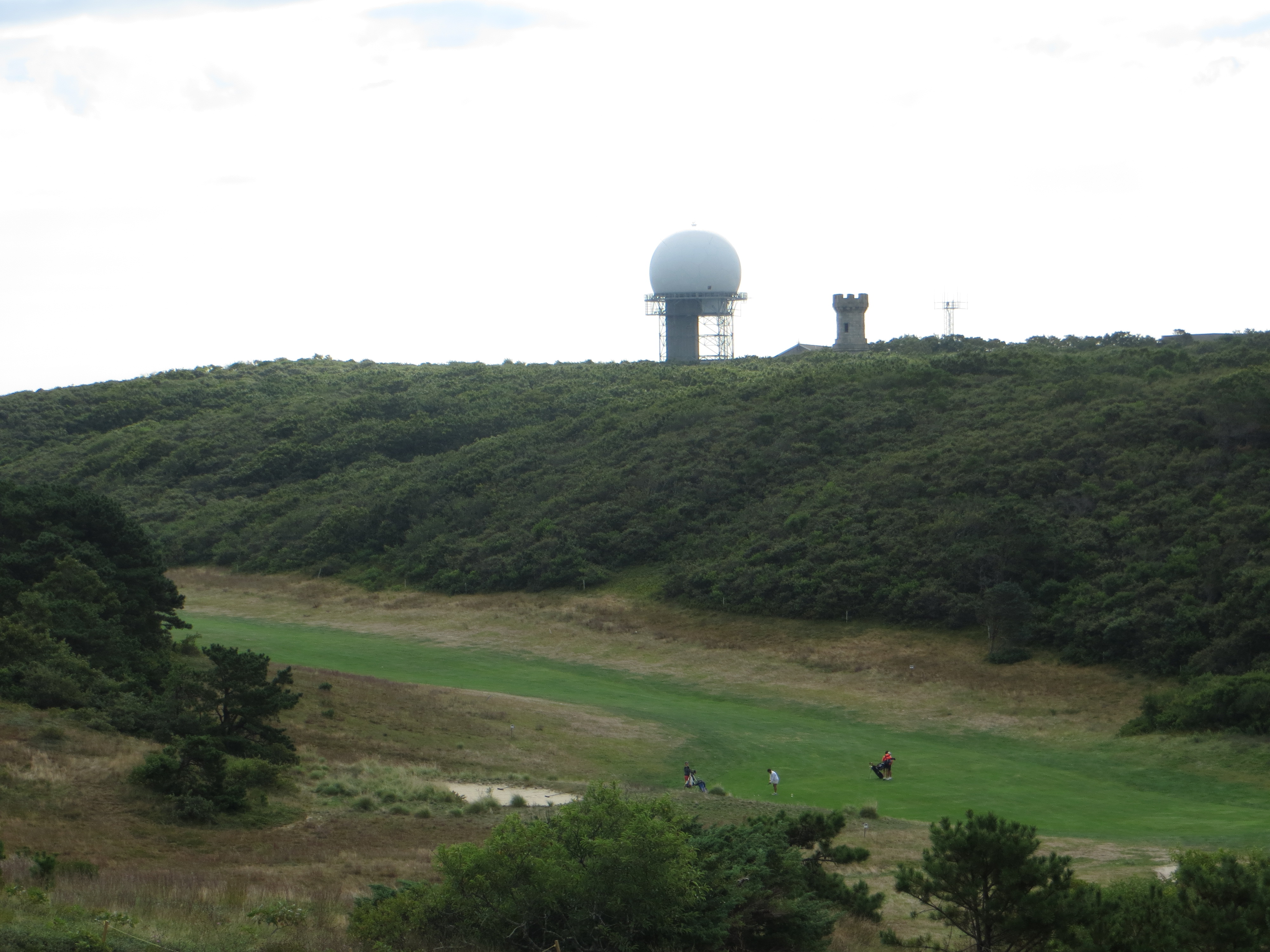
There are also two other curious architectural artifacts on the top of the dunes behind the second and third holes.The first is a globe that looks straight out of Epcot Center at Disneyworld.  It is an old FAA service dome that originally was used by the Air Force as a surveillance station during WW II.  Juxtaposed to it stands a 55-foot tall medieval looking granite tower on which you would expect to see Mel Gibson in full Braveheart garb wielding his sword and a shield.  This is the Jenny Lind Tower that was transplanted from Boston in 1927 as a gift to Truro from Harry Aldrich, a rich Boston attorney.  The tower was famous because Jenny Lind, the most famous singer in the world in 1850, delivered a concert from the top of it to a throng of people who could not fit into the auditorium she was scheduled to perform in at Boston and Maine’s Fitchburg Depot.  I am thinking that a young and impressionable Mr. Aldrich must have been in that crowd.

The embellishments on the horizon seem to span centuries.

The embellishments on the horizon seem to span centuries.

What this place lacks in polished feature and comfort detail it more than makes up for in traditional links look and feel.  For those who love a rough and tumble British Isles golf experience there may be no better place on the east coast to find it than a double lap at Highland Links.

North Truro, Massachusetts

Architect:  Willard Small (1892)/J. Henry McKinley (1913)

Tees                Par     Yardage      Rating     Slope

Blue                 70        5332           67.0        114

Red                  72        4587           67.8        117

(Click here to review the complete Highland Links Golf Course hole-by-hole descriptions)

For more pictures click to review Postcard From Highland Links

Cruden Bay Golf Club

Cruden Bay Golf Club LogoAt the end of the 19th century the great railway expansion took place in Scotland which provided a mode of transport to a string of new links courses established in that era.   Cruden Bay,  just north of Aberdeen, came on line in 1899 and one more magnificent links venue was within reach.  Nestled amongst some of the tallest dunes on the east coast of Scotland Old Tom Morris staked the original Cruden Bay course in Aberdeenshire and it fast became a favorite destination for holiday travelers.  It was updated and expanded by Tom Simpson and Herbert Fowler in 1926 to take on the unique character that we enjoy today.

The clubhouse sits on a hill overlooking the sprawling links below.  As you step out of the golf shop the panoramic view is a strong hint at the special day of links golf that lies ahead.  James Finegan describes this view, “Below, in all its turbulent splendor, lies one of the most awe-inspiring stretches of linksland ever dedicated to the game….sand hills rise as high as sixty feet, their shaggy slopes covered with long and throttling golden grasses.  For sheer majesty of setting, no Scottish course surpasses Cruden Bay”.

Even through the haar you can see the splendid combination Finegan describes

Even through the haar you can see the splendid topographical combination Finegan describes.

 (Click on any picture to get an enhanced view of the image)

The tallest dunes dominate the north end of the course early in the round creating a mixture of elevation changes and alcove holes between the dunes to challenge your judgment and your will.  Coming off the valley floor the first four holes present a unique array of technical links shots that are a splash of cold water on the face.  Negotiating a successful approach shot to the table top green at number two demands creativity and dexterity.  The carry shot on the signature par three fourth is a blend of terror and thrill if it lands and stays on a putting surface suspended off a towering dune.

Green complex on the Par 4 #2 is downright elusive to your approach shot.

Green complex on the Par 4 #2 is downright elusive to your approach shot.

If you survived the opening volley the rest of the front side you wend amongst the low gorse and grassed covered dunes that define playing lines for each hole.  The view off the tee box of the sweeping par four fifth is mesmerizing as the hole turns left into a small subdivision of sand dunes.   Two full metal blows are required to reach the putting surface.  A Captain Hook dogear left three-shot par five follows-with the first incursion of a Scottish burn defining your lay up position and putting the vise grip on your approach shot into a treacherous green setting.

Negotiating the burn and green side bunkers on #5 is a major challenge.

Negotiating the burn and green side bunkers on #5 is a major challenge.

As you start a slow climb up to the high ground the next two are quintessential links par fours.  The seventh would feel at home at Ballyliffen Glashedy or Enniscronne in the northern reaches of Ireland.  Your tee ball requires restraint as you play into a narrowing landing area leaving a steep uphill pitch to a long putting surface that seems to shed approach shots without very distinct intention.  The driveable eighth will leave many a long hitter with tufts of hair between their fingers if they fail to make birdie on what seems to be a most gettable hole.  The steep march that follows to the ninth tee has you gasping for air as you look out over a hole draped across the ridge of one of the tallest dunes on the course.

Resplendent view from the 10th tee a the dune wall that shadows the holes coming in.

Resplendent view from the 10th tee of the dune wall that frames the holes coming in.

From the precipice tee on ninth tee take in the grandeur of the remaining holes stretching out below your feet in both directions-a gorse covered dune wall cordons one side and the low cliffs overlooking the sea the other. If you look behind you, on the bluffs in the distance you see the eerie remains of Slain’s Castle peering out over the North Sea.

The wind off the sea on #11 makes this short pitch very compelling.

The wind off the sea on #11 makes this short pitch very compelling.

Exposure to the sea breeze creates a remarkable run of holes from the 9th to 16th .  The short par three 11th reminds me of the three pars on the inward half at Royal Dornoch-there is only one line to play and it has to be with proper resolve to mitigate the wind’s effect and offer a chance to make par.

The influence of the sea is ever present throughout the back nine.

The influence of the sea is ever present throughout the back nine.

Turning back to the North you are playing to the farthest reach of the links.   The sound of the sea crashing on the rocks just over your shoulder adds to the sense of remoteness of this part of the course.   Against all macho temptations to be heroic, controlling your line and the subsequent roll outs on both the short par four 12th and the serpentine par five that follows is essential.  The green complex on the 13th is as Old Tom found it, a small blind shelf wedged between a low dune and the tall dune wall behind just begging for a putting surface.

This sunken green lurks behind the dune on your approach into the Par 4 14th.

This sunken green lurks behind the dune on your approach into the Par 4 14th.

Blind is an important operational term since it is the major factor on the next three holes.  There is so much existential fate woven into them Søren Kierkegaard would feel right at home here.  After a controlled draw up the ramp shoulder of the tall dune on the 14th your second shot is a full faith play over the directional pole where your target is a large Turkish bath of a green sunken into a hollow on the back side of a low dune.  The punch bowl effect is helpful but the green is so long that gauging distance to the pin is crucial-an important hint is provided in “the box” next to the tee.

A dogleg left par three follows-yes I said dogleg.  Totally blinded by the right scapula of the big dune you have to visualize a draw shape and trust that there is an ample receiving area round the bend.  Don’t fail to notice the engineering marvel of the bell and rope warning system provided to let the group behind you know when it is safe to hit.

You can barely make out the flag in front of your target off the blind 16th.

You can barely make out the flag in front of your target off the blind 16th.

One more blind man’s bluff in a middle sized par three on the 16th where the teenie green is hidden over top edge of a low dune surrounded by the coffins that give the hole it’s name.  Aim at the refuge house on the hill and be prepared for a birdie putt.

The chef left one of his creations in your way in the middle of the 17th fairway.

The chef left one of his creations in your way in the middle of the 17th fairway.

One last links diddie awaits you on the 17th tee as you start your descent to the valley floor from where you began.  The driving area is dominated by a huge fallen soufflé of a mound in the center of the fairway.  Trusting that you can slip it by one side to get a look at the raised plateau green is another act of faith.  The final hole is a bit mundane compared to the rest but it still has plenty of challenge if you need a par to win the third leg of the Nassau bet.

Sipping a cold one in the clubhouse bar overlooking the splendor that James Finegan described you will have a remorseful sense of a links adventure experienced that ended too soon.  A second exploratory trip around might just be in order.

Aberdeenshire, Scotland

..
Architect:  Old Tom Morris (1899)
Tom Simpson and Herbert Fowler (1926)

Tees         Par    Yardage      Rating

White        70      6263           71

Gold          70     5862           69

(Click here to review the complete Cruden Bay Golf Club hole-by-hole descriptions)

For more pictures click to review Northern Scotland-Day 6a: Cruden Bay Golf Club

For even more photos click our 2016 posting Cruden Bay Golf Club-Revisited

Castle Stuart Golf Links

Castle Stuart LogoGil Hanse and Mark Parsinen had the intention of designing a golf course with great visual impression that afforded a playability factor an average golfer would enjoy.  Standing on most of the tees a player sees an expansive and receptive landing area for their drives-not a whole lot of fuss to clog the mind-yet obvious tactical choices are available and it is easy to process them at first glance.  The result is a championship course to challenge the best players in the world that is playable by mere mortals full of memorable vistas that create pulse racing shot opportunities without the imminent doom awaiting every good intention gone awry.

For me the design has much of the look and feel of David Kidd’s creation at Bandon Dunes.  Expansive landscapes stretching along the Moray Firth with accents of gorse and heather covered dunes and rugged natural bunkering that looks like it was blown out by the seaside winds.  The bunkering is a blend of the raw appearance accented by selective landscaping, some sleepers, and hand revetting to give them a wild but finished look.  The style of bunkering belies the recent vintage of the course-it looks like it has been there for a hundred years.

The beauty stretches out in front of you in the first three seaside holes.

The beauty stretches out in front of you in the first three seaside holes.

 (Click on any picture to get an enhanced view of the image)

The generosity of the driving areas are not harrowed with disaster, they provide opportunities to find your ball and figure out what to do next.  The next is full of challenge because rumpled fairways, roll offs, and punitive bunkering can put you in a spot of bother.  But Parsinen says it was not their intention to terminally punish you for a mistake, rather your fate is still in your hands if you have the imagination and courage to play the recovery available to you.  Not many “in your pocket” experiences.  Instead there are going to be some very gratifying recovery memories when you are done, true postcards for the mind of the thrill of the little challenges that add up during your round here.

Lay up position on the Par 5 2nd gives you lots of option on how to attack.

Lay up position on the Par 5 2nd gives you lots of options on how to attack this green.

The opening holes on both the outward and inward nines are literally on the sea and share an intimacy with the beach and water.  The first three holes have a tall gorse dune wall on the left and open exposure to the Firth on the right so wind behind or off your right shoulder will present an opportunity to challenge the short length of the holes .  Your position off each tee will help determine how aggressive you should be on your approach shots.  Take the bait if the reward outweighs the risk because the second part of the outward nine will not afford many scoring chances.  The key to doing well on this course is to get to the fifth tee close to par.  This may happen because of a birdie or two or simply resisting adrenaline decisions and protecting par.

The green on the 4th seems dwarfed by a castle almost a mile away.

The green on the 4th seems dwarfed by a castle almost a mile away.

From five to nine the holes sit atop an ‘old sea cliff’ and meander high above the coast like the middle holes at Pebble Beach with panoramic views of the Firth and the Kessock Bridge in the distance.  Being on the high ground the wind is more influential because you have no tall dune wall to protect one of your flanks.  Five, six, and seven are long holes with plenty of fairway contour to deflect your approach lines so navigate carefully, using the ground as your friend, to avoid roll offs into arduous bunkers or gorges of heather and seagrass.  The last two holes before the halfway house don’t scare you with length but you have to carefully manage your misses to protect par.

The contours created by the dunes play into and off of the hazards that lurk.

The contours created by the dunes play into and off of the hazards that lurk.

The halfway house is tucked in a bunker building with the starter’s station just above the first and tenth tee.  Dry, wind protected, and not a bad cup of soup will provide a welcome sanctuary.  If you are going to indulge in the chocolate bars make sure to ask for the frozen ones they are a real treat.  Eventually they will throw you out to face the elements again on the inward nine.

The back begins with holes framed by the dunes on the right and the sea on the left.

The back begins with holes framed by the dunes on the starboard side.

The first three holes are scoring opportunities of similar ilk to the opening holes just headed in the direction of the Chanonry Lighthouse to the North.     Between all the photo opps you will have to hit some shots with clear intention but if you pull them off there can be good numbers to add to your scorecard.  Be aware that the left side is not as buffered from the Firth as it was on the opening segment.  Three pars will do fine to get this side off to a successful start.

The looks do not get any better than this-the 12th green set against the Moray Firth.

The looks do not get any better than this-the 12th green set against the Moray Firth.

After a cardio climb up the face of the dune (do not ignore the water oasis station half way up if for no other reason than to rest your aching quads) the finishing six are the balcony seating in this theater where you will enjoy exhilarating views of the Moray Firth.  The next three par fours are very demanding as they traverse the high ground and provide little opportunity to make up ground.  A par and a couple of bogies would set you up for one last dash down the final three holes.

Looking back down to the tee on 13 you can appreciate how far up you have journeyed.

Looking back down to the tee on 13 you can appreciate how far up you have journeyed.

If you are hopelessly down in the match don’t despair because lots of things can happen on these closing holes.  A driveable par four, very difficult par three, and a five par with lots of options could make a 3-4-4 finish to steal the bacon a real possibility.

The Par 3 17th has intimidating look backed by serious consequences.

The Par 3 17th has intimidating look backed by serious consequences.

The key is to get through the seventeenth without serious harm-as a par three with the sixth handicap hole designation you have to blend some courage with sanity to get to the eighteenth with a chance.  From the last tee you see the entire links set against the sea below and it will take your breath away.  Cue the camera there will be a full handful of Kodak moments over this last 500-yard walk.

The upper decks of the S.S. Castle Stuart.

The upper decks of the S.S. Castle Stuart.

 The clubhouse is an art deco design which looks like the stacked deck on a cruise ship.  Full featured with a nice golf shop, casual grill room, and locker rooms from a first class private club make sure to take the time to wander about and enjoy the amenities.  The view of the sea from the deck is just astonishing-take a moment to take in this moment from the balcony off the locker room. The layered windows from each area provide sitting opportunities within for watching the golf below.

How about this look from the captain's deck at the end of the day.

How about this look from the captain’s deck at the end of the day.

A rarity in Scotland this place has a first class practice ground-driving range, short game area, and practice putting greens.  One should take advantage of this before or after a round.  The yardage book for course is supreme as it has topographical detail that helps on the shot planning and very nice color photos of each hole for some fond remembrances months later.

All in all they have provided a creative, challenging, and forgiving design for you to enjoy.  If you have spent the week getting thrashed by one course after another on your Scottish Tour this will be welcome relief if you can put together some solid shot making.

Inverness, Scotland

Architect:  Gil Hanse and Mark Parsinen (2009)

Tees               Par     Yardage     Rating       Slope

White              72        6553          71.6         133

Green              72        6153          70.2         126

(Click here to review the complete Castle Stuart Golf Links hole-by-hole descriptions)

For more pictures click to review Northern Scotland-Day 4: Castle Stuart Golf Links

Brora Golf Club

Brora FlagGolfers can be a hardy bunch but even for them a trip to Brora is a bit of a trek.  For those making it the pilgrimage to Royal Dornoch, a mere three shot par five down the road, this is one worth adding to your itinerary.  You won’t venture much further North than this for a round of golf as it sits on the same latitude as Juneau, Alaska.  But what you will find is a delightful links layout that, as James Finegan says, “is packed with shot-making demands over as rewarding an expanse of duneland-every natural contour from moderate wrinkling to fantastic billowing-as any golfer could yearn for”.

The clubhouse overlooks the links below.

The clubhouse has a commanding presence over the links below.

James Braid, a five-time Open Championship winner, laid this in the classic links in and out routine on a narrow strip of linksland just two holes wide.  The outward nine follow the contour of Kintradwell Bay with the ever present shore line on the right giving full view of the sea.

The Par 3 9th binds the sea and the stunning mountain backdrop to the links.

The Par 3 9th binds the sea and the stunning mountain backdrop to the links.

(Click on any picture to get an enhanced view of the image)

The exposure of the entire links to the sea makes for a serious wind effect almost every day.  Don’t be overconfident when you look at the yardages on this scorecard because the wind will notch up the challenges considerably.

Looking down the third you can see the awesome beauty of the Northern Highlands as a backdrop.

Looking down the third you take in the serene beauty of the Northern Highlands as a backdrop.

The tees and green are often nestled between the dunes which increases how unpredictable the ever-present breezes will be affecting the flight of your ball.  David Brice says “Brora is a character-filled layout, brimming over with personality and an obvious sense of humor.”  The variety of the holes with full links features will make you play all the shots in your repertoire.  Something worth noting was Braid’s routing  the four par threes each facing a different point on the compass as to insist that you must deal with all variations of the wind on any given day.

There are no mild bunkers on these links and they tie seamlessly into the greens.

There are no mild bunkers on these links and they tie seamlessly into the greens.

One unusual aspect is the unpaid landscaping service of cows and sheep that wander the property greens (ergo the local rule that animal droppings are to be treated as casual water and hoof prints through the green are considered ground under repair).

The Toro sheep have a long standing agreement for lawn maintenance.

The Toro sheep have a long standing agreement for lawn maintenance.

To keep the maintenance troops in check, they have electric fences around every green so pay attention as you enter the green complexes.  As Hugh Baillie says in his book on Brora, “It has been said that Brora golfers are instantly recognizable  wherever they play….they automatically lift a leg going on to a green”.

The electric fencing is a hurdle into every green complex.

The electric fencing here at 13 is a hurdle you traverse into every green complex.

Much like Royal Dornoch Brora was a playground over 100 years ago for rich men and people with royal pedigree on their summer holidays.  One of the regular holiday visitors was the Duke of Sutherland who stayed at Dunrobin Castle north of Brora.  During a round when his Grace was apparently not on his “A” game his regular caddie, Slogger, when asked by the Duke on the 10th tee “What’s the line here?” he responded “For as much good as you’re doing here you’re as well to take the Inverness-Thurso railway line”.  Guessing that Slogger was losing the side bet of the day on his Grace’s play.    There is so much history to this place, it is the headquarters of the James Braid golfing Society whose members include the Australian Golfing Great, Peter Thomson, Peter Aliss, and Ben Crenshaw.

Sunset from the clubhouse gallery, a postcard moment.

Sunset from the clubhouse gallery presents a true postcard moment.

Brora is a great day of windy links golf awaiting.  Make the effort to get there and you will not be disappointed.

Sutherland, Scotland

Architect:  James Braid (1924)

Tee                  Par       Yardage          Rating

White               70         6211                 70

Yellow              70         5951                 70

(Click here to review the complete Brora Golf Club hole-by-hole descriptions)

For more pictures click to review Northern Scotland-Day 2: Brora Golf Club