Unknown's avatar

About moegolf

Moe is a narcotic golfer, father, and lover of golden retrievers, chocolate and well done fries. He plays the holes over in his head endlessly at night.

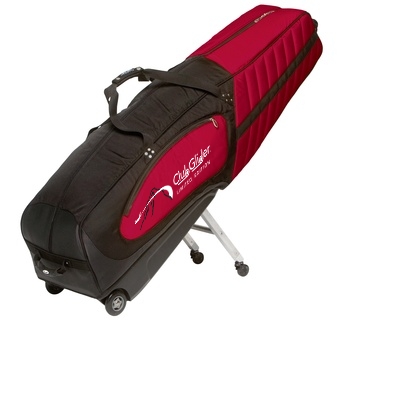
Sun Mountain Club Glider Travel Bag

A number of years ago The Golf Channel ran a reality show featuring innovations in golf related products. Most of what was featured was frivolous or impractical. But one of the products, the Club Glider, was truly innovative and offered an alternative to the wrestling match people experience in airports with their golf club travel bag . The Club Glider became a bona fide product as a result and is now marketed through Sun Mountain.

What distinguishes this travel bag from all others is that it has a spring loaded, cantilever leg system with caster wheels that support your clubs and make maneuvering around the airport an effortless experience. The retractable legs are stowed away while your clubs are in transit and can be deployed with one hand as you pull your bag off the baggage carousel.

How many times have you trudged a sagging travel bag through the airport like Sisyphus only to have it flip over like an uncooperative bag of mulch when you make the slightest change in direction? How aggravating is it to get on or off the escalator because your travel bag has no spine and seems to collapse in a lump at an inopportune moment?

The Club Glider removes the need to support your bag at any time and allows you to guide your clubs with one hand as you make your way up the line at the check in or car rental counter. The support angle created by the legs means no need to bend over and lift your bag every time you want to move a few feet. The caster wheels let you effortlessly maneuver with one hand through tight spaces without changing speeds.

The bag comes in three models and is priced at around $230 to $300. At prices like these they made sure this thing has reinforced construction and is fully padded to protect your stuff with plenty of extra storage for shoes, balls, and even your returning laundry. They say you can even put up to a 50 inch belly putter safely in the bag.

The Club Glider may sound pricey but I must say it is worth every cent of it. The first time you see the rest of the guys at the baggage carousel doing the alligator mambo with their canvas travel bag you will realize this was money well spent.

(Click here to see it at the Sun Mountain Club Glider website)

October, 2011

The “Lost MacKenzie” of El Boqueron

Alistar MacKenzie, one of history’s most respected course architects, has  produced many of the great masterpieces of golf course architecture-Cypress Point, Augusta National, Crystal Downs, Lahinch, Pasatiempo, and Royal Melbourne.  As with so many artists there is the story of a lost treasure from their collection.  In that spirit it turns out that the most creative design he ever came up with may be one that was never built, as related in this article by Thomas Dunne in 2007 of the lost MacKenzie design of El Boqueron in Argentina.

It turns out that in 1930, while in his creative prime, the stock market crash and the beginning of The Great Depression sent MacKenzie global in search of new work.  In spite of economic travails in Argentina the very wealthy elite asked him to design two courses at The Jockey Club in Buenos Aires.  While he was there he met a wealthy land baron, Enrique Anchorena,  who was in the process of putting together the grandest private park in all of South America on his private estate.  He hired the most distinguished architects to do the landscaping and building construction.  So it just made sense to commission MacKenzie, who just happened to be in the neighborhood, to design his private course for this estate.

This was going to be a  a course that was played by Enrique’s family and friends, so it gave MacKenzie a unique opportunity to try things he would never do on a more intensely played course.  What resulted was a mind boggling design on a rolling piece of rural ground which included nine double greens with dramatic contouring, his signature jagged edged intimidating bunkers, plenty of subtle tactical deception, and a good deal of nasty in patches of curros (gorse) adjacent to the playing areas to punish wayward shots.

The effects of the depression prevailed and the course was never built but the plans survived and ended up framed on the wall above the fireplace in the clubhouse that one of Anchorena’s heirs took for his permanent home.  Fast forward about 60 years when  David Edel, a struggling PGA pro, was visiting Argentina one winter and happened to hear about the surviving plans for the MacKenzie course from a golfing friend.  Edel, who grew up playing MacKenzie courses in California, became obsessed with the notion of purchasing the plans from the family and bringing this “Lost MacKenzie” to life in America.

It took another ten years but in 2006 Edel spent a considerable portion of his family savings to procure these plans and start a process of finding an appropriate place to build his dream course in the states.  He found an appropriate piece of ground of similar topography to the original at El Boqueron just outside Austin, Texas-the place seemed perfect, even the prevailing wind was in the same direction.  He then searched for the appropriate architect to do this design and settled on Mike DeVries who was an acknowledged expert in MacKenzie designs.  For DeVries this was a once in a lifetime opportunity to pay homage to the man he most respected in the world of golf course design.

Unfortunately our current economic malaise has delayed the construction of this private golf club in Austin for now, but Edel has taken up residence on the property and fervently believes that someday this dream will be realized to bring the Lost MacKenzie to life in the hills outside Austin.

(Click here to see green complex drawings of “The Lost MacKenzie”)

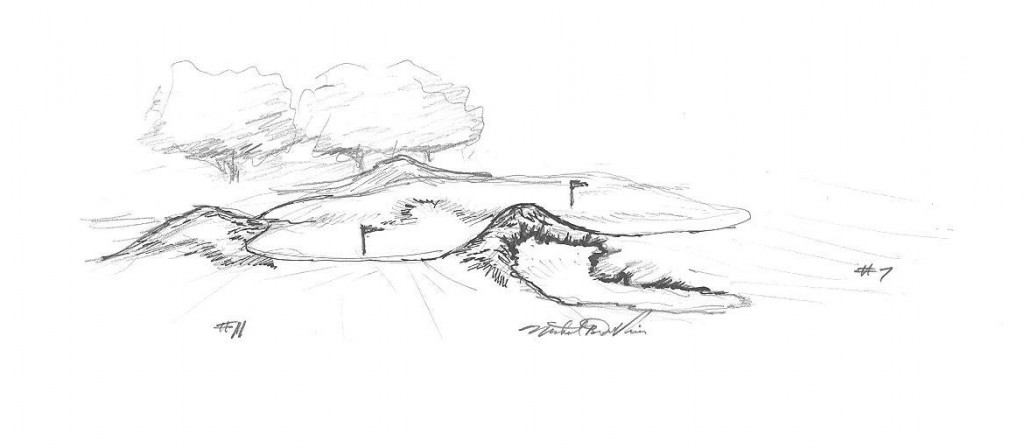
Greens #11 and #7 By Mike DeVries

Thomas Dunne added another piece to this story in 2009 when he interviewed Mike DeVries the designated architect for the El Boqueron course to be built in Austin.  In this interview he went over DeVries amazing drawings of the double green settings planned for this project.  The detail in DeVries descriptions of the planned complexes reveals the bold creativity that MacKenzie brought to his designs.  This is a rare look into the thought processes of a legendary designer and a well studied disciple of the great artist.

Thomas Dunne

http://www.out-and-back.net

What’s Wrong With Tiger’s Swing?

Good question-one that you and I cannot answer and apparently neither can most of the TV pundits who get paid by the word for stuff like this.  It behooves us to ask someone who does swing diagnosis every day-someone who has seen it all and then some.

Wayne Defrancesco is “in the business” as one of the most prominent swing instructors in the Mid-Atlantic region.  His website is chock full of erudite analysis videos of the best players in the game.  So when I saw the attached video comparing Tiger’s current swing to the swing he had in 2000 when he was on top of the golfing world I thought this is a good place to begin.

Wayne is like a Talmudic scholar when it comes to this stuff-he goes to original documentation and then the commentaries.  In this case, he begins by refuting the misguided opinions of two of the talking heads from Golf Channel, Brandel Chamblee and Frank Nobilo.  He then does what Wayne does best, pulls out side-by-side video from his personal trove to show you how it used to be and how it is now and explains the changes in clear and understandable language.  His insights are very empirical and the way he associates this to the results in Tiger’s game is very intelligible.

In his quest to be the Uber Golfer, Tiger has embraced the advice of a long line of swing gurus, developing and reinforcing some bad swing technique along the way. His shot performance is suffering-especially when it matters the most.  Sound familiar?  And you’re no Uber Golfer.

So whatever else is affecting Tiger’s game-lack of confidence, bad karma, bad putting, or lack of domestic tranquility-according to Wayne D the real problem starts with bad swing mechanics and goes south from there.

(Click here to view Wayne’s video comparison of Tiger 2000 to Tiger Today)

October, 2011

Pine Valley-The Crump Cup

There is a veil of mystery that pervades Pine Valley, consistently on the top of everyone’s list of the most difficult courses in America.  This course was the creation of George Crump, a Philadelphia Hotel man who set out to create a track that would punish every mistake a player makes on the golf course with a bad result.  From everything I have heard about Pine Valley he succeeded masterfully in that effort.

Since Pine Valley is such a private place and they have rarely had national events there, it remains a mystery to most of the interested golf world.  There is one black and white Shell’s Wonderful World of Golf episode you can find on the internet from back in the 1960’s between a young Gene Littler and Byron Nelson.  There have been a couple of Walker Cups played there as well that had some TV time.  But that is about it.  Here are some photos from my day at the ranch.

The chance most people would have to get onto the property of this course in Camden, New Jersey, is during the prestigious four-day amateur invitational event they hold every year called The Crump Cup.  This has been going on since 1922 and has had as it’s winner some of the history’s most distinguished amateurs including Francis Ouimet, Chick Evans, Billy Joe Patton, and Jay Sigel.

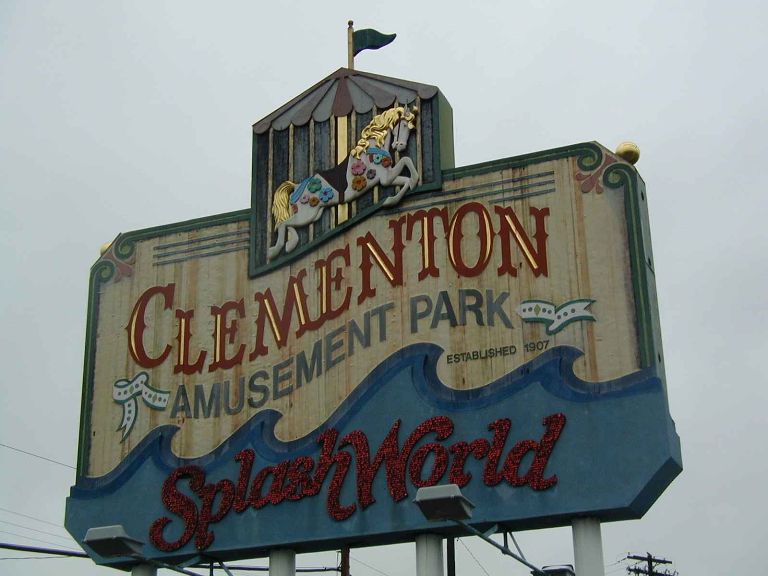
The event is two rounds of medal qualifying to establish flights followed by four rounds of match play to determine the champions.  The last round is held on Sunday, this year on October 2nd, and it is discreetly open to the public to enjoy.  You park in the Amusement Park pictured above and get shuttled down a gravel road to a back entrance to the property.   Once inside the fence you are free to roam unfettered about the grounds of one of the most storied courses in America.

They hold this event without much fanfare every fall-usually in September or October.  Not much advertising but I imagine with a little due diligence in August you can get the particulars on how and when to attend.  If you are in the Philadelphia/South Jersey area I am sure attending The Crump Cup would be an experience to remember.


October, 2010

Make Room For Butch Harmon

Jim (Bones) Mackay wrote this piece for Golf World expressing his view that they need to induct Butch Harmon into the Hall of Fame. After all, he has been the mentor and teacher of so many Hall of Famers, he should get in by association alone.  Norman, Ballesteros, Couples, Woods, Cink, and Clarke just to name a few.

Butch is his own man, he has a distinctive, no nonsense way of talking to people and it is clearly very effective with his students and pretty entertaining for the rest of us.  Given that there are famous coaches in the Hall of Fame of other sports and for golfers their teachers are their coaches, I like Bone’s logic in this submission.  Butch has always been a guy who breaks the mold we should honor that independence and competence in his craft and give him his due in the Golf Hall of Fame.

(Click here to read Jim Mackay’s article on Butch and The Hall of Fame)

Jim Mackay

October, 2011

Dunhill Links Frantic Finish

Old Tom apparently couldn’t find the real harsh stuff to throw at the players so he had to settle for a Scottish Haar, a coastal fog, to drape over the links at St. Andrews for the final round.  The low ceiling is like playing at dusk all day, it mitigates the depth perception and makes target visualization a strain.  It was chilly enough for hands in the pockets but without a breath of wind the Old Course was without it’s primary defense.

Starting the day five back and a group ahead of the leader Northern Ireland’s Michael Hoey, Rory McIlroy set a blistering pace shooting 30 on the front nine and grabbing the lead at 19 under  at the turn.  It was like Congressional all over again, his lyric swing in perfect balance, his approach play seemingly effortless and precise, and the hole must have looked the size of an ash bin to him.  He missed a makeable birdie on 10 but came right back on the 190 yard 11th, with the hole cut on a small inaccessible shelf on the back of the green, and knocked it stiff for a kick-in birdie to get to 20 under.

Graeme McDowell, the third Ulsterman in the mix, had his chances.  He hit it close a bunch of times but he putted without authority leaving himself hands on knees staring at his shoes wondering where his putting courage was today.

Michael Hoey would not go away.  He was stuck in neutral on the front side with two bogies early and two birdies on eight and nine.  After knocking it within birdie range a number of times on the back he finally converted a short one on fifteen to tie the lead at 20 under.  It was going to be a typical test of will and judgement over the closing holes at the Old Course-the Road Hole looming large between the leaders and the finish.

With Rory watching from the tee on 17, Hoey seized the lead outright knocking it stone dead to a testy pin placement on sixteen for a birdie.  Rory burned the edge on 17 with a long putt from off the front of the green and had to settle for par.  Hoey answered with a par of his own on the Road Hole to maintain his one-shot advantage.

After a well positioned drive on 18, It came down to Rory making a birdie pitch across the Valley of Sin to create a playoff.  Enter in Old Tom for the last word as McIlroy hit the perfect high pitch just behind the hole with what looked like just the right spin to leave it below the hole for an uphill birdie chance.  But after the ball seemed to come to a complete stop it got a finger shove from above and started creeping toward the edge of the false front ending up with a Costantino Rocca leave at the bottom of the hill off the front of the green.  Two putts from there left him stuck at 20 under and a shot behind.

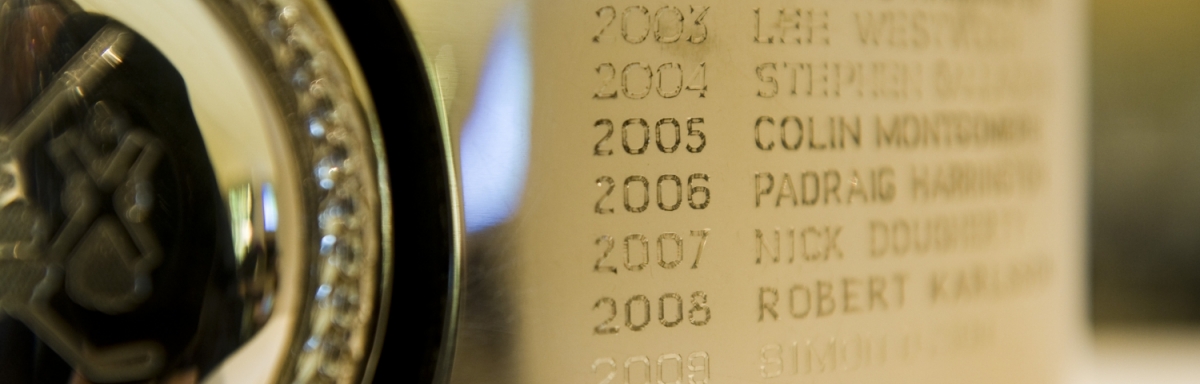
Michael Hoey drove it to center and went the low pitch and run route through the Valley of Sin to leave it inside ten feet below the hole.  As an exclamation point he holed what was left to win by two and etch his name on this prestigious piece of hardware.

This was a fitting finish to what was a gripping day’s play at the ancestoral home of golf.

(Photos from Getty Images/EuropeanTour.com)

October, 2011

My Innermost Swing Thoughts

The difficulty is, all swing thoughts decay, like radium. What burned up the course on Wednesday has turned to lead on Sunday. Yet it does not do to have a blank mind: The terrible hugeness of the course will rush into the vacuum, and the ball will spray like a thing berserk. A swing thought is the golfer’s equivalent of the rock climber’s Don’t look down. With it, we reduce the huge circumambient room for error to a manageable somatic circumference. The score, the stakes, the beer in the clubhouse should all be ousted by some swing thought — which is a swing thought in itself.

John Updike

Swing Thoughts

Golf Dreams-Writings On Golf (1984)

The Walking Golfer

The Walking Golfer is a website dedicated to spreading the word about the benefits of walking the golf course.  In an age where most public, resort, and private courses seem to discourage patrons from walking, it is good that there is someone out there trying to debunk their logic and self-serving economic rationalizations.

(Click here to read their Benefits of Walking)

This site also features course reviews, course walkability ratings, interviews and articles.  You can even join the society as a member for free.


Man O’ War Golf Course

Man O’ War is one of two courses Joel Weiman built for the Glen Riddle Golf Club outside of Ocean City, Maryland.  Weiman designed the Uplands Golf Club (of blessed memory) in Denton, Maryland off Route 404 on the way to the Maryland/Delaware Beaches.  Similar to that effort,  here he took a flat piece of farmland and turned it into a very interesting golf course that pulls links style features into play and makes for a wonderful afternoon of golf challenges that we are not used to seeing in this part of the world.  Add the wind factor, since this is just off the Bay side of the Ocean City area, and you do have a course that will give you a new riddle to solve every time you play.

                           Early Wake Up Call on Par 3 Second Hole

Click on any picture to get an enhanced view of the image

Be clear, that in spite of all the marketing hype, this is not a links course.  It lacks many of the inherent environmental necessities of a links course-sandy turf, proximity to a major ocean or sea, tall sand dunes, treeless surroundings.  But, to his credit, Weiman found a way to embed many of the links style challenges in this course-blind shots, random bounces,  awesome topographical intrusions, scantly bunkered green constellations, slick and windswept putting surfaces.  You will have a few of those head scratching “is this too arbitrary” or “is this unfair” kind of thoughts when you think back over your day of golf.  But truth is what you should come away with is a satisfying sense of mental exhaustion from having been challenged throughout the day.

Intimidating Beauty Par 4 #11

What you do get are well manicured Bermuda grass fairways that wend their way through an interesting array of swales and hollows, startling bunker clusters, and imaginative green constellations.  Weiman introduces the links arbitrary bounce feature through the creation throughout the course of what we have coined “Worm Berms”.  When you look at the holes on the GPS imaging in the cart there are manufactured ridges in many fairways that look like worms-these will repel a ball without the proper level of intention to places that seem arbitrary and punitive.  But for anyone who has played across the pond you know that the rub of the fairway is an elemental part of the links golf experience.  The bent greens are severely sloped and segmented with tiers and fall offs that make it essential to plan your approach angles to leave your ball where you can putt aggressively. Being on the wrong side of the hole all day will leave you a bushel full of three putts.  Creative pitching and chipping will go a long way to keeping you on your game-the unusual green constellations will afford you plenty of opportunity to ply that craft.

Like most good courses driving the ball on the right line is essential to success.  Weiman used creative bulldozing to inject some very obtrusive obstacles in your path.  Picking the right club off the tee and the best angle from which to play your next shot will help you negotiate these challenges with much less pain.  The blind shots and other visual misdirection techniques in the architecture will cast further doubt in your mind, but you have to trust your instincts and have conviction of intent on every shot.

Home Hole Par 4 #18

This is a wonderful afternoon of golf with a distinct links flavor to it.  Enjoy the arbitrariness of the experience and go with the flow-you will have some sweet recollections of the day’s challenges if you don’t let it wear you out.

(Photos from gwowi.com)

Berlin, Maryland

Architect: Joel Weiman (McDonald Design Group) 2006

Tees          Par    Rating    Slope    Yardage
Blue          72      71.6       133        6556
Silver        72      69.1       128        6086

(Click to see complete Man O’ War hole-by-hole descriptions)