State Of The Game

StateOfTheGameWe know that golf has become a global game and so has the dissemination of information about it. For the last few years the folks at TalkinGolf Radio in Australia have built a library of podcasts, for your listening and learning enjoyment, from interviews with a variety of notables in the game of golf.

Australian Rod Morri moderates these heady conversations along with the help of Geoff Shackelford of Golf Digest/Golf Channel/Geoff Shackelford.com, Mike Clayton a former Aussie touring professional now turned golf course designer, and Scottish columnist John Huggan. They cover an array of golf stuff that matters in unvarnished conversations without editorial constraints-this means no holds barred-they tell it like it is.

These world wide conversations come out about every fortnight with distinguished guests including authors, course architects, and dignitaries of the game. Their 39 episodes, each about an hour in length, have covered slow play, how money is ruining the game, marketing and the business of golf, bifurcation of the rules, Golden Age course architecture, and lots more. Guests have included golf analyst Judy Rankin, architect Gil Hanse, authors Mark Broadie and Curt Sampson, PGA of America President Ted Bishop, and Ran Morrissett one of the protagonists of GolfClubAtlas, the premier course architecture website.

I particularly enjoyed the conversation with Gil Hanse (episode 6) from 2012 right after he was awarded the task of designing the Olympic Course in Rio.  It gives your a real sense of the design/build approach his firm employs in all their design projects.  There is a wonderful rambling conversation between Morri, Clayton, and Shackelford (episode 32) about the charm and intrigue of Royal Melbourne.  The conversation (episode 39) with Ran Morrissett, the editor of GolfClubAtlas, is a treasure trove of content.  It covers everything from sand based course architecture with the restoration of Pinehurst #2  to the solace of playing with hickory clubs.  This man knows what is good golf and is not afraid to share his opinion.

You can subscribe to these podcasts for free through Apple iTunes/State of the Game or by downloading the free Apple Podcast app.

This is heady stuff that will fascinate the golf devoted. Perfect companion for a long ride to beach or a quite hour of golf meditation in your favorite easy chair.

.
State of the Game

Talkin Golf Radio
May, 2014

moerate4


Stealing A Beamer

The BMW PGA Championship is the flagship event of the European Tour and it has been 50 years since an Irishman has hoisted this prestigious trophy. Starting the day seven shots behind the leader Thomas Bjorn, it seemed highly unlikely that Rory McIlroy would be the guy to break that streak. What it took was a frantic afternoon of jockeying bumper cars at the Wentworth Club in Virginia Water, England.

It was all blue skies for Bjorn until this unforced error on the 6th

Embed from Getty Images

Starting the day five shots clear of Luke Donald, Bjorn seemed on cruise control when he made a two-putt birdie on par five fourth to get to 16-under par. But the yarn in his socks began to unravel when he bogied the par 3 fifth and then tried to do too much from the fairway bunker on six, heaving it into the bank the ball settling at his feet. A few more misdirected blows and the Dane made a triple bogey 7 to watch his lead enter the vortex. Another bogey on 9 and two more on 14 and 15 and you can say it was not Bjorn’s day finishing at 12-under.

His playing partner Luke Donald was hovering about but the sixth did him in as well with a matching triple bogey. Luke valiantly threw five birdies down the rest of the way but could not muster anything under par on the two five pars that end this unusual track. He too finished at 12-under par.

Lowry looked strong after his birdie putt went down on the Par 3 10th

Embed from Getty Images

Shane Lowry was the hottest Irishman on the course most of the day and Bjorn’s main concern. An eagle-birdie sequence at four and five got him to 12-under and clearly in Bjorn’s rear view mirror. The ninth was a speed bump for all the leaders and a bogey there seemed to stall Lowry’s advance. He showed perseverance with five birdies on the inward half but two bogies in the stretch were enough to leave him one short at the end of the day.

McIlroy off the course looked like a dead man walking in the wake of his public breakup with Twitter gal and tennis starlet Caroline Wozniacki. Somehow he put all distraction at bay and played some of the most focused golf he has in the last year. A solid 69 on Saturday that included 5 birdies after an opening double bogey got him at least a mention in the pre-game talking head circles.

After a strong mid-iron into the par five 4th he buried the putt for an eagle that seemed to jolt the rest of the field as he got to double digits at 10-under. He watched the leaders behind him veering off the leader board and saw an opening developing for a run to the finish. A short miss at nine and a short-sided leave on the par 3 10th narrowed the opening.

Like a bolt Rory crashed the party with this unlikely short side birdie

Embed from Getty Images

What separates superstars from regular stars is the bottled lightening in that back pocket they can call on when you least expect it. From a hairy lie with little room to work with, Rory holed the pitch on 10 to make birdie and pry his way back into contention at 10-under.

It was now a question of putting his foot down to post a score and see if the competition could match him. Birdies on 12 and 13 got him to 12 and a marvelous up and down save on 16 set up an opportunity for an heroic sprint to the finish line.

On the first of the finishing two par fives he needed his short game prowess once again to get a birdie and the lead. His length off the tee on the risk-reward finishing hole left him a conservative approach on the way to a two-putt birdie. Rory set the number to beat in the house at 14-under.

Birdie-Birdie on the final two leads to a vindicating dance

Embed from Getty Images

It would have taken a holed approach from the fairway from Shane, Bjorn, or Luke to force a playoff and the golf gods apparently were going to have none of that. As Rory said in the post game, the guys ahead of him made enough mistakes to give him an opening and an opportunity to apply some magic and steal the most prized event on the European Tour for the first time.

Rory has the look of a man who got away clean

Embed from Getty Images

Against the melancholy hovering above his personal life this win cast a beam of light into his sporting closet just in time for the second Major of the year at Pinehurst in three weeks time.

May, 2014

KO’ed

swinging skirts logoWho would have thunk they were referring to fisticuffs and not hemlines when they named this event? For four days a couple of world-class bantamweights (maybe 118 clothed and drenched) traded jabs and hooks in a classic toe-to-toe donnybrook at Lake Merced Golf Club outside San Francisco in the first LPGA Swinging Skirts Classic.

Any thing but Peace and Love at Lake Merced
Embed from Getty Images

The young phenom Lydia Ko, who just turned 17 this week, vs the grizzled veteran Stacy Lewis in “take this, no you take this” as they never left each other’s sight over the four days of the event. It wasn’t decided until the last two phenomenal up-and-downs for birdie on the par five eighteenth. Ko prevailed by a shot, looked elated, and Stacy looked drained like Sponge Bob Square Pants after a week in the Mohave Desert with no canteen. This was golf competed at it’s highest level.

Playing together in the lingering marine layer on Thursday Lydia opened with 68 to Stacy’s 69. Chilly rains on Friday and Stacy answered with 69 to Lydia’s 71 to take a one shot lead.  Saturday the weather improved and the two playing together again matched cards with a pair of 68’s to set up Sunday’s showdown with Stacy up one at 10-under par.

The skies were clear on Sunday and they treated the fans to a major-like struggle between two of the best in the game today. Lydia had a roller coaster front side with a bogey-bounce back birdie barrage over the last four holes to make the turn at 10-under. Stacy matched the scorecard with nine pars on the outward half and the two were tied as they headed to the 10th tee.

They both flinched with a bogey on 10 but stayed even through the 12th at 9-under par. At this point Lydia found another gear and birdied 13 and 14 to take what appeared to be a commanding three-shot lead as Stacy dropped a shot with a bogie on the 13th.

But as anyone who watches the LPGA Tour regularly knows Stacy Lewis never leaves the table until the counting is done. She throws down a pair of birdies on 15 and 16 and all of a sudden was within one again.

As always Stacy Lewis is all business
Embed from Getty Images

What happens next is the stuff of lore. Lewis hits it within 20 feet on the difficult 17th and Ko is over the green with a very difficult downhill pitch from the heavy rough. Displaying a short game all week that would make Phil drool, Lydia delicately filters her pitch to gimme range to save par and Stacy cannot convert the birdie to tie. In the spirit of full disclosure Jenny Shin has quietly snuck her way into the mix at 10-under and one behind heading to the last tee.

The par five eighteenth has not yielded birdie to any of them all week but it is evident it will take just that to force or stave off a playoff. Three solid drives and both Jenny and Stacy lay up on Main Street about 100 yards from a tight front pin on the elevated green above. Lydia makes an unforced error and pulls her lay up into the heavy rough just off the fairway.

Lewis and Shin play a pair of remarkable pitches to strong birdie range and now it is obvious that Lydia needs match their deed with a ball she cannot spin and no green to work with. Perfect judgment and perfect execution, one bounce on the front collar and it trundles up to six feet. Lydia delivers the haymaker by slamming the birdie putt home leaving Stacy distraught and dismayed over a now meaningless birdie putt.

.
Final putt splits the uprights
Embed from Getty Images

The LPGA Tour suffers from a lack of TV viewership and the recognition that would bring but it does not lack for talent and competitive feistiness.The ladies’ game is in good hands, with or without Allstate, as was shown by the riveting, competitive display of these two champions over four days in the hills of northern California.

All smiles, Lydia hoists the glass honorarium

Embed from Getty Images

April, 2014

The Most Interesting Champion In The World

Greater Gwinnett Champ LogoMaking his Champions Tour debut at the Greater Gwennett Championship this week Miguel Angel Jimenez continued to build his resume as the golf guy in the Dos Equis commercials. He was always a someone who enjoyed fast cars, fine wines, and a bit of revelry but his golf of late is developing an eclectic reputation of it’s own.

This is a man who marches to his own drummer…., ”he gave his father ‘the talk’”. Witness the now famous Miguel on course warm up routine as recounted at the Open Championship by Mike Tirico and Paul Azinger.

The beginning of his pre-game warm-up

Embed from Getty Images

No stranger to the winner’s circle Miguel has won 20 times on the European Tour over his 22-year career. He became the European Tour’s oldest winner in December when he won the Hong Kong Open in a playoff with Stuart Manley and Prom Meesawat. So far this year he is 8th in the Race to Dubai standings with over 670,000 Euros in winnings to his credit. Apparently, “Superman has pajamas with his logo”.

Just last week Jimenez, at age 50, was low European at The Masters. His Saturday 66 at Augusta National put him in contention and a solid 71 on Sunday got him to 4-under and earned him a 4th place finish behind winner Bubba, Jordan Spieth, and Jonas Blixt. He is currently 9th in the Ryder Cup European Points and has a good chance of being a veteran anchor for the European squad at Gleneagles this fall. Makes sense that “The Holy Grail is looking for him”.

After besting the youthful Rickie in the final round of The Masters

Embed from Getty Images

Since he was in the Georgia neighborhood and just passed the age requirement, he decided to throw his pony tail and aviator shades into the mix at the Champion’s Tour Greater Gwennett Championship this week. Miguel came out of the gate on Friday shooting an unbelievable 7-under par 65 in on and off monsoon conditions. Freddie Couples, playing with him, said that he made it look easy, I guess this is expected from a guy who’s “lives vicariously through himself”.

A solid 70 on Saturday got him to 9-under and one ahead playing in the final group with two of the powerhouse icons of the Champions Tour, Bernhard Langer and Freddie Couples. This is a man who “has never waited 15 minutes after finishing a meal before returning to the pool”. After starting the day with five pars he made five birdies over the next eight holes to distance himself from the field at 14-under. He did not make a bogie in the last 32 holes of the tournament and his tight iron game down the stretch put him on cruise control to win by two. He is only the third man to win wire-to-wire in his Champion’s Tour debut.

The man has a bit of Jerry Garcia style for a senior

Embed from Getty Images

Now Miguel has the luxury of deciding whether to spend the next five months on the home European Tour turf collecting more Ryder Cup Points or pursuing the low hanging fruit that is within his grasp competing with the round bellies on this side of the Atlantic.

Either way, I am sure his advice to Bernard, Freddie, Jay, Colin, and the others is:

“Stay thirsty my friends”.

.
April, 2014


Every Shot Counts

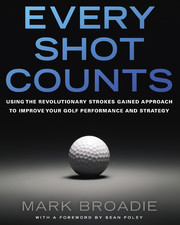
Every Shot Counts CoverIf you have watched any golf TV broadcast in the last year in a conscious state then you know the PGA Tour has wrapped it’s arms around a new statistic for putting performance called Strokes Gained Putting. It has become the overnight standard for determining who is putting the best in any given Tour event.

The genius behind this concept is Mark Broadie professor and research maven at Columbia University and a single digit handicapper to boot. His background is in statistical analysis of financial performance dealing with unintelligible things like pricing of derivative securities, risk management, and qualitative decision-making under uncertainty. Sounds to me like a man who can get to the bottom of your putting woes.

Mark Broadie’s recent book “Every Shot Counts” is the professor’s exhaustive explanation of the Shots Gained statistical approach to performance in all aspects of the game of golf. With the help of the PGA Tour’s commitment since 2004 to collect exacting data on every shot and putt at PGA Tour events through their Shotlink system, Broadie has found the ocean of data to develop his theories and articulate how to explain much of what we see week-to-week on the tour.

He starts from an obvious premise that the benchmark statistics that have been used for years to measure golf performance, Fairways Hit, Greens In Regulation, Scrambling, Putts Per Round, and Putts Per Green In Regulation are too shallow to give any meaningful direction to the players on how to improve their performance vis-à-vis their peers.

From the stats he gleaned that PGA pros average 29 putts a round with an average score of 71. Tournament winners average 67.4 strokes per round so the differential between winning and the average is 3.7 strokes per round. Pertinent question is what part of their game contributes to the 3.7 strokes per round advantage of the winner over the field, their shots gained on the field.

To that end he says, “The final score on a hole typically results from the accumulation of fractional gains and losses on each stroke.” “The quality of a golf shot is measured by progress to the goal of getting the ball in the hole in the fewest possible strokes”. “Strokes gained [was developed] to measure a player’s shot outcome against a peer performance benchmark for the same shot.” “Strokes gained measures [a player’s] progress to the hole in terms of the average number of strokes to hole out.”

A similar conundrum has existed in baseball for a century. Broadie says, “In baseball batting average was long the main stat used to measure proficiency at the plate……the sabermetrics revolution in baseball stats….. show that another stat, the on-base plus slugging percentage is a better predictor of a batter’s contribution to runs scored.”

With the help of the Shotlink data available to him Broadie sketched out how strokes gained putting could prove a more accurate measure of putting performance for the professionals. The average strokes gained putting for all golfers in a PGA event gives the ponderous among us a simple and reliable measure of the players relative putting proficiency that week. If Luke Donald is 15 feet from the hole and makes the putt and the average number of putts a pro takes from 15 feet is 1.78 then Luke has .78 strokes gained putting for that effort. If Vijay is five feet from the hole, where the average pro takes 1.23 strokes to hole out, and two-putts then he has a -.23 strokes gained putting on this hole. The sum of the strokes gained putting for the 18 holes based on their first putt is the player’s strokes gained putting for the round.

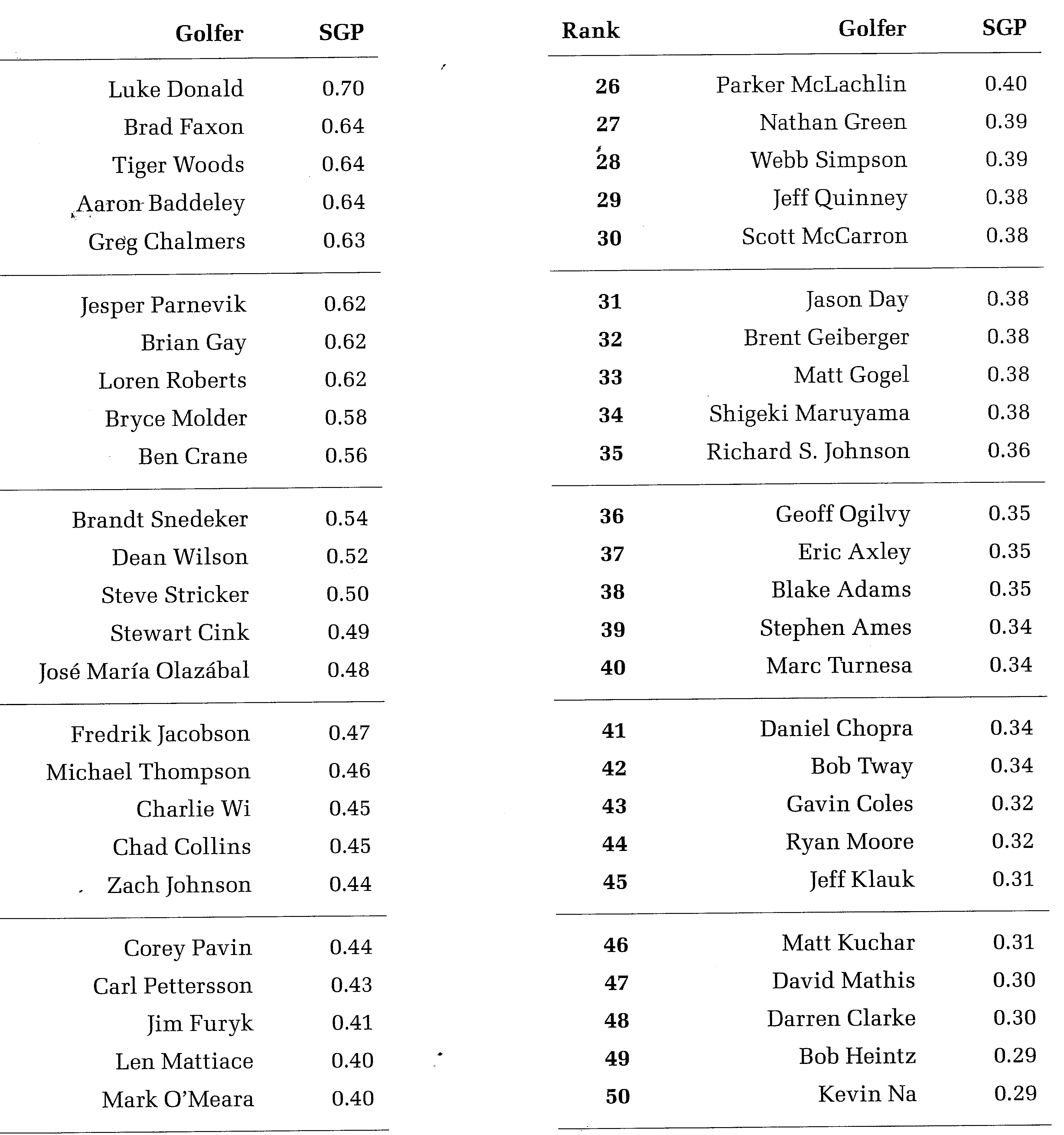
Below is a Broadie chart that shows the top 50 putters on the PGA Tour from 2004 to 2012 using Strokes Gained Putting (SGP) as the measure of relative performance. Not surprising Luke and Tiger are in the top five but so are Aaron Baddeley and Greg Chalmers. Some surprise in the names not in the top 20.

Top 50 SGP
Broadie has moved on to trying to convince the Tour on using a similar statistical method on evaluating tee shots, approach shots (over 100 yards), and short game shots. It measures how much a person gains on a shot he has played by measuring the decrease he has accomplished during this shot in the average number of strokes to hole out minus one to account for the shot played. Simply stated a shot that is better than Tour average will have positive strokes gained and a shot worse than average has negative strokes gained.

Using this method the strokes gained can be used to compare driving, approach shots, short game shots, and putting because the proficiency of all the shots are measured by a common unit of strokes gained.

After applying this to the Shotlink data Broadie concludes that for the top 40 golfers from 2004 to 2012, putting only contributes 15% to their scoring advantage over the field while driving contributes 28% to their scoring advantage.

He asserts that an extra 20 yards of driving distance, without regard to accuracy, is worth about .75 strokes gained per round. This extra distance gives them a shorter approach shot, with a lower average shots left to hole out, and that translates into strokes gained. So it is more important to drive it long on the Tour than hit fairways in terms of gaining strokes on the competition.

When it comes to hitting approach shots it is all about proximity to the flag to improve one’s strokes gained. This has been Tiger’s secret in dominating the game the last decade and a half. The closer Tiger’s shot from 175 yards out gets to the flag versus the average Tour player the more strokes gained he has on the field.

Top 50 SGAThis chart shows Strokes Gained Approach (SGA) and you can see that Tiger’s SGA of 1.28 is .73 better than the average top 40 player. When Broadie breaks it down further you can see that on meat and potato approach shots from 100 to 150 yards and 150 to 200 yards Tiger is hitting it considerably closer to the hole than his peers and that is where he gains his shots on the field.

The only problem with all of this is that it relies on the inundated accurate data collection of every shot a pro plays in a tournament round. No such data collection vehicle exists for the average player to use or even for researchers to use to compile strokes gained benchmarks for the common golfer. This is a huge case of having the cart before the horse when it comes to helping you and me.

This review just scratches the surface of what Broadie reveals in this readable and informative treatise on this Shots Gained Method for analyzing golf stats. He dispels many of the myths and certitudes we have held dear for years about golf performance. You can pitch “Drive for show and putt for dough” right over the embankment along with a bunch of others.

Broadie devotes an entire chapter to the relative difficulty of uphill versus downhill putts, importance of break on putts, and what distances actually separate good putters from average putters. He even includes practice drills that can help you understand the strengths and weaknesses of your game around the greens and work on the things that will make a difference in gaining strokes on your buds.

He presents the book in a very readable format with lots of substantiating charts and graphs to help you comprehend what he has concluded. Like all good college text books he has reiterative summaries at the end of each chapter that make prepping for the exams much easier.

This is not a fast read but it is a worthwhile intellectual indulgence for the inebriated golf fan. The shelf in your golf library is yearning for this one.

.
Every Shot Counts

Mark Broadie (2014)

April, 2014

moerate4

The Best and The Brightest

Drive Chip Putt Champ LogoThe inaugural Drive, Chip, and Putt Championship was held this weekend with great fanfare at Augusta National Golf Club. Say what you want but sometimes a monarchy is better equipped to effectively launch an advocacy program that is long overdue. The Green Blazers took it upon themselves through the Master’s Foundation with help of the USGA and the PGA of America to bring this to life.

.

Dignitaries of all kinds in attendance

Embed from Getty Images

PGA of America organized local and regional national qualifying including close to 17,000 kids to whittle it down to 88 invitations for boys and girls in age groups of 7-9, 10-11, 12-13, and 14-15. Surviving those stages and getting the envelope in the mail inviting them to travel with their family to compete in the finals at Augusta had to be as good as getting an acceptance letter to the Ivy League school of their choice.

Murder’s Row…Boy’s 7 to 9 Year-Old Division

Embed from Getty Images

The final competition included three segments: Longest drive, best of two, short pitch, best of two, and cumulative putting proximity-three putts-6 feet, 30 feet, and then the15-footer that Mark O’Meara made to win the 1998 Masters. Unfortunately most of the kids were not watching live in 98 to get the 18-inch right-to-left read.

High five with the Green Blazer after the make on 18.

Embed from Getty Images

Greens were running at Masters competition speeds. There were some great fist pumps from the kids who buried that one. It is not hard to imagine 15 years from now one of these kids, on this same green, making that gesture celebrating a win of the Big Green Enchilada.

Rich Lerner and Peter Jacobsen anchored the Golf Channel coverage of the event. They had just the right balance of informal hamish and honest respect in their comments about these special “young men and women” living a dream of competing at Augusta National.

Lots of family support along the way.

Embed from Getty Images

Each kid had a personal bio. Included was favorite golfer, Rickie Fowler won hands down. Also they revealed what they would serve at a Master’s Champion’s Dinner, my favorite was the kid who would serve his mom’s Sloppy Joes and his aunt’s Green Bean Casserole. One kid from New England has named his hamster Keegan.

These kids are range rats with a live Golf Channel feed-they have lived and breathed the game from a very young age. Some of the interviews were priceless. An 11-year old after smoking his drive to win the the first stage driving competition for his age group said, “Feeling much better for the next two stages now that the nerves are settled down.” Older than their years?

The winner’s in the two older divisions-a future Tour star possibly among them?

Embed from Getty Images Embed from Getty Images

The special bonus had to be meeting Jordan Spieth, Bubba Watson, Keegan Bradley, Adam Scott, among others prepping for the coming week’a Masters. The kids and their families will get badges to the Monday practice round and an opportunity to see their heroes in action on these hallowed grounds.

How cool to see your name on this official leader board at the end of the day.

Embed from Getty Images

Every competitor showed grace and maturity walking off the 18th green at the end of their competition making eye contact and shaking the hand of the Master’s and PGA officials who made all this possible. Kudos to the three organizations and Golf Channel for etching this competition indelibly on the golf map for many years to come.

April, 2014

Alister MacKenzie Approach and Putt Course

When Bobby Jones contracted Alister MacKenzie to design and build the course at Augusta National he had in mind two courses not one. The land proved insufficient for two full length courses so Jones suggested a short Approach and Putt Course instead for the second layout.

As Josh Pettit revealed in a Golf World article on April 7, 2014, the plans for this unique layout were found recently in the archives of the Fredrick Law Olmsted landscape architecture firm from Brookline, Massachussetts. This was the only copy of the original plans for the Augusta National Approach and Putt Course MacKenzie designed in 1932. The course was never built because of the dire economic times of the 1930’s.

Proposed Augusta National Approach and Putt Course (courtesy of National Park Service)

Proposed Augusta National Approach and Putt Course (courtesy of National Park Service)

What makes this concept so unique is that this was to be done with nine double greens to serve the 18 holes. This same idea had been proffered by MacKenzie for a proposed private course in Argentina in 1930 called El Boqueuron “The Lost Mackenzie”. While in his creative prime,  the beginning of The Great Depression sent MacKenzie global in search of new work. In spite of economic hard times in Argentina the very wealthy elite asked him to design two courses at The Jockey Club in Buenos Aires. While he was there he met with a wealthy land baron and proposed an 18-hole course on his private estate with nine double greens.

The Approach and Putt Course greens were to be from 7,500 to almost 15,000 square feet and set on opposing angles to two different tee approaches. No bunkers on the course, just a meandering brook that cuts across six holes on the course. Jones wanted a friendly practice facility that was “intended for enjoyment rather than frustration”. These were to be sprawling MacKenzie green complexes that would provide many memorable moments for those enjoying a short afternoon stroll with a few clubs.
Take ten minutes and read this marvelous article on the Jones/MacKenzie collaboration at Augusta which focuses on the concept and design of this Approach and Putt Course as it appeared on the MacKenzieArchive.org website through the link below.

It is hard to imagine how Augusta National could have been more special but this would have addedanother unique aspect to this golf treasure.

(Click to read about the proposed Augusta National Approach and Putt Course)

Robert Hunter
Mackenziearchive.org

March, 2014

The Future Was Then

The question before the golfers of the world is plain…… Are they going to be sportsmen and accept a ball that requires skill to propel, or, in their infantile worship of mere distance, are they going to continue to be downright game-hogs?

Max Behr  (probably in the 1920’s)

Lines of Charm (Geoff Shackelford)


Slow Play-Throw A Flag

This past week’s 5 1/2 hour death march in the final round at the Valero Texas Open once again drove home the obvious point to nearly everyone but Commissioner Finchem, the Slowskys look like Usain Bolt compared to the guys with the white pants and the da Vinci yardage books.

Embed from Getty Images

Tight pin positions, 20 m.p.h. winds, and threesomes are no excuse for grown men taking 30% too long to walk five miles and make about 70 swings. Slow play is ruining the game. It is turning off people who don’t want to spend five hours watching the final round on Sunday or the round of the group in front of them every other day of the week.

The answer to this problem is simple…..throw a flag on them…..25-yard penalty for delay of game. Seriously, institute a 45-second clock that begins as soon as the previous player’s ball comes to a stop. If a guy exceeds the allotted time before he starts his actually backswing, a sideline official tosses a yellow flag in the air and proceeds to relocate the offender’s ball 25 yards farther back in a lie of similar or worse difficulty. Bet having to hit two clubs more will get his attention.

If it happens on the green the ball is moved 15 feet further away from the hole on the same line. You will see less needless ball realignment and triple going to the green crib sheet and probably more putts being made.

Using the Strokes Gained Charts it won’t take these guys long to figure how many shots these delay of game adjustments are costing them. Shots are money on the Tour and I can assure you a few embarrassing penalties of this sort and all the guys will be playing like Trevino with a leaky bottle of hot sauce in his back pocket.

What will actually happen is the pros will start preparing to play their shot before it is their turn which is what we tell our fellow amateurs they ought to do to speed up their play. When those amateurs see this example on the tube on Sunday’s maybe it will finally strike home that faster play is just a matter of better choreography.

As Arnie likes to say, “While We’re Young!”

.
April, 2014

Profile In Courage

As a young toddler Michael Labrie was the victim of a horrid household accident that left him badly burned over 90% of his body. There was little hope he would survive but with an incredible display of personal courage and determination, and lots of family support, he has done way better than survive, he has flourished.

As you can see in this piece from Jimmy Roberts’ In Play series on Golf Channel, this young man teaches a life lesson to the rest of us. What he has overcome is mind boggling, but what he has accomplished is the stuff of true inspiration.

Whether it his him rendering a soulful piano piece, playing to a single-digit handicap, or simply displaying a grounded perspective of how to deal with the cards he was dealt, this is a person who understands life is for living. As Jimmy Roberts says, “Maybe the scars….first compel your gaze…but what he can do, not what he can’t, soon become the attraction.”

When asked, “Do you think you are extraordinary.” Michael’s reply was, “No…don’t.” When asked if he thinks he is unusual, “I think I am unusual, but we all are.”

There is something reassuring and extraordinary about that statement….this is a man who has found inner peace and accomplishment where it ought to be found….in his heart.

(Click to see this wonderful Profile in Courage of Michael Labrie)

Jimmy Roberts

In Play-Golf Channel

February, 2014