Emerald Dunes

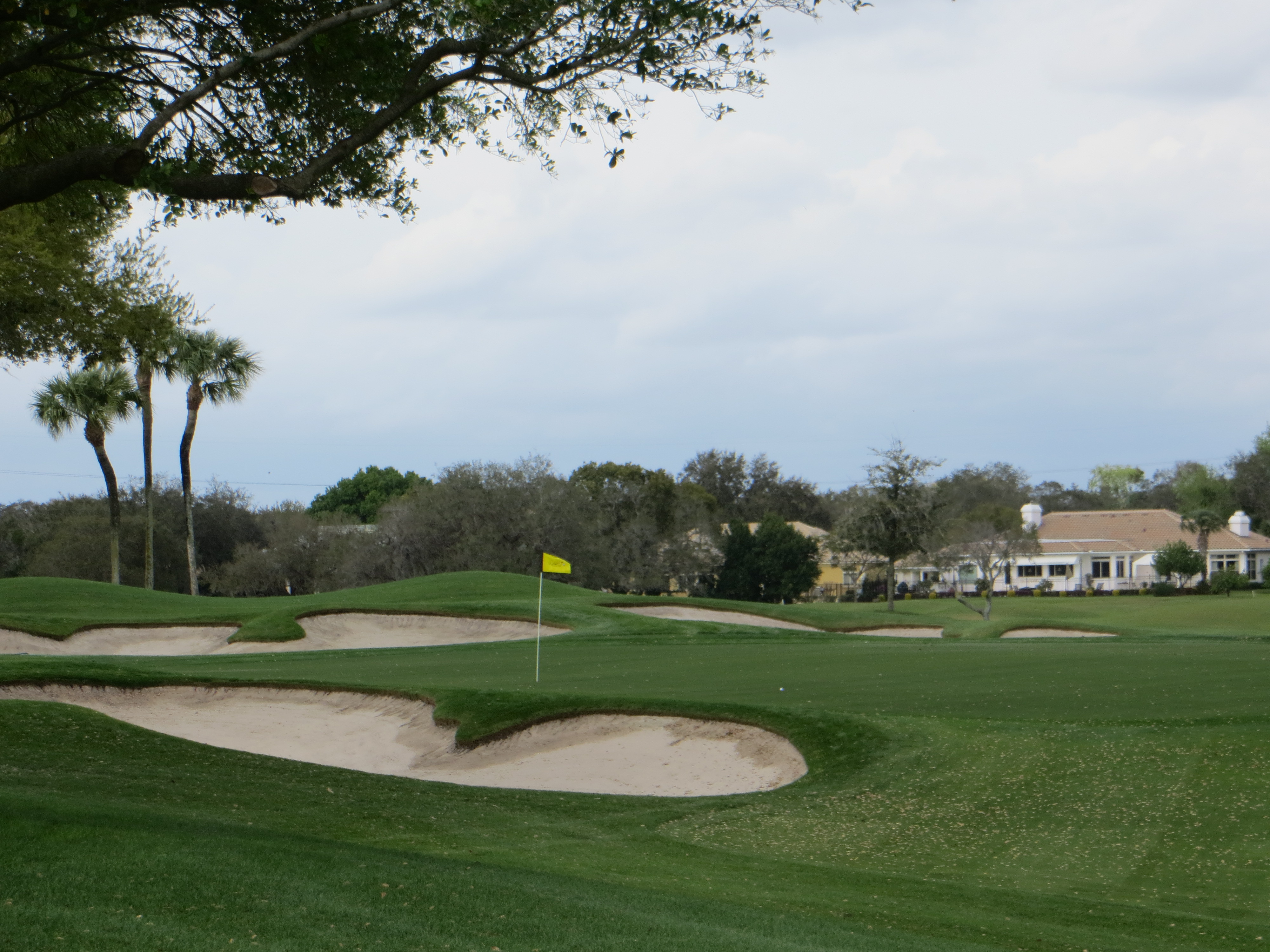
This golf course is a quiet jewel in the middle of the east coast “strip” of Florida it stands out as one of the best tracks I have played in this region.   They spared no expense in presenting first class practice facilities, superb design esthetics, wonderful conditioning, and great support features.  It took guts and vision to put this much into a public course and my hat is off to the developer.

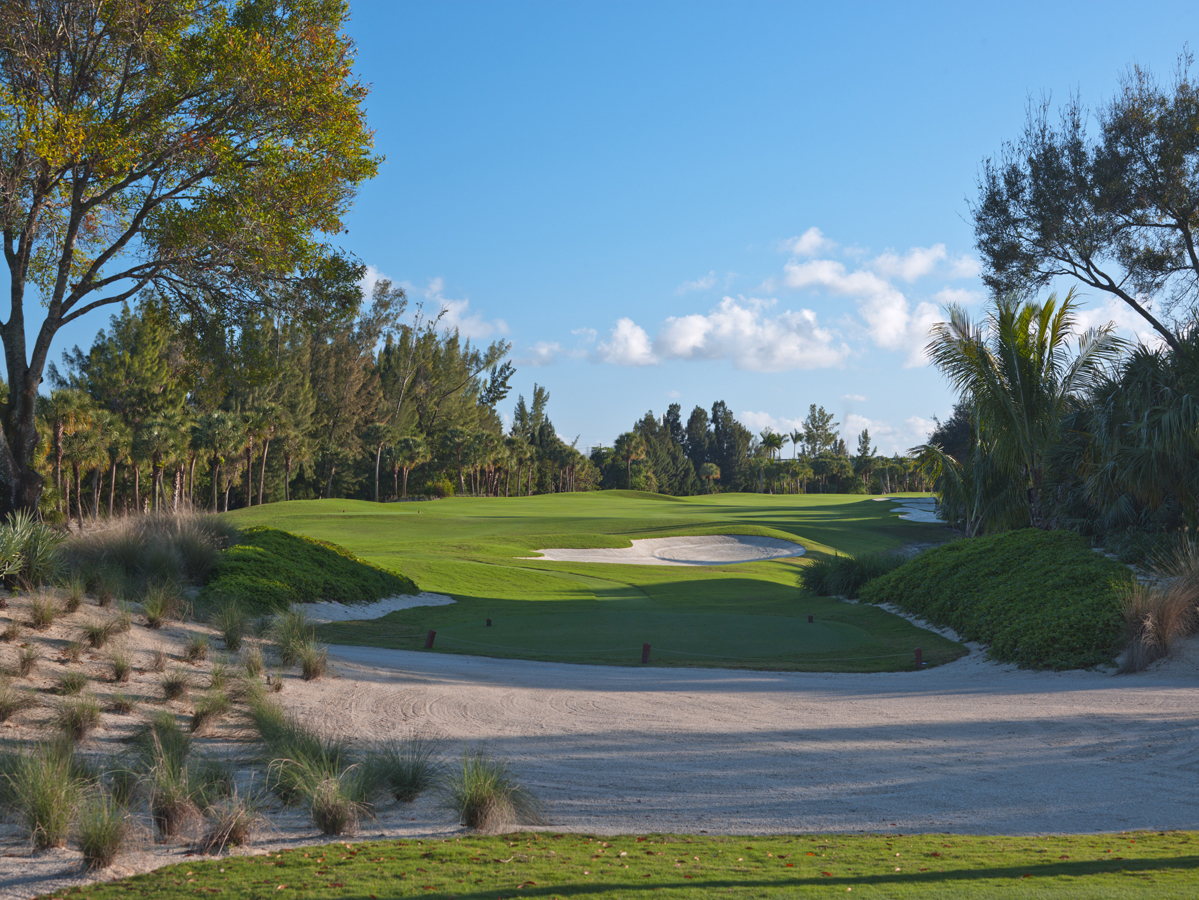
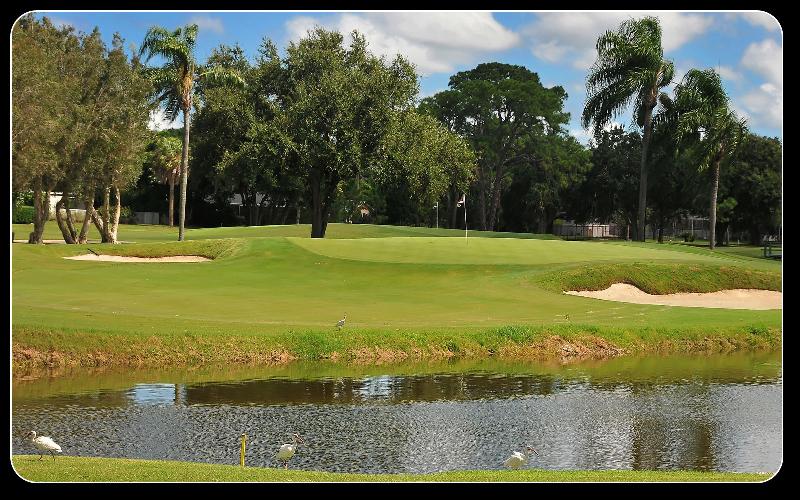
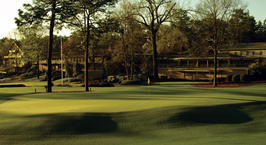
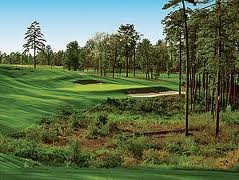
Stunning views begin on the first tee

The practice facilities are top shelf-as good as you will find anywhere.  The double sided driving range has over 8 acres of grass hitting surface in the same 419 Bermuda Grass found on the course.  There are five target greens flanked with bunkers as well as a practice fairway bunker adjacent to the main teeing ground. Fazio developed a separate short game area adjacent to the clubhouse.  It has a 9500 practice putting green as well as bunkered practice pitching greens with Ultradwarf Bermuda built to full USGA spec just like the course.  There is even a 19th hole par three that can be played from 85 to 135 yards.  This area alone is worth the price of admission.

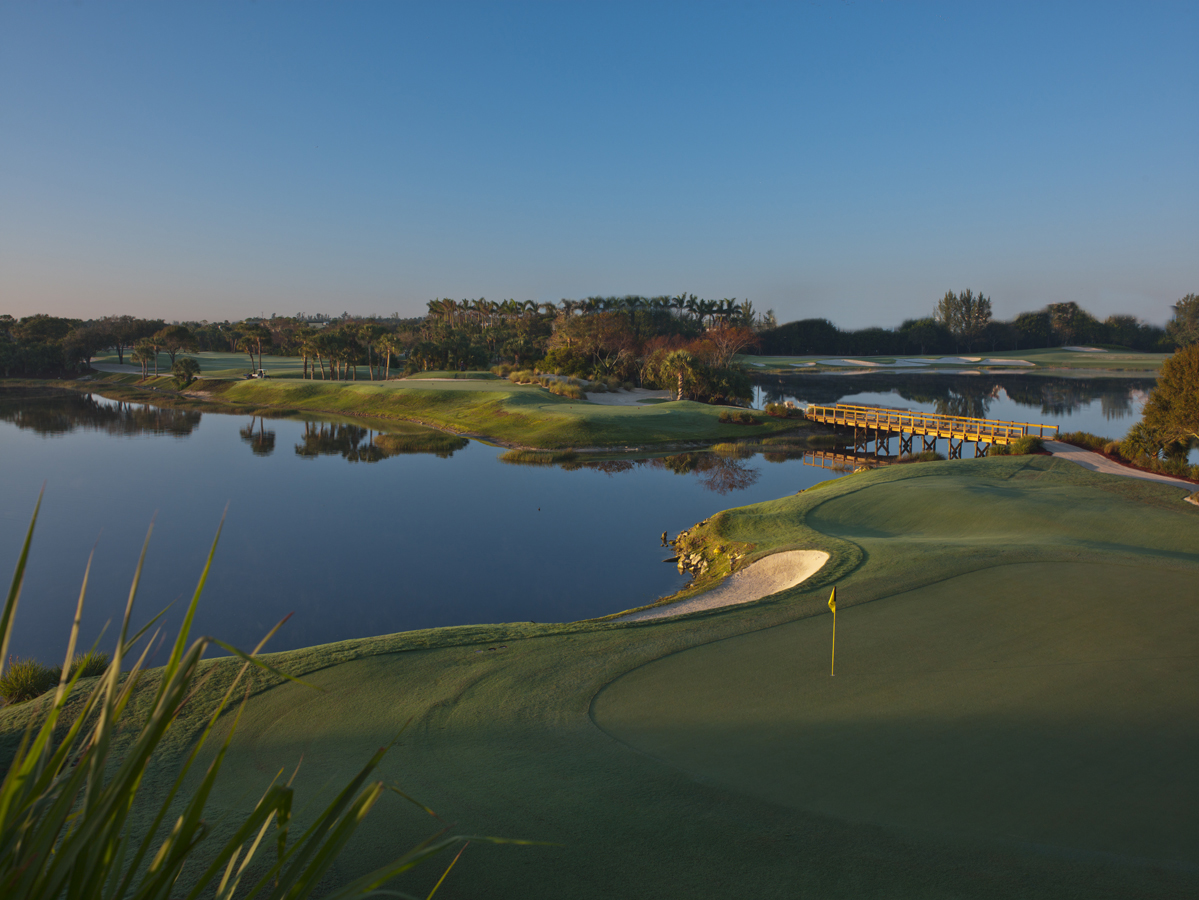
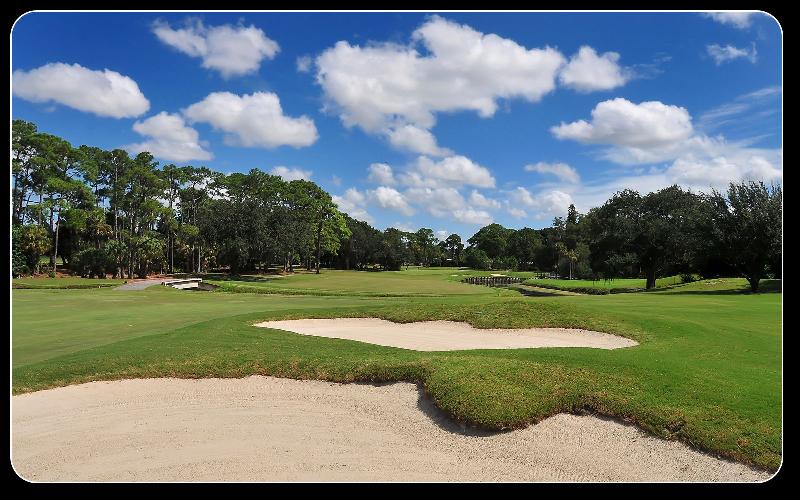
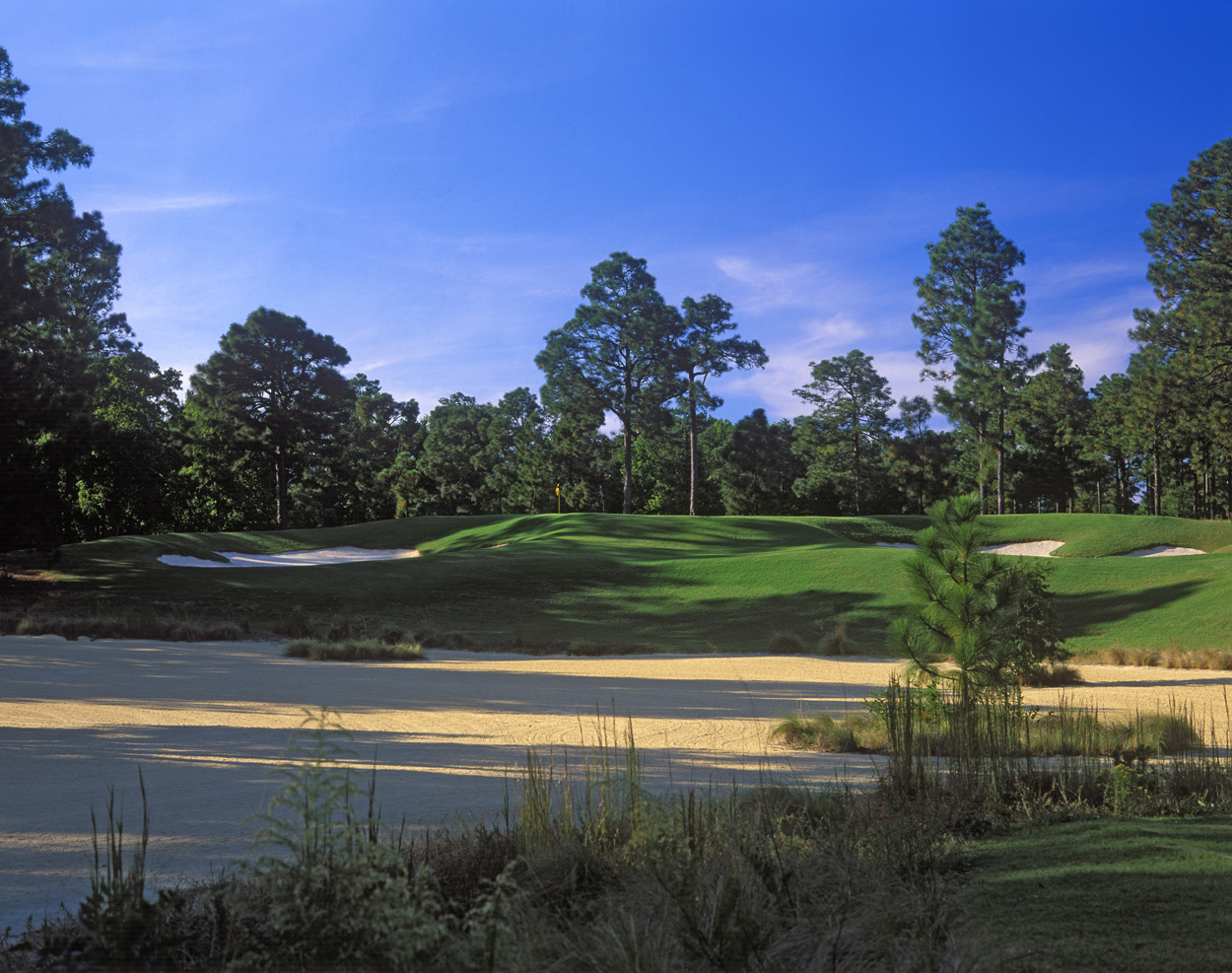
Par 3 4th is a bouquet of visual elements

As with most Florida courses Tom Fazio has generously appointed this one with water-it is in play on 15 out of 18 holes- and sand-there are over 100 bunkers- but it is not so punitive as to be unplayable.  As Tom is apt to do he often buffers the water with long sand hazards to keep you in play-though not out of trouble-and keep up the pace of play.  The strategy required on every hole is not evident at first blush.  There is plenty of visual misdirection going on so you need to take in the information in the yardage book or the deluxe on board computer and think your way around this course.

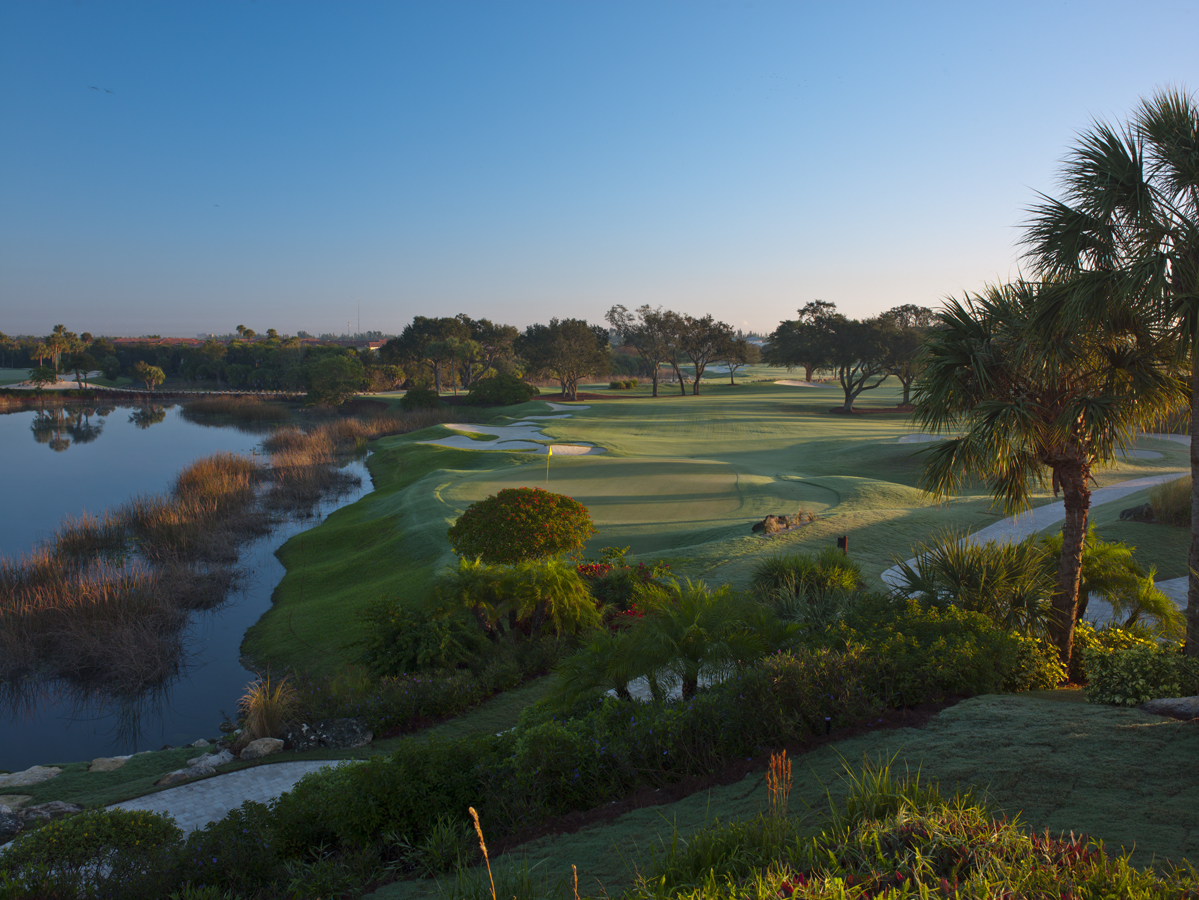
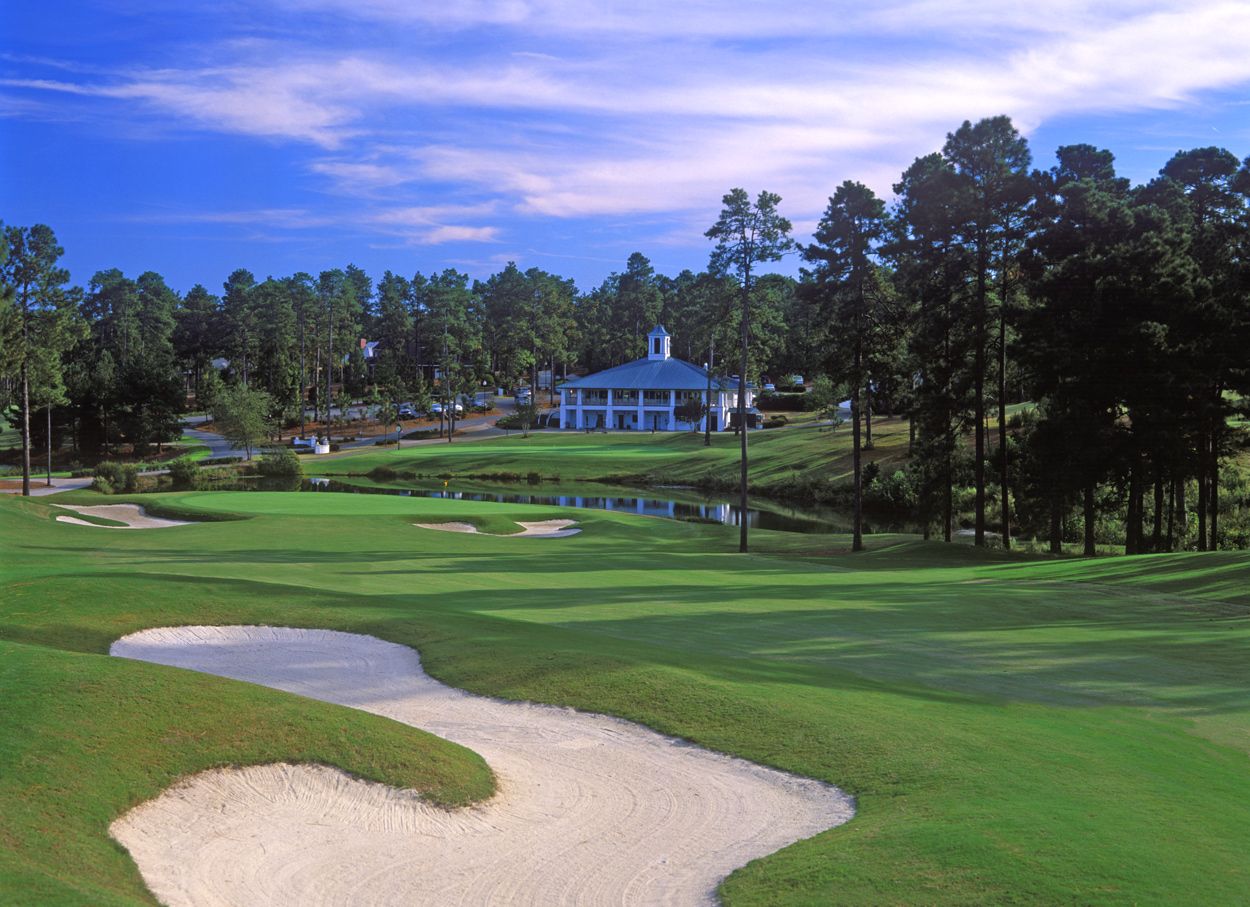
Short Par 5 11th requires serious tactical consideration

An enormous amount of attention, and money, was spent on the presentation of the holes.  Earth was moved to create visual and tactical interest and the plumes of sage grass, floral plantings, and stonework throughout enhance the beauty of the holes creating holes that will grab your attention.  This is not your typical Florida experience it has a very natural dunes style felling about it.

Approach shot to 17 green can be precarious

The conditioning of the course is superb-lush fairways and some of the best rolling firm greens I have played in Florida.  They even paint the top inside edge of the hole cut to match the cup itself-very professional.  You will have to really pay attention to speed on these greens or you will end up with lots of eight and ten footers coming back.

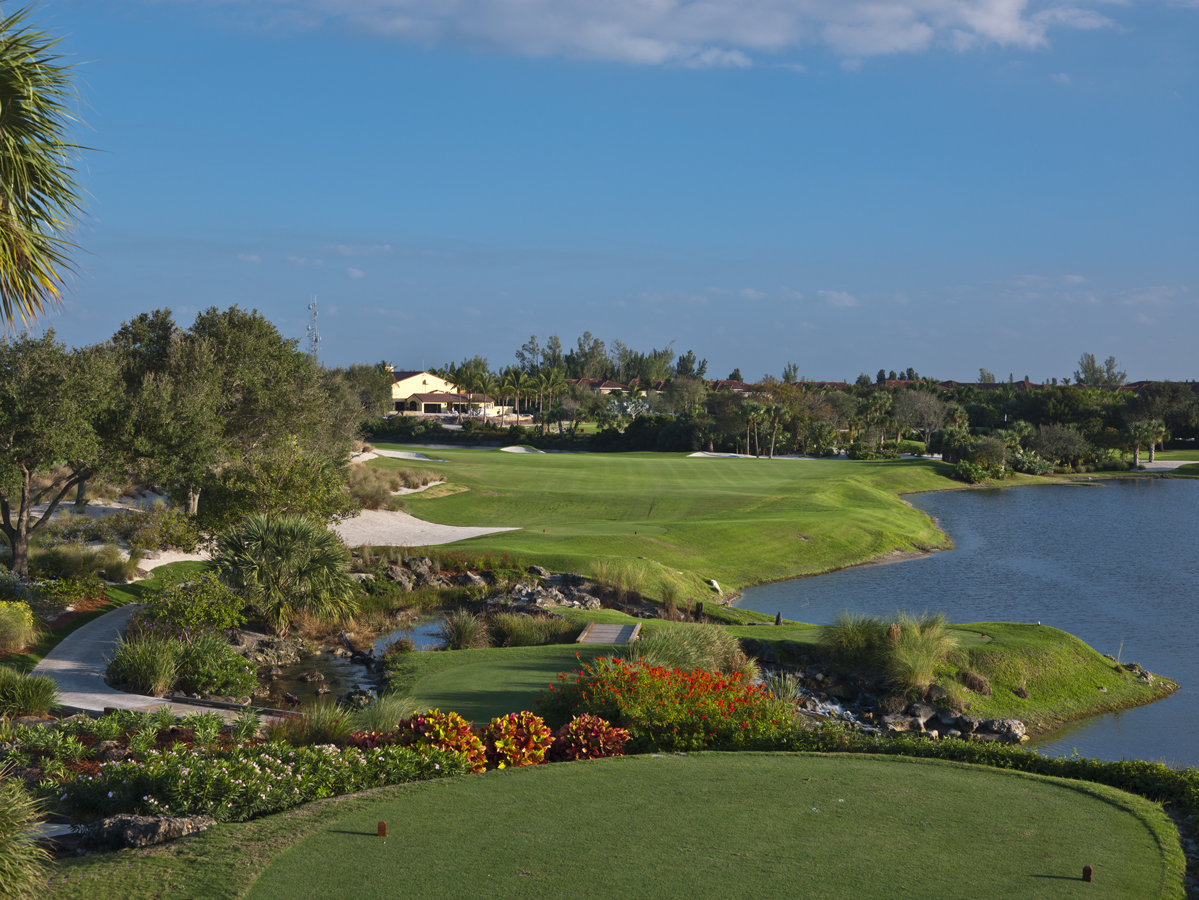
View from atop the 18th tee is as mesmerizing as the first

This course is worth going out of your way to play if you can arrange it.  A great test of golf and a wonderful visual experience as well.  Fazio was at his best when he did the design work here.

(All photos from Emerald Dunes website http://www.edgclub.com)

West Palm Beach, Florida

Architect: Tom Fazio, 1989

Tees       Par   Rating    Slope    Yardage
Green     72     72          132         6507
White      72     70.1       125         6062

(Click here to review Emerald Dunes hole-by-hole descriptions)

Sara Bay Country Club

Donald Ross only built two golf courses in this region of Florida and this one is a real gem worth seeking out.  Donald Ross once said, “A course that continually offers problems – one with fight in it, if you please – is the one that keeps players keen for the game.” Like a tough little terrier Sara Bay has some fight in her.  The original course was restored and updated over the last two decades by Brian Silva an expert on Ross designs who gave it a lovely new polish with full respect for the original design.

Created in 1926 as the centerpiece of  the Whitfield Estates one of Florida’s first golf course communities, Ross gave it all the design features that Ross courses are known for.  The greens throughout have the full measure of the distinctive precipice design that we know from Pinehurst #2.  The fall offs on most greens are on at least three sides which puts an enormous premium on a player’s decisive intent when pitching and chipping.

Signature Crowned Greens Ross Is Known For

Mature growth trees give the holes tactical framing throughout.  Fairway bunkers are done in constellations-but always on one side of the fairway-generally the premium drive location is just off the bunkers.  Greenside bunkering is very selective but severe-the long holes have free access in front-the shorter ones have hurdles, but in all cases there is a tactical way to play around them if you choose.  The greens are very difficult by virtue of the crowning, but what makes it even more challenging is that the surfaces are awesome pure-probably 11 on the stimpmeter on a daily basis.  Grain direction on every green is crucial because it will determine the relative speed and direction of every putt.  One thing to note is that the two par fives on both sides are in the last three holes so your best scoring opportunities are late in each side.

Driving Areas Well Defined By Creative Bunkering

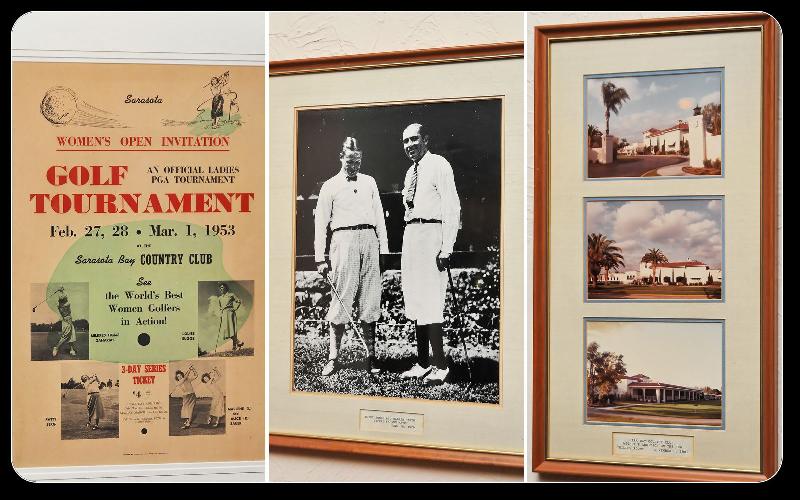
The club itself has a quiet humility about it.  There is no glitz here at all.  The clubhouse is understated except for the extraordinary vintage pictures in the lobby of Jones, Hagan, Zaharias, Tommy Armour, and others.  The course itself is very simple in it’s presentation.  Short yardage driving range-nothing more than a 160 club-makes for lots of finesse practice time.  Pitching area is a cart ride away off the first hole.  No hole identification markers other than the yardage plate on each tee-so you have to pay attention to the course map to know where you are going.  Everyone from the pro to the starter is a low key understated type who just has a confidence in the quality of this place and why people ought to play it.

Rich History Of The Club On Display In The Clubhouse

This is a private club so you will need to arrange to play it through your club professional.  If you are in the Sarasota areas it is well worth the effort to seek this out-it is a great walk and a distinctive Ross experience.  Playing these greens will be an afternoon to remember all to itself.

(All images from http://www.sarabaycc.org)

Sarasota, Florida

Architect:  Donald Ross (1926)
Brian Silva (restored 1991/2006)

Tees          Par    Yardage    Rating    Slope
Blue          72       7021        73.8        136
White        72       6414        71.0        125

(Click here to review Sara Bay hole-by-hole descriptions)

Isleworth Golf and Country Club

Isleworth is a 600-acre private gated community surrounded by picturesque lakes and about 10 miles of private waterways.  It is ten minutes from the center of booming Orlando and provides these pros everything they are looking for in a residence community.  Except for one infamous middle-of-the-night fire hydrant incident back in November of 2009, there is rarely anything that disrupts the solitude of this place.

The schools are good, income taxes non-existent, major airport a drive and a five iron away,  tolerable weather ten months of the year, and a golf facility fine tuned to their every want and desire.  As a result, it is the home of a plethora of PGA and LPGA pros including John Cook, Stewart Appleby, Darren Clarke, J. B. Holmes, Paula Creamer, Annika Sorenstam, and Yani Tseng.  Other sports and entertainment stars and high worth individuals have purchased homes here as well so there is a real who’s who atmosphere on the property every day.

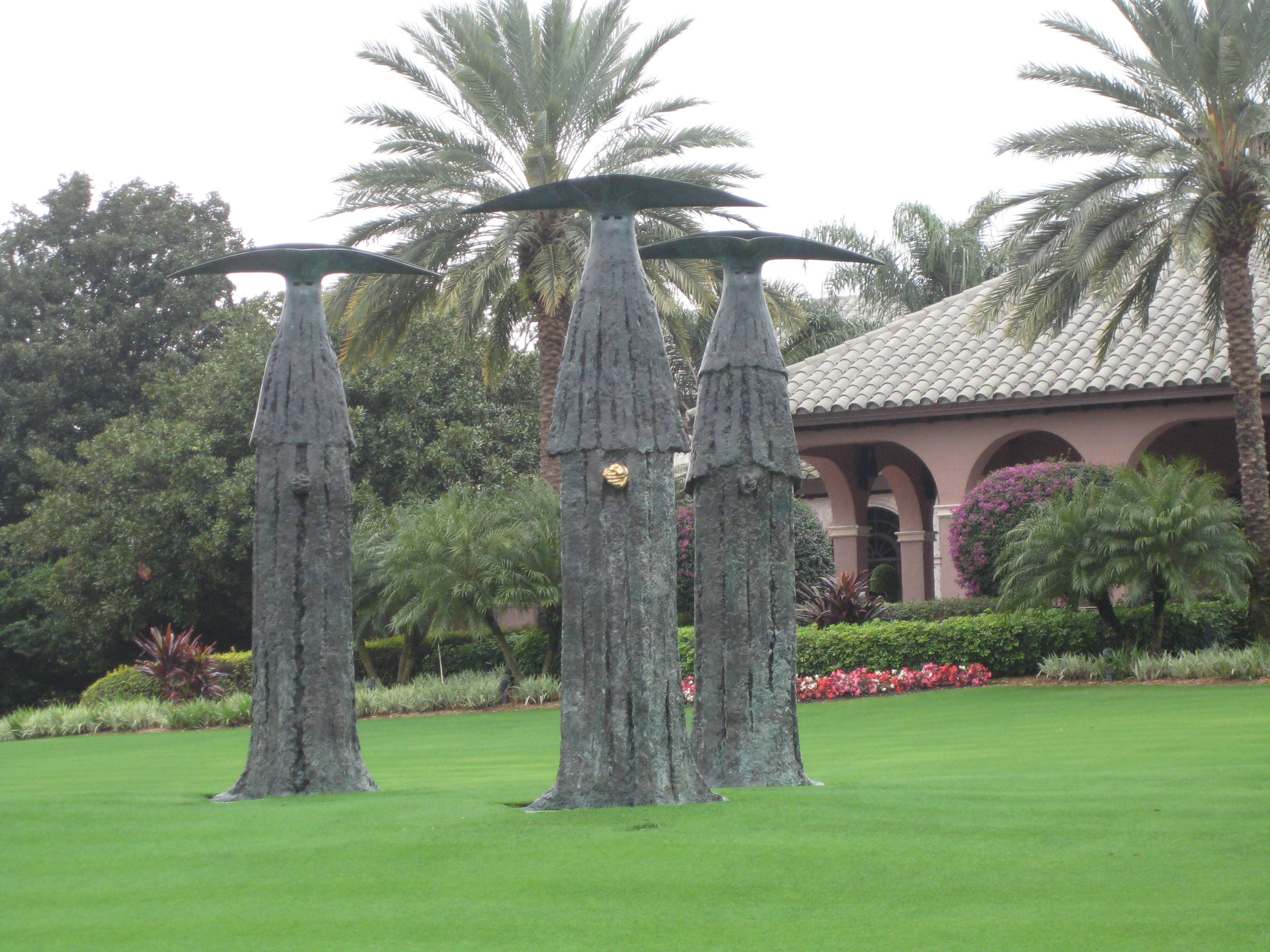
The Isleworth Golf and Country Club is the centerpiece of the community that was started by a group of investors in the mid 1980s.  The Tavistock Group subsequently took over the development in 1993 and worked to bring it up to a standard that would attract the golf professionals and high worth individuals for their permanent residences.  They built an exquisitely appointed 82,000 square foot club house that blends classic design with casual elegance.   From the locker room to the wellness center everything about this place speaks to daily needs of their members in an informal atmosphere of comfort.  Tavistock even appointed the property with distinguished pieces of lawn sculpture from artists like Henry Moore, Phillip Jackson, Eric Goulder, and Arturo Dimodica.

Charging Bull Greets You At The First Tee

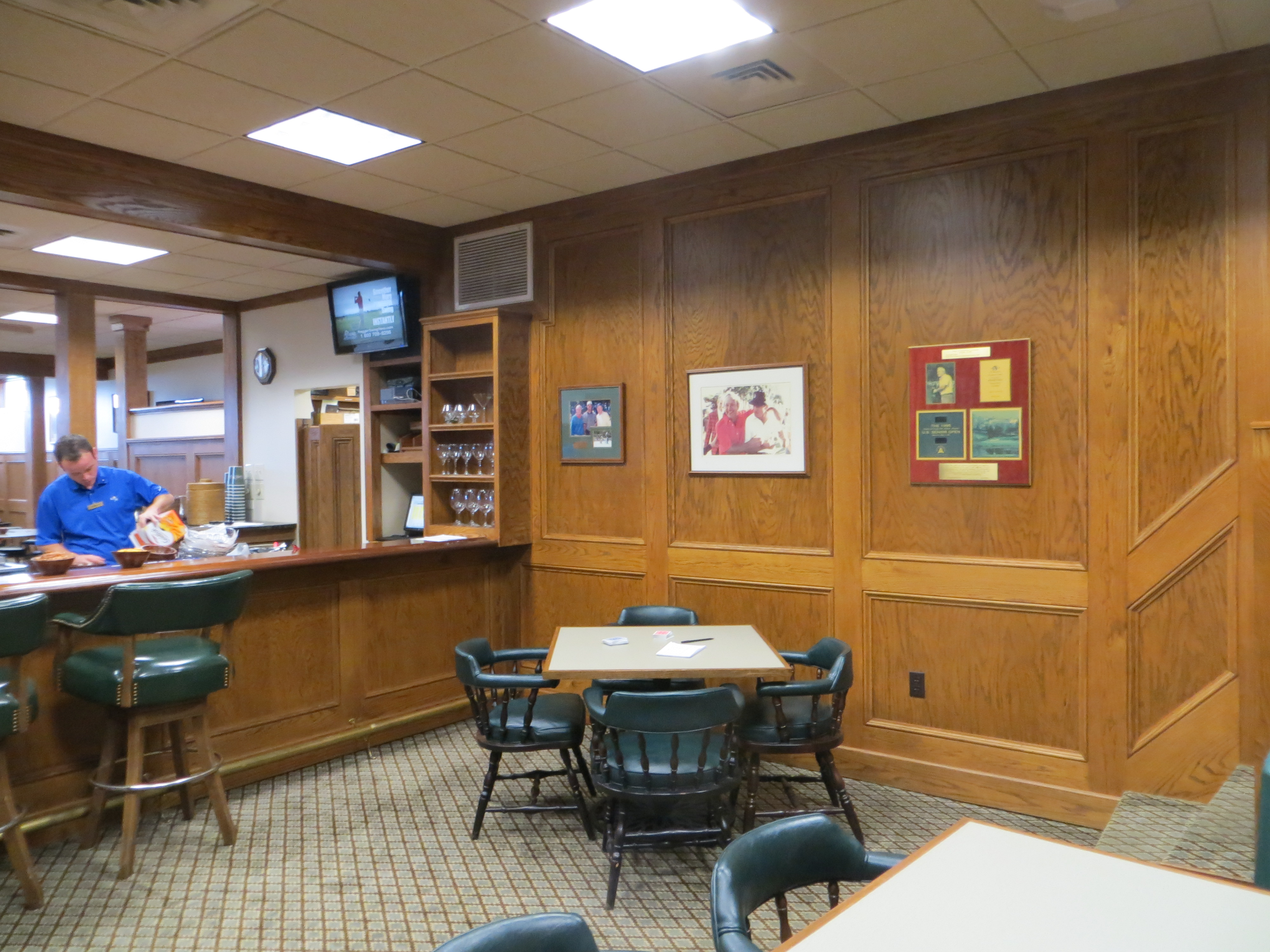
To most guys the Champions Grill is the centerpiece of the Isleworth experience.  This grillroom is something to behold.  You walk down a spiral staircase from men’s locker room surrounded by the golf bags bearing names of the pros who are members at the club.  This leads you to an area with a manly wood appointed  bar and restaurant outfitted with comfortable seating and a flat screen TV everywhere you look.  The walls are covered with captivating memorabilia including plaques for each Major Championship with winners listed who are Isleworth members. Adjacent is a large recreation room with a putting green and a half court basketball court as it’s centerpiece.  Additionally you will see every boy toy ever invented including a pool table, ping pong table, video games, table top shuffleboard, dart boards, air hockey, and a golf swing simulator.  There are cushy spectator chairs horseshoeing each of those so there are lots of ways to settle a push bet on the back nine with your buddies.

The golf facility leaves no pebble unturned.  It includes a massive practice facility with reclusive areas where the pros can practice without disruption.  Tiger Woods got his own secluded pad on the driving range with an extra 50 yards of carry room so he doesn’t bomb any of the other patrons while practicing his stinger.  They have a two-acre short game area with replica bunkering from Augusta National and TPC Sawgrass and an 11,000 square foot putting green.  Plenty of room for the pro, the caddy, and a couple of hundred of their brand of shag balls for the daily practice grind.

The golf course was originally designed by Arnold Palmer and Ed Seay and was subsequently modified extensively under the direction of the very capable architect Steve Smyers.    The course has a distinct Florida target-golf character to it-this was probably intentional to give the professionals a way to simulate the challenges they see during their regular work day.  It is a testing golf course with six sets of tees that can be stretched to as much as 7500 yards for those with masochistic proclivity.  At 6400 yards it is all most amateurs can handle so pick your teeing ground with proper forethought.

The most distinctive characteristic of this course is the very demanding driving areas.  Throughout you see harrowing bunkers hugging the corner of the doglegs adjacent to which is the most advantageous approach angle to the green.  But unlike other courses, the other side of the fairway provides little respite-there is no safe way to play off the tee on most of the holes.  You have to take on the challenge through the day if you want any chance of hitting these greens in regulation.

The course does not have very many stunning holes you will not forget but there are quite a number that will get your competitive attention.  Once you get over the greeting of the Charging Bull on the first tee you have a relatively routine opening hole.  But your heart beat will be prompted by the harrowing challenge of the “Cypress Chute” you have to negotiate on the par 3 second.  Two through four are the three lowest handicap holes on the front so reaching the fifth tee with a scorecard still in tact is your biggest challenge. A little bit of a breather over the next few holes brings you to Champions Point and a view of some really nice boat slips with their matching bungalows.   “Best of Bessie” is a very challenging par four at the eight and you close the opening nine plotting your way “Around the Lake” with another technical par four.
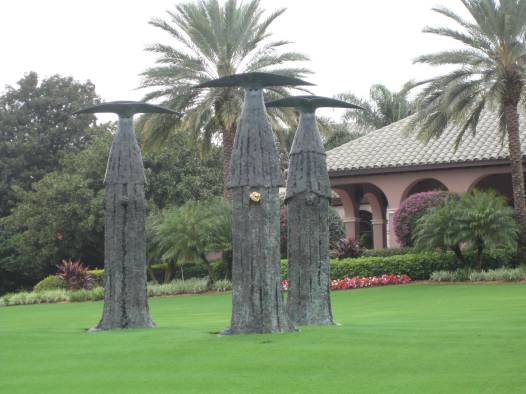
Three Monks Overlook The Front Drive

A bit of a ethereal moment as you leave the cart park next to nine and drive by the Three Monks on the front lawn of the clubhouse driveway.   Seems appropriate to mutter a little deferential prayer on your own behalf before heading to the back nine.

The back nine starts routinely enough but, like the front, you get a sizeable challenge on the next two holes.  The 11th  with its beautiful flower beds behind the green is the Kodak moment of the day.  But this is a full metal challenge with a 150 yard club-especially if the wind is influencing.  The 12th provides another daunting approach with the green wedged between a pond and a side hills on the right.  The par five 13th is a bit of a breather-more lakeside residential eye candy…..these people must have large families or extensive wait staffs.

From here to the end the holes a not bulky in length but they will challenge you constantly to execute well planned shots.  After an interesting short hole on sixteen, the last two are the hardest handicap holes on this side and they well deserve that distinction.  Both green settings are diabolical so the real challenge on each of them is at the end.  The final hole is a bear-this is two booming shots or a deft up and down if you need a par to wrestle away the back nine Nassau.
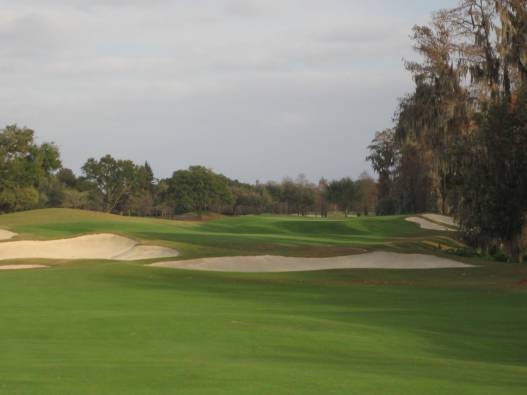
Challenging Green Arrangement At Par 5 17th

Isleworth, when taken in total,  is quite the golf experience.  If it presents itself as an opportunity just throw caution to the wind,  pay the ticket, and indulge yourself for the day in the life of the rich and famous.

Windermere, Florida

Architect: Arnold Palmer/Ed Seay (1986)
Steve Smyers (renovation)

Tees            Par    Yardage      Rating     Slope
Lewis          72       6765           72.9        139
Chase         72       6409          70.8         134

(Click here to review Isleworth hole-by-hole descriptions)

Tobacco Road

Mike Strantz was one of the real artistic young architects out there.  His tutelage under Tom Fazio gave him a real penchant for dramatic design.  He built courses with enormous visual appeal and drama with so many memorable holes that the term “Signature Hole” seems to be frivolous when looking at one of his designs.  His approach to designing golf courses was to walk the ground with his pastels and his sketch pad and draw the holes as he envisioned them.  In spite of the nouveau look of his courses, he had a very old school philosophy about shot values and strategic design.

(Click here to read a wonderful interview with the designer Mike Strantz)

This course is like Royal New Kent on steroids-the challenges are daunting-often layered on top of each other for extra effect-very much in the Irish tradition of a good mix of strategic and quirky holes.  You will not walk off this course with anything less than awe for the vision and effort it took to create it.  If you keep your wits about you it becomes apparent that every hole has a safe way to play and scoring well here is a matter of carefully choosing which challenges to take on and which to ignore.

Opening Hole Par 5     (KyleHarris.com)

The par five first hole is a perfect example of this-he presents you with a series of pumped up challenges you just need to ignore.  There is a conservative three shot sequence that needs to be heeded or else you can start off your day with a very bad number.  All the par 5’s are three shot holes to all except the testosterone junkies.  The vast waste areas on these holes bait you to go for what appears reachable in two.

Stunning #7 Par 4

The overall yardage is not overwelming but the 71 par makes that a bit of an understatement.  The par 3’s are all very short so there is extra yardage available to the four pars and he uses it.  Landing and layup areas throughout the course are much more generous than they appear to the eye-he has used the waste areas and adjacent mounding to mask the true depth of these areas.  You will continually be saying to yourself after your reach your ball- “wow, there is much more to shoot at than it looked from back there”.  Good design.

Intimidating Par 5 #13

There are quirky holes out here-especially the three pars.  Many will call these holes tricked up or unfair but neither of those terms has a place in the Irish golf realm from whence they come.  You simply have to pick a target on the short holes and don’t let the extraneous visual elements get into your head. These are really the holes to stack your card with pars so be disciplined and play for the fat of the these greens.

What a finish #18 Par 4

As with most courses across the pond, this is a course you have to play without scoring expectation.  Play a match with your friends and forget the medal score.  You can win some money and maybe, just maybe, still be pleasantly surprised when you tally your score at the end how well you fared.

.
Sanford, North Carolina

Architect: Mike Strantz (1998)

Tees    Yardage  Par    Rating    Slope
Disc      6304       71      70.8      142
Plow      5886      71       68.6      132

(Click to see complete Tobacco Road hole-by-hole descriptions)
Pine Needles

This is a real Donald Ross gem built in 1926 as the sister to Mid-Pines that opened about 5 years earlier.  This part of the resort has a casual feel, 74 rooms in chalet style lodges.  The course was renovated in 2004 in preparation for the third U.S. Women’s Open in 2007.  The work was done by a Ross aficionado John Fought and he restored it back to the specifications of the original Ross design.  So you are playing a true Donald Ross experience here.

Tranquil Signature Hole Par 3 #3

Play from the Ross tees, this is where the women played their championship, it is very playable but challenging as well.  The course is routed through the pine trees that clearly define every hole and play into the strategy of positioning of your tee balls.   The course has a good deal of up and down so you will be recalibrating irons all day.  All the driving areas are generous so the big dog should eat until he is plump.  It’s only shortcoming is that it’s par fives lack length, but the finesse aspect of the par fours and threes make up for this.  The par fours in the middle of each nine will get your attention.

Challenging Par 3 5th Hole

Green complexes are very Ross-esque-they require sound forethought before hitting your approaches and pitches.  The major design feature is that all greens are exceedingly accessible.  The course is not over bunkered at all.  Typical hole has two maybe three greenside bunkers but all have some direct access along the front.  The greens have some of the crowning you see on #2, many pitching areas and swales off the sides and back, and a unique design feature I call “saucering”.  Most of the greens have a six foot collar that surrounds the green and actually feeds balls back onto the putting surface rather than throwing them off.  This is neat and presents some interesting pitching options around the greens.

Quite a finish Par 4 18 Hole

Women’s Open was here in 1996, 2001, and 2007-the quality of the winners lets you know how good of a track this is.  Annika Sorenstam, Karrie Webb, and Cristie Kerr won here respectively.  For Kerr it was probably here breakout moment as a professional-her career jumped to another level after that win.  This is a top flight venue that is worth the price of admission and more.

(All photos from http://www.pineneedles-midpines.com)

PInehurst, North Carolina

Architect: Donald Ross (1928)

Tees         Par    Yards     Rating    Slope
Ross         71     6436      70.6        126
Regular    71     6985      68.5        120

(Click to see complete Pine Needles hole-by-hole descriptions)

Pinehurst No. 2

Pinehurst is one of the true meccas of golf in America and Donald Ross’s Pinehurst #2 is the signature hood mount for this place.  He stands as one of the most heralded American golf course architects of his time and this course is the one all point to when they try to characterize the style of course design Ross ascribed to.  Having played a number of his courses I can only agree that in this one he seemed to best orchestrate the subtle brilliance he brought to golf course design.  The course is playable, challenging, and thought provoking-what more can you ask for in an afternoon’s walk.

Both men’s and women’s national championship will be contested at #2 in 2014

Embed from Getty Images

The main facility here is also a treasure-take the time to walk the hallways and peruse the memorabilia hanging throughout.  Over the last century there have been countless men’s and women’s championships played on Pinehurst #2-the North/South Amateurs, North/South Opens, PGA Championship, Ryder Cup,  Tour Championship, and the U.S. Amateurs to name a few.  The greatest players in play the game have won here and the plaques in the hallway outside the Donald Ross grill include names like Francis Ouimet, Walter Hagen, Ben Hogan, Sam Snead, Jack Nicklaus, Davis Love III, Curtis Strange, Glenna Collett Vare, Dorothy Campbell Hurd, Louise Suggs, Babe Zaharias, Hollis Stacy and Morgan Pressel.

Payne’s gesture in 1999 has been immortalized in bronze

Embed from Getty Images

The course has recently hosted two men’s U.S. Open’s with great resolve-the iconic victory by Payne Stewart in 1999 and the Michael Campbell’s win in 2005-the winning scores were one under and even par respectively.  Both the men’s and women’s U.S. Open will be played on this course in 2014 in a rare major doubleheader.  In preparation for that event they hired Ben Crenshaw’s design team and have spent considerable dollars bringing back the original Donald Ross character of sand and scrub rough throughout course that had been replaced by thick Bermuda rough for the previous majors.  This reversion gives the course a more signature look and probably plays just as difficult for most of us.

There is no rough to speak of but being out of the fairway is no bargain

Embed from Getty Images

When it comes to the course itself, probably the most distinctive thing I can say is that the course is  really lacks any visual distinction.  Other than the crowned greens that everybody talks about, it is just another pine needle haven in the sandhills of North Carolina.  There are very few holes that visually stand out-in fact, in thinking back over the round, it is often difficult to sort the holes out from one another in your mind.  There is only one water hazard on the course and it is barely in play and very little out of bounds that is close to the playing area.  You are likely to play the entire round with the same ball but it is likely to take plenty it’s share of verbal abuse.

The brilliance of this layout is it’s stunning subtlety.  It never threatens you with overt disaster but rather lulls you into submission like those Sirens whose voices seem so sweet but always lead you to dire consequences you never expected.  If you do not pay attention to every detail-heed every piece of advice in the yardage book or from the caddies knowledge base you will continually pay the price and be dope slapping yourself all the way around this place.

The dogleg left Par 4 5th ends with a signature fall off green complex

Embed from Getty Images

You do get the full measure of the Donald Ross formula here-once he completed the original in 1907 he spent much of the next 50 years tinkering with it so it truly represents his tactical thinking in course architecture.  The driving areas adequate but not overly generous-usually flanked by fairway bunkers you want to avoid or that combination of tall pines and sand and scrub rough.  Positioning off the tee is critical-on almost every hole there is a position from which playing the shot into the green is much easier.  Being macho will get you nowhere out here-being tactical will derive rewards.

All of nature’s elements are in play at the the Par 5 16th

Embed from Getty Images

The green complexes are what really hold people’s attention-raised turtle back greens with falloff shoulders tightly guarded by deep bunkering or grassy hollows below the putting surface.  What makes this so unusual is that the green contours and shouldering really decrease the target area of the green considerably so you approach shots have to be very precise to stay on the putting surface.  If you miss the green, that is when the real fun begins.  One overall suggestion is leave the L-club in the trunk.  Most of your affective plays around the green will be made with lower loft clubs keeping the ball close to the ground.  Be open minded to the shots you hit around the greens because you will be amazed how creative thinking can get you much better results than the obvious one third in the air-two thirds on the ground formula.  It will take a few holes to get used to this approach but by the middle of the round you should get it and you will find your percentages of up and downs improve as a result.  When you get back home and pull off one of these shots in front of friends you can brag that it was just a piece of memorabilia you brought back from Pinehurst #2.

The Par 3 17th has not changed very much….it didn’t need to…

Embed from Getty Images

This is a course that must be walked to be totally appreciated-plus the caddie’s insight will make the course much more playable.  It is well worth the premium to take this one in on the ground.  Once you have played this you may not remember the details of the holes but you will never forget the Pinehurst #2 experience.  Once Donald Ross gets into you head and he never leaves.

Pinehurst, North Carolina

Architect: Donald Ross (1907)

Tees     Par    Yardage    Rating    Slope

Blue      72       6767         73.1       133

White    72      6298          70.9       126

(Click to see complete Pinehurst No. 2 hole-by-hole descriptions)

Pinehurst No. 7

Rees Jones added another classic Carolina through the pines course to the Pinehurst family on one of the most rugged pieces of land on the property.  The course has an almost mountainous feel to it with many holes playing down off the tee to a landing area and up to the green on the approach.    The hilly terrain makes the yardage on the scorecard deceiving since many holes play a club and a half more up to the greens.  At a slope of 140 from 6800 yards it is in my estimation the hardest of the numbered courses here at the Mecca of American golf-just seems like avoiding the high score on individual holes is very difficult.

Number 1 Handicap Hole #2 Par 4 (www.pinehurst.com)

Many huge pines that seem to attract any wayward shot-anything off the fairway seems to find the trees and there are few par saves available from the needles.  Therefore, it is a very exacting driving course-first four holes in particular are very tight.  Knowing the Carolina pine needle shot is very important-use the fairway bunker swing-little leg motion-contact ball before needles.  Driving in play and good putting are integral to a decent score.

Number 7 Par 4 (www.reesjonesinc.com)

The place is not over-bunkered, the trees present plenty of hazard on their own, but the bunkers there are have exotic shapes and sizes designed to visually intimidate.  The greens are large, influenced by grain, rolling, and segmented with lots of slant in them.  There is a big premium for keeping your approach shots below the hole.    Most of the greens are set up on hills or plateaus so you have many high soft shots to stay on the putting surfaces.

Picturesque Finish Par 5 (www.reesjonesinc.com)

Nature note-they have a special breed of fox squirrels here-looks like Zorro and eats anything.  Plenty of playground room for them.

Pinehurst, North Carolina

Architect: Rees Jones (1986)

Tees            Yardage          Rating            Slope

Blue              6819              73.7               140

White           6216               71.6               132

(Click to see complete Pinehurst No. 7 hole-by-hole descriptions)

Pinehurst No. 8

There was quite a bit of anticipation when Fazio, a North Carolina favorite son,  got the nod to build his first course in Pinehurst to honor the Centennial Celebration of this golfing mecca.  The course he designed easily met all those expectations.  It is a spectacular but playable course meandering up and down through the tall pine trees and fresh water marshes.  The course is panoramic-many sweeping downhill holes where you can clearly see all the challenges in front of you.  Big segmented greens with good speed and  breaks that will challenge your judgment as well as your execution.  This is a thinking man’s golf course-approaching each hole with the right forethought can make a big difference on the scorecard.

Bunkering is plentiful but it is not overdone.  Most greens are accessible from one angle on the front-so pay attention to position your ball properly for the most advantageous approach.  The landing areas are always more generous than they appear-he often uses the change in elevation to mask the landing areas from view but if you look carefully at the yardage book you will see that he gives you plenty of room to play to.  The greens have significant slope-many fall off to one side or the other.  The shots into the greens need to take this into account to get your ball close enough for birdie opportunities.

Visual Par Three #8  (golf.com)

The course starts out kindly enough with a sweeping downhill dogleg left that reminds me of the first at Spyglass Hill.  The pace remains tepid for the next few holes until you reach the fourth which is a massive dogleg left par four which will change your mindset for the day.  What follows the rest of the front side are a series of very technical holes that demand you control your roll out to avoid the adjacent trouble.  The ninth is the angry sister of the fourth which it parallels in the opposite direction-big dogleg right with an uphill approach into a difficult green.

The back side starts quietly but from 11 through 13 you play a series of very difficult holes in an area where they turned a sand pit into a visually intimidating series of hazards.  From here in the challenge rachets up considerably.  The fourteenth is your classic warf style hole with water from tee to green on the left and a putting surface that seems to be hanging precariously above the water.

Around The Marsh #14 and 15    (www.pinehurst.com)

The last three holes work up and down the hillside that leads to the clubhouse.  In all cases you are tempted to hit it farther than you need to-like the ending of the front side it is all about controlling your ball flight and positioning.  The finishing hole brings you up the hill to rediscover the view of the clubhouse perched atop the hill.  The cool one that is waiting for you in the bar will be eagerly anticipated.

Final Stretch Begins #16    (theduncanlist.com)

He designed this to be a walking course-the greens and tees are in close proximity.  Make sure you arrange for a caddie ahead of time-the experience is enhanced considerably taking this one in from ground level with some local advice.

Pinehurst, North Carolina

Architect: Tom Fazio (1996)

Tees       Par     Yardage       Rating      Slope

Blue       72        6698              72.3       133

White     72        6302              70.2       130

(Click to see complete Pinehurst No. 8 hole-by-hole descriptions)
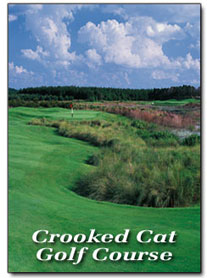
Crooked Cat-Orange County National

This place is a real golf factory facility with two championship golf courses, a 360 degree grass driving area the size of Nebraska, and a golf shop that will make you feel like you are in Nordstroms.  The place has hosted the final stage of the PGA Qualifying School a number of times.  Coupled with how many pros and wanna-be pros living in the Orlando area you are going to see lots of sticks out there practicing and honing their games.

The fare is reasonable for a facility of this quality and the golf and related accommodations are very much what you would expect.  The golf shop is humongous with every major line of apparel represented-if you cannot find something memorable to add to your wardrobe you are either blind or too picky.

This course is one of two that were designed by the team of Phil Ritson, Dave Harman, and Isao Aoki.  They moved a lot of dirt to get the sculpting and landscaping they were after but the result is a course that is very challenging but totally playable.  The variety of the holes is it’s strong suit.  There are the typical Florida holes with adjacent water or environmental areas but there are even a few with an Irish lilt thrown in.  The handicapping of the holes is very realistic-three of the five pars are the 16th, 17th, and 18th handicap holes and two of the par threes are the 4th and 5th handicap holes.  They put real thought into which holes needed the handicap assistance rather than just looking at length to determine it.

If you look carefully at the GPS images of the holes the lines of play are fairly obvious.  Most of the sculpted areas of the fairways are still fairway it is just that hitting from them is a less advantageous place to play from relative to the green.  As with most good courses, driving the ball on the proper line and in the short grass is the best way to get aggressive places to play from.  The greens are plenty large but segmentation and tiering require proper planning on the approach shots to avoid three putts.

The yardage book in the shop is major old school-hand drawn with lots of particulars.  Problem is that it is virtually unreadable to a non-tour mortal so you are better off saving the $7 and just go with the provided GPS in the cart.

This is a very enjoyable afternoon of golf.  As always, play from a tee length with hole distances that are comfortable for you.  The challenge you seek is here at whatever length you choose to play at.

Winter Garden, Florida

Architect: Phil Ritson/Dave Harman/Isao Aoki (1997)

Tees                  Par         Rating        Slope        Yardage

Green               72            73.7            132            6927

Blue                 72            71.4            126            6432

White               72            68.8            122            6020

(Click to see complete Crooked Cat hole-by-hole descriptions)
Bay Hill Golf Club

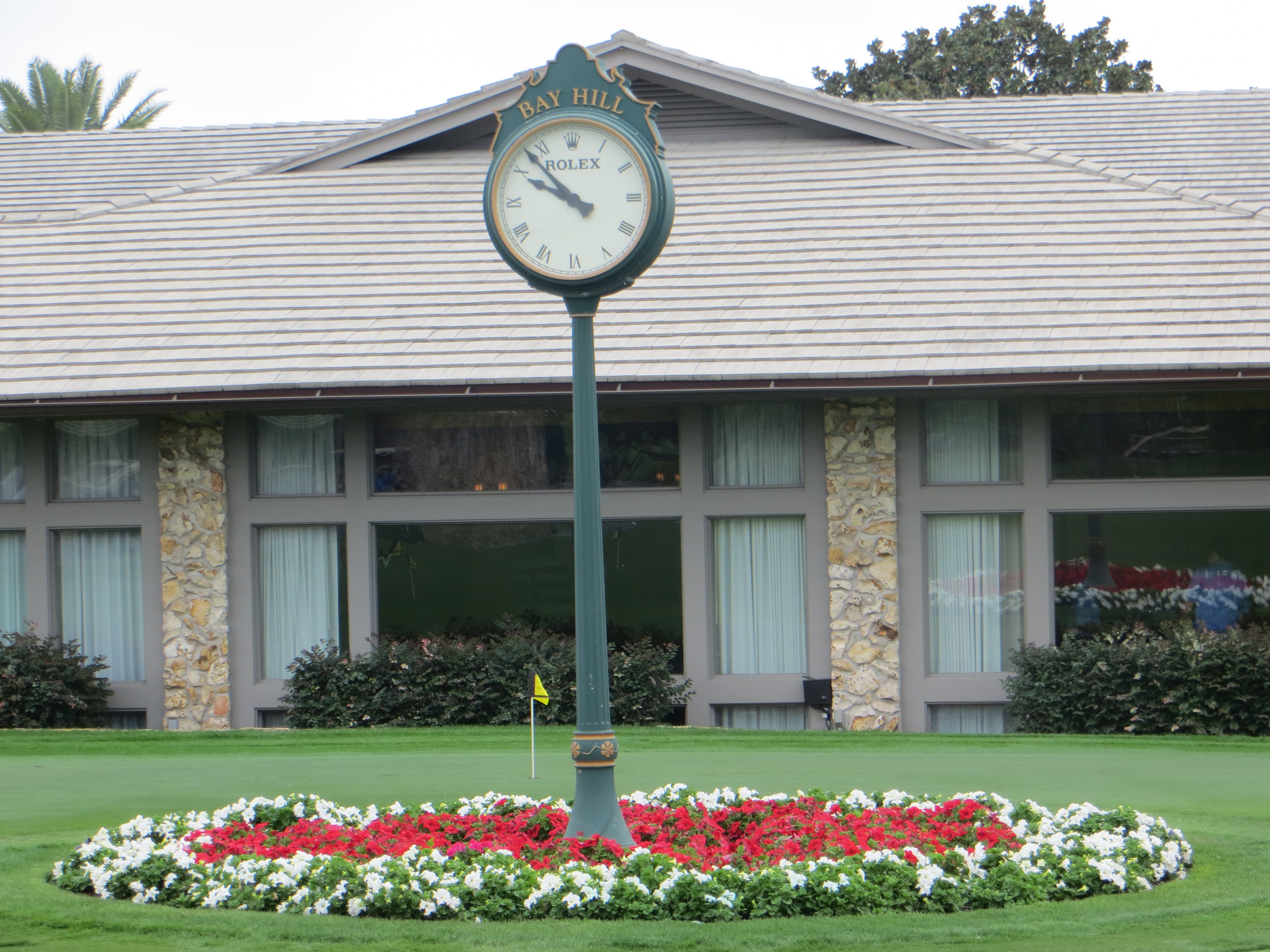
Bay Hill is synonymous with Arnold Palmer as his winter retreat and the host venue for the golf tournament that bears his name. The facility was built in the early 1960’s by a group of Nashville businessmen who hired Dick Wilson-one of the prominent architects of the day-to build a championship course in the middle of nowhere. Arnold came to the recently opened course in the mid-sixties to play an exhibition match with Jack Nicklaus and fell in love with the quality of the course as well as the reclusiveness of Orlando. In the early 1970’s through the connections of Mike McCormick and IMG, Arnold put together a group of investors to buy Bay Hill from the original Nashville businessmen who put it together.

Winnie and Arnie made sure all the players would not miss their tee times

Winnie and Arnie made sure all the players would not miss their tee times

The rest was history as Arnold began to spend more and more time at Bay Hill with Winnie his wife and her Golden Retriever Riley and they put their personal stamp on every aspect of the operation.

Arnie and one of their Goldens

The casual character of this first class destination facility is clearly a reflection of their personalities and values. Arnold and Ed Seay have continually tweaked the course itself to keep it up to standards to challenge the PGA touring pros that play there every spring. Yet it remains totally playable to the large contingent of members and guests who play it every day.

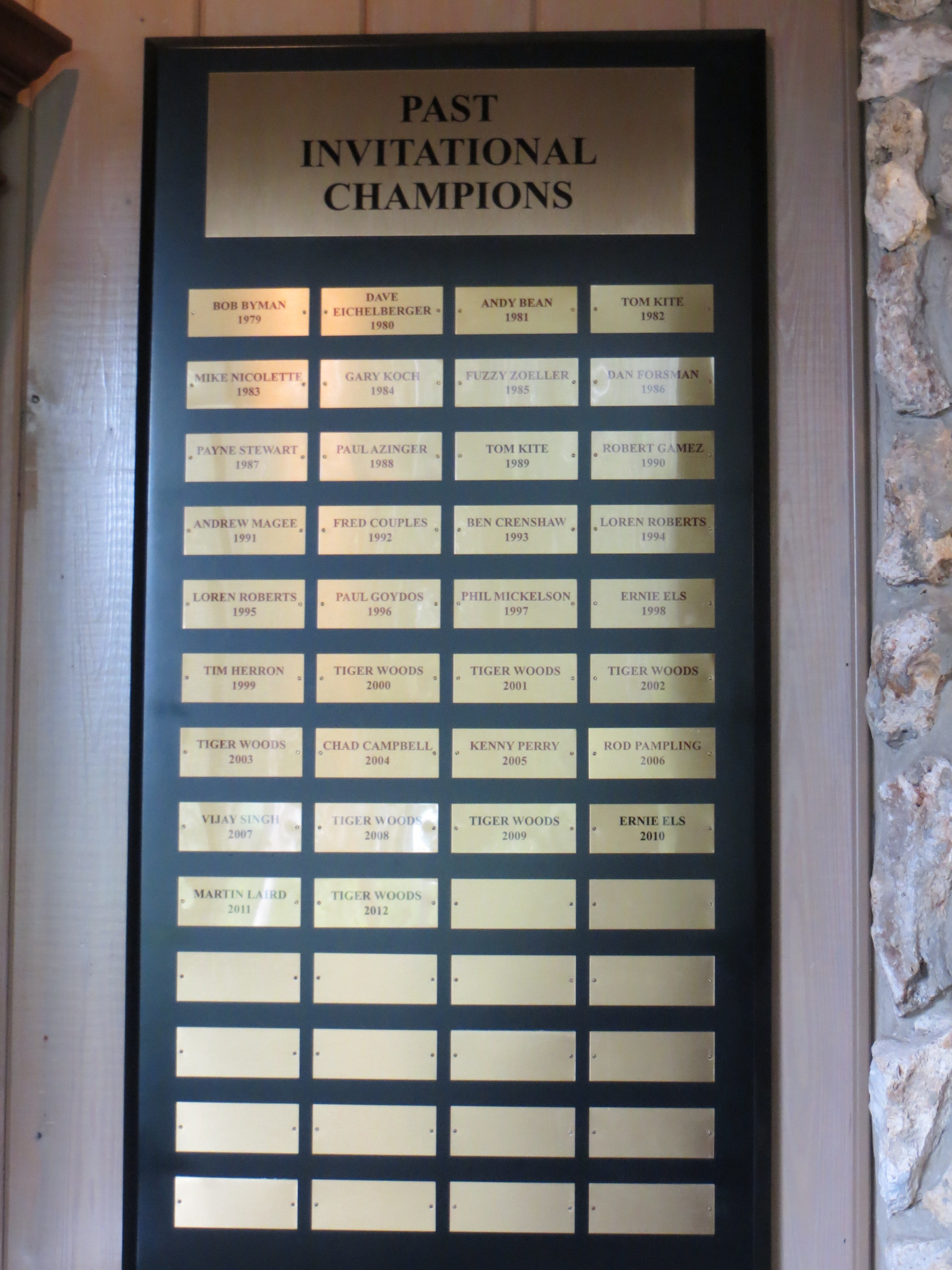
Past Champions Plaque(Click on any picture to get an enhanced view of the image)

The first impression of the course is that it is not as macho as you would expect after seeing it year after year on TV. The who’s who of winners over the last 30 years shows an amazing diversity of players win here-from Andy Bean, Gary Koch, and Tom Kite to Freddie Couples, Phil Mickelson, and Tiger Woods (6 times).

Wharf arrangement on the Par 5 6th rewards tactical restraint and precise execution.

Wharf arrangement on the Par 5 6th rewards tactical restraint and precise execution.

The course itself is not particularly brutish in length but it is technical enough to require really good management of ball flight and distance. The greens are quick and undulating so it takes tactical planning with approach shots and aptitude with the flat stick to score well.

The par 4 8th is not long but it is very demanding..especially on the approach.

The Par 4 8th is not long but it is very demanding..especially on the approach.

The topography is actually un-Florida-like so you have your share of up and down holes to deal with. The par fives are not particularly long-at least two are reachable if you crank your driver-and there are not really many stout par fours of 425 or longer. The shorter par fours are the most difficult to me-they all have a good measure of Arnold’s favorite risk-reward thinking to them. The overall variety of holes is it’s strongest suit-no two holes feel remotely alike. Fairway bunkers are sprawling but tactically placed.

Bunkering on the Par 3 7th is, as Goldilocks would say, just right!

Bunkering on the Par 3 7th is, as Goldilocks would say, just right!

You cannot help but notice the artistry of the shaping and vistas of the bunkers-they are in the right places to make you think hard before taking the aggressive line on most holes. Greenside bunkering is not overdone but they are very steep sloped so you can get some very challenging exit paths, especially if you short side yourself on an approach miss.

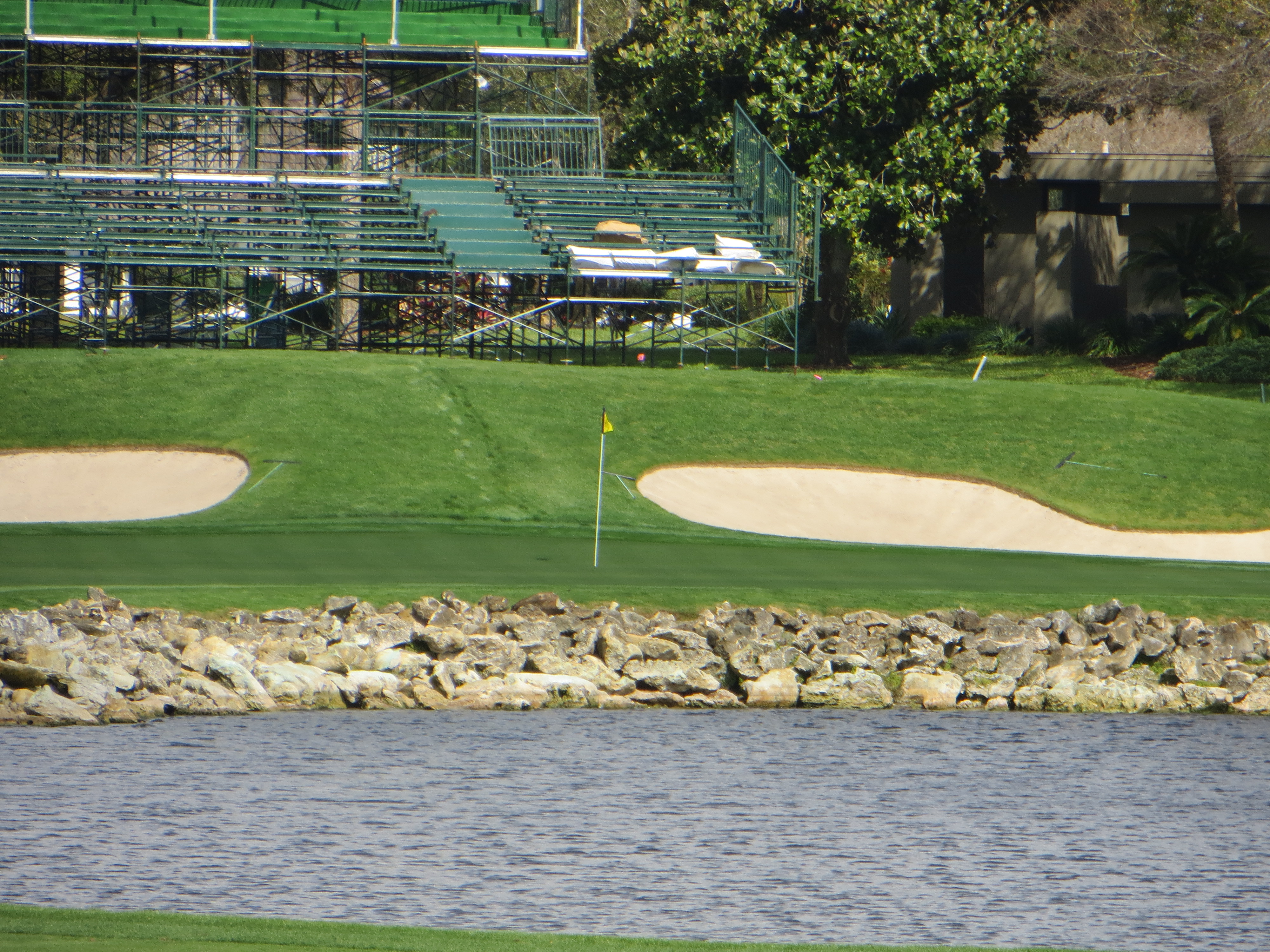
The iconic rock trim carry into 18 has made many a tour player take pause

The iconic rock trim carry into 18 has made many a tour player take pause and reflect

This is clearly a course where knowing when to attack and when to back off make a real difference in your final score. Thoughtful aggressiveness is the mantra here. You have to go for it when the odds are in your favor because you need some low scores to balance the few paybacks you are likely to render through the day.

A locker room with showers, gin tables, and a bar..how old school!

A locker room with showers, gin tables, memorabilia, and a bar..how old school!

Do not miss the men’s locker room-it is a throwback to the days before political correctness dominated our lives. It is a place for men to unwind after a round-have a drink, play some cards, and settle all the bets of the day. The memorabilia on the walls is enough to fill a museum.

Orlando, Florida

Architect: Dick Wilson (1963) Arnold Palmer/Ed Seay (since 1970)

Tees        Par    Rating     Slope     Yardage

Green      72      75.4         142        7381

Blue        72      73.7         139        6895

Yellow     72      71.6         134        6437

(Click to see complete Bay Hill hole-by-hole descriptions)

(Click to see the moegolf Bay Hill Charger Nine review)
(Click to see the moegolf Bay Hill Short Game Area review)

(Click to see more photos in a Postcard From Bay Hill)