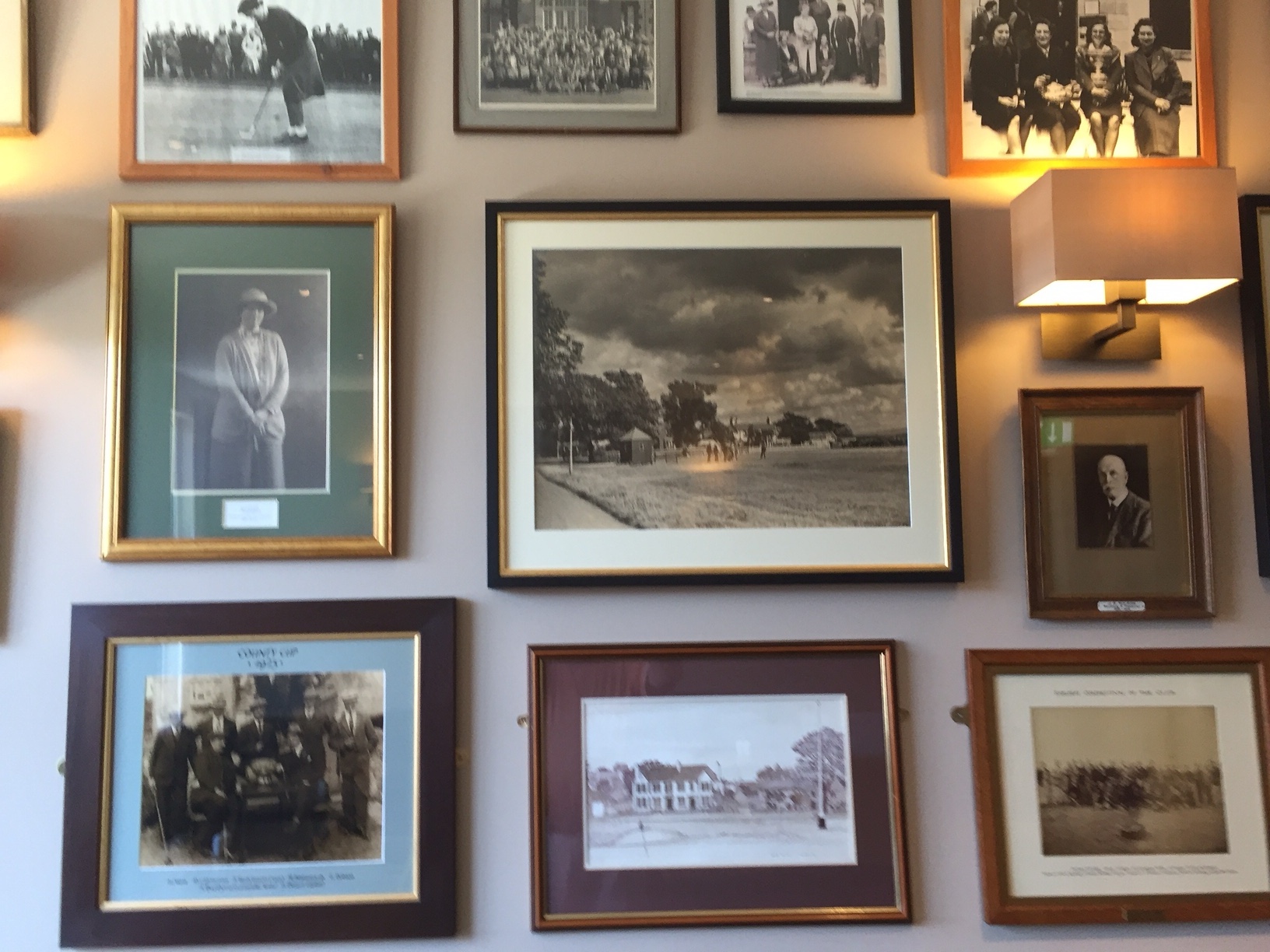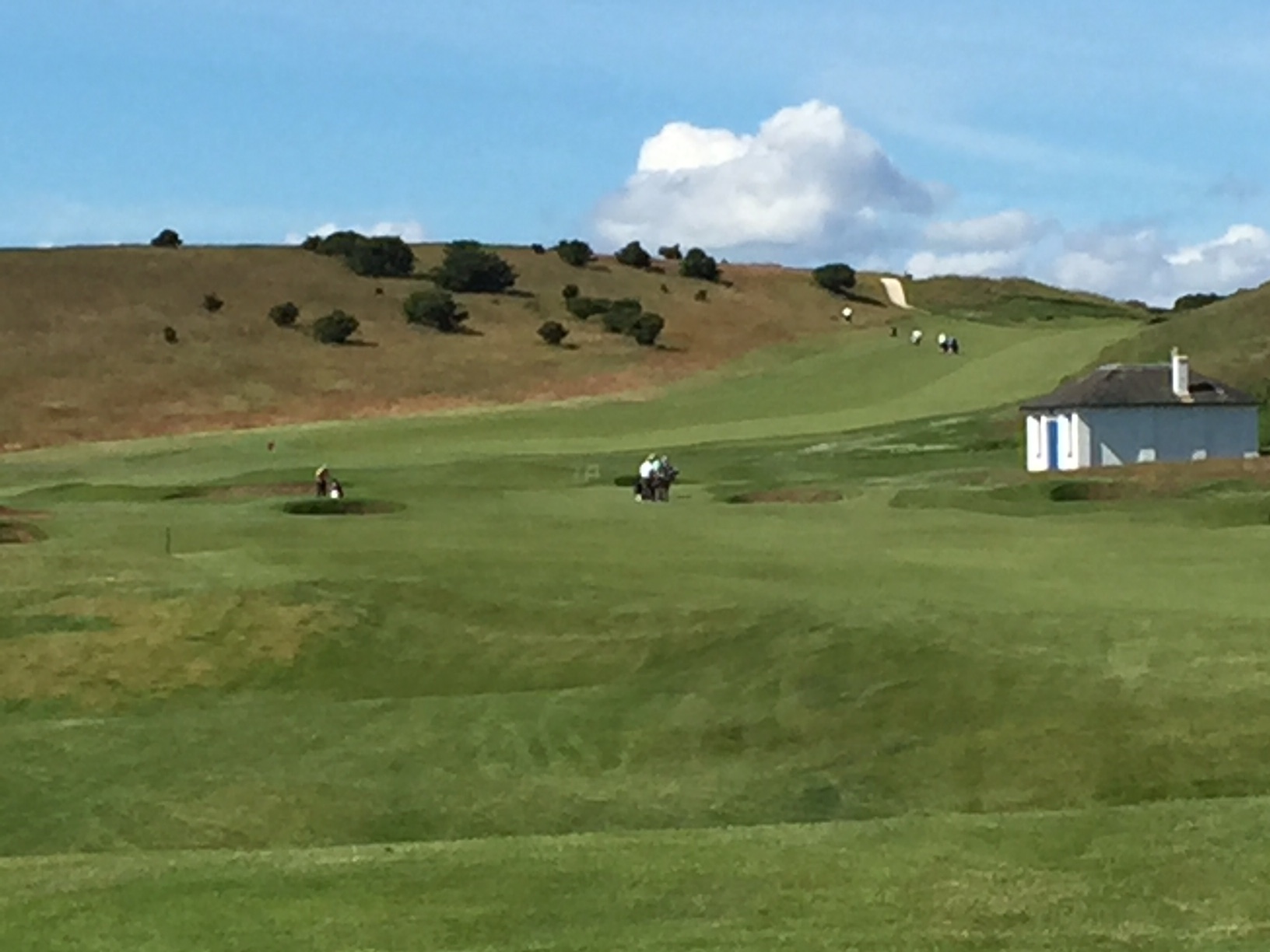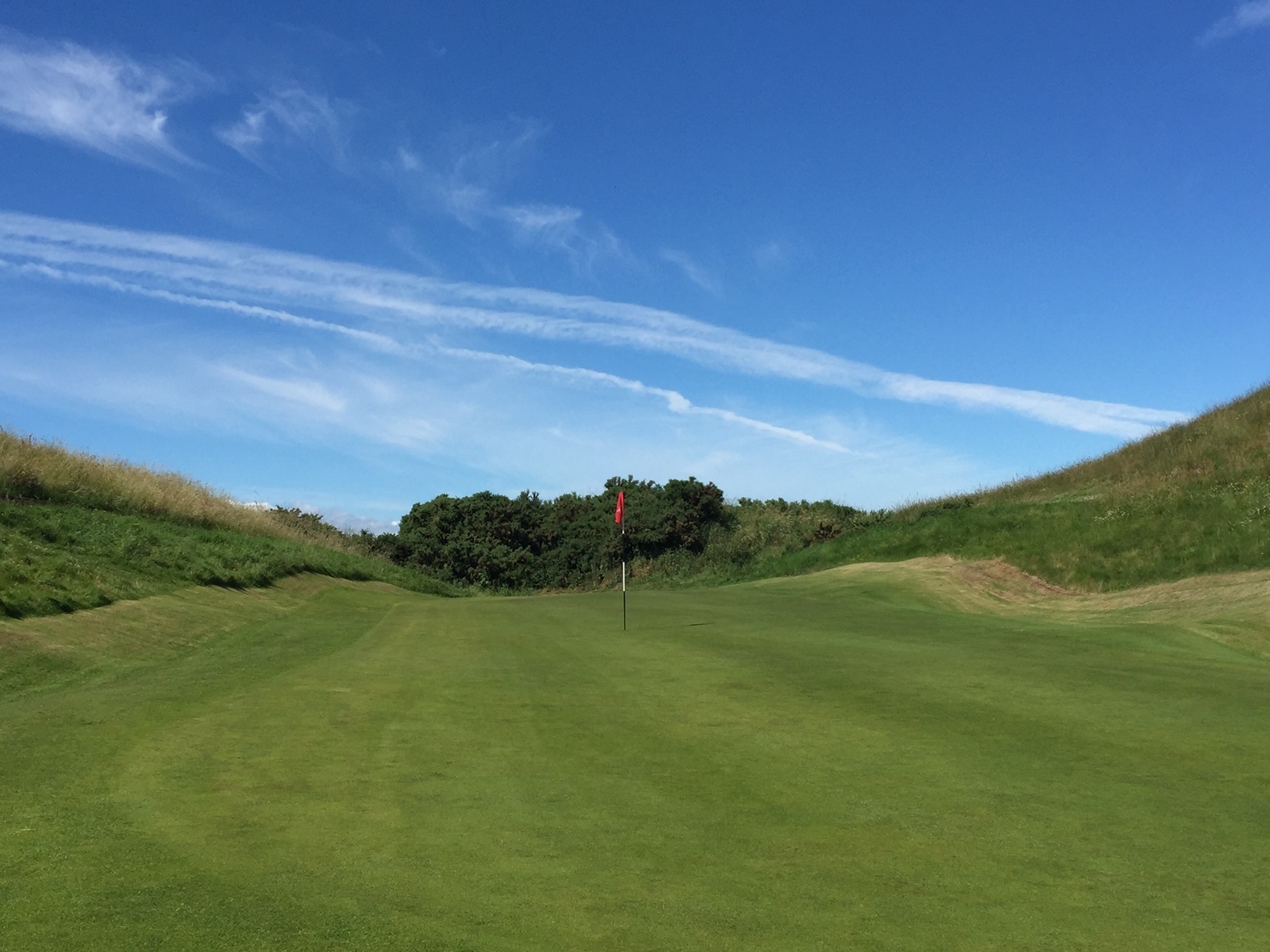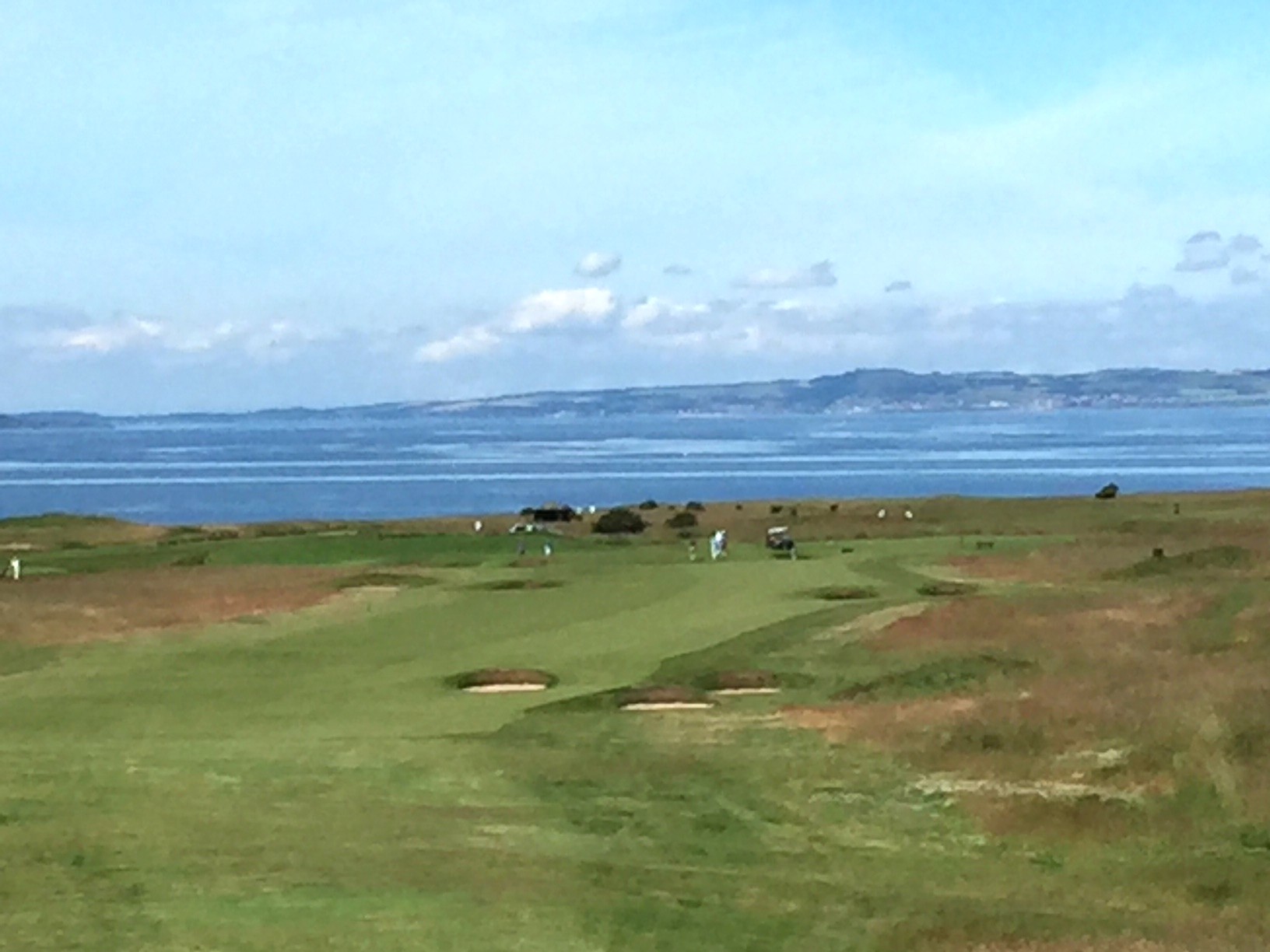
Newport Country Club

It is so rare to go to a renowned club with only a couple of hundred members who come from old money and still run the place with a thrifty attitude of “why just change things for changing sake”.  I was told the president of the club has been president for decades, that kind of says it all.  Why change things that don’t need changing?

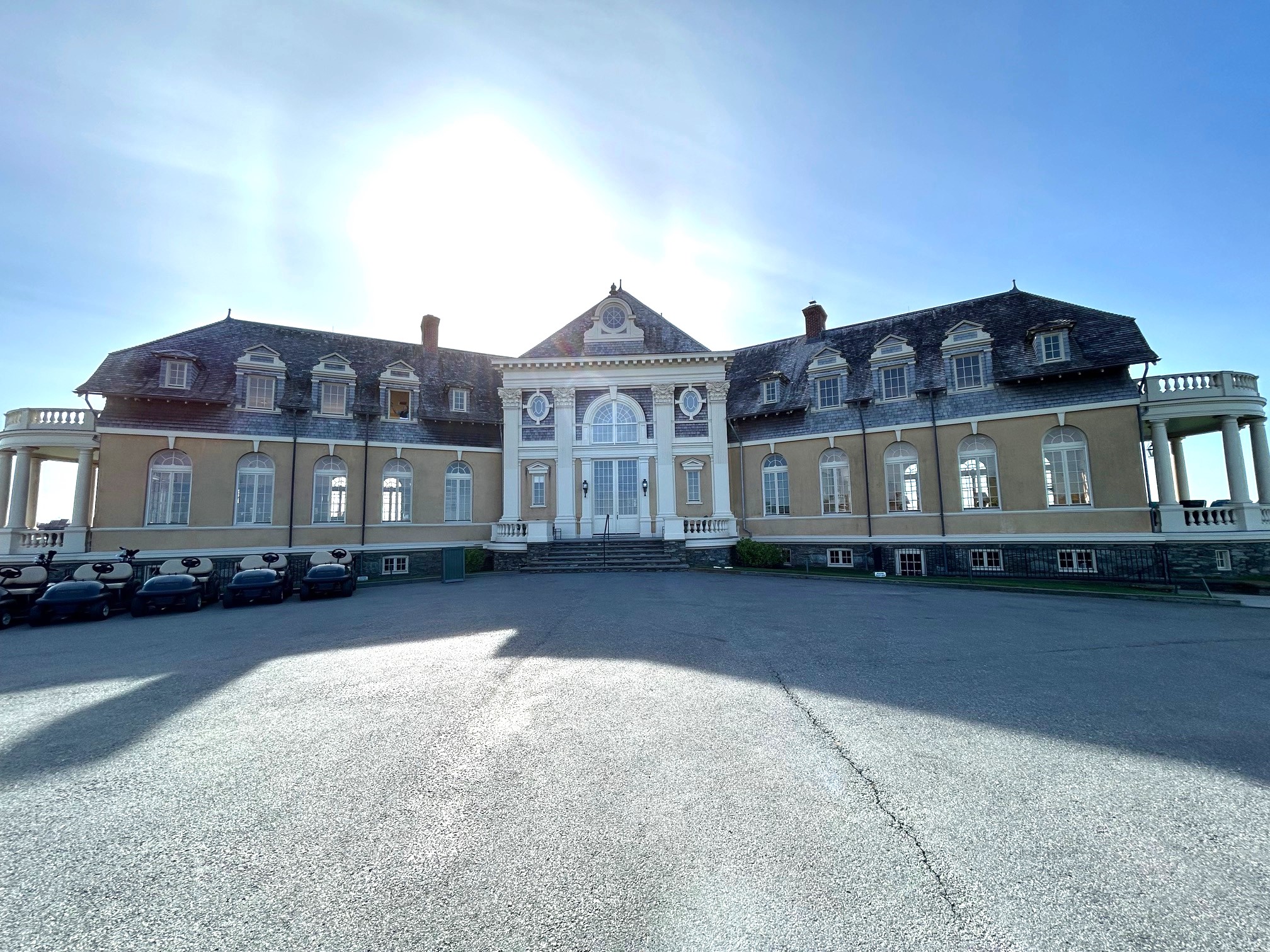
Newport Country Club was founded in 1893 by a group of well heeled guys who just wanted a place to hang with friends, watch some polo, and play a little golf.  Under the guidance of Theodore Havenmeyer they went about acquiring the land for the course and hired Whitney Warren, a French trained architect, to build them a Louis the XIII style club house with all the bells and whistles they required.

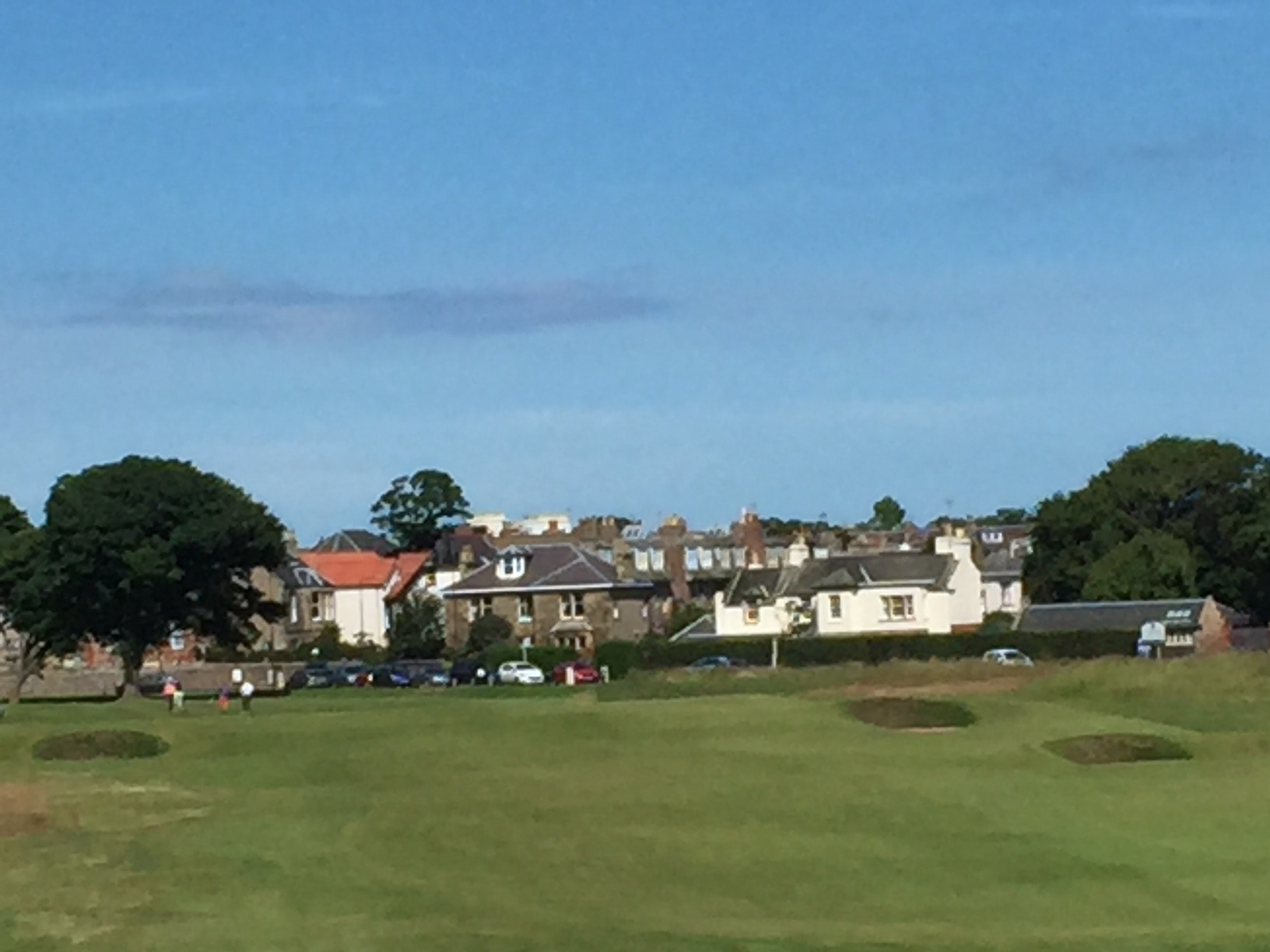
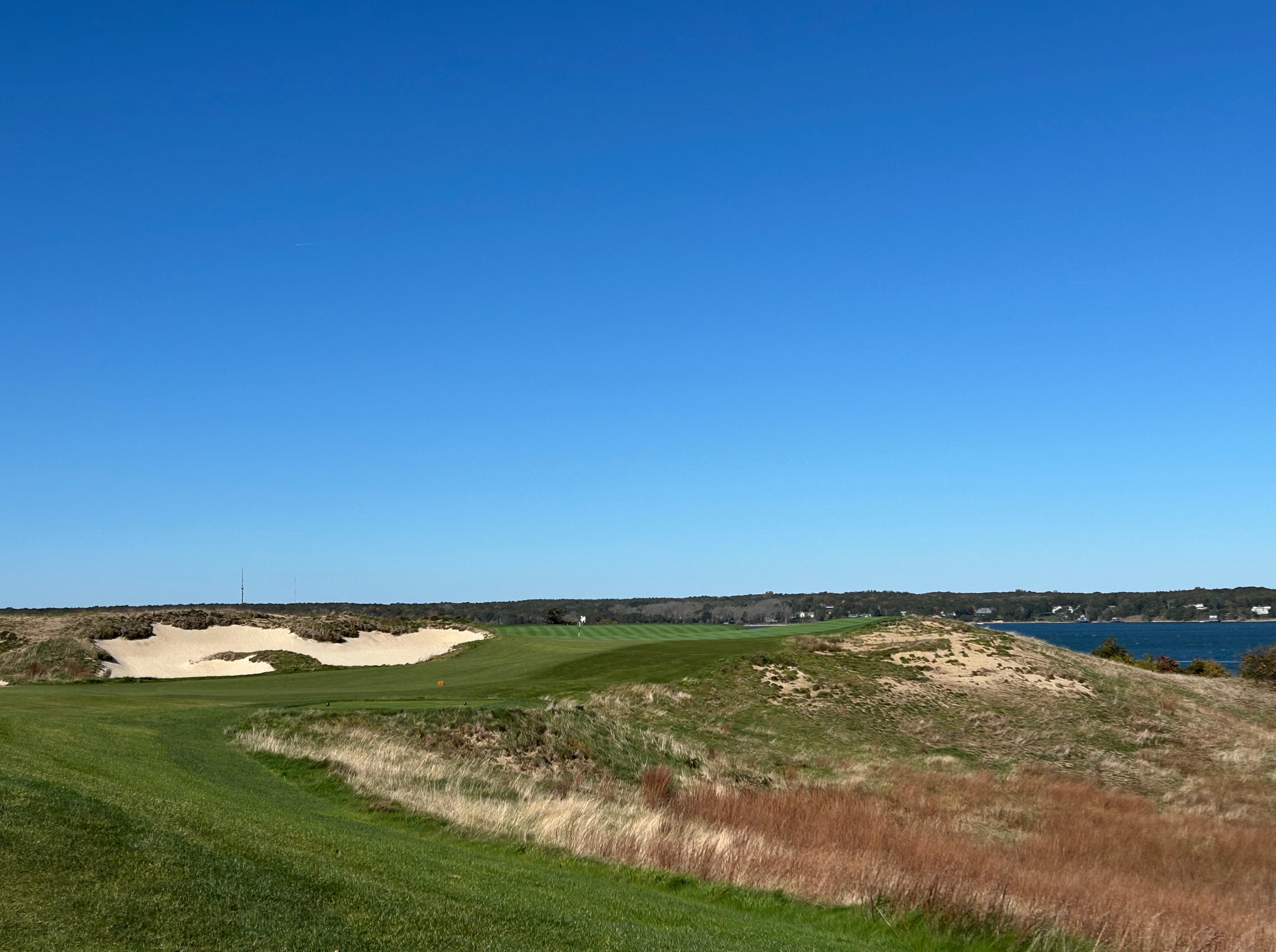
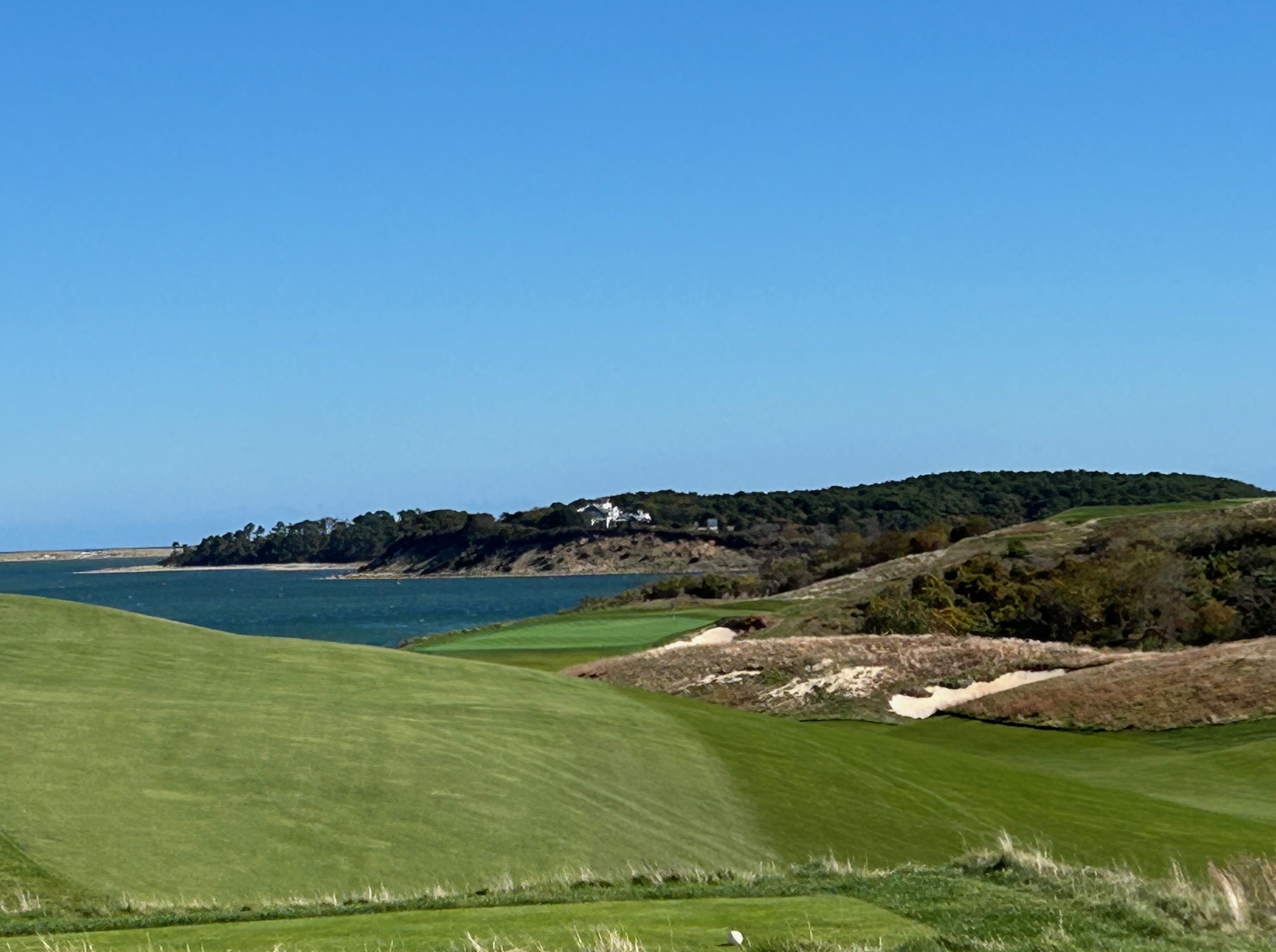
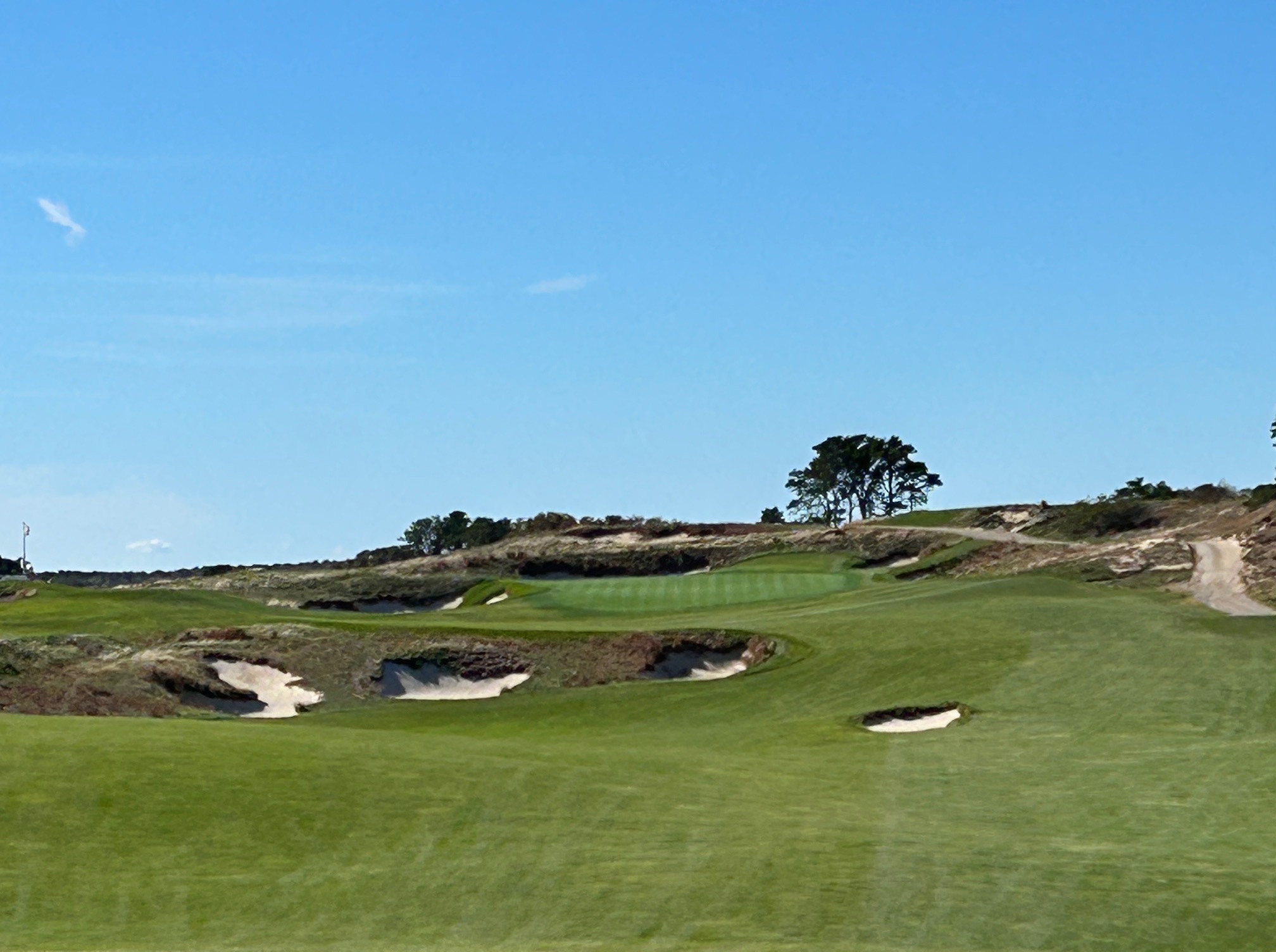
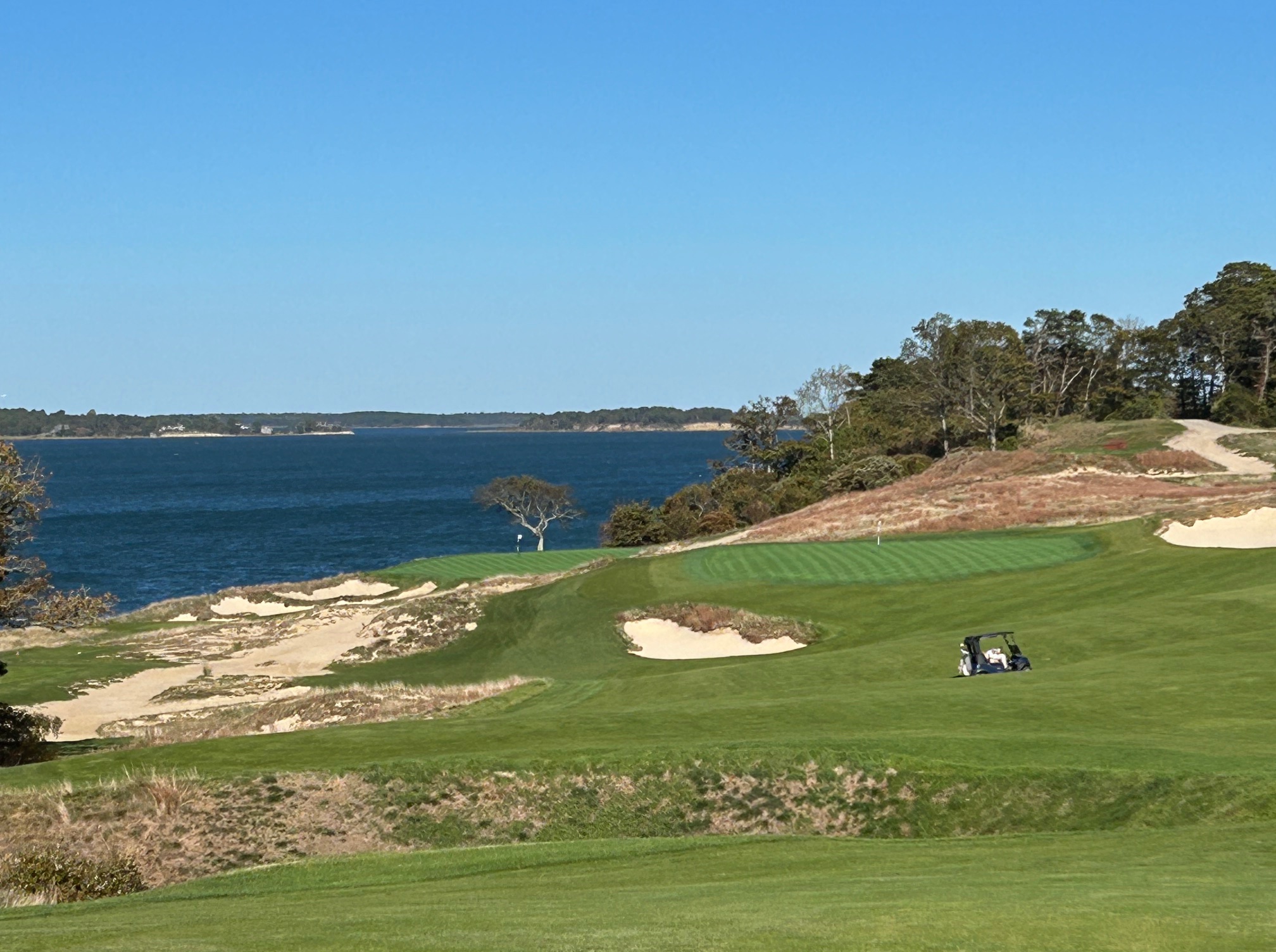
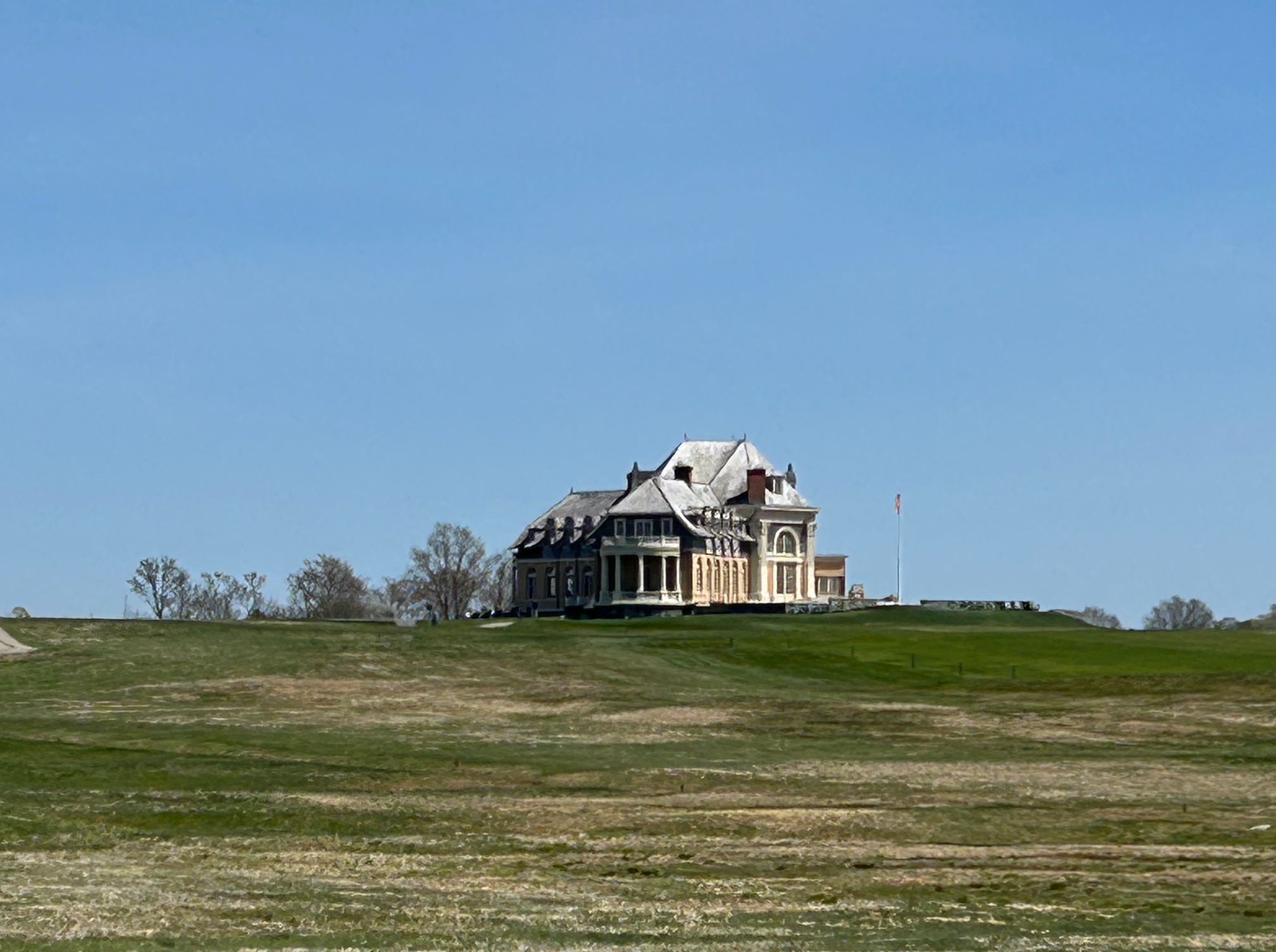
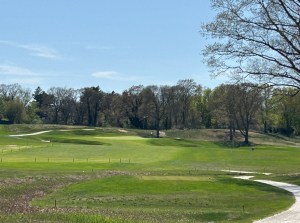
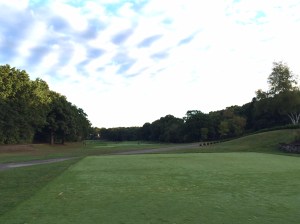
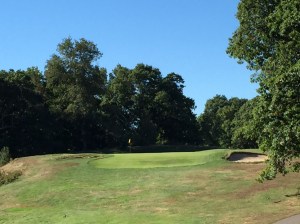
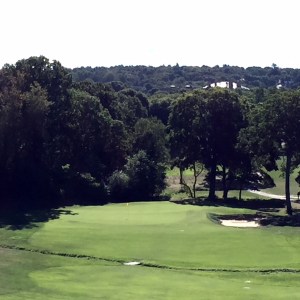
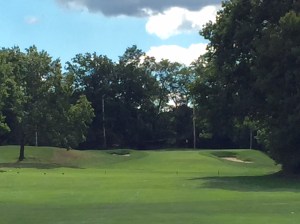
You will get plenty of views like this through the day

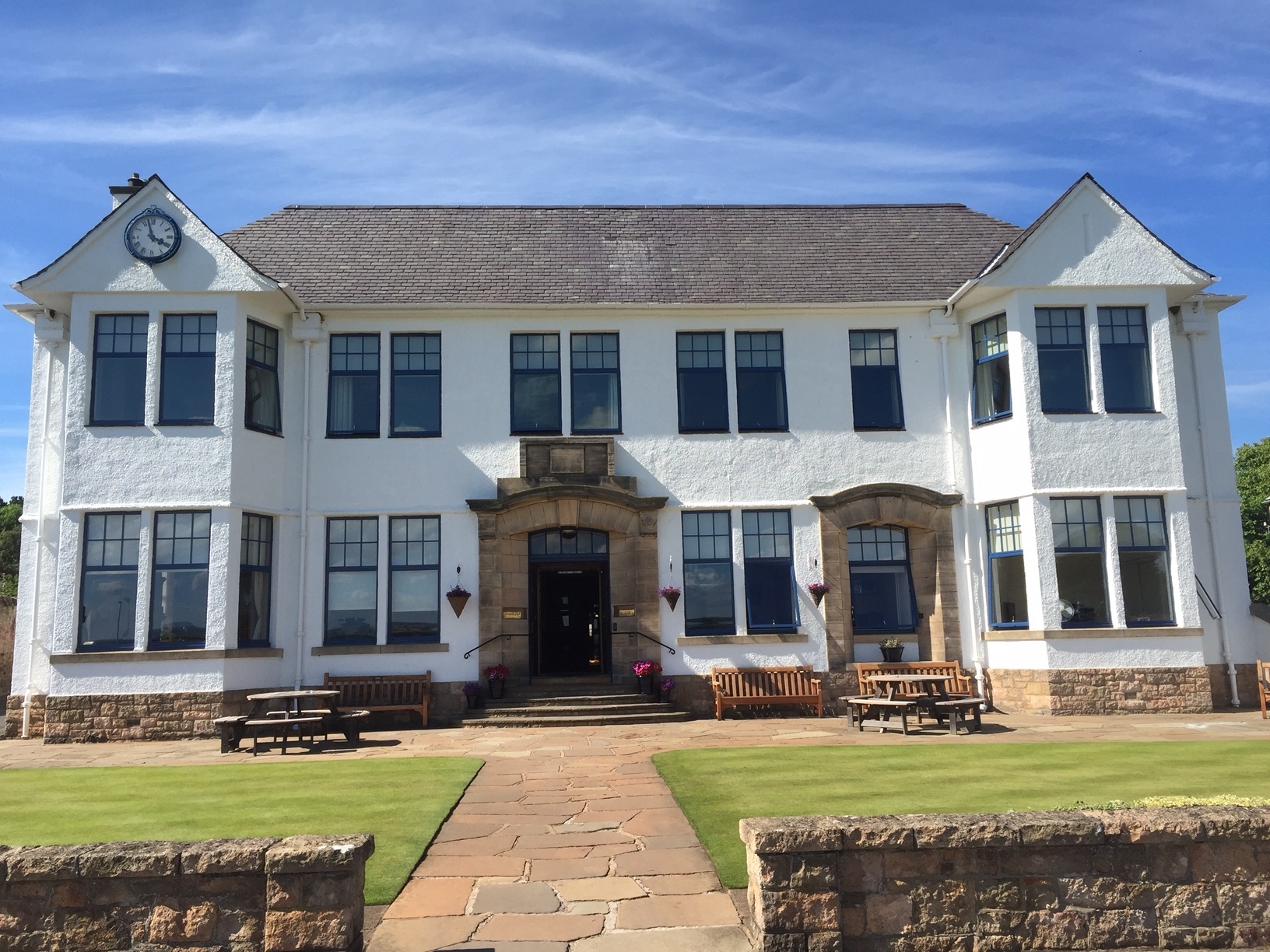
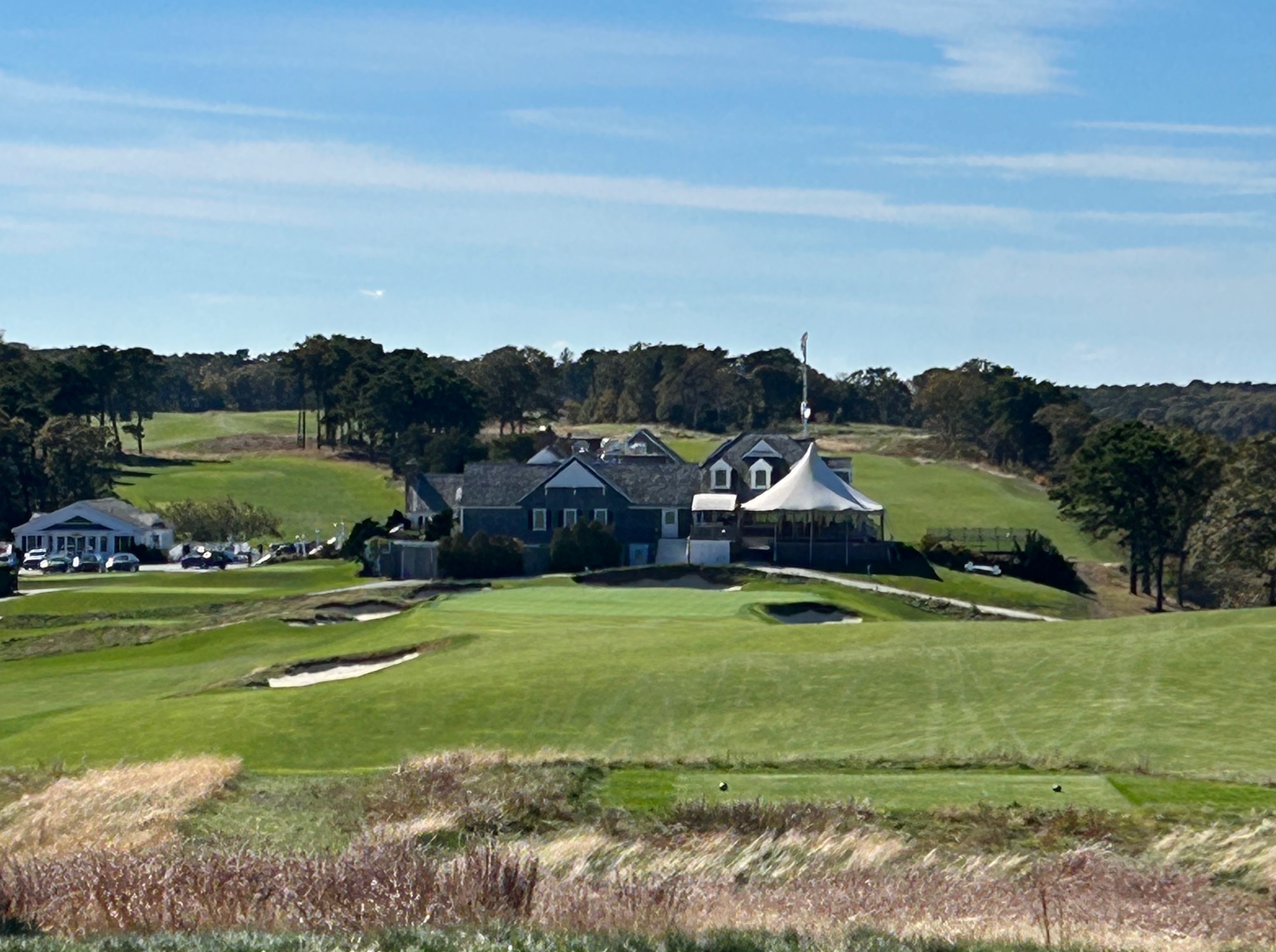
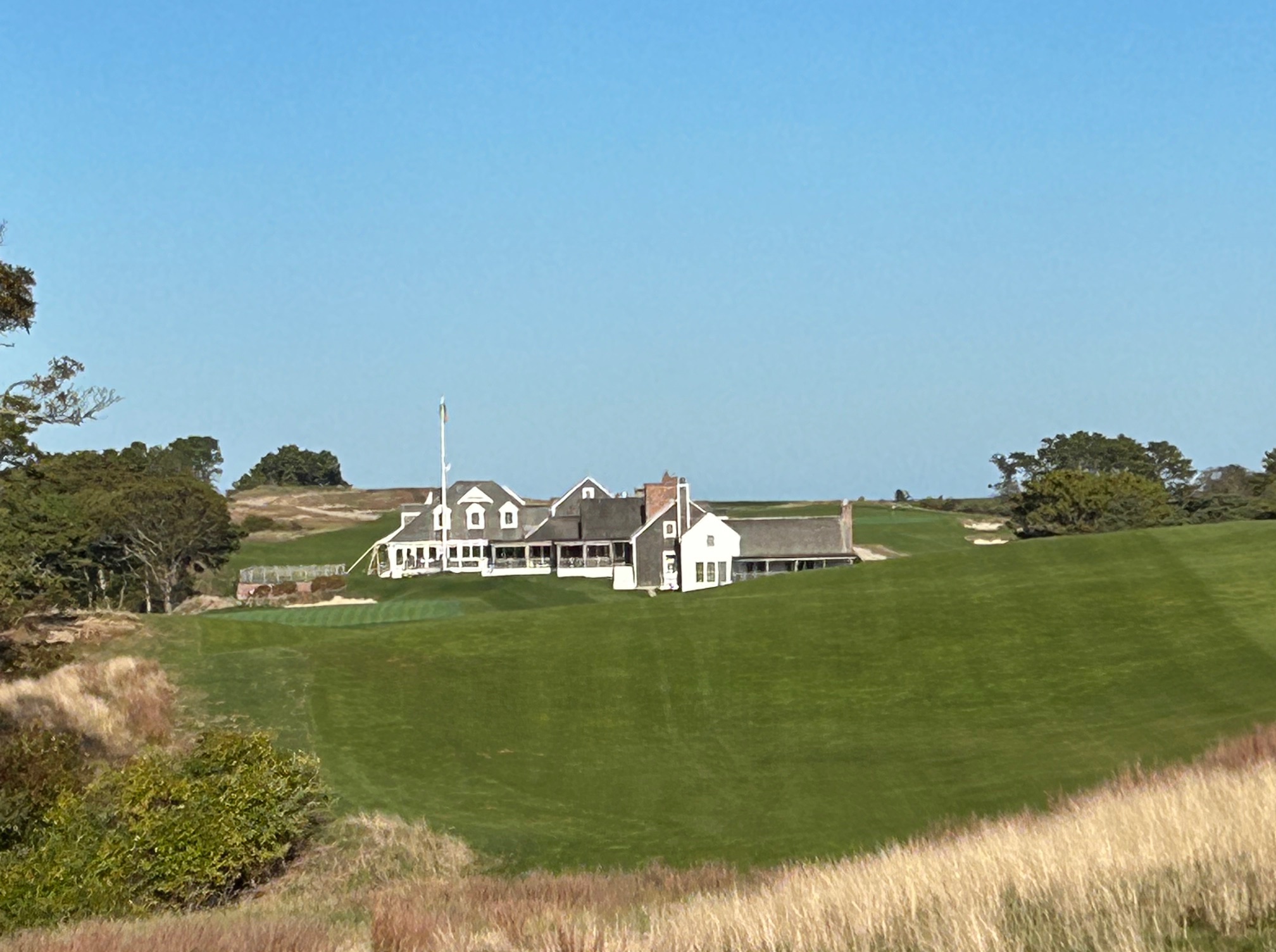
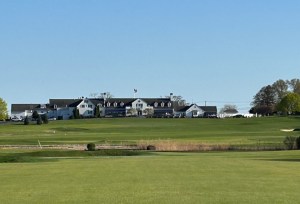
Other than a brief spat with a hurricane in 1954 that required reconstruction of one wing, the palatial clubhouse on the hill looks like it has been there for 130 years with very few changes.  By today’s high end club standards this place is far from excessive, in fact spartan in its amenities but more then adequate to meet the needs of the members who only spend a few months a year in their Newport second homes.

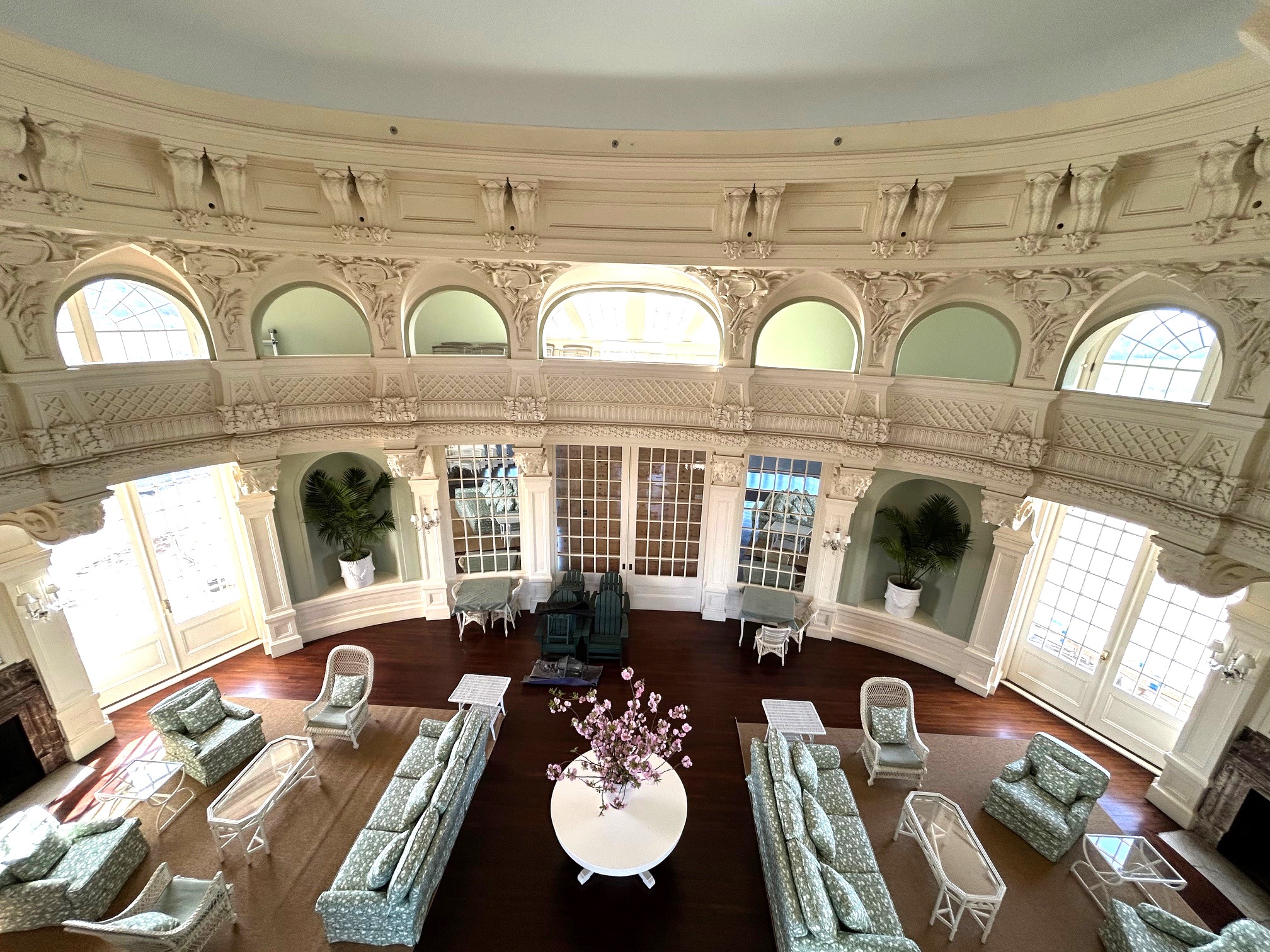
Ornate without being overdone

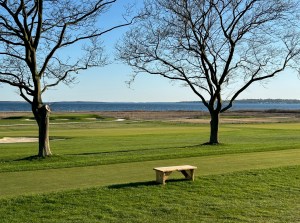
To me the simplicity of this place is refreshing.  People come to play a round of golf, enjoy an after round libation or a snack, and sit around taking in the fabulous seaside scenery that falls below their feet looking out the bay windows.  There is an honesty in an attitude of wealthy people who do not need to be reminded of their wealth.

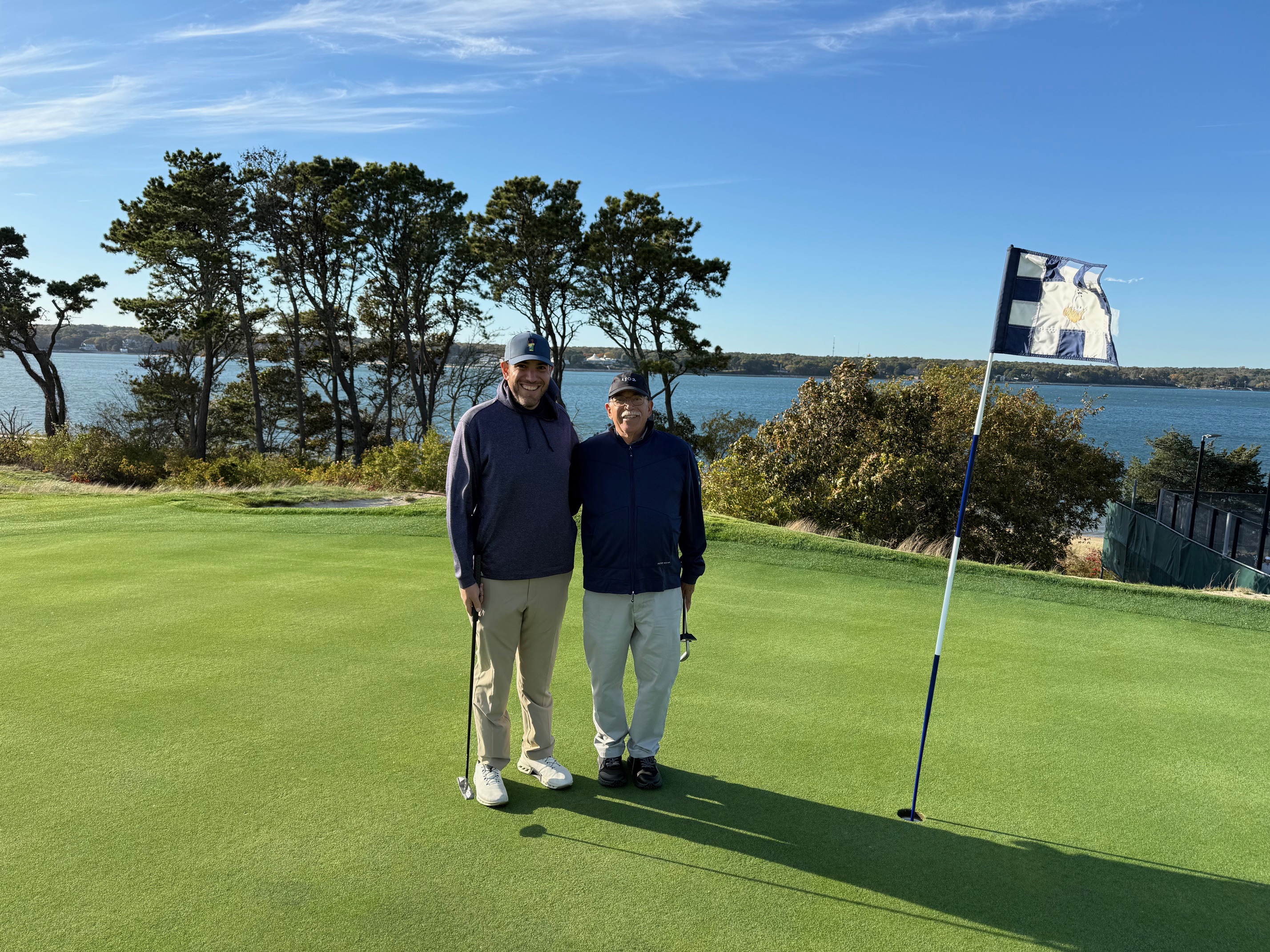
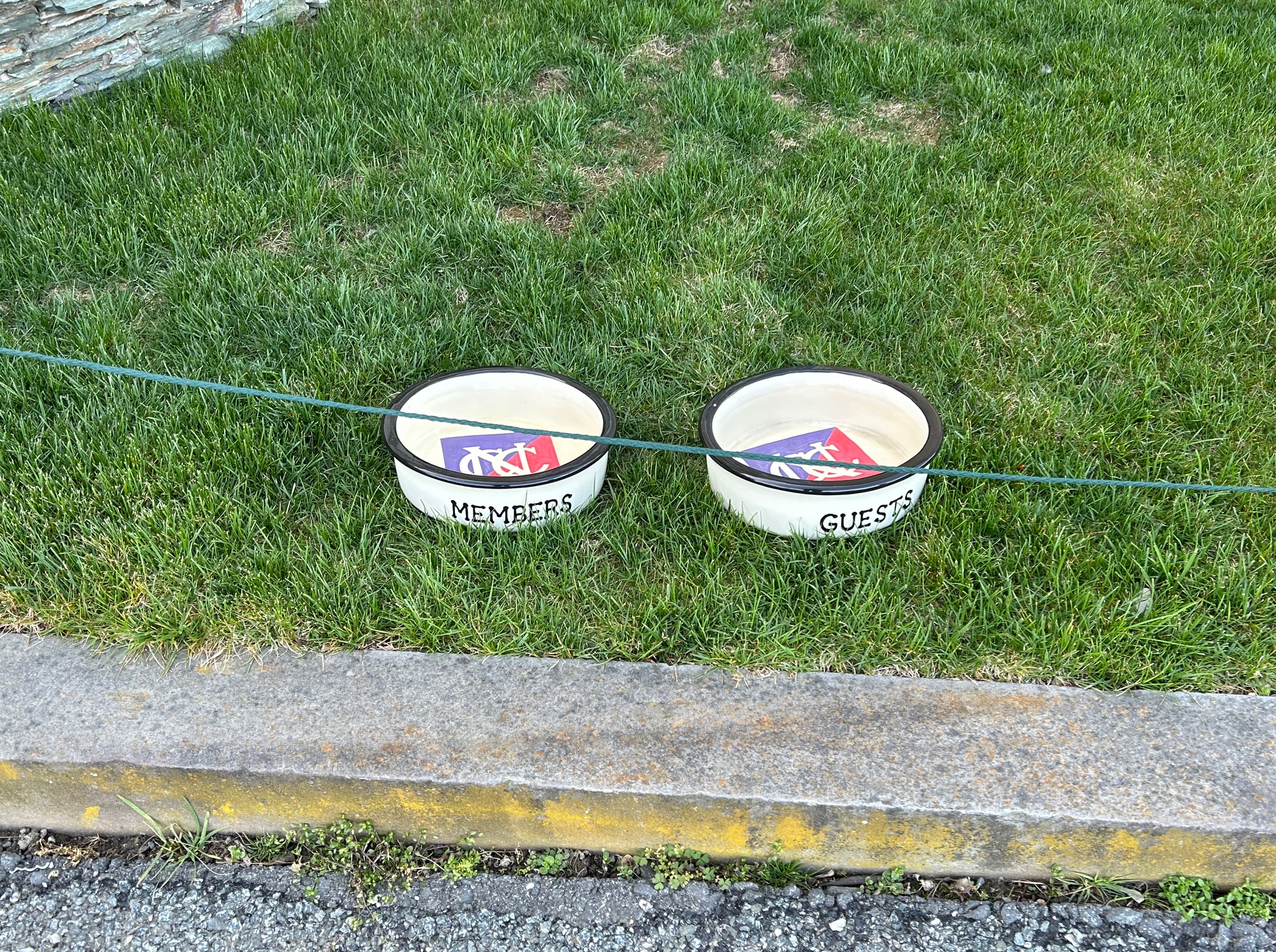
All family members and guests are welcome here

The golf operation reflects this same attitude.  This club was one of the original members of what was to become the United States Golf Association and it has held more then its share of major golfing events on this distinguished links.  Recently at Newport Tiger Woods won his second U.S. Amateur in 1995, Annika Sorenstam won a U.S. Open in 2006, and Richard Bland won the U.S. Senior Open in 2024.

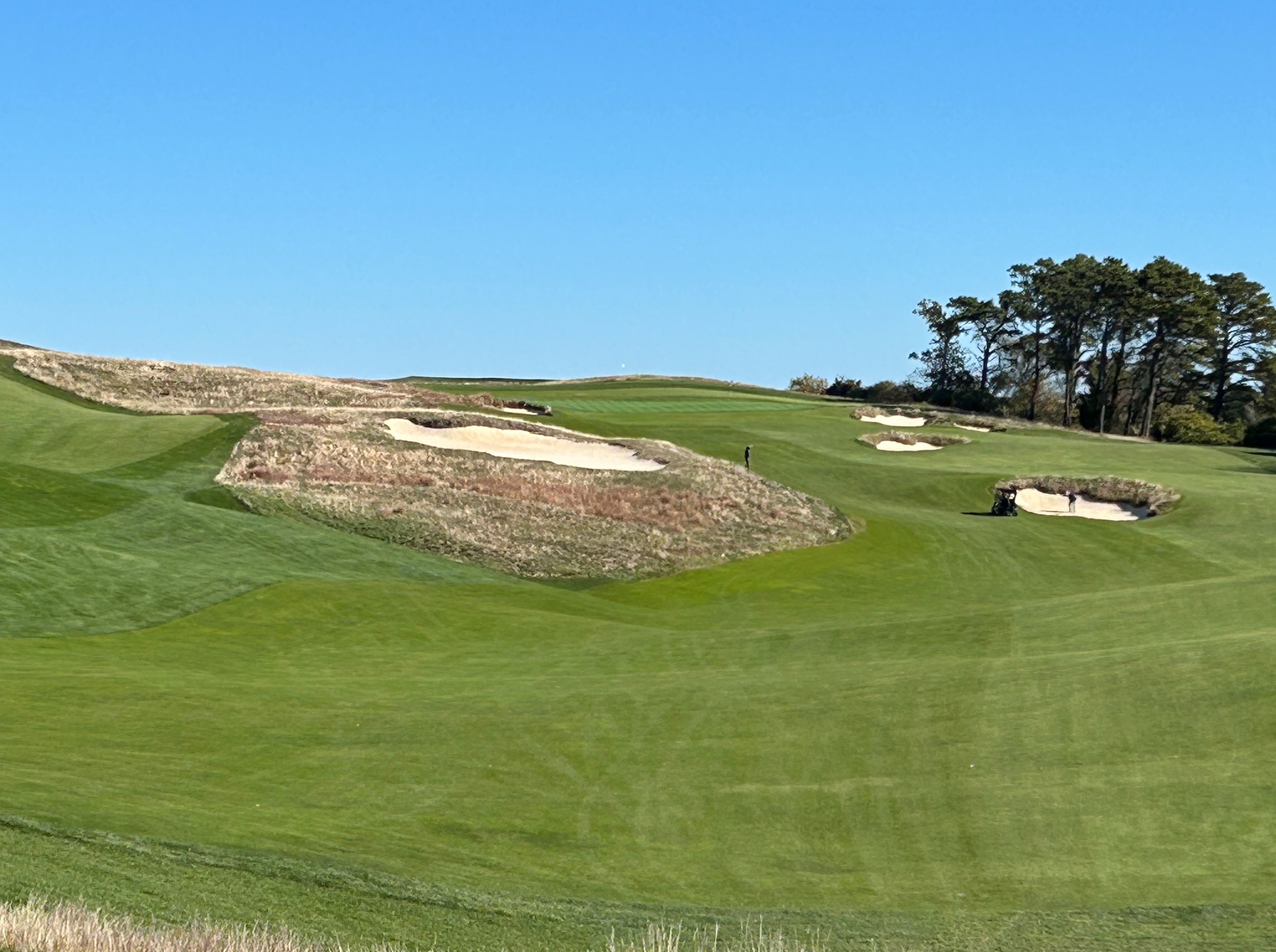
Champions have won prestigious stuff on these hills

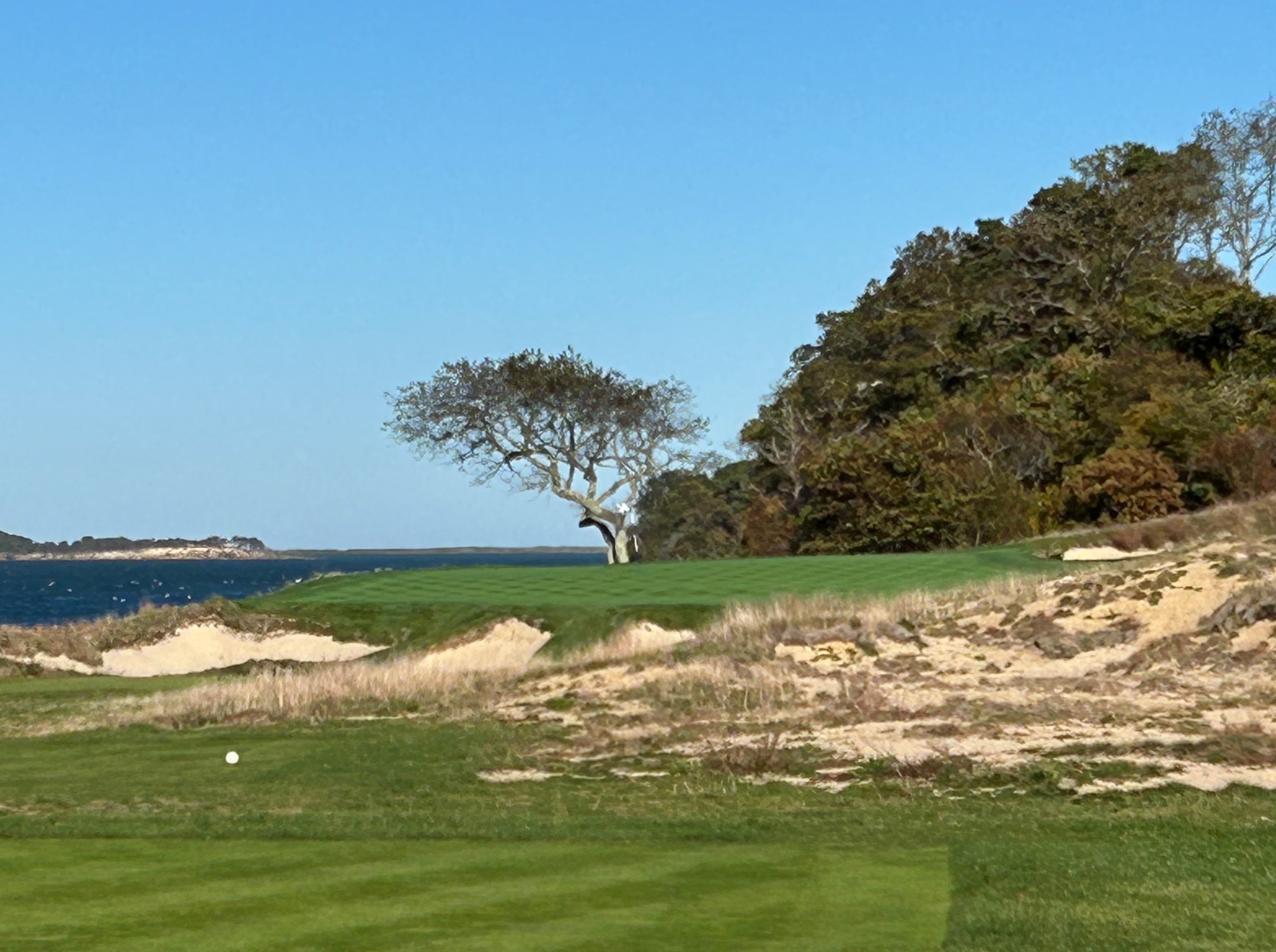
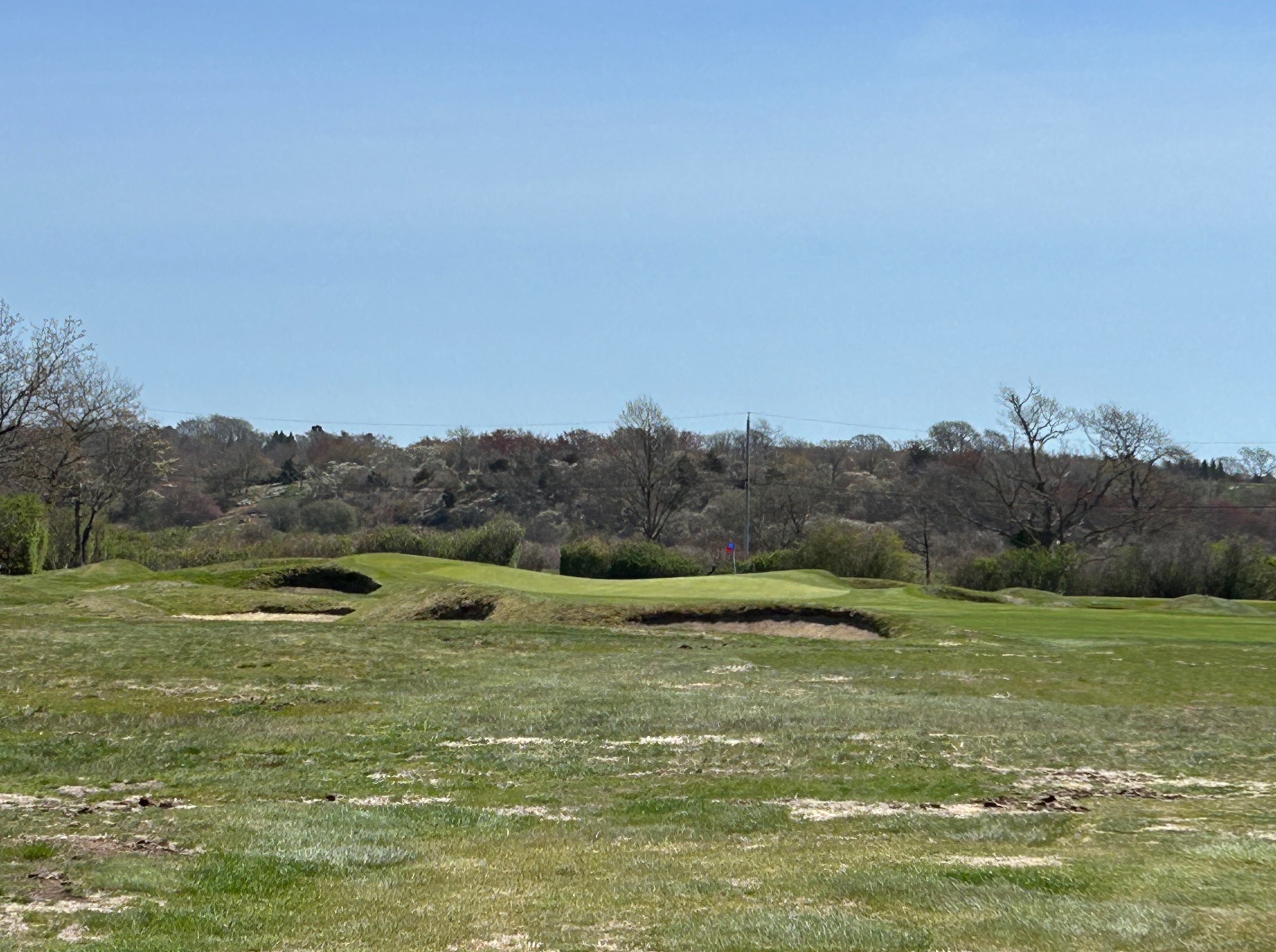
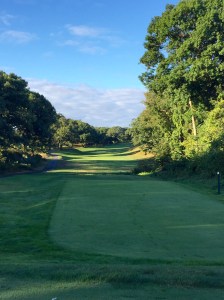
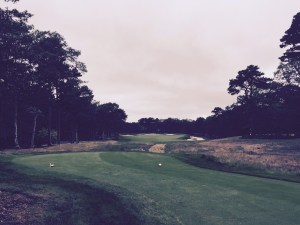
The course plays hard and fast with a wind-blown links feel provided by stiff ocean breezes.  They do not water anything but the tees and greens so there is no emerald green Augusta look that you take for granted at high end places.  The fairways take on rock hard character all year round and no member is going to complain about inconsistent lies in the fairways or the rough.  Windswept greens putt fast and true but trying to hold a spinning approach shot near the flag may be a big ask.  What nature provides is what the course gets,  it is up to the player to deal with it and converse with old man par accordingly.

The original course was done by the head professional William Davis in 1893 and in 1921, after acquiring additional acreage on the other side of Harrison Avenue, they hired one of the great Golden Age architects of his day, A.W. Tillinghast, to redesign the course which included seven new holes.  What Tillie created was the splendid layout we play today.  Little has changed in the last 100 years because the members understand what they have, a classic playable links course overlooking the sea, a true rarity in the U.S.

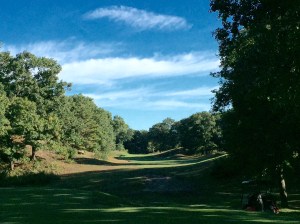
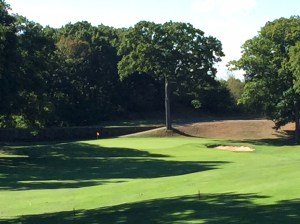
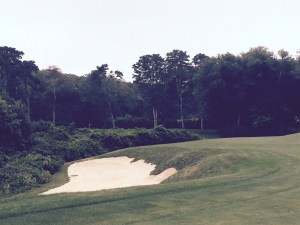
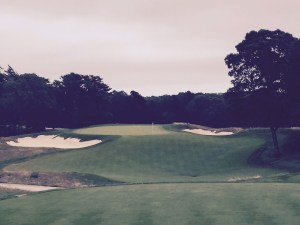
The fairway bunkering is free form, plentiful, and seemingly arbitrary in its disbursement but that is to allow for changes in wind direction from day-to-day.   Driving is the key here, one must avoid the bunkers as well as get the best angle into the pin locations of the day.  The green complexes are very Tillinghast in nature, accessible from the front, plenty of collaring bunkers and lots of internal contour in the putting surfaces.  Originally constructed for much slower green speeds, with today’s agronomic improvements and dried out windblown surfaces staying below the hole on all approaches is essential.

One quirky thing I noticed is the sequential color of the tee markers from longest to shortest are Red, White, and Blue which is the opposite of what you would find at most places.  I wonder if this was an intentional jab in the ribs at the traditional clubs of the day.

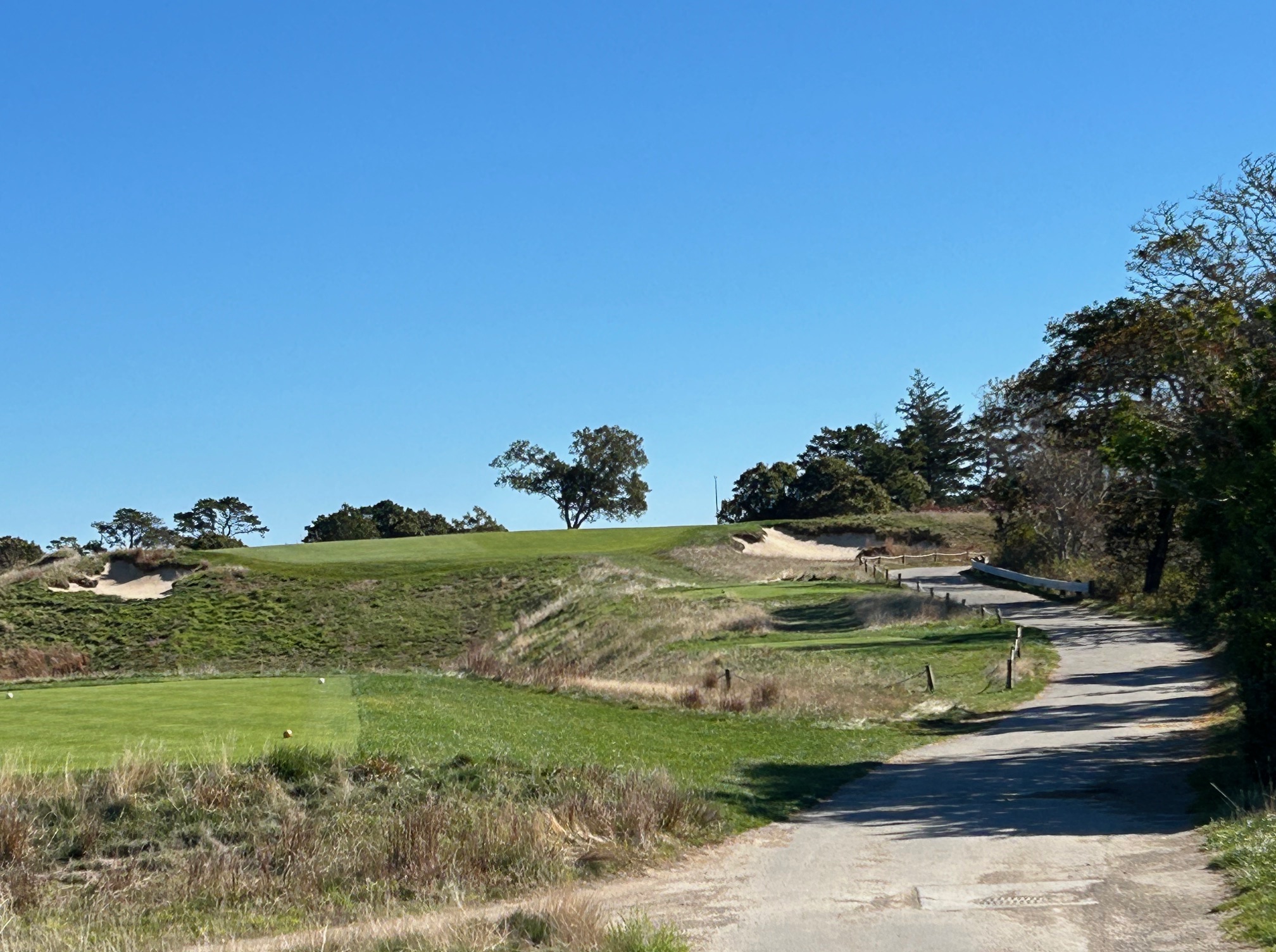
Opening hole has lots of elbow room

From the foot of the clubhouse the first hole is a somewhat gentle handshake Par 5 that reminds you that just because it appears open you need to focus on particular lines of play based on the day’s wind and the day’s pin.   A bit of croquet to leave a proper angle into a green set on top of a chasm which will reject balls stuck without sufficient intent.

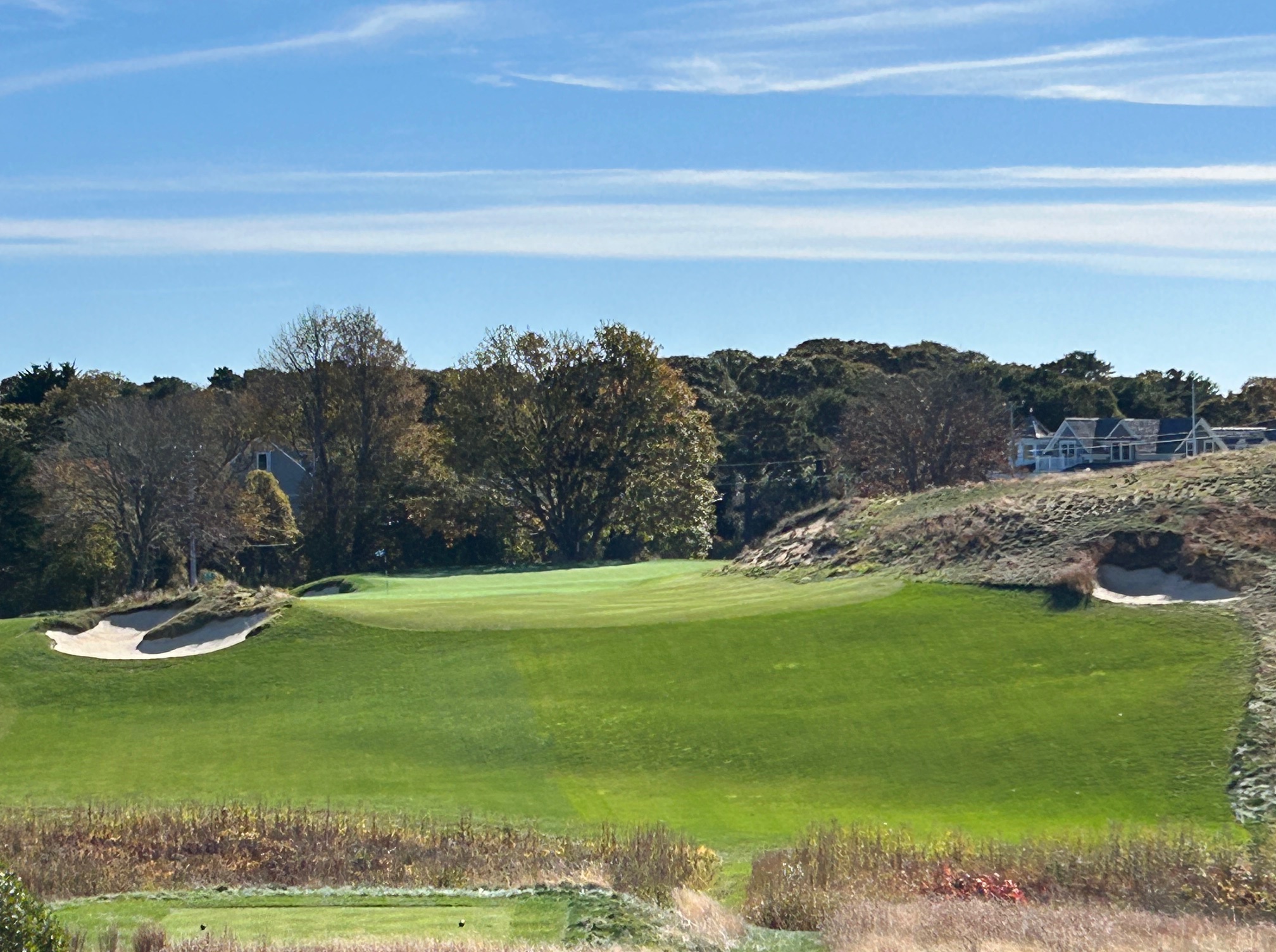
The next two medium length Par 4s give you the hopscotch pattern of avoiding fairway bunkers into green complexes surrounded by sand.  Which brings you to the first of the very difficult Par 3s which, if played into the ocean breezes, can be as much club as you have in your bag.  This one and the 14th are definitely drivable Par 4s in such conditions as described in the Hole-By-Hole Analysis link below.

#5 is the first bear of a Par 4….lots of bunkering to consider

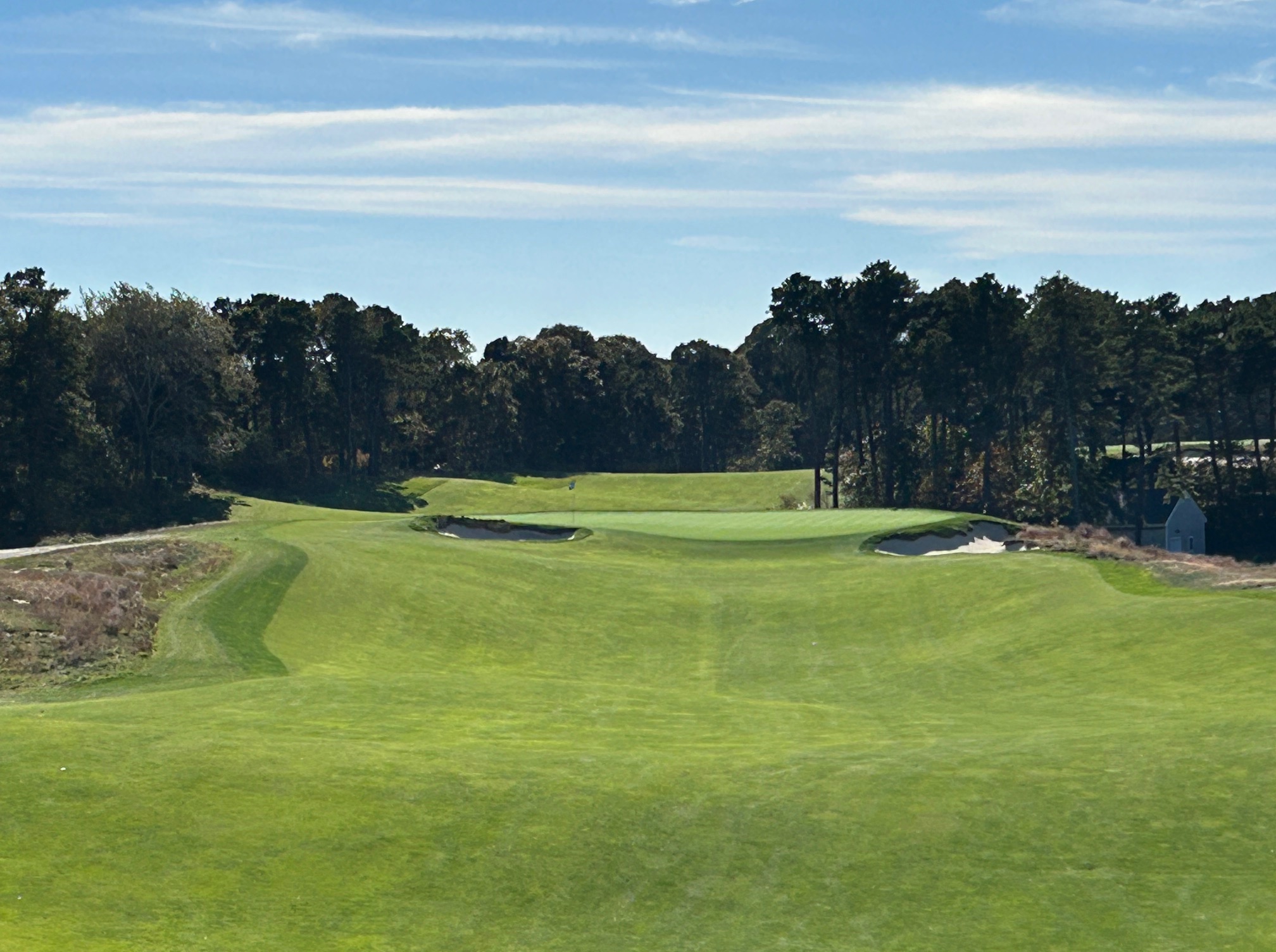
You now are faced with the number one handicap hole of the day, a long wandering four par strewn with fairway bunkers everywhere.  The approach is particularly enigmatic with a cross bunker encroaching from the right at about 75 yards.  This might require a layup to the left and an accurate pitch to have a chance at a par.

#8 is about 165 but there is little wiggle room to miss here

A bit of a breather, not dissimilar to the second leads you into a tough finish for the outward half.  A long meandering par 5 that plays similar to the fifth, followed by a tightly corseted medium length par three, and ending on the third handicap index hole, a long march back up the hill to the green set next to the majestic  clubhouse.  Stick your head into the bar to grab a snack and some hydration before heading out to the very difficult challenge ahead.

Long trek up the hill on the 9th…without wind help it is a three-shoter

Back nine sequence of 5-4-5-3-3 is kitchy and will demand a blend of solid decision making and shot execution to maintain balance on the scorecard.  You will notice remnants of a rock quarry adorning the right on the Par 5 tenth and behind the green complex.  Once through the highly technical short eleventh the quarry skirts the left of the second par 5 in two holes.

The Quarry Hole…check out the rocky embankment back right of the green

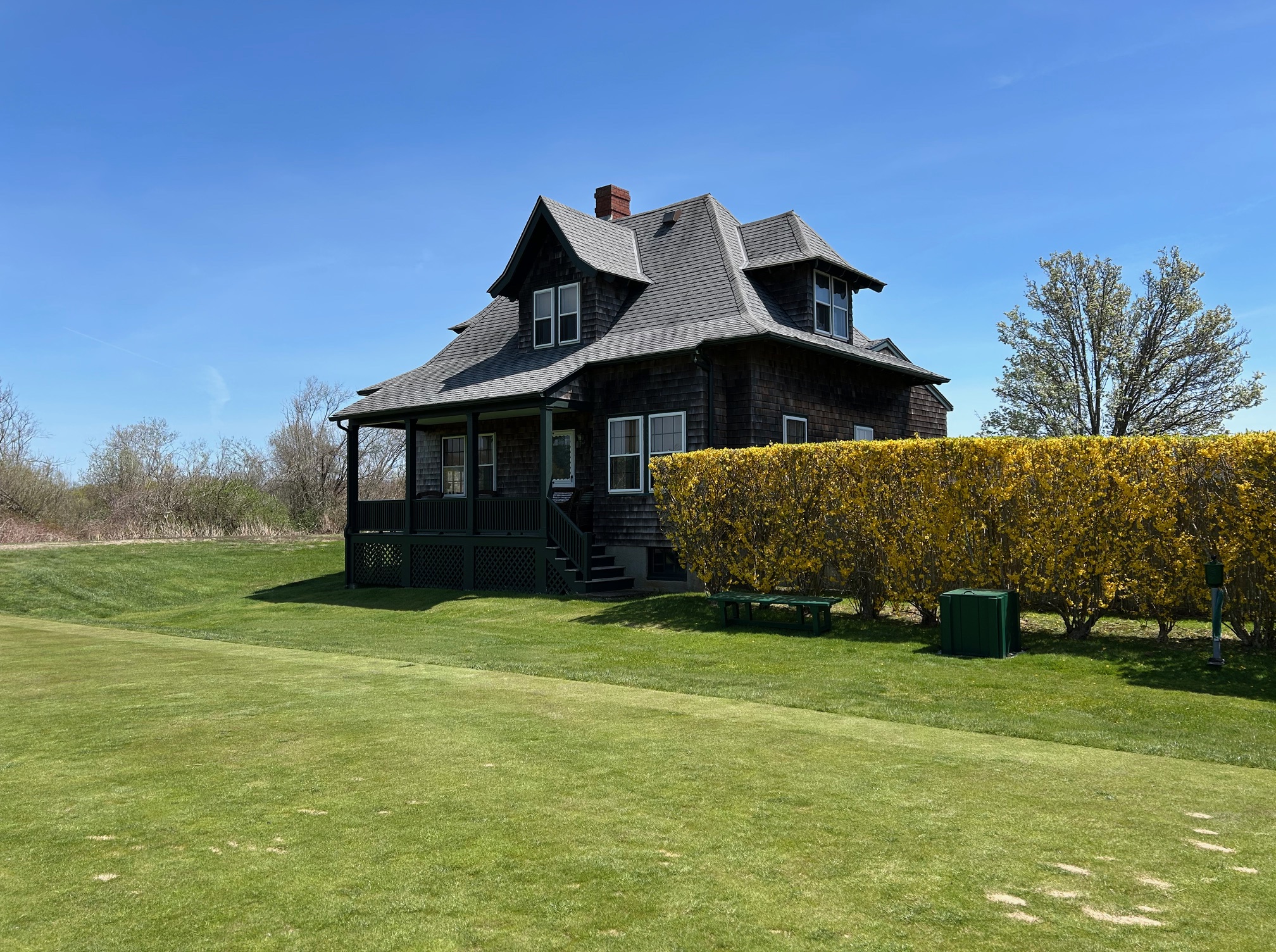
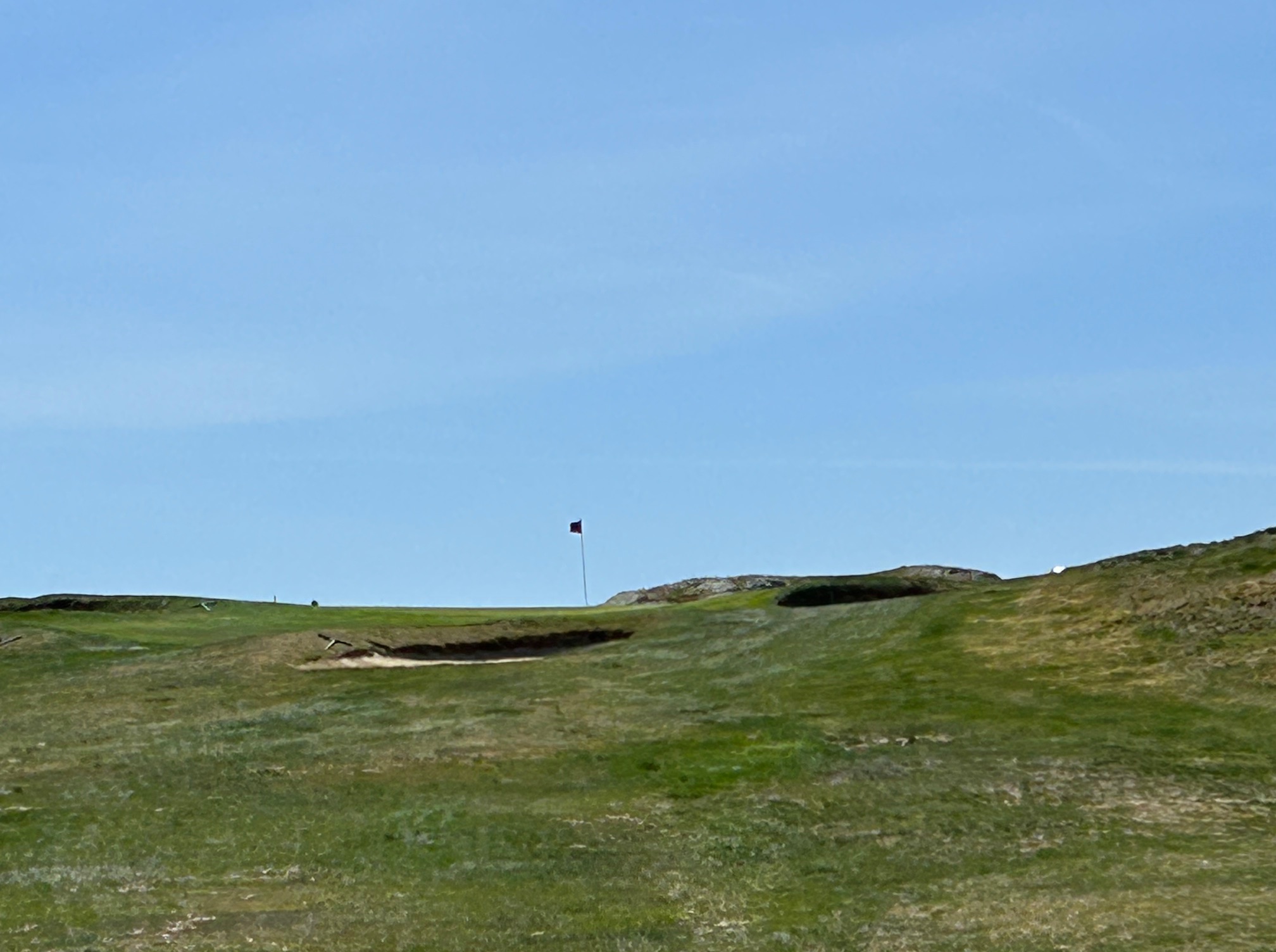
This now brings you to the strangest sequence of two Par 3 holes you have ever seen.  From the doorstep of the green supervisor’s home you are staring up a billy goat hill to a green complex perched on a ridge adjacent to the clubhouse.  It is an equestrian leap over an array of bunkers into a green dramatically sloped toward you which requires two to three clubs extra depending if the wind adds insult to injury of the severe elevation change from tee to green.

Super’s house….might want to Trick or Treat at this one
From the Super’s porch the 13th green looks like Everest

This is followed by the evil sister of the fourth, another possibly two-shot Par 3 across an abyss into a green perched above a chasm and a seriously fierce bunker left and below the green.  If you get through these last two Par 3’s in eight shots you have gained ground on the field.

The second handicap index hole of the day is a sweeping dogear right Par 4 which can play a three shotter if the wind is in your face.  The green complex is particularly interesting set into the foot of a low hill to the right featuring a two levels and a steep false front to boot.

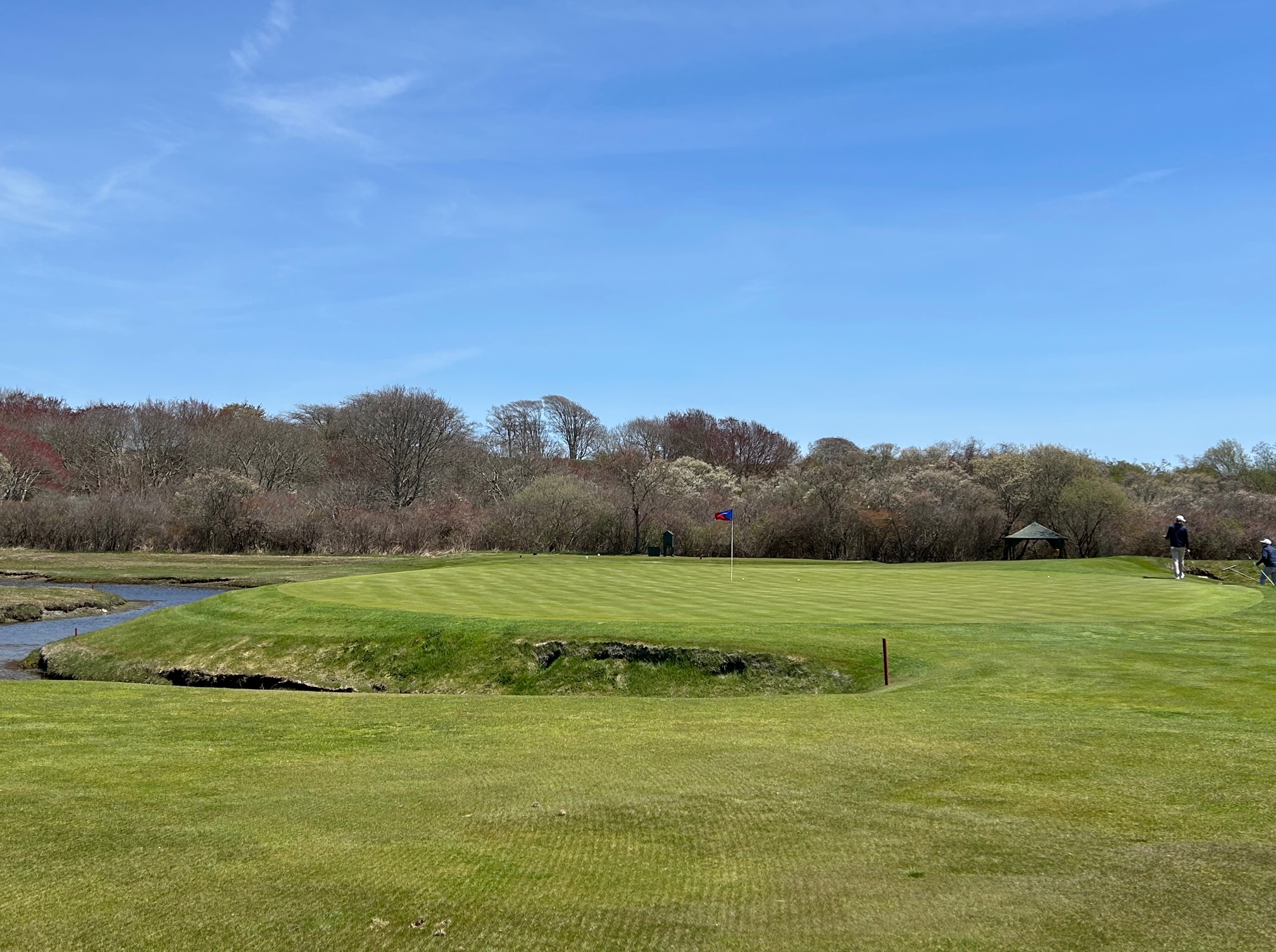
#16 is the rare moment greenside water is in play on this links course

As you slowly turn your way back toward the clubhouse the 16th is the first truly non-links hole you play all day.  A truncated short Par 4 this actually has a pond in play short and left of the green which you would never see on a links course in Scotland.  Next is a very long par four and a half with a canal on your left and plenty of bunker turbulence between tee and green.  Like many of the long ones it is possible that you need to lay up and then rely on a lawn dart pitch to save your par.

Rarely used back tee on 18…not sure you would survive the trek up to this cliff top

As you approach the final tee take a moment to notice the precipice above you and to the right which is the ceremonial back tee.  You would need a burro and a Sherpa guide just to ascend to this pulpit ground but it presents an imposing look especially looking back walking off the final green complex. 

18 has the deepest green on the course and it is a full extra club to reach it

Like the ninth the finishing hole on this side traverses the steep terrain to return to the clubhouse.  The views of the back of this majestic structure are a splendific as the front, it is quite an architectural statement in all directions.

From the 17th green the back of the clubhouse is as palatial looking as the front view.

.Newport, Rhode Island

Architect:       William Davis (1893)  A.W. Tillinghast (1921)

.                      Par     Rating   Slope   Yardage

Black               70        75.5     135      7085

Red                 72        72.5     128      6577

White              72        70.7     122      6194

Blue (L)          72        73.0     127      5601

If you would like a printable PDF of this posting including a yardage book quality hole-by-hole description of how to play the course hit the link below.

(Click to get the the printable text of this posting)

Rhode Island Country Club

It is really cool when you walk into the bar area of a classic old course like this and see the names Brad Faxon, Billy Andrade, and Brett Quigly on the club championship plaques.  These are the favorite sons of the state who grew up playing there and later went on to a career on the PGA Tour.

This place has tradition seeping out of every pore and you cannot help but anticipate the experience of playing a course where players of this caliber honed their skill before making it on the big stage.

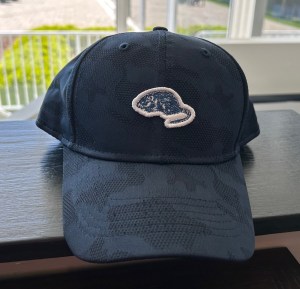
What is even more enticing is the informality of the place, nothing is overstated it all just feels comfortable in its own skin.  You might note that the logo features a muskrat, a critter that made its presence known as they were excavating the holes close to the shore line holes a century ago.  A visit to the golf shop will give you the opportunity to by a cute muskrat hat as a piece of memorabilia.

Donald Ross routed this track in 1911 and very little has changed since.  Like so many of his designs that populate this part of the country, Ross simply took what the ground was offering and found hole sequencing and strategic challenges there to be unveiled.  Green complexes are the jewels here, plenty of challenging bunkering to deal with, but, as was custom in the hickory club age of the time, access to most of the greens can be handled using the ground as your friend.

The course plays to a par 71 with only three par threes and two par fives so you have a large inventory of four pars to encounter along the way.  The low handicap holes are very long par fours that establish the challenge of the day but there are a number of short ones that require more tactical decisions and precise shot execution to help balance your scorecard.

A fairly simple handshake for the opening Par 4

The day begins with a simple downhill par four that introduces you to the first of two inverted bunkers on the course.  These are nothing but large turtle back bunkers that present you with a sand shot below your feet.  Both the one here and on the ninth are really not a factor in the playing strategy of the hole.  What you do get on the first is the typical corridor of bunkers leading up to an accessible green complex with plenty of contour.  This is a formula you will see throughout the day.

On the second you can see the strategic character of Ross green complexes

The next two holes start to define the character of this charming Ross creation.  Driving the ball in the fairway is a premium for playing aggressively into the green complexes.  The sloped ledged green setting on the second will challenge you keep your approach in the area of the day’s flag.  The uphill third has a domed green that repels balls in all directions so a sharp short game is needed here to make a par.

All the architectural elements are in your face on the fourth

The fourth is the first harrowing visual statement you will encounter as the hole presents itself as a slippery downhill par four into a tiered green across a meandering creek.  This is where paying attention to landing areas off the tee makes a huge difference in getting playable approaches into the greens.  You will find full detail on a strategic approach to play in the printable Hole-by-Hole Analysis through the link at the bottom of the posting.

Two short, scoreable holes follow in a technical par three and a theoretically reachable par four.  One of the things I really like about this course is the opportunity to hit precise short irons into small sloped targets to help your scorecard.

The short par 4 sixth will try to goad you into doing something you should not

The balance of the outward nine is a series of long holes where you just have to hitch up your pants and drive the ball solidly to have a prayer of reaching the greens in regulation.  Don’t be surprised if you are hitting a 60-yard pitch and a putt on the longer holes in an effort to save a par.

When you make the turn take a moment to visit the halfway house next to ten tee for a hearty snack before you attack the second nine.  Very old school looking structure with real character.

Very classic cottage style to the Halfway House

By now you have probably noticed that you have only played one par five and one par three so far.  The odd sequencing of the non-par fours continues on the back nine.  The tenth is a strong par three with a sweeping contoured putting surface that requires precision with a longer fairway club to get a reasonable two-putt opportunity for par.

Your last five par of the day gives you a stunning view of the clubhouse

The last par five of the day is next,  a sweeping dogear left with a panoramic view of the clubhouse on the horizon.  Scoring on this one and the short twelfth is a must because there are a couple of hearty par fours that follow before you cross the road and head to the four bayside holes that define the challenging finish.

The twelfth is an eye candy short hole with an array of strategic elements in play throughout

As you cross the road to the fifteenth you cannot help but be a bit overwhelmed by the site of the lighthouse and the bay that will overlook your play on the last four.  The wind now becomes a major factor in club selection and line so there is a strategy change at hand to control trajectory and mitigate wind effect from here to the house.

The visual the last four holes can be very distracting

The short three par 17th is a Kodak moment for sure and probably the place where the muskrats made their last stand before becoming part of the lore of this place.  A beautiful and challenging finishing hole with a green majestically set into a hill behind presents a tantalizing finish to this classic old course.

.Barrington, Rhode Island

Architect:       Donald Ross (1911)

.                      Par     Rating   Slope   Yardage

Blue                71        71.1     130      6396

White              71        70.1     127      6117

Red (L)           71        68.6     124      5786

Gold               71        65.5     116      5259

If you would like a printable PDF of this posting including a yardage book quality hole-by-hole description of how to play the course hit the link below.

(Click to get the the printable text of this posting)

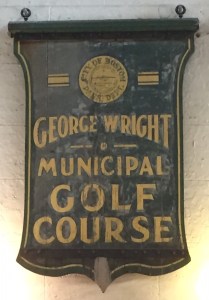
George Wright Golf Course

A strong handful of renowned public golf courses exist in the United States that represent the most virtuous commitment of their municipalities to providing access to high quality design to everyone.  The George Wright Golf Course in Boston, an original Donald Ross design through and through, is one of these.

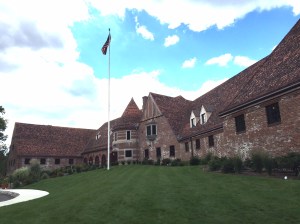
French Chateau Clubhouse stands sentinel on the hill as you walk up from the car park

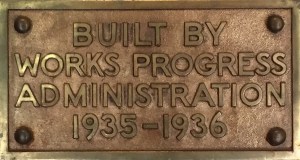
The Wright was built in the Depression period of the 1930’s on the old Grew Estate that had been conveyed to the Department of Conservation of Massachusetts through the efforts of George Wright founder of the Wright and Ditson Sporting Goods stores in Boston.  This major project of close to $1 million was financed through the Roosevelt Administration’s Works Project Administration.

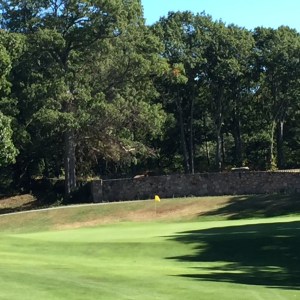
In what proved to be an enormous undertaking because of the rugged topography, the construction employed almost 1,000 people as it was completed over a three-year period opening for play in 1936.  There is a unique local flavor to the artistry of this facility in that it included a three-mile long perimeter flagstone wall built by the Italian and Irish masons of Boston and a stunning French Chateau style clubhouse that belies a typical municipal golf course setting.

Note the stone manson’s wall behind the green…3 miles long it encircles most of the property

From the time it opened this course was well reputed and hosted many big local and regional tournaments.  Among the best players it was considered an equal to the posh private venues of Boston.  But time took it’s toll and after the war and a series of financial problems that ensued, it fell into disrepair and by the mid-1980’s faced imminent closure.  Against all odds, an assiduous lobbying effort by the Massachusetts Golf Association kept it in operation for the next 20 years.  Finally in the early 2000’s the powers that be in the city of Boston made the bold commitment to restore George Wright to the original quality and design.

The key to this effort was the arrival of head pro Scott Allen in 2001, who spearheaded the restoration effort, and the hiring in 2004 of Len Curtain, a greens superintendent with a special affection for the place,  who grew playing the Wright.  With the consultation of a Massachusetts course designer Mark Mungeum, together this group embarked on the long term project to peel back decades of neglect and bring this wonderful venue back to original glory.

Lots of trees were removed and the green complexes were restored to their original Ross shapes and surrounds.  Fairway bunkers were relocated along with a few new additions to help the course meet the challenge of the contemporary equipment.  Together they brought back the Wright to a course worthy of being designated as the site of the 2018 State Amateur-the first time in the tournament’s history it will be played on a municipal golf course.

The wide open driving area on the first is a teaser…this is a precise driving course

The first, ninth, and eighteenth holes are on the flattest portion of the property just below the clubhouse veranda so the course begins and ends on a fairly tame note.  On the second tee, in spite of the abundant width of the driving area, you get the sense this is a tee ball position course as the green in the distance is suspended on an alcove shelf tucked in the corner of the property.  From three thru fifteen the course is enveloped in a solitary cocoon and you won’t see any man-made structures besides the clubhouse and the maintenance facility. It makes you wonder how it could be just four miles from the center of a major American metropolis.

The Par 5 3rd gives no room for wandering

Standing on the third tee the challenge is at hand as you are staring up the narrow hallway that defines this uphill and stringent five par.  Keeping the ball between the hash marks off the tee, controlling the roll out, and finding the proper angle of approach for the day’s pins into these Ross green complexes will determine how your scorecard will fare today.  It goes without saying that it will be peppered with some high numbers but you have to accept them and remain aggressive to balance the outcome.

The landing area on the Par 4 4th is saddles the high ground

One thing you cannot fail to notice is that the holes are often lined with rock outcroppings or tall mounds.  These mounds were created by covering the piles of rocks rendered from the fairway demolition and you can begin to appreciate how much went into discovering playable fairways on this severe and rugged terrain.

Looking up the 6th you see how much was excavated to find this fairway

The devil is in the detail as you can see in the Hole-By-Hole Analysis below, the contours of five through twelve in particular will challenge your tactical instinct trying to find the line of charm.

Peaceful tranquility of the green complex on the 9th hole just below the clubhouse

Note: If there is someone manning the dog-at-the-turn cart between the 10th and 12th tees I recommend well done with relish and mustard.  The homemade cookies are not a bad chaser either.

The 8th one of the four intimidating three pars-very demanding little room for error.

As an aside, the par threes may be the most interesting holes on the course.  Every one of the four stands apart in visual distinction and precise shot making is demanded.  Not one of them is over 190 yards yet playing the four of them anywhere near par is a major accomplishment.  The Ross bunkering and segmenting of these four green complexes will sustain vivid images in your mind when you rehash the day’s journey later staring at your dark bedroom ceiling.

Bungee drop approach to the 12th from the top of the ridge

The inward nine takes up right where the last one ended with roller coaster elevation changes on the first three holes.  Be cognizant on all three of these not to drive the tee ball too far and overreach the best landing spot for the approach.  As you can read in the detail the blinded approach shot into the tenth green takes serious visualization.  The approach into the eleventh will take a different kind of creativity as it will take all your ground skills to give yourself a good scoring opportunity there.

Drop dead green setting on the Par 5 15th…just don’t hit the green wall netting behind

If you reach the thirteenth tee with minimum scorecard damage there is great opportunity to make up ground on the way to the house.  This hole is one of the most visually pleasing all day but you have to hit two very articulate shots to avoid the hazards that haunt the hole from tee to green.  What follows is a challenging uphill par three followed by a stunning three-shot par five that should give you a good chance to apply some salve to the scorecard.

Talking a 2+ club elevation change into the mountainous 16th green

I would be remiss if I did not give a shout out to the Mt. Rushmore green complex of the sixteenth hole.  No course architect would even consider building a hole like this today, but it is just flat out fun.  From the base of the hill where your drive will end up it looks like you need to hit one over George Washington’s left eye and land it on the crown of Thomas Jefferson’s head.  That is kind of what you have to do…long or Roosevelt right is no good at all.

The 18th appears sedate but there is trouble lurking if you get out of position

The two holes that bring you back to the house are very interesting.  The short par three seventeenth is one of the truly quaint looks of the day.  Encircled by sand it takes a lawn dart to give yourself a good birdie chance.  The home hole is a level walk on ground similar to the first, but the green is very deep with severe contour so you must focus to get your approach all the way to the day’s pin.

The apres golf Sports Bar and Grill is a memorabilia must stop

When it was said and done, I found the George Wright an amazing municipal golf experience, right down to the clubhouse building and the players Bar and Grill.  Linger for a cold Samuel Adams and some nachos, check out all the Boston sports memorabilia on the wall, and savor what has been a wonderful day of old style golf at a very accommodating price.

Boston, Massachusetts

Architect:  Donald Ross (1936)
.                       Par    Rating  Slope   Yardage

Blue                 70        69.5     126      6440

White              70        68.6     122      6096

Red                 70        70.3     115      5131

(Click to read the Hole-By Hole Analysis of the George Wright Golf Course)

Cape Cod National Golf Club

ccnationallogoCape Cod National was one of Brian Silva’s first new course offerings on his watch but he came to it very schooled from the time he spent working with his mentor Geoffrey Cornish.  For an early effort this course has woven into it’s fabric amazingly mature design concept.  The course is built with lots of elbow room but, like courses built back in the Golden Age of Design, the width provides plenty of tactical choices for players with imagination. Searching for and losing golf balls should not be a problem out here which makes for fast and enjoyable play.

It is very playable for the average member while it maintains intrinsic challenge for the better player at the same time.  This is a private club but access to it is available to the guests of the Wequassett Resort outside of Chatham.

The look off the 10th tee is truly breathtaking

The look off the 10th tee is a truly breathtaking challenge

Generous width off the tee with parenthetical bunkering to emphasize the proper targeting line is the operating principle.  In most cases the first bunker is in play for all players where the opposing bunker, which sets your target line, is only reachable by the biggest hitters.  As a result there is plenty of room to play and you should not spend much time in the rough or the adjacent trees.  But picking good lines is critical to having advantage angles into the green complexes.

The second principle is green complexes with bunkering on one side and bail pitching areas or grassy rough hollows on the other.  Once again this is good for the broader golfing masses who can work there way around the green size bunkers without taking them on but for the low digit guy up-and-downs off the tight grass pitching areas presents a solid challenge.

The greens themselves are very clever-oddly shaped to compliment the green approach lines with plenty of slope.  The specs the greens were made to allow them to reach quick green speeds which, when matched with the slopes, puts a premium on leaving even the recovery pitch below the hole to avoid the three putts.  The generous setbacks of the greens from the trees makes depth perception when reading the breaks a huge challenge.  Once you determine the prevailing break of the green you must pay attention to countervailing internal breaks they worked into the putting surfaces.

The first three holes give you all of this in heavy dosages.  An unusual sequence of two par fives in the first three holes gives Silva an opportunity to lay out this theme early on.  Setting up the lay ups on these two holes is all about finding a good line off the tee to set up an opposing line of approach to a narrowly confined lay up area from where an attack wedge can be played to the open side of the green complex.  All four of the five pars have interesting tactical options so the opportunity for scoring is there but it takes good planning melded with good shot making.

Finesse demand on the par 4 12th will drive big hitters bonkers

Finesse demanded on the par 4 12th will drive big hitters bonkers

The par fours have great variety-long and short versions that smartly use the prevailing topography to feed into the strategy of  the holes.  Three short ones of 335 yards or less call for very articulate club selection and execution to get the ball into the attack position into the greens.  On some of the longer holes, if you tee shots are not of full measure, it may be smarter to play to a lay up spot and rely on an aggressive pitch and a putt to make a par.  Biting off big carries over the bunker side of the green complex can lead to big numbers if you do not pull them off.  Kenny Rogers golf….you got to know when to hold them..know when to fold them.

Just a little pitch down the hill into a dicey 16th green

Just a little pitch down the hill into a dicey 16th green

The par threes at 178, 159, 209, and 127 cover the gamut when it comes to look and demand of approach shots.  The fifteenth is the longest and probably the easiest one and the shortest is sixteen and may be the one with the trickiest green placements to get at.  My favorite is the sixth where you have a full carry long iron/hybrid across an environmental area and one of the deepest hurdle bunkers you will see all day framing the carry across the full face of the green.  With a little breeze this becomes a real question of how much risk you want to take on to get it in the correct third of the green.

Talk about framing...the tee shot on the final hole

Talk about framing the shot…the tee view on the final hole

For the most part the wide playing area prevails throughout the course but there a tight corner of the property from eleven through thirteen where you have to bear down tightly on the luge runner to stay on the track.  Any towardness issues to the left of these three holes can ring up the register reading of the scorecard in a hurry.

Despite what looks like fairly hilly terrain the course is eminently walkable.  Greens are close to tees, there are very few steep transitional hills to traverse, and they even provide a walkers cut from the tee to the fairway.  Hand carts are available if you like to walk and I would recommend them so you get the full flavor and aroma of the golf experience.

Spy Pelican with a range finder adjacent to the 16th

Spy Pelican with a range finder adjacent to the 16th

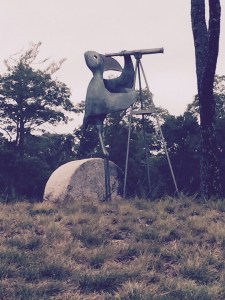
One of the real kitchy things about this place is the prevalence of animal accent lawn art.  You will see hippos, seals, pelicans, and more strewn through the course.  Love the sense of humor this indicates.

Some reclining pelicans watch your warm up at the range

Some reclining pelicans watch your warm up at the range

As one of the greens staff said to me on the course, Cape Cod National does not have the reputation of some of the other older, more established courses on the Cape but it probably has more memorable holes on it than any of them.  I would agree.   Silva did a great job in creating a course that the members will enjoy playing every day or a visiting dignitary will appreciate on a one up.

Brewster, Massachussetts


Designer: Brian Silva (1998)

Tees                 Par       Yardage          Rating      Slope

Blue                 72          6954                74.0         135

White              72          6375                71.2          131

Gold                72          5829                69.4          124

Red                 72         4884                 70.7          125

(Click to see the complete hole-by-hole description of Cape Cod National Golf Club)

Highland Links Golf Course

Highland Links LogoFounded in 1892 and heralded as Cape Cod’s oldest golf course, the Highland Links in North Truro is one of America’s nostalgic golf treasures, perched high along windswept bluffs overlooking the Atlantic next to the vintage Highland Lighthouse on Cape Cod.  This is not going to appear on anyone’s top ten courses in Massachusetts much less the northeast, yet if you are truly a student of the game this is a must play if you are on the Cape.

The original Highland House Golf Links was an adjunct to an ocean hotel and cottage resort operated for years by Isaac Small of Truro and his family.   After years of growing wear and tear the links were refurbished in 1955 by owner Hal Conklin.  In the 1960’s, when Congress approved President Kennedy’s Cape Cod National Seashore Act, Highland Links became Federal property leased to the Town of Truro.  This is now an inexpensive public golf course available for the pleasure of anyone visiting the northern end of Cape Cod.

The second would feel at home anywhere in Scotland or Ireland.

The second hole would feel at home anywhere in Scotland or Ireland.

Deep natural rough, Scottish broom, thick gorse and low bushes, hilly terrain with non-irrigated open fairways, and spectacular ocean views make this course a genuine links in the Scottish tradition.   Wind, weather, rock hard fairways, and high rough are always a factor at Highland Links. Add to this the up and down elevations and gently rolling fairways you will have a links golf experience that you will not soon forget.

Each hole requires a second time around.

Each hole requires a second time around.

This is only a nine hole course but they have two sets of tees so you can make a second loop to get in the full eighteen.  I highly recommend you do that because the first time through there is a steep learning curve on how to play these holes successfully.   As you play the nine again from slightly different tees it is interesting that the men’s inward nine is 200 yards shorter while the women’s inward nine is 30 yards longer.  The second hole is a par 5 on the front and a much shorter par 4 on the back.  The fourth goes from a par 4 to a par 5 as the thirteenth.   With different teeing lines, the shorter distance on the second nine seems a harder round to the measure of par.

Elevation change and wind have to be constantly condsidered.

Elevation change and wind are constantly considered through your day.

If you are used to lush fairways and fair bounces you need to check your ego at the door of the golf shop.  This is golf the old way, rock hard fairways with existential bounces, small putting surfaces with angular fall offs, and serious slopes to navigate on the greens.  The wind will be a major influence so trajectory control and creative attack lines are called for.  If you have a quiver of links shots bring them with you because the ground is your friend and you will have to make some strong up and downs to play well here.

Full links drama on the drive on the Par 5 sixth.

Full links drama unfolds before you on the drive at the Par 5 sixth.

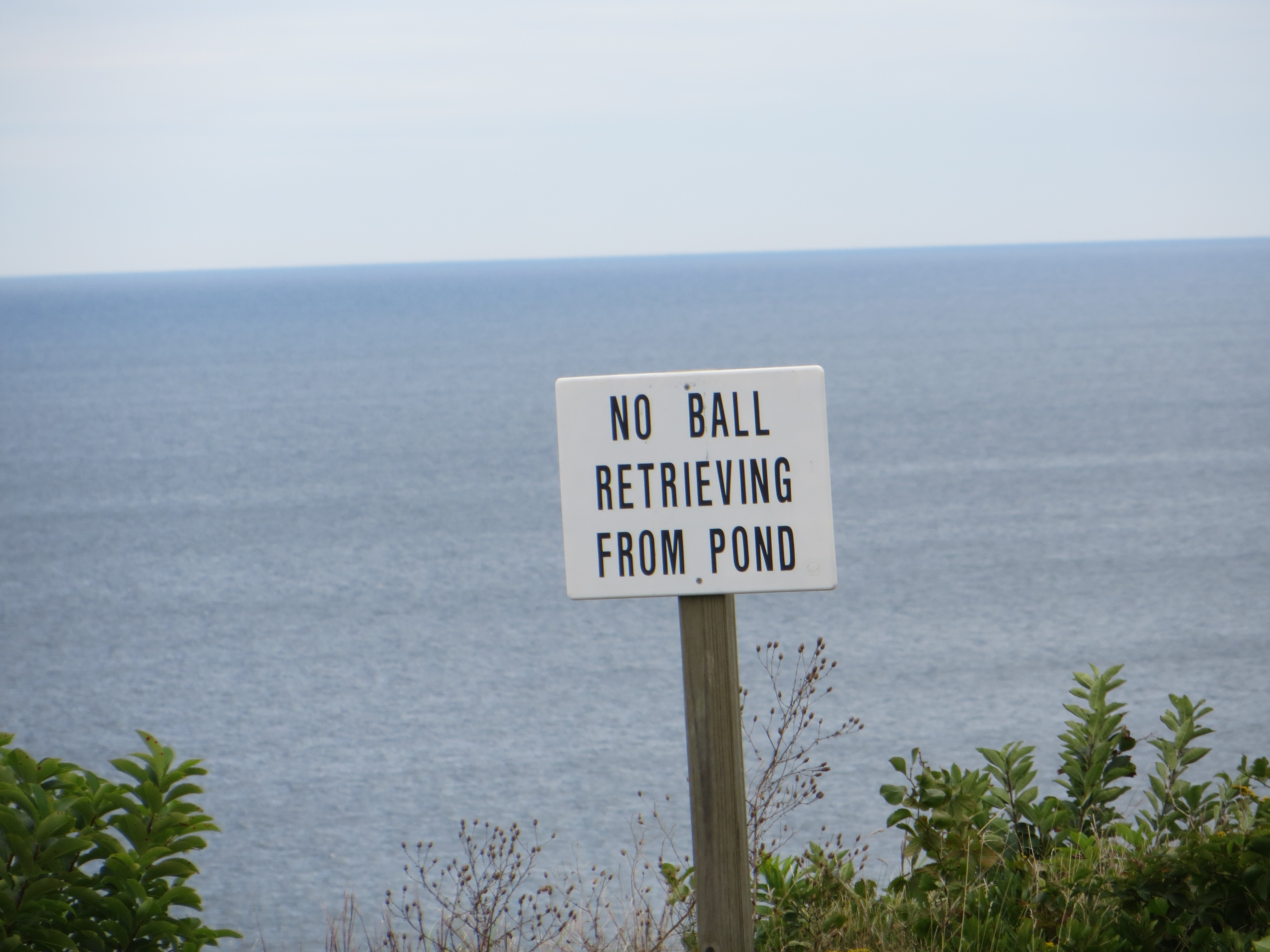
The views on the high holes are just spectacular.  When you get to the tee box on six you are perched on a cliff about 400 yards above the ocean with a drop dead panoramic view worth a digital moment.  This place is not without a sense of humor.  There is a sign adjacent to this tee box on the walking path to the cliff that says, “No Ball Retrieving From Pond”.   You would need a grappling hook, lots of rope, and a lobster basket.

The PondThe Highland Lighthouse is prominent on the horizon through the round but never more spectacular then when it is the backdrop to the finishing par three on each nine.  In fact on the Truro Links website under “Directions”  they have:

Scotland:

Sail Southwest until you reach the 42nd parallel. Then head due West until you see Highland Light.

The views do not get any better than this.

View at the Par 3 ninth……it does not get any better than this.

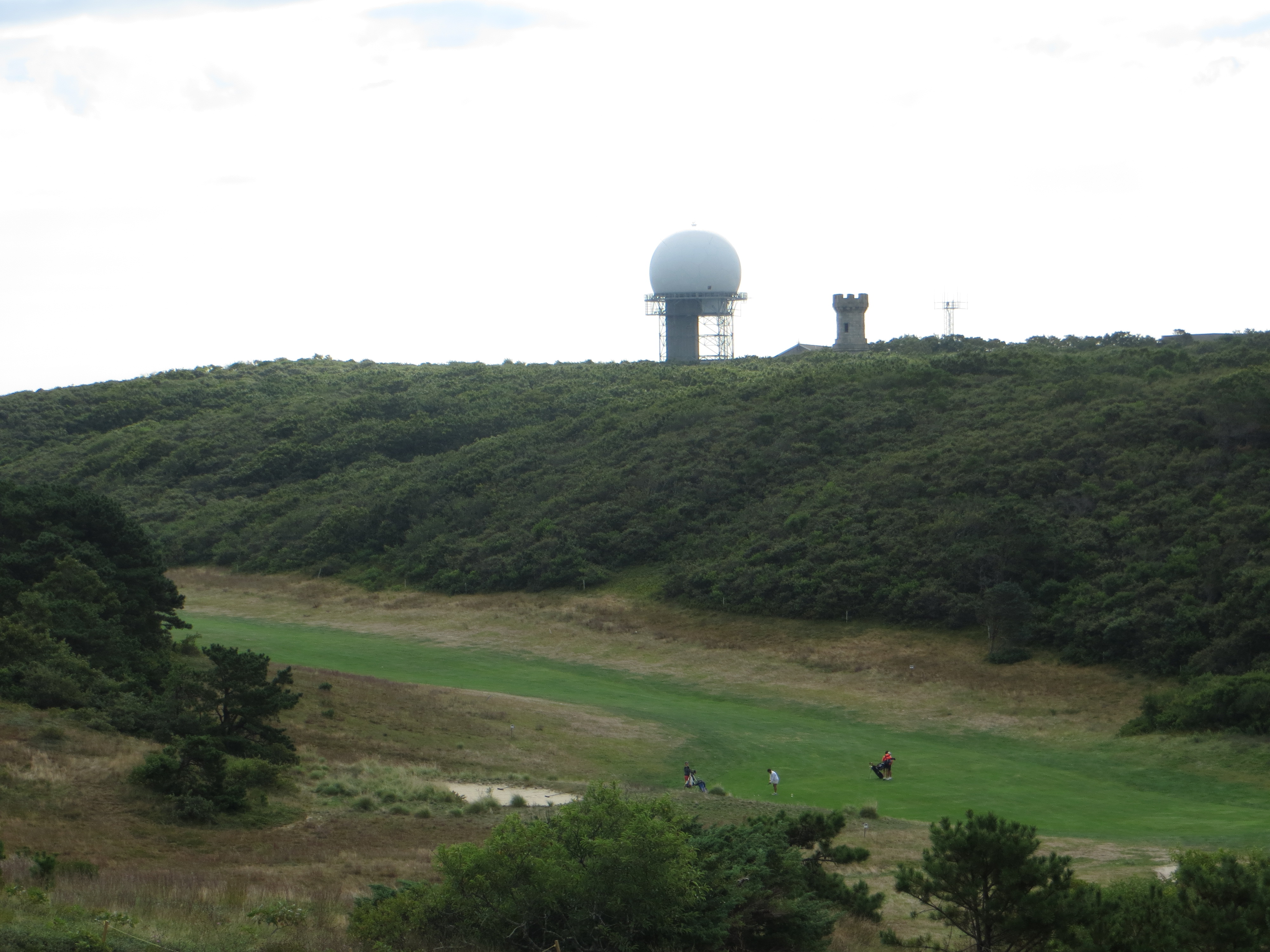
There are also two other curious architectural artifacts on the top of the dunes behind the second and third holes.The first is a globe that looks straight out of Epcot Center at Disneyworld.  It is an old FAA service dome that originally was used by the Air Force as a surveillance station during WW II.  Juxtaposed to it stands a 55-foot tall medieval looking granite tower on which you would expect to see Mel Gibson in full Braveheart garb wielding his sword and a shield.  This is the Jenny Lind Tower that was transplanted from Boston in 1927 as a gift to Truro from Harry Aldrich, a rich Boston attorney.  The tower was famous because Jenny Lind, the most famous singer in the world in 1850, delivered a concert from the top of it to a throng of people who could not fit into the auditorium she was scheduled to perform in at Boston and Maine’s Fitchburg Depot.  I am thinking that a young and impressionable Mr. Aldrich must have been in that crowd.

The embellishments on the horizon seem to span centuries.

The embellishments on the horizon seem to span centuries.

What this place lacks in polished feature and comfort detail it more than makes up for in traditional links look and feel.  For those who love a rough and tumble British Isles golf experience there may be no better place on the east coast to find it than a double lap at Highland Links.

North Truro, Massachusetts

Architect:  Willard Small (1892)/J. Henry McKinley (1913)

Tees                Par     Yardage      Rating     Slope

Blue                 70        5332           67.0        114

Red                  72        4587           67.8        117

(Click here to review the complete Highland Links Golf Course hole-by-hole descriptions)

For more pictures click to review Postcard From Highland Links