Tiger’s Back In Town

Tiger Woods and the A T & T National tournament return to Congressional Country Club this week after a two-year hiatus caused by the club’s hosting of the 2011 U.S. Open.  As the commentators like to say, Tiger’s presence as the host of this event will “move the needle” and there should be swarms of adoring fans attending in spite of the sweltering heat forecast this weekend in the nation’s capitol.

They will be in for a treat because Tiger’s new motif is he only wins at tournaments hosted by the iconic heroes of the game.  Having won Arnie and Jack’s events at Bay Hill and Memorial already this year, winning his own event at the storied Congressional Country Club seems only fitting.

The only thing mitigating that might be the set up of the course.  I have a feeling that if the folks at Congressional have a say the pins will be hidden in the Port-A-Johns to try to avoid the scoring frenzy that occurred in the soft conditions when Rory blistered the course at 16 under last year.  They will be anxious to prove to golf officials watching that Congressional is still a worthy major championship venue.

The main beneficiaries of this event are military personnel and their families who will be honored guests and the Tiger Woods Foundation who is the main charitable beneficiary.   Tiger has said he wants to expand the presence of his foundation and their learning programs on the east coast and making Washington, D.C. as a base for these activities seems to be his priority.  The Tiger Woods Foundation and Congressional have agreed to continue their relationship with this event through 2014.

Other than missing a couple of notable Irishman-McDowell, McIlroy, Harrington, and Clarke-who are playing in the Irish Open at Royal Portrush this week, the fans will have plenty of marquee players to follow.  Dustin Johnson, Hunter Mahan, Jim Furyk, Nick Watney, Angel Cabrera, and K.J. Choi are among those scheduled to join in the Tiger festivities.

This should make for some entertaining weekend viewing from the air-conditioned comfort of your living room couch.

June, 2012

Spring Creek Golf Course

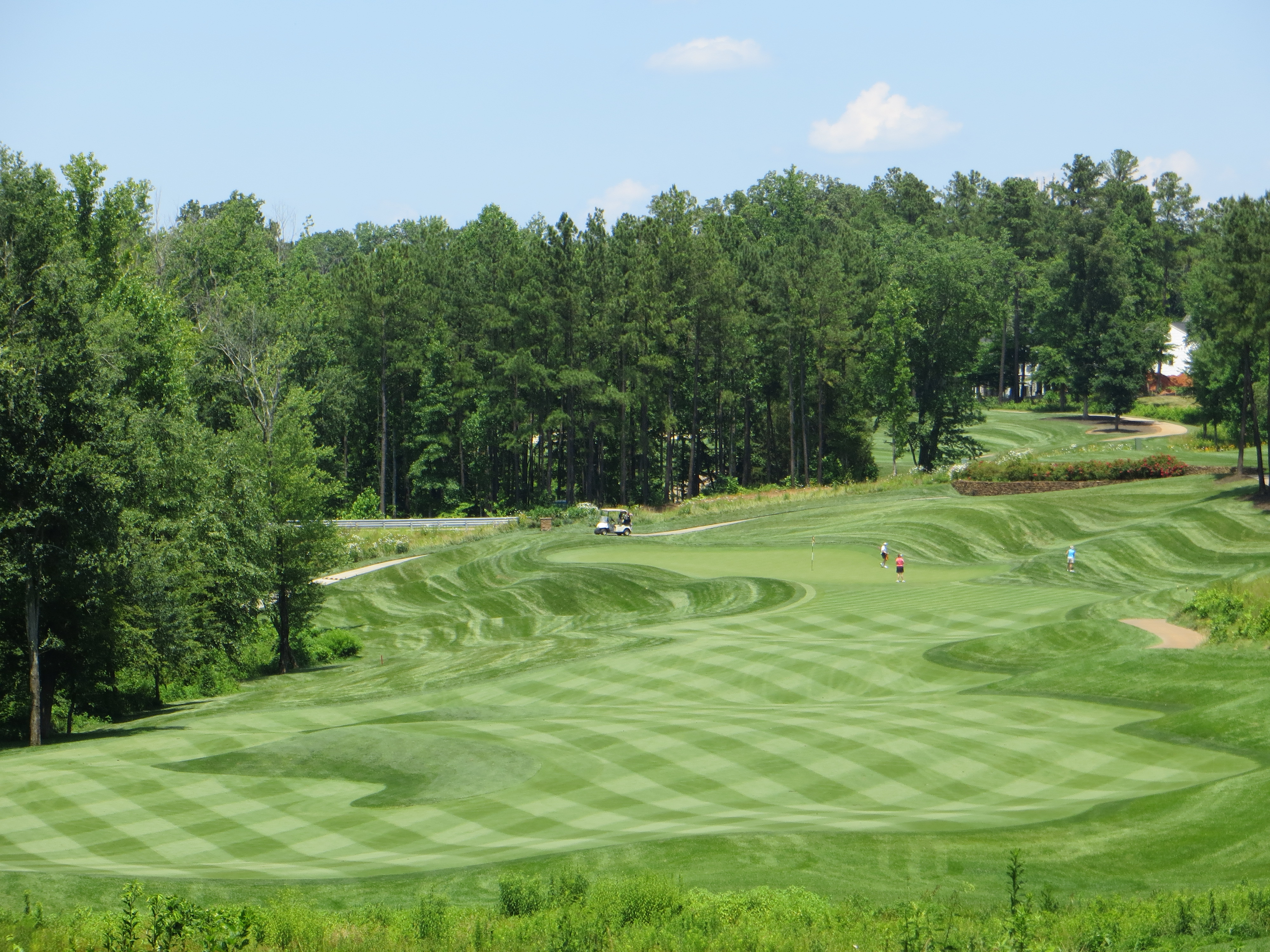
Spring Creek Golf Course was created to support a high end housing community about seventeen miles east of Charlottesville.  When it came on line the economic infarction of the time seems to have upset real estate sales, yet this course has design quality and integrity that should make it a success as a fee course until that trend turns around.  Ed Carton has considerable deputy experience with Tom Fazio and it shows in the presentation of this course.  Like his mentor this course is visually pleasing and seems to fit into the regional topography very comfortably.    The course has won some instant national recognition by the national golf magazines and has been favorably compared in reviews to the other jewel of Virginia, Lester George’s  very private Kinloch Golf Club outside of Richmond.  The difference is this place is totally accessible to the fee paying public.

For a residential community course this has a modern design characteristic rarely seen in these type of developments-generous hole setbacks from the residential lots.  The owner, Charles Kincannon, showed great discipline in allowing the design team to employ such setbacks which make the holes seem very comfortable in their surroundings without visual encroachment.  Given the dramatic topography on which this course is built that has resulted in holes of stunning visual stature as well as tactical uniqueness.

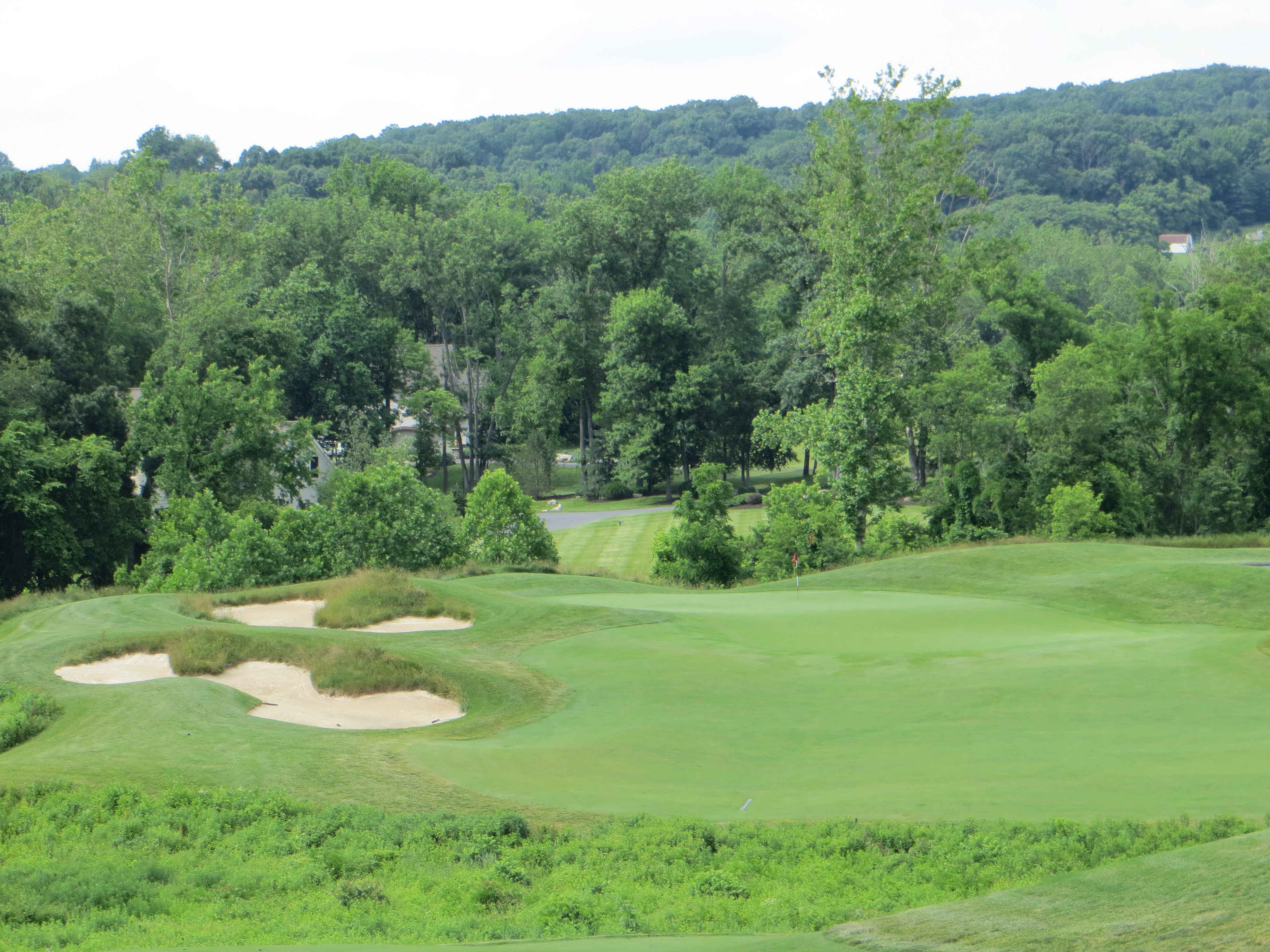
Creative use of the topography create visuals like the par 4 #14

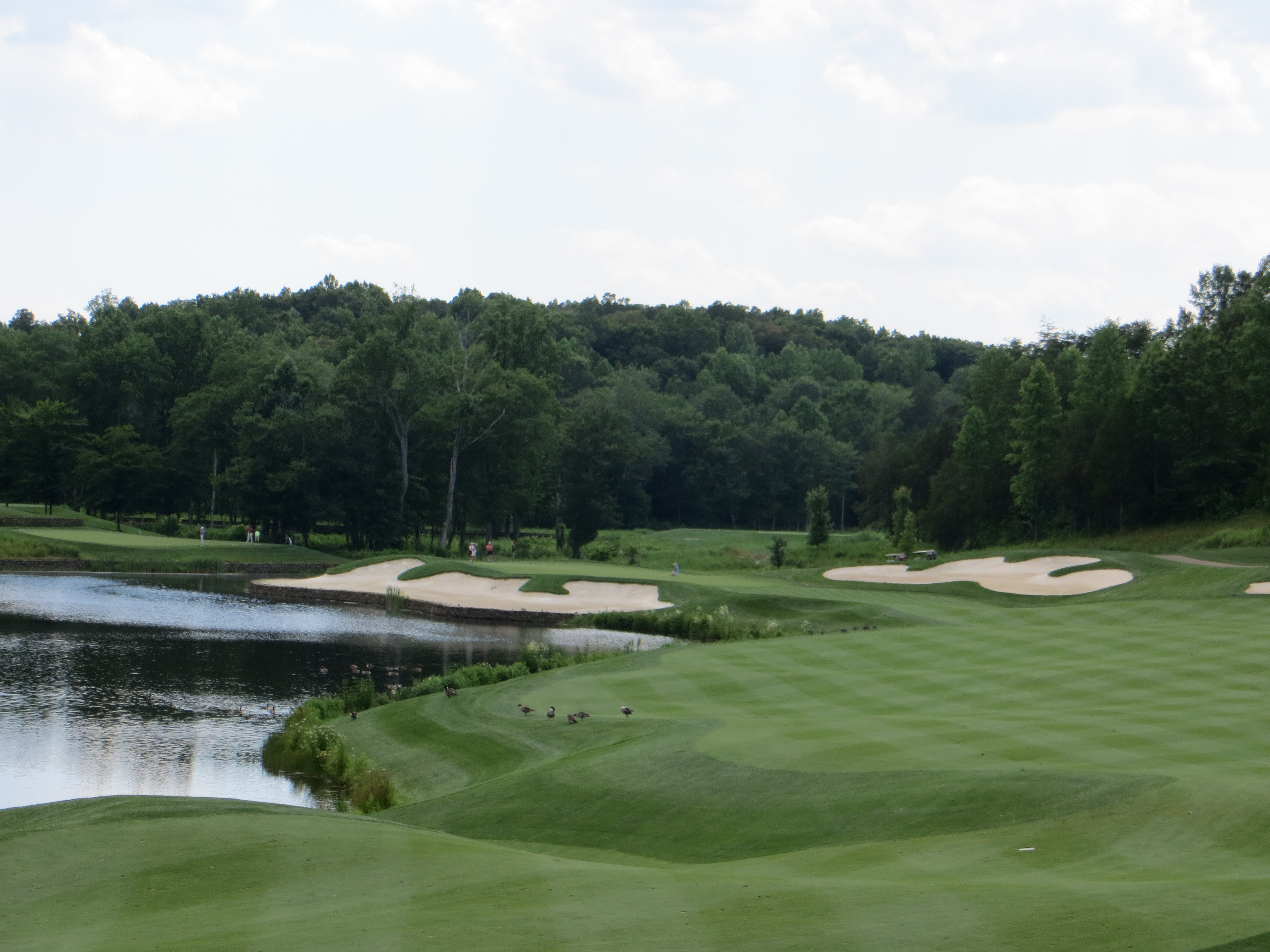
The most obvious characteristic is the generous use of sand throughout the course.  This is an expensive design decision but, as you see on Fazio style courses, free form expansive bunkering is a visual accent that can be psychologically intimidating and provide tactical parameters that challenge the golfers as well.  My wife said on about the eighth hole, there must have been no sand left in Virginia Beach once this course opened for play.  Most interesting is that she played the entire 18 holes and was not in a single bunker-now that is good design.
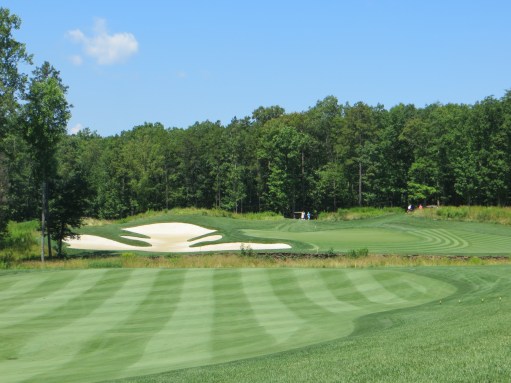
The Alien Gingerbread Man bunker hunkers over # 3 green

Another unique characteristic for this region is the choice of bent grass for the fairways and tees.  Zoysia and Bermuda grasses are usually the choice when you get this far South but the bent works well and it displays beautifully when it is well maintained and manicured as it is out here.  There is also the clever use of indigenous rock accenting some of the low creeks, crossing bridges, and the high areas behind some greens.  Given the severity of the topography this stone softens many of  the visual transitions that were required.

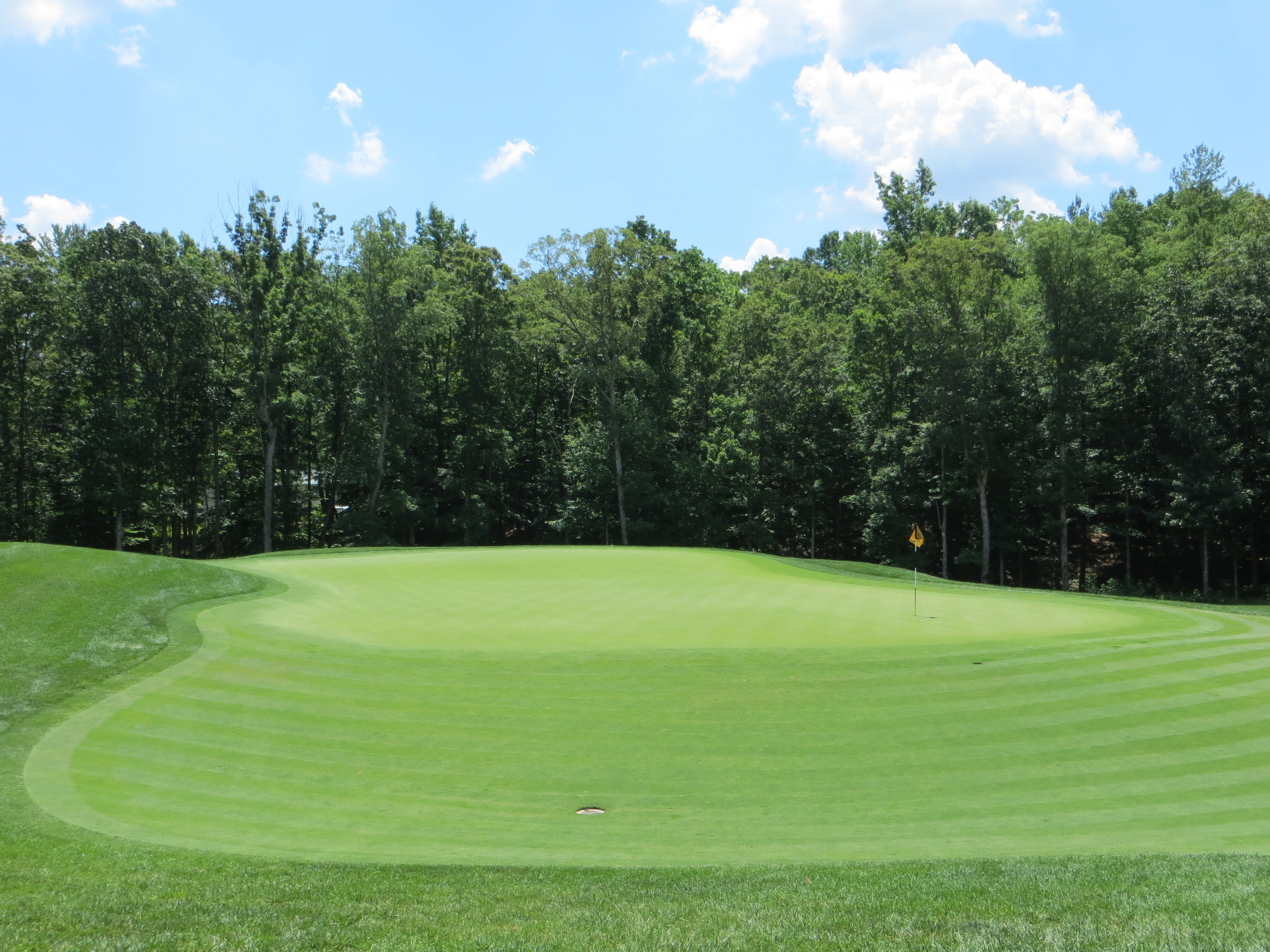
Sprawling greens with undulations and fall offs that will challenge

The greens themselves may be the most unique part of this design.  They are vast, sprawling green surfaces with lots of facet and undulations.  The speed on these greens, especially down the slopes, can be disarming.  You need to play this course a number of times to understand the tactical requirement of your approach positions into these greens.  On many holes the greens have fall offs in more than one direction or insidious little donut depressions that feed to side pitching areas.  Knowing how to negotiate these and leave yourself an uphill putt you can play aggressively is the secret to scoring well.  The pro told me before I played  that the yardage on the card belies the difficulty that the rating and slope indicates.  The need to be able to approach these greens with a club you can control is critical so pick your tee length conservatively if you want to enjoy your day.

The front side starts with a wonderful challenging par four that will set the tone that ball control and accuracy are at a premium.  The next two holes, a very technical par five and a seemingly innocuous par four that is in fact the first handicap hole will serve to reiterate that notion.  From four to nine, with the exception of a bear of a challenge on six, the yardage will not overwhelm you but don’t be lulled into a sense of security, good planning and articulate shot execution will be rewarded.

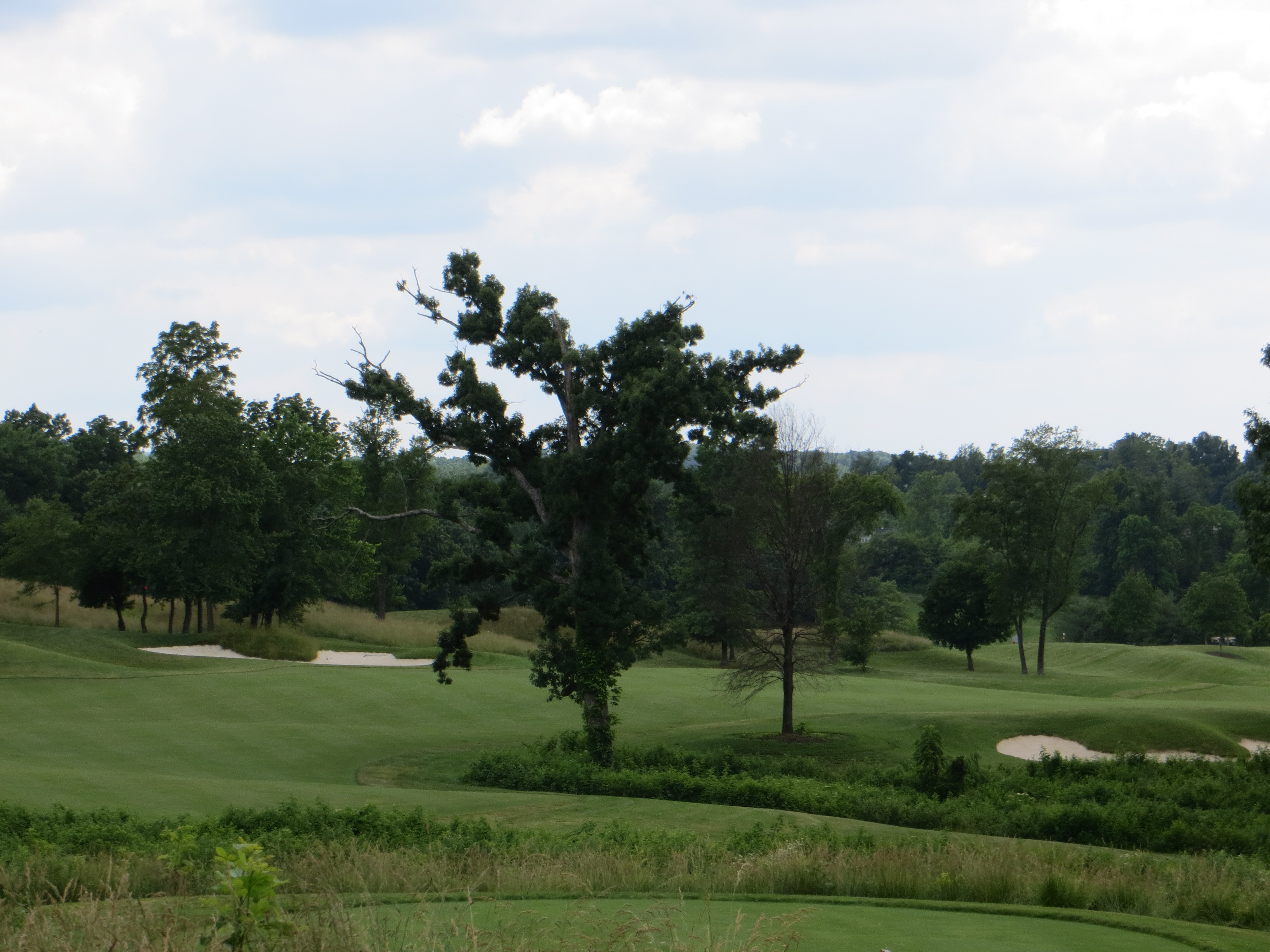
Some pixie dust might help resolve the mysteries of #16

Once you turn to the inward nine the adrenaline rush will begin on the tenth tee.  This is an old classic style 90 degree dogleg right which means it is all about position off the tee followed by an aggressive uphill carry shot into a well guarded green.  The next three holes are very interesting technical holes that present your best scoring opportunity run of the day.  On the fourteenth tee you will witness the anti-gravitational moment  of being atop of the highest point of your favorite thrill ride.  Other than a reprieve on the short par three seventeenth from this point it is just one G-force experience after another that will exhaust your strength and test your resolve all the way to the house.  The eighteenth hole, a wild and wooly par five that is a hooker’s nightmare, is one of the most difficult holes you can face if you need a par to close out a match.  Just a terrific exclamation point for a course that has no shortage of thrills and spills.
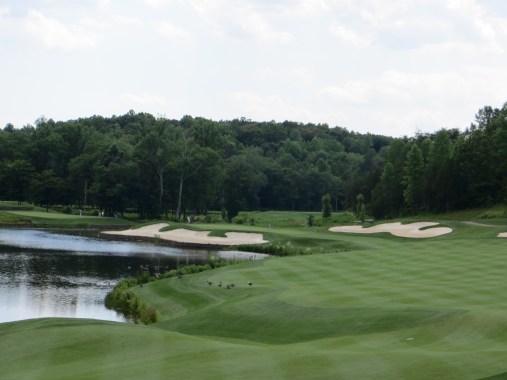
The wharf green setting on #18 is a formidable challenge

If I have any criticism it is the array of par threes.  All four of them play within one club of each other so the yardage demand on the short holes does not vary much at all.  The four par threes are of distinct characters but they are probably the least interesting offerings of the day for me.

What sets this course apart for me is that, for an architect without a vast resume of his own courses to fall back on, Barton has succeeded in putting together 18 wonderful holes that work well together.  You would think in such an early effort there would be at least two or three holes that either did not fit in or just did not work.  Cannot say that about this place, every hole seems to fit the motif and there is not a single hole out there that will fail to stimulate your aesthetic and athletic sensibilities.  This place may seem out of the way but it is well worth the effort to seek it out and play it more than once.

Gordonsville, Virginia

Architect: Ed Carton (2006)

Tees                 Par            Yardage      Rating     Slope

Marble              72               6673           73.2        145

Onyx                72               6197           70.9        138

(Click here to review Spring Creek hole-by-hole descriptions)
The USGA Does The Wright Thing

In June of this year the USGA opened the Mickey Wright Room at the USGA Museum in Far HIlls, New Jersey to honor the greatest female player the game has ever known.  Previously only three other golfers have been honored with a gallery full of their personal memorabilia-Bobby Jones, Ben Hogan, and Arnold Palmer.  Mickey Wright now joins this elite group and deservedly so.

Mickey Wright won the coveted U.S. Open four times   (usga.org)

Mickey Wright won 82 times over her career including 13 major championships.  She is the only woman to have ever held all four major titles at one time.  She won 10 times in both 1961 and 1962, 13 times in 1963-still the record, and 11 times in 1964.  That is 44 tournament titles in four years.  Ben Hogan once said she had the finest swing ever in the game.  Her domination of the game in her prime was well, Tiger-like.

The gallery exhibit includes over 200 personal artifacts donated by Mickey Wright.  They include her worn 1955 bullseye putter with which she won 81 of her 82 titles. Her 1963 Wilson Staff irons she used in all but one of her victories from 1963 on are part of the display.  Scrapbooks, trophies, signed magazine articles, family film footage of her hitting balls at age 11, even the contestant badge from the 1954 U.S. Women’s Open where Mickey played as a young amateur with Babe Zaharias are part of the collection.

One of my favorite items donated was a yellow mat that Wright used to shag balls off the her patio onto the 14th fairway of the golf course where she lives.  Rhonda Glenn, a USGA historian and long time friend said, “I sat on her patio and watched her….it was a treat…I used to watch Hogan practice when I was a little girl, at Seminole.  There was this crack when he hit the ball.  I never heard it again until Mickey was hitting balls.”

By creating this gallery in a room next to Arnie’s, the USGA will help educate a golfing populace that knows little of her accomplishments and all she did for women’s golf.  Mickey Wright said in an interview, “This is a here and now and forever feeling that honors not just me, but the history of women’s golf.  This is also for all the women who came before me…..It is a tribute to their tenancity in making women’s golf a legitimate, recognized national sport”.

In 2010 Mickey Wright was given the Bob Jones Award in recognition of distinguished sportsmanship in golf.  It is the highest award that the USGA hands out.  With the opening of the Mickey Wright Room in Far Hills the USGA furthers that recognition and places her among the all time greats of the game.

If you have never been to the USGA Museum in Far Hills you owe yourself this pleasure-it is a very special place.  You now have one more wonderful reason to make the journey.

June, 2012

Whiskey Creek Golf Club

At the height of the golf course construction boom in the late 90’s there were high end daily fee courses being built all around the Washington, D.C. area.  Of all those introduced Whiskey Creek, a collaborative design of J. Michael Poellot and Ernie Els, was probably at the top of that heap.  Considerable intellectual and financial capital went into the design and construction of this course on a beautiful piece of  rolling farmland in rural Maryland.  My bet is that the two of them were awe struck by the natural vistas they found on their first visit to the property.  Just looking up at the farm houses on the hills it very obvious how natural and stunning their green constellations could look if they routed this thoughtfully.

Skeleton of a 19th Century stone house is your aiming device on 18

The result speaks for itself, an artistically designed course with a wide array of holes sporting traditional tactical design features.  No trumped up hazards or artificial challenges-unless you consider a 19th century stone farmhouse in the middle of the 18th fairway artificial.  I consider it artistic license and it actually makes the hole tactically interesting.  There is generous use of stone and boulders throughout the course to accent the natural presentation of the holes.  A sensible use of the natural flow of the topography was employed integrating environmental hazards and water-enough to be challenging without being excessive or punitive.

The greens are large flowing surfaces with lots of facet-you really have to focus on the way the green sits to the fairway approach area to figure how to get it in the right portion of the green.  In some ways the green sets have a bit of that Irish/Scottish feel to them-big undulating oceans of green that wave mysteriously among the hills.   Most of the greens are approachable without carrying the bunkers and many are actually inviting to bump and run-especially when the pins are in the front.  The fairway and  greenside are similar to the greens-large deep rambling pits stuck into the hillsides and below the putting surfaces.

Visual green settings like this at #18 require tactics and precision

Being successful here is about taking the time on each tee to plot a reasonable series of shots based on the wind and pin positions of the day.  Sticking to that plan and not trying to overwhelm the challenges with brute strength will reward your scorecard accordingly. Most of the holes you can get a good look at what is in front of you, but many of the putting surfaces are masked from the approach area.  As Ernie says in the yardage book, big wide driving areas were provided on most holes but position is still important to get the best angle of approach to the greens.  In planning your approach consider everything-the entry openings to the green, the diagonal the green sits to the approach line, the prevailing banking of the green, and the relative punitive payment for missing on the short side of the flag position.  Sometimes a uphill pitch and a putt are a better formula to making par than hitting the green in regulation above the flag and having an unmanageable putt down the slope.

The yardage of the course is deceiving-it may be the shortest 6500 yards you will ever see.  Most of the long par 4’s and the par fives are downhill so they play considerably shorter than the yardage.  Many of the shots look much longer than they really are-you have to trust the available yardages and pick the right club accordingly.

Framed driving area on the tempting downhill Par 5 9th.

The front nine is an interesting ride-plenty of challenge but not overwhelming.  The fourth hole is a wonderful uphill par five that scales the terrain to an alcove green set among natural boulder outcroppings.  The next hole is a vertigo par four that tumbles down the hill like the final plunge on the log flume ride at Hershey Park.  The last two holes on the outward nine are terrific-a swerving par four working down the hill adjacent to number four followed by a tantalizing downhill par five that will tempt you to reach for something extra to end the side with a birdie.

Carry across the abyss on the Par 4 12th is a harrowing challenge

Once you have the dog at the turn the challenge ratchets up.  This side begins with a  technical hole that will give you heartburn if you are not careful.   Eleven is the postcard signature for Whiskey Creek just a thing of beauty that will make your heart race.  Starting at the twelfth the challenge heightens considerably with three visually intimidating par fours.  These next three are mostly about position off the tee and then resolve on the second into very tight green arrangements.  Sixteen through eighteen provide three distinctly different challenges in one of the most unusual finishes you will play in this area.  You could just as easily play these three holes two under or six over-it is about managing risk through intelligent decision making.

The fortress green setting at the Par 5 16th

The clubhouse is a simple wood frame construct that fits into the country theme of the property.  A high beamed ceiling and great visibility of nine and eighteen in the grill/lounge area makes for a comfortable atmosphere for watching  the action on the course or on Golf Channel with a hearty sandwich and an adult beverage in hand.  Food is strong bar food-tasty and satisfying.

What I like most about Whiskey Creek is that for a daily fee course they have figured out a way to meet the maintenance budget with appropriate funds to keep the place in top condition.  The fairways are always lush and the greens smooth with pace-more like a country club than a fee course.  Kudos to Kemper Sports who operate and manage this fine facility.

Ijamsville, Maryland

Architect: J. Michael Poellot, Ernie Els (2000)

Tee                  Yardage          Par     Rating     Slope

Blue                 6525               72        72.1        136

White              5979                72        69.3        129

(Click here to review Whiskey Creek hole-by-hole descriptions)

Major Roulette

Nine of the last nine majors have been won by first time winners.  Does this mean these premier events have become a game of chance or is this a testimony to the depth of young talent with mature competitive instincts that now pervades the game of golf?

Webb Simpson put on an unflappable 68-68 performance the last two days showing patience and resolve on Sunday after bogeying two of the first five holes.  Four birdies over the next five followed by eight straight pars proved that, at 26 years old, he has what it takes to win on a U.S. Open course setup.

As you can read in John Garrity’s SI article attached, the USGA was determined to reclaim the U.S. Open’s spot as the toughest test in the game after last year’s scoring mishap at Congressional.  So the real winner this weekend was the USGA whose head croupier Mike Davis set up a stern but fair test that would examine all the golfing skills of the greatest players in the game.

One fairway bunker, no water hazards, 7100 yards, yet no one was winning this one without great risk-reward judgment, the ability to move the ball in both directions on demand, and a willingness to accept the odd bad break and move on.

As to bad breaks, how about the Cypress tree on the 5th hole swallowing Lee Westood’s errant drive that did the same to Lee Janzen 14 years ago.  This time the tree failed to regurgitate the ball and the double bogey that ensued banished Lee once again to the land of no majors.

Best story of the week has to be 17-year old Beau Hossler’s continued presence on the top side of the leader board in a major championship.  He too had a bogey skein in the first five holes but managed to make three more birdies before finally falling victim to the pressure on the back nine.  His attitude and his bunker play was that of a grizzled veteran not a high school junior.  Somehow I don’t think he will be looking at those high school matches with the same reverence.

In the end the guy who could handle the USGA’s enormous pressure cooker prevailed.  Simpson’s up and down for par from a knotty lie next to the eighteenth green showed remarkable aplomb in the face of a career defining challenge.

(Click to Read John Garrity’s “Golf’s Toughest Test” from SI.com)

John Garrity

Sports Illustrated.com

June, 2012

Beau Knows

I know this is a stretch but allow me to fantasize for a moment and imagine what it would mean if a 17-year old was to win the 2012 U.S. Open at The Olympic Club.  This could be an accomplishment equal to “The Greatest Game Ever Played” 99 years later.  That day an unknown amateur, Francis Ouimet, at age 20, beat the renowned British professionals Harry Vardon and Ted Ray in a playoff to take the U.S. Open at Brookline and put American Golf on the radar scene for the first time.

Beau Hossler has proven over these last few days that he has the game and demeanor to compete at the top level at a very tender age but to actually win the big one while still in his teens is just inconceivable.  As to his name appearing atop the leader board on Friday for a couple of holes he said, “I was pretty excited about it, but then again I had another 40 holes …..you’ve got a long way to go, and you can’t get too wrapped up in where you’re at.”

.

On Saturday his goal remained, as it had been when he missed the cut in the U.S. Open at age 16 at Congressional last year, to be low amateur.  Then he did the unthinkable-shot even par 70, making bounce back birdies 4 times after making a bogey on this harrowing track, to maintain his position at 3 over within four shots of two former U.S. Open winners Jim Furyk and Graeme McDowell.

.

As a 17-year old maybe there is a bit of precociousness in his attitude but his goal has now changed because he actually believes he can win this golf tournament.  I know this is unlikely but if he somehow can continue this out of body experience he has been going through for three days and post a two under 68 on Sunday, it might just be good enough to earn Beau a Monday playoff date against a couple of seasoned professionals for this title.

How cool would that be.  Cooler than free dry cleaning-the one perk from this Open experience that Hossler thought was “pretty sweet”.

I don’t know about you but if Beau gets through the juggernaut first nine holes on Sunday within striking distance of the leaders I will hanging on his every swing continuing to imagine the unthinkable.

My bet is Mark Frost, who made a movie about Ouimet’s startling accomplishment in 1913 at Brookline, will be having similar thoughts.  I am pretty sure that Beau has seen the movie a few times and is very familiar with the storyline.

June, 2012

Cat On A Hot Tin Roof

After last year’s scoring orgy at the U.S. Open at Congressional Mike Davis of the USGA was not going to have any more of that this year in “golf’s toughest test” at The Olympic Club.  A course so angular that keeping it on the fairway is like try to land a dimpled marshmallow on a tilted snare drum treated with talcum powder, the dry and windy conditions of San Francisco have made it even harder and faster driving the players to delirium.

The three guys with the thickest paw pads are Tiger, Furyk, and Toms who have somehow managed to scratch out a one under par score through the first two rounds.  Tiger has showed great control, finding a way to hit 75% of the fairways and 70% of the greens.  Toms has had only 56 putts over the two days that is four less than the other leaders.  Furyk has managed to hit 75% of the greens in regulation despite hitting less than half of the fairways.

The scoring carnage has been well distributed.  Nick Watney and Justin Rose backed up opening 69’s with a pair of 75’s.  Mickelson and Zach Johnson shot 76 and 77 on day one and just managed to squeak in under the +8 cut line to play the weekend.  Significant others who will be watching the last two rounds from the comfort of their family room couches include defending champ Rory McIlroy and the world’s number one Luke Donald.

Patience and a short memory seem to be the key once again at the U.S. Open.  A good recovery game around these tiny greens does not hurt either.  Furyk set the bar in the morning round with a gritty 69 to post one under.  Tiger had what looked to be a glorious approach into the short par five 17th that held it’s steam a nano second too long only to sneak off the back right of the green and then tumble down one of Mike Davis’s shaved banks to nestle among the Cypress trees about 50 yards below the green.  He played away from the flag with a deft pitch and managed to salvage par and his momentum.  Toms showed superb iron play down the back nine with two birdies and no bogies to catch the big cat.

With scores in the sixties few and far between the weekend will be about limiting fender benders and making combackers for par from 10 feet.  Betting against Tiger when he has the 36 hole lead in a major is a losing proposition but, besides the two major winners who are currently tied with him, there is Graeme McDowell only two back and he has a history of grabbing the tiger by it’s tail.  This demolition derby should make for some entertaining reality TV this weekend.

June, 2012

Justice Served?

In this autobiographical piece published in Golf Digest you can read an amazing story of Valentino Dixon using his talent for art and his discovery of the serenity of golf course images as a way to help reconcile the time he is spending incarcerated in the Attica New York Correctional Facility.

Considering that he has never played a round of golf in his life, his understanding and interpretation of the peace we all find in the natural surroundings of the game we love is astounding.  An artist must find a subject to interpret and how, from the lonely trappings of a 6 x 10 foot cell, he has landed on golf landscapes as his inspiration is hard to fathom.

His explanation of what his artistic expression means to him in keeping a perspective and hope about righting his situation is moving.  If Bob Dylan played golf he would certainly have written a song about Valentino.  But that is to trivialize his situation and he deserves better than that.

Whether you believe his assertion of innocence or not, you can understand how art has been a vehicle to his survival and that is a testimony to human perseverance on it’s own.

(Click to read Valentino Dixon’s “Drawings From Prison”)

Valentino Dixon

with Max Adler

Golf Digest

July, 2012

True Test Turns To Jest

The USGA setup for the U.S. Open is intended to be a stern test of golf that will challenge the best players in the world to the limit of their ability.  But many times the setup gurus have crossed the line and turned testing golf into Tom Foolery.

Leader Payne Stewart anxiously watches his existential fate unfold (Stephen Szurlej)

This article by Ron Whitten from Golf Digest recounts the last time the Open was held at The Olympic Club and the fiasco of the pin placement on the 18th green that Friday in 1998.  It has taken 14 years for this prestigious event to return to Olympic and much of that hesitation can be accounted for by what happened that Friday afternoon.

Ron Meeks, whose set up of the course that year earned him the moniker of “Marquis de Sod”, admitted “We all make mistakes with course setup….I have never set up a championship where I haven’t made multiple mistakes.  Mother Nature sometimes fools you, or you sometimes don’t anticipate certain things.”  Maybe they are just trying too hard.

There have been many other such incidents over the years, most vivid to my memory is the debacle at Shinnecock Hills in 2004.  Who can forget what the seventh green looked like, devoid of a blade of live grass because of the stress of water deprivation, as pro after pro simply watched in disbelief as their balls trundled off the back of that par three.  It will have taken 14 years to get over that experience as The Open is not scheduled to return to Shinneccock Hills again until 2018.

Take a moment to read this article and view the embedded video of an interview the next day at Olympic in 1998 with David Fay the USGA Executive Director.  It reveals how precarious it can become when the USGA tries to push the limits of fairness in trying to fulfill their desire to create a true test of golf.

(Click to read Ron Whitten’s “Testing The Limits of Fairness”)

Ron Whitten

Golf Digest

June, 2012