J.D. Arrives

Daly 1991 PGA WinnerJohn Daly always makes his appearances with a bang…just look at the Loudmouth pants collection that is currently keeping him financially afloat.  It is difficult to recall that weekend in August of 1991 when a seriously unknown pro from Arkansas snuck under the radar to qualify for and win the PGA Championship by three shots at Pete Dye’s Crooked Stick in Carmel, Indiana.

As you can read in John Garrity’s Sports Illustrated article no one, absolutely no one, saw this coming.  Daly was the ninth alternate and did not know until Thursday morning that he would be playing in the spot of Nick Price (and borrowing the services of his caddie as well) who was skipping the event to await the birth of his first child.

What happened over four days-21 birdies, an eagle, and a three-shot winning total of 12-under-is the stuff of fairy tales.  With a backswing that insulted parallel and a resultant ball speed that seemed to defy slow motion cameras Daly played without a dimmer switch on a course that Nicklaus called “the most difficult he had every played”.

After an opening 69 on a course he had never seen, Daly defied all logic grabbing the lead Friday morning.  As Garrity says “From the moment his name went on the leader board, the crowds at Crooked Stick thought he was a sand castle and the golf course a rising tide”.  His tour ranking of 185th in driving accuracy was not a prescription for success at a major, even if it had no rough.

Saturday he made it clear that the grip-it and rip-it mantra had staying power if only for this weekend.  A three-under stretch starting on the fourth was the behavior of a major champion and his legions, and their enthusiasm, began to grow.

As is always the case a Cinderella needs a little luck on the way to the ball and Daly got an extremely favorable ruling when his caddie unintentionally rested the end of the flagstick behind the hole as Daly lined up his putt on 11 on Saturday.  This is a clear violation of 8-2b that says a player or caddie may not touch the surface of the green along the line of the putt.  The two-stroke penalty that would have resulted could have been disastrous.

Fortunately, after reviewing the tape,the officials “honored the spirit rather than the letter of the law….and avoided what would have been the most unpopular rules decision since the Roberto de Vicenzo scorecard fiasco at the 1968 Masters”.

The rest is history, including Big John’s over-the-head whirly-bird fist pump after hitting his final approach into 18 on Sunday.  It was quite a show and it is fun to relive it, even if for just a moment.

(Click to read John Garrity’s “Over Drive” from the SI Vault)

John Garrity

Sports Illustrated

August, 1991

Bitchin’ Winds

Those who have played the Coore-Crenshaw Plantation Course at Kapalua in Maui know that the overall elevation change of over 400 feet presents players with exposed places on the course where normal winds can play havoc with the flight of the ball.

An elite field of 30 winners of the 2012 PGA sanctioned events are playing the opening event of the 2013 season at Kapalua in the Hyundai Tournament of Champions in winds that will crease your forehead.  What is usually a low impact event with guaranteed paychecks, no cuts, and four days in the paradise of Hawaii has turned into an excruciating endurance test with wind and rain canceling the opening round three days in a row.

Holes like one and two, eight, nine, ten, eleven, twelve, thirteen, seventeen, and eighteen sit with the barest exposure to the wind.  All of these holes have severe elevation transitions as well wind influence which makes finding ballast and maintaining balance during a swing a supreme challenge.  There were hats separating from their owners and doing the mamba 150 yards down the fairway.

The crying and whining over the weekend was vitriolic with guys standing over putts only to watch a sudden gust blow the ball from under their feet right off the green.  Sideways rain made keeping bodies and equipment dry an impossible task.  Baby draws were turning into snorgeling duck hooks without warning.  This was not what these guys had visualized when they stepped off the plane last week anticipating four days of leisure and a fat check.

Finally on Monday, the scheduled final day for the event, the players hoofed 36 holes up and down the severe inclines of this course in winds gusting over 50 m.p.h. setting up a final 18-hole showdown on Tuesday to make this a 54-hole official tournament.  They should have been handing out purple hearts to the caddies for whom it was the Myth of Sisyphus hauling the freight up and down these hills.

In spite of all the verbal grousing these guys are professionals and they can play some amazing shots under the wind.  You don’t see this many three-quarter swings at a three-day Dave Pelz golf school.  The bigger hitters seemed to be able to best mitigate the wind effect.  Bombers like Dustin Johnson, Keegan Bradley, Bubba Watson, Tommy Two Gloves, and Nick Watney dominate the leader board with two notable exceptions, the putting geniuses of Steve Stricker and Brandt Snedeker.

Dustin Johnson  hit it green side 410 yards downwind at 12, drove the green 300 yards into the wind at the 14th, and hit a 275 yard fairway metal into the wind to reach the par five 15th in two.  One last five iron to five feet on the 603-yard 18th to make eagle and set the pace for two rounds with a 11-under score.  This is far from over, especially if the wind dies down tomorrow.  Dustin is going to have his hands full on Tuesday trying outrun the show ponies looking over his shoulder.

As is always the case in Hawaii, the reak bonus is having Mark Rolfing doing the coverage.  His knowledge of these islands and the type of golf it takes to be successful here is a breath of intelligent wind on the Golf Channel broadcasts.

January, 2013

Postcard From Pelican Hill Ocean North

Pelican Hill LogoThe Pelican Hill resort was designed in the grand 16th Century Palladiam architectural style of Northern Italy.  Grand is the operating phrase since everything is presented on a scale that dwarfs the imagination.

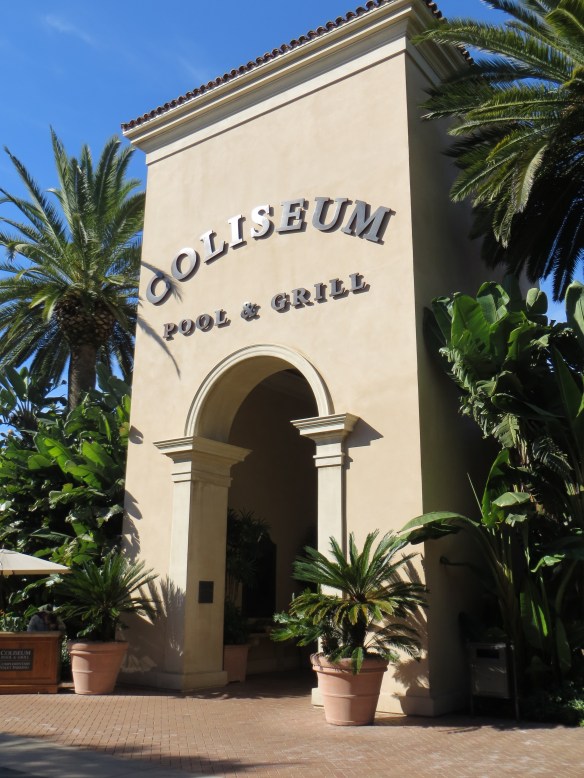
Tall Roman columns, long arched hallways, oversized urns with huge landscaping features, and airy cathedral ceilings everywhere.  It is big, bigger, and bigger still wherever you look.  The 70-inch flat screen TV in the Coliseum Sports Bar feels right at home.

This place has it all-superb accommodations, fine dining, full spa, and two seaside Tom Fazio creations with vistas that will blow your mind.  Shown below are images of the resort delights and the Ocean North Course.

In spite of the scale, the resort is run as a first class experience in a low key manner that makes your comfort a priority without any pomp and circumstance.   A  comfortable and delightful place to build massive amounts of points on your Amex Card.
Pelican Hill Front 2

First impression-front entrance creates an architectural statement.
Coliseum Front

Even the valet station at the informal restaurant is imposing.
Endless Pool 1

Chill at tranquility basin, the endless pool that overlooks the Pacific Ocean.
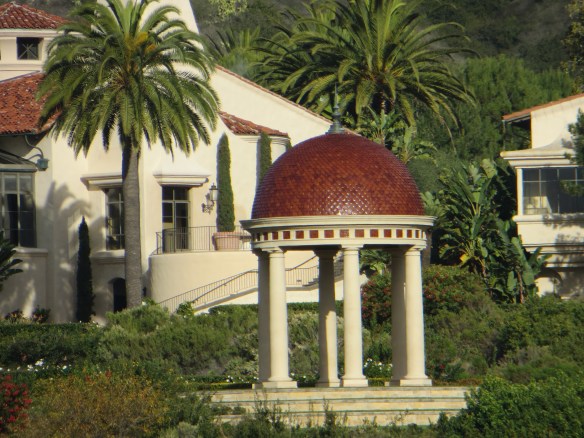
Bridal Gazebo

High end destination weddings use this Roman Chupah…quite charming.

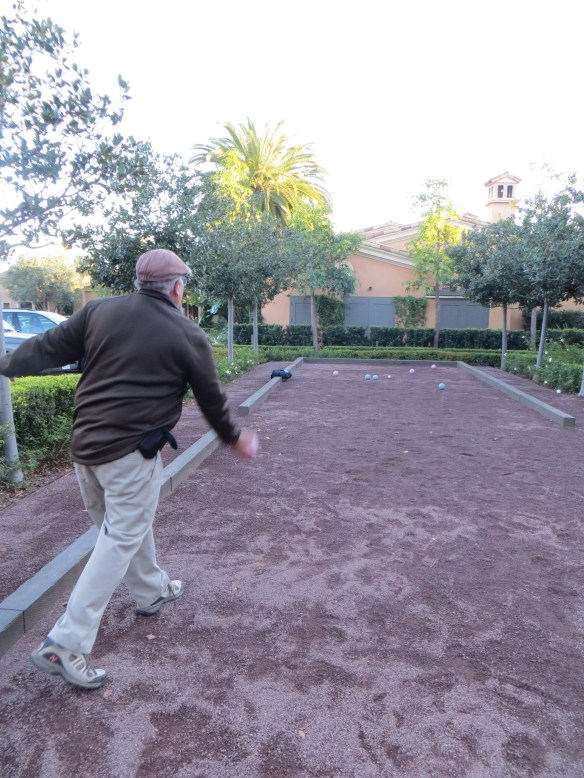
Bocci 1

Recreation includes all the European favorites….even Bocce.

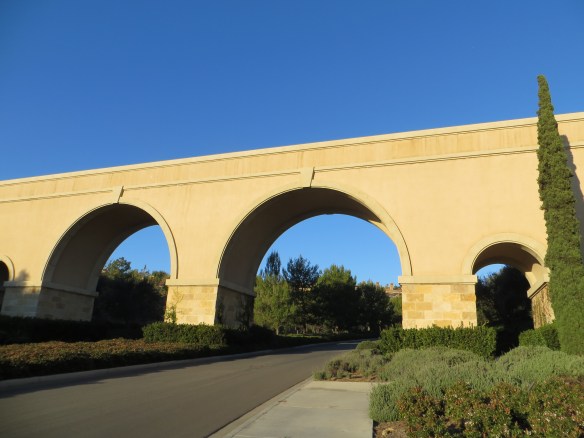
Arched Cart Bridge 2

The most expensive cart bridge in history traverses from the clubhouse to the first tee.

O N #7

Split fairway….pick your poison on the hardest four par on the course.

O N #9 3

A bit of Pine Valley on the approach to #9.

O N #14

Dramatic uphill meets the horizon at the par 4 14th.

O N #17 2

Postcard 17th has it all-strategic bunkering, imposing wetlands, and a promontory green setting overlooking a Pacific backdrop.

O N #18 1

Approach looks like a blimp shot of the closing hole

(Click to read the full course review of Pelican Hill Ocean North)

(Click to read Postcard From Pelican Hill Ocean South)

January, 2013

Postcard From Pelican Hill Ocean South

Pelican Hill LogoPelican Hill Resort in Newport Beach is a first class destination for the discriminating golfer. The hotel, dining, golf, spa, and other facilities will tax your Platinum Card to the fullest but it is well worth the fare. Routed on the steep hills of Newport Beach overlooking the Pacific Ocean they have two Tom Fazio creations to wow your senses and challenge all your golfing skills.  The Ocean South is shown below.

Family Shot

The Mish, Long Ball, and The Birthday Girl in the prep area.

P S #1

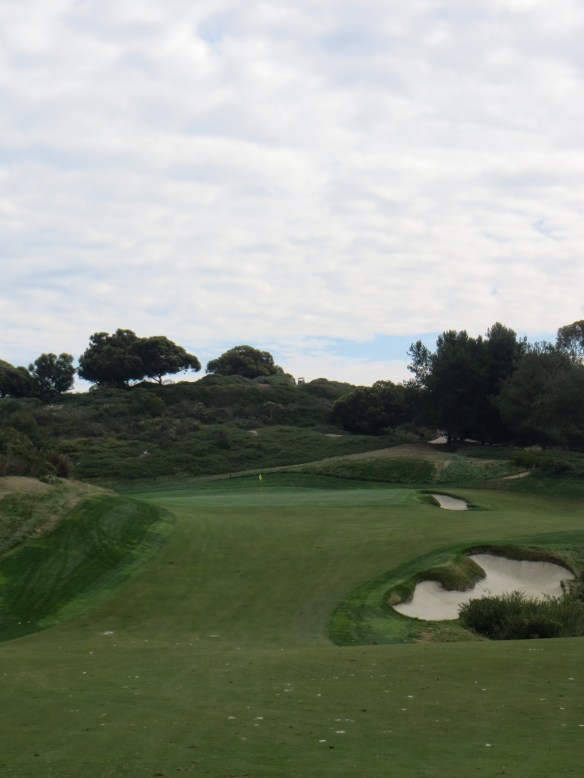
Built on abrupt elevation changes with sprawling ocean vistas you will may trouble concentrating on the task at hand.

P S #5 Gorge

These foothills have deep gorges that make for challenging carries and breathtaking views.
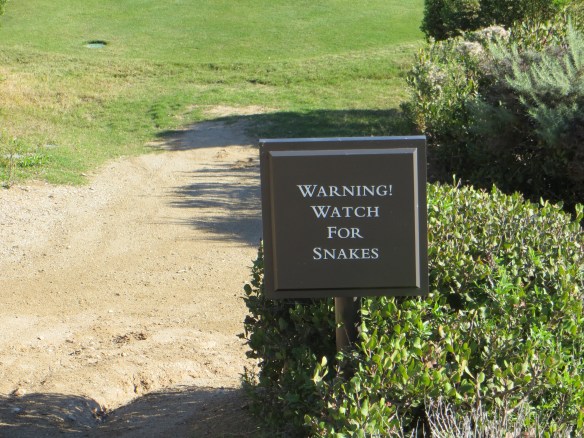
Snake Warning

The environmental areas are off limits to golfers because of the critters and S’s.

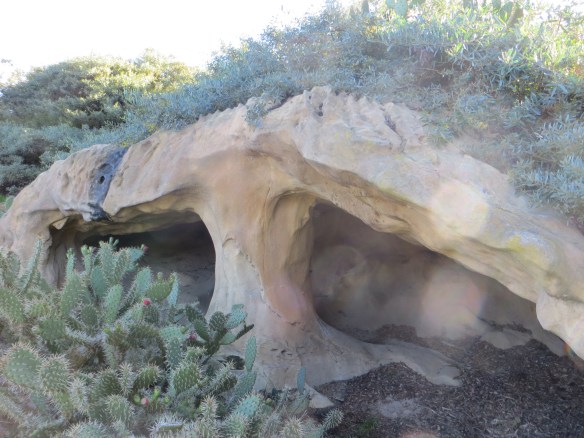
Troll Cave

Rock outcroppings provide unique accents and homes for the Titleist collecting trolls.

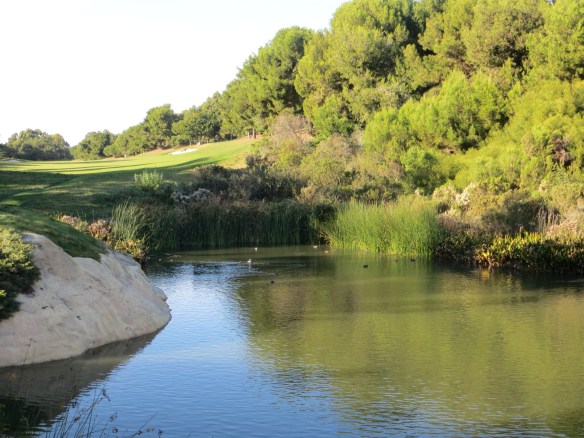
Walden Pond # 7
Tranquility defined traversing Walden Pond off the 8th tee.

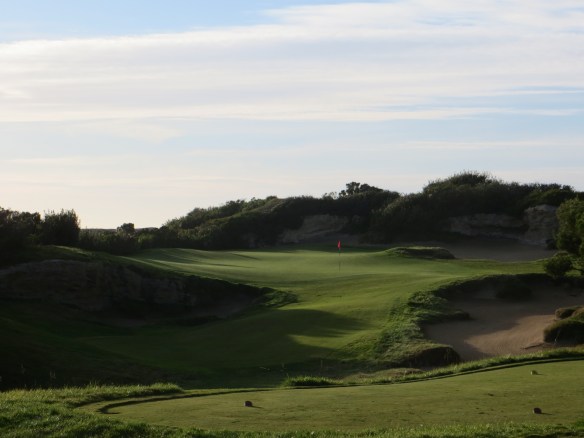
P S #12 Par 3 2

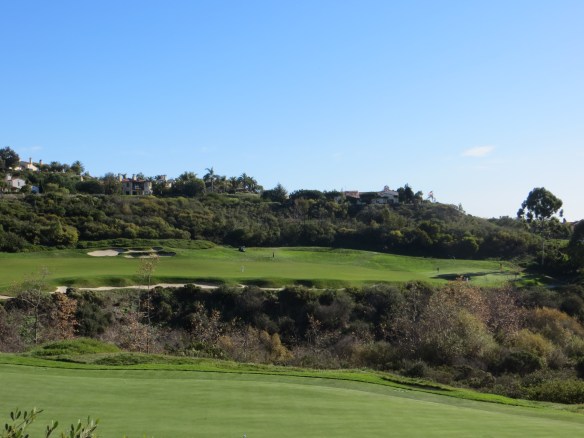
Stunning look of par three #12 against the coastal horizon.

P S #13 Par 3 1

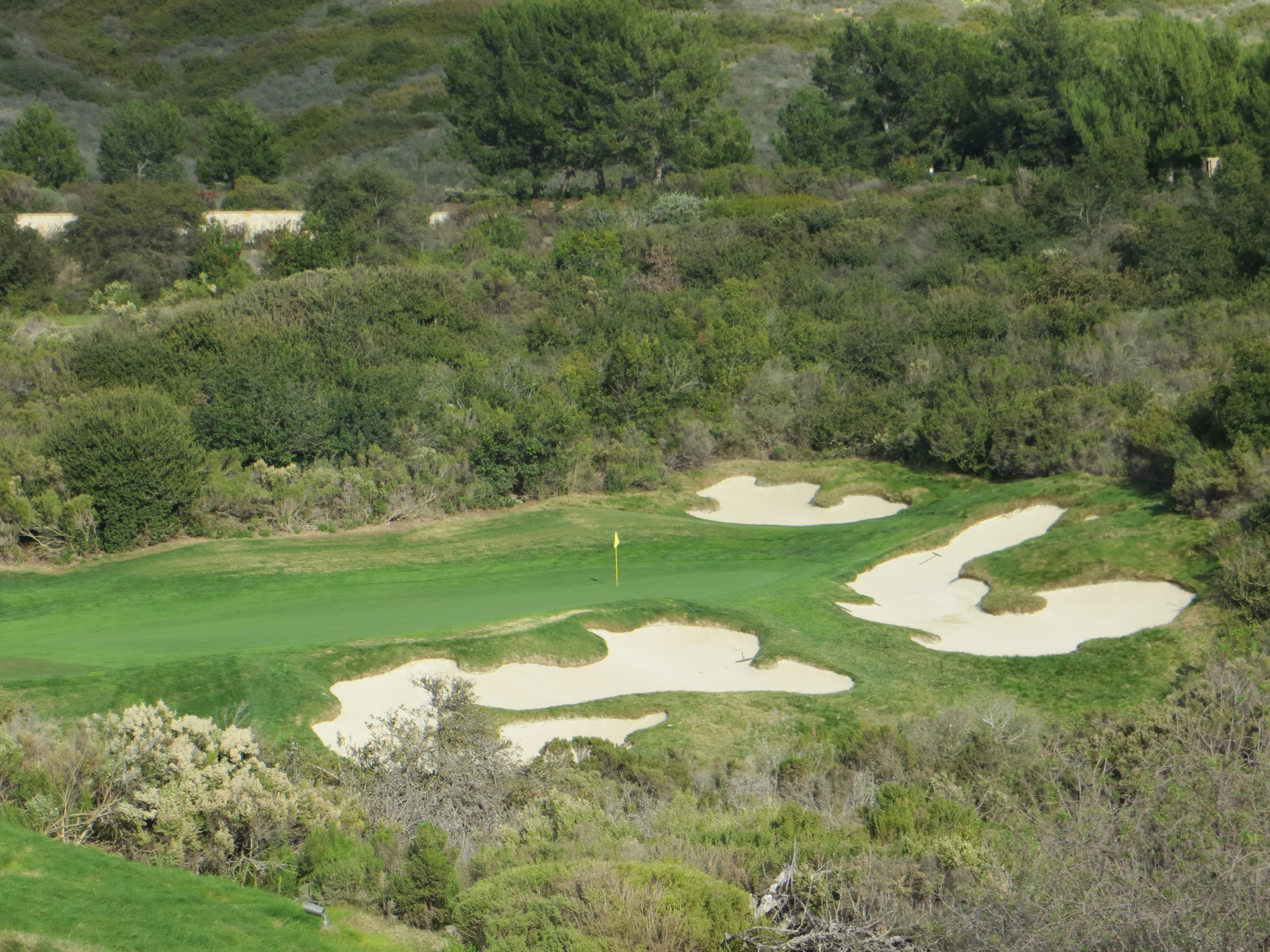
Followed by the par three #13-a canvas of sand, trees, sea, and sky to behold.

Pacific Coast

View of the rocky cliffs and surf a short stroll off the back of #13.

P S #16 Sunset
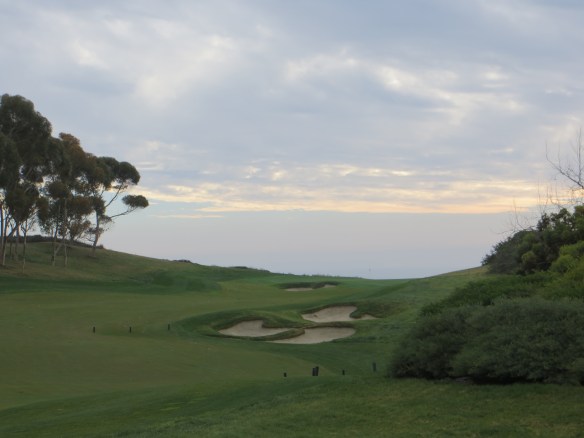
Dramatic sunset behind the 16th is a jaw dropping treat for the late twilight tee times.

(Click to read the full course review of Pelican Hill Ocean South)

(Click to read Postcard From Pelican Hill Ocean North)

December, 2012

Polarization

The hay, gorse, and ocean at Bandon is not for everyone.

The hay, gorse, and ocean at Bandon is not for everyone.

Mike Keiser likes to say the “Retail Golfers” are the seven handicap and above guys who will travel to anywhere to play a golf course from the Golf Digest 100 Best List. They do this so they can return to the grill room at their home course and brag that they have just played the latest from Doak, Coore-Crenshaw, Nicklaus, Dye, or maybe a classic of the Golden Age from Tillinghast or Ross. The more peer envy then can engender the better.

But as Thomas Dunne, the accomplished golf travel writer, articulates in this article from Links Magazine the opinions on many of the top courses are by no means universally positive. Truth is the most famous courses in the world, St. Andrews, Muirfield, PInehurst #2, and TPC Sawgrass for example, can render the highest praise from some and the greatest disdain from others.

Sometimes it is circumstantial-the weather was lousy or the wind was up at Whistling Straits making it a virtually unplayable experience. They got goaded into playing the macho tees at the Ocean Course which would make it even more Dye-a-bolical than it really is. The course simply does not fit the eye or strengths of their game-they hit it long and the tight driving areas at Harbour Town take away that advantage. Or maybe, in spite of all the hype, the great course just doesn’t present spectacular. Pinehurst #2 has few memorable holes, St. Andrews looks like a moonscape, or Seminole is just another Florida course.

Dunne points out that great holes, great courses need to be played a number of times before they grow on you. Alistar MacKenzie said, “My experience of really first class holes….is at first sight excite the most violent spirit of antagonism….only after being played many times that the feeling of resentment disappears.”

Keiser’s intuition is correct though in that people will seek out the most reputable courses as must plays for their bucket list. Whether excited or disappointed by the experience it is the post play controversy with their friends that keeps the discussion, reputation, and the lure alive.

(Click to read Thomas Dunne’s Links Magazine article “The Polarizers”)

Thomas Dunne

Links Magazine

Fall, 2012

Pacific Dunes Golf Course

Pacific Dunes LogoIt was Mike Keiser’s intention to provide a visitor to Bandon the full monty of the British Isles links experience.  In the designs of Bandon Dunes and Old Macdonald the Scottish flavor of links golf is well served.  At Pacific Dunes Tom Doak has composed a more Irish feel with bold topographical holes accented with dramatic bunkering of Royal Country Down and more subtle craggy wind-affected holes like Ballybunion.  Doak is a true student of the links tradition and brought the full force of his knowledge and talent to the creation of Pacific Dunes.  It stands by itself as an original collection of imaginative links challenges specifically suited to the seaside tract he had to work with at Bandon.

The links formula of high tees set in the dunes hitting to low landing valleys and then back up to greens perched on ridges of the dunes makes each hole a defined envelope, almost a world of it’s own.  This is not a cloistered feeling of playing in alcoves like at Waterville, Portrush, or Lahinch just holes visually defined where the strategic options are right in front of you.  Tall dunes faced in gorse, sea grass, and trees fill the canvas, firm bouncy turf allow roll out under the wind, harrowing blow-out bunkers define playing lines, and large contoured greens facilitate effective ground management of approach shots.  The firm turf and wind effect, probably the most pronounced of the courses of Bandon, put a premium on managing your trajectory and roll out to get around with your scorecard in tact.  If the wind is up I would go for the 133 slope for the day-the challenge will be sufficient I can assure you.

Bunkers on Par 3 11th are fearsome

Bunkers on Par 3 11th are a fearsome thing to behold.

Besides the wind the most talked about feature at Pacific Dunes has to be the fierce bunkering.  It may seem hard to believe but the depth and severity of the bunkering you see now is not what was originally intended.  As Doak operatives will tell you, once the bunkering is done on a seaside venue like this with battering winds almost every day, nature will have it’s way and the bunkering contours will take on the natural shape and severity of the dunes around them.  Best advice is plan to play the gaps between the bunkers and be cognizant of the prevailing roll out which may feed a ball without firm intent into their grasp.

Full links elements on display on the opening hole.

Full links elements on display on the opening hole.

Much like all the courses at Bandon, the use of fescue grasses in high concentration on fairways and greens makes it extremely difficult to make the visual distinction of where the fairway ends and the green begins.  But this facilitates the use of low running pitches and the Irish wedge, putting from well off the green, which will be valuable tools in your arsenal out here.  Familiar to those who have played links courses across the Atlantic, the large and flowing contours of these greens help the green staff set up the course for the prevailing wind of the day.  If the hole is downwind they will tend to give you a deep pin and plenty of green to temper your approach.  In the upwind condition front pins and interior backstops in the green are useful.  The most important is to listen to your caddie on how to use the ground contours to your advantage. It is often the case that a diversionary line is the best way to get it close to your target.

The coolest part of this design has to be the unusual balance of holes and the hole sequencing, Doak was not bound to any normal formula we are used to.  The par is 36 on the front with just one par three and one par five.  The par 35 on the back nine starts with back-to-back three pars and then followed by two more par threes and three par fives in the next seven holes.  There are only two par fours on the inward nine so without a normal hole balance you are jumping from pillar to post the whole way home.

The views can be downright distracting as you can see behind the third green.

The views can be downright distracting as you can see behind the third.

The opening holes are a quick introduction to the strategic genius of this design.  The first three holes make it clear that you will get no slow build up to the challenge-you have choices of playing lines that require confident decisions and competent execution right out of the gate.  As you climb the hill to the third green the imminence of the effects of the sea are cascading from over the back edge.  Walking to the back of this green the panoramic view of coast of Oregon is unveiled and it is nothing short of overwhelming.  Full coastal distractions affect the play on four as you tight rope walk the cliffs on one of the hardest par fours of the day.  The short fifth has Royal County Down written all over it with a hidden landing area and deep greenside bunkers with eyebrows.

Links and North Carolina collide on the approach to the 7th.

Links and North Carolina collide on the approach to the 7th.

The ensuing inland holes might be considered a wee bit of a rest if they weren’t so hard.  You are in for  a bit of North Carolina with a tree lined hallway fairway on seven and a crowned green on eight.  After a blind tee shot over the dune ridge at the ninth what unfolds is the dramatic walk back to the edge of the world.  The hint is evident standing on the ninth green that things are about to change again.

First of back-to-back seaside par 3s that start the inward nine.

First of back-to-back seaside par 3s that start the inward nine.

He must have had a bit of Cypress Point in mind as the back side begins with two very difficult seaside par threes.  Carding a total of eight strokes between them is no embarrassment.  Ten through thirteen you will need to be lashed to the mast to survive.  An alcove wind greets you on the tenth tee and will have it’s way with your tee ball if you don’t control your trajectory and turn it into the breeze.  The eleventh is one of the most rigorous short pitch three pars you will ever play-a teenie putting surface surrounded by furry looking mounds and sand pits full of disaster.  A brief respite on twelve but thirteen is probably as fierce a seaside par four as you will ever play, especially into the prevailing breeze.  The scale of the dunes to the right of this green dwarf the playing area-it is hard to focus on the task at hand with that looking over your shoulder.

The target on #16 is a sliver of green hanging perilously over a chasm.

The target on #16 is a sliver of green hanging perilously over a chasm.

As you traverse the dune ridge to the fourteenth tee you are afforded some protection from the breezes but the inland finish is very strong all the way to the house and will test your patience until the last putt falls.  On fifteen and sixteen he used the topography to throw you off balance.  The sixteenth is played over a fairway with heaves and plunges that will make you think you are in a Herman Melville novel.  The green sits like a plank jutting off the bow of the ship, getting it on there and keeping it there is a tall order.  If you are lucky enough to play in the spring an amphitheater of blooming gorse awaits you on the Redan style seventeenth.  Don’t be too distracted by the floral backdrop because the golf challenge is once again very real.

A version of the Redan at 17 surrounded by gorse laden dunes.

Much like the opening holes the finishing hole speaks to the genius of the Doak design team.  What should be a manageable serpentine five par is fraught with sand pitfalls and gnarly vegetation.  Picking good lines and hitting articulate shots make it a routine three-shot hole but any wayward sway of the ball can bring a bad aftertaste to the beer awaiting above the 18th green.

It ends as it starts with fear blended with visual poetry.
It ends as it starts-fear blending with visual poetry.

In a place where every element of the golf inventory is first rate this one probably has the hallowed place at the top of the pile.  As with all of these links courses the medal score is tertiary to sporting a good match and enjoying the glorious surroundings that Doak has enhanced with his clever design.

Bandon, Oregon

Architect:  Tom Doak (2001)

Tee                  Par     Rating     Slope   Yardage

Black               71        73           142       6633

Green              71        70.7        133       6142

Orange            71        69.8        128       5088

(Click here to review Pacific Dunes Golf Course hole-by-hole descriptions)

For more Pacific Dunes images click to see Postcard From Pacific Dunes-Day 4

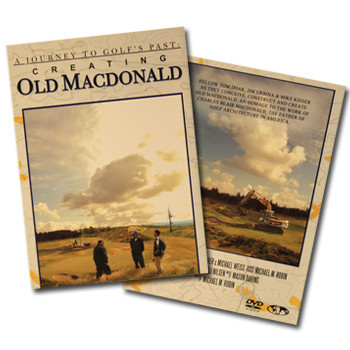
Creating Old Macdonald

You ever sit around after playing a wonderful golf course for the first time wondering how cool it would be to play this gem with the course designer so you could understand what was going through his mind. Well if that course was Old Macdonald at Bandon Dunes then your wish has come true.

Creating Old Macdonald

With the considerable filmmaking skills at work of Los Angeles producer Michael Robin, the DVD “A Journey to Golf’s Past: Creating Old Macdonald” is packed with intimate goodies on the conception, planning, and creation of the latest links offering at Mike Keiser’s Bandon Dunes resort.  For the golf junkie and armchair course architect this is like manna from heaven.

Old Macdonald was the brain child of Mike Keiser who wanted to build a little bit of Scotland in America and honor the genius of C.B. Macdonald the father of golf architecture in America.  With the help of the foremost American expert in links design Tom Doak and his valued associate Jim Urbina they set about gathering characteristics of holes that C.B. had done through his career and composed the best of them into the glistening collection holes that make up Old Macdonald.

The feature presentation is over an hour of interviews with all the protagonists of the project covering the processes of planning, design, and execution of the course construction. The interviews with Mike Keiser give you real insight into his thinking as he has stewarded ambitious golf projects like Bandon Dunes.  It also includes vivid footage of the holes at Old Macdonald as well as their counterparts at St. Andrews, North Berwick, Prestwick, Yale Golf Course, and The National Golf Links.  Doak walks through the characteristics of the original holes at these venues and his interpretation of them in the new holes in Bandon.

There is also detail about construction challenges and techniques when it comes to building a links golf course.  Whether it is hand raking fairways to get them just right, feathering the final contours of the massive greens, or building a sod wall bunker one row at a time this is fascinating to watch.

As is the case with all these DVDs there are some extras to add value to your purchase in the form of “special features”.  The coolest extra is a hole-by-hole tour of the 18 at Old Mac with Tom Doak as your guide.  This is like having a video yardage book with the designer as narrator.  If you have played the course you will find this feature very enlightening.

For ten bucks plus shipping you can find this DVD on the shopping portal of the Bandon Dunes website.  The quality of Robin’s video and production along with the ethereal Scottish sound track by Mason Daring make for a very enjoyable and informative walk through the creation of Old Macdonald.

A Journey To Golf’s Past

Creating Old Macdonald

Michael Robin (2011)

(Click to read the moegolf review of the Old Macdonald Golf Course)

moerate4

Old Macdonald Golf Course

Old Macdonald LogoAs the fourth course built at Bandon Dunes Tom Doak and Jim Urbina had probably the hardest task yet because of the fact they were being asked to add to a family of courses all in the top 100 in the country and they had to do it on the least desirable piece of the really desirable land for links courses.  Bandon Dunes and Pacific Dunes had used up just about all of the available seaside land so there was no way to build holes with the tactical drama and adrenaline rush of the shoreline holes that give those two tracks their character.

This piece of ground is a sprawling tract wedged between two massive dune ridges-there is only one corner with a clear view of the shoreline-so the holes they would construct would have to find a character value in another way.  The good news is they had the sand based soil for links golf and the proximity to the ocean just over one of the ridges so wind influence would be there to facilitate creation of a more sublime but equally interesting links golf challenge.

There is mystery in the valley that contains Old Macdonald

There is mystery in the valley that contains Old Macdonald

After serious consideration Mike Keiser came upon the idea of creating a course that celebrates the best of the British Isle influence on links golf.  Something that is a bit of St. Andrews, a bit of Prestwick, a bit of North Berwick and Lundin Links and Littlestone and many others from Scotland and Ireland.  They then reached further and decided to celebrate a formula used by the father of American golf course architecture, C.B. Macdonald, and build holes that did not replicate the great holes of courses like these but used characteristics of those holes to create unique holes that shared the unique character and playability.  In doing so they did the double mitzvah of creating a testimony to Scottish links golf and a homage to C.B. Macdonald’s genius at the same time.

#13 Leven is a short Par 4 with a shelf green jutting out of the side of an office building dune

Once settled on the Macdonald approach Keiser hired the only man other than C.B. Macdonald who was suited for the task.  Tom Doak is the most recognized American expert of links course design having studied it first hand in Scotland and Ireland, built a photographic catalog and knowledge base second to none of the original holes, and studied in detail the careers of guys like Mackenzie and Macdonald and their approach to course design.  With the trusted hand of Jim Urbina at his side, someone who has helped Doak build some of the most memorable links courses of our generation around the world, they set out to build a little bit of Scotland in Oregon.
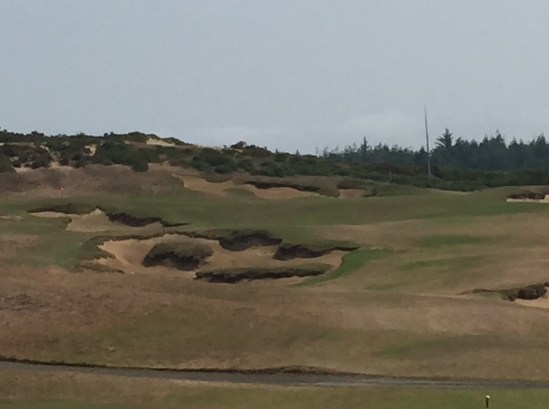
#14 Maiden is a CB Classic-this version is very snarky if you drive out of position for the day’s pin

As you can read in the book “Dream Golf-The Making of Bandon Dunes” or see in the DVD “Creating Old Macdonald”  these guys had a huge task in trying to meld into 18 holes a seamless presentation of many of the great holes C.B. Macdonald emulated repeatedly in the 12 courses he built.  The granddaddy of them all for C.B. was the National Golf Links he built on Long Island in 1910 that remains in the top 10 of just about everyone’s list. The National has representations of the Eden (St. Andrews), Sahara (Royal St. Georges),  Alps (Prestwick), Redan (North Berwick), Road Hole (St. Andrews), and many others with less familiar lineage.   It was Doak and Urbina’s aim to use many of the characteristics that Macdonald used for his versions at The National as templates in fashioning what we see at Old Macdonald.
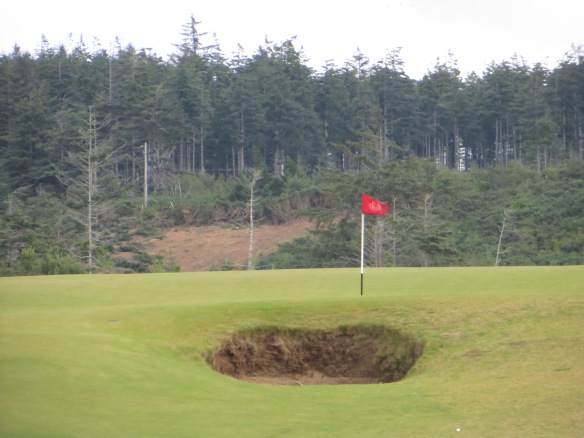
Your tee shot must circumvent the

Your tee shot must circumvent the “Strath Bunker” on Eden (#2)

The result is a wonderfully playable walking course with the full panoply of Scottish links elements presented in a seamless flow of holes meandering across hollows and hummocks set against a backdrop of tall gorse covered dunes.  Unlike at the other courses at Bandon the gorse and the tall grasses are well off the playing area so you will find plenty of room to play your shots and a very easy time finding your result.  You can likely play the entire round with the same ball which reduces anxiety considerably.  It may lack the visual drama of it’s flashy neighbors across the dunes but they integrated all the mystery and intrigue of Macdonald’s work to create a challenging links experience that the discriminating golfer will savor and enjoy every time they play it.

Of the four courses at Bandon this is the one with 100% fescue grasses throughout-tees, fairways, and greens.  This is the tightest grass and most appropriate for links golf.  Because of the flowing contours they created and the fact the grass does not vary throughout it is almost impossible to distinguish where fairway ends and greens begin.  The exposure to constant wind from the nearby Pacific helps the turf plays dry and fast and balls roll forever following the contour of the ground on what seems to be an almost existential path.  As a result the full collection of trajectory controlled shots that use the ground and slopes as an ally are the way to get the best results around here.

Hell Bunker on #6 is no place for the timid.

Hell Bunker on #6 is no place for the timid.

The bunkering is similar to the Bandon and Pacific, mostly scabby jagged blow-out bunkers that look like they are more the creation of nature than the hand of man or machine.  Doak threw in a few punitive sod wall pots on his versions of Eden and the Road Hole along with a generous helping elsewhere of very intimidating bunkers with vertical railroad sleepers shoring their faces.  They paid special attention to the slopes around the bunkers that will feed insufficiently enthusiastic approaches into them.   Just as the Eden hole feeds the Strath Bunker or the Road Hole feeds the notorious Road Bunker at St. Andrews,  these holes at Old Mac will make you plan and execute with intent to avoid anxiety.  It is safe to say that if you want to score well here it is key to navigate your way about Old Mac without spending much time getting sand in your shoes.

Probably the most authentic Scottish feature at Old Macdonald is massive greens with imaginative contours.  This is a result of trying to make many of the green complexes similar to their originals.  The green at the Short Hole (#5) with three distinct segments and a huge wall at the back to play off is something you will find at 6th at The National.  The slope on Eden (#2) will feed a shot back toward the front of the green to pins set above the Strath Bunker just like it does at St. Andrews.  The contouring of the green on Long (#6) replicates precisely the imaginative green on the 14th at St. Andrews and it dictates a low pitch and run approach from the left .  The long and narrow ribbon of a green on their version of the Road Hole makes for the familiar agonizing possibilities playing delicate pitch shots to save par.  The scale of these green complexes puts a huge premium on keeping your focus on the 25 feet of green between you and the hole and ignoring the acre and a half of green around you.  If your mind wanders three putts will invade your scorecard.
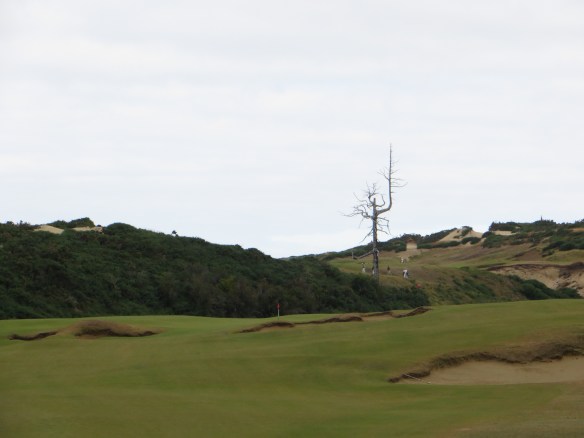
First hole is open and expansive..but choose your path wisely.

First hole is open and expansive..but choose your path wisely.

The expansiveness of the course presents itself on the first tee where the driving area seems to invite you to hit it anywhere.  But as it is on links courses across the pond there is a precise angle of advantage depending on the pin location of the day on this massive putting surface.  The green is over 50 yards deep and just seems to emanate out of the fairway-the lack of definition of target is something you better get used to.  After a technical interlude of the Eden and the fearsome Strath Bunker on the second hole, Doak will jump you over the dune ridge on number three with a blind tee shot past a haunting Port Oxford Cedar from which the bulk of the course will spill out below you.  From here the scale of the challenge for the day becomes apparent.

A severe climb to the perched green overlooking the Ocean on #7

A severe climb to the perched green overlooking the Ocean on #7

The holes meander about this valley but they are far from lacking distinguishing topography.  Holes like Ocean (#7) will abruptly wisk you off of the valley floor straight up the face of a dune to a green perched staring out over the Pacific Ocean.  This is a good example of the subtlety of Old Mac-the shot up to this green needs to be of measured trajectory to manage the strong wind influence you cannot feel from the ocean side of the dune.  With a low shot of intensity required you must use the high back contour of the green to contain your shot and remain on the green.  On the Cape (#9) you are playing a long second shot downwind into a green sitting slightly above you with unfettered access.  Here the green is over 40 yards long to accommodate the roll our of a low running approach.  Great links holes give you the tools to deal with fast turf and windy conditions, you just have to use your head and your hands to play shots to be successful.
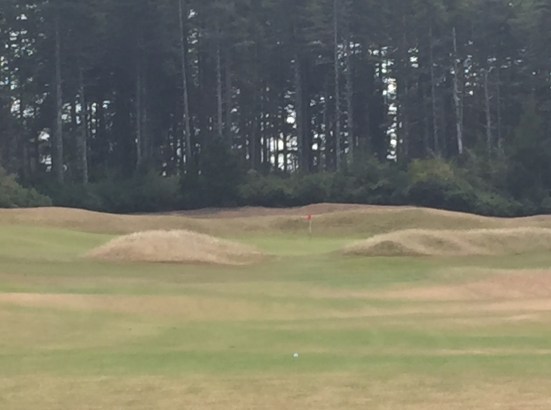
18th is the Punchbowl..green gathers everything once you pass through Dolly’s Gate

There are eighteen chapters of delight on this course, many of which will seem very familiar to you from your own experiences in Scotland or images you have retained from watch the Open Championship on television.  The devil, and the delight, is in the details which you will find attached.  To fully enjoy Old Macdonald get yourself a good caddy, check your ego at the starter’s hut, and be prepared for an invigorating walk through a museum of C.B. Macdonald treasures.

Bandon, Oregon

Architect:  Tom Doak/Jim Urbina (2010)

Tee                  Par     Rating      Slope    Yardage

Black               71        74.1        133       6978

Green               71        71.3        127       6352

Orange             71        70.4        118       5044

(Click to read complete Old Macdonald hole-by-hole descriptions)

For more Old Macdonald images click to see Postcard From Old Macdonald-Day 3
The Future Is Now

A number of high end private and resort courses like Oak Hill in Rochester, Somerset Hills in N.J., The Country Club in Brookline, Mass, Royal Oaks in Dallas, Long Cove in Hilton Head, Bandon Dunes in Oregon, and others have broken the mold and allowed the use of hand carts at their facilities setting a new precedent in support of the health and well being of their members and patrons.  For anyone who has travelled across the pond you know that walking with “trolleys” is part of the fabric of golf throughout the British Isles.

Other courses around the nation are starting to change their view that hand carts  are pedestrian and allow those playing their courses to get the full benefit of a good walk spoiled without continuing to stipulate they carry their own bags.  For the over-50 crowd the orthopedic price of carrying for 18 holes can be a deal breaker.

A happy protagonist of change at our place.

Our club, Woodmont Country Club outside Washington, D.C., has recently followed this lead with the bold step of instituting a test program allowing our members to walk our golf course with the assistance of hand carts.  As you can see from this picture we still have our standards-we insist that our members wear traditional golf garb and have fun while they are out there.

Private clubs steeped in tradition will continue to resist this change.    In our health conscious society it swimming against the tide to deny people the pleasure of the golf walk and the calorie burn that goes with it.  Those clubs with progressive views that support the best interests of their members will soon realize that the future is now when it comes to modifying their stance on this issue.

December, 2012

Scotland-Where Golf Is Great

Where Golf Is Great

Whether you want to take sentimental memory walk through a recent trip across the pond or help  planning the trip of your life to the home of golf next summer, James Finegan’s “Scotland-Where Golf Is Great” belongs on your coffee table. This is the seminal work of the most informed American golf writer on the subject of golf in the British Isles.

Since his first visit in 1952 he has traveled the to Scotland over 30 times playing the great and the unknown courses across the length and breadth of the country.  With his wife Harriet he spent a dozen summers renting a flat overlooking the splendor of St. Andrews and played the Old Course more than 100 times.  A low single digit player he has developed a keen understanding of the nuances and pleasures of links golf in the old country and shares it with the rest of us in this fine book.

His writings herein on the golf courses, accommodations, and sights of interest in Scotland are second to none.  The presentation is further embellished by the breathtaking golf course photography of Laurence Lambrecht (author of Emerald Gems)  and the images of sights of interest by Tim Thompson.

Through his lens you can experience the uniqueness of the golf experience of over 90 courses in Scotland.  Finegan takes you on a counterclockwise tour that begins at the Kingdom of Fife with St. Andrews and Carnoustie, meanders north to the gems of the Scottish Highlands from Cruden Bay to Royal Dornoch, back down the west coast to the remote island outposts of Machrihanish and Machrie, on to west coast treasures of Loch Lomand, Royal Troon, and Turnberry, and finishing with the East Lothian Coast  home of North Berwick, Gullane, and the storied Muirfield Links.

From his pen:

The Old Course: “The most useful tip I can provide … is one you won’t get from a caddie..roughly 80% of the putts are straight, whether from 40 feet or 4 feet.”

Carnoustie: “Puts more pressure on the swing than any course in the British Isles….No
shot is a breather….this is the most confrontational golf course we will ever play.”

Cruden Bay: “Should on no account be missed..(standing) beside the clubhouse and looking down….. in all its turbulent splendor, lies one of the most awe-inspiring stretches of linksland ever dedicated to the game.”

Royal Dornoch:  “We are consistently struck by such a wonderful sense of naturalness as we make our way around…everything simply looks as if it has been this way for centuries.”

Machrihanish:  “The opening hole is…superior to just about every other 1st hole in the world…Our drive is fired on the diagonal across the Atlantic’s waves to an undulating fairway that skirts the shoreline…This is thrilling, tempting, tantalizing business…away we go on a round that will give us enormous pleasure not only as we play it but as we hark back to it again and again.”

Turnberry:  “The next eight holes (starting at 4) are strung out like a necklace, along and above the sea.  If there is any other links course where eight consecutive holes are able to produce challenge of this level and pleasure of this depth, I don’t know where it might be.”

North Berwick:  “For pure golfing pleasure, a pleasure bred of diversity, challenge, unpredictability, proximity to the sea, and the satisfaction of true links shot making, few courses can equal North Berwick’s West Links.  Is it a candidate for one course to play, day in and day out, for the rest of your life? Oh my, yes.”

An invaluable extra for trip planning, Finegan includes experienced recommendations of places to eat and places to stay.  His reviews take you right down to what primo room to request and what delectable dish to order.

Your coffee table is beckoning for this one.  If this book is within reach of your most comfortable reading chair you will find yourself leafing through it regularly to relive the grandeur and excitement of the links experience.

Scotland-Where Golf Is Great

James W. Finegan (2006/2010)

moerate5