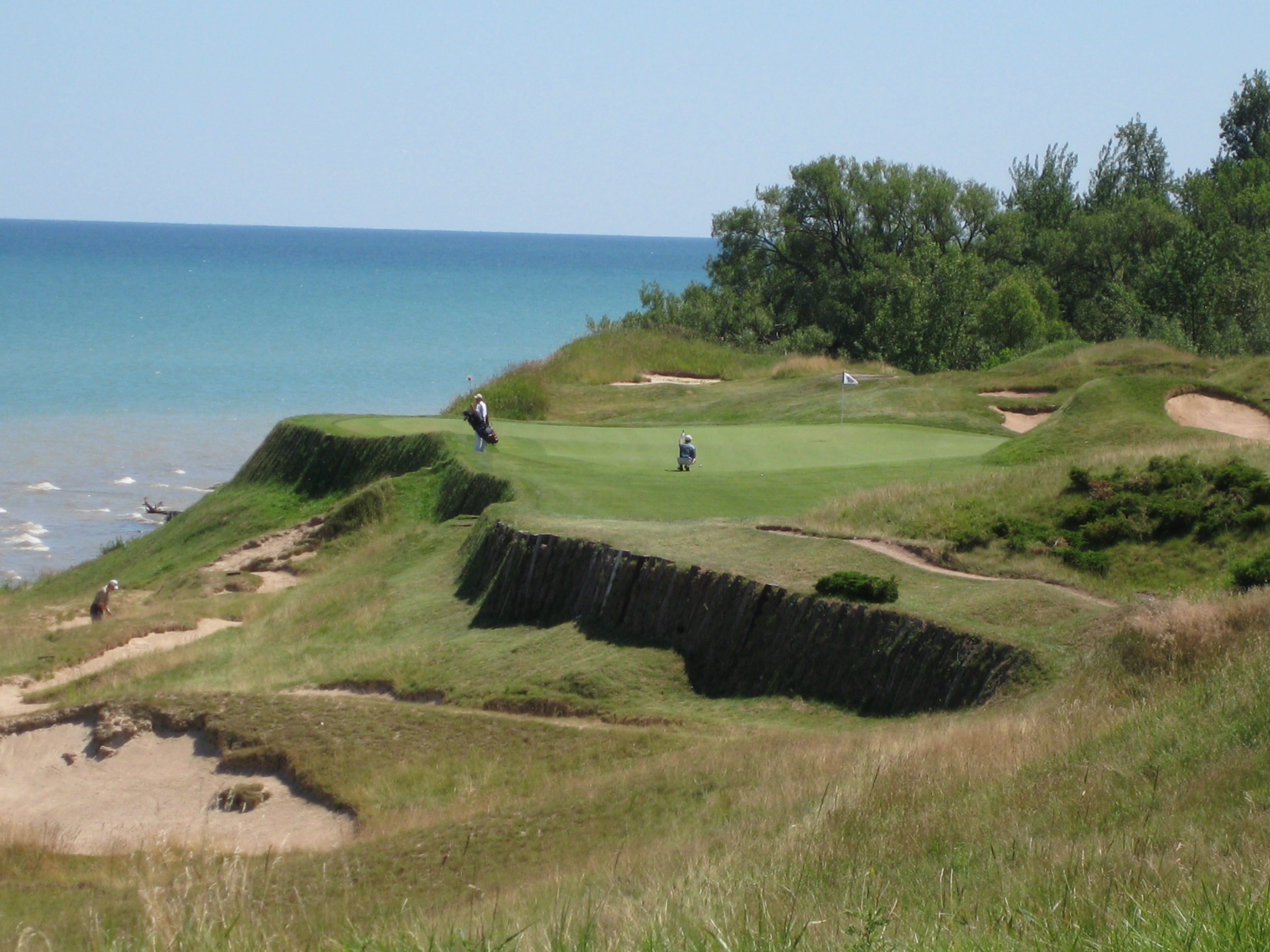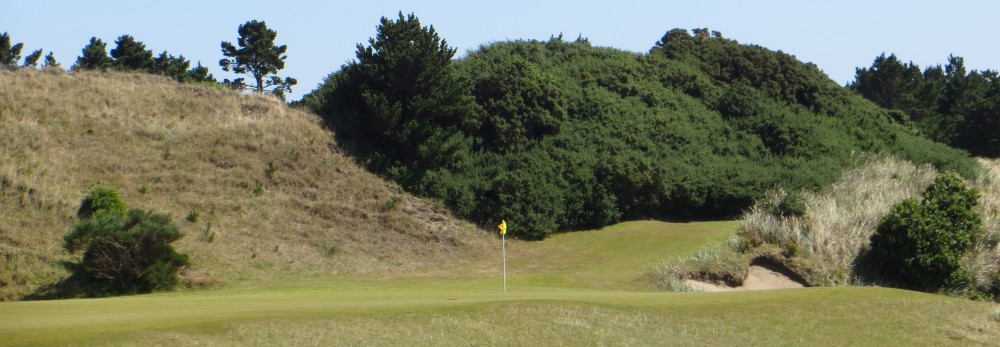
Pasatiempo Golf Club

Pasa Logo TopIt is impossible to separate the character of this course from the reputations of entrepreneur Marion Hollins and renowned architect Alister MacKenzie, two seminal characters in the introduction and development of west coast Golden Age golf courses of the 1920’s.  The two joined hands at Cypress Point setting a standard for what this area of the country could produce and their relationship was solidified with the development of what would become MacKenzie’s home course-Pasatiempo.
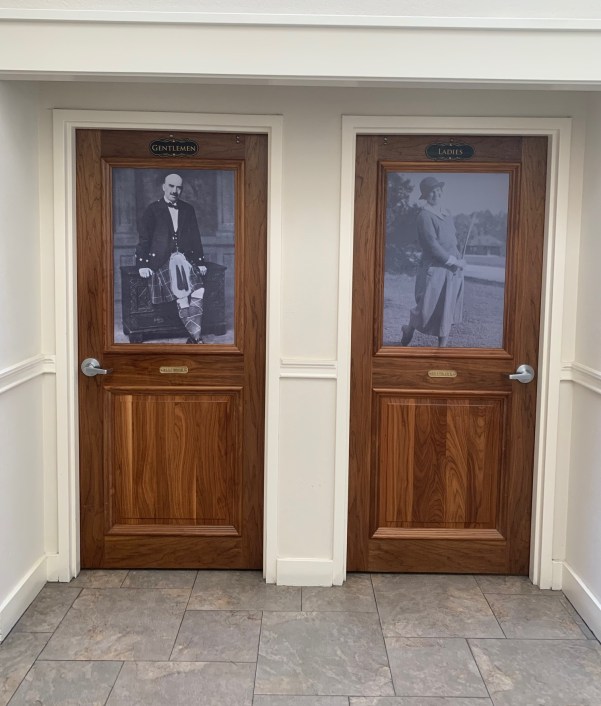
Pasi Restrooms

Dedicating the loos is an odd way of honoring the memory of these two larger then life characters who made this place possible

Marion was also responsible for introducing him to Bobby Jones, who would eventually tap Mackenzie to build his most famous creation of all in Augusta, Georgia.  But seeing that MacKenzie lived here and tweaked the course right up until his passing one has to look at Pasatiempo as his swan song to the use of perception and deception in making so many great courses over his career.

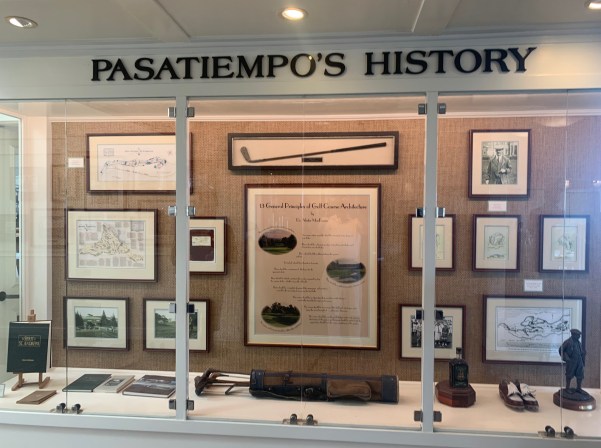
Pasi History

Plenty of history grace the walls and showcases through the clubhouse

Many of the great California courses like Riviera, Bel Aire, LACC, Pebble Beach, Cypress Point, and the Cal Club used the unique rolling terrain, prevalent arid conditions, and sandy soil to present a strategic version of golf where the movement of the ball initiated by the ground would determine success or failure in their play.  We rarely hear the use of the term barranca in relation to golf architecture outside of this region, but in many ways these deep recessions created by nature of scrub, rock, and sand-often just dry bed streams, are the unique challenge that make California golf what it is.

Western Intercollegiate Past Champions

For over 75 years they have held the Western Intercollegiate and you can see individual champions include Ken Venturi, Johnny Miller, Mark O’Meara, and Scotty Scheffler among others.

MacKenzie combined the use of barrancas with bold fairway undulations, slopy segmentation on the putting surfaces, and wildly diverse flash bunkering to make Pasatiempo the ultimate strategic test of golf.  Power and length alone are no match for careful strategic planning and shot articulation when going around this place.  Set against the stunning backdrops of the California coastal topography, the back nine presents the most varied array of holes that wed these parameters to challenge players of all caliber to be on their best game.

Pasa 2 Approach

You can see the segmentation in this 2nd green makes you work the approach on the ground to get into the right section for the day’s pin position

Looking down the first two holes you get the sense that position off the tee relative to the segmentation of the green propagating varied pin positions is going to matter all day.  When you see how MacKenzie works the slopes within the segmentation of the putting surface it becomes clear that it is not only approach angle that matters but use of the putting surface itself to move the ball into the most advantageous place to putt from.  Three putts are in your day, delimiting them is important to keeping the bogie monster at bay.

Pasa 3 Par 3

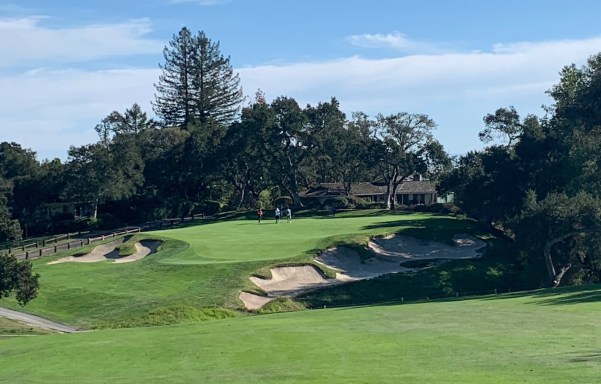
#3 is a Par 3 where your hybrid or long iron must carry the narrow entrance and a false front into a sloped green benched into the side hill

Two par threes in the next three holes that are the 2nd and 6th handicap holes tells you something about how challenging this day is going to be.  The 3rd is a long uphill shot into a precipice green complex saddled by deep bunkers on both sides.  Standing on the tee there is a enigmatic cross bunker that is 75 yards short of the green that will have you scratching your head as to why it is there.  One needs to remember this hole was created in 1929 when hickory clubs were still around and elevating a Cleek on a long par three was not given.

Pasa 4 Par 4

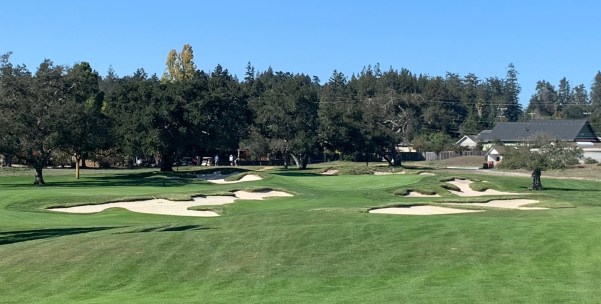
The array of bunkers off the tee and surrounding the green on #4 are emblematic of the MacKenzie style

The 5th is an even longer one-shotter then the 3rd and once again the uphill shot to the green will demand a solid club and a half more to cover the false front and bypass the massive bunker that dominates the left side approach to the green.  The green is a four leaf clover so there are many corners when they can hide the pin.

Pasa 7 Tee

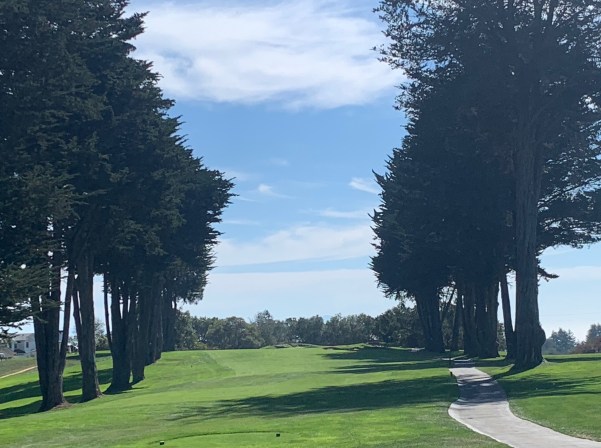
Drive off the 7th has to split the uprights to negotiate this narrow landing corridor.

The 7th and 8th are two really old school holes you just would not see built today which makes them a treat.  The 7th is an appetizing uphill corridor short four which calls for a well positioned tee shot on the left side of the fairway to have a look up a narrow putting surface set on a 7 to 1 angle to the approach area.  The green is segmented with countering slopes so it takes a really articulate short club to leave a birdie putt.

Pasa 8 Par 3

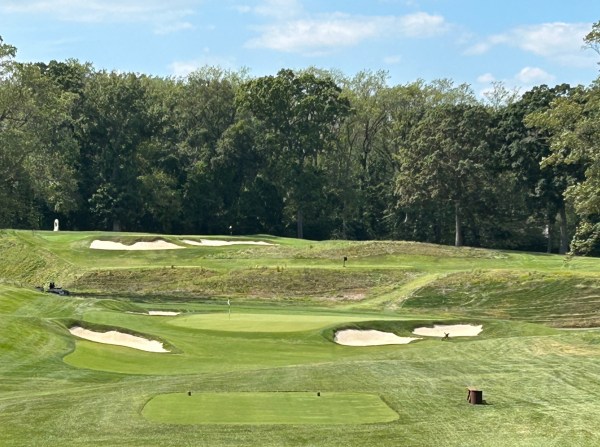
What a look down the hill at the 8th green wedged between steep slide slopes and bunkers to boot. The Par 5 9th is climbing the hill in the distance to the back of the clubhouse deck

As you step on the tee of the Par 3 8th your jaw will drop as you try to take in the parameters of the 45-yard long wildly contoured putting surface that sits at the bottom of the hill in front of you.  If the wind is blowing all bets are off picking the right wrench.  There is a line drawing of this green above the urinal in the MacKenzie men’s room in the clubhouse that depicts all the slopes and counter slopes he designed into this one.  You might wish they handed them out on the tee for reference.  Once your shot alights on the green it will work up the slope and feed toward the back left.  This makes any front pin or back right pin extremely difficult to negotiate.

As you approach the ninth tee make sure to order a sandwich from the call box for the back nine……the barrancas are coming and you will need the protein shot in short order to cope.

Undoubtedly you have played courses where the front nine and the back nine look like brothers from a different mother, like Tralee where you go from banal flat seaside links to the vertical turbulent land of trolls once you step on the 11th tee.  The stark transition here is similar but the distinguishing characteristic is not the topography itself but instead the use of nature’s singular feature,  the barrancas which were intended to capture and move surface water during heavy rains but in their dryer form provide inherent surface movement and magnetic attraction to a ball struck with insufficient intent. What makes MacKenzie’s work so unique is that he fashioned countless iterations of this design element to influence your perception of strategic choices in subtle and not so subtle ways.

Pasa 10 Par 5 Tee

Looking at the required carry off the 10th tee you realize this barranca thing is about to become real and it is going to be unrelenting

Stepping on to the 10th tee the gaping rocky gorge at your feet is actually the simplest of the three interactions you will have with the barrancas on this hole alone.  Once you drive it to the top the hill you feel the pull of the barranca well off the fairway to the left but then MacKenzie ingeniously integrates it into a cleaved array of bunkers and grass you must deal with the last sixty yards to the green.

Pasa 10 Approach

The back end of the 10th the barranca takes on a tamer appearance but the magnetic attraction to roll out is undeniable

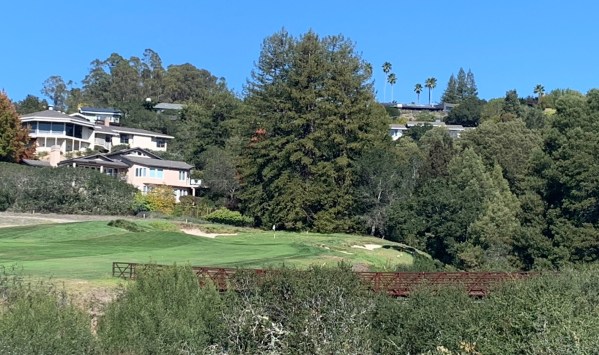
The most in your face barranca experience of the day is on the bifurcated fairway arrangement on the shortish par 4 11th.  The rocky gorge haunts the left of the driving area forcing you to lay up at the end of the driving area just off the entrance to the steel bridge that traverses the chasm.  The hole is now truncated to the left leaving the barranca on the right as you try to carry your approach up a significant incline to a green complex set into the back part of the abyss.  Another narrow, stepped green awaits a long iron or hybrid approach earning this the 3rd handicap designation of the day.

Pasa 11 Approach

This is the harrowing look of the second shot approach to #11 that has to traverse the gaping gorge and find a safe landing spot of a steeply banked green precariously perched above the abyss

The switchback downhill par 4 that follows has the wooded barranca haunting a bad hook off the tee. From the center of the fairway the approach is into a triangular green wedged between bunkers and a fronting dry grassed shallow version of the barranca that will gather a ball with insufficient carry.  You have already experienced six different iterations of the barranca effect in just three holes.

Pasa 13 Approach

The Par 5 13th is probably the tamest hole on the inward half but once again MacKenzie emphasizes the contour of the barranca by lining it with sand as the pathway to a counter sloping green surface

White knuckle time over the next three holes begins on the par 4 14th as MacKenzie ups the barranca effect another notch by presenting it as fairway the left half of driving area.  It is playable from down there but there is a good chance the depression is so deep you will not be able to see the flagstick from your approach position.  A drive in the right half of the fairway at about 140 yards out puts you on a flat stance but the diagonal setting of this long and narrow green means you have to carry the fronting bunkers to get to the flag.

Pasa 15 Par 3

A close look at the Par 3 15th shows a footprint very similar to the 12th at Augusta…just a barranca to traverse rather then a piece of Ray’s Creek

The short pitch 15th is a dry bed version of the 12th at Augusta.  The shallow green sits on the diagonal requiring a delicate forced carry with a series of deep bunkers and grass emanating out of the barranca.  The entire back side of the green is cordoned by a bunker that will contain a long shot but the recovery shot from there is tricky as the green slopes away.  Three here gains a shot on the field.

Pasa 16 Approach

From over 150 yards out this approach into 16 is the most harrowing task of the day. Three steep tiers in this anvil shaped green with bunkers you will need a tow line to get in and out of

MacKenzie was particularly pleased with the challenge he presents on the #1 handicap hole in the next one.  You drive from a low tee up a steep hill with a large mound dominating the right side of the landing area.  The barranca flanks the driving area on the left so anything with too much draw can end up in the hazard.  The conundrum is that the best drive is at the left edge of the large mound which feeds the ball left to a flat area with a good look up the green.  This is the craziest green out of a collection of truly crazy greens in that it is a full 50 yards long with three distinct tiers, the first of which is impossible to keep your ball on.  A humongous bunker will that covers the entire right side of the green will collect any approach with a hint of wandering fade and an up and down from there is highly unlikely.  Good news is the green fans out in the second and third tier which gives a bit of wiggle room for an approach on the long side.

Pasa 18 In Reverse

A look back up from the green on the final hole emphasizes the extreme elevation drop your ball will have to negotiate

One of the most memorable things about Pasatiempo is that it ends on a par 3 that is fully engaged with the deep gorge you had to traverse off the tee on #10.  It is no more than a short to middle iron across but the green is a three clove shape that straddles the abyss and each section has drastic ground movement that makes keeping the ball in the desired section a task.  Getting it on the green is half the battle…putting out in 3 putts or less is equally challenging.

Pasa 18 Par 3

The segmentation of the green itself makes it like three greens. There is so much back-to-front lean to the front barranca that matching speed and break is a three-putt possibility waiting to happen

A bit of an author’s disclaimer, this course is every bit as wonderful as I have described but it is in dire need of a total facelift.  Tom Doak and Jim Urbina did a restoration of the course in 2007 and brought back a number of the MacKenzie parameters that had been dulled over the years.  Urbina will be back starting in the Spring of 2023 to redo all the greens, bunkers, and fairways in an effort to bring this course’s condition and related golf amenities in line with it’s historical expectation.

Pasatiempo Logo

One last thought is that the Pasatiempo logo may be the coolest golf  logo ever…..it looks fabulous on everything.  Make sure to give the golf shop a visit and find something cool to take home to savor your Pasa memories.

Santa Cruz, California

Architect:  Alister MacKenzie (1929) and Tom Doak/Jim Urbina (2007/2023)

Par     Rating     Slope   Yardage

Gold                 70        72.5        141       6495

White               70        70.8        134       6093

White/Green    72        69.5        133       5780

Green               72        68.5        132       5595

Hollins              72        67.0        118       4438

(Click here to review the printable Pasatiempo Golf Club hole-by-hole descriptions)

Postcard From Goat Hill Park

Goat Hill Park LogoIf you are in the vicinity of Carlsbad, California there is a golf destination about 10 miles north, in the surf town of Oceanside, that you should go out of your way to experience.
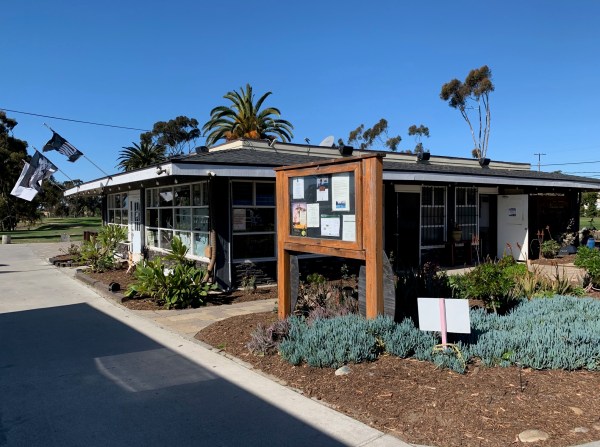
Goat Hill Park has a golf vibe that all municipal golf courses should strive for, including affordable rates, full featured practice facilities, their three-hole “Playground” approach and putt course for kids that actually grows the game, and a unique 18-hole Par 65 executive course that will test your golf skill set and stimulate your senses with panoramic views of the hills of Oceanside and the Pacific Ocean.

Over the years the facility struggled financially and there have been repeated attempts by developers to consume this property for just another commercial or residential development. But the locals have had to foresight to fend them off and a recent revitalization project spearheaded by John Ashworth brought Goat Hill facilities and amenities up to World Class but kept the spirit of the operation in tact to serve the Working Class as their motto indicates.  The result is now a thriving and affordable community resource that all can enjoy on a regular basis.

Golf Shop Front

The community anointed the name Goat Hill because of the severity of the land  Ludwig Keehn had to use to morph an old 9-hole course into an 18-Hole Par 65 short course in the early 1990’s.  General public weekday rates are $42 to walk-$58 to ride and considerably less for members, local residents, and seniors.  Kids can walk for $10 and ride for $17.

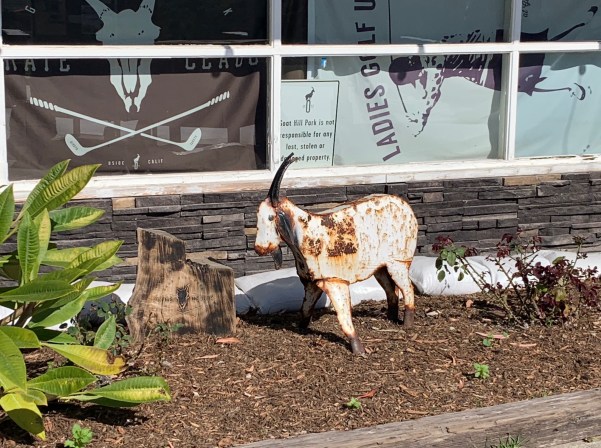
Tin Goat

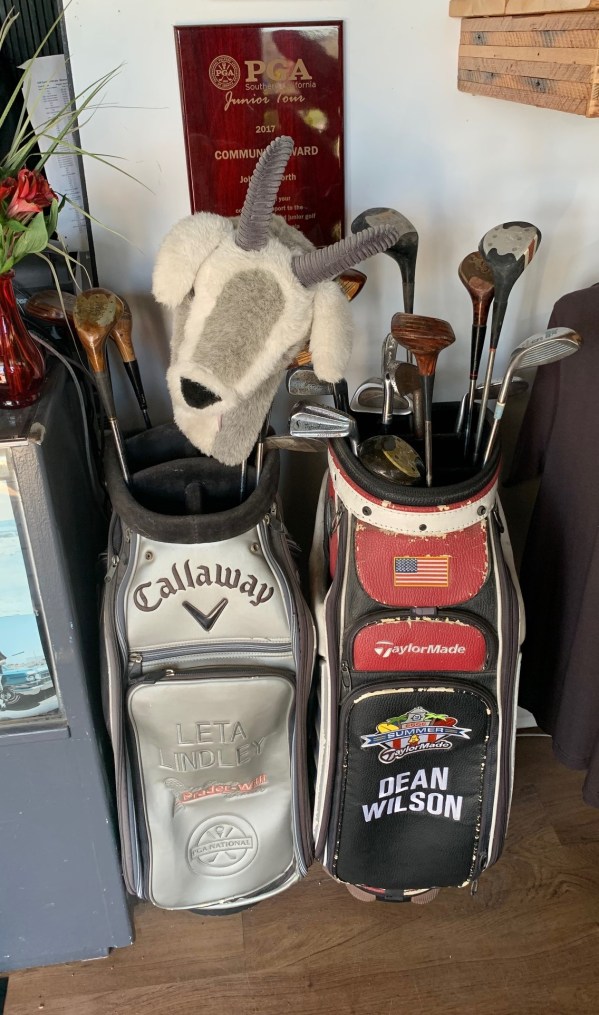
Inside the modest golf shop fit for the working class clientele, you are greeted with all sorts of nostalgic memorabilia including pictures of celebrities like Bill Murray, Adam Scott, Kelly Slater, and others who have frequented this place.  There is also an ample selection of domestic and regional beer at surprisingly affordable prices.

Old Clubs

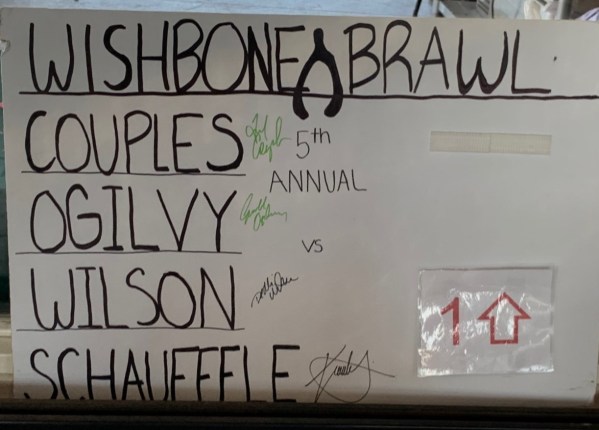
The annual Wishbone Brawl Tournament has attracted some pretty well known professionals to participate….many who live in southern California drop in from time to time to refresh their golf batteries.

Wishbone Scoreboard

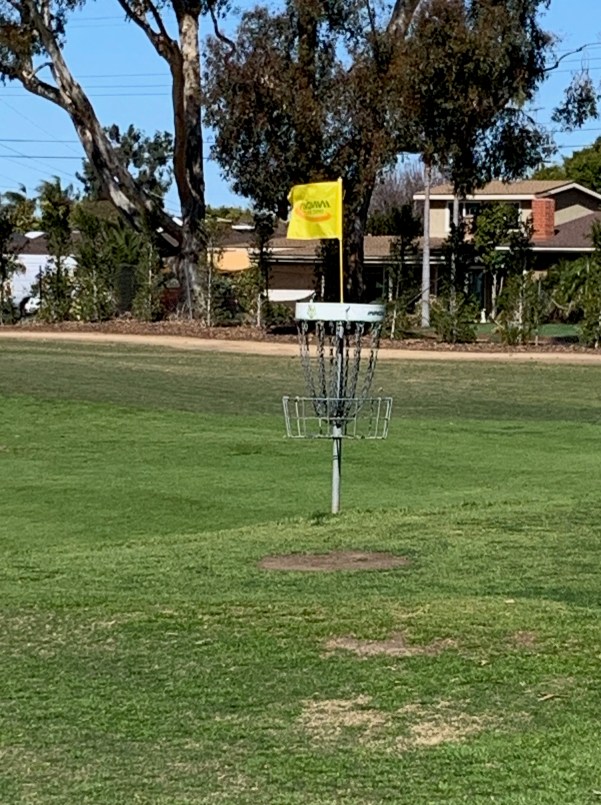
There is a weekly Friday afternoon Skins Games that is a hotbed for locals as well as an array of other robustly attended competitions run through the year.  They have a vibrant junior golf program, a women’s league, and even disc golf for those with that apptitude.

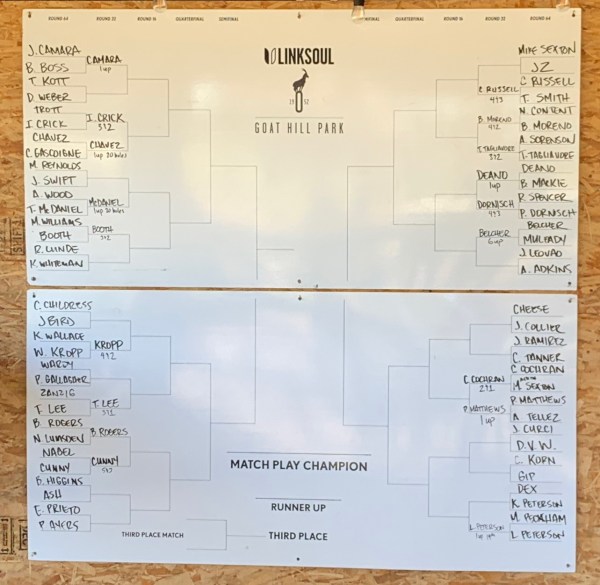
Goat Hill Match Play

Disc Golf Flag

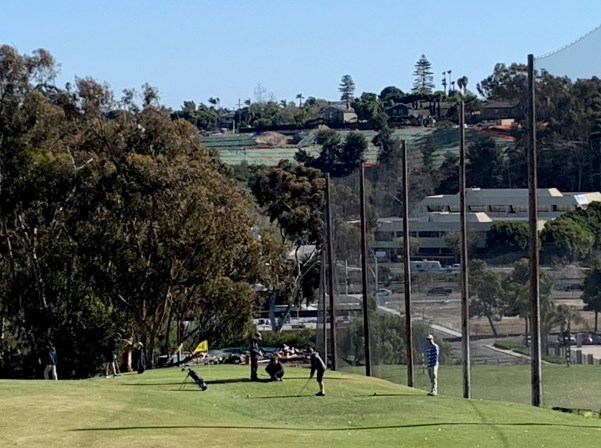
A section of the matted driving range bays feature Foresight Game Improvement Technology but as you can see it is not a Starbuck’s crowd that is hanging about this place.

McCafe Cup

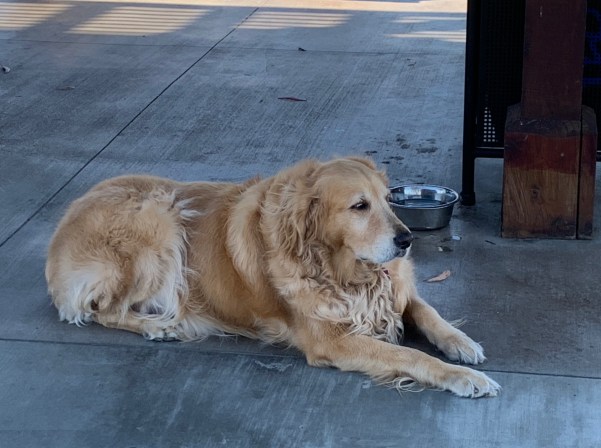
Folks of all ages and backgrounds make use of these practice facilities, some bring along their furry support staff to dutifully oversee their practice sessions.  This one is clearly channeling her inner Sean Foley.

Range Guard

There are three putting greens about.  One large enough for full-fledged short game practice,  a second for remedial putting work, and one next to the first tee for a last minute  warm up before the round.

Goat Hill Practice Green

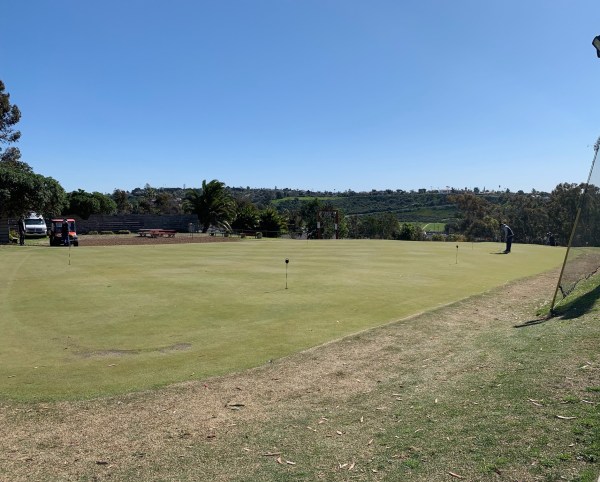
To me the centerpiece of Goat Hill Park is “The Playground”, a three-hole Approach and Putt Course suited for kids (who play for free) or for anyone new to the sport who wants to develop their game.  The Playground has short grass everywhere with sculpted green complexes sprawling across rolling contours…..it is mezzanine golf….actual golf between the range and the course.

The Playground-Kids Course-Gate

Playground Empty

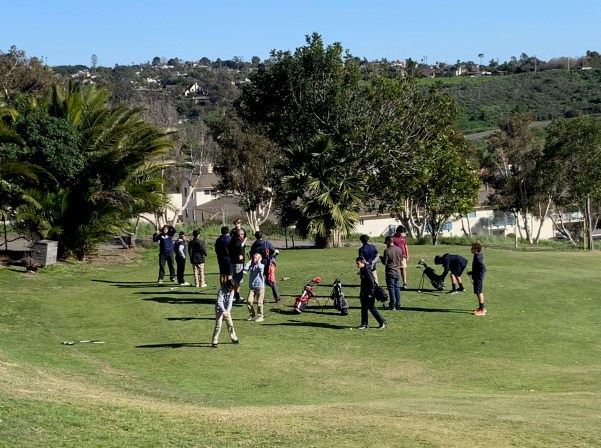
In the middle of the afternoon you can see hordes of youngins chirping and frolicking about in a real party atmosphere that encourages exploration, experimentation, and refinement of their developing golf skills….or simply having fun.

Playground #1

Playground #3

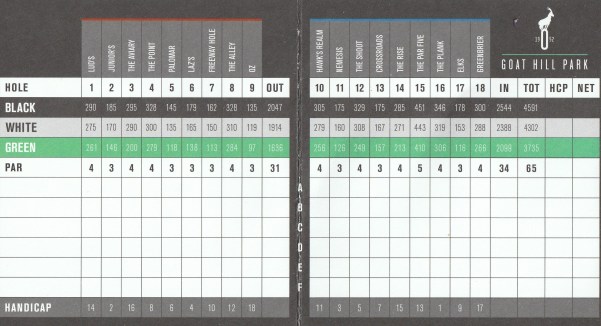
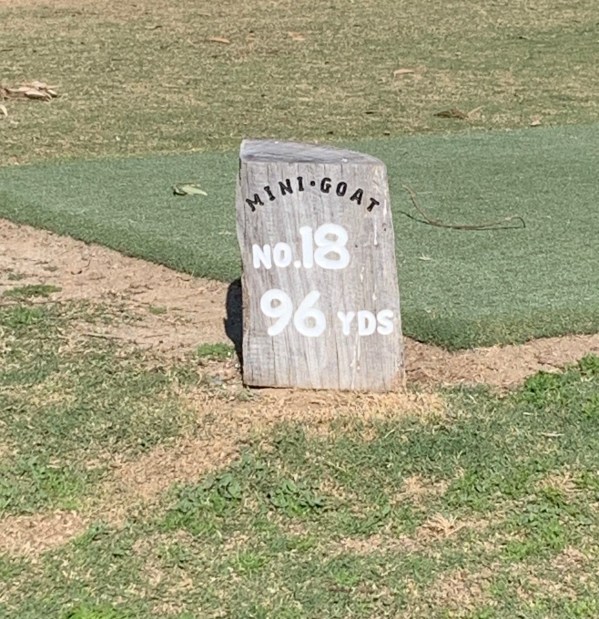
Then there is the real course, a hilly, rambling roller-coaster affair.  8 Par 3’s, 9 hybrid Par 4’s, and 1 not so Par 5 with kitschy names will test you, taunt you, and eventually give you a few reasons to come back again.  Multiple sets of tees for folks of varying ability and a special forward tee that makes up the “Mini-Goat”…..an approach and putt derivation for those who find the many uphill holes a mountain too high to climb.

Goat Hill Park Scorecard

Tee Stanchion

Mini Goat

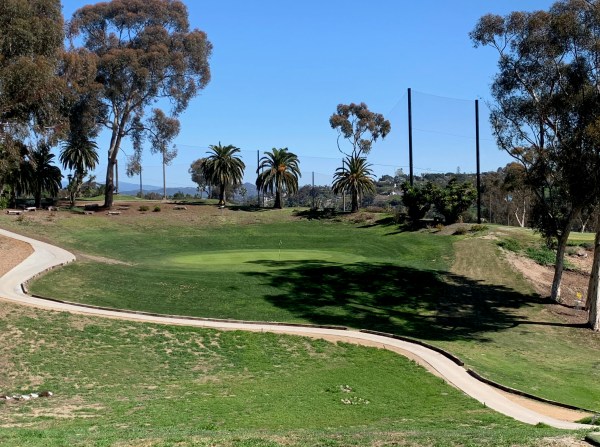
There is good grass where it matters and no grass where it does not (which saves on maintenance and makes finding an errant shot pretty easy).  Plenty of forced carries off the tee and well protected small turtle back greens on the other end.  It is like there was a yard sale at a used VW dealership and they simply buried 14 old Beetles and grassed them over.  Holding an approach pitch or simply two-putting is a real challenge on The Goat.

#1 Fairway

#1 Revetted Bunker

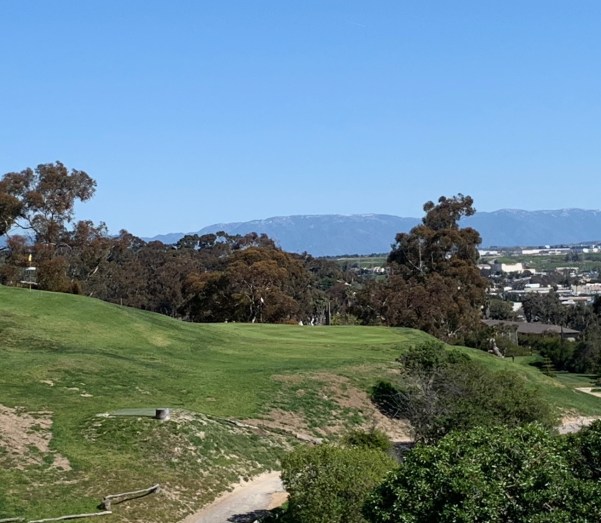
Precipice green settings just about everywhere.  Besides negotiating elevation changes that will defy the slope adjustment setting on your Bushnell, there is virtually no bail out spot on most of them.  Hit it where you are aiming or play the next one from the oblivion.  Those who have any sense will play a match with a buddy and forget keeping a medal score.  But you have to admit the horizon views are breathtaking.

#5 Green Par 3

#10 Green Par 4

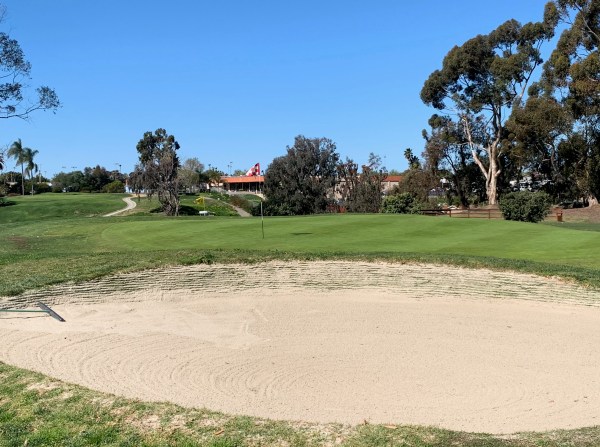
“Oz”, the finishing hole on the outward half, speaks volumes to what Goat Hill Park is all about.  Simple 100-yard pitch into an amphitheater green complex is a birdie chance a lurkin’.  Note the plethora of homemade viewing benches that adorn the surrounding hills to provide ample seating for adoring crowds of people and dogs for the big events.

#9 Green Par 3

Goat Hill Park is a must visit for anyone with a serious golf bucket list.  You will walk away from this experience with a dented ego but a head full of good vibes from this very unique golf destination.

February, 2023

moerate5

The Golf Soul

On the obsession with score over quality of shots played.

“The man who regards golf as a matter of ‘card and pencil’ is not a golfer at all, for he has lost his soul in arithmetic, whereas the true golfer puts his soul into the game for the love of it, and not because it amounts to a mere matter of mathematics as he wends his way back to the club house.”

Henry Chellew (1927)

As quoted in C.B. Macdonald’s

Scotland’s Gift-Golf

Mastering The Game

In comparing two ways of learning to play-one based on trusting your natural instincts and the other focusing on acquired technical knowledge.

“A perfectly good, well-formed, strong, and healthy man with a keen eye may do all that he has been taught and yet never really learn to play the game well, try as he will. In getting all these injunctions synchronized comes the real test of a man’s inherent ability to excel; primarily there must be concentration, and further, there must be coordination with the subconscious self, strength applied with extreme delicacy.”

C.B. Macdonald (1927)

Scotland’s Gift-Golf

On The Road With Bill Murray

The Golfer’s Journal regularly offers a wide array of stimulating golf content for the golf inebriated mind, both written and oral selections, that cover everything but instruction and golf jokes.

This podcast #124 is a Tom Coyne travelogue interview with Bill as they drive through rural Georgia on the way to a golf event at The Ohoopee Match Club. Bill is driving….aggressively…which presents a few thrilling moments and Tom is the enchanted frog on a log just prodding Bill to rap about just about everything.

Learn a bunch of interesting Bill tidbits:

-Bill’s collection of golf recovery devices

-His currency preference for $50’s and $10’s and disapproval of Andrew Jacksons

-An informal dissection of a pop-up movie set

-Yearning for java and fruitcake

-Some Arnie musings

-His early life as a shag boy and a barefoot caddie growing up in Chicago

-What he loves about the golfing experience

This is a pleasant car conversation between friends with you sitting in the back seat just taking it in. Well worth some lounge chair time for a listen.

Click to connect to this Golfers Journal Interview

________________________________________________________

California Golf Club

Cal Club LogoThe Golden Age of Golf Architecture left it’s imprint in San Francisco in the 1920’s and one of it’s finest contributions was the California Golf Club.  The Cal Club is located at the southern end of the city in the hilly topography at the foot of San Bruno Mountain State Park.  From the many high vistas throughout the property you can see the splendor of the city set against the mountain backdrop.
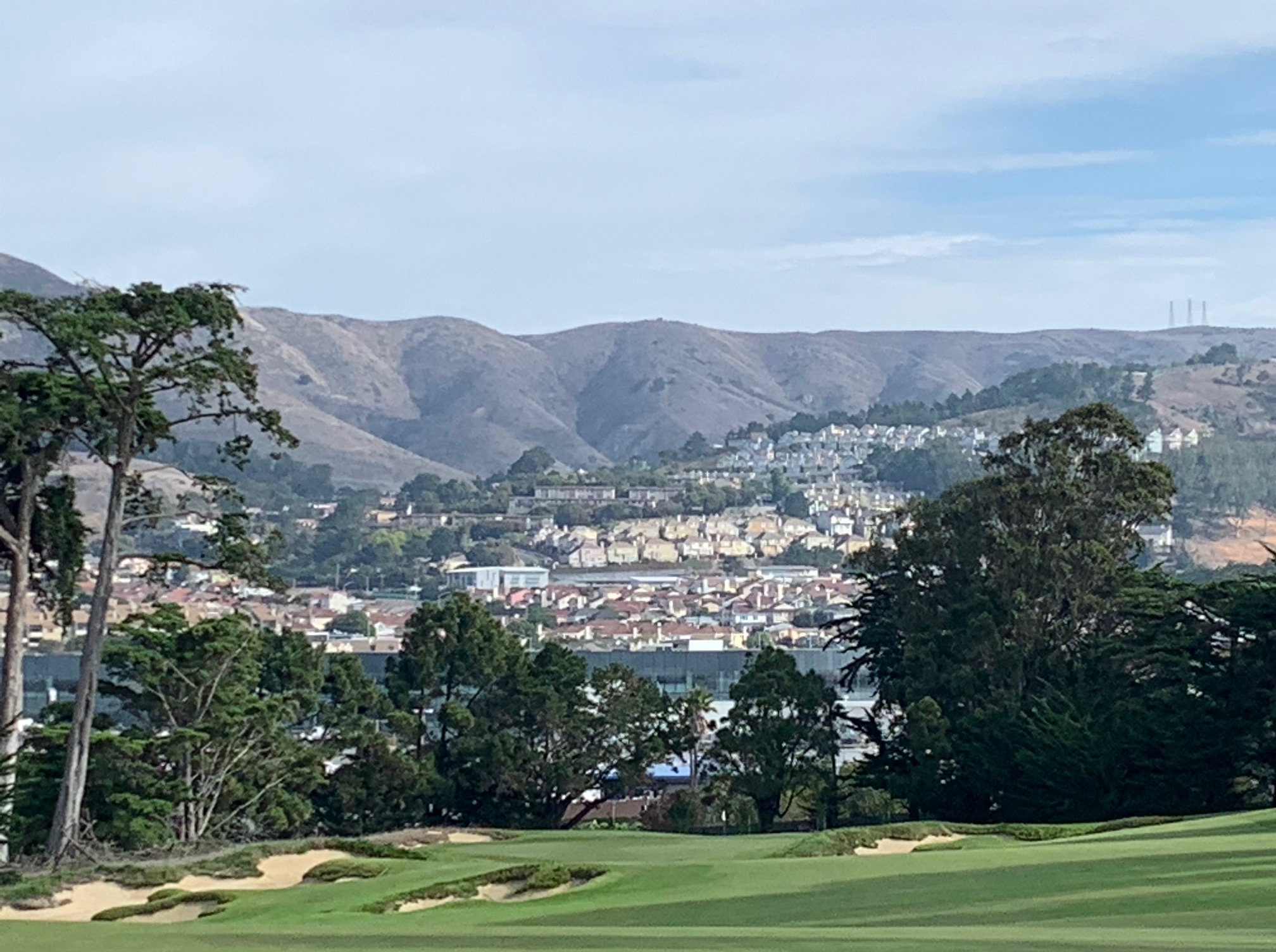
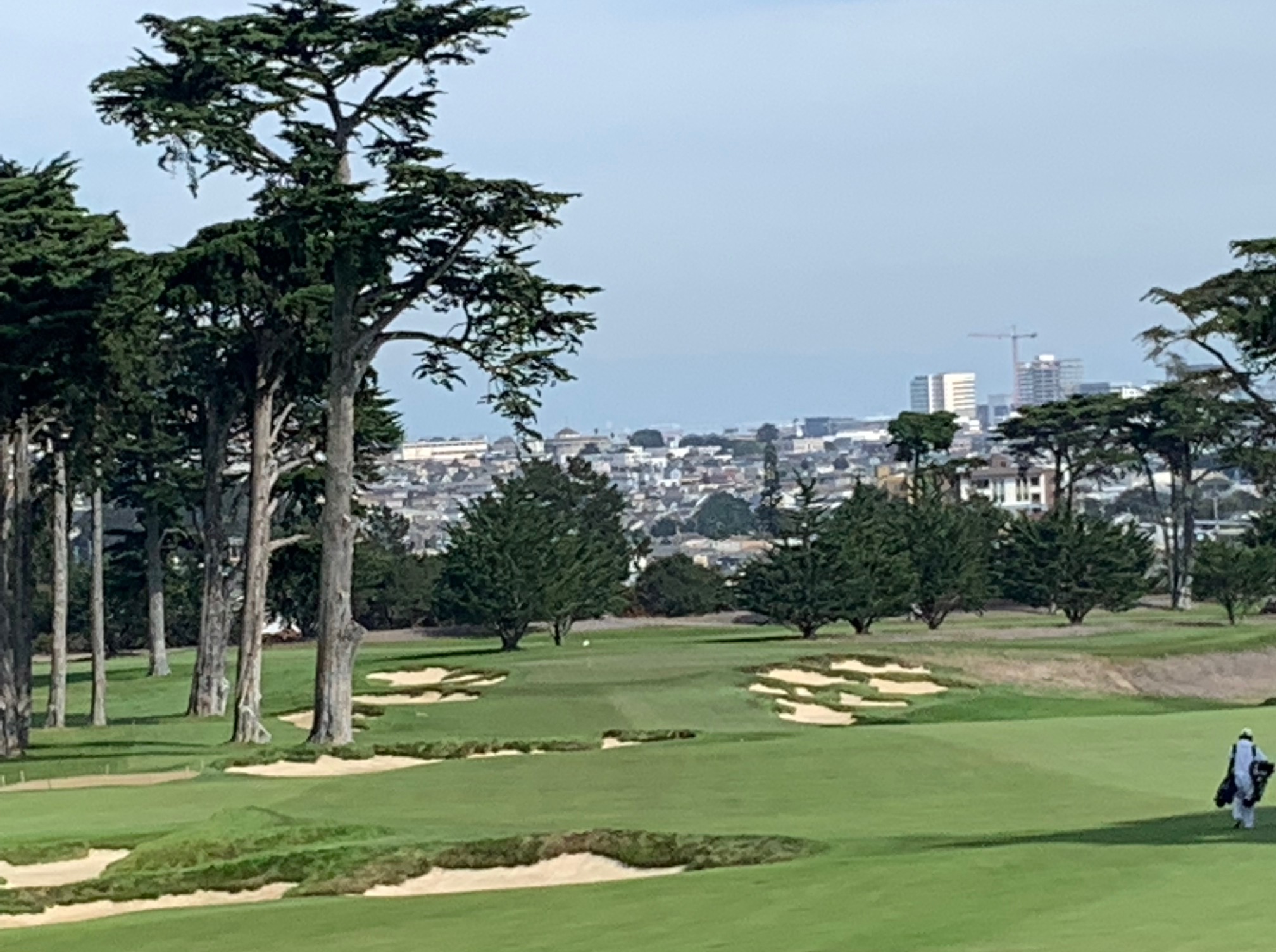
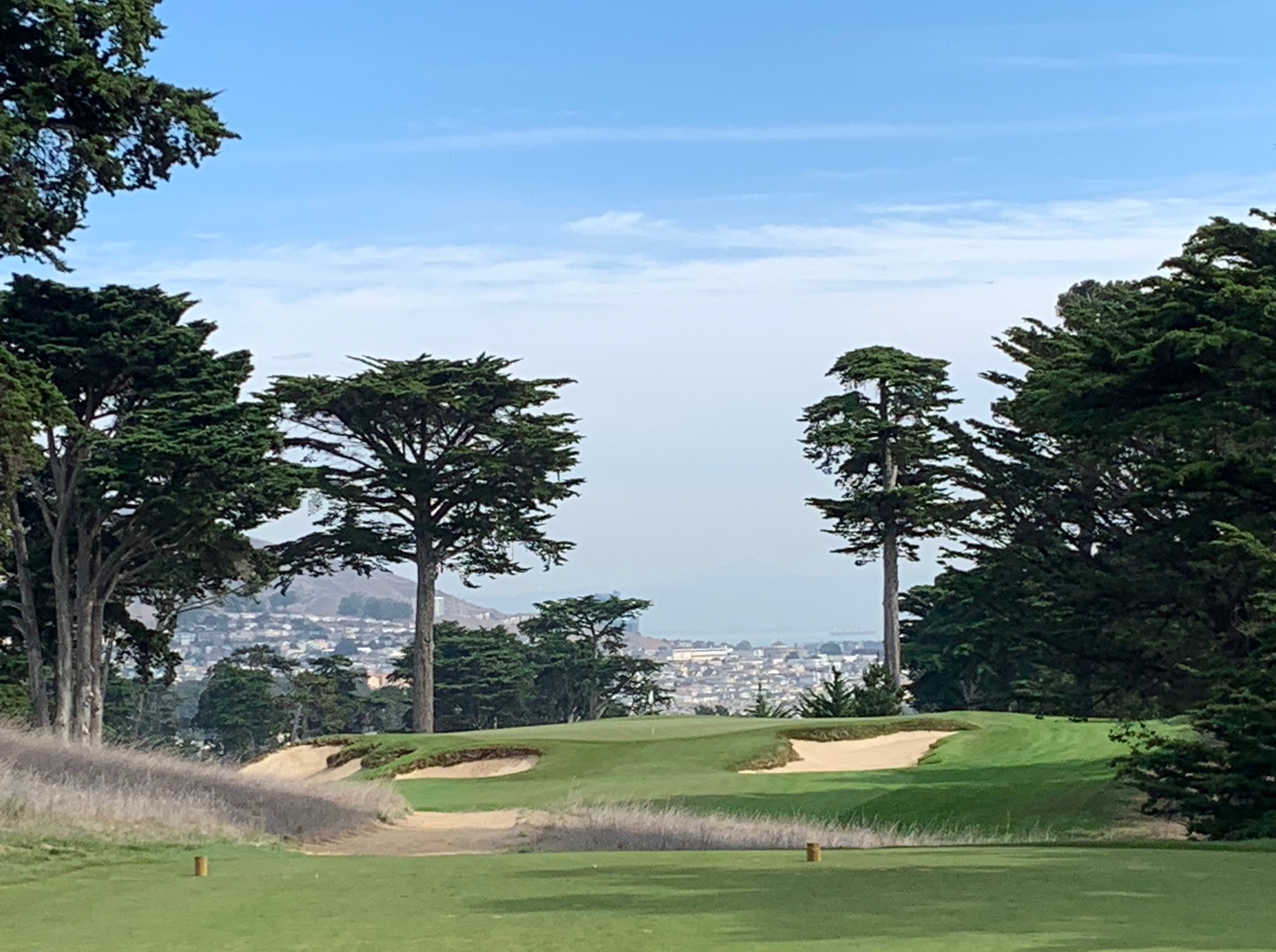
CC 1 Green

The approach view of the first green juxtaposes the green complex to the near in city and the mountain backdrop behind

As we see on many of these layouts in California the early architects used the movement of the ground coupled with clever routing and imaginative green complexes to present challenging and entertaining golf with virtually no water hazards or forced carries.

CC 14 Par 4

Locke routed the wide open Par 4 14th to follow the flow of the land…Macon created the landing areas and the green complex….MacKenzie added elaborate bunkering throughout to define the strategic alternative off the tee and into the green.

The original design was actually the compilation of the work of three distinct architects over a three-year period.  Scot Willie Locke, who later designed Lake Merced, was the first to the plate in 1924 and is responsible for the design of the overall routing.  Before the construction began they replaced him with an Irishman, A. Vernon Macon, who built the tees, green complexes, and original bunkering.

CC 6 Par 3

The 6th is an example of a bold Macon’s green complex design.. With fall offs front, left, and back it is hard to keep a mid-iron approach on the putting surface. Deep face bunkering can punish a timid approach shot.

Macon designed the green complexes with bold contours that caught the attention of the golfing community when it opened in 1926.  The fairway bunkering was left for later on purpose, so the architect could analyze from actual play the best positioning based on the divot patterns left by players.

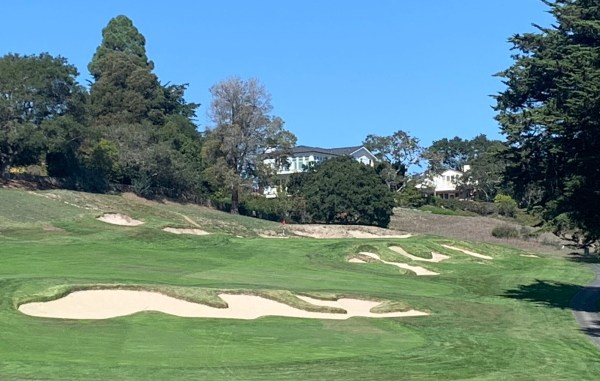
In 1927 the task for creating the fairway bunkering was given out to a third architect, a young Alister MacKenzie, who had recently finished the 9 hole track at the Meadow Club north of San Francisco.  MacKenzie redid the 10th and 18th green, all the greenside bunkers, as well as adding the fairway bunkers.  His flair for the dramatic took this track to a whole new level in the minds of the golfing public.

CC 5 Par 4

This 5th hole would feel right at home at Pine Valley. At 300ish yards a big bopper is tempted to go for the green but the green side bunkers are punishing and can turn a birdie opportunity into a bogie in a heartbeat.

By 1960 the course was in dire need of a attention due to the state’s rerouting of a road adjacent to the property.   The club hired the biggest gun of the times, Robert Trent Jones Sr. to do the update.  As was his habit when approaching renovation of U.S. Open Course of the era, Jones could not resist putting his entire footprint on the course.  He re-routed holes, changed things dramatically and pretty much redefined the character of the Cal Club.

In 2005 the course was suffering from major maintenance issues due to turf disease and inappropriate grasses so they solicited proposals for a complete shutdown and renovation of the course.  Kyle Phillips submitted a bold proposal to undo the previous rerouting by relocating the practice area and creating new holes on the front nine and was chosen to do the job. The results supported that choice.

Cal Club Long View

One of the base principles of Phillip’s renovation was to add about 6 inches of sand across the entire layout-this improved the drainage and facilitated the introduction of fescue to replace the rye and poa anna in the fairways and eradicate the poa from the greens.  Kyle undid the mess Trent Jones had done to the front nine by introducing three new holes and, at the same time, went back to aerial images of the course to reclaim many of the parameters and features MacKenzie had put in the original work.

CC 3 Par 4

This downhill dogleg 3rd was one of Kyle Phillip’s old style new holes that seamlessly fits into the character of this age old design. This original bunkering mimics the detail of MacKenzie’s work.

He made sure that width was king, the rough was not significant reducing the search for balls, and let the strategic MacKenzie bunker positioning steal the show. What emerged was turf that would support hard and fast playing conditions to force the players to respect the topography as a strategic element of play.  The presentation of fairway width, no rough to speak of, complimented by generous bunkering in the green complexes puts the premium of positioning on every hole.

CC 8 Par 3

On the downhill Par 3 8th begs for a bit of a soft draw…they added a barely visible kicker mound front right that will propel an approach onto the center of the green following the right-to-left movement of the ground

In reading the Hole-By-Hole Analysis below you will see that Phillips gave them a seamless combination of the outward and inward nines that once again emphasized the design thinking of the Golden Age.

CC 18 Par 4 2

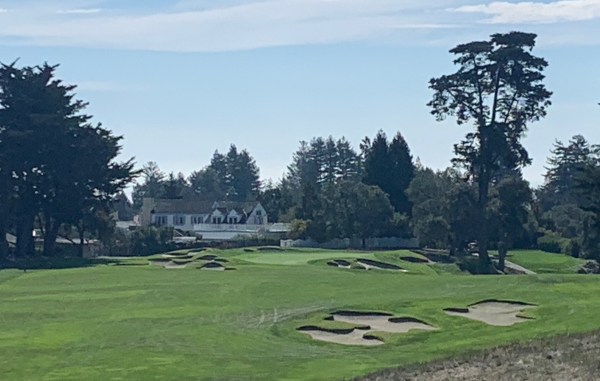
Looking down from the top of the hill at MacKenzie’s 18th green surrounded by sprawling bunkers wedged into the hill under the clubhouse is testimony to their choice of Kyle Phillips to bring this amazing track back to full grandeur.

San Francisco, California

Architect: Willie Lock, A. Vernon Macon, Alister MacKenzie (1927)

Kyle Phillips Restoration (2007)

Par       Rating    Slope   Yardage

Venturi             72        74.6        139       7215

Back                72        72.7        135       6794

Middle             72        70.5        130       6293

Forward           72        66.5        122       5401

(Click here to review the printable California Golf Club hole-by-hole descriptions)

McKellar Magazine-A Golf Companion

The digital age has wreaked havoc on print journalism turning the most established outlets upside-down shaking the most valuable assets from their trouser pockets into a discarded heap on the ground.

As a result we now have golf magazines trying to fill a hollow digital footprint without the credible writers to produce content worth reading. What you have left are internet magazine subscriptions to lists of Top 100 Golf Courses, collections of worthless golf tips, reviews of the latest “new and improved” equipment you don’t need, and infomercials for the next great destination golf resort of your dreams. If you are truly interested in creative golf content this is not going to scratch that itch.

Fortunately a couple of new print publications have risen from the ashes who have assembled the best golf writers, photographers, and illustrators to create long form articles on a wide array of subjects of golf interest. The templates are like none you have seen before-little or no advertising to distract you from the content, no grandstanding articles about the professional golf tours and their stars, and no sell-your-soul patronizing reviews of the next generation equipment that is going to shave strokes off your scores.

One of these publications is McKellar Magazine which has been publishing since 2018 under the capable direction of their founding editors Lawrence Donegan and Thomas Dunne. The list of contributing writers they have assembled is a Who’s Who of accomplished golf scribes of the last thirty years. It includes Michael Clayton, Lloyd Cole, Lorne Rubenstein, John Huggan, Mark Cannizzaro, John Strawn, Geoff Shackelford and many, many more.

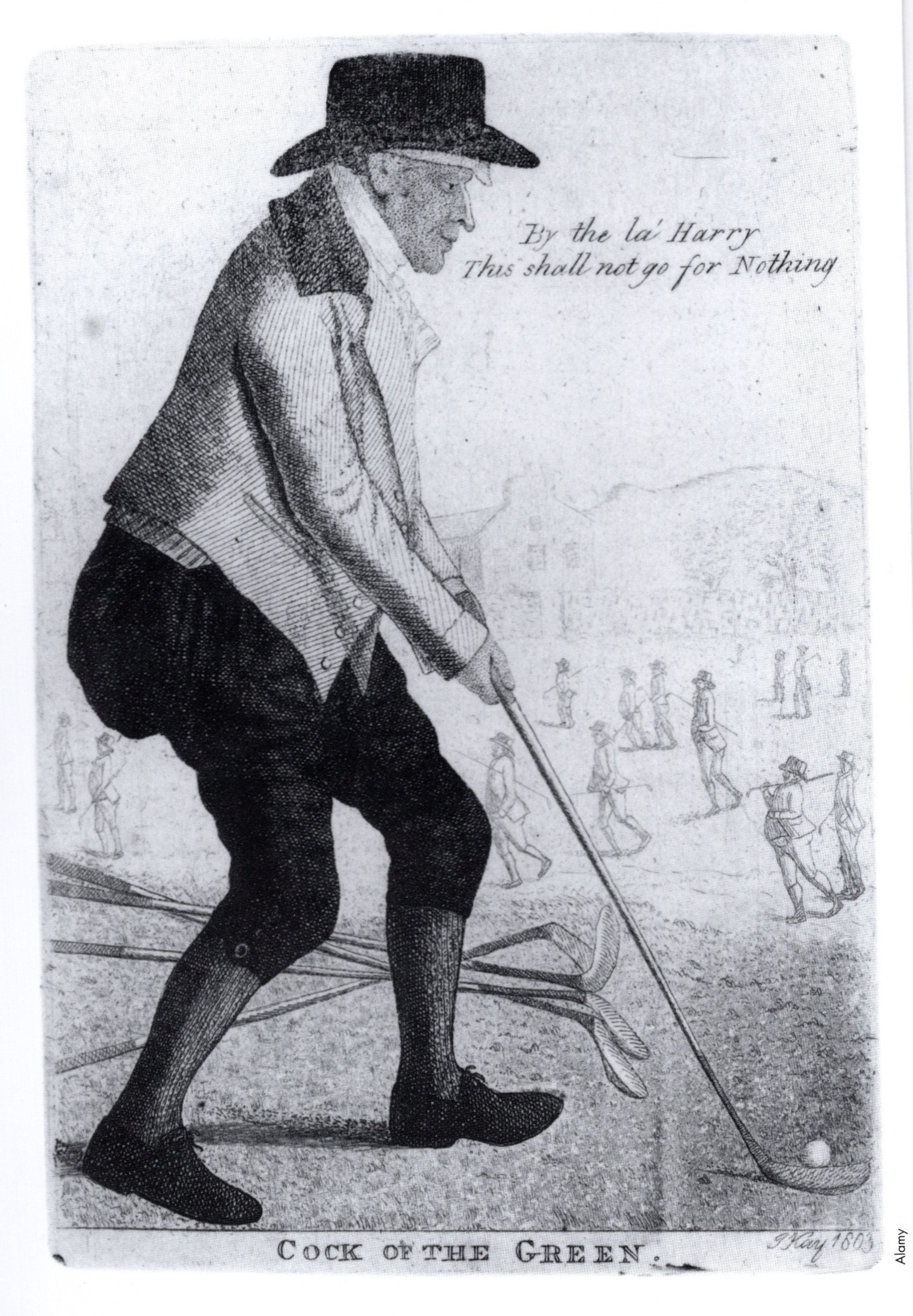
The journal’s namesake-Alexander McKellar-his thought over every golf shot “This shall not go for Nothing” is something we can all relate to.

In the five editions they have published so far you will find a wide array of excellent articles to tantalize your golf interests. These include glib interviews with Dottie Pepper, Chubby Chandler, and Rory McIlroy, an article about the symbiotic relationship between Sweeten’s Cove and The Waffle House, the back story of why Amana appeared on the hats of golf greats Bob Goalby, Julius Boros, and Jim Colbert, and Michael Clayton’s proverbs of the design features of venues in the Australian Sand Belt that are influencing the works of today’s most prolific course architects.

Every edition is chock full of this kind of well written, engaging stuff that will keep you glued to your favorite reading recliner. For a generation of people who grew up getting ink on their fingers from reading print publications this is manna from heaven.

You can learn more about what these guys are up to and order the magazine through the McKellar Magazine Website. At a cost of about $20 an issue delivered the price may seem steep but remember this is not your father’s golf magazine business model-there are no advertiser revenues to subsidize your reading habits.

McKellar has put out five robust issues so far. So don’t tarry, invest in the most recent issue, this is a Golf Companion you will be glad you welcomed into you personal library.

McKellar Magazine (2021)

Whistling Straits Course-Flyover

Whistling Straits LogoWith Whistling Straits playing host to the Ryder Cup this week, Andy Johnson of The Fried Egg has dispatched his drone to put together a timely video exposition of the course and paired it with his thoughtful and knowledgeable analysis of how the Pete and Alice Dye’s architecture will provide strategic challenges in this match play competition.

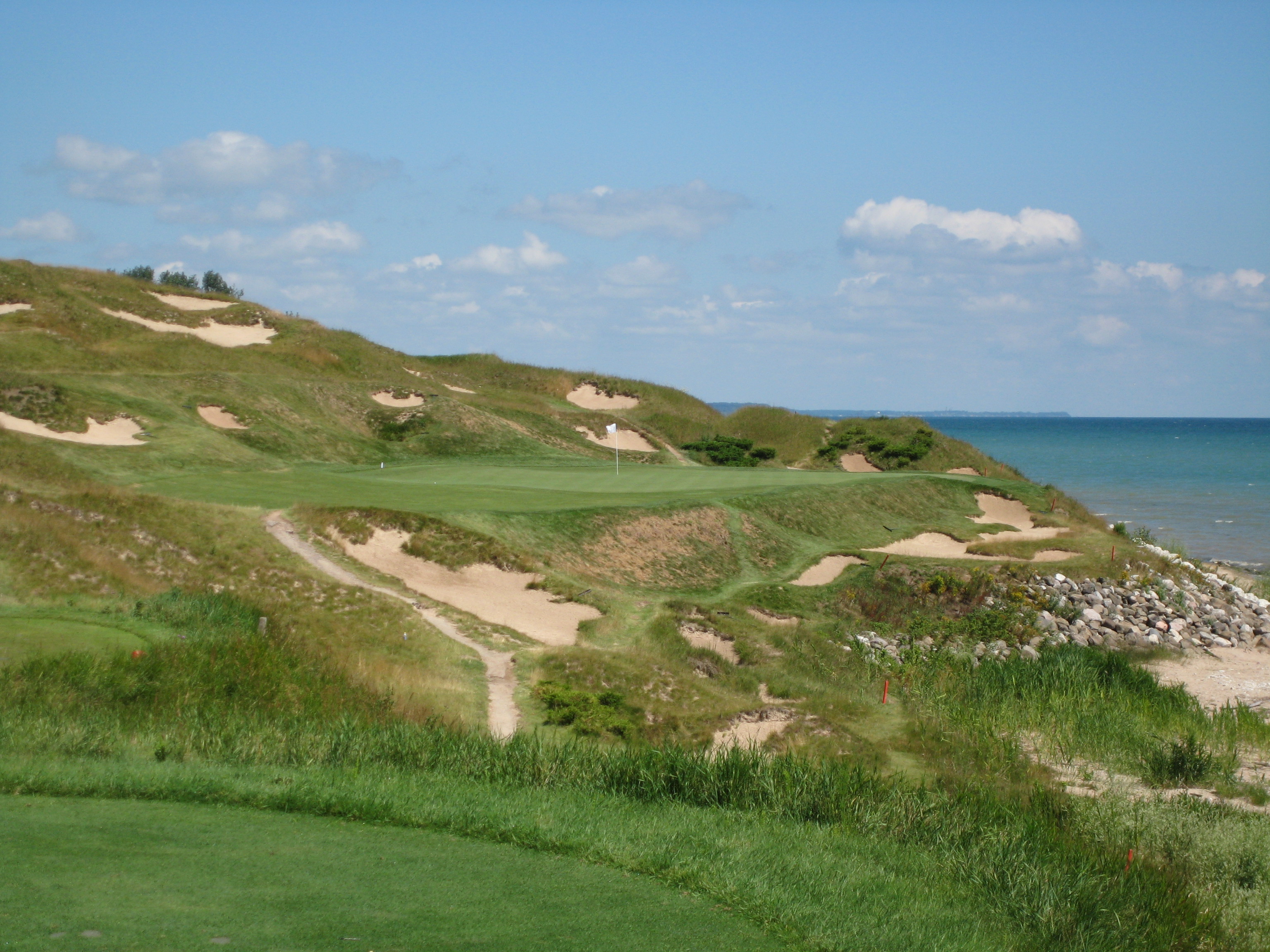
There are two things that are startling about The Straits. First it is essentially a links style course in the middle of America and second, everything you see that makes this a links style course, except for the ocean sized Lake Michigan over your shoulder, was manufactured by man (and woman).

Besides the engineering feat of importing and placing a bazillion truckloads of dirt from Indiana to sculpt the land, they had to conceive of a routing to expose as many of the holes as possible to the lake winds to create the real look and feel of links golf in Wisconsin.

As Andy points out, it is a figure eight routing with the front nine going south along the lake shore and then looping back upon itself to catch more shoreline on the way back in. The back side does the same thing going north along the shoreline and looping back for more shore on the way back to the clubhouse. This puts 8 of the 18 holes with direct interface to the lake and another six within eye view. The influence of the wind off the lake can be profound and since the holes go in both directions on both sides you rarely get but a couple of holes in a row with the same wind effect.

Seventh Hole Par 3 green presents pure intimidation-especially the right pin

The par threes on this course are all stunners-forced carries over huge waste areas to precipice greens with the backdrop of the lake behind. This lack of topological backdrop can make frame of reference of the shots hard to discern. The wind influence on the three pars is at it’s max because they are the most exposed holes on the course.

The harsh reality of Number 17 will challenge the world’s best players

Andy goes through the full Dye collection and from his analysis you will have a much better appreciation of how these pros will negotiate their way around this unique layout under the intense competitive heat that only a Ryder Cup can provide.

Set aside ten minutes to watch this on a PC screen so you can truly appreciate the artistry of this video and it’s subject as well.

The Fried Egg Podcasts (2021)

(Click to see Andy Johnson’s video analysis of Whistling Straits)

Green Speeds…Get Over It

How many times have you looked forward to playing a course of special interest, maybe on a vacation or in an event in your area, only to come away disappointed because they had the greens jacked up so fast that only gutter bumpers could save you from three-putting all day long. My guess is this is experience is all too familiar to many of you.

In the attached article by John Steinbreder in this week’s Global Golf Post a strong case is made by many of the biggest names in golf architecture that the “Arms Race” for faster and faster green speeds, at private and public courses all over the country, is totally out of control. As a result, the courses are just no fun for anyone who does not carry a handicap index in the low single figure range.

There is little question that a kabal of low-handicappers who dominate green’s committees at these places are driving the bus and, in an effort to keep the “rating” of their course” in the top quartile, have made them virtually unplayable for the bulk of their membership.

This started out isolated to “premier” show-off events like the annual Member-Guest, but now has creeped into their Club Championship, Opening Day, Calcutta Event, and even day-to-day play at their courses. Who wants to compete in these things if you have to wear protective gear just to get through the experience.

We visited this issue in our “Is Faster Really Better” posting back in 2011 that featured an article by Ian Andrews a renowned architect from north of the border. The issues have not changed in 10 years, in fact the incidence seems to have gotten worse in my humble opinion.

It is long overdue for the decision makers at golf facilities to bring a little sanity back to daily course set up and let all players smell the roses once again.

John Steinbreder

Golf Global Post (2021)

(Click to read Global Golf’s article “Slippery Slope”)

Lee Trevino

In the late 1960’s Lee Buck Trevino was a disruptive intrusion to the Big Three Plus One status quo on the PGA Tour. No one really knew what to make of this Mexican-American upstart with the flat swing, low left-to-right ball flight, non-stop wise-cracking chatter, and gunslinger’s no-fear attitude playing against Nicklaus, Palmer, Player, and Casper.

In this Shotgun Start Spotlight Podcast Brendan Porath and Andy Johnson provide an informative historical perspective of the early career of Lee Trevino. This podcast is a deep dive into the challenging path Lee took from an impoverished Texas upbringing to being the most significant foil to the dominance of Jack Nicklaus in the early 1970’s.

Lee was not a product of the country club mold that is for sure……

Embed from Getty Images

As Andy points out, in the 10-year period from 1968 to 1977 Lee Trevino was arguably the most dominant player other then the GOAT himself. Over his storied career Trevino won six majors-two U.S. Opens, two Open Championships, and two PGA Championships. In 1971 he was named Sports Illustrated’s “Sportsman of the Year”. Over a three-week period in June and July of that year Lee garnered three national championships, beating Jack Nicklaus in a playoff at Merion to win the U.S. Open, won his first of two Canadian Opens, and outlasted England’s Tony Jacklin and Taiwan’s Lu Liang Huan at Royal Birkdale for his first British Open Championship. No one else in the golf history has ever done that.

The podcast is rich with Lee’s legendary personal musings as well as the entertaining perspective of Dan Jenkin’s the premier golf journalist the time. There are lots of revealing quotes from his peers that leave little doubt as to the impact Trevino made on the staid order of the PGA Tour. The language was not always politically correct by today’s standards, but it was representative of the mood of the time.

Set aside the time to listen to this 90 minute podcast, you will not be disappointed. This is a nostalgic romp from those of us who grew up with Lee challenging the golf establishment. For those who only know him only as a golf myth, it is an opportunity to put his accomplishments in real perspective.

Brendan Porath and Andy Johnson

Shotgun Start (June 2021)