
We know that playing golf in East Lothian
dates back more then 200 years and Gullane was one of the first organized attempts at creating a golf links in this region. There is no architect of record for this place, it kind of evolved over the years as the number of interested players grew. Archie Baird, the unofficial historian of this region, says in his book Golf on Gullane Hill, “It was more nature than nurture as golf on Gullane Hill was a lucky combination of wind, sand, rock, rabbits, wool, feathers and gum”.
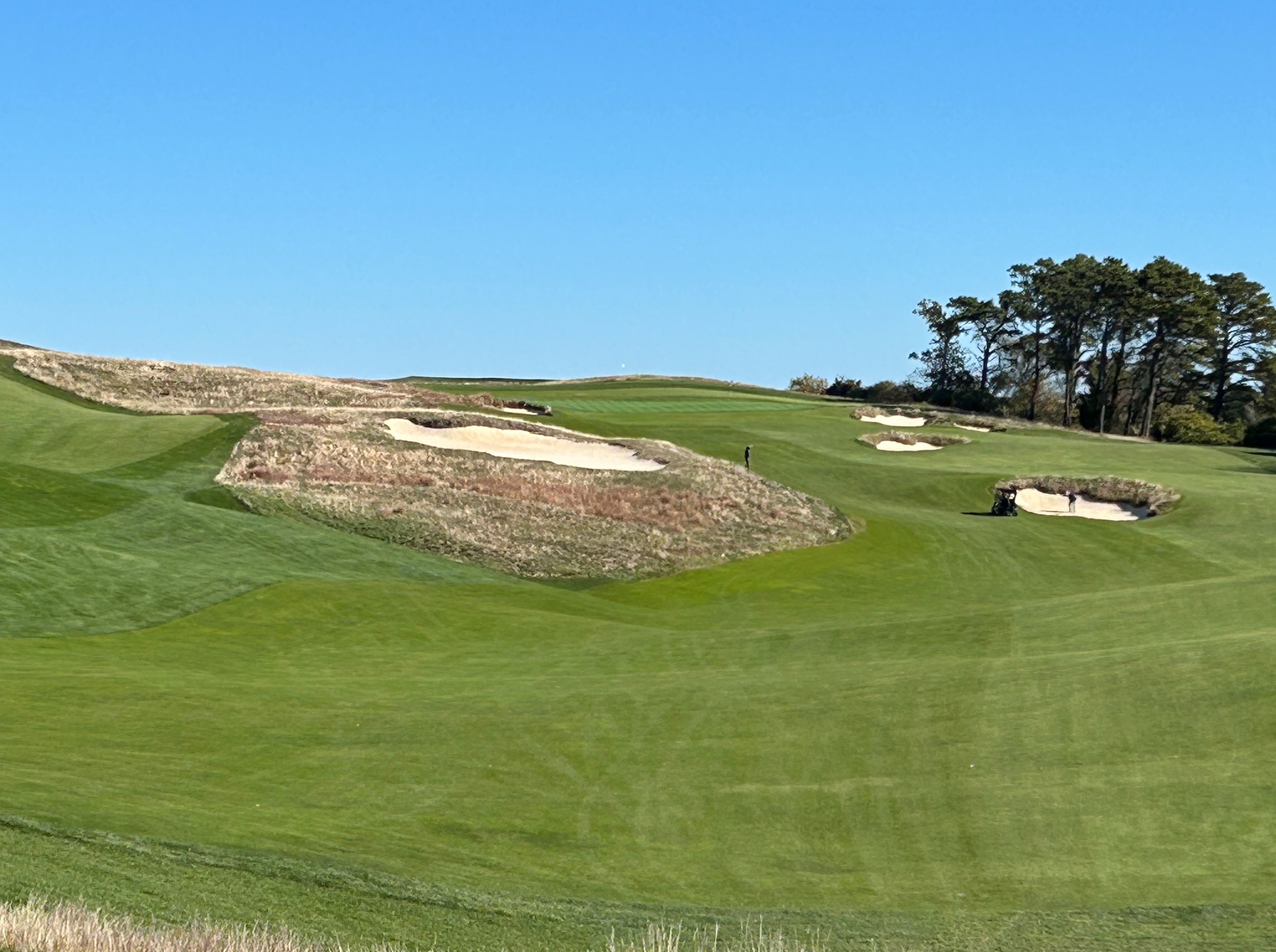
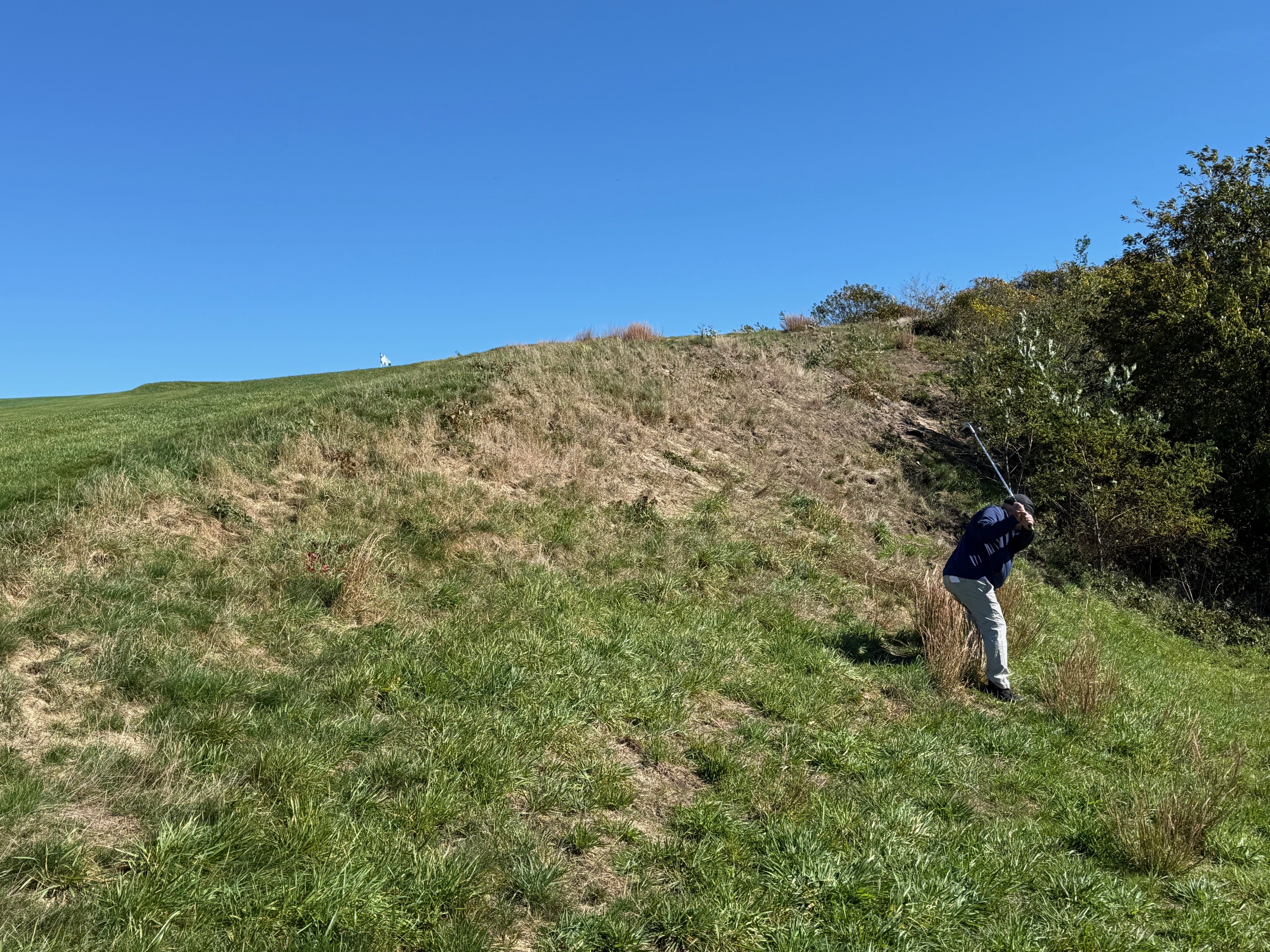
What has survived is a wonderful piece of golf architecture land management on one of the most challenging topographical canvasses in this region. Kind of reminds one of the back nine at Tralee without the trolls. In spite of the massive elevation changes they routed the holes straight up and down the inclines in such a way that there are almost no side hill lies to be considered all day. These same elevation changes provide startlingly beautiful vistas from the high points on the property where you take in views of the vast farmlands below and the long shoreline of the Firth of Fourth on its way up to Elie and Crail.
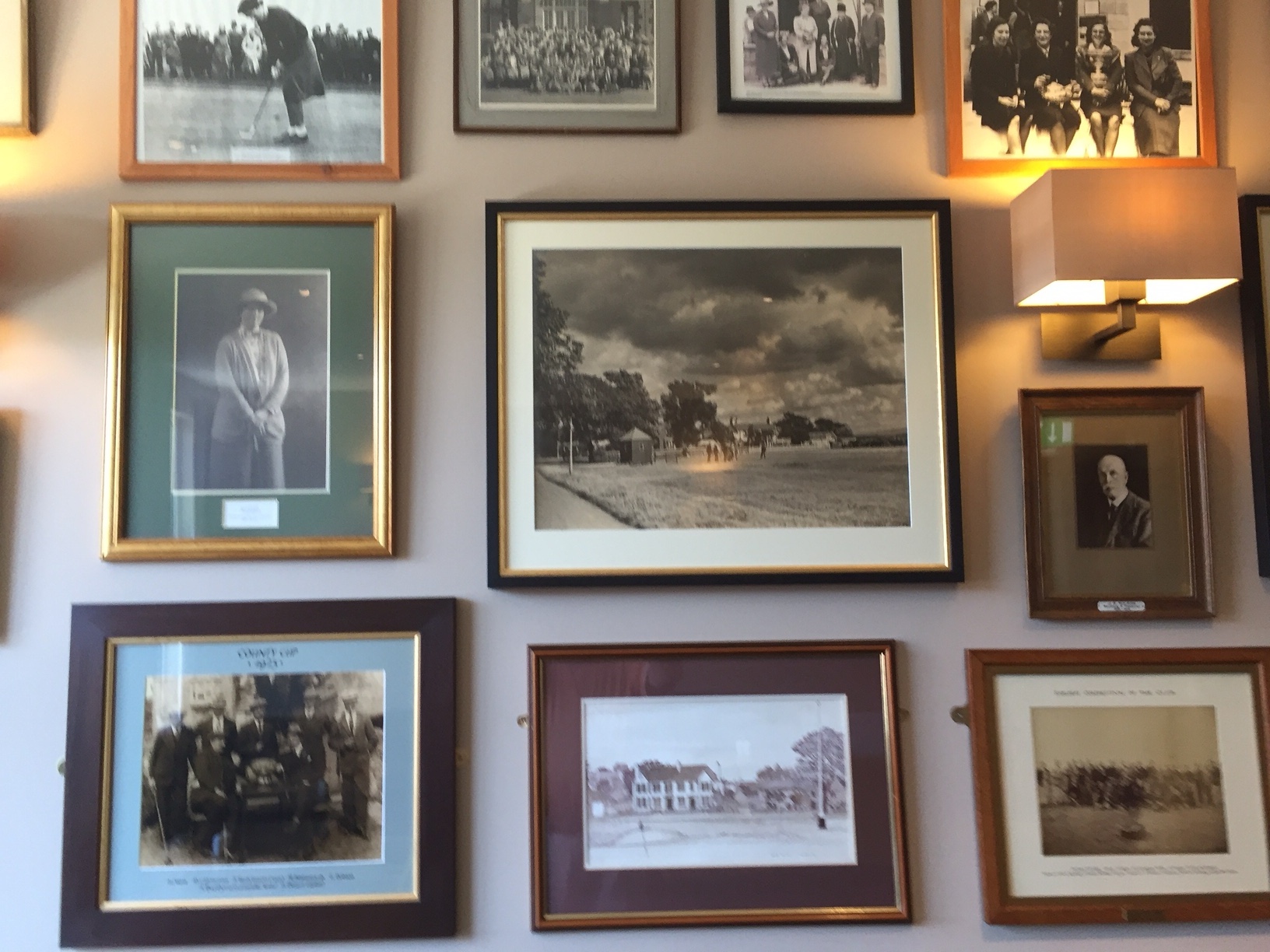
The history of this place is evident through the town where the club resides, the artifacts in the historic Members Club House next to the first tee, and on these sprawling hills themselves. These distinguished links have played host to the most prestigious golf championships over the years, including the Scottish Men’s and Women’s Open and Open Championship final qualifying. With the wind as its accomplice you will see why this place is a firm true links test to players of all caliber.
In general the course is wide open to the eye but don’t be fooled by that, there are specific strategic lines you have to adhere to throughout the course. Make sure to get the cool yardage book in the golf shop that gives you precise detail of the architectural features of the course. It also shows a photo of the driving area on each hole and a separate green map with dimensions and contours. This photo includes the driving area parameters from each tee and aiming lines for your tee ball. It is an essential guide to playing the course effectively. You will find a link to a printable PDF of our hole-by-hole description and strategy for play at the bottom of this posting.
One further note is that unlike most courses we play where the handicap holes are disbursed evenly by even handicap designations on one nine and odd on the other, this convention is not adhered to at Gullane. As a result your handicap shots might be stacked a bit more on the incoming nine holes.
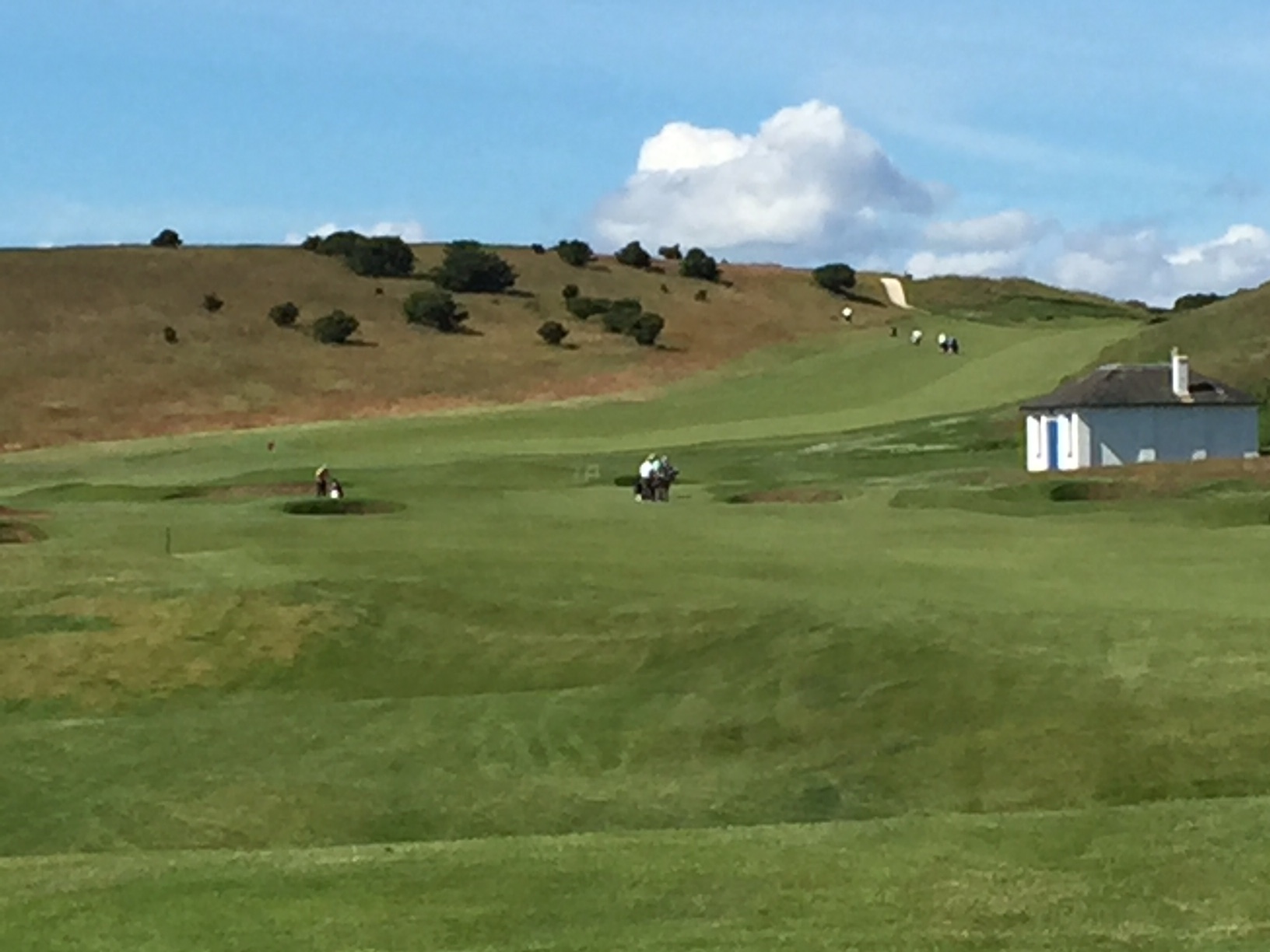
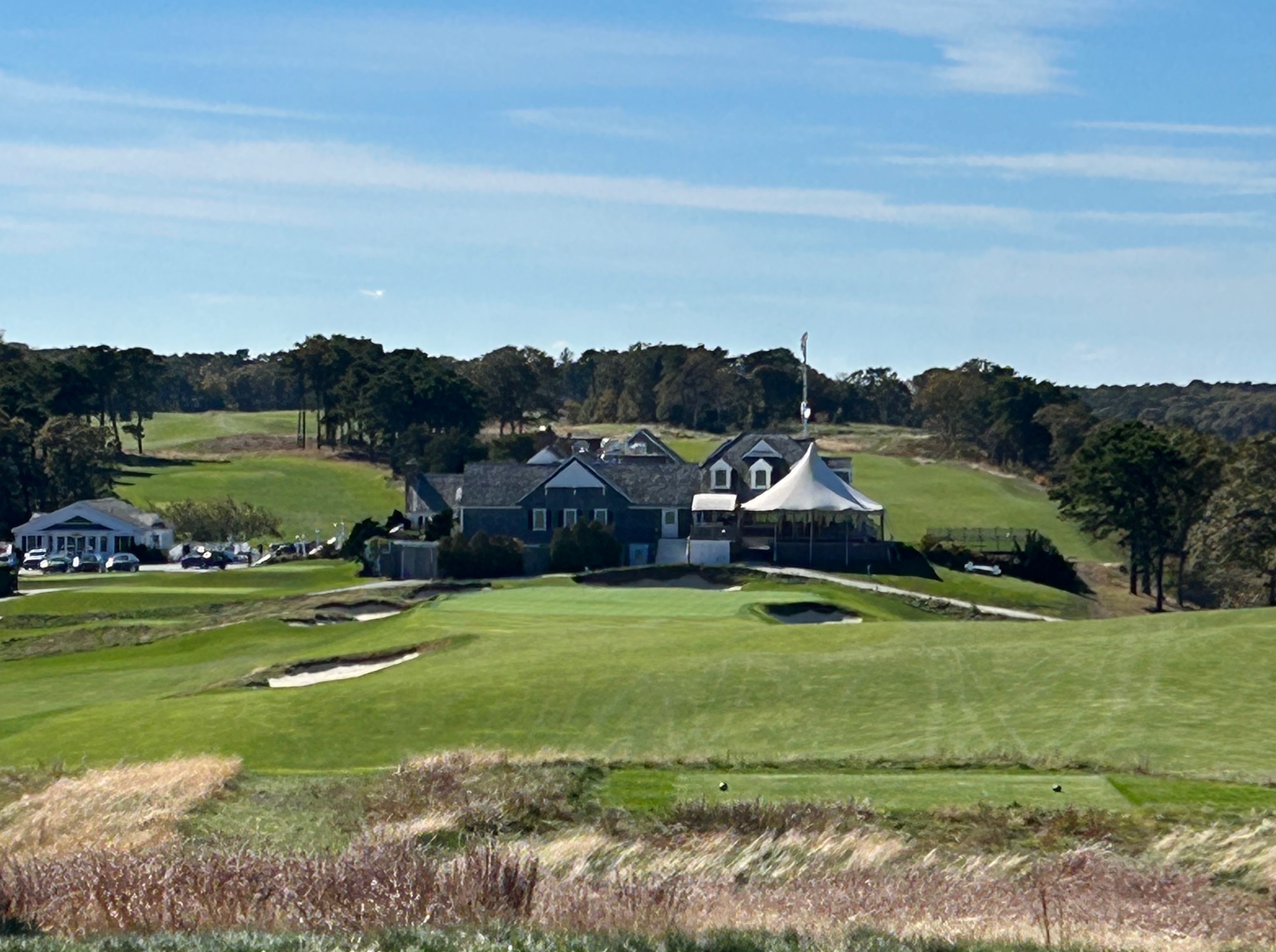
The first and the finishing holes are the only two on-level holes you will see all day. It is a comforting handshake to start and finish what will be an exhilarating rollercoaster trek up and down the steep contours of Gullane Hill.
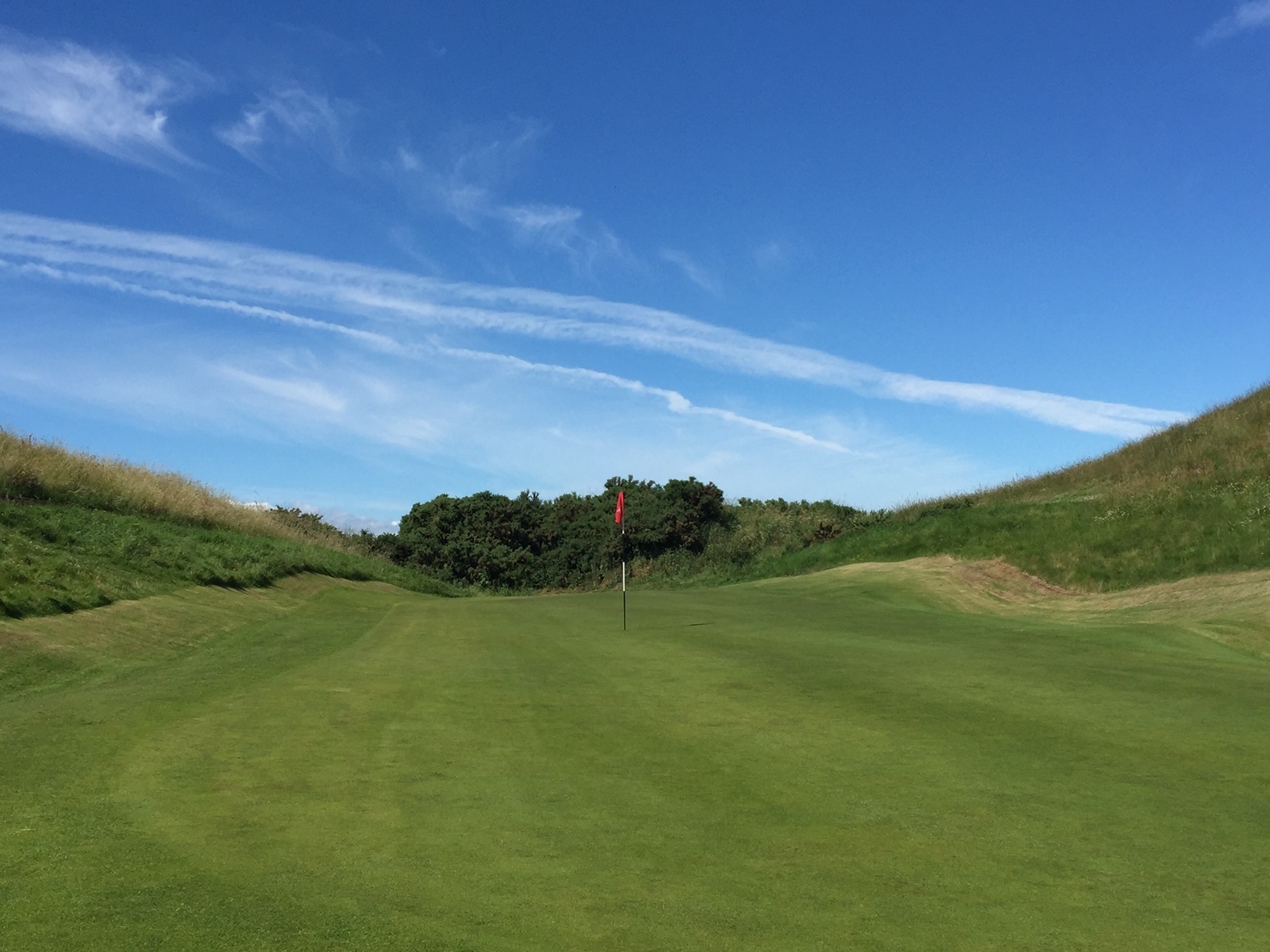
The march straight up the hill on the second is a wake up call to what’s ahead. After driving into a gentle slope the approach is a two-club extra shot into a narrow bowling alley of a green complex. If you make a par here you are one up on the field.
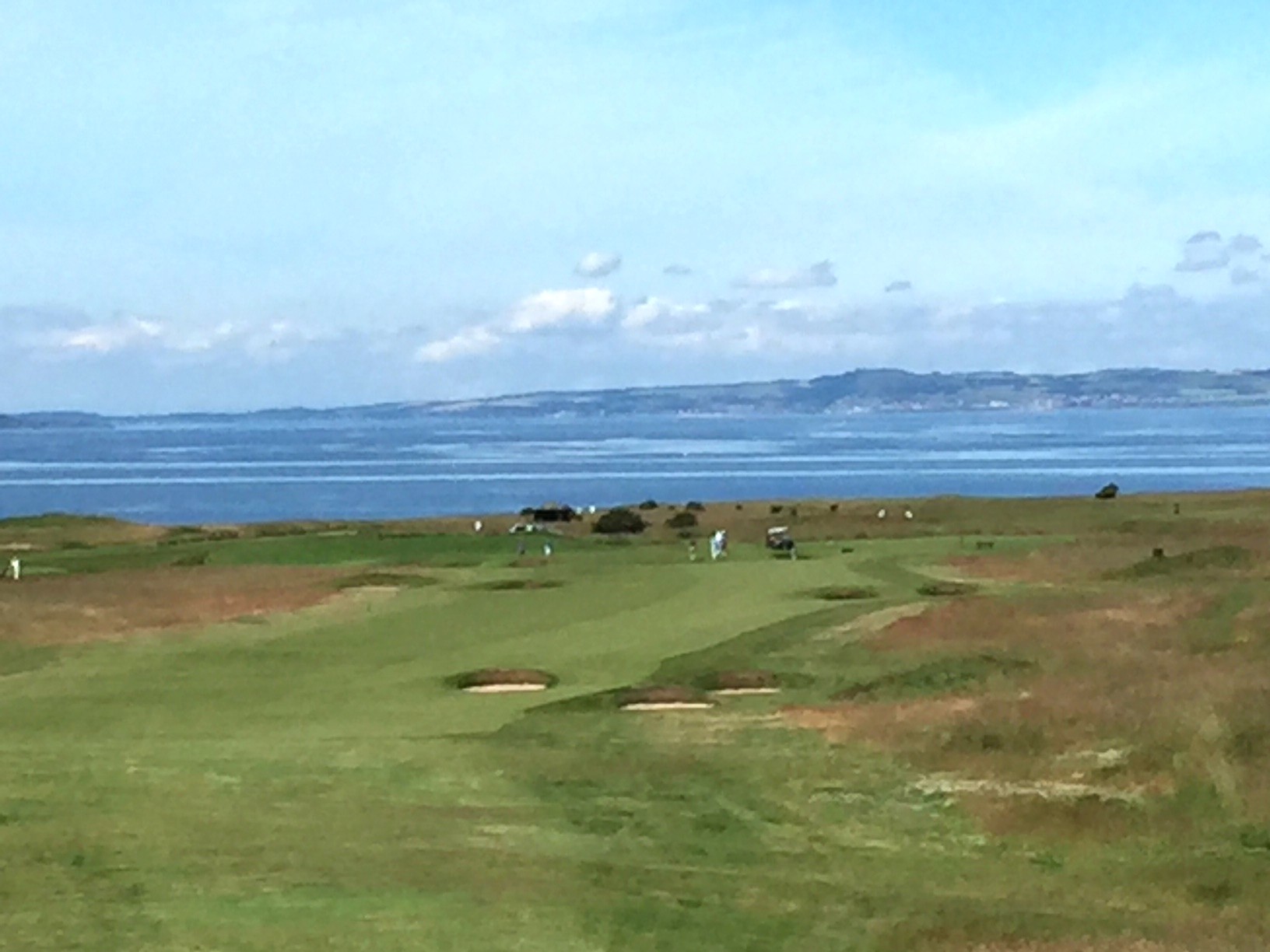
Stepping onto the third tee of a relatively benign five par you get your first look of the expanse of country side that East Lothian encompasses. Pause a moment to take it in because it is something to behold. The hole gets it’s name Racecourse from a time in the mid-1800’s when training race horses on these hills was a very effective use of the land.
The first of the four great short holes at Gullane 1 is coming up. Only a short to mid-iron into is required into a raised coffee table of a green complex segmented front-to-back. If the wind is at your back controlling the roll out once on the green is a real chore.
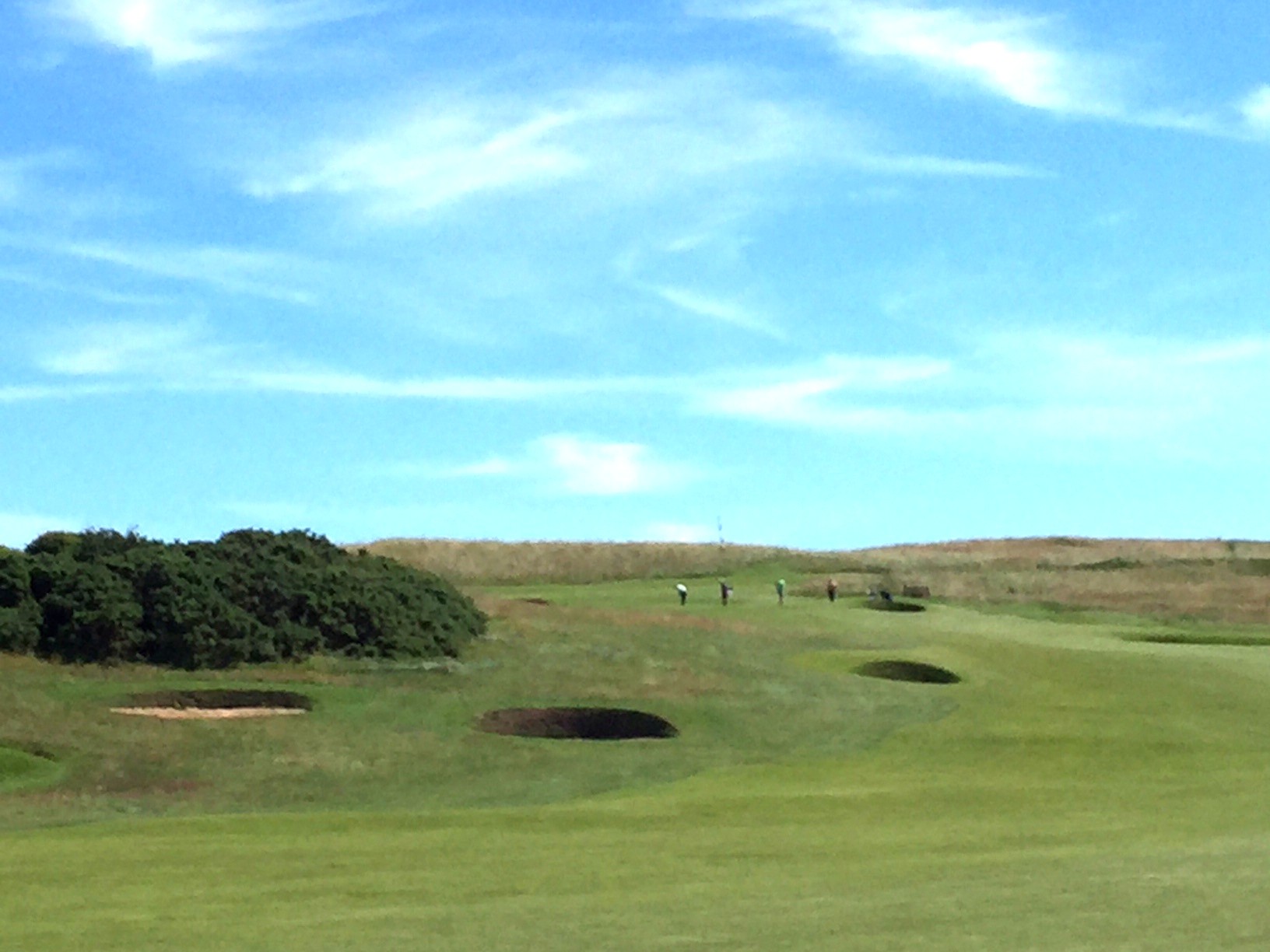
There is no rest for the weary as a long Par 4’s are the real guts of this course. The fifth is the #1 handicap hole and you will experience the elevation change within hole that adds a three-quarter stroke increment to whatever the card says.
In some ways the next two holes define the unique character of this old course. The first is a technical uphill short par four which tempts you to be too bold for your britches. It is a scoring opportunity as long as you don’t play into temptation.
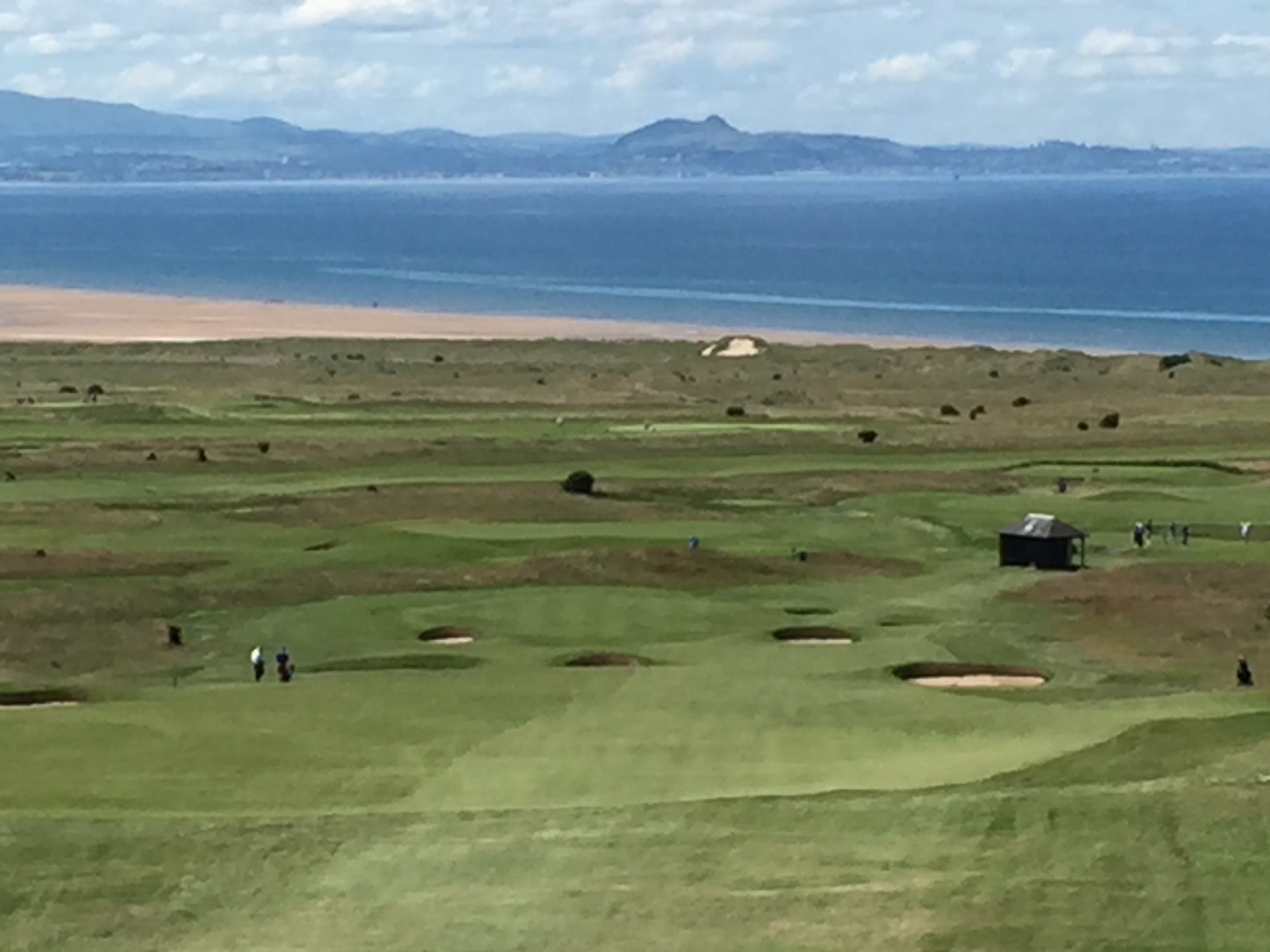
This is followed by Queen’s Head where you get your second breathtaking view of the outward nine staring down what looks like the Olympic downhill at Kitzbuhel to a green complex at the bottom of the world below. The challenge here is to control the run out of your ball on both shots which take full advantage of what gravity and tightly mown bent grass fairways provide.
Continuing the royal theme King’s Chair is a wonderful sprawling four par that straddles a blind hill and leads to a long approach to a tightly set green complex. It is looking for a draw approach to work into a narrow green that flows away from you.
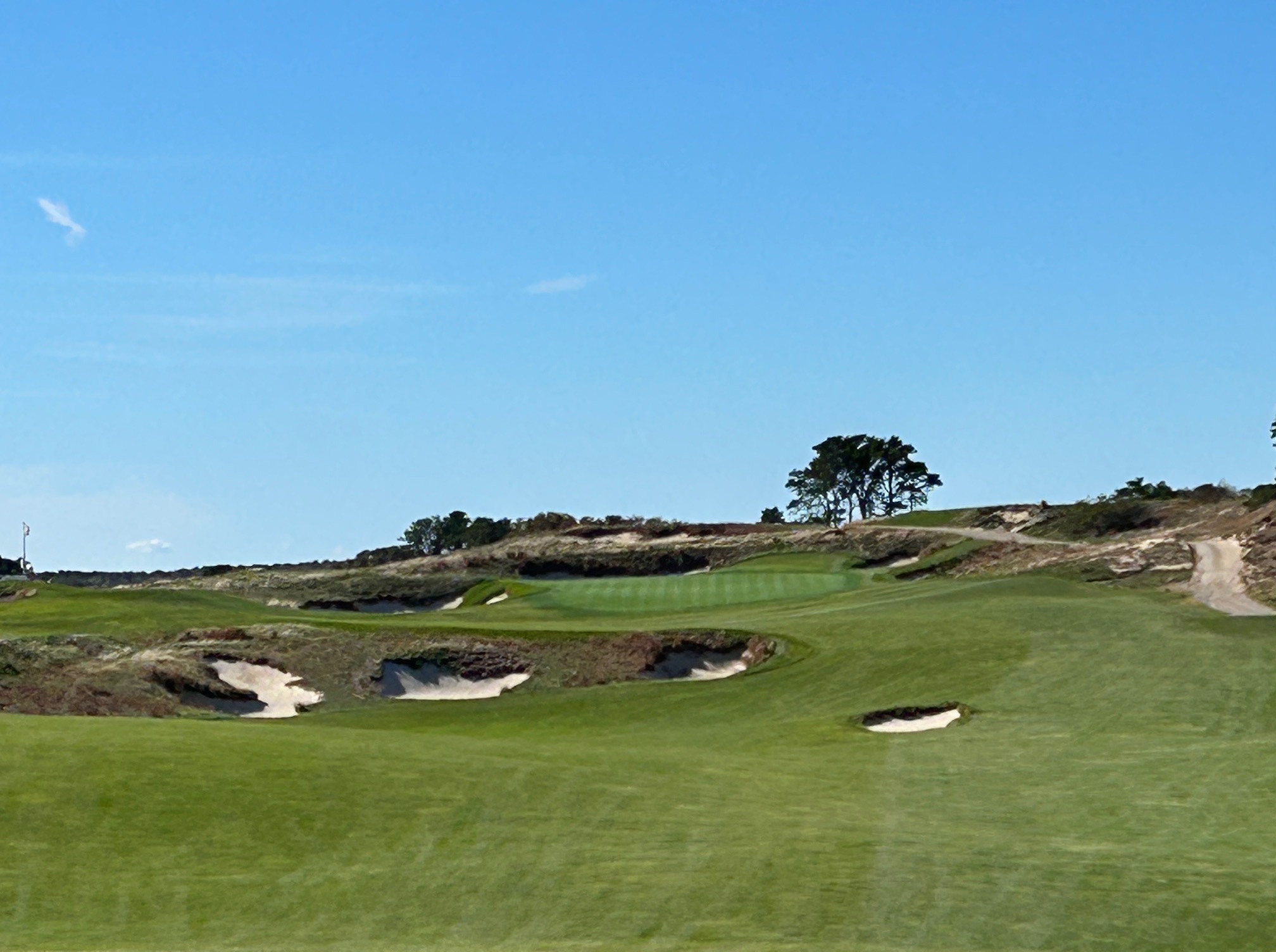
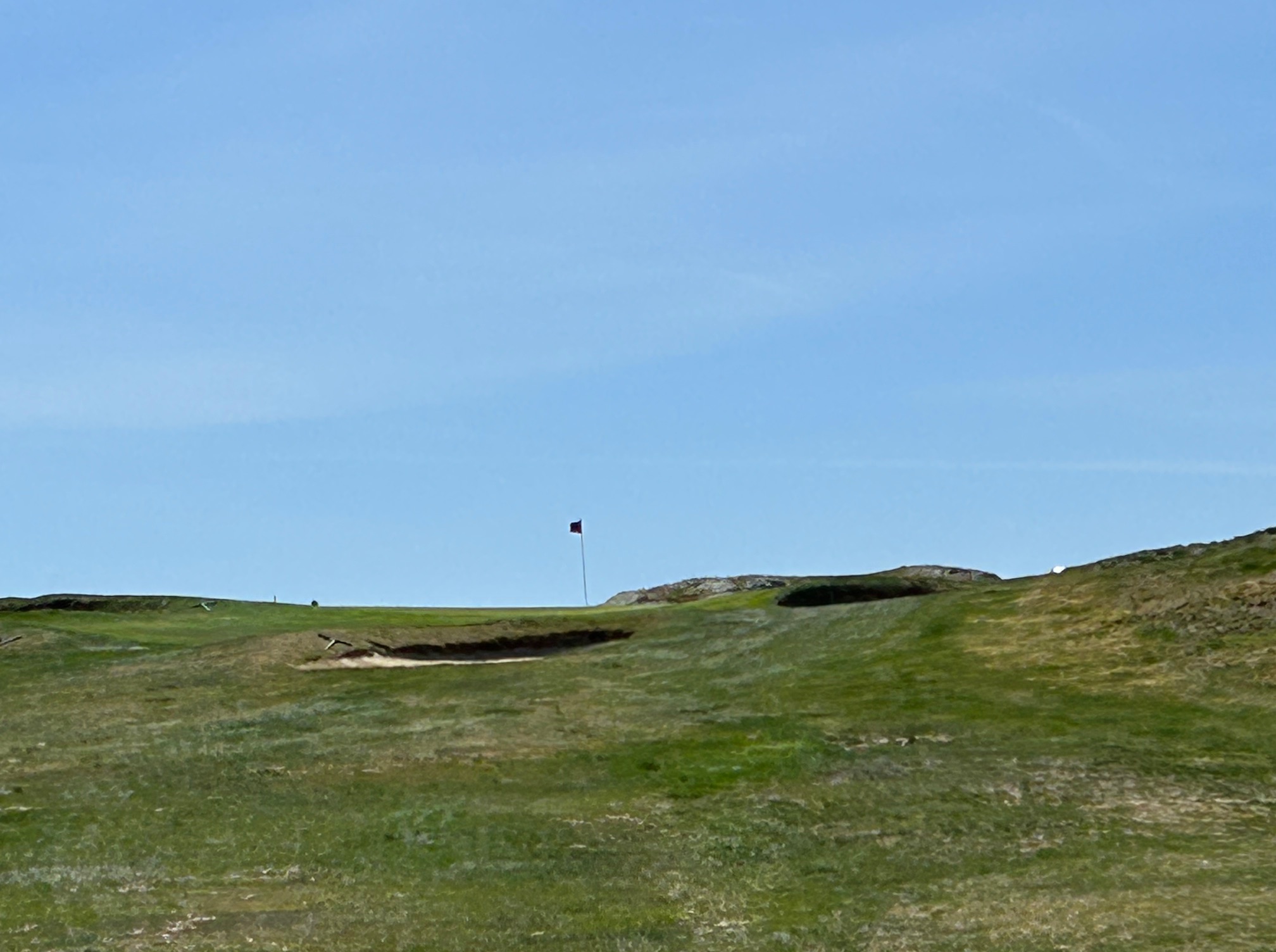
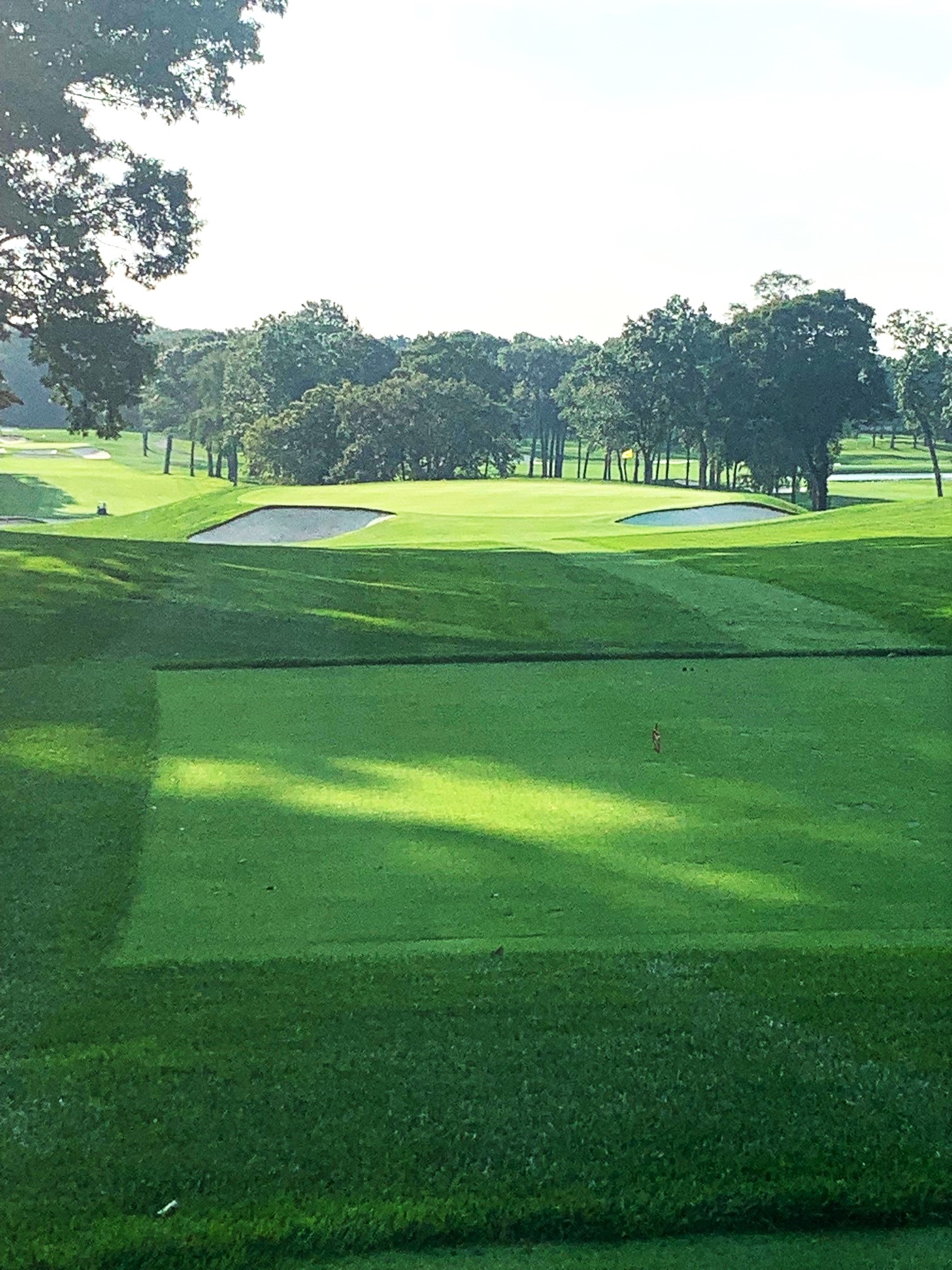
The outward half finishes with a slippery downhill three par that requires a flighted short iron feeding onto a green falling precipitously away from you. The green is tightly ringed by eight bunkers, so errant playing lines are punished severely. This has been an exhilarating experience so far but the ride is only half over.
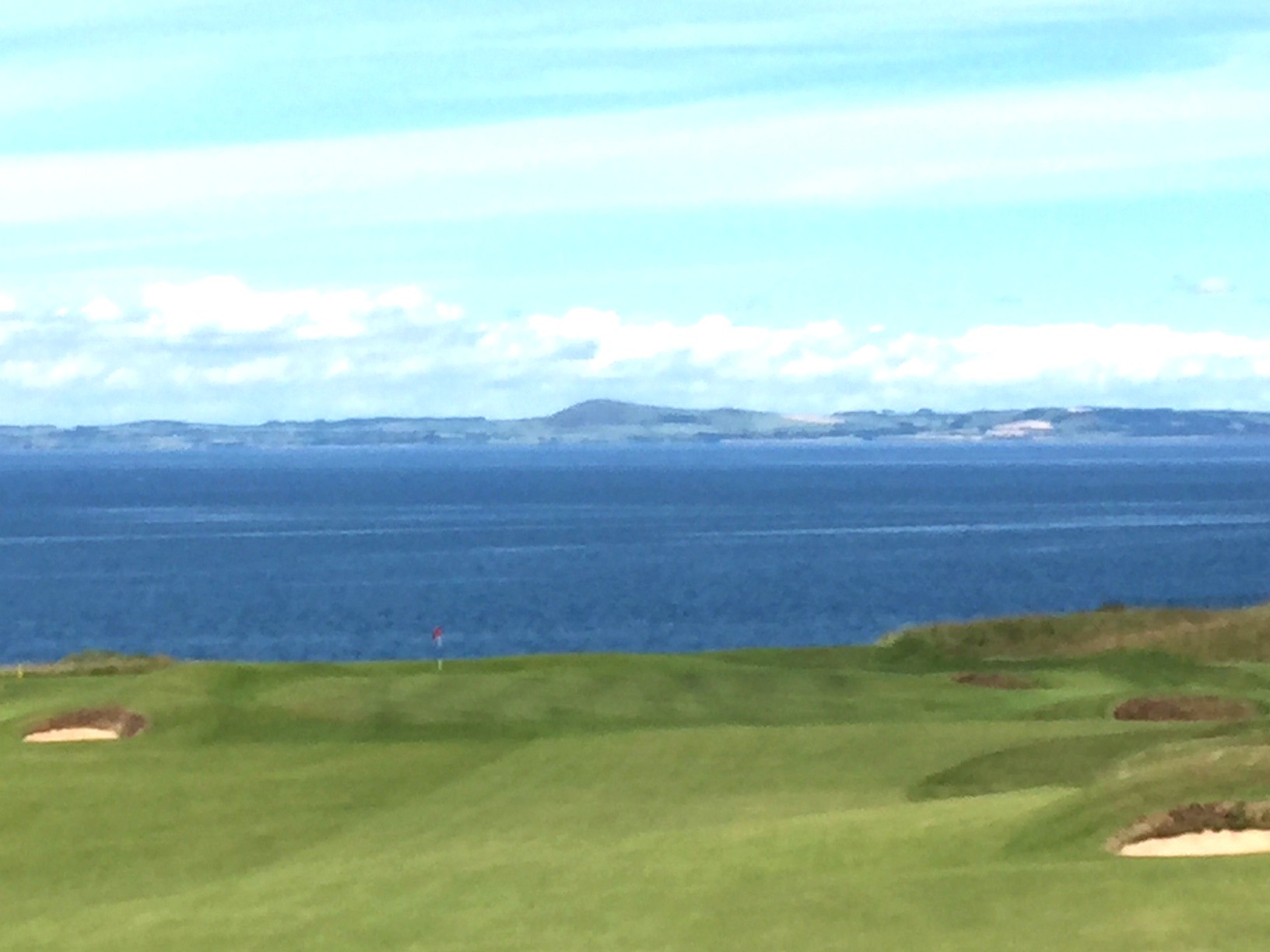
The inward nine begins with two long and challenging Par 4s. The tenth plays to its #2 handicap designation and the drive must carry the ridge in the middle of the playing area leaving you a long club across a cross bunker feeding downhill to a green complex with an accessible opening. This is followed by a sweeping downhill hole that is likely playing into a headwind from the sea below which will make it a three-shot hole. From a drive position right center of the pot bunkers you see from the tee you are likely looking at a lay up down the right to give you an open look up the green angled to the left.
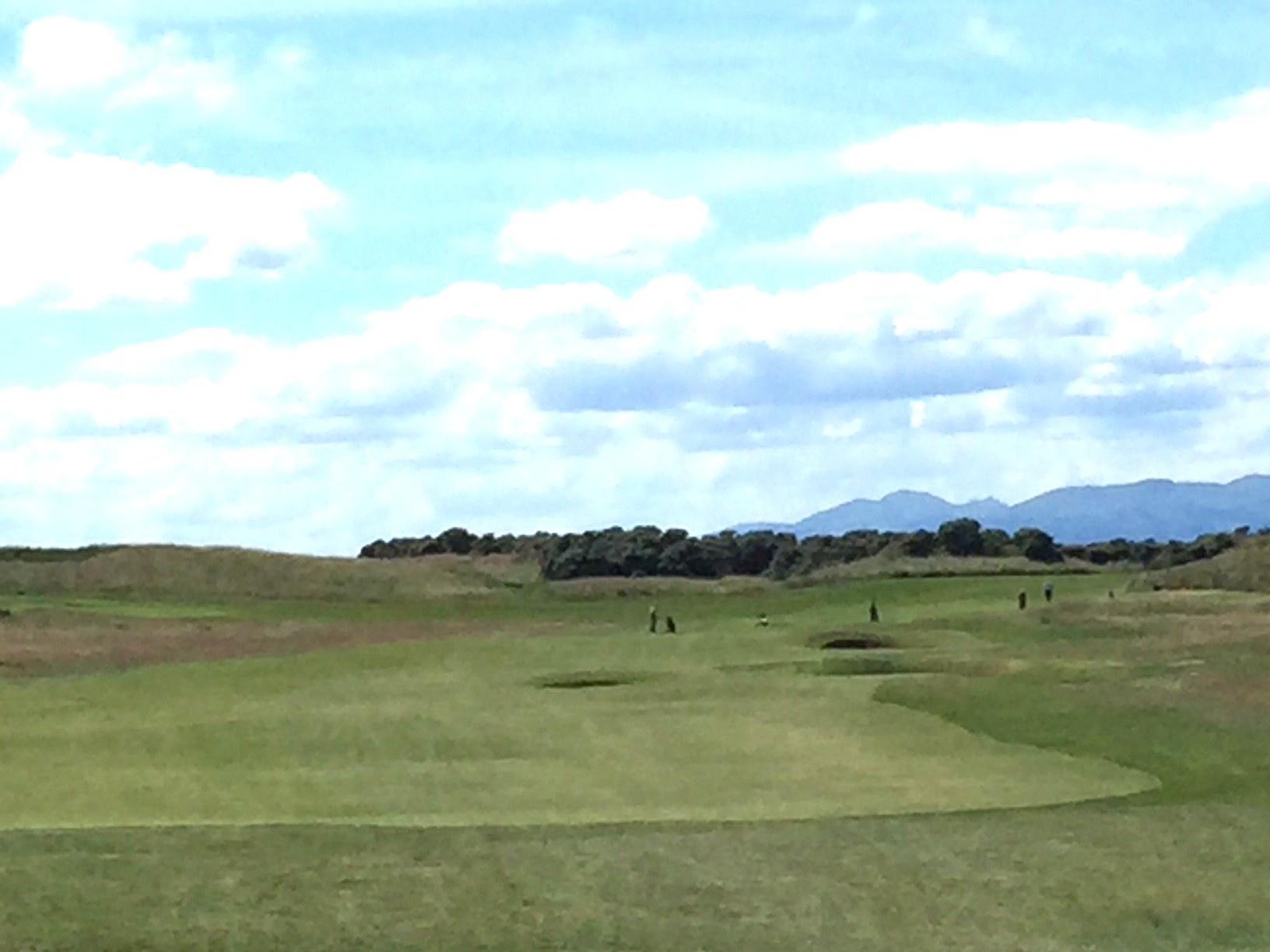
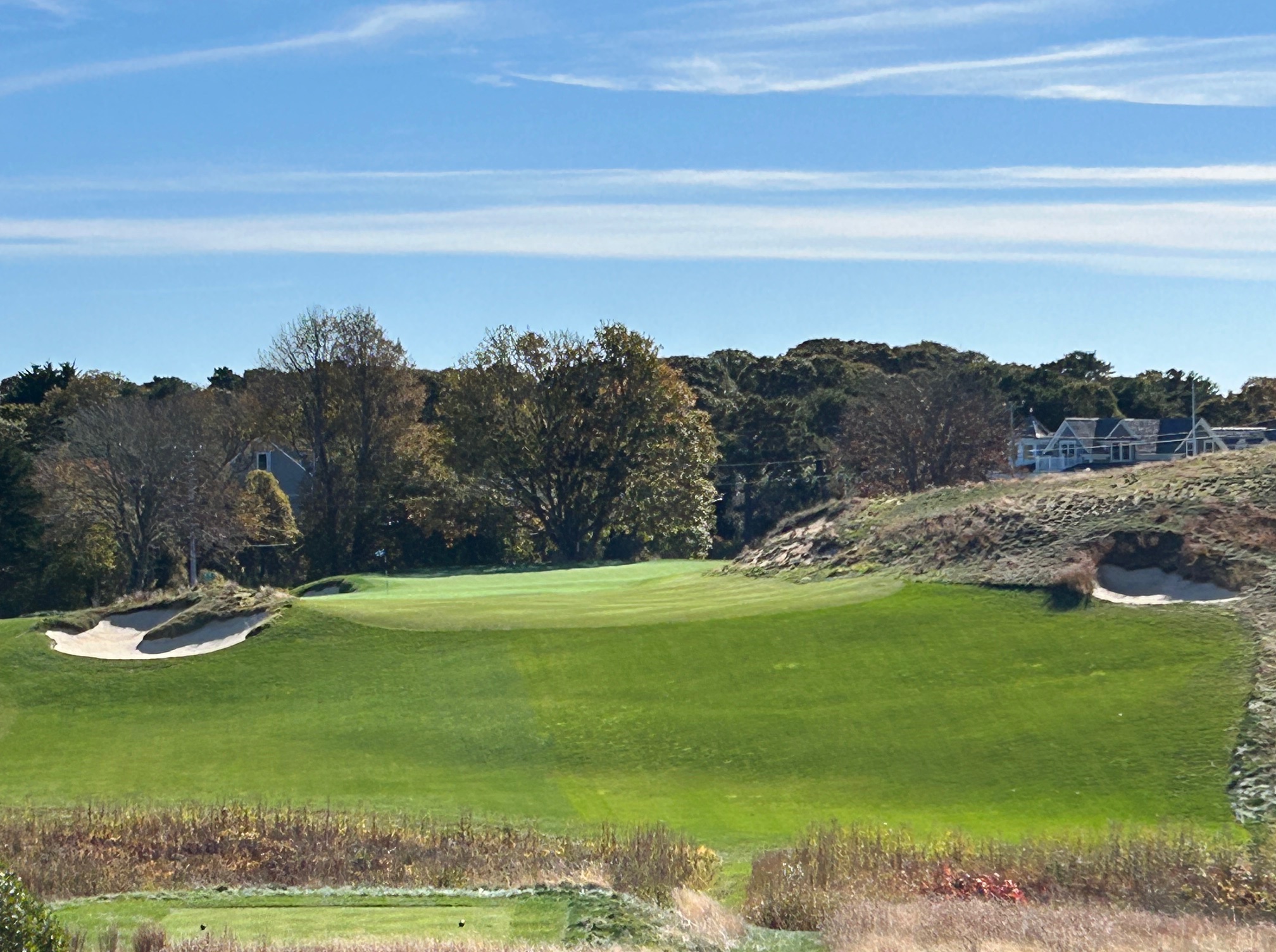
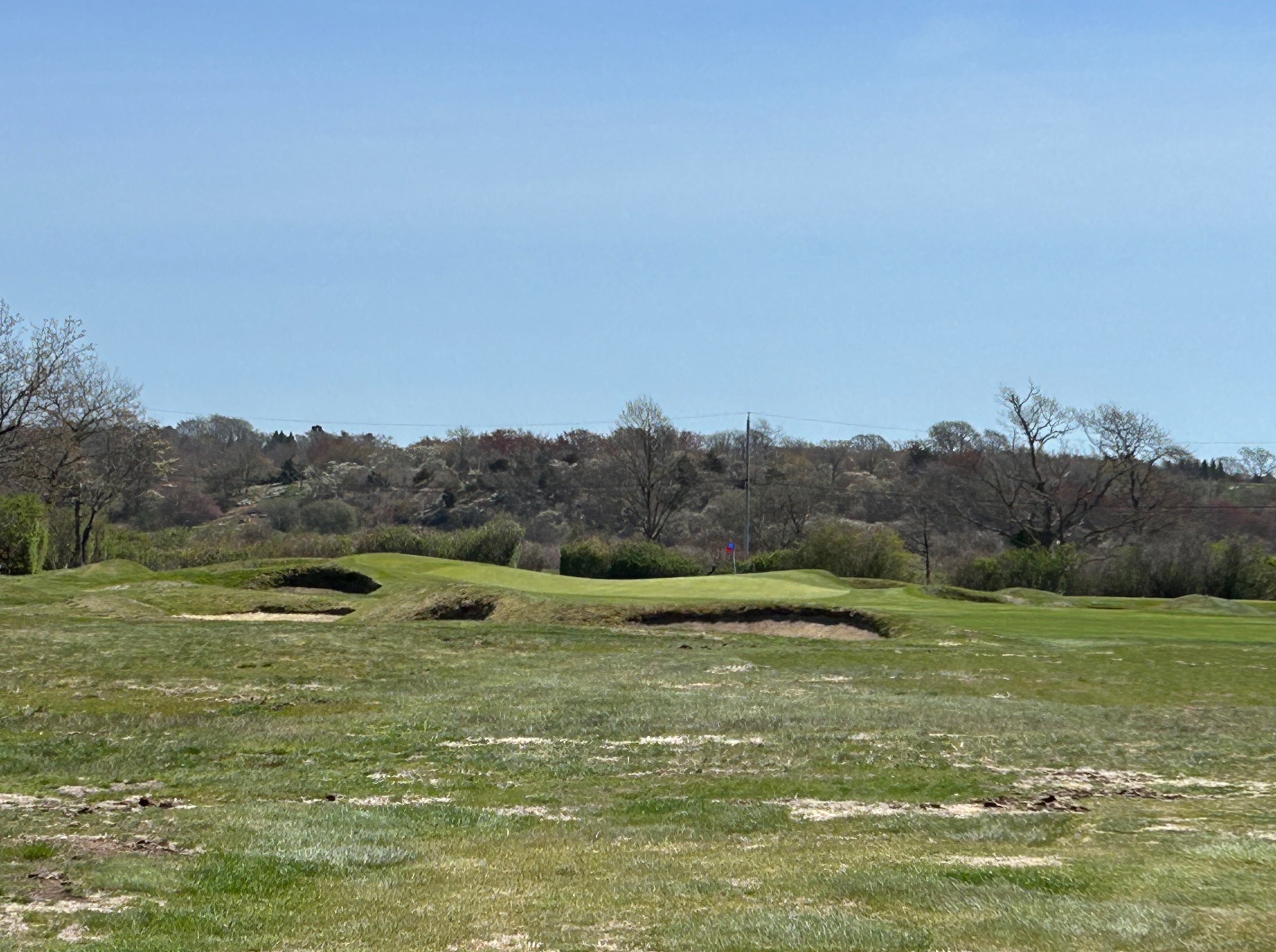
Some relief in store as the next Par 5 probably plays shorter than the two holes you just played. The narrow green approach here is tricky with one nasty pot bunker pinching from the right.
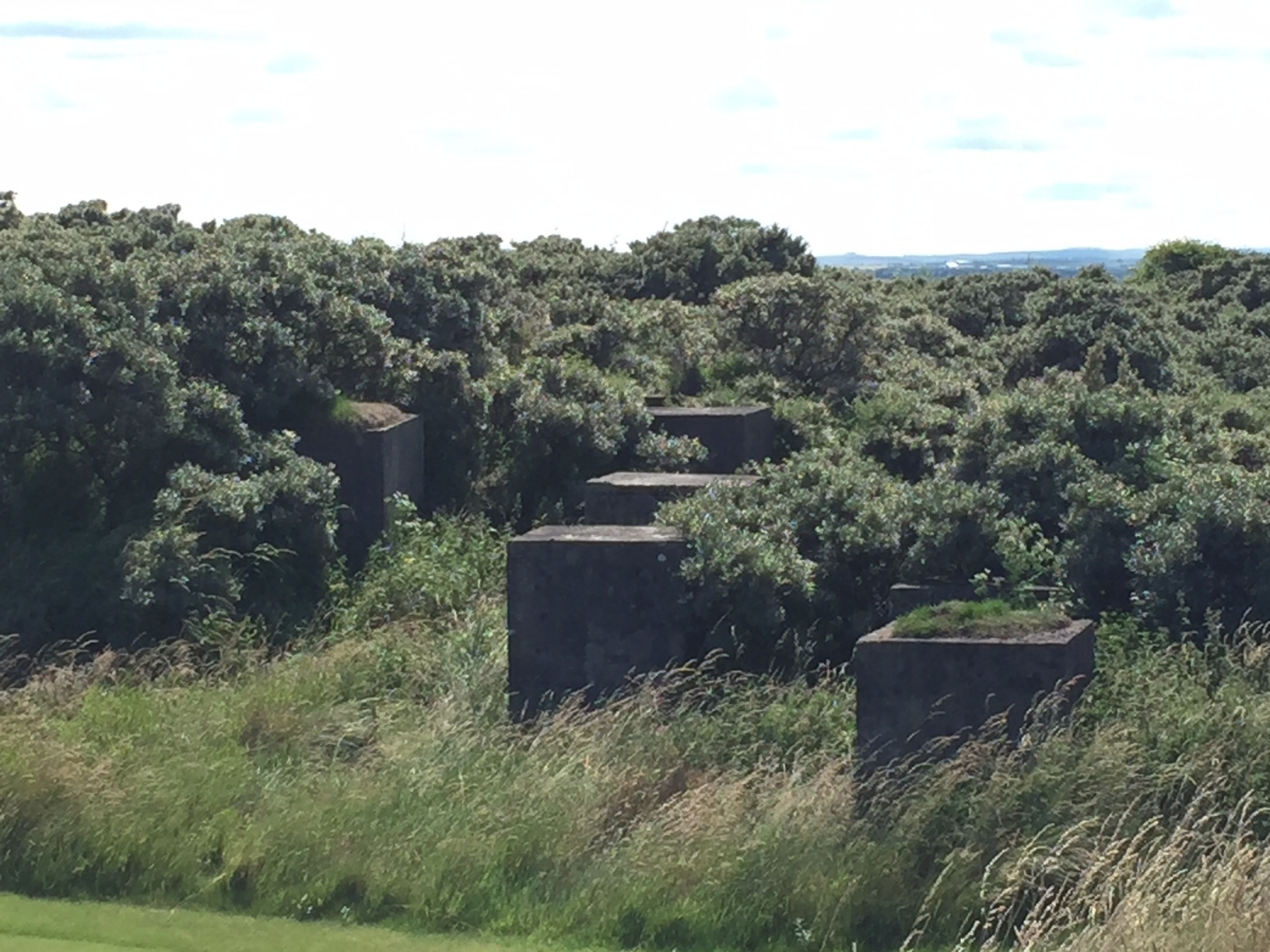
This corner of the property still bears evidence among the seaside foliage of massive concrete barriers the English put in place to deter a potential tank invasion the Germans might have had in mind during WWII.
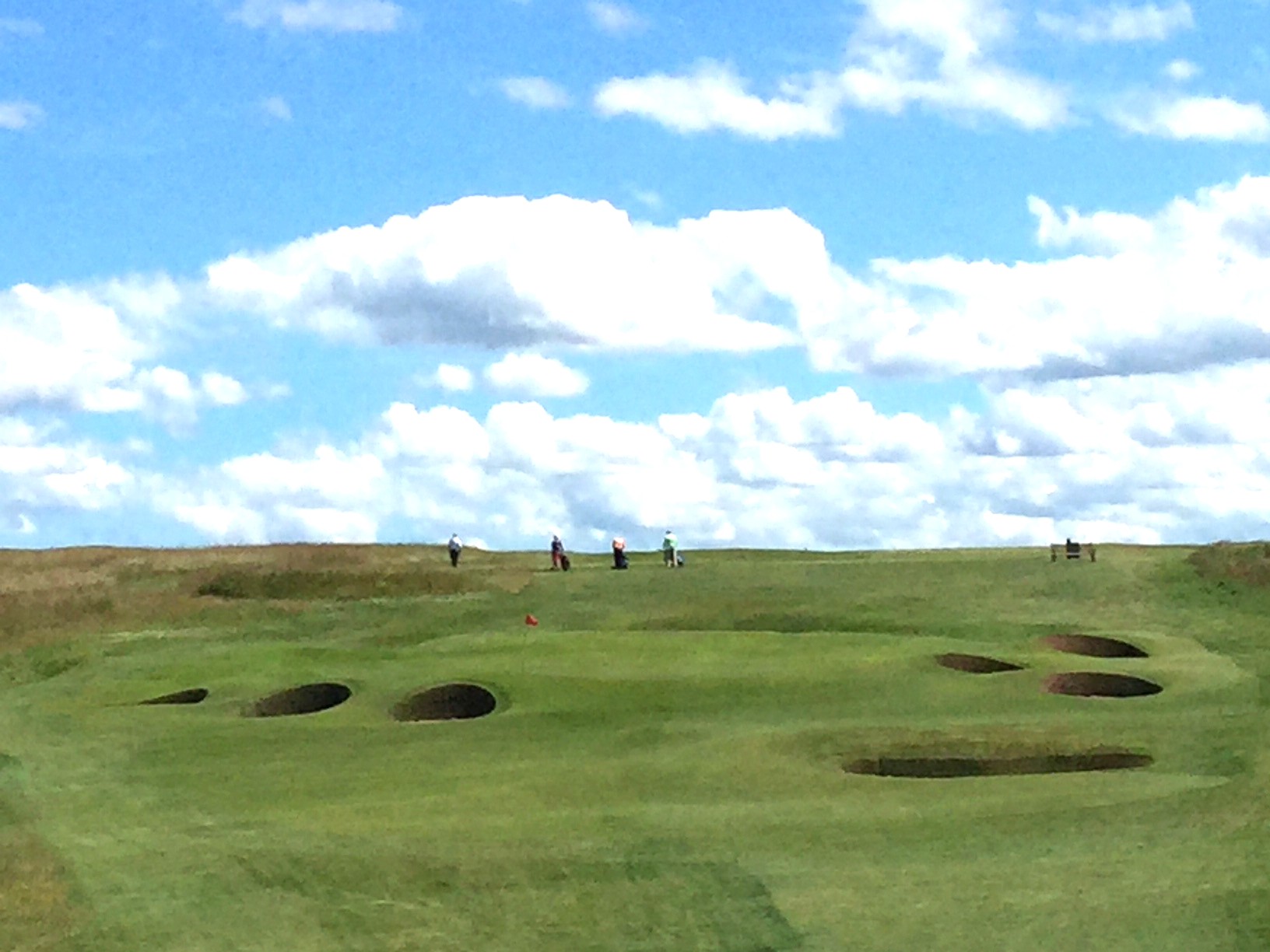
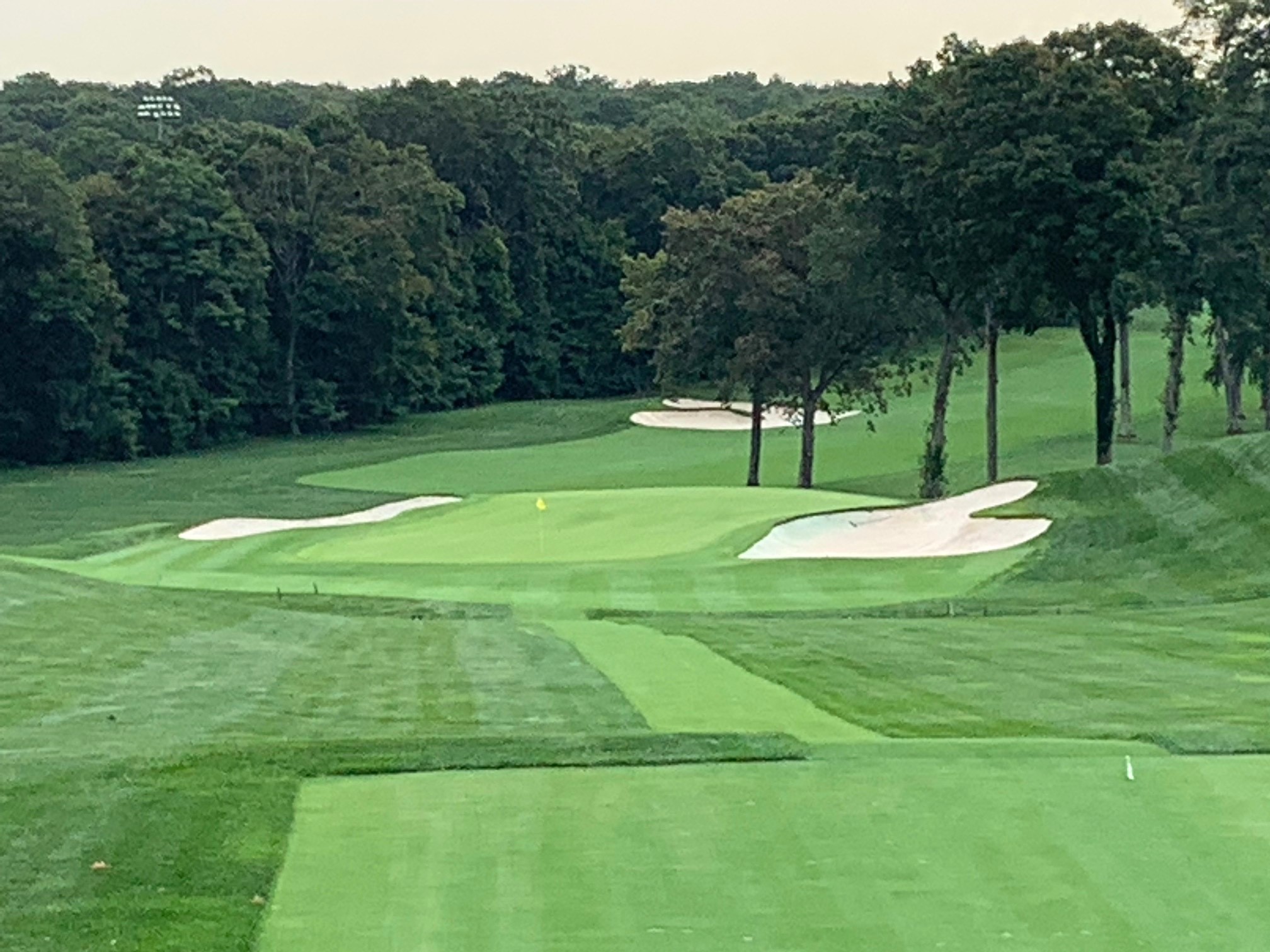
The course turns back toward the clubhouse with a tidy uphill Par 3 fronted by fierce sod wall bunkers on both sides and a moated collar above the green to capture overzealous tee shots. The green has a bowled contour that feeds the ball to the center so just make sure to pick enough club to clear the front edge.
Number 3 handicap hole is next with a very long slightly uphill Par 4 which is only reachable in two with wind help at your back. As you plan your fairway wood on your second be aware of the two pot bunkers respectively 70 and 30 yards from the green which can gather a tepid approach and bring a double into play.
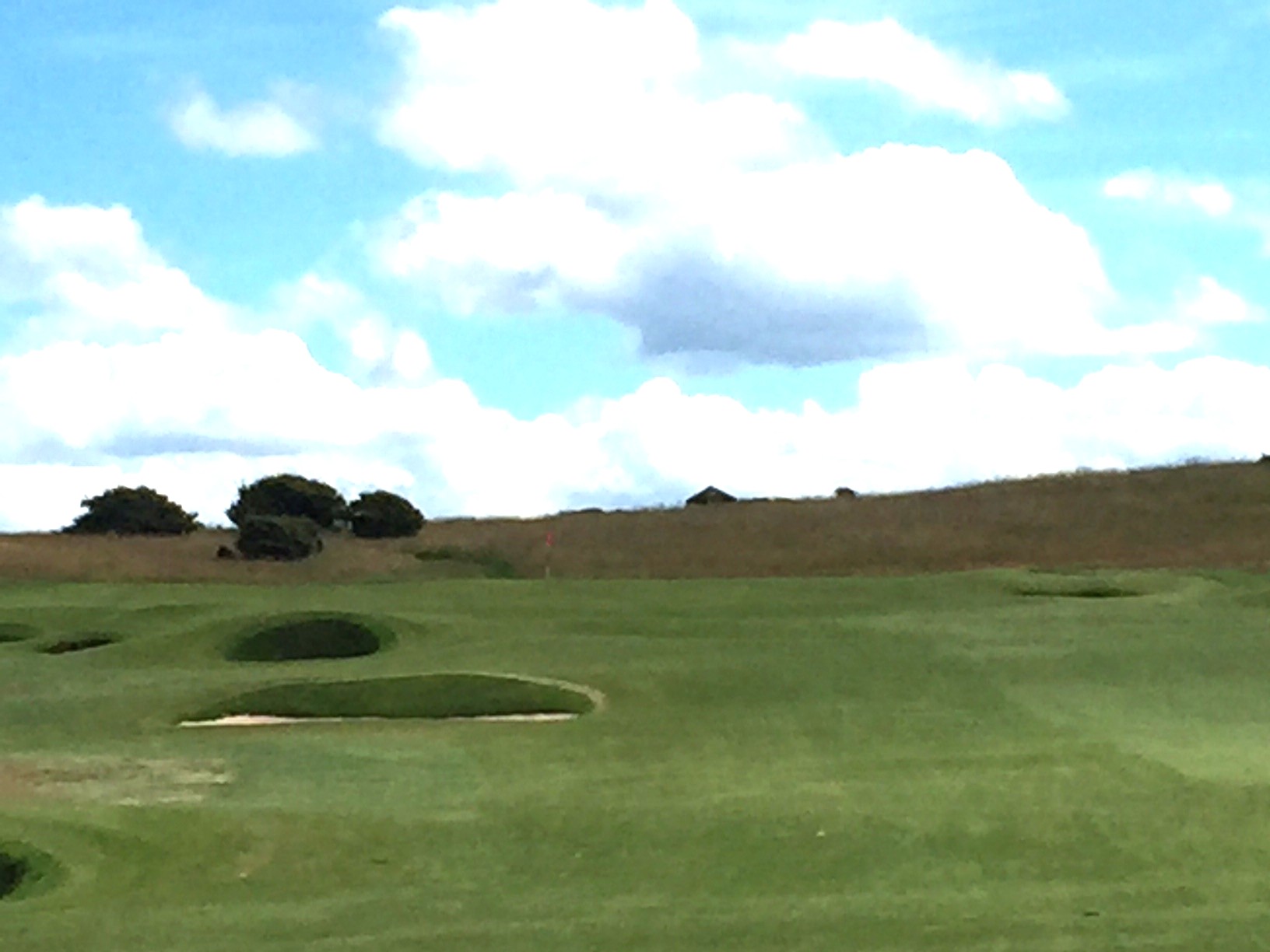
Continuing the climb back up Gullane Hill this uphill three-shot Par 5 unfolds in front of you. From the center of the driving area your lay up approach is just past the pumphouse on the right leaving you a one club more pitch up to the green tucked into the hillside above.
When you cross the ridge behind the 16th green and step onto the tee of the penultimate hole you are graced with another breathtaking view of the expansive farmland that surround the town of Gullane.
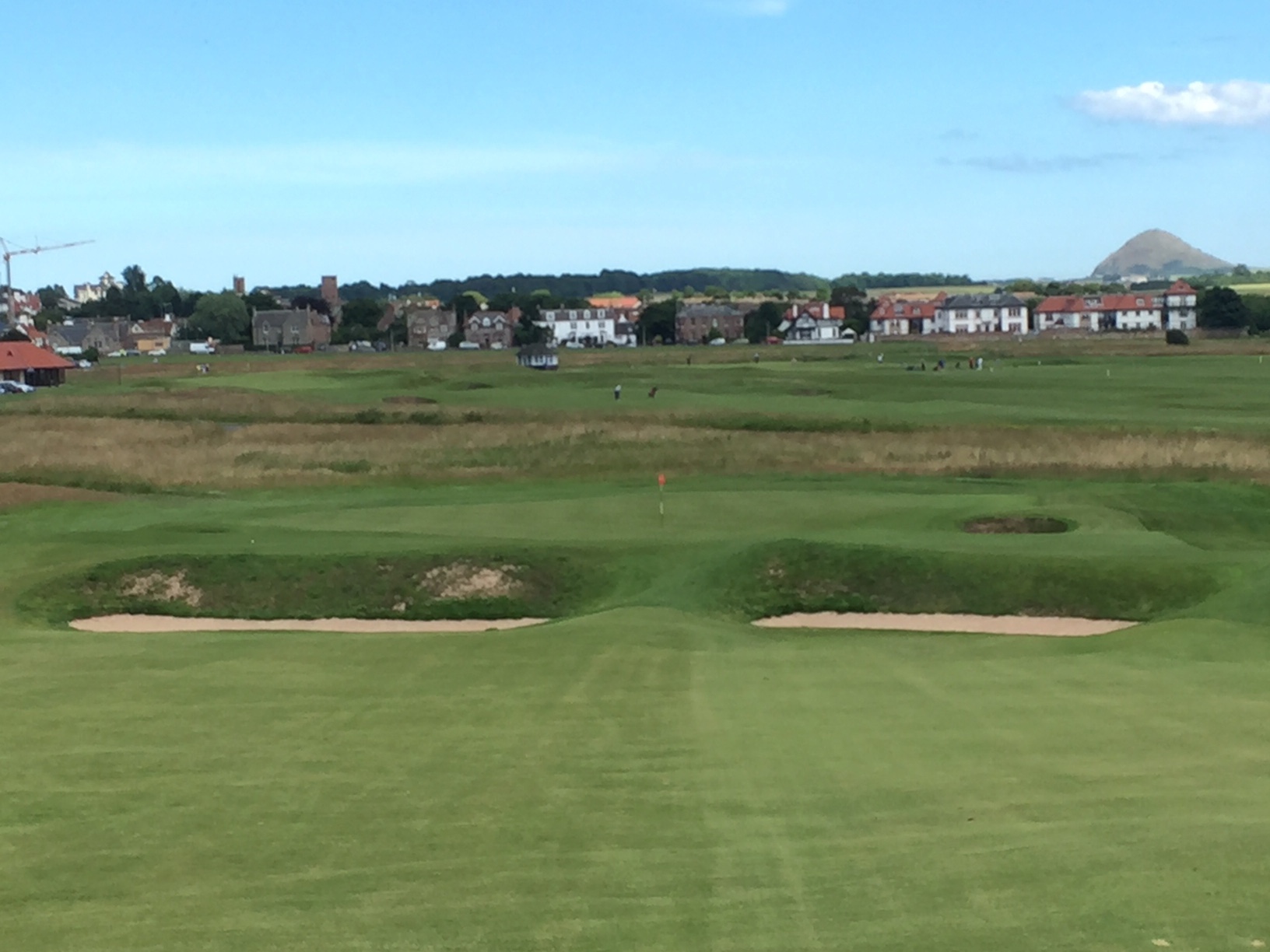
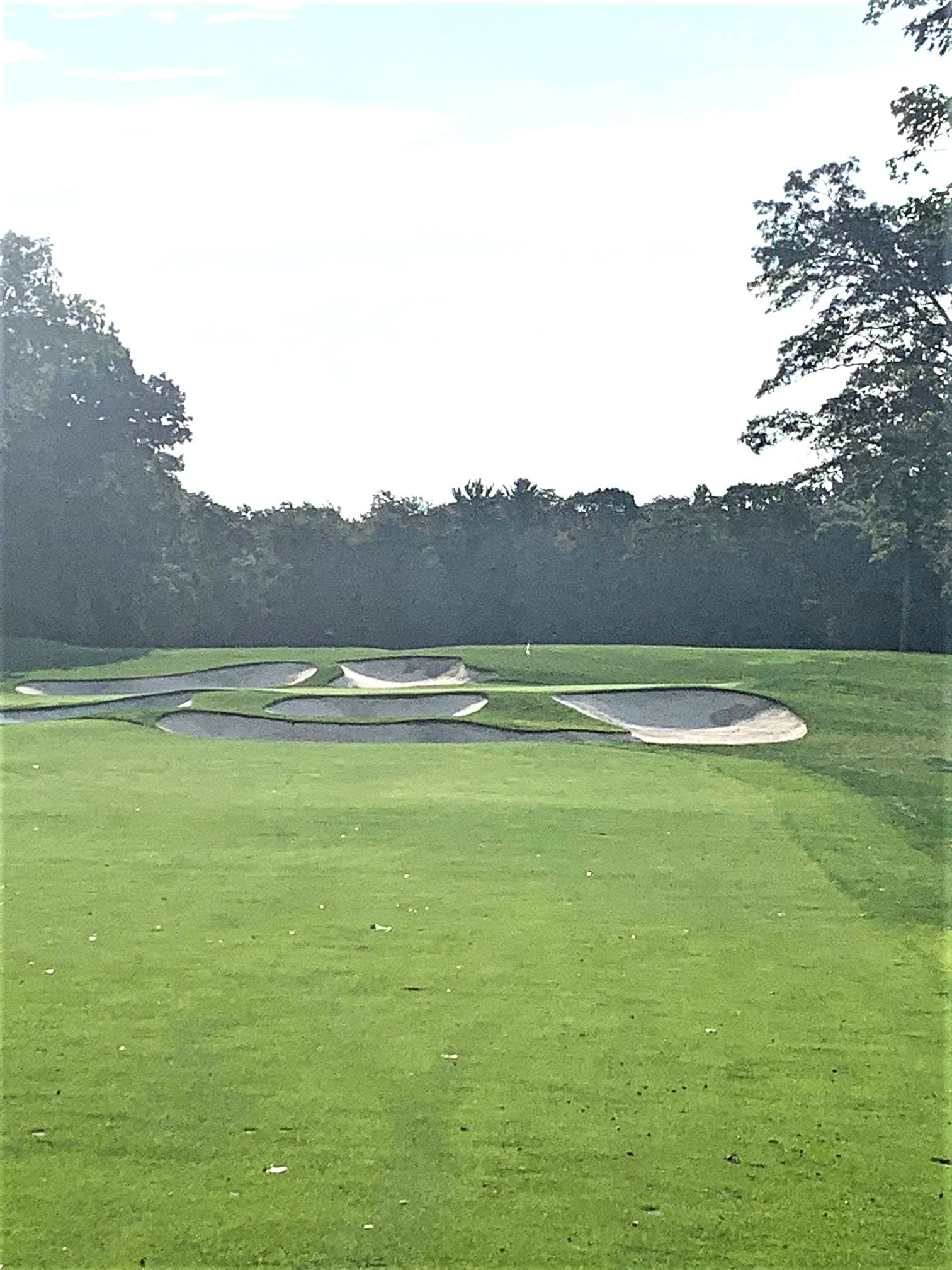
Now you are playing straight down the steep incline you traversed on the adjacent 2nd hole at the beginning of the day. Your tee ball will enjoy a huge roll out as a result and it is 320 yards to the end of the fairway short of the diagonal shishlink cross bunker arrangement 60 yards from the green. The approach shot requires a deft pitch where the incline in front of the green is your friend in trying to tumble one down close to the day’s pin.
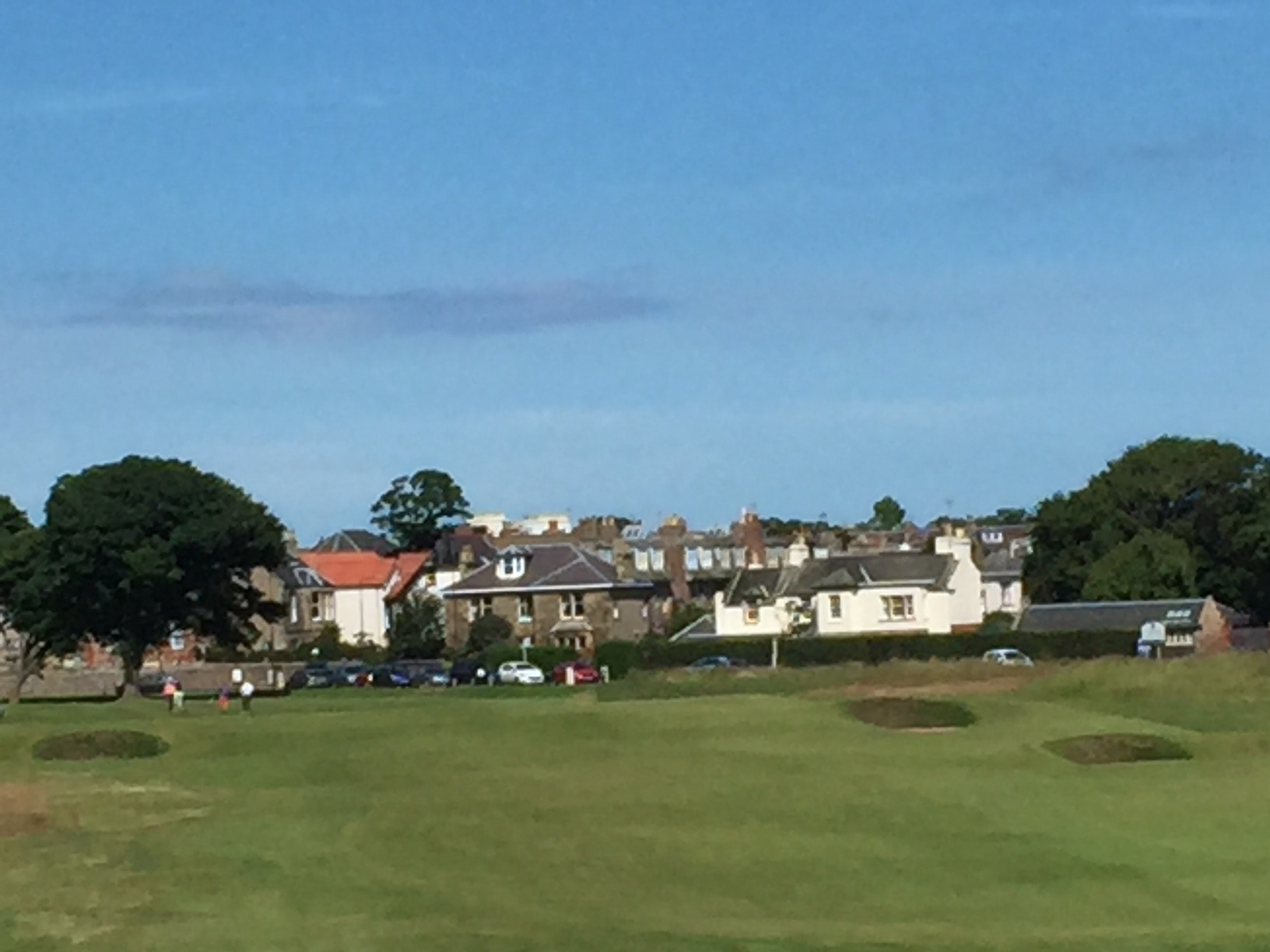
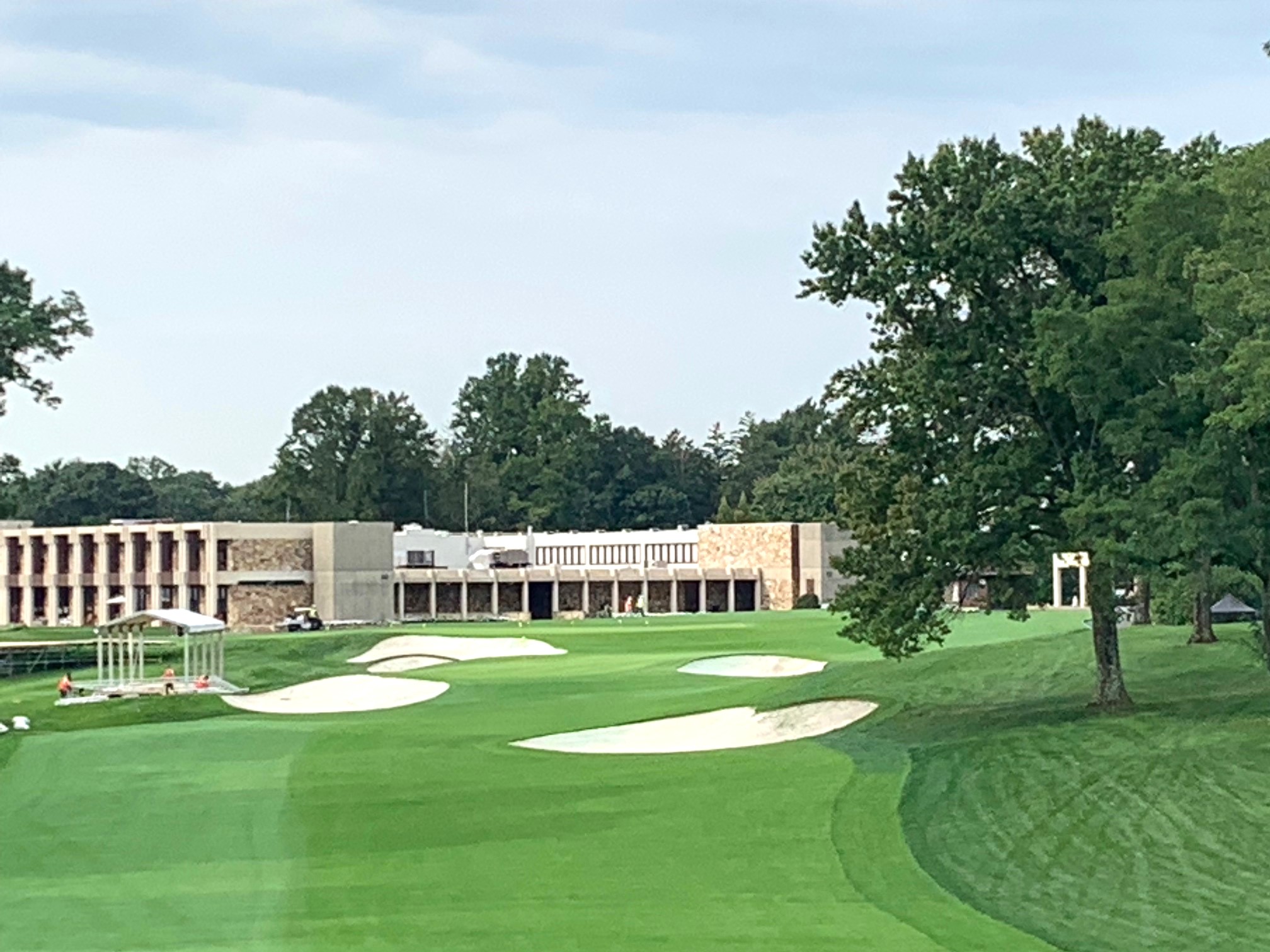
As I said in the beginning this exhilarating ride ends with an on-level Par 4 where control of your tee shot across a rumpled fairway should leave a simple short iron approach into a bunkerless green next to the first tee and the golf shop.
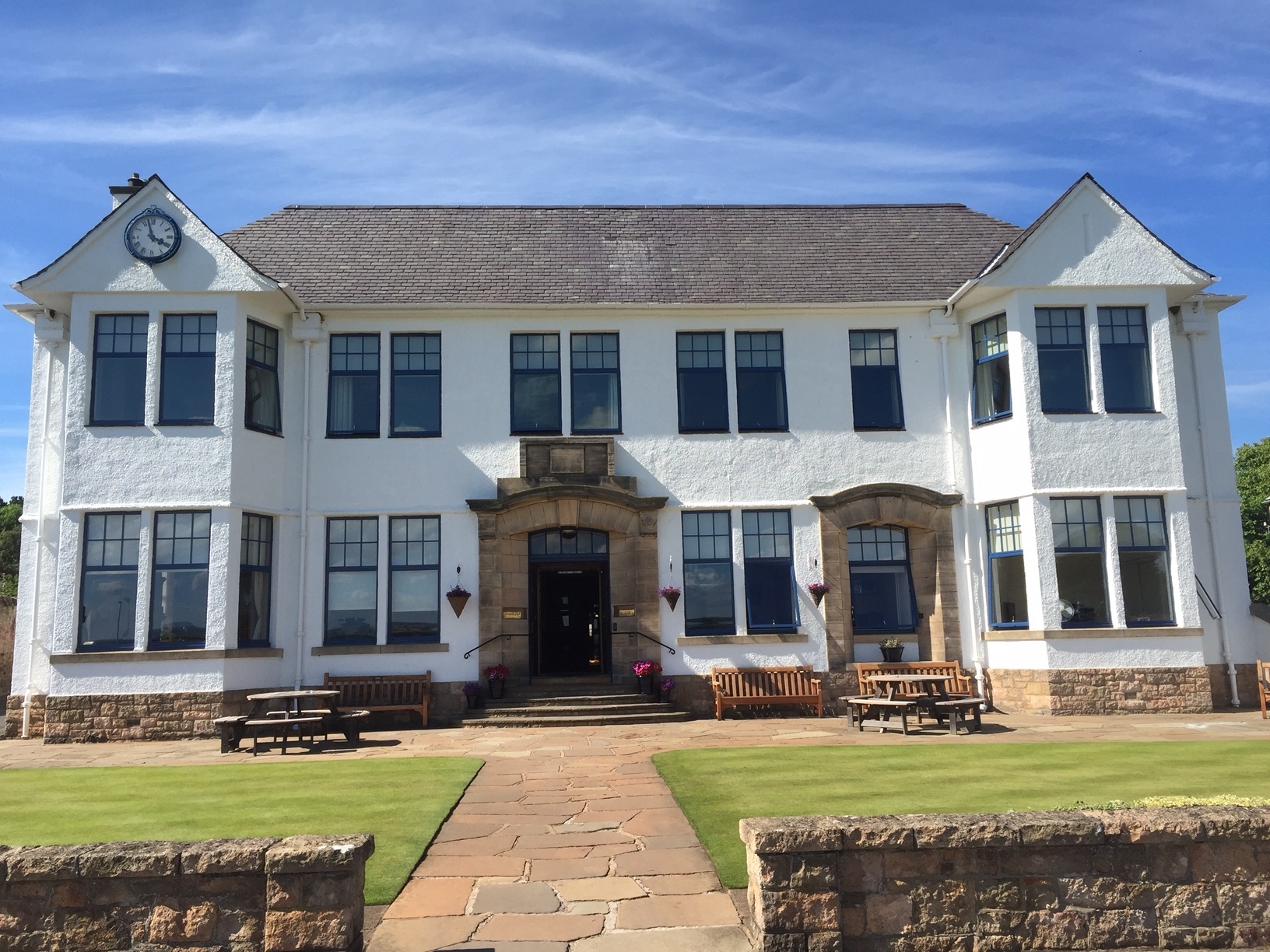
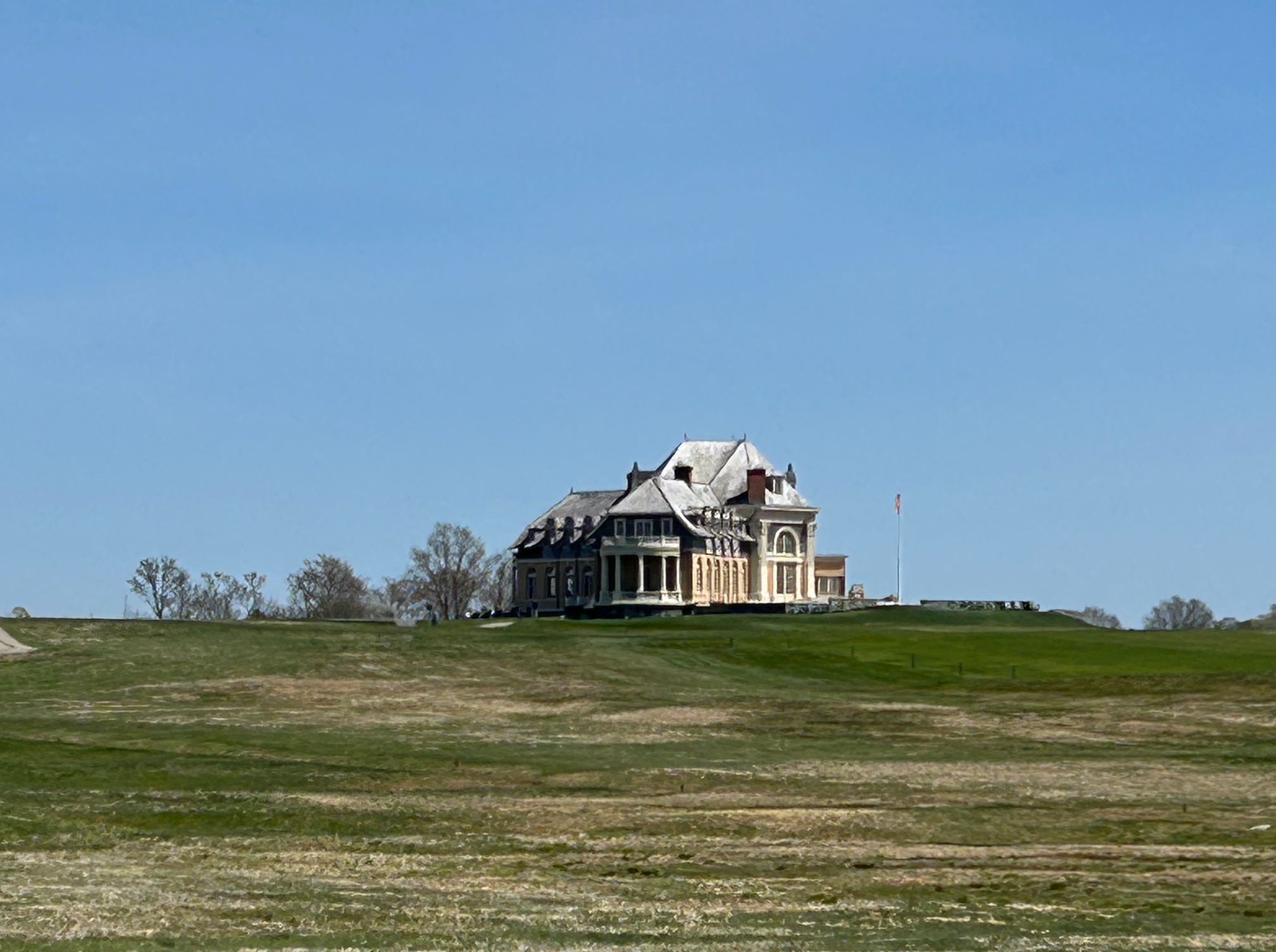
When you are done make sure to check out the Members Club House and bar across the street for a cold one and a chance to recall what a joy it was to traverse these hills of Gullane.

Footnote to consider: There is a quaint museum adjacent to the golf shop which houses the amazing personal collection of golf artifacts of Gullane historian Archie Baird. This collection of old clubs, balls, and Scottish golf memorabilia is well worth a half hour of your time but it requires calling ahead of time for an appointment through the Gullane Golf Pro Shop. Click on this link for our review of the Archie Baird’s Heritage of Golf Exhibition.
East Lothian, Scotland
Architect: Unknown (1882)
. Par Rating Slope Yardage
Blue 71 73.9 127 6873
White 71 72.6 126 6583
Yellow 71 70.4 122 6162
Red 71 75.0 131 5903
If you would like a printable PDF of this posting including a yardage book quality hole-by-hole description of how to play the course hit the link below.
(Click moegolf logo below to get the the printable text of this posting)







































 moegolf