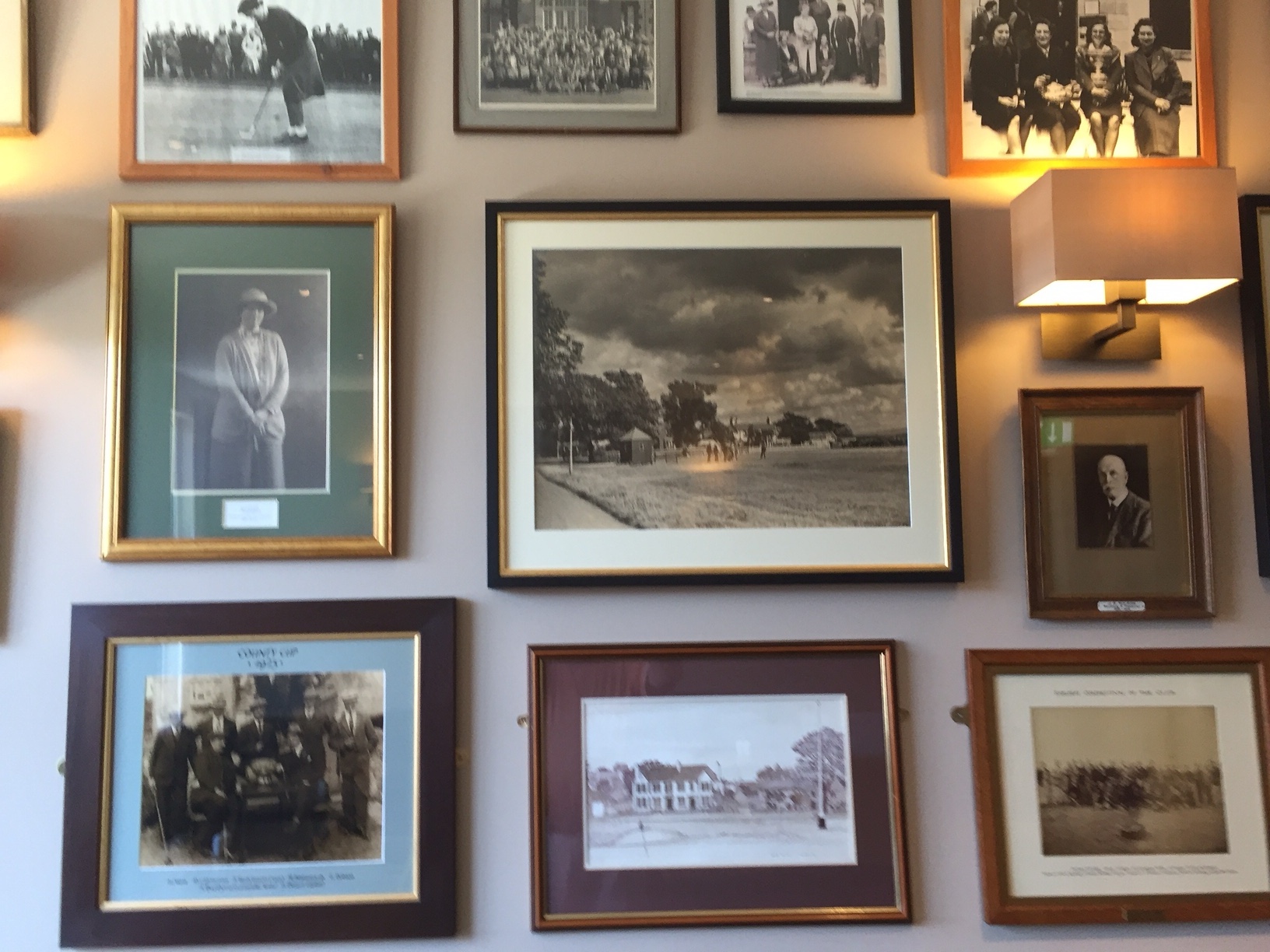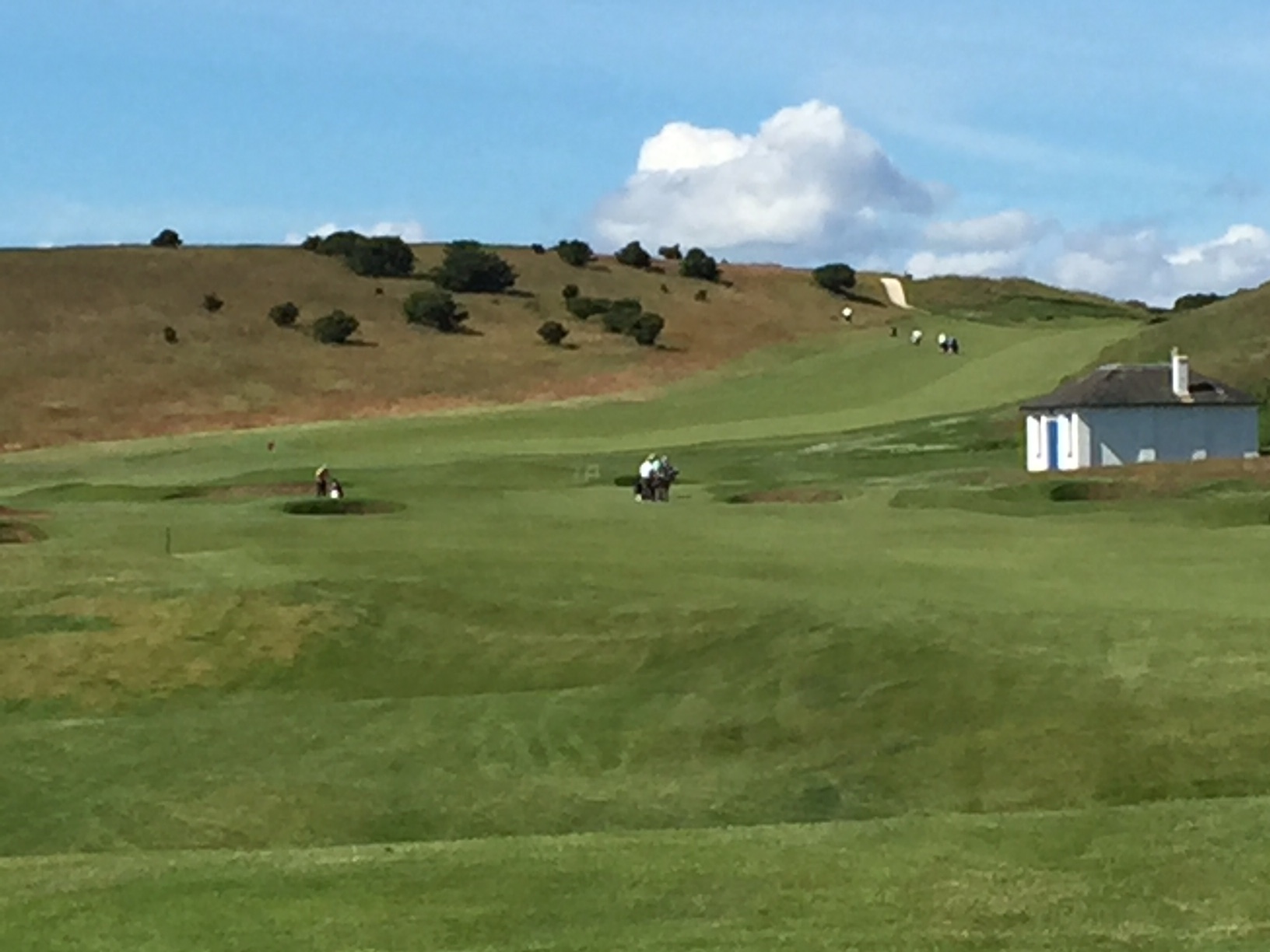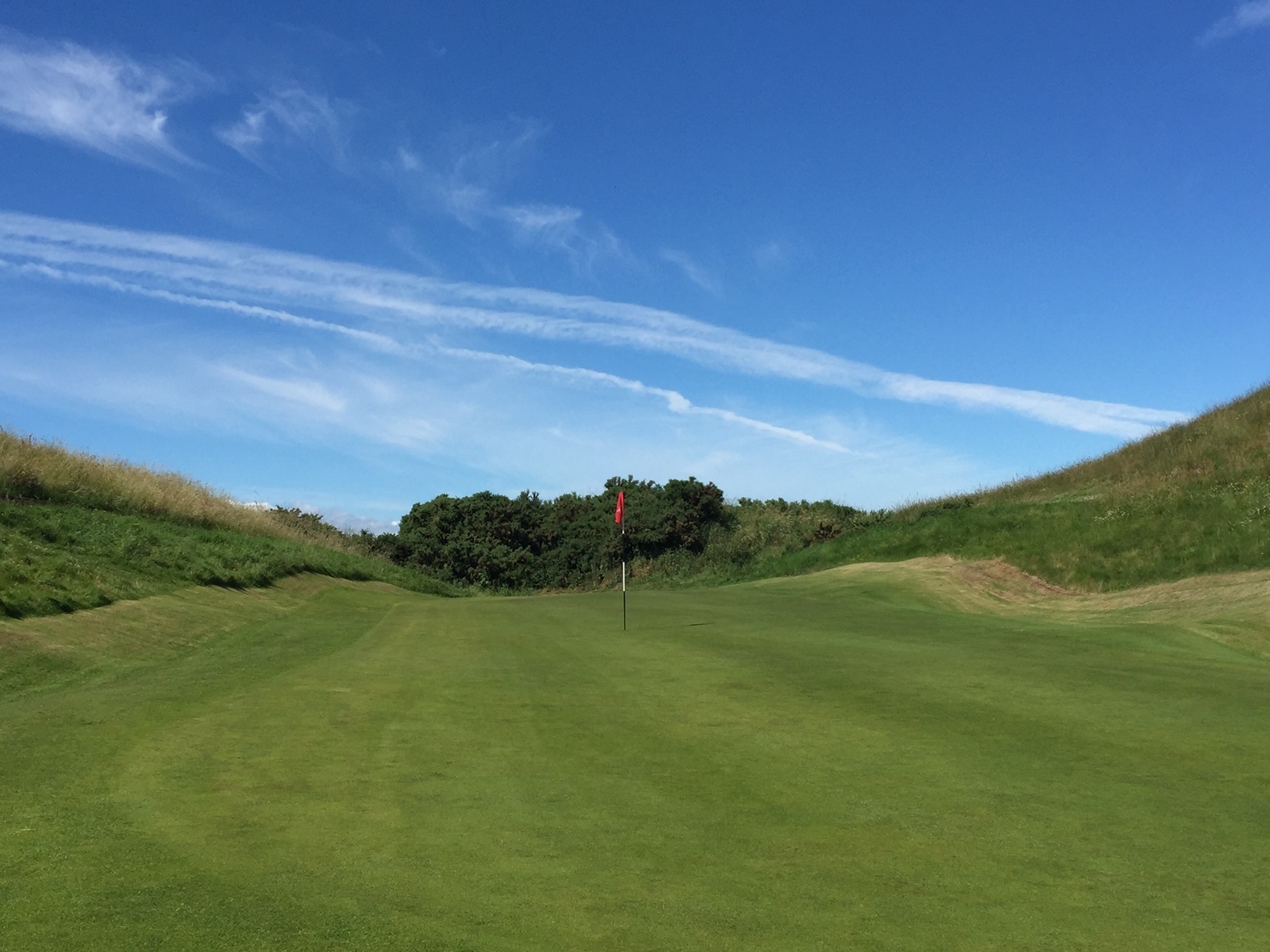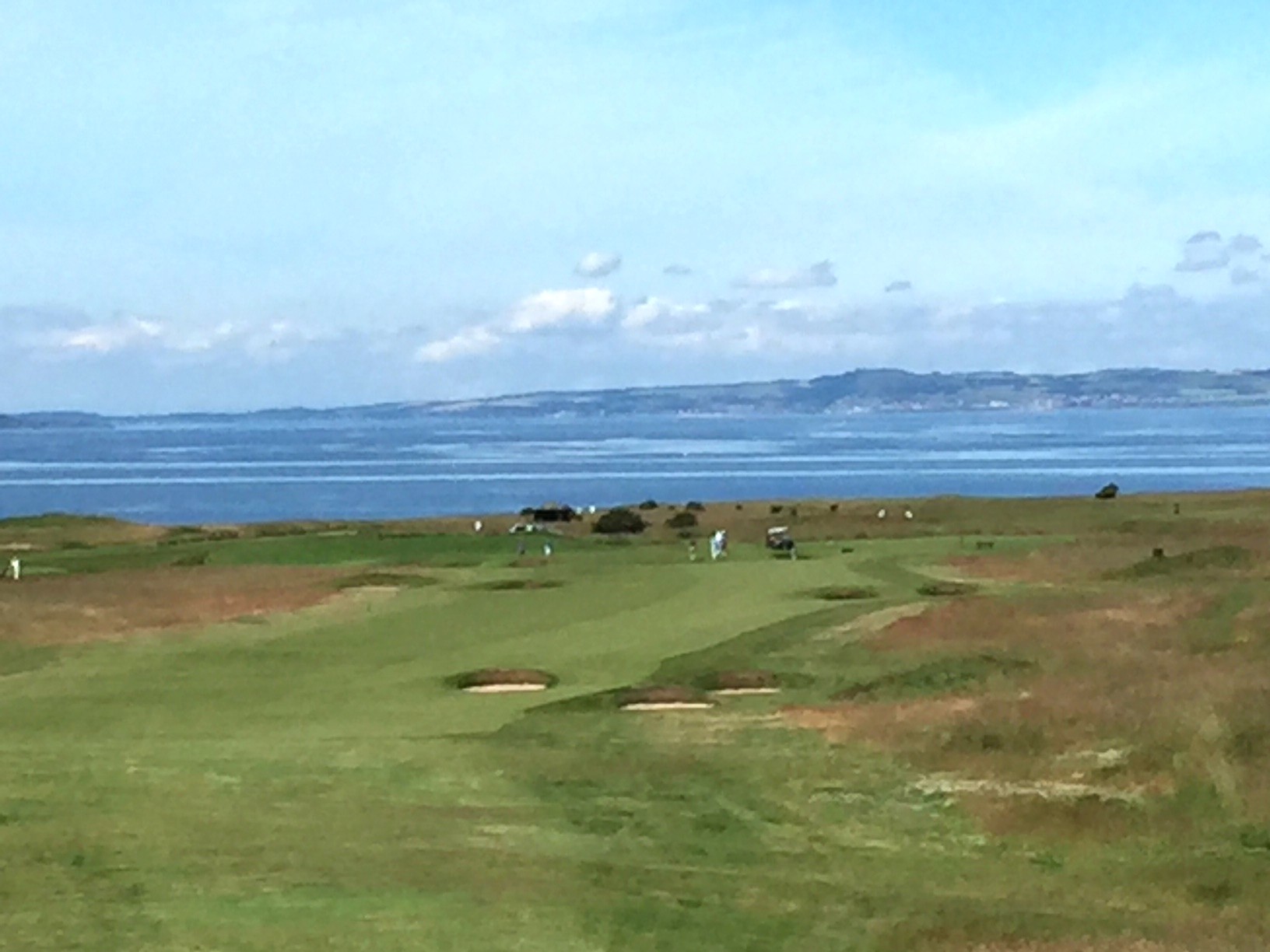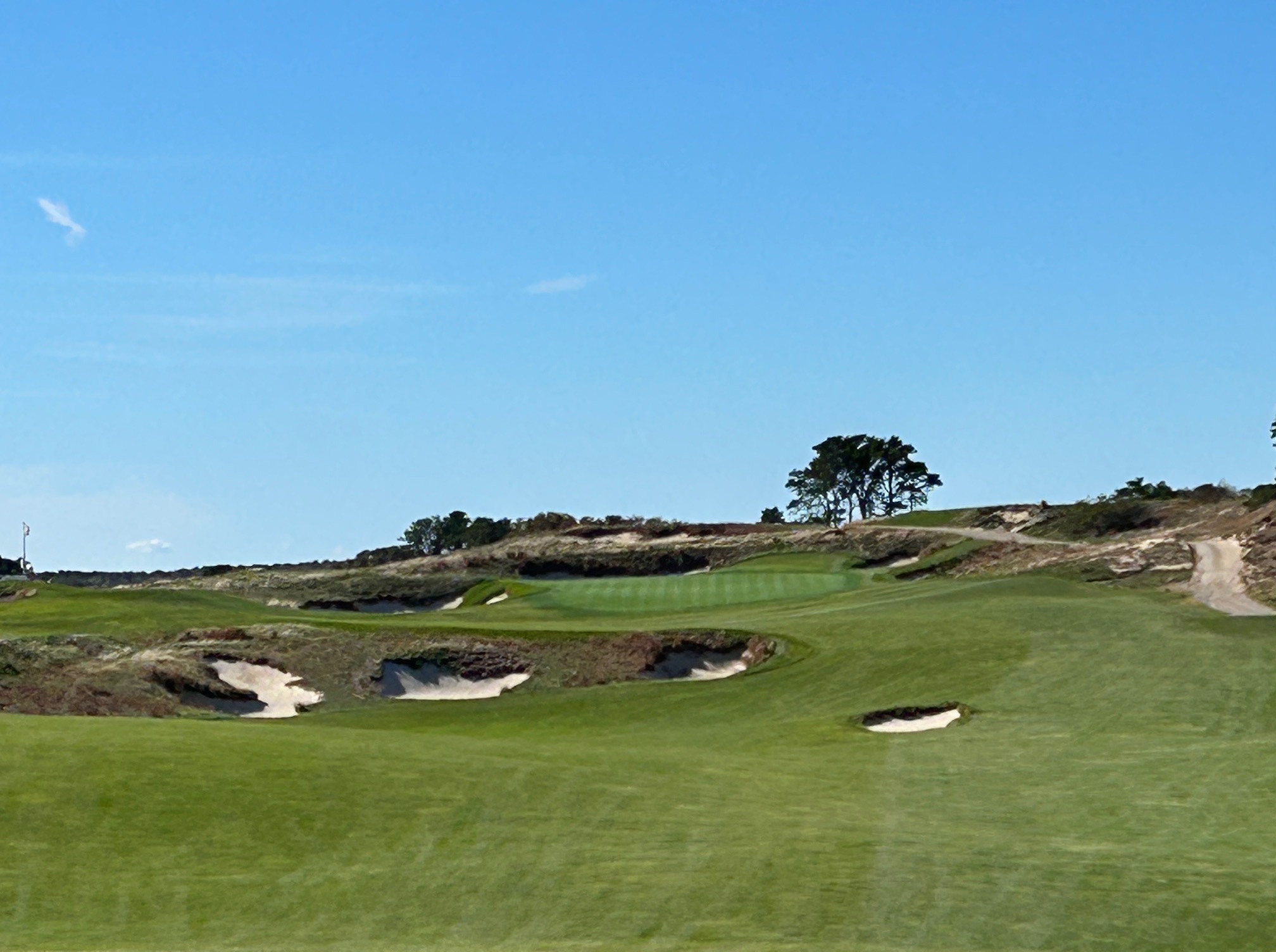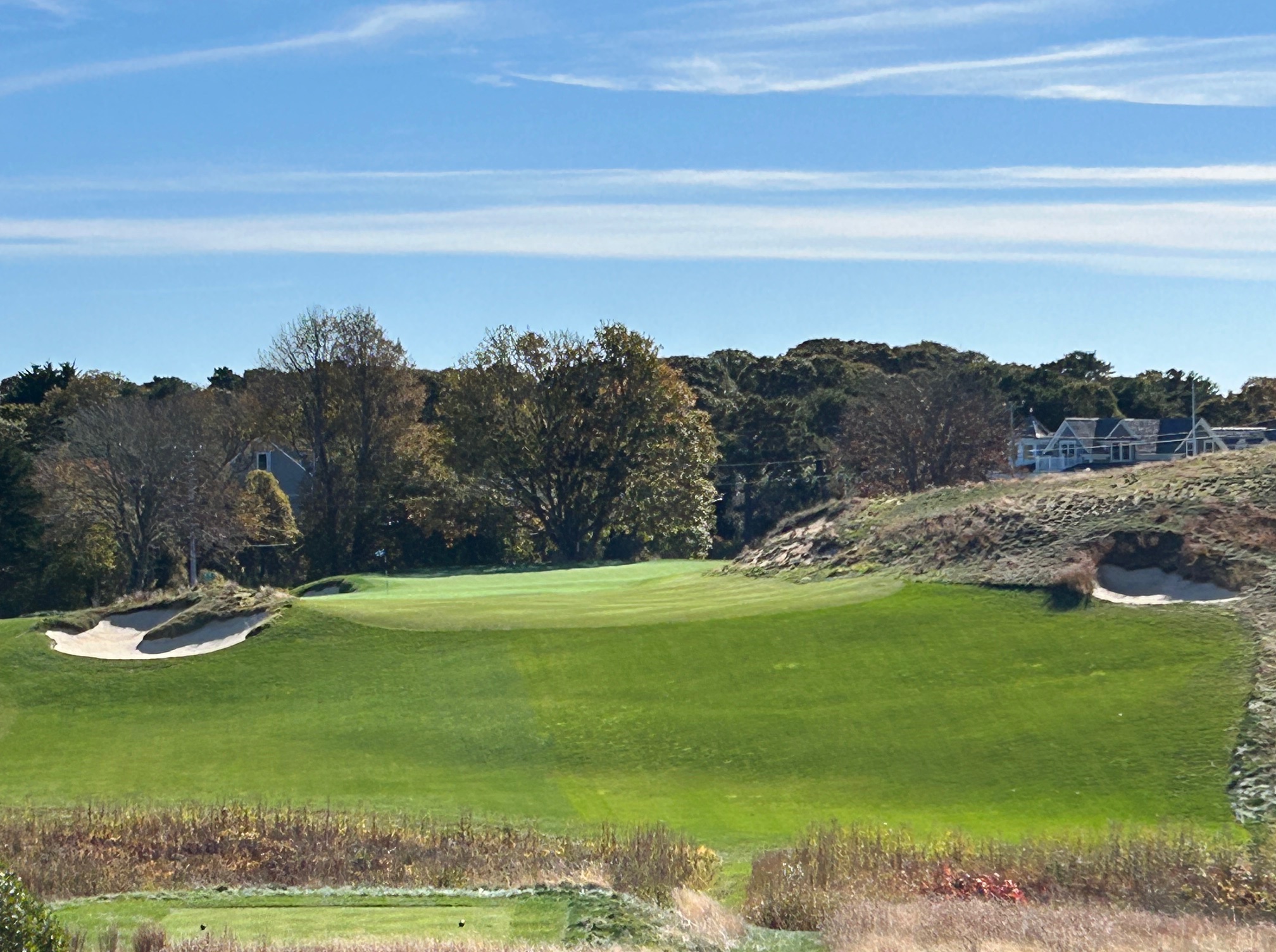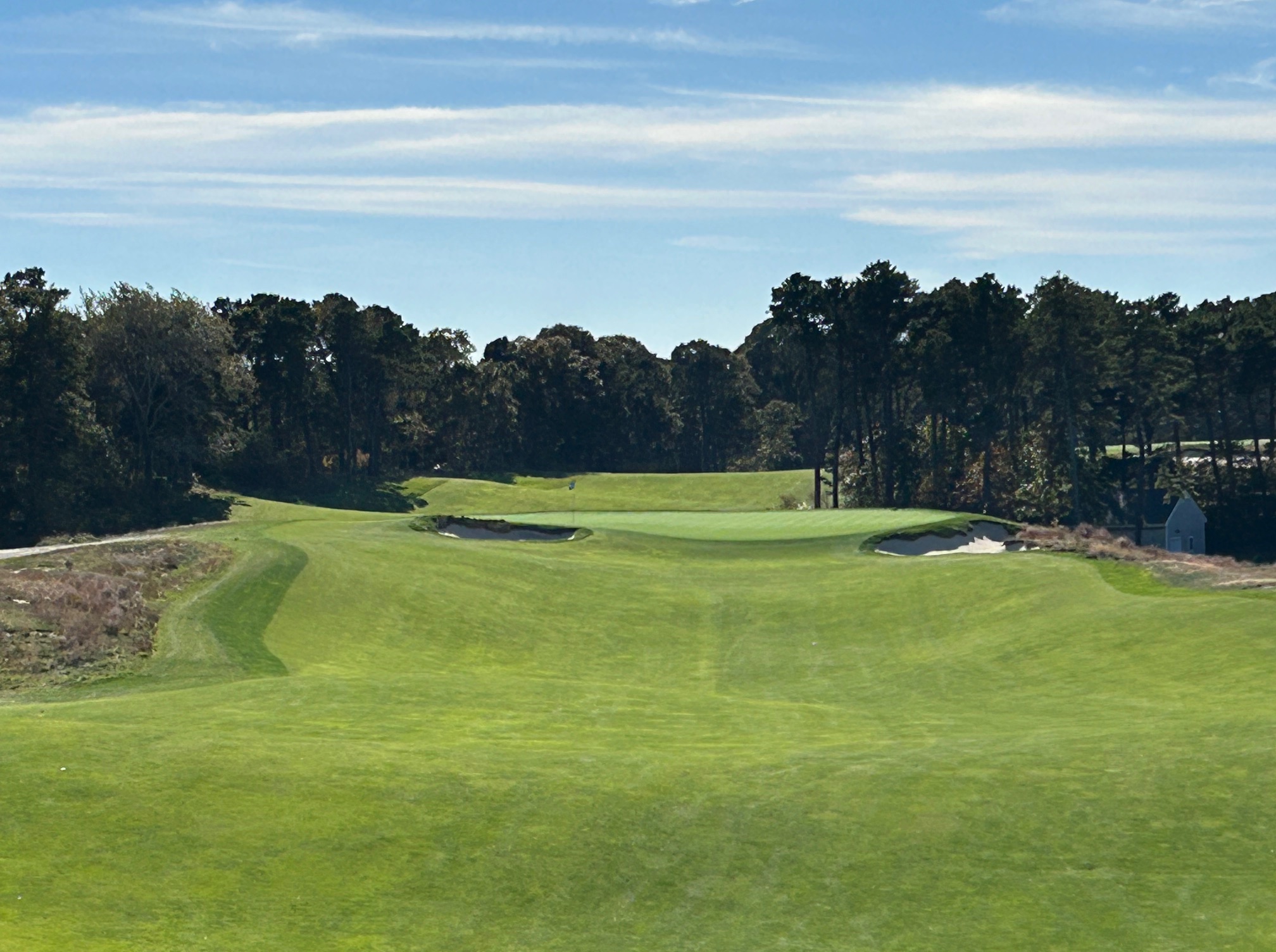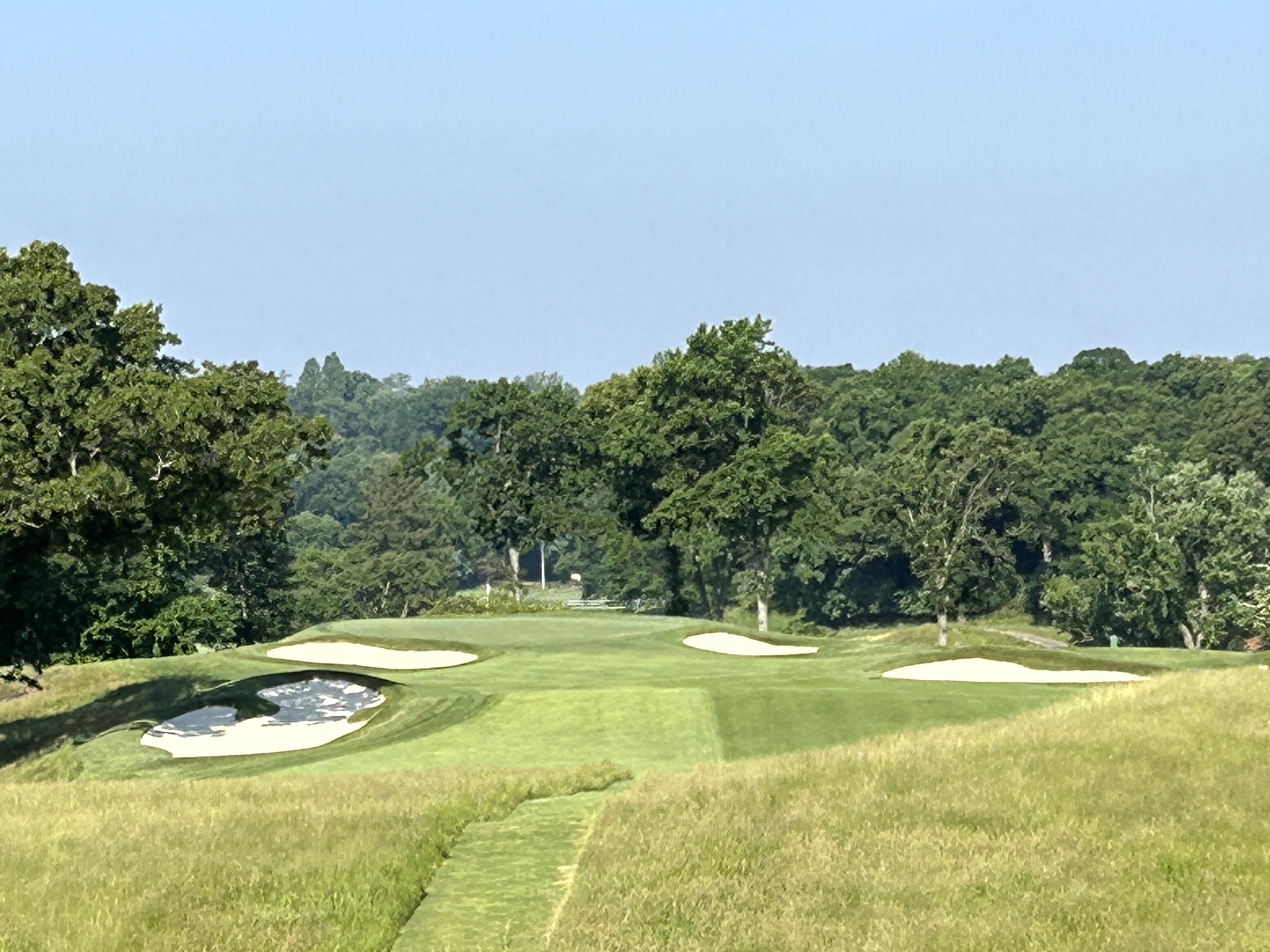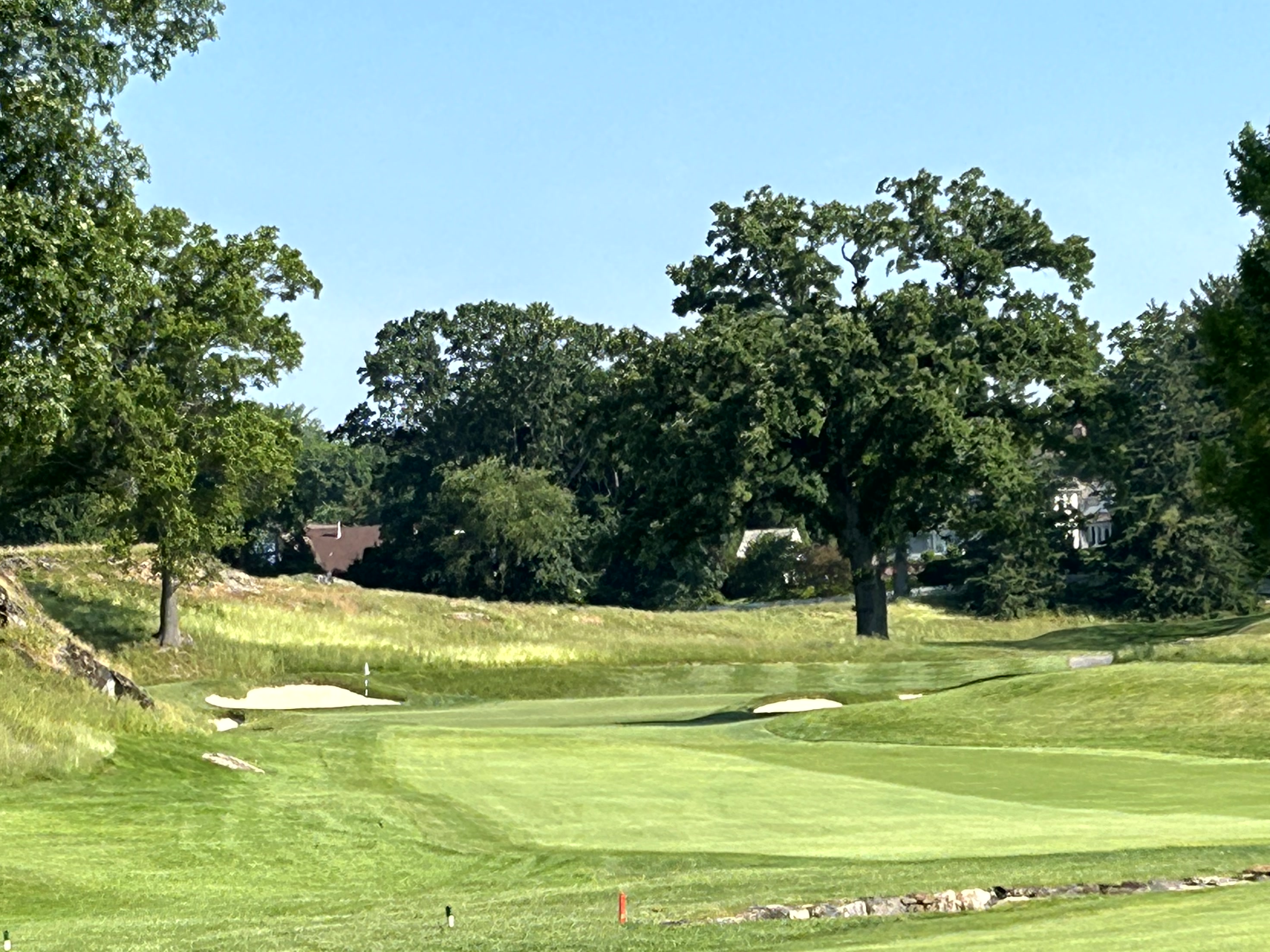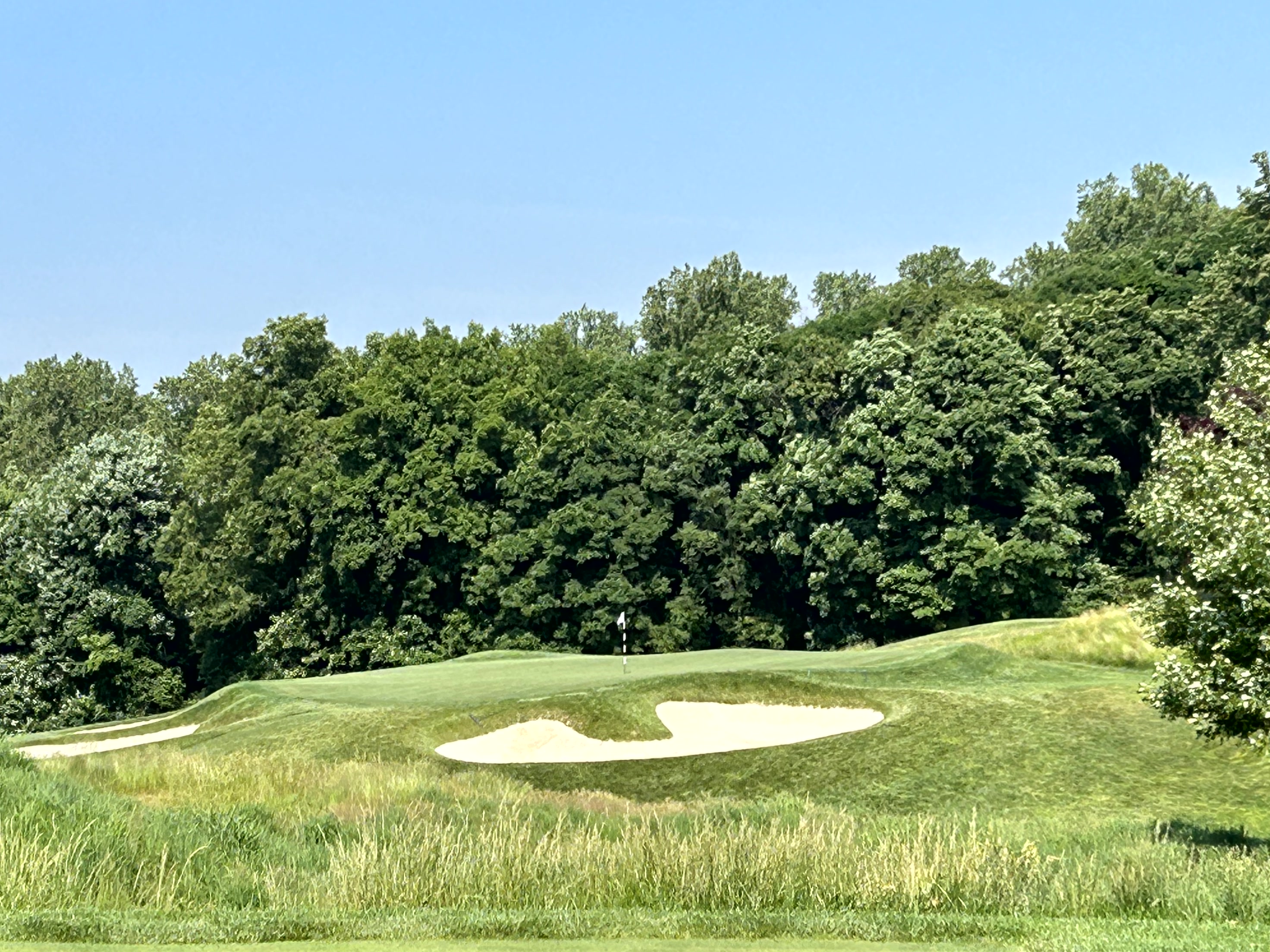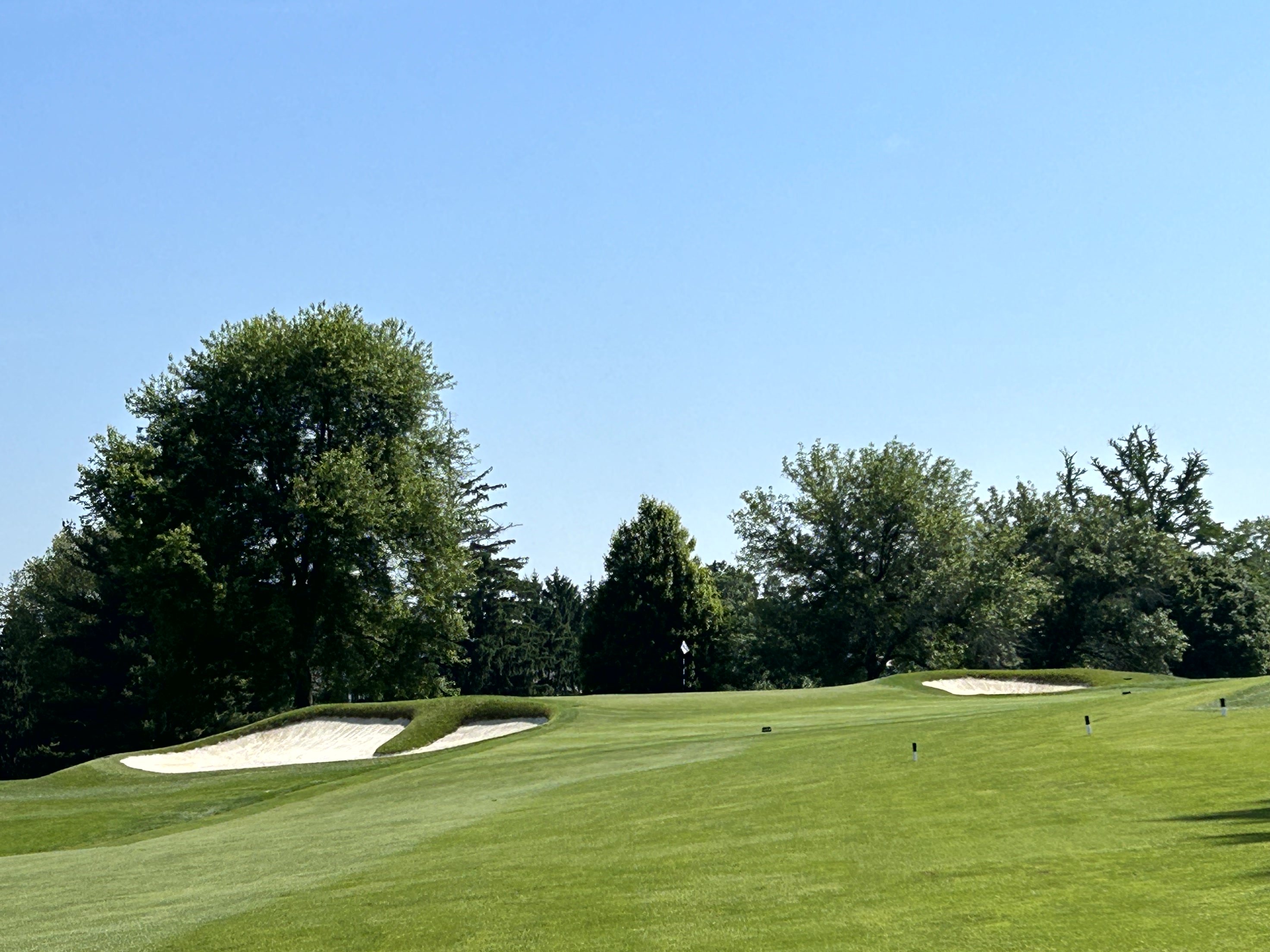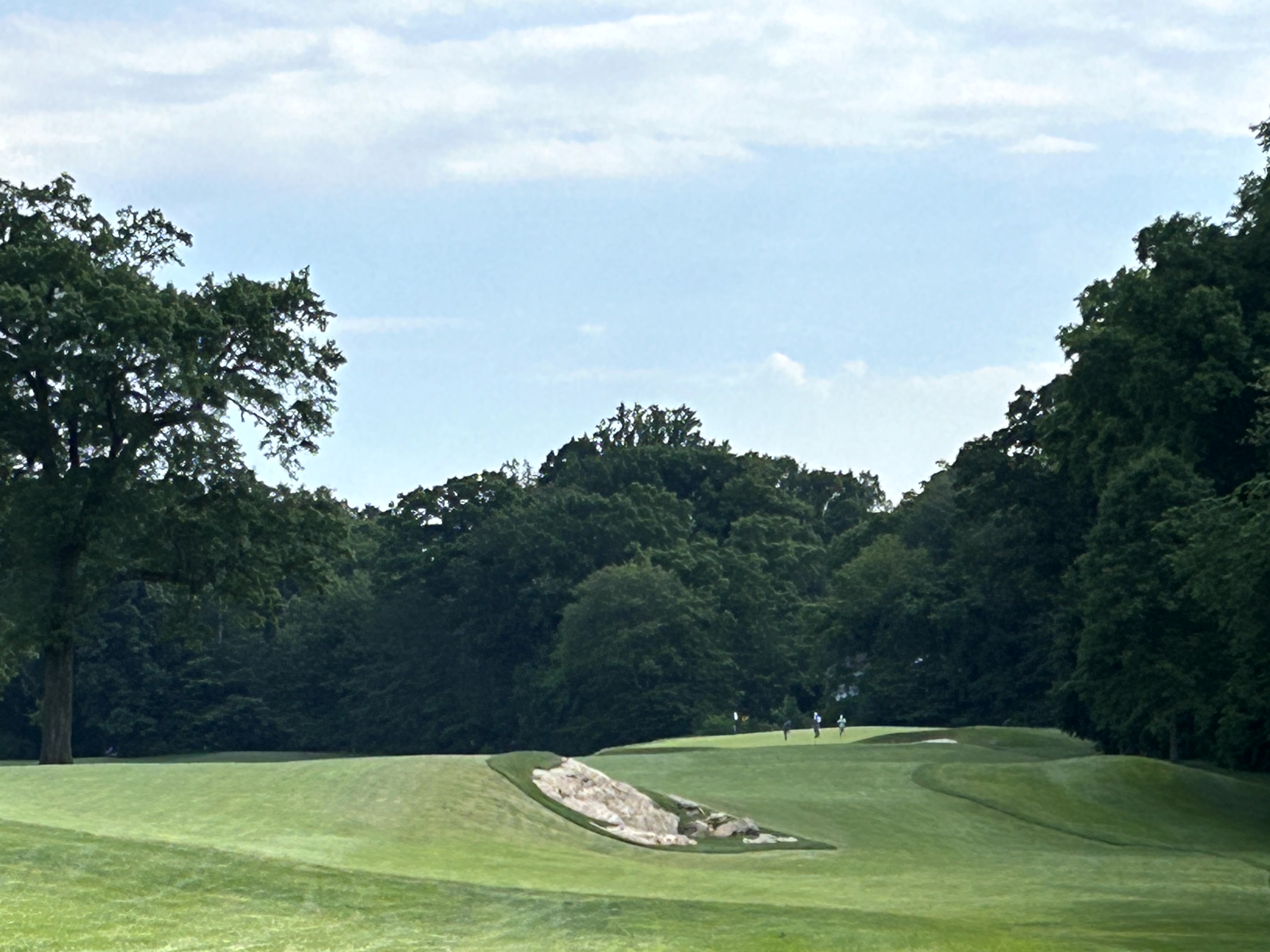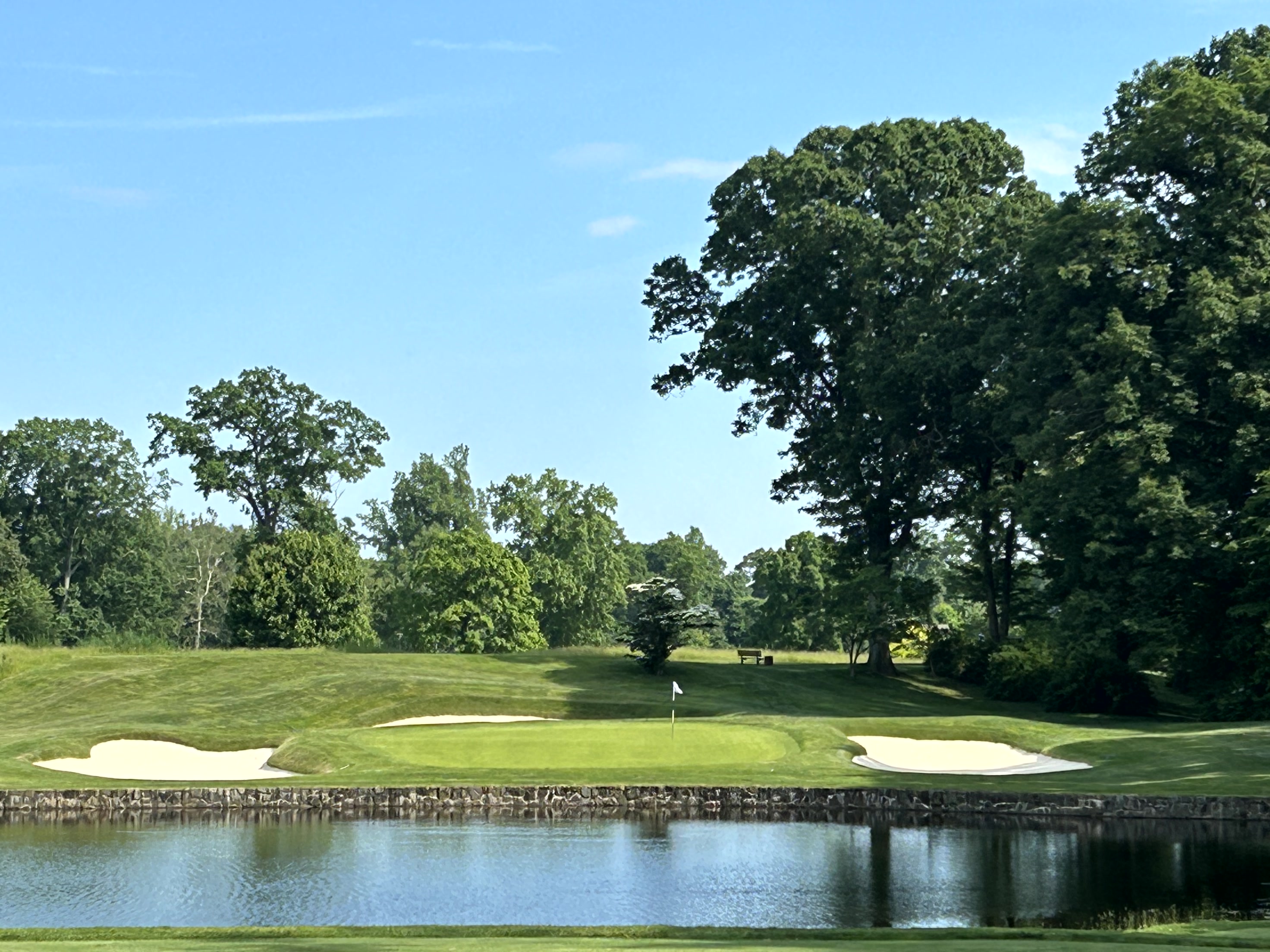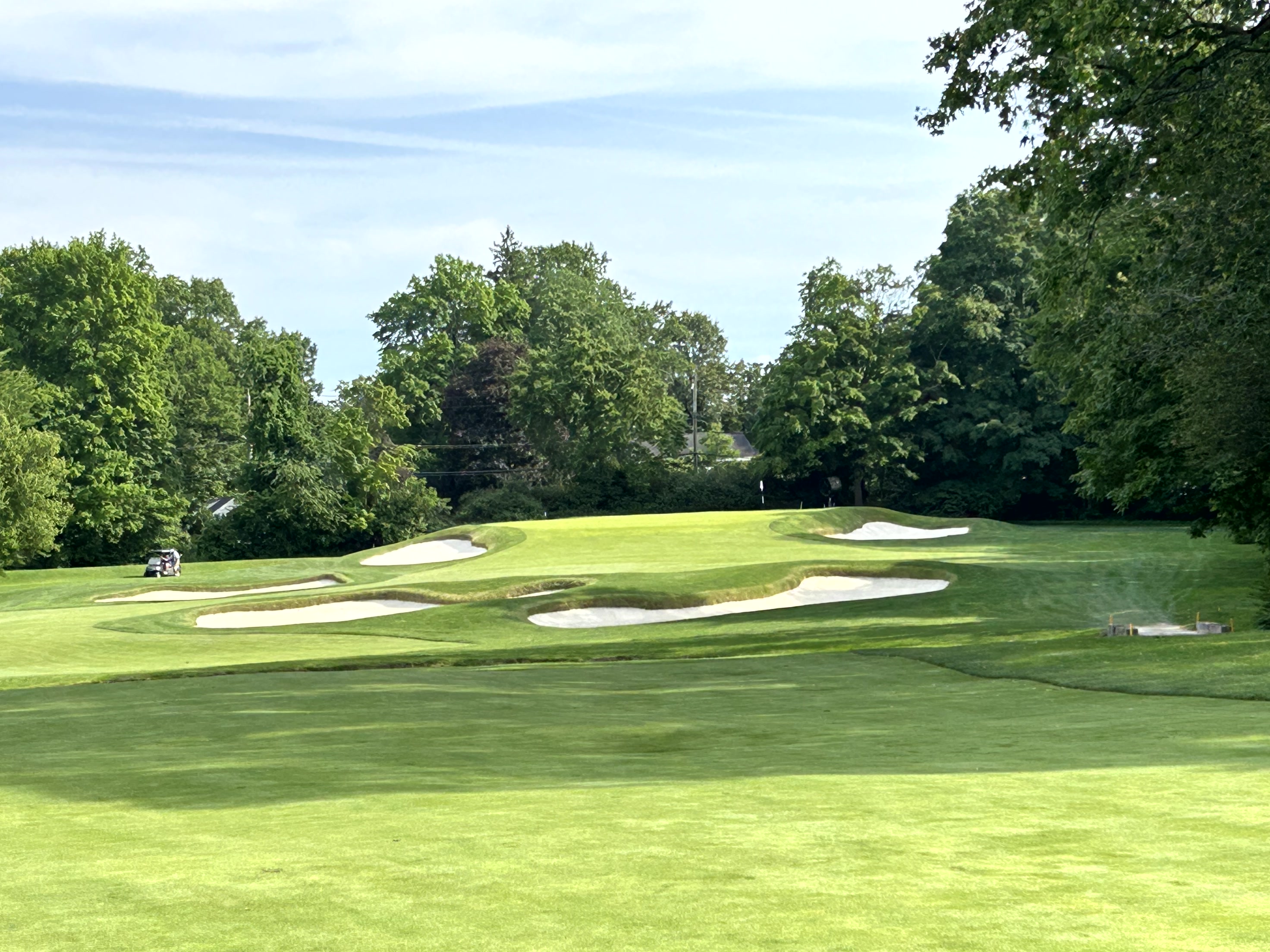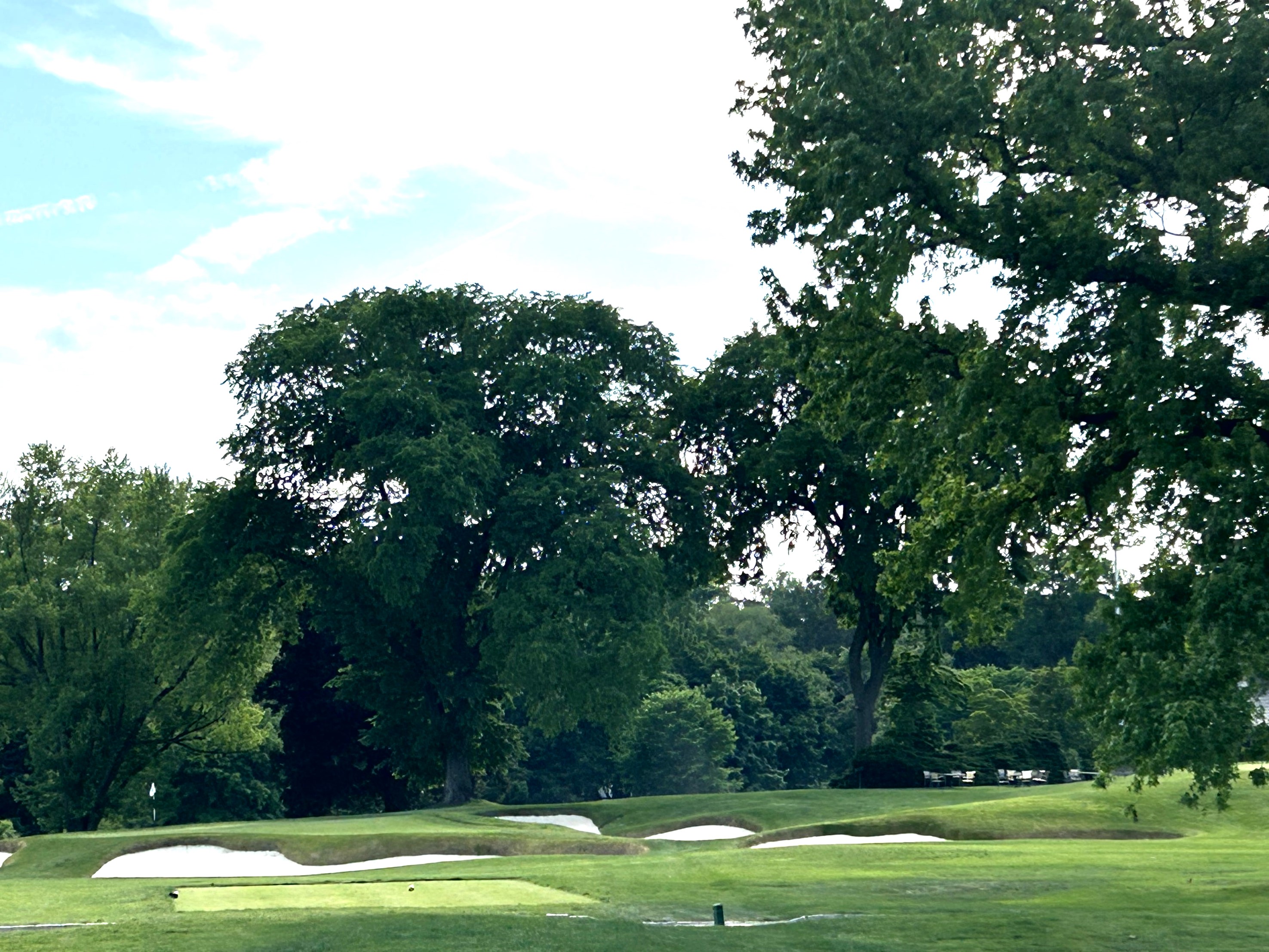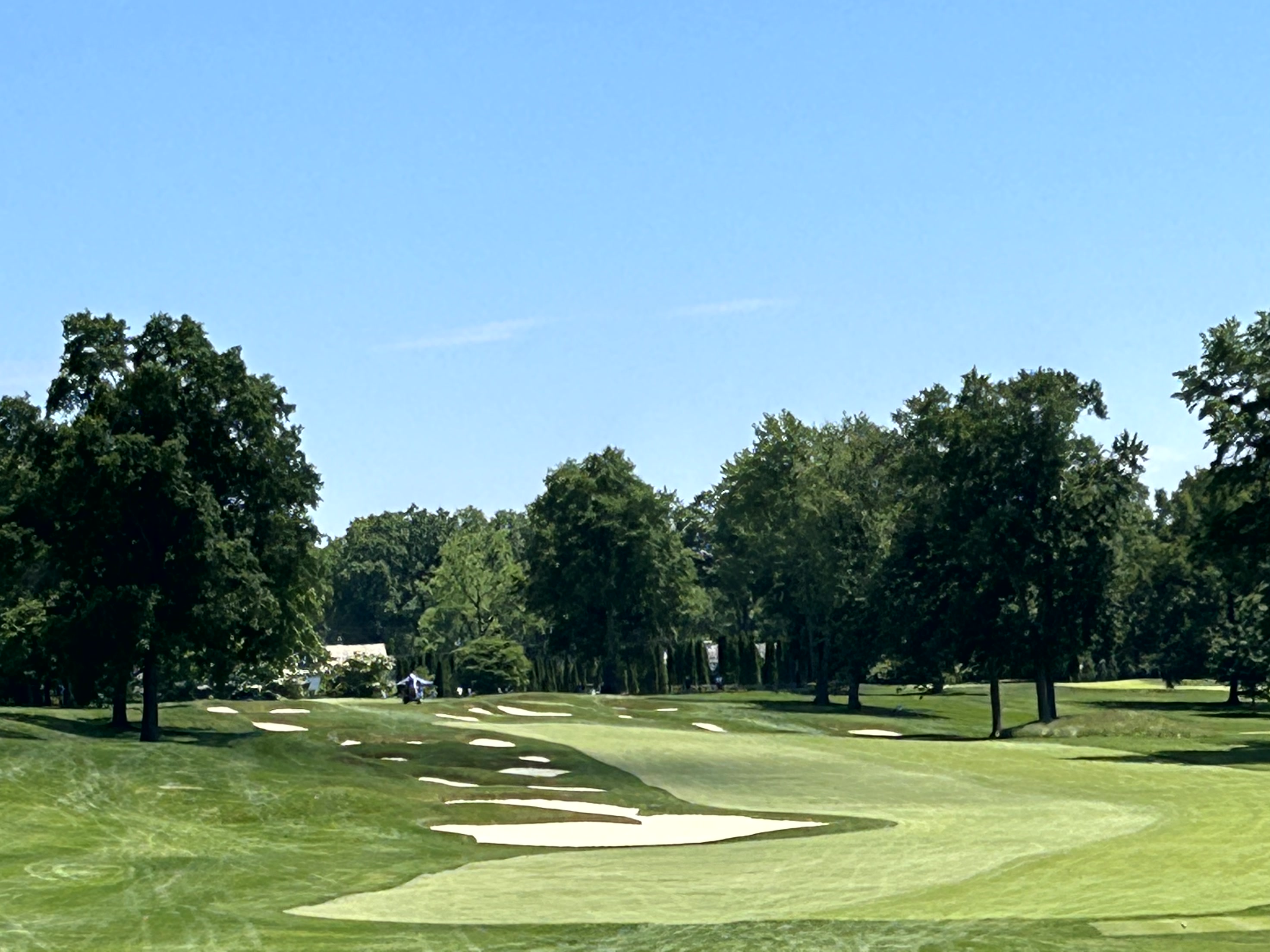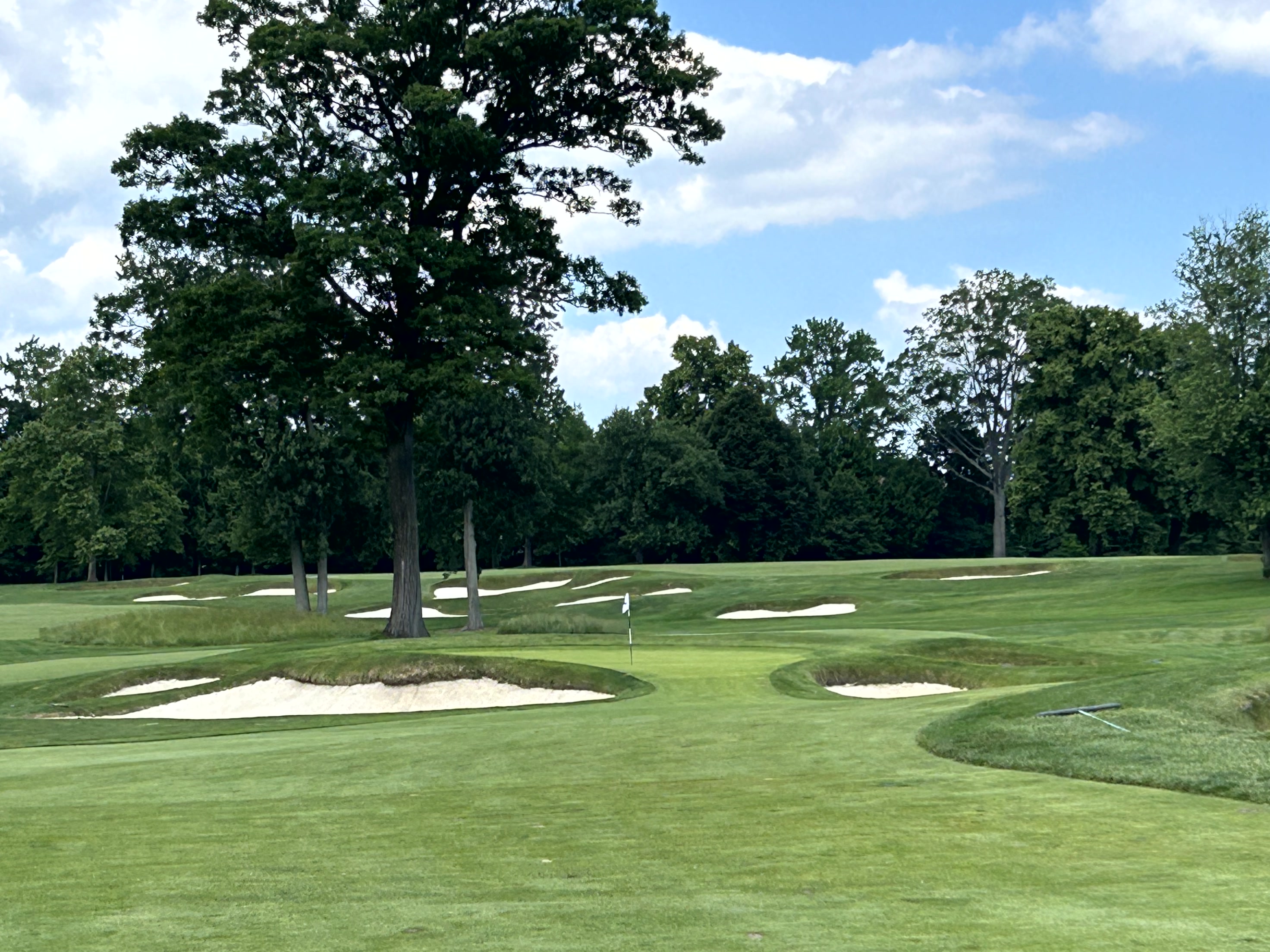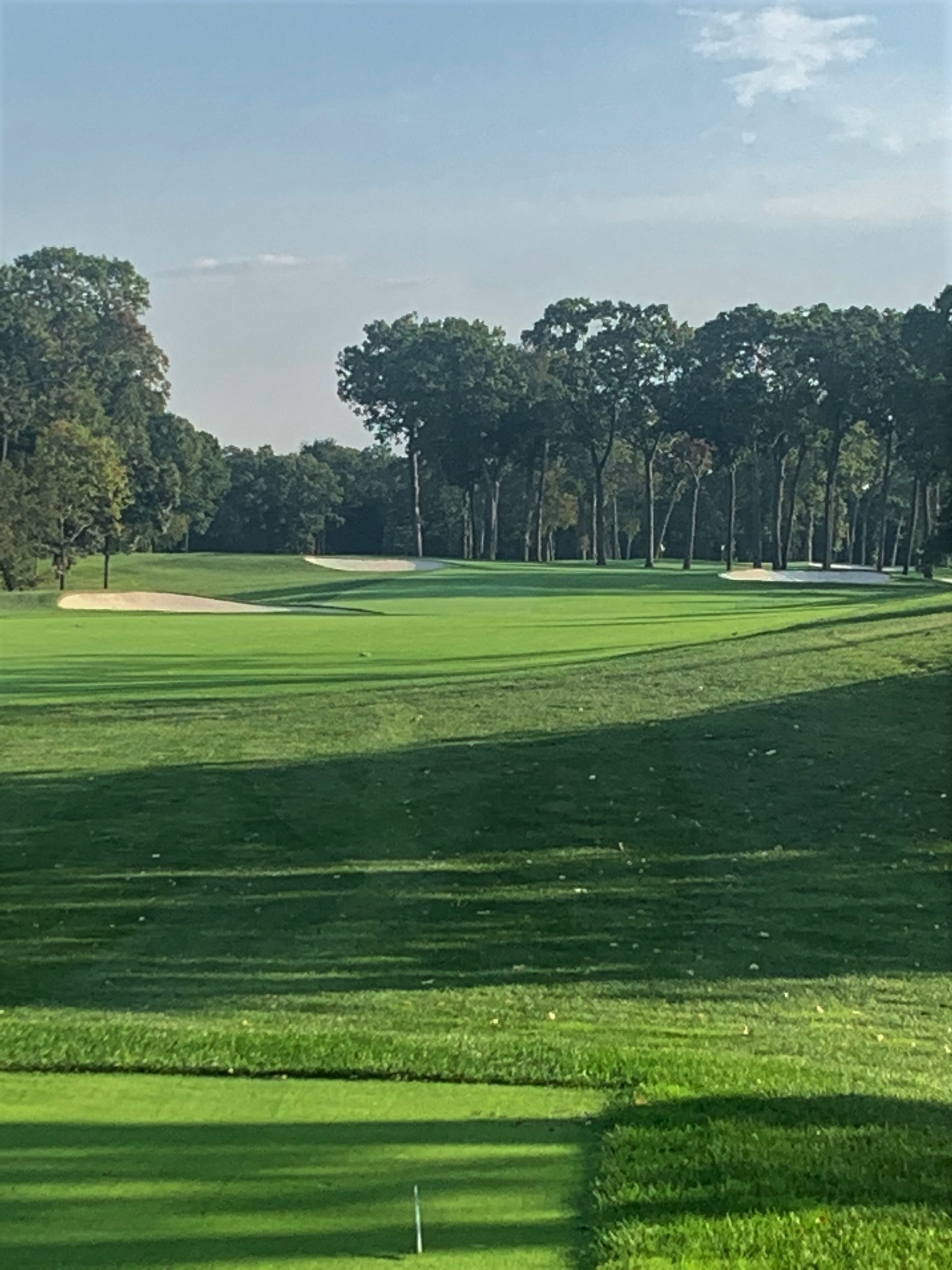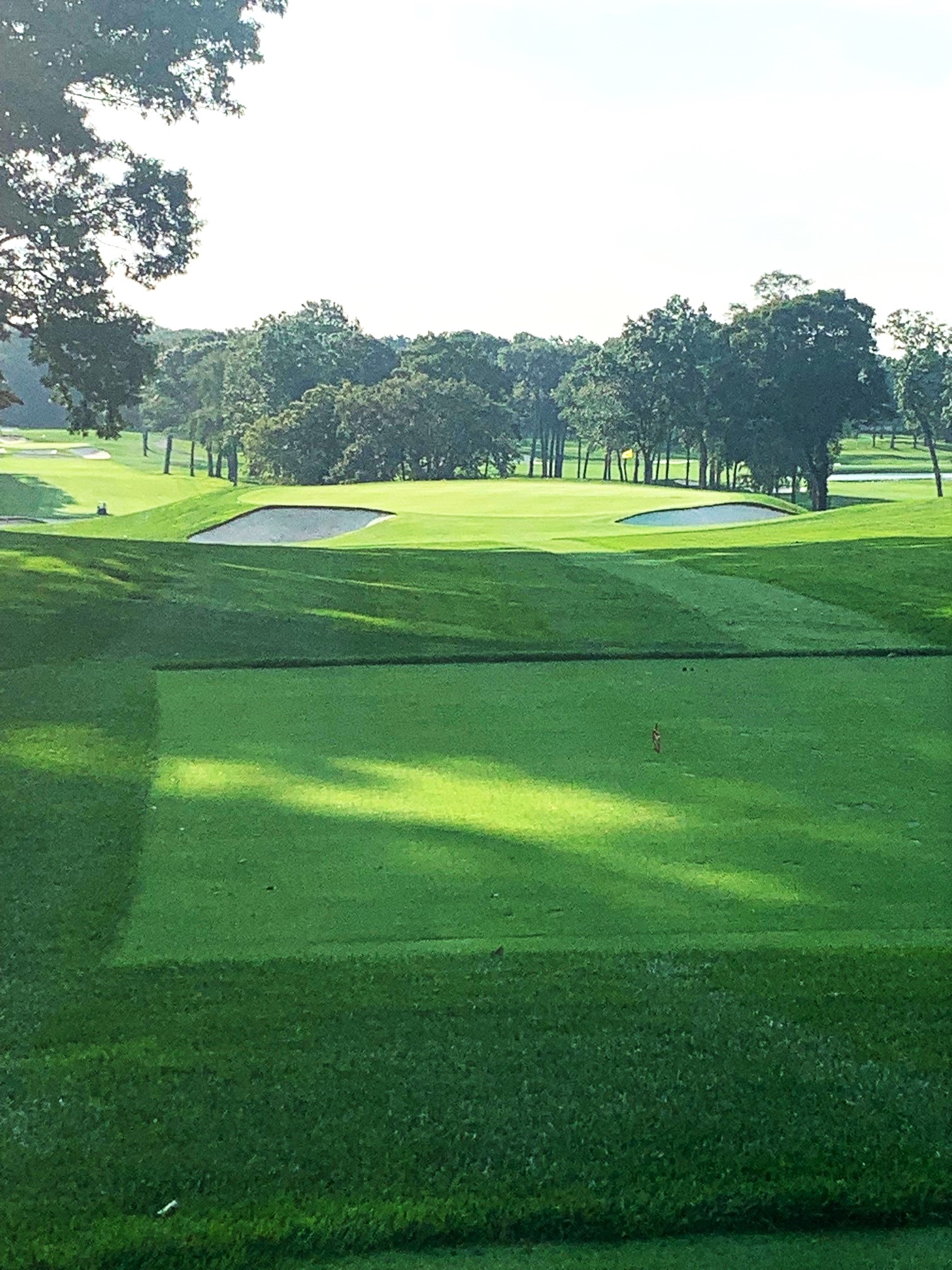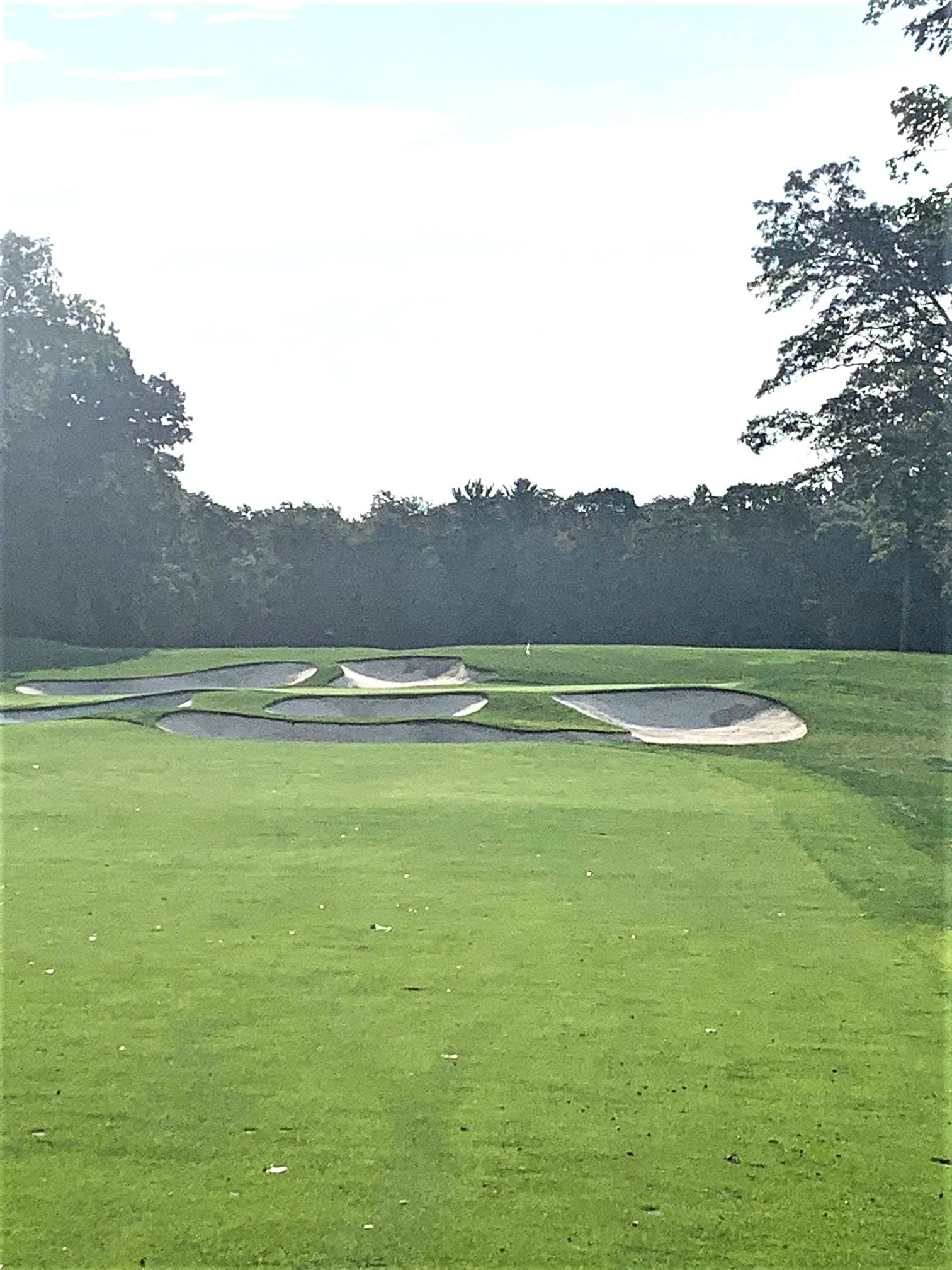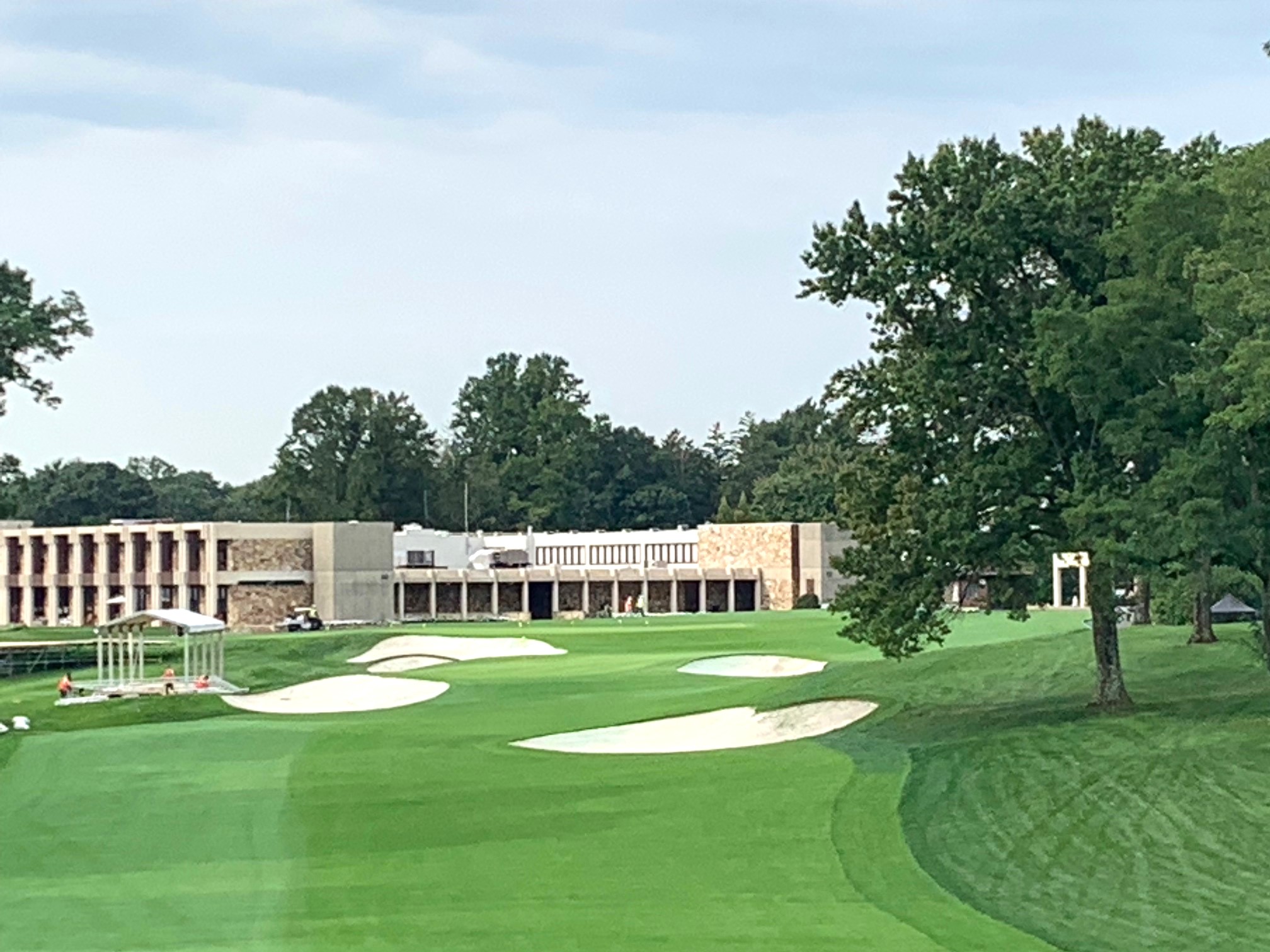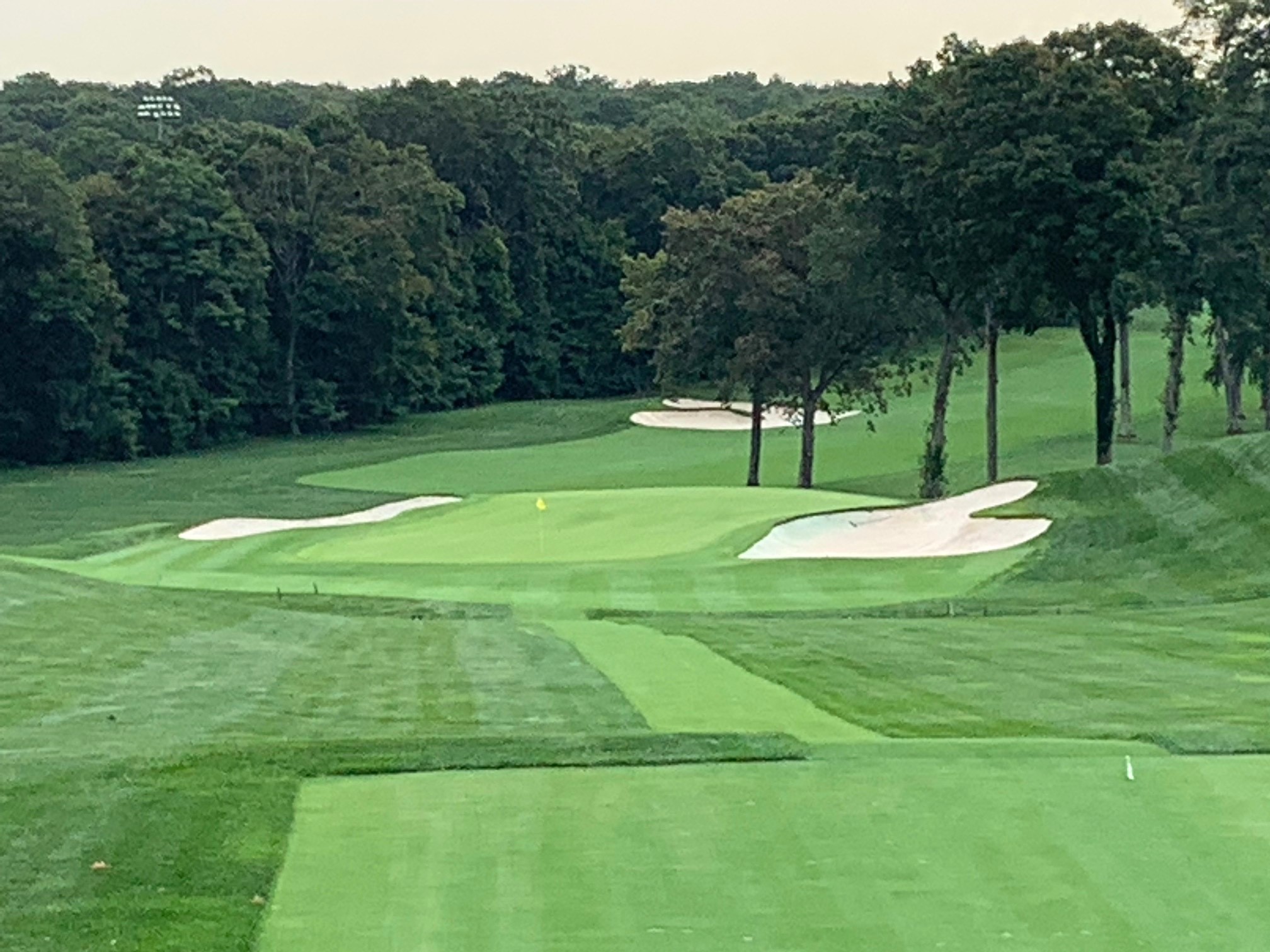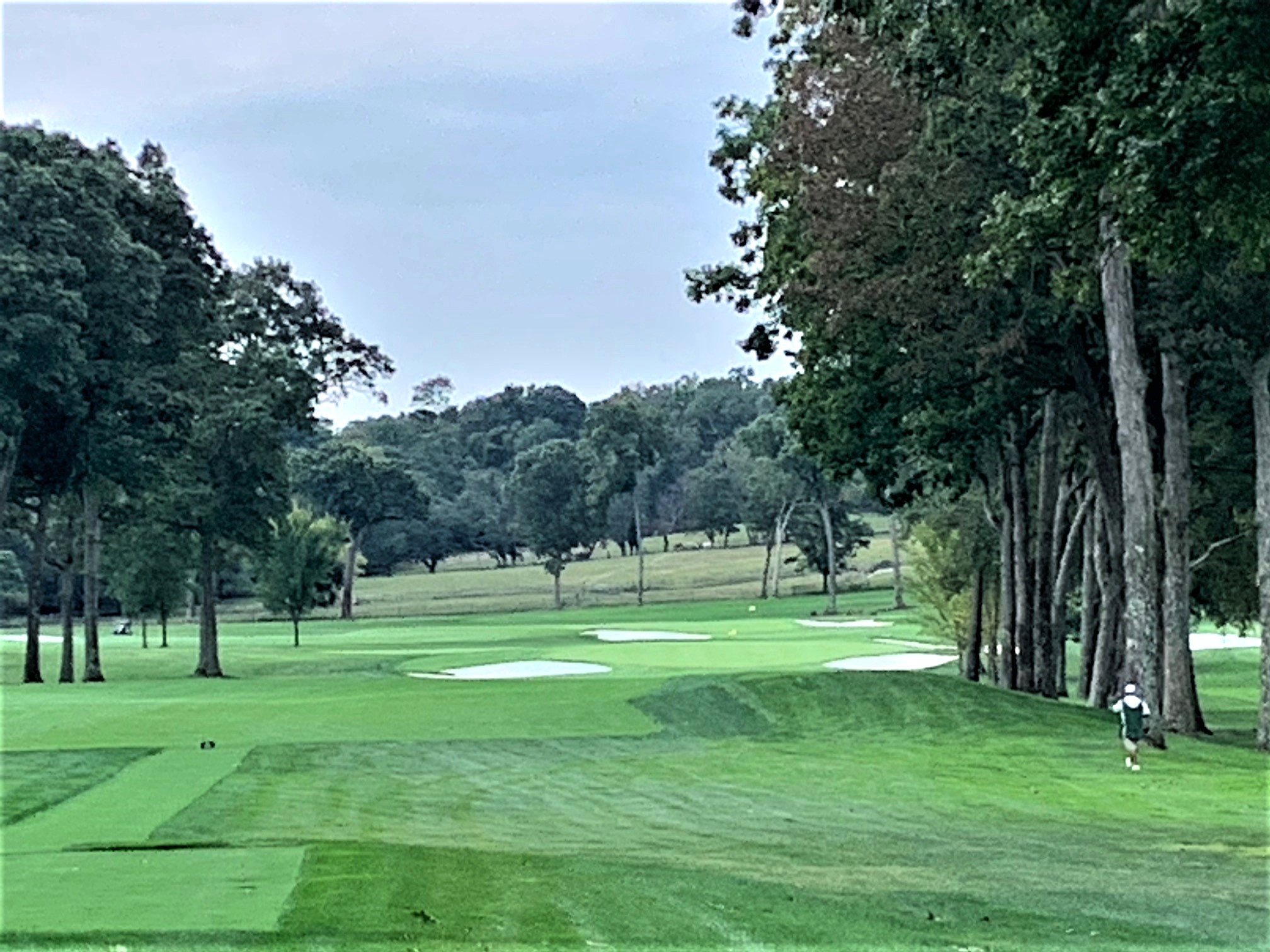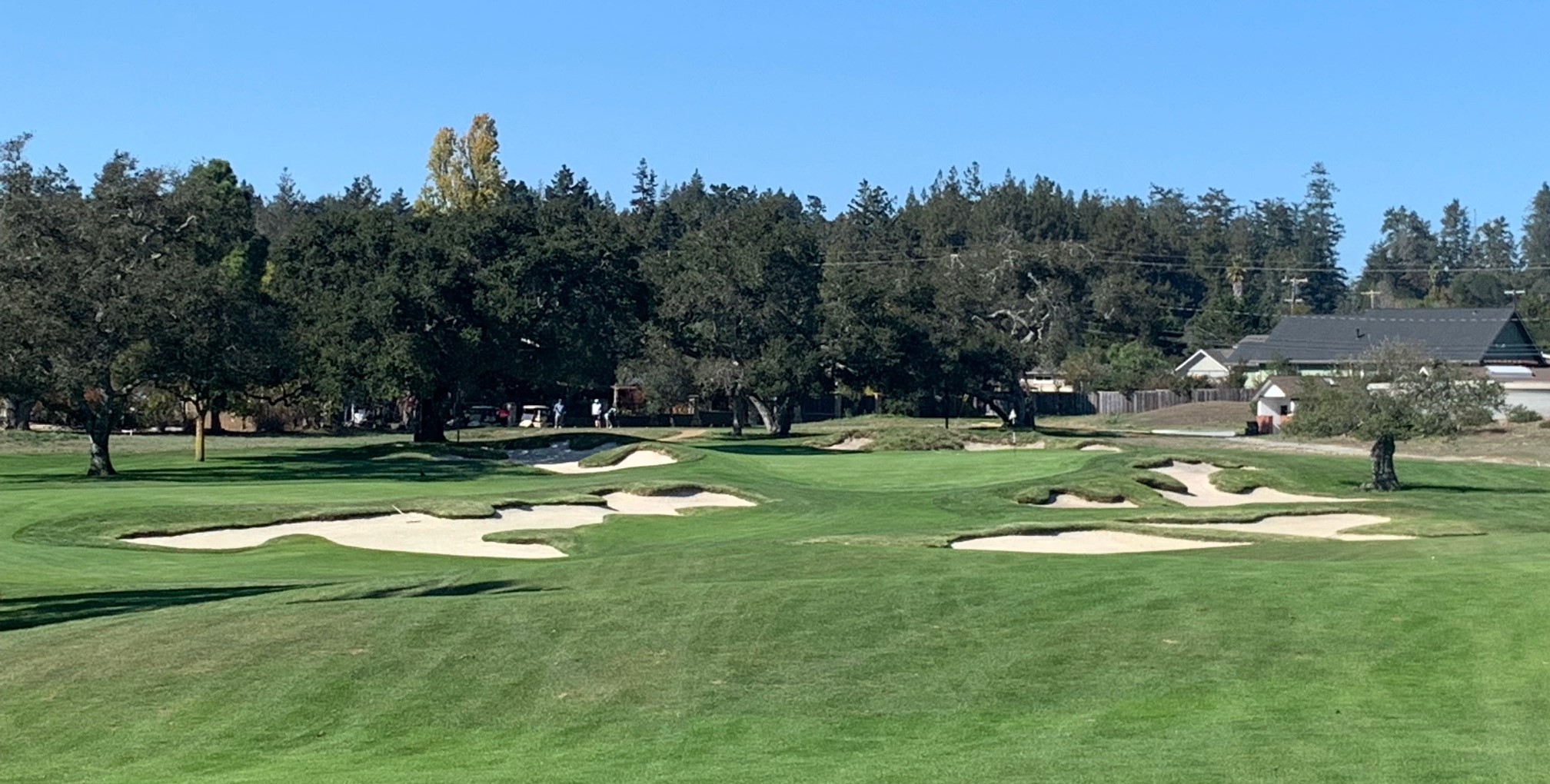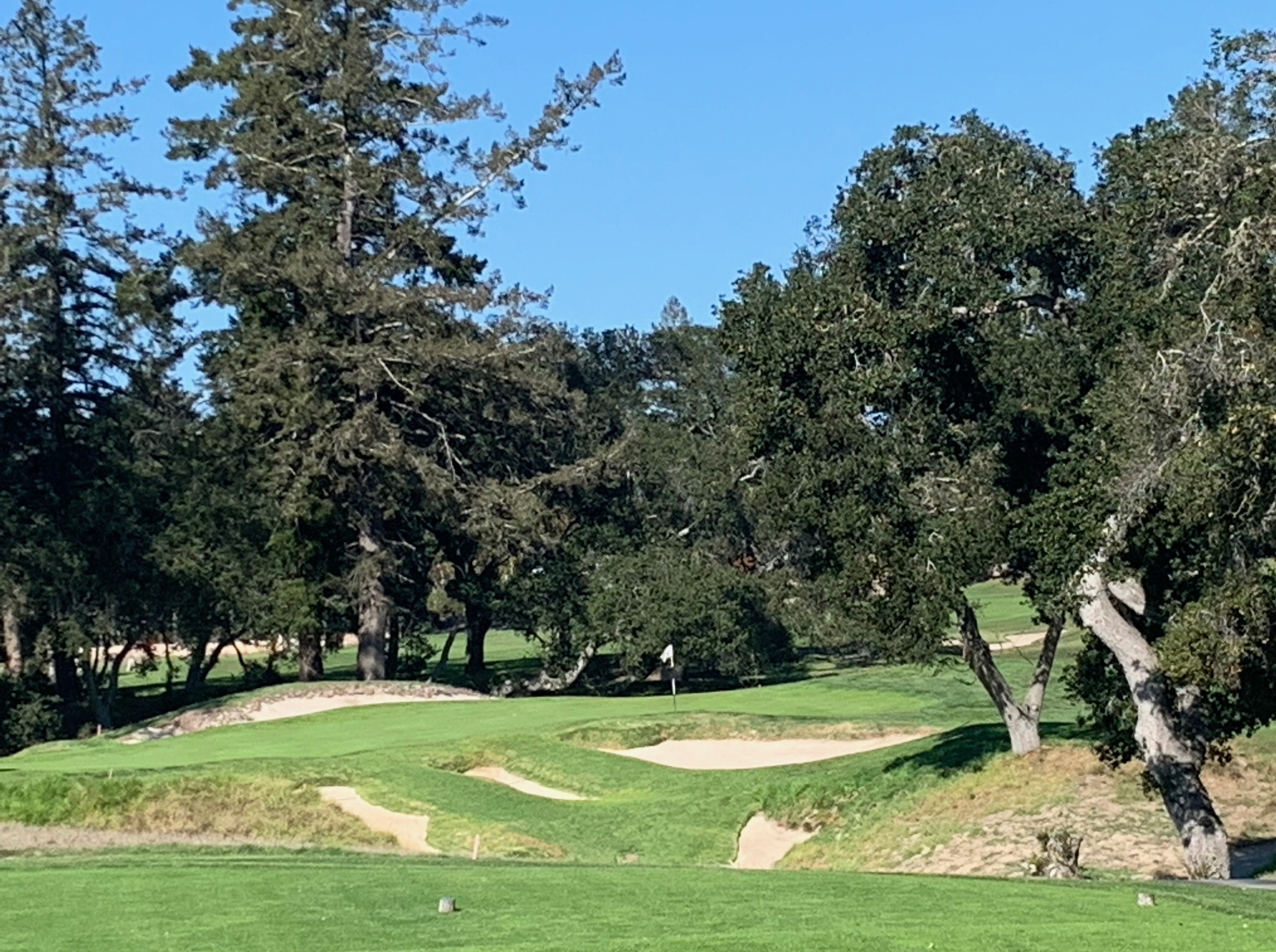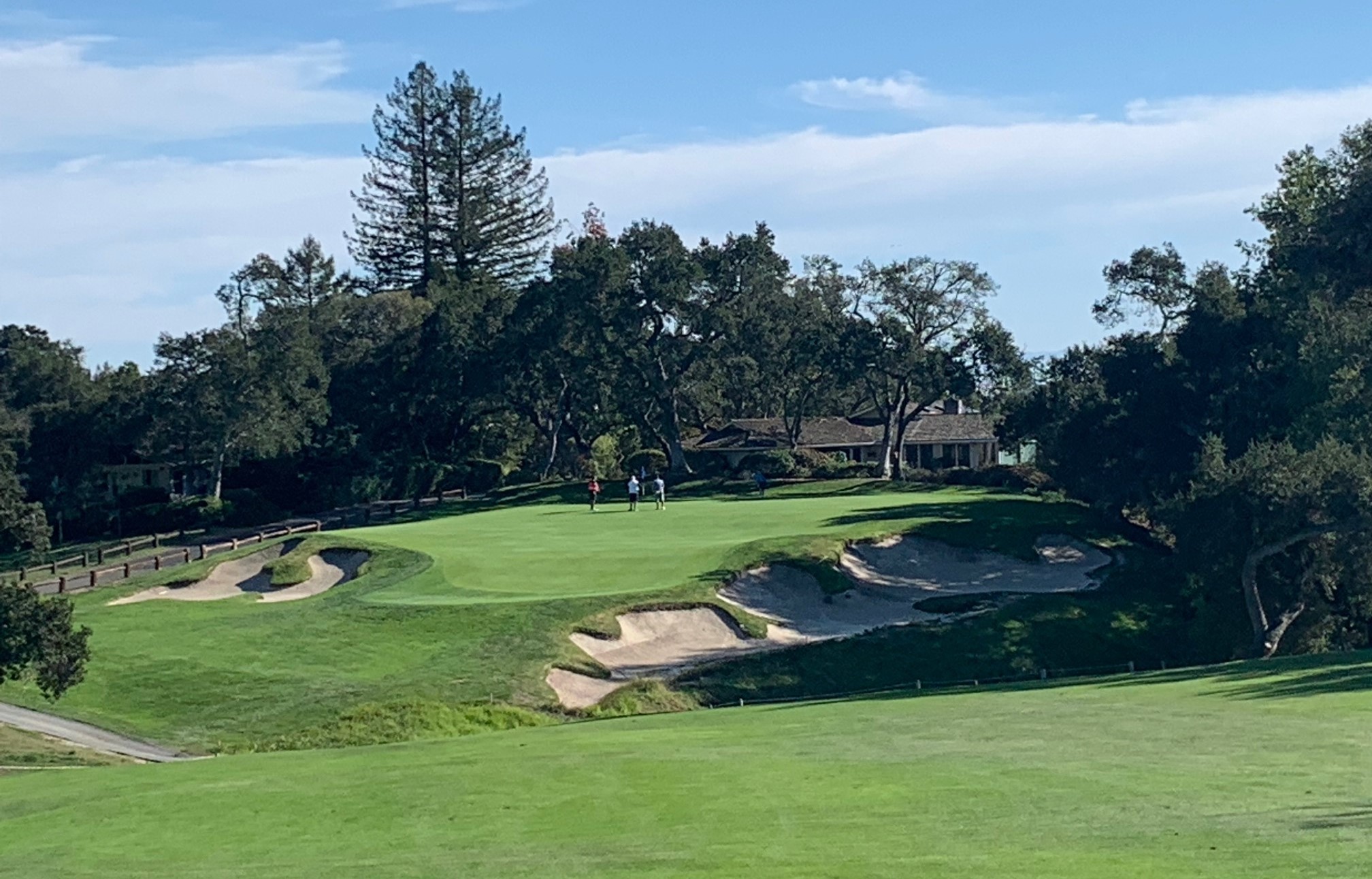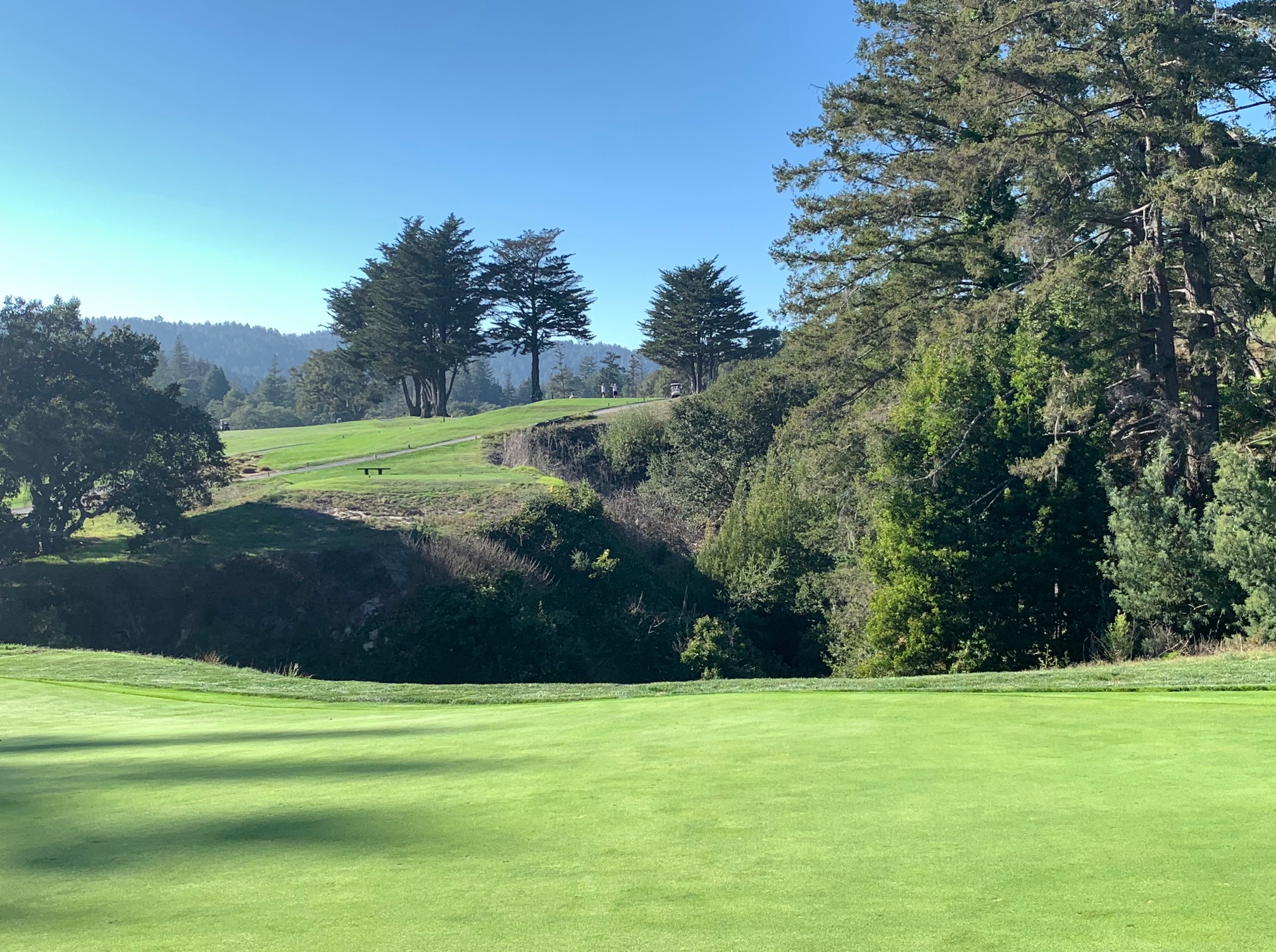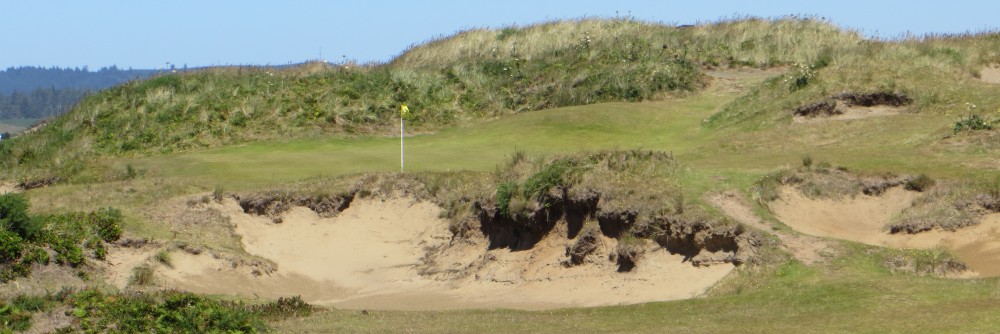

Newport Country Club

It is so rare to go to a renowned club with only a couple of hundred members who come from old money and still run the place with a thrifty attitude of “why just change things for changing sake”.  I was told the president of the club has been president for decades, that kind of says it all.  Why change things that don’t need changing?

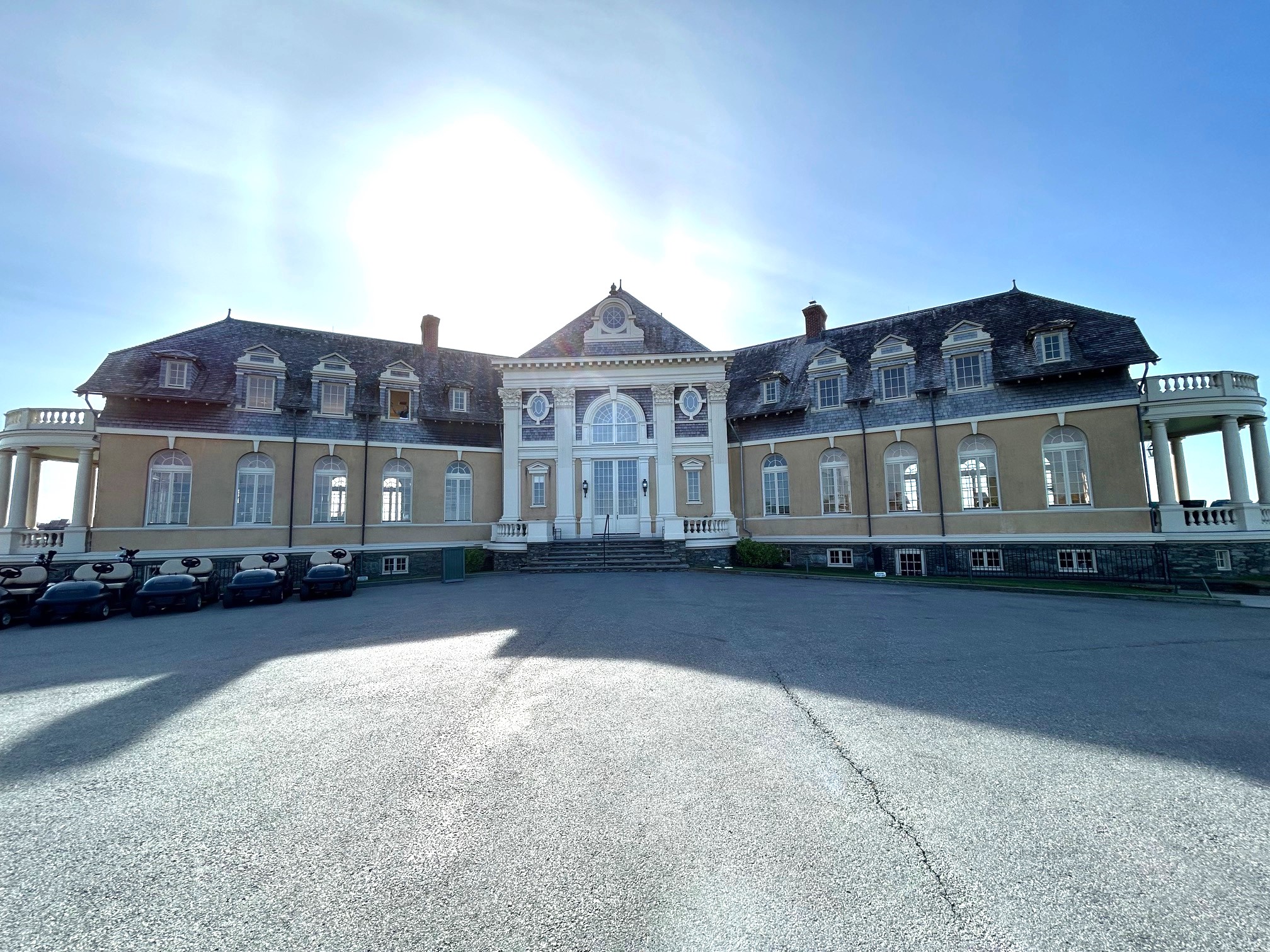
Newport Country Club was founded in 1893 by a group of well heeled guys who just wanted a place to hang with friends, watch some polo, and play a little golf.  Under the guidance of Theodore Havenmeyer they went about acquiring the land for the course and hired Whitney Warren, a French trained architect, to build them a Louis the XIII style club house with all the bells and whistles they required.

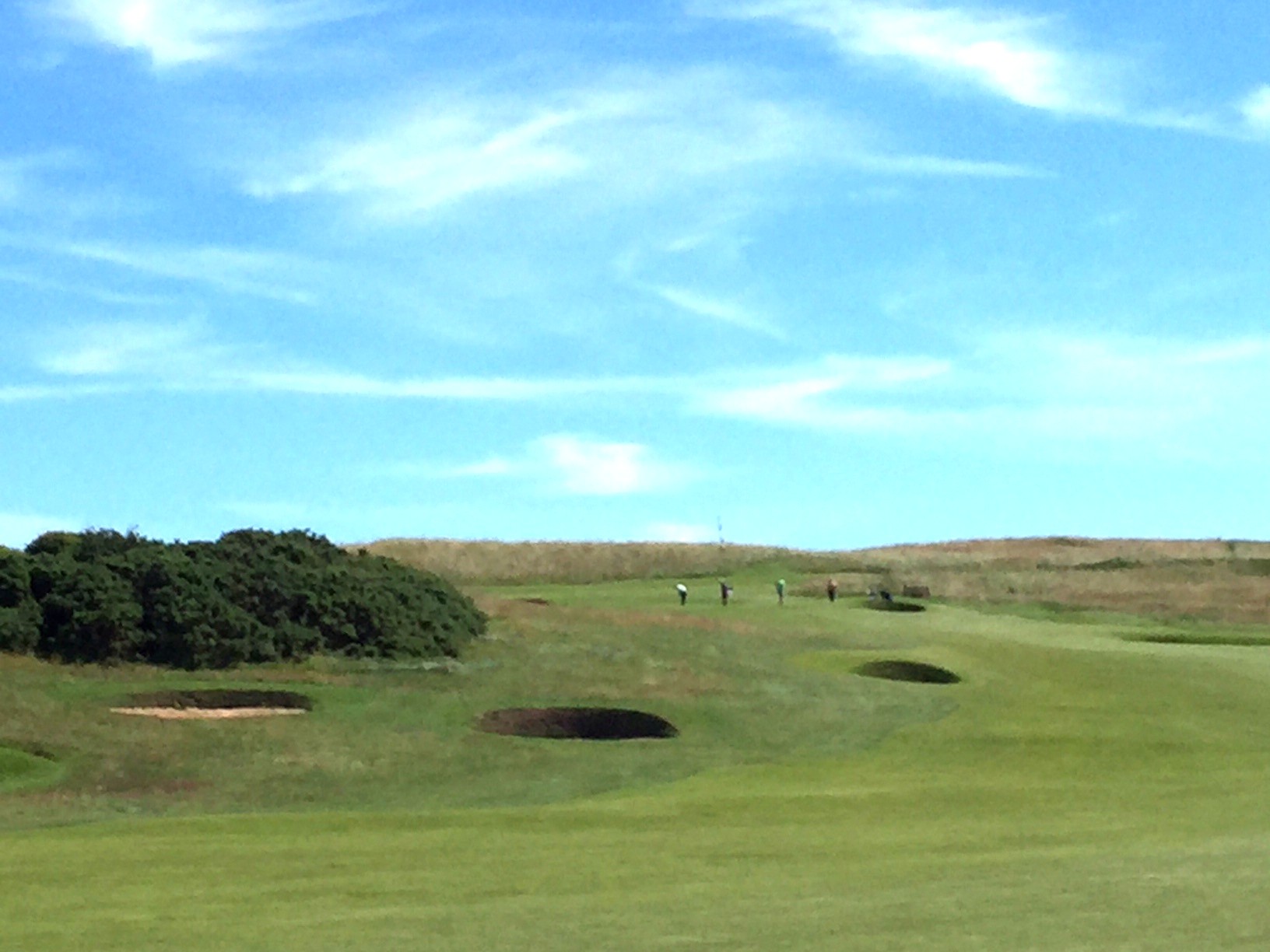
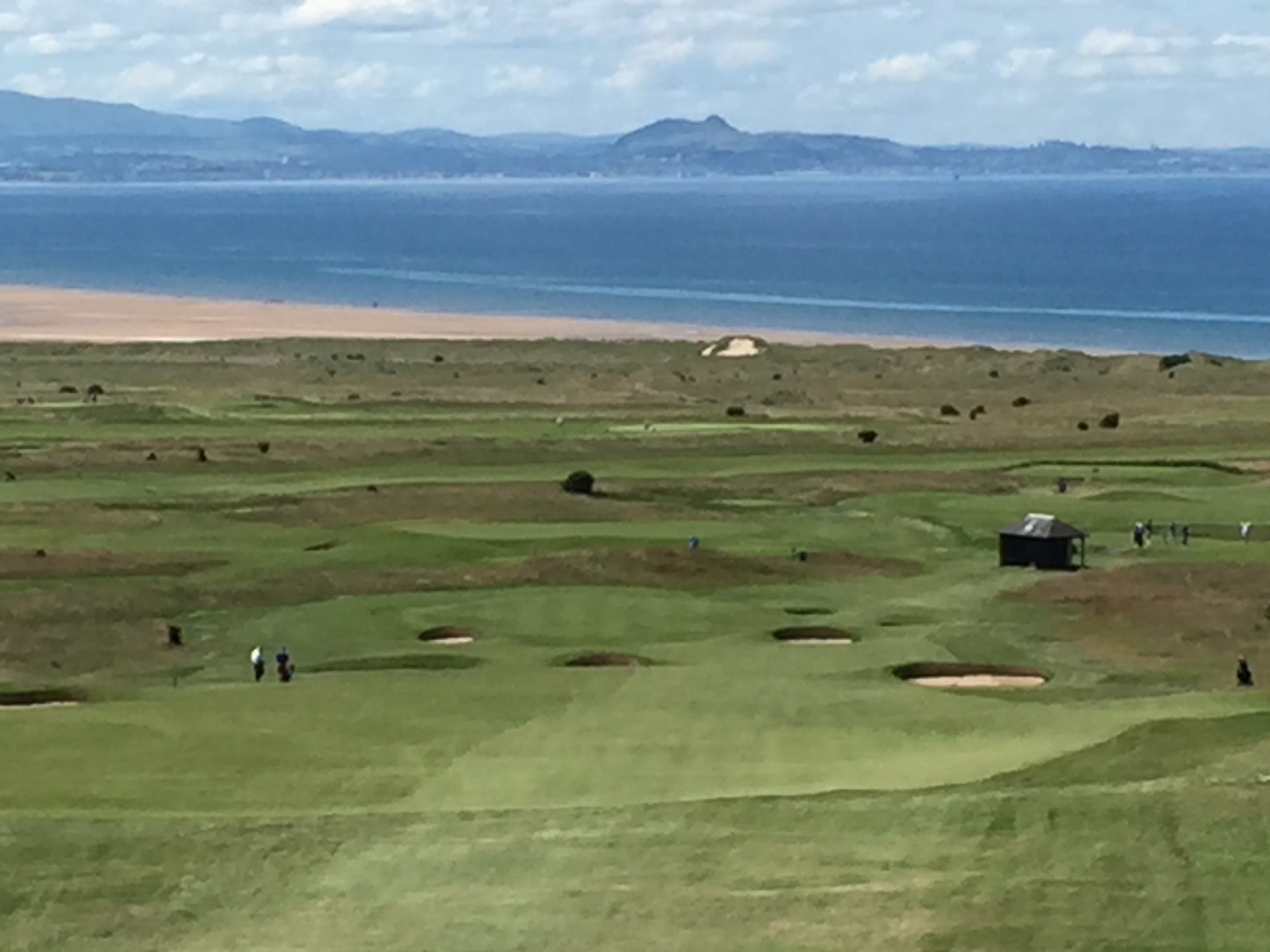
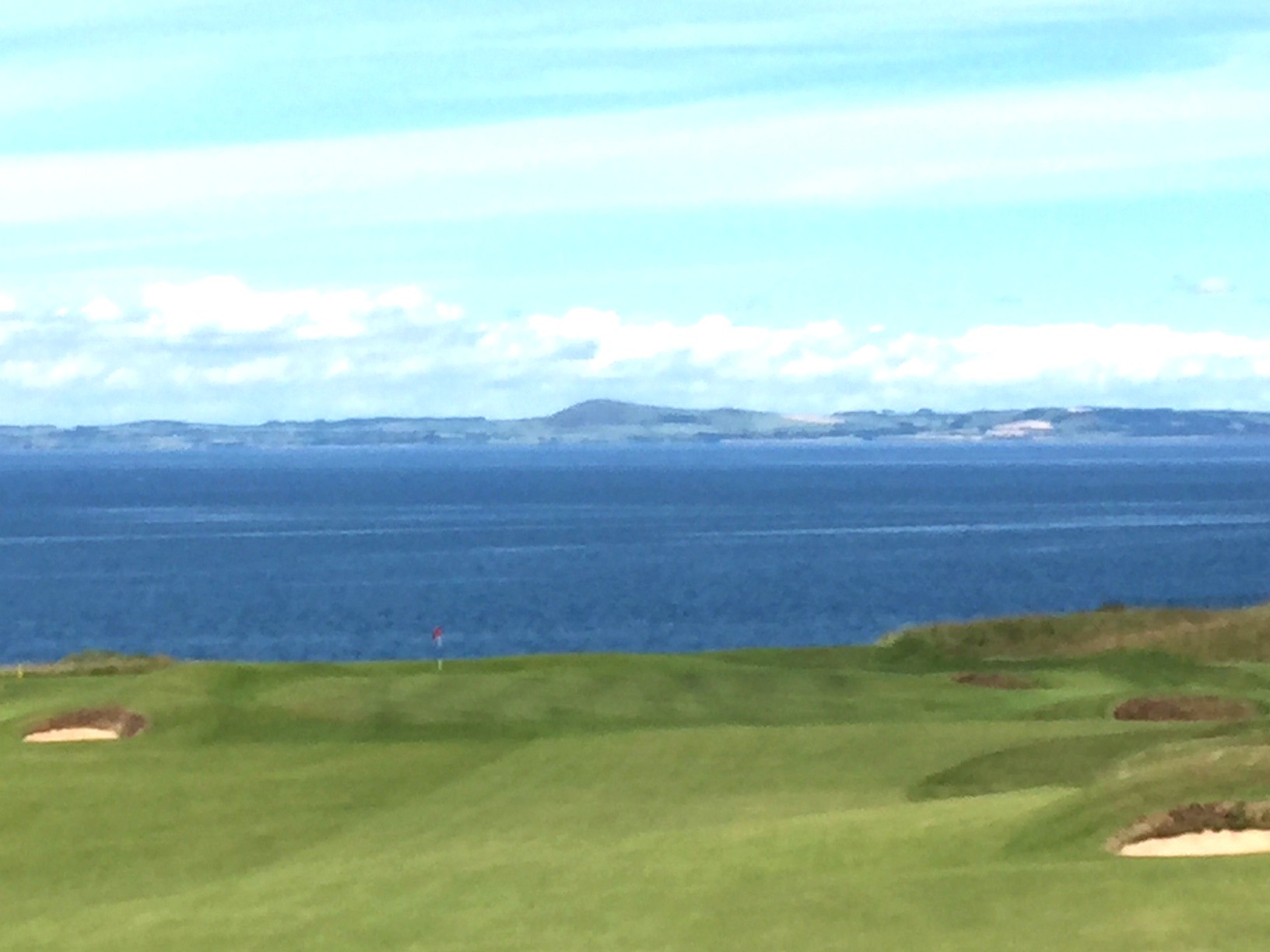
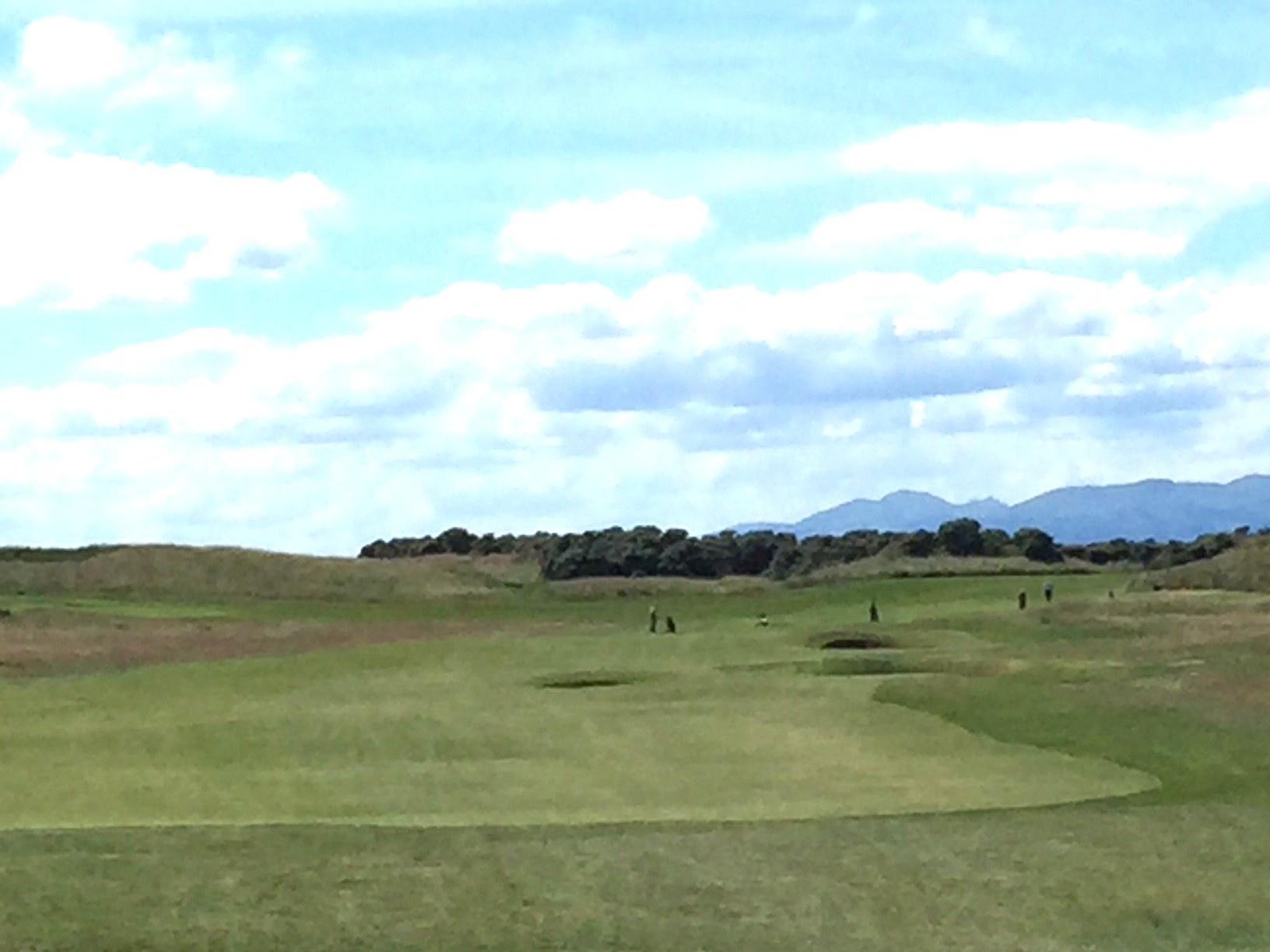
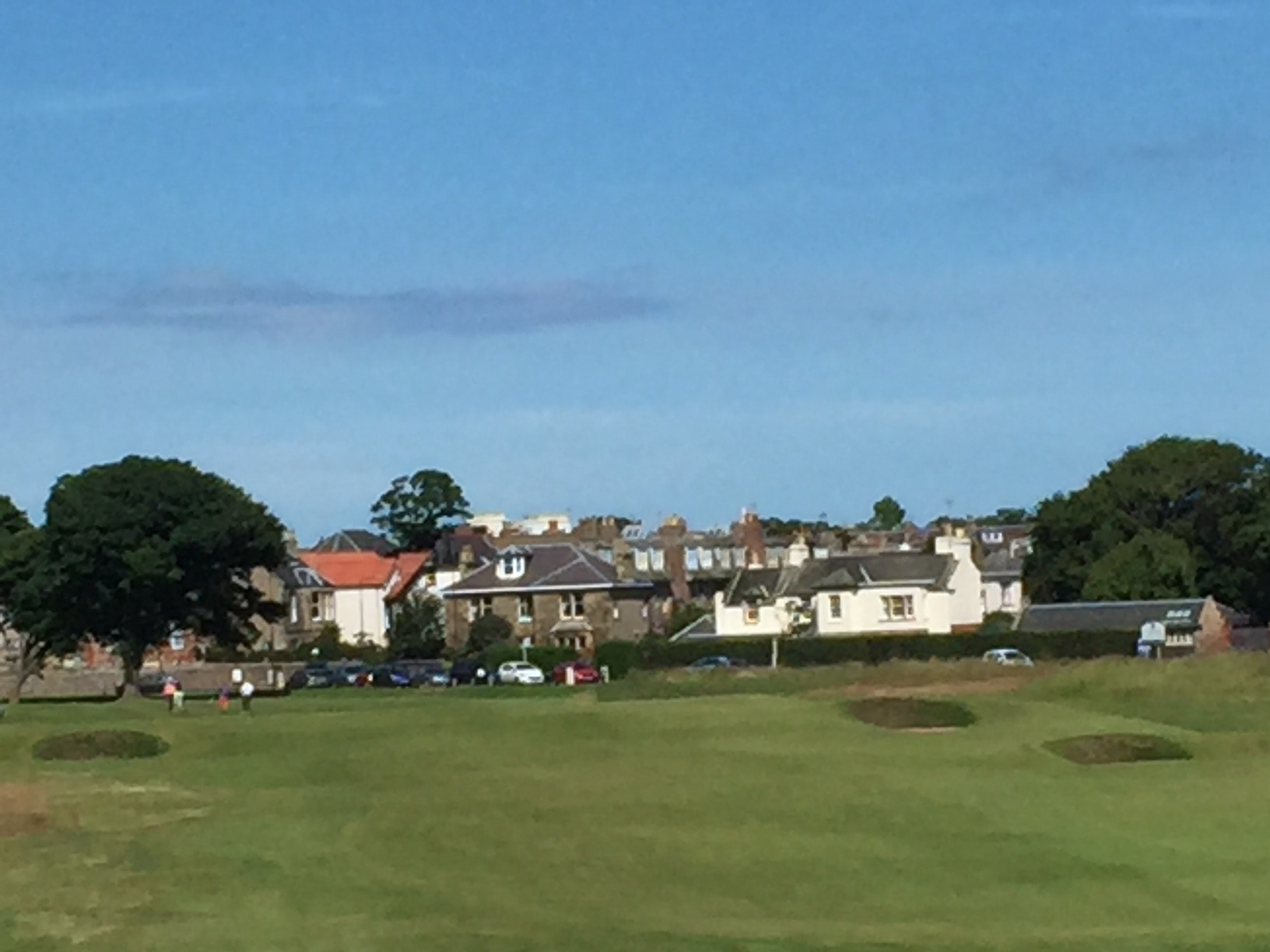
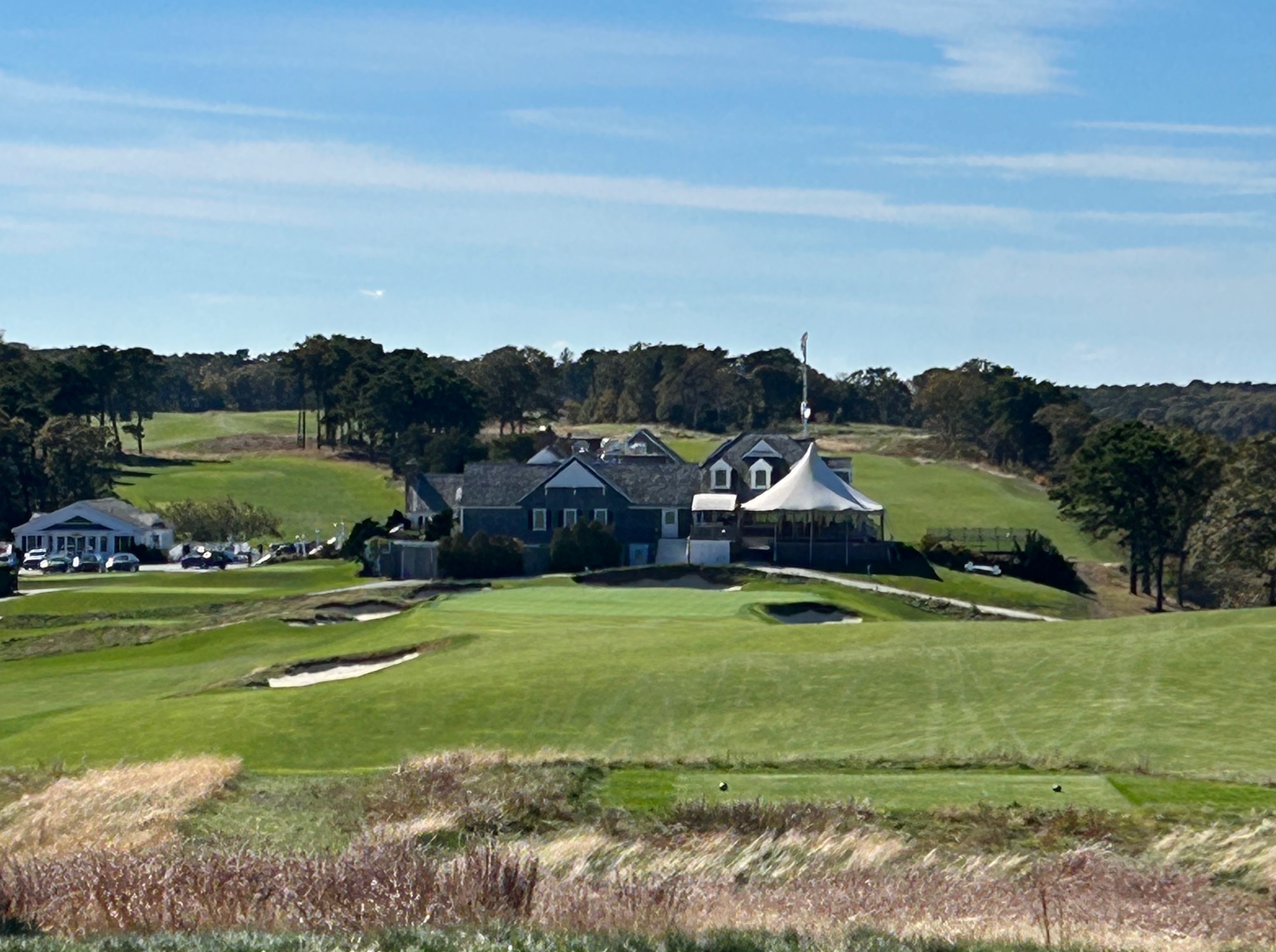
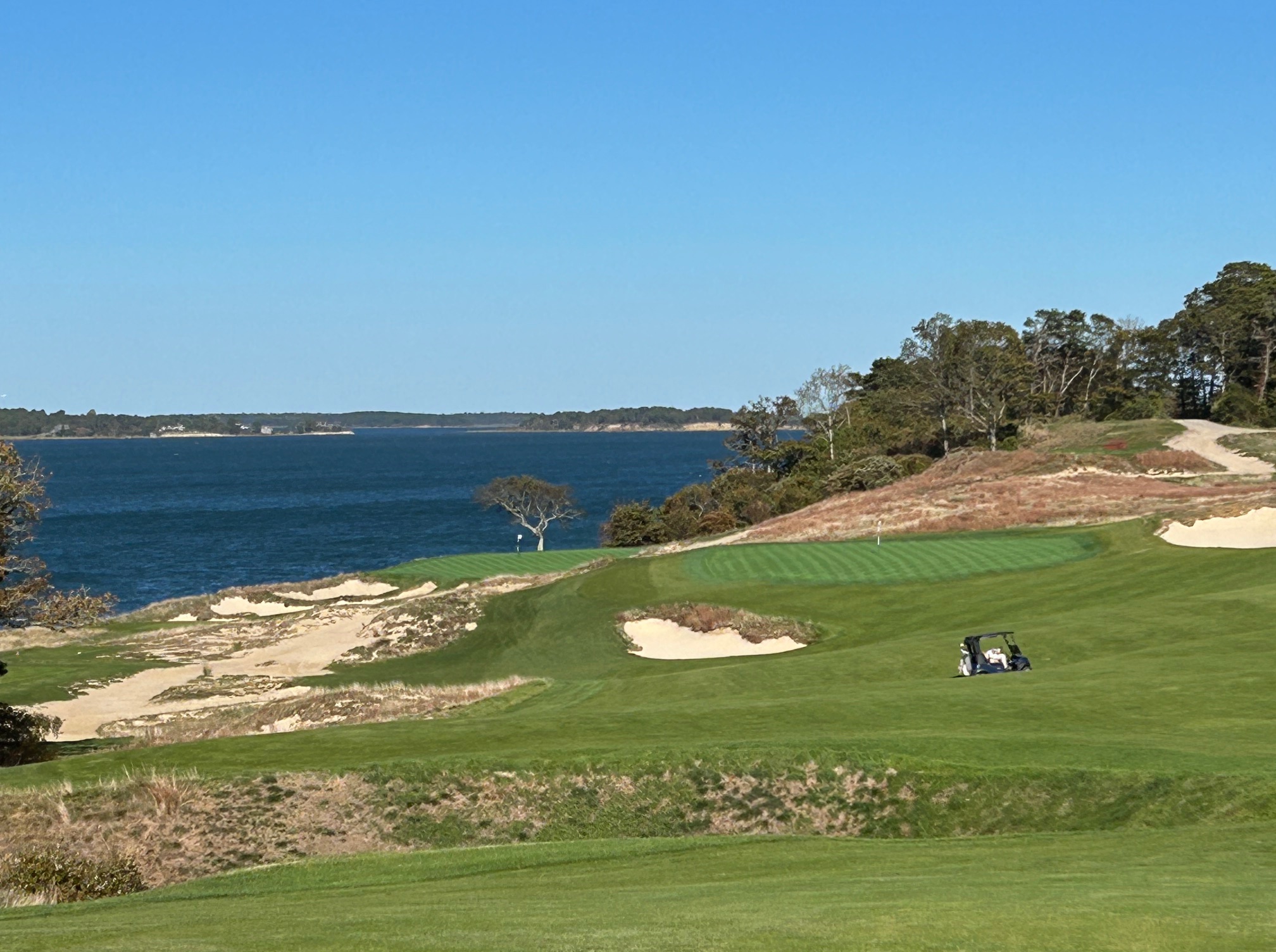
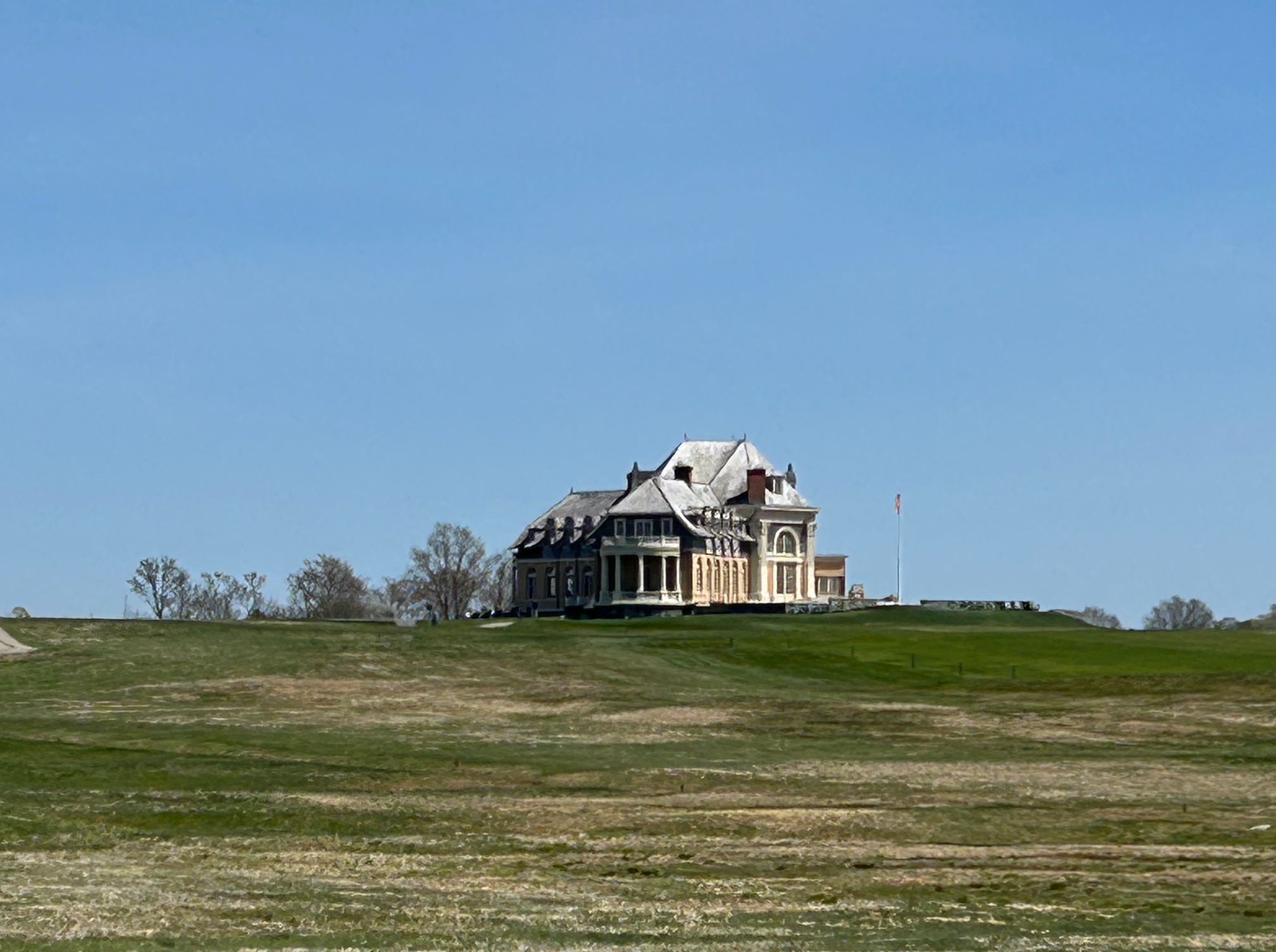
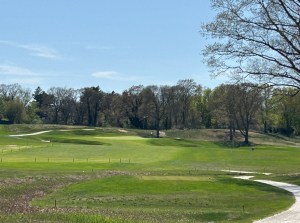
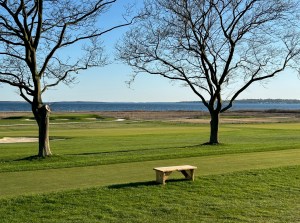
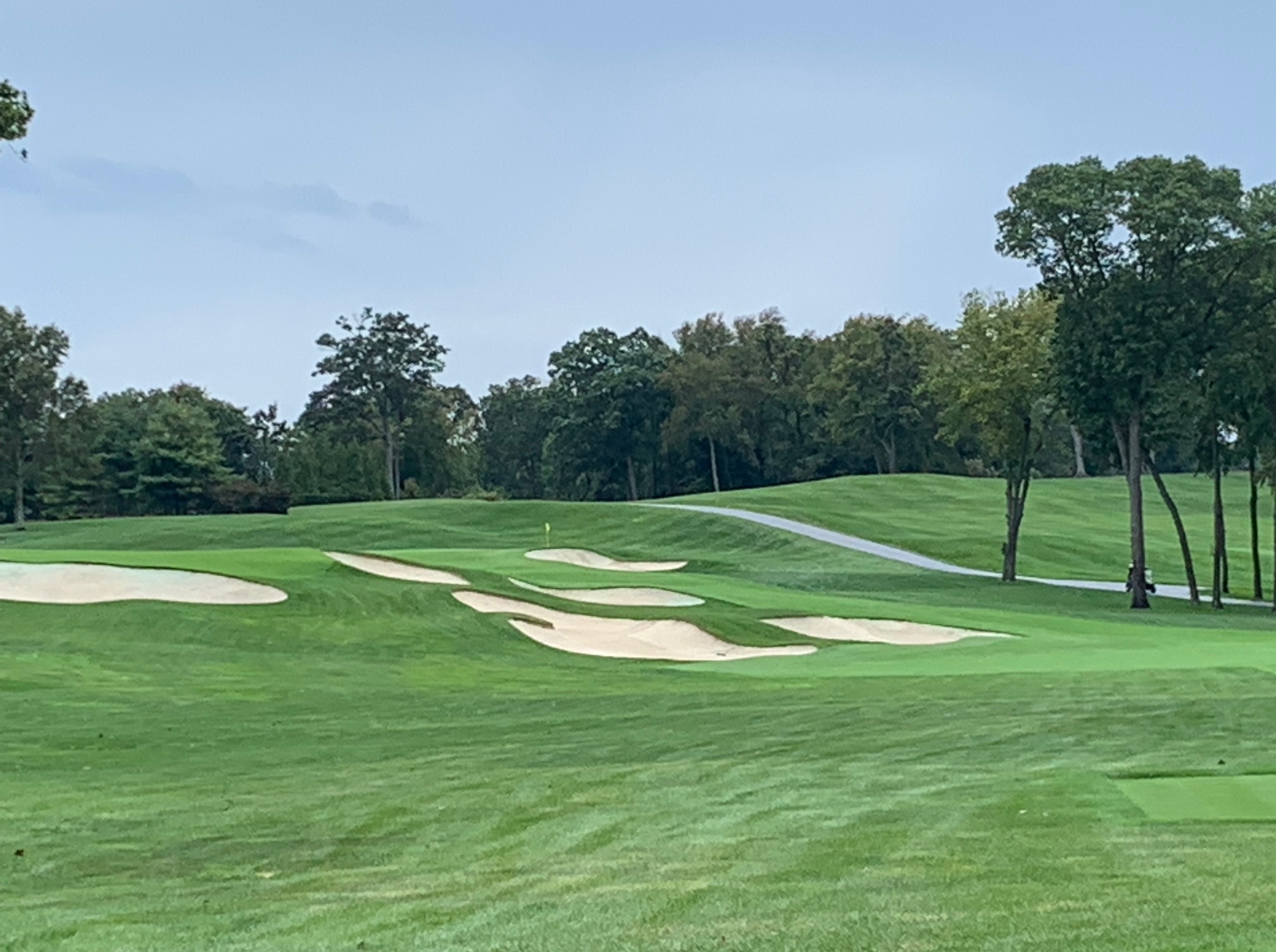
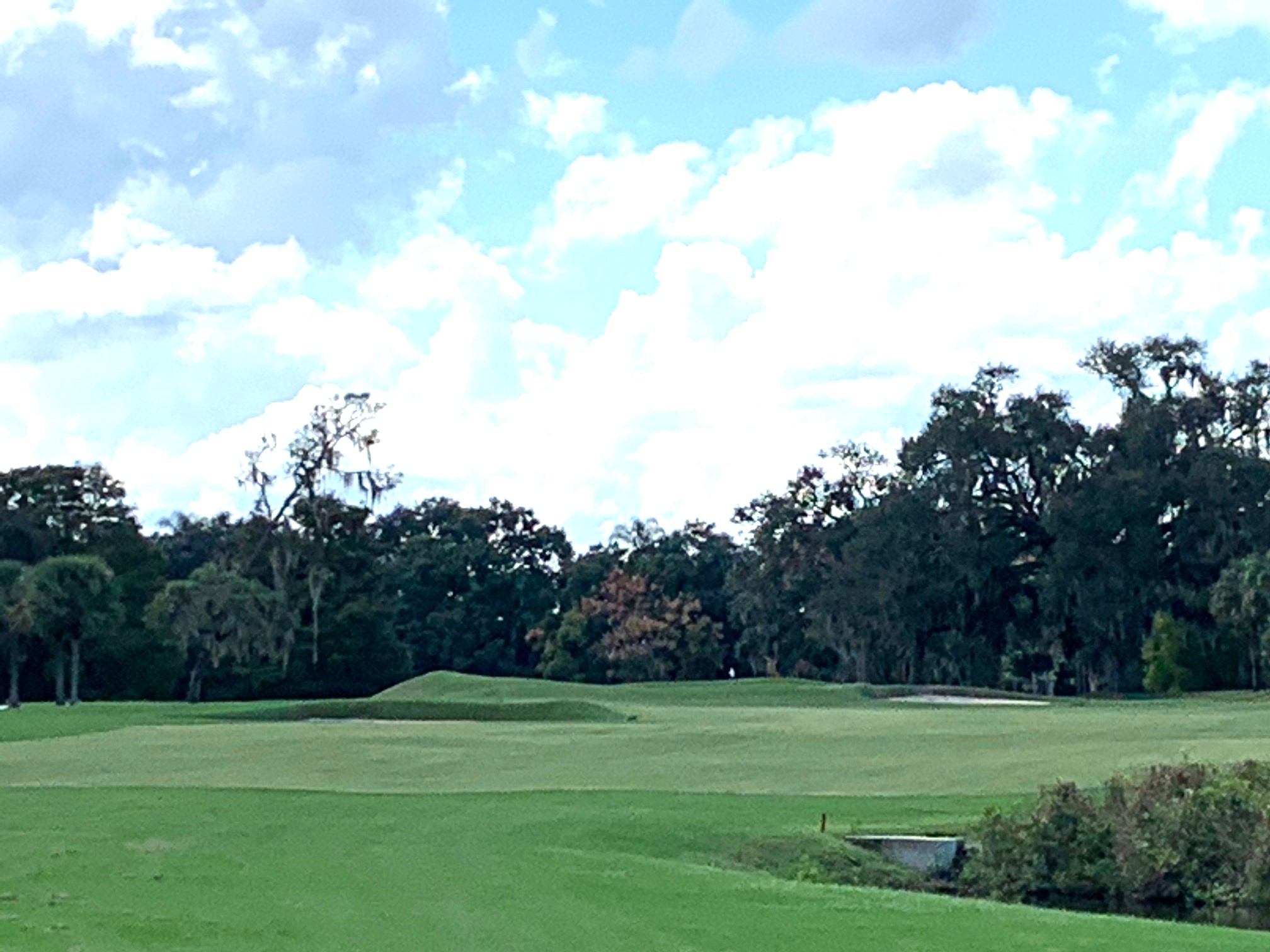
You will get plenty of views like this through the day

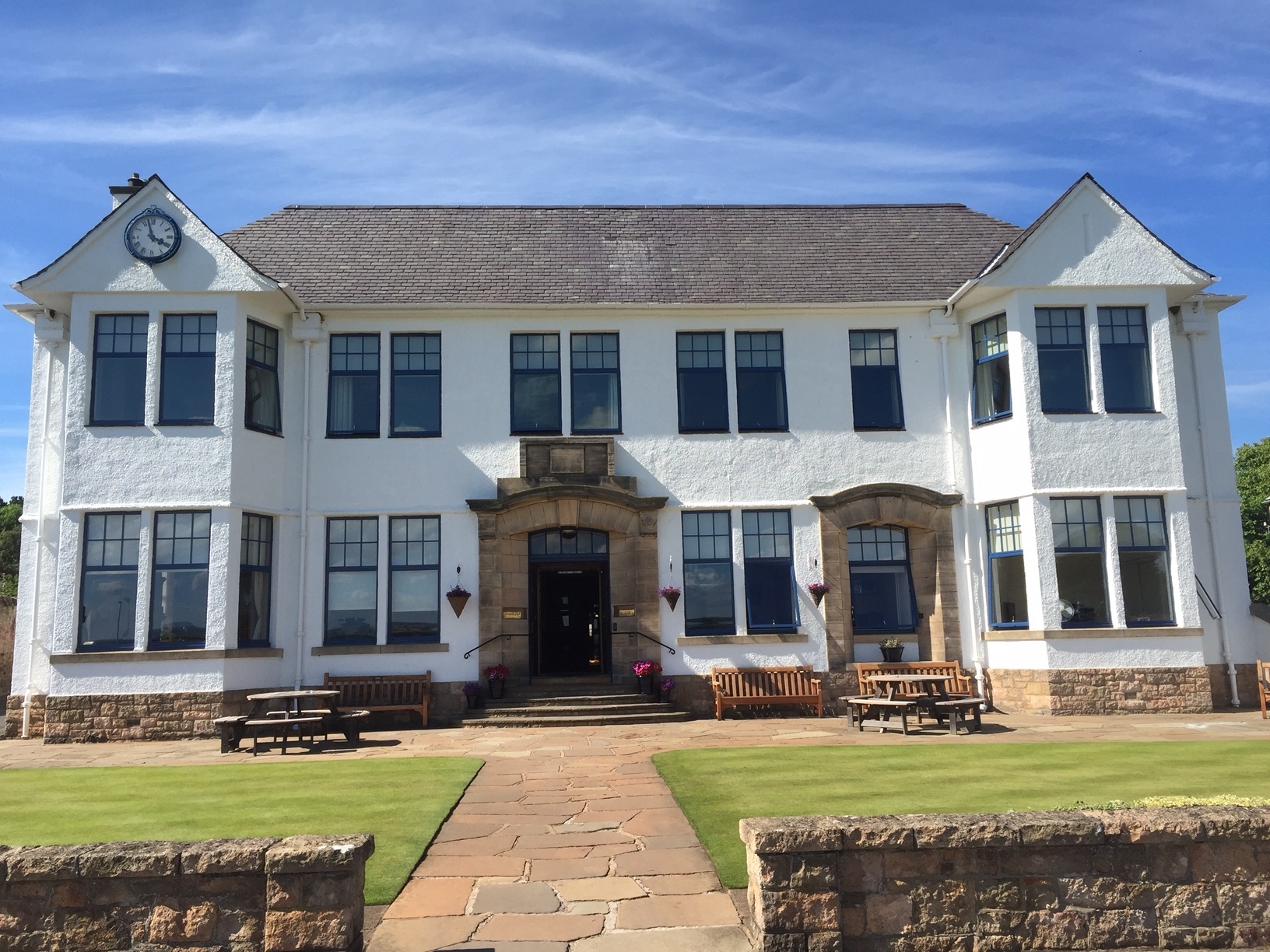
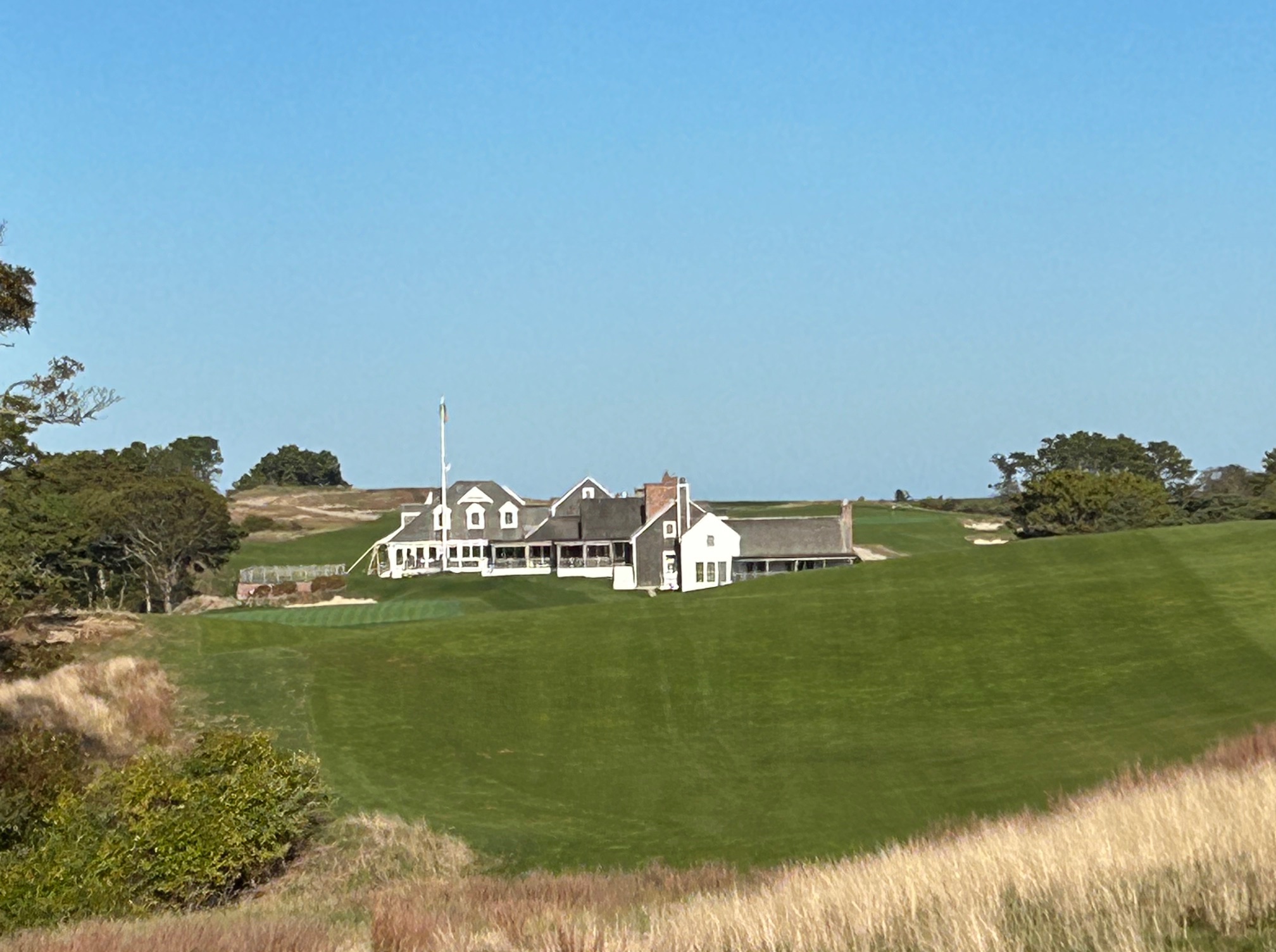
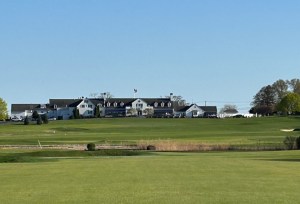
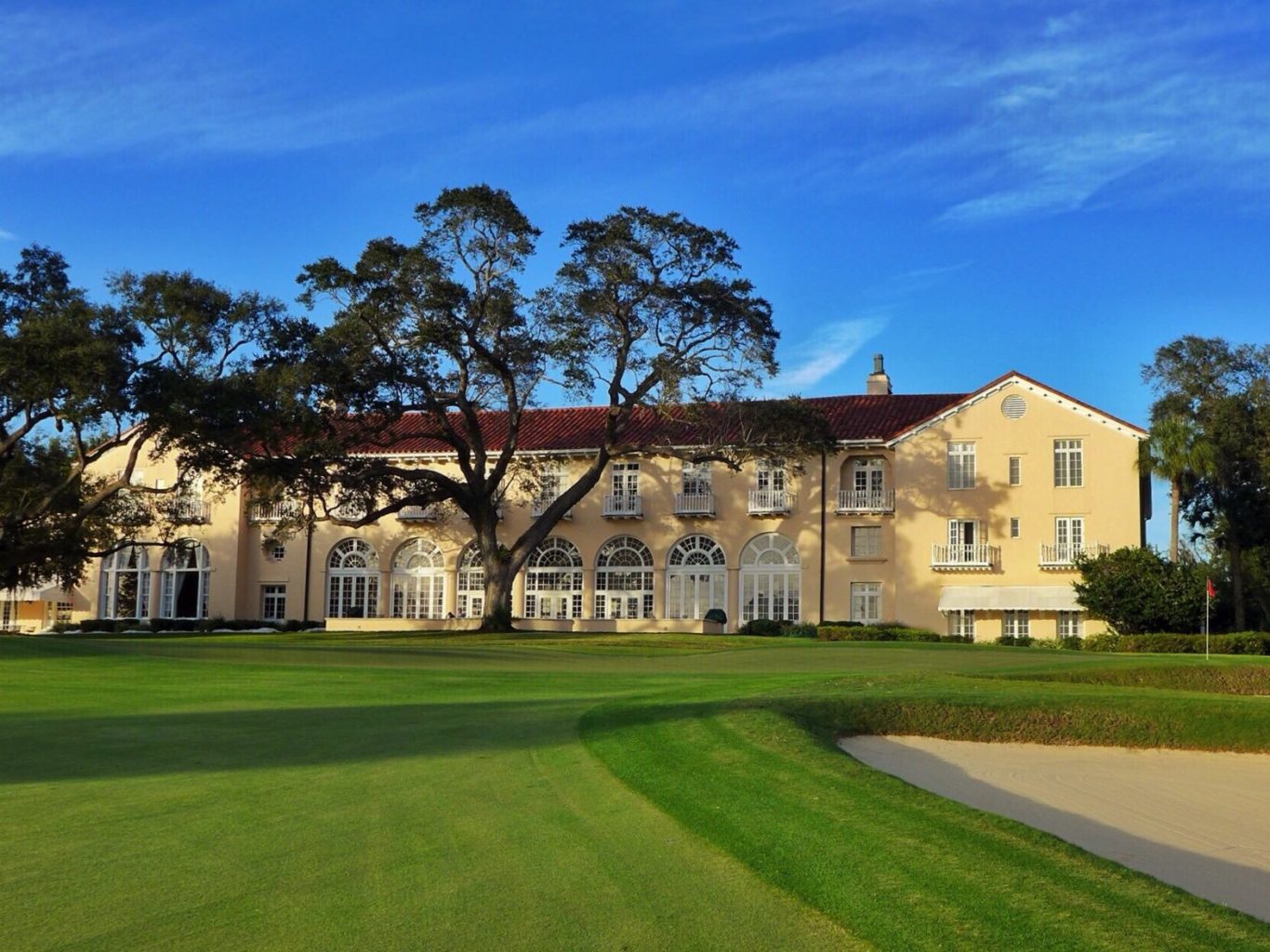
Other than a brief spat with a hurricane in 1954 that required reconstruction of one wing, the palatial clubhouse on the hill looks like it has been there for 130 years with very few changes.  By today’s high end club standards this place is far from excessive, in fact spartan in its amenities but more then adequate to meet the needs of the members who only spend a few months a year in their Newport second homes.

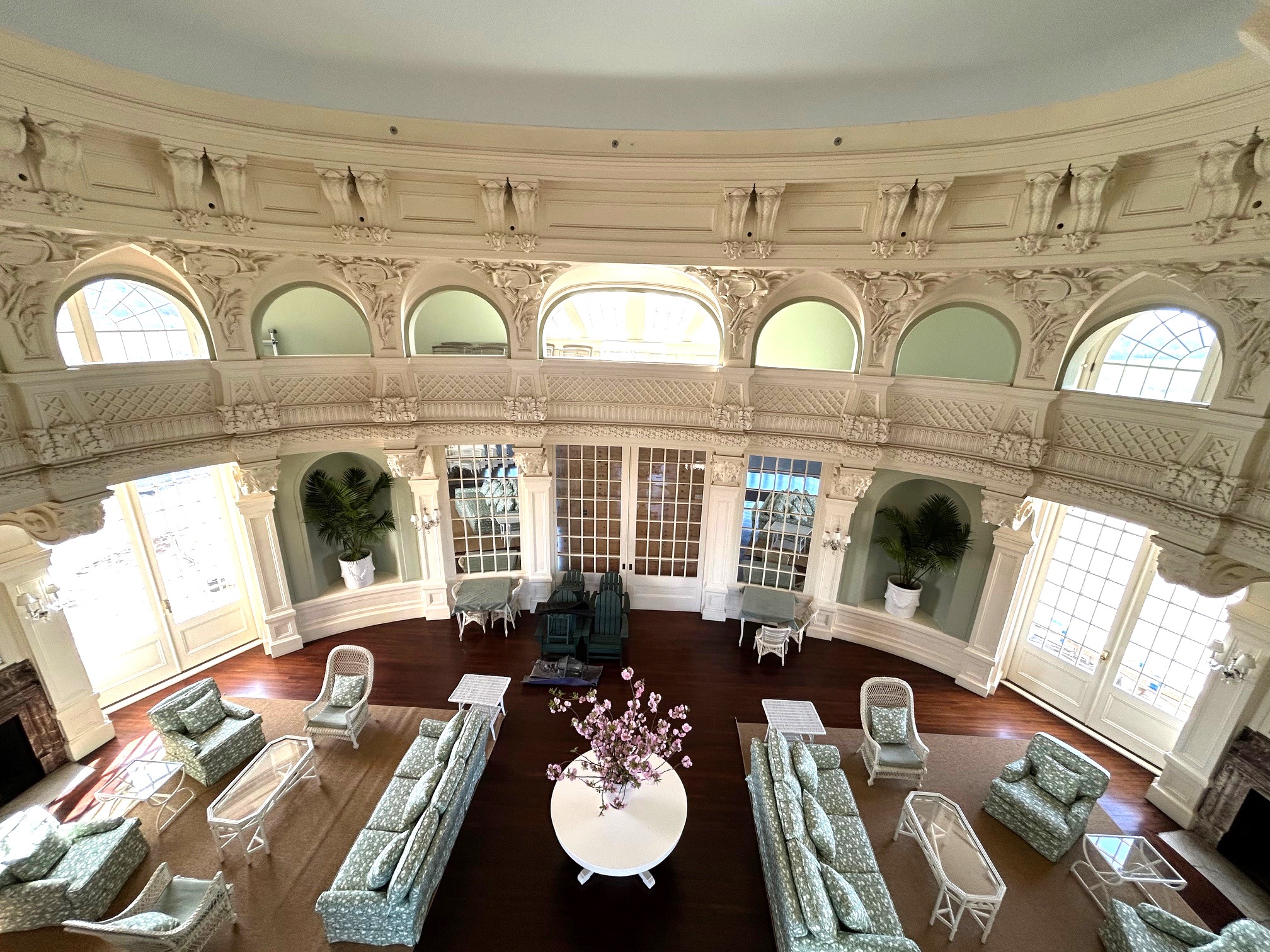
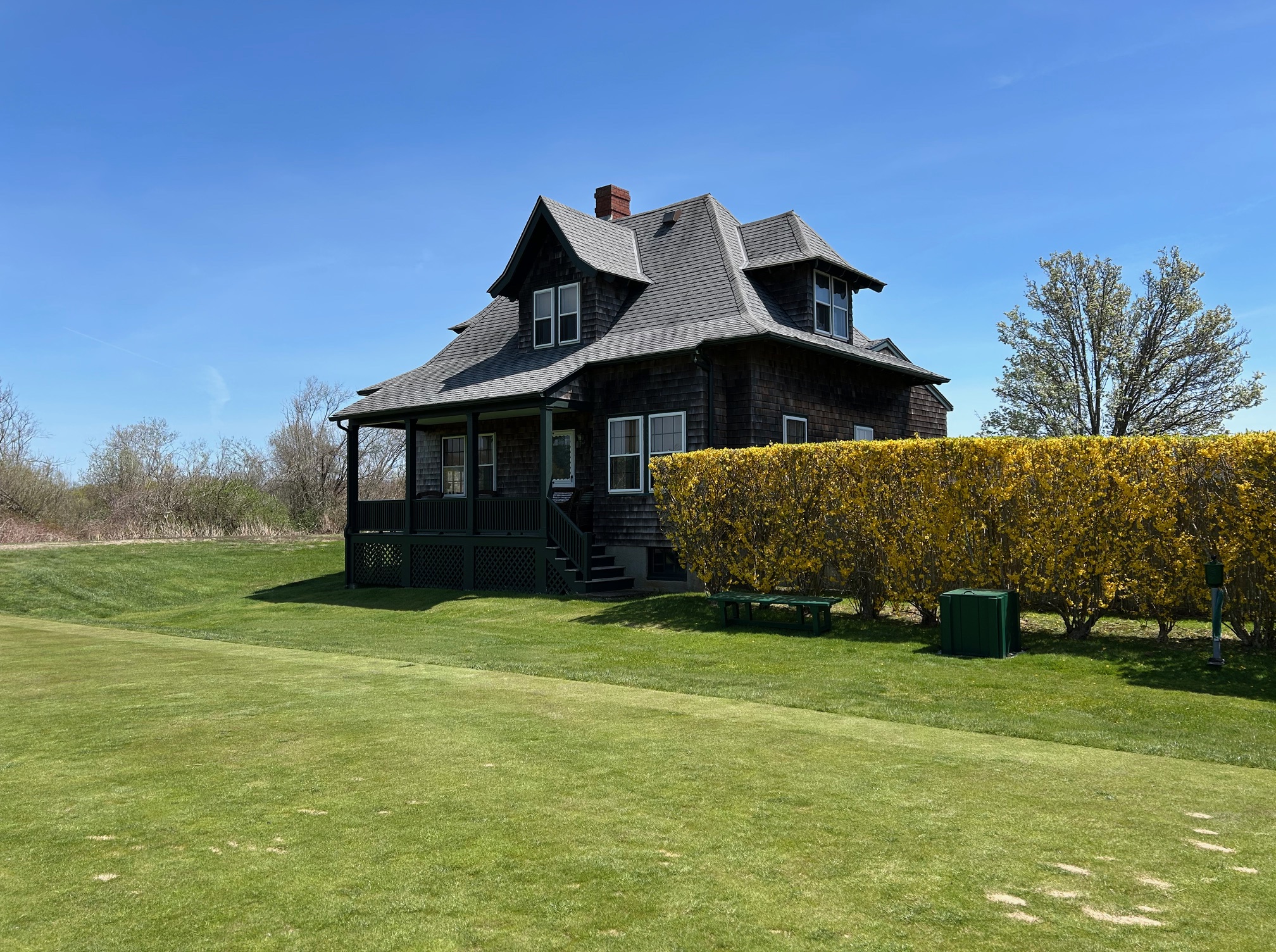
Ornate without being overdone

To me the simplicity of this place is refreshing.  People come to play a round of golf, enjoy an after round libation or a snack, and sit around taking in the fabulous seaside scenery that falls below their feet looking out the bay windows.  There is an honesty in an attitude of wealthy people who do not need to be reminded of their wealth.

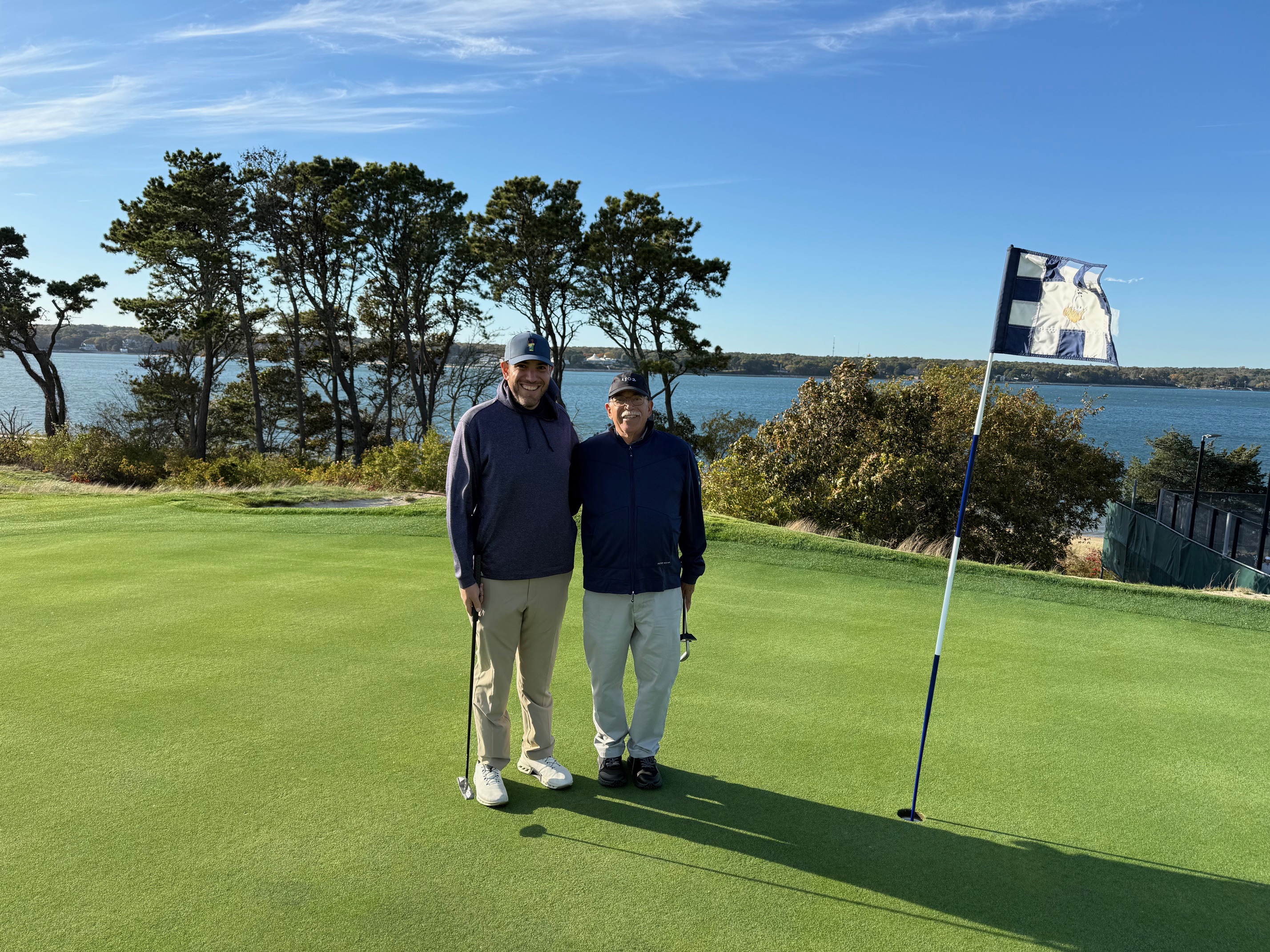
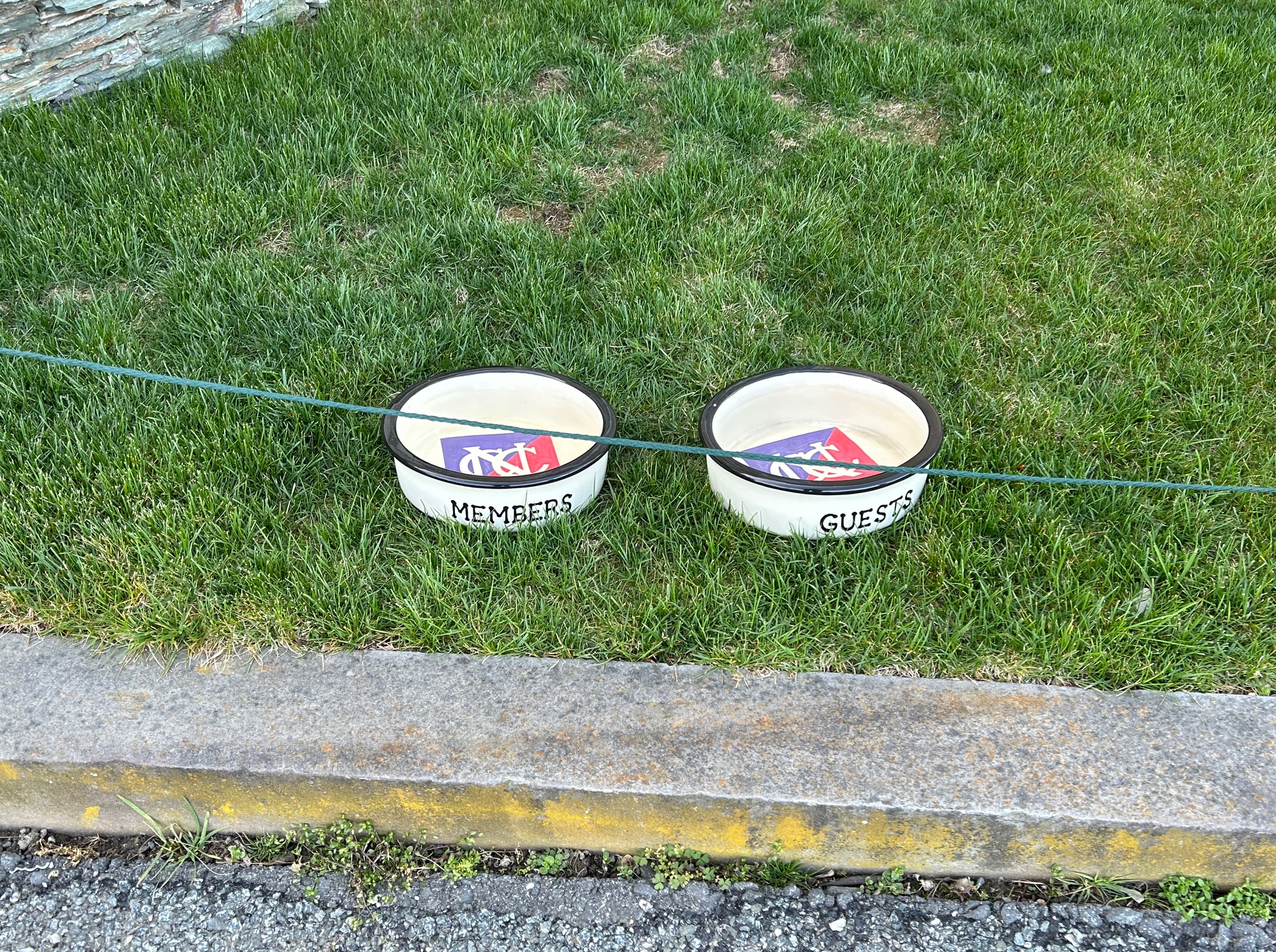
All family members and guests are welcome here

The golf operation reflects this same attitude.  This club was one of the original members of what was to become the United States Golf Association and it has held more then its share of major golfing events on this distinguished links.  Recently at Newport Tiger Woods won his second U.S. Amateur in 1995, Annika Sorenstam won a U.S. Open in 2006, and Richard Bland won the U.S. Senior Open in 2024.

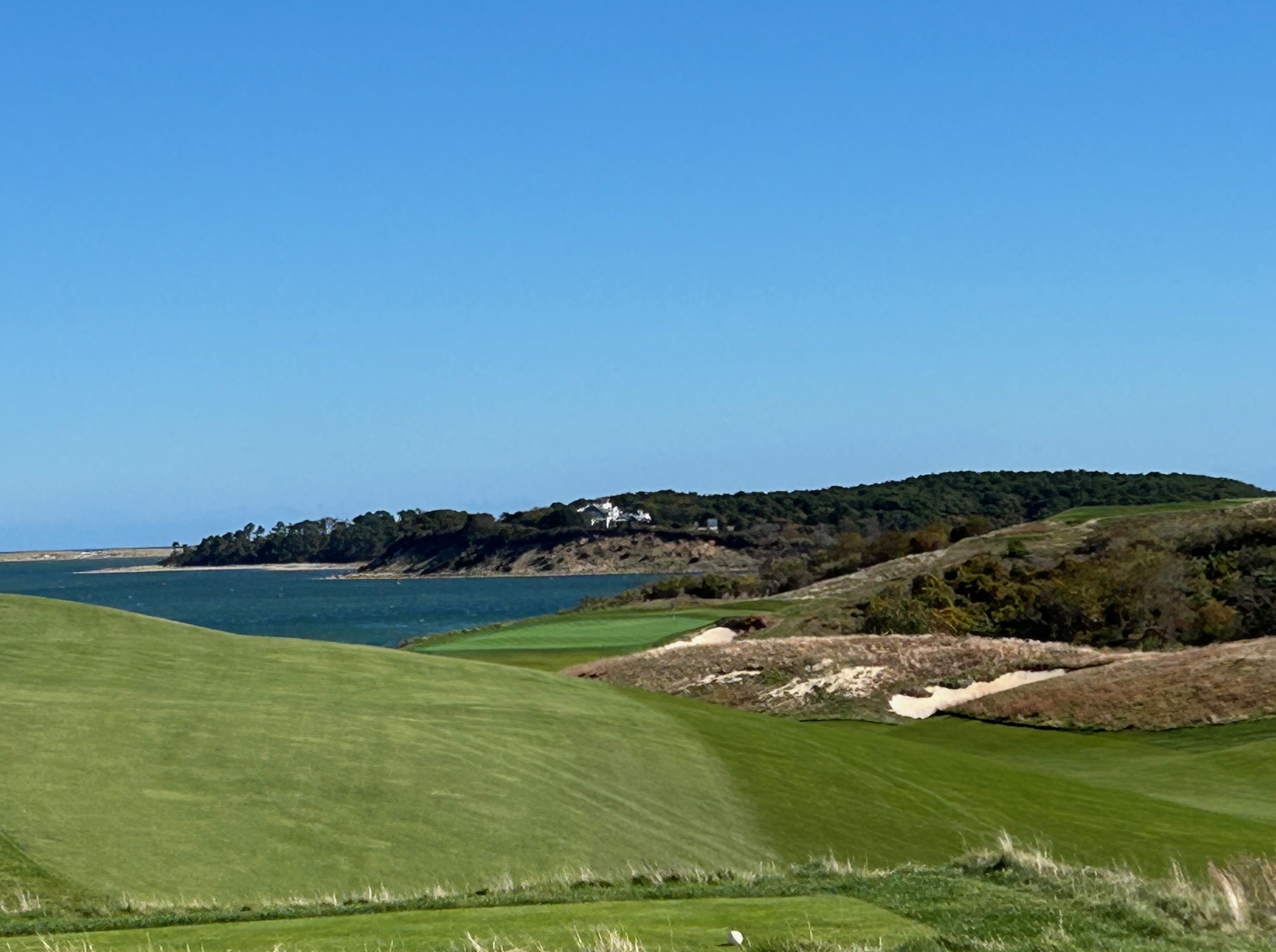
Champions have won prestigious stuff on these hills

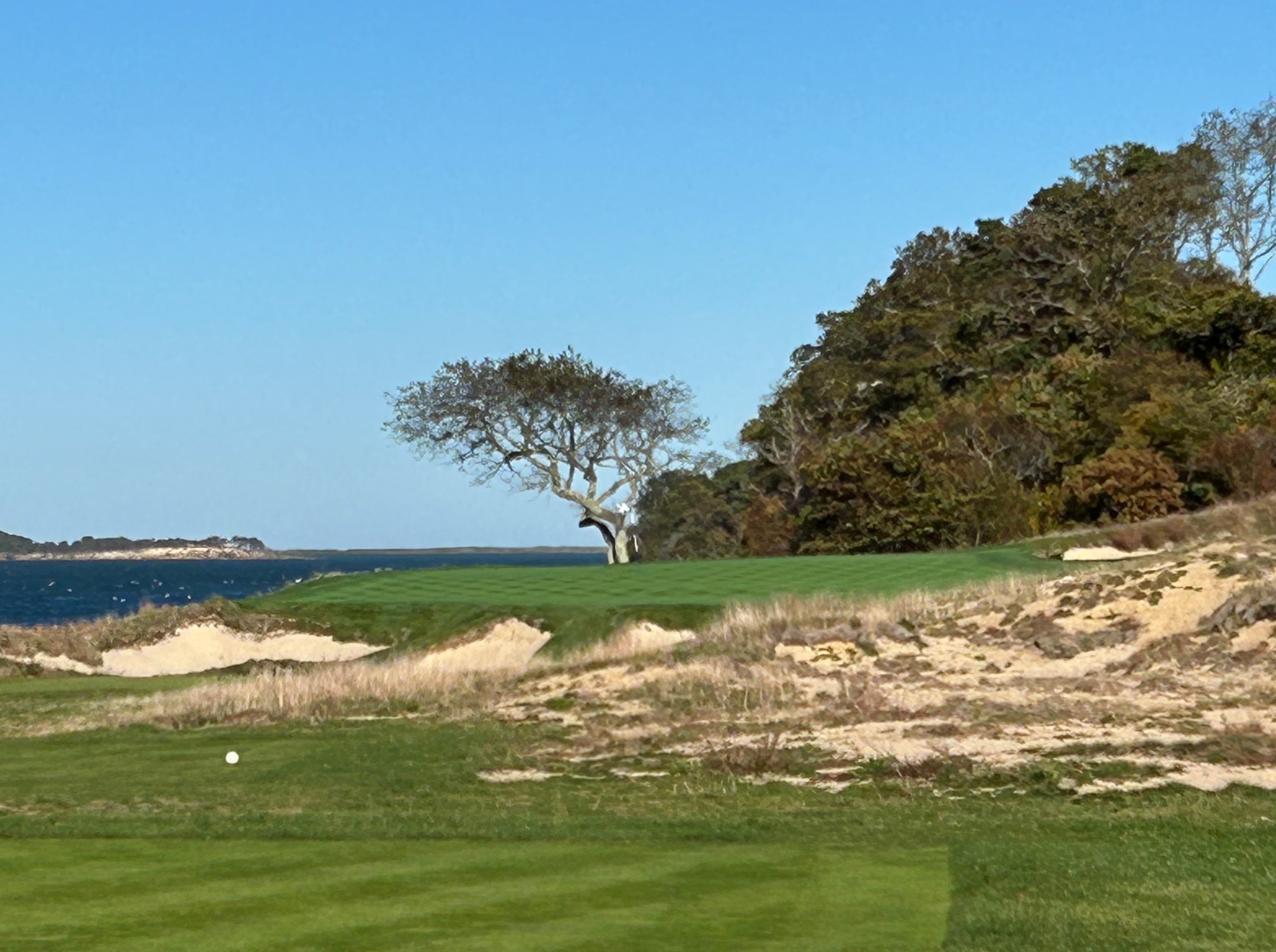
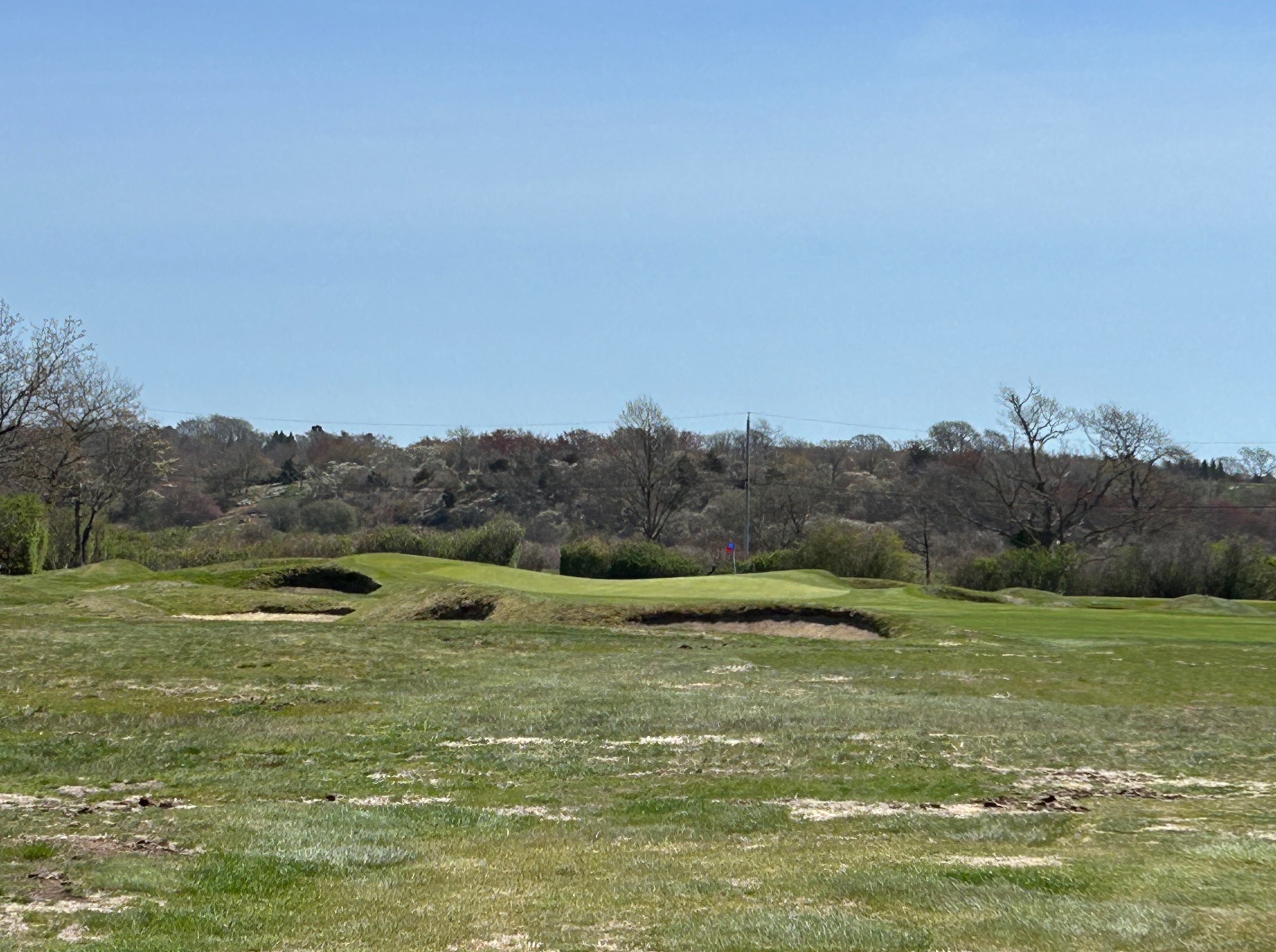
The course plays hard and fast with a wind-blown links feel provided by stiff ocean breezes.  They do not water anything but the tees and greens so there is no emerald green Augusta look that you take for granted at high end places.  The fairways take on rock hard character all year round and no member is going to complain about inconsistent lies in the fairways or the rough.  Windswept greens putt fast and true but trying to hold a spinning approach shot near the flag may be a big ask.  What nature provides is what the course gets,  it is up to the player to deal with it and converse with old man par accordingly.

The original course was done by the head professional William Davis in 1893 and in 1921, after acquiring additional acreage on the other side of Harrison Avenue, they hired one of the great Golden Age architects of his day, A.W. Tillinghast, to redesign the course which included seven new holes.  What Tillie created was the splendid layout we play today.  Little has changed in the last 100 years because the members understand what they have, a classic playable links course overlooking the sea, a true rarity in the U.S.

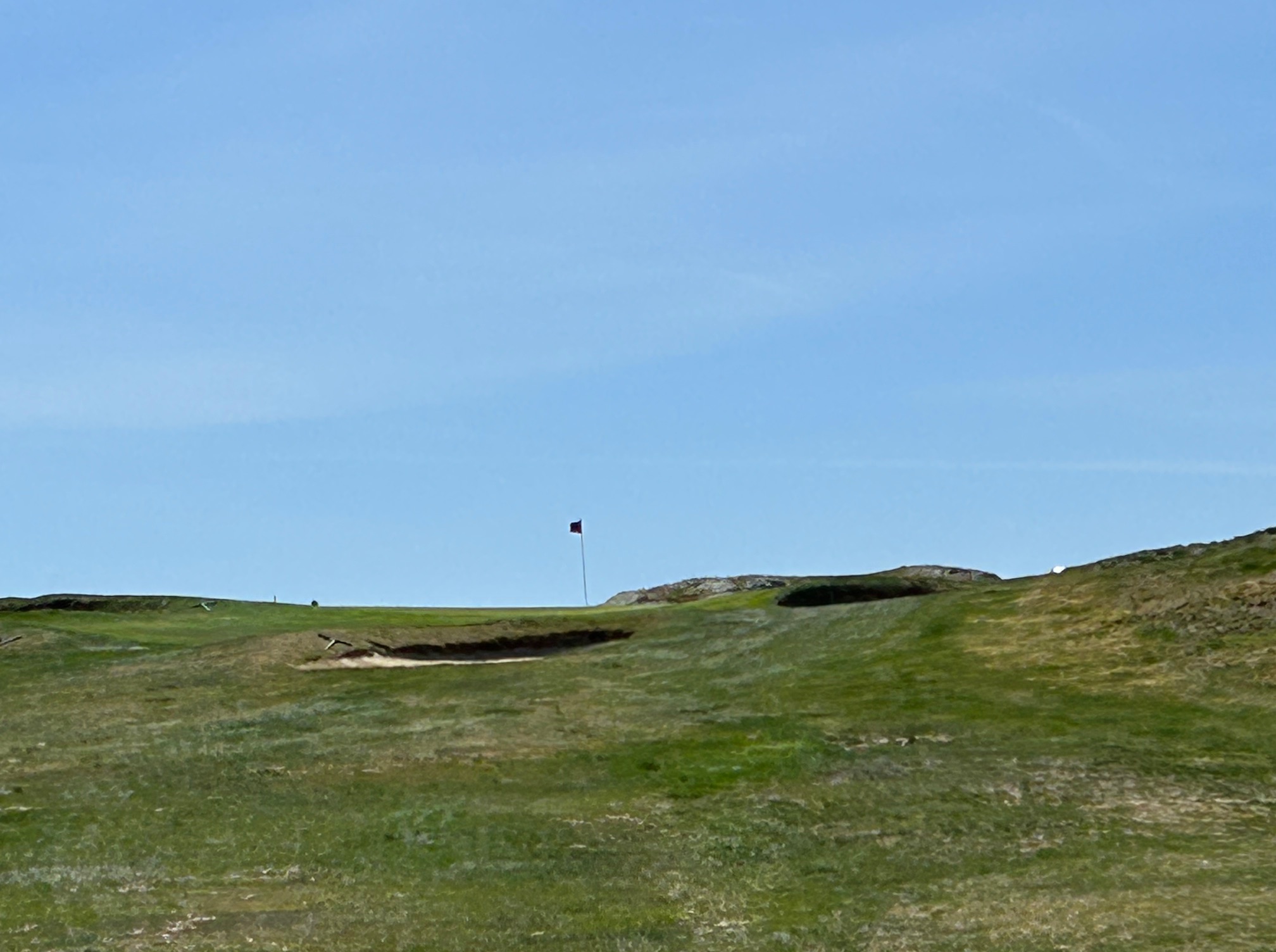
The fairway bunkering is free form, plentiful, and seemingly arbitrary in its disbursement but that is to allow for changes in wind direction from day-to-day.   Driving is the key here, one must avoid the bunkers as well as get the best angle into the pin locations of the day.  The green complexes are very Tillinghast in nature, accessible from the front, plenty of collaring bunkers and lots of internal contour in the putting surfaces.  Originally constructed for much slower green speeds, with today’s agronomic improvements and dried out windblown surfaces staying below the hole on all approaches is essential.

One quirky thing I noticed is the sequential color of the tee markers from longest to shortest are Red, White, and Blue which is the opposite of what you would find at most places.  I wonder if this was an intentional jab in the ribs at the traditional clubs of the day.

Opening hole has lots of elbow room

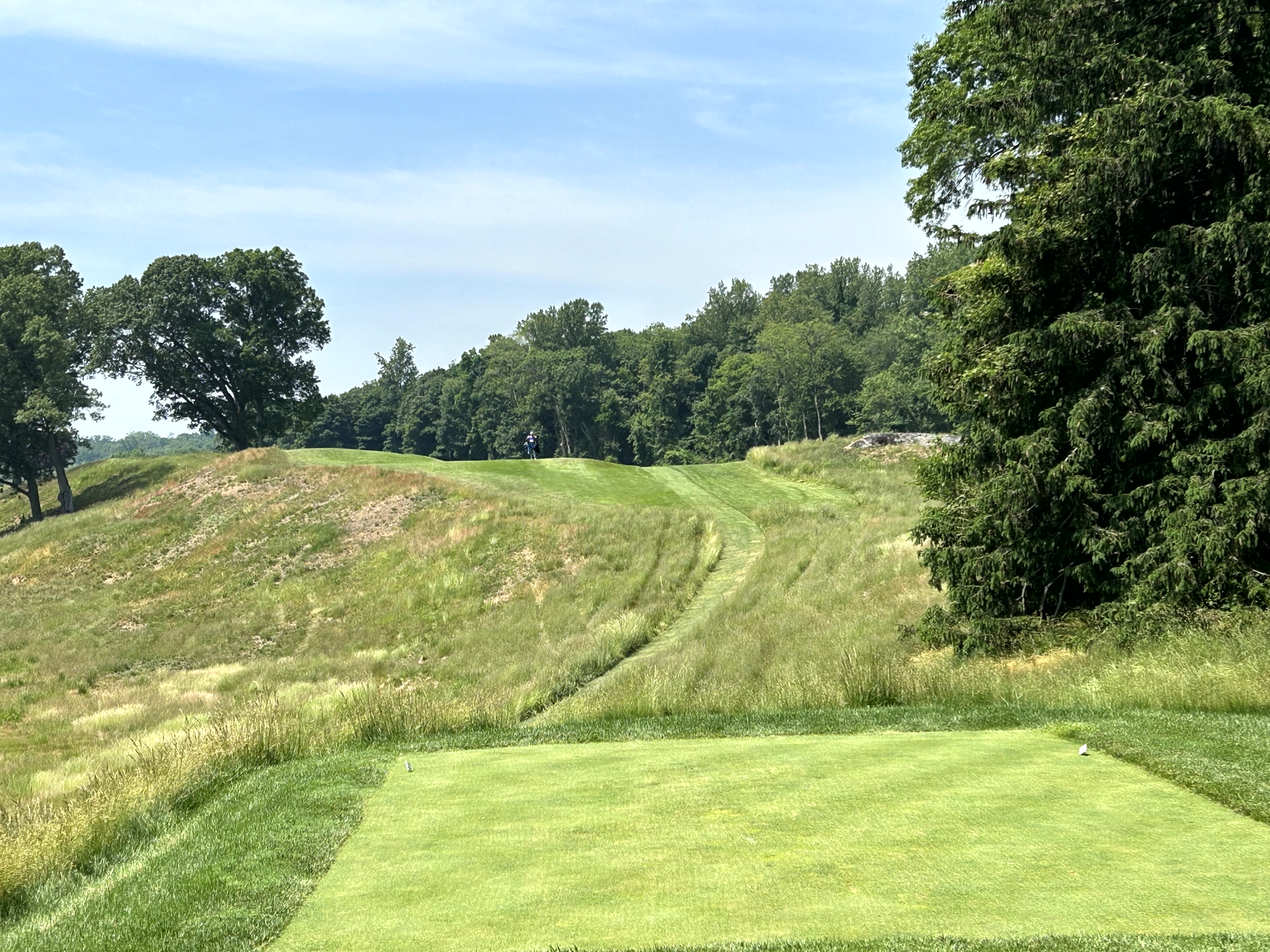
From the foot of the clubhouse the first hole is a somewhat gentle handshake Par 5 that reminds you that just because it appears open you need to focus on particular lines of play based on the day’s wind and the day’s pin.   A bit of croquet to leave a proper angle into a green set on top of a chasm which will reject balls stuck without sufficient intent.

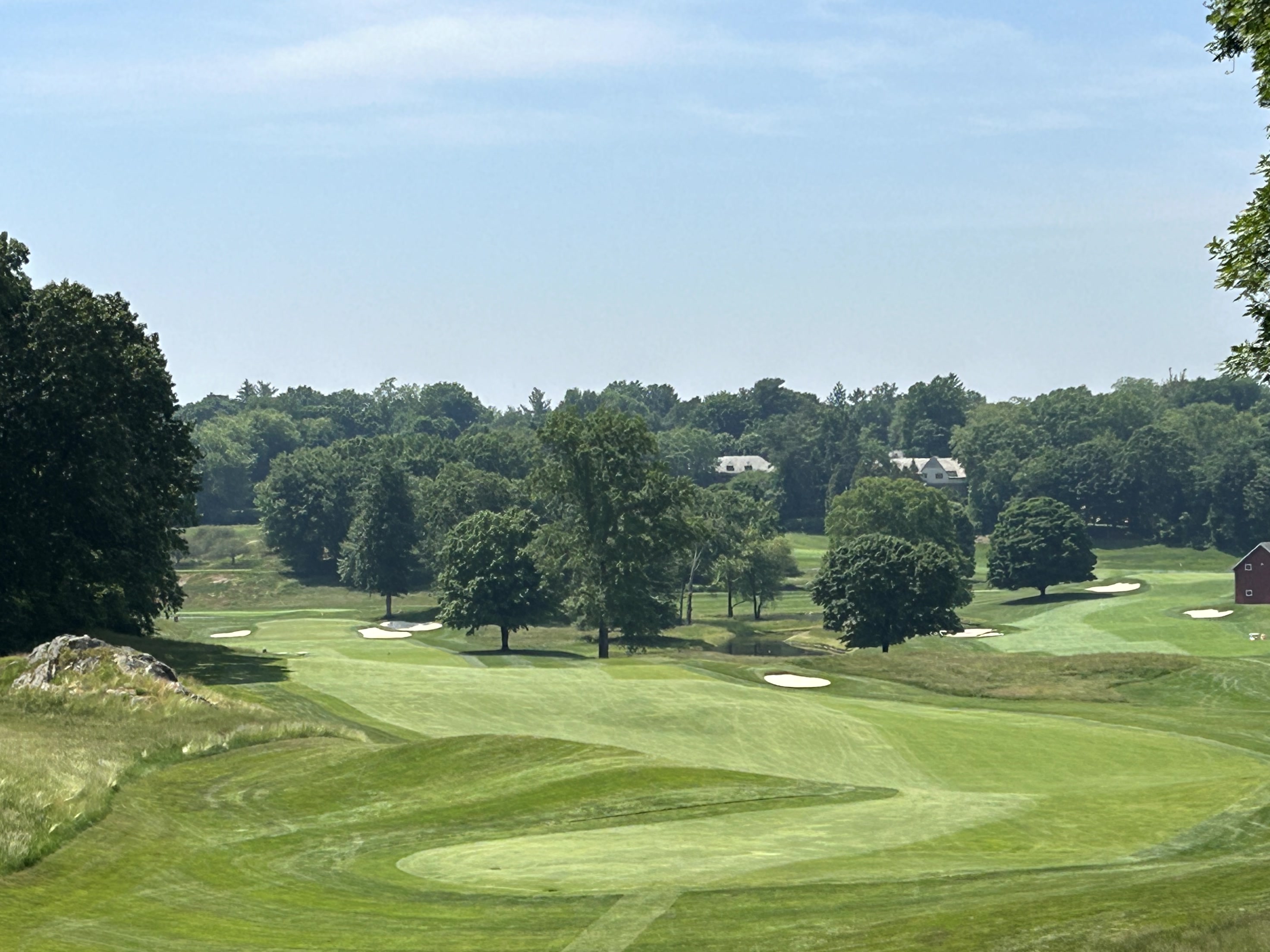
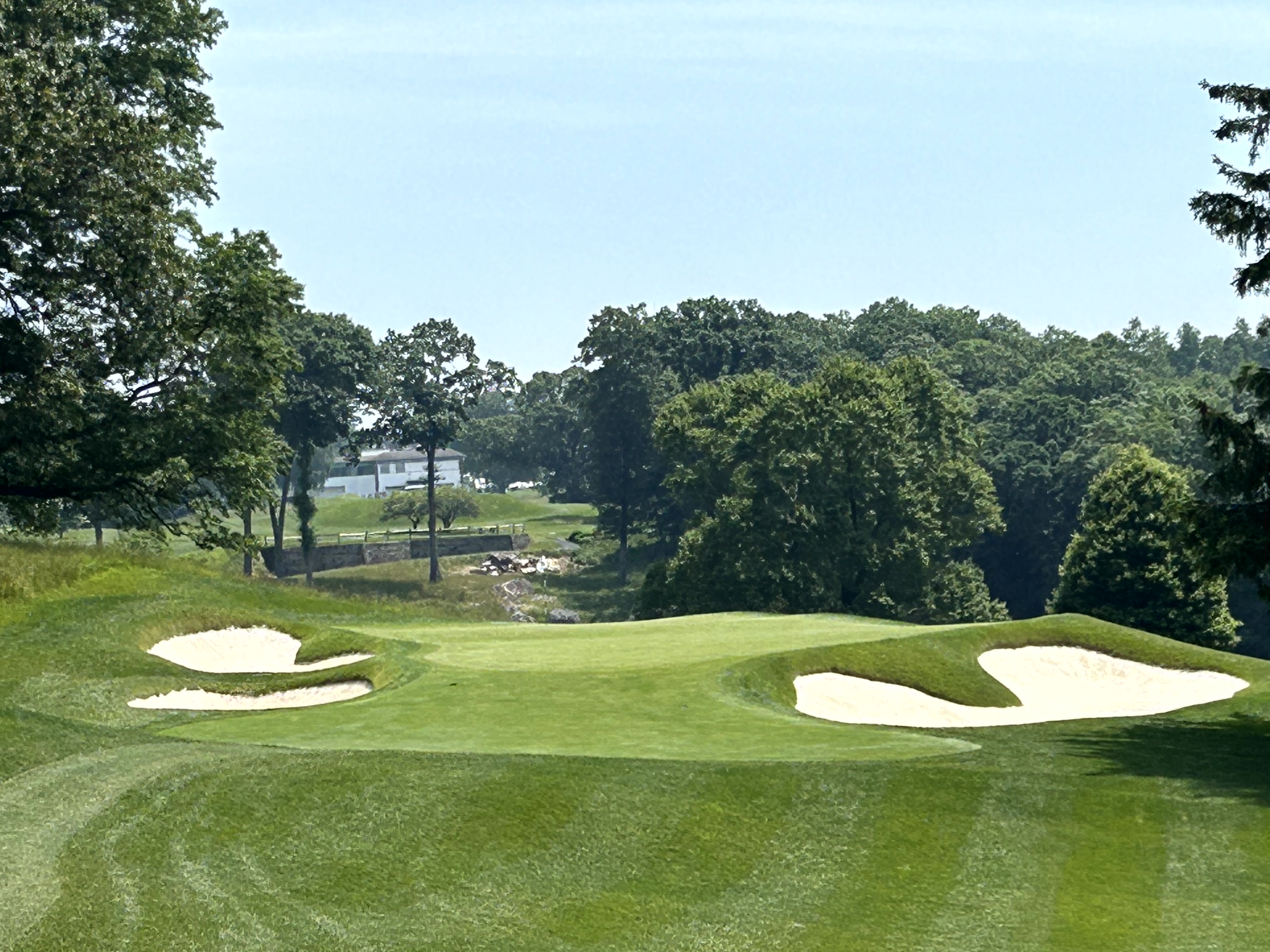
The next two medium length Par 4s give you the hopscotch pattern of avoiding fairway bunkers into green complexes surrounded by sand.  Which brings you to the first of the very difficult Par 3s which, if played into the ocean breezes, can be as much club as you have in your bag.  This one and the 14th are definitely drivable Par 4s in such conditions as described in the Hole-By-Hole Analysis link below.

#5 is the first bear of a Par 4….lots of bunkering to consider

You now are faced with the number one handicap hole of the day, a long wandering four par strewn with fairway bunkers everywhere.  The approach is particularly enigmatic with a cross bunker encroaching from the right at about 75 yards.  This might require a layup to the left and an accurate pitch to have a chance at a par.

#8 is about 165 but there is little wiggle room to miss here

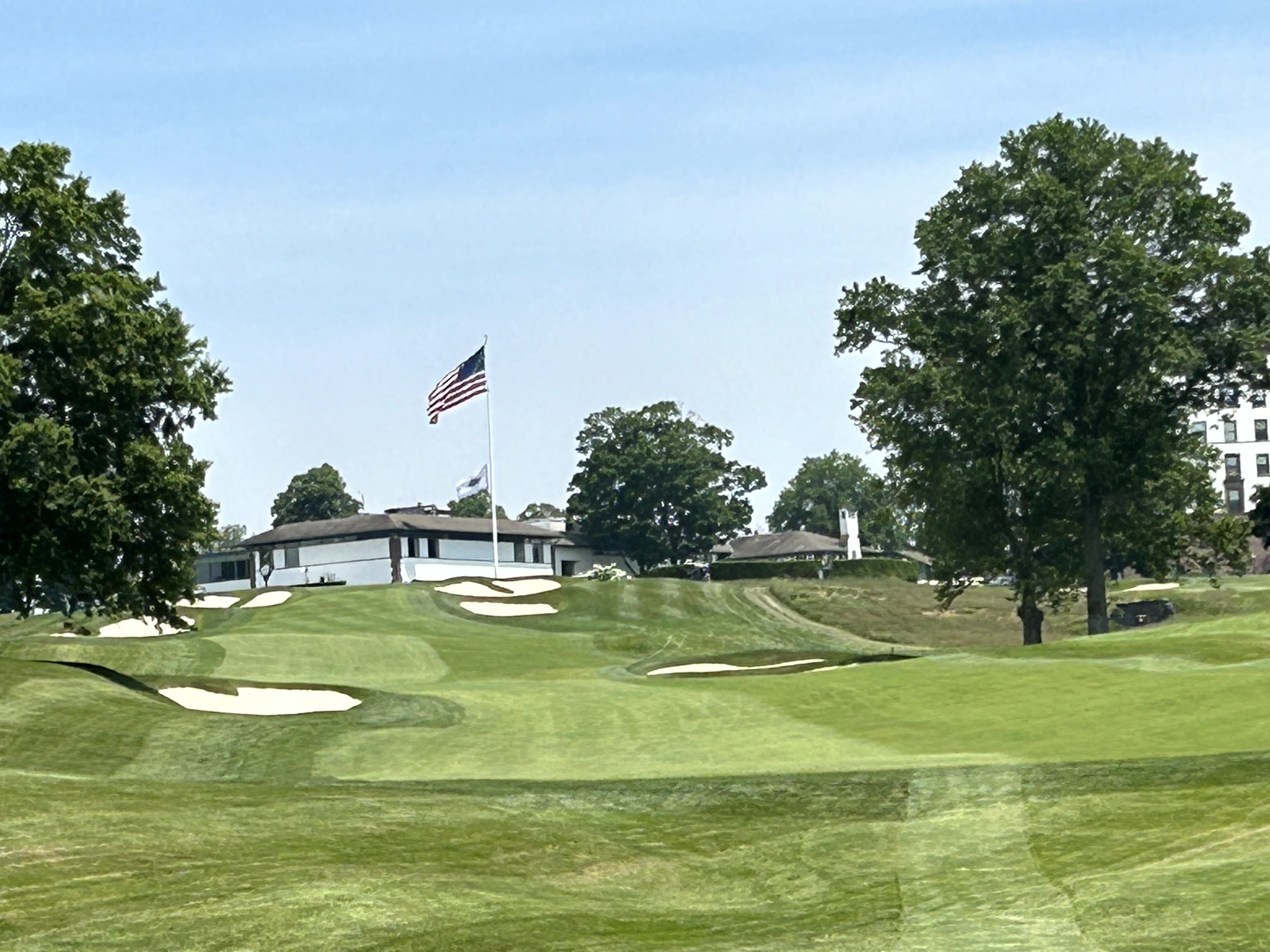
A bit of a breather, not dissimilar to the second leads you into a tough finish for the outward half.  A long meandering par 5 that plays similar to the fifth, followed by a tightly corseted medium length par three, and ending on the third handicap index hole, a long march back up the hill to the green set next to the majestic  clubhouse.  Stick your head into the bar to grab a snack and some hydration before heading out to the very difficult challenge ahead.

Long trek up the hill on the 9th…without wind help it is a three-shoter

Back nine sequence of 5-4-5-3-3 is kitchy and will demand a blend of solid decision making and shot execution to maintain balance on the scorecard.  You will notice remnants of a rock quarry adorning the right on the Par 5 tenth and behind the green complex.  Once through the highly technical short eleventh the quarry skirts the left of the second par 5 in two holes.

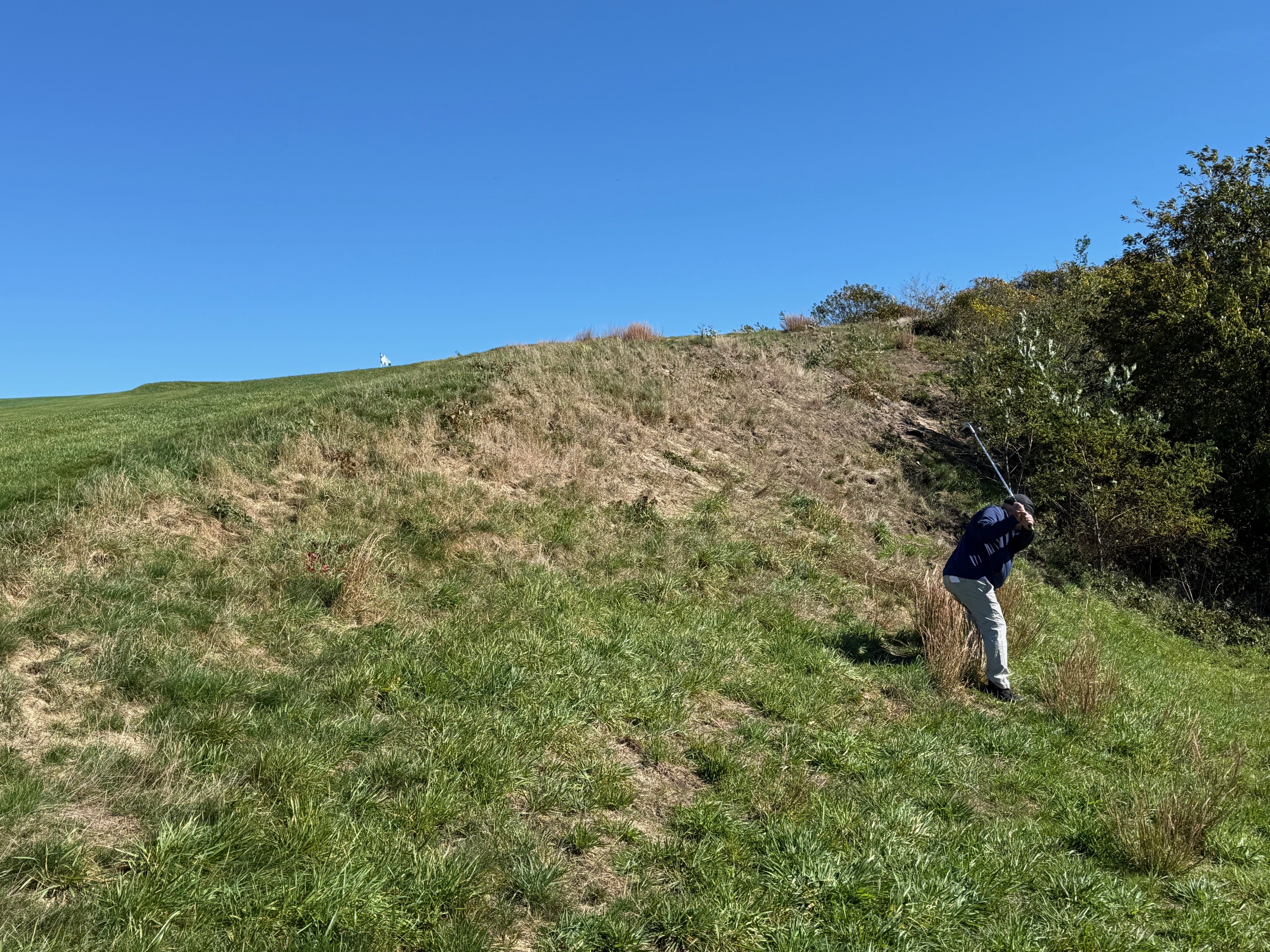
The Quarry Hole…check out the rocky embankment back right of the green

This now brings you to the strangest sequence of two Par 3 holes you have ever seen.  From the doorstep of the green supervisor’s home you are staring up a billy goat hill to a green complex perched on a ridge adjacent to the clubhouse.  It is an equestrian leap over an array of bunkers into a green dramatically sloped toward you which requires two to three clubs extra depending if the wind adds insult to injury of the severe elevation change from tee to green.

Super’s house….might want to Trick or Treat at this one
From the Super’s porch the 13th green looks like Everest

This is followed by the evil sister of the fourth, another possibly two-shot Par 3 across an abyss into a green perched above a chasm and a seriously fierce bunker left and below the green.  If you get through these last two Par 3’s in eight shots you have gained ground on the field.

The second handicap index hole of the day is a sweeping dogear right Par 4 which can play a three shotter if the wind is in your face.  The green complex is particularly interesting set into the foot of a low hill to the right featuring a two levels and a steep false front to boot.

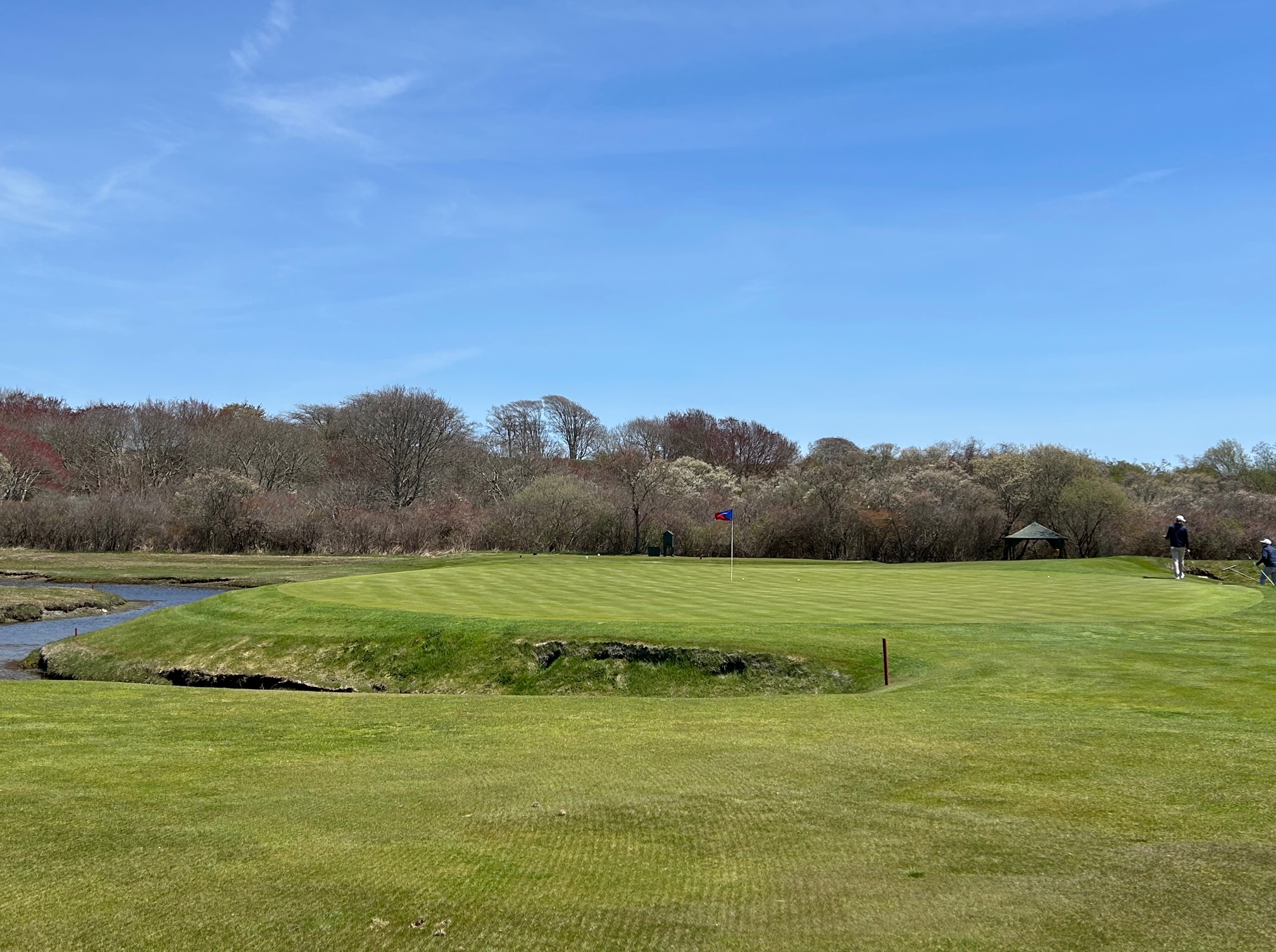
#16 is the rare moment greenside water is in play on this links course

As you slowly turn your way back toward the clubhouse the 16th is the first truly non-links hole you play all day.  A truncated short Par 4 this actually has a pond in play short and left of the green which you would never see on a links course in Scotland.  Next is a very long par four and a half with a canal on your left and plenty of bunker turbulence between tee and green.  Like many of the long ones it is possible that you need to lay up and then rely on a lawn dart pitch to save your par.

Rarely used back tee on 18…not sure you would survive the trek up to this cliff top

As you approach the final tee take a moment to notice the precipice above you and to the right which is the ceremonial back tee.  You would need a burro and a Sherpa guide just to ascend to this pulpit ground but it presents an imposing look especially looking back walking off the final green complex. 

18 has the deepest green on the course and it is a full extra club to reach it

Like the ninth the finishing hole on this side traverses the steep terrain to return to the clubhouse.  The views of the back of this majestic structure are a splendific as the front, it is quite an architectural statement in all directions.

From the 17th green the back of the clubhouse is as palatial looking as the front view.

.Newport, Rhode Island

Architect:       William Davis (1893)  A.W. Tillinghast (1921)

.                      Par     Rating   Slope   Yardage

Black               70        75.5     135      7085

Red                 72        72.5     128      6577

White              72        70.7     122      6194

Blue (L)          72        73.0     127      5601

If you would like a printable PDF of this posting including a yardage book quality hole-by-hole description of how to play the course hit the link below.

(Click to get the the printable text of this posting)

Rhode Island Country Club

It is really cool when you walk into the bar area of a classic old course like this and see the names Brad Faxon, Billy Andrade, and Brett Quigly on the club championship plaques.  These are the favorite sons of the state who grew up playing there and later went on to a career on the PGA Tour.

This place has tradition seeping out of every pore and you cannot help but anticipate the experience of playing a course where players of this caliber honed their skill before making it on the big stage.

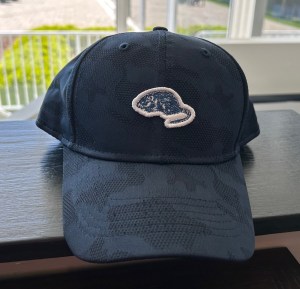
What is even more enticing is the informality of the place, nothing is overstated it all just feels comfortable in its own skin.  You might note that the logo features a muskrat, a critter that made its presence known as they were excavating the holes close to the shore line holes a century ago.  A visit to the golf shop will give you the opportunity to by a cute muskrat hat as a piece of memorabilia.

Donald Ross routed this track in 1911 and very little has changed since.  Like so many of his designs that populate this part of the country, Ross simply took what the ground was offering and found hole sequencing and strategic challenges there to be unveiled.  Green complexes are the jewels here, plenty of challenging bunkering to deal with, but, as was custom in the hickory club age of the time, access to most of the greens can be handled using the ground as your friend.

The course plays to a par 71 with only three par threes and two par fives so you have a large inventory of four pars to encounter along the way.  The low handicap holes are very long par fours that establish the challenge of the day but there are a number of short ones that require more tactical decisions and precise shot execution to help balance your scorecard.

A fairly simple handshake for the opening Par 4

The day begins with a simple downhill par four that introduces you to the first of two inverted bunkers on the course.  These are nothing but large turtle back bunkers that present you with a sand shot below your feet.  Both the one here and on the ninth are really not a factor in the playing strategy of the hole.  What you do get on the first is the typical corridor of bunkers leading up to an accessible green complex with plenty of contour.  This is a formula you will see throughout the day.

On the second you can see the strategic character of Ross green complexes

The next two holes start to define the character of this charming Ross creation.  Driving the ball in the fairway is a premium for playing aggressively into the green complexes.  The sloped ledged green setting on the second will challenge you keep your approach in the area of the day’s flag.  The uphill third has a domed green that repels balls in all directions so a sharp short game is needed here to make a par.

All the architectural elements are in your face on the fourth

The fourth is the first harrowing visual statement you will encounter as the hole presents itself as a slippery downhill par four into a tiered green across a meandering creek.  This is where paying attention to landing areas off the tee makes a huge difference in getting playable approaches into the greens.  You will find full detail on a strategic approach to play in the printable Hole-by-Hole Analysis through the link at the bottom of the posting.

Two short, scoreable holes follow in a technical par three and a theoretically reachable par four.  One of the things I really like about this course is the opportunity to hit precise short irons into small sloped targets to help your scorecard.

The short par 4 sixth will try to goad you into doing something you should not

The balance of the outward nine is a series of long holes where you just have to hitch up your pants and drive the ball solidly to have a prayer of reaching the greens in regulation.  Don’t be surprised if you are hitting a 60-yard pitch and a putt on the longer holes in an effort to save a par.

When you make the turn take a moment to visit the halfway house next to ten tee for a hearty snack before you attack the second nine.  Very old school looking structure with real character.

Very classic cottage style to the Halfway House

By now you have probably noticed that you have only played one par five and one par three so far.  The odd sequencing of the non-par fours continues on the back nine.  The tenth is a strong par three with a sweeping contoured putting surface that requires precision with a longer fairway club to get a reasonable two-putt opportunity for par.

Your last five par of the day gives you a stunning view of the clubhouse

The last par five of the day is next,  a sweeping dogear left with a panoramic view of the clubhouse on the horizon.  Scoring on this one and the short twelfth is a must because there are a couple of hearty par fours that follow before you cross the road and head to the four bayside holes that define the challenging finish.

The twelfth is an eye candy short hole with an array of strategic elements in play throughout

As you cross the road to the fifteenth you cannot help but be a bit overwhelmed by the site of the lighthouse and the bay that will overlook your play on the last four.  The wind now becomes a major factor in club selection and line so there is a strategy change at hand to control trajectory and mitigate wind effect from here to the house.

The visual the last four holes can be very distracting

The short three par 17th is a Kodak moment for sure and probably the place where the muskrats made their last stand before becoming part of the lore of this place.  A beautiful and challenging finishing hole with a green majestically set into a hill behind presents a tantalizing finish to this classic old course.

.Barrington, Rhode Island

Architect:       Donald Ross (1911)

.                      Par     Rating   Slope   Yardage

Blue                71        71.1     130      6396

White              71        70.1     127      6117

Red (L)           71        68.6     124      5786

Gold               71        65.5     116      5259

If you would like a printable PDF of this posting including a yardage book quality hole-by-hole description of how to play the course hit the link below.

(Click to get the the printable text of this posting)

Westchester Country Club

Westchester Country Club Logo

In the early 1920’s John McEntee Bowman, the owner of the Biltmore Hotel Group, decided to build a destination sporting resort close to Manhattan that could accommodate the members and guests with the finest sporting facilities and services for their recreation.  It came to include 45 holes of golf, tennis, polo, swimming, boating, skating, skiing, and shooting as well as a race track, casino, beach club, and a private lagoon.

His idea was members could come for long stays in the hotel or their private homes and have all services provided by the hotel staff. He spent over $6 million bringing this ambitious project to fruition and 1200 members joined in his first round of solicitations.

Walter Travis did the design of the championship West Course in 1922 and it came to be the site of an annual PGA Tour event from 1963 to 2006.  In 2007 it was home to the Barclays Classic in the Fedex Playoffs and hosted Senior Tour and LPGA Tour championships in 2011 and 2015 respectively.  As the Westchester and Buick Classic this was a favored stop by the tour pros each year because of the hospitality offered and the old school challenge of the layout.  The list of winners is a who’s who of the greatest champions of multiple generations.

Past Champions

Look at the photos of past winners. Recognize anyone?

The West Course is truly a challenge to the most skilled player because the extreme topography and forced carries make it play much longer then it’s posted distance.  They do not even bother to put out a forward tee for the membership on this course encouraging the shorter hitters to play on the more user friendly South Course.

A recent renovation by Tom Fazio and Tom Marzolf in 2020 has cleared out a huge number of trees opening up panoramic vistas from high teeing areas throughout the course.  The renovation added width to the driving areas bringing back original strategy to a thoughtful player navigating the course.  The hilly terrain with many green complexes set up on high plateaus makes for blind approach shots that require absolute trust in your caddy’s advice for proper club selection.  I must say that Travis did a brilliant job finding a playable routing given the extreme terrain so do not succumb to visual intimidation when you step on the first tee.

The full course descriptive of the hole-by-hole strategy can be found in link at the bottom of this posting.

WC 1 Par 4

The opening hole from the foot of the hotel gives you a drop dead look at a green setting three stories down.

WC 2 Par 4 2

Par four second is your first forced carry off the tee setting up a wrap-around draw approach into a green setting well to the left.

WC 3 Par 5

The third is a perfect example of add-on yardage.  The steepness of the incline to the green adds 50 yards to the number on the scorecard.

WC 5 Par 3

First on-level hole is a forced carry par three at number four that looks easier then it plays.

WC 8 Par 4

The eighth is another par four that climbs a steep hill on the drive and a steeper hill on approach to the green.

WC 13 Par 4

The blind shot on the thirteenth is off the tee but what waits on the other side is a visual look up the hill to a beautiful green setting.

WC 14 Par 5 2

The tumbling par five fourteenth wraps around the corner and presents a good scoring opportunity.

WC 15 Par 3

The next hole is one of the most beguiling one-shot holes of the day.  Not more then a short iron but very little room to miss on any side.

WC 17 Par 4

Seventeen has the only forced carry over water on your approach shot you will see today.

WC 18 Par 5

The final hole is a death march back up the hill you came down on the first and it plays much longer as a result.

All I can say is that this course is a big boy challenge but if you play from the appropriate tee and listen carefully to your caddy’s advice it is a memorable and enjoyable golfing experience.

Rye, New York

Architect:        Walter Travis (1922),  Tom Fazio/Tom Marzolf (2020)

Par     Rating   Slope   Yardage

Blue/Black      72        73.1     144      6718

Blue                 72        72.4     142      6505

White              72        70.9     136      6143

White/Green    75        73.3     141      5544

If you would like a printable PDF of this posting including a yardage book quality hole-by-hole description of how to play the course hit the link below.

(Click to get the the printable text of this posting)
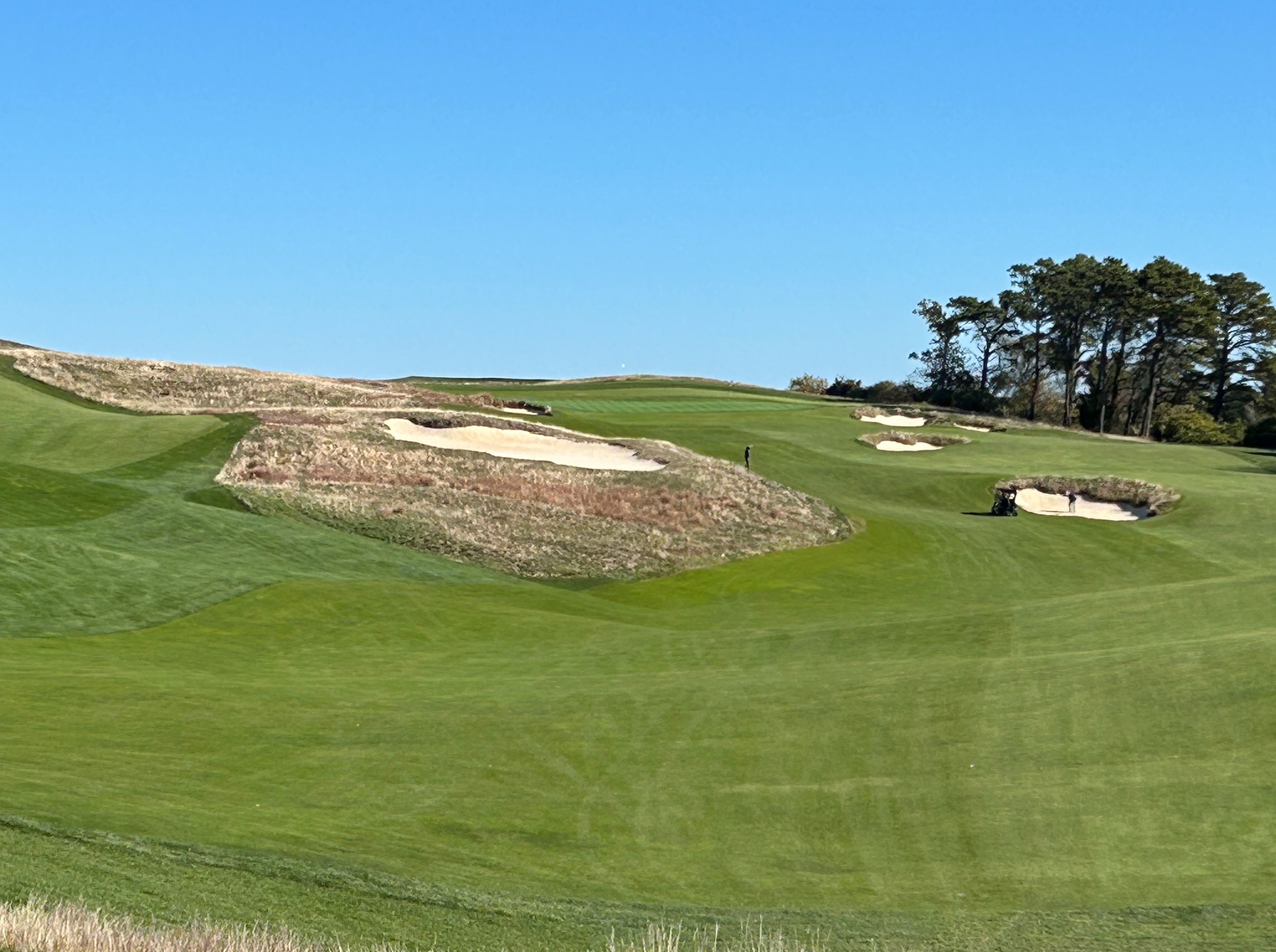
Quaker Ridge Golf Club

Quaker Ridge Logo

Quaker Ridge is an Albert Tillinghast Golden Age design that sits directly across the street from its more famous cousin Winged Foot, which has hosted numerous major championships.  Truth be told by those who know, Quaker Ridge is built on a more topographically interesting piece of ground than Winged Foot and the result is a strategic offering with all the Tillinghast design features that is a pure delight to walk and play.

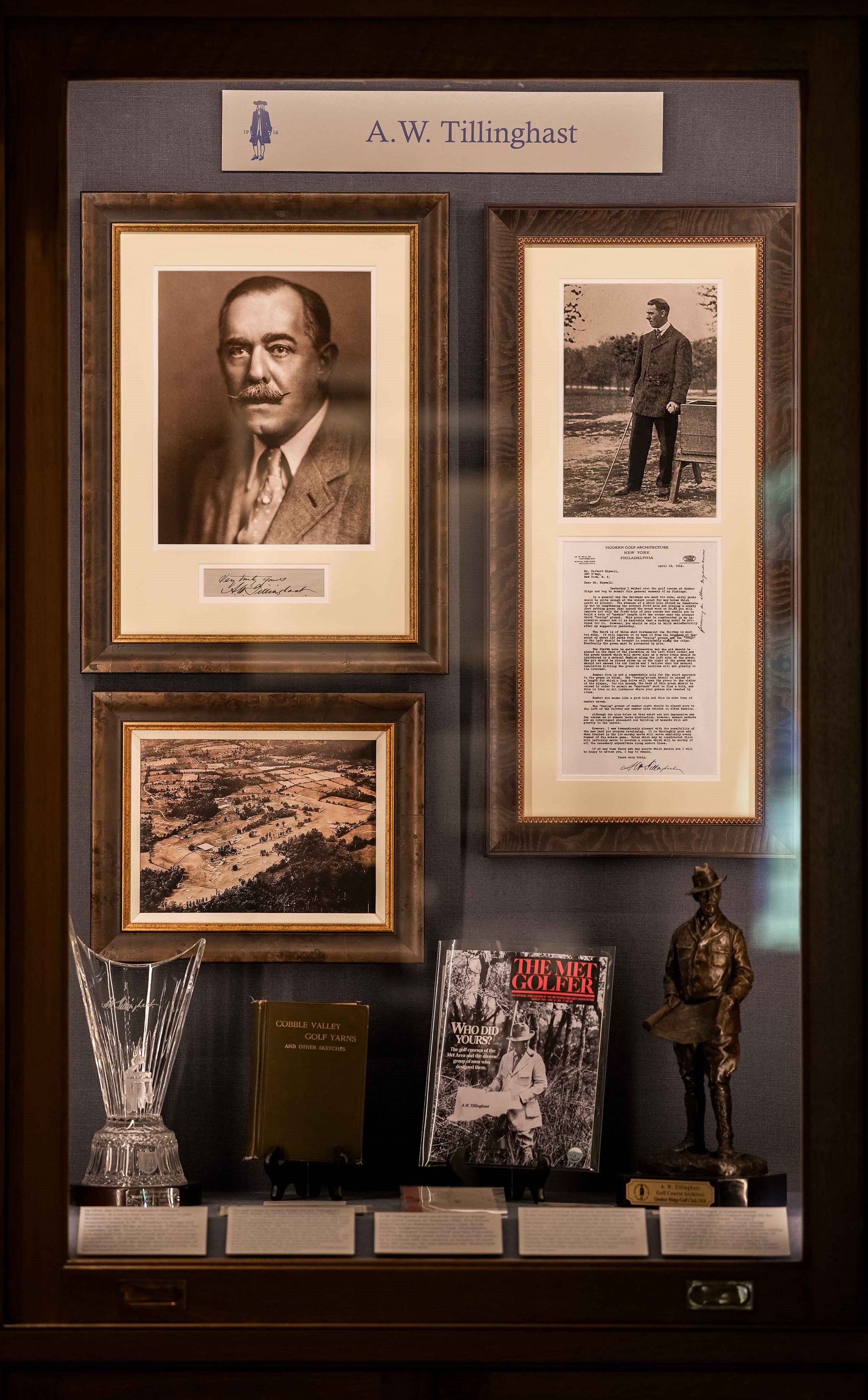
QR Tillinghast

Plenty of kudos in the clubhouse for A.W.’s design efforts.

It too has hosted it’s fair share of National and Metropolitan New York championships which is a testimony to it’s design pedigree.

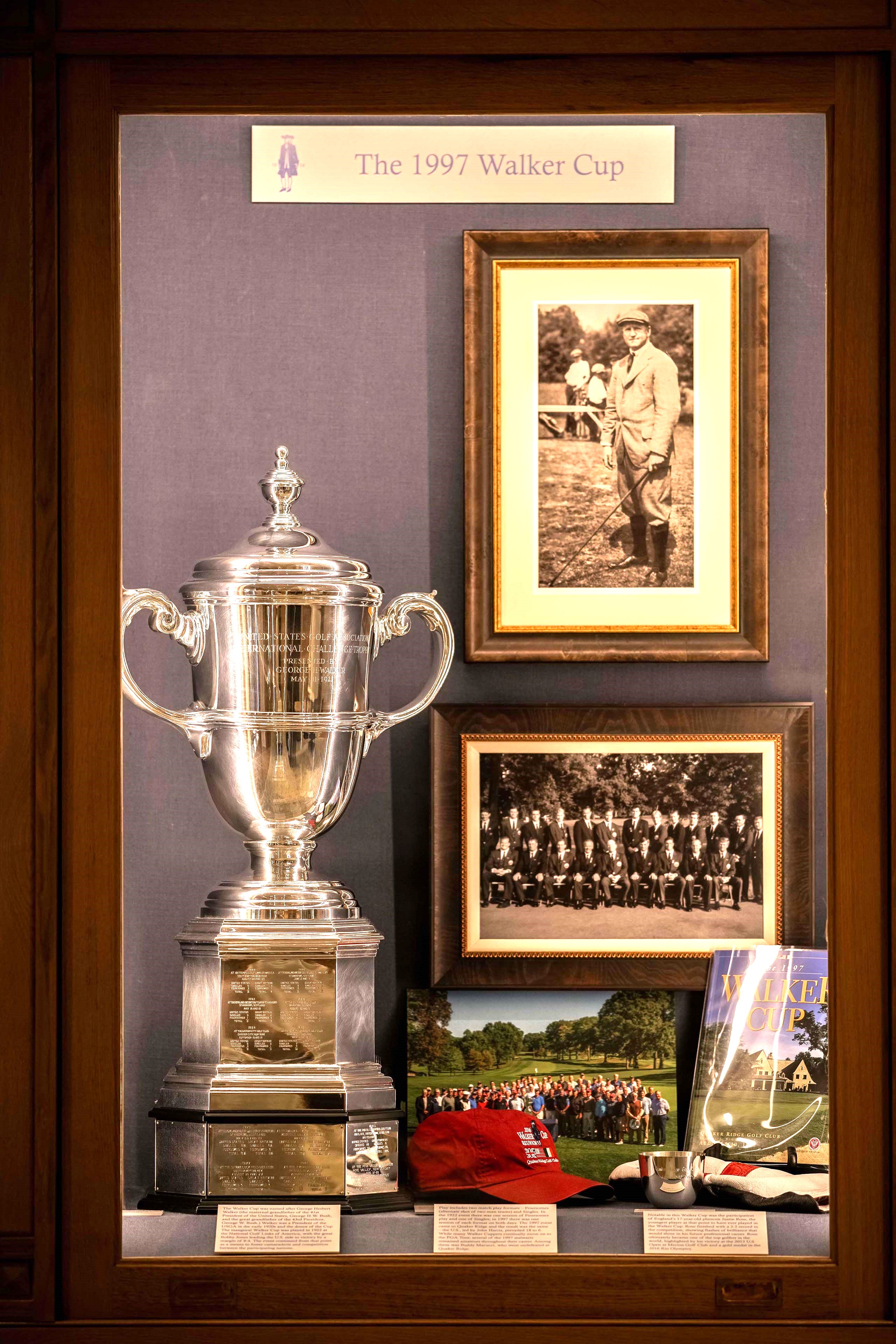
QR 1997 Walker Cup

1997 pitted the best male amateurs against each other from America and GB & I in the bi-annual Walker Cup

.

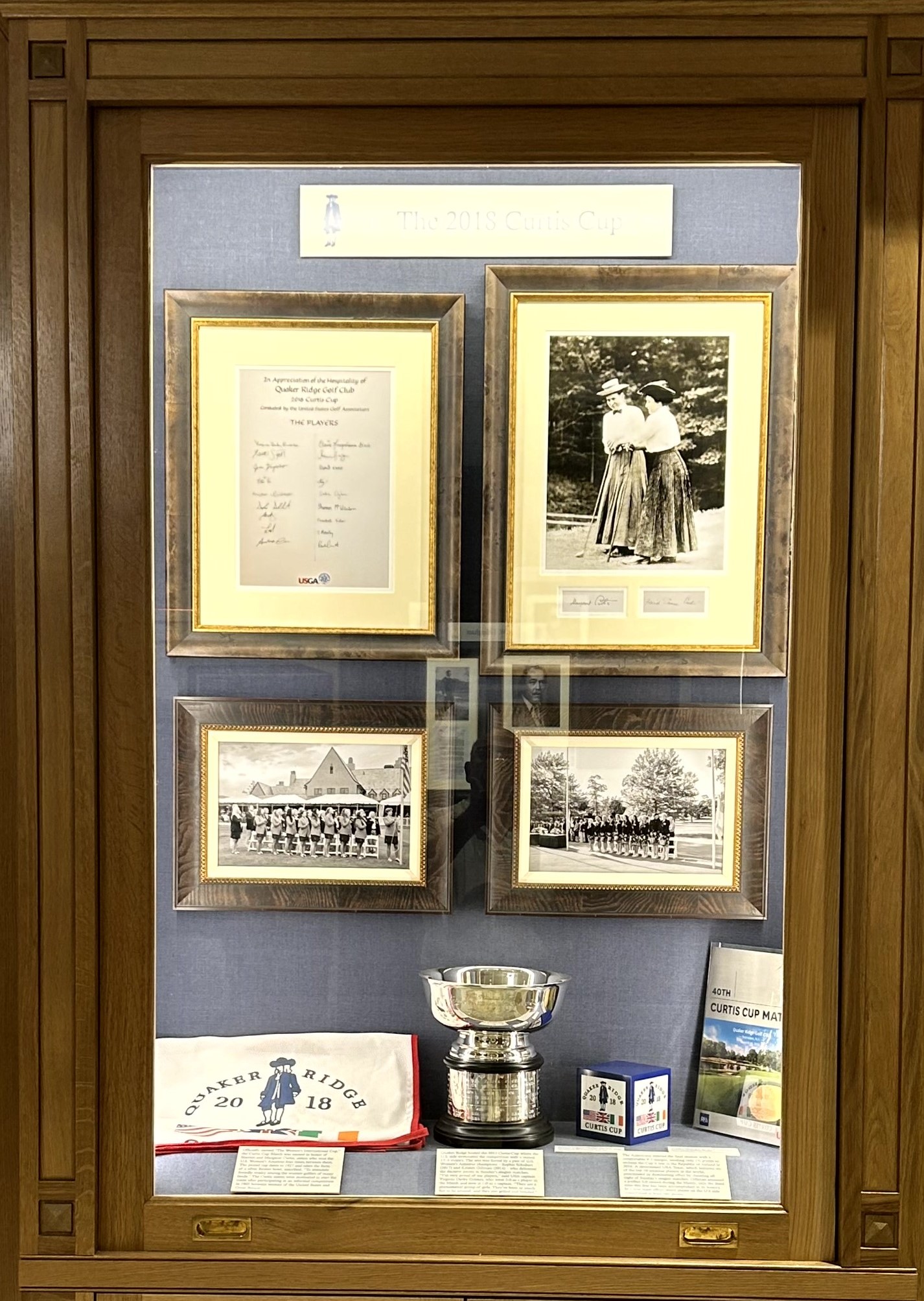
QR 2018 Curtis Cup

2018 the Ladies Curtis Cup international amateur team competition was contested here.

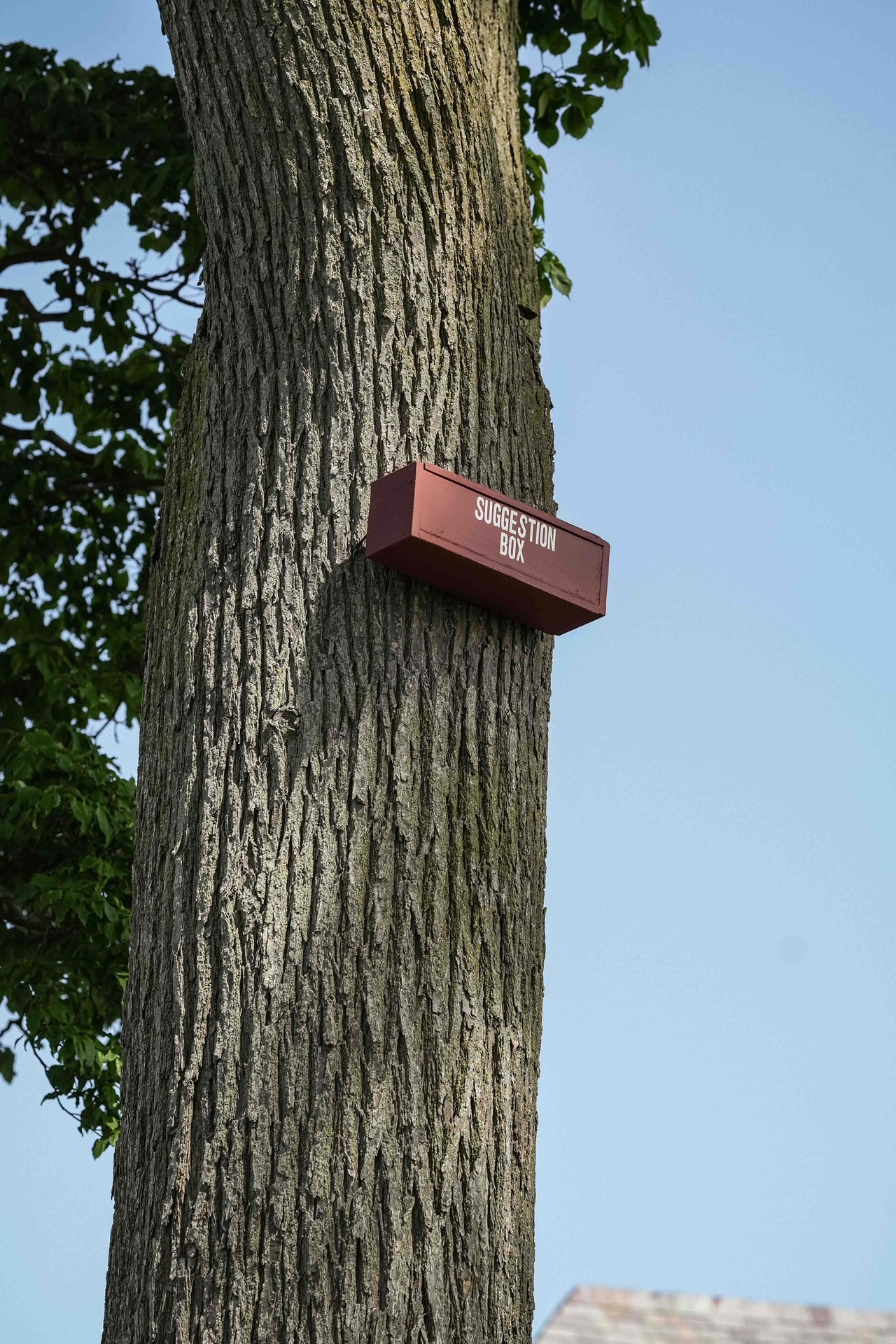
The clubhouse and amenities have a low-key, hamish character that is welcoming to all who set foot on the property.  They make you feel like a member even if you are not and are only interested in making sure your Quaker Ridge experience fulfills your expectations.   The club maintains a casual sense of humor as well as depicted in the “Suggestion Box” conveniently located near the clubhouse.

QR Suggestion Box

Playing courses created in this era where hickory shafts and balls with little spin prevailed one has to keep in mind there are some design features of the era that will affect your strategic play.  Tillinghast bunkers seem very arbitrary in shape and location yet they guide you through a course where he presumed the low trajectory run up shot would often be the preference.  Lots of cross bunkers 50 yards from the green are a bit disorienting but with open green front access they make the bump and run approach an option.  Coupled with contoured greens with plenty of movement, that in the day were 7 on a stimpmeter, current faster green speeds make keeping the ball in the area of the pin location quite a challenge.  Again the ground can be your friend as you plot your way in and around these green complexes.

Par 70 at 6200 yards from the White Tees does not seem overwhelming but with the hilly terrain and only two five pars in the mix the host of par fours in the neighborhood of 400 yards makes this a stiff test of driving accuracy and solid long club approach play.  Having said that there is only one pond and a handful of streams in play through the round so you have to make some simultaneous swing or judgment errors on the same hole to end up with a disastrous score on the card.  Careful consideration on each tee to the lines of the hole and the day’s pin location is critical to winning your match and posting a score you will be proud of.

The opening tee shot on one of the two par fives of the day gives you a true flavor of what is ahead.  You have to drive it solidly over the hill in front of you to get a clear look at the lay up zone or consider going for the green in two.  The massive cross bunker 50 yards from the green is a major no-no.  Visiting this bunker because you were greedy on an approach a bit too far is a sure way to start your scorecard from a staggered start you may never recover from.

QR 4 Par 4

Par 4 fourth at 408 yards is eye candy in a radioactive package.

Tilly was always good at taking the elements the topography of the land presented and seamlessly integrating them into the strategic play of the course.   Standing on the fourth tee box you can an eyeful of strategic options in playing one of the more unique par fours of the day.  As described in the full hole-by-hole descriptive linked at the end of this posting, the large oak tree through the fairway and the center-line rock outcropping force you to make decisions that can result in a scoring opportunity or possibly a scoring disaster.

QR 5 Par 3

Not much water in play but where you see it your full attention is required.

The short Par 3 at the fifth is one of the only forced carry over a penalty area you will see all day, but the challenge here, as it is throughout the course, is the slope and movement presented in the putting surface.  With greens kept at speeds in the 12 range being in the wrong segment of the green is a prescription for a putting disaster.

QR 7 Par 4

The second shot on this 3rd handicap hole is a challenging uphill fairway wood or hybrid into an elevated plateau green complex

How often do you see the number one and three handicap holes one after the other?  Number six is the number one handicap hole on the course-this bedeviling four par played as a five back in the hickory age when it was created.  It is followed by the third handicap hole an arduous dog leg right march up to a steep green complex requiring position off the tee followed by strong approach carry into a plateau green complex. Two bogies on 6 and 7 picks up shots on the field.

QR 8 Par 4

Decision off the tee ….from the left the approach shot must carry the bunker, from the right the line is not obscured.

Stepping on the eighth tee you are now entering over the next five holes the technical part of the course, where strategic finesse not power will be your friend.  As you see on the fourth Tillinghast introduces the center-line feature on the eighth that forces the player to choose what side to hit their drive for the most advantageous approach to the green.  This time it is a huge grassy dune that is probably another rock outcropping he did not want to make the expense to remove.  In this case the safer route is left of the mound but it presents a longer shot in that must tangle with the green side bunker.  Right of the mound brings trees and OB into play but from there the shot to the green is considerably shorter and has open access.

QR 9 Par 3

All the elements of a classic Redan in a very small and tidy package.

The ninth presents you with Tilly’s kitchy version of a short Redan Par 3 with plenty of right to left contour as you work into the green.  The hole is completely surrounded by deep bunkers so there is no real bail out available.  The kidney shaped green is silhouetted by the top edge of the front bunker so the play is landing the ball just over the right-center edge of this bunker and letting the ground move your ball into and across to the green surface.

QR 11 Par 4

The poplar tree gives you only half the green to shoot at and only if you are in the right half of the fairway.

Standing on the eleventh tee the driving area seems wider then the Hudson but take note of the large poplar tree shadowing the left side of the fairway.  Any drive left of center will have to contend with the sprawling limbs of this tree.  If you are in the correct segment of the fairway the second shot is likely less than 150 yards but the architect created a moated effect by having the fronting stream turn around the right side of the putting surface and meander behind the back right corner.  An articulate iron in needed here and could provide a good birdie opportunity.

QR 13 Par 3

Brawny comes to mind as you take in this long Par 3.

As you look down over 210 yards from the elevated tee box on this big boy of a Par 3 thirteenth you will recognized the technical part of the course is now behind you.  It is hard to be articulate with a very long club in your hand but at least Tillinghast provided lots of roll up space behind the two front bunkers set well off the green.  The contour of this one is tricky so pay attention to the ridge that bisects the green.

QR 14 Par 5

This serpentine five par should be very manageable if you don’t get greedy.

I cannot help but wonder what it must have been like to try to negotiate this three shot Par 5 with a set of hickory clubs and a ball with a lot of curve.  The strategic path of the fourteenth ramping it’s way up the steep hill is delineated by more bunkers then you can fathom.  From the drone this kind of looks like the silhouette of a Tyrannosaurus Rex but it packs slightly less bite.  If you lay-up short of the crossing line of bunkers at 120 the short iron approach should take the high score out of the mix.

QR 17 Par 4

I love the way the high edges of the bunkers further obscure your vision of this tiny target.

What these Golden Age architects do really well is they let the land dictate the routing and hole strategies and they rarely make two holes on the same course that have similar strategic character.  The penultimate hole is such a unique offering-a short but not drivable Par 4 on one of the flattest portions of the course that still demands discipline in both the tee ball and the approach to take advantage of a hole that is only 344 yards on the card.

The tee shot has to hug the right side near a nest of bunkers to have a straight on approach line to the flag.  The green is the second smallest of the day, a virtual thumbprint pinched on all sides by deep bunkers.  There is plenty of back to front slope which puts a premium on keeping your very short iron approach below the hole.  As with so many great holes you may walk off this green shaking your head wondering why you did not make a better score then you did.

QR 18 Par 4

As you work your way up the corridor of trees playing your tee ball on the last, you get a full relief of the grand clubhouse at the top of the hill behind the eighteenth green.  The approach is significantly up hill requiring an extra club and once again the fronting bunkers are a good 75 short of the putting surface so you have plenty of space to work a shot in on the ground if you have to.

When the final putt drops and you take off your hat to shake hands with the others in your group, take a second to look back down the fairway at the rolling topography that Tillinghast had you explore through the day.  It is a majestic sight and one worthy of the quality of the course you just experienced.

Scarsdale, New York

Architect:        Albert Tillinghast (1916),  Gil Hanse (2013)

(Red/White)  Par     Rating   Slope   Yardage

Black              70        74.8     143      7008

Blue               70        72.2     137      6456

White             70        70.8     134      6163

Green            70        68.5     130      5631

If you would like a printable PDF of this posting including a yardage book quality hole-by-hole description of how to play the course hit the link below.

(Click to get the the printable text of this posting)
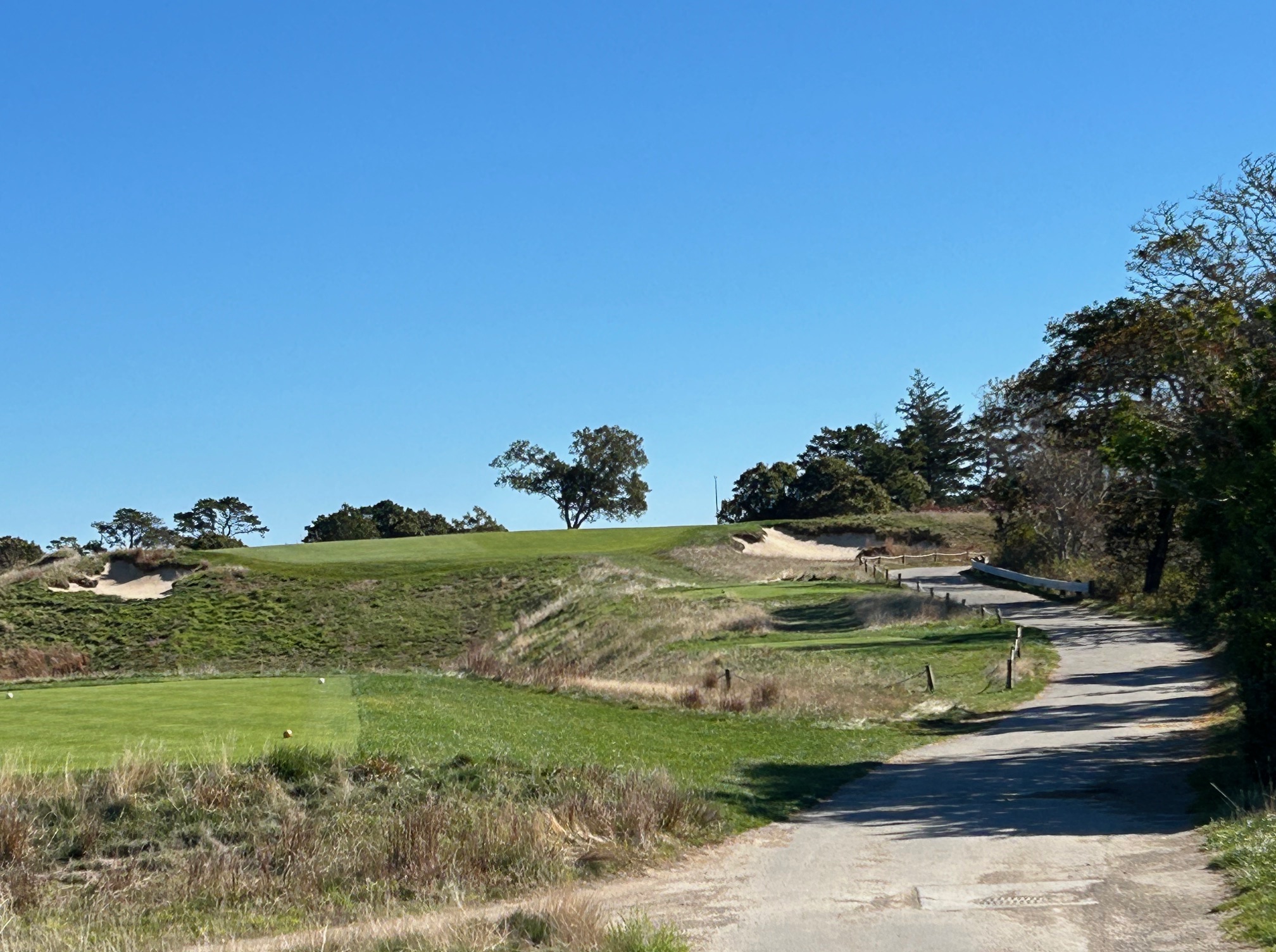
Glen Oaks Club

Glen Oaks Club Logo

Glen Oaks is a delightful collection of 27 holes in Old Westbury, New York along the way to Long Island.  It is a private club with a  relatively small membership that fosters a hamish atmosphere making for a warm welcome to all who visit.   Since the volume of play is delimited by the membership size, there are no tee times which makes access very convenient if you are lucky enough to get a member to host you to play.

The original three nines were done in 1972 by Joe Finger.  A master plan for renovating the place was begun in 2011 by Joel Weiman to be done over a four year period.  In 2012 Hurricane Sandy did extensive damage to the course which forced them to retool the master plan on the fly.  With the help of the Greens Super Craig Currier who had previously been involved at Bethpage Black, Joel did the work that you see presented today.

As the pictures indicate the removal of enormous swaths of trees taken down by the storm allowed them to present a marvelous array of holes with requisite width to encourage strategic play and wide visibility of the entirety of the property during play.  The greens have plenty of internal slope and segmentation and the bunkers have tall white faces and sharp edges which when set in the hillier terrain give the place a bit of an Augusta feel.

A PGA Tour playoff event was played here in 2017 where Dustin Johnson beat Jordan Spieth in a riveting playoff.  No matter which of the nines you get to play I am sure you will find it a delightful experience of tactical golf.  Don’t miss two highlights during your visit, the men’s locker room and adjacent card room/man-cave and the amazing brunch they serve every day in the main dining room.  Both will knock your socks off.

Hole-By-Hole Analysis (Red/White):

Red Nine

#1 Par 4  402/340 yards

GO Red 1 Par 4

Fairly simple opening hole, this driving area leans right to left toward the fairway bunker.  Drive it up the right edge of the rough line and let it drift to center.  Green slightly raised is accessible between flanking bunkers short right and middle left.

#2 Par 4  370/350

Similar in length to the first but this one is flatter with no fairway bunkering to consider.  Drive to center and the approach is to a green slightly below you.  Front left bunker is pretty deep so aiming to the right side on the approach where the right bunker is set back in the middle of the green is sensible.

#3 Par 3  160/150

GO Red 3 Par 3

First of the eye candy holes that express the expansive and clean presentation of the character of these courses.  Significantly downhill, requires a one club adjustment into a green flanked by deep sharp edged bunkers.  Green tilts back to front and left to right with a significant transition ridge from 9 to 3.

#4 Par 5  550/520

GO Red 4 Par 5 Tee

The confectionary look continues on a spectacular visual five par off a high perched tee into the valley below.  The hole turns to the left around a horseshoe fairway bunker that is probably within reach.  Best drive is center just off the bunker-don’t bail right off the tee as the rough and tree line on that side will cause problems for your second.

GO Red 4 Par 5 Green

The green is a true fortress-rings of bunkers protect the full surrounds-a few trolls with boiling oil may be prowling the top edge as well.  Lay up is left center to about 110 which leaves an intimidating looking approach into a green that is very generous.  Lots of slope here back to front so challenge the pin yardage of the day.

#5 Par 4  400/370

For a relatively flat hole this one has great visual impact created by the alcove driving area and the hill framing the back of the green.  Drive to left center to leave a mid-iron approach into an accessible green.  One greenside  bunker on the left and a second framing bunker behind the green on the right, so the error on approach is short and right.  Green leans 11 to 5 so from the front right you can be aggressive on a pitch.

#6 Par 4  405/355

One of the truly splendific looking holes of the day.  This is a graceful uphill par four with a perched green framed on the horizon by a lone oak tree 40 yards right of the green.     Drive right center of a landing area adjacent to the fairway bunker on the right.  The hole climbs after that so the approach plays a full club and a half longer into a green with one bunker left and plenty of open grass on the right.  They did a great job of letting the topography give this hole it’s character.

#7 Par 4  360/350

A shortish par four that leans left to right around a pair of bunkers that flank the driving area.  The temptation is to aim well left off the tee but this can give you a perch side hill lie in the rough into the green that sits above you.  Take on the left edge of the bunkers on the right as the fairway widens just beyond and you can have a short club in your hand making the approach much easier.  Green sits on a 7 to 1 diagonal with fierce bunkers protecting the right and plenty of short grass surrounds left and behind the green.  The green climbs on the same 7 to 1 line so putts and pitches up this line need the requisite intent to reach the hole.

#8 Par 3  130/120

GO Red 8 Par 3

A delightful short pitch Par 3 that is their homage to the Postage Stamp.  Pitch is on level to the tee but the narrow green set on a 6:30 to 12:30 angle is tightly surrounded by massive bunkers.  This gives you little choice but to hit an articulate lawn dart just below the hole position of the day.  There are steps in the green along it’s setting angle and the pins to the right are much harder to get at.  Middle of the green to any pin to the right is proper discretion.

#9 Par 5  550/500

GO Red 9 Par 5

This nine finishes with a three-shot five par with plenty of topographical interest.  Drive to left center to avoid the fairway bunker on the right and the drop off of the fairway into the rough and trees on that side.  The lay-up is down the left into the valley that will give you a view back up the hill toward the foot of the dining room patio where the green resides a bit to the right.  Green has lots of sand surrounds but note that the first bunker on the right is set 50 yards way from the bunker creating a friendly miss area if you don’t want to take on the pin of the day.  Green is stepped from 7 to 1 with a ridge across the center so getting an approach to the proper level is essential to avoid the three-putt opportunity.

White Nine

#1 Par 4  515/480 yards

The first of the White Nine is a very user friendly dogear left Par 5 that gently climbs from the landing area to a green perched up on top of the rise.  From the tee the hole appears to lean to the right so a right-to-left drive just right of the two fairway bunkers on the corner is called for.  Depending on what you have left this could be reachable in two, but if not the lay up is to about 100 yards short of the first bunker on the right which is set well back from the putting surface.  The kidney shaped green wraps around a deep bunker on the front right and has an open short grass area to the left for a safer approach.

#2 Par 3  205/190

GO White 2 Par 3

The second is feisty longer sister to the downhill Par 3 third on the Red.  A stunning view from the perched tee box, it ambles down the same sttep hill as it’s sister playing a full club and a half less then the distance.  A quasi-reverse Redan arrangement the green curves around to the right behind a yawning bunker set into the right slope of the hill.  The difference from a Redan is that the first part of the green is not banked to match the curve of the green so you do not get the benefit of the ground directing your ball toward the back right pin locations.  There is also a pesky ridge that cuts across the center of the green creating two distinct levels.  For the front level an approach landing right of the flag will feed to the left.  For the back level you have to settle for a shot in the center of the green and then putt up and over the ridge because anything landing on the top level takes a downslope off the back of the green.

#3 Par 4  410/375

GO White 3 Par 4

This next Par 4 has lots of visual interest but lacks strategic continuity for me.  From the elevated tee you see a sharp dogleg left working around a bank of trees, but there is this pesky water hazard gathering your attention straight through the right center driving line.  For big hitters the penalty area is definitely within reach.  If you manage to hit the drive to center between the bunkers on the left corner and the water you now have a slightly ramped up approach to a green sitting below the Halfway House.  It is set 7 to 1 behind big face bunker on the right and a pinching bunker behind the green on the right.  The bunker on the left is set back so there is a bit of breathing room on that side if you don’t want to take on a pin set behind the right bunker.  This is another green with serious lean from back to front.

#4 Par 4  415/380

The next four holes present an interesting run of holes played in distinct corridors of the trees where ball position matters.  This is a straight away par four-you drive to left center into a downhill landing area that will feed the ball a little right.  The green complex sits below framed by trees and bunkers providing a very appetizing open access approach for a middle iron to hybrid.  There is a short grass area back and left of the green if you overcook a draw.  This green is deep so pay close attention to your actual shot yardage to reach the day’s pin or you can have a very long first putt over some challenging contour.

#5 Par 4 295/270

GO White 5 Par 4

This one falls into the drivable Par 4 category for some but should provide a good scoring chance for anyone who can hit a couple of articulate shots.  For most of us the choice off the tee is not more then 200 yards aimed at the bunker on the left.  This leaves a short wedge into a diagonally set narrow green that is squeezed by bunkers on both sides.  This hole can only help your scorecard as long as you don’t do anything silly.

#6 Par 3  165/140

GO White 6 Par 3

More eye candy this shortish three par has a slightly downhill approach worth a half a club less to a tiered green setting protected by a pond across two-thirds of the green.  The sharp top edge of the stone wall accent of the pond gives it a clean look that also clearly defines for your eye the required carry to pins center and right.  There is a back right bunker that further frames the challenge of a pin on the section. Pins on the left allow you to skip one up the throat between the pond and the left greenside bunker and should provide a birdie opportunity.

#7 Par 5  520/470

This is a very technical four and a half Par 5 that takes real discipline if you want to take advantage.  From a slightly perched tee drive it to center using the slope from the left tree line to help you.  If the green is out of reach, as it is for most mortals, there is a receptive lay up area beyond the right fairway bunker at about 160.  This shot will feed down to the right and gives a you a good look at the coffee table green set back to the left.  The green is very deep and sharply inclined from back to front with a bunker front left and another two-thirds of the way back on the right so you need to take careful measure on your approach to give yourself a reasonable putting chance.

#8 Par 4  360/320

GO White 8 Par 4

One of the most unusual challenges you will get all day this is a short drive and pitch Par 4 that turns around a fierce constellation of five bunkers set into the topographical rise on the left.  It is likely there was once a grove of trees in this spot that were lost to the hurricane that delineated and separated this hole from an adjacent hole on the Blue Nine so they needed to find a hazard penal enough to replicate the interference of the trees.  Tee ball needs to be well right of the fairway hazard which will leave a short iron pitch up a very steep grade to a generous green surface you cannot see perched behind a very deep bunker on the right. On the approach long is the miss since a 50 foot putt is much better then the 3-story pitch you would have to play out of the front bunker.

#9 Par 4  400/370

This nine finishes with a very strong roller coaster Par 4.  Drive strong to left center and you should be looking at a steep uphill shot into a green complex sitting at the foot of the clubhouse with full bunkering on either side.  You are going to have to carry this approach all the way to the putting surface or the front bunker is going to get some action.  Another deep green with very significant slope back to front makes you want to hit an approach with release to work up the hill.

Old Westbury, New York

Architect:        Joe Finger (1972),  Joel Weiman (2014)

(Red/White)  Par     Rating   Slope   Yardage

Blue               72        72.4     132      6610

White             72        69.1     129      6050

White             70        67.4     128      5609

Red                70        65.2     120      5142

(Click to the the printable text of this posting)
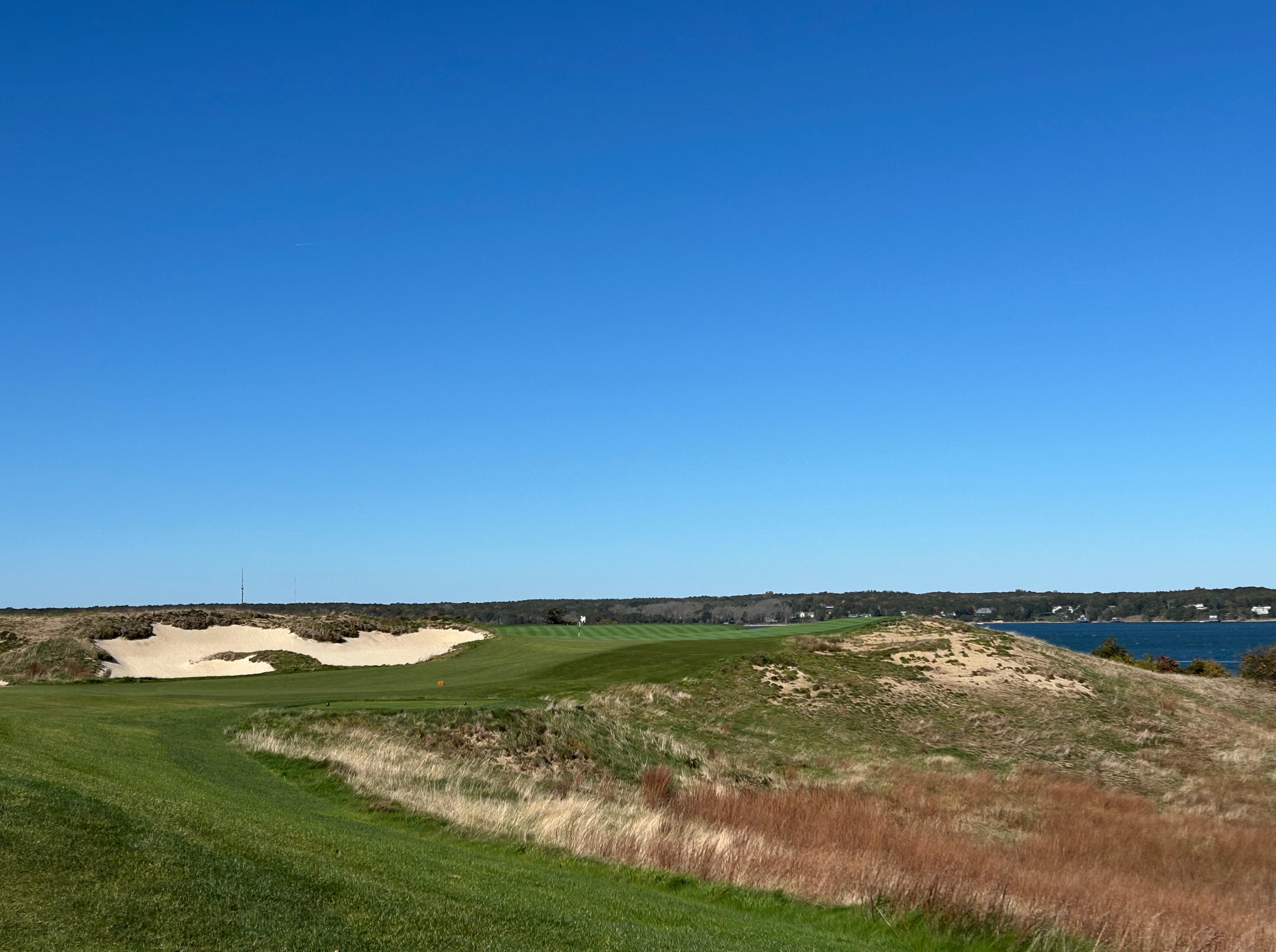
Mountain Lake

mountain-lake-logo-white

Of all the Golden Age architects Seth Raynor, a man who never took up the game of golf himself, seems an unlikely candidate as one of the game’s most prolific and impactful designers.  Trained as a land surveyor and civil engineer Raynor was lucky enough to be employed by the small town of  Southampton on Long Island when C.B. Macdonald was considering the plot of land next to Shinnecock Hills for his visionary development of The National Golf Links in 1907.  Raynor surveyed the rugged and untamed piece property on horseback  with C.B. and together they conceived and produced one of the seminal American golf courses in history.

Macdonald’s concept was to incorporate the characteristics of the most famous holes from the British Isles as template holes for new courses in the United States.  Hole names like Redan, Alps, Biarritz, Short, Eden, Road, Double Plateau, Leven, and Cape became part of the American golf lexicon overnight and signature elements of Macdonald/Raynor designs.

Raynor’s gift was his ability to recognize how to seamlessly fit the design features of Macdonald’s template holes into the existing topography of the land in front of him.  As a pair they went on to employ Macdonald’s unique approach to golf course design to build Piping Rock, Greenbrier Old White, Sleepy Hollow, Mid-Ocean, and The Lido and establish Raynor’s reputation as a first rate surveyor, engineer, and construction manager.

By 1915 Macdonald decided he had enough of course design and channeled all the new work over to Raynor.  Over a ten-year period, starting in 1915 to his untimely death in 1925, Raynor produced over 30 first-rate golf courses under his own name and was one of the most sought after course designers of his era.

One of those opportunities arose because of a relationship Raynor had with Fredrick Law Olmsted Jr., the son of the world famous landscape designer who created Central Park in New York and the Boston Commons, who had been tapped by a wealthy Baltimore lawyer named Frederick Ruth to develop a private gated community in Florida.  The Ruth family had 3,000 acres of ground in Lake Wales, Florida and wanted to develop a winter get-a-way for him and his friends.  Olmstead was familiar with Raynor’s work at the Country Club of Fairfield and it resulted in Raynor being hired to develop his first golf course in Florida.

ML #3 Alps Green Approach

The forested backdrop on The Alps #3 accents the width off the tee and bunkering offset to allow a ground approach into a raised green with consequential movement.

Raynor had in front of him at Mountain Lake a heavily forested piece of subtly rolling terrain and very deep pockets in the owner to allow him to choreograph a routing of template and original holes to suit his fancy.  What he delivered was a vintage Raynor track with tons of short grass off the tee, signature geometric shaped greens and bunkers, and green complexes with template characteristics to maximize the strategic thinking required to be successful.

Two things to keep in mind when you look at Raynor’s work here and elsewhere.  First, this was still the age of hickory shafted clubs and the Haskell ball which meant even the best players could not carry and spin the ball effectively from the middle of the fairway so the architect had to provide ground routes into most holes to give the players any chance at getting to the pins.  Gene Sarazen did not invent the sand iron until twenty years later, so all those pesky bunkers were real hazards and avoiding them on approach was a premium.

Second, the notion of Macdonald and Raynor using template holes from course to course was in no way a redundant exercise.  They were not creating carbon copies of the great holes of the British Isles but rather were blending the strategic characteristics of these template holes into the existing topography they had in front of them.  No two Redan or Road holes on different courses were very much alike at all so, even though the hole monikers were the same, the challenges presented were new and unique.

Mountain Lake has had two recent restoration/renovations under the watchful eyes of Brian Silva and Gil Hanse.  I think both men were careful to adhere to the original intent of Seth Raynor’s design.   This descriptive is off the Blue Tees at 6,156 yards.

ML Sign

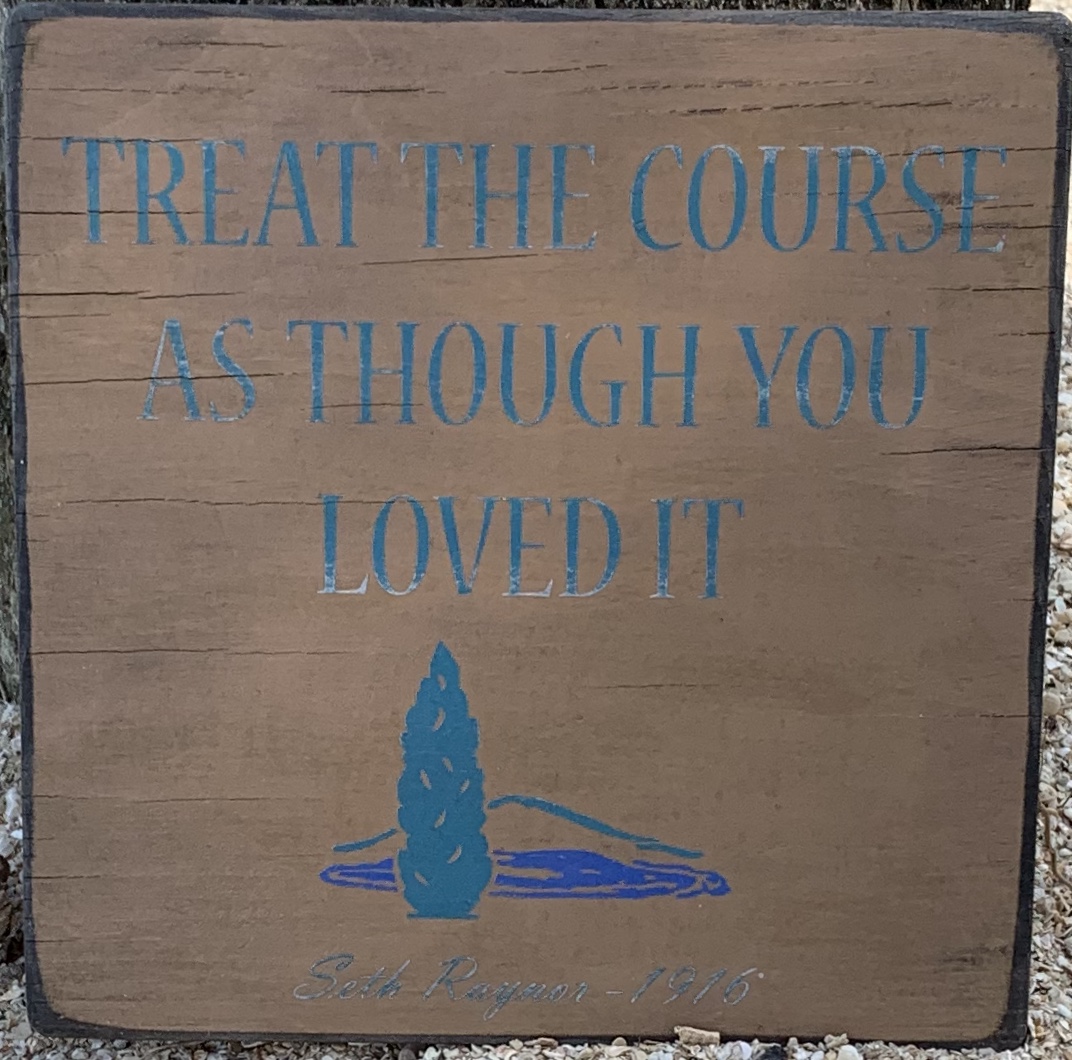
Take heed on your way to the first tee that your hosts expect you to enjoy this experience and respect it accordingly.

The inventory of template holes at Mountain Lake described below exemplify this and a discriminating eye will find a delightful collection of golf challenges which require thoughtful consideration of position off the tee into the pin positions of the day on these complex green canvases.

ML #1 Double Plateau Green

Approach into #1, Double Plateau, is wide open but be wary of ground movement once the ball touches down.

The opening hole is typical of what Raynor shows you all day-lots of width off the tee, open access to the Double Plateau green complex, but mind where the flag is so you can work you approach up from the correct angle into that section of the green.  What I noticed throughout the course is that the ball transitioning from one level to the next will often have significant side movement as well so often you have to aim here to get the ball there.

ML #5 Biarritz Green

The 5th Biarritz Par 3 green is full short grass in both sectors of the green protected by rectangular shaped sleeper bunkers flanking both sides.

Biarritz holes are generally long par threes with a sizeable downhill transition from tee to green so you can see the two sections of the green on either side of the Biarritz divide.  The 5th at Mountain Lake has a little twist.  At 184 yards you are hitting a long club as you would expect but it is into a green on level to the tee which makes the depth perception of the back section of the green hard to reconcile.  For a back pin it still requires a running shot into the back section through the divide, visualizing the shot is quite a challenge.

ML #7 Road Hole

This version of the Road Hole can have you scratching your head. It is 125 yards shorter than the 17th at The Old Course but is by no means a pushover.

The Road Hole at St. Andrews is the penultimate long and narrow par 4 in the round which requires a pressure  blind tee shot over the old railroad sheds adjacent to the OB of the Old Course Hotel.  One then has to negotiate a 200 yard fairway club into a long narrow green pinched by the macadam road on the right and the nefarious Road Hole pot bunker on the left.

Raynor’s version here comes much earlier in the round at #6 but is still a blind drive over a yawning cross bunker instead of the sheds with OB harrowing the right.  What is left is a short iron pitch into a long and narrow green similar to the original with a cordoning bunker flanking the right to replicate the road and a severe bunker short left which has double bogey written all over it.  Strategy is the same as the original but the parameters are much different.

ML #8 Raynor Lagoon Tee

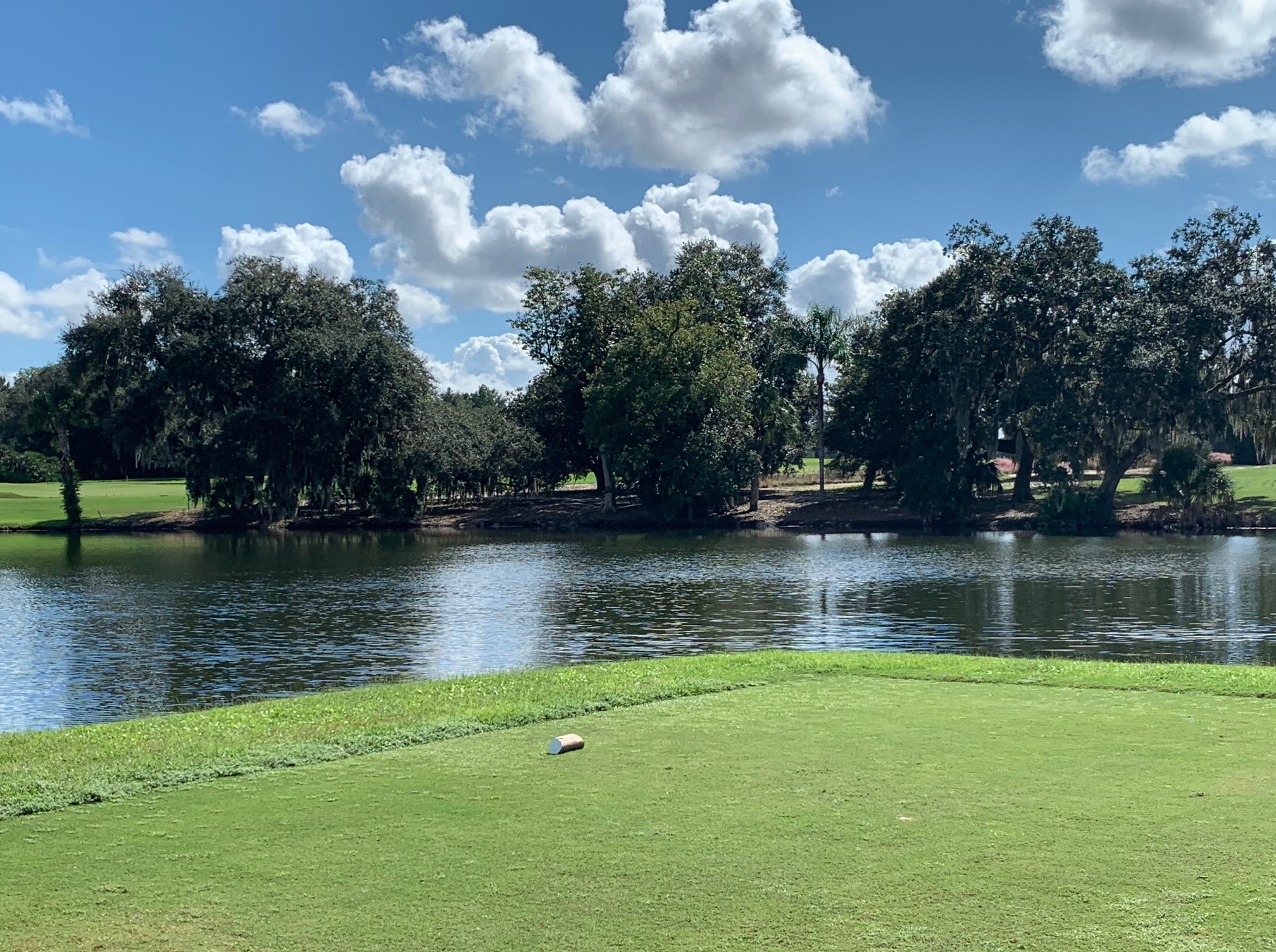
The island tee box on the Lagoon 8th can make you a little woozy as you contemplate the forced carry across the water into the landing area.

What is not often acknowledged is that Macdonald and Raynor created an original template hole at The National that did not exist in Britain which appears over and over through their collective creations.  The Cape Hole, 14th at The National, is a longish par four with a drive over water into a fairway landing area that turns to the right around bunkering and marsh.   A bold second is required into a peninsula green tucked in a corner with trouble on three sides that strikes fear in the hearts of players contemplating an aggressive approach line to the flag.  This peninsula green arrangement was an original and gives the Cape Hole it’s moniker.

ML #8 Raynor Approach

The 8th is a three-shot five par that replicates a Cape Hole green setting with a lagoon playing up the right and a severe walled bunker diagonally set to the approach line of play.

The Par 5 8th at Mountain Lake begins with a narrow catwalk out to a tee pad in the middle of a lagoon ensconced by trees with hanging moss.  A sense of isolation on this tee box can inject a bit of wobble into your confidence as you drive over the water’s edge into a wide fairway landing area on the hill.  With the presence of the lagoon up the right, the Cape green is wedged to the right between a cordoning bunker on the left and a Jai Alai walled bunker on the right that makes a bail out line to the pitched fairway left an obvious choice.  Truth is a layup to the right side of the fairway well short of the bunker gives a level stance pitch across the trouble into a receptive green that leans towards you.  The genius of template Cape Hole is that the considered measure of risk and reward is present on all shots.

ML #9 Short

Traditionally the Short is a forced carry short three par with steep fall offs to trouble on all sides.

The outward nine finishes with a classic version of the Short hole, only a 113-yard pitch across a hazard into a raised, almost moated, green complex that falls off to trouble on all sides. The false front will reject balls hit without requisite resolve so the middle of the green is a good intention for all pins.  It is not obvious from the tee but there is a bail out area left of the green over the front left bunker that would leave an on-level pitch back at the flag.  Somehow bailing out on a short hole like this seems the ultimate rationale of cowardice.

ML Marion's 11th Tee Halfway

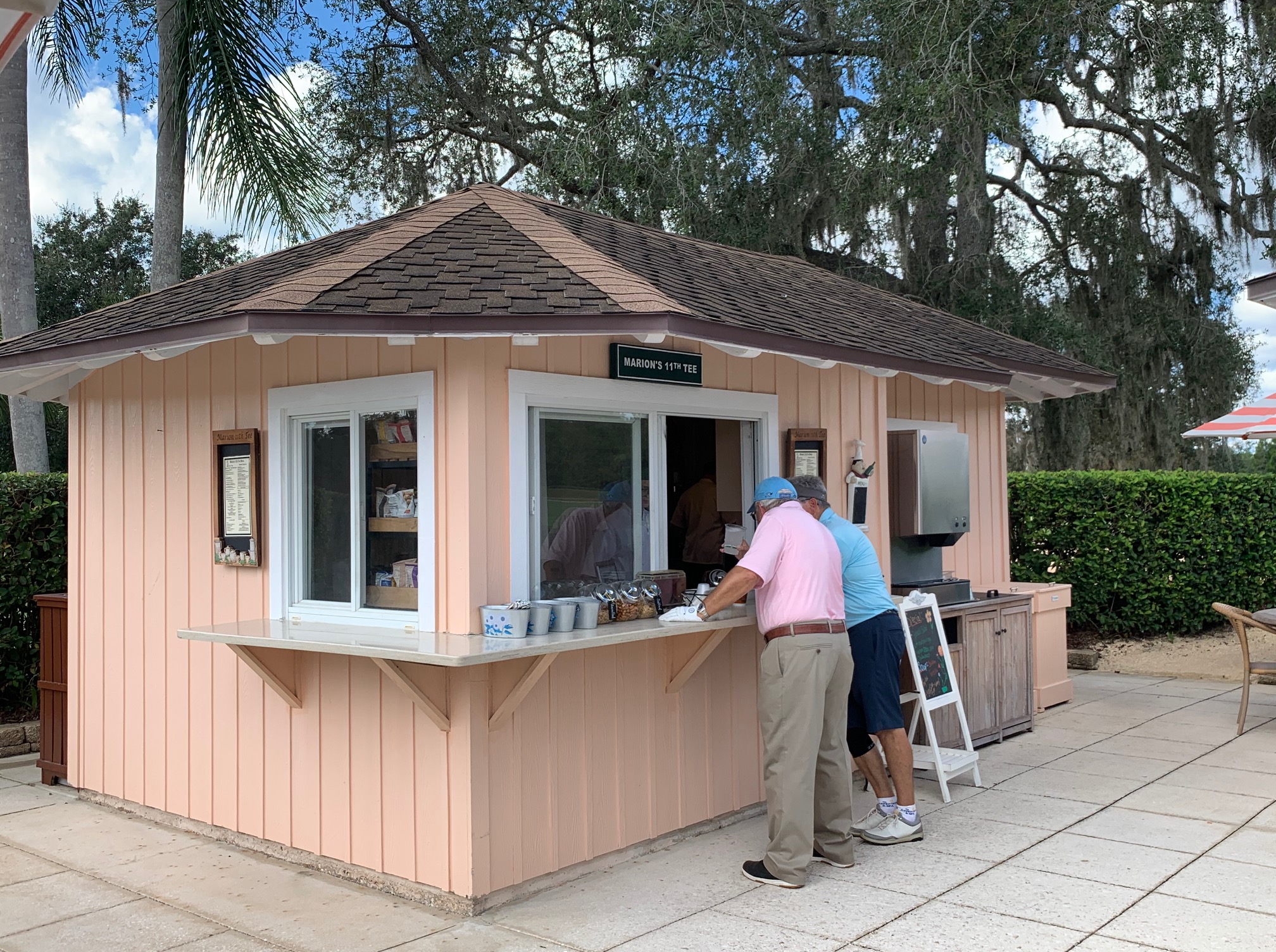
Marion’s Halfway House offers congenial attitude and tasty treats at just the right time of your day.

When you walk off the 10th green don’t fail to take a moment to visit the halfway house next to the 11th tee.  Fresh sandwiches, a stellar hot dog, deep fried chips, and some very special cookies are just the boost you need before facing the rest of the day.

ML #11 Redan

The Redan 11th does not appear like your typical Redan hole but it sure plays like it.

When you step on the tee of the slightly downhill 160 yard  Par 3 11th you may be scratching your head wondering how this can be a Redan hole.  The flat bunker short right of the green seems out of place, the green looks far too circular to resemble any Redan you have played before, but the dramatic tilt of the green offers a clue.  From the high edge back right the green surface is almost a saucer shape that feeds dramatically to the far left side behind the yawning bunker.  Prepare to be amazed at how dramatically your ball magnetically moves in that direction once it lands on the green.  Pins on the right are impossible to get near and anything center to left has to start at the back right corner and let the ground do it’s thing.  Raynor has succeeded once again to capture the theme of a Redan without replicating the original in any obvious form.

ML #15 Punch Bowl From Tee

From the tee the Punch Bowl 15th looks innocuous enough.

A look from the teeing round over the 15th hole does not reveal the drama of the Punch Bowl green that defines this quasi-drivable Par 4.  Your drive will traverse the penalty area jutting from the right and try to skirt the high lipped bunker on the left that is actually well short of the green.

ML #15 Punch Bowl Green

From the edge of the landing area you can see the drama of the punch bowl that surrounds a flag half obscured by the edge of the short grass approach.

Because of the punch bowl shape it is hard to miss the green on approach since everything feeds to the center of the bowl.  But getting even a spinning pitch landing short of the flag to stay close is a tall task and you will often see balls roll past the flag leaving a slick downhill 10-footer.  It may make sense to consider a lower pitch with no spin into the back slope behind the flag and let gravity feed it back more gently to the flag position.

ML #17 Eden

What would a Raynor Course be without an Eden Par 3?

Eden is the last template hole of the day as it replicates the feel of the 11th at St. Andrews.  Eden holes will share some or all of four characteristics of the original,  the Hill bunker on the left front of the green, the Strath’s bunker on the front, a shelled bunker short of the green, and the Eden River behind the raised diagonal green that pitches steeply from back right to front left.

The 17th at Mountain Lake is an on level 163 carry into a diagonal green arrangement leaning toward the front left behind a deep pot bunker front right.  The bunker in front of that is mostly visual intimidation.  There is bail room to the left since there is no bunker on that side and this green is not raised dramatically like the original. Water meandering well behind the green gives this hole a halo feeling of the Eden River from St. Andrews.

Mountain Lake 18th Green

What a finishing look!

The finishing hole is a very dramatic dogleg left 389-yard Par 4 that works its way up a steep incline to a blind putting surface set below the foot of the clubhouse.  The green on this hole has some of the most dramatic contour you will see all day so full attention is required for a happy ending to your experience of  Seth Raynor’s creative design at Mountain Lake.

Lake Wales, Florida

Architect:        Seth Raynor (1916),  Brian Silva (2002)  Gil Hanse (2020)

Par     Rating   Slope   Yardage

Black               70        72.7     135      6685

Blue                 70        69.9     132      6156

White               70        67.4     128      5609

Red                  70        65.2     120      5142

(Click to the the printable text of this posting)
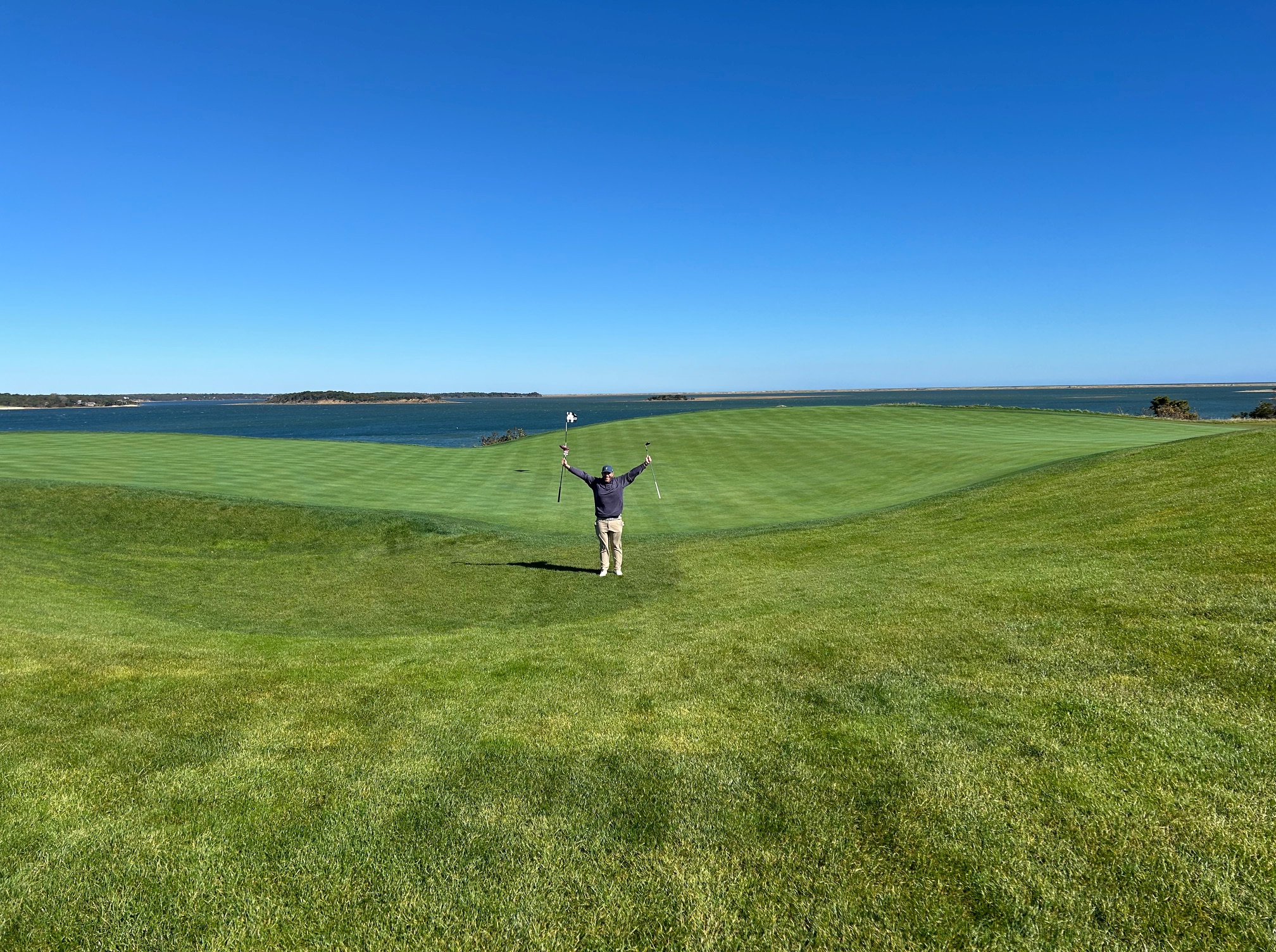
(Click to see the Mountain Lake Scorecard)
U.S. Naval Academy Golf Club

Naval Academy Logo

The symbiotic relationship of golf and the military is well documented and is evidenced by the fact that there are golf courses at almost every major military facility in the country.  Best part is the courses are there to serve the individuals and families of those in uniform no matter their rank.  The low key and humble presentation of this classic and challenging old school golf course makes for a memorable golf experience for everyone who steps on the first tee.

14 NAGC Par 4 Approach

The Par 4 14th is typical of the day’s challenge-somewhat blind off the tee with a significant elevation adjustment required on approach.

The U.S. Naval Academy Golf Club dates back to the 1940’s and was created late in the distinguished career of the Golden Age architect William Flynn on a flowing piece of terrain close to the Naval Academy in Annapolis.  The original course, having had a couple of holes added in the mid-50’s, remained as it was until Andrew Green did a thorough cosmetic renovation in 2021.  He pruned back trees to open up the playing areas, relocated and rebuilt bunkering throughout to add some punitive expense to your misses, rebuilt the tees to modern standard, and reconfigured the greens to recapture lost angles and pin placements.  But on balance he respectfully maintained the strategic playability of the original Flynn design.

The course is very typical of what was built in the Mid-Atlantic region in the 1940’s and 50’s.  The macho formula of the day was find a high spot for the teeing ground, a low valley to receive the tee shot, and a higher spot to bench the green complex and complicate the approach.  The course plays very uphill into the greens which makes a 6200 yard course play over 6500 even without any wind effect.

7 NAGC Par 3

The 170 yard Par 3 7th has two forced carries-one over the water and one over the false front. Picking the right wrench is crucial on these short holes.

Besides all the uphill approach shots the most obvious characteristic is the complexity of the green areas.  Flynn loved table top green settings and this one has more high tops then a singles bar.  As a result meek approach shots are often repelled and you can wear out your 60 degree wedge on recovery shots.  One thing you will find that is not original design are the moated short grass surrounds on a number of the holes with long approach shots.  Green left a user friendly, close-to-the-ground option for recovery if you are a bit too aggressive into these greens.

Andrew Green expanded the putting surfaces to reclaim their original size and shape that typically wither over time.  He left severe internal slopes and undulations creating segmentation to greens already steep back-to-front.  This puts a premium on approach shots getting to the proper section given the pin of the day to avoid defensive putting.

1 NAGC Par 4

Par 4 1st hole requires carry off the tee and a hoisted extra carry up the hill into the blind green.

The first hole is a template for what you will have to cope with through the day.  Drive off a perched tee across the edge of a water element cordoning the right side of the fairway to an expansive landing area beyond.  Now you are looking straight up a massive slope requiring a club and a half more then the distance to a blind putting surface perched behind a false front and deep bunkers.  Green created a low collection area in the front left of the green behind the bunker that is a magnet for any ball aimed at a back pin without sufficient resolve.  The new greens have plenty of pace in them so navigating undulations like you see on the first requires the right balance of confidence and resolve to play a game close to your index.

Memorable courses present a variety of challenges that keep the player off balance.  The short, on level second, at just over 300 yards, tempts you to take a direct line to the flag but there is a sentinel oak tree in the right rough about 50 yards short of the putting surface that should dissuade you from such heroics.  Lesser club played on a line well left of center gives leaves a manageable short pitch into your first coffee table of the day.  From the rough or over a 60 foot oak your chances of holding this piece of furniture are slim and none.

3 NAGC Par 5 Approach

#3 the first Par 5  seems simple from the tee but controlling the side roll on the first two shots is essential to having a birdie opportunity.

The first par five of the day is a stunning view from the tee and once again you get the formula of high tee to low landing area to high green setting, but this time the added complication of a fairway that cants sharply left-to-right on the first two shots is thrown into the mix.  This last 50 yards of approach and the green are set on a plateau so there is none of that false front, sharp shoulder roll off, but the surface itself has plenty of turbulence so two-putts are not guaranteed.

6 NAGC Par 4 Driving Area

One of the few truly downhill holes, the short Par 4 6th gives you an idea of how Andrew Green used variegated spacing of the bunkering to force strategic decisions off the tee.

The rest of the outward nine is open, hilly, and full of optics and challenge with your best scoring opportunities from four through seven.  Eight and nine are brutally difficult long four pars so you need spending pars in the bank before you get there.

8 NAGC Par 4

The 425 yard 8th is just plain hard but the green tucked behind the trees makes position on the left off the tee essential.

Eight may be the hardest hole of the day requiring a long carry tee shot not dissimilar to the adjacent first hole, but the approach this time is on level to a high top green arrangement tucked to the right behind a stand of trees and protected by some of the most viscous bunkers you will see all day.  Take the “Pit of Death” moniker of the front right bunker seriously.

Once you traverse the long ninth make sure to stop in to the bar/restaurant under the blue awning at the base of the Naval Academy Primary School, their elementary school, on the way to the tenth tee.  The cup of chicken salad, tuna sandwich, or dog at the turn you can get are delectable, cheap, and necessary, as the cloistered corridors of the inward nine take on an entirely different tone then what you have experienced so far.

10 NAGC Par 4 Approach

Now amongst the trees on the back nine precision driving on the 10th becomes important to having an unobstructed look at the green complex.

The first three holes on the back nine are probably the most interesting variety you will face all day.  As you turn the corner to the 10th tee the same hilly terrain you saw on the front nine is now encapsulated in tree lined corridors of play.  The drive on the tenth has to be hit far enough right to avoid the severe camber of the fairway that can abruptly drag a timid effort back towards you into the rough forty yards to the left leaving no visual of the green.  From the middle of the fairway the approach is a half a club more to a half blind green setting on top of a hill.

The short 11th switches gears suddenly with a twisting dogear left that is defined by OB right and trees left.  I like the long club off the tee here that you are confident will not wander to leave the shortest approach into another blind green complex way up the hill.  The bunker you can make out on the left is a good 50 yards short of the putting surface so adjust your club selection accordingly.

12 NAGC Par 3

At 225 yards the 12th is not your grand dad’s typical Redan three-par…you don’t see one like this in a typical Seth Raynor collection.

What comes next is Andrew Green’s new hole, the most visual offering of the day.  Best described as a driver/fairway wood reverse Redan par three with serious elevation parameters….now there is a mouthful.  Matching left-to-right ball flight to the angle of the green setting is obvious, negotiating the downhill adjustment and the roll out of a driving club is a different kettle of fish.  My conclusion is, that if in doubt, take the longer club and hit it through the green since the pitch back is a routine uphill bump and run to all pin settings.

As was true on the front side, the best scoring opportunities are in the middle holes of the back nine so control your tee ball on the next two and be aggressive on approach if you have a stock club in hand.

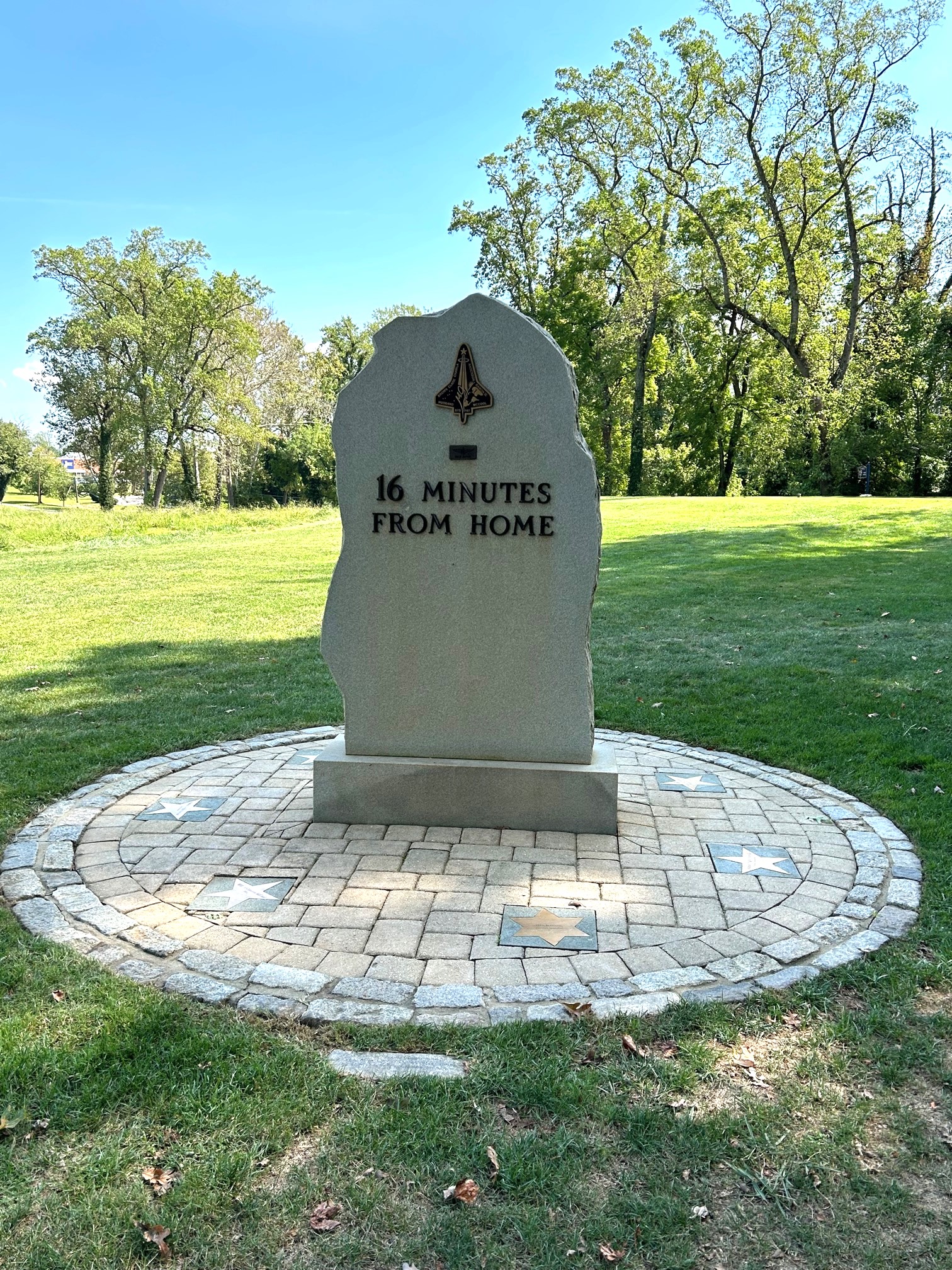
NAGC Monument To Challenger

A solemn tribute to those who gave their lives in our effort to expand man’s knowledge through space exploration.

Walking from the 14th green to the 15th tee take a moment to engage with the tribute memorial, a reminder of the bravery of seven space explorers who lost their lives in 2003 in the Columbia Space Shuttle Disaster when the orbiter disintegrated upon reentry over Texas and Louisiana just 16 minutes from their intended touchdown.  The stars in the pavers around this monument commemorate the lives of Rick Husband, William McCool, Michael Anderson, Kalpana Chawla, David Brown, Laurel Clark, and llan Ramon who were lost in this tragedy.  Solidarity with the brave always has a place in a military facility.

Interesting anecdote about the monument shared by a club member.  William McCool, the pilot of the Columbia, was a Navy pilot who, when he attended the Naval Academy was the captain of their cross country team. The placement of this memorial was 16 minutes from the course finish line!

(Click to read more about the story of Willie McCool)
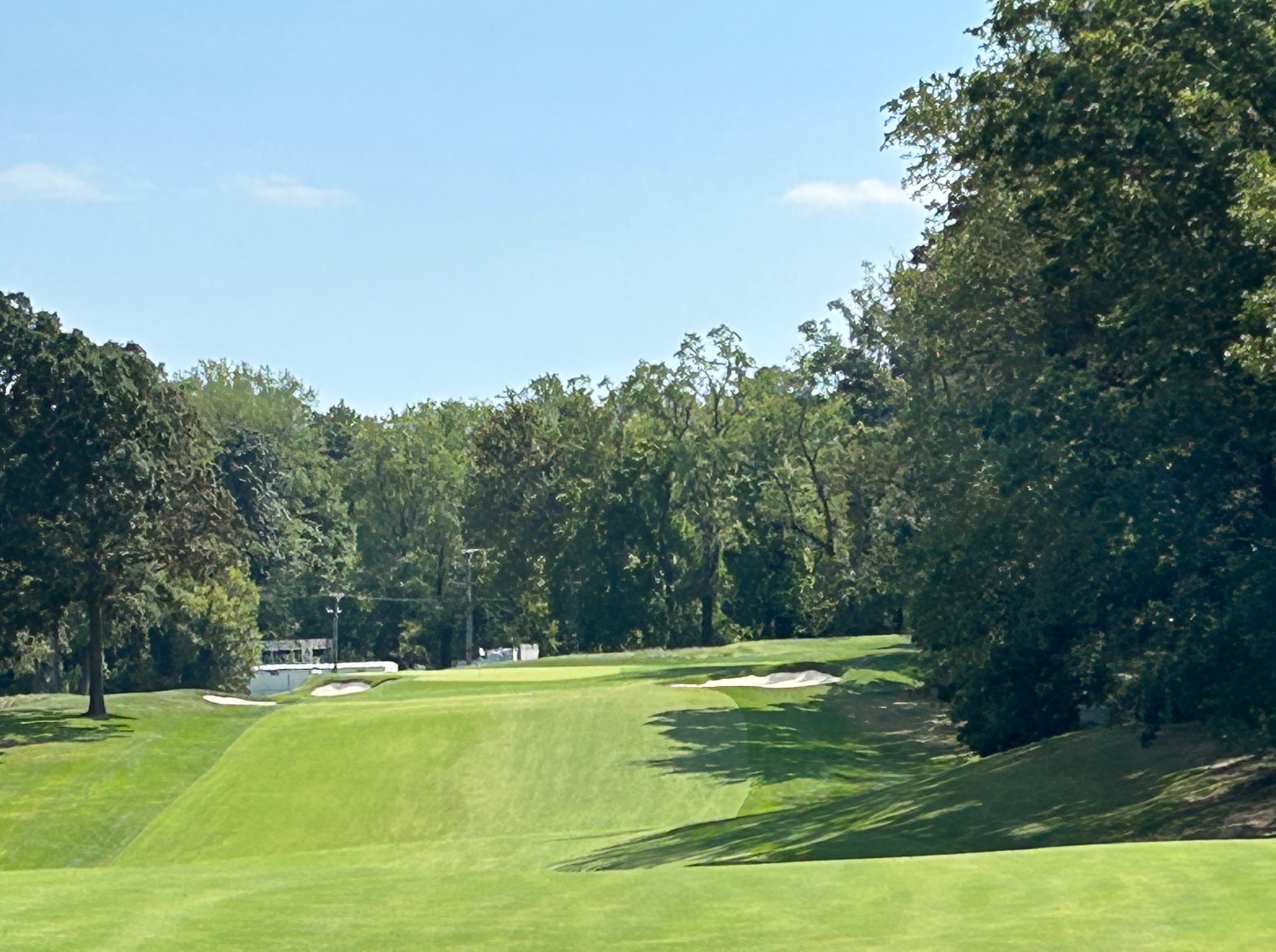
15 NAGC Par 4 Driving Area

The Par 4 15th just tumbles below your feet from the elevated tee box. Position of this tee will determine whether to take on the carry over a wall of bunkers in front or lay-up right for an up-and-down effort.

The finishing holes will test your discipline as they are all about controlled shot making to avoid blowing up your scorecard.  16 is a short par four with a blind landing area off the tee leaving a dicey approach into another bar stool green sloped back-to-front with nothing but trouble around it.

16 NAGC Par 4 Approach

Another uphill approach into this severely sloped green on the short 16th.

The signature hole in this run is the pitch n putt 17th, a steeply downhill Par 3 which simulates landing a short iron on the hood of a VW Beetle.  The view from the tee is disarming in that this is literally a lawn dart hole, there are no good misses here.  If you miss the green playing for four is just smart.

17 NAGC Par 3

17th green does not present much safe harbor so figure the downhill and the wind and commit to the middle of the putting surface.

The 18th is the modest twin sister of the 9th just across the entrance drive, but you must drive the ball in play to have any hope of hitting this green and walking off the hole with a gratifying par.  If you are out of position off the tee lay up in front of the putting surface for a little elevation pitch to today’s pin.

As I said at the beginning, there is nothing flamboyant or tricky about the presentation of this old school course.  Having to hit a club or more extra into many of these Par 4’s will tax your patience and strategic discipline.  I am pretty sure that walking off the 18th green the first thought you will have is that you need another crack at this one.  That is the sure sign of a course worth going out of your way to play.

Annapolis, Maryland

Architect:  William Flynn (1944) and Andrew Green (2021)

Par     Rating     Slope   Yardage

Blue                 70        71.2        126       6610

White               70        69.6        121       6200

Red                 72        69.0        120       4935

(Click to review the printable Naval Academy Course hole-by-hole descriptions)

Pasatiempo Golf Club

Pasa Logo TopIt is impossible to separate the character of this course from the reputations of entrepreneur Marion Hollins and renowned architect Alister MacKenzie, two seminal characters in the introduction and development of west coast Golden Age golf courses of the 1920’s.  The two joined hands at Cypress Point setting a standard for what this area of the country could produce and their relationship was solidified with the development of what would become MacKenzie’s home course-Pasatiempo.
Pasi Restrooms

Dedicating the loos is an odd way of honoring the memory of these two larger then life characters who made this place possible

Marion was also responsible for introducing him to Bobby Jones, who would eventually tap Mackenzie to build his most famous creation of all in Augusta, Georgia.  But seeing that MacKenzie lived here and tweaked the course right up until his passing one has to look at Pasatiempo as his swan song to the use of perception and deception in making so many great courses over his career.

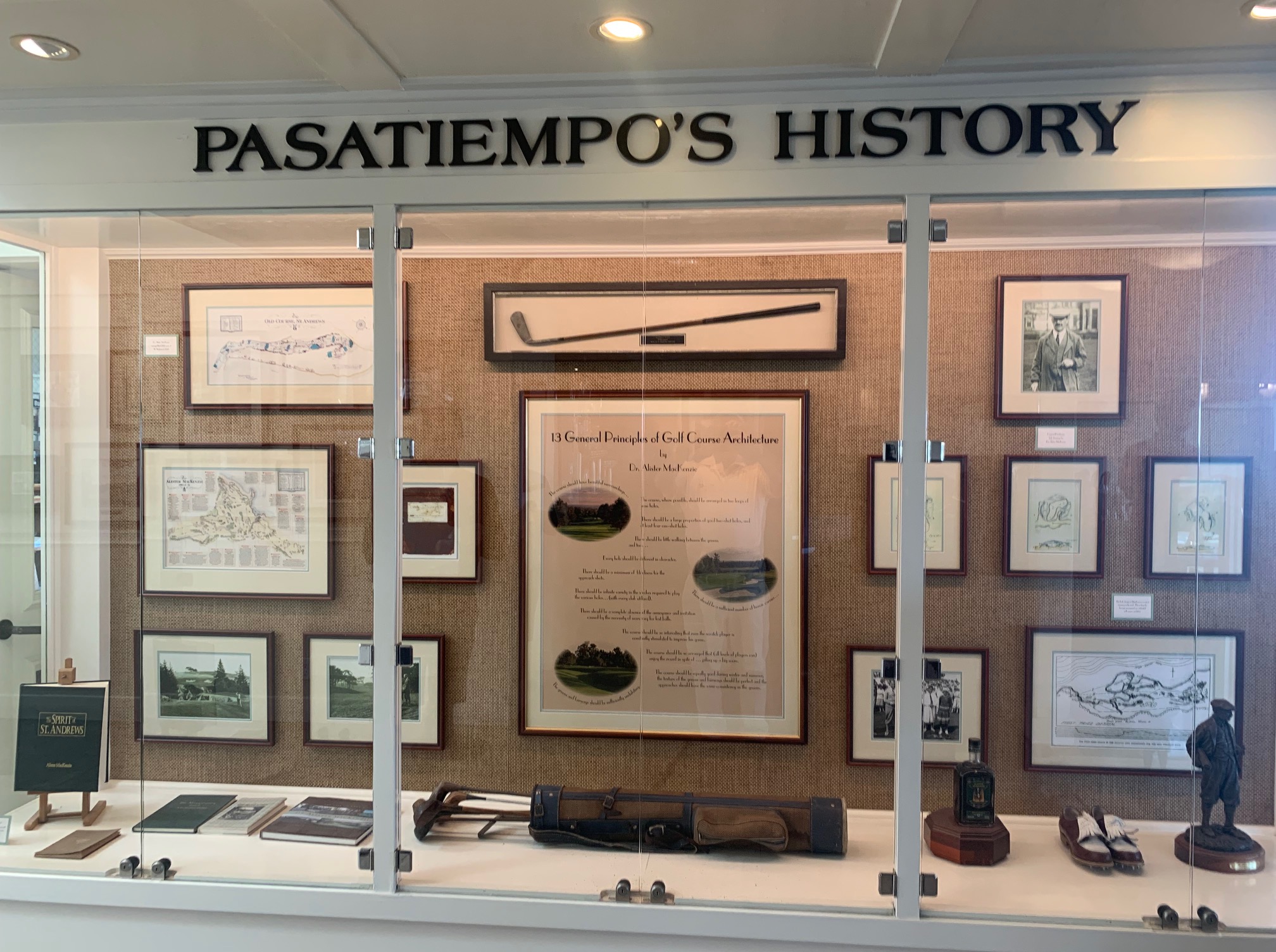
Pasi History

Plenty of history grace the walls and showcases through the clubhouse

Many of the great California courses like Riviera, Bel Aire, LACC, Pebble Beach, Cypress Point, and the Cal Club used the unique rolling terrain, prevalent arid conditions, and sandy soil to present a strategic version of golf where the movement of the ball initiated by the ground would determine success or failure in their play.  We rarely hear the use of the term barranca in relation to golf architecture outside of this region, but in many ways these deep recessions created by nature of scrub, rock, and sand-often just dry bed streams, are the unique challenge that make California golf what it is.

Western Intercollegiate Past Champions

For over 75 years they have held the Western Intercollegiate and you can see individual champions include Ken Venturi, Johnny Miller, Mark O’Meara, and Scotty Scheffler among others.

MacKenzie combined the use of barrancas with bold fairway undulations, slopy segmentation on the putting surfaces, and wildly diverse flash bunkering to make Pasatiempo the ultimate strategic test of golf.  Power and length alone are no match for careful strategic planning and shot articulation when going around this place.  Set against the stunning backdrops of the California coastal topography, the back nine presents the most varied array of holes that wed these parameters to challenge players of all caliber to be on their best game.

Pasa 2 Approach

You can see the segmentation in this 2nd green makes you work the approach on the ground to get into the right section for the day’s pin position

Looking down the first two holes you get the sense that position off the tee relative to the segmentation of the green propagating varied pin positions is going to matter all day.  When you see how MacKenzie works the slopes within the segmentation of the putting surface it becomes clear that it is not only approach angle that matters but use of the putting surface itself to move the ball into the most advantageous place to putt from.  Three putts are in your day, delimiting them is important to keeping the bogie monster at bay.

Pasa 3 Par 3

#3 is a Par 3 where your hybrid or long iron must carry the narrow entrance and a false front into a sloped green benched into the side hill

Two par threes in the next three holes that are the 2nd and 6th handicap holes tells you something about how challenging this day is going to be.  The 3rd is a long uphill shot into a precipice green complex saddled by deep bunkers on both sides.  Standing on the tee there is a enigmatic cross bunker that is 75 yards short of the green that will have you scratching your head as to why it is there.  One needs to remember this hole was created in 1929 when hickory clubs were still around and elevating a Cleek on a long par three was not given.

Pasa 4 Par 4

The array of bunkers off the tee and surrounding the green on #4 are emblematic of the MacKenzie style

The 5th is an even longer one-shotter then the 3rd and once again the uphill shot to the green will demand a solid club and a half more to cover the false front and bypass the massive bunker that dominates the left side approach to the green.  The green is a four leaf clover so there are many corners when they can hide the pin.

Pasa 7 Tee

Drive off the 7th has to split the uprights to negotiate this narrow landing corridor.

The 7th and 8th are two really old school holes you just would not see built today which makes them a treat.  The 7th is an appetizing uphill corridor short four which calls for a well positioned tee shot on the left side of the fairway to have a look up a narrow putting surface set on a 7 to 1 angle to the approach area.  The green is segmented with countering slopes so it takes a really articulate short club to leave a birdie putt.

Pasa 8 Par 3

What a look down the hill at the 8th green wedged between steep slide slopes and bunkers to boot. The Par 5 9th is climbing the hill in the distance to the back of the clubhouse deck

As you step on the tee of the Par 3 8th your jaw will drop as you try to take in the parameters of the 45-yard long wildly contoured putting surface that sits at the bottom of the hill in front of you.  If the wind is blowing all bets are off picking the right wrench.  There is a line drawing of this green above the urinal in the MacKenzie men’s room in the clubhouse that depicts all the slopes and counter slopes he designed into this one.  You might wish they handed them out on the tee for reference.  Once your shot alights on the green it will work up the slope and feed toward the back left.  This makes any front pin or back right pin extremely difficult to negotiate.

As you approach the ninth tee make sure to order a sandwich from the call box for the back nine……the barrancas are coming and you will need the protein shot in short order to cope.

Undoubtedly you have played courses where the front nine and the back nine look like brothers from a different mother, like Tralee where you go from banal flat seaside links to the vertical turbulent land of trolls once you step on the 11th tee.  The stark transition here is similar but the distinguishing characteristic is not the topography itself but instead the use of nature’s singular feature,  the barrancas which were intended to capture and move surface water during heavy rains but in their dryer form provide inherent surface movement and magnetic attraction to a ball struck with insufficient intent. What makes MacKenzie’s work so unique is that he fashioned countless iterations of this design element to influence your perception of strategic choices in subtle and not so subtle ways.

Pasa 10 Par 5 Tee

Looking at the required carry off the 10th tee you realize this barranca thing is about to become real and it is going to be unrelenting

Stepping on to the 10th tee the gaping rocky gorge at your feet is actually the simplest of the three interactions you will have with the barrancas on this hole alone.  Once you drive it to the top the hill you feel the pull of the barranca well off the fairway to the left but then MacKenzie ingeniously integrates it into a cleaved array of bunkers and grass you must deal with the last sixty yards to the green.

Pasa 10 Approach

The back end of the 10th the barranca takes on a tamer appearance but the magnetic attraction to roll out is undeniable

The most in your face barranca experience of the day is on the bifurcated fairway arrangement on the shortish par 4 11th.  The rocky gorge haunts the left of the driving area forcing you to lay up at the end of the driving area just off the entrance to the steel bridge that traverses the chasm.  The hole is now truncated to the left leaving the barranca on the right as you try to carry your approach up a significant incline to a green complex set into the back part of the abyss.  Another narrow, stepped green awaits a long iron or hybrid approach earning this the 3rd handicap designation of the day.

Pasa 11 Approach

This is the harrowing look of the second shot approach to #11 that has to traverse the gaping gorge and find a safe landing spot of a steeply banked green precariously perched above the abyss

The switchback downhill par 4 that follows has the wooded barranca haunting a bad hook off the tee. From the center of the fairway the approach is into a triangular green wedged between bunkers and a fronting dry grassed shallow version of the barranca that will gather a ball with insufficient carry.  You have already experienced six different iterations of the barranca effect in just three holes.

Pasa 13 Approach

The Par 5 13th is probably the tamest hole on the inward half but once again MacKenzie emphasizes the contour of the barranca by lining it with sand as the pathway to a counter sloping green surface

White knuckle time over the next three holes begins on the par 4 14th as MacKenzie ups the barranca effect another notch by presenting it as fairway the left half of driving area.  It is playable from down there but there is a good chance the depression is so deep you will not be able to see the flagstick from your approach position.  A drive in the right half of the fairway at about 140 yards out puts you on a flat stance but the diagonal setting of this long and narrow green means you have to carry the fronting bunkers to get to the flag.

Pasa 15 Par 3

A close look at the Par 3 15th shows a footprint very similar to the 12th at Augusta…just a barranca to traverse rather then a piece of Ray’s Creek

The short pitch 15th is a dry bed version of the 12th at Augusta.  The shallow green sits on the diagonal requiring a delicate forced carry with a series of deep bunkers and grass emanating out of the barranca.  The entire back side of the green is cordoned by a bunker that will contain a long shot but the recovery shot from there is tricky as the green slopes away.  Three here gains a shot on the field.

Pasa 16 Approach

From over 150 yards out this approach into 16 is the most harrowing task of the day. Three steep tiers in this anvil shaped green with bunkers you will need a tow line to get in and out of

MacKenzie was particularly pleased with the challenge he presents on the #1 handicap hole in the next one.  You drive from a low tee up a steep hill with a large mound dominating the right side of the landing area.  The barranca flanks the driving area on the left so anything with too much draw can end up in the hazard.  The conundrum is that the best drive is at the left edge of the large mound which feeds the ball left to a flat area with a good look up the green.  This is the craziest green out of a collection of truly crazy greens in that it is a full 50 yards long with three distinct tiers, the first of which is impossible to keep your ball on.  A humongous bunker will that covers the entire right side of the green will collect any approach with a hint of wandering fade and an up and down from there is highly unlikely.  Good news is the green fans out in the second and third tier which gives a bit of wiggle room for an approach on the long side.

Pasa 18 In Reverse

A look back up from the green on the final hole emphasizes the extreme elevation drop your ball will have to negotiate

One of the most memorable things about Pasatiempo is that it ends on a par 3 that is fully engaged with the deep gorge you had to traverse off the tee on #10.  It is no more than a short to middle iron across but the green is a three clove shape that straddles the abyss and each section has drastic ground movement that makes keeping the ball in the desired section a task.  Getting it on the green is half the battle…putting out in 3 putts or less is equally challenging.

Pasa 18 Par 3

The segmentation of the green itself makes it like three greens. There is so much back-to-front lean to the front barranca that matching speed and break is a three-putt possibility waiting to happen

A bit of an author’s disclaimer, this course is every bit as wonderful as I have described but it is in dire need of a total facelift.  Tom Doak and Jim Urbina did a restoration of the course in 2007 and brought back a number of the MacKenzie parameters that had been dulled over the years.  Urbina will be back starting in the Spring of 2023 to redo all the greens, bunkers, and fairways in an effort to bring this course’s condition and related golf amenities in line with it’s historical expectation.

Pasatiempo Logo

One last thought is that the Pasatiempo logo may be the coolest golf  logo ever…..it looks fabulous on everything.  Make sure to give the golf shop a visit and find something cool to take home to savor your Pasa memories.

Santa Cruz, California

Architect:  Alister MacKenzie (1929) and Tom Doak/Jim Urbina (2007/2023)

Par     Rating     Slope   Yardage

Gold                 70        72.5        141       6495

White               70        70.8        134       6093

White/Green    72        69.5        133       5780

Green               72        68.5        132       5595

Hollins              72        67.0        118       4438

(Click here to review the printable Pasatiempo Golf Club hole-by-hole descriptions)

California Golf Club

Cal Club LogoThe Golden Age of Golf Architecture left it’s imprint in San Francisco in the 1920’s and one of it’s finest contributions was the California Golf Club.  The Cal Club is located at the southern end of the city in the hilly topography at the foot of San Bruno Mountain State Park.  From the many high vistas throughout the property you can see the splendor of the city set against the mountain backdrop.

CC 1 Green

The approach view of the first green juxtaposes the green complex to the near in city and the mountain backdrop behind

As we see on many of these layouts in California the early architects used the movement of the ground coupled with clever routing and imaginative green complexes to present challenging and entertaining golf with virtually no water hazards or forced carries.

CC 14 Par 4

Locke routed the wide open Par 4 14th to follow the flow of the land…Macon created the landing areas and the green complex….MacKenzie added elaborate bunkering throughout to define the strategic alternative off the tee and into the green.

The original design was actually the compilation of the work of three distinct architects over a three-year period.  Scot Willie Locke, who later designed Lake Merced, was the first to the plate in 1924 and is responsible for the design of the overall routing.  Before the construction began they replaced him with an Irishman, A. Vernon Macon, who built the tees, green complexes, and original bunkering.

CC 6 Par 3

The 6th is an example of a bold Macon’s green complex design.. With fall offs front, left, and back it is hard to keep a mid-iron approach on the putting surface. Deep face bunkering can punish a timid approach shot.

Macon designed the green complexes with bold contours that caught the attention of the golfing community when it opened in 1926.  The fairway bunkering was left for later on purpose, so the architect could analyze from actual play the best positioning based on the divot patterns left by players.

In 1927 the task for creating the fairway bunkering was given out to a third architect, a young Alister MacKenzie, who had recently finished the 9 hole track at the Meadow Club north of San Francisco.  MacKenzie redid the 10th and 18th green, all the greenside bunkers, as well as adding the fairway bunkers.  His flair for the dramatic took this track to a whole new level in the minds of the golfing public.

CC 5 Par 4

This 5th hole would feel right at home at Pine Valley. At 300ish yards a big bopper is tempted to go for the green but the green side bunkers are punishing and can turn a birdie opportunity into a bogie in a heartbeat.

By 1960 the course was in dire need of a attention due to the state’s rerouting of a road adjacent to the property.   The club hired the biggest gun of the times, Robert Trent Jones Sr. to do the update.  As was his habit when approaching renovation of U.S. Open Course of the era, Jones could not resist putting his entire footprint on the course.  He re-routed holes, changed things dramatically and pretty much redefined the character of the Cal Club.

In 2005 the course was suffering from major maintenance issues due to turf disease and inappropriate grasses so they solicited proposals for a complete shutdown and renovation of the course.  Kyle Phillips submitted a bold proposal to undo the previous rerouting by relocating the practice area and creating new holes on the front nine and was chosen to do the job. The results supported that choice.

Cal Club Long View

One of the base principles of Phillip’s renovation was to add about 6 inches of sand across the entire layout-this improved the drainage and facilitated the introduction of fescue to replace the rye and poa anna in the fairways and eradicate the poa from the greens.  Kyle undid the mess Trent Jones had done to the front nine by introducing three new holes and, at the same time, went back to aerial images of the course to reclaim many of the parameters and features MacKenzie had put in the original work.

CC 3 Par 4

This downhill dogleg 3rd was one of Kyle Phillip’s old style new holes that seamlessly fits into the character of this age old design. This original bunkering mimics the detail of MacKenzie’s work.

He made sure that width was king, the rough was not significant reducing the search for balls, and let the strategic MacKenzie bunker positioning steal the show. What emerged was turf that would support hard and fast playing conditions to force the players to respect the topography as a strategic element of play.  The presentation of fairway width, no rough to speak of, complimented by generous bunkering in the green complexes puts the premium of positioning on every hole.

CC 8 Par 3

On the downhill Par 3 8th begs for a bit of a soft draw…they added a barely visible kicker mound front right that will propel an approach onto the center of the green following the right-to-left movement of the ground

In reading the Hole-By-Hole Analysis below you will see that Phillips gave them a seamless combination of the outward and inward nines that once again emphasized the design thinking of the Golden Age.

CC 18 Par 4 2

Looking down from the top of the hill at MacKenzie’s 18th green surrounded by sprawling bunkers wedged into the hill under the clubhouse is testimony to their choice of Kyle Phillips to bring this amazing track back to full grandeur.

San Francisco, California

Architect: Willie Lock, A. Vernon Macon, Alister MacKenzie (1927)

Kyle Phillips Restoration (2007)

Par       Rating    Slope   Yardage

Venturi             72        74.6        139       7215

Back                72        72.7        135       6794

Middle             72        70.5        130       6293

Forward           72        66.5        122       5401

(Click here to review the printable California Golf Club hole-by-hole descriptions)

Whistling Straits Course-Flyover

Whistling Straits LogoWith Whistling Straits playing host to the Ryder Cup this week, Andy Johnson of The Fried Egg has dispatched his drone to put together a timely video exposition of the course and paired it with his thoughtful and knowledgeable analysis of how the Pete and Alice Dye’s architecture will provide strategic challenges in this match play competition.

There are two things that are startling about The Straits. First it is essentially a links style course in the middle of America and second, everything you see that makes this a links style course, except for the ocean sized Lake Michigan over your shoulder, was manufactured by man (and woman).

Besides the engineering feat of importing and placing a bazillion truckloads of dirt from Indiana to sculpt the land, they had to conceive of a routing to expose as many of the holes as possible to the lake winds to create the real look and feel of links golf in Wisconsin.

As Andy points out, it is a figure eight routing with the front nine going south along the lake shore and then looping back upon itself to catch more shoreline on the way back in. The back side does the same thing going north along the shoreline and looping back for more shore on the way back to the clubhouse. This puts 8 of the 18 holes with direct interface to the lake and another six within eye view. The influence of the wind off the lake can be profound and since the holes go in both directions on both sides you rarely get but a couple of holes in a row with the same wind effect.

Seventh Hole Par 3 green presents pure intimidation-especially the right pin

The par threes on this course are all stunners-forced carries over huge waste areas to precipice greens with the backdrop of the lake behind. This lack of topological backdrop can make frame of reference of the shots hard to discern. The wind influence on the three pars is at it’s max because they are the most exposed holes on the course.

The harsh reality of Number 17 will challenge the world’s best players

Andy goes through the full Dye collection and from his analysis you will have a much better appreciation of how these pros will negotiate their way around this unique layout under the intense competitive heat that only a Ryder Cup can provide.

Set aside ten minutes to watch this on a PC screen so you can truly appreciate the artistry of this video and it’s subject as well.

The Fried Egg Podcasts (2021)

(Click to see Andy Johnson’s video analysis of Whistling Straits)