If you have a passionate interest in the history of the game you owe it to yourself to make the effort to visit the USGA Golf Museum & Library. It is a drive and a five-iron from I-287 in the rural hamlet of Far Hills in the northern part of New Jersey. Off the beaten path but well worth the trek to experience the USGA’s collection and preservation of artifacts of the game of golf in America.
For researchers and scholars they separately maintain the Jerris Research Center, a private library collection that includes personal papers and scrapbooks, rare books and original manuscripts, extensive periodical collections dating back to the 19th century, 35,000 scorecards and records of national championships, 750,000 photographs, and 200,000 hours of footage documenting the development of the game.
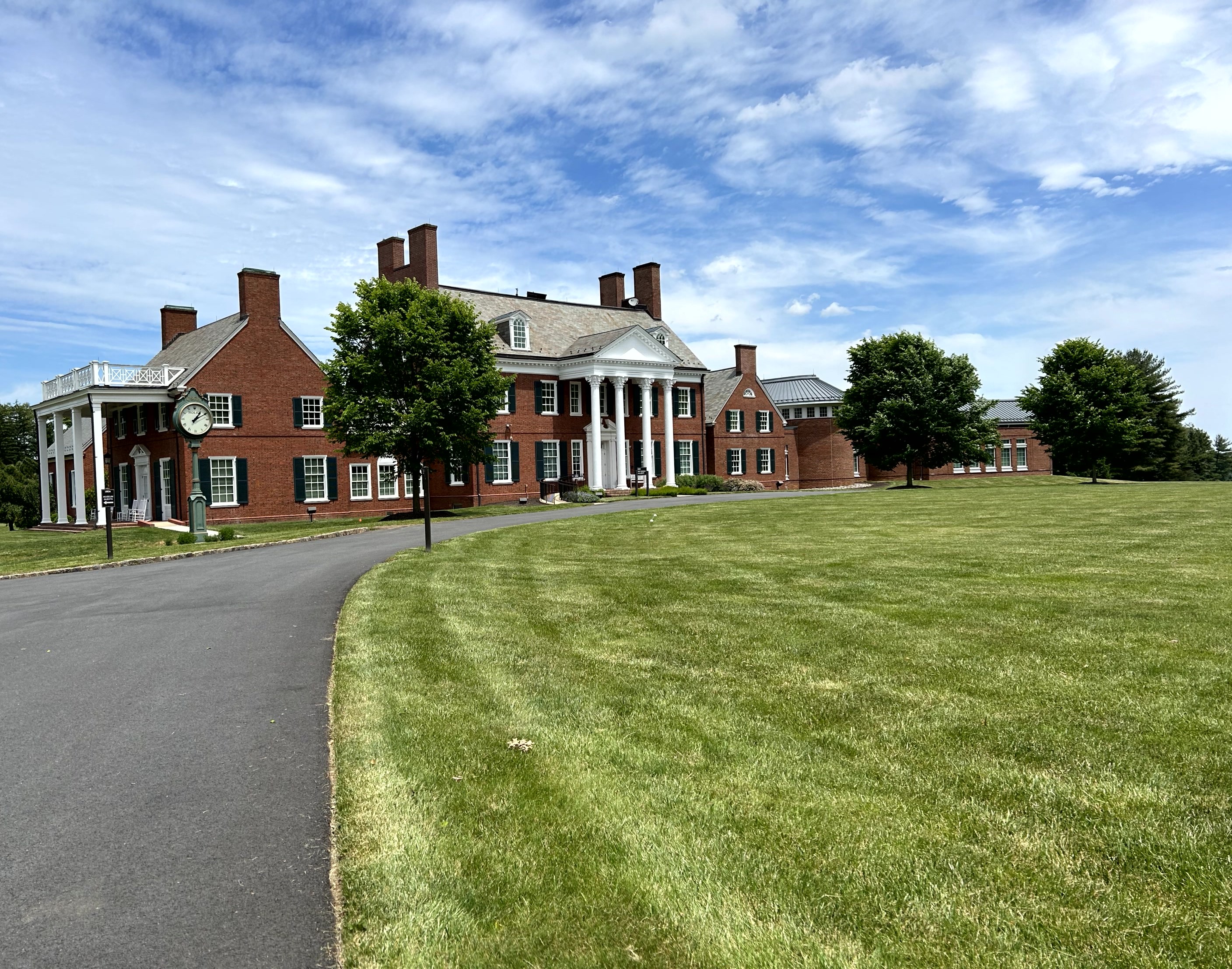
In 1972 the USGA took up residence in an old 1919 vintage house designed by famed architect John Russell Pope. The museum chronicles the rich history of the game, it’s inspiring moments, courageous comebacks, and monumental achievements over the last 120 years. It includes the Hall of Champions, five rooms dedicated to the most influential American golfers in history-Bobby Jones, Mickey Wright, Ben Hogan, Arnold Palmer, and Jack Nicklaus, and a chronological walk though the timeline of golf’s development in America.
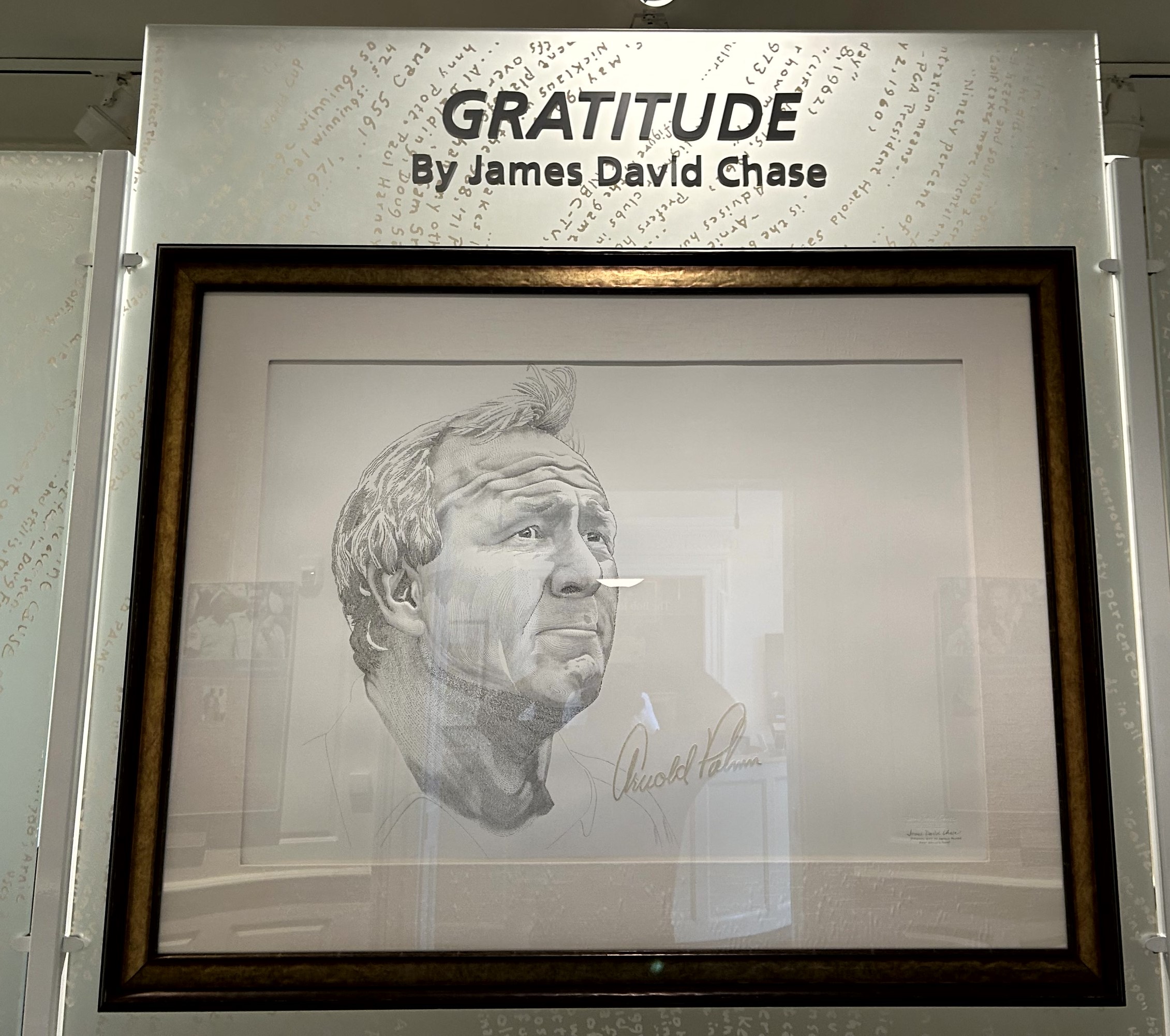
As you enter the museum space you are staring at this pen and ink lithograph of Arnie’s 1970 game face that was the result of 15 years of love of the game toil by James David Chase. What you don’t realize at first glace is that all the detail of his features are actually finely written calligraphy of famous quotes and anecdotes of Arnie’s life.

Through the touch screen monitor you can zoom in on any feature and see the words meticulously placed by the artist to create this image.
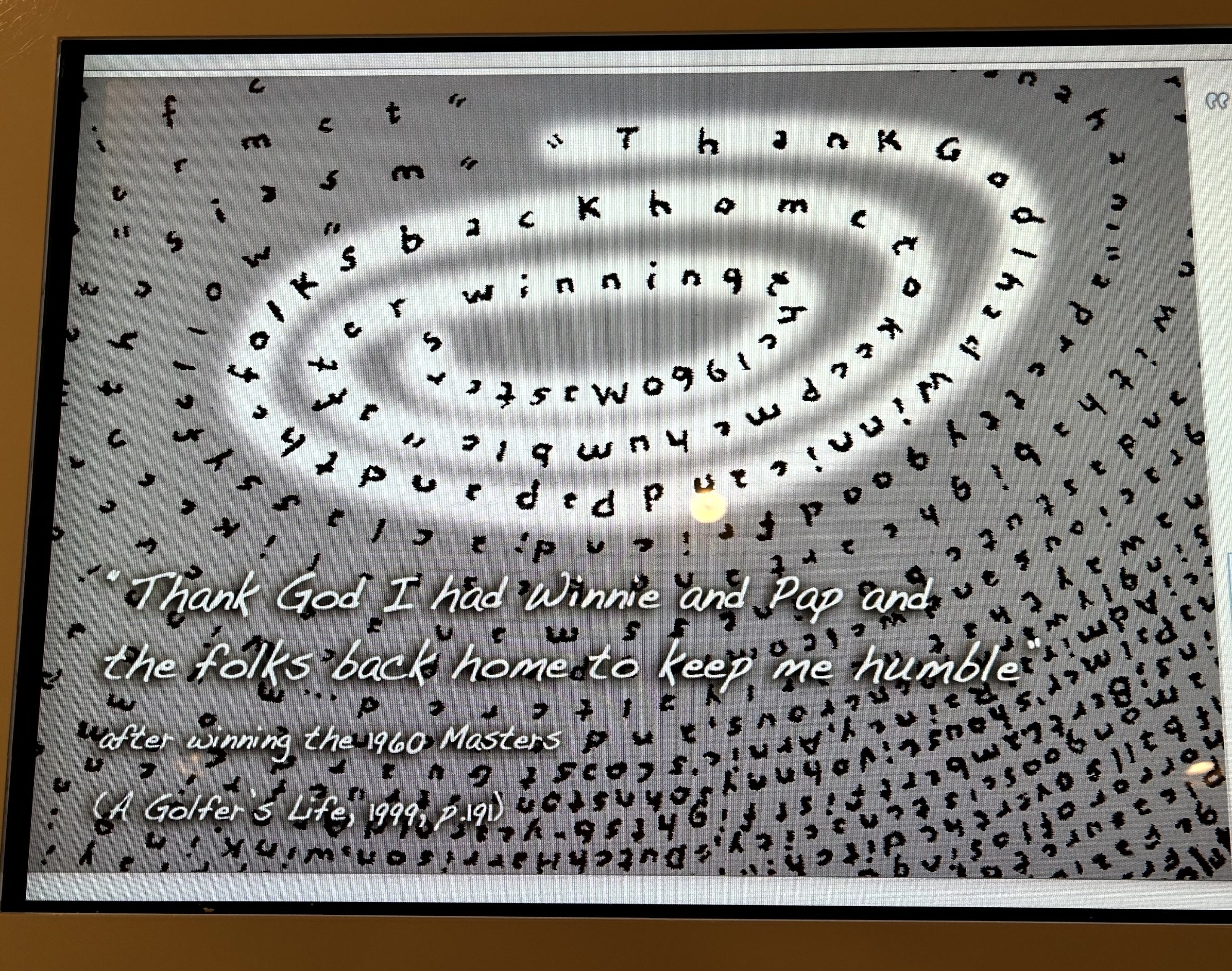
This was all done unbeknownst to Arnie and presented to him by the artist in 2003. Needless to say Arnie was awe struck by the dedication and love it took to create this. You can read more about it’s creation by clicking on this link to a Golf Digest article “A Portrait Worthy Of A King” by David Kindred.
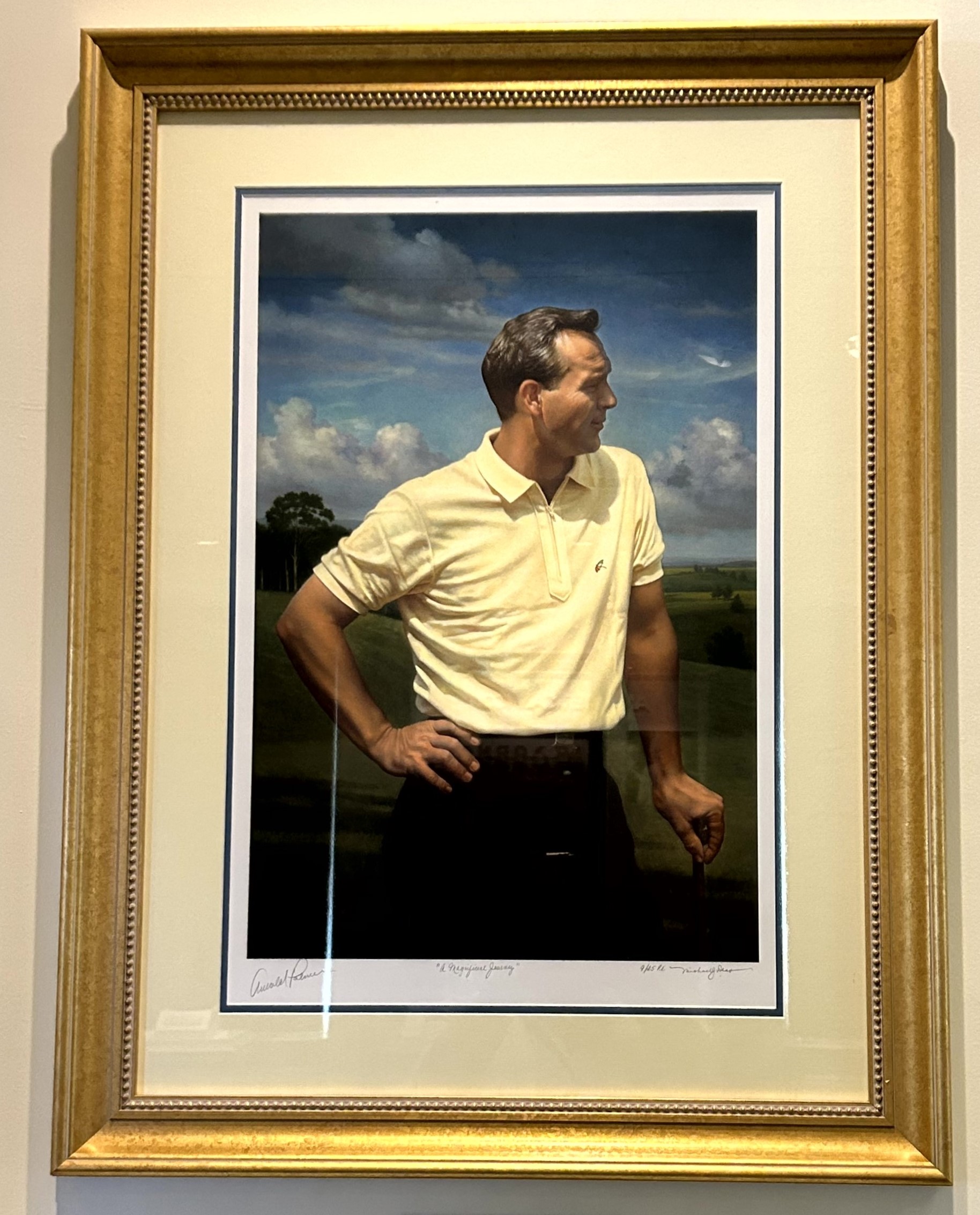
The rest of The King’s room celebrates the many aspects of his life that endeared him to his army of fans and helped catapult the interest in American golf to previously uncharted heights.

The connection of his hands to the club was a thing of legend-big hands of a blue collar upbringing asserting control over the club with a never-back-down intention.
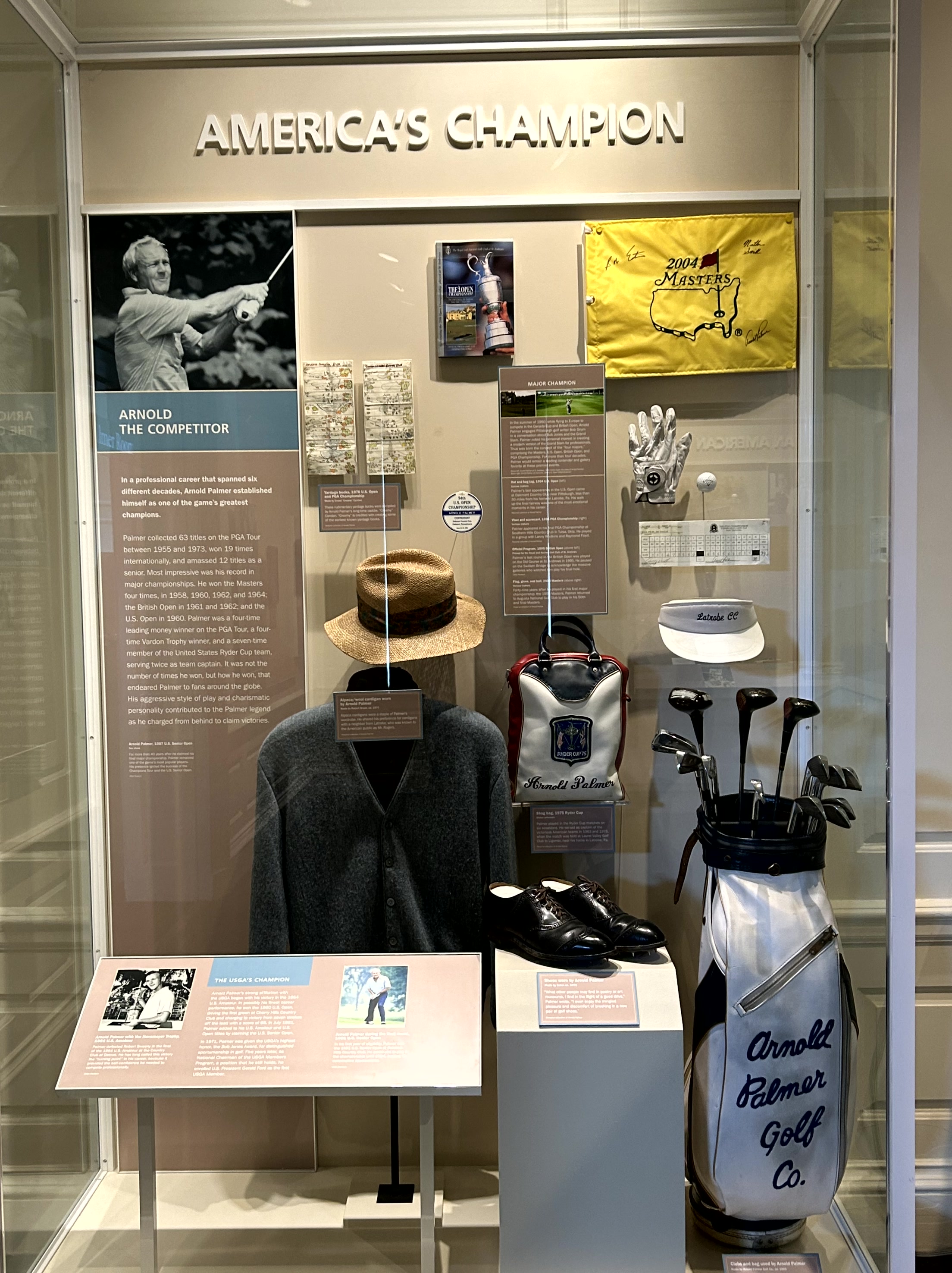
He was truly America’s Champion igniting interest in the game through the newly discovered media of television. He put Majors like The Masters and the Open Championship on the map, winning with his swashbuckling style while treating his army of fans with a personal touch that made it feel like he was your college fraternity brother or favorite cousin.

Arnie changed the life of professional golfers forever by insisting on flying his own plane to events and establishing the connection of professional golfers to corporate America as it’s sponsor of a wide array of consumer products. Generations of professionals have Arnie to thank for the wealthy livelihood they enjoy today through pursuit of their craft.
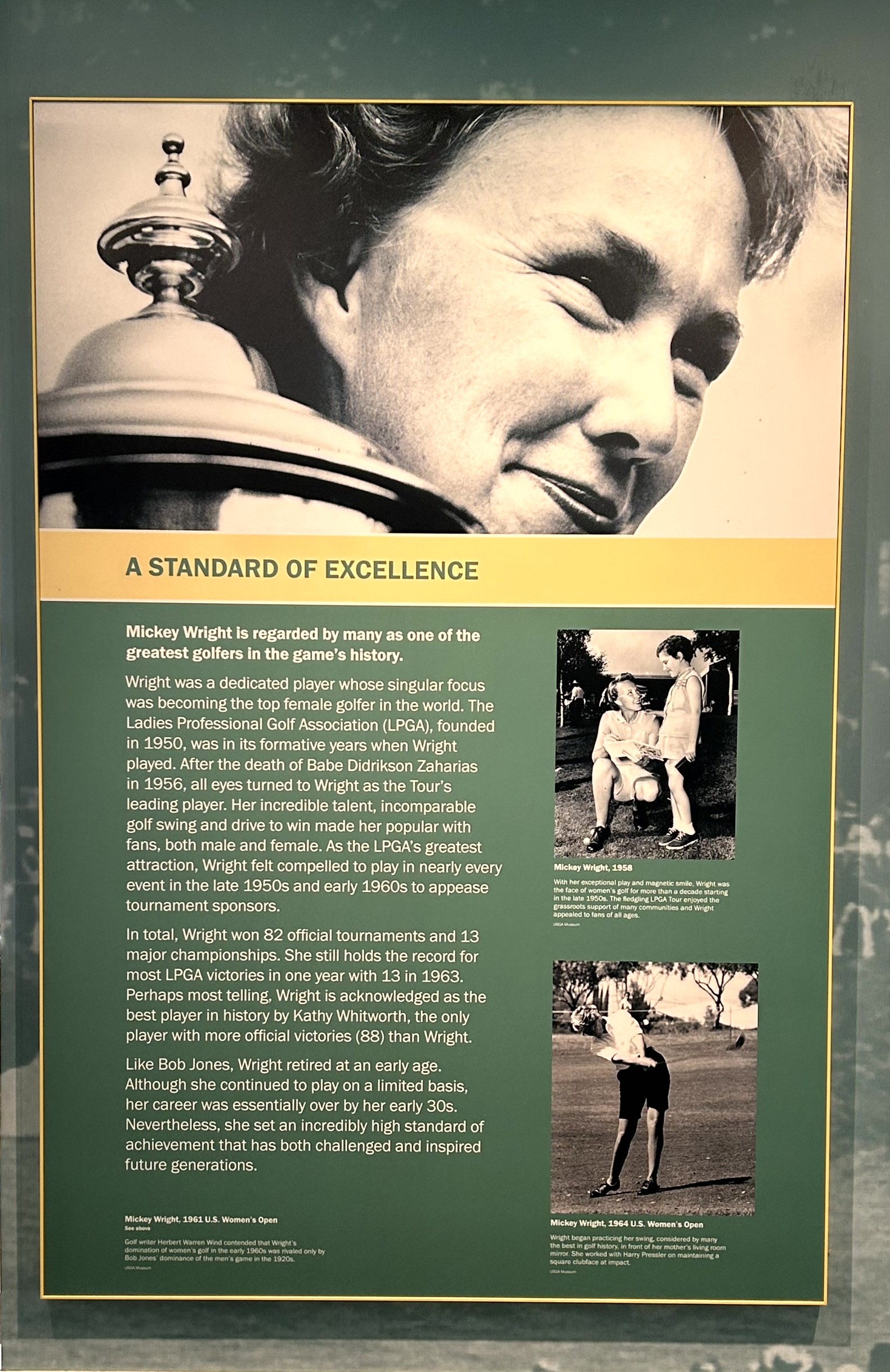 .In the same neighborhood is Mickey Wright, who is arguably the greatest female golfer of her age. She won 82 times including 13 majors, including winning 13 times in 1963 alone. Her swing is recognized by teaching pundits as one of the greatest of all time.
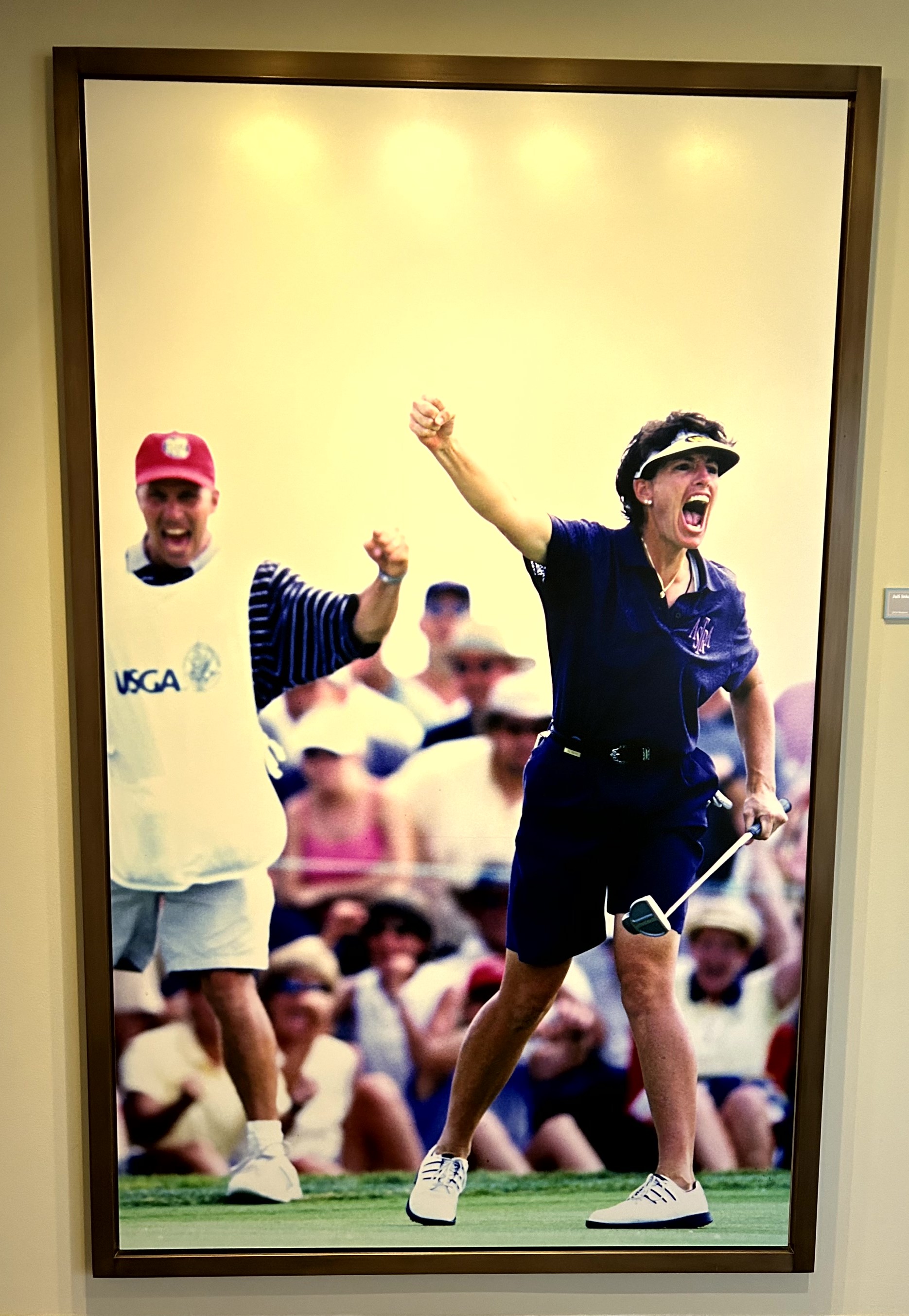
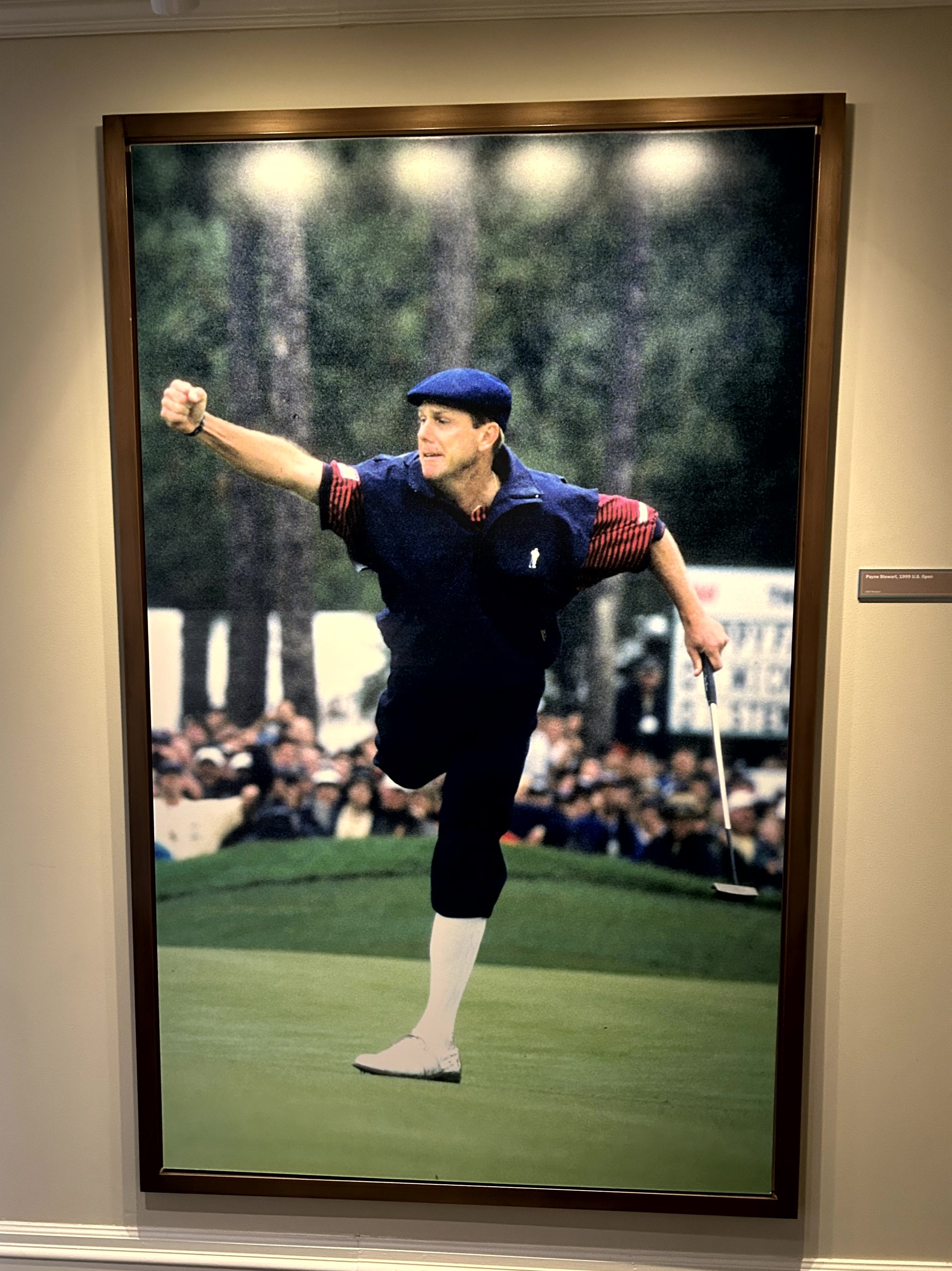
Sauntering down the hallway on the way to the Hall of Champions iconic images of Julie Inkster, Payne Stewart, and other of the USGA’s greatest champions, adorn the walls.
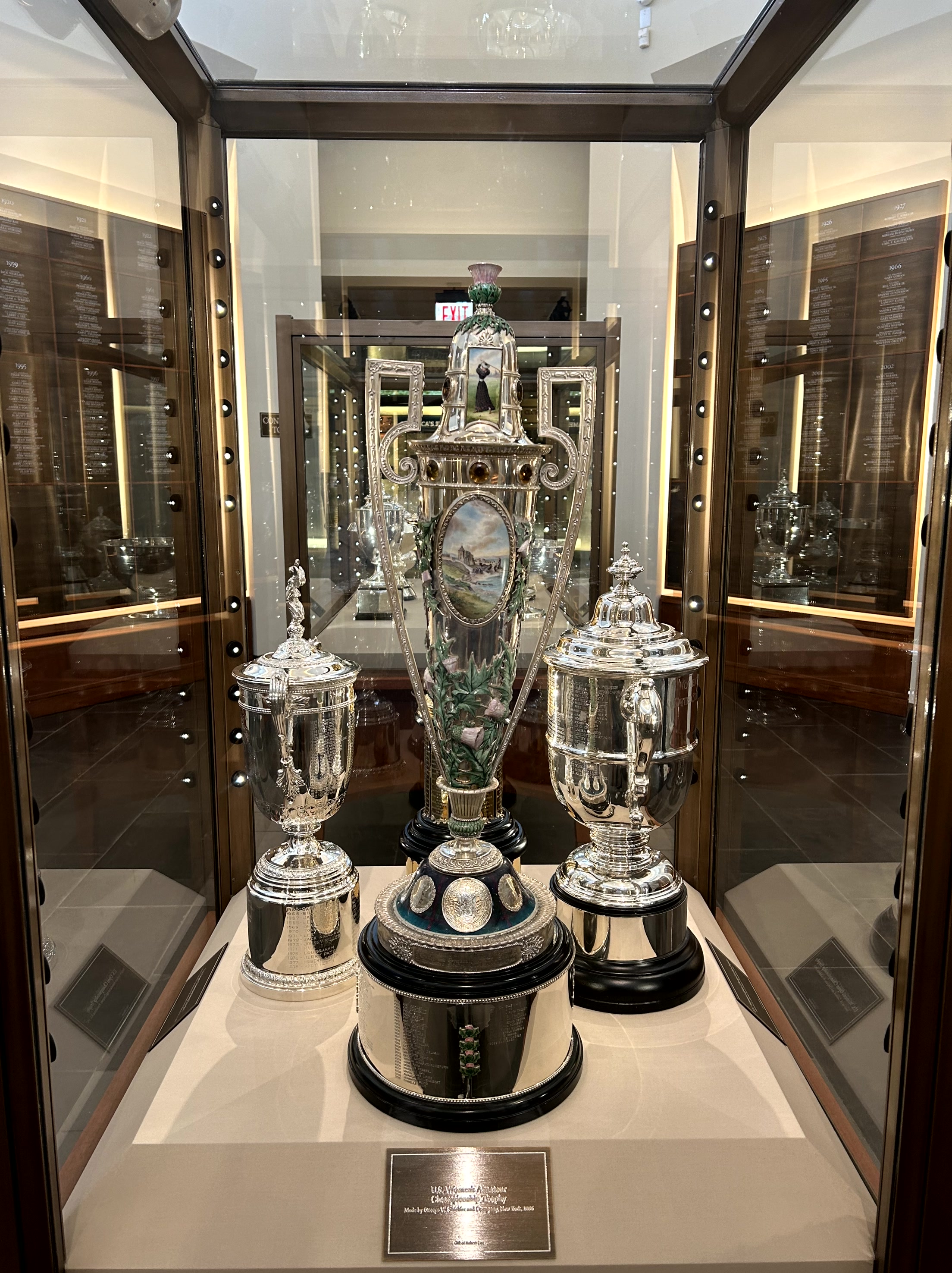
When you step through the glass doors into the Hall of Champions the room has a reverential cathedral feel to it. Glass showcases down the center of the room display the original trophies of all of the USGA Champions. This one is my favorite, the U.S. Women’s Am trophy adorned with beautiful ceramic inlays.
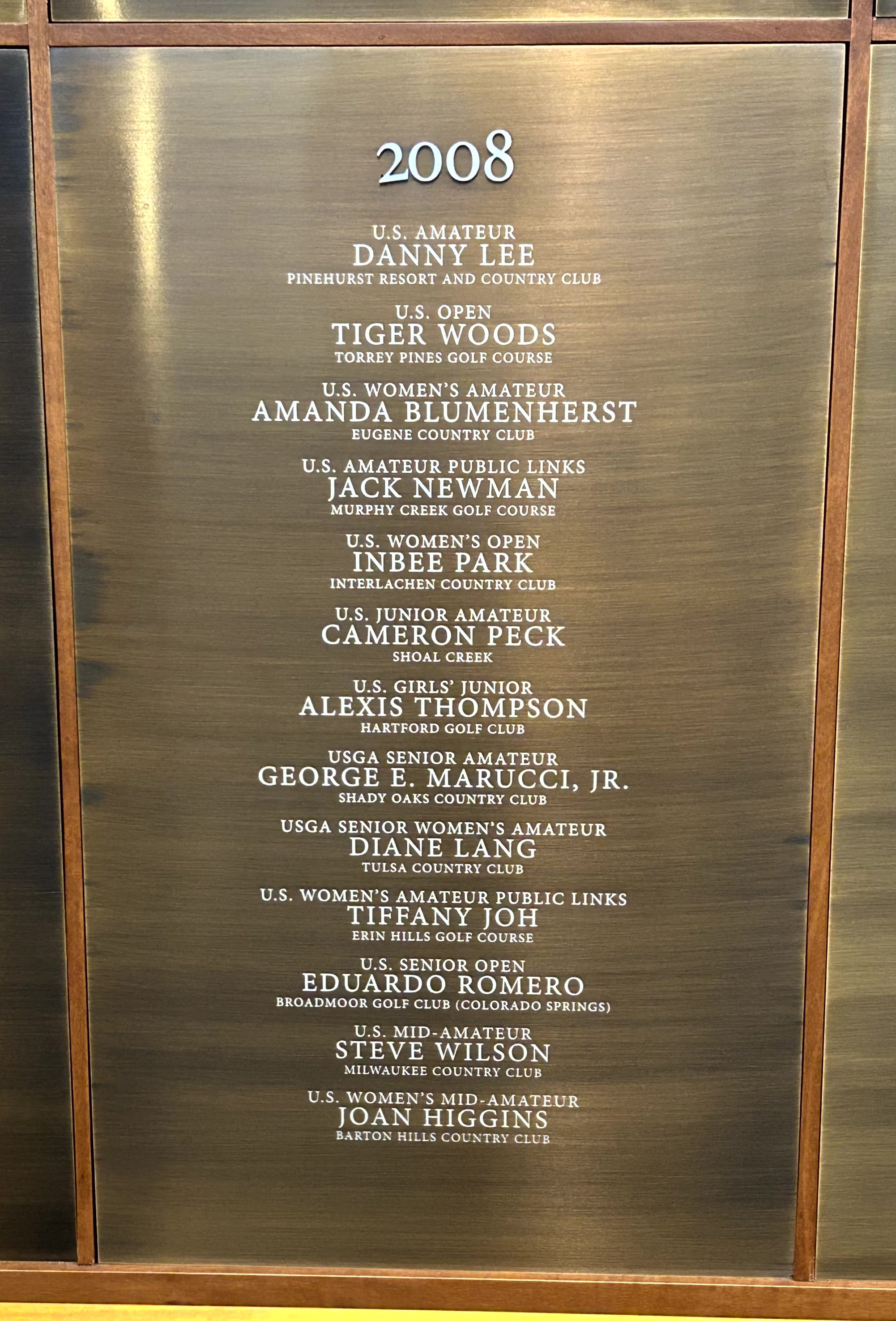
The side walls have relief panels for each year’s USGA Championship winners dating back to 1895. This was the year that Tiger beat the field and Rocco Mediate in a playoff at Torrey Pines on a broken leg. Note that Inbee Park won the Women’s Open that year at Interlachen and George “Buddy” Marucci won the Senior Am (he lost the U.S. Amateur to Tiger in 1995 at Newport Country Club 13 years earlier).
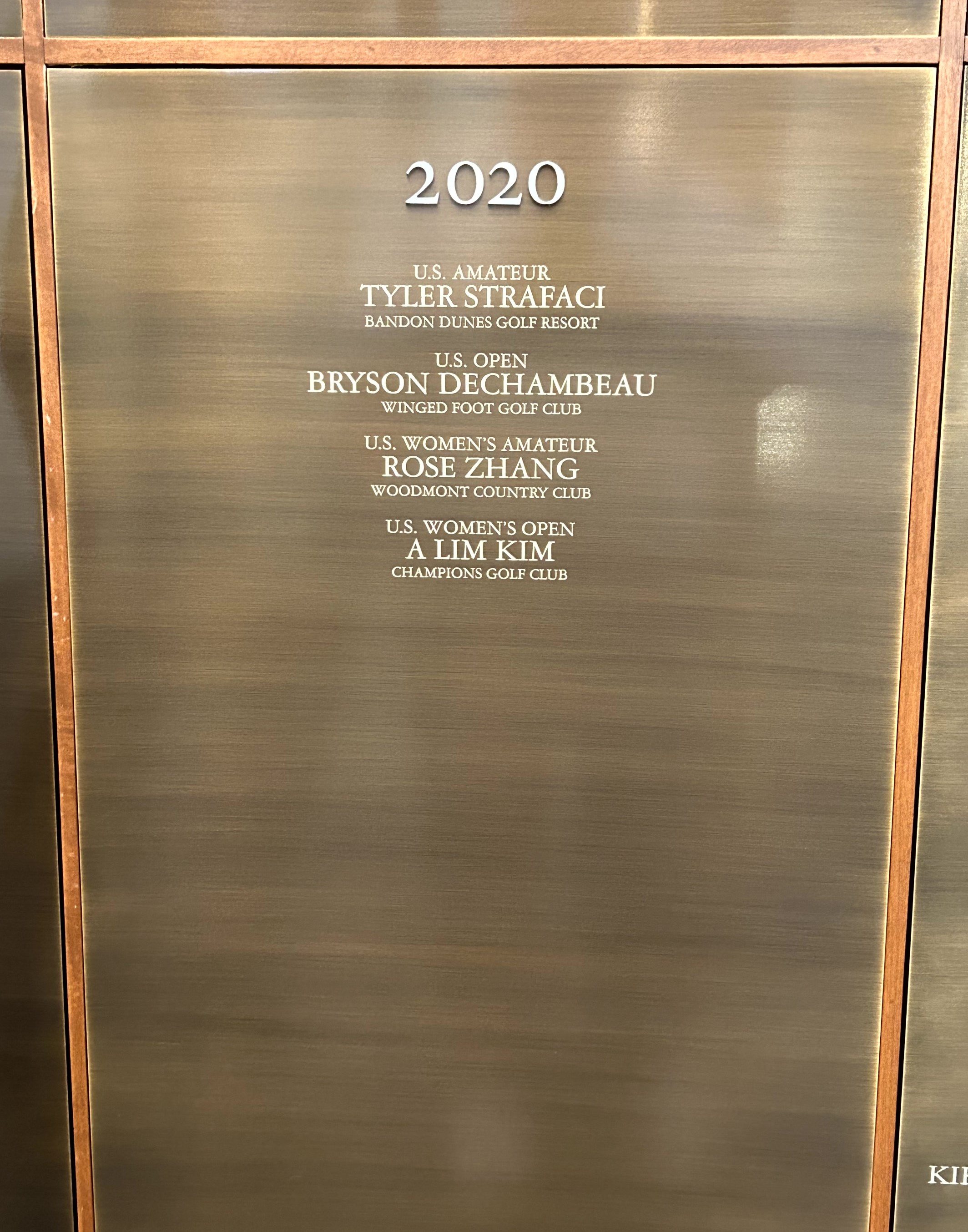
In 2020 Covid forced cancellation of most of the championships but Rose Zhang announced her arrival at 17 years old, winning the U.S. Women’s Amateur at Woodmont Country Club, my home base, in a thrilling playoff with Gabby Ruffels.
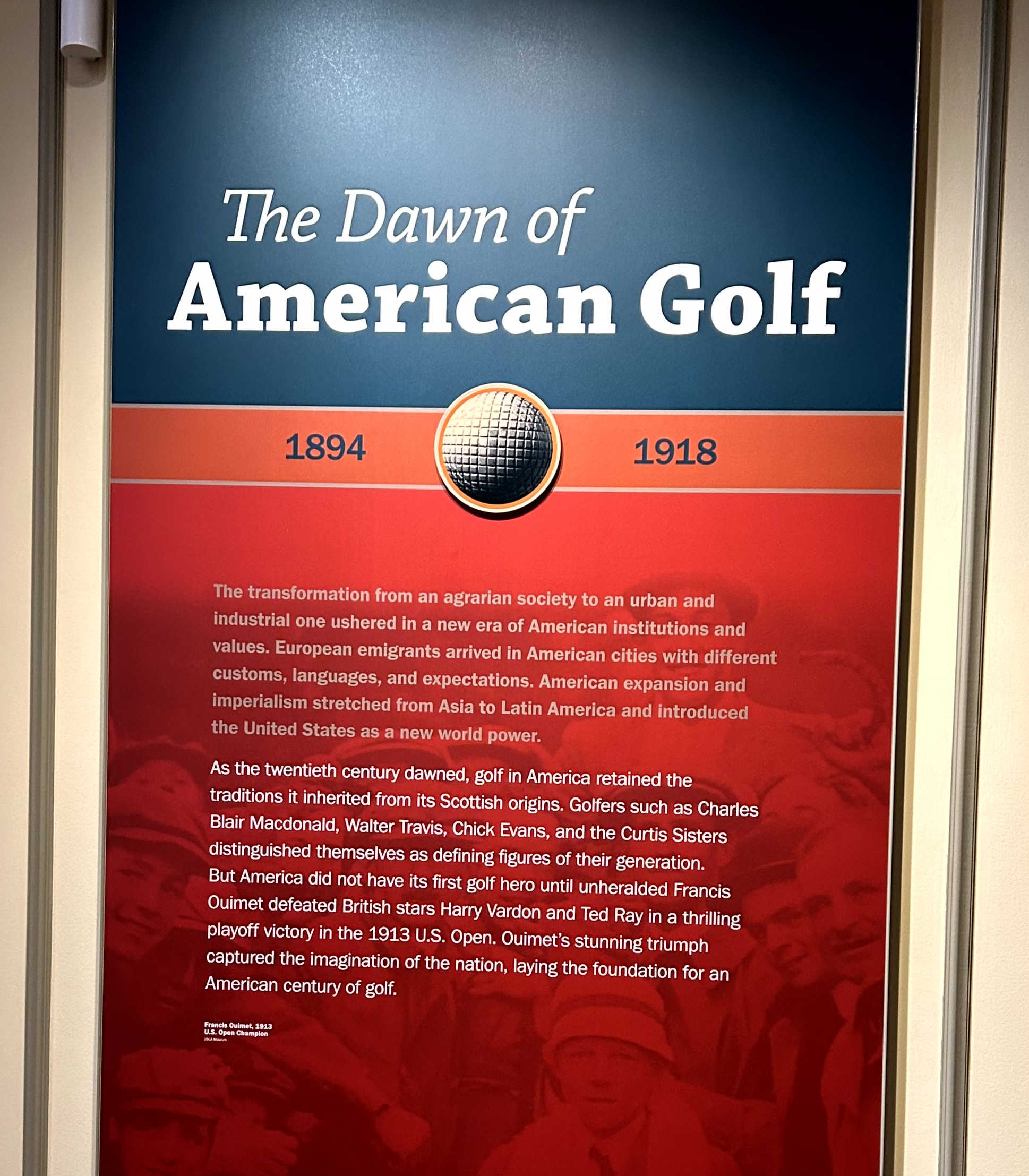
Stepping out of the Hall you begin the chronological walk through the history of American golf beginning in 1894.
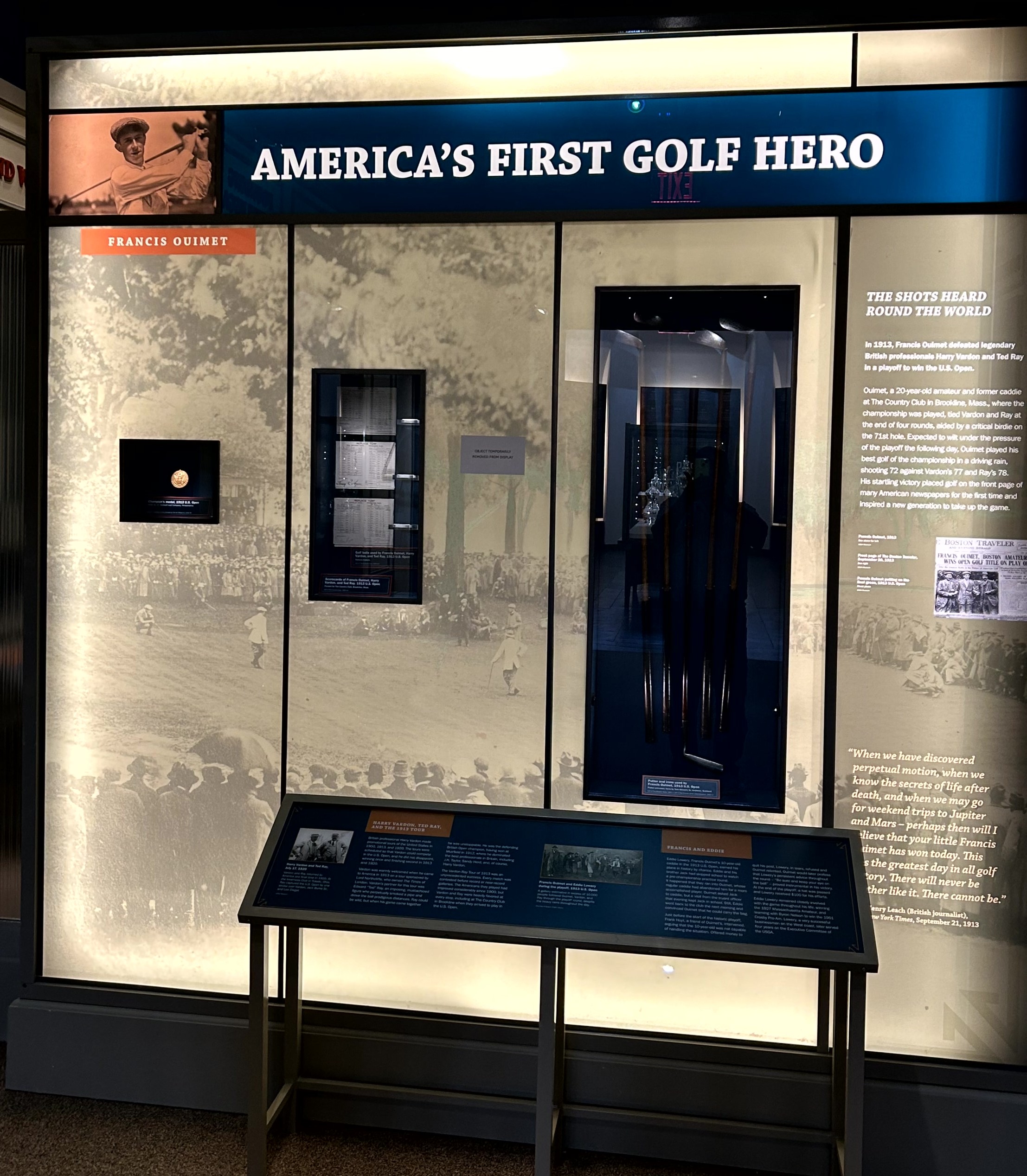
Appropriately it begins with the saga of Francis Ouimet and his startling win of the U.S. Open at Brookline in 1913 over British professionals Harry Vardon and Ted Ray. This breakthrough changed the landscape of world golf, announcing that it would no longer be the purvey of only the professionals from across the pond.
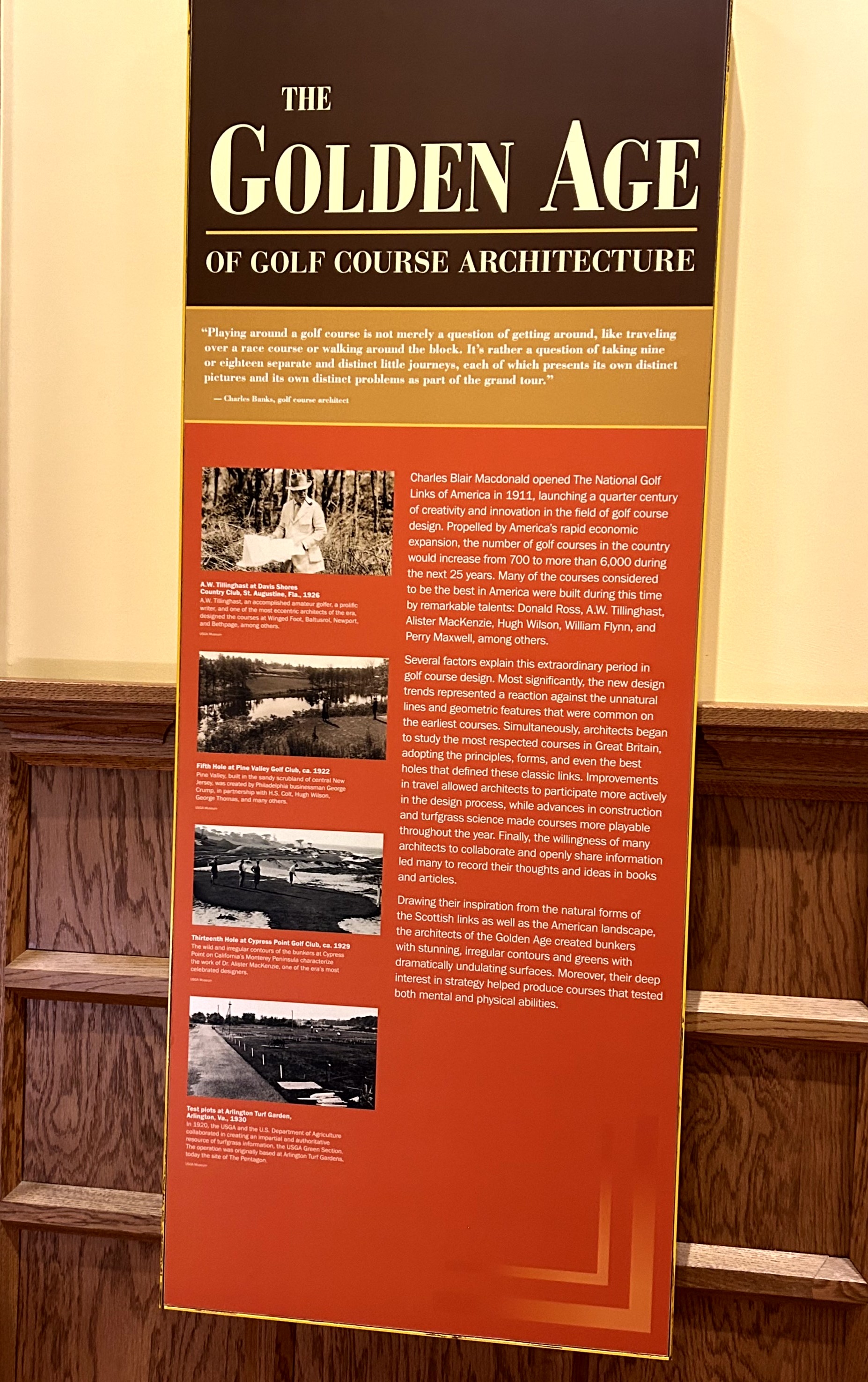
The teens and twenties marked the seminal change in the design qualities of golf courses all over the U.S. Charles Blair Macdonald introduced the strategic qualities of British Isle golf to the National Golf Links in New York in 1911. What followed was a torrent of classic golf layouts by the likes of Donald Ross, Albert Tillinghast, Seth Raynor, William Flynn, George Thomas, Alister MacKenzie and many others that marked the Golden Age of Golf Course Architecture.
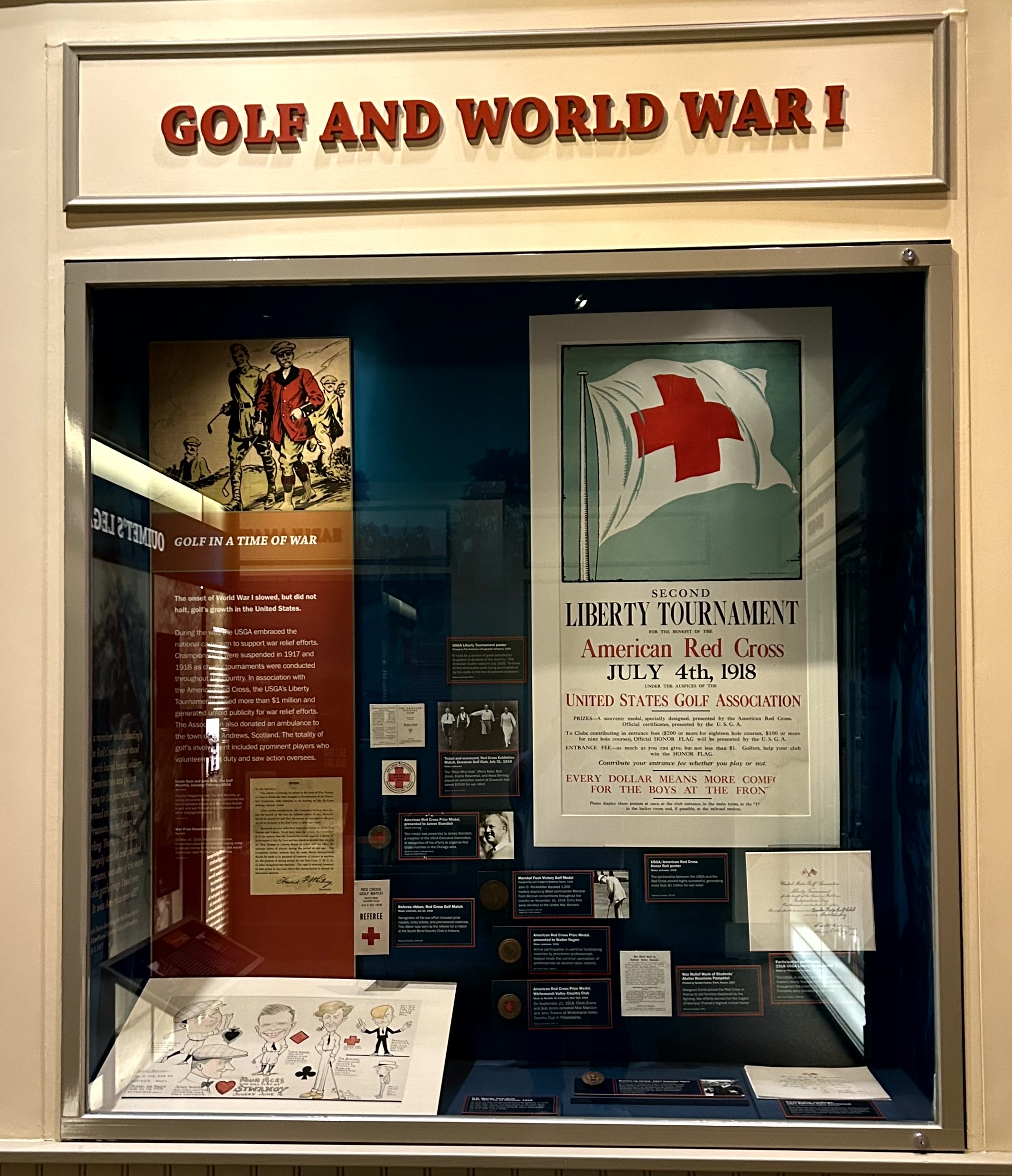
The Great War in Europe interrupted golf all over the world and the U.S. was no different. The emphasis switched from tournament golf to exhibition golf as many of the well known players of the time engaged in fund raising for the war effort.

The emphasis on Amateur golf still prevailed in the 1920’s and the advent of feverish team competitions between the best amateurs of Britain and the United States began with the Walker Cup in 1922 at St. Andrews. By 1927 the professionals got into the act with the introduction of the Ryder Cup which made household names of the like Walter Hagen and Gene Sarazen.

Handmade Hickory clubs remained the dominant implements of the day until the mid-1920’s when the availability of the hickory wood from Tennessee started to wane and steel shafts were introduced as a replacement. The new equipment made the game more accessible to new players and radically changed the way the game was played, introducing a higher flight with carry rather then the low trajectory run up that had been the way in the hickory age. Golf course design began to change accordingly as the Golden Age of design had to deal with longer length and the ability to spin approach shots.

With the onset of the second World War the pros who did not go off to serve in Europe or the Pacific set about once again to raising money to support the war effort. Among the interesting pieces of memorabilia in this display is a list that details the change in the rules of golf at the coastal courses clearly in harms way of the Nazi war machine. You can read from our related posting about these rules adjustments by clicking on this piece Rules During The Battle Of Britain.
These included:
5 – A ball moved by enemy action may be replaced, or if lost or destroyed, a ball may be dropped without penalty, not nearer the hole.
6 – A ball lying in a crater may be lifted and dropped not nearer the hole, preserving the line to the hole, without penalty.
7 – A player whose stroke is affected by the simultaneous explosion of a bomb may play another ball under penalty of one stroke.
The Brits had a practical eye when dealing with the exigencies war presented to the the game.

Interest in golf grew rapidly in the early 1950’s with Byron Nelson, Ben Hogan, and Sam Snead focusing attention on the Majors once again. Robert Trent Jones Sr. became the go to architect of the post war era as he turned his attentions to toughening up many classic old courses and putting his own stamp on their design. His signature look included pinching fairway bunkers, forced carries into greens, and courses over 7,000 yards. His influence dominated the golf design scene for the next 40 years until a wild maverick named Pete Dye finally came along to challenge his architectural principles.
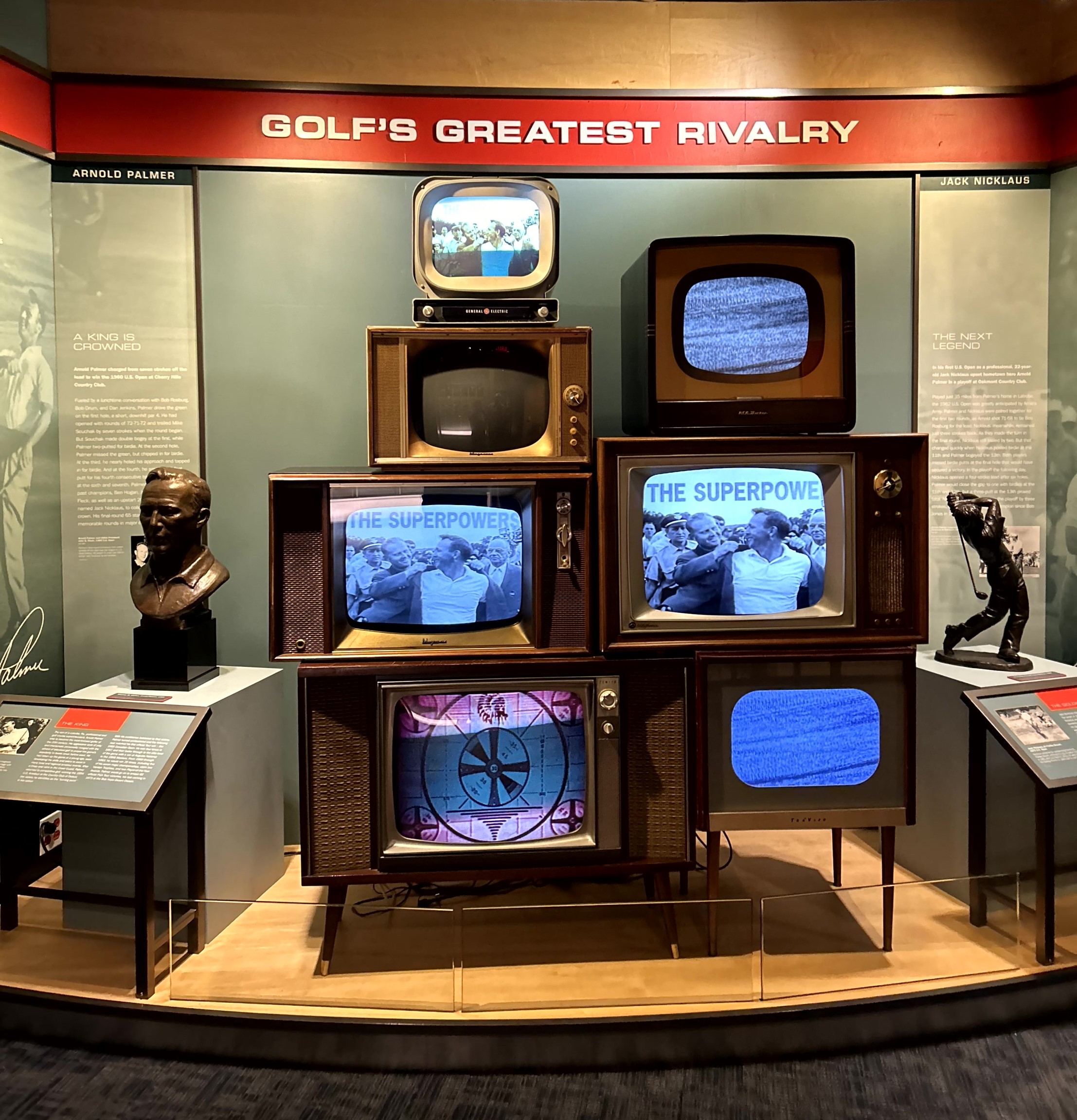
Two things had a seismic effect of the perception and interest in the game in the 1960’s-television and the rivalry of Arnie the King and Jack the Golden Bear. The folks at the Masters pioneered many new tactics for enhanced coverage of golf on T.V. But it was Arnie, Jack, Gary Player, Billy Casper, and others fresh faces that provided the content for a burgeoning crowd of golf fans in America.
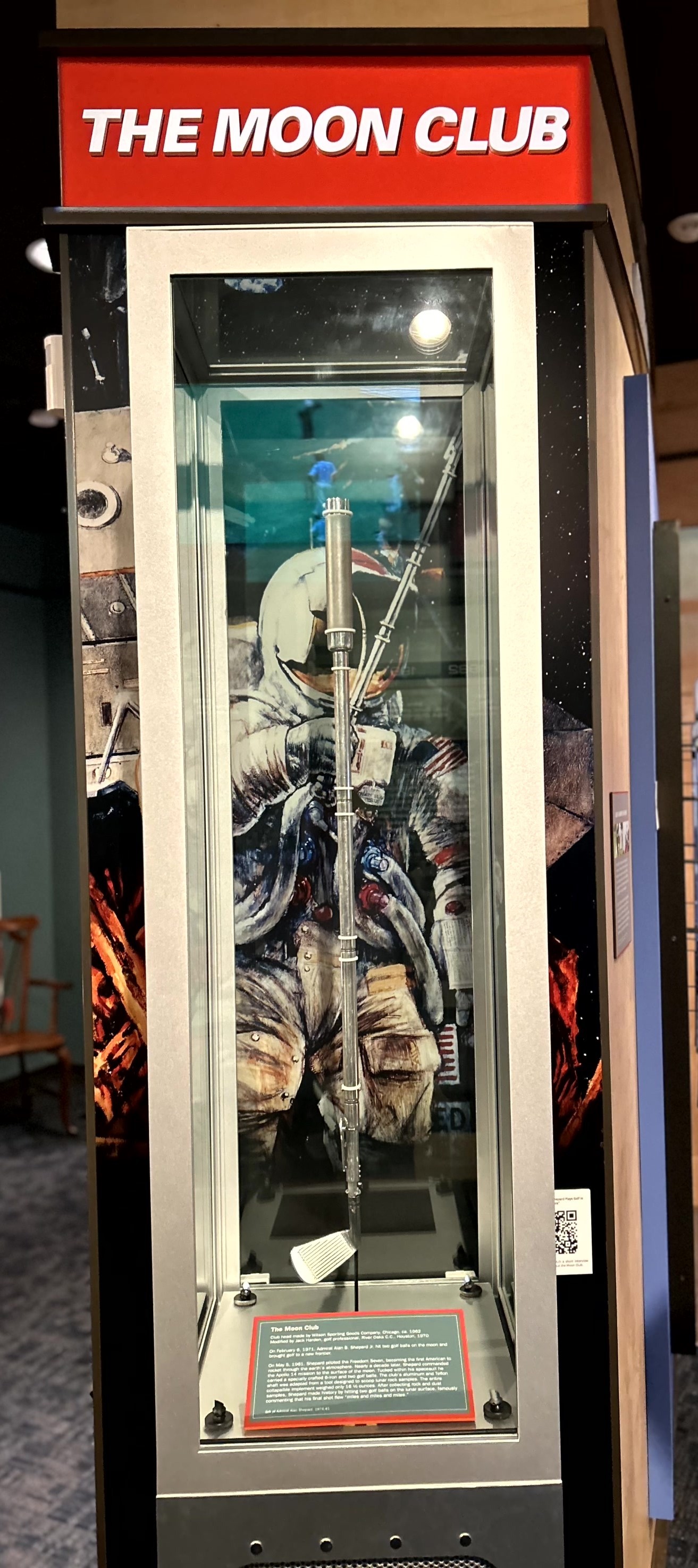
Alan Shepard took the game to celestial heights when he hit this homemade six iron on a very long par 4 on the lunar surface on February 6, 1971. Since he never putted out he could not post it as an official score on the USGA Handicap System.

There were many great champions in the period of the 1970’s to the 1990’s but no one player in history impacted the game’s popularity and interest like Eldrick “Tiger” Woods. The combination of his athletic power, remarkable creativity around the greens, and tenacity to compete made him the Michael Jordan of golf. The way he played fundamentally changed the approach and expectations of the next generation of professional competitors. The signature Tiger fist pump became regular fare the next 30 years on his way to over 120 victories worldwide with 80 PGA Tour wins including 15 Majors. Can you spell G.O.A.T.?
From there you wander past the reception desk to the rooms that celebrate three of the most storied champions in U.S.G.A. history.
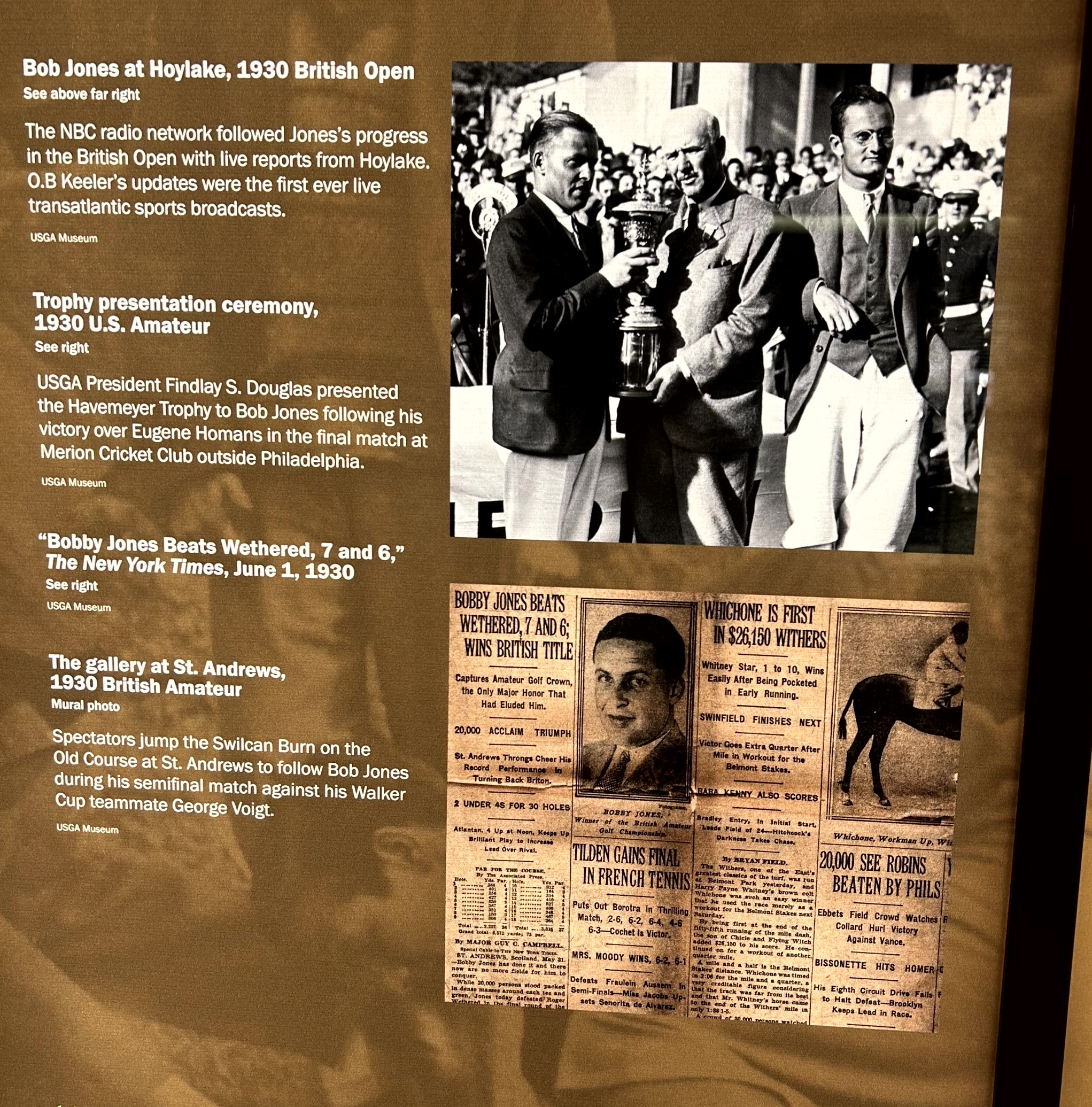

The Bobby Jones room chronicles his amazing accomplishment, establishing him as the Mayor of competitive golf in the 1920’s. Of course this culminates with him winning the Grand Slam-The British and U.S. Amateur and the British and U.S. Open- in 1930. My favorite accent are the “medals” Jones was awarded in each of his championship wins. Those little brass coins in the day were as significant as any elaborate crystal or silver trophies in later eras.
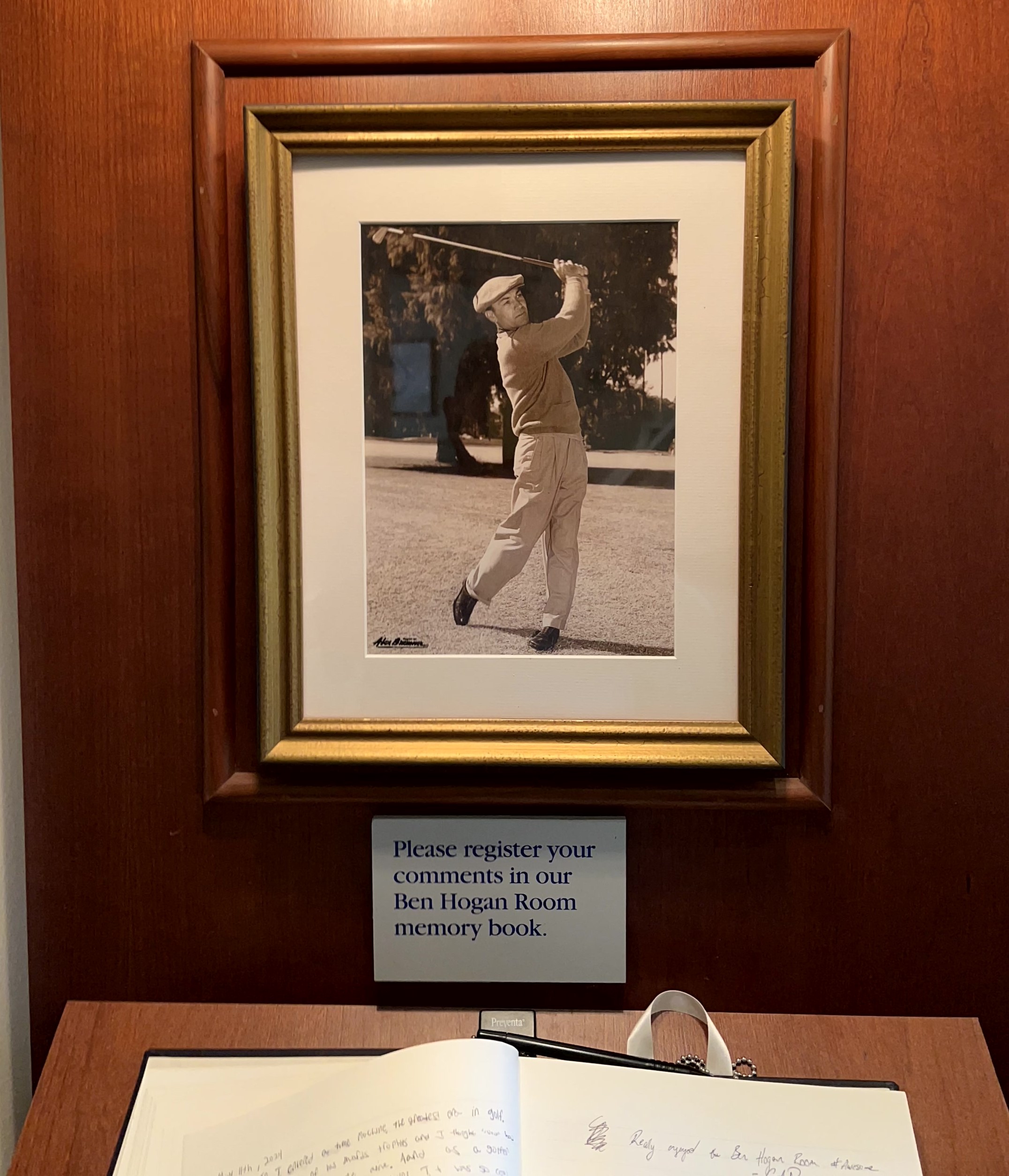
The Ben Hogan room begins with this iconic image of the classic compact swing he ground out of the dirt at Shady Oaks in South Texas.
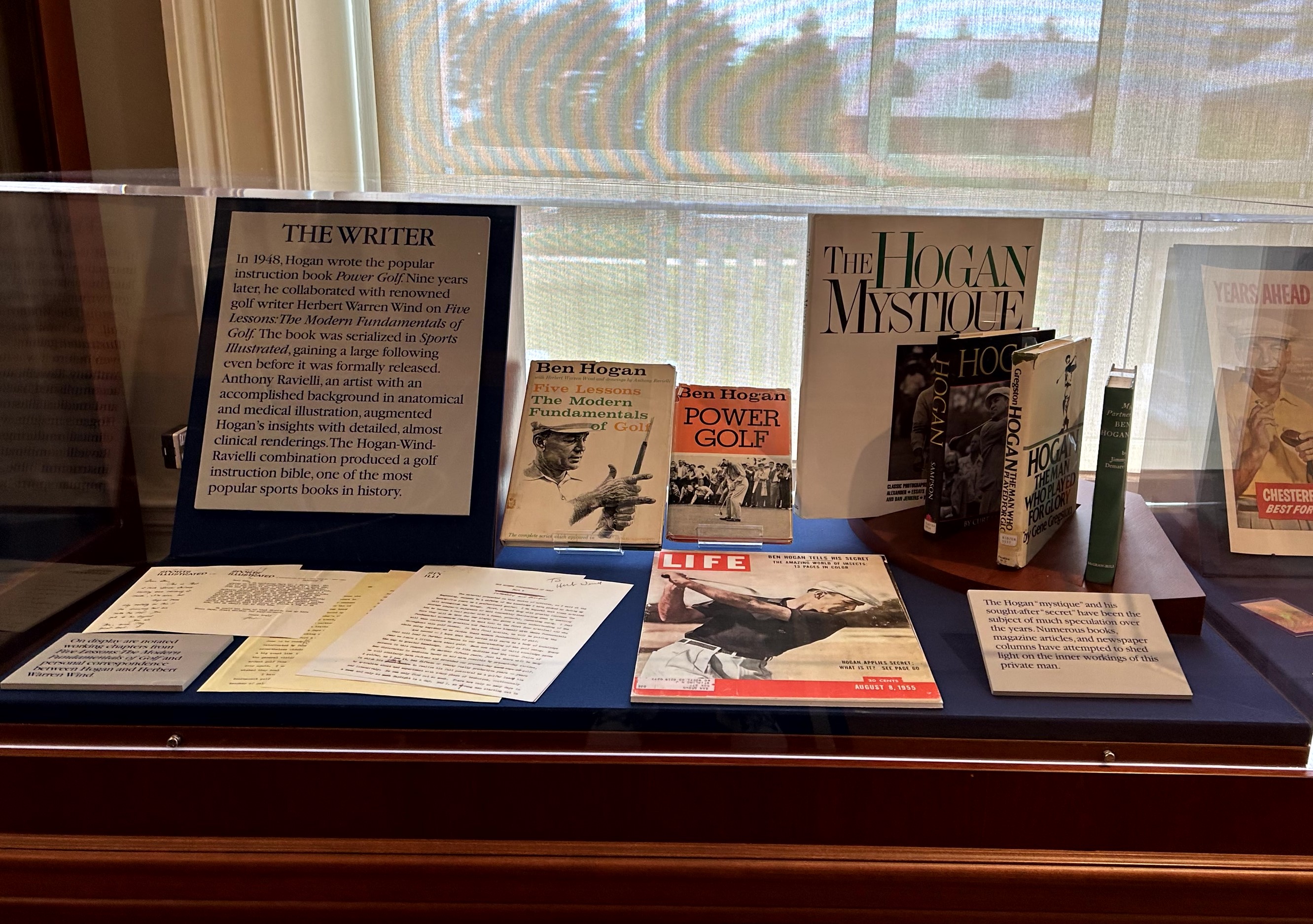
Lots of Hogan Lore was documented in the 1950’s including the seminal instruction book he co-authored with golf journalist Herbert Warren Wind called “Ben Hogan’s Five Lessons: The Modern Fundamentals of Golf”. This book is still the bible of golf instruction for fledgling pros some 75 years later.
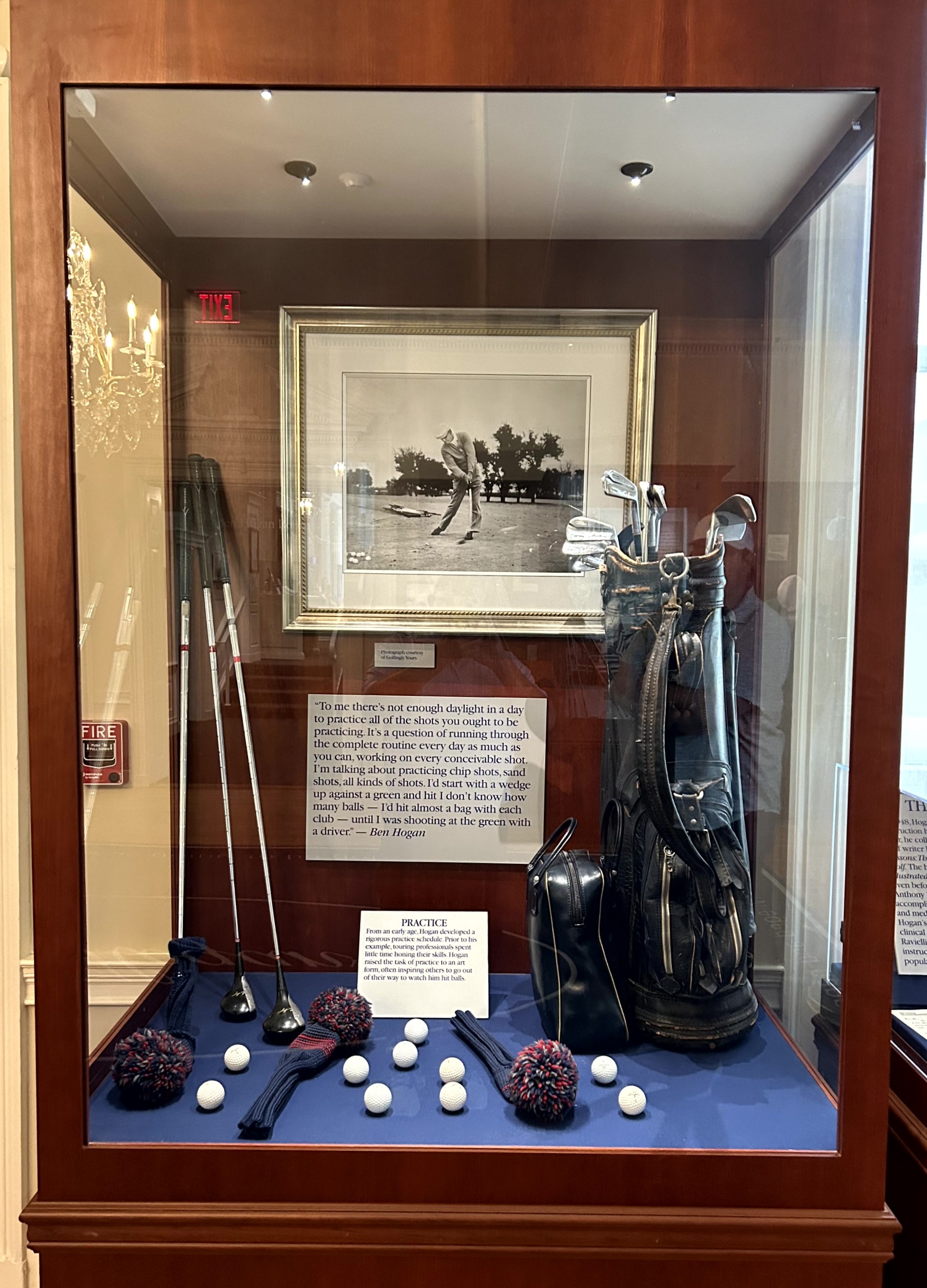
Looking at this bouquet display of his equipment the shag bag and the center of the face wear marks on his clubs are a testimony to Hogan’s insatiable appetite for honing his skills throughout his career.
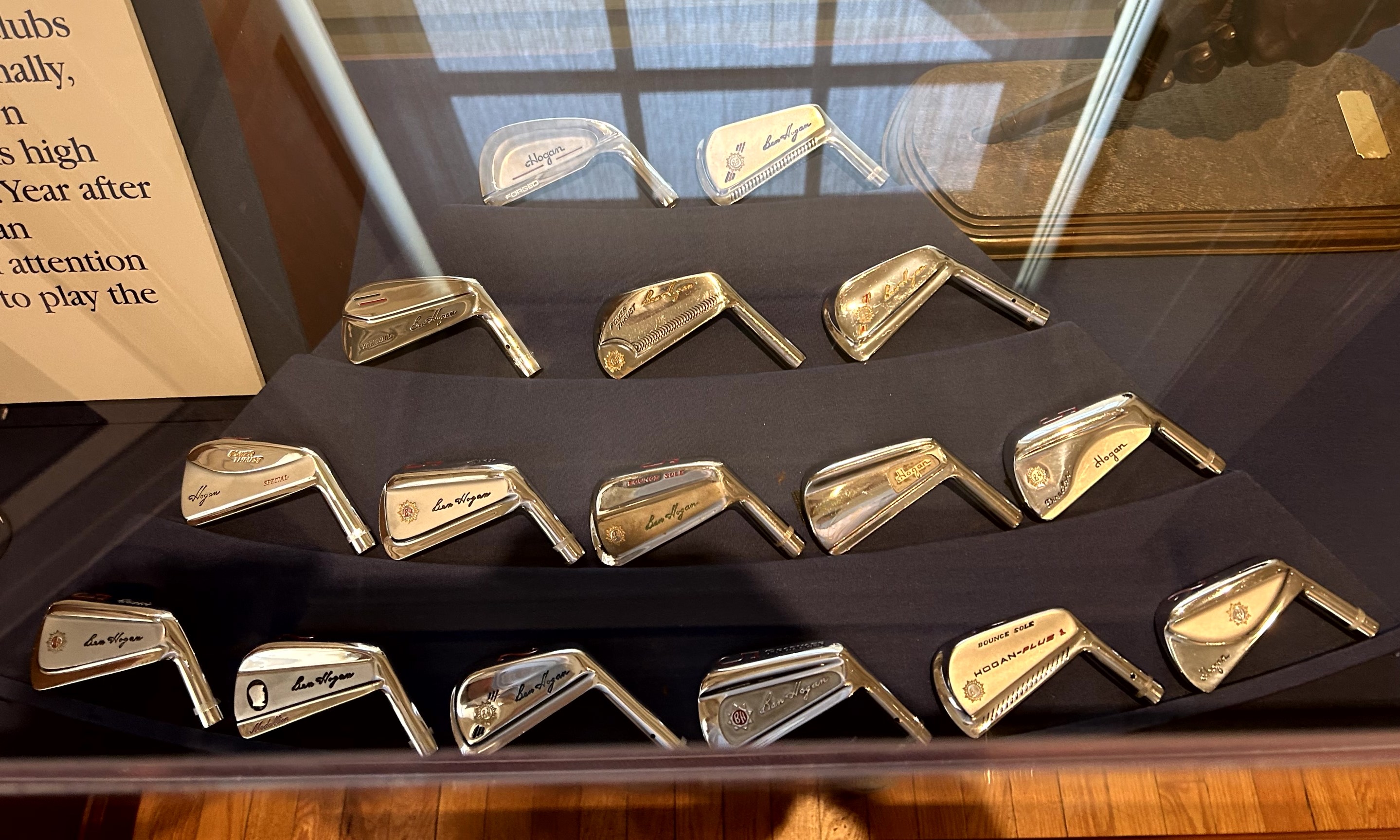
As his competitive playing days waned Hogan developed his own line of clubs in the 1960’s and beyond. I remember owning a set of Hogan Apex irons in my teenage years. The sweet spot on these blades was the size of dime but when you pured one you had visions of winning a U.S. Open.

At last you come to the image of Jack Nicklaus, the G.O.A.T. that inspired the G.O.A.T., whose power and strategic consistently dominated the game for 30 years.
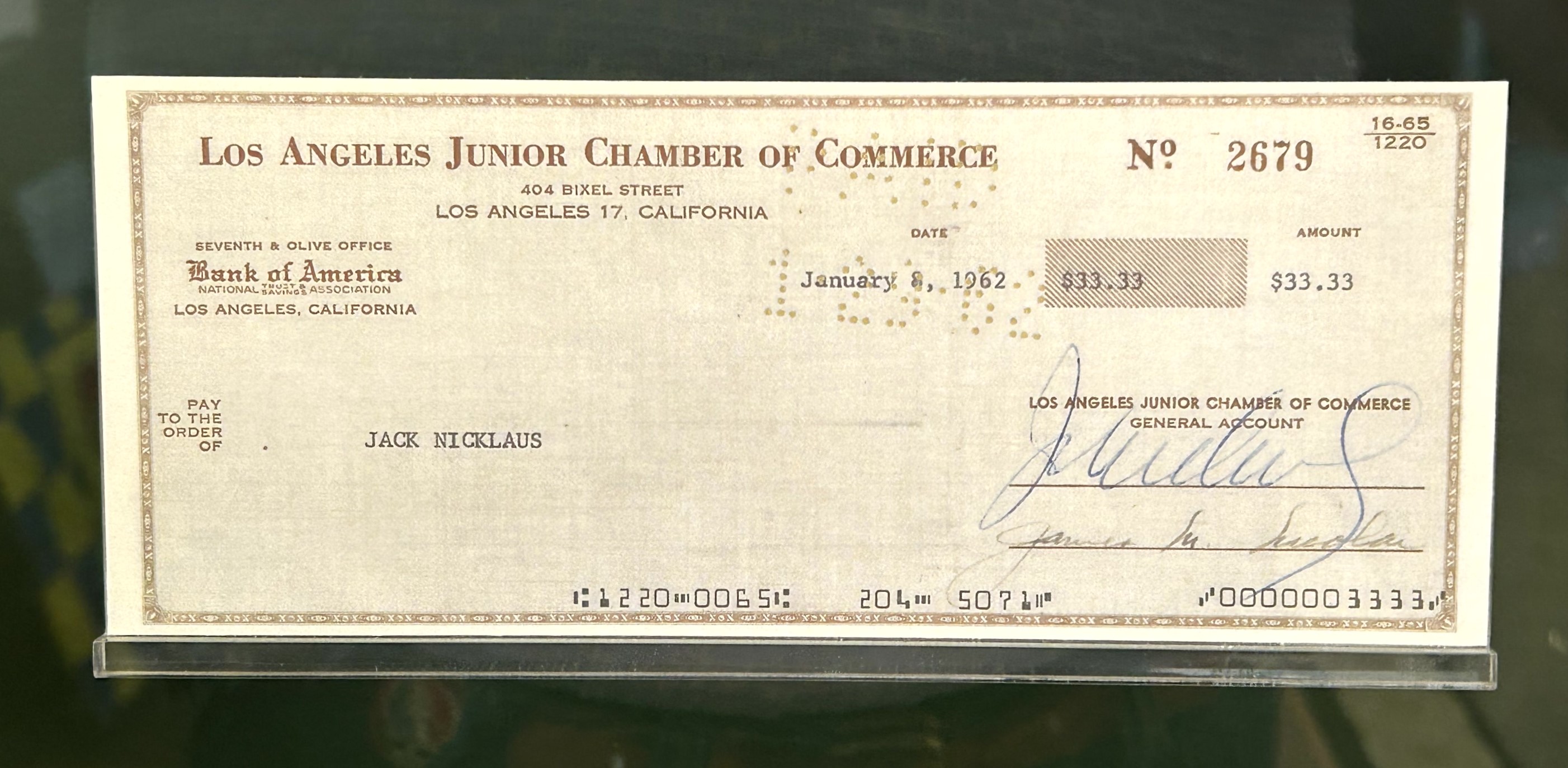
One of my favorites pieces of memorabilia in the entire museum, here is Jack’s first professional winnings, a check for $33.33 he got for playing in the 1962 L.A. Open. That would buy he and Barbara a three-course Taco dinner in the City of Angels these days.
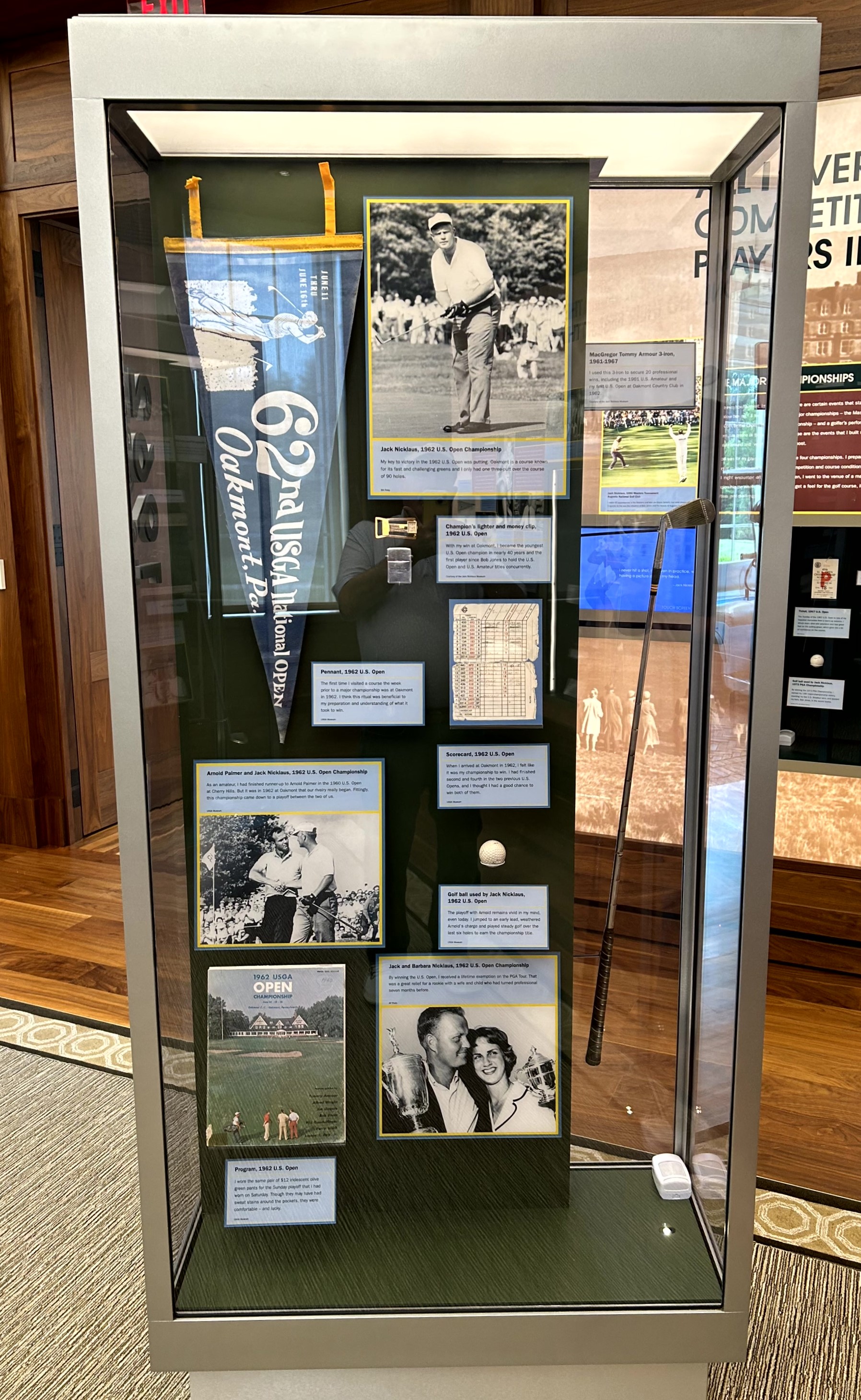
It did not take very long to make his mark on the professional game as he won the 1962 U.S. Open at Oakmont in Arnie’s backyard. 117 professional wins including 18 Majors made him the unreachable benchmark of greatness until you-know-who came along.
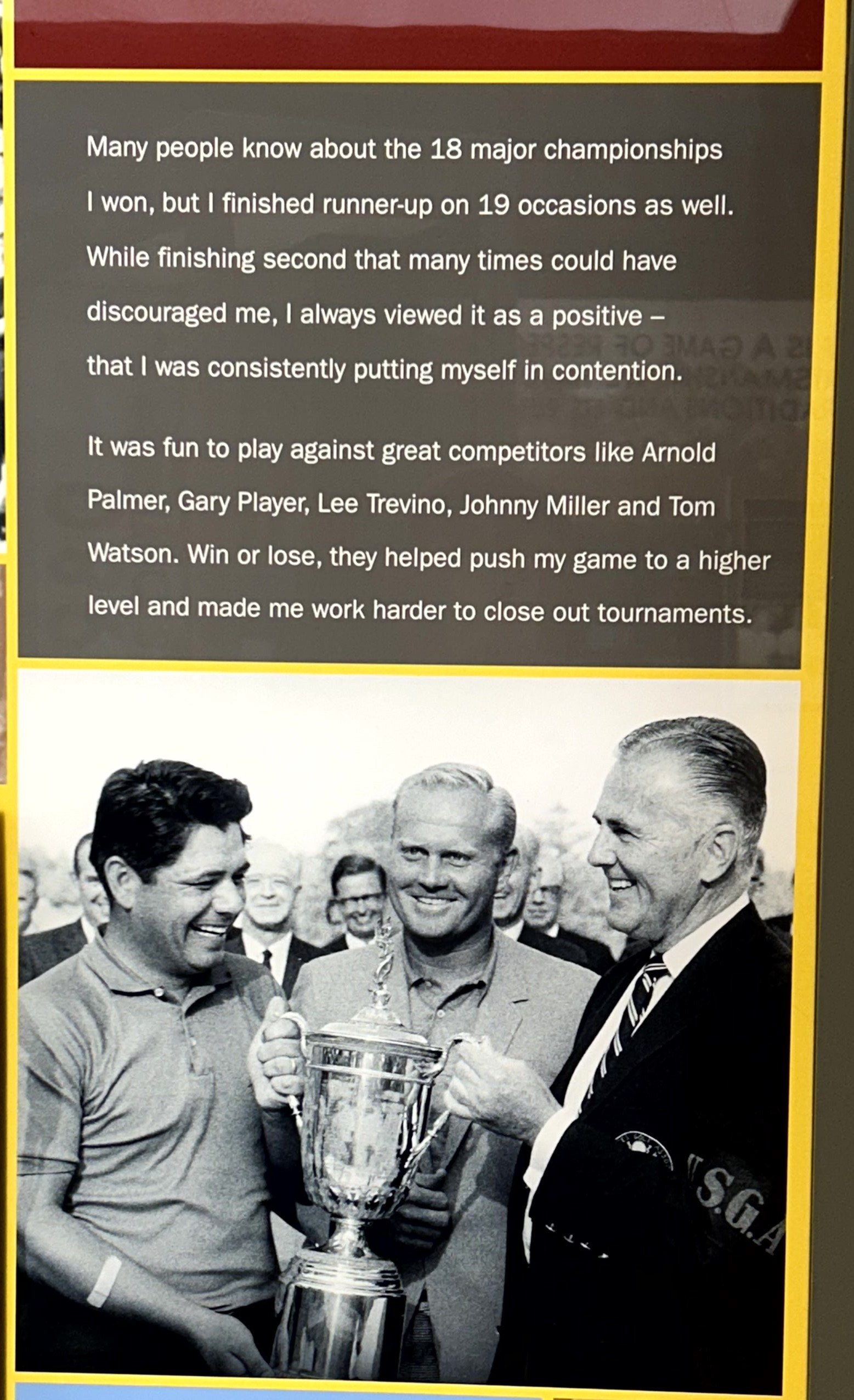
Maybe the most astonishing factoid of Jack’s career is that along with his 18 Major Championships he was runner-up in the Majors 19 times as well. Top two 37 times-that is a performance percentage that may out last all his other accomplishments.
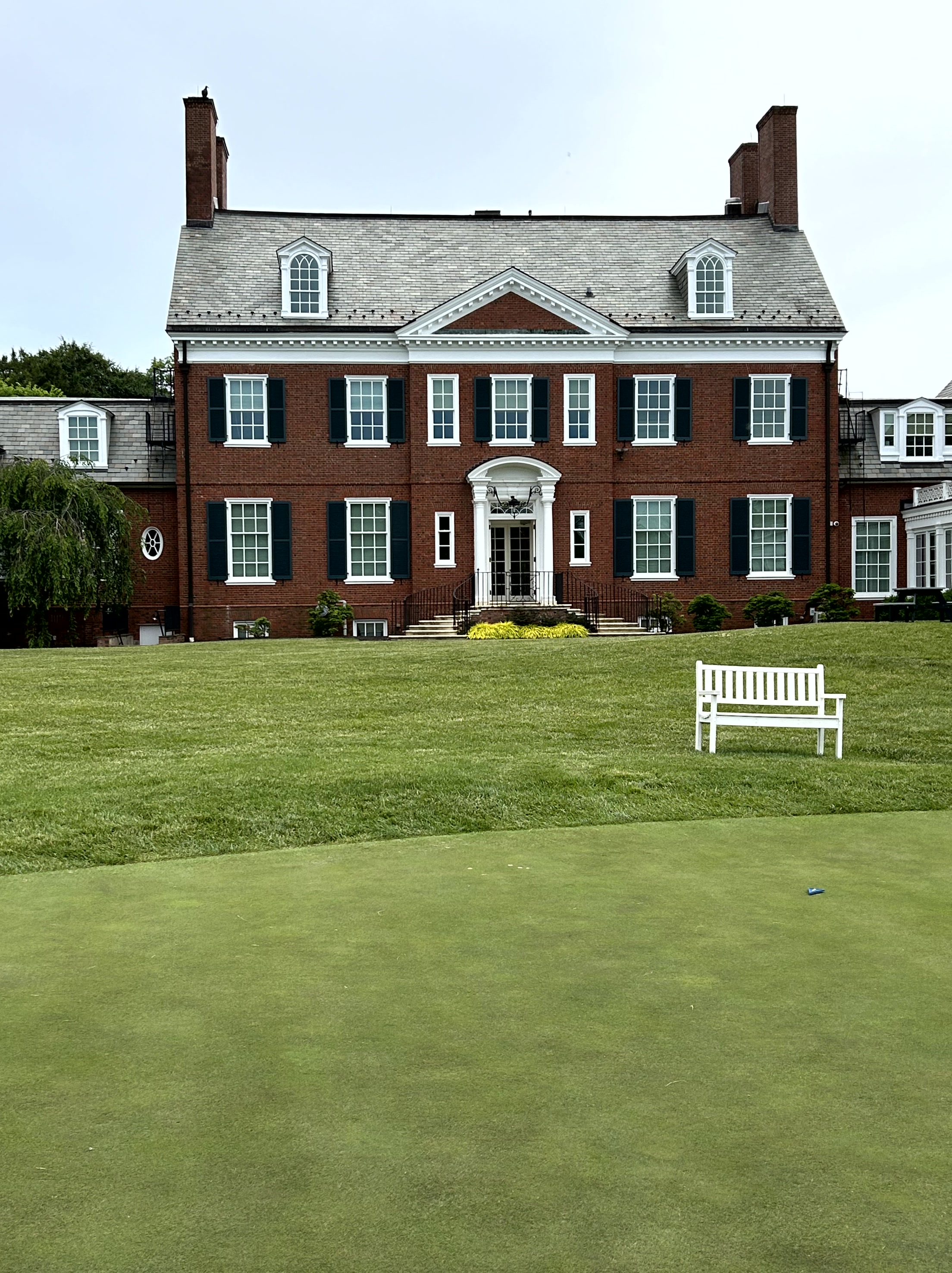
Before you head for the car make sure to step out back and try your hand on the Pynes Putting Course with a hickory shafted putter and a circa 1900 ball. Built in the spirit of the Himalayas Ladies Putting Course at St. Andrews it is a fitting end to your walk through this historic golf facility.
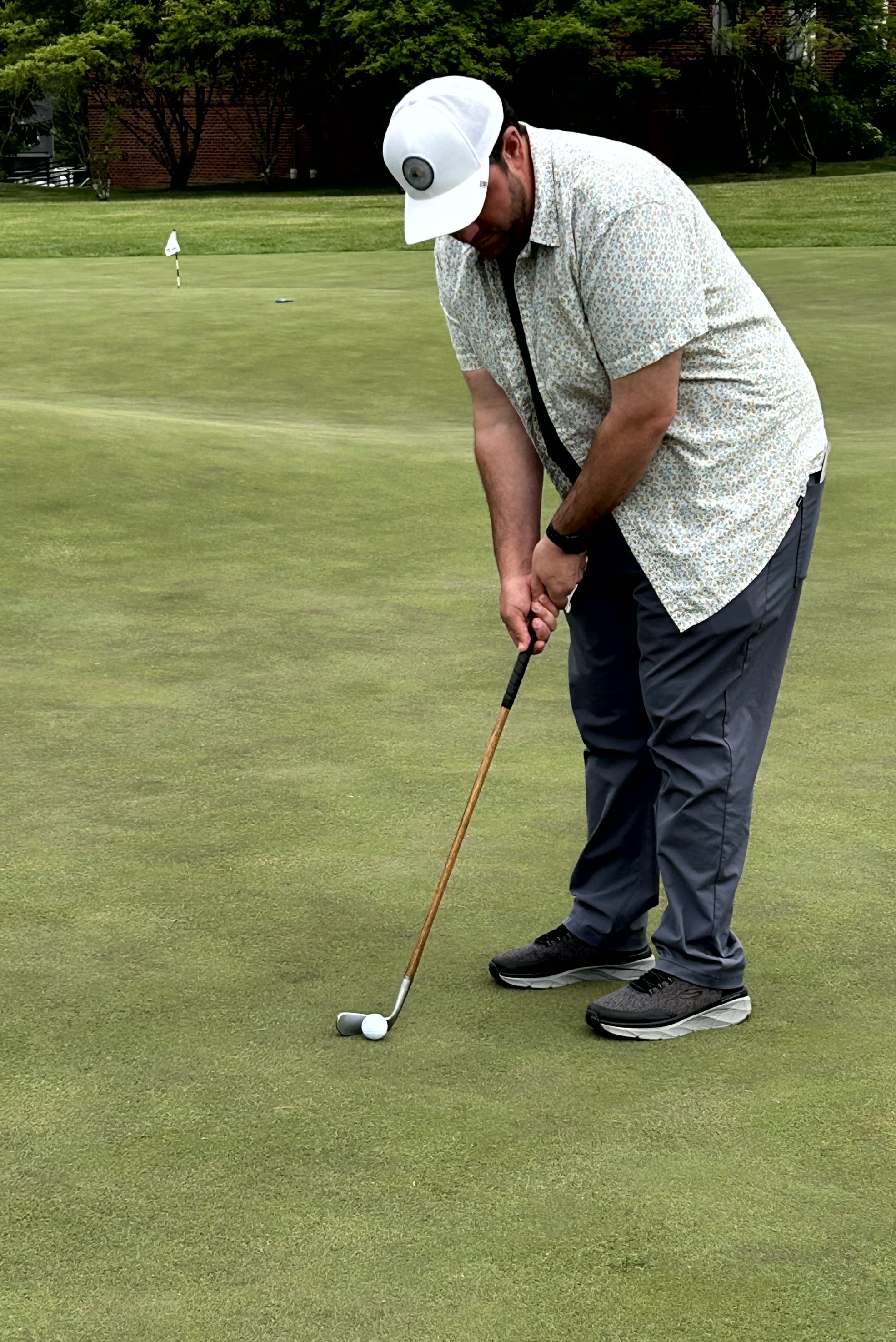

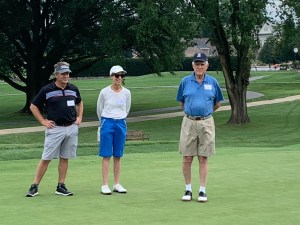
We had to go sudden death extra holes to decide our match. As you can see it was smiles all around from a great day at the U.S.G.A. Museum in Far Hills, New Jersey.
June, 2024


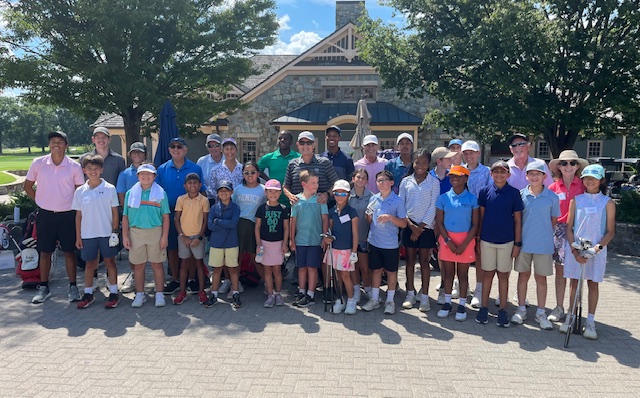




























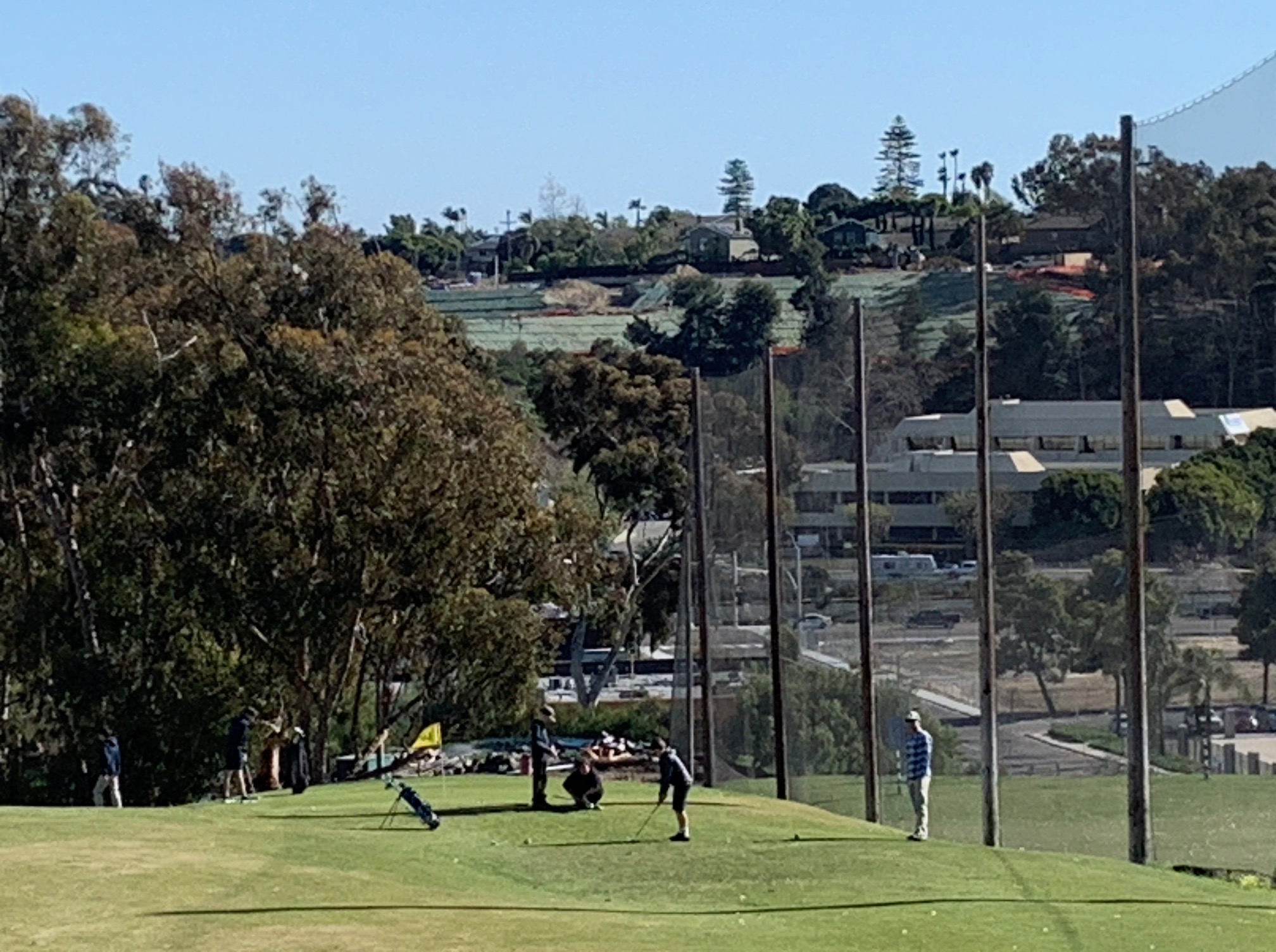
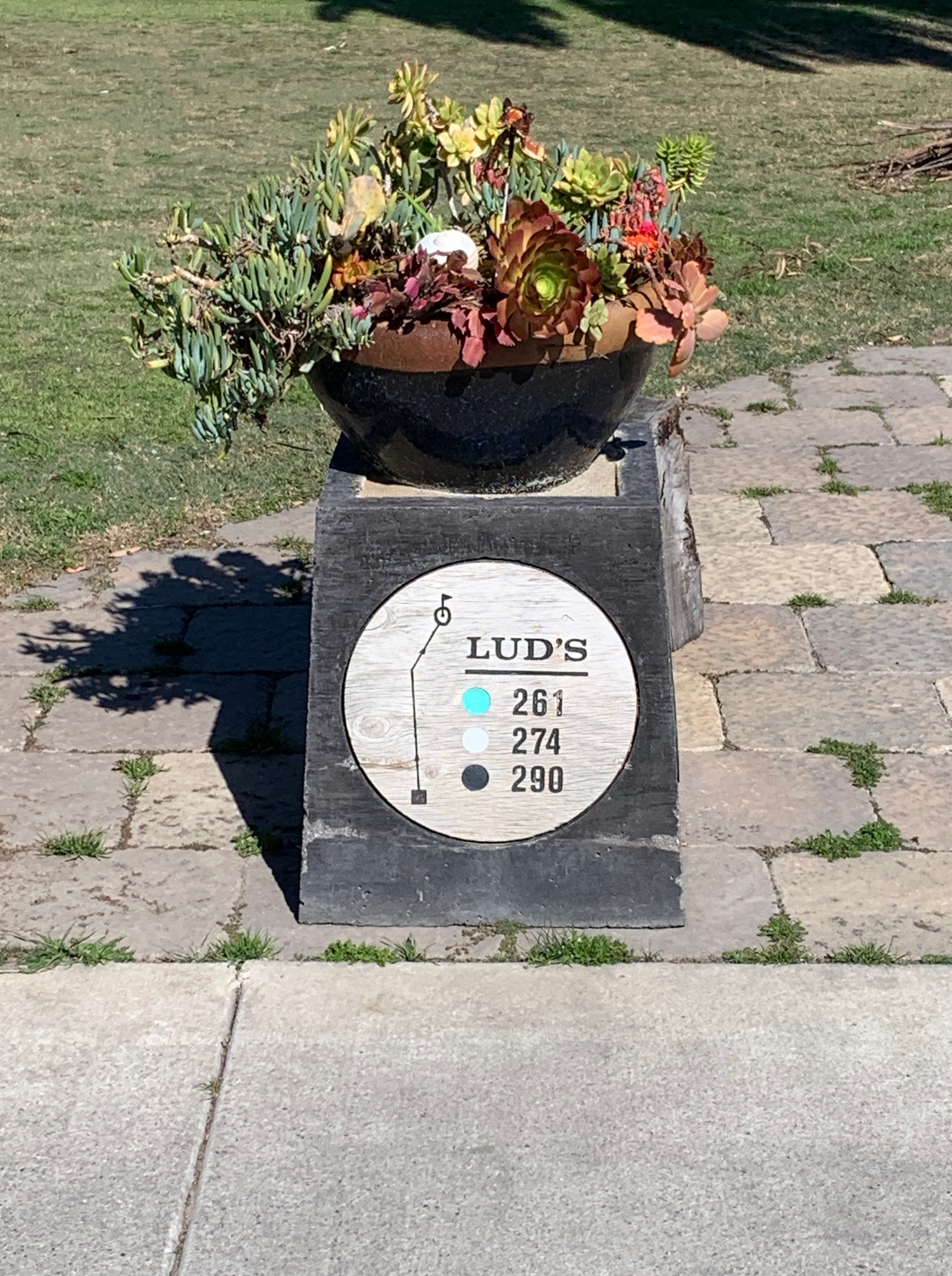
 If you are in the vicinity of Carlsbad, California there is a golf destination about 10 miles north, in the surf town of Oceanside, that you should go out of your way to experience.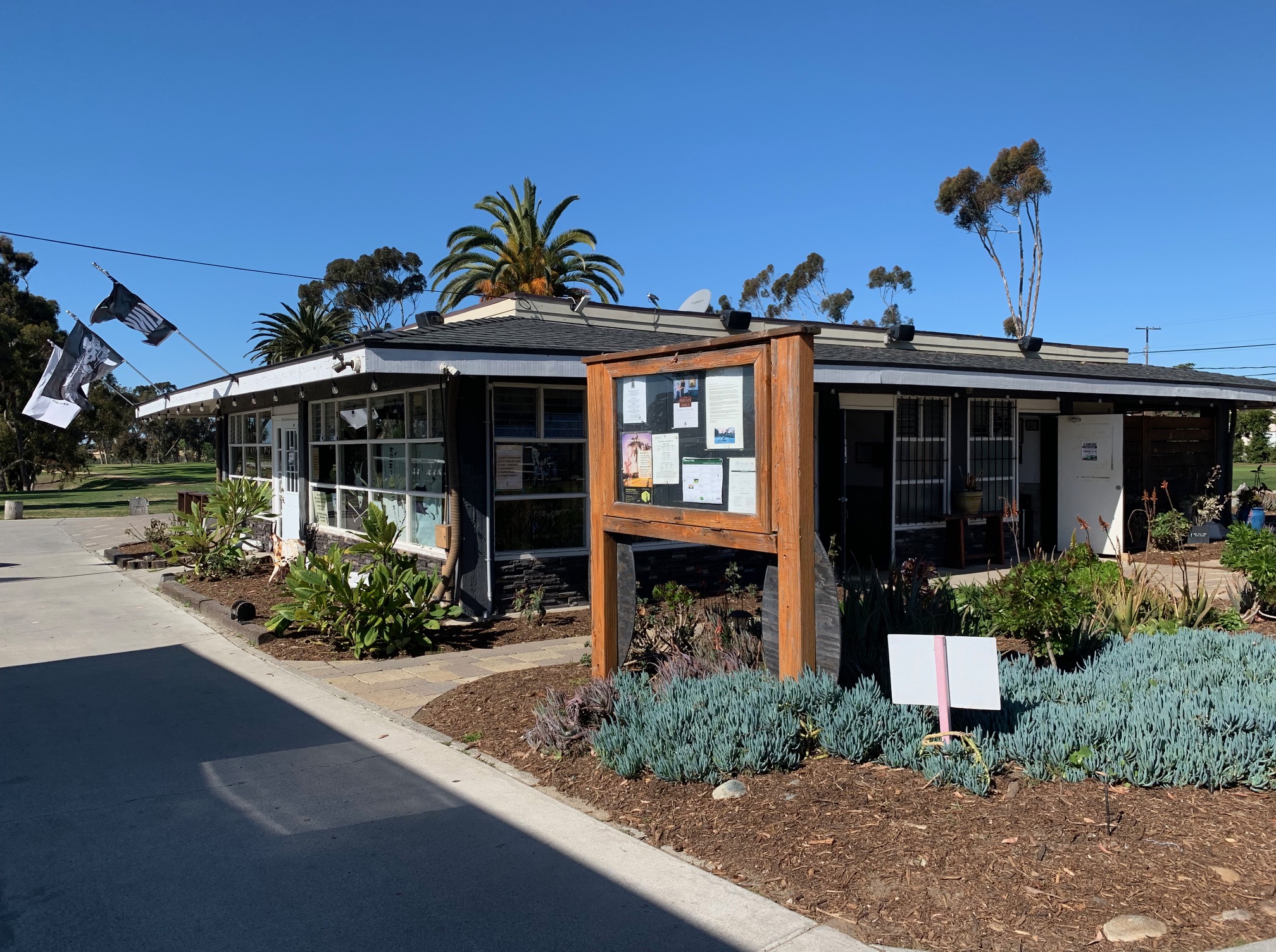















































































 Respect-Perserverance-Honesty-Integrity-Courtesy-Responsibility-Sportsmanship-Confidence-Judgement
 moegolf