U.S. Adaptive Open 2025

The 4th Annual U.S. Adaptive Open came to Woodmont Country Club to showcase the amazing golfing talents of 96 golfers from all over the globe who have taken on and conquered the impairment challenges that life has presented them to play the game they love. For our members and staff it was an honor and privilege to host this prestigious event and support the inclusion of these great athletes in a major U.S.G.A. Championship.
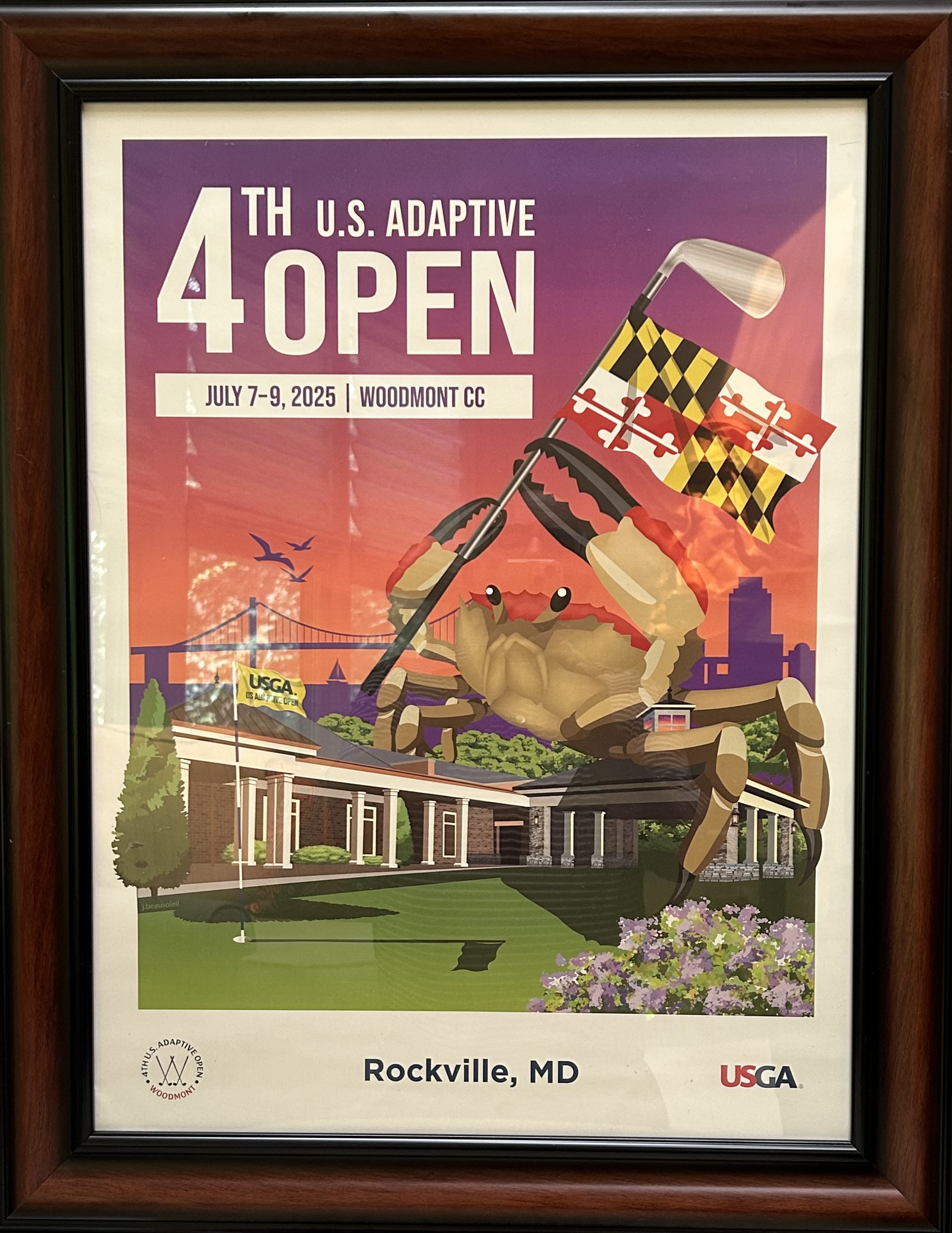
Woodmont has a long history of association with the U.S.G.A. We have hosted the annual final stage men’s U.S. Open qualifying for close to 40 years, been the site of 17 year old Rose Zhang’s historic come from behind playoff win in the 2020 U.S. Women’s Amateur, and will be staging the Boys and Girls U.S. Junior Amateur in 2028.
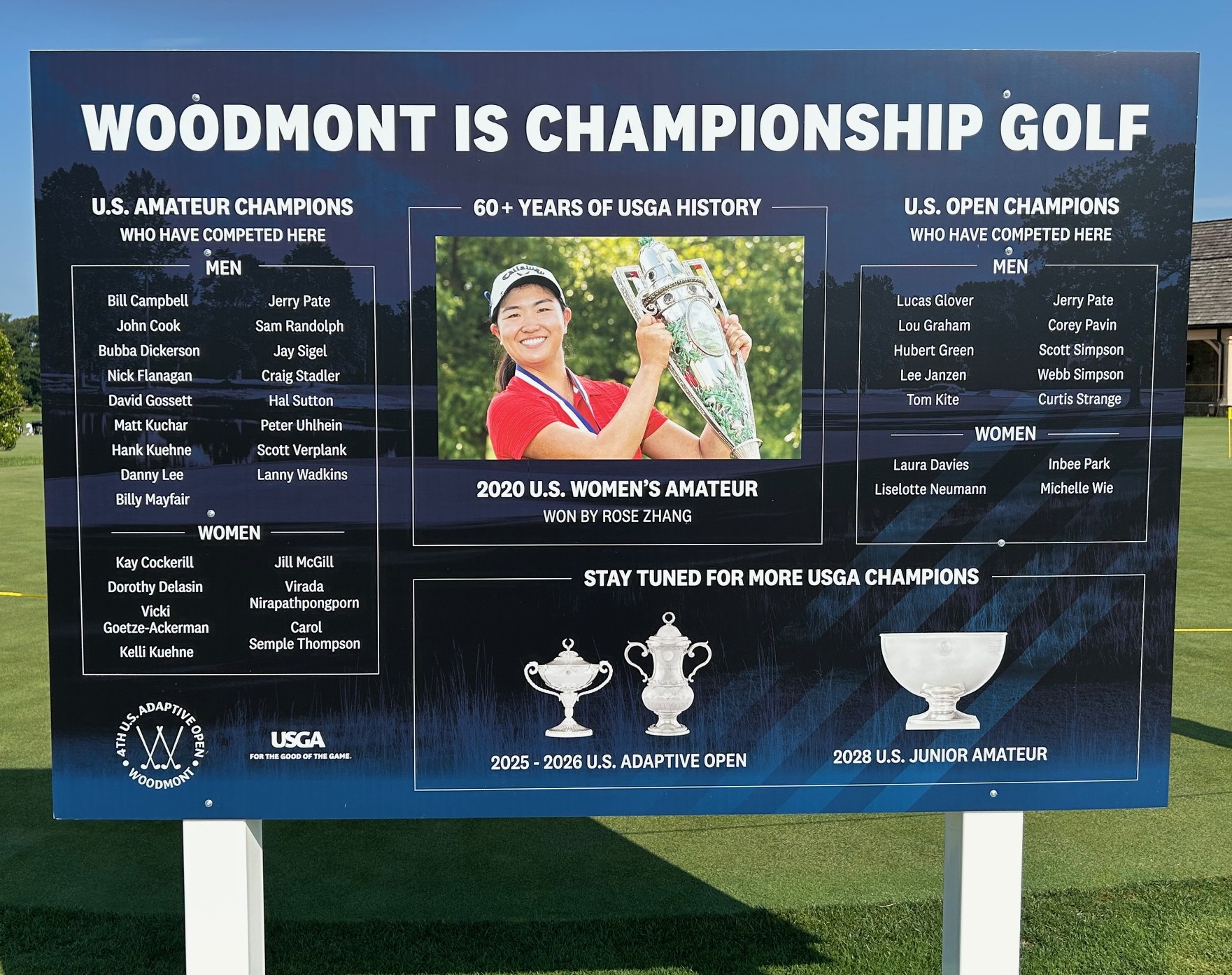
Woodmont has a long tradition of the presence of Major winners playing competitions on our grounds

The U.S.G.A. has taken the admirable attitude to elevate the impact of this championship with all the bells and whistles of a major event. In just four years it has taken on a ground breaking reputation of inclusion, expanding the reach of the game in recognition of the determination and abilities of these players by embracing the use of adaptive methodologies that allow them to compete at the highest levels.
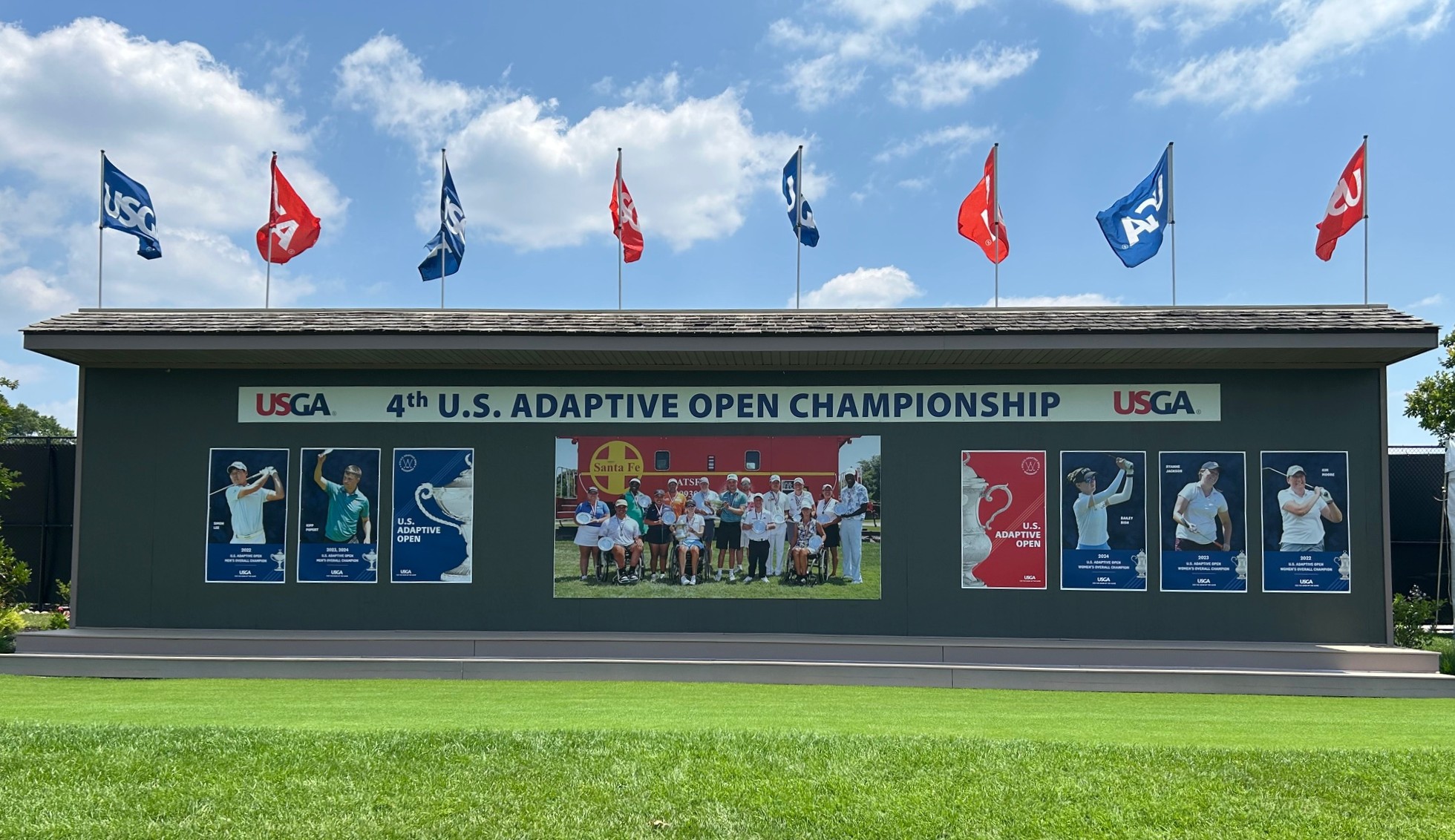
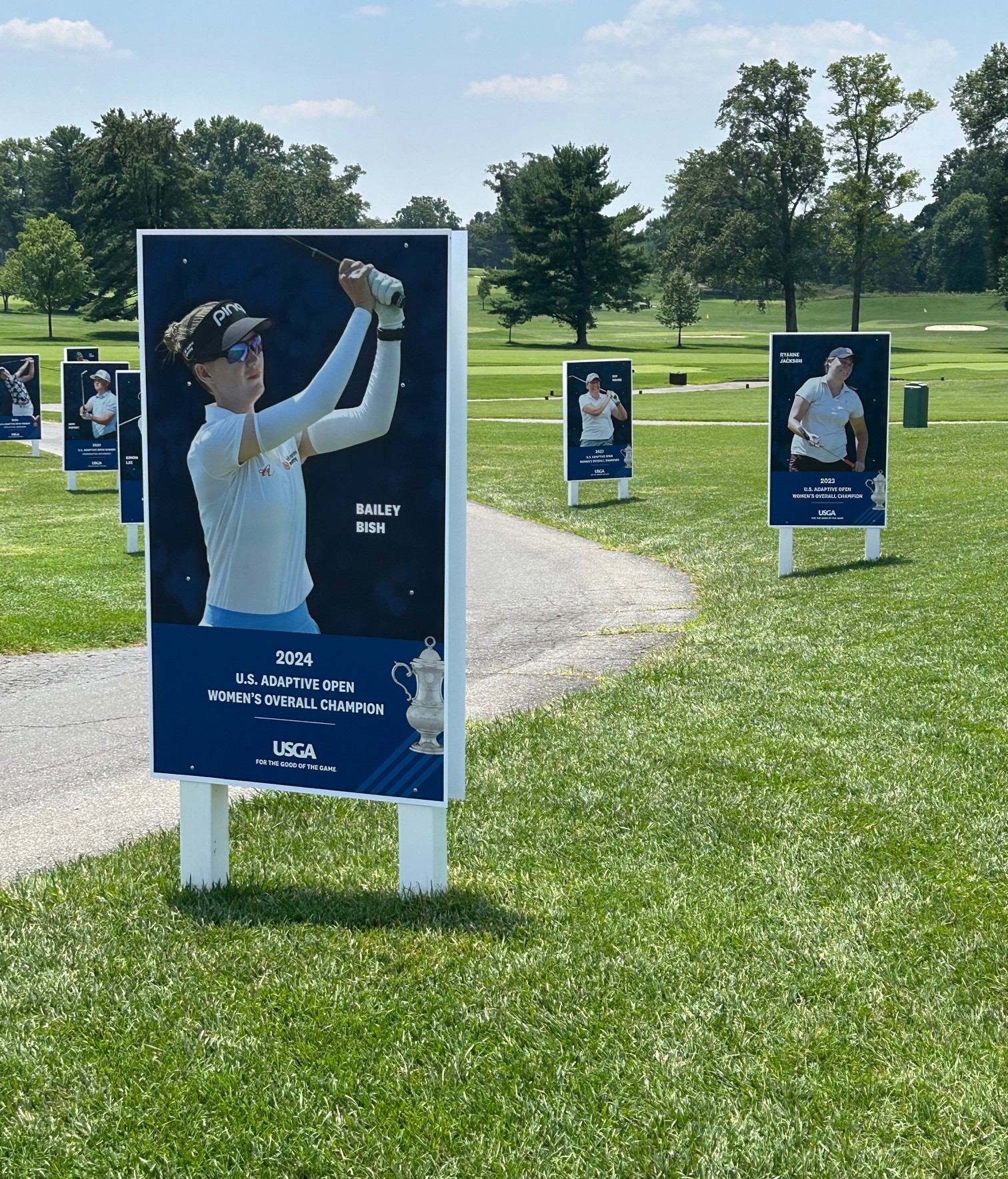
The pageantry of a major event was evident all across our campus
Past Champions Alley…a prestigious place for your name to be seen

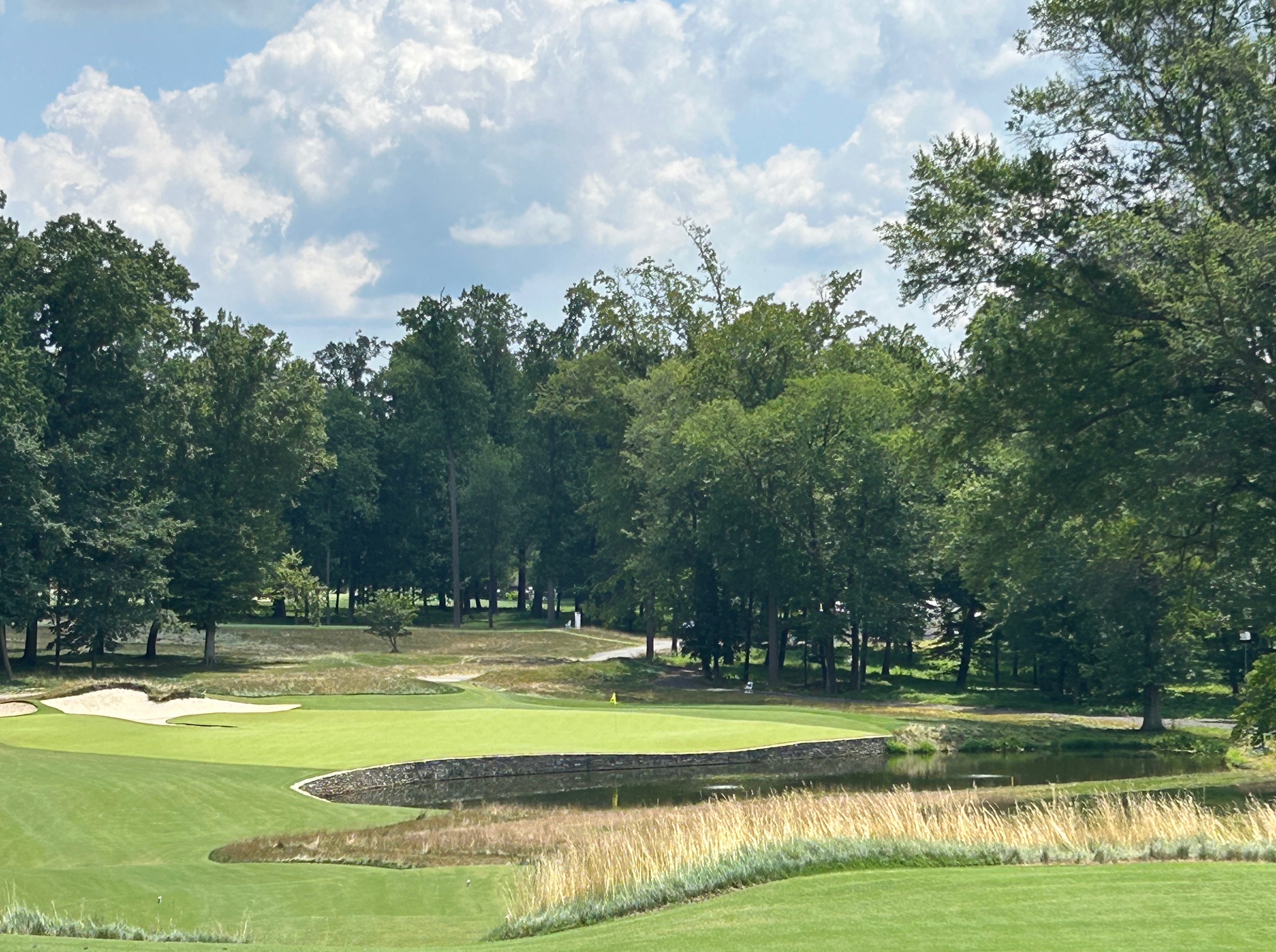
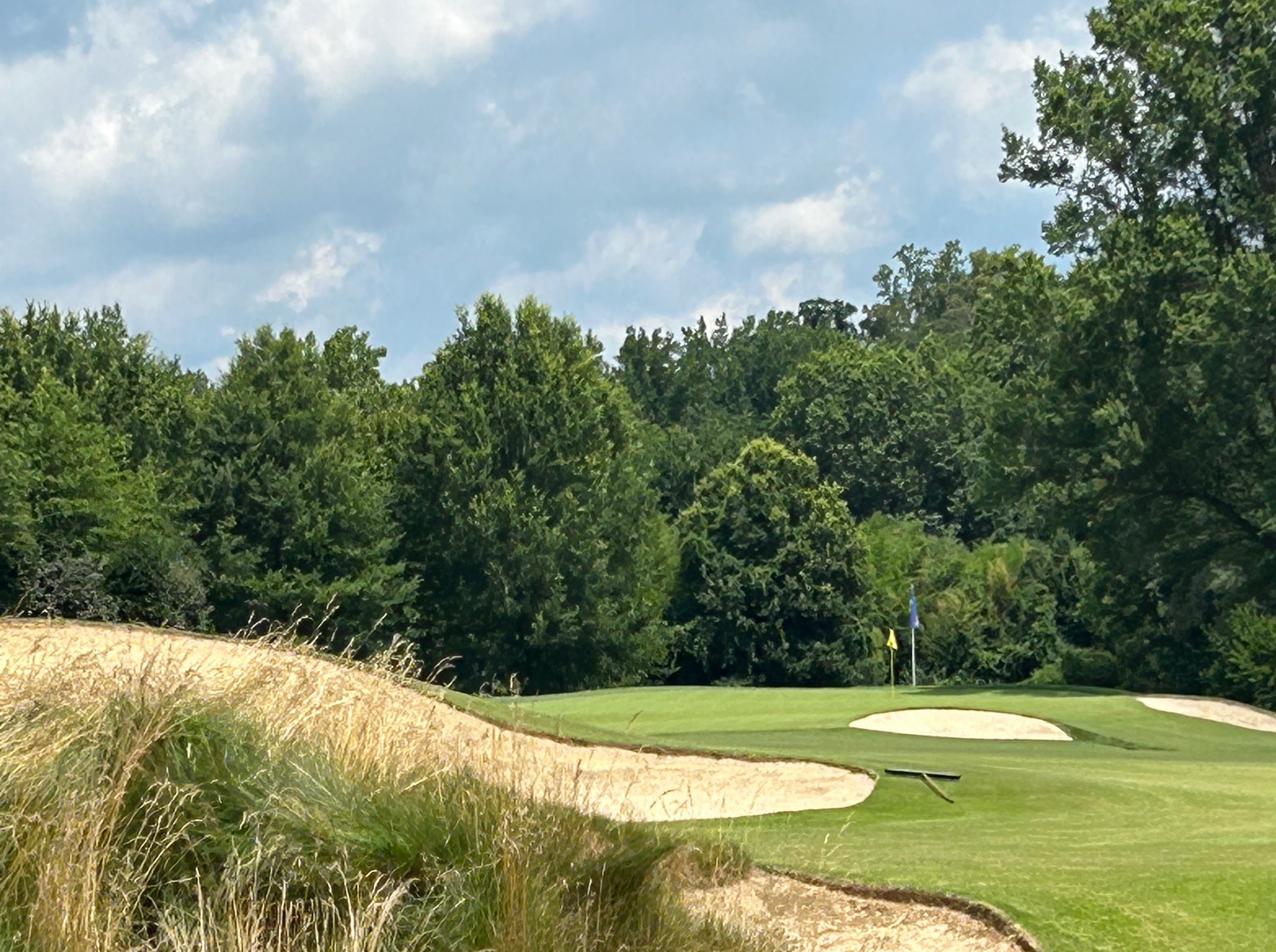
Woodmont became a perfect candidate to consider as a host venue for this event when we began a total renovation of the South Course in 2020 under the direction of course architect Joel Weiman. His concept was to replicate the look and feel of the Australian Sandbelt courses expanding the summer zoysia grass fairways to accommodate vast driving areas with very little rough, incorporating 30 plus yard short bermuda grass surrounds to sprawling and generously contoured green complexes to facilitate short game recovery, and throw in an accent of visually intimidating razor sharp bunker edges to complete the Melbourne look.
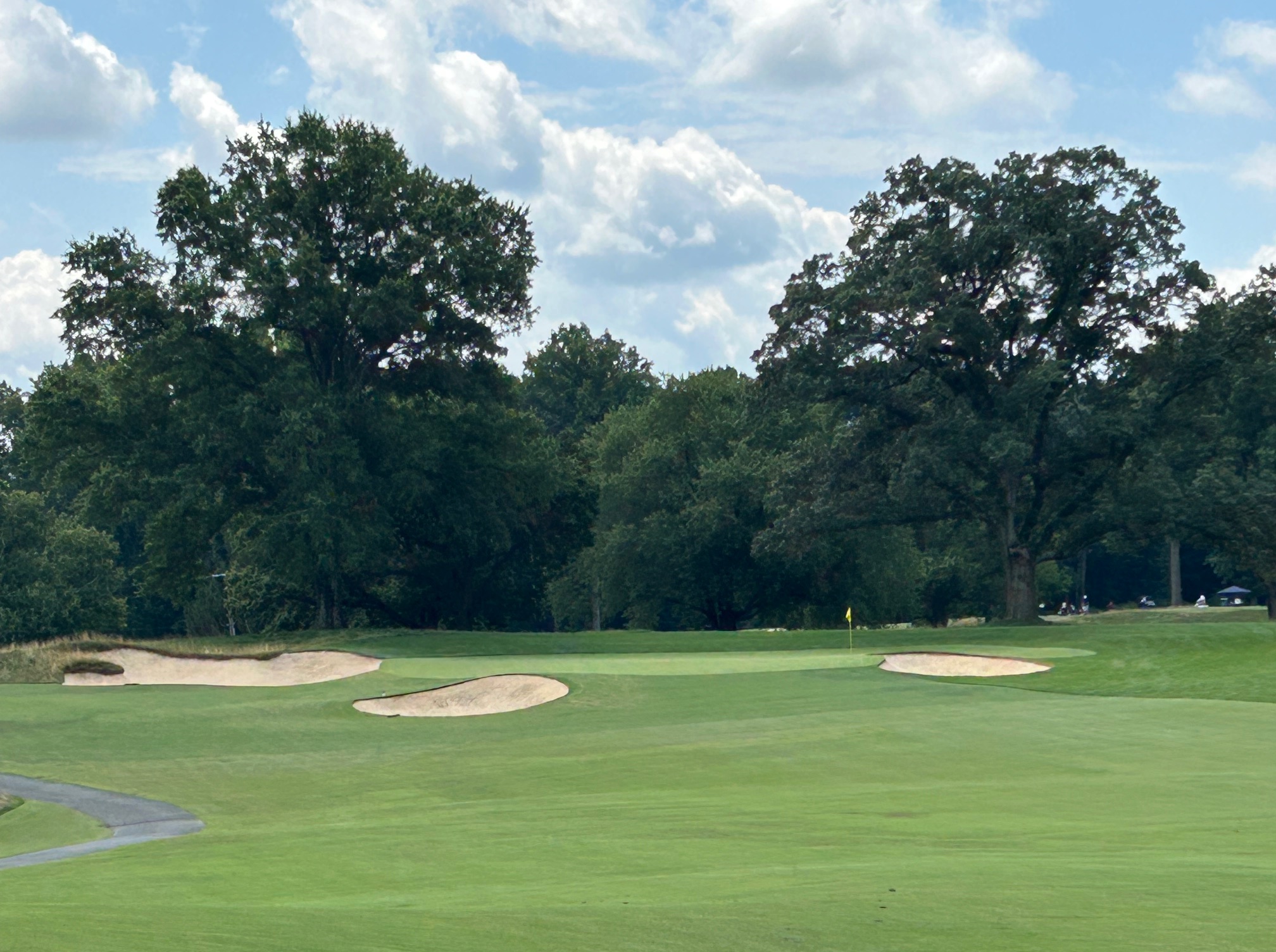
Clean look on the accessible approach of the Par 4 10th
Contrasted by some native grass accents that adds mishugas to a massive fairway bunker constellation on the 11th
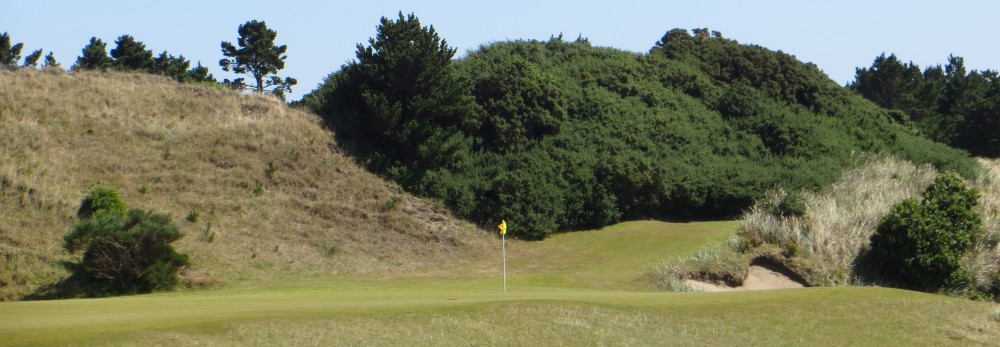
Signature look the short Par 3 12th which boasts a putting surface the size of a Walmart parking lot with seismic undulations

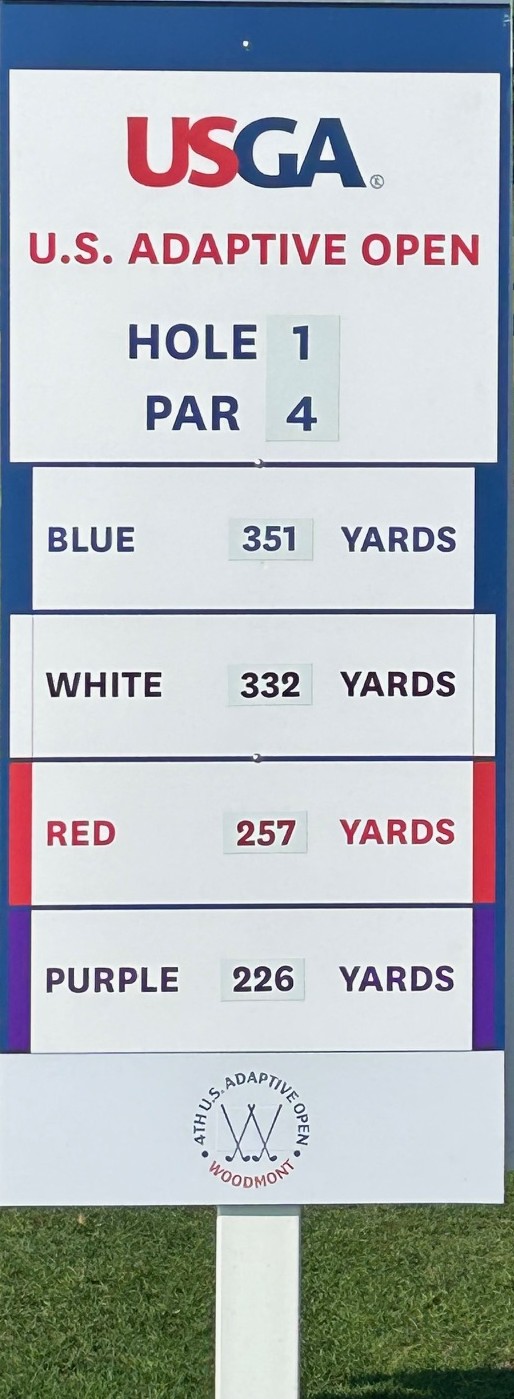
For 96 competitors with widely differing impairments, the U.S.G.A. has fashioned a competition that identifies a men and women’s champion with three days of medal play playing the course at four different tee lengths based on their impairment challenges. Champions are also identified for each gender in eight separate categories of impairment, Coordination Impairment, Intellectual Impairment, Lower Limb Impairment, Upper Limb Impairment, Multiple Limb Amputee, Seated Players, Short Stature, and Vision Impairment.

The renovated South Course allowed the competition committee to vary the set up every day. Playing in the same competition the longest Blue Tees challenged players at over 6,600 yards and the Purple Tees at a much more modest overall distance of about 4,600 yards.

Minimal walks between greens and tees, short grass everywhere, and low edge bunkers makes accessibility to the playing areas very fluid even for those playing in adaptive motorized devices.
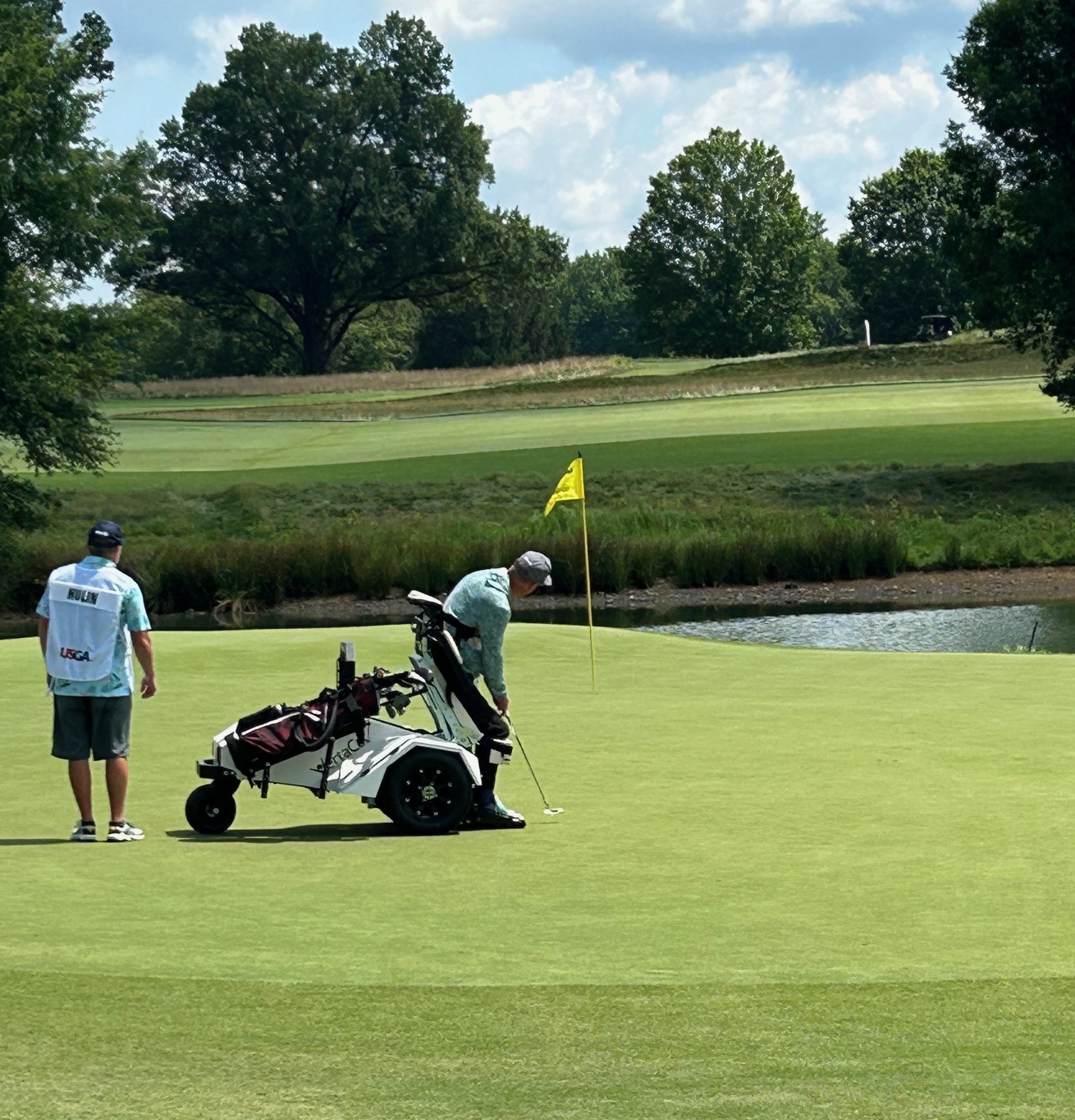
Seated competitor putting from his VertaCat cart on the sprawling 5th green
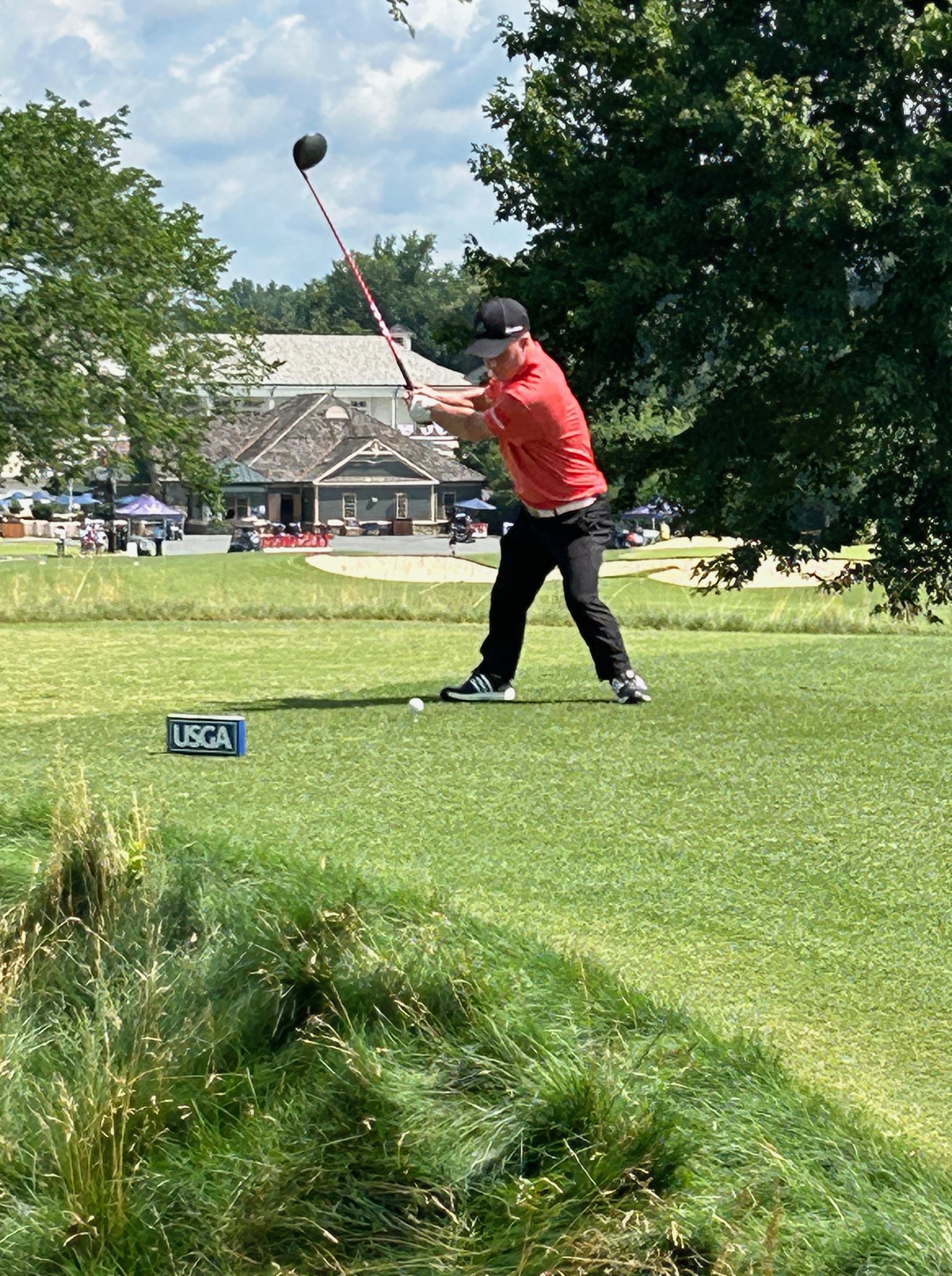
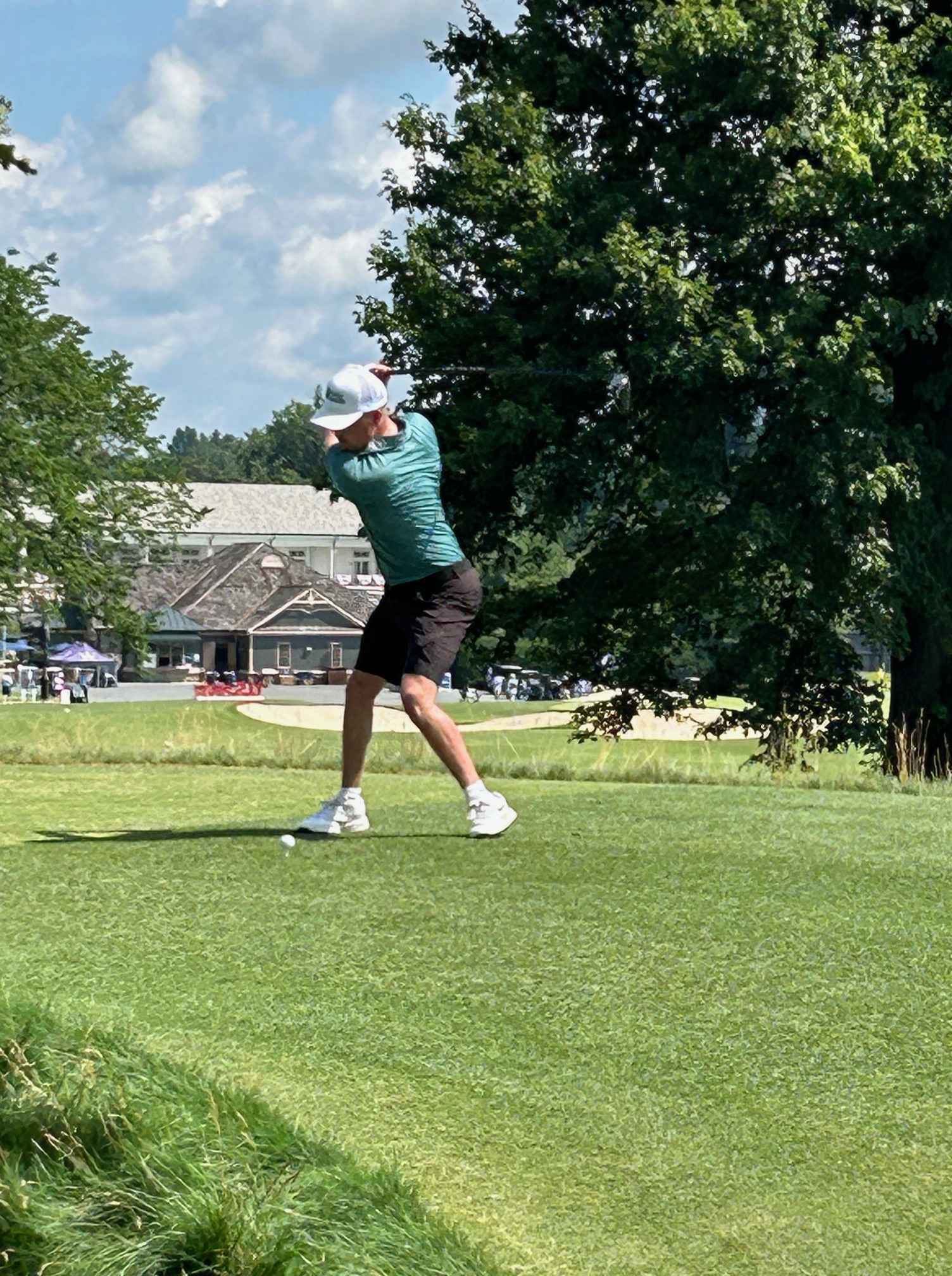
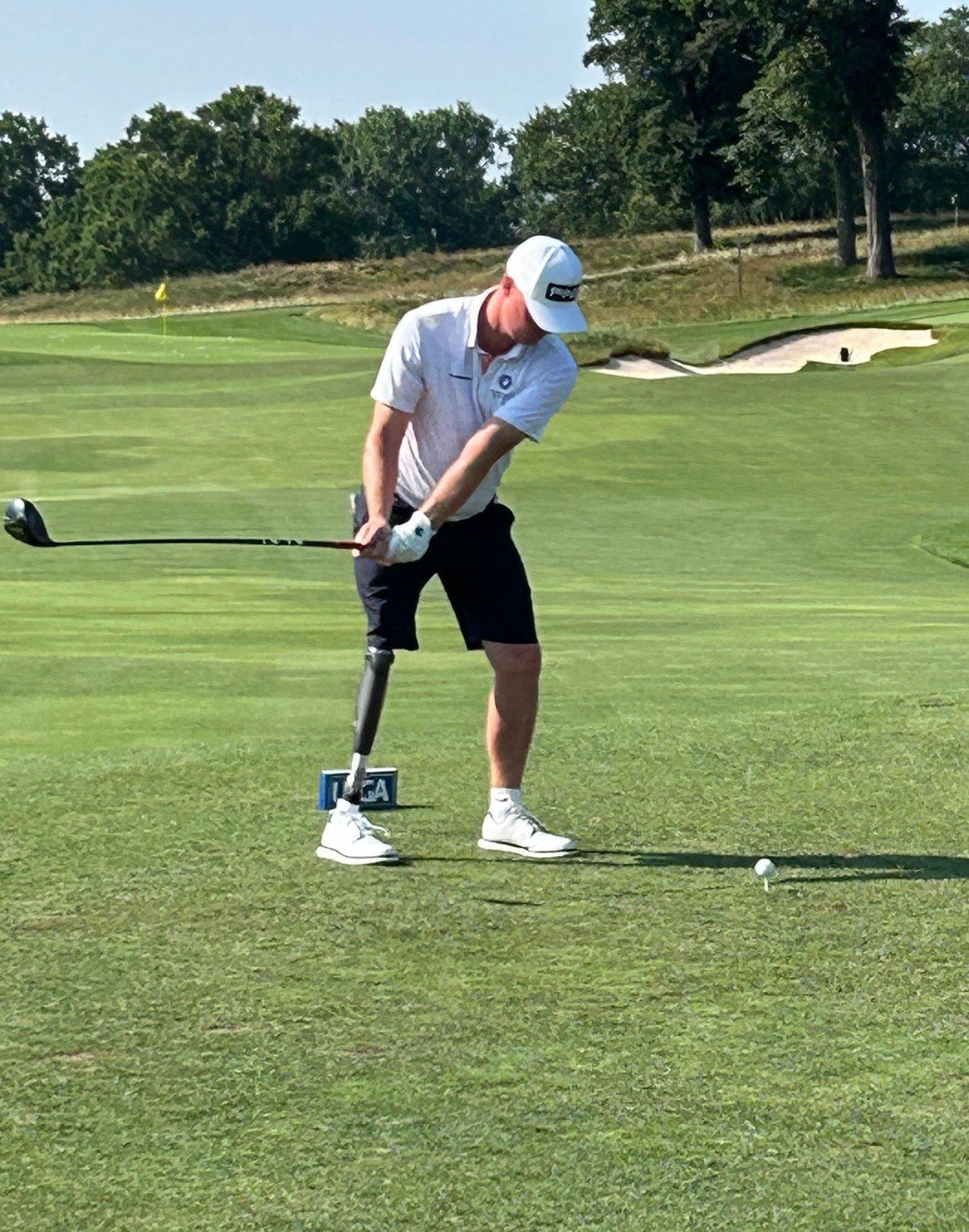
Player from the Lower Leg Impairment category driving off the 1st teeing ground
Brendon Lawlor of the Short Stature group hit this about 235 yards on the Par 5 7th
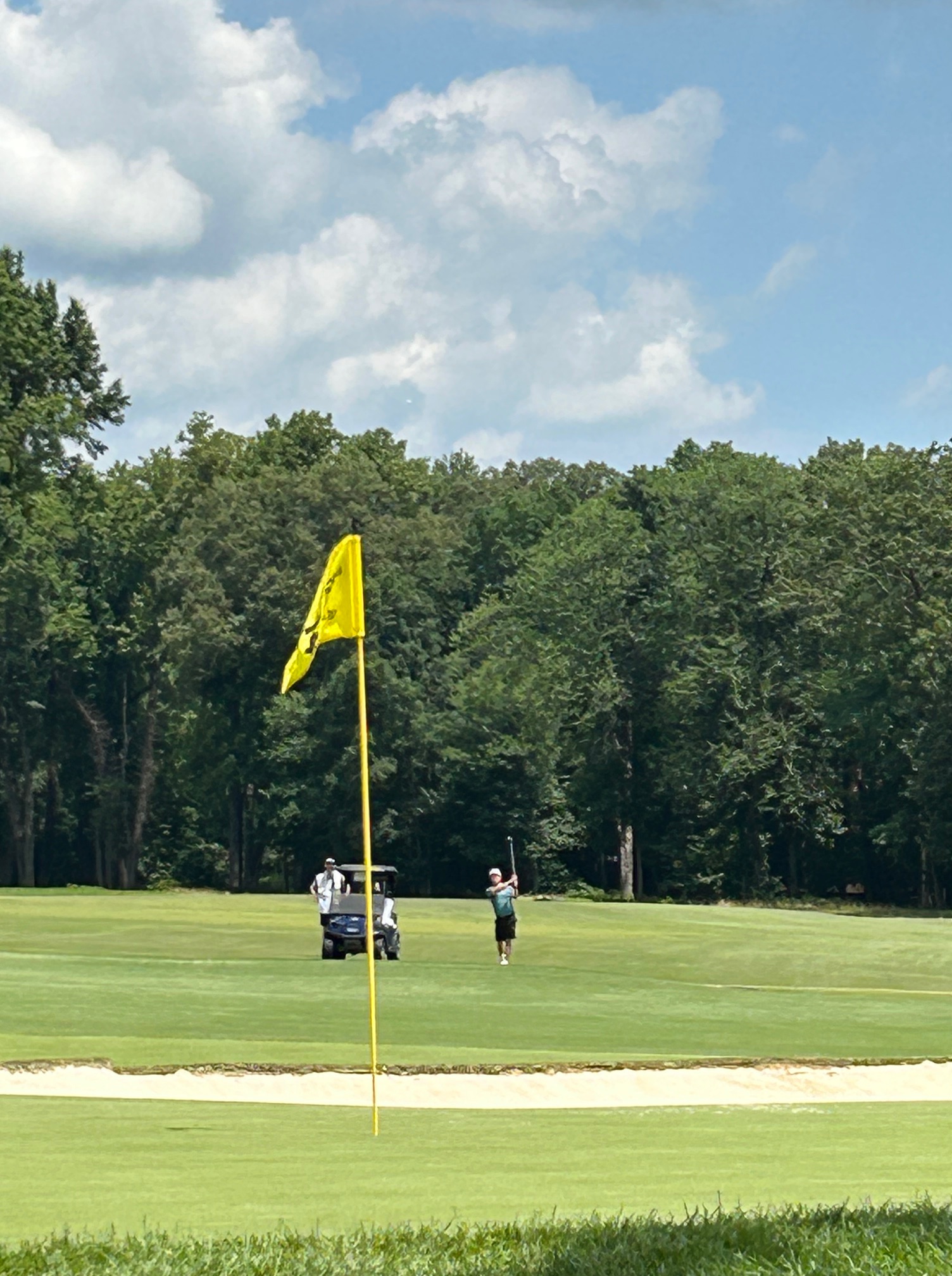
Fairway metal lay up is a piece of cake from the connecting fairway between the 3rd and the 5th
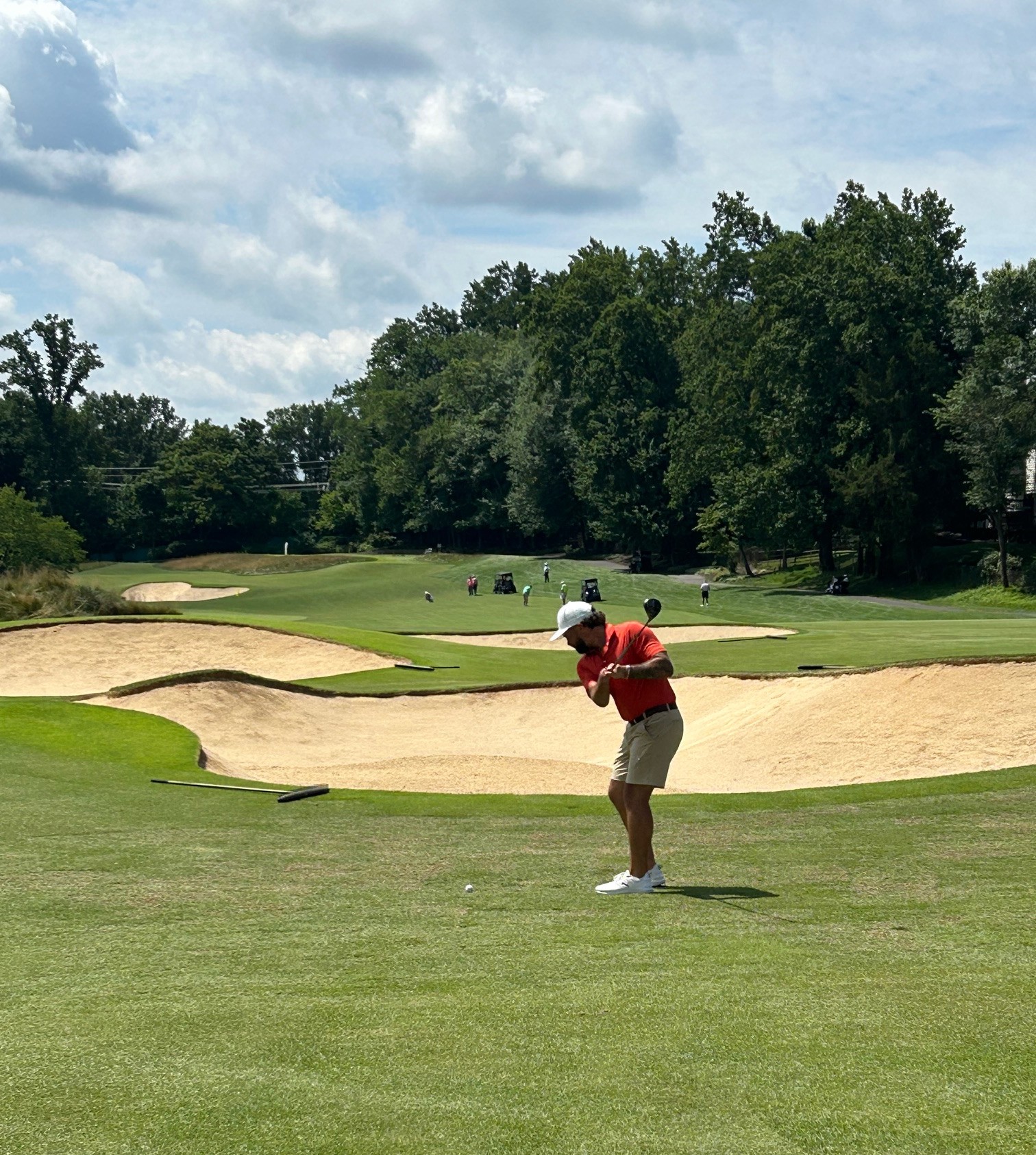
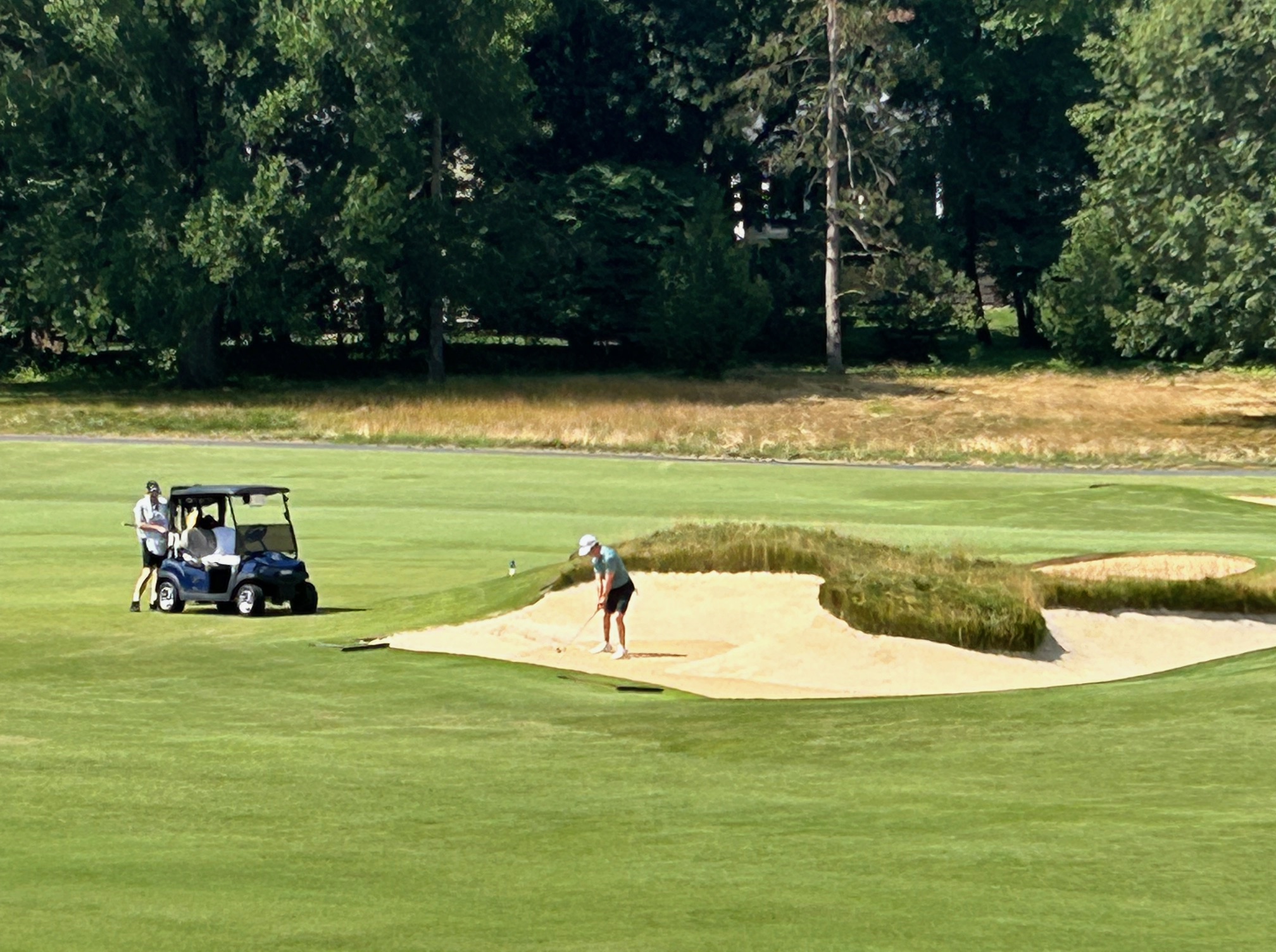
Eventual men’s champion Kipp Popert extricates himself from the shared fairway bunker constellation between the 2nd and the 6th hole

But at the end of the day this is a competitive U.S.G.A. national championship to be decided by talent, grit, and determination. Top competitors in both the men’s and women’s divisions displayed solid mechanics, strategic creativity, and flawless shot making acumen throughout the three days of competition.
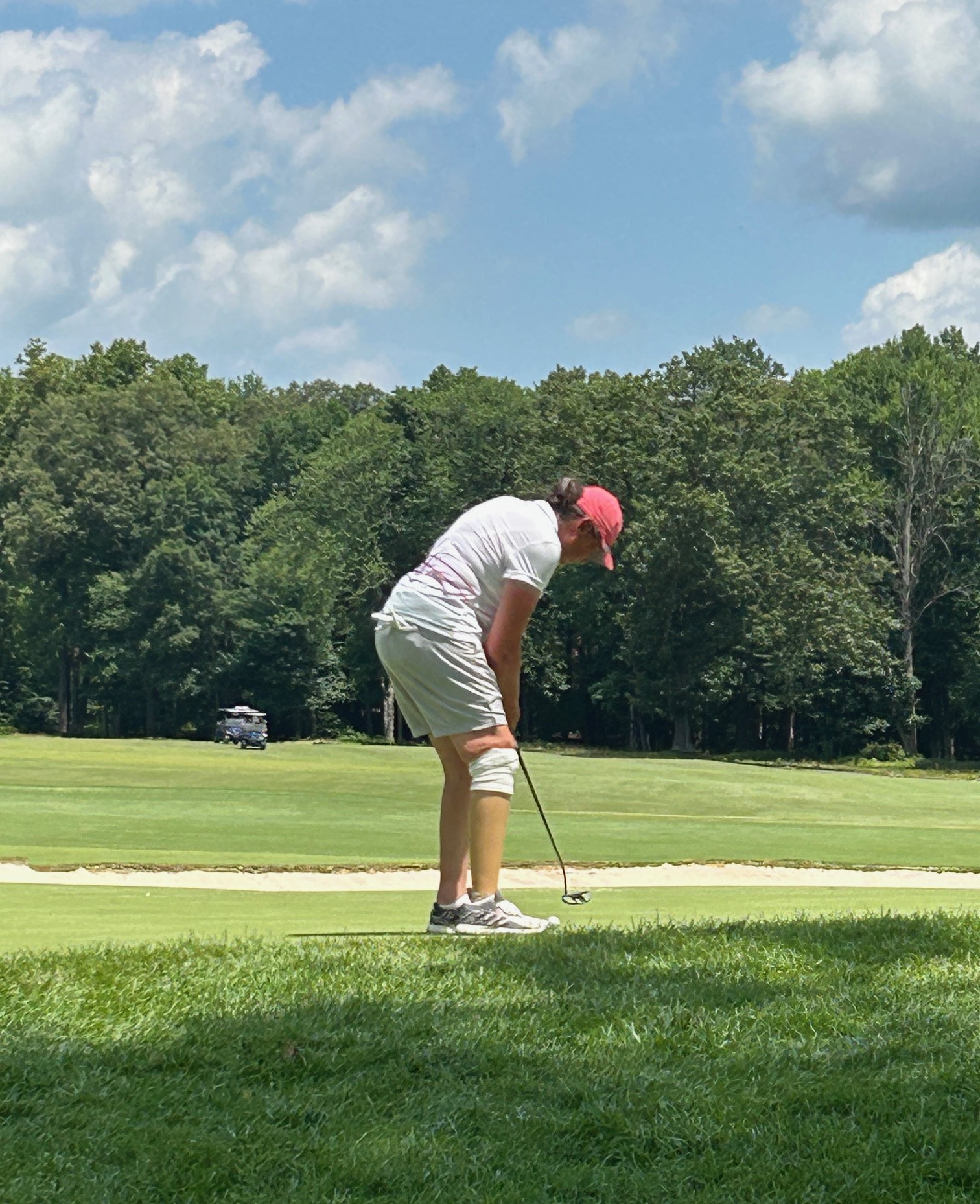
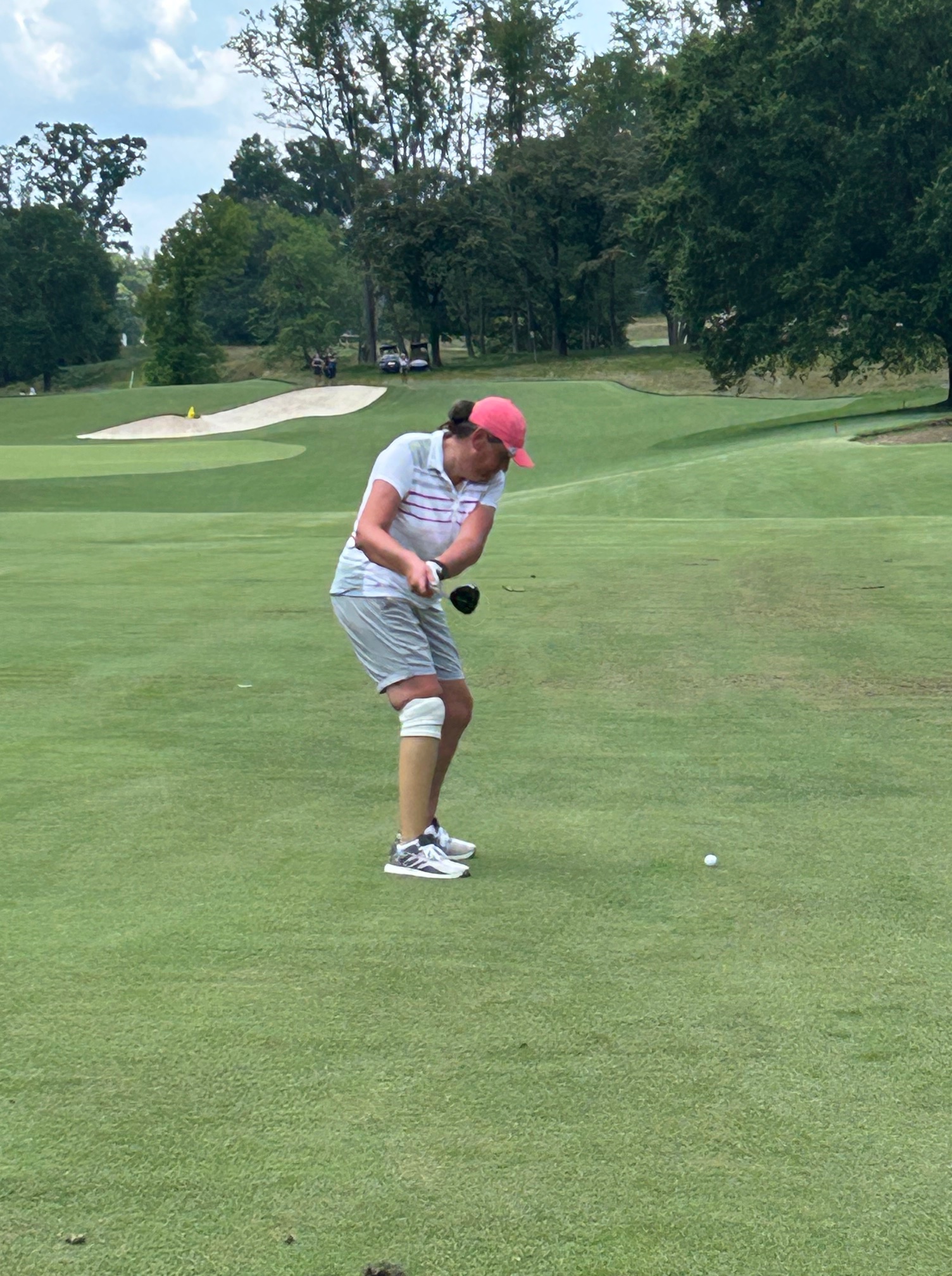
Ladies overall champion Kim Moore coaxes one down the slope on the 14th
Kim shuts the door with this remarkable second shot on the Par 5 16th from 180 out to inside of 20 feet and a two-putt birdie
Kipp Propert textbook swing mechanics led to a 11 under par 61 on day one.
Kipp’s distance control on 14 was astounding settling this 100 yard pitch to 6 feet between the bunker’s edge and the hole for another birdie
After reaching the Par 5 16th in two he lagged his 14 foot eagle putt to the front lip for a tap in birdie

Kipp Popert registered a three-peat winning the Adaptive Open the first three years, lapping the men’s field with an astounding overall score of 24 under par. Kim Moore had won the inaugural event in 2022 and took her second Adaptive Open Championship posting 16 over for a three shot win on the ladies side.
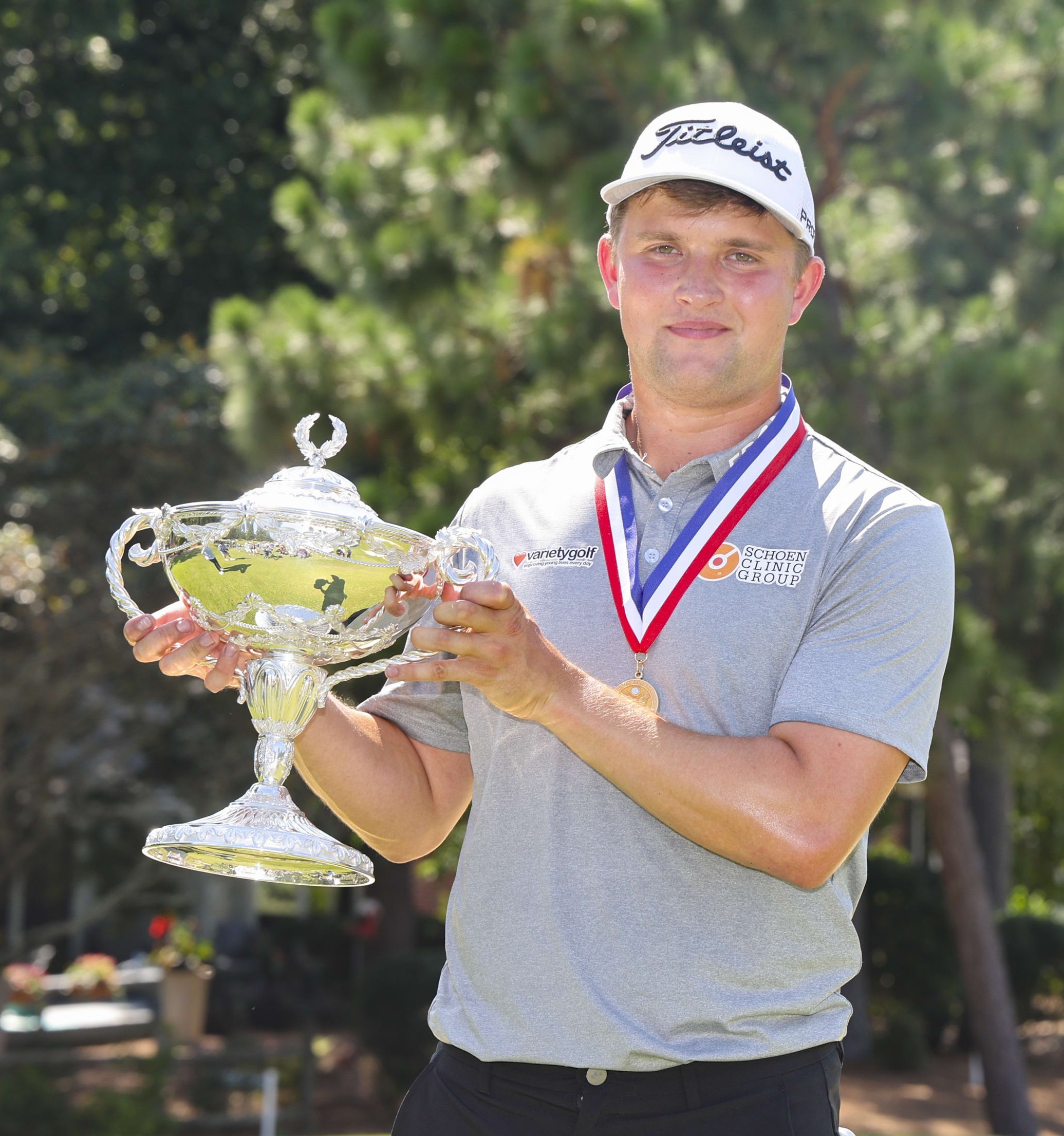
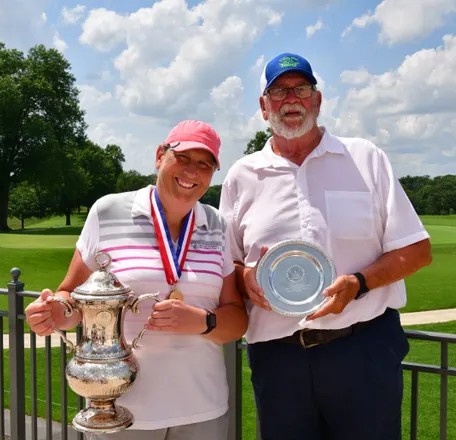
For the third time in a row Kipp Propet of England hoisted the silver trophy
This was Michigander Kim Moore’s second go around as the women’s overall champion

Thanks to the U.S.G.A. and the over 200 staff members and volunteers who helped make this event a community success. For those who witnessed this event in person or who watched the final round on the Golf Channel they walked away with a sense of respect for the camaraderie this event engenders and the determination it takes for people like this to embrace their dreams and take life’s challenges head on.
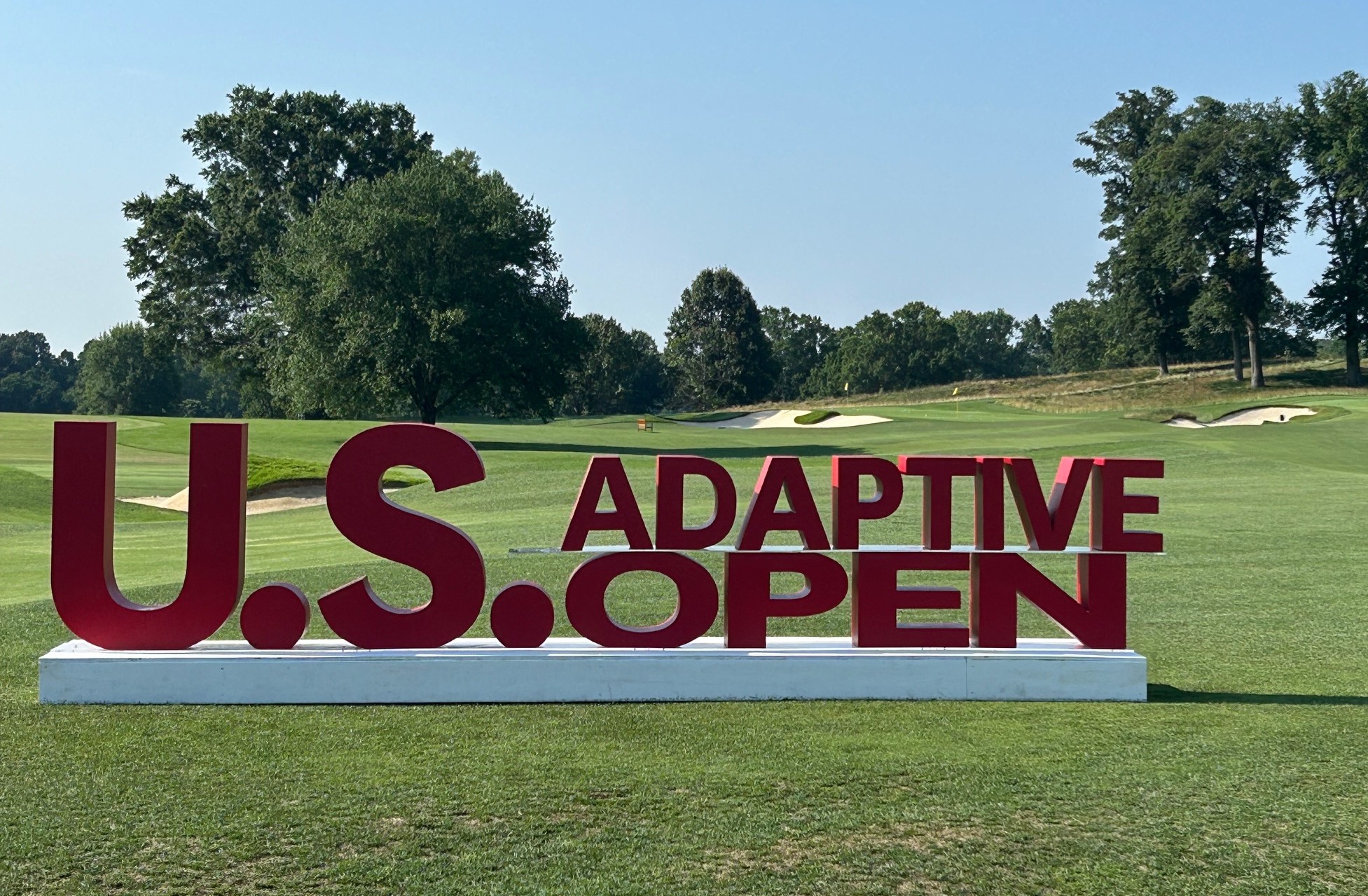
Will Kipp finish the rare Adaptive Quadrilateral in 2026?

We look forward to seeing him try when once again when the prestigious U.S. Adaptive Open returns to Woodmont Country Club in 2026 for a second time around the block.

Woodmont Country Club

Rockville, Maryland
Golf Is Not A Game Of Perfect

In the crowded universe of golf psychology books there are two that stand above all others in my mind. Along with Zen Golf by Joseph Parent, Bob Rotella’s 1995 contribution, Golf Is Not A Game Of Perfect, is a regular re-read for me at the beginning of most golf seasons.

Unlike so many of the new age golf psych books you do not need to fill out any questionnaires, prepare any worksheets, or tabulate any mental acuity scores to satisfy your need to improve your mental outlook on the game. Rotella’s approach is based more on common sense observation of human tendencies as they relate to helping or impairing your performance on the golf course. I find his old school approach more intelligible and relatable for someone who has enjoyed the game as long as I have.

Rotella has had the ear of a litany of PGA Tour and LPGA Tour stars including Rory McIlroy who recently ended his 11 year Majors drought in winning the 2025 Masters and joining that very select group of those distinguished professionals who have won all four Majors in their careers. It was very evident through Rory’s comments during and after the tournament that he was relying on daily conversations with Rotella to keep him on an even keel and focused on what it would take to break through with this career defining victory.

Others from his client list include Tom Kite, Nick Price, Brad Faxon, Corey Pavin, John Daly, Davis Love, Seve Ballesteros, Pat Bradley, Val Skinner, and many more. The book is chock full of anecdotes involving his conversations with them that convey Rotella’s principles for successful mental management in the game of golf.

The basis of all of his thinking is that players have the free will to manage their thinking processes and must discipline themselves to confine their work on swing mechanics to the practice ground and trust their swing and feel once they stand over the ball on the course. When it comes to a swing process on the course they need to focus on small targets, a specific edge or a bunker or limb on their intended line, rather than a general side of the landing area or part of the green. Small targeting is essential to precise execution of a shot intended because it helps prevent distractions.

Visualization of the result as part of the pre-swing process is important because it is telling the body what you want to execute. Having a well honed pre-shot routine is the foundation of consistent performance on the course. Put succinctly he says “When great players are playing well, trust becomes a habit. He simply picks out a target, envisions the kind of shot he wants to hit, and hits it.”

Rotella emphasizes the importance of the short game, the last 120 yards to the hole, to success of his players. At this distance there are no swing thoughts just focusing on the target. He takes it a step further saying that for the best players pitching and chipping the ball, they do not think about getting it close, they think about holing the shot.

Maybe the most important principle is having a consistently positive attitude when you play and making sure you are having fun. As the title of the book says, golf is not a game of perfect and good golfers have to get over the notion that they only want to hit perfect shots, they have to learn to enjoy winning ugly. Smothering perfectionism and unrealistic expectations lead to a sense of constant disappointment and a lousy golf disposition. He says the best thing to do when you step on the course is cast away your expectations and just play golf.

There is lots more to glean from this read, so for the good of your game take the time to read what Bob Rotella has to say about managing your thoughts and playing your best golf.

Golf Is Not A Game Of Perfect

Bob Rotella (1995)

Zen Golf: Mastering The Mental Game

Don’t let the title scare you, no need to assume the lotus position and repeat incantations as part of your pre-shot routine.  What is presented in this book by Joseph Parent, a PGA Coach and Buddhist instructor, is a pragmatic approach to managing the mental aspect of your game to get out of your own way and let your golf skills provide you with the best chance for success on the golf course.

A good pre-shot routine is essential to getting consistency out of your intended shots but the mental aspect of that routine is the part many players seem to ignore.  We have all experienced how being impulsive, indecisive, and anticipating a bad result can wreck all the good intentions of our plan.  The question is how do you clear your mind, achieve focus on your intent, and play each shot within the moment to delimit the effect anxiety and fear can have on your results.

How do you deal with the negative thoughts that creep into your head that can predispose you to a bad outcome? His suggestion is that all thoughts going through your head are like traffic on a busy street, you cannot control them coming into the picture so you should not try to control them by forcing them out.  He says, “Simply let them come up and go by, neither inviting them to stay nor trying to get rid of them.”  The key is to allow ”last time I was here I  hit in that nasty bunker” to come and go and to let stay “left center ten feet left of the pin with an uphill putt”.  It is a simple process of mental sifting.

A corollary principle is cultivating “unconditional confidence” in your intentions.  This means not being overly judgmental based on your performance at any point during a round.  We cannot expect to hit every shot perfectly and we must be able to handle the result no matter what occurs.  With unconditional confidence “instead of assuming something (mechanical) is wrong ….and trying to fix it, we reflect on what may have interfered with our intention on that shot.  This approach makes it possible to quickly turn things around and play well again.”

His central thesis in this book is a mental management process he calls the PAR Approach-a way of thinking that focuses on Preparation, Action, and Response to Result.

Preparation requires clarity-a vivid image of the shot intended, commitment-being free of doubt and hesitation of intent, and composure-being focused and poised as you prepare for a shot.  Together these three elements give you total confidence in the intended outcome of your shot.

Action is about developing, honing, and trusting a process of swinging the club that turns over control from your thinking mind to your intuitive mind.  Trying to guide your swing with swing thoughts and principles has to be left on the practice ground. When you are on the course you have to trust a process you have developed that works.  As he says, “take care of the process and the results will take care of themselves”.

Response to Results is probably the most overlooked aspect of managing your mind on the golf course.  Most of us have a tendency to focus on the negative part of our results and vocalize the flaws to ourselves.  His advice is “the best responses are those that reinforce successes and help you learn from mistakes without getting down on yourself”.  We need to take the time to appreciate a good shot and focus on how well we executed what we planned.  He says, “reinforcing good shots with positive feelings….a minimum of emotional distress around poor shots….and refraining from beating yourself up, those ways of responding to results give you the best chance of success.”

I am sure a thoughtful reading of this book will help your performance on the golf course.  It will also increase the pleasure you get from playing the game by giving you a more reasonable perspective on expectation and evaluation of performance.

The proper view this book encourages is that  “our self worth as a human being doesn’t depend on how well or poorly we strike a golf ball.  We see our nature and our abilities as basically good and the difficulties we encounter as temporary experiences.”

These are words to live by and words to play by.

Zen Golf
Dr. Joseph Parent (2002)