Golf Deprivation Release

With all the restrictions from the Coronavirus Edicts you may be suffering from FGD (forced golf deprivation).  Maybe your club is closed or you don’t trust the operatives at the local Muny to properly sanitize the pull carts or cart steering wheels after every use.  Or maybe contemplating playing with strangers is just a scary proposition at this point in time.  It is a sad moment for golf addicts.

So I decided to do something about it by getting back in touch with my young teenage golfing id with a DIY Approach & No-Putt Course at a local public park.  Below is the descriptive of “The Old Course at Avenel Park”….a Golden Age track with all the architectural integrity my imagination could muster.

Played with two clubs-a wedge and a 53-degree sand iron-and two balls, so mulligans are built in.  There are no holes just proximity to objects you aim at….and no putting…double leather is a one-putt, everything else is a two-putt.

#1 Par 3  45 yards (Go)

Since there is no practice ground for warm up it makes sense the opening hole is a simple short pitch into the left half of the double green it shares with the 8th.  If you get it to within 10 yards starting with a par is a cinch.

#2 Par 4.2 140 yards (Garo Yepremian)

Gets it’s name from the trees that frame the drive as well as the soccer goal you can just make out in the distance that is your goal on this one.
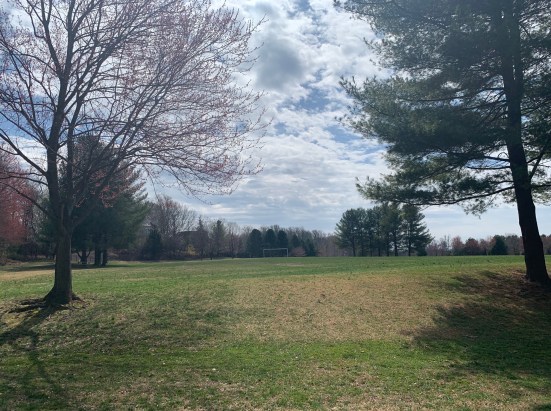
The squeeze on the drive is mostly psychological but you want to get enough carry to leave a short pitch from the pitch to the left post of the goal.  A bogey is a good possibility…thus the .2 increment from the analytic staff on the par.

#3 Par 3 65 yards (The Road Hole)
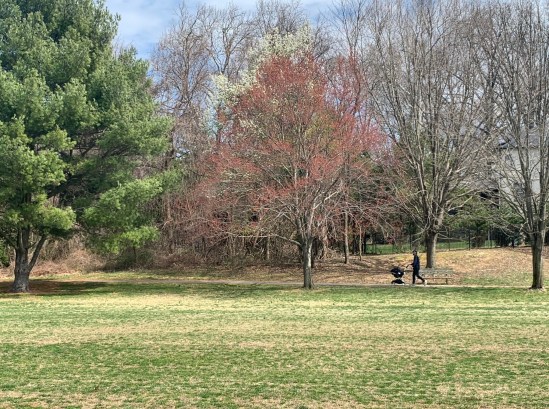
Like so many great links courses you need to remember this track is on public land so you have to share it’s access with parents with strollers, dogs on leads, power walkers, and lots of wildlife.  This is a short pitch at the base of the red flowering tree but care must be taken since the road lurks just beyond the tight green complex.

#4 Par 3.97 137 yards (Wide)
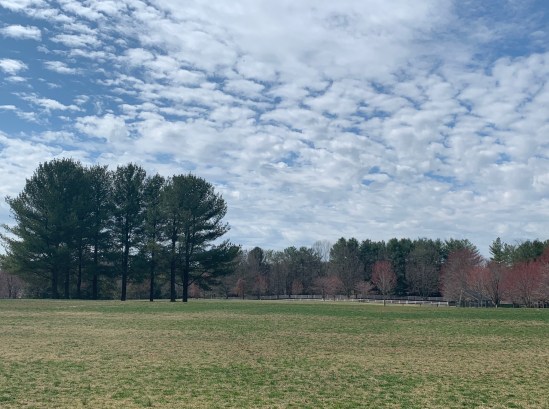
The driving area on this one is as wide as the wild blue yonder (shown) so just let out the shaft on the PW to lay up to the end of the fairway just right of the pines.  As you can see the approach is to a sand based complex that sits considerably below you with the pitching rubber as its target.
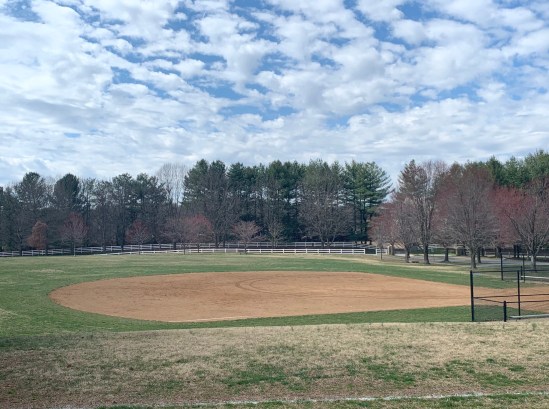
Hardest part is figuring the roll out once the ball lands on this very generous no-putt surface.  You might want to think about a two-bounce tight spinner.

#5 Par 3.8 120 yards (Power Alley)

The teeing ground is just off the Home dugout adjacent to the 4th green (brown actually) with the target just beyond the asphalt warning track in left center.  The second probably calls for a high flopper but getting within Double Leather for a birdie is a good possibility.

#6 Par 4.44 125 yards (Equestrian Jump)
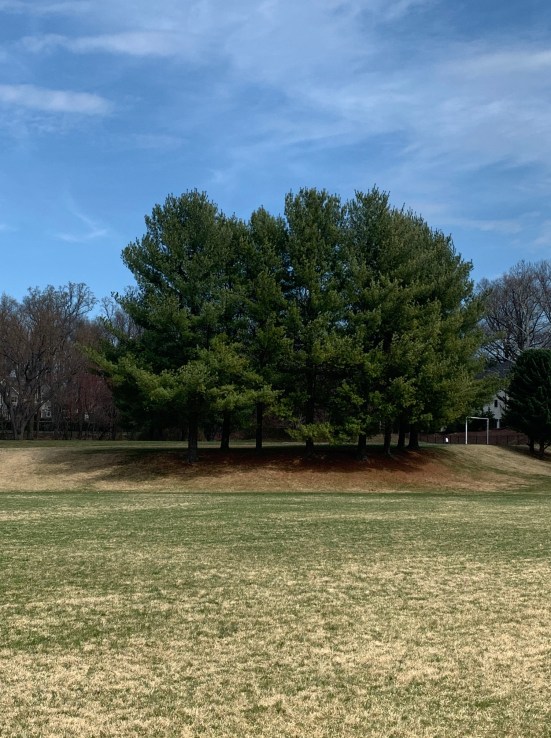
Huge risk-reward decision here in that the target is just on the other side of that hedge row of pines but if you fail to clear who knows how much pine sap will be on your ball and what tree root on which it will end up.  Alternative is to lay-up left of the pines leaving a back-door, steep elevation pitch into the pine straw complex.

#7 Par 4 101 yards (Alcove)

The view from this confined back tee gives the hole it’s moniker but it is the tight green complex just left of the pine stand on the right that creates the challenge.  The second is a short pitch but, like on #3, the road and a trash strewn penalty area lurk just behind which can catch an approach with overzealous intent.
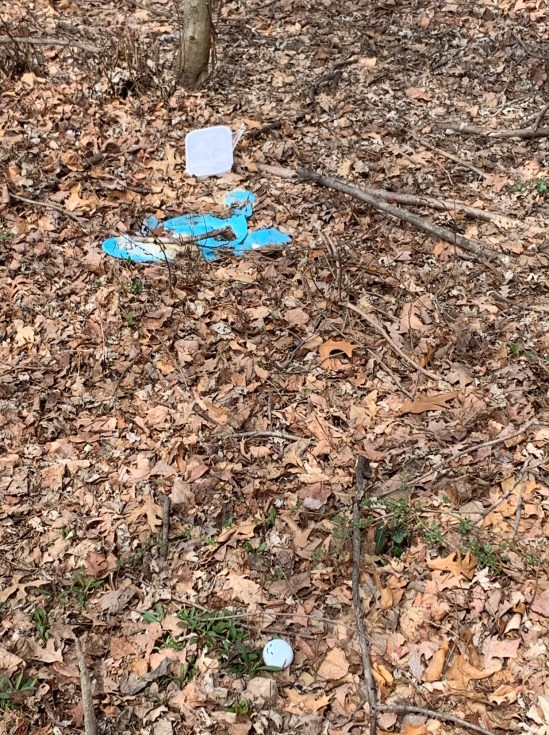
#8 Par 3.13 85 yards (Waste Management)
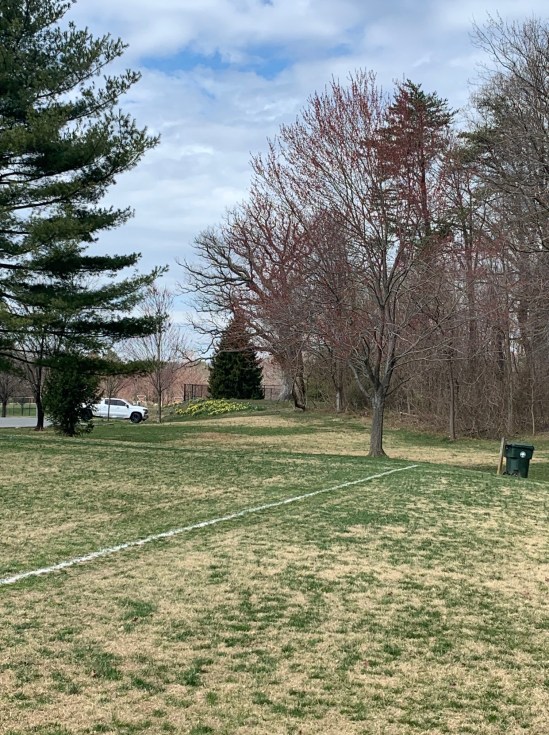
This is a very narrow approach that requires a high pitch with a parachute to fit into the right half of a double green wedged between the treed native area on the right and the bumper of the maintenance vehicle.
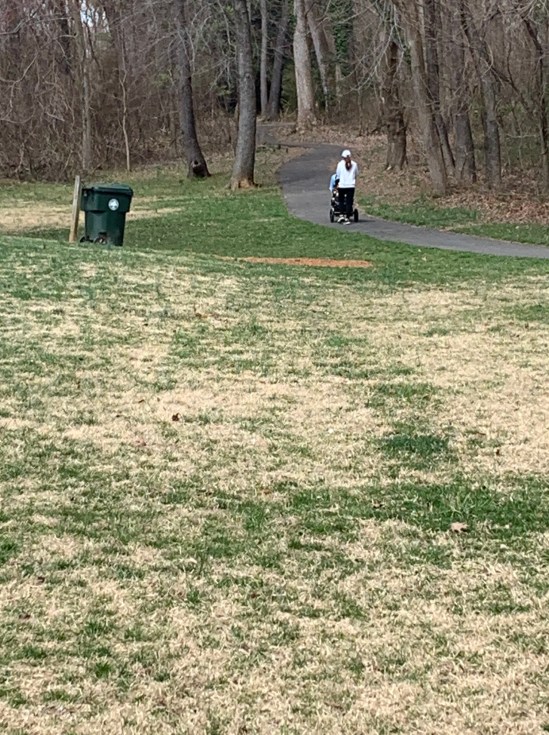
This part of the course is a bit of a bottleneck so you may have to wait for the group in front of you to clear the can and head for the next tee.

#9 Par 3.29 79 yards (Clown’s Mouth)
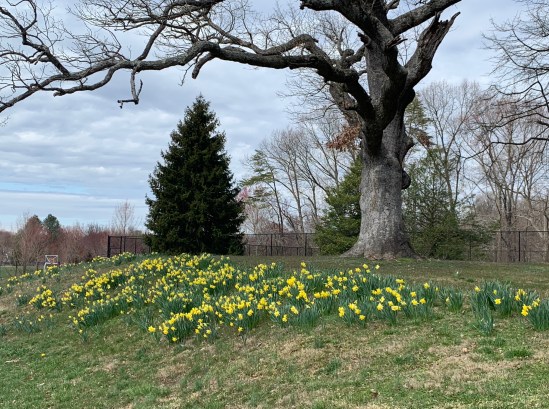
You can see by the daffodils and the spooky hardwood adorning the back tee box on the home hole that we spared no expense to create memorable ambiance for this classic track.
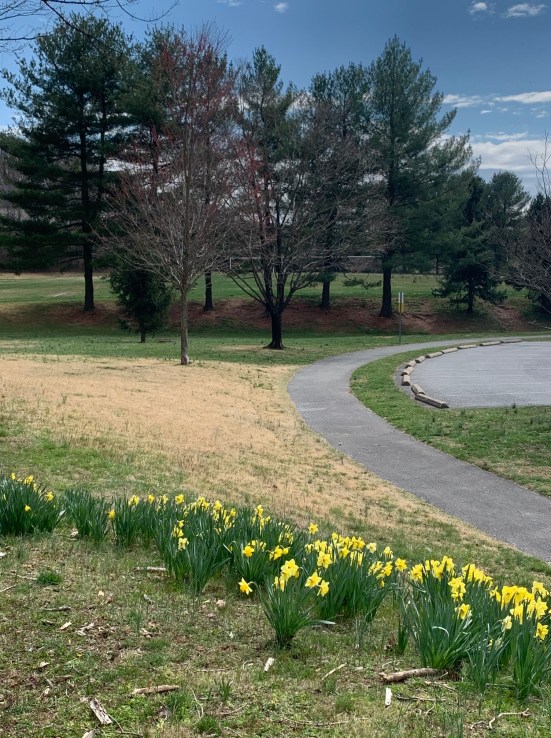
This one gets it’s name out of respect for a Mini-Golf Facility we used to play in those halcyon college days in College Park where the final shot required pitching the ball into gaping mouth of a circus entertainer.  Your target is the narrow opening between the tree and the No Parking sign adjacent to the OB parking lot on the right.  Take note that the hard scape runs diagonal to your target so anything wayward right could result in a big bounce into Sherwood Forest beyond which could end your day with a bad taste in your mouth.

All-in-all this stroll requires a little bit of golf acumen and a dose of self-delusion.  It reminds me that so often it is not the quality of the golf course that matters, it is the quality of the golf experience….and in this case that is totally in the mind of the beholder.

Potomac, Maryland (2020)
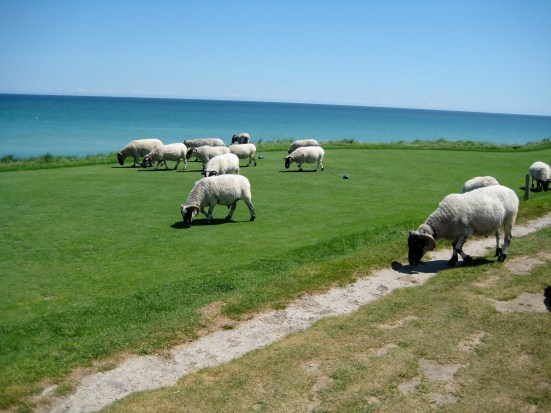
A Cure For Insomnia

The good news is you can take the round with you, tuck it in the memory for later use.

It might have been your best round of the year or the month or the week. It might have been a round on a one of those classic venues you finally got to tick off of your bucket list.

It might have been an adrenaline golf moment-rushing to finish the last three holes of a potential career round against the backdrop of thickening storm clouds dreading the imminent sound of the lightening guard alarm system that would scuttle the whole affair.

Or it might have just been the ethereal experience of a solitary walking round at dusk by yourself when the fact that you could no longer see the ball flight did not matter because you sixth golf sense just told you where it was headed and sure enough when you got there….it was there.

If you are truly a golf obsessive you have reached into this inventory to help you get through a long wait in the customer service line at the cable store.  Possibly you used it to get through that 30 minute claustrophobia of the not so open Open MRI machine or the seventh grandchild eulogy at a distant relative’s funeral.

But possibly the most utilitarian use of the hole-by-hole, shot-by-shot account of one of these cherished golf memories is lying wide-eyed in bed at 3:00 a.m. staring at the ceiling trying to dislodge some irrational circular thought from your brain that is blocking your descent back to deep sleep.

Sure counting sheep is a possibility but reliving par-birdie-par on the way to an insurmountable 3-up lead for the back nine bet can be so much more gratifying and effective.  Just visualizing the ball flight of a perfectly struck 19-degree hybrid working its way dutifully into that Clark Kent phone booth pin position in the back left corner on #2 can start the slide back into recuperative sleep.  Or maybe it is something as simple as a creative pitch and grabber off the steep side slope on the approach into a Par 5 that dutifully creeps on down just behind the hole for a kick-in birdie to win a skin that does the trick.

The therapeutic value of reliving solitary golf memories is best described in the poetic verse Billy Collins.  You might want to put a copy of this in your night stand drawer for quick reference.

__________________________________________

Night Golf

I remember the night I discovered,

lying in bed in the dark,

that a few imagined holes of golf

worked much better than a thousand sheep,

that the local links,

not the cloudy pasture with its easy fence,

was the greener path to sleep.


How soothing to stroll the shadowy fairways,

to skirt the moon-blanched bunkers

and hear the night owl in the woods.


Who cared about the score

when the club swung with the ease of air

and I glided from shot to shot

over the mown and rolling ground,

alone and drowsy with my weightless bag?


Eighteen small cups punched into the bristling grass,

eighteen flags limp on their sticks

in the silent, windless dark,

but in the bedroom with its luminous clock

and propped-open windows,

I got only as far as the seventh hole

before I drifted easily away-


The difficult seventh, ‘The Tester’ they called it,

where,  just as on the earlier holes,

I tapped in, dreamily, for birdie.

Billy Collins

01/19/2019

The U.S. Open At Pebble Beach

With the U.S. Open returning to Pebble Beach this week it occurs to me that few places in American golf evoke as much memory and familiarity as this place. Because of the Majors it has hosted as well as the annual tour event in February, an Open at Pebble is second only to The Masters at Augusta in terms of anticipated drama and can’t miss TV for the true golf fan.

Embed from Getty Images

We know the place, we remember the holes, we recall the glorious things that have happened there. Nicklaus’s 1-iron into 17 in 1972, Watson’s chip-in on the same hole in ’82, Kite’s 1992 mastery of the gale force winds, Tiger’s complete domination of the field winning by a thousand in 2000, and McDowell sprint by one of the dominant players of our time in 2010 are all indelibly marked in our golf psyches.

Embed from Getty Images

It is interesting to look back over the winners of the A T & T tour event since 2005 for some hint to who might end up in the mix this time around. Mickelson has won it four times over the last 15 years, including this past February. With the only thing standing between Mickey and the career slam you gotta think this may be his last and best chance to fulfill that dream. Dustin Johnson owns the place-winning in 2009 and 2010, second in 2014, and we know about his near miss in the 2010 Open losing to Graeme McDowell. Brandt Snedeker has won A T & T twice in a three-year span from 2013 to 2015. Jordan Speith won it in 2017 and we know what his record in Majors is all about.

Embed from Getty Images

It may be well founded to consider the difference of playing Pebble in June as opposed to February in handicapping the field. Beside the obvious pressure difference between playing a celebrity pro-am and a Major championship, I think advantage goes to the guys who can stay out of the seasonal lush greenside rough and who are comfortable putting on bumpy poa annua greens with a bit more pace in them this time of year.

Embed from Getty Images

Pebble has extremely small green complexes and for anyone who cannot keep the tee ball between the hash marks the lack of control on approach shots out of the rough is going to mean lots of green-in-regulation misses. Recovery pitches from thick, long, and wiry rough are going to be extremely challenging to get up and down to avoid dropped shots.

Embed from Getty Images

Poa annua greens are notorious for getting bumpy, especially late in the day when the grass growth kicks in. A TV commentator once pointed out that the great putters on tour don’t need perfect greens to putt well, their putting confidence is so high they think they can make 20 footers across cow pastures. Just remember Jordan’s performance on those awful, patchy things they called greens at Chambers Bay. Sneds, Jordan, Phil, and the old Tiger all come to mind as guys who may see the Poa greens as giving them an advantage over the legions of good putters out there.

Embed from Getty Images

Wind is always the wild card at Pebble and when it begins to puff the skill set of those who can manage trajectory or simply hit through the wind will separate them from many of the wannabe Major contenders. Foreigners like Tommy Fleetwood, Francesca Molinari, Jason Day, and Louis Oosthuizen who have grown up playing in tough windy conditions will find Pebble to their liking if the wind gusts get over 20 miles-an-hour.

Embed from Getty Images

Emotionally managing a sense of history will be very important if one is to win at Pebble Beach. Much like Amen Corner at Augusta these players know what has gone on before at the challenging quadrangle of holes in the middle of this course. The devilish steep downhill pitch into the short par three 7th, followed by restraint and acumen required on the postcard par four eighth, and then two rough and tumbling long seaside par fours at nine and ten will likely derail a good number of contenders on Saturday and Sunday. The guys who can visualize success in this crucial stretch will have the best chance of etching their names on a prestigious U.S. Open trophy associated with this iconic venue.

Embed from Getty Images

I guess what I am saying is it seems very likely that a marquee player like Koepka, DJ, Rory, Phil, or Jordan wins out at the end of the day on Sunday. But maybe, just maybe it is a lesser known guy like Sneds or Fleetwood who is riding a hot putter and is not afraid of the moment or this particular stage for all of it’s notoriety, who finally gets the monkey off his back of “best player never to win a Major”. It happened for Tom Kite and Graeme McDowell at Pebble so it just might happen once again.

Embed from Getty Images

Any way you look at it this is going to be a fun weekend of Prime Time TV viewing at a very recognizable venue…..the cum ratings should be off the chart.

June, 2019

The Backstop Stops Here

The most egregious violation of the spirit of golf currently practiced on all the professional tours, and therefore by definition in all your club tournaments by people parroting their tour idols, is the use of “backstopping” on the green.

Essentially it comes down to one pro hitting a pitch shot in close proximity of the hole and deciding not to mark the ball before a fellow competitor with a similar shot plays their approach.  What results is the opportunity of the second player to use the first player’s ball as a backstop to keep their approach from wandering further past the hole.

Amy Olson and #1 Player in the World, Ariya Jutanugarn, celebrating a successful incident of backstopping on the 18th hole at the Honda LPGA Thailand in 2019

This practice has been supported as some unwritten creed by players on all the professional tours for a long time.  If things like fixing ball marks and divots or calling out a playing partner who has broken a rule are considered practices that protect interests of all the players in the competition, then how can such a practice as backstopping be tolerated?

Select broadcasting personalities have called this out on occasion but truthfully the broader group of golf pundits are as complicit as the players in this travesty by condoning it through their deafening silence when they see it occur.

As you can read in this article from Yahoo! Sports, two well known tour players not only did this in the full view of an international TV audience recently at the Honda LPGA Thailand event but they had the audacity to celebrate the success of their action after it worked out.

As the articles says, there is language in the USGA Rules that specifically addresses behaviors of this type.  It is simply the neglect of tour officials to identify and penalize players who practice this that allows it to continue.

If the term “protecting the field” is to mean anything in golf competition this practice needs to be called out by the powers that be on all the tours.  For the good of the game, they must insist that players cease and desist from this foul practice immediately.

Yahoo! Sports (February 2019)

(Click to read the recent  Yahoo! Sports article on backstopping on the LPGA Tour)

Cartesian Ruling

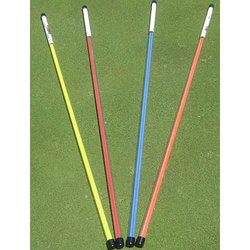
In a creative use of a pair of alignment sticks from Richard Sterne’s bag, a European Tour official was able to assure Sterne that he was properly taking his relief drop from the cart path on the 18th at the Abu Dhabi HSBC Championship today.

Crossing the two alignment sticks as an effective protractor the official made sure Sterne’s free drop would be no closer to the hole.

Now Sterne just had to remember to drop the ball from knee high and avoid a penalty from the new rules for 2019.

Never realized that Rene Descartes was a member of the R & A.

Evolution Of The Golf Ball

Likely you have seen in a golf memorabilia store the rack of old golf balls that depict, much like this image of the lineage of man, the evolution of the modern golf ball from its humble beginnings.

What started out as a small croquet ball became a hand-stuffed leather spheroid before being molded from a rigid latex extract called gutta percha and eventually making it to the more reliable and durable wound rubber band ball that we played for almost 100 years.

(Click to read the detailed timeline of golf ball evolution)

All of this has been obviated by material technology that allows manufacturers the ability to customize the feel and performance of the ball to the perceived preferences of the wide variety of players.

But many of us pine for the good old days of wound balata balls that actually spoke to you when you miss-hit them badly by providing a wry smile demarcing your swing folly.


It’s About Time!!

The European Tour has finally stepped out of the box and made the bold move that the PGA Tour should have made ten years ago-they have instituted a Shot Clock…..at least for this week.

Father time is looking over their shoulders….

Embed from Getty Images

.

At the European Shot Clock Masters each player has 40 seconds to play his shot or it is going to cost them.  Simple system….immediate results.  The rounds over the first two days were close to 30 minutes faster on average.  There has been only one penalty assessed so far.   And the scoring average for the event has dropped significantly.

Nothing like empirical evidence.  Case closed.  Make it permanent!!!

We were chiming about slow play on tour since 2014 on this site in our piece “Slow Play-Throw A Flag” and I still like the drama of tossing the rag and pacing off the penalty.  But let’s take what we can get.

If all the tours adopted a similar system the accumulated tedium in the broadcasts from tortoise play would be disappear overnight.  The effect would flow to the recreational arena in no time.  Return of the sub four hour round!!  What a welcome sight that would be.

Hopefully the interest lobby for long broadcasts-the advertising community-will not continue to hold sway and the PGA Tour will put one of these experimental events in their rota.  We can finally move closer to a universal acceptance that slow play is one of the real disincentives to playing the game and there is something we can do about it!!


The New Rage-Approach and Putt Courses

There is a seminal trend building in the world of golf course construction to build short courses at destination golf resorts.  The trickle has now developed into what looks like a steady stream and I believe it is now starting to spread to high end private clubs as well.  For those who are looking at initiatives to “grow the game” this is very good news indeed.

For those of us with long memories, we can recall in the days of poodle skirts and weejuns when date night often meant a visit to a skating rink, bowling alley, miniature golf, or pitch n’ putt golf course with our honey.  Who did not look forward to putting an arm around her as you skated to carousel tunes or gently instructing her on proper grip of the bowling ball or the putter.  Unfortunately these fun “family” entertainment venues effectively went the way of the hoola-hoop and got wiped as the value of real estate in the exploding urban suburbs saw them replaced by more lucrative strip shopping centers, motels, and garden apartment complexes.

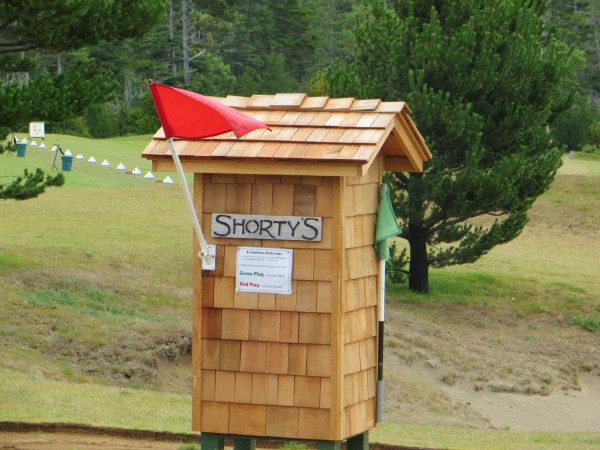
Fast forward about 50 years and Mike Keiser gets the notion that at a destination golf resort like Bandon Dunes would be a perfect place to bring back the fun and high jinx of a short Approach and Putt Course (I prefer this traditional name from the Golden Age to the more crass Pitch n’ Putt moniker of later years).  From the beginning Keiser had the Par 3 “Shorty’s Course” just off the driving range at Bandon Dunes.  It was opened on alternate days when range balls were not flying in that direction.

Availability indication for Shorty’s-Green Flag it is open/Red Flag it is closed

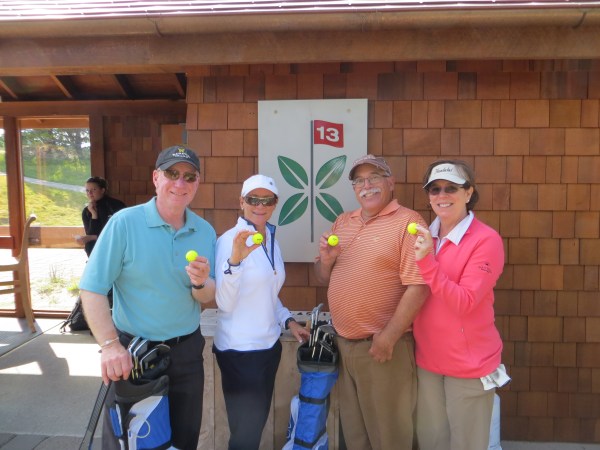
But this was not good enough for Mike Keiser.  In 2012 the resort opened a Bill Coore and Ben Crenshaw design-Bandon Preserve-a fully functional approach and putt course with real tees (and lots of them), real green complexes, and a fully stocked adult beverage dispensary in the middle.  The draw was instantaneous as folks found 13 real golf holes could be played in an hour and a half with a couple of clubs, a drink in hand, and a festive attitude.  There were no rules-play with as many people in your group as could corral, make as much noise as you like, and play the holes from any distance that met your fancy.

Four patrons at the Preserve….light carry bags…a bet…and some libations coming soon..

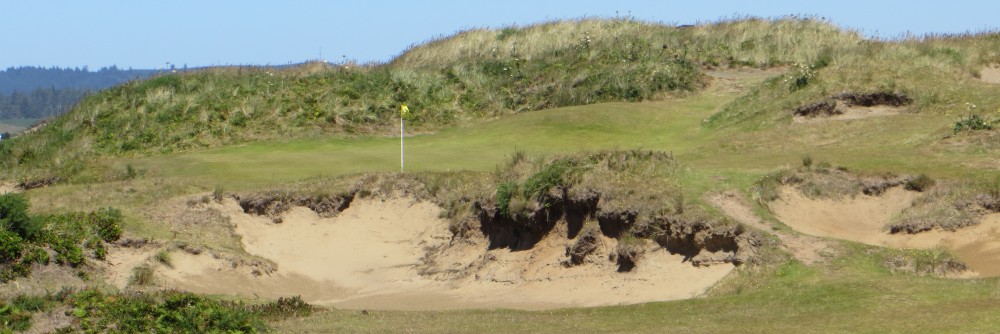
What was never discussed was that, with serious elevation changes, real green complexes, and a endless teeing grounds to choose from, this was a perfect place to hone your links approach game for the next day’s round.  It was a D.I.Y. Approach and Putt golf experience that became the delight of all the “retail golfers” who came to the resort.

The second hole at Bandon Preserve…that is a real serious bunker!!

Truth was this was not really a new idea at all.  Back in the 1930’s Bobby Jones asked Alister Mackenzie, the designer of Augusta National, to design the Augusta Approach and Putt Course for the members.   The innovative approach MacKenzie took was to have 9 double greens so the front nine could be played in one direction and replayed in reverse as a unique back nine.  Unfortunately with the pressures of the depression weighing on the operation of the club , it never saw the light of day.

Proposed Augusta National Approach and Putt Course (courtesy of National Park Service)

With the success of Bandon Preserve others started to take notice and various iterations starting popping up at resorts and high end private facilities across the country.   It is safe to say that these things are becoming standard fare as high end resorts are looking at them as combined family playgrounds and happy hour entertainment centers.  It is just another way to engage their patrons of all ages with new and different entertainment options.

New offerings include Tiger Woods putting his name on “The Playgrounds”,  a 10-hole short track at the new Bluejack National in Texas. Tom Doak did a short course in 2017 at Ballyneal Golf Club in Colorado.  Gil Hanse and Jim Wagner just finished “The Cradle” a playful addition to the PInehurst Resort.  Most recently, Jordan Speith had a hand in creating a 6-hole Par 3 Course called “The Lower 40′ next to the campus of  his alma mater,  the University of Texas, Austin.

The next wave of these approach and putt courses is likely to happen at a high end country club near you.  Since it can be done on a small parcel of land they already own at a fraction of the cost of a full blown 18-hole course, private country clubs will see these as a way of engaging new players, kids, and their older members.   These facilities are a great way to enhance an outside event or create a unique multi-generational club competition.

The best part is that players need only a couple of clubs and an hour to get a pretty robust golf experience.  Talk about a great vehicle for growing the game.

As they saw at the Preserve, these tracks also serves as an full-fledged short game practice facility which is much more interesting than a single practice green and a couple of bunkers.  Private clubs struggling to attract and retain membership will begin to look upon an approach and putt course as essential as the health club and the lap pool in meeting the needs of it’s membership.

Oooo’s, Ahhh’s, and Oy’s

It is pretty standard fare to hear the winner at the Open Championship remark how cool it was to play in front of the most knowledgeable golf fans in the world.

For anyone who has played links golf in the British Isles they know that this is true. In any of these small hamlets or large towns associated with the famous links venues the level of golfspeak is off the charts, no matter gender or age of the person you are talking to. Golf is just part of the fabric of everyday life for the golfing public in these communities.

This was driven home to me as I was riding in my car attentively listening to the streaming broadcast of the Open Championship from Royal Birkdale. It was like trying to follow a Senator baseball games on the radio on a sultry summer night back in the late sixties on my way to the Hot Shoppes to meet high school buddies. I admit sorting out the accents and some of the expressions of the British announcers were a challenge.

Truthfully, listening to these broadcasts, I did not need the play-by-play to discern how the shot just hit had turned out. Reading the nuances of the murmurs of the British fans picked up on the field microphones I knew whether Bubba’s big curve had avoided mounds in front and trundled up next to the flag for an eagle opportunity (an Oooo) or Kootch’s ball had failed by two feet to carry the mound’s edge and had been sucked back into the collection bunker (an Ahhh) or whether Jordan had actually driven it off the planet on #13 down the stretch on Sunday (an Oy).

The collective groans were discordant when the crowd witnessed this tee shot
Embed from Getty Images

Listening to the broadcasts from the Open there are no awkward “Go In The Hole” or “Baba Booey” shouts interrupting the sound track as we witness in every PGA Tour broadcast. To me this is the signature of the pervasive ignorance of far too many American golf fans who spend way too much time drinking beer whether watching or playing golf.

The fans at these events across the pond are sophisticated, they all play the links game regularly. They know how hard it is for the players to manage the trajectory of a tight approach into a 30 m.p.h. cross wind out of the wispy grass or how to use the ground as their friend on an intentionally mis-directed pitch into a back pin location. They even get the adjustments required to line and speed by the effect of the winds on the putting.

Rory has to manage the environmental parameters on this approach in the 18th
Embed from Getty Images

On Saturday walking up the 18th hole Spieth was getting ready to do his green research as he pulled out one of the many reference manuals he carries in his back pocket. Kootch walked over to him and said of the cacophony of applause they were walking into, “It doesn’t get any better than this”. Being mature beyond his years Jordan recognized that Kootch was right and put the topo book back in his pocket. The two of them then just basked in the crowd adoration walking up to the green.

Saturday’s memorable shared walk up to the 18th Green….
Embed from Getty Images

Then there was the incredible finish on Sunday. That wayward right tee shot of Jordan on #13 on Sunday was partially intentional. In an interview he said on that hole you cannot drive your ball into the fairway or the hard ground will feed it into an halacious fairway pot bunker through the fairway. You have to aim this blind tee shot at the right rough. He just overdid it a wee bit.

It took a while but Jordan found a way back into the hole from the driving range

Embed from Getty Images

But for all the post game pushback for the time it took for him to sort out his options and take his drop, I am sure all the fans on that hole fully appreciated the mental machinations Jordan was going through to optimize his chance to make that magnificent bogey. These fans understood they were watching golf history as he responded to the emotions of the crowd and played the next four holes five-under par to claim the Claret Jug in a display of links golf aptitude becoming of a British native.

Emotion and respect of two friends and competitors when the game was done…
Embed from Getty Images

The humility and emotion shown by both Jordan and Kootch in presentation ceremony on Sunday afternoon speaks to their appreciation of the sophistication of these British golf fans. Jordan even did the Hale Irwin high-five run around with the Claret Jug in his hand to let these masses touch the gravity of this moment. It seemed like a spontaneous reaction to the engaging pulse of the crowd.

Jordan shares the moment with the adoring masses….

Embed from Getty Images

It is not just platitude when the Open Championship winners say it is special to play in front of the most knowledgeable golf fans in the world. Jordan’s actions speak to this and, much like Young Tom Watson or Arnie before him, I am sure he is destined to be a favorite son of these folks every time he tees it up in an Open Championship over the next two decades.

Reflecting on what it means to add his name to all those other names

Embed from Getty Images

Erin Hills Designed For The Wind

When Dr. Michael Hurzdan, Dana Fry, Mike Hurzdan, and Ron Whitten developed this course with the blessing of Mike Davis and the USGA for a U.S. Open Championship, they presumed the wind would be the wild card in making it a championship test.

For three days there was no wind to speak of and with rain softened greens the players had their way with this layout mocking par along the way.   But winds of 20+ mph greeted them for the Sunday round of this Major Championship and the design features of this layout will have their say in the outcome of this U.S. Open.

USGA got its wish….blue skies and winds up for the final round

Embed from Getty Images

.

Unlike any U.S. Open venue in recent memory, Erin Hills is not about narrowed playing parameters with a long grass punishing any miss on drive or approach no matter how slight.   Historically it is Hack-A-Mole pitching from 6 inch green side bluegrass where it is more luck than talent in saving a par.

Instead Erin Hills is a roomy minimalist design that traverses rolling and swerving topography with innovative green complexes that put a premium on using the ground as your friend to get at cloistered pin positions.  There is tight short grass around these green complexes which have severe fall offs and punishing bunkers awaiting shots without sufficient intent.  A creative and innovative recovery short game, much like what you see on display at many on the European Tour events, will pay great dividends for the first time in memory in a U.S. Open.

Brian Harman’s dexterous approach into the Par 4 Third Hole

Embed from Getty Images

.

In watching this week the look and feel of Erin Hills reminds me of some of the links jewels I have played on the Emerald Isle of Ireland.  The unrelenting design challenge of Pat Ruddy’s European Club and Eddie Hackett’s Enniscrone come to mind.  Both have swerving undulating topography, tall fescue to greet wayward shots, and raised, tilted, and undulating green complexes where angle of attack can make a big difference in getting an approach close.

Rickie Fowler misses his line off the tee and pays the steep price

Embed from Getty Images

.

In a similar way Erin Hills has contoured driving areas that favor a particular shot shape to find the advantageous approach position or stay out of the tall fescue.  Into the greens there are plenty of forced carries required, not many places where the player can bounce it short and feed it on.  When the wind gets up it becomes more of an issue of strategic use of the interior green contour to slow and feed the approach to the pin of the day.

The early broadcast featured the voice of Gil Hanse, one of the premier designers of this generation, and he contributed valued insight into how the design will play into the strategic approach required to control shot outcome for those in the thick of this championship run.

The heightened wind makes negotiating the sharp edges of the green complexes and avoiding the evil decree of the near misses all the more difficult.  Short side recoveries in the cross winds become much harder to convert into par saves. The slightest misjudgement of pace on a downwind pitch can result in an unexpected roll out off the putting surface leaving an equally problematic four-story pitch back up the slope.

With the precipice greens totally exposed to the wind’s effect reading the greens can be like reading a Ouija Board.  Figuring control of the line and roll out to avoid knee knocker six-foot comeback putts is a must to avoid a scorecard hemorrhage.

Jordan negotiating his approach putt on the windswept 9th green

Embed from Getty Images

.

Lengthening of the downwind short par three ninth from 130 to 170 may actually help the guys since it is easier to flight down an eight iron than a wedge or sand wedge.  The problem remains the Roberto Clemente Memorial pin position in a tight Bermuda Triangle in the back of the green.  Missing the flag by five paces in any direction may mean calling in the Coast Guard for search and recovery.

He pointed out that the short par fours and the two five pars on the back nine may be the hardest to reconcile.  Making a decision to take on one of these “driveable” four pars is enticing but the degree of difficulty of recovery if you miss these blinded targets makes that decision somewhat specious.  Same goes for hoisting a long and high approach at flags on the two potentially reachable par fives. With the thought of a game changing eagle in mind the margin of error from hero to goat could be four steps in one direction or the other.

No question the unique design of Erin Hills coupled with the stiff winds that took four days to appear will make this Sunday round look more like an Open Championship finish at Muirfield than a typical U.S. Open finale.