Westchester Country Club

Westchester Country Club Logo

In the early 1920’s John McEntee Bowman, the owner of the Biltmore Hotel Group, decided to build a destination sporting resort close to Manhattan that could accommodate the members and guests with the finest sporting facilities and services for their recreation.  It came to include 45 holes of golf, tennis, polo, swimming, boating, skating, skiing, and shooting as well as a race track, casino, beach club, and a private lagoon.

His idea was members could come for long stays in the hotel or their private homes and have all services provided by the hotel staff. He spent over $6 million bringing this ambitious project to fruition and 1200 members joined in his first round of solicitations.

Walter Travis did the design of the championship West Course in 1922 and it came to be the site of an annual PGA Tour event from 1963 to 2006.  In 2007 it was home to the Barclays Classic in the Fedex Playoffs and hosted Senior Tour and LPGA Tour championships in 2011 and 2015 respectively.  As the Westchester and Buick Classic this was a favored stop by the tour pros each year because of the hospitality offered and the old school challenge of the layout.  The list of winners is a who’s who of the greatest champions of multiple generations.

Past Champions

Look at the photos of past winners. Recognize anyone?

The West Course is truly a challenge to the most skilled player because the extreme topography and forced carries make it play much longer then it’s posted distance.  They do not even bother to put out a forward tee for the membership on this course encouraging the shorter hitters to play on the more user friendly South Course.

A recent renovation by Tom Fazio and Tom Marzolf in 2020 has cleared out a huge number of trees opening up panoramic vistas from high teeing areas throughout the course.  The renovation added width to the driving areas bringing back original strategy to a thoughtful player navigating the course.  The hilly terrain with many green complexes set up on high plateaus makes for blind approach shots that require absolute trust in your caddy’s advice for proper club selection.  I must say that Travis did a brilliant job finding a playable routing given the extreme terrain so do not succumb to visual intimidation when you step on the first tee.

The full course descriptive of the hole-by-hole strategy can be found in link at the bottom of this posting.

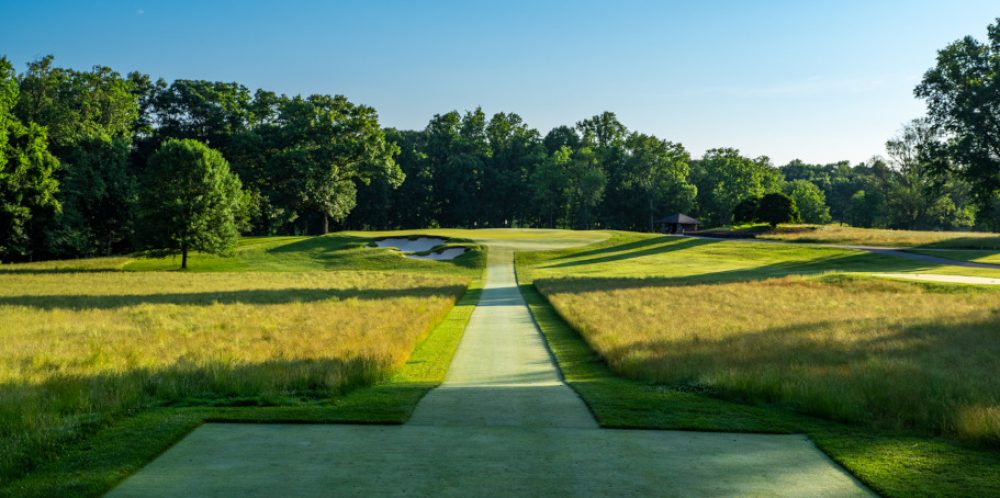
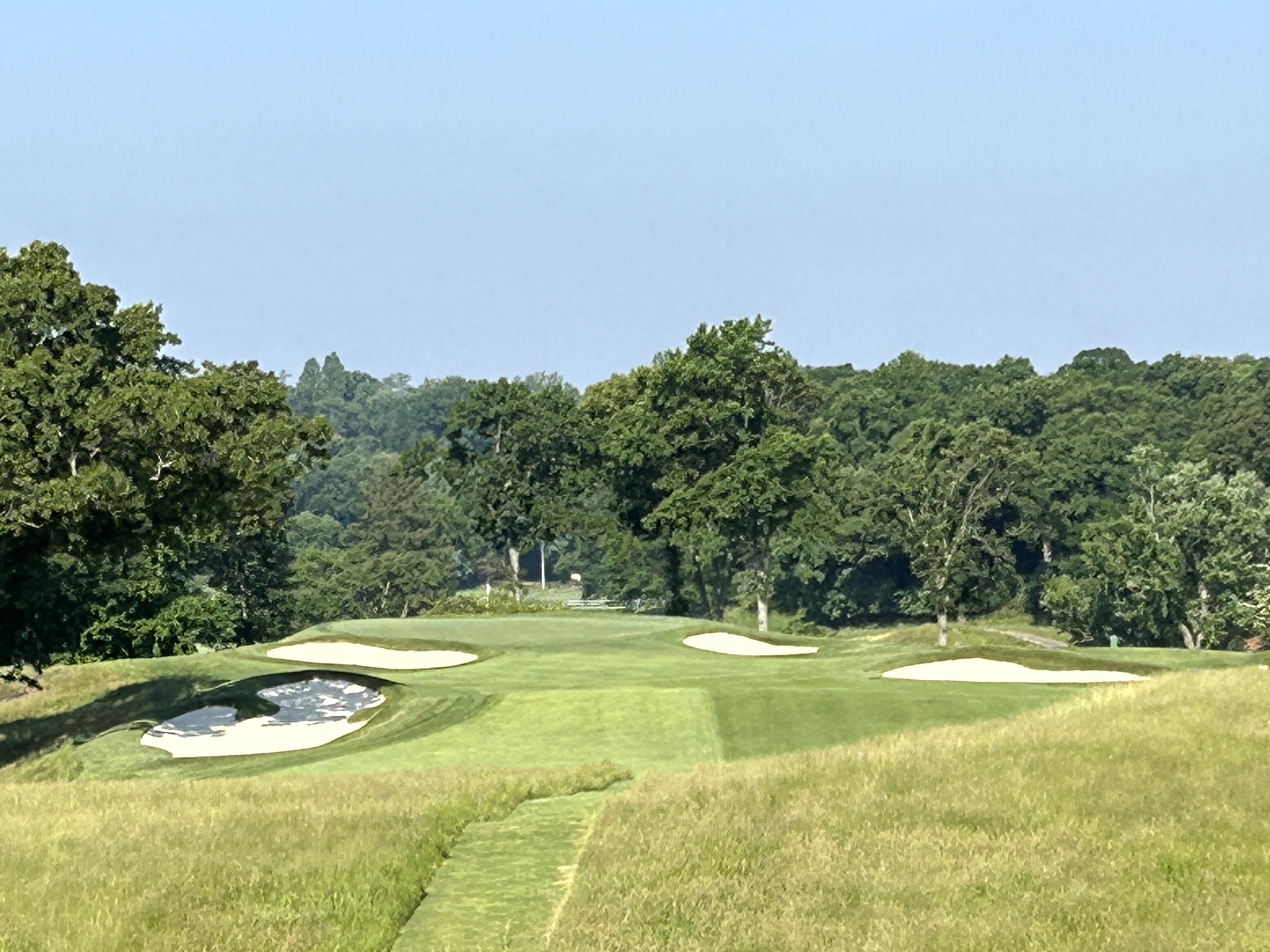
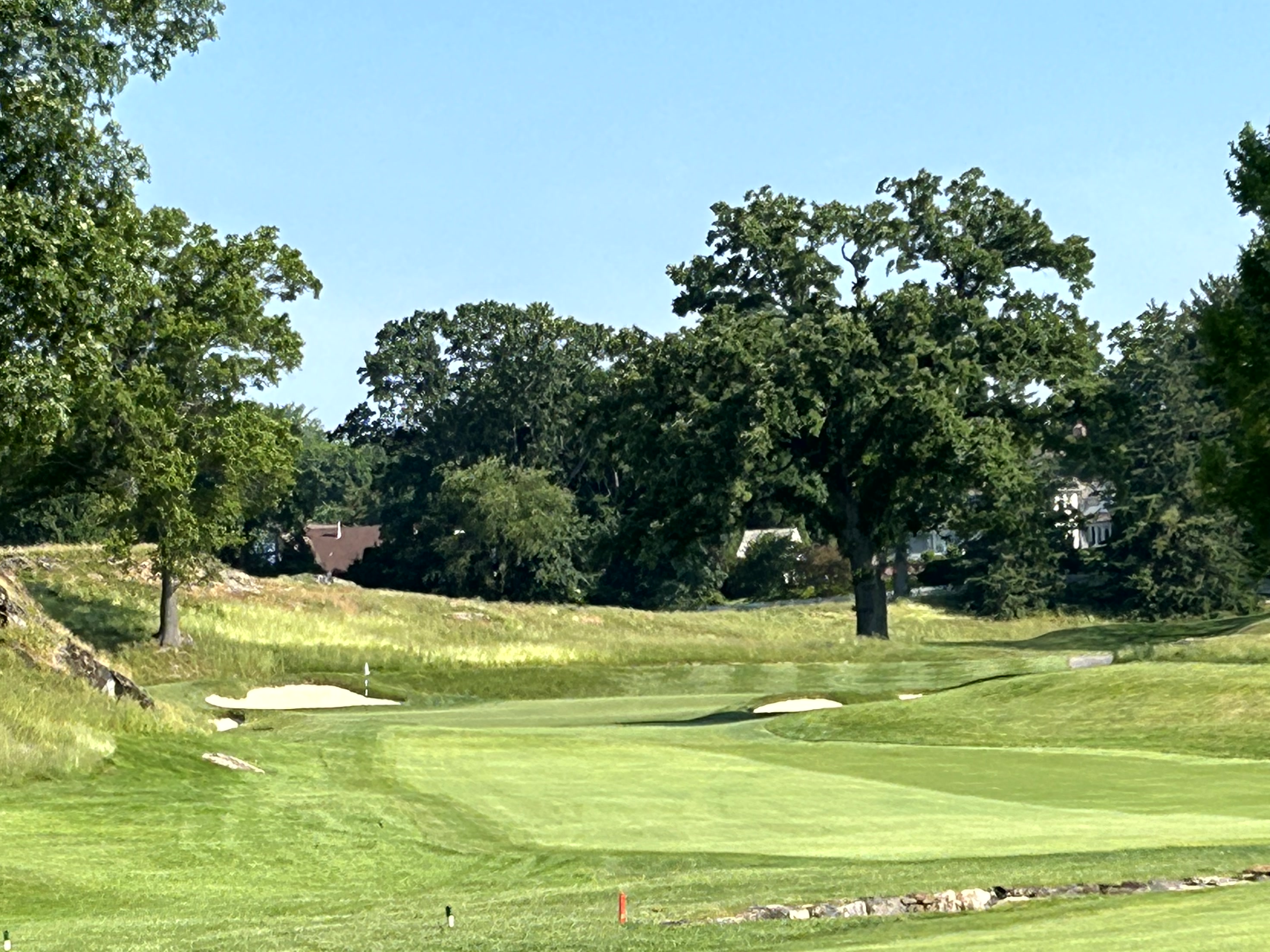
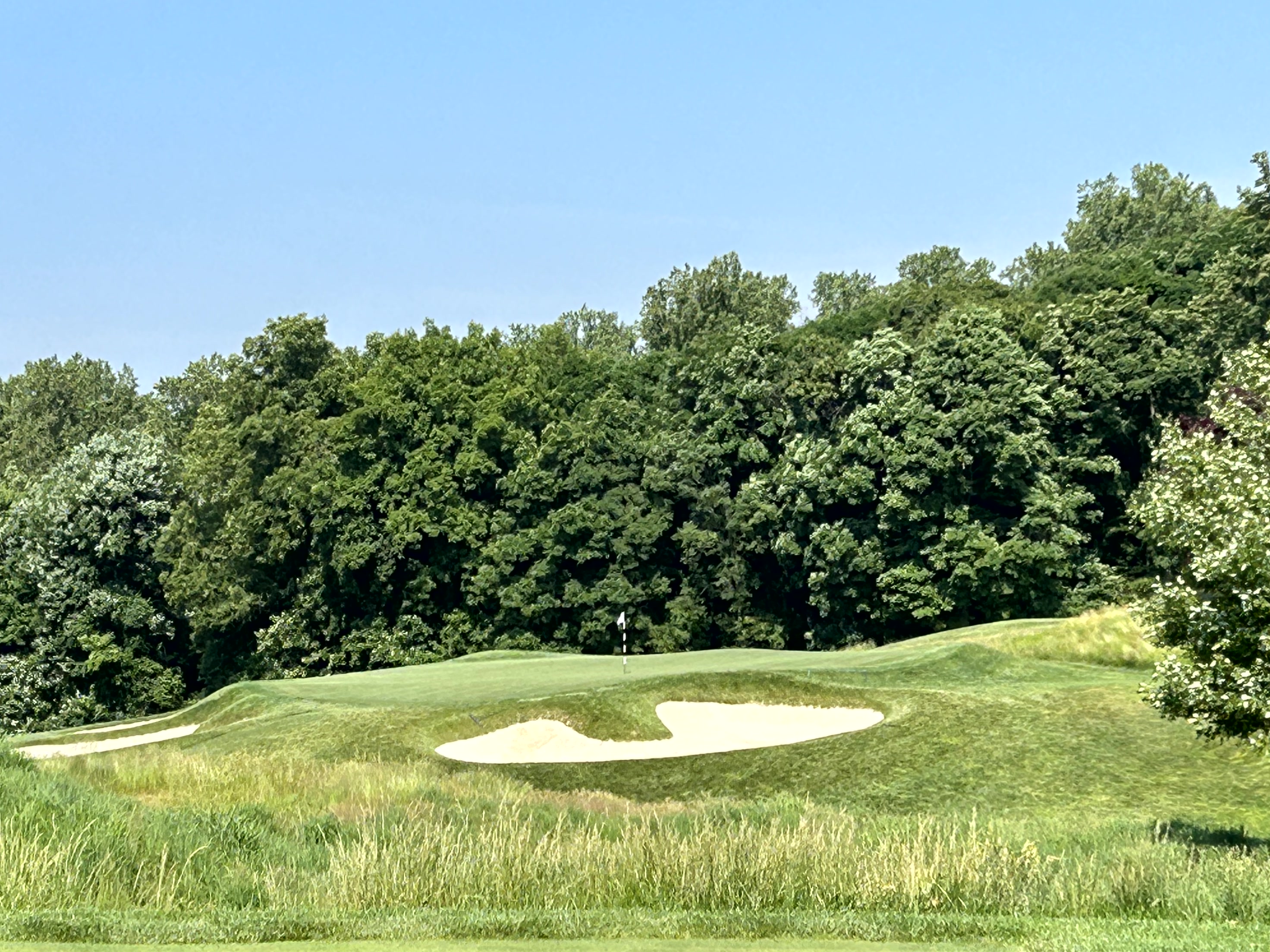
WC 1 Par 4

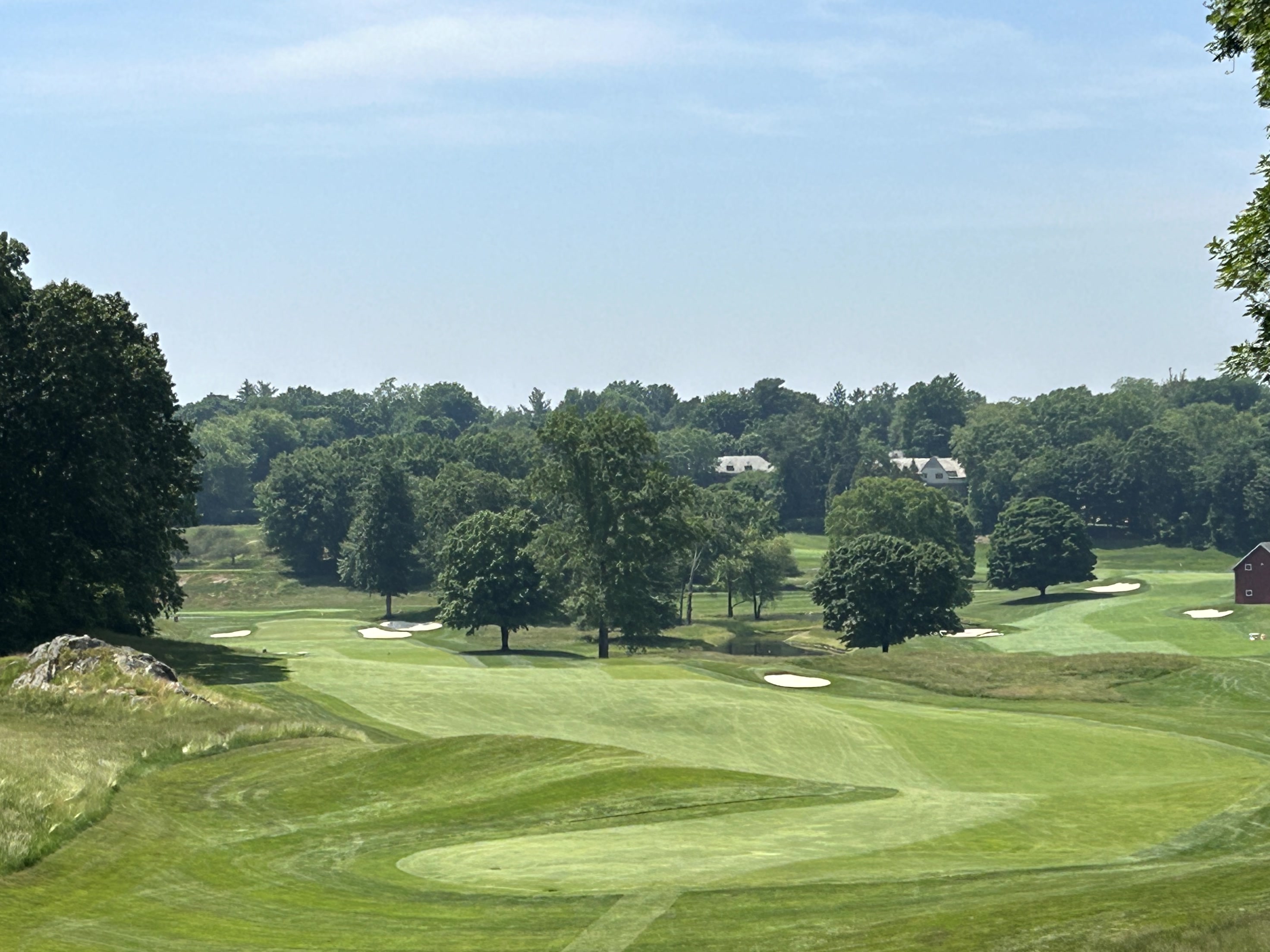
The opening hole from the foot of the hotel gives you a drop dead look at a green setting three stories down.

WC 2 Par 4 2

Par four second is your first forced carry off the tee setting up a wrap-around draw approach into a green setting well to the left.

WC 3 Par 5

The third is a perfect example of add-on yardage.  The steepness of the incline to the green adds 50 yards to the number on the scorecard.

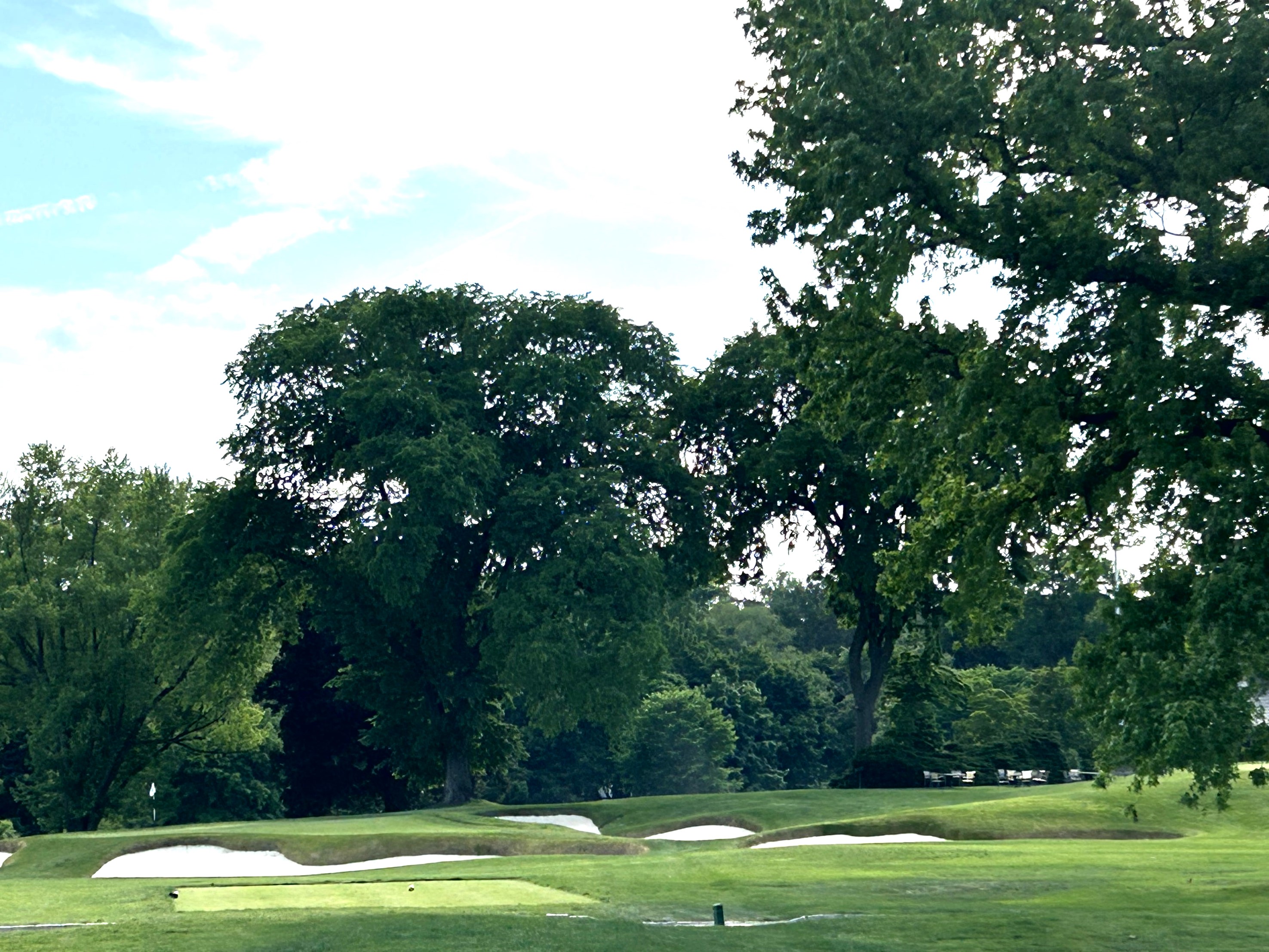
WC 5 Par 3

First on-level hole is a forced carry par three at number four that looks easier then it plays.

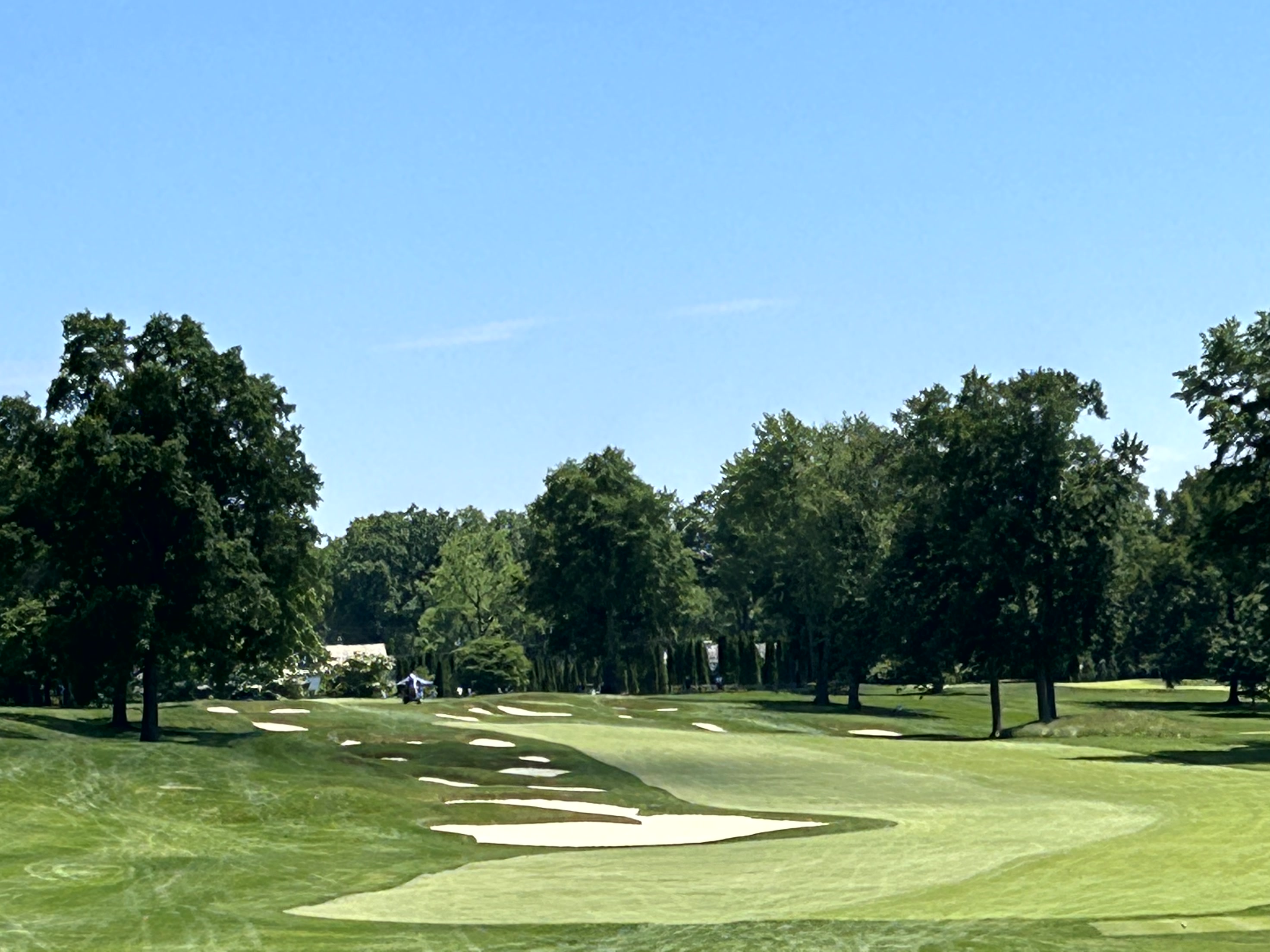
WC 8 Par 4

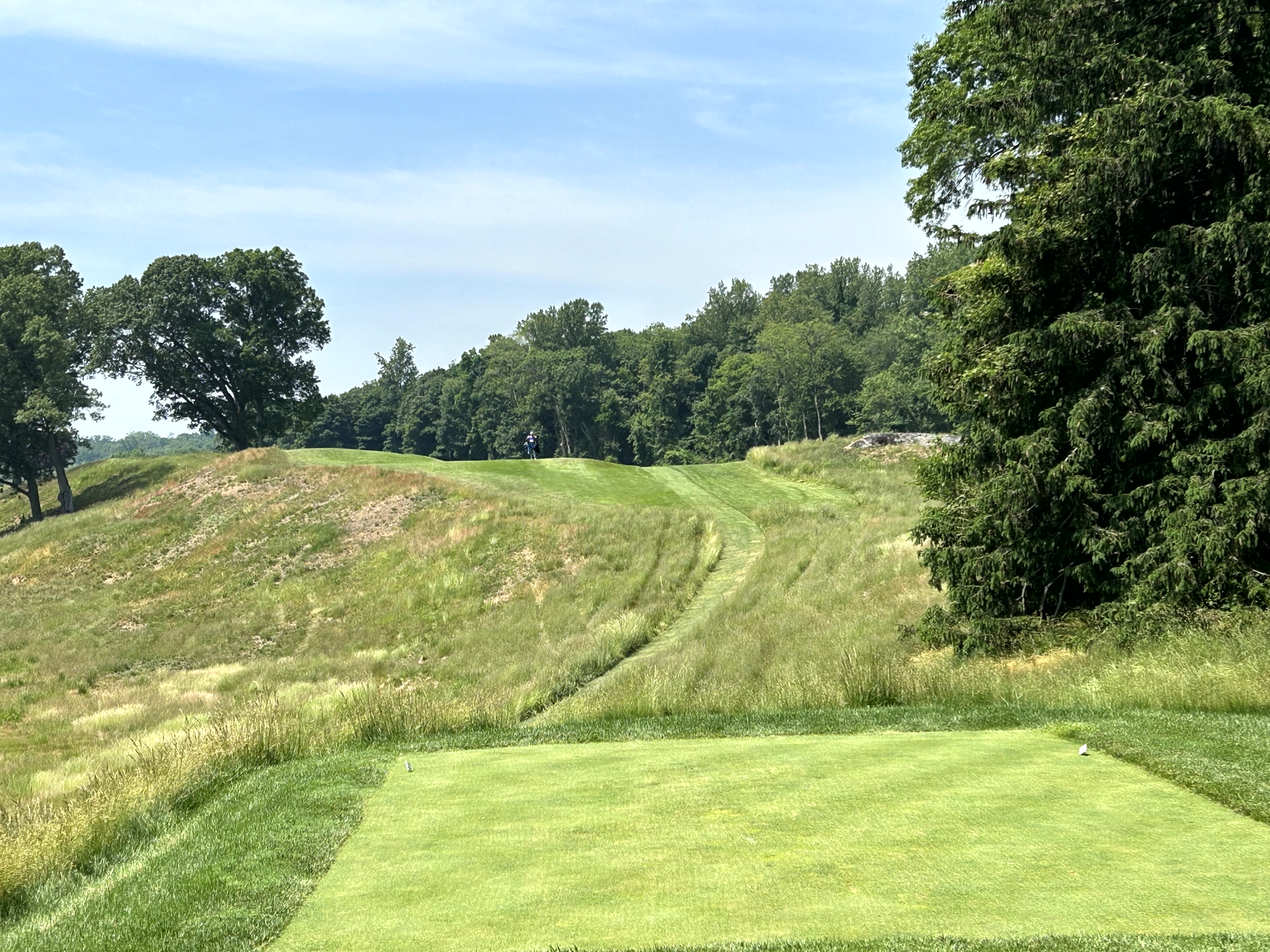
The eighth is another par four that climbs a steep hill on the drive and a steeper hill on approach to the green.

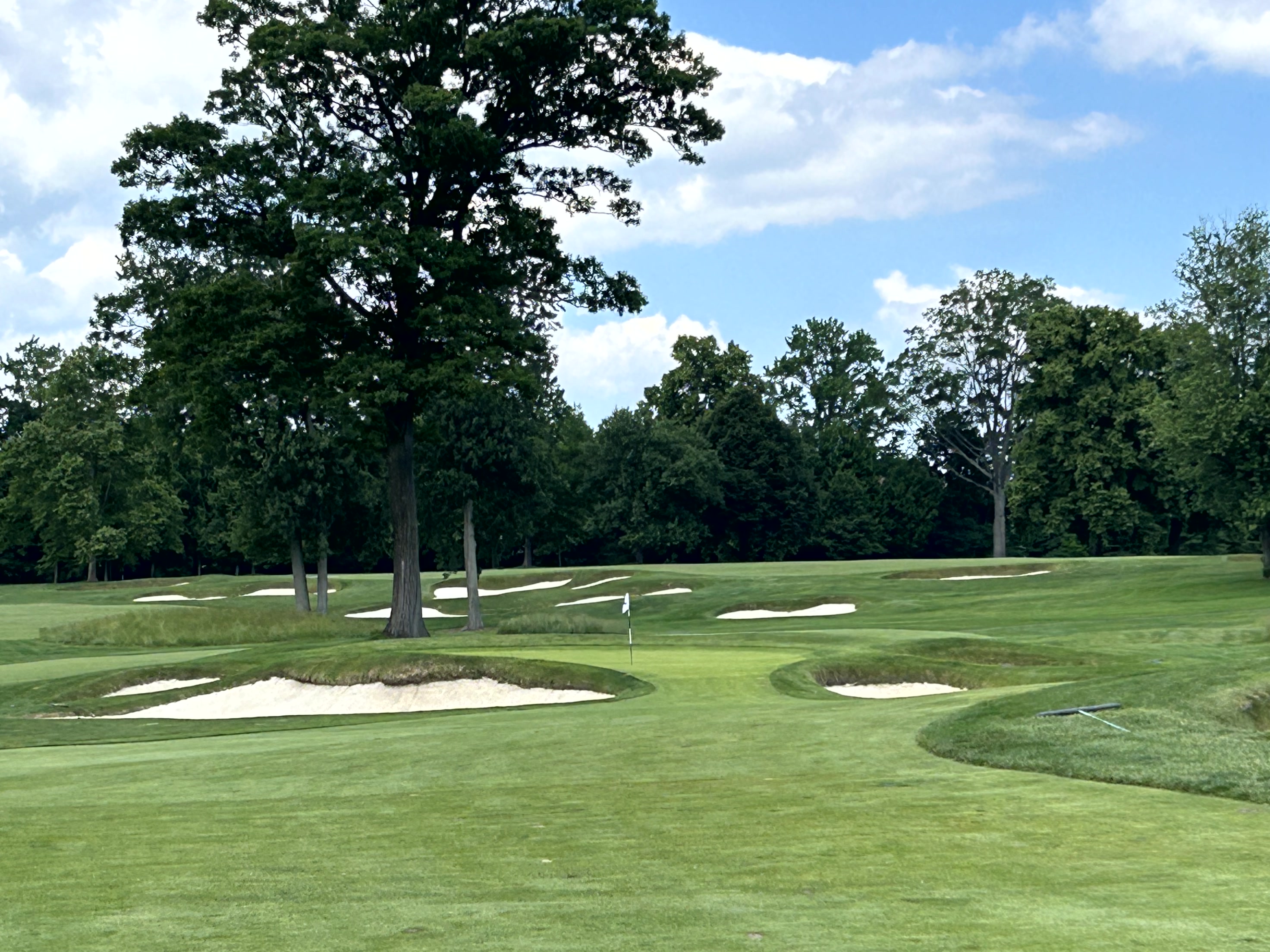
WC 13 Par 4

The blind shot on the thirteenth is off the tee but what waits on the other side is a visual look up the hill to a beautiful green setting.

WC 14 Par 5 2

The tumbling par five fourteenth wraps around the corner and presents a good scoring opportunity.

WC 15 Par 3

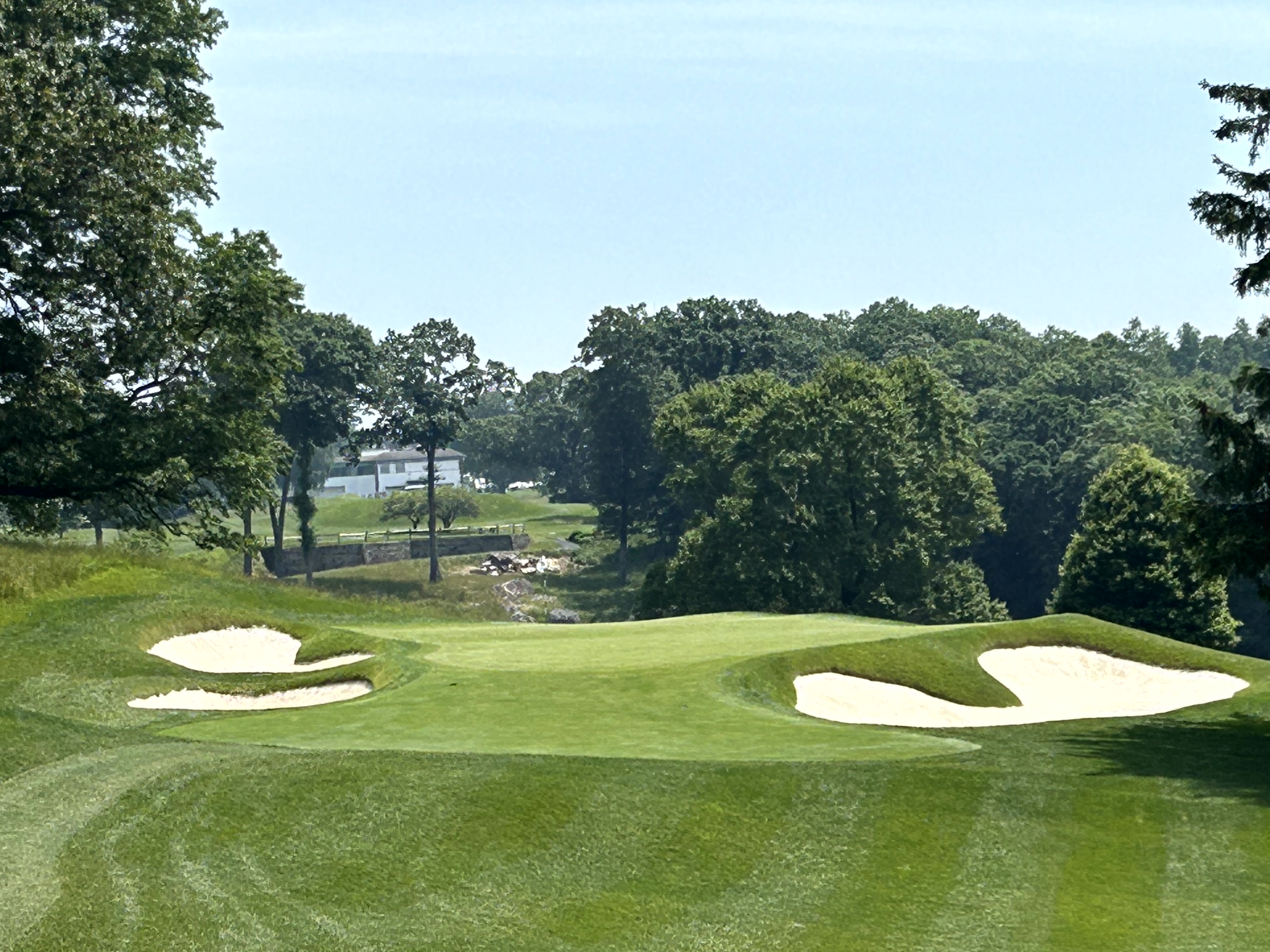
The next hole is one of the most beguiling one-shot holes of the day.  Not more then a short iron but very little room to miss on any side.

WC 17 Par 4

Seventeen has the only forced carry over water on your approach shot you will see today.

WC 18 Par 5

The final hole is a death march back up the hill you came down on the first and it plays much longer as a result.

All I can say is that this course is a big boy challenge but if you play from the appropriate tee and listen carefully to your caddy’s advice it is a memorable and enjoyable golfing experience.

Rye, New York

Architect:        Walter Travis (1922),  Tom Fazio/Tom Marzolf (2020)

Par     Rating   Slope   Yardage

Blue/Black      72        73.1     144      6718

Blue                 72        72.4     142      6505

White              72        70.9     136      6143

White/Green    75        73.3     141      5544

If you would like a printable PDF of this posting including a yardage book quality hole-by-hole description of how to play the course hit the link below.

(Click to get the the printable text of this posting)

Quaker Ridge Golf Club

Quaker Ridge Logo

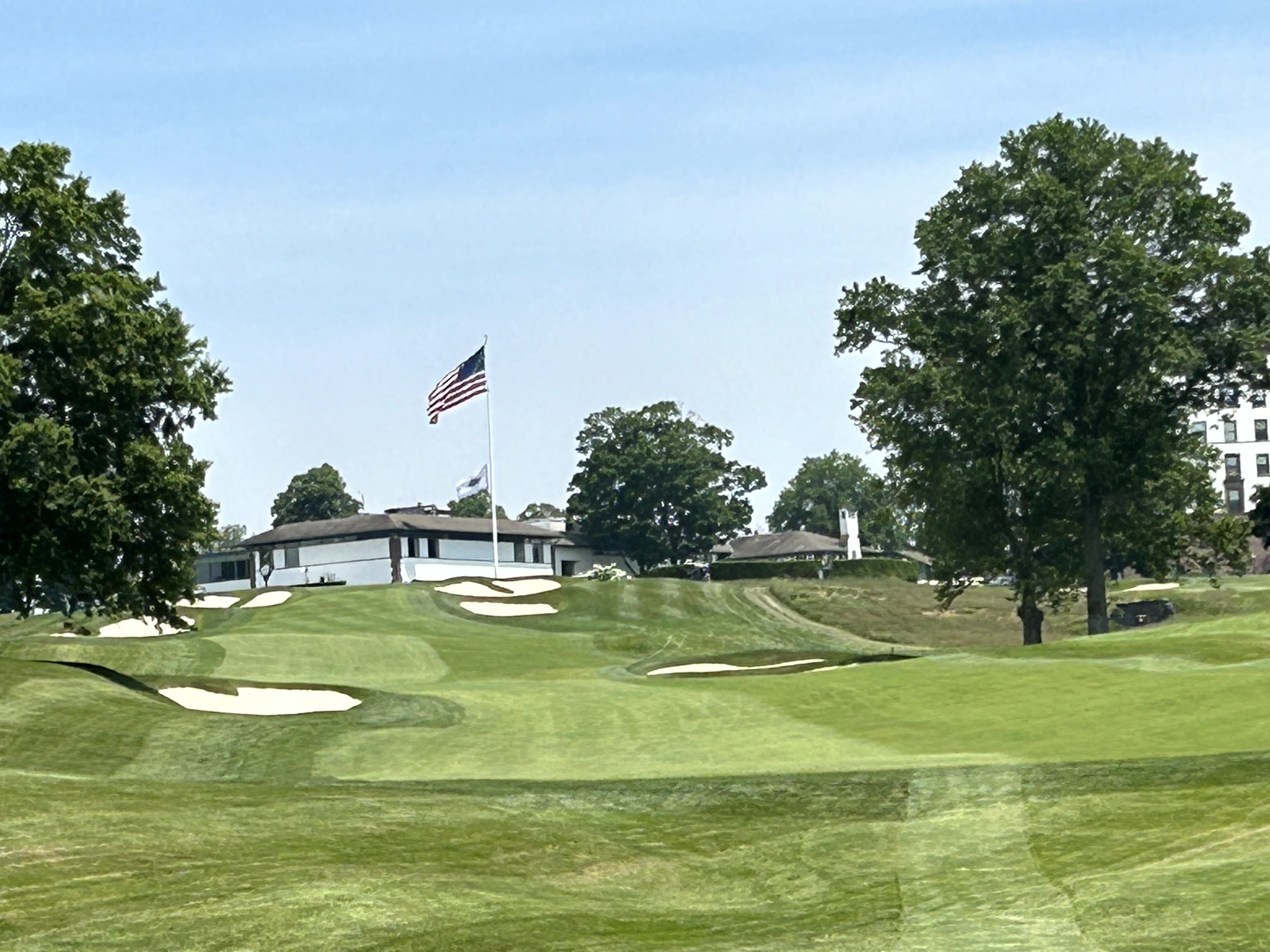
Quaker Ridge is an Albert Tillinghast Golden Age design that sits directly across the street from its more famous cousin Winged Foot, which has hosted numerous major championships.  Truth be told by those who know, Quaker Ridge is built on a more topographically interesting piece of ground than Winged Foot and the result is a strategic offering with all the Tillinghast design features that is a pure delight to walk and play.

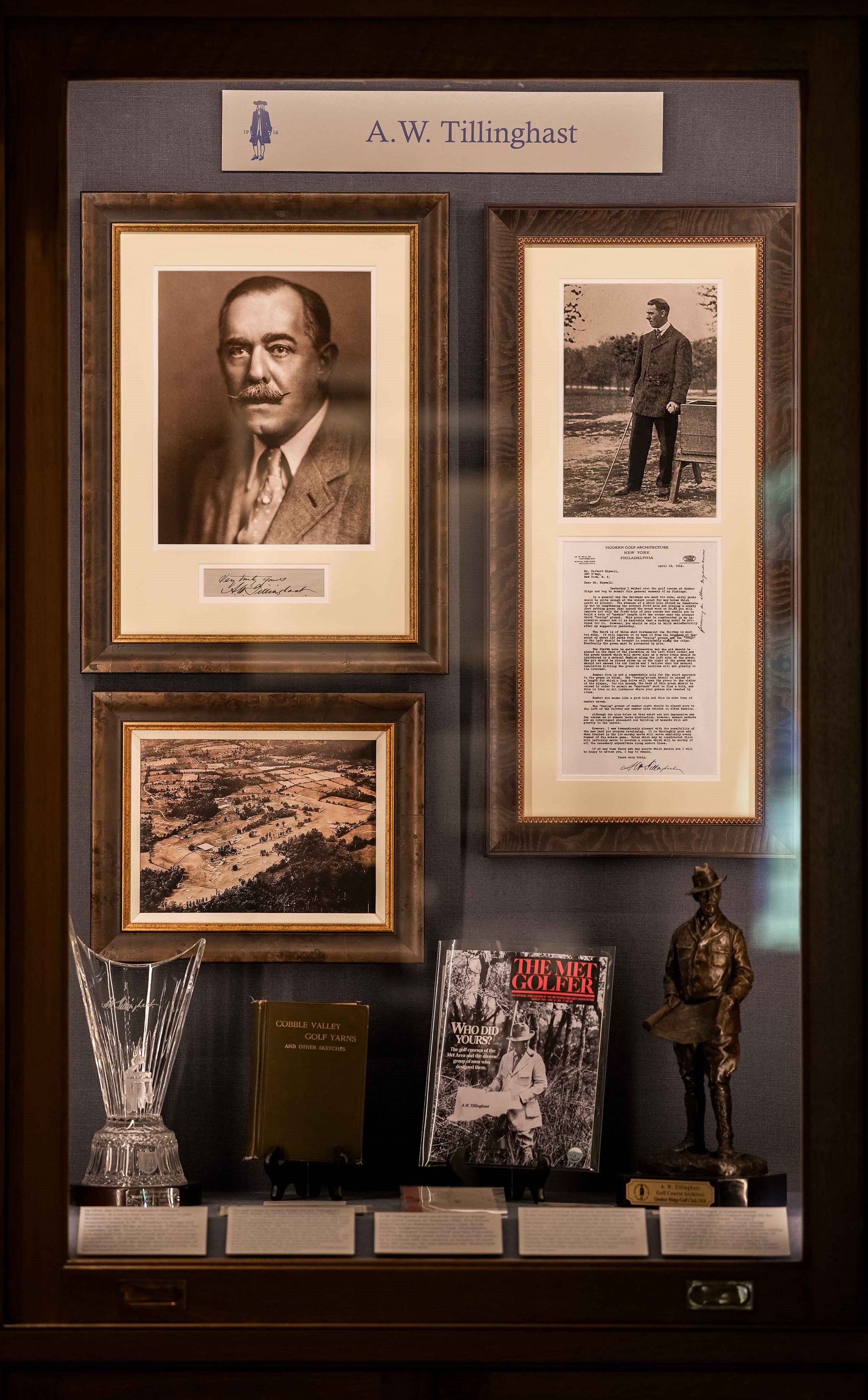
QR Tillinghast

Plenty of kudos in the clubhouse for A.W.’s design efforts.

It too has hosted it’s fair share of National and Metropolitan New York championships which is a testimony to it’s design pedigree.

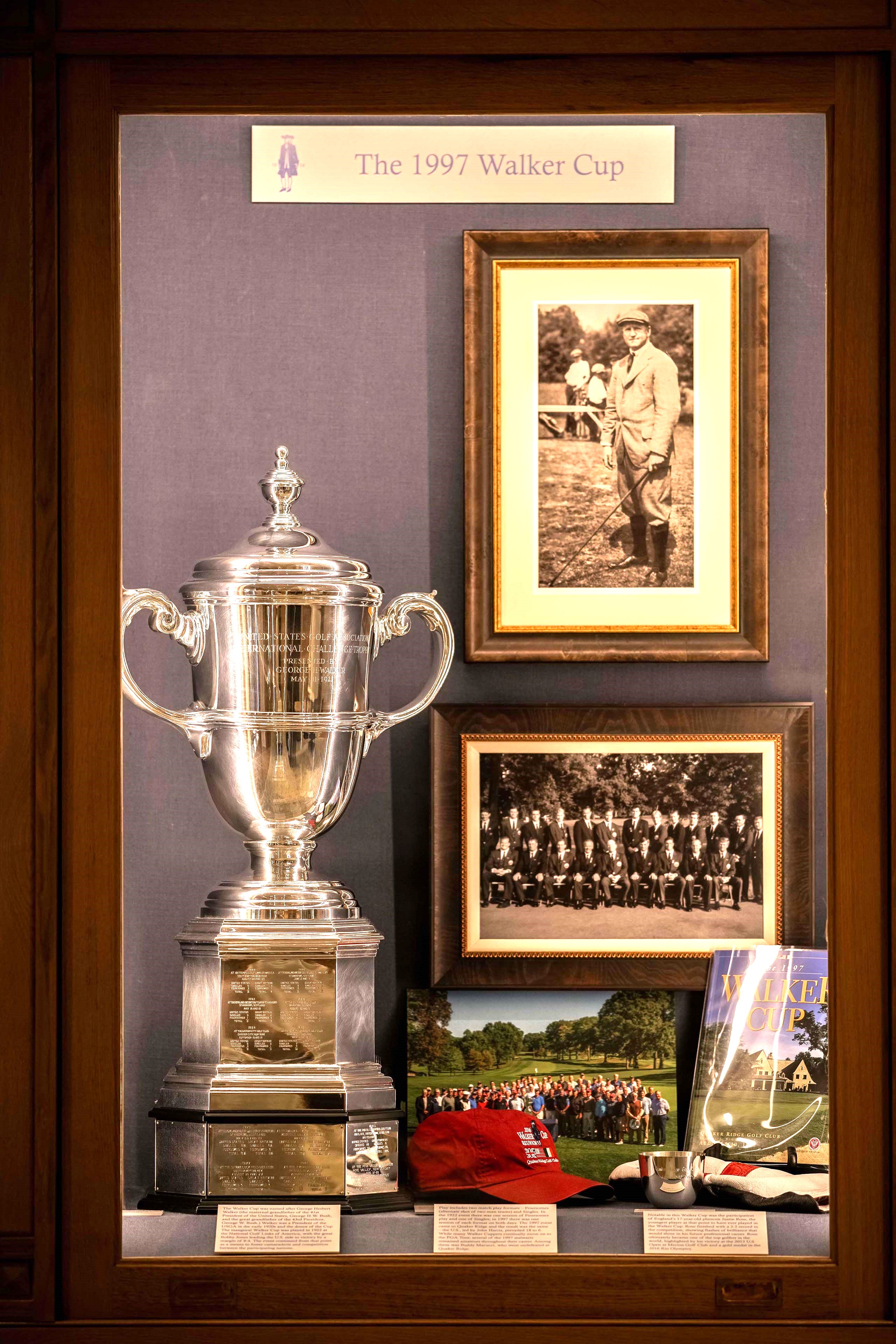
QR 1997 Walker Cup

1997 pitted the best male amateurs against each other from America and GB & I in the bi-annual Walker Cup

.

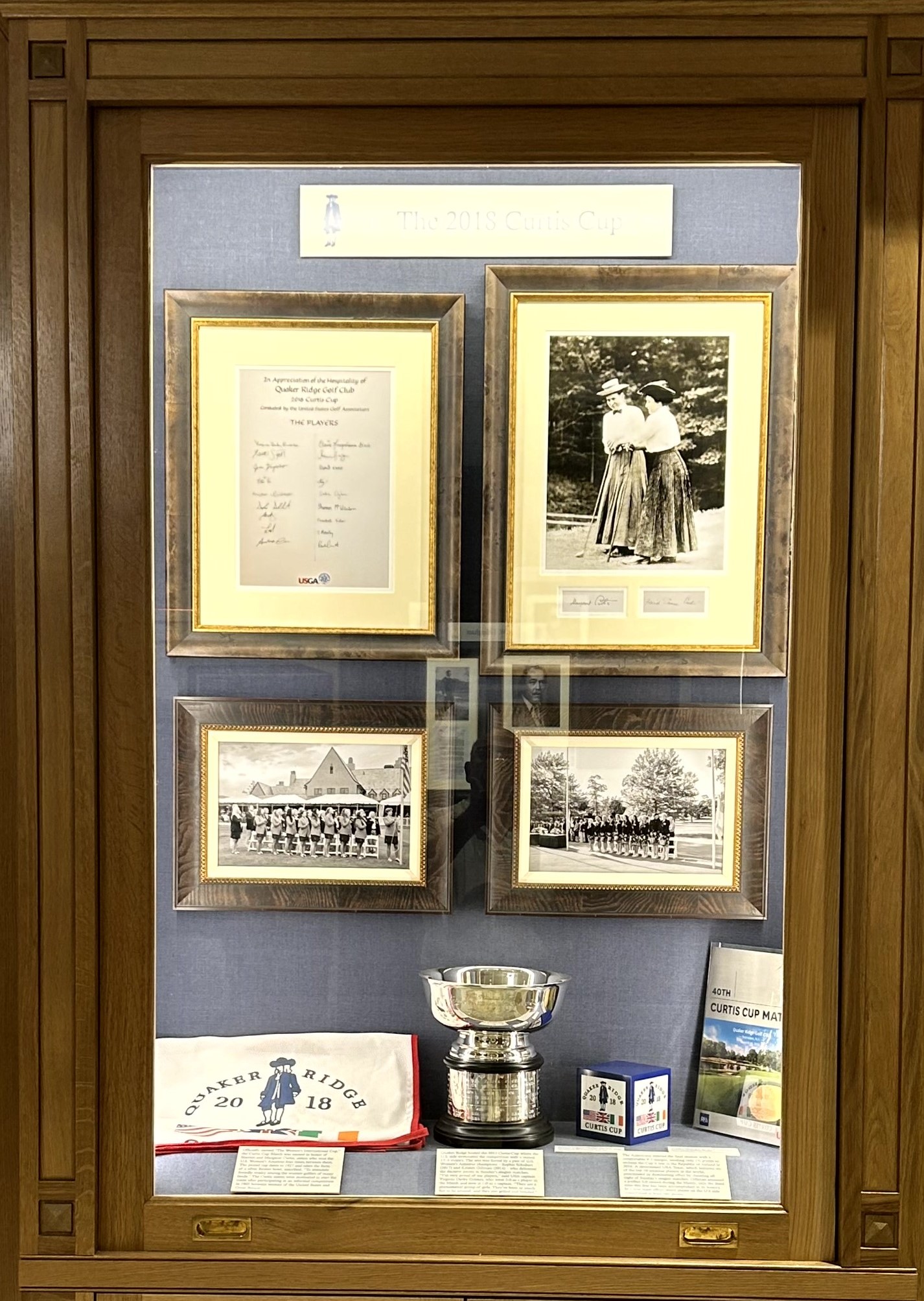
QR 2018 Curtis Cup

2018 the Ladies Curtis Cup international amateur team competition was contested here.

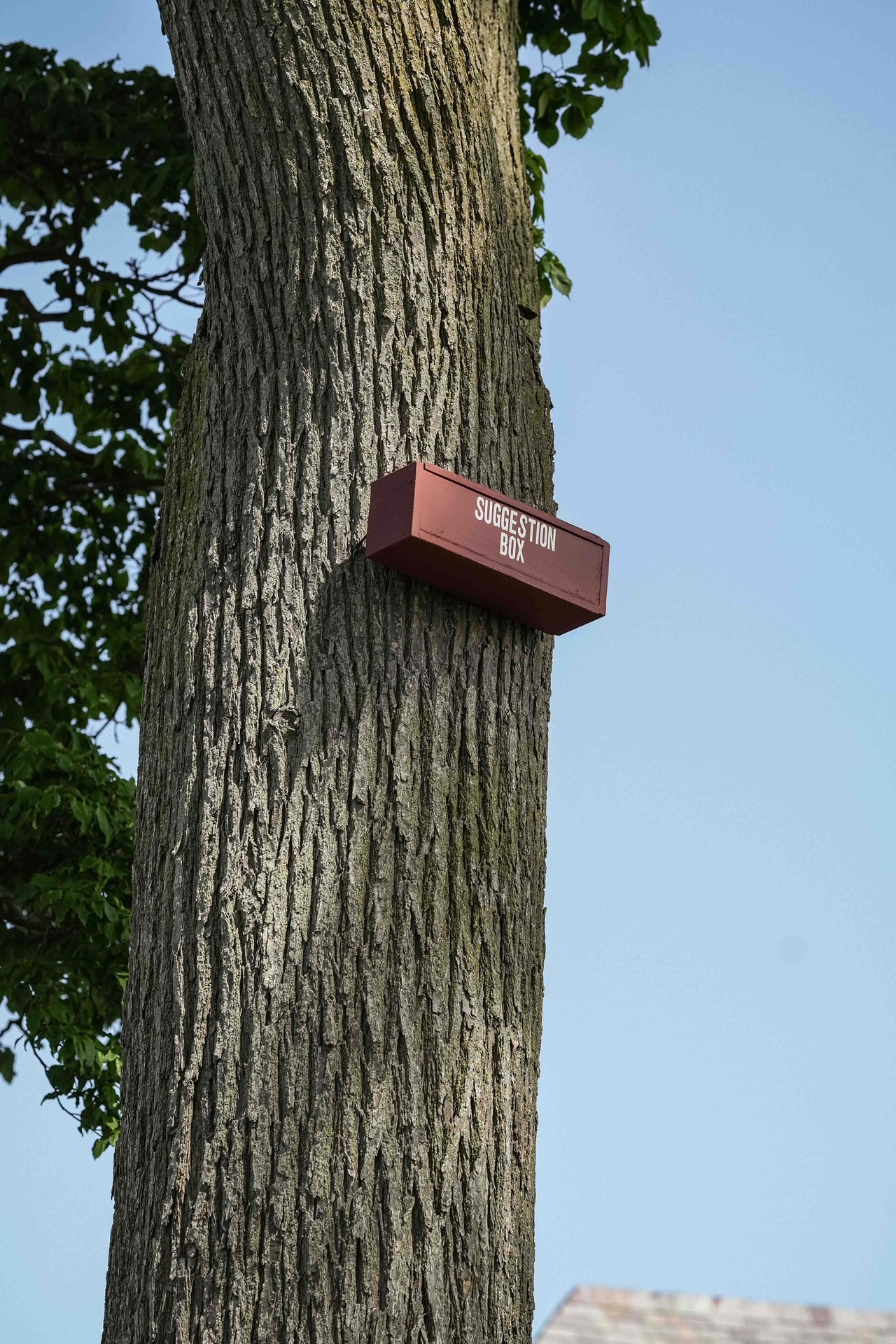
The clubhouse and amenities have a low-key, hamish character that is welcoming to all who set foot on the property.  They make you feel like a member even if you are not and are only interested in making sure your Quaker Ridge experience fulfills your expectations.   The club maintains a casual sense of humor as well as depicted in the “Suggestion Box” conveniently located near the clubhouse.

QR Suggestion Box

Playing courses created in this era where hickory shafts and balls with little spin prevailed one has to keep in mind there are some design features of the era that will affect your strategic play.  Tillinghast bunkers seem very arbitrary in shape and location yet they guide you through a course where he presumed the low trajectory run up shot would often be the preference.  Lots of cross bunkers 50 yards from the green are a bit disorienting but with open green front access they make the bump and run approach an option.  Coupled with contoured greens with plenty of movement, that in the day were 7 on a stimpmeter, current faster green speeds make keeping the ball in the area of the pin location quite a challenge.  Again the ground can be your friend as you plot your way in and around these green complexes.

Par 70 at 6200 yards from the White Tees does not seem overwhelming but with the hilly terrain and only two five pars in the mix the host of par fours in the neighborhood of 400 yards makes this a stiff test of driving accuracy and solid long club approach play.  Having said that there is only one pond and a handful of streams in play through the round so you have to make some simultaneous swing or judgment errors on the same hole to end up with a disastrous score on the card.  Careful consideration on each tee to the lines of the hole and the day’s pin location is critical to winning your match and posting a score you will be proud of.

The opening tee shot on one of the two par fives of the day gives you a true flavor of what is ahead.  You have to drive it solidly over the hill in front of you to get a clear look at the lay up zone or consider going for the green in two.  The massive cross bunker 50 yards from the green is a major no-no.  Visiting this bunker because you were greedy on an approach a bit too far is a sure way to start your scorecard from a staggered start you may never recover from.

QR 4 Par 4

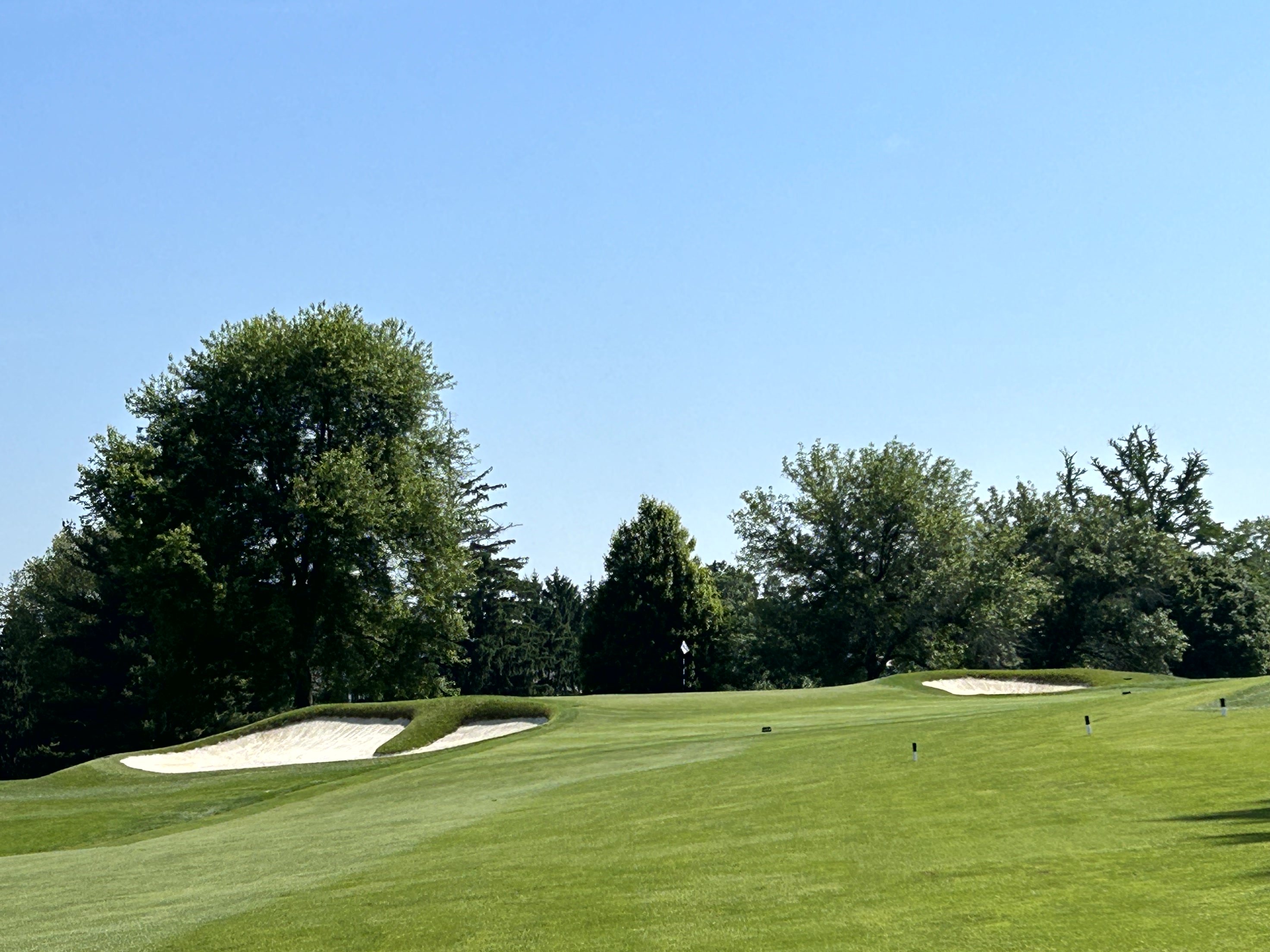
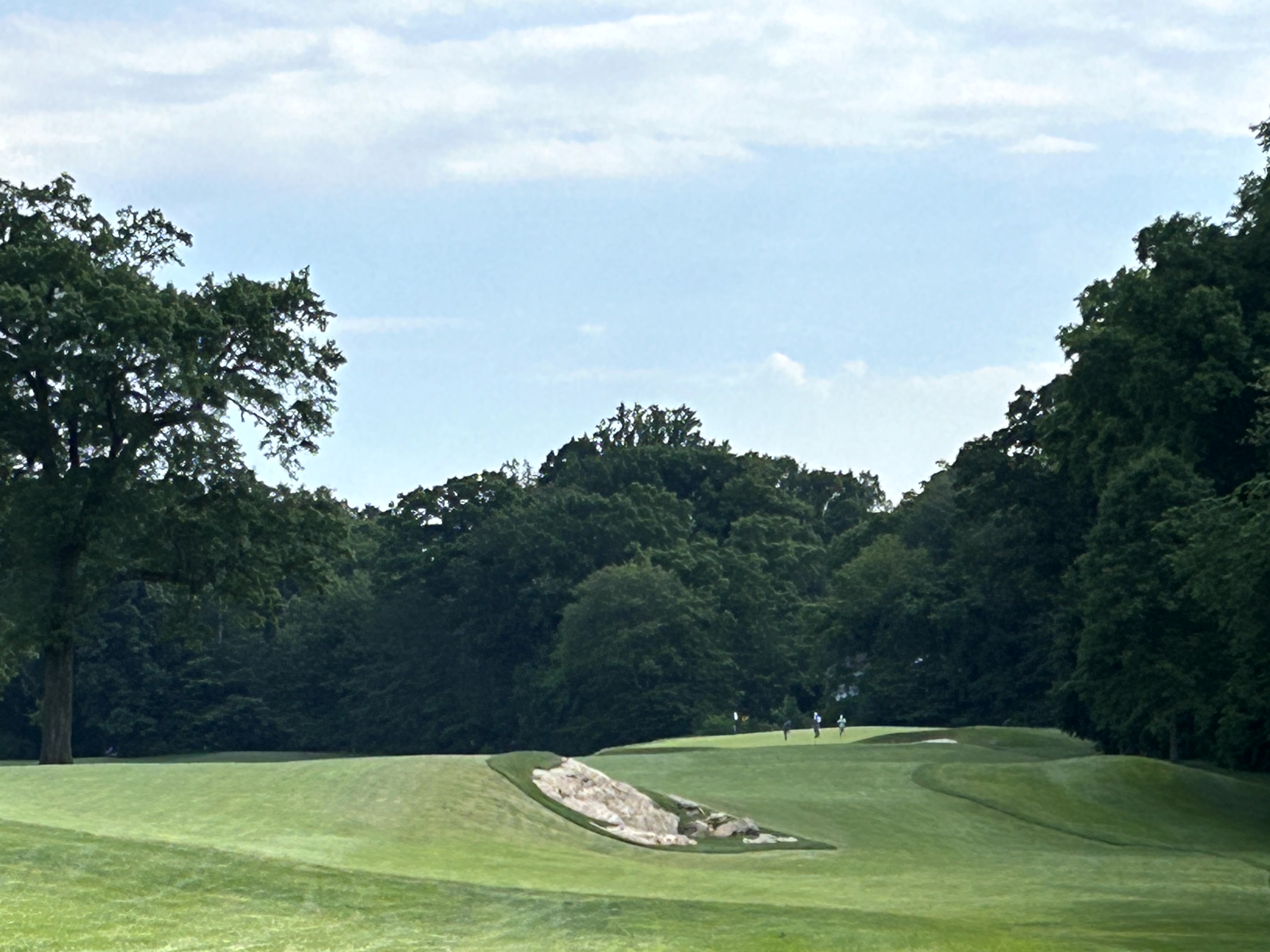
Par 4 fourth at 408 yards is eye candy in a radioactive package.

Tilly was always good at taking the elements the topography of the land presented and seamlessly integrating them into the strategic play of the course.   Standing on the fourth tee box you can an eyeful of strategic options in playing one of the more unique par fours of the day.  As described in the full hole-by-hole descriptive linked at the end of this posting, the large oak tree through the fairway and the center-line rock outcropping force you to make decisions that can result in a scoring opportunity or possibly a scoring disaster.

QR 5 Par 3

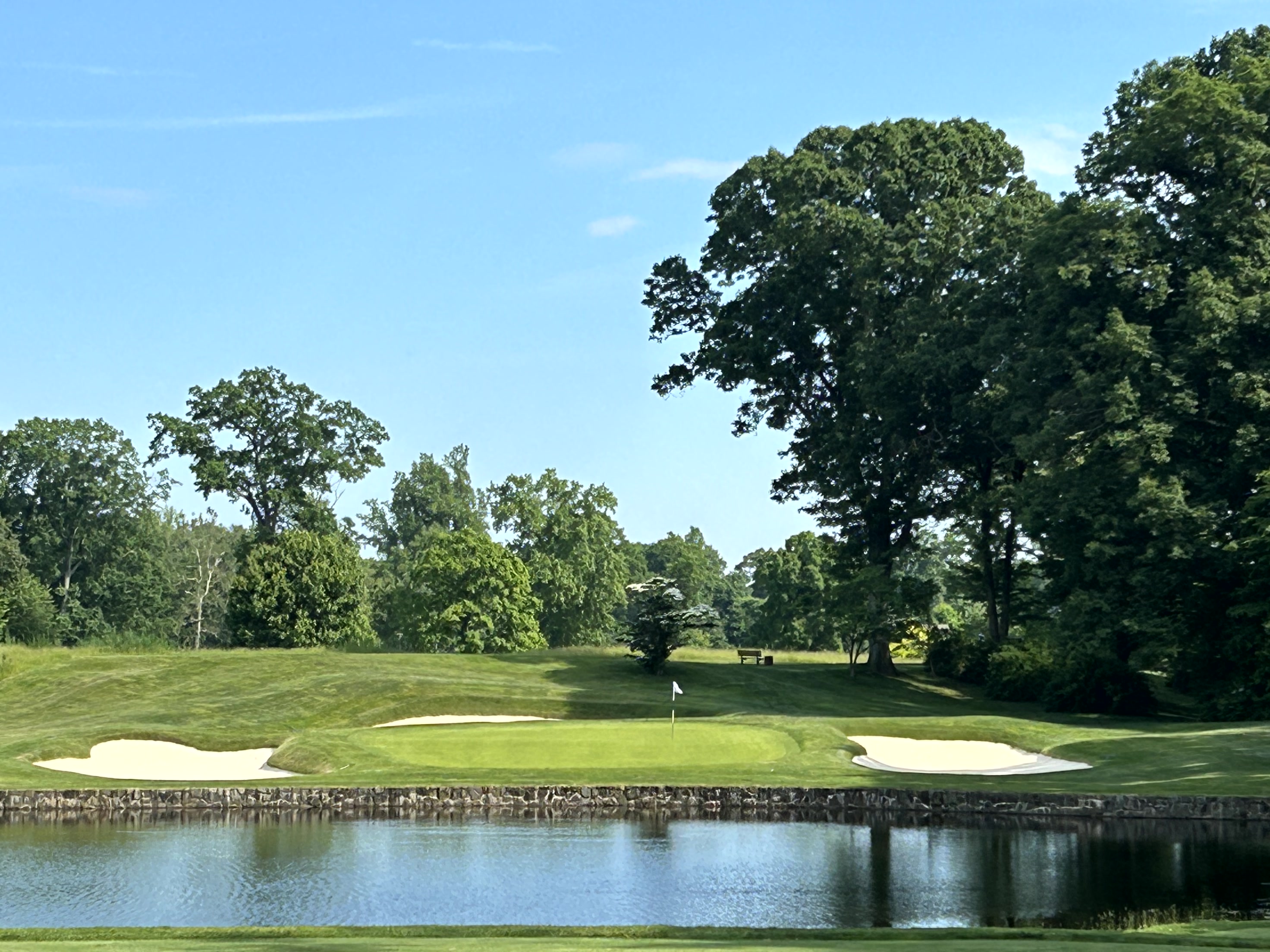
Not much water in play but where you see it your full attention is required.

The short Par 3 at the fifth is one of the only forced carry over a penalty area you will see all day, but the challenge here, as it is throughout the course, is the slope and movement presented in the putting surface.  With greens kept at speeds in the 12 range being in the wrong segment of the green is a prescription for a putting disaster.

QR 7 Par 4

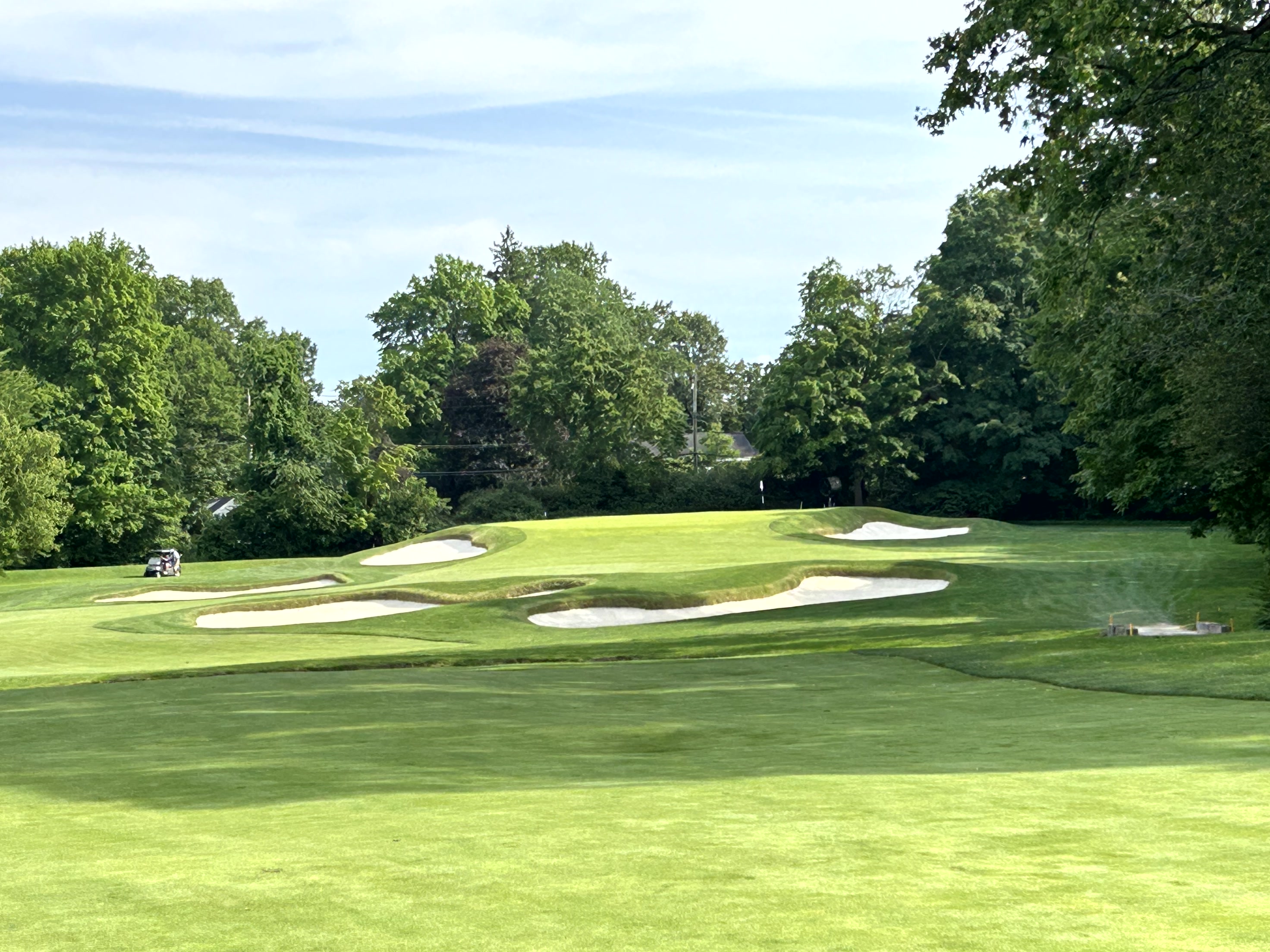
The second shot on this 3rd handicap hole is a challenging uphill fairway wood or hybrid into an elevated plateau green complex

How often do you see the number one and three handicap holes one after the other?  Number six is the number one handicap hole on the course-this bedeviling four par played as a five back in the hickory age when it was created.  It is followed by the third handicap hole an arduous dog leg right march up to a steep green complex requiring position off the tee followed by strong approach carry into a plateau green complex. Two bogies on 6 and 7 picks up shots on the field.

QR 8 Par 4

Decision off the tee ….from the left the approach shot must carry the bunker, from the right the line is not obscured.

Stepping on the eighth tee you are now entering over the next five holes the technical part of the course, where strategic finesse not power will be your friend.  As you see on the fourth Tillinghast introduces the center-line feature on the eighth that forces the player to choose what side to hit their drive for the most advantageous approach to the green.  This time it is a huge grassy dune that is probably another rock outcropping he did not want to make the expense to remove.  In this case the safer route is left of the mound but it presents a longer shot in that must tangle with the green side bunker.  Right of the mound brings trees and OB into play but from there the shot to the green is considerably shorter and has open access.

QR 9 Par 3

All the elements of a classic Redan in a very small and tidy package.

The ninth presents you with Tilly’s kitchy version of a short Redan Par 3 with plenty of right to left contour as you work into the green.  The hole is completely surrounded by deep bunkers so there is no real bail out available.  The kidney shaped green is silhouetted by the top edge of the front bunker so the play is landing the ball just over the right-center edge of this bunker and letting the ground move your ball into and across to the green surface.

QR 11 Par 4

The poplar tree gives you only half the green to shoot at and only if you are in the right half of the fairway.

Standing on the eleventh tee the driving area seems wider then the Hudson but take note of the large poplar tree shadowing the left side of the fairway.  Any drive left of center will have to contend with the sprawling limbs of this tree.  If you are in the correct segment of the fairway the second shot is likely less than 150 yards but the architect created a moated effect by having the fronting stream turn around the right side of the putting surface and meander behind the back right corner.  An articulate iron in needed here and could provide a good birdie opportunity.

QR 13 Par 3

Brawny comes to mind as you take in this long Par 3.

As you look down over 210 yards from the elevated tee box on this big boy of a Par 3 thirteenth you will recognized the technical part of the course is now behind you.  It is hard to be articulate with a very long club in your hand but at least Tillinghast provided lots of roll up space behind the two front bunkers set well off the green.  The contour of this one is tricky so pay attention to the ridge that bisects the green.

QR 14 Par 5

This serpentine five par should be very manageable if you don’t get greedy.

I cannot help but wonder what it must have been like to try to negotiate this three shot Par 5 with a set of hickory clubs and a ball with a lot of curve.  The strategic path of the fourteenth ramping it’s way up the steep hill is delineated by more bunkers then you can fathom.  From the drone this kind of looks like the silhouette of a Tyrannosaurus Rex but it packs slightly less bite.  If you lay-up short of the crossing line of bunkers at 120 the short iron approach should take the high score out of the mix.

QR 17 Par 4

I love the way the high edges of the bunkers further obscure your vision of this tiny target.

What these Golden Age architects do really well is they let the land dictate the routing and hole strategies and they rarely make two holes on the same course that have similar strategic character.  The penultimate hole is such a unique offering-a short but not drivable Par 4 on one of the flattest portions of the course that still demands discipline in both the tee ball and the approach to take advantage of a hole that is only 344 yards on the card.

The tee shot has to hug the right side near a nest of bunkers to have a straight on approach line to the flag.  The green is the second smallest of the day, a virtual thumbprint pinched on all sides by deep bunkers.  There is plenty of back to front slope which puts a premium on keeping your very short iron approach below the hole.  As with so many great holes you may walk off this green shaking your head wondering why you did not make a better score then you did.

QR 18 Par 4

As you work your way up the corridor of trees playing your tee ball on the last, you get a full relief of the grand clubhouse at the top of the hill behind the eighteenth green.  The approach is significantly up hill requiring an extra club and once again the fronting bunkers are a good 75 short of the putting surface so you have plenty of space to work a shot in on the ground if you have to.

When the final putt drops and you take off your hat to shake hands with the others in your group, take a second to look back down the fairway at the rolling topography that Tillinghast had you explore through the day.  It is a majestic sight and one worthy of the quality of the course you just experienced.

Scarsdale, New York

Architect:        Albert Tillinghast (1916),  Gil Hanse (2013)

(Red/White)  Par     Rating   Slope   Yardage

Black              70        74.8     143      7008

Blue               70        72.2     137      6456

White             70        70.8     134      6163

Green            70        68.5     130      5631

If you would like a printable PDF of this posting including a yardage book quality hole-by-hole description of how to play the course hit the link below.

(Click to get the the printable text of this posting)

Glen Oaks Club

Glen Oaks Club Logo

Glen Oaks is a delightful collection of 27 holes in Old Westbury, New York along the way to Long Island.  It is a private club with a  relatively small membership that fosters a hamish atmosphere making for a warm welcome to all who visit.   Since the volume of play is delimited by the membership size, there are no tee times which makes access very convenient if you are lucky enough to get a member to host you to play.

The original three nines were done in 1972 by Joe Finger.  A master plan for renovating the place was begun in 2011 by Joel Weiman to be done over a four year period.  In 2012 Hurricane Sandy did extensive damage to the course which forced them to retool the master plan on the fly.  With the help of the Greens Super Craig Currier who had previously been involved at Bethpage Black, Joel did the work that you see presented today.

As the pictures indicate the removal of enormous swaths of trees taken down by the storm allowed them to present a marvelous array of holes with requisite width to encourage strategic play and wide visibility of the entirety of the property during play.  The greens have plenty of internal slope and segmentation and the bunkers have tall white faces and sharp edges which when set in the hillier terrain give the place a bit of an Augusta feel.

A PGA Tour playoff event was played here in 2017 where Dustin Johnson beat Jordan Spieth in a riveting playoff.  No matter which of the nines you get to play I am sure you will find it a delightful experience of tactical golf.  Don’t miss two highlights during your visit, the men’s locker room and adjacent card room/man-cave and the amazing brunch they serve every day in the main dining room.  Both will knock your socks off.

Hole-By-Hole Analysis (Red/White):

Red Nine

#1 Par 4  402/340 yards
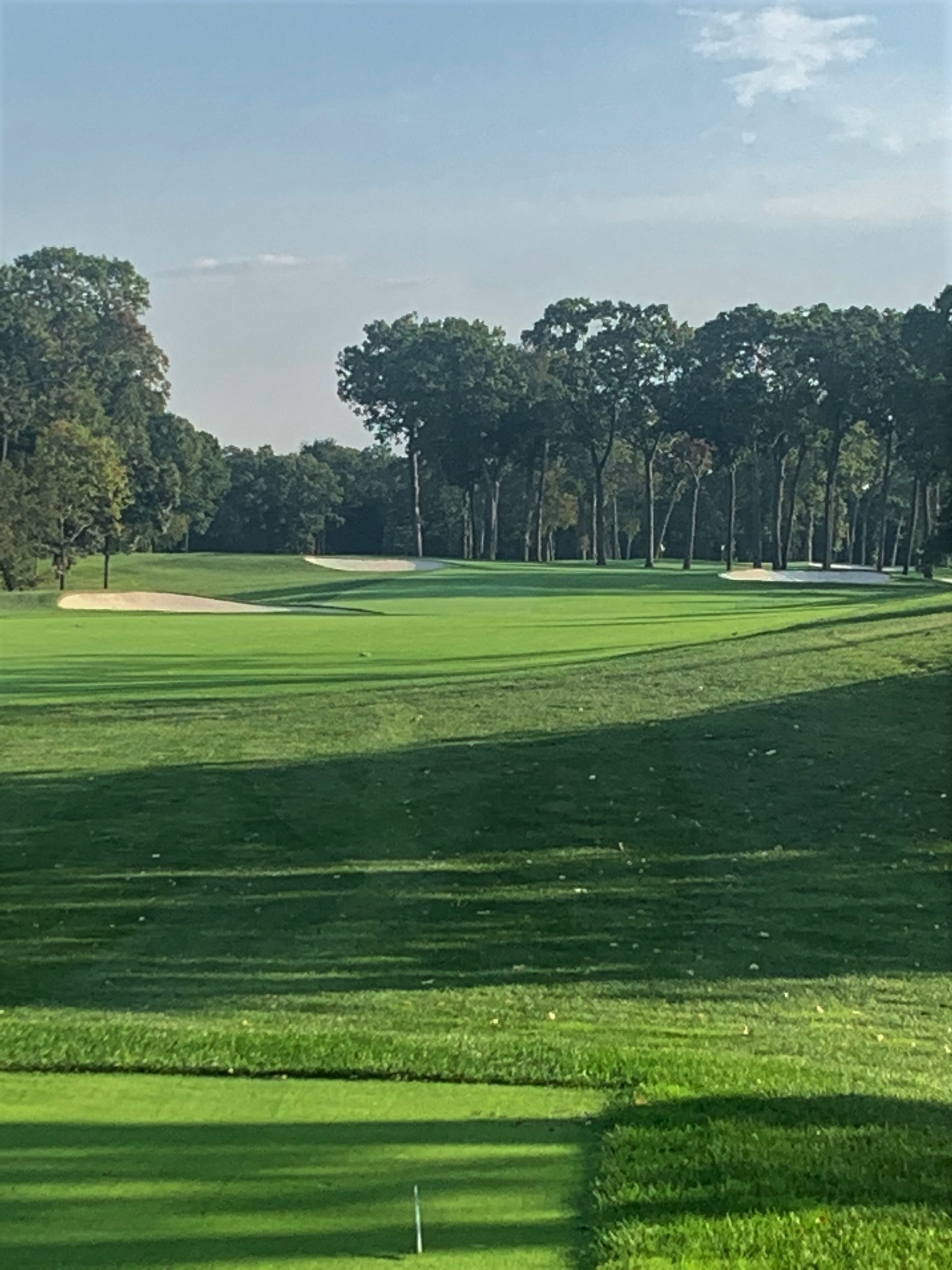
GO Red 1 Par 4

Fairly simple opening hole, this driving area leans right to left toward the fairway bunker.  Drive it up the right edge of the rough line and let it drift to center.  Green slightly raised is accessible between flanking bunkers short right and middle left.

#2 Par 4  370/350

Similar in length to the first but this one is flatter with no fairway bunkering to consider.  Drive to center and the approach is to a green slightly below you.  Front left bunker is pretty deep so aiming to the right side on the approach where the right bunker is set back in the middle of the green is sensible.

#3 Par 3  160/150
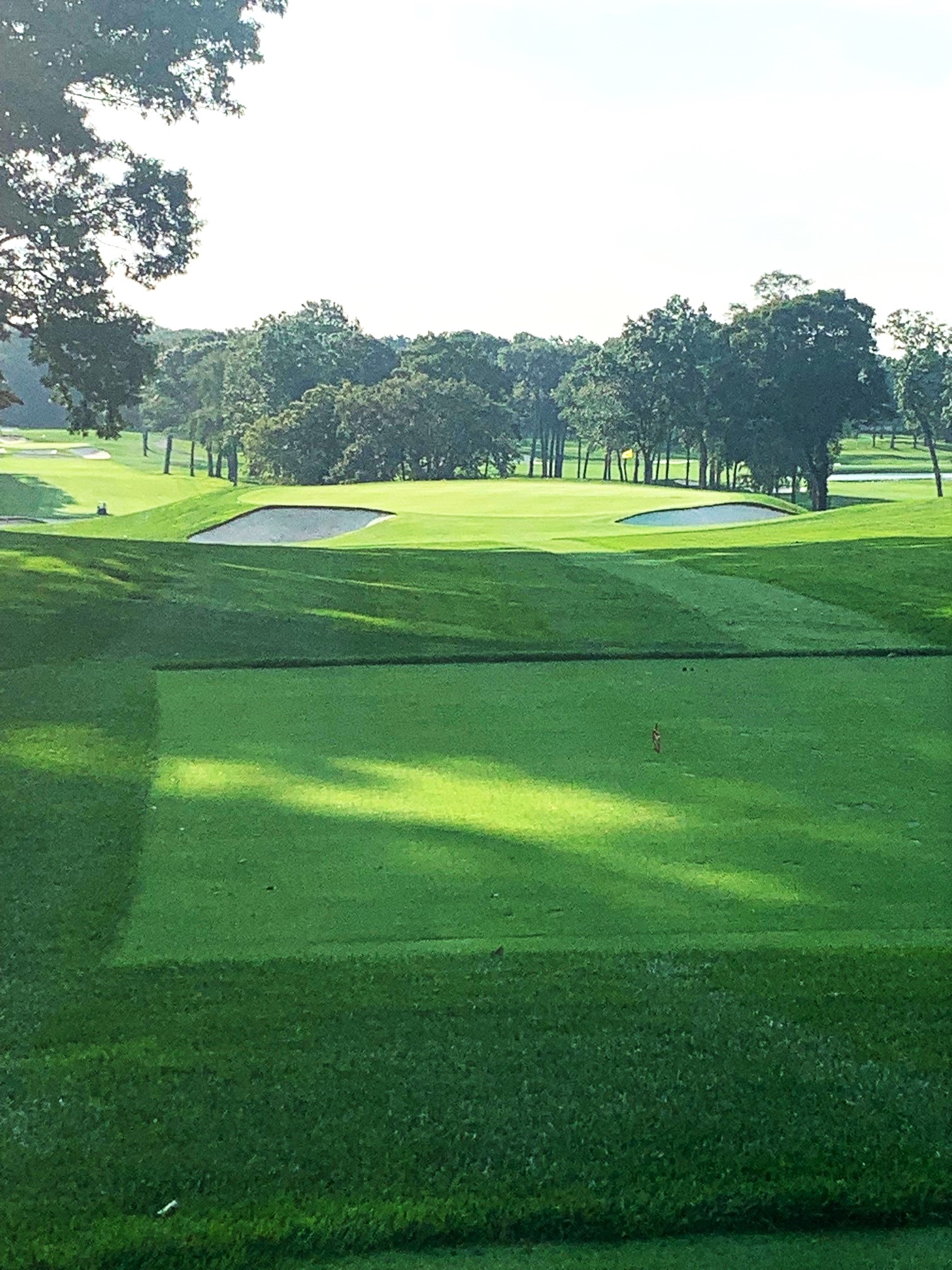
GO Red 3 Par 3

First of the eye candy holes that express the expansive and clean presentation of the character of these courses.  Significantly downhill, requires a one club adjustment into a green flanked by deep sharp edged bunkers.  Green tilts back to front and left to right with a significant transition ridge from 9 to 3.

#4 Par 5  550/520

GO Red 4 Par 5 Tee

The confectionary look continues on a spectacular visual five par off a high perched tee into the valley below.  The hole turns to the left around a horseshoe fairway bunker that is probably within reach.  Best drive is center just off the bunker-don’t bail right off the tee as the rough and tree line on that side will cause problems for your second.
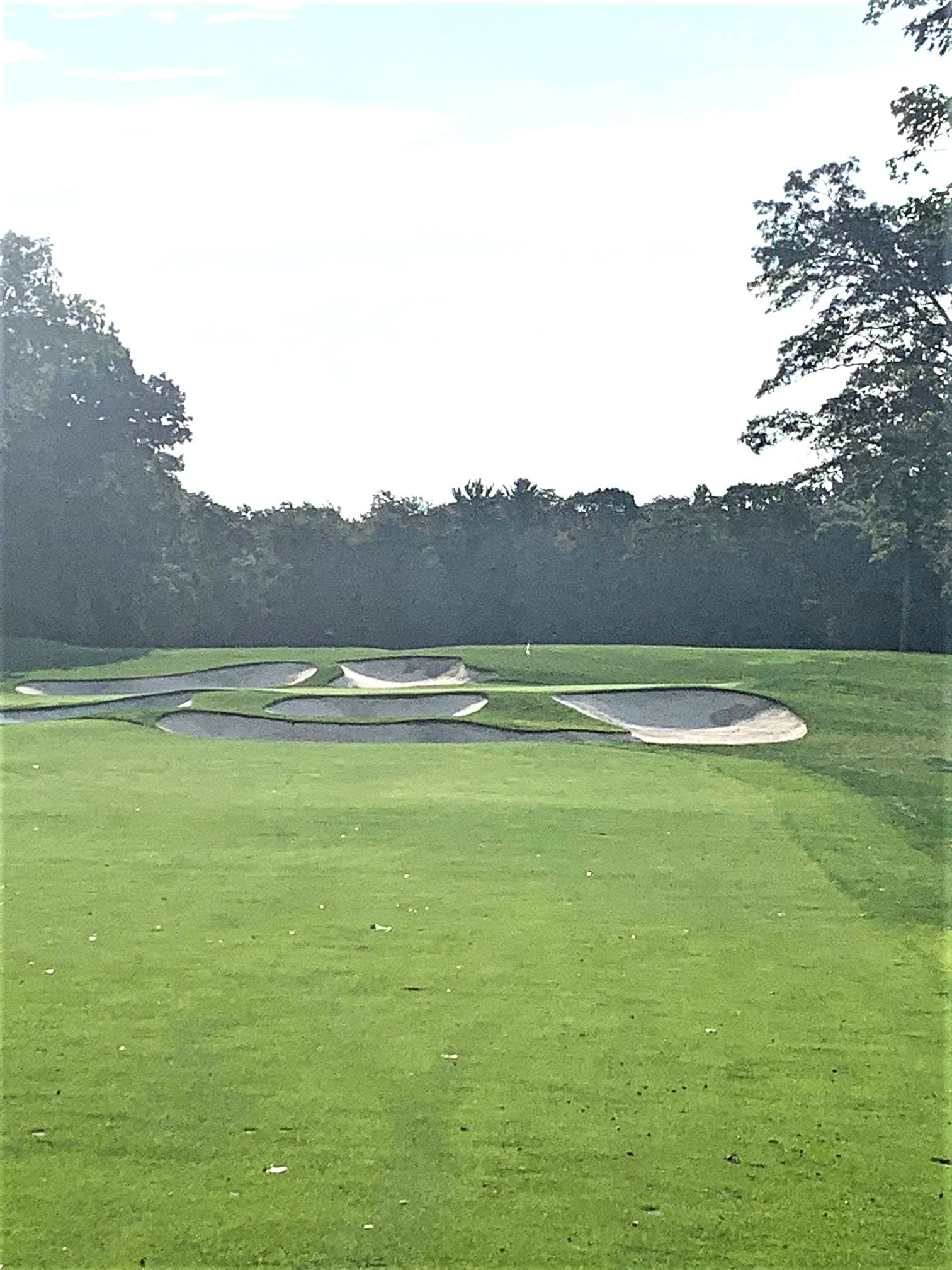
GO Red 4 Par 5 Green

The green is a true fortress-rings of bunkers protect the full surrounds-a few trolls with boiling oil may be prowling the top edge as well.  Lay up is left center to about 110 which leaves an intimidating looking approach into a green that is very generous.  Lots of slope here back to front so challenge the pin yardage of the day.

#5 Par 4  400/370

For a relatively flat hole this one has great visual impact created by the alcove driving area and the hill framing the back of the green.  Drive to left center to leave a mid-iron approach into an accessible green.  One greenside  bunker on the left and a second framing bunker behind the green on the right, so the error on approach is short and right.  Green leans 11 to 5 so from the front right you can be aggressive on a pitch.

#6 Par 4  405/355

One of the truly splendific looking holes of the day.  This is a graceful uphill par four with a perched green framed on the horizon by a lone oak tree 40 yards right of the green.     Drive right center of a landing area adjacent to the fairway bunker on the right.  The hole climbs after that so the approach plays a full club and a half longer into a green with one bunker left and plenty of open grass on the right.  They did a great job of letting the topography give this hole it’s character.

#7 Par 4  360/350

A shortish par four that leans left to right around a pair of bunkers that flank the driving area.  The temptation is to aim well left off the tee but this can give you a perch side hill lie in the rough into the green that sits above you.  Take on the left edge of the bunkers on the right as the fairway widens just beyond and you can have a short club in your hand making the approach much easier.  Green sits on a 7 to 1 diagonal with fierce bunkers protecting the right and plenty of short grass surrounds left and behind the green.  The green climbs on the same 7 to 1 line so putts and pitches up this line need the requisite intent to reach the hole.

#8 Par 3  130/120

GO Red 8 Par 3

A delightful short pitch Par 3 that is their homage to the Postage Stamp.  Pitch is on level to the tee but the narrow green set on a 6:30 to 12:30 angle is tightly surrounded by massive bunkers.  This gives you little choice but to hit an articulate lawn dart just below the hole position of the day.  There are steps in the green along it’s setting angle and the pins to the right are much harder to get at.  Middle of the green to any pin to the right is proper discretion.

#9 Par 5  550/500
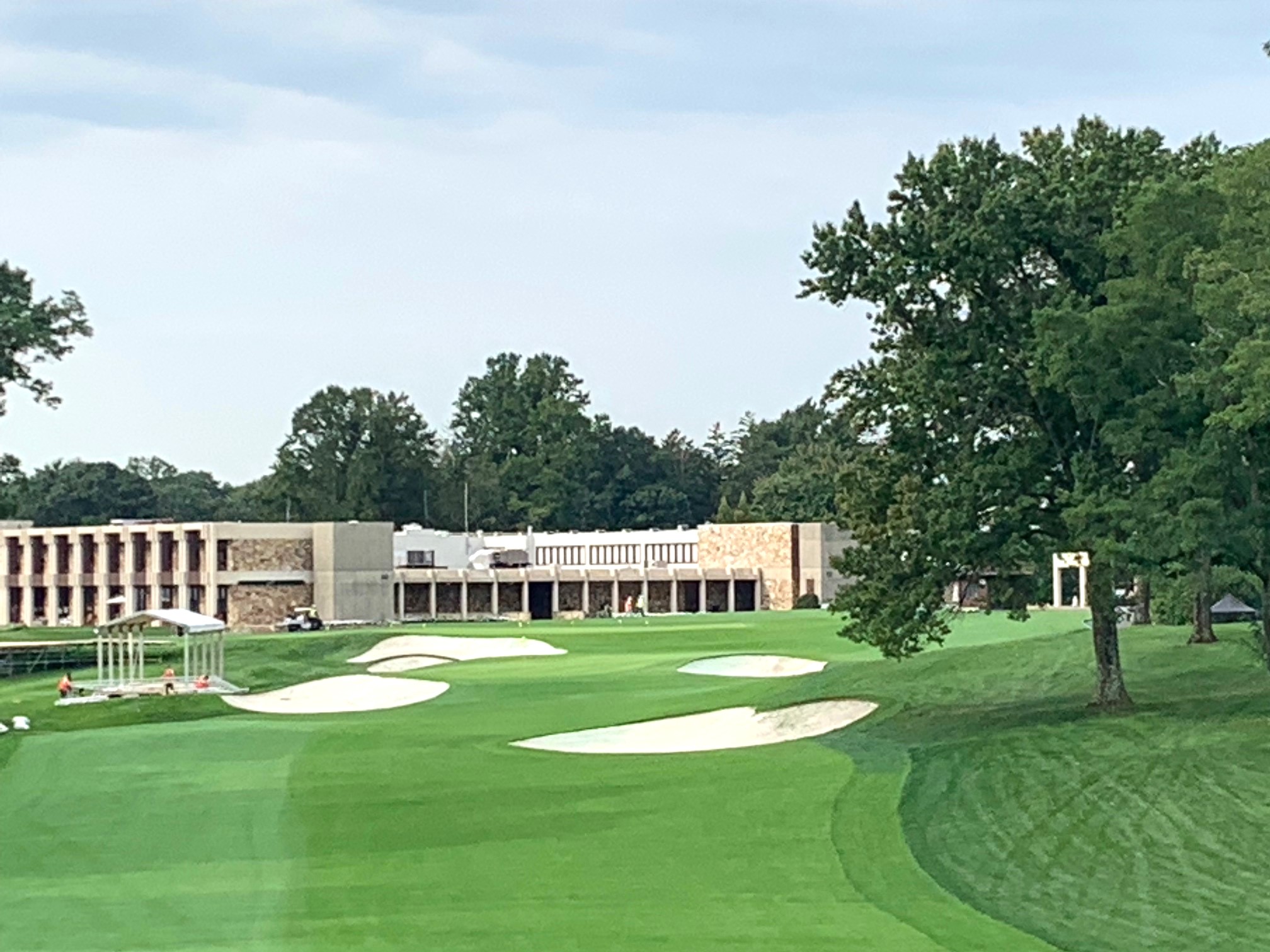
GO Red 9 Par 5

This nine finishes with a three-shot five par with plenty of topographical interest.  Drive to left center to avoid the fairway bunker on the right and the drop off of the fairway into the rough and trees on that side.  The lay-up is down the left into the valley that will give you a view back up the hill toward the foot of the dining room patio where the green resides a bit to the right.  Green has lots of sand surrounds but note that the first bunker on the right is set 50 yards way from the bunker creating a friendly miss area if you don’t want to take on the pin of the day.  Green is stepped from 7 to 1 with a ridge across the center so getting an approach to the proper level is essential to avoid the three-putt opportunity.

White Nine

#1 Par 4  515/480 yards

The first of the White Nine is a very user friendly dogear left Par 5 that gently climbs from the landing area to a green perched up on top of the rise.  From the tee the hole appears to lean to the right so a right-to-left drive just right of the two fairway bunkers on the corner is called for.  Depending on what you have left this could be reachable in two, but if not the lay up is to about 100 yards short of the first bunker on the right which is set well back from the putting surface.  The kidney shaped green wraps around a deep bunker on the front right and has an open short grass area to the left for a safer approach.

#2 Par 3  205/190
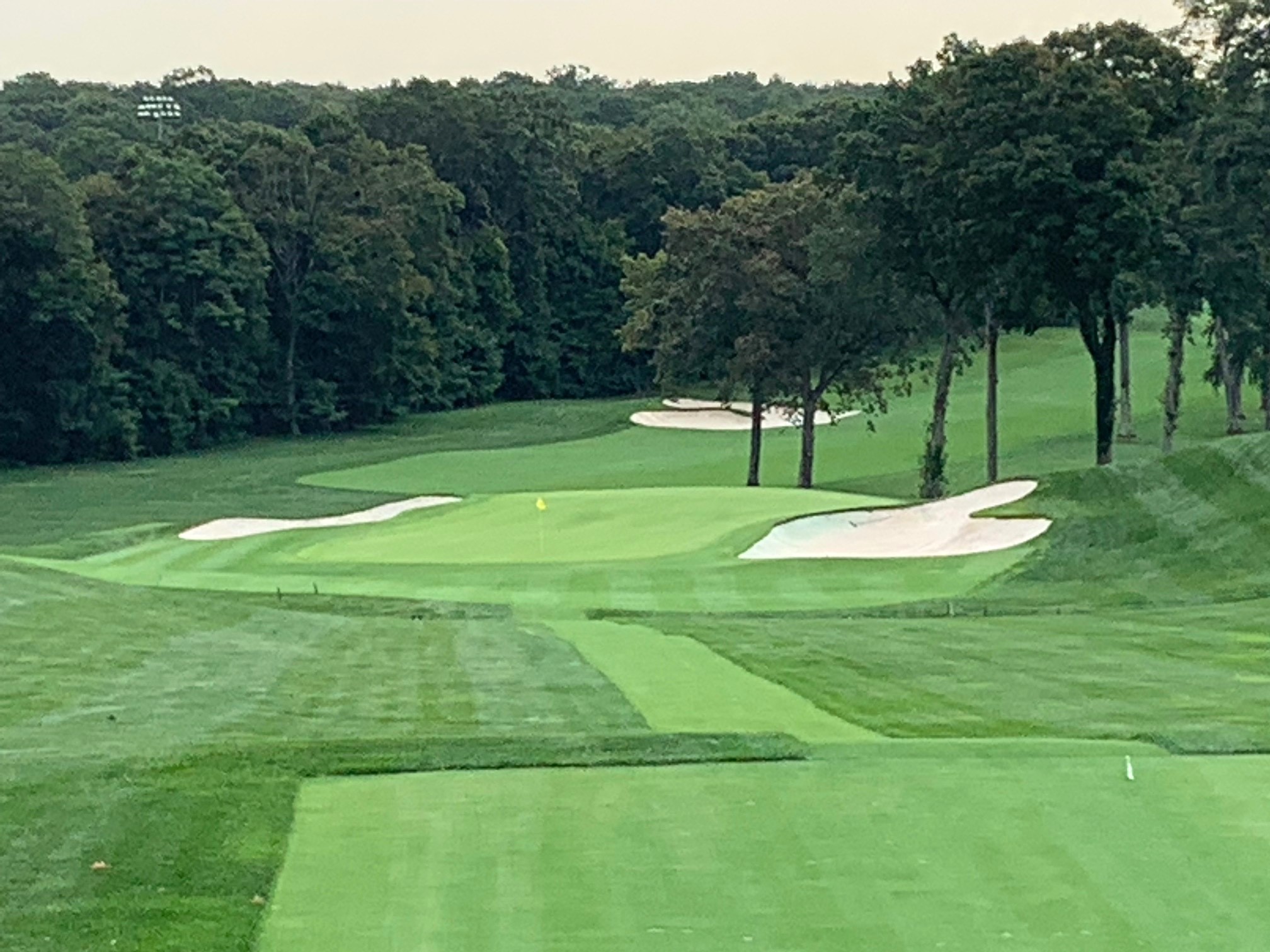
GO White 2 Par 3

The second is feisty longer sister to the downhill Par 3 third on the Red.  A stunning view from the perched tee box, it ambles down the same sttep hill as it’s sister playing a full club and a half less then the distance.  A quasi-reverse Redan arrangement the green curves around to the right behind a yawning bunker set into the right slope of the hill.  The difference from a Redan is that the first part of the green is not banked to match the curve of the green so you do not get the benefit of the ground directing your ball toward the back right pin locations.  There is also a pesky ridge that cuts across the center of the green creating two distinct levels.  For the front level an approach landing right of the flag will feed to the left.  For the back level you have to settle for a shot in the center of the green and then putt up and over the ridge because anything landing on the top level takes a downslope off the back of the green.

#3 Par 4  410/375

GO White 3 Par 4

This next Par 4 has lots of visual interest but lacks strategic continuity for me.  From the elevated tee you see a sharp dogleg left working around a bank of trees, but there is this pesky water hazard gathering your attention straight through the right center driving line.  For big hitters the penalty area is definitely within reach.  If you manage to hit the drive to center between the bunkers on the left corner and the water you now have a slightly ramped up approach to a green sitting below the Halfway House.  It is set 7 to 1 behind big face bunker on the right and a pinching bunker behind the green on the right.  The bunker on the left is set back so there is a bit of breathing room on that side if you don’t want to take on a pin set behind the right bunker.  This is another green with serious lean from back to front.

#4 Par 4  415/380

The next four holes present an interesting run of holes played in distinct corridors of the trees where ball position matters.  This is a straight away par four-you drive to left center into a downhill landing area that will feed the ball a little right.  The green complex sits below framed by trees and bunkers providing a very appetizing open access approach for a middle iron to hybrid.  There is a short grass area back and left of the green if you overcook a draw.  This green is deep so pay close attention to your actual shot yardage to reach the day’s pin or you can have a very long first putt over some challenging contour.

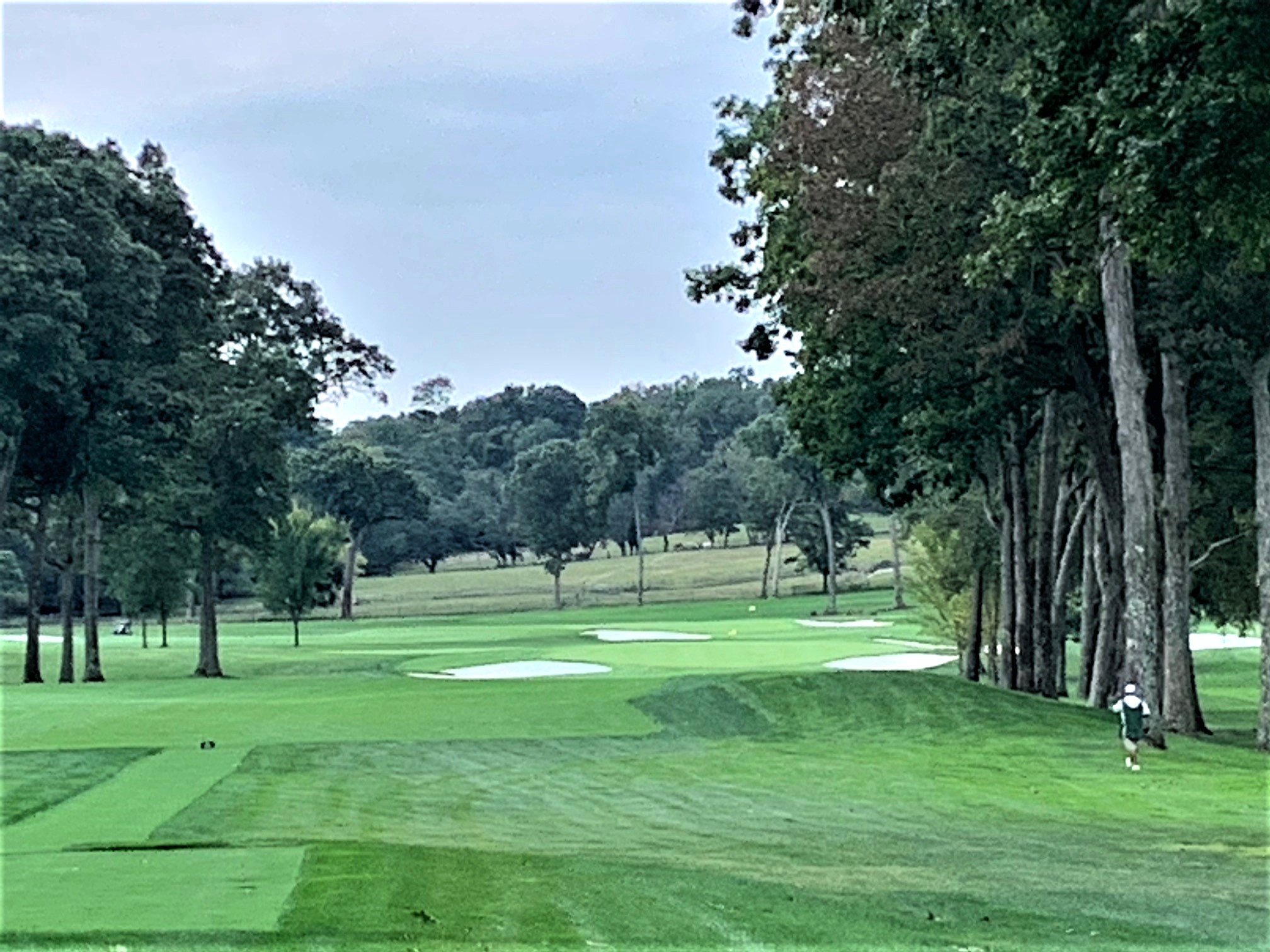
#5 Par 4 295/270
GO White 5 Par 4

This one falls into the drivable Par 4 category for some but should provide a good scoring chance for anyone who can hit a couple of articulate shots.  For most of us the choice off the tee is not more then 200 yards aimed at the bunker on the left.  This leaves a short wedge into a diagonally set narrow green that is squeezed by bunkers on both sides.  This hole can only help your scorecard as long as you don’t do anything silly.

#6 Par 3  165/140

GO White 6 Par 3

More eye candy this shortish three par has a slightly downhill approach worth a half a club less to a tiered green setting protected by a pond across two-thirds of the green.  The sharp top edge of the stone wall accent of the pond gives it a clean look that also clearly defines for your eye the required carry to pins center and right.  There is a back right bunker that further frames the challenge of a pin on the section. Pins on the left allow you to skip one up the throat between the pond and the left greenside bunker and should provide a birdie opportunity.

#7 Par 5  520/470

This is a very technical four and a half Par 5 that takes real discipline if you want to take advantage.  From a slightly perched tee drive it to center using the slope from the left tree line to help you.  If the green is out of reach, as it is for most mortals, there is a receptive lay up area beyond the right fairway bunker at about 160.  This shot will feed down to the right and gives a you a good look at the coffee table green set back to the left.  The green is very deep and sharply inclined from back to front with a bunker front left and another two-thirds of the way back on the right so you need to take careful measure on your approach to give yourself a reasonable putting chance.

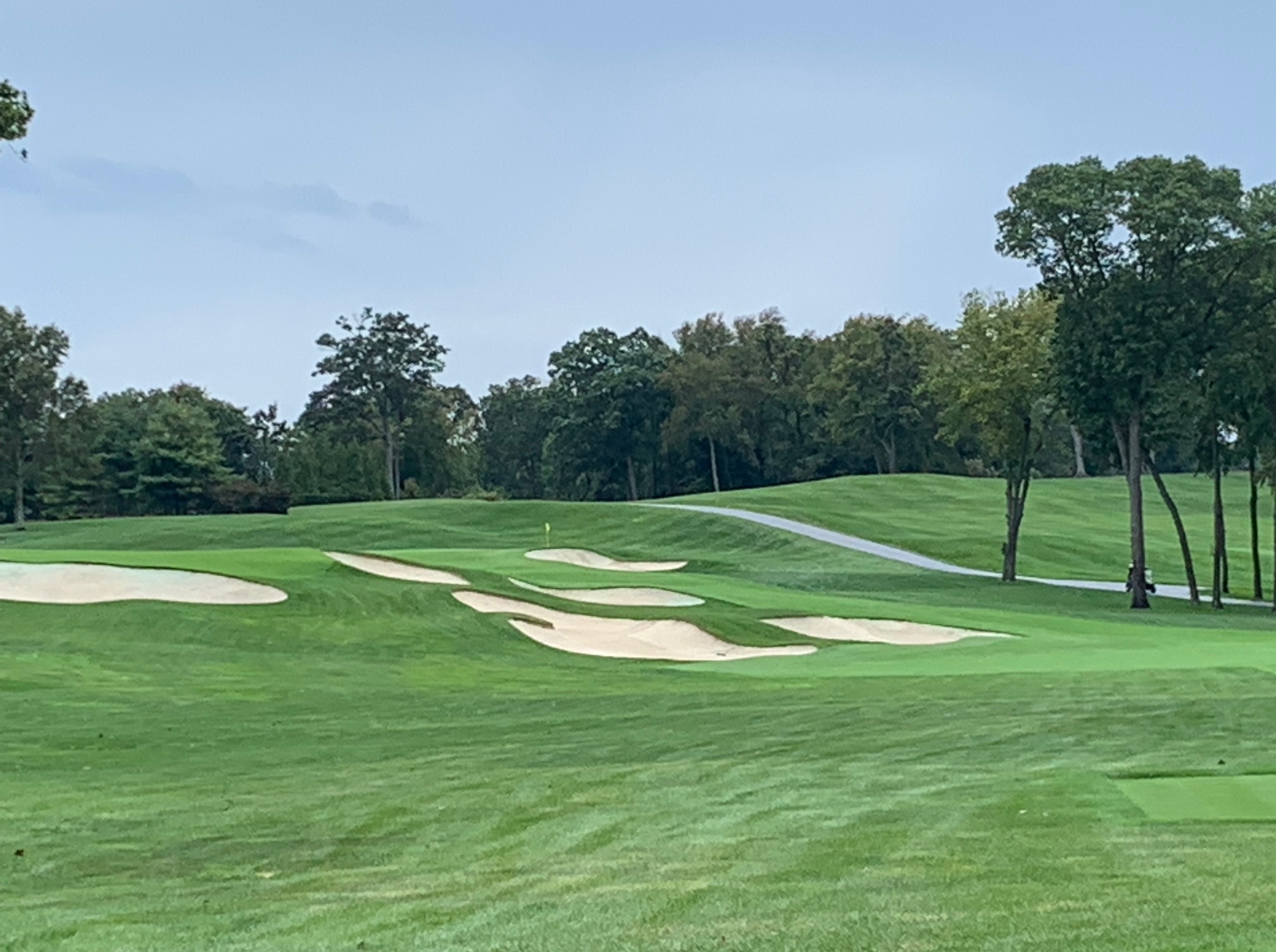
#8 Par 4  360/320
GO White 8 Par 4

One of the most unusual challenges you will get all day this is a short drive and pitch Par 4 that turns around a fierce constellation of five bunkers set into the topographical rise on the left.  It is likely there was once a grove of trees in this spot that were lost to the hurricane that delineated and separated this hole from an adjacent hole on the Blue Nine so they needed to find a hazard penal enough to replicate the interference of the trees.  Tee ball needs to be well right of the fairway hazard which will leave a short iron pitch up a very steep grade to a generous green surface you cannot see perched behind a very deep bunker on the right. On the approach long is the miss since a 50 foot putt is much better then the 3-story pitch you would have to play out of the front bunker.

#9 Par 4  400/370

This nine finishes with a very strong roller coaster Par 4.  Drive strong to left center and you should be looking at a steep uphill shot into a green complex sitting at the foot of the clubhouse with full bunkering on either side.  You are going to have to carry this approach all the way to the putting surface or the front bunker is going to get some action.  Another deep green with very significant slope back to front makes you want to hit an approach with release to work up the hill.

Old Westbury, New York

Architect:        Joe Finger (1972),  Joel Weiman (2014)

(Red/White)  Par     Rating   Slope   Yardage

Blue               72        72.4     132      6610

White             72        69.1     129      6050

White             70        67.4     128      5609

Red                70        65.2     120      5142

(Click to the the printable text of this posting)