
It is so rare to go to a renowned club with only a couple of hundred members who come from old money and still run the place with a thrifty attitude of “why just change things for changing sake”. I was told the president of the club has been president for decades, that kind of says it all. Why change things that don’t need changing?
Newport Country Club was founded in 1893 by a group of well heeled guys who just wanted a place to hang with friends, watch some polo, and play a little golf. Under the guidance of Theodore Havenmeyer they went about acquiring the land for the course and hired Whitney Warren, a French trained architect, to build them a Louis the XIII style club house with all the bells and whistles they required.
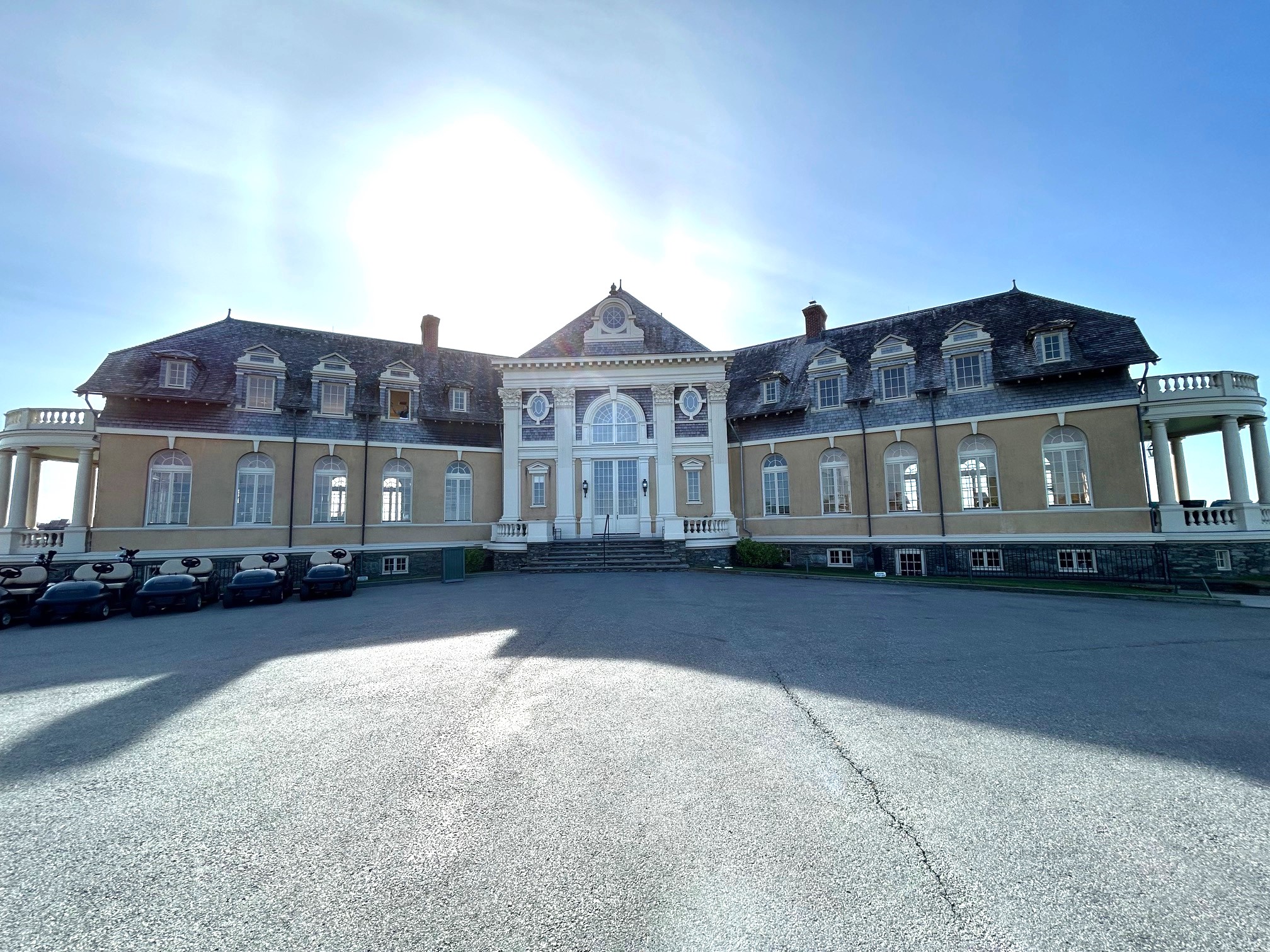
Other than a brief spat with a hurricane in 1954 that required reconstruction of one wing, the palatial clubhouse on the hill looks like it has been there for 130 years with very few changes. By today’s high end club standards this place is far from excessive, in fact spartan in its amenities but more then adequate to meet the needs of the members who only spend a few months a year in their Newport second homes.
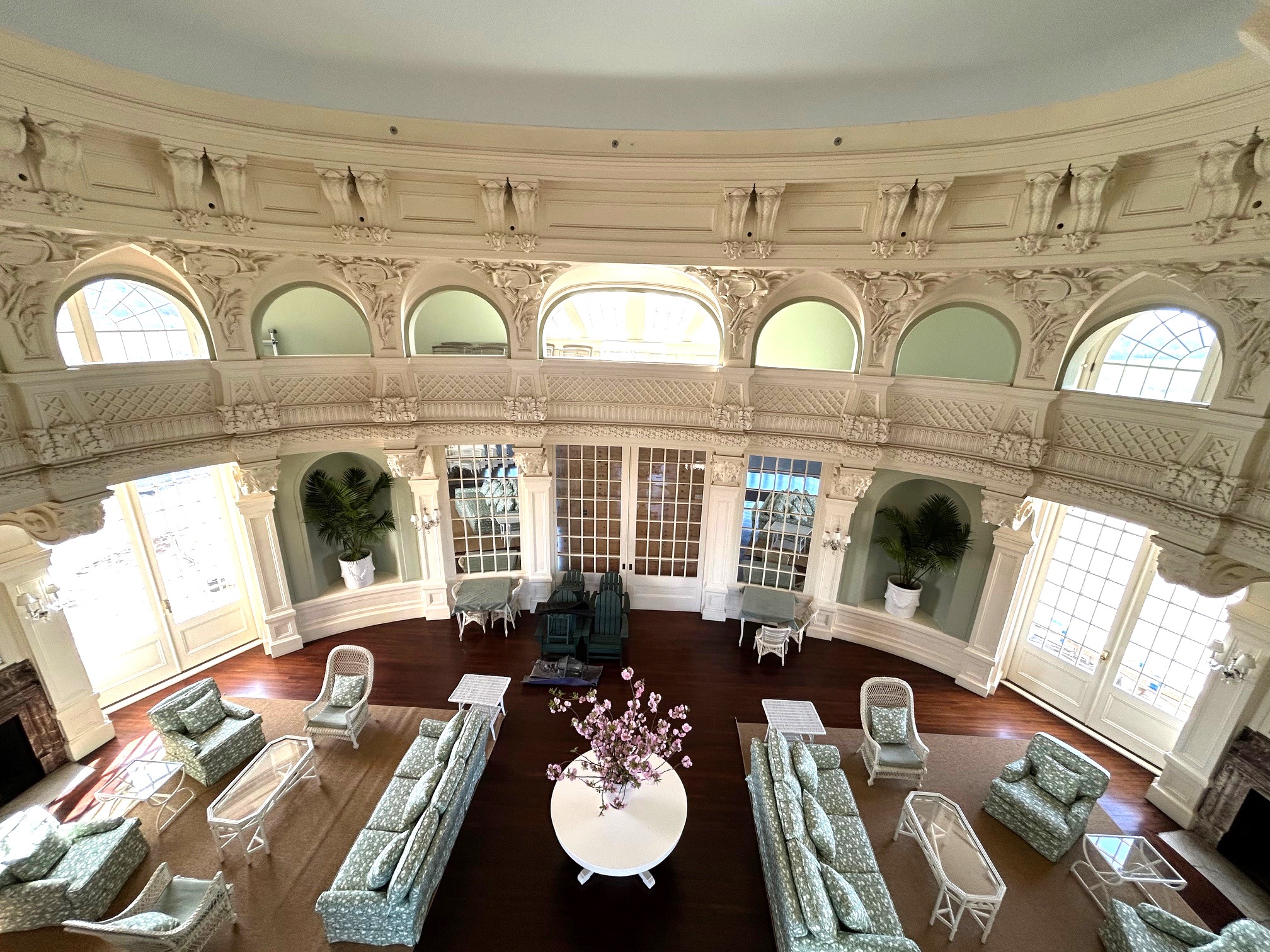
To me the simplicity of this place is refreshing. People come to play a round of golf, enjoy an after round libation or a snack, and sit around taking in the fabulous seaside scenery that falls below their feet looking out the bay windows. There is an honesty in an attitude of wealthy people who do not need to be reminded of their wealth.
The golf operation reflects this same attitude. This club was one of the original members of what was to become the United States Golf Association and it has held more then its share of major golfing events on this distinguished links. Recently at Newport Tiger Woods won his second U.S. Amateur in 1995, Annika Sorenstam won a U.S. Open in 2006, and Richard Bland won the U.S. Senior Open in 2024.

The course plays hard and fast with a wind-blown links feel provided by stiff ocean breezes. They do not water anything but the tees and greens so there is no emerald green Augusta look that you take for granted at high end places. The fairways take on rock hard character all year round and no member is going to complain about inconsistent lies in the fairways or the rough. Windswept greens putt fast and true but trying to hold a spinning approach shot near the flag may be a big ask. What nature provides is what the course gets, it is up to the player to deal with it and converse with old man par accordingly.
The original course was done by the head professional William Davis in 1893 and in 1921, after acquiring additional acreage on the other side of Harrison Avenue, they hired one of the great Golden Age architects of his day, A.W. Tillinghast, to redesign the course which included seven new holes. What Tillie created was the splendid layout we play today. Little has changed in the last 100 years because the members understand what they have, a classic playable links course overlooking the sea, a true rarity in the U.S.
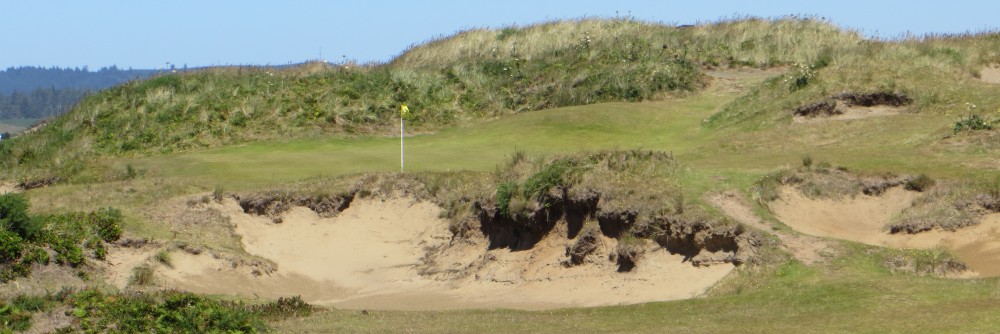
The fairway bunkering is free form, plentiful, and seemingly arbitrary in its disbursement but that is to allow for changes in wind direction from day-to-day. Driving is the key here, one must avoid the bunkers as well as get the best angle into the pin locations of the day. The green complexes are very Tillinghast in nature, accessible from the front, plenty of collaring bunkers and lots of internal contour in the putting surfaces. Originally constructed for much slower green speeds, with today’s agronomic improvements and dried out windblown surfaces staying below the hole on all approaches is essential.
One quirky thing I noticed is the sequential color of the tee markers from longest to shortest are Red, White, and Blue which is the opposite of what you would find at most places. I wonder if this was an intentional jab in the ribs at the traditional clubs of the day.

From the foot of the clubhouse the first hole is a somewhat gentle handshake Par 5 that reminds you that just because it appears open you need to focus on particular lines of play based on the day’s wind and the day’s pin. A bit of croquet to leave a proper angle into a green set on top of a chasm which will reject balls stuck without sufficient intent.
The next two medium length Par 4s give you the hopscotch pattern of avoiding fairway bunkers into green complexes surrounded by sand. Which brings you to the first of the very difficult Par 3s which, if played into the ocean breezes, can be as much club as you have in your bag. This one and the 14th are definitely drivable Par 4s in such conditions as described in the Hole-By-Hole Analysis link below.

You now are faced with the number one handicap hole of the day, a long wandering four par strewn with fairway bunkers everywhere. The approach is particularly enigmatic with a cross bunker encroaching from the right at about 75 yards. This might require a layup to the left and an accurate pitch to have a chance at a par.
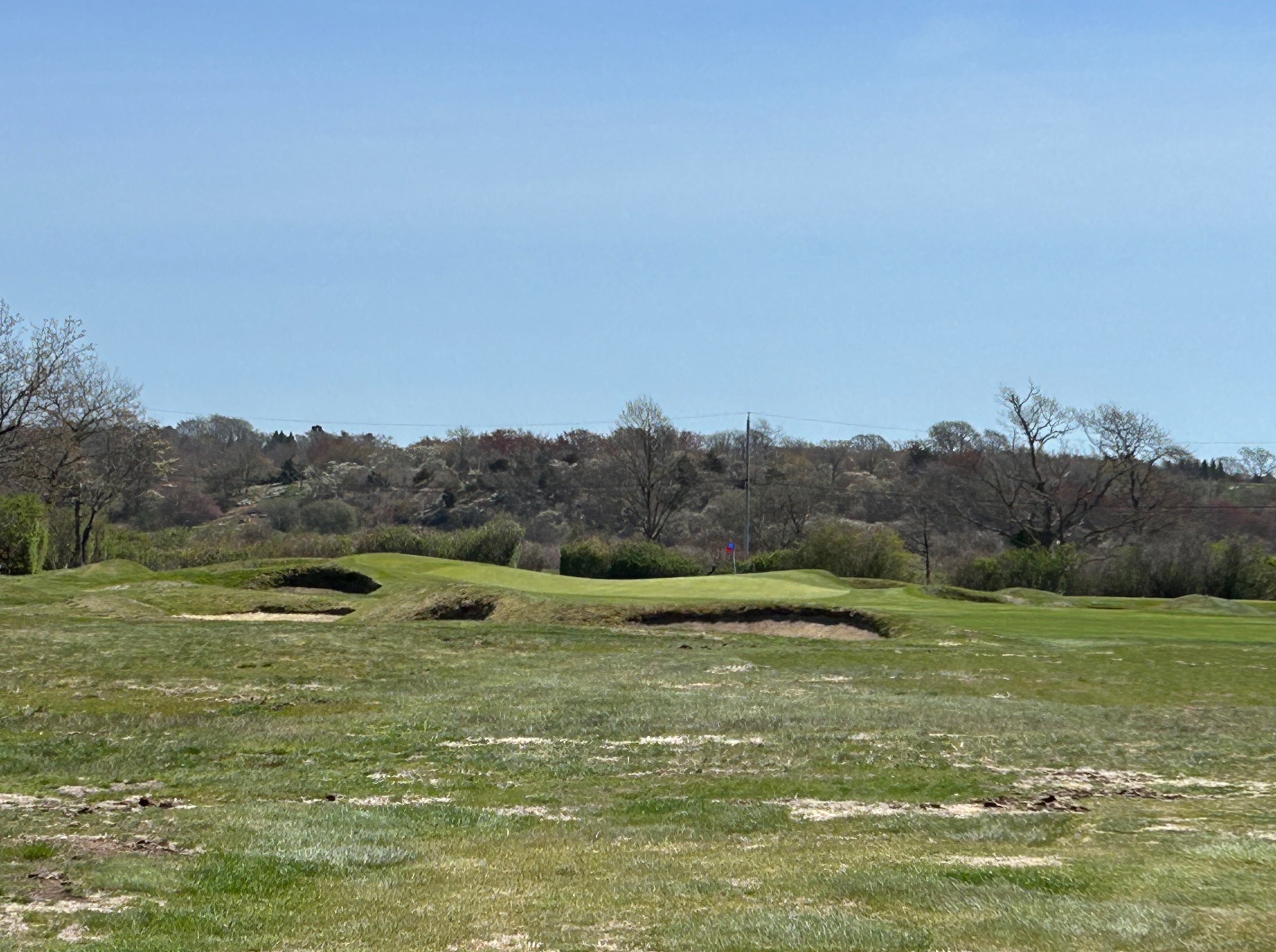
A bit of a breather, not dissimilar to the second leads you into a tough finish for the outward half. A long meandering par 5 that plays similar to the fifth, followed by a tightly corseted medium length par three, and ending on the third handicap index hole, a long march back up the hill to the green set next to the majestic clubhouse. Stick your head into the bar to grab a snack and some hydration before heading out to the very difficult challenge ahead.
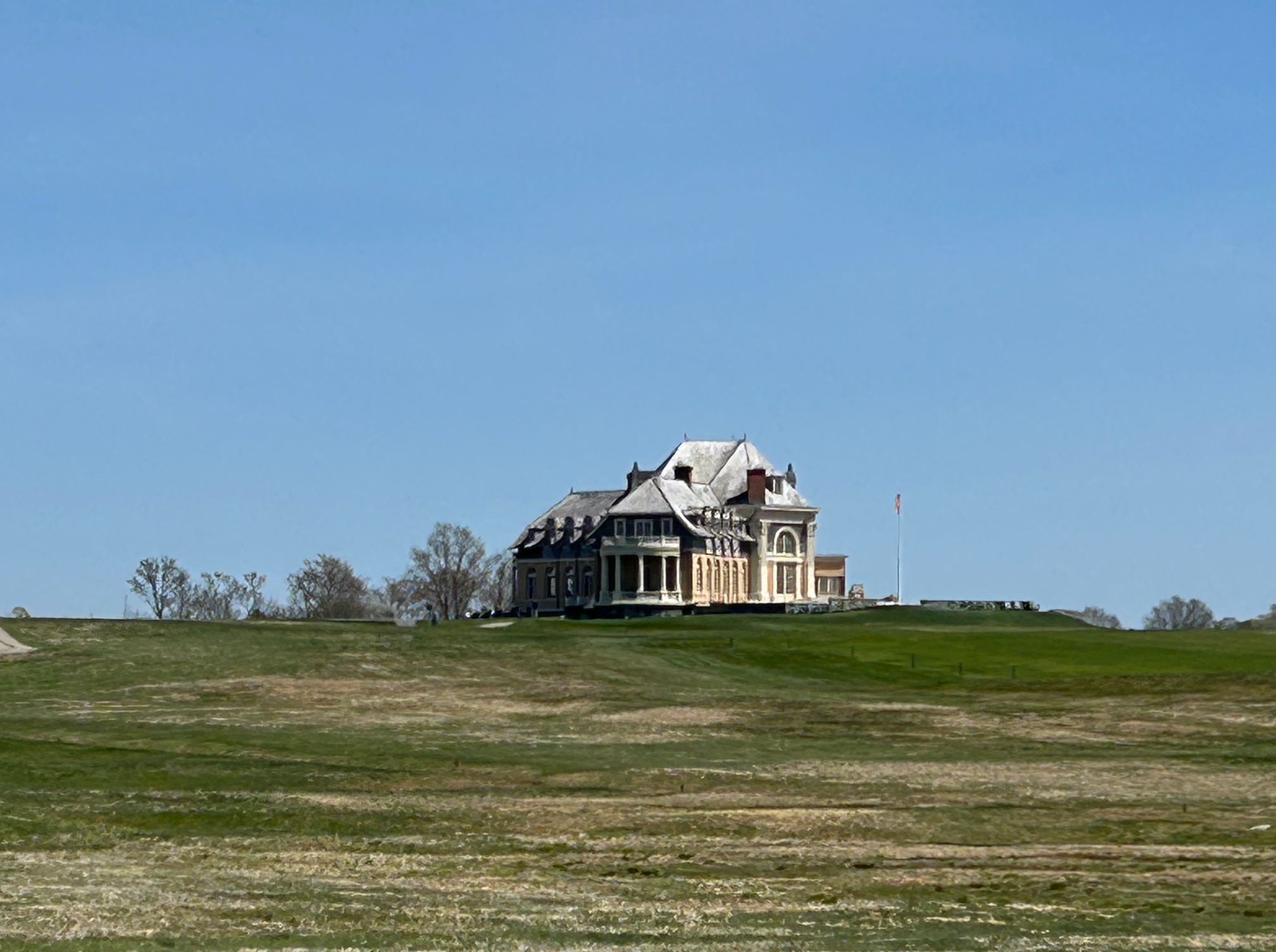
Back nine sequence of 5-4-5-3-3 is kitchy and will demand a blend of solid decision making and shot execution to maintain balance on the scorecard. You will notice remnants of a rock quarry adorning the right on the Par 5 tenth and behind the green complex. Once through the highly technical short eleventh the quarry skirts the left of the second par 5 in two holes.

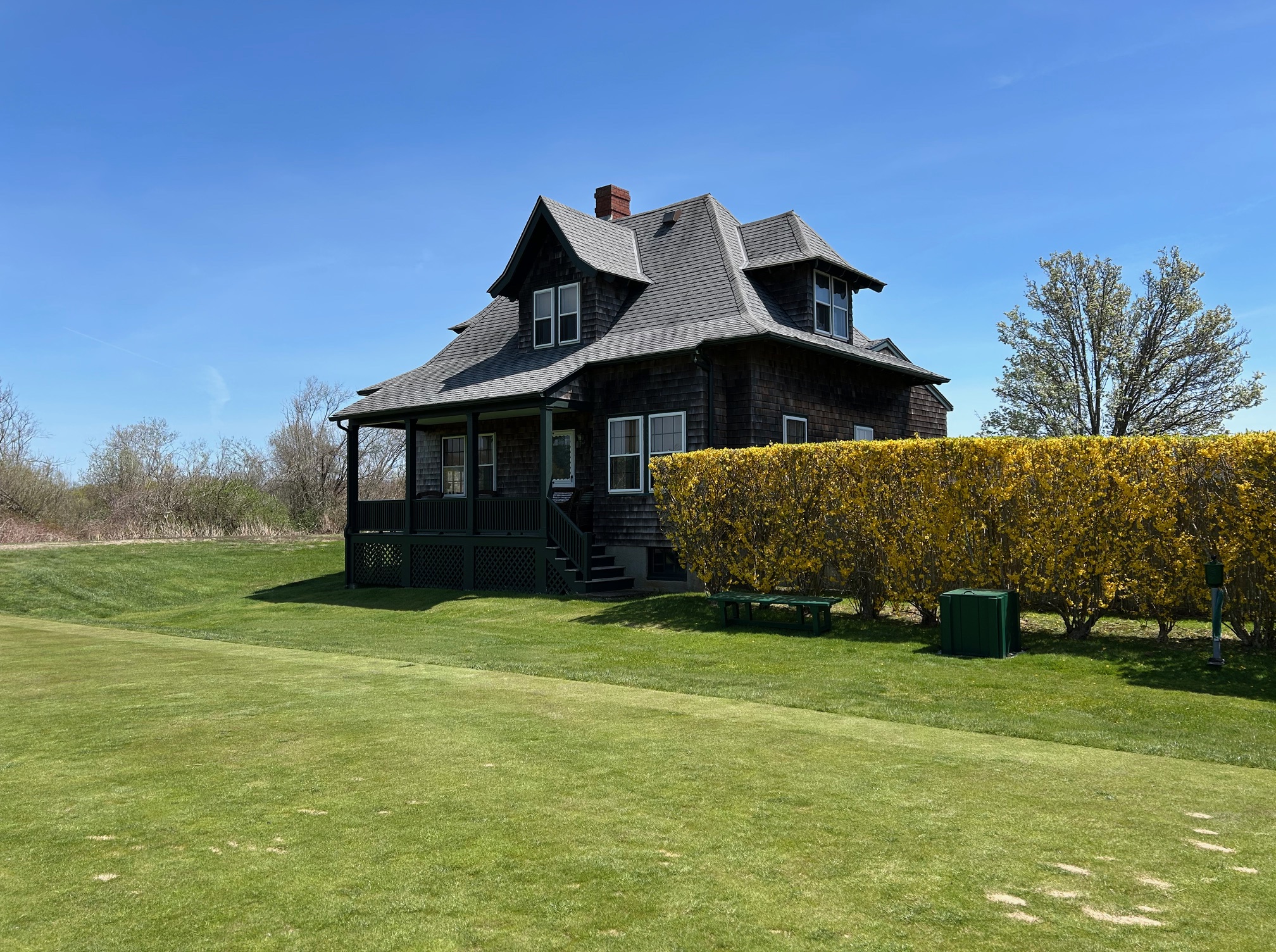
This now brings you to the strangest sequence of two Par 3 holes you have ever seen. From the doorstep of the green supervisor’s home you are staring up a billy goat hill to a green complex perched on a ridge adjacent to the clubhouse. It is an equestrian leap over an array of bunkers into a green dramatically sloped toward you which requires two to three clubs extra depending if the wind adds insult to injury of the severe elevation change from tee to green.
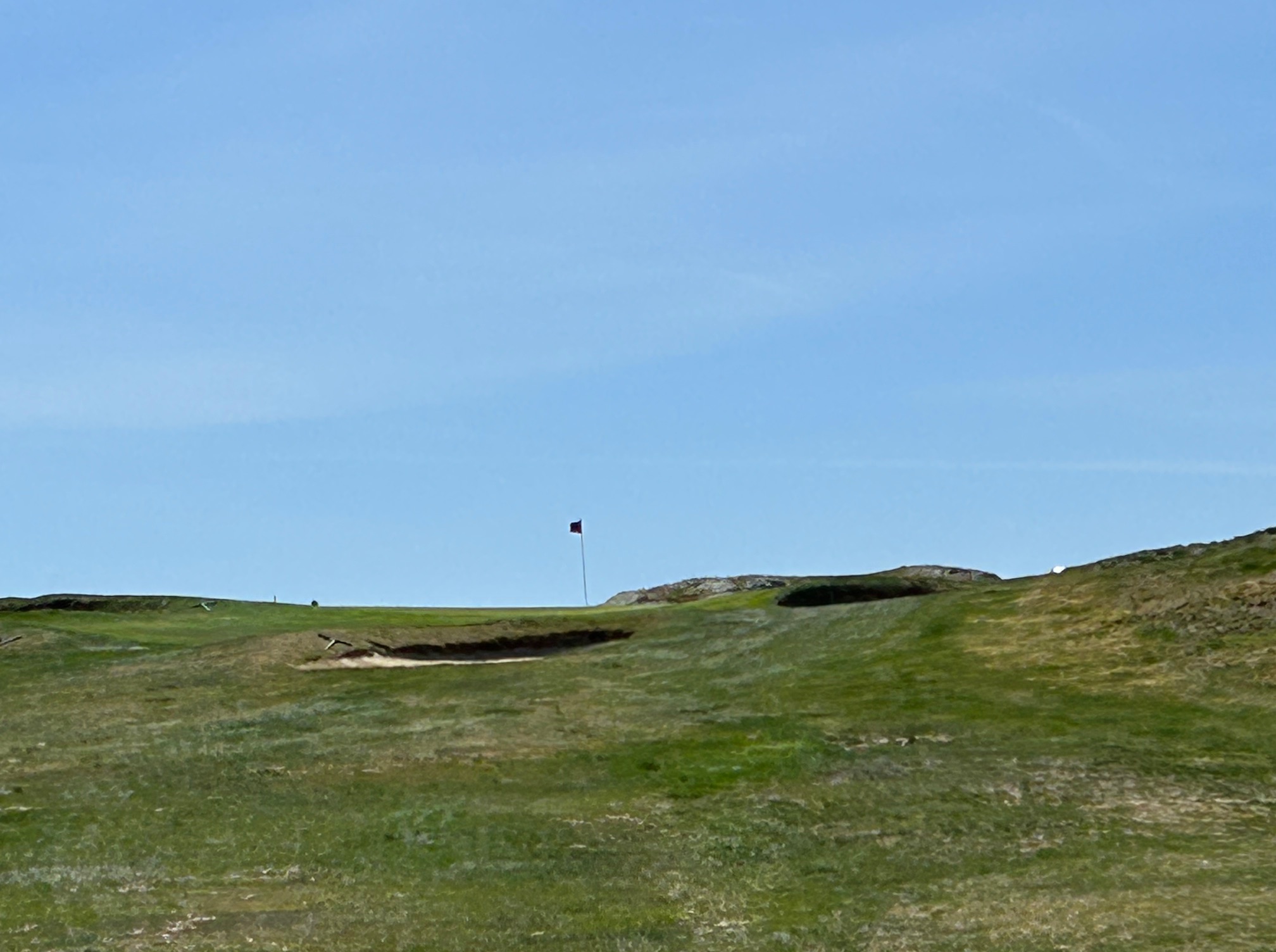
This is followed by the evil sister of the fourth, another possibly two-shot Par 3 across an abyss into a green perched above a chasm and a seriously fierce bunker left and below the green. If you get through these last two Par 3’s in eight shots you have gained ground on the field.
The second handicap index hole of the day is a sweeping dogear right Par 4 which can play a three shotter if the wind is in your face. The green complex is particularly interesting set into the foot of a low hill to the right featuring a two levels and a steep false front to boot.
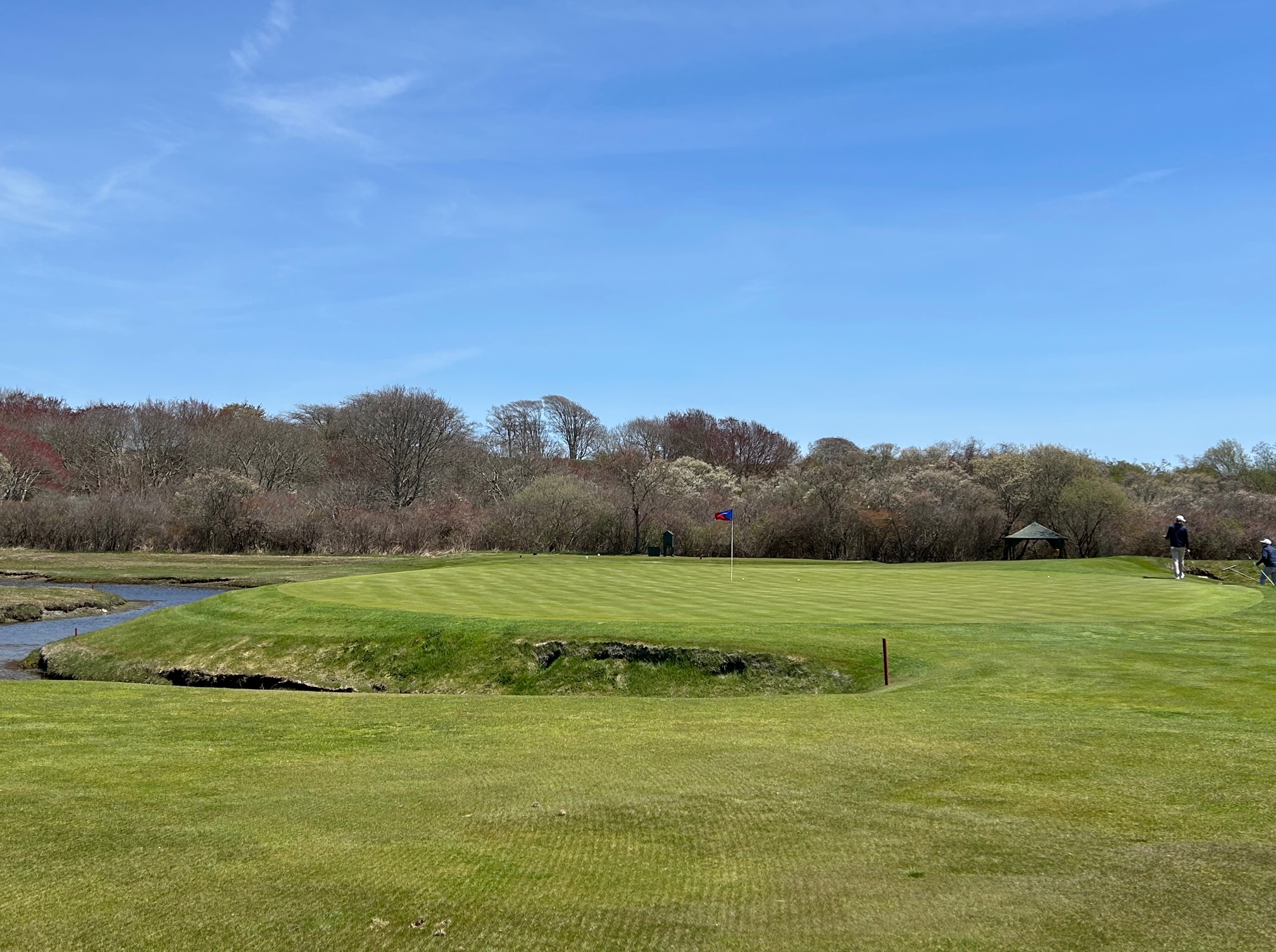
As you slowly turn your way back toward the clubhouse the 16th is the first truly non-links hole you play all day. A truncated short Par 4 this actually has a pond in play short and left of the green which you would never see on a links course in Scotland. Next is a very long par four and a half with a canal on your left and plenty of bunker turbulence between tee and green. Like many of the long ones it is possible that you need to lay up and then rely on a lawn dart pitch to save your par.

As you approach the final tee take a moment to notice the precipice above you and to the right which is the ceremonial back tee. You would need a burro and a Sherpa guide just to ascend to this pulpit ground but it presents an imposing look especially looking back walking off the final green complex.

Like the ninth the finishing hole on this side traverses the steep terrain to return to the clubhouse. The views of the back of this majestic structure are a splendific as the front, it is quite an architectural statement in all directions.

.Newport, Rhode Island
Architect: William Davis (1893) A.W. Tillinghast (1921)
. Par Rating Slope Yardage
Black 70 75.5 135 7085
Red 72 72.5 128 6577
White 72 70.7 122 6194
Blue (L) 72 73.0 127 5601
If you would like a printable PDF of this posting including yardage book quality hole-by-hole descriptions of how to play the course click the moegolf logo below.

 moegolf
Superb description and analysis of golf course and its surroundings. Amazingly written with the perfects amount of Moe-flair.
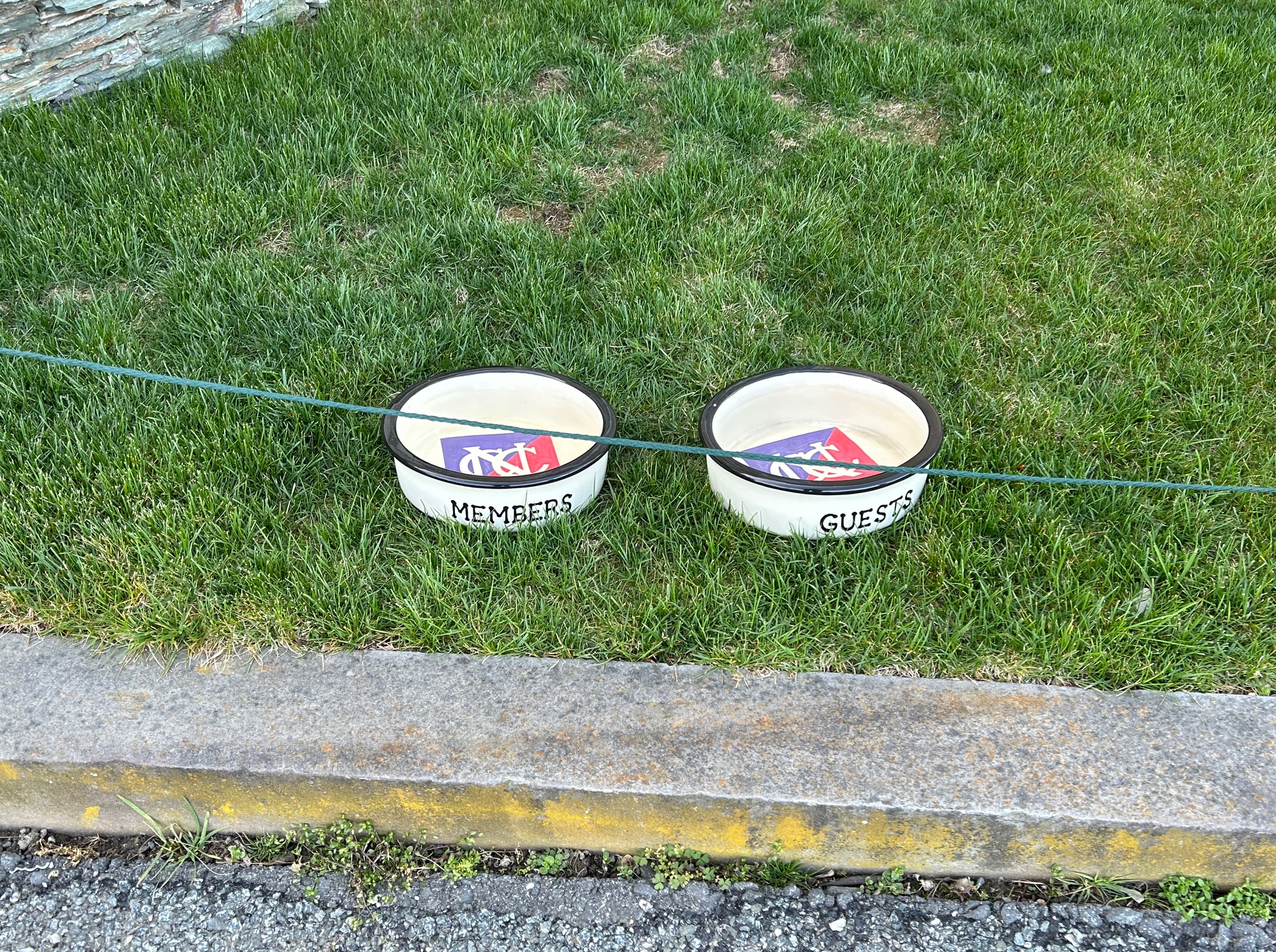
I thought the dog dishes were a nice homey touch.
I tired at length to comment on your excellent article and found it very difficult to simply comment. We met at the Woodmont Member/Guest when I was the guest of Marc Fink. I love your moegolf pieces. I had something to say about Newport GC having grown up in RI and was a volunteer at the 2006 Ladies US Open. But, found the comments hard to navigate. Jim
Jim,
Not sure why you are having trouble making comments I have gotten comments from others on this piece.
Glad you are enjoying these postings.
Moe